A Place Only We Know — Discovering the Wild Beauty of Yunnan's True Hidden Gems
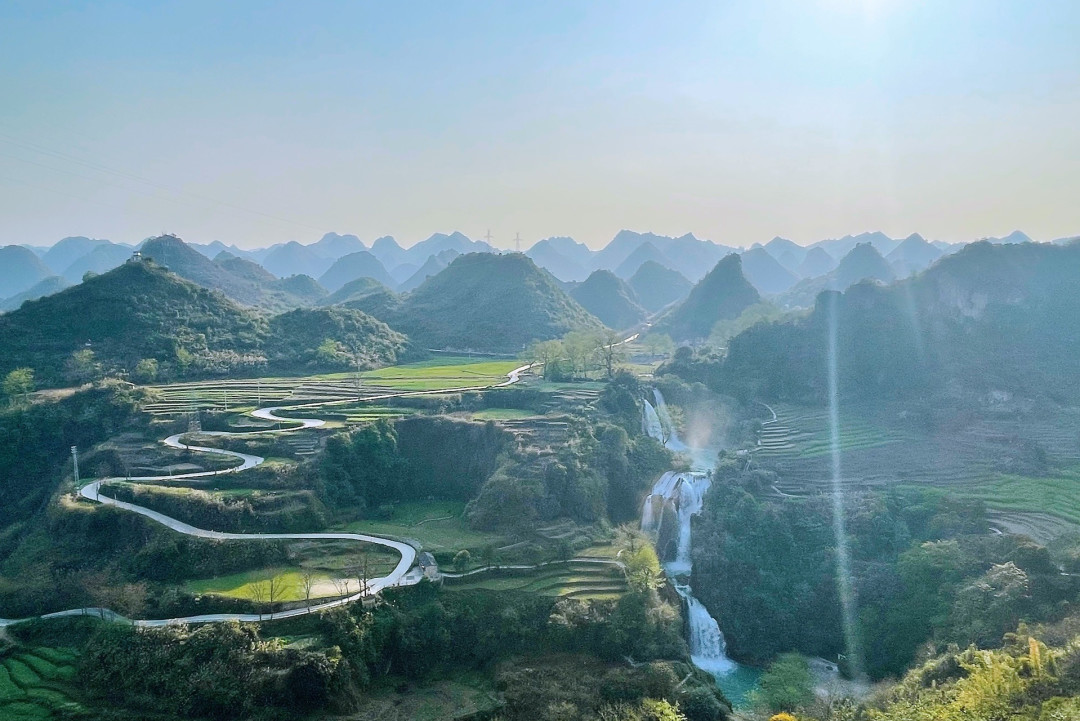
A Place Only We Know — Discovering the Wild Beauty of Yunnan's True Hidden Gems
Before We Begin: The Corners That Time Forgot
Have you ever wondered if, across this land of Yunnan — already trampled by travelers from every corner of the globe — there are still places that even the maps refuse to glance at twice? They are not Lijiang, not Dali, not Shangri-La. They are not any of those Instagram-famous check-in spots you'll scroll past on Xiaohongshu or Douyin. They are the true "maidens hidden deep in the boudoir, unknown to all" — places so obscure that even on Mafengwo, only a handful of people have written about them. Across the entire internet, you might be hard-pressed to find more than a few travel guides.
I've been to these places. And I regret to tell you: I didn't even bring a camera. Everything was shot on my phone — the image quality is so poor it breaks my heart. But the beauty of these places makes even a phone lens feel redundant.
Some places may never become travel destinations in their lifetime — like the mountain village of Zhuanshanbao in Ludian County. Some places are about to become the next big thing — like Bāobǎo Town in Guangnan County. Some places have landscapes that are just beginning to emerge — like the Baihetan area in Qiaojia County. And some places have existed quietly for centuries — like the ancient town of Heijing.
They might blow up tomorrow, becoming the next viral check-in spot. Or they might continue to languish in obscurity, waiting for a pair of discerning eyes. But no matter what, today, they are still our secret.
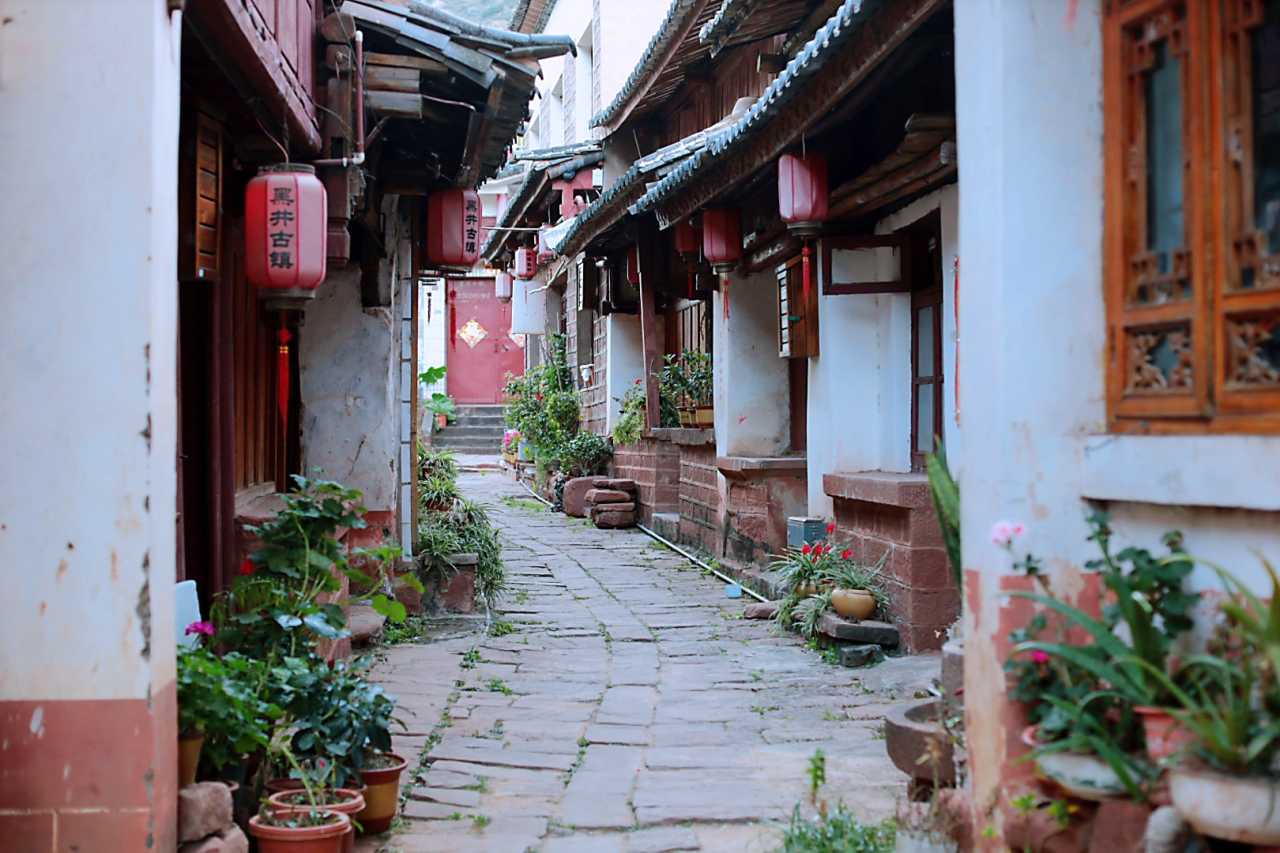
Heijing Ancient Town: Once Home to Half of Yunnan's Wealth, Now Left with Nothing but Solitude
It's funny, really. Lijiang has dragged every surrounding ancient town into the spotlight — even the most obscure corners have been turned into internet-famous check-in points. Dali's Erhai Lake, too — every inch of its shoreline has been photographed to death. And yet Heijing — this ancient town that was once the richest and most prosperous in all of Yunnan — is still virtually unknown. Perhaps fortune really does come full circle.
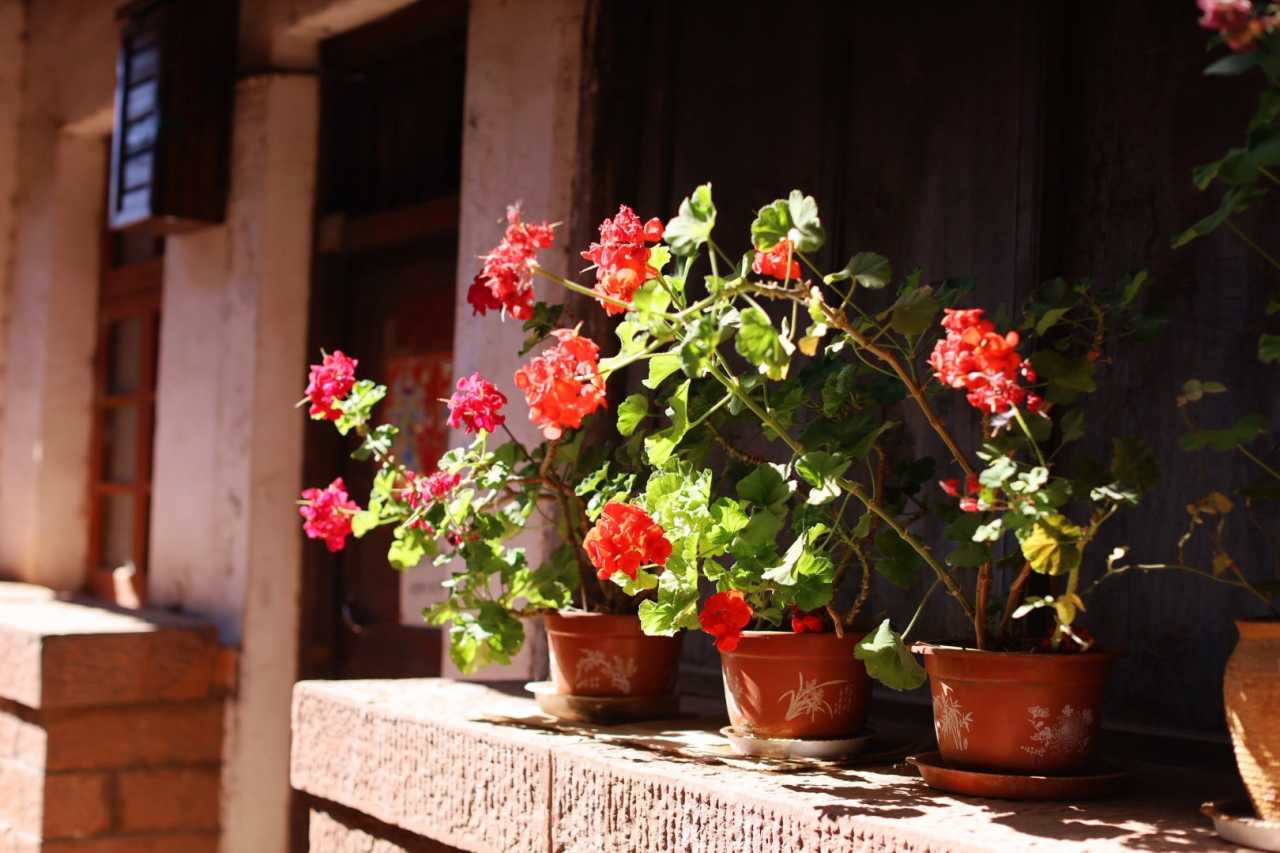
The name "Heijing" (Black Well) appears in Jin Yong's classic wuxia novel The Demi-Gods and the Semi-Devils. The Emperor Baoding decreed a salt tax exemption, and the people of the Dali Kingdom were filled with gratitude. Yunnan produced little salt — only nine wells across the entire kingdom, including White Well, Black Well, and Yunlong. Heijing was one of those nine.
Travel back 4,000 years. A Yi woman named Azhao, guided by a black ox, discovered that Heijing had brine springs capable of producing salt. Thus began Heijing's salt-making history. From the Bronze Age to the Nanzhao Kingdom, from the Song and Yuan dynasties to the Ming and Qing, Heijing's salt industry reached its zenith. At its peak, its salt tax accounted for 64% of Yunnan's total. You could say that half of Yunnan's wealth was born from Heijing.
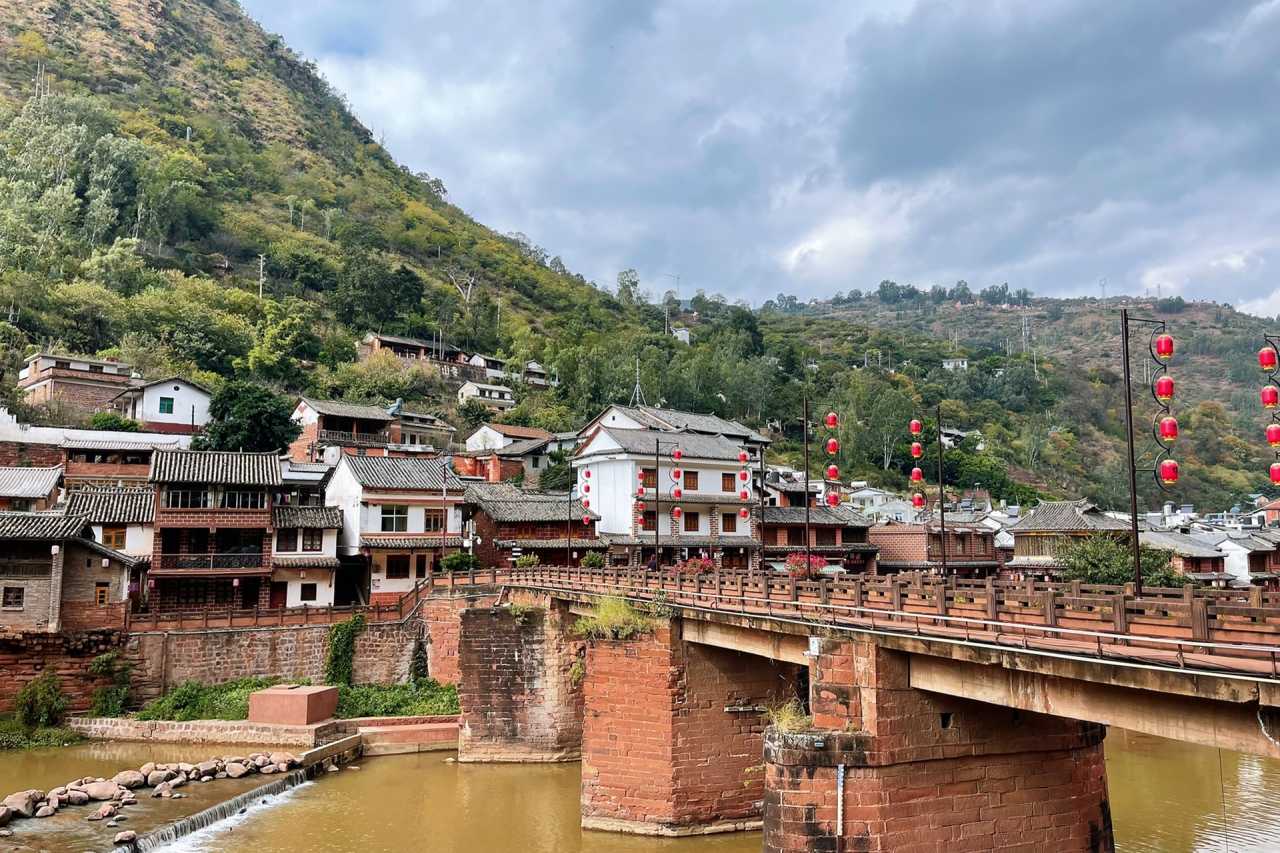
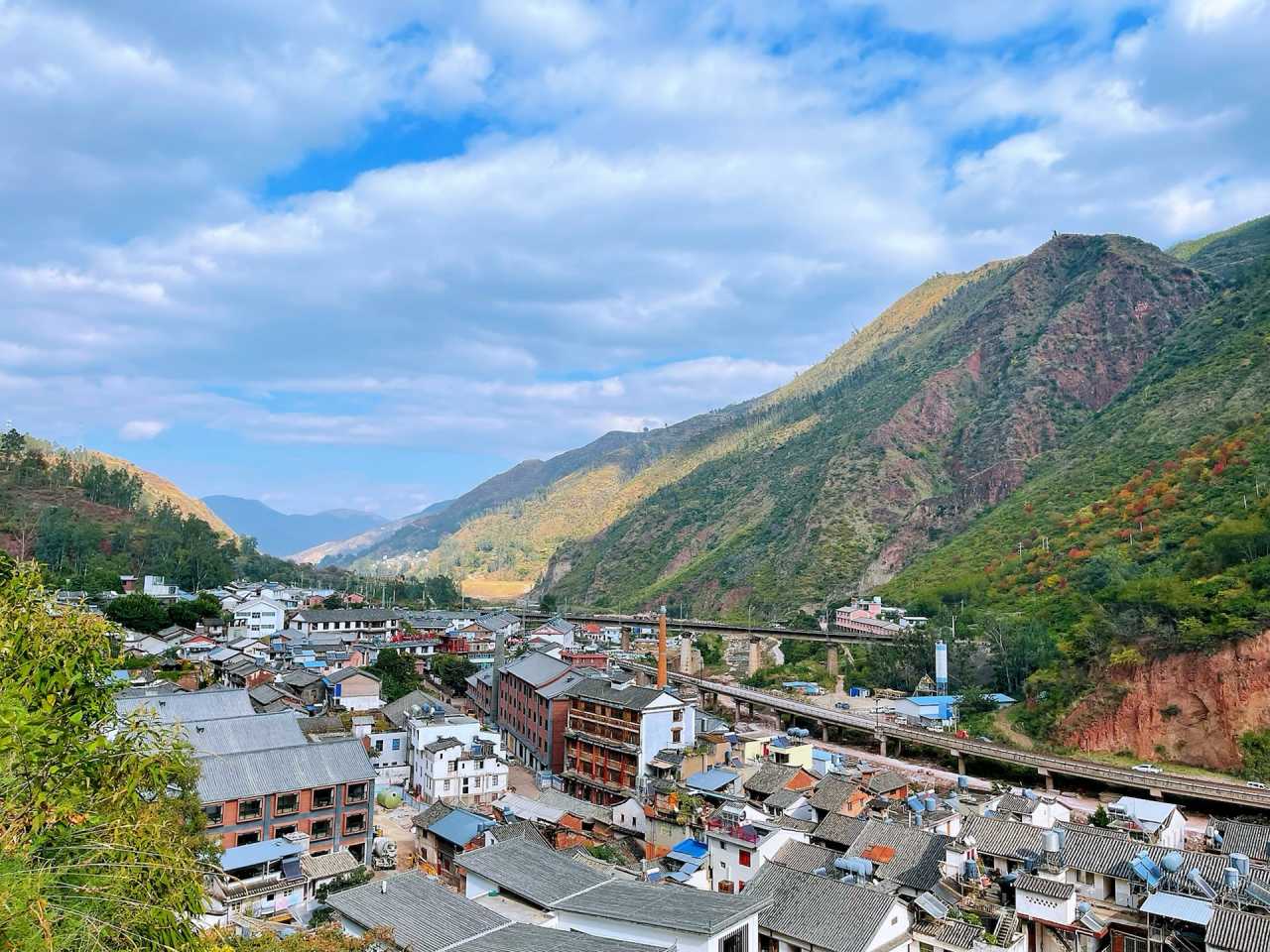
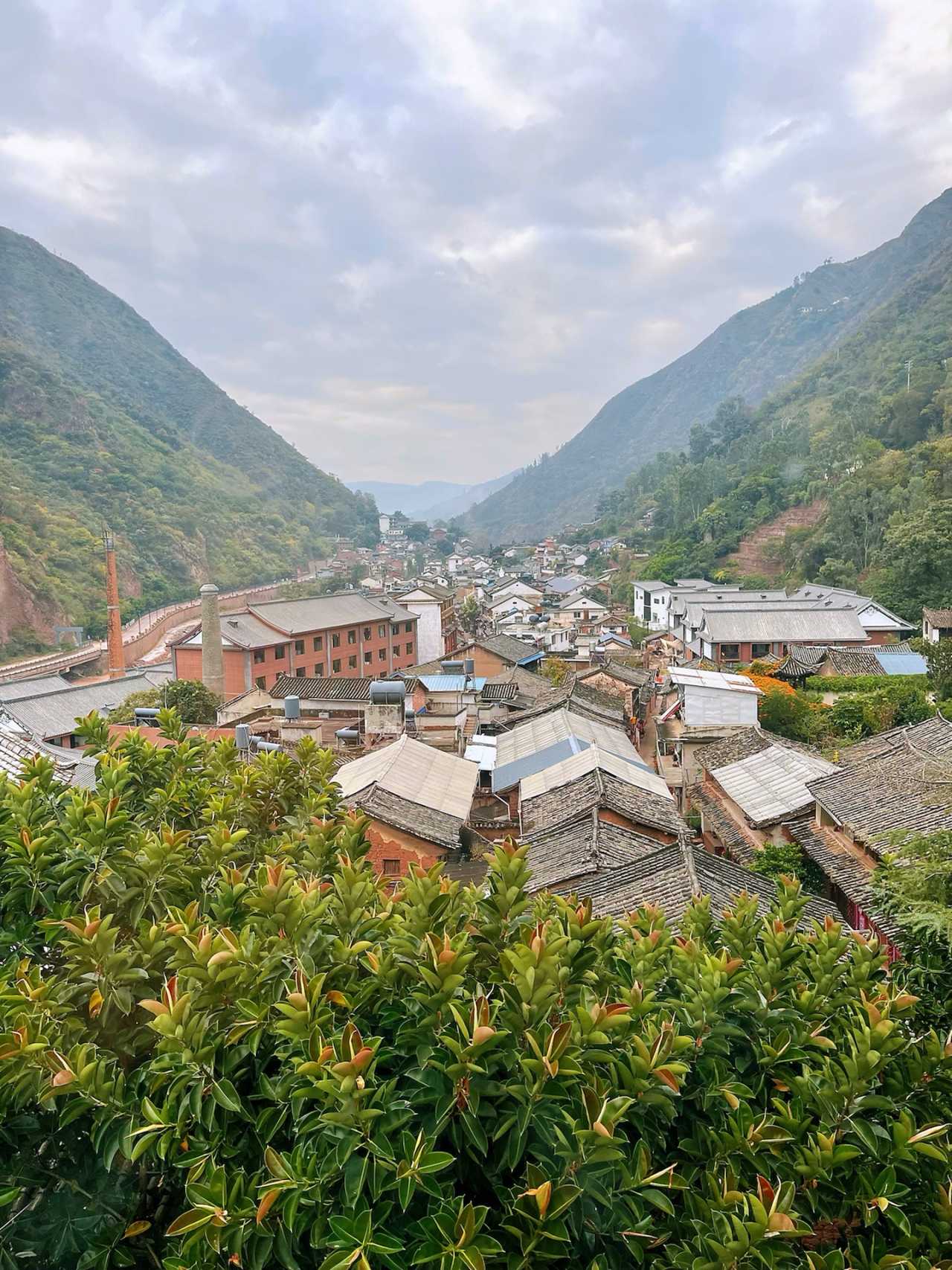
Yet today, the valley lies quiet. The fortunes of old have been swept away by the river of time. All that remains is this small town paved in red sandstone — lonely, solitary, resting quietly in the embrace of the mountains.
Heijing by Day: Everyday Life on Red Sandstone
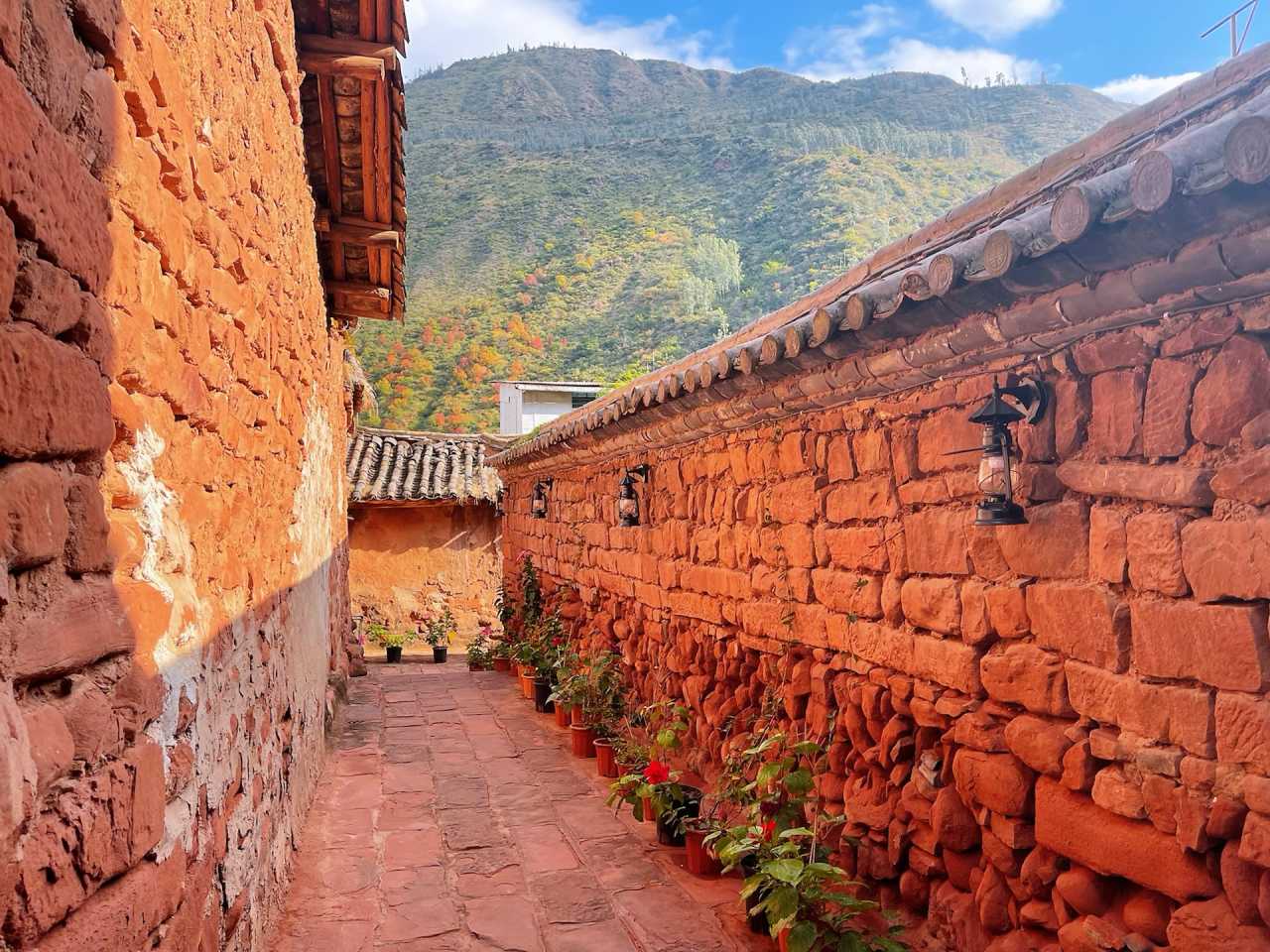
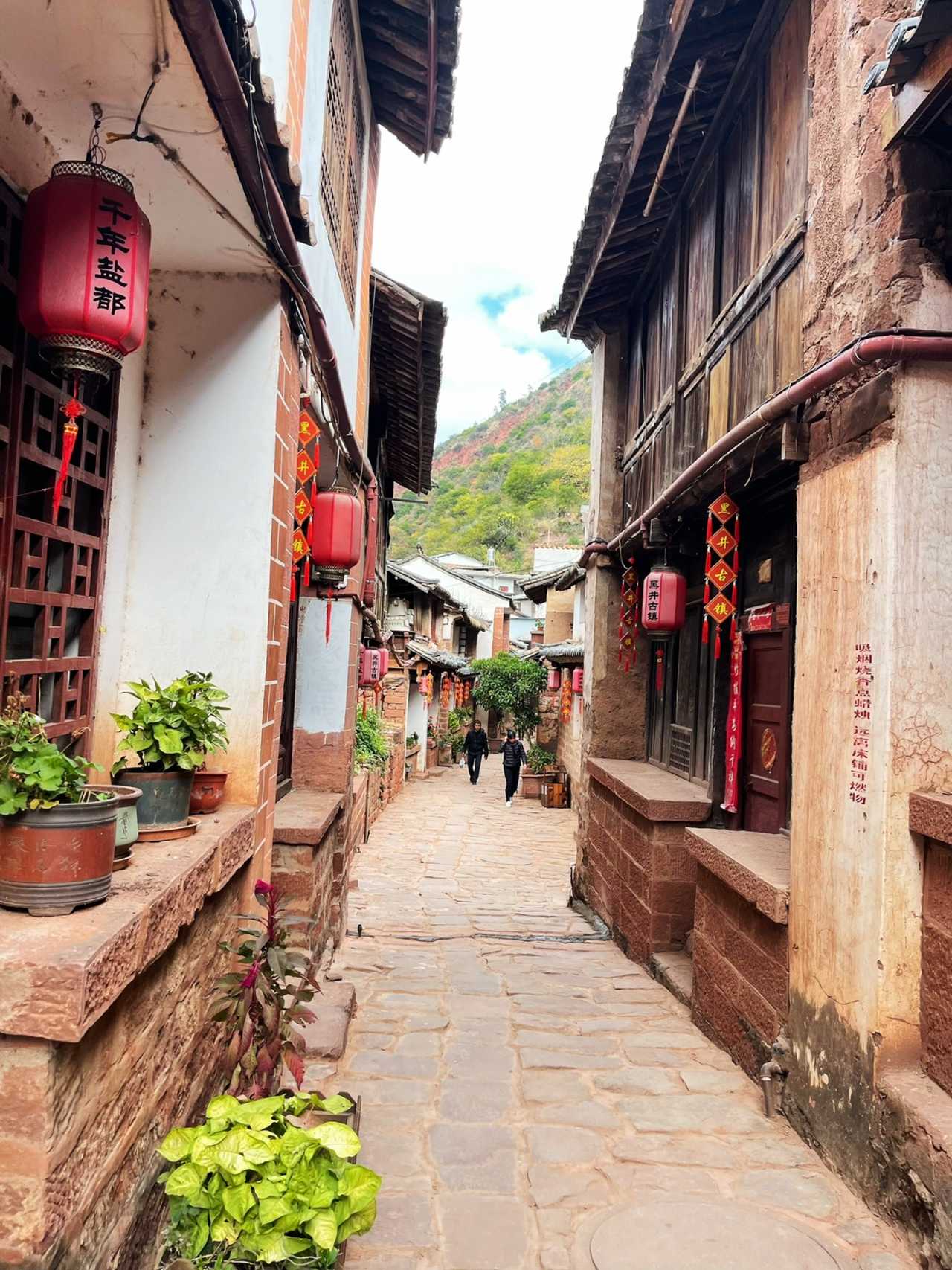
Unlike Lijiang's ancient streets of blue flagstone, Heijing — born of salt — is red. The Longchuan River runs along the edge of town, and on the streets paved with red sandstone, horse caravans still carry goods to and fro.
The most distinctive feature of Heijing is the wide "bay window" that every household has. It's called a "pùtái" (display counter). According to Baidu Baike, it was originally used to display goods for sale, allowing horse drivers to make purchases without dismounting. But it served another purpose too: salt carriers could rest without unloading their burdens. They would simply set their bamboo baskets on the counter, instantly relieving their shoulders, stand up straight, and then continue on their way. The pùtái was both practical and warm-hearted.
The wealth of bygone days has also left Heijing with countless remnants of grand old mansions.
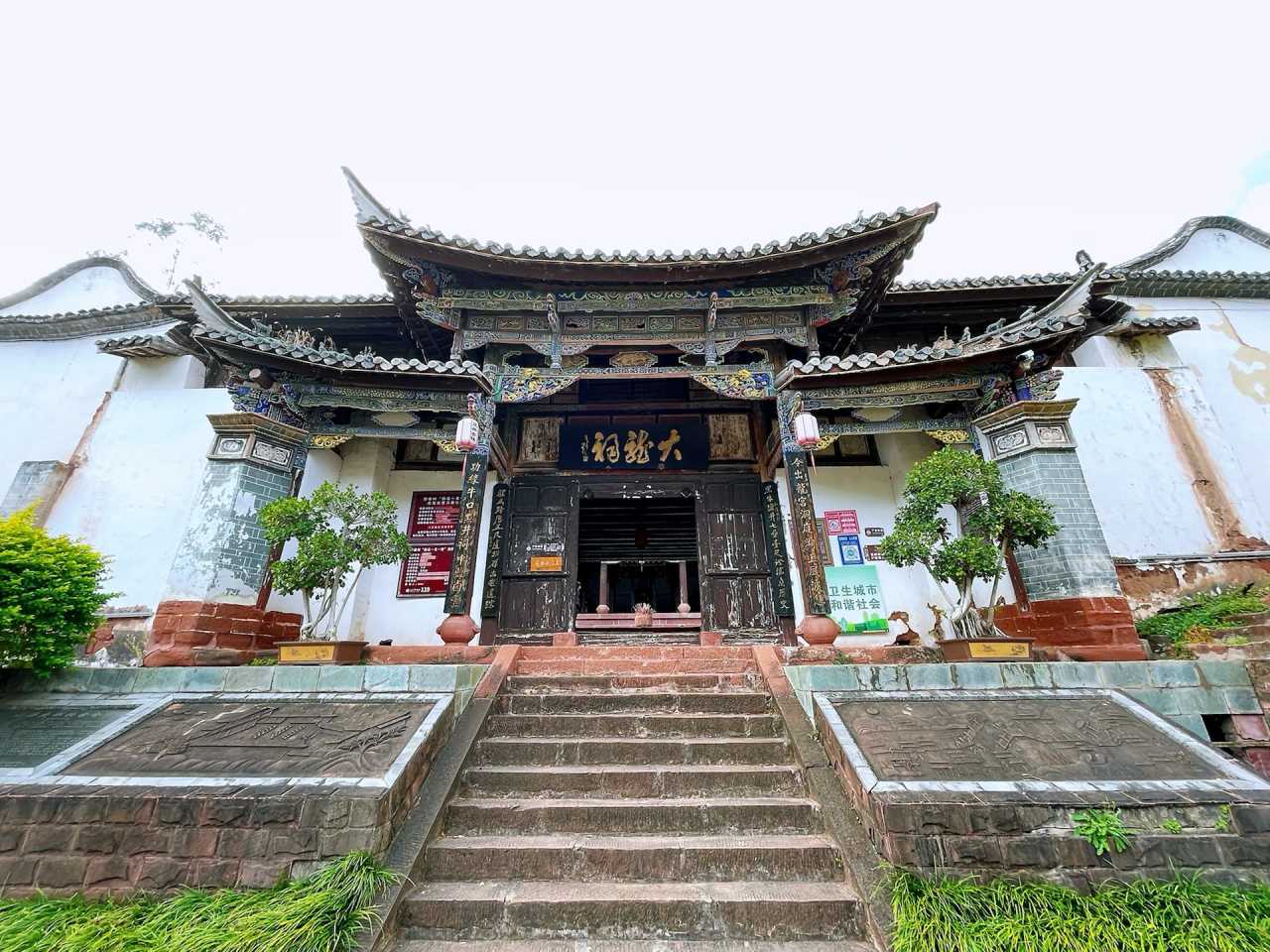
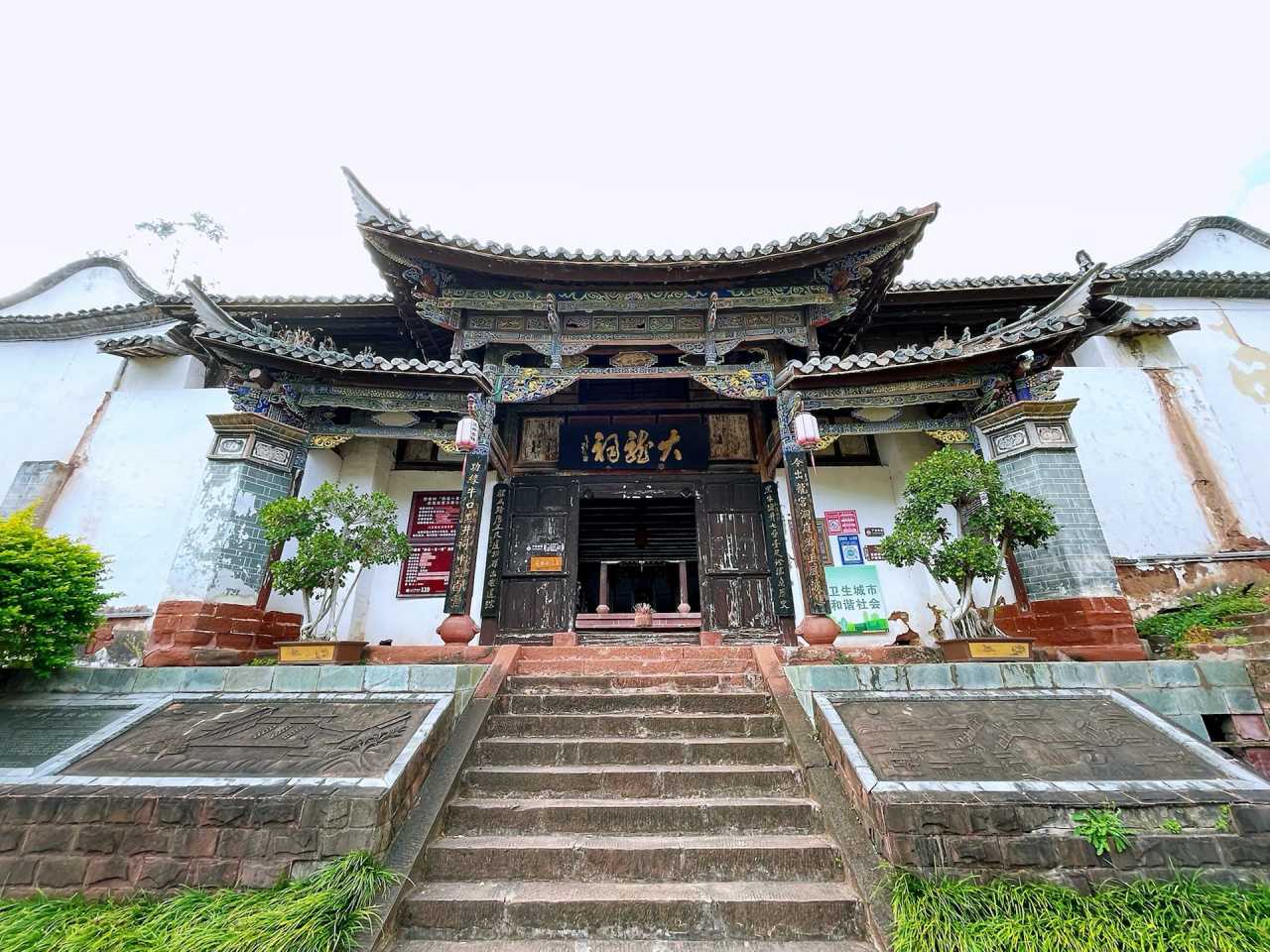
Inside the Great Dragon Temple, you'll find Yunnan's largest and best-preserved ancient stage. Decades ago, the town's high school was housed here, and many diligent students once lived in the corridors on either side. Today, only a few empty tables remain beneath the stage.
The Confucian Temple in Heijing is remarkably well-preserved. The two-story building at its entrance once served as a school; now it has been converted into a hotel. The pond, archways, and stone carvings in front of the Great Hall still retain their original appearance.
The Wu Family Mansion was the grand residence of Heijing's wealthiest family. The entire compound is laid out in the shape of the character "王" (king) — though, of course, you wouldn't be able to tell without a drone. When you enter the Wu Family Mansion, I recommend looking up its history online to see how much effort the Wu patriarch put into the mansion's feng shui to secure his family's fortune. But what good did it do? The winds of time and fortune never heed individual effort. Behind the main residence lies the embroidery tower — desolate and cold. If a young lady were really to hold a marriage proposal event here, I'd have my doubts about her being human.
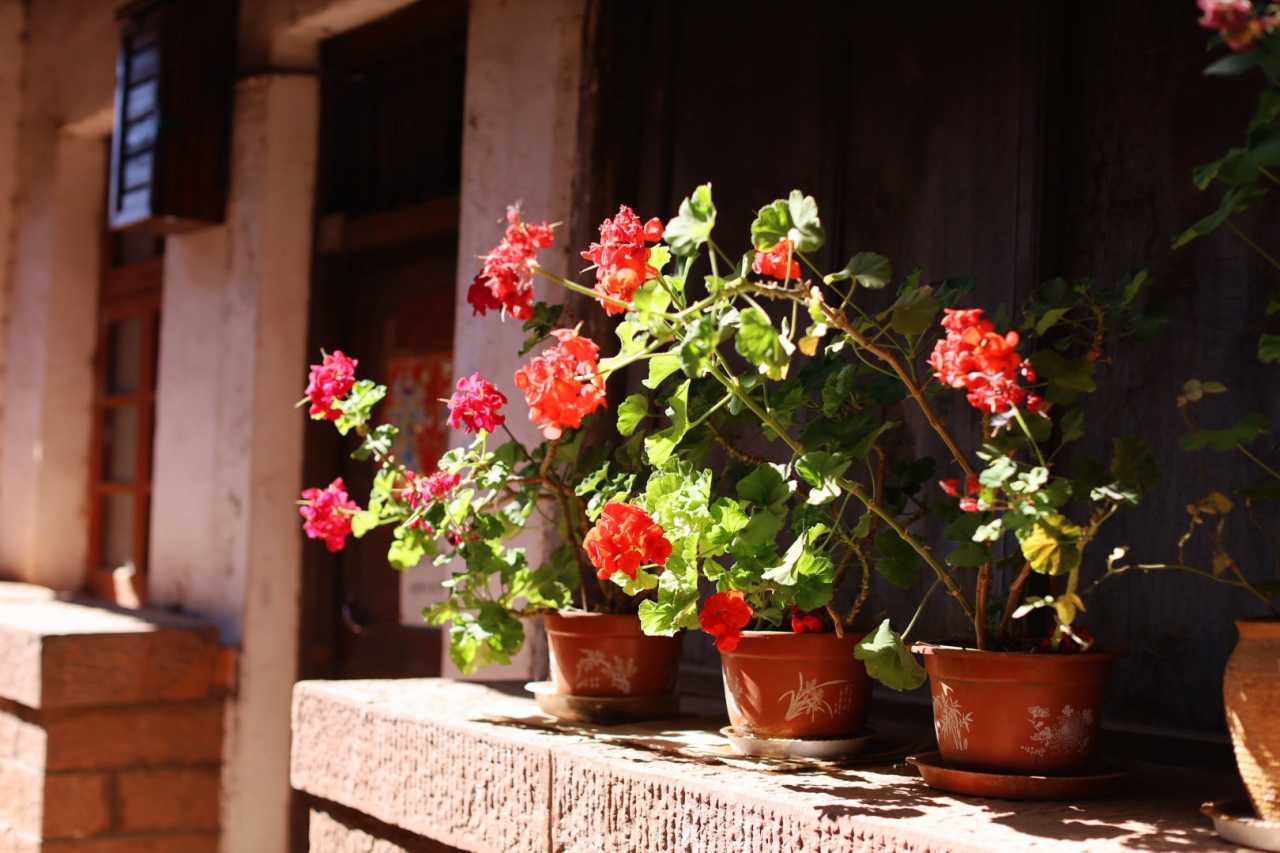
The front courtyard of the mansion is well worth sitting in for a while. A bougainvillea is in full bloom, and a whole courtyard of succulents is thriving.
Then there's an alley with a fascinating story involving two households. The family on the left had a son who studied abroad and married a foreign wife — a first in the town at the time. They built a new European-style gate to welcome the bride. This terrified the family across the alley — imagine bringing a blonde-haired, blue-eyed monster into the neighborhood! They quickly hung a large wooden talisman to counteract the foreign influence. On both sides of the old alley, the mottled facades of ancient homes hide countless interesting stories that have been lost to time.
Unfortunately, the paving of this old alley was completely renovated because a former official declared, "We can't have female tourists twisting their ankles in high heels." The original road surface — worn smooth by time, full of history — was replaced. Now, the mottled old houses stand awkwardly alongside brand-new pavement. Neither here nor there.
Heijing by Night: Where the Eerie Meets the Earthly
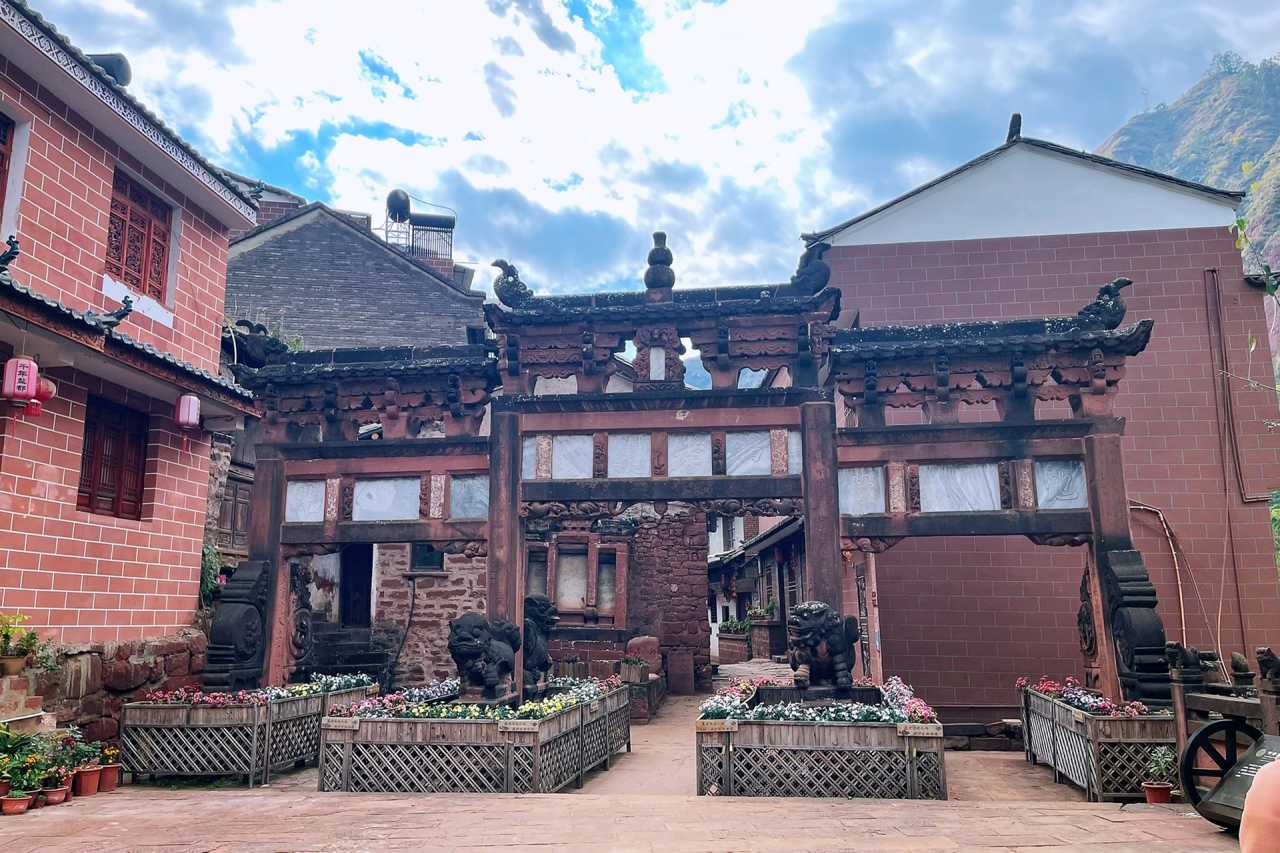
The bustling crowds of yesteryear are gone. Today, many of Heijing's residents have left for other places. Add to that the scarcity of tourists, and Heijing has an undeniable, slightly unsettling, eerie atmosphere. Empty streets, pitch-black alleys, red lanterns in the distinctly Chinese aesthetic, a bridge with an eerie blue glow underneath, ferocious stone lions beneath archways, and abandoned salt wells where you can almost imagine salt workers still toiling under heavy loads. It would make an excellent location for a large-scale, real-life haunted house or escape room.
If you're brave enough, I recommend staying at the Confucian Temple Hotel. The hotel is housed within the Ming and Qing dynasty Confucian Temple. The decorative screens and plaques have many cracks and wormholes up close — they're probably genuine antiques. Downstairs is the temple courtyard, empty of tourists, quiet and serene. Outside the window, you might hear strange bird calls at night. When you look at the room after dark, the aesthetic is even more... "underworld-chic."
But don't be too scared. First, the light show by the bridge still has a touch of earthly烟火气 (the warmth of human life). Second, this small town of Heijing is home to as many as 56 temples, shrines, and nunneries — the gods and buddhas have got your back. The most worth visiting are Feilai Temple and Zhutian Temple.
Heijing's Salt: The Smoky Hearth of Traditional Salt-Making

Heijing's ancient salt workshop lies just outside the town, reconstructed in recent years. Since the decline of Heijing's salt industry, very little salt is produced here anymore. But the ancient salt workshop is still worth a visit.
We hired the horse-drawn carriage of an old man from town and rattled our way to the workshop. On one side of the road stood a massive waterwheel and tiered brine-drying platforms; on the other, the salt-boiling sheds. In its heyday, Heijing was home to over 30,000 people, producing 5,000 tons of salt annually. "Every household in Heijing is a salt-making household," as the saying went. Today, only these two rows of round furnace mouths remain, demonstrating the ancient salt-making process.
In short, if you're looking for a quiet, story-rich, distinctive, and off-the-beaten-path little town to spend some time in, Heijing is the perfect choice.
Heijing Travel Tips
Activities: Heijing is small. Two days and one night is plenty of time to explore it well. Spend the first day wandering around town and the salt valley on the outskirts. Spend the second day visiting the temples on the mountain and leave in the afternoon. If you're pressed for time, a single day is enough.
Food: The must-eat in Heijing is 牛干巴 (beef jerky). Few people know that the wildly popular Yunnan-style beef jerky actually originated in Heijing. It's simple: Heijing had not only salt but also cattle! However, Heijing beef has a very strong grassy flavor. If you're not used to it, you might find the taste too intense. But the locals say this is what makes it authentic!
Accommodation: The Confucian Temple Hotel is my top recommendation, for reasons detailed above. Yanxi Yuan is also a relatively well-renovated guesthouse in town. Many other hotels are still under construction. Also, don't book your hotel in Heijing online in advance. Arrive, see the room in person, and haggle on the spot — it's much cheaper than online prices.
Transportation: Take the train to Heijing! There's only one early morning train per day — the slowest of the slow trains, No. 7466. It departs Kunming Station at 6:38 AM and, after a leisurely two-hour journey, arrives at Heijing at 8:42 AM. At the station, hop on an old man's horse-drawn carriage. For just 6 yuan, you get a nearly 40-minute ride! You probably can't find a cheaper carriage ride anywhere in the world today. It's simple, yes, but that's precisely the retro charm! Highly recommended! You can also hire the old man's carriage to go to the ancient salt workshop.
Guangnan Bāobǎo: This Isn't Yangshuo — It's a Yunnan Landscape Scroll
Buy a train ticket from Kunming to Funing County — it takes just two hours. Then rent a car, and half an hour later, you'll arrive at Bāobǎo Town in Guangnan County, right next door to Funing.
Yes, this is Guangnan, Yunnan, not Yangshuo, Guangxi. This is the Bāobǎo River, not the Yulong River.
From Heye to Yaying: A Scroll of Blue-Green Mountains and Waters
Your journey through Bāobǎo should begin at Heye Village. Head north along Bāobǎo Town's main road. About 10 kilometers from town, you'll find the entrance to Heye Village. Here, the seepage water from five underground karst caves converges — this is the source of the Bāobǎo River. The water is so incredibly clear that in Heye Village, it's drinkable straight from the source.
From Heye Village, the Bāobǎo River meanders for nearly 20 kilometers downstream, nourishing tens of thousands of acres of rice paddies along its banks and giving birth to the famed Bāobǎo tribute rice. In the pavilion at the village entrance, elderly women sit and chat, passing the time.
About a kilometer downstream from Heye Village, you'll reach Yalong Village. This village seems ordinary at first glance, but if you walk past the new houses and go to the back of the village, you'll find 35 preserved old houses of the Zhuang ethnic group — rammed earth walls, a semi-underground first floor, and a half-attic second floor. The adjacent kitchens and wood sheds are all intact, but abandoned.
I often wonder: how is beauty lost? Compared to the new village, these dilapidated old houses are clearly superior in aesthetic appeal. And with proper restoration, they wouldn't necessarily be unsuitable for modern living. So why are they no longer built? Perhaps one day they'll be turned into folk villages, luxury resorts, cafes, or book houses... But today, they remain as broken walls and ruins, preserving their most original appearance.
The answer is simple: convenience. Rammed earth walls, wooden railings, heavy beams, and layered tile roofs — how could they compete with the ease and speed of today's reinforced concrete and red bricks? This is how tradition is lost — lost in convenience, lost in ease, lost in time.
Leaving Yalong Village, the river bends. We jumped onto a local old man's iron boat and drifted downstream. Ours was the only boat on the entire river. Water plants swayed beneath the surface; jagged rocks lined the banks on both sides. It felt like drifting through a scroll painting of blue-green mountains and waters. The only downside: the iron boat ran on diesel, making quite a racket and polluting the water.
Occasionally, we saw locals fishing on the banks, stealing a day of leisure from their busy lives. For the hundred-and-first time, I sighed: This is real living.
When we reached Yaying Village, the old man kicked us off the boat. A small bridge, an old village, wisps of cooking smoke rising from chimneys. An old man told us the trees in the middle of the river were "lovers' trees" or "heart-to-heart trees." Personally, I think the trees are beautiful enough on their own without needing to attach legends to them.
Sanla Waterfall: A Real-Life Scene from a Xianxia Game
The highlight of any Bāobǎo trip is Sanla Waterfall. Although it's located at the lower reaches of the Bāobǎo River, the water here is still crystal clear. Before you even get close to the waterfall, you can hear its thunderous roar. Walk down the slope, and this hidden wonder — this breathtaking, magnificent marvel of nature — reveals itself before your eyes.
Sanla Waterfall has three tiers. As the most developed attraction in Bāobǎo, each tier has a viewing platform for a close-up look. Up close, you can see rainbows formed by the water mist and sunlight. But the best viewing spot is on the platform opposite the waterfall.
We took a long detour to reach that platform — all for the sake of seeing the small river beaches along the way, perfect for rafting. And unexpectedly, we were treated to a magnificent view of peaks bowing in worship.
But the most beautiful sight of all was Sanla Waterfall itself. This one scene convinced me that the mystical sect hideouts in xianxia games aren't just the product of artists' imaginations — nature truly does harbor such beauty!
Downstream from Sanla Waterfall, there's a lake. On its shore is a karst cave with a small entrance but a large exit. The cave has two levels: you enter through the lower one and exit through the upper one. The strange rock formations inside are quite worth seeing. Also, Guangnan's weather is generally hot, so the cave's temperature is several degrees cooler — very refreshing. There are boats for rent on the lake, but it's not very interesting — it feels like a big reservoir. If you came with a few friends for camping and a picnic, it might be more fun.
Where the Fragrance of Imperial Rice Drifts, a Bowl of Bāobǎo's Finest Awaits
The soul of Bāobǎo is its rice — Bāobǎo rice. Guangnan's Bāobǎo, predominantly home to the Zhuang people, has its own unique culture, known as "Nà culture" — "nà" means rice in the Zhuang language, so Nà culture is rice culture. The over one hundred kinds of rice cakes made here are the most tangible link between Nà culture and ourselves.
The Bāobǎo River nourishes tens of thousands of acres of fertile fields, including the Imperial Rice Fields. Bāobǎo rice isn't just ordinary rice; it's tribute rice. Legend has it that the rice from the Imperial Fields sells for over 300 yuan per kilogram, and even then, it's hard to come by. I don't know if the Imperial rice actually tastes better. But the scenery of the Imperial Fields is truly beautiful. We came in the wrong season — the fields hadn't been planted yet and weren't irrigated. After irrigation, it must be even more stunning.
Honestly, forget the Imperial Fields. Just wandering through the countryside of Bāobǎo, you'll find paddy fields everywhere, each one a beautiful sight. Streams overflow their banks, the sun sets in the west, and water buffaloes return home with their herders. But one thing is a bit disappointing: although Bāobǎo is famous for its rice, none of the restaurants in town serve local rice. They all use generic supermarket brands. Probably because the local yield is too small. So if you want to eat Bāobǎo rice in Bāobǎo, you'll have to make a special effort.
Bāobǎo Town: Wild, Untamed, and Full of Life
Your base for exploring Bāobǎo should be Bāobǎo Town itself. Compared to other tourist towns, Bāobǎo Town is, frankly — dirty, chaotic, and noisy. Streets lined with parked cars, dusty sidewalks, haphazardly strung utility poles, and buildings that seem to have grown wild without any planning.
But walk over to the Bāobǎo River, and the atmosphere changes instantly. No matter how messy the town may be, the river that runs through it lends it an instant grace and charm. On the right bank, a red running track has been built. Early risers who love to run should take a jog along the river and experience the morning in Bāobǎo.
Cross the river via a covered bridge, then walk downstream along the old embankment. A few hundred meters on, you'll reach one of the town's central hubs — an old bridge that carries traffic. The bridge is busy with people and vehicles; the bridgehead is bustling, with several buses always parked there, heading to various villages. Further downstream, you'll reach the town's truly old bridge — the Bāobǎo Twin Bridges. On the stone tablet at the bridgehead, someone has left a mop to dry.
I stood on the bridge for a long time, watching. Grandmothers with their grandchildren, young couples with their children, kids who were off school that day, men washing chicken and duck innards in the river, and idle men gathered in groups by the road bridge, playing cards. This is what real small-town life looks like — lively, bustling, and a little bit boring.
In Bāobǎo Town, an unknown pink flower was in full bloom.
Bāobǎo Travel Tips
Activities: I recommend three days and two nights. Spend one day going from Heye to Yaying. Spend one day at the Sanla Waterfall scenic area. Spend the third day just wandering around Bāobǎo. Try to come in May, when the rice is being planted and the paddies are flooded, but the weather isn't too hot yet. Or come during the harvest season in September, when golden rice covers the hillsides — it must be stunning!
Food: They claim to have over a hundred kinds of rice cakes, but you probably won't find them easily on a regular day. We ate at several small restaurants in Bāobǎo Town. To be honest, the food was home-style and not particularly great. However! The rice noodles here are absolutely worth eating. The bowls are huge. Besides the meat, vegetables, oil, and broth, all the other condiments are DIY. The key is that spoonful of oil — it's fried with mushrooms, giving it an incredibly rich, savory aroma.
Accommodation: Currently, none of the small villages have decent guesthouses or hotels. But there are plenty of hotels in town. We stayed at one called "Zàishuǐ Yīfāng" (By the Water). It's one of the newer and better-renovated hotels in town — roughly the equivalent of a mid-range chain hotel. Recommended!
Transportation: Bāobǎo Town is relatively easy to reach. One important note: when taking the high-speed train, do NOT select Guangnan as your destination. Although Bāobǎo Town belongs to Guangnan County, it's over a hundred kilometers from the county seat. Instead, choose the neighboring Funing County. It's only a 20-30 minute drive from Funing to Bāobǎo. Also, the attractions in Bāobǎo are quite scattered, and taking some detours can lead to surprising discoveries. So, I recommend renting a car in Funing County and driving over — it's the most convenient option.
Shiping: The Secret Yilong Lake and the Unexpected Delights of Tofu Country
Yunnan's lakes — Erhai, Dianchi, Lugu, Fuxian... each has its own fame, its own charm. In comparison, Yilong Lake is utterly unknown. I went there thinking I was just going to Shiping County to eat tofu. When I suddenly saw Yilong Lake, I was stunned. It's so beautiful! How can a place this lovely be so little known?
Around Yilong Lake, we visited four places: Shiping County town itself, and a few ordinary-yet-extraordinary mountain villages.
Three Laps Around Yilong Lake
First lap: for Yilong Lake's blue skies, white clouds, lotus flowers, and small gardens. Shiping County town is right on the shores of Yilong Lake, and the wetland area is planted with lotus flowers everywhere. When they're in full bloom, it must be incredibly beautiful. Beyond the barriers that separate the polluted lake water, there are also some water-based recreational facilities. We took an electric cart for a ride along the lake. The colors were so vivid, it felt like stepping into the movie Your Name.
Second lap: for a cycling or jogging tour around the lake. The cycling path around Yilong Lake is now fully connected. Renting a bike and circling the lake is undoubtedly the best way to enjoy it. Of course, if you're fit enough, you could also run the loop — but at 75 kilometers, you'd be completely wrecked. So, know your limits. The lake, the mountains, the scenery, the air — it's all perfect. There's simply no excuse not to get moving.
Third lap: for the small villages on the shores of Yilong Lake — Qiaotou Village, Longgang Village, and Xiaoshui Village.
Shiping's Countryside: Another Possibility for Rural China
Qiaotou, Longgang, and Xiaoshui — these three villages are all on the shores of Yilong Lake. Their ranking for "fun and accessibility" follows the same order.
Qiaotou Village in Baxin Town is a village already undergoing tourism development, thanks to a key geographical advantage: it's on the route of the meter-gauge railway. Yes, the same famous meter-gauge railway from Jianshui. Built in 1903, it's called "meter-gauge" because the tracks are narrow. This is the only remaining passenger service on the Yunnan-Vietnam Railway, the oldest operating meter-gauge passenger railway in China, and the only one that runs through an urban area. Qiaotou Village is on its route.
The train runs from Jianshui, first to Shiping Station (near Shiping County town), then to Longjing Station, and the third stop is Qiaotou Village — the station is called Baxin Station. The total distance is 39 kilometers. For train enthusiasts visiting Jianshui, I highly recommend taking this train to explore Yilong Lake. Look at this empty, French-style little train station — compared to the crowds at Jianshui, isn't this much more appealing? Next to the station, there's a creative project built from the old grain station buildings, complete with a food court and bars. The village history museum stands high on a platform, also converted from an old building. While it doesn't have many original artifacts left, the courtyard structure of the old house is worth seeing. There's also a small Chinese garden to go with it.
By the way, Baxin Town itself is the most ordinary, unremarkable little town. But it has one saving grace: a warehouse-like old shop that has collected a huge number of 80s-era vintage items. If you're into that sort of thing, you should check it out — it's full of memories.
Longgang Village is not far from Qiaotou Village and is also undergoing tourism development. The entrance to the village already has the full flavor of a modern "ancient town/village." But my personal advice is to skip this developed area and go deeper into the village. The alleys are narrow but quite clean. A certain ancestral hall has a bold and beautiful color scheme and also houses a collection of old items. In the village pavilion, elderly people relax and entertain themselves while also reading newspapers and books.
Xiaoshui Village is comparatively more ordinary, but it was also the most vibrant, lived-in village we visited on this trip. The village was spotlessly clean, with no刻意 (deliberate) landscaping. Just vegetable gardens — every unpaved surface in the village was planted with vegetables and fruit trees. An elderly villager told us that they couldn't afford to repair a dilapidated old house, but they wouldn't tear it down either. They just fenced it off and whitewashed the wall. "When we have the money one day, we'll fix it up. You can't just tear down old things — once they're gone, they're gone." It was with this same spirit that they built their own village history museum — a large courtyard, clean and quiet. Anyone can come in, sit down, and daydream.
Dapingdi Village, deep in the mountains, was my favorite small village on this entire trip. However, if you're short on time, I wouldn't recommend going. It's 40-50 kilometers away from Yilong Lake, and if you drive, you need to be a skilled driver. The mountain roads aren't particularly dangerous, but they are very winding. The village has preserved a large number of old houses, with revolutionary slogans still faintly visible on the walls.
This was also the most moving part of the trip for me: all the villages we visited were incredibly clean and tidy. The villagers had tidied up their yards, their village paths, and their old houses. They had not only "restored the old as it was" but also created small gardens — vegetable plots, fruit orchards — little landscapes of their own. Especially in Xiaoshui and Dapingdi, the villagers weren't even doing this for tourism. They just wanted to live more comfortably in their own little villages. That's all. This, more than anything, is the true beauty of mountain villages.
Eating Tofu in Shiping County Town
In recent years, Jianshui has gained fame as a "cultural town dominating the southeast," boosted by some films. Jianshui tofu has also become more famous than Shiping tofu. But I think the truly magical and interesting one is still Shiping tofu.
Let me briefly explain the difference: Jianshui tofu is made by wrapping hot, freshly made tofu in a unique method, covering it with wooden boards, pressing it with old bricks to remove excess water, and then letting it set. Once firm, the tofu is removed from the cloth wrappers. These dense blocks are then salted and left to ferment naturally for three to four days, developing a slightly sour and salty flavor. With the right climate and temperature, Jianshui tofu can be replicated elsewhere.
The key difference with Shiping tofu lies in the coagulation process. With over 600 years of history, Shiping tofu is not made with the usual gypsum or brine. Instead, it uses natural groundwater from within a 0.75-square-kilometer area of Shiping's ancient city as the coagulant. The underground water in Shiping's old town is divided into two types: "sweet water" and "sour water." As the local saying goes, "Sweet water for soaking beans, sour water for curdling the milk." This is the biggest secret of Shiping tofu. Someone once tried taking Shiping's sour water to another place to make tofu, but it didn't work. So the locals proudly tell us: "This is a patent you can't take away!"
We visited a tofu factory in Shiping and ate a fantastic tofu banquet nearby (I'm a foodie, but I forgot to take pictures!). Anyway, it was delicious and absolutely worth trying.
My biggest regret is that we were so short on time in Shiping that I didn't get to wander through the ancient city itself and see these legendary wells with my own eyes. What a shame. Shiping's ancient city is actually right within the county town, and it's said to be remarkably well-preserved. The story of its origin is also steeped in legend: it's said that Shiping County town was built on the shell of a giant divine turtle floating on water. If you pierce the shell, you reach the water layer. Therefore, every household in the city dug a well. In the northwest, you'd hit water at one foot; in the southeast, at three to five feet. Once the wells were dug, the water source was inexhaustible. The wells in the city are all connected — if someone in the east accidentally drops a bucket, it might be found a few days later in a well in the west. It's said that the five deep wells in the east, west, south, north, and center of the city were the five pillars that anchored the divine turtle and prevented it from swimming away to the sea. All five wells still exist today, and their water, for 600 years, has been the natural brine source for making Shiping tofu.
Yilong Lake Travel Tips
Activities: Two days and one night is enough. Mainly, just wander around Yilong Lake, stop here and there, and enjoy the scenery. Eat, drink, and have fun in Shiping County town.
Food: Shiping tofu banquet — highly recommended! The barbecue is also good.
Accommodation: Currently, staying in the county town is the most convenient and offers the best conditions. Accommodation in the other villages is still under development.
Transportation: There is no direct train from Kunming to Shiping. More precisely, Shiping County only has the 1903 meter-gauge railway, not any modern high-speed trains. So, to get to Shiping, you can either take a long-distance bus from Kunming's Southern Bus Station (3.5 hours, 85 yuan) or go to Jianshui first and transfer (renting a car and driving yourself is of course the best option). Once in Shiping, the main activity is exploring Yilong Lake, and renting a bicycle is the most convenient way to get around.
In the End: Some Places Will Never Become Travel Destinations
All the places mentioned above can still be called "attractions." But there are other places — like the mountain village of Zhuanshanbao in Ludian County — that may never become travel destinations in their entire existence. No tickets, no travel guides, no Instagram-worthy check-in spots, not even a proper road. But it is precisely these places that hold the most authentic wild beauty of Yunnan.
We always talk about "poetry and the distant horizon." But the real distance isn't found in those packaged, marketed places. It's found in the corners that require you to take the slowest train, hire an old man's horse-drawn carriage, and bump along winding mountain roads for hours to reach. There, there are no trendy restaurants, no carefully curated photo backdrops. There is only the most primitive, most genuine, and most moving beauty of the mountains and fields.
You should also read:
Complete Guide to Fuxian Lake: A Yunnan Hidden Gem I've Visited Three Times – Ask Me Anything!
Complete Guide to Fuxian Lake: A Yunnan Hidden Gem I've Visited Three Times – Ask Me Anything! Why Fuxian Lake? If you ask me which place in China is worth visiting again and again, my answer isn't Lijiang or Dali – it's Fuxian Lake. In…
Continue reading...
The Call of the Snow Mountains: Discovering Another Self in Yunnan
The Call of the Snow Mountains: Discovering Another Self in Yunnan Prologue: Quitting My Job Wasn't an Escape—It Was a Search "You've lost your mind! You quit your job just to travel?" I've heard that line more times than I can count. Every time, I'd…
Continue reading...
Lugu Lake: A Place Beyond Words
Lugu Lake: A Place Beyond Words Weibo: @CallMeXiaoMiao | WeChat: miaophoto This piece of writing stems from a trip I took during the May Day holiday in 2012. To be honest, when I first published this travelogue on Mafengwo, my attention to the craft of…
Continue reading...