The Call of the Snow Mountains: Discovering Another Self in Yunnan
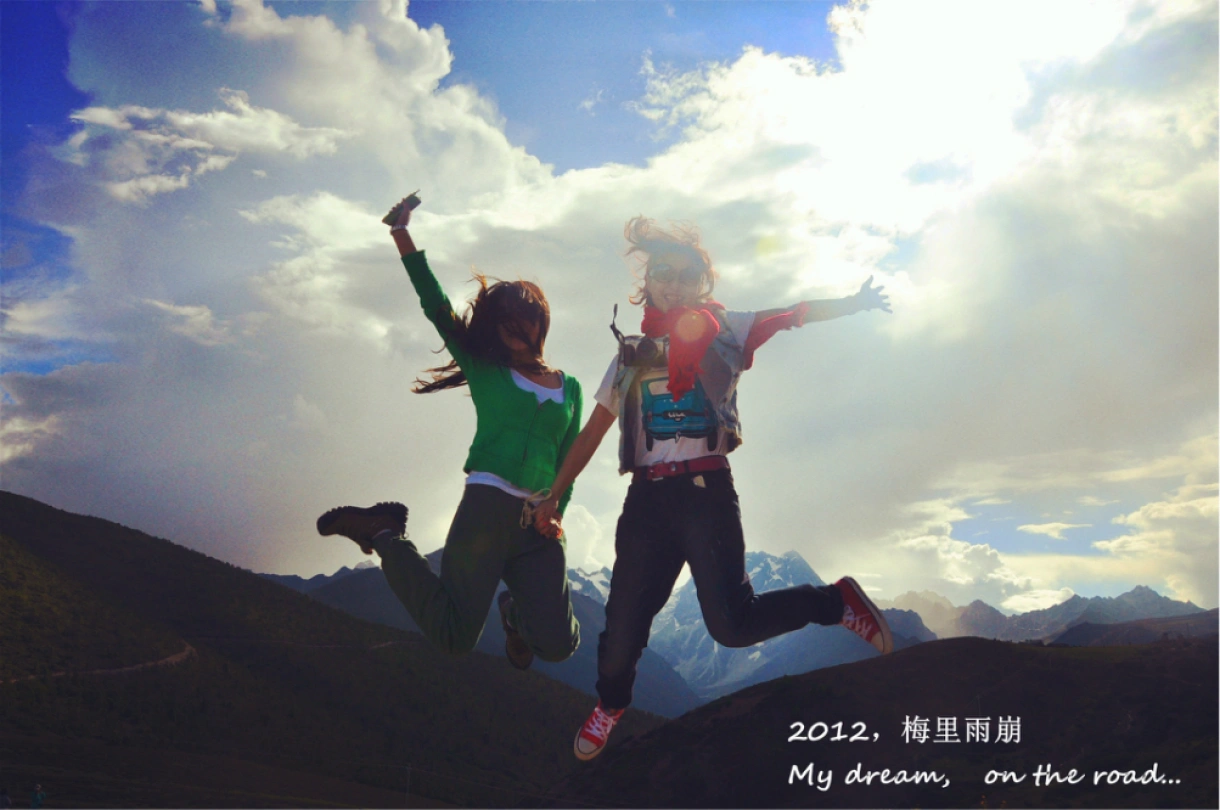
The Call of the Snow Mountains: Discovering Another Self in Yunnan
Prologue: Quitting My Job Wasn't an Escape—It Was a Search
"You've lost your mind! You quit your job just to travel?"
I've heard that line more times than I can count. Every time, I'd smile and reply, "I quit my job, then I decided to travel—not the other way around." There's a world of difference between the two.
In the summer of 2012, a like-minded colleague and close friend—both of us fed up with the grind—handed in our resignations, threw our bags over our shoulders, and set off for Yunnan. Fifteen days. We started in Lijiang, trekked the treacherous paths of Meili Yubeng, galloped across the grasslands of Shangri-La, woke to the mist over Lugu Lake, and strolled the cobblestone streets of Dali's old town. This isn't a guidebook. It's the record of an ordinary person's journey—with all its mess, its moments of awe, its struggles, and its growth.
If you've ever found yourself staring blankly at the neon lights outside your office window during a late-night shift, this article might just give you a little nudge of courage.
Preparation: A Craftsman Must Sharpen His Tools
Packing List
Documents: ID card, student ID (if you can still get one), bank card.
Clothing: Pack for all four seasons. A waterproof jacket and hiking boots are non-negotiable—trust me, on the trails of Yubeng, you'll thank yourself for bringing them. As for trekking poles, don't bother buying any. Just ask a friendly hiker heading downhill—they'll happily hand you a spare.

Toiletries: Sunscreen is your top priority. The UV in Yunnan is no joke. Also, bring plenty of resealable bags and garbage bags—they'll come in handy in ways you can't imagine.
Tools: Rain jacket! Rain jacket! Rain jacket! I'll say it three times because it matters. An umbrella is a total liability on a hike. Don't forget a water bottle, a flashlight, and knee braces.
Medication: Start taking 红景天 (Rhodiola rosea, a natural altitude remedy) a week before you go. Cold medicine, fever reducers, stomach medicine, and motion sickness pills are essentials. Painkillers and band-aids, too—just in case.
Snacks: Chocolate and beef jerky. When your energy tanks, these are your lifelines.
Booking and Transportation
I booked flights through Qunar, train tickets through the online booking system, and hotels via eLong. For our guide in Meili Yubeng, we went with Zhaba—a name with great reviews online. As it turned out, that was the best decision we made.
Day One: On the Road, a Kind of Practice
August 3rd. We left Chengdu, first taking the K113 train to Kunming (hard sleeper, 249 yuan), then transferring to the K9618 to Lijiang (hard seat, 90 yuan). Nearly two days on the train—long, but filled with anticipation.
We arrived in Lijiang's old town at eight in the evening. The innkeeper came to pick us up. We stayed at Zhandisimen Inn—a bit tricky to find, but close to Sifang Street and the food stalls. After dropping our bags, the first order of business was to reward our stomachs. Tomorrow, the real journey would begin.
Meili Yubeng: Hell on the Body, Heaven for the Eyes
Day One: Heading to Feilai Temple
August 4th, seven in the morning. We gathered at the Big Waterwheel in Lijiang's old town. Our ride was a spacious minivan, driven by a skilled driver. And our guide, Zhaba—a handsome Tibetan man—had the women in our group swooning.
One thing about traveling in Yunnan: you spend way more time in a car than you expect. Today's destination was Feilai Temple. Along the way, we passed the First Bend of the Yangtze River, Shigu Town, and Shangri-La, before crossing the Baima Snow Mountain Pass (4,292 meters above sea level). Thanks to the Rhodiola I'd been taking, altitude sickness didn't hit me.
The roadside toilets cost one yuan, sometimes fifty cents. I heard the people running them make 80,000 to 100,000 yuan a year. That number left me completely stunned.
We reached Feilai Temple in the evening and checked into Fenghui Hotel. A triple room, surprisingly spacious. Exhausted, I couldn't even think about food. I showered and crashed.
Day Two: An 18-Kilometer Personal Challenge
We woke up just after five in the morning, hoping to see the "Sunrise over the Golden Mountain." But the clouds were too thick. We only caught half of the spectacle—a bit of a letdown, but maybe it was a reason to come back someday.
At nine, we arrived in Xidang Village. The real challenge was about to begin. From Xidang to Upper Yubeng Village: 18 kilometers total, with 12 kilometers of uphill and 6 of downhill. You could take a mule (225 yuan for the whole trip) or have the mule carry your luggage while you walked. I overestimated my fitness and chose the latter.
A few steps in, I regretted it. I couldn't catch my breath; my legs felt like lead. Zhaba whittled a stick into a makeshift trekking pole for me. A fellow traveler lent us an umbrella—but then it started raining, and the umbrella was useless. We bought a 20-yuan disposable rain poncho at a rest stop.
On the trail, we'd pass hikers coming down, and we'd all exchange a simple "Keep going!" Those words of encouragement became the fuel that kept me moving. The driver had joked earlier that only three kinds of people come to Yubeng: idiots, lunatics, and heartbroken masochists. I guess I fell into the first two categories.
Around six in the evening, we finally made it to Yubeng Village. Eighteen kilometers. I actually did it. The sense of accomplishment was beyond words.
That night, Zhaba cooked dinner himself. The way he handled the kitchen—it was enough to make anyone swoon. But the accommodation was rough. The blankets felt damp, and I barely slept.
Day Three: Ice Lake, Here I Come
August 6th. Destination: Ice Lake. My knees were screaming in pain when I woke up, but thinking about the day ahead, I gritted my teeth and set out.
The moment we stepped into the forest, I was stunned by the overwhelming green. So dense, so alive—it felt like walking into a movie scene. No camera could capture that beauty. Some landscapes can only be felt.

Today's trail was even tougher than yesterday's—rough, uneven terrain at every turn. My friend and I had packed six cans of Red Bull. Whenever we felt thirsty, hungry, or drained, we'd take a sip. Along the way, we passed a woman hiking in flip-flops—and she was faster than me. A true legend.
It started raining when we reached the base camp. We rested briefly and pushed on. Ice Lake was right there in front of us, but it felt like we'd never reach it. Altitude sickness kicked in: pale lips, limp limbs. But somehow, I kept going until the end.
Ice Lake itself wasn't as breathtaking as I'd imagined. Maybe, as some online commenters say, it's the hardship of the journey that makes it seem so special. But standing there, looking back at the path I'd walked, I felt genuinely proud.
On the way down, we got lost. Thankfully, we reached the guide in time and stumbled our way back. That evening, Zhaba treated us to 青稞酒 (highland barley liquor). Five pots of that, plus a glass of homemade wine—we Northerners can hold our liquor, it turns out. Under the influence, I slept like a log that night.
Day Four: The Baptism of the Divine Waterfall
August 7th. Of the original 20-person group, only seven chose to head to the Divine Waterfall. Legend says it holds sacred water that Kawagebo, the revered mountain deity, brought down from heaven—water that can divine your fate and wash away misfortune.
Today's trail was relatively easier, but the task was more grueling: from Yubeng to the waterfall, back to Yubeng, then all the way back to Xidang. Three days, 65 kilometers total.
At the waterfall, you're not allowed to wear a hat. You have to put on a rain poncho and run three laps beneath the cascading water. I was weak, so I kept the poncho on—but I still got soaked to the bone. On the way down, altitude sickness hit me full force. Limp, nauseous, starving. With the guide and my friend's help, I finally got on a mule and rode back to Xidang.
When I reached Feilai Temple, I almost cried. Finally—a hot shower, a decent night's sleep.
Shangri-La: A Dream of Paradise
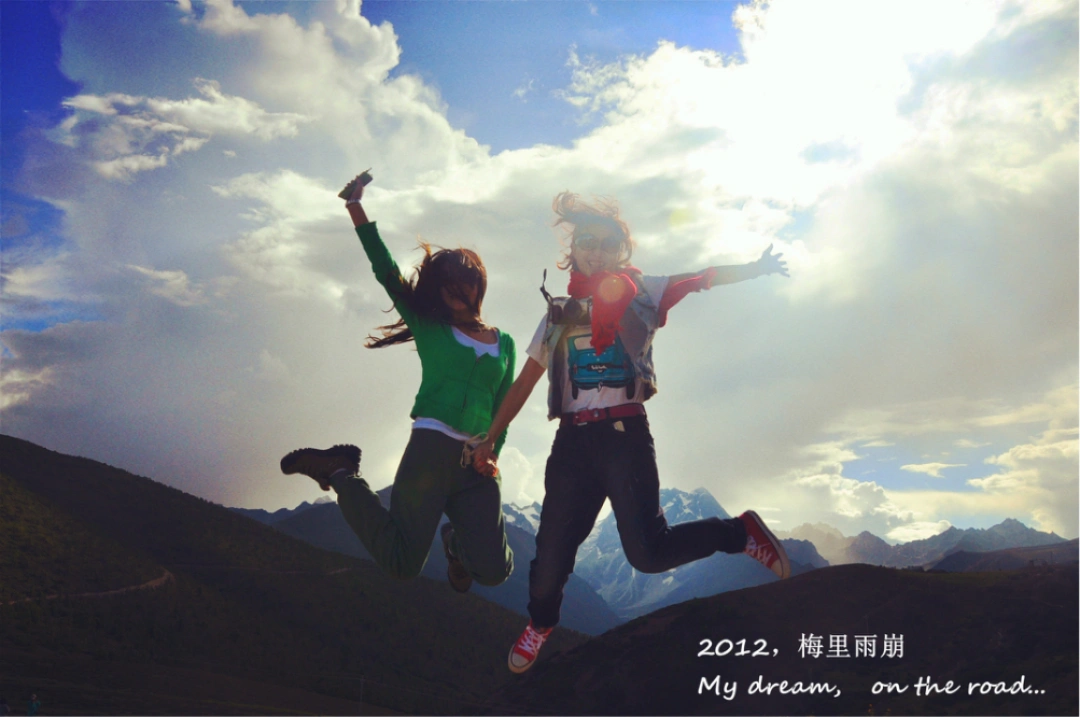
August 8th. We arrived in Shangri-La. The sky was an impossible blue. On the Napahai Yila Grassland, we rode horses and sang songs, as if we'd returned to a carefree childhood.
"Let us be wild companions, living life with abandon"—in that moment, I wished time could freeze forever.
Lugu Lake: In Search of Stillness
August 10th. After winding through eighteen hairpin turns, we reached Lugu Lake. The entrance fee was 100 yuan, halved with a student ID (I'd gotten one in advance, and it paid off).
Finding a hotel was a nightmare. We hadn't booked ahead, so we practically knocked on every inn around the lake. Lesson learned: if you're going to Lugu Lake, reserve a room at least a month in advance.
Epilogue: The Meaning of Travel
Fifteen days. Not long, not short. It took me two full days just to sort through the photos. Every single one brought back a memory.
People often ask me: Was it worth quitting your job to travel? My answer is yes. Not because of how many places I saw or how many photos I took, but because on the road, I met another version of myself—someone who dares to take on challenges, who isn't afraid to look a mess, who can still laugh even when things go wrong.
If you're thinking of going to Yunnan, here are a few tips:
- A rain jacket is a hundred times more useful than an umbrella, especially on a hike.
- If you're not in great shape, take the mule. Don't be a hero. Safety comes first.
- Book your room in advance, especially at Lugu Lake and during peak season.
- Bring plenty of medicine, especially for your stomach and motion sickness.
- Respect the local culture. In Tibetan areas, avoid saying anything taboo.
Finally, I want to say this: Travel isn't about running away. It's a different kind of searching. When you stand on a snowy peak, looking down at the sea of clouds below, you'll understand—some paths, you'll never know how beautiful they are until you walk them. Some versions of yourself, you'll never discover until you meet them on the road.
Yunnan is worth quitting your job for.
You should also read:

God’s Abandoned Palette: A Self-Drive Journey Through Yunnan’s Dongchuan Red Land
God’s Abandoned Palette: A Self-Drive Journey Through Yunnan’s Dongchuan Red Land Travel has never been about reaching some distant geographic coordinate. It’s about encountering, along the way, the version of yourself buried beneath the rubble of daily routine. During this May Day holiday, I finally…
Continue reading...
Cloud Travelogue · Dali of Wind, Flowers, Snow, and Moon: A Three-Day, Two-Night Journey of a Free Spirit
Cloud Travelogue · Dali of Wind, Flowers, Snow, and Moon: A Three-Day, Two-Night Journey of a Free Spirit I am a cultured female foodie with a touch of rogue charm. I slung on my backpack, took my lover's hand, and set off on a spontaneous…
Continue reading...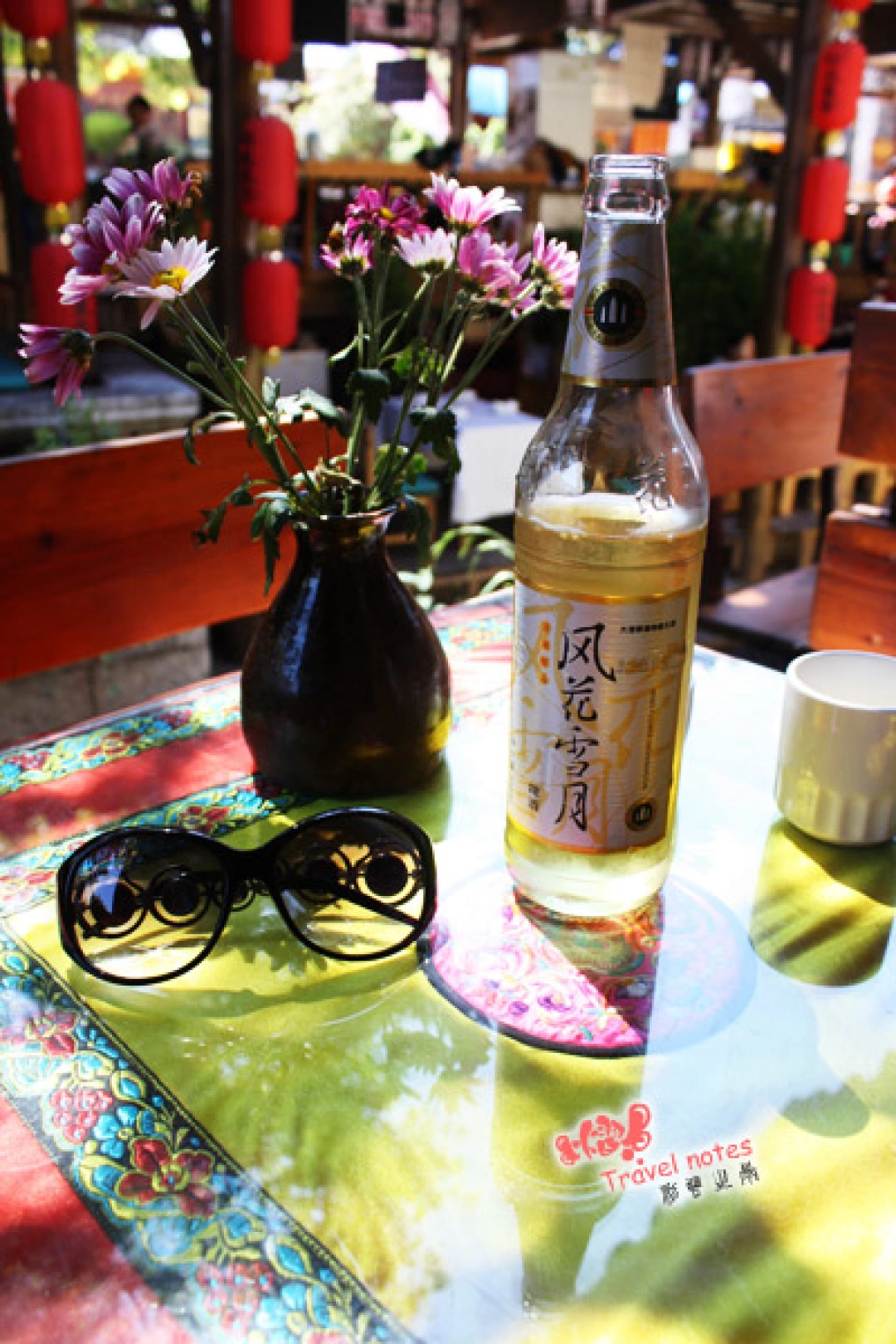
The Slow Life of Lijiang: A Soft Dream on the Yunnan-Guizhou Plateau
The Slow Life of Lijiang: A Soft Dream on the Yunnan-Guizhou Plateau Some places, just by hearing their name, stir a ripple in your heart. Lijiang is one of those names. It's not the kind of destination that demands you tick off a checklist of…
Continue reading...