Dream Traveler: From Erhai to Lugu Lake — A Dialogue with the Stars and the Self
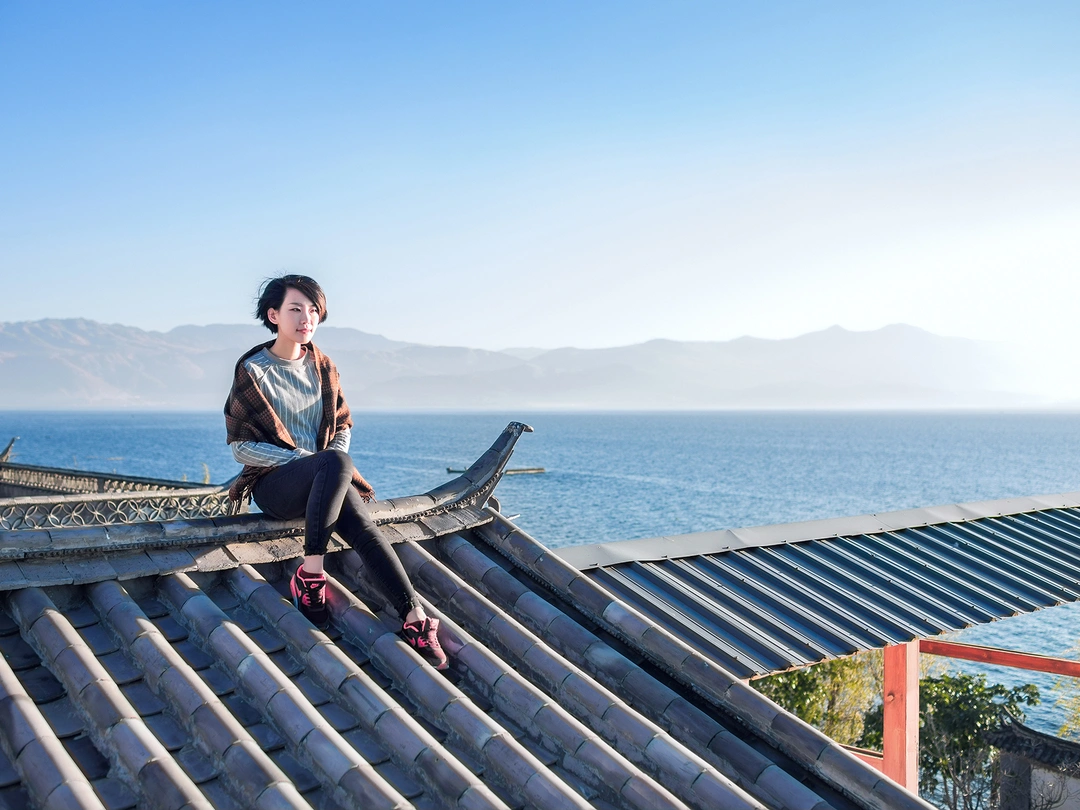
Dream Traveler: From Erhai to Lugu Lake — A Dialogue with the Stars and the Self
Prologue: When Life Calls for an Escape
Have you ever had that moment? Sitting in your office cubicle, the sunlight streaming perfectly through the window, while you feel like a specimen preserved in formaldehyde — stable, safe, and suffocating. A steady paycheck, a predictable routine, a life without ripples — everything looks serene on the surface, but inside, you're as drowsy as a student in morning detention.
On the first day of 2015, my companion Duoduo and I decided we could no longer endure this slow-boiling-frog kind of comfort. We packed our hearts full of excitement, left the city's noise behind, and set out on a journey from Erhai Lake to Lugu Lake.
This is not a typical travelogue. It's more like a traveler's journal — a record of the scenery along the way, the emotions stirred within, and the answers to life that gradually came into focus on the road.
Chapter One: Departure in the Dark, Transfer in Kunming
Shanghai → Kunming | Flight time: approximately 3 hours
At 4:30 PM, the plane took off from Shanghai Hongqiao. I leaned against the window, watching the sky darken as the lights on the ground flickered to life like scattered diamonds on black velvet. The streets and buildings that looked chaotic from ground level now revealed a kind of geometric beauty from 30,000 feet above.
It turns out that only when you're far enough away can you see the beauty you usually overlook.
I barely slept that night on the train. When we arrived at Dali Station, the sky was still dark. Compared to 7:00 AM in Shanghai — where the subway stations are crammed with commuters rushing to work — the morning here was so quiet that only the roosters from distant villages could be heard. The 1,870 miles (3,019 kilometers) between them wasn't just a 20-inch (50.3 cm) line on a map; it was two completely different rhythms of life.
Chapter Two: Erhai — The Magic of Light and Shadow

Dali → Xizhou | Transportation: taxi, approximately 100 yuan
The First Light of Morning
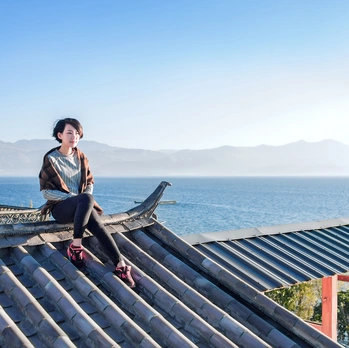
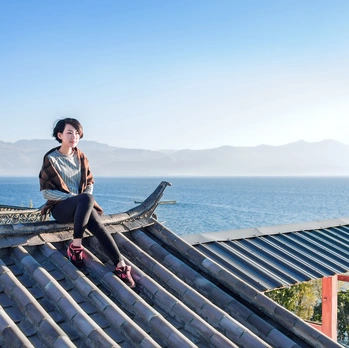
We settled in a village called He'eyijiang on the shores of Erhai. The rooftop of our inn was the perfect lookout — standing there, the entire lake spread out before us. Sunlight spilled across the shimmering water like countless spirits dancing on the surface.
Sunrise in Yunnan comes later than in the east; during this season, it arrives around 8:10 AM. The best time for photography is between 7:30 and 8:30 AM.
Four Methods for Controlling Light Ratio (Photography Tips):
- Graduated Neutral Density (GND) Filters (Recommended brands: Lee, Hitech, Hoya) — Beginners should start with a soft-edge 0.6 filter. The advantage is simplicity and convenience; the downside is that scenes with uneven boundaries, like trees in the foreground, can produce visible edges.
- Black Card Technique — Requires an ND filter to extend exposure time. The advantage is flexible control; the downside is that it takes multiple attempts to get right.
- Bracketing — Set your camera to 2 stops, 5 shots, then merge in HDR software later. The advantage is simplicity in the field; the downside is more work in post-processing.
- "Pushing the CMOS" — The most brute-force method: shoot a single RAW file and push the highlights and shadows in post-processing. This method heavily depends on your camera's sensor (cameras with Sony CMOS sensors, like the Nikon D800/D810 or Sony A7S, perform exceptionally well).
The Slow Pace of Xizhou
We set off from the village entrance toward Xizhou Town, with vast farmland on both sides. Naively, we thought a 20-minute walk would get us there. Half an hour later, the town was still nowhere in sight — a mistake I'd made before in Hailar. We gave up and ducked into the fields to take photos and tease the cows sunbathing by the roadside.
Xizhou Ancient Town has a walled-off mansion complex that charges 60 yuan for entry — hardly worth it. We did, however, listen to a Bai ethnic girl explain local customs and taste the "Wind, Flower, Snow, Moon" four-course tea ceremony, which was a small consolation.
Back at the inn, we wolfed down five dishes and a soup (the inn's meal set was 60 yuan per person, and the flavor was commendable). After a lunch break, we rented bicycles and rode along the West Ring Road toward Haishe Park, a one-way trip of about 2.5 miles (4 km).
Twilight: The Tenderness Between Sun and Night
The world isn't just black and white. The most beautiful light always comes at dawn and dusk — when the sun is no longer harsh, shadows are soft, clouds are edged in gold, and the reeds glow amber. The reeds at Haishe Park looked like an oil painting in the backlight.
By the time we cycled back, it was 8 or 9 PM. The road was empty of pedestrians and cars, and I pedaled in panic while Duoduo calmly held up a light to guide me.
Romance Under the Stars
"The sky is empty now, as if everything has been wiped away, but once the Milky Way was as common as dust." — Toni Morrison
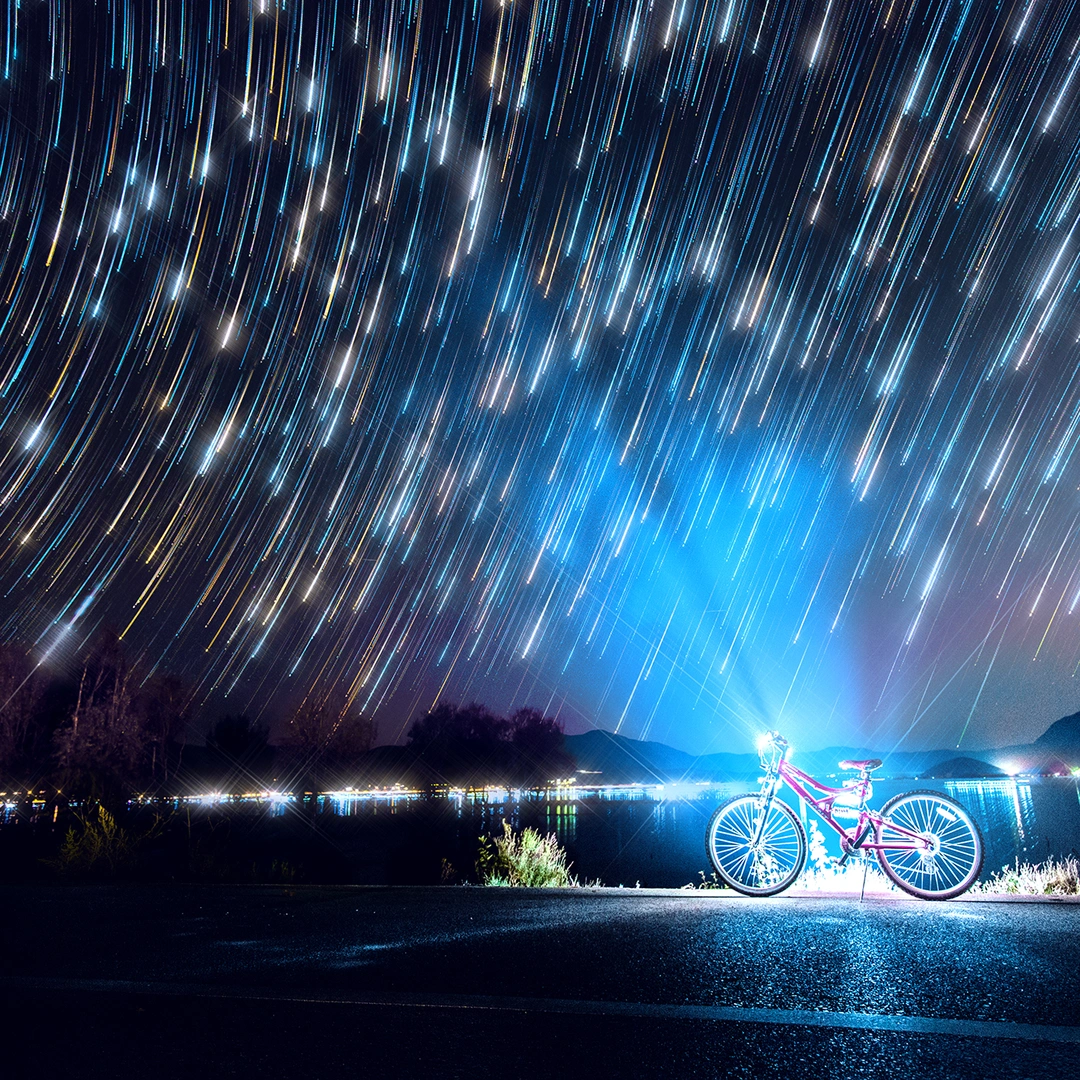
Shooting the stars was a major goal of this trip. Unfortunately, due to insufficient preparation, I only managed to capture one star trail photo by Erhai Lake. Here are some scientific methods for star photography:
Essential Apps: 1. Sun Surveyor — Uses 3D compass, maps, and AR mode to predict the position of the sun and moon, helping you find the perfect shooting window between moonset and sunrise. 2. Star Walk — Helps you accurately locate the Milky Way and find suitable scenes for creative compositions.
Star Photography Tips: - Avoid the full moon (the best time is around the new moon, when the moon rises and sets with the sun). - Stay away from light pollution. - In mid-latitudes of the Northern Hemisphere: In spring, the Milky Way runs parallel to the horizon; in summer, it runs north-south; in autumn, it slants across the northern sky; in winter, it also runs north-south but is dimmer. - For the bicycle photo, I used an LED light behind me to outline the silhouette — more on lighting techniques later.
Chapter Three: Lijiang — The Warmth Beyond Commercialization
Xizhou → Lijiang | Bus: 75 yuan + 5 yuan booking fee, approximately 2.5 hours
The Duality of Noise and Quiet
When people talk about Lijiang, the most common complaint is that it's "too commercialized." In Sifang Street, the lights are still blazing at 11 or 12 at night — small bars with guitar players, noisy nightclubs, all kinds of people, a constant flow of traffic.
But I think the worn-down cobblestones of Wuyi Street aren't Lijiang, and the hurried crowds of Sifang Street aren't Lijiang either. The real Lijiang should be slow, graceful, and deeply warm — hidden in the stone slabs, under the eaves, in the croaking of frogs in the gardens.
When Lijiang learns to slow down, the Lijiang we once knew will return.
Night Portrait Photography Secrets
These night portraits were all shot with artificial light for fill. The basic principle is three-point lighting: key light, fill light, and rim light. I brought two portable LED lights: 1. LED Tube Light — Can be focused or diffused, very practical. 2. Aputure A Video Light
The key is patiently adjusting the light positions until the photo looks natural and comfortable.
Chapter Four: Lugu Lake — A Transparent Tear
Lijiang → Lugu Lake | Bus: approximately 9 hours, 100 yuan per person
The Price of Nine Bumpy Hours
On the first workday of 2015, however many hours you worked, that's how long I was carsick. That cursed egg pancake made me experience the embarrassment of hugging a trash can for the first time. The mountain roads were so narrow that two cars could barely pass each other, and all I heard the whole way was people screaming. We switched buses three times, crossed mountains and valleys, and didn't arrive at Daluoshui Bus Station until around 6 PM — just about the time people normally get off work.
Transportation Tips: - Shared van from the bus station to Lige Village: 20 yuan per person - Private car for return trip: 100 yuan per person, about 6 hours, no transfers but no insurance - Or buy a return ticket at the bus station: 100 yuan per person, one bus daily at 10:30 AM, about 9 hours - Word has it that after the new road opened, the trip from Lijiang to Lugu Lake takes only 3 hours
Twilight and Starry Skies
Lugu Lake is as quiet as a tear. Its transparent waters reflect the blue of the sky and the green of the trees, carrying a hint of sadness and a touch of pride, cut off from the noisy world.
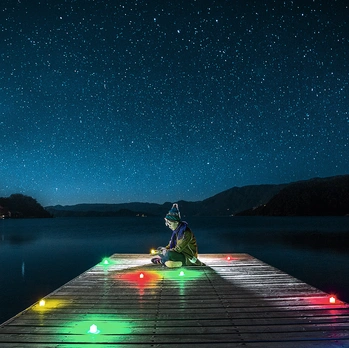
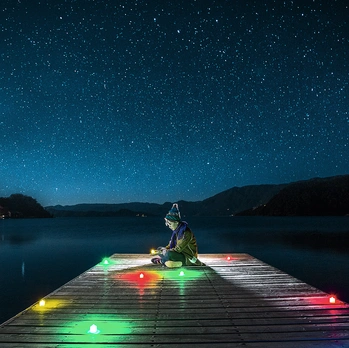
Unfortunately, it was the 15th day of the lunar month, and the moon was full and bright, illuminating the entire night sky and the lake's surface — I missed my chance to shoot the Milky Way. But Lugu Lake has almost no light pollution, making it an excellent spot for stargazing.
Lighting Technique: For this photo, I hid one LED light behind the subject to outline the silhouette, placed another on the left balcony for fill light on the face, and added some small candle lights to enrich the colors.
Chapter Five: Around Lige — Prayer Flags and Faith
Mani Stones and the Magic of Light
Walking up the stone steps to the Mani stone pile, the structure looked dull on its own. Add one light, and the scene instantly gained depth. When photographing a small car, I added multicolored candles to create a magical effect and make the composition more vibrant.
The Five Colors of Prayer Flags
White symbolizes purity and kindness; red represents prosperity and strength; green stands for gentleness and peace; yellow signifies benevolence and wisdom; blue embodies alertness and courage. These five-colored flags string together a landscape, having received the prayers of millions and witnessed years of devotion — they are faith made visible.
Golden Rules for Portrait Photography
- Best morning light: Summer, 5-6 AM; Winter, 7-8 AM
- Best afternoon light: Summer, 5-6 PM; Winter, 4-5 PM
- For rim light: Place the light source directly behind the model. For texture: Place the light source to the side.
- Camera settings: Wide aperture, Manual mode, Spot metering.
- First reduce the EV value, then adjust later based on your computer screen.
Chapter Six: Around the Lake — Stopping and Starting
Private car for lake tour: 300 yuan per car, approximately 4.5 hours
Lake Tour Route: Lige → Lige Peninsula → Nisai Village → Lovers' Beach → Zhaojia Bay (Goddess Bay) → Walking Marriage Bridge (Grass Sea) → Luoshui Village → Lige
The Irony of the Viewpoint
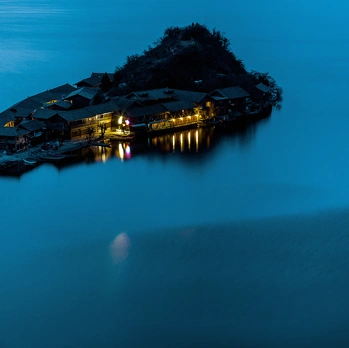
The must-visit spot for an overhead shot of Lige is often a bus pulling up, a wave of tourists flooding to the viewing platform, all standing at the same angle, desperately trying to capture the heart-shaped lake that the paid photo spot offers, then getting back on the bus. Ten minutes later, another bus, another wave of people, repeating the same actions. Imagine putting all those photos together — it's like one person changing different outfits.
The Grass Sea and the Walking Marriage Bridge
The little blue stools by the shore, the tranquility of Lovers' Beach, the wind on the Walking Marriage Bridge — each place has its unique beauty.
Chapter Seven: Farewell — A Dream of Stars
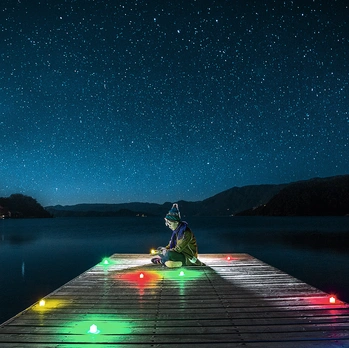
An Unexpected Gift on the Return Trip
On the way back, our bus was delayed for two hours due to an accident. We were supposed to arrive by 7 PM, but it was pushed back to 9 PM. But this delay gave me an unexpected gift — as we passed through mountain villages, the peaks happened to block the moonlight, and through the window, the Milky Way and its stars were crystal clear. The sparse village lights in the darkness looked exactly like stars in the sky, making me feel as if I were floating in some corner of space — surreal, dreamlike.
For that hour, my eyes never left those stars. I thought about how the light might have traveled for tens of thousands of years, and how perhaps those stars had already fallen, scattered, ceased to exist — so I couldn't help stealing a few more glances, even as my neck ached.
The Night View of Lijiang Ancient Town
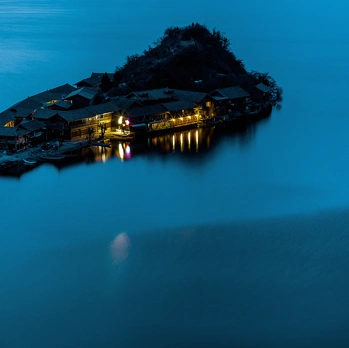
Free route to see the full view of the ancient town: Follow the stone steps from Sifang Street Square up Lion Hill, turn right at the fork near Two Cats Café, follow the alley all the way in, passing by the 2046 Inn...
Epilogue: Travel — A Way to Stay Connected to the World
Back in Shanghai, sitting at my desk again, the sunlight outside the window is the same. But something has changed inside me — there's now a stretch of shimmering blue water in my heart, clouds edged in gold, blue skies, sunshine, and faith.
Travel has taught me this: When you focus on doing one thing with all your heart, in time, it will bloom into many flowers.
I am Big Fish. I touch the edges of the world with my eyes, and I tell you the stories of the scenery.
Practical Information Summary:
Suggested Itinerary (8 days): - D1: Shanghai → Kunming (overnight on train) - D2: Kunming → Dali → Xizhou (Erhai Lake, Xizhou Ancient Town, Haishe Park) - D3: Xizhou → Lijiang - D4: Lijiang → Lugu Lake - D5-D6: Lugu Lake (Lige area and lake tour) - D7: Lugu Lake → Lijiang - D8: Lijiang → Shanghai
Cost Reference (for two people): - Transportation: 4,790 yuan - Accommodation: 1,060 yuan - Meals: approximately 1,200 yuan - Other: 470 yuan - Total: 7,520 yuan, 3,760 yuan per person
Equipment List: - Cameras: Canon 6D, Minolta x700 - Lenses: 17-40mm f4, 35mm f1.4, 50mm f1.4, 70-200mm f2.8 - Accessories: Tripod, polarizing filter, ND filter, LED lights
You should also read:

God’s Abandoned Palette: A Self-Drive Journey Through Yunnan’s Dongchuan Red Land
God’s Abandoned Palette: A Self-Drive Journey Through Yunnan’s Dongchuan Red Land Travel has never been about reaching some distant geographic coordinate. It’s about encountering, along the way, the version of yourself buried beneath the rubble of daily routine. During this May Day holiday, I finally…
Continue reading...
Body in Hell, Heart in Heaven: A Pilgrimage Through Tiger Leaping Gorge — A Dialogue Between Heaven and Earth
Body in Hell, Heart in Heaven: A Pilgrimage Through Tiger Leaping Gorge — A Dialogue Between Heaven and Earth Introduction: When the Gorge Splits Open Beneath Your Feet Some say Tiger Leaping Gorge is the closest place on Earth to the border between "hell" and…
Continue reading...
Golden Luoping: A Romantic Encounter with Sunshine and Seas of Flowers
Golden Luoping: A Romantic Encounter with Sunshine and Seas of Flowers Introduction: The Third Time's the Charm Some landscapes are destined to be seen at the right moment. For me, that was exactly the case with Luoping's rapeseed flowers. On February 22, 2011, the Luoping…
Continue reading...