Eight Years Later, Reunited with Mountains and Sea: A Solo 5-Day Photography Journey Through Dali
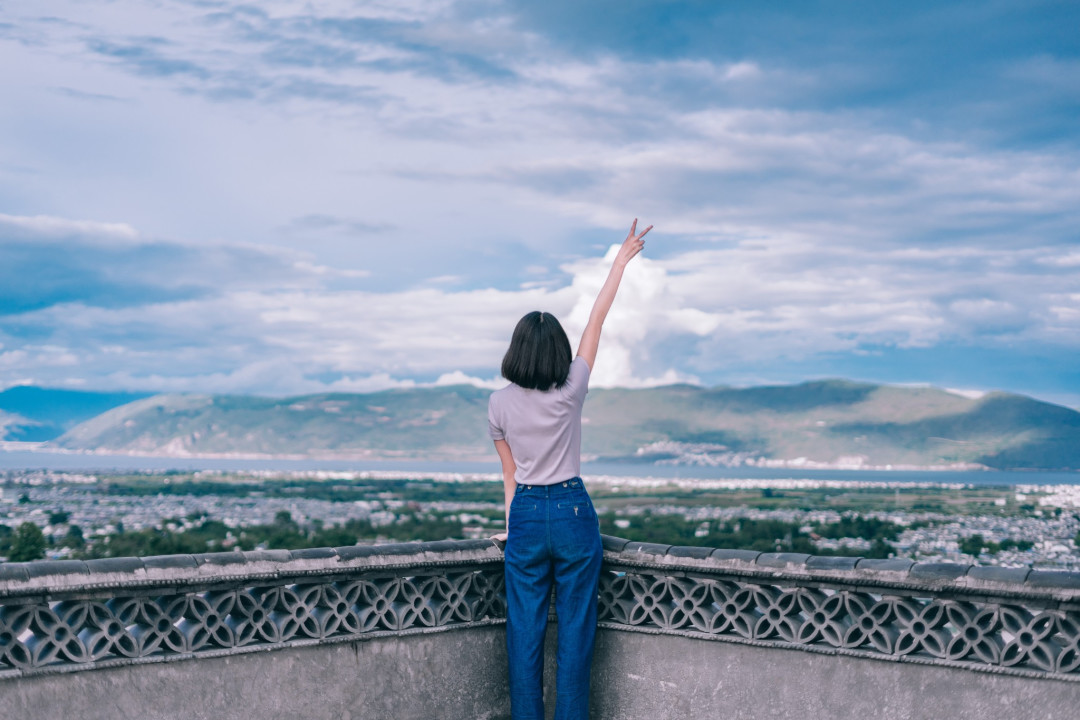
Eight Years Later, Reunited with Mountains and Sea: A Solo 5-Day Photography Journey Through Dali
Prologue: When Travel Becomes a Luxury
The autumn of 2022 felt like an endless wait for anyone who loves to travel. As a nine-to-five office worker, I was used to measuring the world in footsteps and capturing landscapes through my lens. But with the pandemic dragging on for two years, even leaving my home province had become a distant dream — the last time I boarded a plane was two years ago.
I had originally planned to hike the Four Sisters Mountain (Sì Gū Niáng Shān) in western Sichuan for National Day, but a sudden outbreak there threw all my plans into chaos. After weighing the risks across different regions and poring over pandemic policies, my gaze settled on Dali, Yunnan. A place I had only glimpsed briefly in 2014 — eight years later, I finally had the chance to revisit it alone.
First Sight of Erhai Lake: A Declaration of Freedom Under the Stars
Departing from Guangzhou South Station, the 11-hour high-speed rail ride cost just over 600 RMB. Compared to the sky-high flight prices during holidays, it was a steal. I put on my headphones, turned up the volume to drown out the chatter of the carriage, and that long-lost feeling of "setting off" washed over me.
I arrived at Dali Station in the evening. A quick COVID test upon arrival, a flash of my green health code, and everything went smoothly. I took a taxi straight to a guesthouse near Longkan Pier. Dropping off my luggage, too excited to rest, I hurried to the shore of Erhai Lake.
By night, Longkan Pier had shed its daytime bustle. The square-dancing aunties had called it a day, and most tourists had drifted away. Only a young woman singing with a guitar was still practicing, and I became her sole audience. The sound of the lake's waves, the cool breeze, and the starry sky above — in the city, I hadn't seen the Milky Way so clearly in years. I raised my fixed-focus camera, clicked the shutter, and captured the first moment of this journey.
A solo trip — freedom and joy, as simple as that.
Cycling the West Shore: A Blue Fairy Tale After the Rain

A Missed Sunrise, But a Field of Flowers
At 6 a.m. on the second day, I stumbled in the dark to Longkan Pier to wait for sunrise. But the weather had other plans — cloudy skies, no trace of the "stunning sunrise" from Xiaohongshu (Little Red Book). I snapped a few shots and headed back to the hotel for a nap. Post-processing filters would have to add some "comfort" to the photos later.
In front of the guesthouse, a sea of purple flowers stretched out. I wrapped myself in the purple shawl I had bought in Yunnan eight years ago, ready for some portraits. A balloon vendor happened by and generously lent me his entire bundle. I ended up with a satisfying shot — "Portrait with Balloon Sea." I thought about buying that purple flower balloon, but it was too big to carry around. I let it go.
Surprise After the Storm
No sooner had I sat down in a restaurant than the sky opened up. A torrential downpour. I was the only customer. I ordered two dishes, and the portions were enormous. The owner's daughter brought out a huge bowl of rice, and I forced myself to finish it. The rain showed no sign of letting up, and I was ready to abandon my cycling plan and take a taxi to the next guesthouse. But just as I stepped outside, the sky cleared. Yunnan's weather — utterly unpredictable.
After the rain, Longkan Pier was packed. The famous "Longkan Ancient Ferry" spot, with its wooden bridge over the water, was taken over by wedding photos. One couple spent over an hour there. Don't waste your time here — there are more beautiful spots along the ecological corridor.
Cycling Erhai: Scenery Straight Out of a Comic
I rented a bike at the pier for 10 RMB with no time limit. I tied that purple balloon I'd been thinking about to the back of the bike and set off. The weather was unreal — blue sky, white clouds, gentle breeze. Erhai Lake's beauty was breathtaking. No filter needed; the camera couldn't even fully capture it.
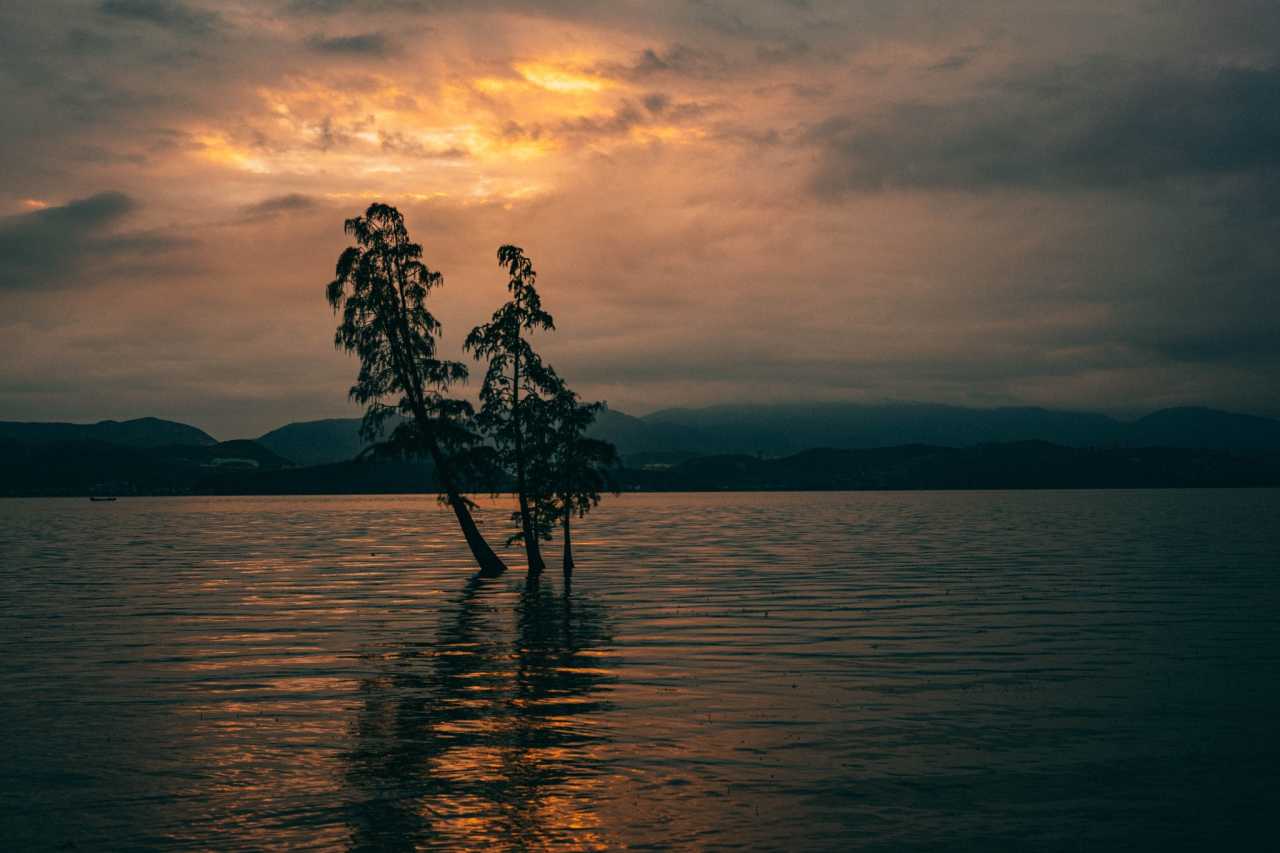
The beauty of cycling alone is that you can stop anytime to take photos. I had my tripod, adjusting the camera and setting the timer repeatedly, with passersby wandering into my shots. As long as I wasn't embarrassed, everyone else would be — haha.
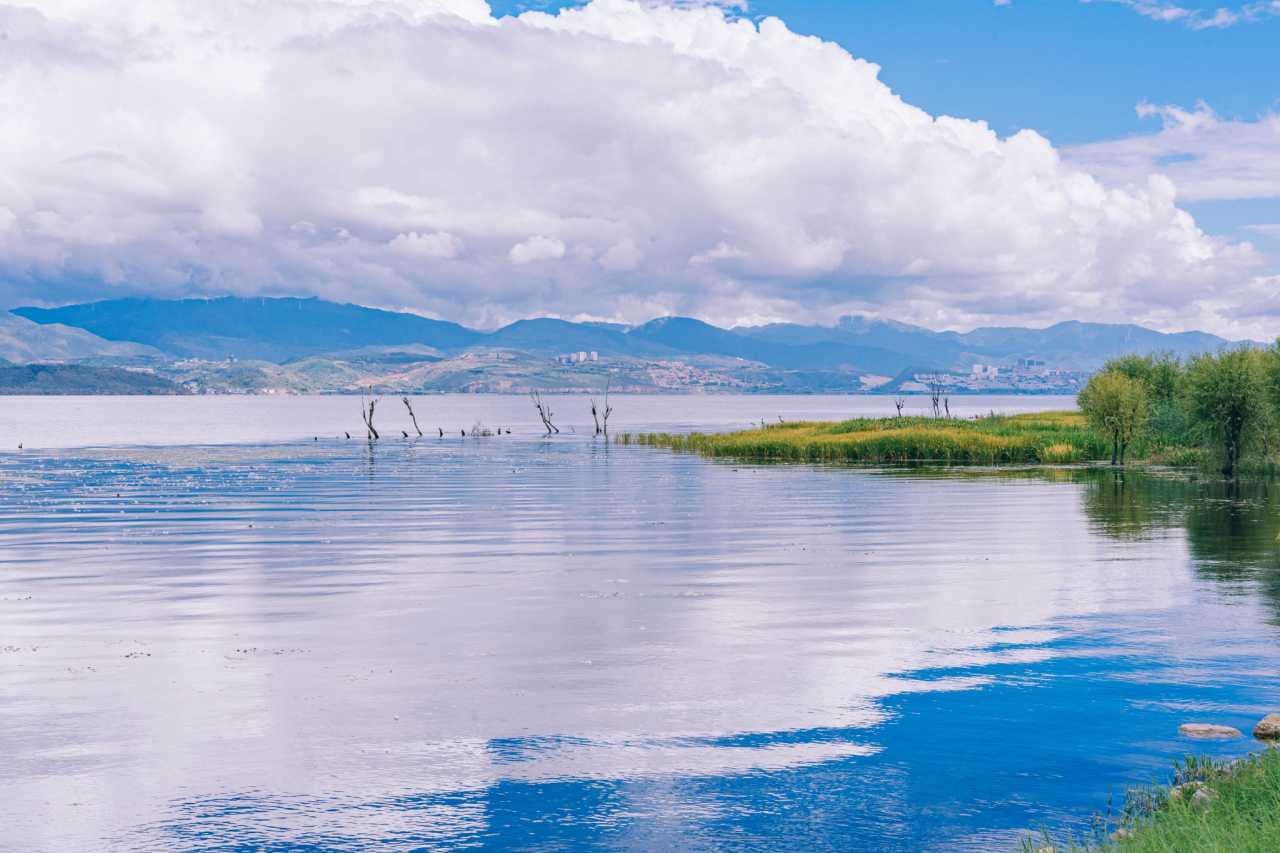
From Longkan Pier to near Hongta Park, there's a stretch where the sky and water are an unbelievable blue. White clouds reflected on the surface, as clear as scenes from an anime film. My phone captured the colors better than my DSLR.
By the time I reached Caicun Village, it was getting dark. Ten kilometers cycled today. I hailed a taxi to the next guesthouse — Xiabopeng Village.
Xiabopeng: Quiet, Peaceful Little Joys
This guesthouse sits right on the west shore ecological corridor, between Longkan Pier and the famous "Pantaos S-Curve." Without the noise of those two spots, it was so quiet you'd never guess it was National Day. The owner is a local Dali native, warm and kind. His wife's homemade rice noodle breakfast was delicious. The room was clean and tidy, offering incredible value for money.
The guesthouse is a three-story building with a courtyard. From the room and the rooftop, you could see Cangshan Mountain and Erhai Lake, with an open, unobstructed view. In the evening, I watched the clouds roll by from the rooftop — for the first time, I could see their shapes so clearly with the naked eye, so detailed it felt like I was standing on them. The "Colorful Clouds of the South" — the name is well earned.
It rained that night. The village had only three or four restaurants, none of which felt right for a solo diner. Just as I was worrying, I spotted another guy eating alone in one of them. We happily shared a table. Turns out, he was from Guangdong too, working on lake and sea environmental protection in Yunnan. He told me that before the ecological corridor was built, Erhai Lake's water quality was poor — algae blooms, foul smells. After the corridor was constructed, measures like fencing had significantly improved the water.
One of travel's charms is meeting different people and learning about different worlds.
Xizhou: Golden Rice Fields and Monet's Paintings
Cycling Continues
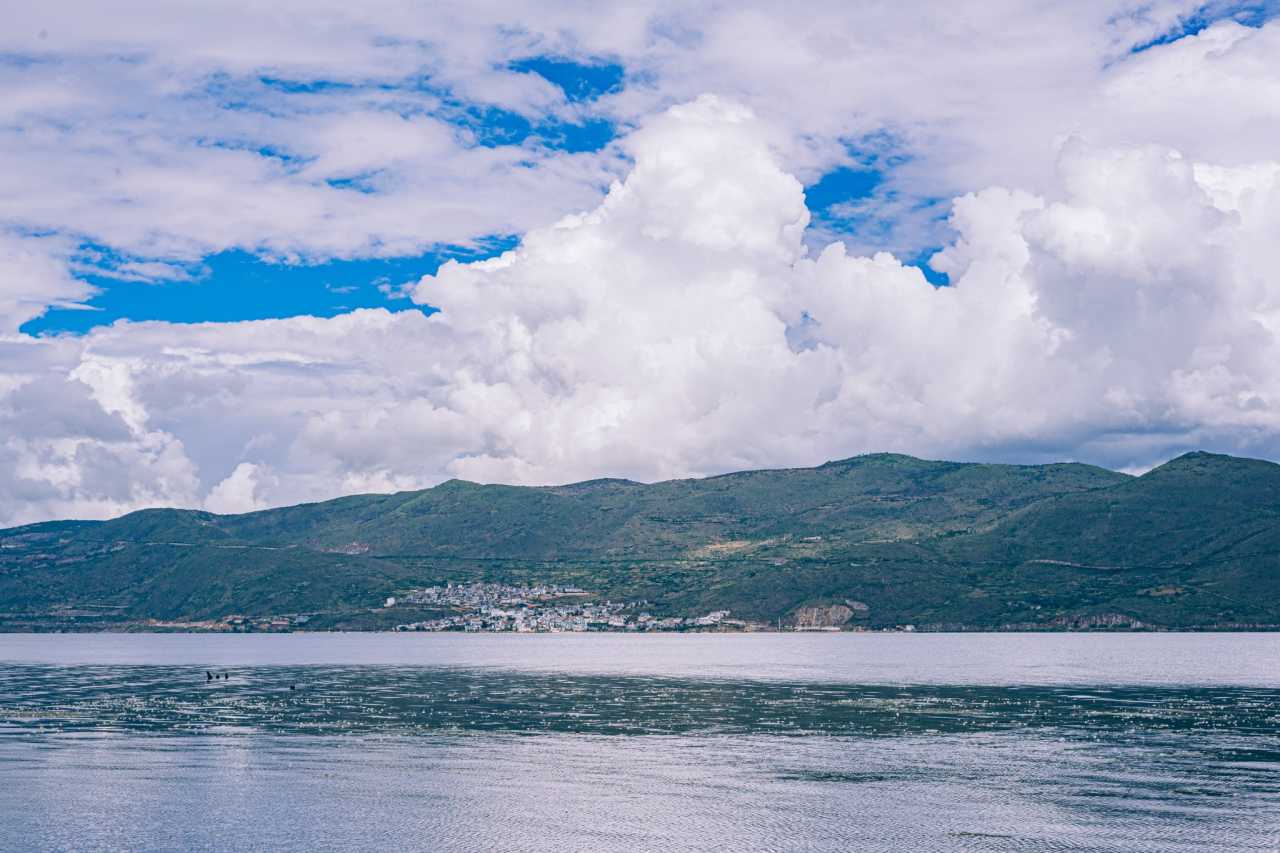
I woke up naturally, had a leisurely breakfast in the guesthouse courtyard, and watched the sparse passersby. I started to wonder if this was really National Day.
I grabbed a yellow shared bike from the ecological corridor and set off from Xiabopeng Village, planning to ride to Pantaocun Village first, then on to the Xizhou section. The first half was quiet, with a beautiful stretch of reeds. When I reached Pantaocun, the crowds suddenly appeared — dense, overwhelming. The power of internet fame is terrifying — artificial setups, cameras, fences, and aunties constantly asking, "Want your hair braided?"
The sky suddenly darkened. A gale blew in, followed by a torrential downpour. I ducked into a drink shop and ordered a delicious mango yogurt, waiting for the rain to stop. It took forever, and it never really let up. Checking the map, I saw the Xizhou section was still far away. I gave up on cycling and took a taxi to Xizhou Ancient Town.
Rice Fields and Haishe Park
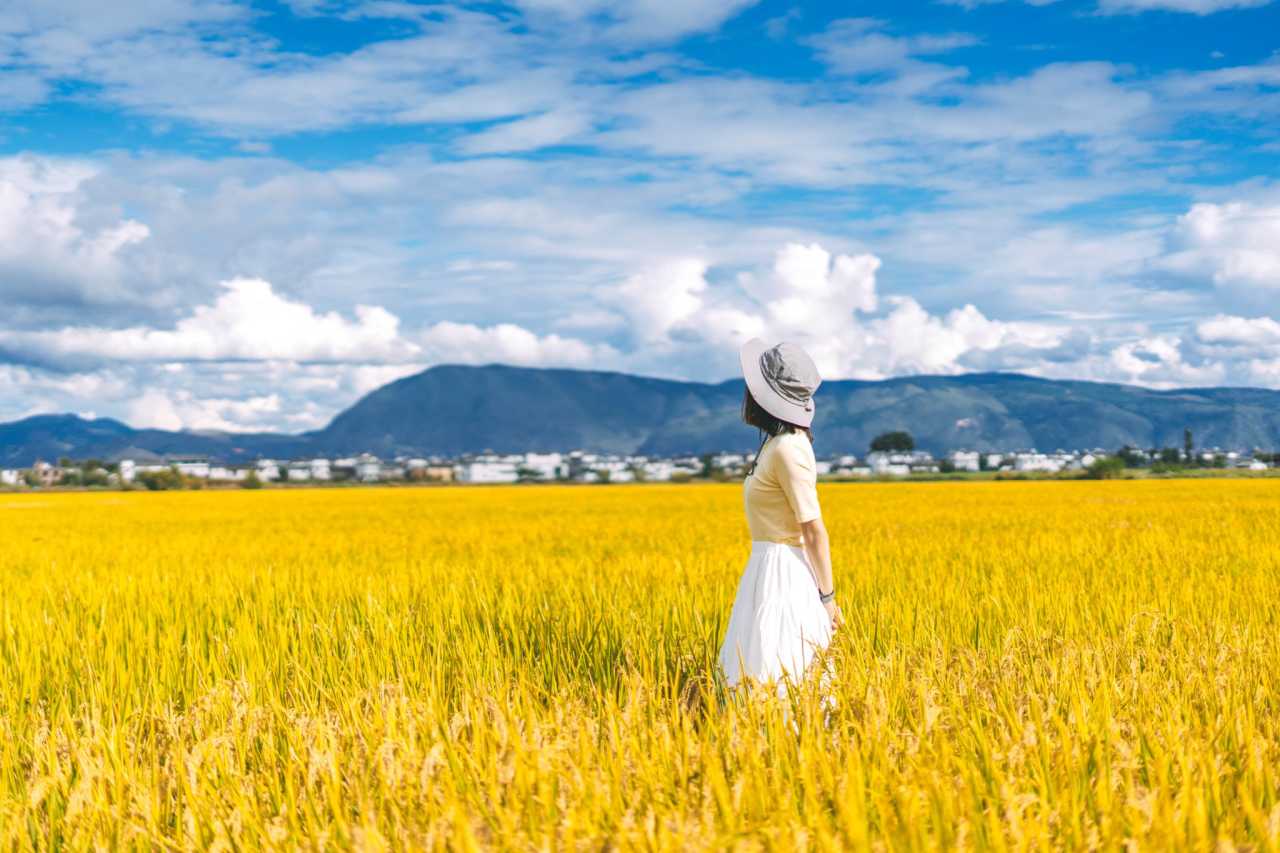
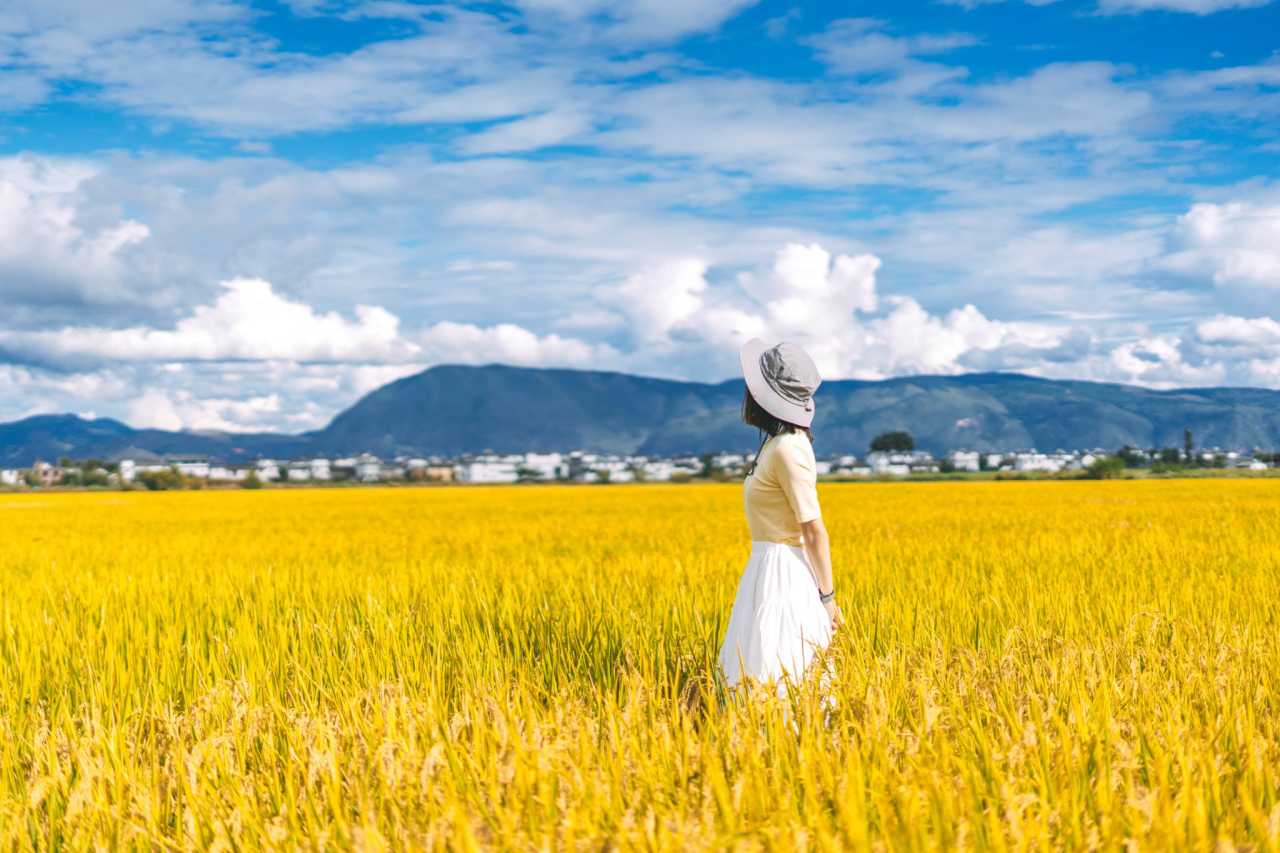
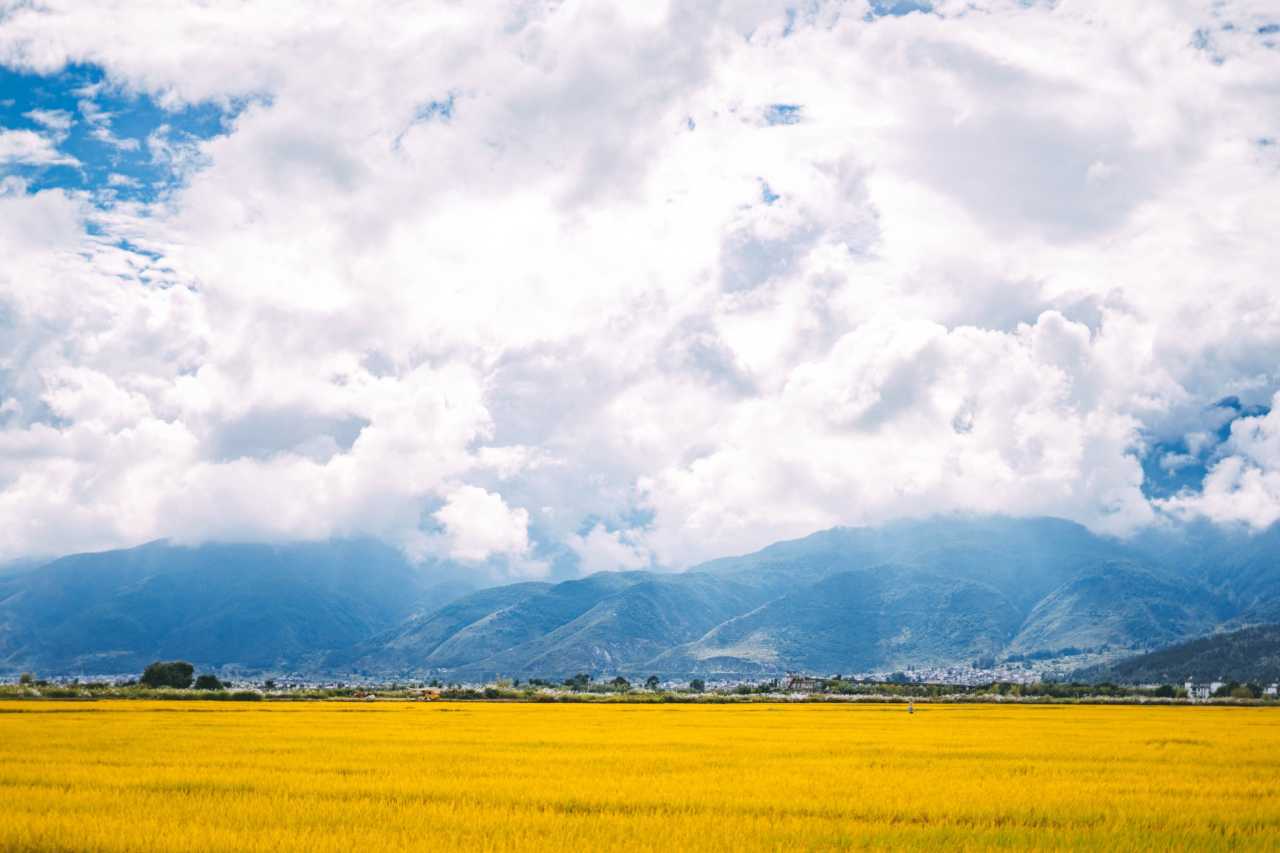
I didn't bother exploring the ancient town much. I navigated straight to "Sixia Village" — a rice field photo spot recommended on Xiaohongshu for being less crowded. Sunlight, golden rice fields, Cangshan Mountain, blue sky, white clouds — it was stunning. No need to jostle with the crowds in Xizhou Ancient Town's rice fields. You could cycle through the golden path or drive here with friends for a picnic. Sit by the fields with a coffee, and the wind carries the scent of rice.
In the evening, I went to Haishe Park to watch the sunset. A ten-minute taxi ride — getting around Dali is easy. Haishe Park was much bigger than I expected. The plant landscaping was beautiful, like a Monet painting. Many people were strolling, cycling, or skateboarding. It was cloudy, so there was no sunset. I took a taxi back to the guesthouse.
Xizhou is the kind of place you want to stay for a few days, soaking it all in slowly.
March Street Market: The Warmth of Everyday Life and Rooftop Romance
Switching Hotels, an Unexpected Surprise
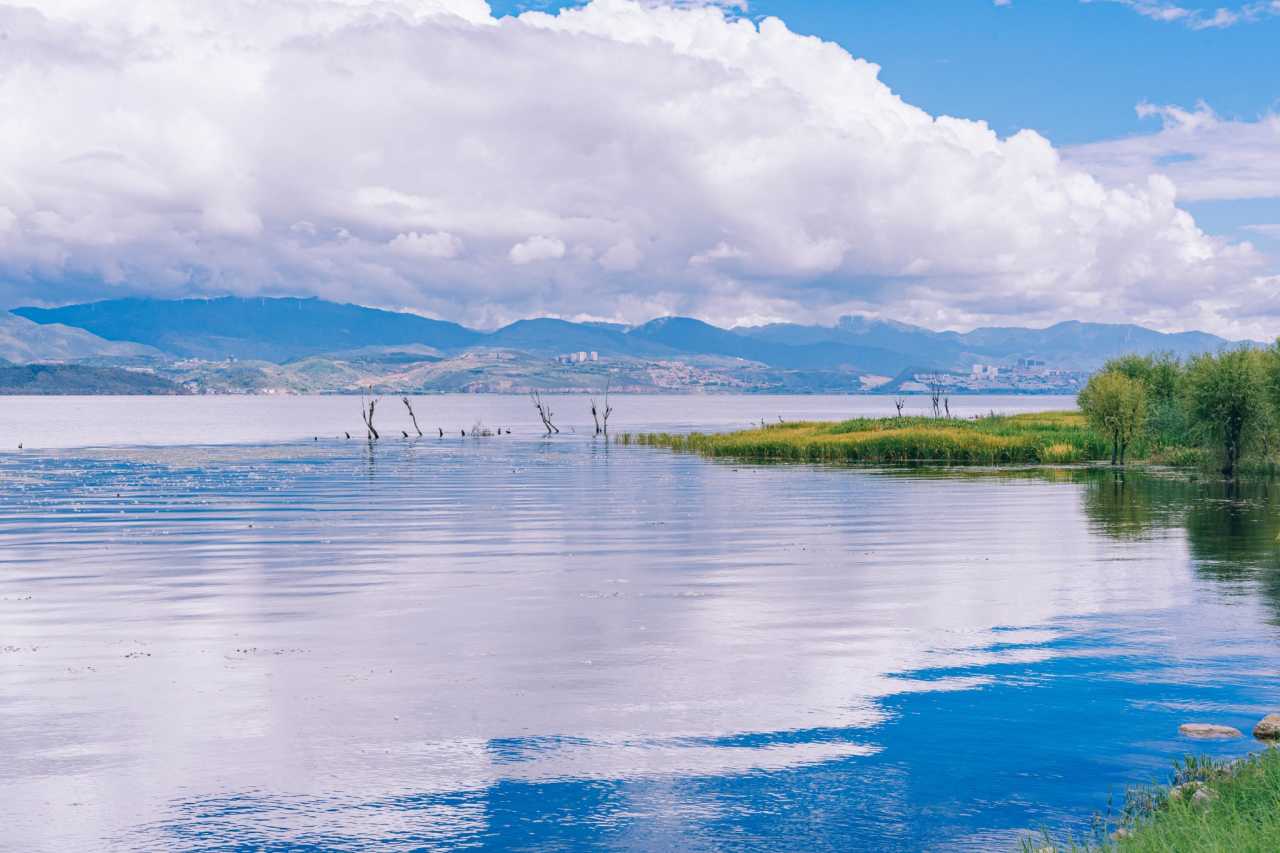
Today, I moved from the lakeside to a guesthouse near the ancient town. I struck gold again — 170 RMB a night, and the owner upgraded my room. I had the entire building to myself. The room was spacious and clean, and from the rooftop, you could see the entire Erhai Lake, from one end to the other! With Cangshan Mountain at my back, the clouds and mist on the slopes kept shifting. I skipped the crowded Dali Ancient Town and went up to the rooftop to enjoy the view instead. Best decision ever.
Market Day: March Street Market
When in Dali, you have to experience a local market. March Street Market is held only on specific days of the lunar calendar — the 2nd, 9th, 16th, and 23rd of each month. I happened to catch one. The guesthouse was three bus stops from the market entrance, so I took the only public transport of the entire trip.
In the afternoon, the market was still lively, with stalls stretching for hundreds of meters. Local grandmothers, mothers with babies on their backs, young tourists, bohemian travelers... They sold fruits and vegetables, Yunnan wild mushrooms, handmade woven goods, fresh flowers, local delicacies... I splurged on a purple woven bag. When I got tired, I sat by the roadside and ate a bowl of "cold shrimp" (liáng xiā) — a sweet, jelly-like dessert — for just 2 RMB.
I wasn't buying necessities; I was buying the atmosphere.
Fireworks on the Rooftop
That night, I went up to the rooftop to shoot the night view. The "stars" on distant Erhai Lake and the evening lights of all of Dali spread out before me. I had the entire rooftop to myself. Suddenly, a loud bang echoed from afar — some generous soul had set off fireworks for half an hour. I watched them up close, and it became one of the most unforgettable memories of my Dali trip.
In such a romantic moment, it would have been nice to have someone to share it with. But that's okay — I'll share it with all of you.
Good night, Dali.
Niaodiao Mountain: Healing in the Wind and Rain
My First High-Altitude Hike
The Niaodiao Mountain hike was what I was most looking forward to. It was my first time hiking at over 3,000 meters above sea level, but the weather didn't cooperate. Muddy trails after the rain, battling a downpour, strong winds, thick fog, and cold — I was soaked from head to toe, walking non-stop for over an hour. But I didn't complain. I found it an unforgettable experience.
The joy of foraging for mushrooms in the primeval forest, the air thick with negative ions, the vast grassy landscape of Niaodiao Mountain in the rain — it really felt like Xinjiang. My hiking group was great too. All in all, an unforgettable experience.
Route and Tips
It was a loop trail, about 13 kilometers long, with 500 meters of elevation gain, at an altitude of 3,000 to 3,200 meters. In extreme weather, it took us 5 hours and 40 minutes. On a normal day with stops for photos, it would take about 6 to 7 hours. The trail is easy to follow. Experienced hikers can download the route on the Two Steps Road (Liǎng Bù Lù) app and follow it. For safety, you can also join an organized outdoor group.
Little Tips: - Quite a few people were hiking here during National Day, and there was some litter along the way. Come soon if you want to see the grassland before it gets trampled flat. - The weather on a 3,000-meter alpine meadow changes rapidly. It could be sunny down below and stormy on the mountain. Bring rain gear. - Trekking poles are useful, especially on muddy trails to prevent falls.
I met a flock of sheep and their herder, an older uncle. We chatted for a while. The sheep listened to him well — they came whenever he called. He even gave me corn kernels to feed them. Pure joy! I got one step closer to my dream of becoming a shepherd.
As I was about to descend, I was lucky enough to see a rainbow over the mountain. I shouted my wish at it: I want to be rich!!!
I made it back to Dali before dark. I had a steaming pot of Yunnan-style chicken soup (qì guō jī) with a fellow hiker to warm up. A fulfilling day came to an end.
Ximatan Cable Car: Looking Up and Down at Cangshan
The Awe on the Cable Car
Having toured Erhai, I couldn't miss Cangshan. I chose the longest cable car, the Ximatan line, which also offers the best views. It has three stations — upper, middle, and lower — with a vertical drop of 1.6 kilometers and a length of about 5.5 kilometers. From the cable car, you can see all of Dali and Erhai Lake, as well as alpine rhododendron forests and fir forests at the summit.
From my hotel bed, I could see the cable car on the opposite mountain. The summit was constantly shrouded in clouds, and I hesitated about going — the ticket was over 200 RMB, and it would be a waste if I couldn't see anything. I ordered takeout for lunch, and suddenly, I noticed the clouds on the mountain had completely cleared. I quickly bought a ticket online and hailed a taxi.
There weren't many people in line for the cable car at midday. I bought a round-trip ticket and went straight to the summit. As the cable car rose slowly, the entire city of Dali unfolded before me — dense clusters of white buildings, lush forests, Erhai Lake meeting the sky. Breathtaking. The cable car was worth every penny.
Wonders at the Summit
The cable car's terminus is at the Ximatan Scenic Area station. From there, you need to climb over 100 meters of stairs to see Ximatan itself. The weather on the mountain is completely different from down below — sunny and hot at the base, but cold, windy, and foggy at the top. It's best to bring a down jacket or a functional shell jacket, or you'll freeze, and in severe cases, you could get hypothermia. You can rent down jackets at the entrance. If you have a history of altitude sickness or oxygen deficiency, it's best to buy an oxygen canister.
Ximatan, also known as Ximatang or Gaohe, lies below Cangshan's Yuju Peak and Longquan Peak at an altitude of 3,920 meters. The pool covers an area of 4,500 square meters and is as clear as a mirror. It is the highest and largest glacial lake on Cangshan, formed over 10,000 years ago during the late Dali glacial period — a classic remnant of glacial erosion.
I saw a team from the Blue Sky Rescue Squad. I asked what happened, and they said three hikers had gone missing on Cangshan, and only one had been found. When doing outdoor activities, always check the weather, prioritize safety, and know your limits.
The Last Meal
Coming down from the cable car, I took a taxi to the ancient town. A friend was staying at a guesthouse in the old town that had been used as a filming location for the TV drama "Rattan" (Sī Téng). I got a free tour.
For my last meal in Dali, a friend and I found a restaurant serving wild mushroom hotpot. It was my first time tasting authentic Yunnan mushroom hotpot. After it boiled, I noticed lots of little white bugs in the broth, and some mushroom slices were full of holes. As an inexperienced Cantonese, I thought the mushrooms had gone bad. I asked the owner, who explained that wild, non-toxic mushrooms always have bugs. But we were useless Cantonese — staring at the bugs on the mushrooms, we couldn't bring ourselves to eat them. We just drank the soup, ate the meat, and picked out the bug-free mushroom slices.
Epilogue: May Hearts Be Warm, and All Things Revive
Before I left, Dali — which had been COVID-free for three years — suddenly reported a positive case. And it was a tourist who had taken the same high-speed train from Guangzhou as me. Kunming also reported several cases. Many people canceled their trips out of fear of quarantine. After a few days of deliberation, with no signs of further spread, I decided to go ahead as planned.
I'm so glad I stuck with it. Otherwise, I would have missed such beautiful scenery.
On the last day of my Dali trip, I woke up, pulled open the curtains, and was greeted by the same blue sky, lush green Cangshan, and drifting white clouds. I didn't want to leave. Before coming to Dali, my work and life in Guangzhou had made me anxious. I was critical of everything, intolerant, and prone to complaining. After arriving in Dali, I felt a strange power here — I gradually relaxed, stopped complaining about everything, and naturally became more tolerant of everyone I met. I smiled gently and said thank you.
Goodbye, Dali. See you next time.
I first came to Yunnan in 2014 for a company team-building trip. In five days, a tour bus dragged us through Lijiang, Dali, and Kunming. I spent less than half a day in Dali. Eight years later, many things have changed, yet many things remain the same. Erhai is still Erhai, Cangshan is still Cangshan, and I am still me.
Where to next?
Solo Dali Travel Tips
Transportation
- Use ride-hailing apps the whole way — time-saving and cost-effective. During National Day, getting a taxi in Dali was very easy.
- If you can drive, rent a car to circle Erhai. But I don't recommend renting an electric scooter to go all the way around — it's too far.
- You can also follow the Dali Culture and Tourism (Dàlǐ Wénlǜ) official account to learn about direct shuttle buses to attractions.
- Various platforms offer carpool tours, but be cautious to avoid scams.
Accommodation
- I highly recommend staying a few nights at a lake-view hotel along the Erhai ecological corridor, with Cangshan at your back and Erhai in front.
- Second choice: a guesthouse at the foot of Cangshan near the ancient town, so you wake up to the misty mountain every day.
- Personally, I don't recommend staying inside the ancient town. While it's convenient for food and drink, it's crowded and noisy.
Cycling the West Shore Ecological Corridor
 - The starting point is at the mouth of Yangnan Stream, one of Cangshan's eighteen streams, and the endpoint is at Taoyuan Pier — 46 kilometers in total. - Along the way, you'll find wetland conservation areas, scenic spots, and historical sites. - Note: Only non-motorized vehicles are allowed (walking, bicycles, corridor electric carts, etc.). If you drive, park at the lots along the way. - UV rays are strong during the day. Wear sunscreen when cycling. - You don't need to squeeze into crowded spots like Longkan Pier or Pantaos S-Curve. The ecological corridor has even more beautiful scenery. - You can't cycle all the way to Xizhou Ancient Town. After reaching the Xizhou section, you'll need to exit and take a taxi.
Other Activities
- Mushroom foraging on Cangshan, light hiking, and the Niaodiao Mountain hike are all worth experiencing. You can find activity organizers on Xiaohongshu or Dianping (Dàzhòng Diànpíng).
Solo Photography Gear
- iPhone + tripod + Apple Watch: The watch lets you see the camera's viewfinder, making it easy to adjust your position. You can also remotely control the shutter for delayed shots and videos. A lifesaver for solo travelers.
You should also read:

Body in Hell, Heart in Heaven: A Pilgrimage Through Tiger Leaping Gorge — A Dialogue Between Heaven and Earth
Body in Hell, Heart in Heaven: A Pilgrimage Through Tiger Leaping Gorge — A Dialogue Between Heaven and Earth Introduction: When the Gorge Splits Open Beneath Your Feet Some say Tiger Leaping Gorge is the closest place on Earth to the border between "hell" and…
Continue reading...
Cloud Travelogue · Dali of Wind, Flowers, Snow, and Moon: A Three-Day, Two-Night Journey of a Free Spirit
Cloud Travelogue · Dali of Wind, Flowers, Snow, and Moon: A Three-Day, Two-Night Journey of a Free Spirit I am a cultured female foodie with a touch of rogue charm. I slung on my backpack, took my lover's hand, and set off on a spontaneous…
Continue reading...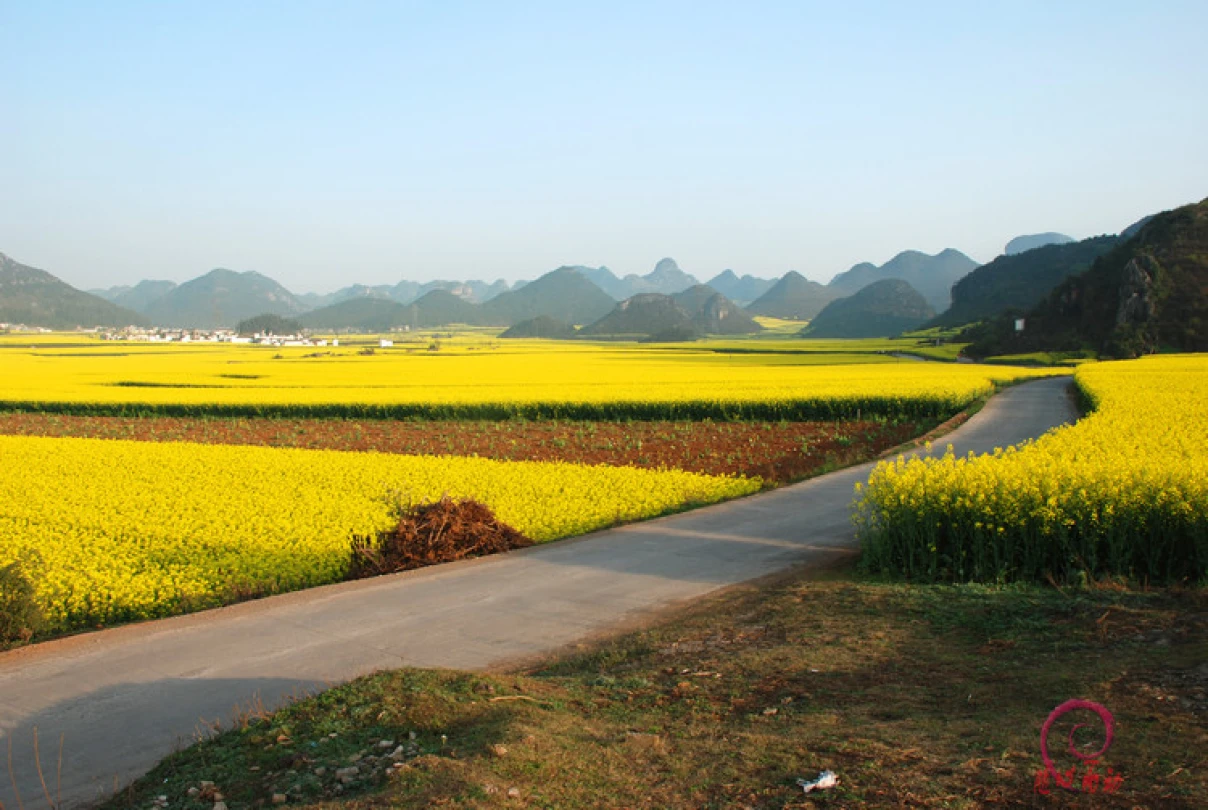
Golden Luoping: A Romantic Encounter with Sunshine and Seas of Flowers
Golden Luoping: A Romantic Encounter with Sunshine and Seas of Flowers Introduction: The Third Time's the Charm Some landscapes are destined to be seen at the right moment. For me, that was exactly the case with Luoping's rapeseed flowers. On February 22, 2011, the Luoping…
Continue reading...