Cloud Travelogue · Dali of Wind, Flowers, Snow, and Moon: A Three-Day, Two-Night Journey of a Free Spirit

Cloud Travelogue · Dali of Wind, Flowers, Snow, and Moon: A Three-Day, Two-Night Journey of a Free Spirit
I am a cultured female foodie with a touch of rogue charm. I slung on my backpack, took my lover's hand, and set off on a spontaneous mini-honeymoon.
Prologue: Why Dali?
At 10:52 PM on February 22, 2011, the overnight train from Kunming to Dali departed right on schedule. Outside the window was pitch-black night, and the starry sky seemed like lights lit in advance for this journey. Zhang—a man who had just pulled an all-nighter at work—and I, a woman full of curiosity about life, thus began our "Cloud Travelogue."
Dali, a place written about, photographed, and sung of by countless people, was a blank slate to me. I didn't want a checklist-style trip, nor the cookie-cutter tours of travel agencies. I wanted a journey that followed my whims, one infused with the warmth of everyday life. As it turned out, this was the right choice.
Chapter One: Symphony on the Rails

The Romance and Misery of the Night Train
On the day of departure, Zhang worked a full day and didn't get home until after 7 PM. We were like two hasty fugitives, throwing a few clothes together and heading out the door at 8:30 sharp. Before leaving, I used my "student card" (pretending to be a student gets you a 30% discount—thanks to Tao Tao and Xiao Ya) to buy some Orleans-style chicken wings and original fried chicken nuggets from KFC as a midnight snack.
We got lucky—caught the No. 60 bus as soon as we stepped out. By 9:30 PM, we arrived at Kunming Station. It was cleaner than I expected, and less crowded—the perks of traveling in the off-season.
The train departed on time and the lights went out on schedule. I thought I'd fall asleep to the rhythmic clatter, just like in the movies. Reality was different: Zhang was out cold in seconds (the aftermath of his all-nighter), while I lay on the top bunk, surrounded by the roar of the train, Zhang's snoring, the snorts of the guy across from us, and the sleep-talking of an elderly man next door—a full-blown "symphony of the rails." I had no choice but to put on my headphones, scroll through Weibo, and watch the seconds crawl by.
At 4 AM, the lights came on. Faint lights flickered outside the window—Dali was near. At that moment, despite my aching back, I perked up. After all, this was a mini-honeymoon.
5:10 AM, Dali Station
The train arrived early. Yes, early. When we stood at the exit of Dali Station, shivering in the cold morning wind, only one thought crossed our minds: Why couldn't it have been late?
That day, I was wearing a miniskirt—fine for Kunming, but in the pre-dawn chill of Dali, it was a joke.
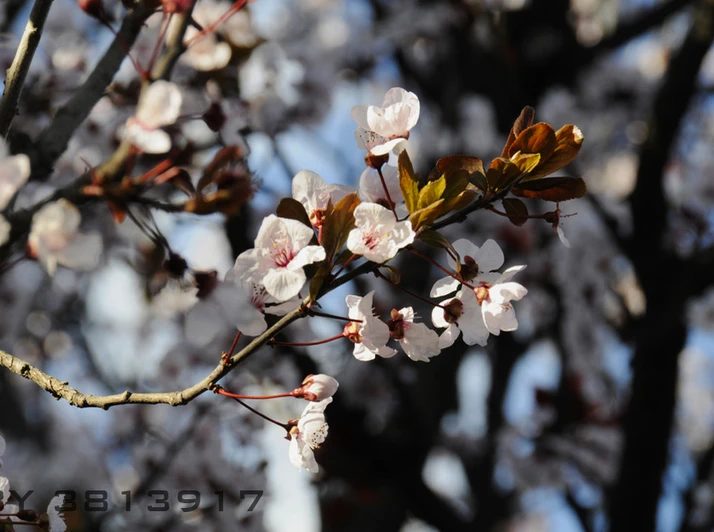
The exit was packed with touts and drivers hawking rides. We thought about taking the bus, but it hadn't started running yet. Zhang decided to take a taxi—40 yuan per car, a fair price. But after we got in, the driver tried to pick up more passengers to share the fare. Zhang got out immediately and pulled me away.
In the end, we found a waiting room in the station's departure hall. Five yuan per person, no time limit, with a TV, sofa, tea, water, and WiFi. The owner was very kind and patiently answered all our questions. We decided to wait for the bus to start running—anything was better than an unreliable unlicensed cab.
Practical Tips: - Kunming to Dali night train: K9623, 22:52–5:18, upper bunk 85 yuan/person, middle bunk 87 yuan/person, lower bunk 89 yuan/person. Book 10 days in advance. - Dali Station to Old Town: No. 8 bus, 1.5 yuan/person, departs at 7:30 AM, passes through Xiaguan and Dali Line, ends at West Gate. - Station waiting room: 5 yuan/person, unlimited time, WiFi available. - Taxi: 40 yuan per car, no ride-sharing (the station to Old Town is only 18 km).
Chapter Two: The Wild First Day—16 km Cycling and Fishing in Erhai Lake
Morning in the Old Town: A Silence That Makes You Want to Cry
At 7 AM, as dawn broke, the No. 8 bus set off. The two of us essentially had the bus to ourselves—another off-season perk.
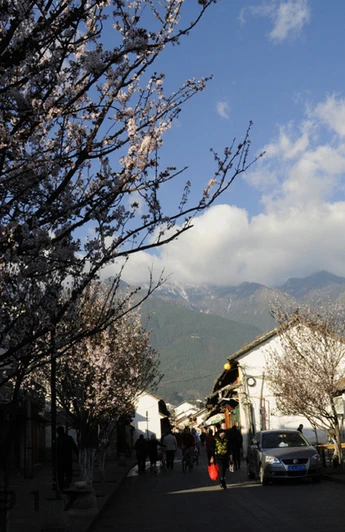
The view outside the window was worth every moment of waiting. Orange-red clouds reflected on Erhai Lake, the sun slowly revealed itself, and the snow on Cangshan's peaks was crystal clear. Zhang and I exchanged a look: "Not taking that cab was the right call."
By 8 AM, we arrived at the East Gate of Dali Old Town, also known as "Erhai Gate." Our pre-booked guesthouse, "Cat Cat Fruit," was just over 200 meters from the East Gate. The owner welcomed us warmly. After freshening up, I felt completely refreshed—like someone who hadn't stayed up all night.
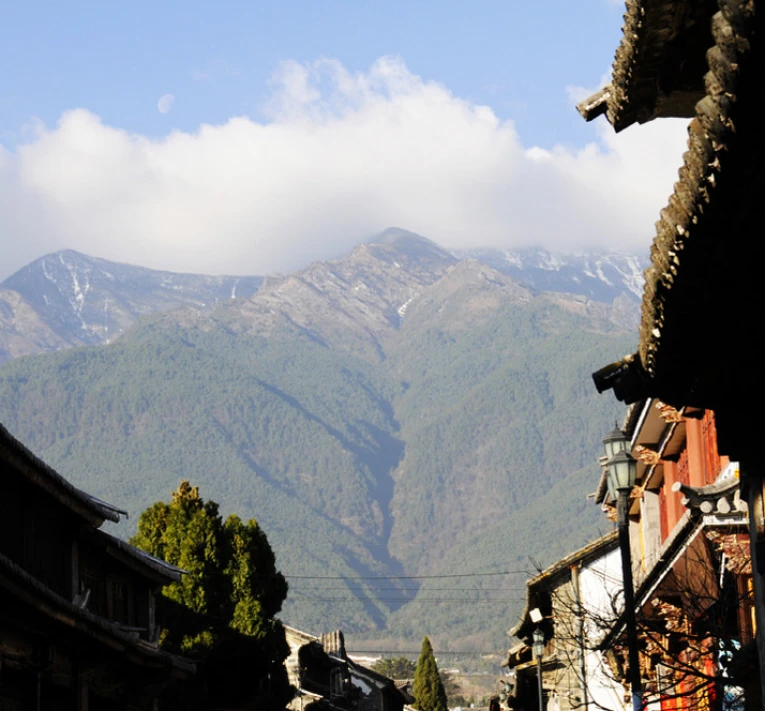
It was our first time in Dali Old Town. At 8:30 AM, we stepped out of the guesthouse. Ahead of us was the snow-capped peak of Cangshan; behind us, Erhai Lake. The awe was something no camera could capture. The Old Town was very quiet, especially near the East Gate. Renmin Road used to be the commercial heart of the Old Town, but as tourism grew, the bustle shifted northwest toward the South Gate, leaving the East Gate with its most original,古朴 (ancient and simple) atmosphere.
Breakfast: A Bowl of Wontons That Made Me Think
We headed west along Renmin Road in search of breakfast. Near the West Gate, we spotted a shop called "Beijing Noodles" with a decent crowd and went in. Steamed buns, wontons, soy milk, and fried dough sticks—16 yuan total. The taste was mediocre, a bit skimpy on the ingredients. Maybe because they opened early and business was good, they didn't put much care into it.
Later I found out: Local snack shops in Dali usually don't open until after 9 AM. 饵丝 (rice noodles), dumplings, and fresh soy milk (especially the thick, grainy green bean kind, rich and aromatic) are the way to go.
Cycling: 16.7 km of Freedom
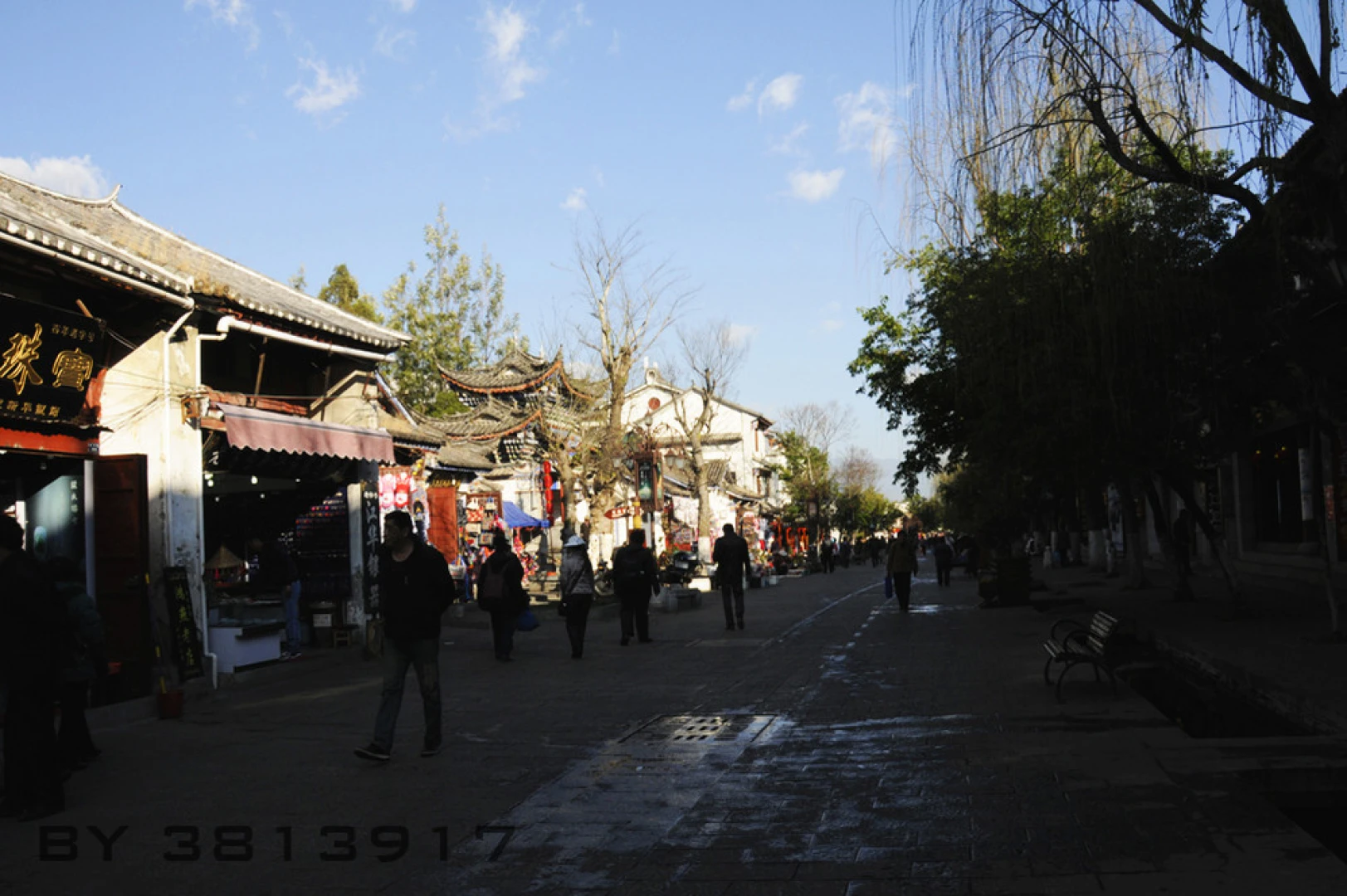
After breakfast, we continued west. On the way, we saw a foreigner zipping downhill on a bike, and we also spotted the "Sunshine Bike Rental" shop I'd found online. The owner was very friendly. Off-season discount: 20 yuan per bike per day, with a 150 yuan deposit and ID card. We chose mountain bikes—a decision that proved wise later.
The owner mapped out a route for us: West Gate → Three Pagodas Temple → Caicun Pier → East Gate → West Gate (return the bikes). 16.7 km, cycling and stopping to enjoy the sights. It was a bit of a challenge for me—I hadn't exercised in a while. Luckily, Zhang was a good teacher, and I at least dared to ride on the main road.
Chongsheng Three Pagodas Temple: A 120-Yuan "Been There, Done That"
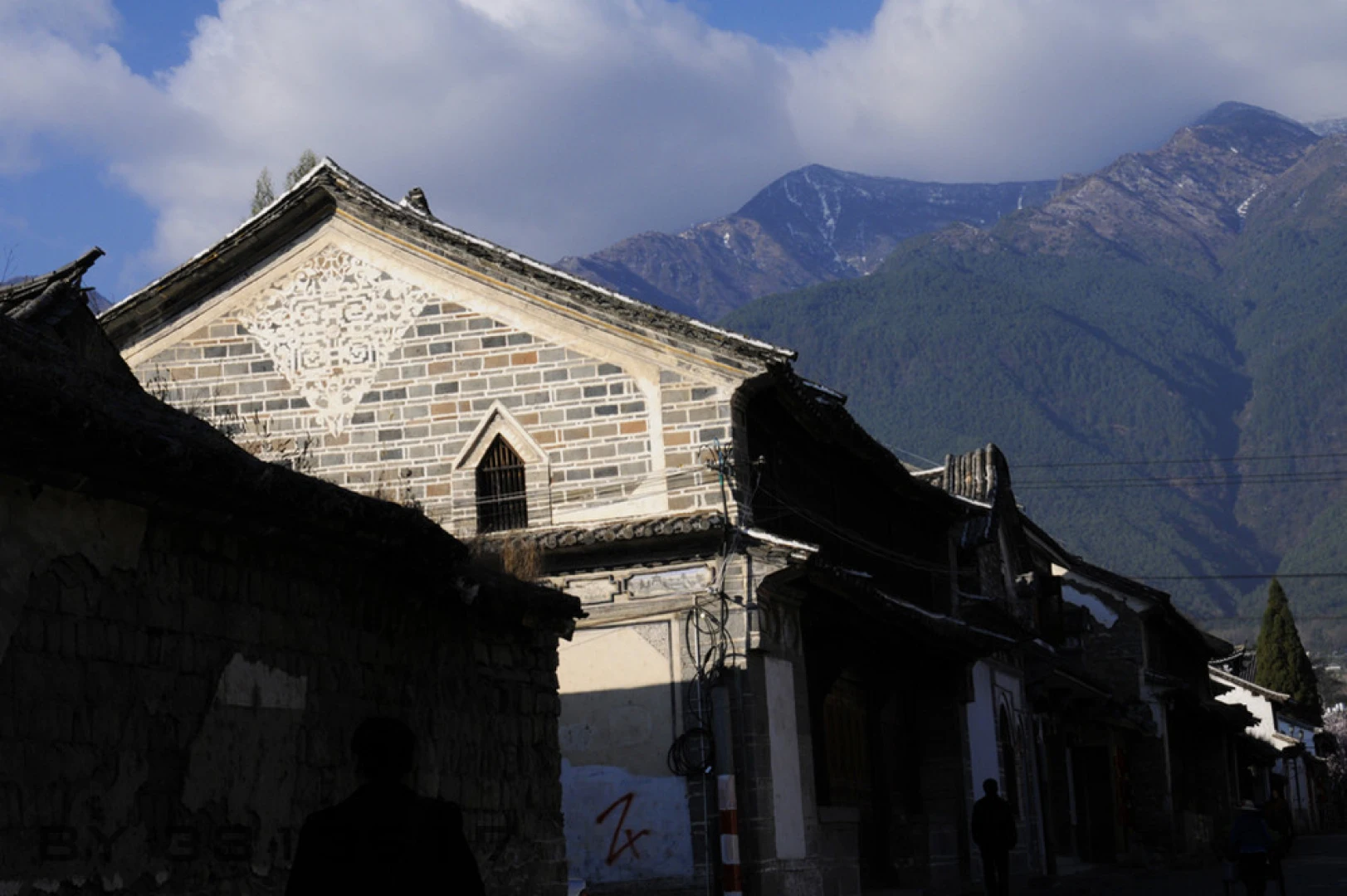
We took a side road from the West Gate out of the Old Town and headed straight for the Chongsheng Three Pagodas Temple. Off-season meant few people. Zhang went in to check the ticket price: 120 yuan per person. We exchanged a glance and said in unison: "Too expensive!"
So we cycled around the temple grounds, trying to find a spot to sneak a photo of the three pagodas. Finally, we found a gap on the right side of the main gate and snapped a few shots. As for what's inside the temple, I'll leave that to some other traveler to describe.
Caicun Pier: An Unexpected Surprise by Erhai Lake
We pedaled hard up the big slope to the right of the temple and came across a villa area, giving us a sense of "a hidden path leading to a bright future." Then we let loose, coasting downhill on our bikes, speeding toward Caicun Pier.
The scenery along the way was breathtaking to the point of speechlessness. The lake, the sky, and the mountains merged into one. My camera couldn't capture what my eyes saw. On the road, we met a Bai ethnic auntie selling fruit. She was so warmly persistent—first cutting a big slice for us to try, then asking if we wanted to buy. With abundant sunshine on the plateau, the tropical fruits were sweet and juicy, 5 yuan per catty. Zhang picked out a netted melon and some winter jujubes. After cycling under the midday sun, a few bites were pure bliss.
Practical Tips: - If you don't want to cycle to Caicun: Take the No. 2 bus from the North Gate of the Old Town, which ends at Caicun Pier, 1 yuan/person. - Three Pagodas Temple tickets: You can buy group tickets at your guesthouse, which are cheaper than individual tickets.
Fishing: A 30-Yuan Drift on the Lake
When we reached Caicun Pier, Erhai Lake lay before us. We were so excited we wanted to take off our shoes and play in the water—but the lake in February was bone-chilling.
Nearby, there were motorboats for lake tours at 150 yuan per person. We walked along the lakeside path, looking for a spot to rest and get close to the water. We met an elderly auntie who asked in her Dali-accented Mandarin if we wanted to take a small boat—the kind local fishermen use. 30 yuan per person. We could row ourselves, or the fisherman could do it. The time was about the same as the motorboat, around an hour.
Zhang wanted to go. I was initially worried about being scammed—but when we met the fisherman's family, my fears vanished. The fisherman's surname was Shi, a man who had married into a Bai family. He was very talkative. When he saw Zhang's interest in the fishing net, without a second thought, he finished a few bites of his meal and took us out on the lake.
Master Shi lent me his hat, and there I was, "fully geared up" for the lake. He rowed and introduced Erhai Lake, as knowledgeable as any tour guide. "It's winter now, the water's cold, so we might not catch much," he said. "But I'll do my best." He warmly invited us to come back in the summer, saying we could swim and lie on his awning boat at night to enjoy the "Erhai Moon."
Once on the boat, I couldn't wait to take off my shoes and dip my feet in the water—the February lake was truly freezing. Master Shi began to untangle the net, set it, chase the fish, haul it in, and pick out the catch—all in one fluid motion. We got a modest haul: a few whitebait, about 10 centimeters long. I cleaned one on the spot, rinsed it, and ate it raw. The water quality of Erhai is excellent; the whitebait had no black residue when cut open, and it was absolutely fresh with barely any fishy smell. As I write this log, I'm still alive and well.
Zhang learned how to take fish out of the net from Master Shi, while I took photos. In the intertidal zone of Erhai, I captured wild cormorants and mandarin ducks—these natural spirits took flight at the slightest movement, and I could only capture their silhouettes with my camera.
Around 4 PM, we ended our exhilarating "Erhai Drift." Master Shi insisted I take a photo with his family's treasure—the awning boat.
Practical Tips: - Boat ride cost: 30 yuan/person, can be cheaper with a larger group. - Fishing moratorium: March 1 to September 30 each year. But Master Shi's small boat has a tourism license, so he can still go out during the moratorium. - Master Shi's contact: 15912258127 (might be his son's number). - Farmhouse meal: 50 yuan/person, mainly chicken, fish, and shrimp, all natural and organic.
Most important: If you cycle on a sunny day, be sure to apply sunscreen! The UV rays on this 2,000-meter-high plateau are no joke. Carry sunscreen with you, wear long sleeves, and bring a hat. Otherwise, like me, your arms will end up looking like "charcoal-grilled pig trotters."
The Return Trip: A Feast of Dali Snacks
On the way back, I had noticeably less energy than in the morning. I stopped and rested several times, taking nearly an hour to get back to the Old Town. By the time I entered through the North Gate, I was starving.
At a roadside stall, I immediately ordered some 烤饵块 (grilled rice cakes) and 烤乳扇 (grilled milk fan).
Grilled rice cakes: Similar to rice cakes, but softer in texture. Grilled until slightly charred, then filled with chili oil, fermented bean curd, peanut powder, sesame paste, pickled vegetables, and bean sprouts, folded into an ear shape. 2 yuan each. I prefer the savory version.
Grilled milk fan: My absolute favorite. Milk fan is made by separating milk solids from whey and then drying it. It can be grilled or fried. The rose-paste version is the best—homemade rose paste from the auntie, which fills the air with its fragrance when grilled. The syrup drips out, so be careful not to burn your mouth. The texture is crispy yet chewy, like a Chinese version of cheese, or shredded chicken. 5 yuan each (prices went up after dairy products became more expensive; it used to be 3 yuan).
Later, I also bought some 漾濞卷粉 (Yangbi rice rolls), similar to Vietnamese-style rice rolls, with fillings like those in grilled rice cakes, but the rice skin is crispier.
At dusk, we passed by "Zaihuishou" Cold Chicken Rice Noodles on Renmin Road—a snack I'd remembered from watching the travel show "Foodie Triple Play." The rice noodles were springy and soft, the dressing sweet, sour, and spicy, mixed with the fragrance of peanut butter—so delicious it made me want to cry. The shredded chicken on top was free-range chicken, with particularly yellow skin. Zhang also ordered some braised chicken skin, happily munching away. 4 yuan for a small portion of noodles, 10 yuan for the chicken skin.
After cycling 16 km, we devoured a pile of rice and dairy products. Dali's rice-based snacks are indeed filling, and we were soon stuffed. The two of us, bellies full, coasted downhill all the way back to the guesthouse.
Night in the Old Town: A Peace That Makes You Want to Cry
Back at the guesthouse, after showering, we decided not to miss the Old Town at night. We lay on the rooftop lounge chairs, gazing at the starry sky. It was so comfortable.
In the cool night breeze, we somehow got hungry again. We slipped on our sandals and went out in search of a late-night snack. Following the smell of barbecue, we found a stall. Zhang ordered a clay pot of 砂锅饵丝 (rice noodles in a clay pot), and I got some meat skewers. The owner was an elderly local woman, and as we chatted with her, we learned about the Old Town's changes over the past decade. Renmin Road used to be the center, but now development was shifting northwest toward the South Gate, leaving the East Gate particularly quiet.
After our late-night meal, we returned to the guesthouse, went online, sorted through photos, and sleep slowly crept in.
Goodnight, Old Town. See you tomorrow.
Practical Tips: - Grilled milk fan is best eaten freshly grilled; otherwise, it won't be crispy or fragrant. - Recommended stalls: Head toward the North Gate, and at the intersection with the blue sign for "No. 60 Hospital," you'll find two aunties selling the best grilled milk fan.
Epilogue: What Dali Taught Me
Three days and two nights—not long, not short. But Dali taught me one thing: Travel isn't about checking off a list; it's about encountering.
Encountering the starry sky at 5 AM, the mandarin ducks on Erhai Lake, Master Shi's awning boat, and the grilled milk fan in the auntie's hands. Encountering a freer version of myself.
If you also want to go to Dali, my advice is: Don't rush, don't make a plan, and don't be afraid to get lost. Rent a bicycle and ride slowly along Erhai Lake. Eat when you're hungry, stop when you're tired. You'll find that Dali's best scenery isn't in the tourist spots—it's on the road.
Final Expense List (for two people): - Kunming bus: 1 yuan/person - Train tickets: upper bunk 85 yuan/person, middle bunk 87 yuan/person - Dali bus: 1.5 yuan/person - Station waiting room: 5 yuan/person - Breakfast: 16 yuan - Bike rental: 20 yuan/bike/day (150 yuan deposit per bike) - Boat ride: 30 yuan/person - Snacks: depends on personal preference
And finally: If you see a girl in the Old Town wearing a miniskirt with arms tanned like "charcoal-grilled pig trotters," that might be me—a cultured female foodie with a touch of rogue charm, already looking for the next journey.
You should also read:
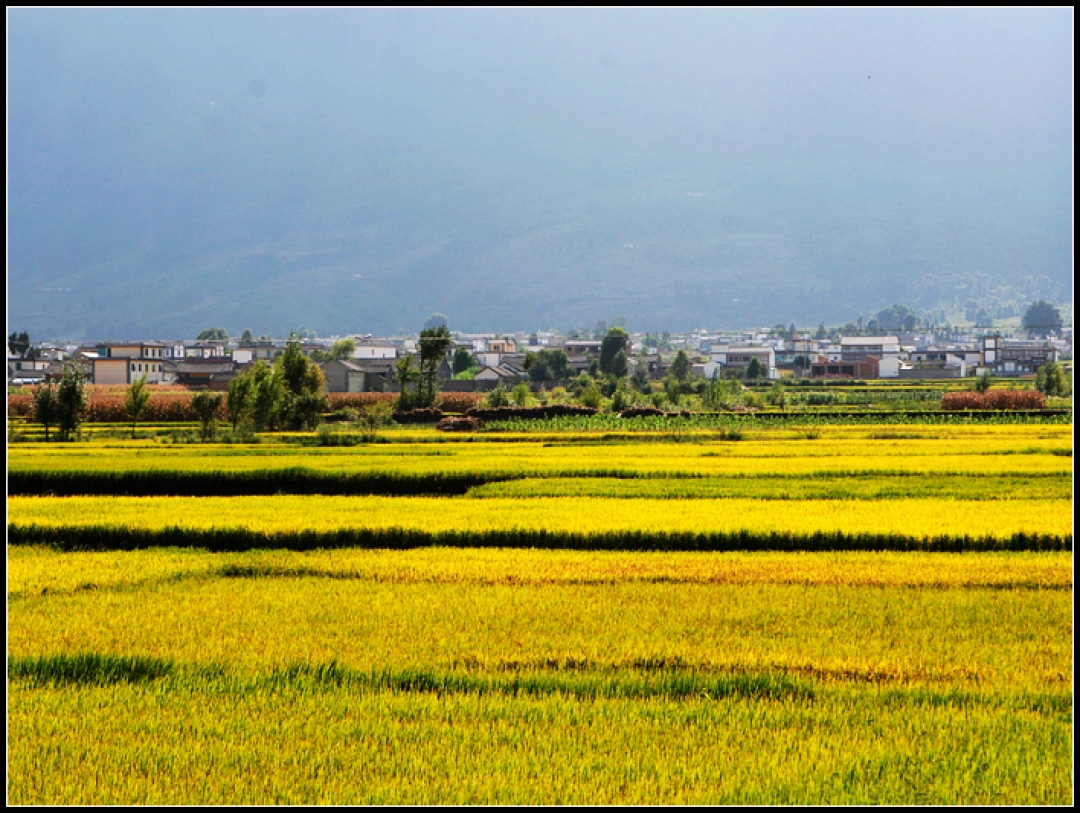
A 9-Day Yunnan Journey: From Lijiang to Dali to Tengchong – A Trip Toward Self-Reconciliation
A 9-Day Yunnan Journey: From Lijiang to Dali to Tengchong – A Trip Toward Self-Reconciliation Some say travel is simply going from a place you're tired of to a place other people are tired of. It stings to hear, but it's painfully true. Yet there's…
Continue reading...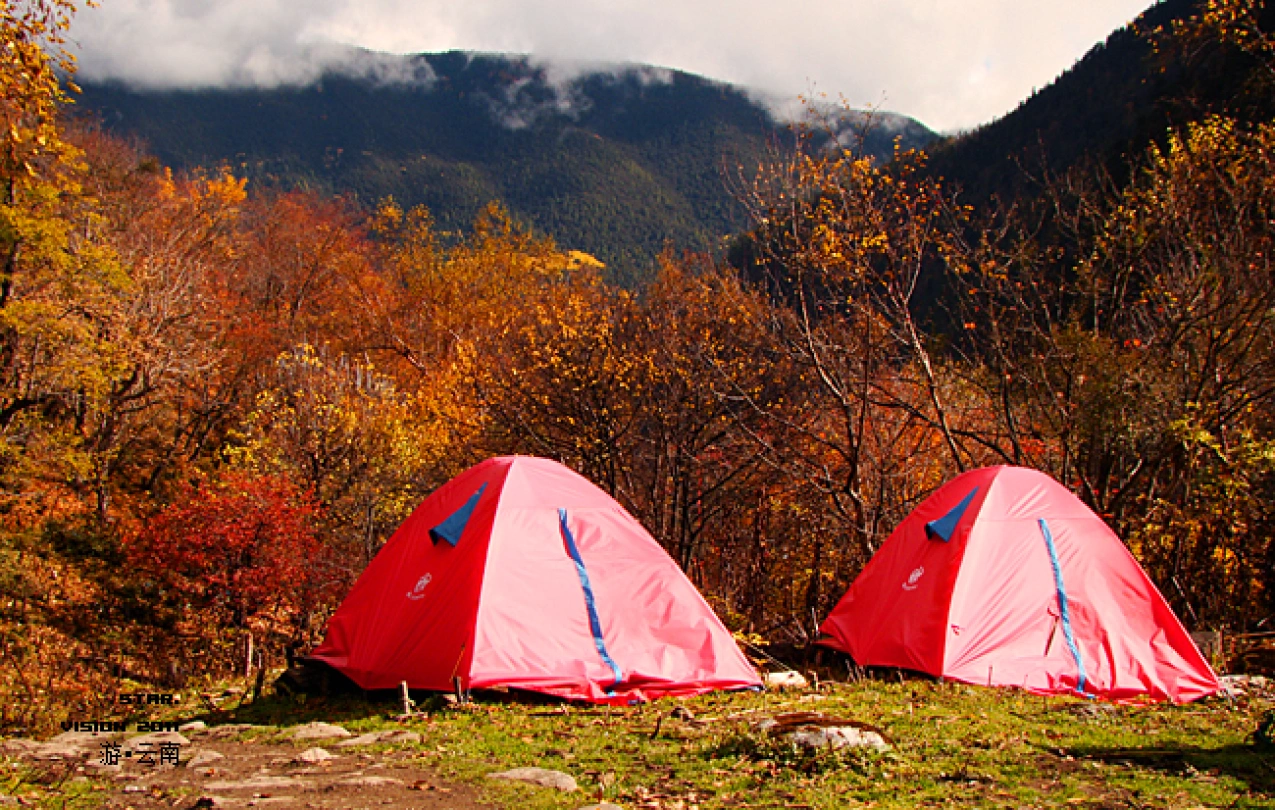
Yunnan! Paradise on Earth – The Yubeng Chapter: A Soul-Cleansing Journey into Seclusion
Yunnan! Paradise on Earth – The Yubeng Chapter: A Soul-Cleansing Journey into Seclusion Prologue: Why Yubeng? If you ask me which place in Yunnan is most worth hiking to, I would answer without hesitation: Yubeng. This is not an answer I give lightly. As a…
Continue reading...
Into the Hidden Valley: A Solo Journey Through the Mysterious Dulong River
Into the Hidden Valley: A Solo Journey Through the Mysterious Dulong River Deep in the northwestern corner of Yunnan Province, tucked away from the modern world, lies a place that feels like a secret whispered among mountains. The Dulong River Valley is not just a…
Continue reading...