Xishuangbanna Winter Escape Guide: Where Every Breath Feels Refreshing
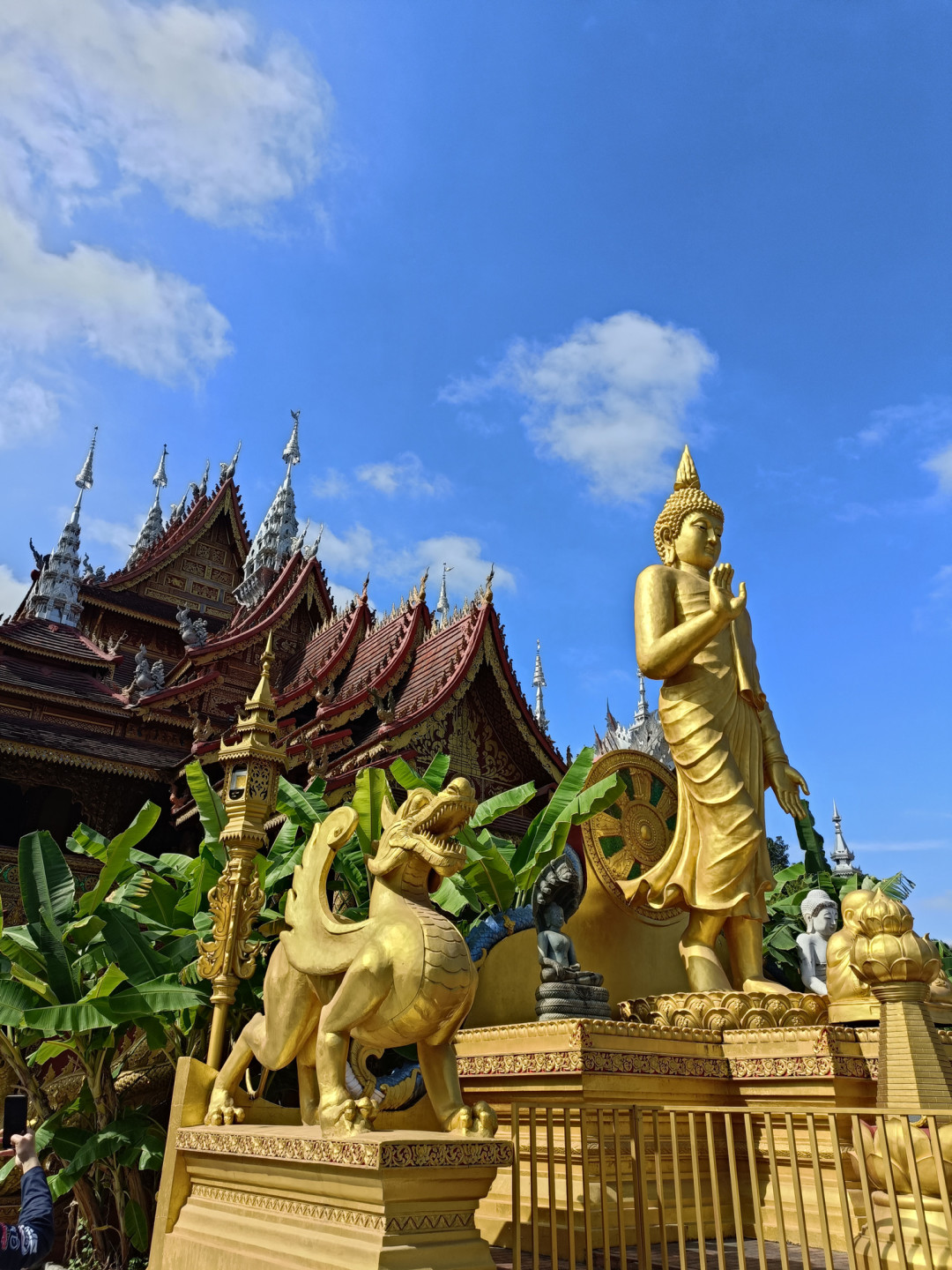
Xishuangbanna Winter Escape Guide: Where Every Breath Feels Refreshing
While the north is shivering in biting winds and heavy snow, there's a place bathed in warm sunshine, lush greenery, and blooming flowers—Xishuangbanna. Here, winter doesn't exist. The temperature hovers at a comfortable 20°C (68°F) year-round, and tropical vibes hit you the moment you step off the plane.
If you're tired of bundling up in a puffy jacket and shivering through the cold months, come with me into this "ideal kingdom" that relaxes both body and mind. I took this trip with my mother, spending five days moving slowly and seeing things properly. I'm sharing the places truly worth stopping at, along with some tips to save both hassle and money.
Pre-Trip Essentials: Where to Stay and How to Get Around
Choose Your Accommodation Right, and Half the Trip Is Done
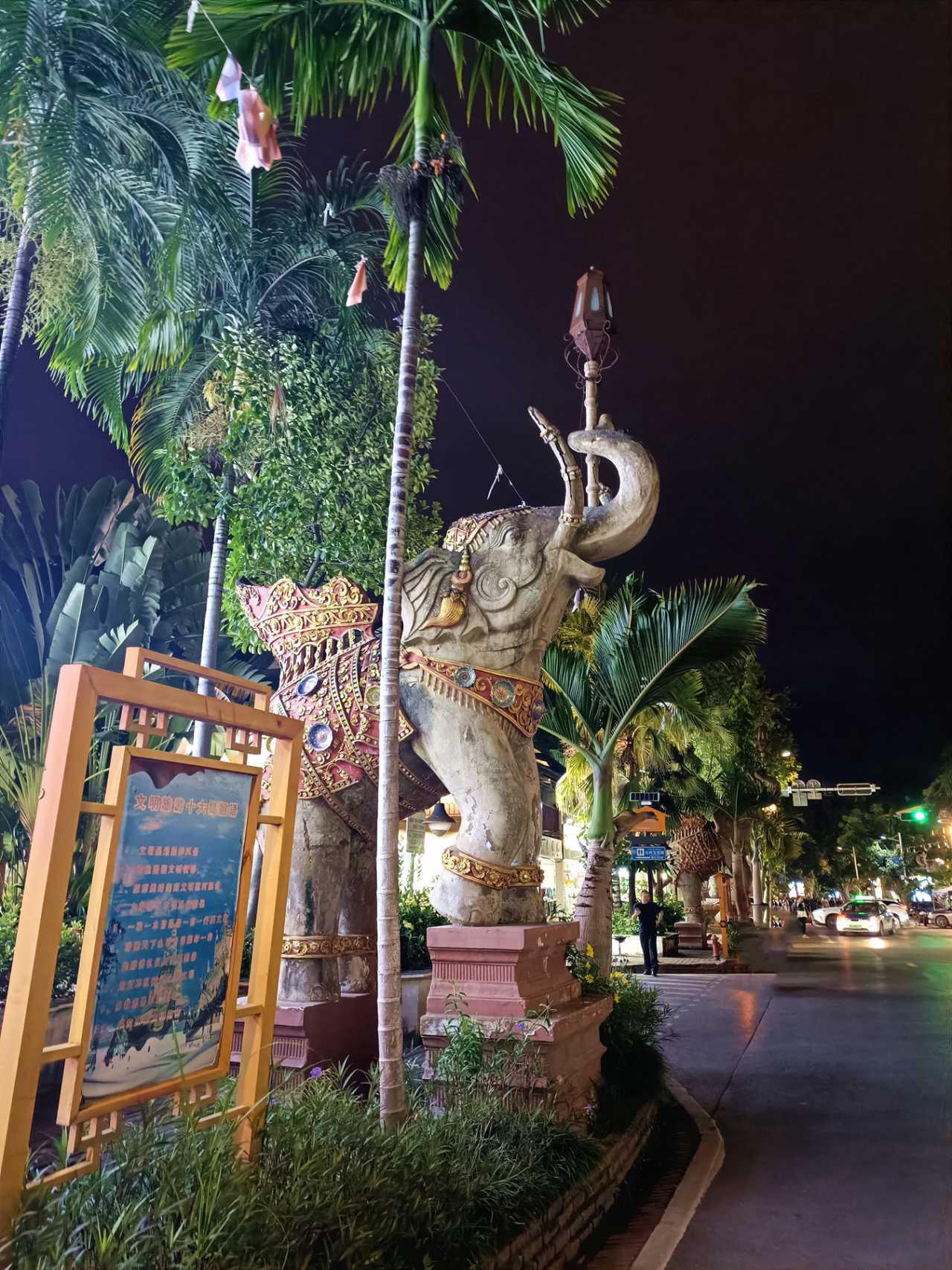
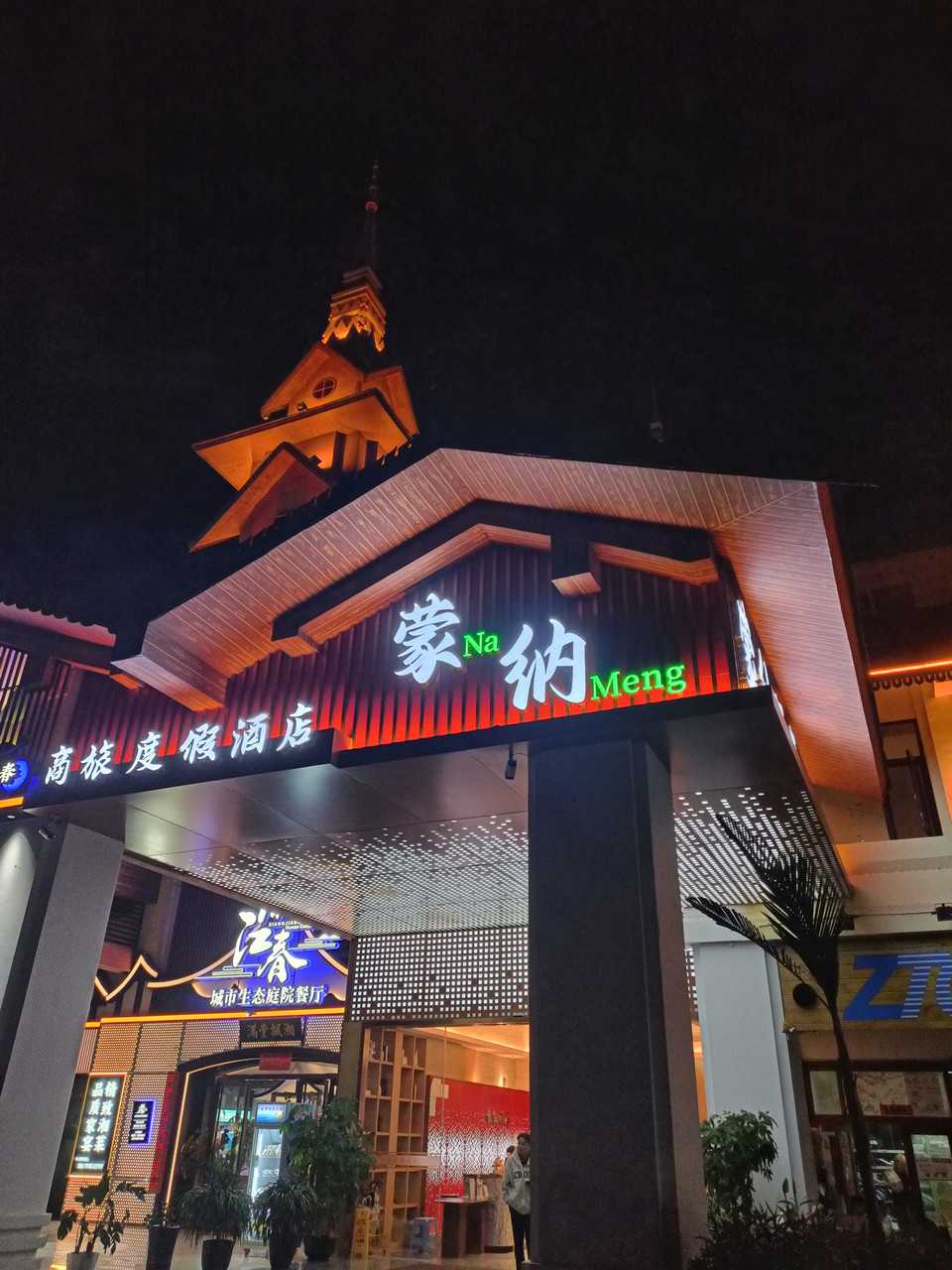
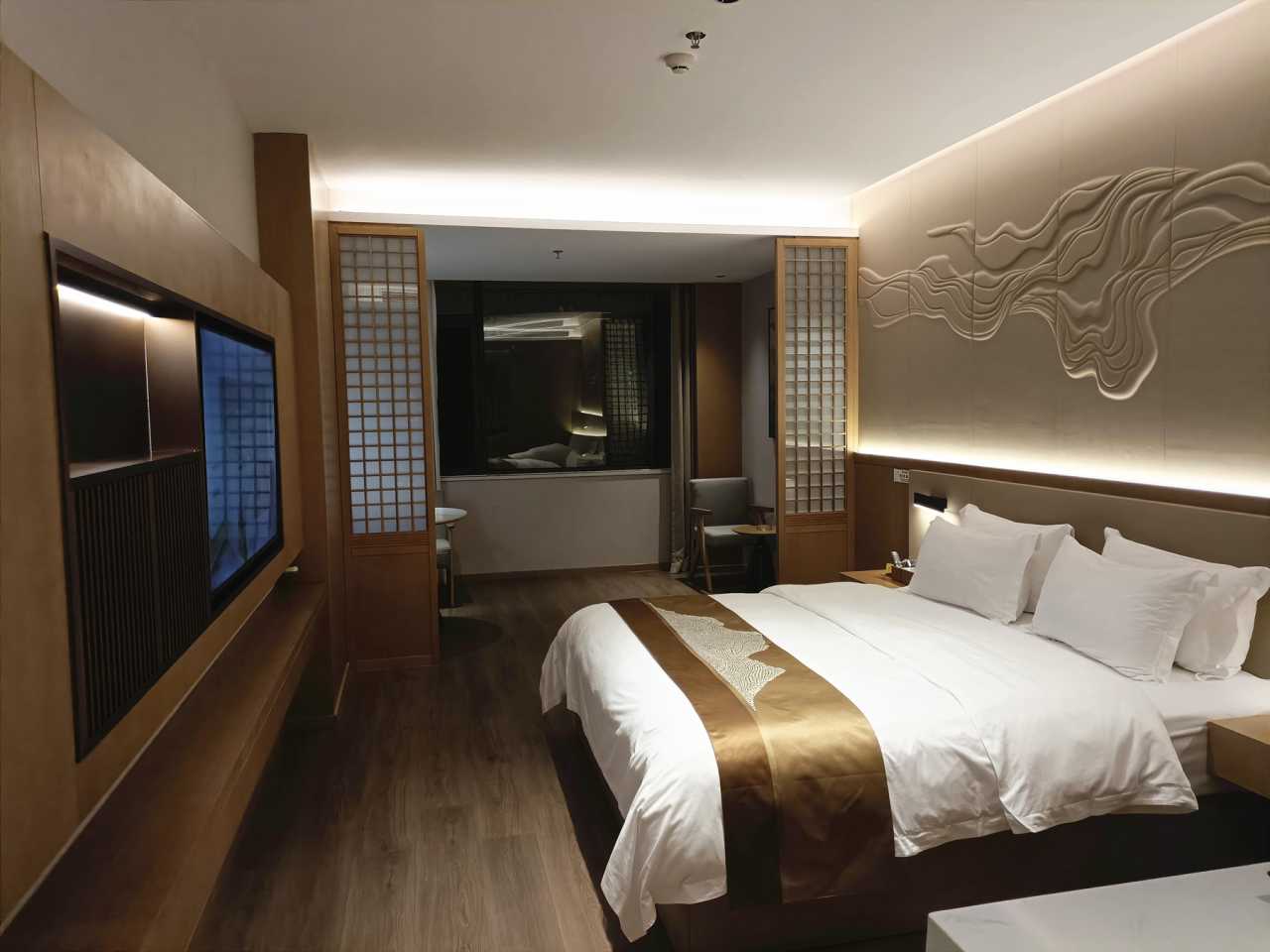
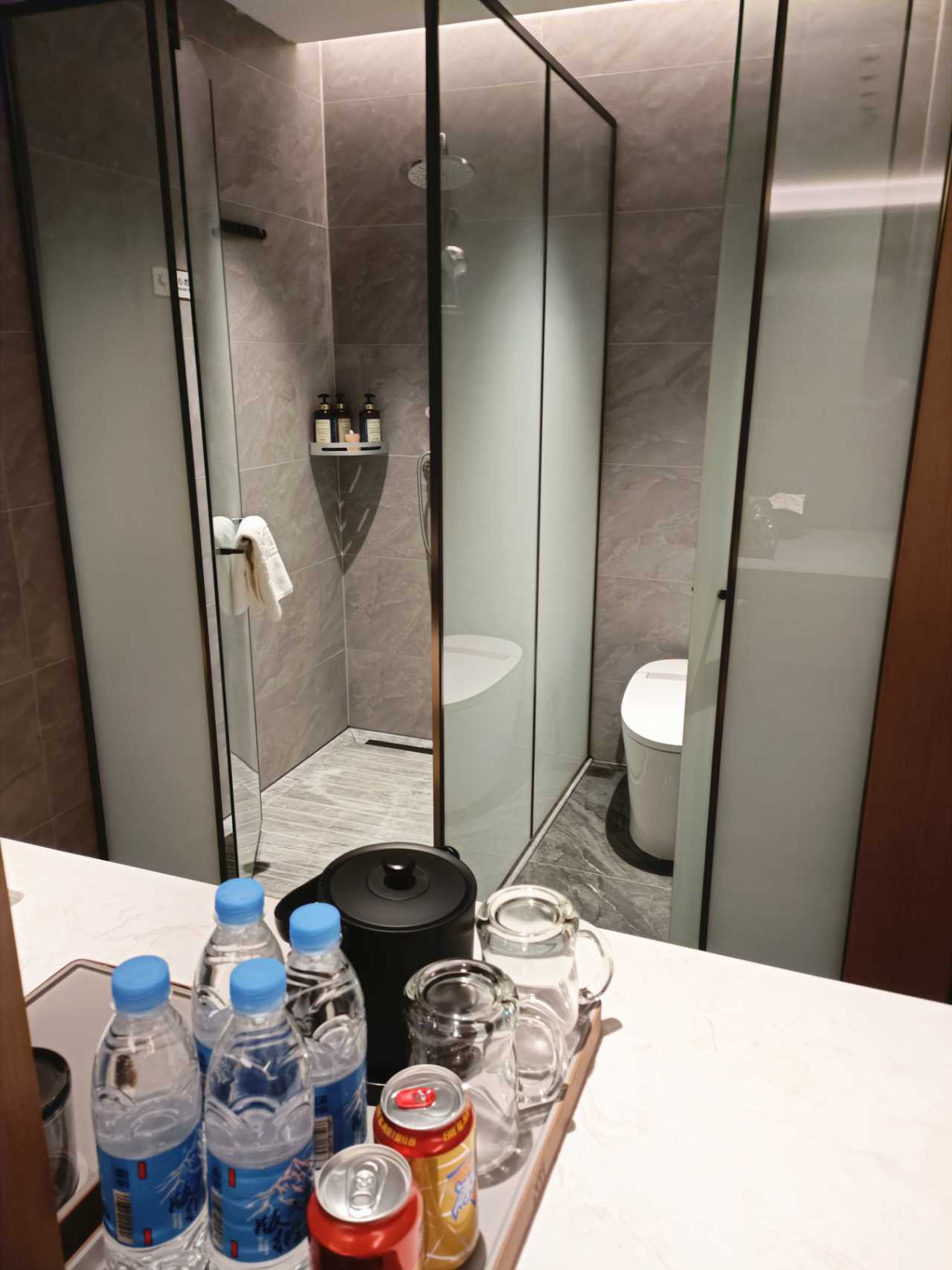
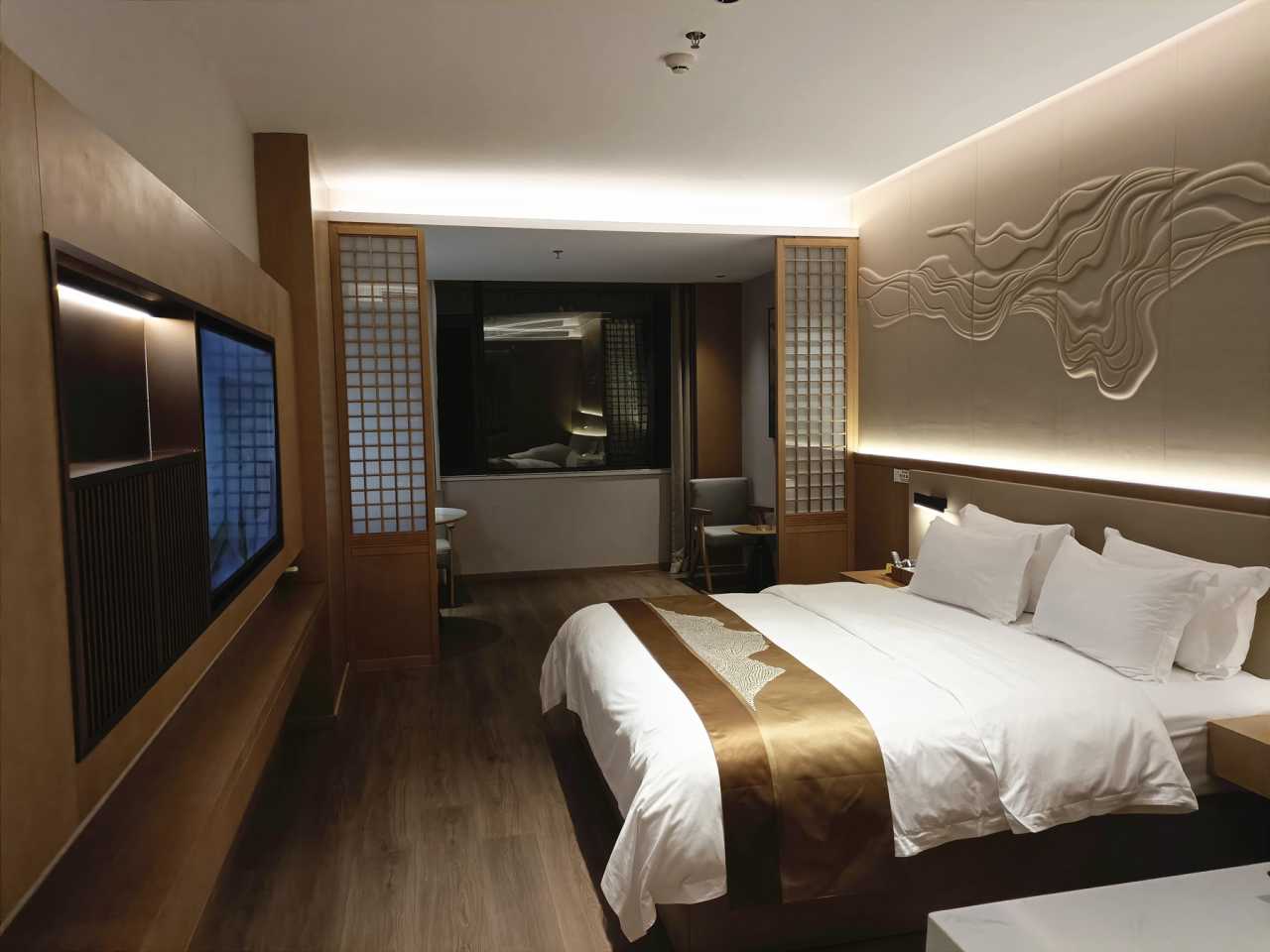
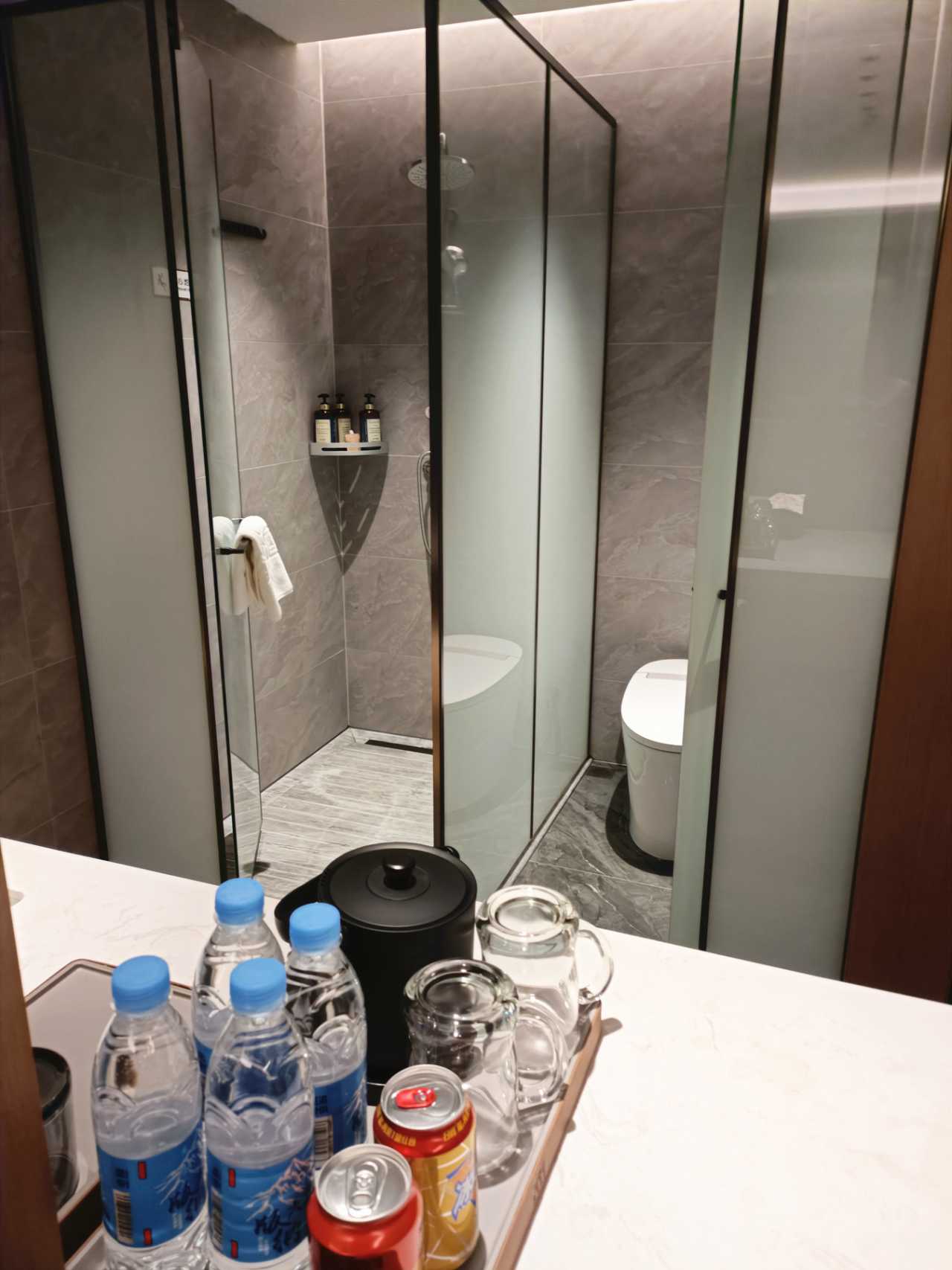
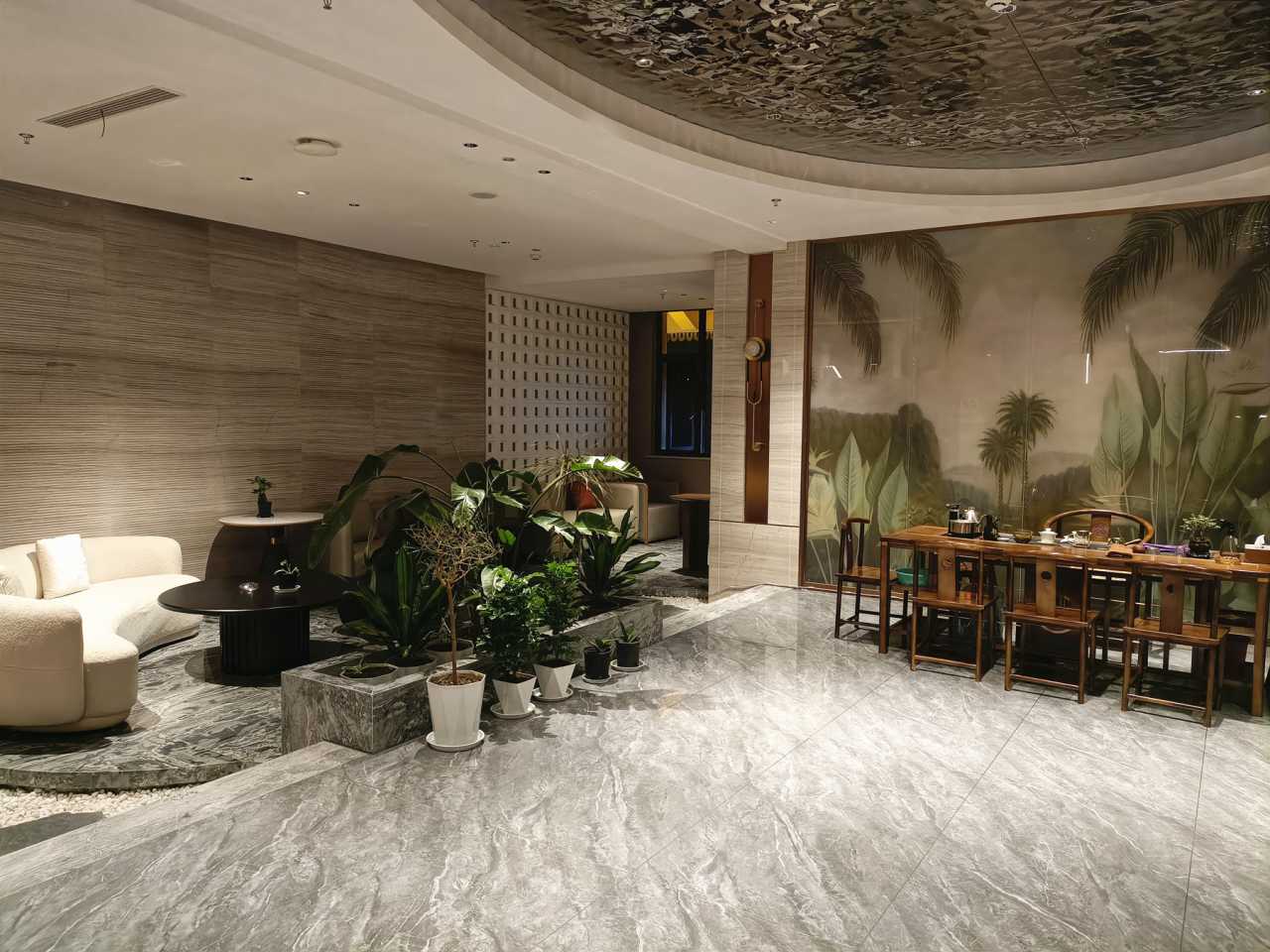
We stayed the entire trip at a hotel in what can only be described as a "golden location"—right next to the tourist transit center, with the bus pickup point just outside the door and a five-minute walk to the Starry Night Market (Xingguang Yeshi). The lobby on the first floor is small, but upstairs it's a different world: spacious rooms, full smart voice control, and even a smart toilet. About 200 RMB per night—great value for money.
One small tip: rooms come with either street-facing windows or skylights. Street-facing windows offer better ventilation but can be a bit noisy; skylights are quieter but have poorer air circulation. It depends on what matters more to you.
Transportation Guide: Three Options for Every Budget
There aren't many attractions within Xishuangbanna's city center—the real gems are in the surrounding areas. How do you get around? I tested three methods:
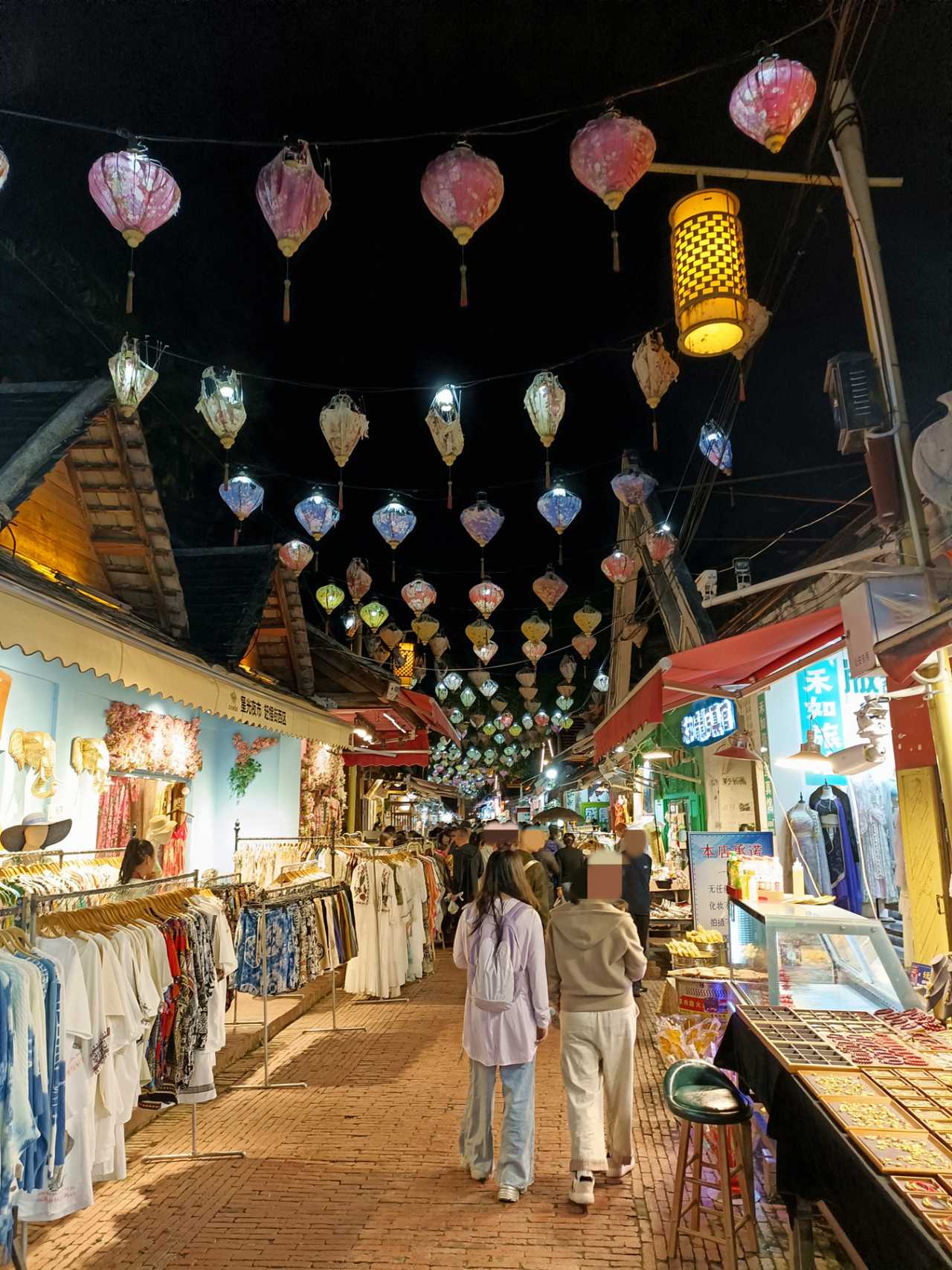
1. The "Banna Anxin Travel" (版纳安心游) Mini-Program
Best for those who want a hassle-free bus tour. There are direct tourist buses to major attractions, but departures are limited and schedules are fixed. Some routes even bundle several attractions together.
2. The "Didi Chuxing" Mini-Program → Station Bus (站点巴士)
This was my top recommendation from this trip. While the routes aren't as extensive as Anxin Travel, the departures are incredibly frequent—basically round trips running all day. Perfect for independent travelers. The pickup point is at the tourist transit center right at the entrance of Gaozhuang (Gaozhuang Xishuangjing), super convenient.
3. Private Car Charter
On my last day, I needed to visit three places that buses don't reach, and no tour agency offered that combination. So I opted for a private car. Hotels in Gaozhuang generally offer free airport pickup, and the driver who picks you up can also be your charter driver. The young guy we got was funny and reliable, driving an Audi. His price was slightly higher than others, but the service was excellent—easy and worry-free for the whole day.
Day 1: Arrival in Banna, First Taste of the Starry Night Market
The plane landed around 6 PM. The hotel's free airport pickup took us from the airport to Gaozhuang in just over 20 minutes. After changing into lighter clothes, we headed straight for the Starry Night Market.
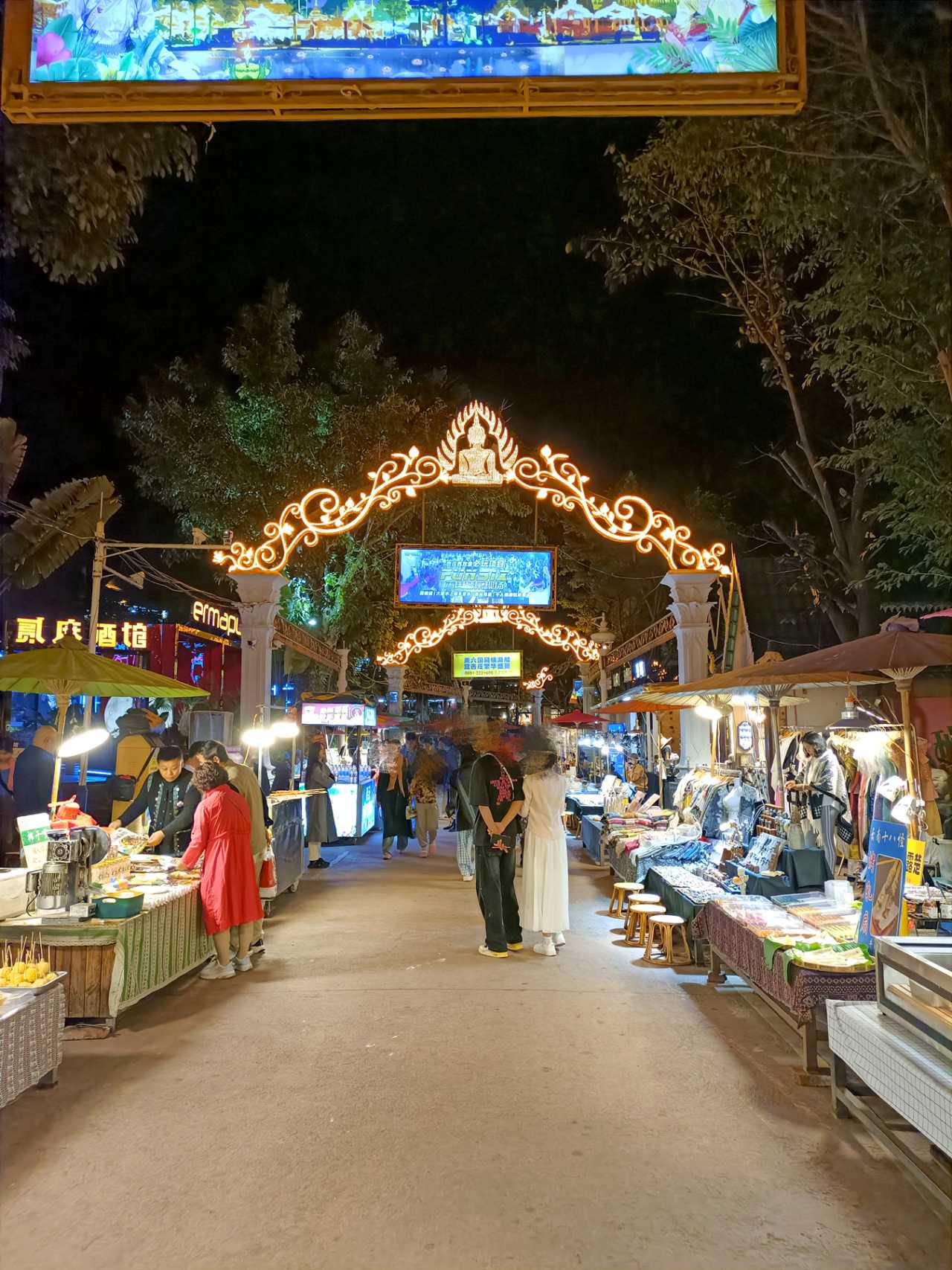
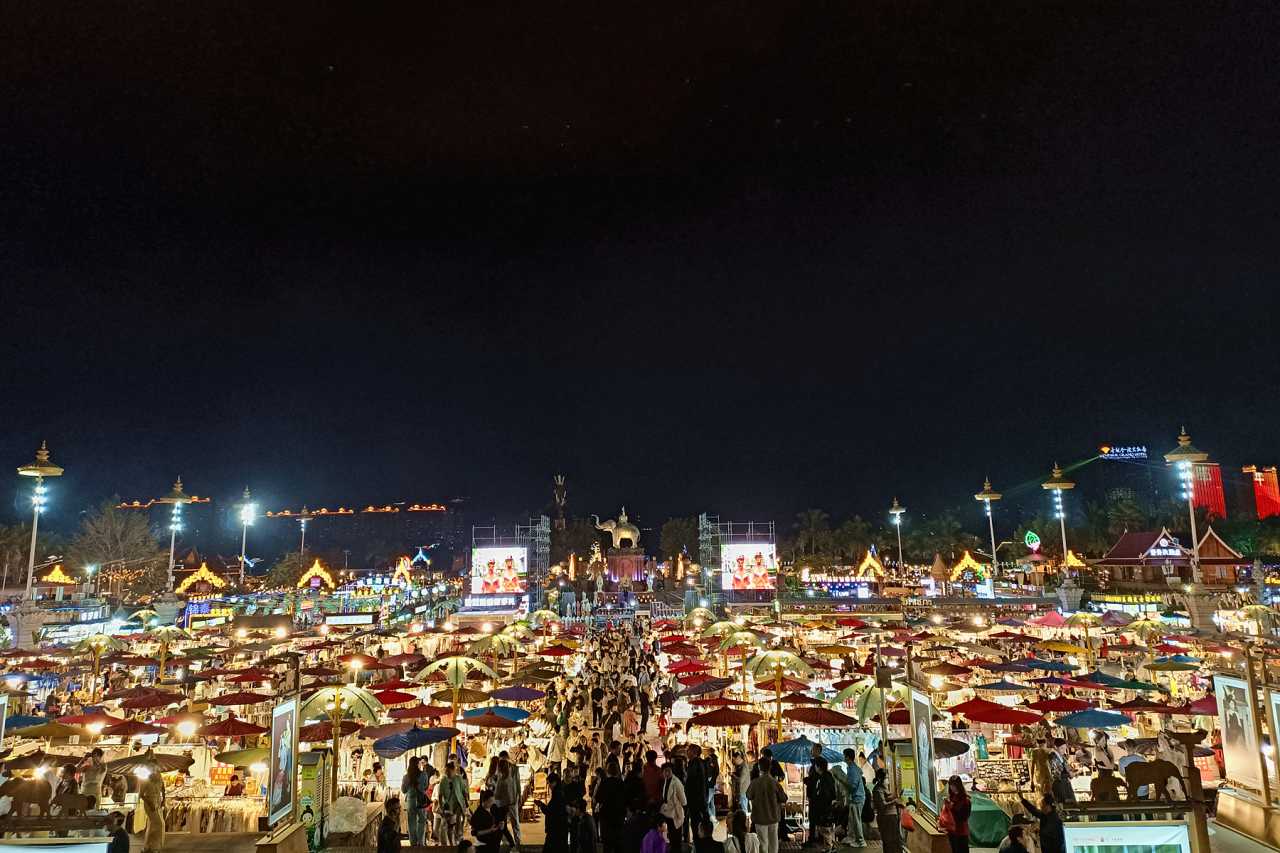
Gaozhuang was far more lively than I expected—even before entering the market, the pedestrian street was already ablaze with lights and buzzing with crowds. The most common stalls were clothing vendors: three-piece Dai ethnic outfits, bohemian-style long dresses, shawls... Cheap and negotiable. My advice: don't bother bringing many clothes. My mom and I brought a whole suitcase and ended up wearing nothing from it—we bought everything locally. A three-piece Dai outfit at the Starry Night Market costs 25 RMB; at the Riverside Night Market (Jiangbian Yeshi), it's even cheaper, averaging 20 RMB. Buying your own is much cleaner than renting from a photo studio.
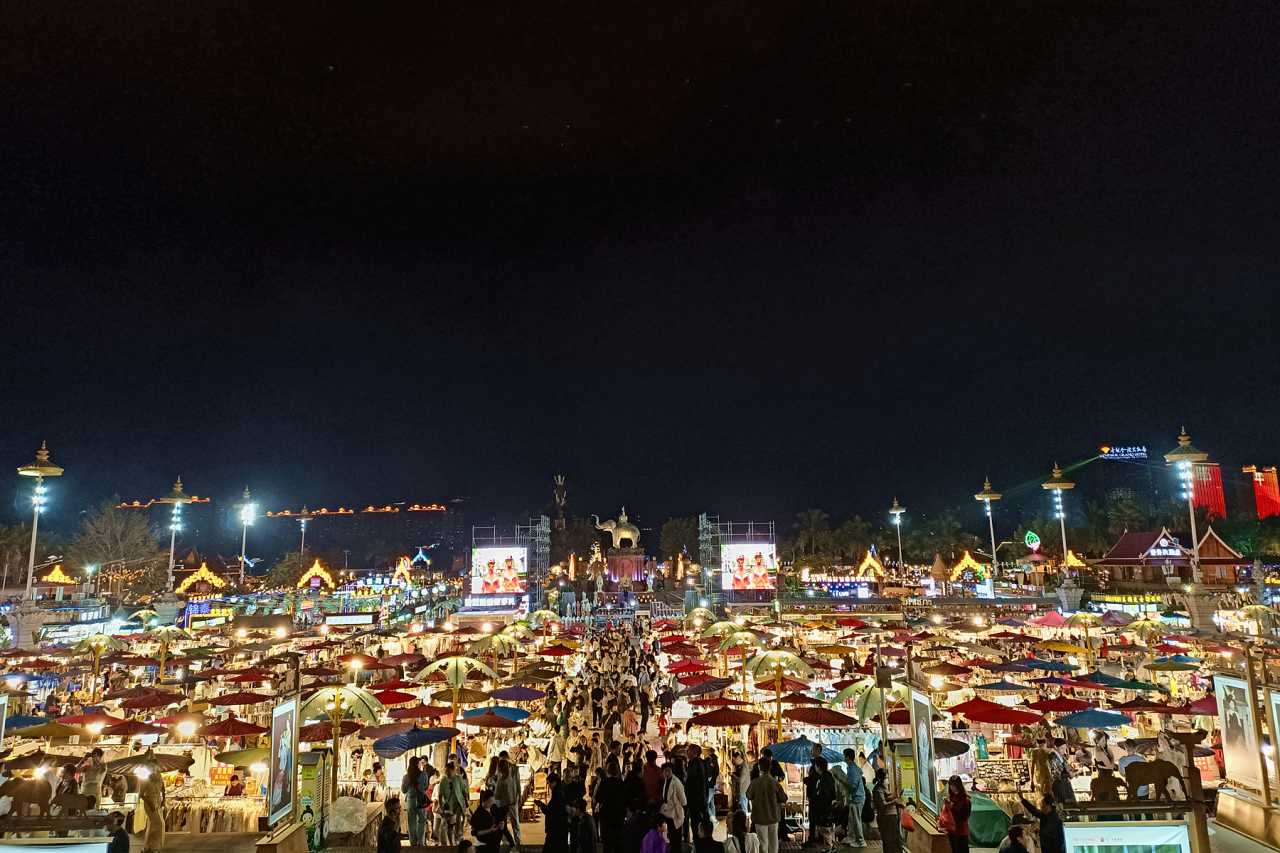
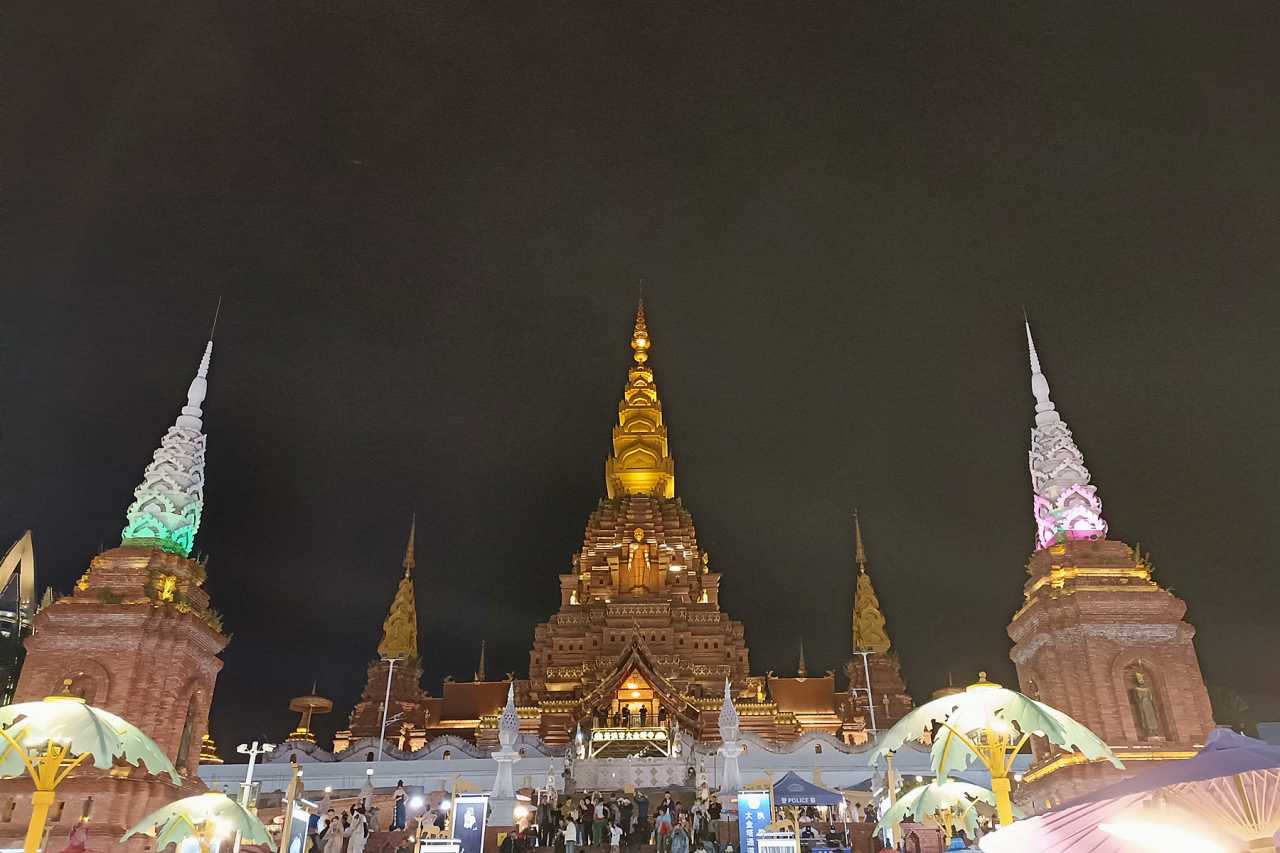
There are many entrances to the market, some requiring a Douyin (TikTok China) QR code scan to enter. Once inside, you'll see "Dai princesses" everywhere posing for photos. But climb up to the high platform and look down—the dazzling lights, the layered tents—it's truly spectacular and beautiful.
We originally wanted to eat at the famous "Chun Mei Rice Noodle Shop" (椿楣粉档), but it was so popular that it stopped serving early. So we grabbed some snacks in the market instead: pineapple rice, pounded chicken feet (chong jijiao), and thumb-sized corn. Nothing mind-blowing, but strolling and eating with my mom was enjoyable enough. The market has a lot of repetitive stalls, so it's easy to compare prices and buy from the cheapest.
Day 2: The Greenery of the Botanical Garden, the Sweetness of the Fruit Market, and the Satisfaction of the Peacock Feast
🌴 Xishuangbanna Tropical Botanical Garden, Chinese Academy of Sciences
The garden is divided into an East Zone and a West Zone. The East Zone is primary rainforest, ideal for hiking. The West Zone features various themed plant gardens, and most visitors only tour the West Zone. The park is huge, so taking the sightseeing tram is recommended.
Many people combine the Botanical Garden and the Dai Ethnic Garden (Dai Zu Yuan) in one day, but since my mom moves slowly, we decided to split them up. As it turned out, one botanical garden was enough for half a day—we entered at 10:30 AM and didn't leave until 3 PM, and we only covered the West Zone.
Our first stop was the Shade Plant Garden, with a dizzying array of tropical plants. Next came the famous Giant Water Lily Pond (Wang Lian Chi). July and August are the best viewing months, but even out of peak season, the lilies are impressive enough. Getting up close for photos costs money, but honestly, shooting from the edge of the pond works just as well.
Walking along the pond, the Palm Garden features towering betel nut trees reaching for the sky, and the phenomenon of "a single tree forming a forest" (du shu cheng lin) is truly astonishing. There are also small food stalls inside the park with reasonable prices—you can grab bamboo rice, rice noodles (mixian), or rice-flour noodles (migan) for lunch.
If you're interested in plants, hiring a guide will enrich your experience. In the Celebrity Tree Garden, there's even a tree planted by former Chinese President Jiang Zemin. Strangler figs, cycads, bodhi trees, and silk trees (the same ones from the TV drama Empresses in the Palace)—each one is worth a moment.
🍊 Mange Fruit Wholesale Market (Mange Shuiguo Pifai Shichang)
After taking a Didi bus back to Gaozhuang from the Botanical Garden, we took a taxi to the nearby Mange Fruit Wholesale Market. Clean and tidy, with colorful fruit stalls everywhere. Prices are cheaper than street-side vendors—two small coconuts for 15 RMB, surprisingly sweet. We also bought two milk fruit (niunai guo) to try, and sure enough, they had a faint milky aroma.
They offer shipping services here, so don't miss it if you want to bring local specialties home.
🍚 The Peacock Feast (Kongque Yan)
For dinner, we chose "Yun Que Jin Wan · Dai Family Peacock Feast Hand-Grabbed Rice" (云雀金湾·傣家孔雀宴手抓饭). There was a group-buy deal, and there was a performance during the meal. The grilled chicken and grilled fish were fragrant, though the chicken was a bit tough—eat the rice while it's hot. My favorite was the hand-torn lemon chicken, refreshing and appetizing. The portion was enough for two people, and we still had leftovers. When in Xishuangbanna, you have to try a peacock feast at least once.
After dinner, we walked off the meal back to the Starry Night Market. This time, we went down to the riverbank and the opposite side. Looking back, the market lights reflected on the water—unbelievably beautiful. There are many photo-shoot setups along the river, off-limits to tourists at night, but during the day, no one bothers you, and you can take all the pictures you want. The Six Kingdoms Water Market (Liu Guo Shuishi Jishi) has basically ceased to be a market—it's now just a large venue for "Dai-style disco dancing" (beng Dai di).
Day 3: Mantin Park, the General Buddhist Temple, Boruo Temple, and the Great Golden Pagoda Temple

🌺 Mantin Park (Manting Gongyuan)
With over 1,300 years of history, Mantin Park is the oldest park in Xishuangbanna and was once the royal garden of the Dai kings. Admission is 40 RMB, and it's connected to the General Buddhist Temple (Zong Fosi). The park is small enough that you don't need the sightseeing tram.
Go early—this is a hot spot for photo shoots, and if you arrive late, it'll be packed with people posing, making it hard to get a clean shot. If you're wearing a three-piece Dai outfit, remember to bring a top—bare backs and shoulders aren't allowed into the General Buddhist Temple.
Right at the entrance is a memorial statue of Premier Zhou Enlai participating in the Water-Splashing Festival. The Dai King's Palace is exquisitely built and open for viewing. Behind the palace is the royal garden, with lotus flowers in full bloom—great for photos. The popular Instagram-worthy "Chengxin Pagoda" (诚心塔) has doors and windows that are a must for photos, but you need to arrive very early or very late to get a spot.
Walk along the lake to the Octagonal Corridor Bridge (Bajiao Liangqiao), where there are performances nearby. Further ahead is the Royal Elephant Cultural Park, with elephant shows. There's only one morning show at 10:30 AM and two in the afternoon. After seeing this show, you can skip Wild Elephant Valley (Yexiang Gu)—the performances are similar, and you're unlikely to see wild elephants there anyway.
🙏 General Buddhist Temple (Zong Fosi)
From the other side of the lake, it's a short walk to the entrance of the General Buddhist Temple. With over 1,400 years of history, it's full of Southeast Asian flair. The last Dai king, Dao Shixun, is also buried here.
The white pagoda has darkened over time but remains solemn. The statue of the Earth Goddess, the intricate architecture—every step reveals a new view. Best of all, commercial photography is banned here, so you can wander in peace and take photos without being interrupted.
Coming out of the temple, there's a nice little shop to the right. Everything we ordered there was delicious—a hidden gem.
☀ Boruo Temple (Banruo Si)
We took a taxi to Boruo Temple, not far from the airport—less than 20 RMB from the General Buddhist Temple. There's only a silver-white pagoda here, beautiful for photos. If you're just here for the pictures, it's worth a visit; otherwise, it's not necessary to make a special trip. It's free to enter, but there are plenty of visitors—there were even tour groups.
Make sure to come on a sunny day, not when it's rainy or overcast. The reflection shots you see online require water on the ground. We got lucky—someone had spilled some water on the ground, and though it wasn't much, we managed to get a decent shot.
🙏 Great Golden Pagoda Temple (Dajinta Si)
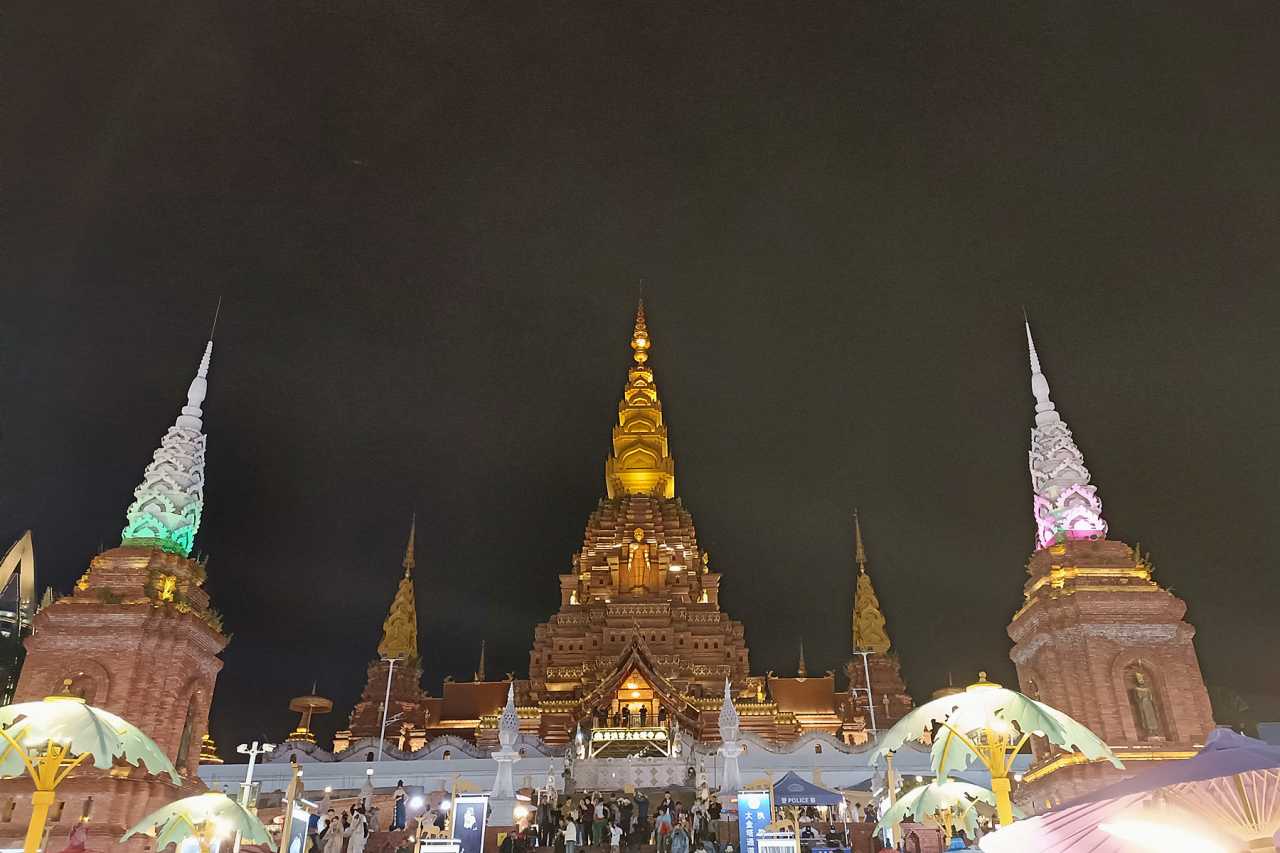
Back in Gaozhuang, the Great Golden Pagoda Temple is usually seen from the outside during the night market, but you can actually go inside. The exterior is free to visit, but entering the interior costs 30 RMB, which includes tower-climbing fee, guided tour, a bottle of water, and a blessing bracelet.
Stepping inside is truly awe-inspiring—the grand architecture, the exquisite murals (though newly painted). The guide said photography is allowed as long as you don't frame people together with Buddha statues. After the tour, you're free to explore. From the platform, you get a panoramic view of the Starry Night Market—spectacular.
Visiting the market during the day means fewer people and much more comfortable photography.
🍧 Wan Tai (碗泰)
That evening, we finally made it to the much-anticipated "Wan Tai," also in Gaozhuang. We ordered a bunch of things, and everything was delicious. My favorites were the Perfume Coconut Smoothie (xiangshui yezi bing sha) and the Paoluda (泡鲁达, a Burmese-style cold drink with coconut, bread, and jelly)—personally, I thought they were amazing. The most photogenic item, the Lime Lychee (qingning lizhi), was just okay—too sour.
On the way back to the hotel, we stumbled upon a small sight—a tree embracing a pagoda (shu bao ta). An unexpected little bonus.
Day 4: The Water-Splashing Frenzy at Dai Ethnic Garden and the Lively Vibe of Riverside Night Market
💦 Dai Ethnic Garden (Dai Zu Yuan)
Many visitors only schedule half a day here, taking the sightseeing tram for a quick tour to experience the water-splashing. We stuck to our "slow travel" principle—no tram, wanting to really see each village.
In the morning, we took a Didi station bus. We got off under the bridge and walked about ten minutes. The park isn't big; strolling around for half a day won't be too tiring. The Water-Splashing Square is near the entrance. My advice: tour the villages first and save the water-splashing for last—otherwise, you'll end up with wet hair and clothes and smudged makeup, and exploring will be a mess. There are self-service lockers at the square; we stored our stuff for four or five hours and it only cost 14 RMB.
First, we passed Manjiang Buddhist Temple (Manjiang Fosi), 1,175 years old and brightly colored. The Dai Ethnic Garden consists of five natural villages: Manjiang, Manchunman, Manzha, Manga, and Manting. Local residents still live in these villages, making a slow stroll really interesting.
Manchunman Buddhist Temple is the most beautiful here, over 1,400 years old, with golden pagodas, four-faced Buddha statues, and small Buddha images—full of Southeast Asian charm. The Peacock Garden has song-and-dance performances. Manzha Buddhist Temple sees few visitors because the tram doesn't stop there. At the far end of the park is Manting Buddhist Stupa (Baita), also over 1,400 years old, with the famous "pagoda embracing tree" (ta bao shu) at its entrance.
We had a simple lunch of steamed buns and rice noodles at a nearby shop. Then we walked to the Border Pier—a filming location for the movie Operation Mekong. The village opposite is still Chinese. Unless you want to take a speedboat ride, it's not worth a special trip.
In the afternoon, we returned to the Water-Splashing Square. First, we picked up free water-splashing basins. There was a flower float parade before the splashing began, and when it officially started, the atmosphere was electric—no one knew anyone, just close your eyes and splash. Remember to wear water-safe sandals, or go barefoot. Midway through, I managed to snap a photo with a rainbow in it. The host even got everyone to "beng Dai di" (Dai-style disco), and the whole place went wild.
🍢 Riverside Night Market (Jiangbian Yeshi)
After leaving the Dai Ethnic Garden, we took a Didi bus back to the hotel, then a taxi to the Riverside Night Market. Longer, more down-to-earth, and cheaper than the Starry Night Market. We tried Vietnamese rice rolls (yuenan xiao juan fen)—personally, just okay—and the signature giant skewer barbecue—the skewers were truly massive and tasty. The trendy coconut egg (yezi dan) was cute and bouncy, and delicious too.
Day 5: Wild Elephant Valley, Manzhang Village, Jinuo Mountain Village, and Mushroom Hotpot
🐘 Wild Elephant Valley (Yexiang Gu)
Today was a private charter day—lots of stops, but none required much time.
It's actually very hard to spot wild elephants in Wild Elephant Valley. If you've already seen the elephant show at Mantin Park, you can really skip this place. After entering, we first watched the Elephant Science Park show, where they explained how elephants are weighed and treated. Then we went to the Rainforest Theater for a song-and-dance performance—just okay.
The park also has a Snake and Lizard Garden, Elephant Lake, and an Orchid Garden (with free guided tours—recommended). Coming out of the Orchid Garden, we took the elevated boardwalk for viewing wild elephants—and sure enough, we didn't see any. Just monkeys. The Butterfly Garden had plenty of butterflies but was very small.
🏠 Manzhang Village (Manzhang Cun)
After Wild Elephant Valley, we headed to Manzhang Village. Xishuangbanna has two famous villages: Manzhang and Manyuan (where the Back to Field (Xiangwang de Shenghuo) "Mushroom House" was filmed). Since Wild Elephant Valley and Jinuo Mountain Village are on the same route as Manzhang, we chose Manzhang—and unexpectedly stumbled upon a filming location for the drama Borderland Tales (Bianshui Wangshi).
We had lunch at the most popular spot at the village entrance, "No. 1 Yard" (Yi Hao Yuan), for grilled chicken—absolutely delicious! The wild vegetable soup was also great. There was even a real peacock you could take photos with.
The village offers hands-on experiences like handmade papermaking, pottery, and palm-leaf scripture (beiyue jing) making. I chose flower papermaking—arranging flowers on pulp, simple but beautiful. If you want to make a fan or a framed piece, you need to let it dry for two hours before taking it, so do the experience first, then explore. I didn't have enough time, so I chose a round frame that I could take immediately.
The village is small, with few tourists—very pleasant to wander. Walking down to the small river, I realized this was the filming location for "Uncle Cai's house" in Borderland Tales—the burned-down shrine, Uncle Cai's dwelling, all there. By the river was also the shack where the character Shen Xing lived, though it was already falling apart.
👳 Jinuo Mountain Village (Jinuo Shanzhai)
Our last stop was Jinuo Mountain Village. The Jinuo people are the last officially recognized ethnic minority in China, having transitioned directly from a primitive society to a socialist one. The scenic area is guided by local Jinuo people; you wait until a group gathers before entering.
The village is on a mountainside, requiring climbing many steps, but you rest and listen to explanations at each level, so it's not too tiring. Halfway up, there's "the Last Hunter" you can take photos with. The statue at the mountainside is the creator goddess "Amo Yaobo" (阿嫫腰北). At the top, there's a performance, and you're given a plate of food. The highlight is the distinctive Big Drum Dance (da gu wu). At the end, everyone is invited to dance and play the drums together. On the way down, you can also visit a local family's home for tea—we skipped that.
🥘 Wild Mushroom Hotpot (Yezheng Jun Huoguo)
Back at the hotel, we went to "Jun Gongzhu" (菌公主) for wild mushroom hotpot. There's one right in Gaozhuang, with a nice atmosphere. Out of season, so no jian shou qing (a famous but poisonous mushroom), but the other mushrooms were still delicious. The server set a timer—15 minutes before we could eat. The broth was incredibly flavorful. You mix your own dipping sauce—the wall had instructions for local hotpot seasoning, and the result was better than sesame paste. But honestly, the mushroom broth was so good on its own, you didn't even need the sauce.
Epilogue: Why Xishuangbanna Is Worth Visiting Again and Again
Our short trip to Xishuangbanna ended with a farewell at the airport in the early morning.
Looking back on these five days, I really loved it here. I loved the canopy of green at the Botanical Garden, the elegance of the Dai king's royal garden at Mantin Park, the laughter between strangers during water-splashing, the tranquility of flower papermaking in Manzhang Village, and the unforgettable umami of that wild mushroom hotpot.
More importantly, there's a magic here that makes you slow down. You don't need to rush through itineraries or check off sights. You can spend an entire afternoon in the Botanical Garden just looking at a tree. You can wander the night market until late. You can chat with locals in the villages of the Dai Ethnic Garden.
There are still so many places I didn't get to—Wangtianshu (Sky Tree), Mengyuan Fairyland, Nannuo Mountain... These missed spots are just reasons to come back.
If you're looking for a warm, comfortable place to completely unwind this winter, Xishuangbanna won't disappoint. Take this guide, pack a good mood, and go.
You should also read:

Hongmao's Journey of Wind, Flowers, Snow, and Moonlight: From Chengdu to Dali, a Gentle Winter Escape
Hongmao's Journey of Wind, Flowers, Snow, and Moonlight: From Chengdu to Dali, a Gentle Winter Escape I hope the sun is warm, even under the gray winter sky. I hope the flowers are fragrant, even when buried in dry, barren soil. I hope the world…
Continue reading...
Bring a Tripod, Travel Lijiang Alone: A Winter Sun Solo Journey
Bring a Tripod, Travel Lijiang Alone: A Winter Sun Solo Journey When winter in the north wraps itself in smog and biting winds, painting the sky in shades of gray, the dream of Lijiang I'd been harboring began to grow wild and unstoppable. Can a…
Continue reading...
Xishuangbanna Self-Drive Tour: Into the Tropical Wonderland at the Edge of the Sky (Complete Guide)
Xishuangbanna Self-Drive Tour: Into the Tropical Wonderland at the Edge of the Sky (Complete Guide) Introduction: A Dream Fulfilled Thirty Years Early Some journeys are destined to happen at a specific moment in time. For me, a self-drive trip to Xishuangbanna was originally the first…
Continue reading...