Bring a Tripod, Travel Lijiang Alone: A Winter Sun Solo Journey
Bring a Tripod, Travel Lijiang Alone: A Winter Sun Solo Journey
When winter in the north wraps itself in smog and biting winds, painting the sky in shades of gray, the dream of Lijiang I'd been harboring began to grow wild and unstoppable. Can a single-minded wish really come true? I can't vouch for everything, but this winter trip south to Lijiang did, indeed, transform from fantasy into reality.
As a post-90s PhD in management, a travel photographer, and a guesthouse experience reviewer, I once lived in the United States for a year, accustomed to documenting the world through my lens. But this time, there was no travel companion, no itinerary—just a tripod, a camera, and a heart desperate for sunlight. Before I left, a friend asked with concern, "Aren't you afraid to go to Lijiang alone?" I smiled, but inside, I was a little nervous. It wasn't until I actually set foot on that land that I understood—some roads are meant to be traveled alone, so you can encounter the most authentic scenery.
The Beginning: A Free Ticket, an Adventure Begins
It all started with a Weibo giveaway. I'd left a comment under a Ctrip travel event: "In winter, you should fly to a warm place." Maybe the heavens heard my wish, or maybe it was karma paying me back for all the bad luck I'd been having. Somehow, I became one of two winners. The prize: a free flight, hotel, and airport transfers—destination, Lijiang.
I'd originally planned to go with a close friend returning from abroad, but she got a last-minute interview invitation and had to bail. The trip was already booked, and there was no time to find another companion. After much deliberation, I gritted my teeth: I'd bring my tripod and go alone. Before leaving, a friend who travels solo often told me, "You'll get addicted to this feeling." I was half-skeptical at the time, but after returning from Lijiang, I believed her completely. My journey with a tripod as my companion had begun.
Pre-Trip Preparations: Traveling Alone, Don't Overlook These Details
Packing: Travel Light, But Don't Forget These
When traveling alone, heavy luggage is a real drawback. Luckily, I stayed at the same guesthouse for all four nights—Yijiangnan Inn in Dayan Old Town—saving me the trouble of moving around. But the cobblestone streets of Dayan Old Town are uneven, and dragging a suitcase is genuinely exhausting. I had my laptop and tripod with me, and I "suffered" all the way. My advice for solo travelers with heavy bags: ask the guesthouse owner to come pick you up at the entrance of the old town.
Dressing Guide: Dress According to the Sun

Winter in Lijiang is all about the sun's "blessings." Sunny spots are warm as spring, while shaded areas are cold as winter. Around Christmas, from 10 a.m. to 5 p.m., a base layer, cardigan, and shawl are enough (I'm not sensitive to cold, so it varies by person). Once the sun goes down, the temperature drops sharply, and you'll need a thick coat.
Lijiang rarely rains in winter, with plenty of sunshine. A wide-brimmed hat and a magic scarf are essential, and don't forget sunscreen. Also, the altitude is high and the air is dry. If you wear contact lenses, bring enough solution—the small bottle I brought evaporated completely by the second day.
Photography Gear: A Selfie Pro's Secret Weapons
- Camera: Canon EOS 5D Mark III
- Tripod: Portable, about 300 RMB ($40) for a durable model
- Wireless Remote Shutter: PIXEL brand, solves the problem of running back into frame for self-portraits
- Other Supports: Lens caps, bean bags, even flat ground can serve as a makeshift tripod
Itinerary Planning: Flexible but Not Random
I'd been to Lijiang ten years ago, hitting all the major spots like Sifang Street and Jade Dragon Snow Mountain. So this time, I had no pressure to see sights; my itinerary was all about wandering between old towns. I only booked a one-day tour of the Ancient Tea Horse Road and Lashi Lake, leaving the snow mountain plans dependent on snowfall. As it turned out, plans changed—I made friends at Lashi Lake, and the last day turned into a fun Naxi cultural experience.
Final Itinerary: - DAY 1: Tianjin → Lijiang, wandering around Dayan Old Town - DAY 2: Mu Mansion + Shuhe Old Town - DAY 3: Lashi Lake day trip + Yushui Village + Baisha Old Town - DAY 4: Naxi cultural experience: New Year's pig slaughter - DAY 5: Bask in the sun, write postcards, Lijiang → Tianjin
Expense Breakdown (Total: 913 RMB / $125): Taxi 81 RMB, meals 55 RMB, flower cakes 90 RMB, dried yak meat 40 RMB, Shuhe 92 RMB, snacks 25 RMB, grilled fish 10 RMB, Golden Coast 70 RMB, yogurt 50 RMB, Mu Mansion 70 RMB, Lashi Lake day trip 150 RMB, Baisha Old Town 30 RMB, Old Town maintenance fee 80 RMB, postcards 40 RMB.
Useful Contact: Xiao Ruan Ge 13987042751. Contact him for private car hire or trips to Lashi Lake—cheaper than other drivers. Mention "Heilongjiang solo traveler" for the deal.
Solo Travel Reflections: Safety First, But Don't Close Your Heart
When friends heard I was going to Lijiang, besides worrying, they joked about whether I was looking for a romance. It's fine to hope for a beautiful encounter, but safety comes first for solo female travelers. Lijiang has many bars, and fights occasionally break out at night. Stick to tea houses and wandering the old towns during the day, and stay away from trouble spots at night. Go back to your guesthouse to enjoy the night view—it's safer.
This was my first solo trip, and my parents were naturally worried. I did thorough research before leaving and kept in touch throughout the journey. Most guesthouses have Wi-Fi, so I video-called my parents every night to ease their concerns.
You need to be cautious, but it's more important to learn how to make friends on the road. The friends I made this time taught me: if you choose to trust others, they'll treat you sincerely; if you're too guarded, you'll only lock yourself in a corner. Knowing how to read people is a big lesson. I won't claim to have sharp eyes, but I was truly lucky this time to meet genuine people, which made the whole trip unforgettable.
Selfie Secrets: How to Shoot Like a Pro Alone
Tool Selection
- Portable Tripod: Allows shooting from any angle and height, but it's bulky
- GorillaPod Tripod: Easy to carry, but can't achieve all your ideas in open spaces
- Any Support Surface: Flat ground, rocks, railings—all work. Use a lens cap under the lens to prevent sinking
- Bean Bag: Similar to a GorillaPod, good for adjusting angles, but carrying grains can be heavy
Selfie Techniques
1. Choose the Right Spot Pick places with few people to avoid photobombers and prevent your tripod from being knocked over. At the flower wall intersection in Dayan Old Town, there were too many pedestrians, so I had to shoot repeatedly until I got a good shot. But at Mu Mansion, with no tourists around, I set up the tripod, framed the shot, and casually walked around pressing the remote—choosing the best from multiple shots.
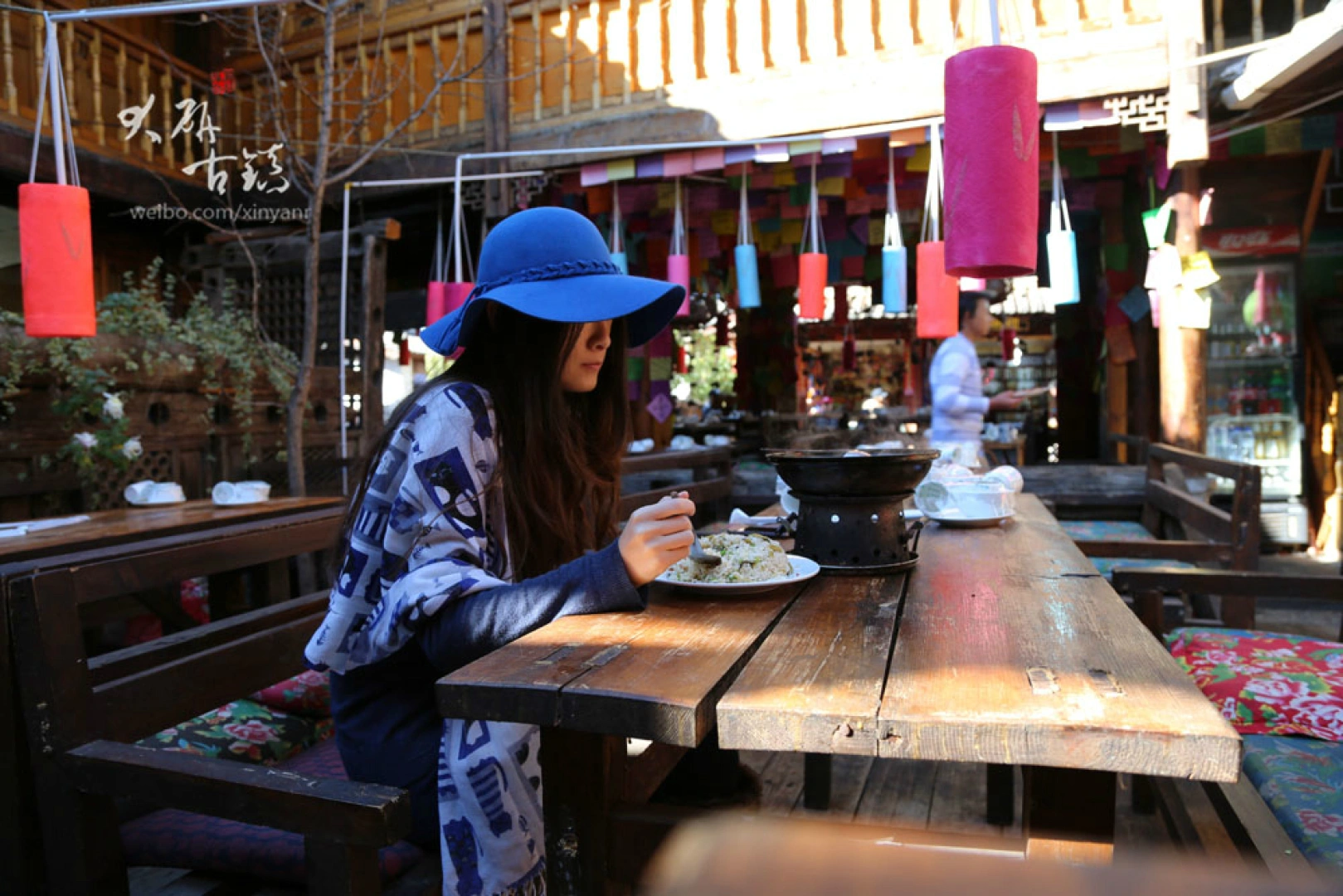
2. Get the Angle Right The camera height differs from where you stand, so anticipate the frame. At a restaurant, I placed my camera on the next table (45 degrees above right) because it was higher than my seat and could capture the full scene. Remember to use a lens cap under the lens to avoid capturing the neighboring table.
3. Capture Floating Shots Switch to high-speed continuous shooting, throw a prop or jump up as the shutter fires. When shooting falling leaves in Baisha Old Town, I didn't use the remote. Instead, I set the self-timer, ran to the spot, and threw the leaves straight up when the indicator light blinked fast—got it in two tries.
4. Interact with Animals The dogs in Shuhe Old Town were lively. I raised my hand to get their attention and pressed the shutter when they interacted with me, capturing spontaneous moments.
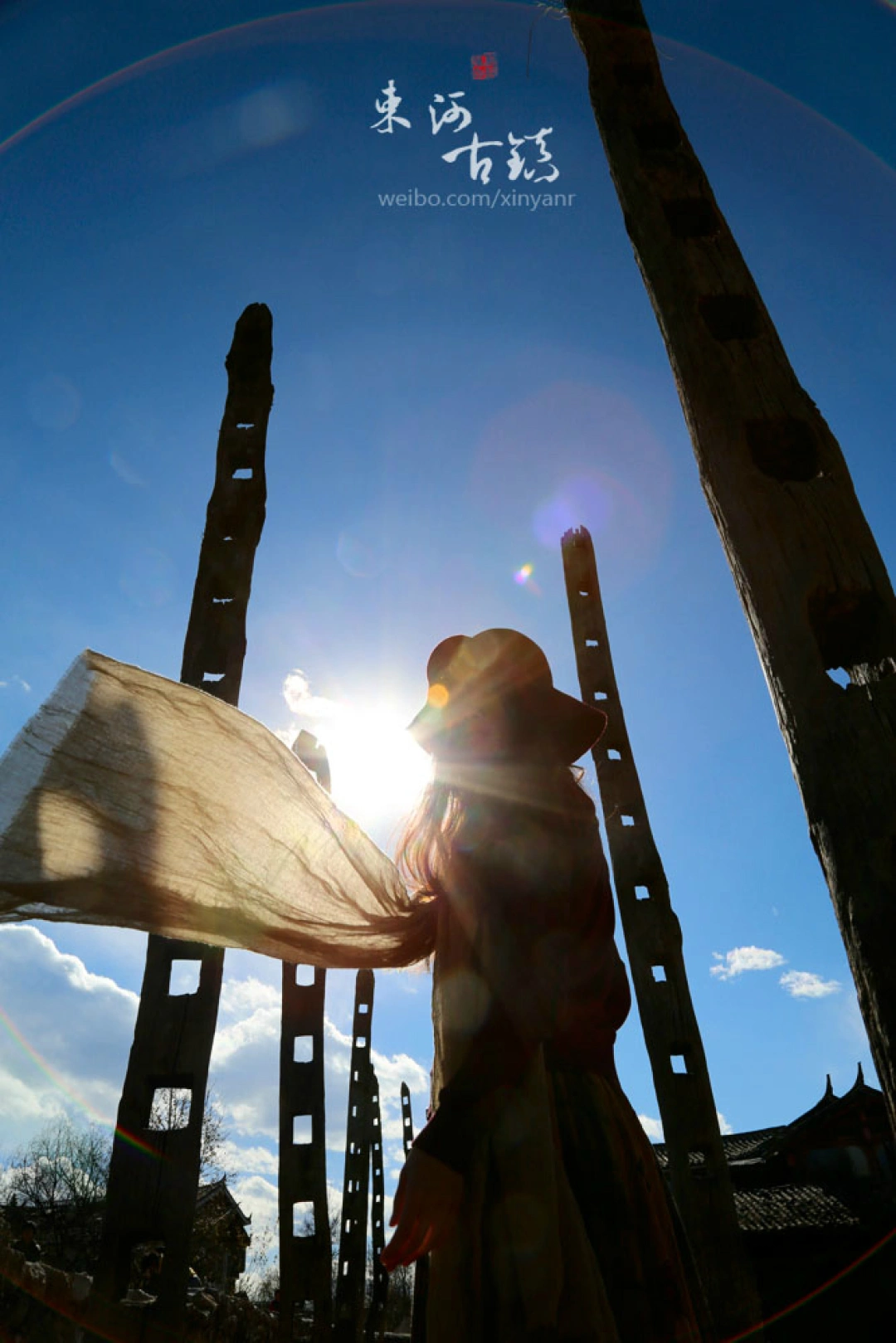
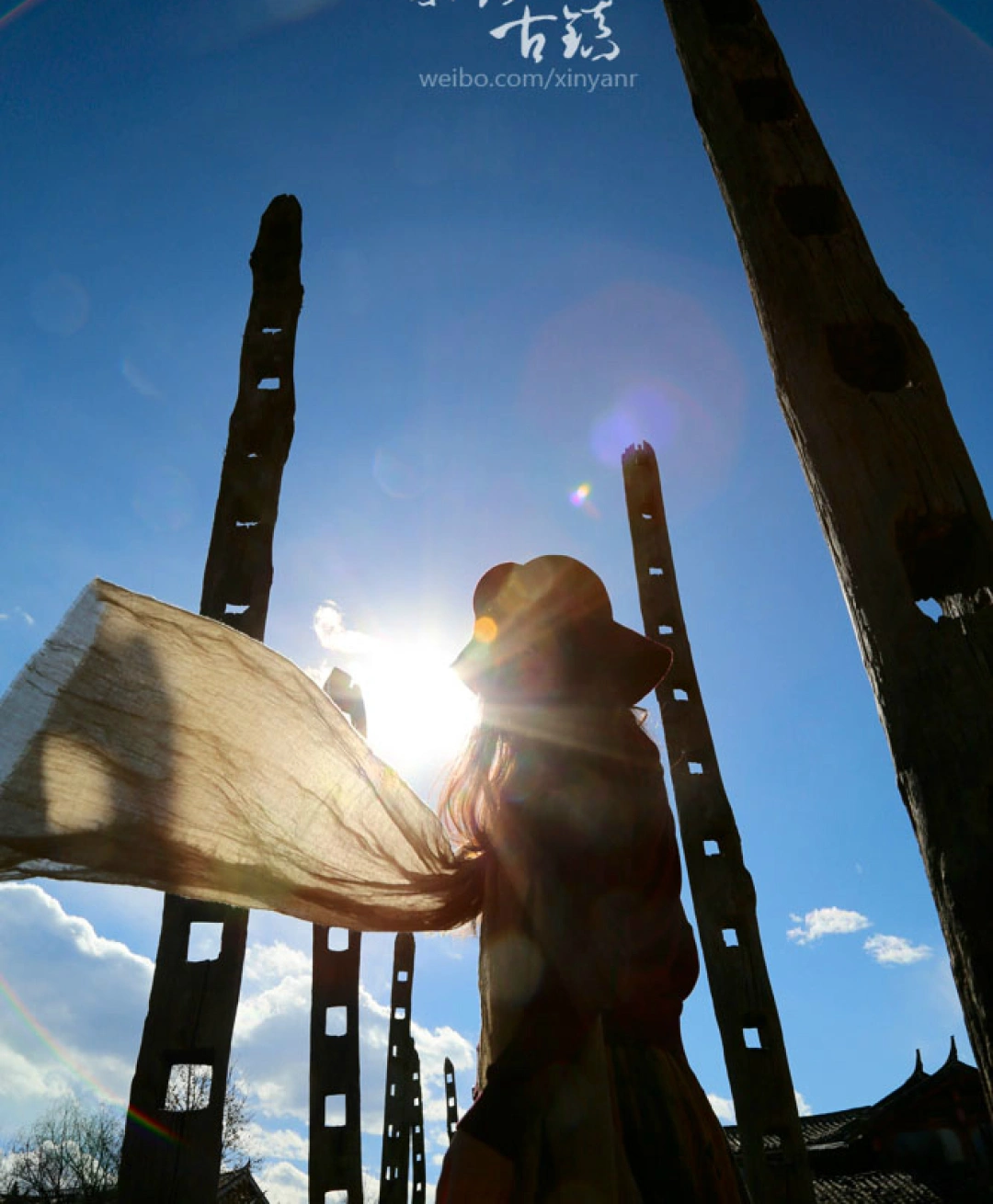
5. Play with Light and Shadow Set the tripod to its lowest height (about calf level), tilt the camera up. When shooting sunlight, align the camera, your head, and the sun in a straight line, with your head slightly tilted, to create light effects. Throw a scarf up just before pressing the shutter, and use high-speed continuous shooting.
Creative Self-Portraits
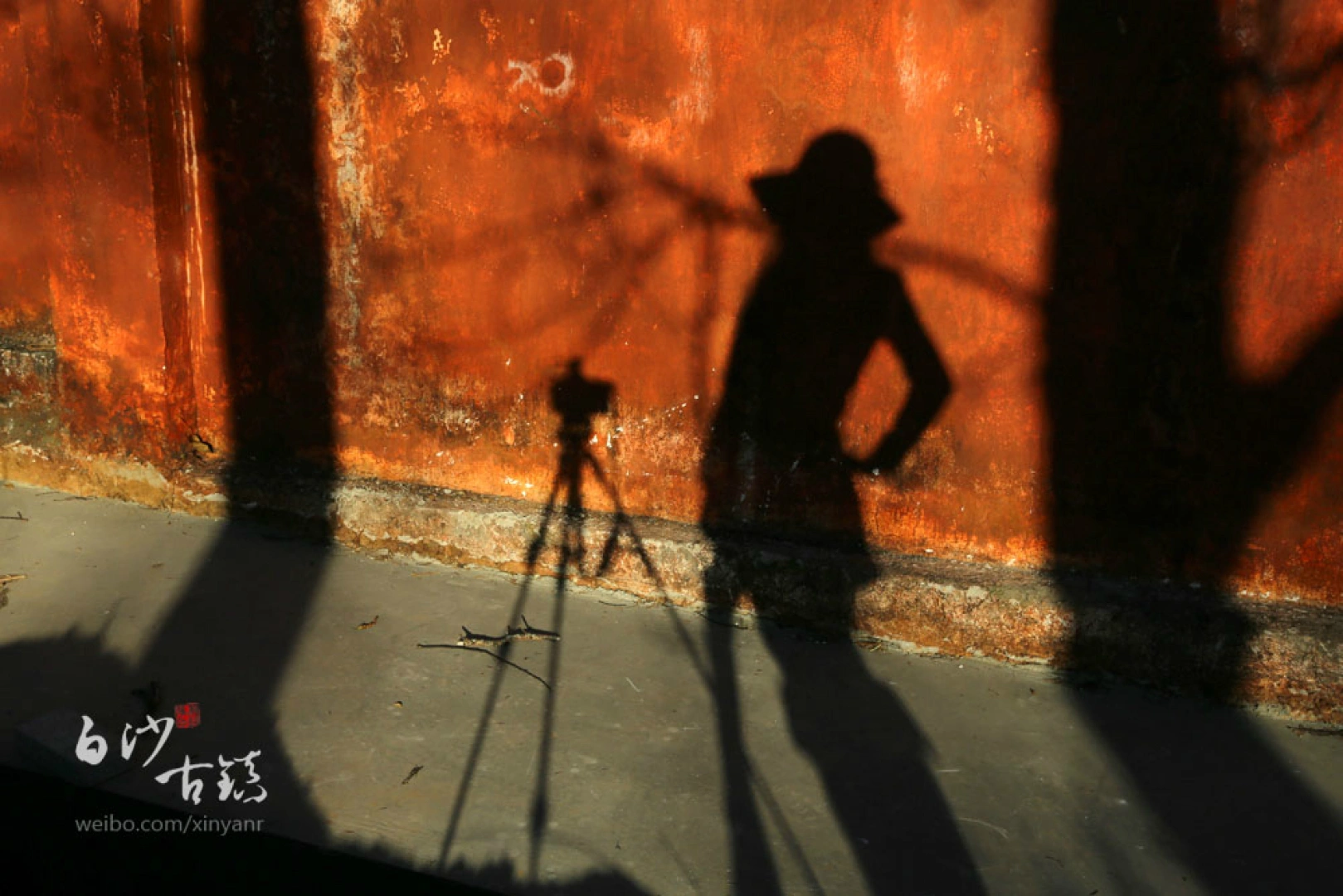
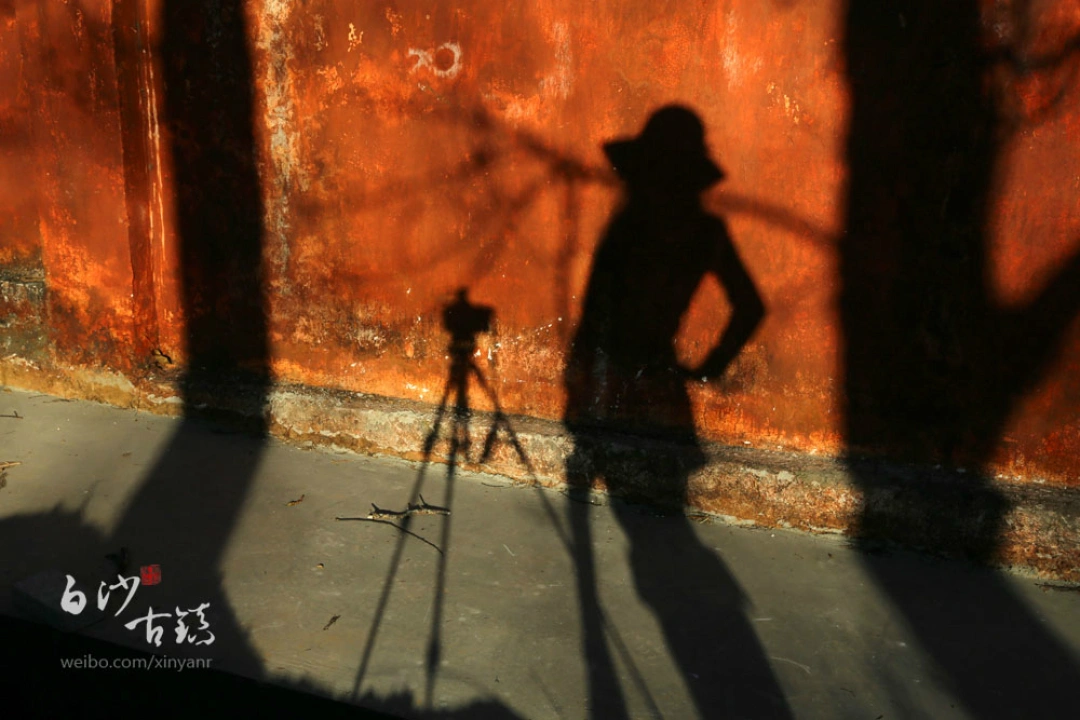
Beyond shooting yourself, you can capture your shadow, reflections in water, mirrors, or sunglasses. Any surface where you can see yourself, with clever composition, becomes a way to document your presence. I recommend the book "The Ultimate Selfie Guide: 360-Degree Flawless Shots" by Luo Xiaoyun for deeper learning.
Travel Photography Diary: Every Moment in Lijiang Is a Scene
DAY 1: Tianjin → Lijiang, Wandering Dayan
Left Nankai District at 7 a.m., hit Tianjin's morning rush hour, and only reached the airport by 8:10. With a layover in Chongqing, I arrived in Lijiang at 3 p.m. The clear weather and warm temperature made me "willingly" shed my thick sheepskin coat.
A Ctrip private car took me to the entrance of Dayan Old Town, then an electric cart brought me inside, where the guesthouse owner picked me up. Crossing a 20-degree Celsius (36°F) temperature difference, I arrived at Lijiang—a winter paradise.
Seeing I was alone, the guesthouse owner thoughtfully arranged a second-floor room and advised me to return early. After a quick wash, I took my tripod to the courtyard to bask in the sun. Lijiang's winter sun is generous, not setting until after 7 p.m. I soaked up the rays while studying a map, my right hand gripping the wireless remote. With each click of the shutter, two boys next door poked their heads out: "You bring a tripod out? So professional." Flustered by my first encounter with strangers, I smiled, grabbed my camera, and ran off.
Wandering the old town, I stumbled upon a wall covered in unknown flowers. I set up the tripod and snapped photos back and forth along the wall. A foreign couple watched with interest, and the woman asked if I needed help taking a photo. I waved my remote: "This is enough." She smiled and walked away. The unspoken understanding between strangers while traveling always warms the heart.
As Yang Zhao wrote in "I Want to Meet You in Life": "The richness of life has less to do with the external environment than with one's internal preparation." When I traveled around Yunnan with my mother ten years ago, I was young and only remembered altitude sickness, yak meat, and grilled fish. This time, I felt ready.
Stopping and going, writing and shooting. In winter Lijiang, besides the sun, nothing warms the heart like words on a postcard. I wrote one to a friend I missed, a token of seeing each other through the page. Note: The Dayan Old Town post office only accepts postcards sold by the Lijiang Tourism Bureau; others need an envelope to be mailed.
At dusk, I found a street-side restaurant called "Alili" for dinner. The Naxi auntie's grilled fish from ten years ago was unforgettable. Today, it wasn't as spectacular as I remembered, but a little cat outside the window became my "dining companion." It stared hungrily as I ate, and I shared a piece of fish with it for every piece I ate. But it ate too fast, and soon the fish was gone. It wouldn't touch the cold noodles, and after I repeatedly said "no more meat," it reluctantly left.
Back at the guesthouse for a short rest, I went out for a night stroll. I bought three flower cakes for 10 RMB ($1.40)—they weren't popular ten years ago, but now they're a must-buy for tourists. Sifang Street is a snack alley with many rice noodle varieties; for cheap eats, head to the farmer's market. In the night, the old town took on a mysterious hue under pale yellow lights. I saw a basket of embroidered shoes and wanted to take a photo, but was shooed away by the vendor—some things in this town are seen but not captured.
I bought dried yak meat and returned to the guesthouse. When traveling with family, home is where your parents are; with a loved one, home is where love is; alone, with your bag on your back, home is everywhere. Goodnight, first night in Lijiang.
DAY 2: Mu Mansion + Shuhe Old Town
What wakes you up every morning? Your bladder? Your stomach? Your dreams? Today, it was Lijiang's "meter of sunlight." Sleeping in a place I'd dreamed of, nothing else could possibly rouse me.
Part 1: The Mu Mansion Saga
Last year, CCTV aired the hit drama "Mu Mansion Saga." Coincidentally, I was staying on Zhongyi Lane, so I visited Mu Mansion first. The 60 RMB ($8) entrance fee was a bit steep, but you could claim a commemorative keychain with the ticket.
"North has the Forbidden City, south has Mu Mansion." Stepping through the vermilion gate, the scene opened up—a magnificent palace stood atop white marble foundations. If Dayan Old Town represents the worldly side of Lijiang, then Mu Mansion is the story of the once-glorious Mu clan's rise and fall in the southwest.
After the 1996 earthquake, the World Bank lent substantial funds for reconstruction. After three years of meticulous work, Mu Mansion rose like a phoenix from the ashes. At its peak in the late Ming Dynasty, Xu Xiake marveled: "Its palaces are as splendid as a royal court." Covering 46 acres (18.6 hectares) with a 369-meter central axis, the complex faces east, "greeting the sunrise to capture its grandeur." The wooden archway reads "Tianyu Liufang," a homophone in Naxi for "go read," reflecting the Naxi people's reverence for knowledge.
I followed the free guided tour: The Mu clan built the mansion facing east—toward the sun—rather than following the traditional Chinese feng shui principle of "sitting north and facing south." The east belongs to the wood element, and the sun and wood are sacred in Naxi Dongba religion, as well as the emperor-given surname "Mu" (wood). The old town has no city walls—first, to welcome merchants from the Tea Horse Road, and second, because building a wall around "Mu" would create the character "kun" (trapped).
Climbing to the top floor for a panoramic view, it was nearly noon. The sun was blinding, but the former grandeur was still visible. At the Sanqing Temple, a Taoist priest was sweeping the corridor. Living so close to the heavens must make life purer, I thought.
Part 2: Shuhe Old Town
From Mu Mansion, I caught a ride to Shuhe Old Town. Compared to Dayan's hustle, Shuhe was more serene. Cobblestone streets, small bridges over flowing water, dogs basking in the sun—everything slowed down. I found a café by the water, set up my tripod, and captured the light and shadow flowing across the walls.
DAY 3: Lashi Lake Day Trip
The Lashi Lake day trip I'd booked was more fun than expected. I rode a horse along the Ancient Tea Horse Road, with a Naxi uncle as my guide, telling stories of the mountains. The lake water was crystal clear, with migratory birds circling overhead. For lunch, we had a clay pot chicken hotpot, and I hit it off with fellow travelers. In the afternoon, we visited Yushui Village and Baisha Old Town.
At Baisha, I took my favorite photo—throwing leaves into the air and capturing them mid-fall with high-speed continuous shooting. No remote, just trial and error, but the freedom made it all worth it.
DAY 4: Naxi Cultural Experience: New Year Pig Slaughter
The friends I made at Lashi Lake invited me to a Naxi New Year pig slaughter ceremony. It's a local tradition: slaughter a pig at year-end to celebrate, inviting friends and family to share. I'd never seen anything like it—lively, rustic, full of the smoke of everyday life. The aunties busied themselves curing meat and stuffing sausages, while the uncles drank and chatted. I helped take photos and tasted the most authentic Naxi cuisine.
That evening, we gathered around the fire pit, drinking homemade rice wine, listening to the elders tell Naxi legends. At that moment, I forgot the time, forgot I was a tourist.
DAY 5: Bask in the Sun, Write Postcards
On the last day, I did nothing. Woke up naturally, found a rooftop café, ordered a cup of Pu'er tea, and sat in the sun, zoning out. Lijiang's sun really can "bake" happiness out of you. I took out my postcards and wrote to friends far away, telling them the stories of the past few days.
At 4 p.m., I packed up and got in the car to the airport. Looking back at Dayan Old Town, the sun was still shining bright. I knew this journey was over, but the feeling of traveling solo would stay with me forever.
Conclusion: Lijiang Alone, a Gift to Yourself
This trip to Lijiang taught me: traveling alone isn't loneliness—it's a deep conversation with yourself. When you stop relying on others and learn to be with yourself, you find the world is more forgiving than you imagined.
Bring a tripod, and you become your own photographer; bring courage, and you become your own guide. Lijiang's sunlight, the Naxi people's warmth, the slow pace of the old towns—all tell me: life is more than the grind at hand; there's poetry and distant fields.
So, stop worrying about traveling alone. Pick up your camera, and capture the best version of yourself through the lens. Lijiang is worth the journey.
You should also read:

Into the Hidden Valley: A Solo Journey Through the Mysterious Dulong River
Into the Hidden Valley: A Solo Journey Through the Mysterious Dulong River Deep in the northwestern corner of Yunnan Province, tucked away from the modern world, lies a place that feels like a secret whispered among mountains. The Dulong River Valley is not just a…
Continue reading...
God’s Abandoned Palette: A Self-Drive Journey Through Yunnan’s Dongchuan Red Land
God’s Abandoned Palette: A Self-Drive Journey Through Yunnan’s Dongchuan Red Land Travel has never been about reaching some distant geographic coordinate. It’s about encountering, along the way, the version of yourself buried beneath the rubble of daily routine. During this May Day holiday, I finally…
Continue reading...
Cloud Travelogue · Dali of Wind, Flowers, Snow, and Moon: A Three-Day, Two-Night Journey of a Free Spirit
Cloud Travelogue · Dali of Wind, Flowers, Snow, and Moon: A Three-Day, Two-Night Journey of a Free Spirit I am a cultured female foodie with a touch of rogue charm. I slung on my backpack, took my lover's hand, and set off on a spontaneous…
Continue reading...