15 Days in Dali: Turning Summer Break into Poetry with 15 Simple Joys
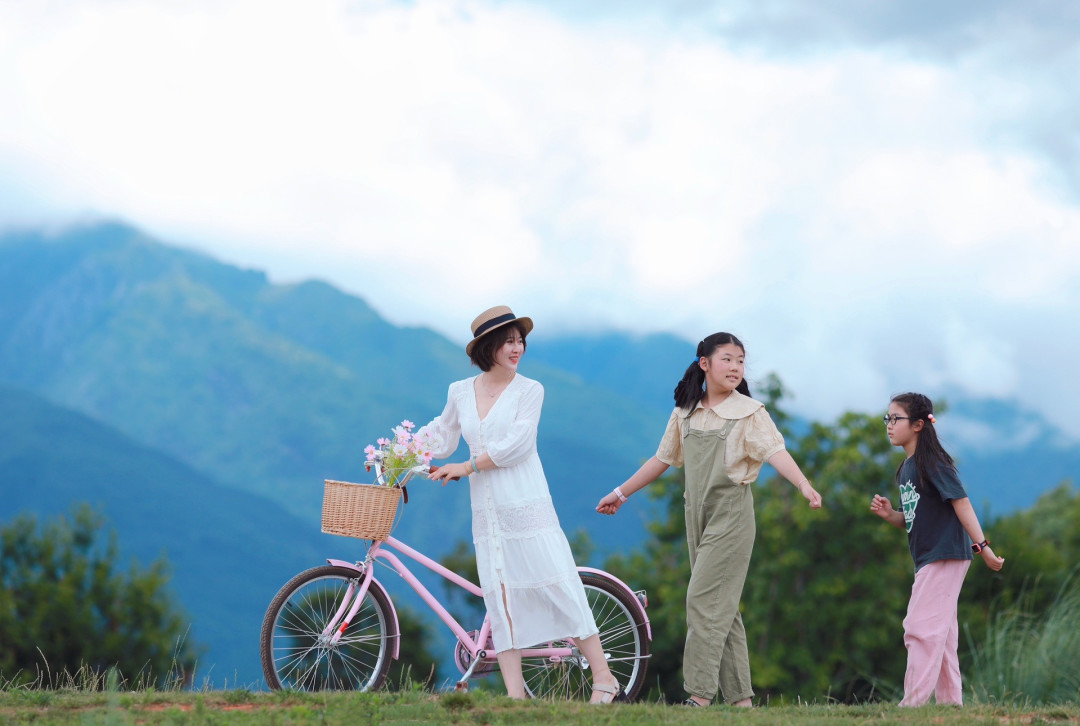
15 Days in Dali: Turning Summer Break into Poetry with 15 Simple Joys
Foreword: Slow Days for Two Moms and Two Girls
In 2005, Chen Daping and I met at the best age of our lives. Back then, we never could have imagined that more than a decade later, we'd each be bringing our daughters to spend a leisurely stretch of time under the blue skies and white clouds of Dali.
Our story together isn't long, but it's full of highlights—getting lost in the snows of New Zealand, searching for a lost camera in a Vienna subway station, dancing like fools in a lavender field in Provence, and singing karaoke classics in Iceland's howling winds. We've raised our glasses together, sat in comfortable silence together, and somehow drifted from youth into middle age.
Now, we've brought our daughters—Honey and Fatty, two little food lovers—to stay in Dali for a full 15 days. Mornings were for homework, afternoons for wandering. In the simplest way possible, we turned summer break into poetry.
Over those 15 days, we did 15 small things. Each one deserves to be remembered.
01 | Homework in a Different Place, with Nature's 22°C Air Conditioning
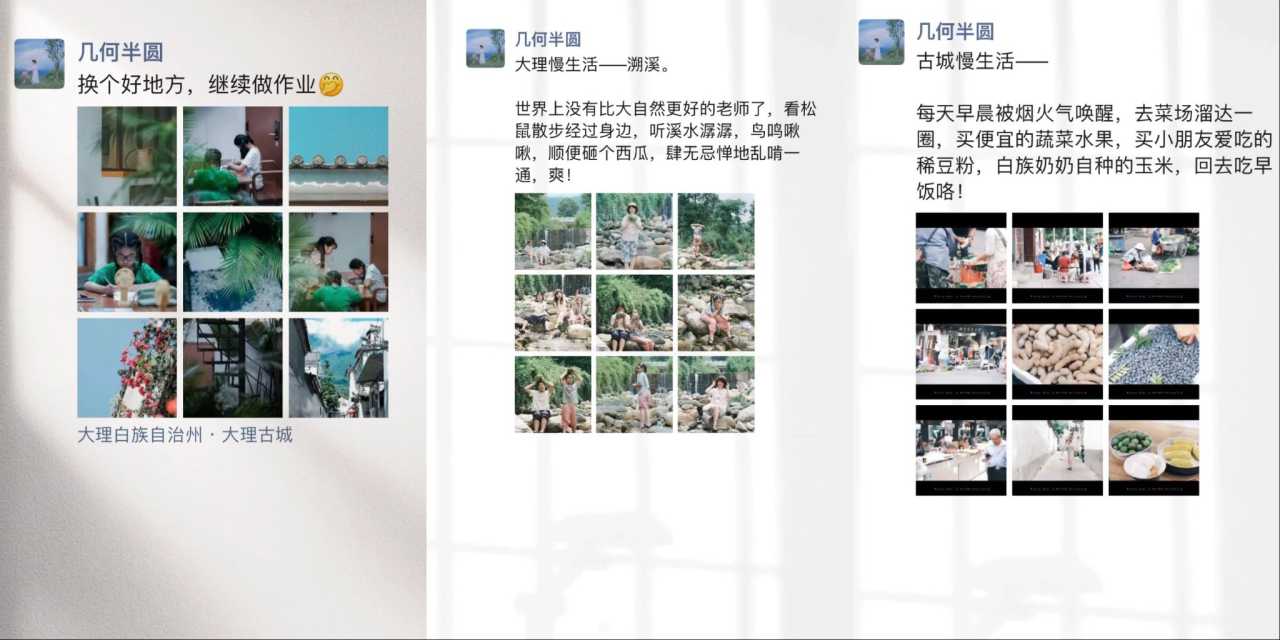
We stayed at two guesthouses in Dali. The first was "Wait For Me" (等我) on Bo'ai Road in the old town, converted from a traditional Bai ethnic house. It was a standalone two-story building with a small courtyard. White pebbles covered the ground, and散尾竹 (areca palm) and banana trees grew around it, giving the place a faint Southeast Asian vibe.
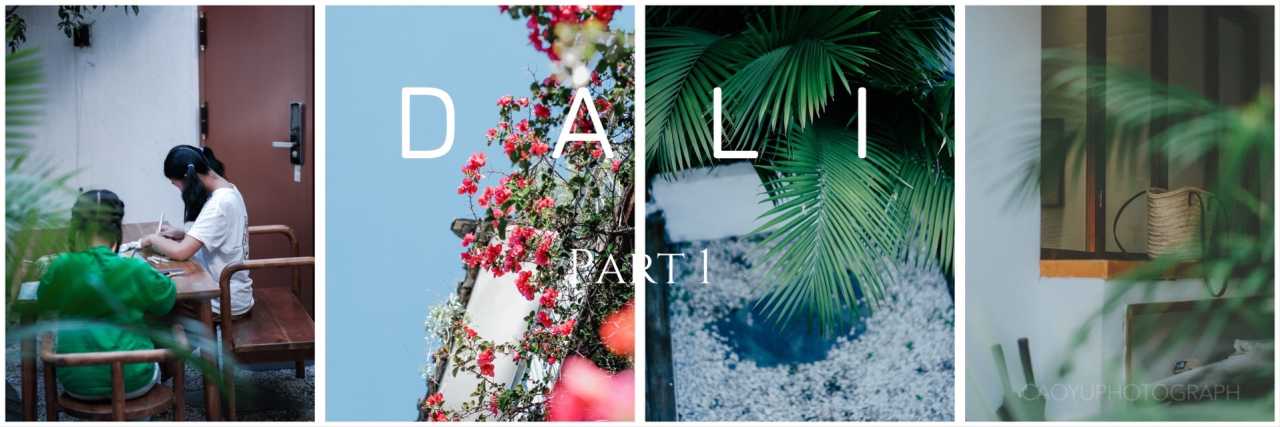
Mornings in Dali are only 22°C (72°F)—so cool it barely feels like summer. We moved the dining table under the osmanthus tree, and the two girls did their homework there. Fatty writes fast and efficiently; Honey is slower, but to keep up, she started waking up early every day and would secretly peek to see if Fatty was out of bed yet.
"With a Chinese teacher and a math teacher sitting right here, it feels like a mini classroom," I said to Daping with a laugh.
Clothes dry in half a day—that was Dali's first gift to us.
02 | Yangjiadeng: The Quiet Blue by Erhai Lake
On our first day out, we rented electric scooters. Renting in Dali's old town is easy: peak season prices range from 30 to 50 yuan per day, with a 200 yuan deposit. Don't forget to haggle.
We skipped the trendy spots—S-Curve, Caicun Village, Longkan Pier—and chose Yangjiadeng, less than 10 kilometers from the old town. A 40-minute scooter ride through a small path brought us there.
The water of Erhai Lake was so clear you could see the bottom. The girls collected seashells and conches. The moment they saw the water, Honey and Fatty charged straight in, ignoring all our calls to turn around for photos.
A lone tree stood in the shallow water. Against the blue sky, the lake had an inexplicable storybook quality. A white waterbird flew by, and the scene looked like a painting.
The two kids threw pebbles into the water, completely carefree. Under the big tree, there was no worry about sunburn. In Dali's rainy season, the weather forecast is always a liar—the predicted overcast skies and rain barely showed up. As long as the sky is blue, Erhai is blue. That pure "Erhai blue" comes from clear water reflecting sunlight.
On that bright afternoon, I wondered if the girls would remember it years later.
03 | Qingbi Stream: Watermelon and a Creek—Summer's Perfect Match
Dali is great for creek walking. We went to the upper reaches of Qingbi Stream, about 6 kilometers by scooter from the old town. Just navigate to "Qingcui Garden" (倾翠花园) hotpot restaurant, and you'll find it.
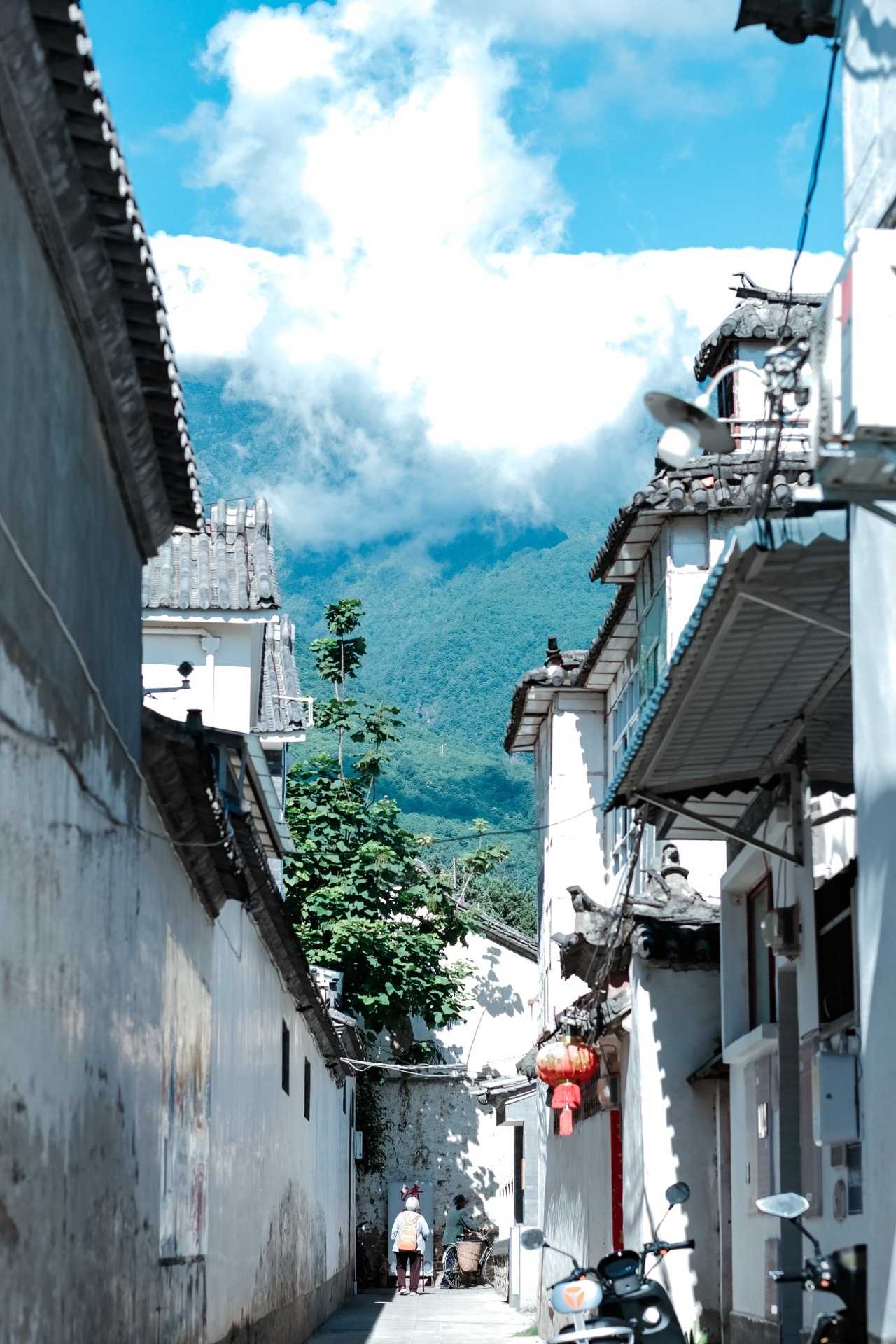
The stream was crystal clear. A small waterfall cascaded with a pleasant roar. Under the blue sky and white clouds, insects chirped, birds sang, and everything was lush green. Before we left, I bought a small watermelon. We soaked it in the icy stream for half an hour, then smashed it open on a rock. It wasn't pretty, but it was the best watermelon we'd ever eaten.
Everyone could eat watermelon and splash in the water without a care. For a moment, Daping and I felt like we'd met our own childhoods again.
04 | North Gate Market: The Warmth of Everyday Life
If you think Dali's old town is too commercial, get up early and visit the North Gate Market. There you'll find the cheapest vegetables and fruits, the most authentic local life, and the warmest kind of everyday human connection.
Honey set her alarm for 6:40 every morning. The two of us would wash up and walk the 500 meters to the market. Elderly uncles and aunties would set up stalls with their homegrown produce—blueberries for 15 to 20 yuan per kilogram, strawberries for 15 to 18 yuan, bayberries for 10 yuan. The prices were almost unbelievable.

The most famous local snacks were pea jelly (豌豆粉) and thin pea porridge (稀豆粉)—fragrant and sticky. Everyone except Fatty loved them. We didn't dare try tamarind (酸角), but there was a local tamarind juice that was surprisingly refreshing.
Dali's blueberries aren't big, but they're not sour at all. For 20 yuan, you get a huge box. During this stay, we finally achieved "blueberry freedom."
When we carried breakfast back to the guesthouse, Daping and Fatty were still asleep.
05 | Zhoucheng: The "Dali Blue" of Tie-Dye
Dali has many shades of blue—the sky's azure, Erhai's sapphire, and the indigo blue soaked into fabric.
A one-hour taxi ride from the old town brings you to Zhoucheng, known as the "Home of Bai Ethnic Tie-Dye Art." Compared to the overly lively Dali old town, we preferred the raw authenticity here. Vegetable vendors at the market, elderly Bai women carrying baskets on their backs, a middle-aged man smoking as he laid bricks—everyone moved at their own pace, faces full of smiles.
Fatty loves cats, Honey loves rabbits. Each picked out a tie-dye plush toy they liked. After some bargaining, they got their treasures at a ridiculously low price—we never found such good deals again in the old town or any other shop.
We stumbled into "Qiheng Grandma's Shop" (启恒奶奶的店). The grandma told us she'd named it after her grandson, Qiheng, never expecting it to become popular online. Her cold-tossed rice noodles (凉拌米线) and three-delicacy rice noodles (三鲜米线) were especially refreshing. The kids finished one bowl and asked for another. Grandma bustled around happily, her eyes crinkling with joy when we praised her cooking.
At the Puzhen Bai Tie-Dye Museum, we saw a double layer of "blue sky and white clouds"—one was the real sky, the other was tie-dye fabric spread out toward the horizon. Drawing patterns, tying, soaking, dyeing, steaming, drying, untying the threads... Watching a plain piece of white cloth transform into patterned tie-dye was deeply satisfying.
Costs: Zhoucheng and the museum are free to enter. Tie-dye experiences range from 50 to 200 yuan per person, depending on the shop. Remember to bring gloves—the dye is hard to wash off skin. Prices for tie-dye souvenirs vary wildly, so ask around and bargain hard. The canvas bag we made at Puzhen cost 150 yuan, but the "Shuli Library" (书理图书馆) in the old town charges half that.
06 | Erhai Lake Corridor Cycling: Wind in Your Hair, Total Freedom
Ever since our first close encounter with Erhai at Yangjiadeng, the kids kept asking to play in the water again. We decided to take them cycling along the Erhai Lake corridor.
Compared to driving around the lake, cycling lets you stop anytime you want—beside a clear, shallow beach, near a secluded waterside forest. You can pull over and play whenever you like. We did it twice, both times starting from the Sansheng Island entrance and heading toward Yangnanxi, perfectly avoiding the crowds.
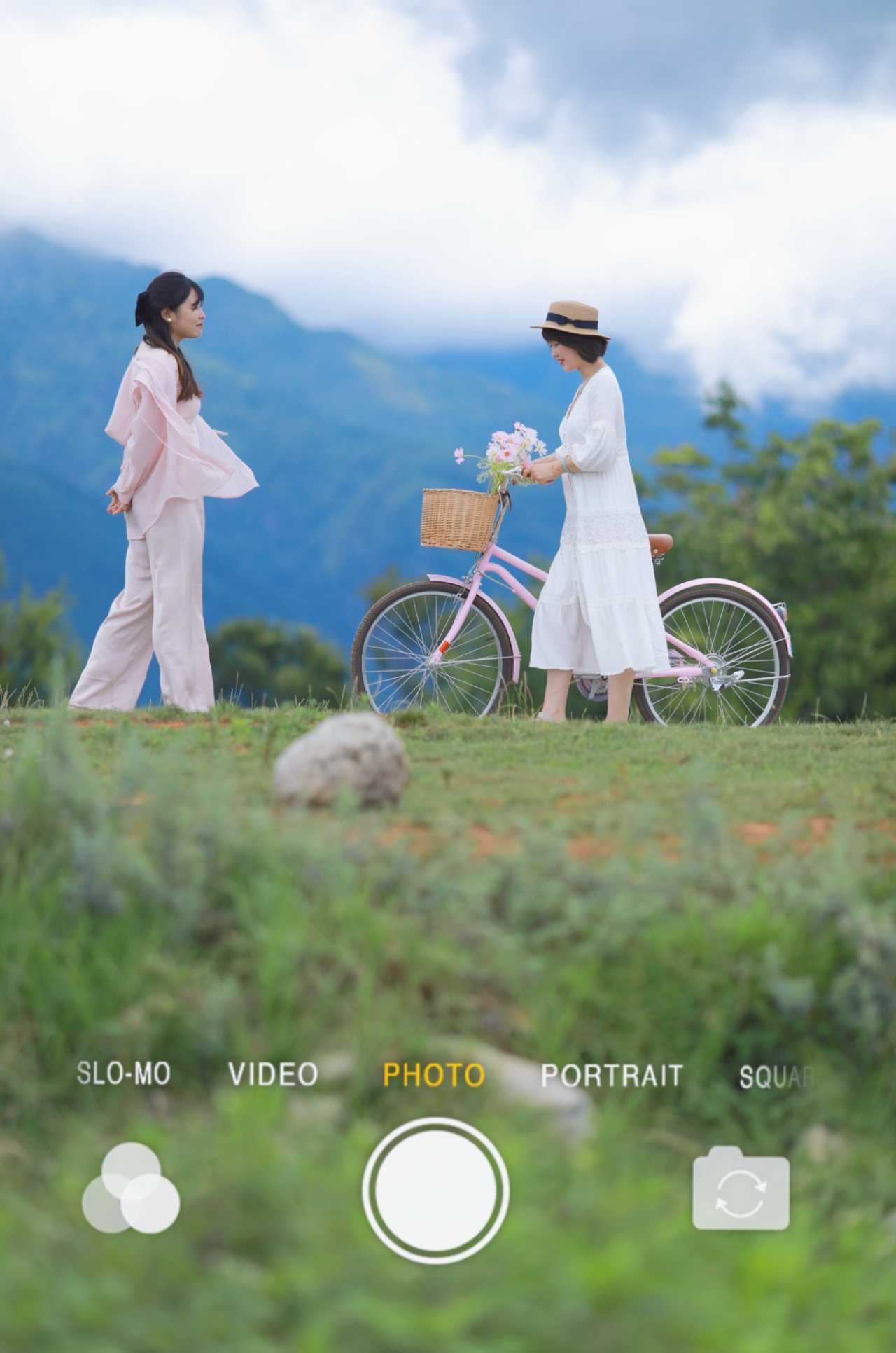
At the Sansheng Island entrance, you can rent private bikes, shared bikes, or shared e-scooters. We rented four bicycles—white, pink, and blue. Even middle-aged women can't resist this kind of cuteness. Each bike cost 30 yuan with no time limit, plus a 200 yuan deposit. Daping, ever the meticulous math teacher, calculated that this was cheaper than the shared bikes.
We rode four or five kilometers, stopping frequently. Daping and I took photos while the kids played nearby. The rented bikes matched perfectly with the green of Cangshan Mountain and the blue of Erhai, resulting in several photos we all loved.
Daping discovered a particularly photogenic spot in the shallows—it became her "favorite" of the whole trip. Traveling with a like-minded friend is pure happiness.
Honey, who hadn't wanted to cycle at first, gradually fell in love with the feeling of the wind rushing past. Fatty gave us all nicknames—Rabbit Express, Dragon Express, Horse Express, and Snail Express. "Snail Express" was Daping, always leisurely lagging behind. Later, she suddenly transformed into "Tiger Express," and we could barely keep up.
07 | Sufangzhou: First Taste of Pottery
I first heard about Sufangzhou (素方舟) from actress Jiang Yiyan's social media. It's a ten-minute walk from our guesthouse in the old town—a community center combining organic vegetarian food, a natural market, a public library, and simple apartments.
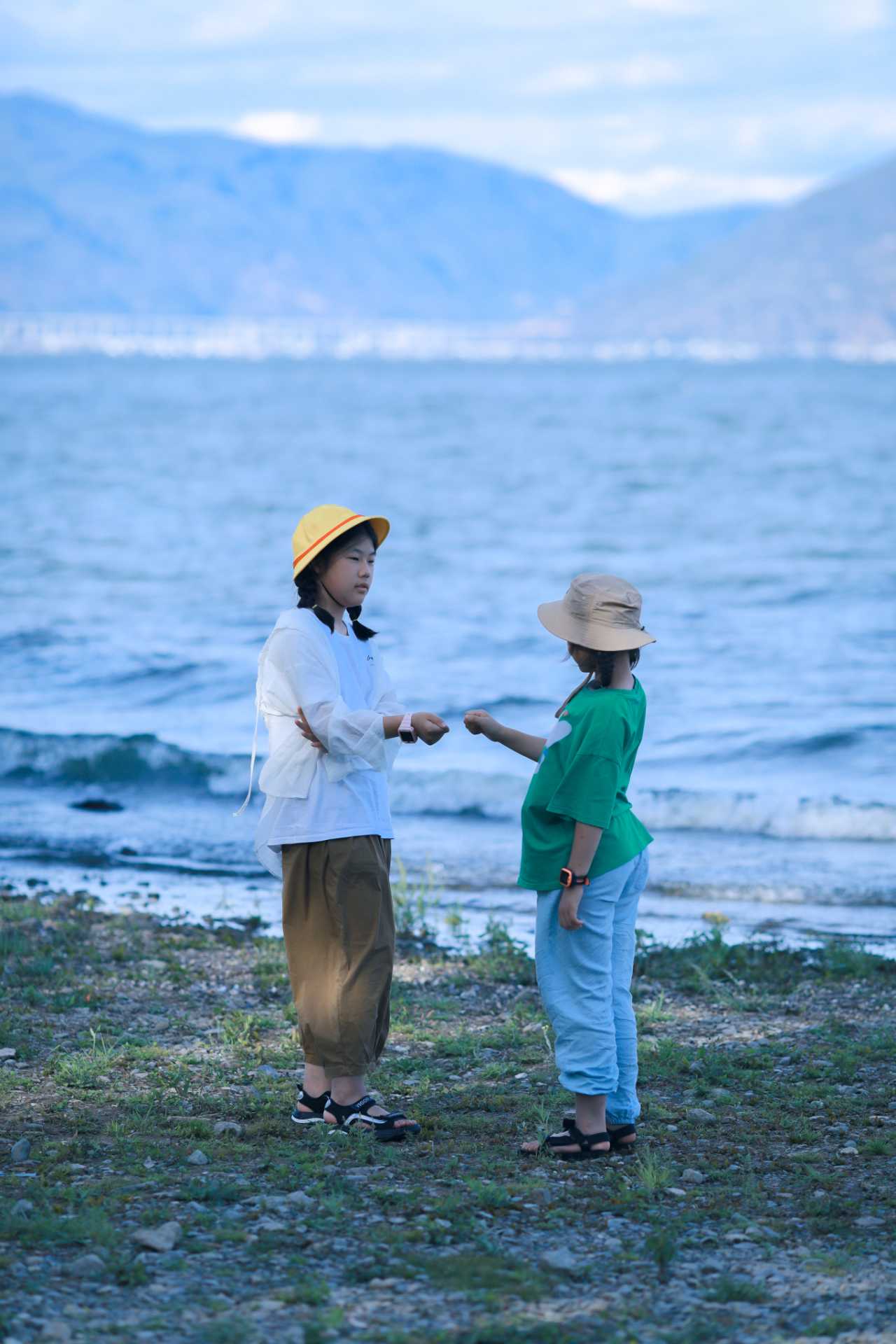
At the ceramics studio, Honey and Fatty each made two pieces—a cup and a bowl—for 128 yuan per person. The pottery teacher patiently guided them through shaping and crafting, step by step. After the basic forms were done, the teacher showed them how to carve small molds and attach them to the pottery, then paint them in their chosen colors.
The two girls worked with fascination for over two hours. They said the bowls were for their cats and dogs, and the cups were for their dads to drink from. The finished pieces looked good, but firing takes about 20 days. We paid for shipping and now await the joy of receiving them.
Sufangzhou also has swings, a large platform, and a public reading area—perfect for keeping kids entertained. The girls loved the suspension bridge most. Once they mastered it, they challenged Daping and me—Honey plus Fatty versus Daping: Daping lost. Honey plus Fatty versus me: I lost. The two of us, thoroughly defeated, never dared to accept another challenge. We were left dizzy, weak-kneed, and humiliated.
08 | Deer Cliff and a Dog Named Qixi
Halfway through our trip, we moved from the old town to a villa area called "Dali's Small Courtyard" (大理的小院子) at the foot of Cangshan Mountain. Our guesthouse was called "Deer Cliff" (鹿崖).
I loved Deer Cliff's simple, elegant decor. I loved the thoughtful details the owners had put into every corner. But most of all, I loved the Bernese Mountain Dog named Qixi (七喜). When we arrived with our bags, Qixi was lying on the floor, napping leisurely. She glanced up calmly at our arrival, then went back to her nap.
What a well-behaved large breed! Honey wrote in her diary: "Qixi is all brown, no mixed colors. Her head is special—her nose is pure white, and the area around her eyes is black, like she's wearing a mask. Her paws are white, soft and squishy to touch. Her body feels like a thick blanket, but she doesn't smell good or bad. When I said 'woof,' she followed with a soft 'whine.' Qixi is so cute!"
In all our days at Deer Cliff, we never heard Qixi bark. Even when mischievous kids teased her, she just lowered her eyes quietly, like a gentle lady. Honey looked for Qixi before bed and after waking up. She became one of our best travel companions.
The guesthouse only has five rooms, so it's never noisy. The owners are a young couple in their twenties. In Dali, there are many such young people, all chasing their own dreams.
09 | Huaban Yisheng Farm: The Best Flower Cakes Ever
If we hadn't come to Huaban Yisheng (花伴一生) Farm, the kids would never have known such a romantic place existed.
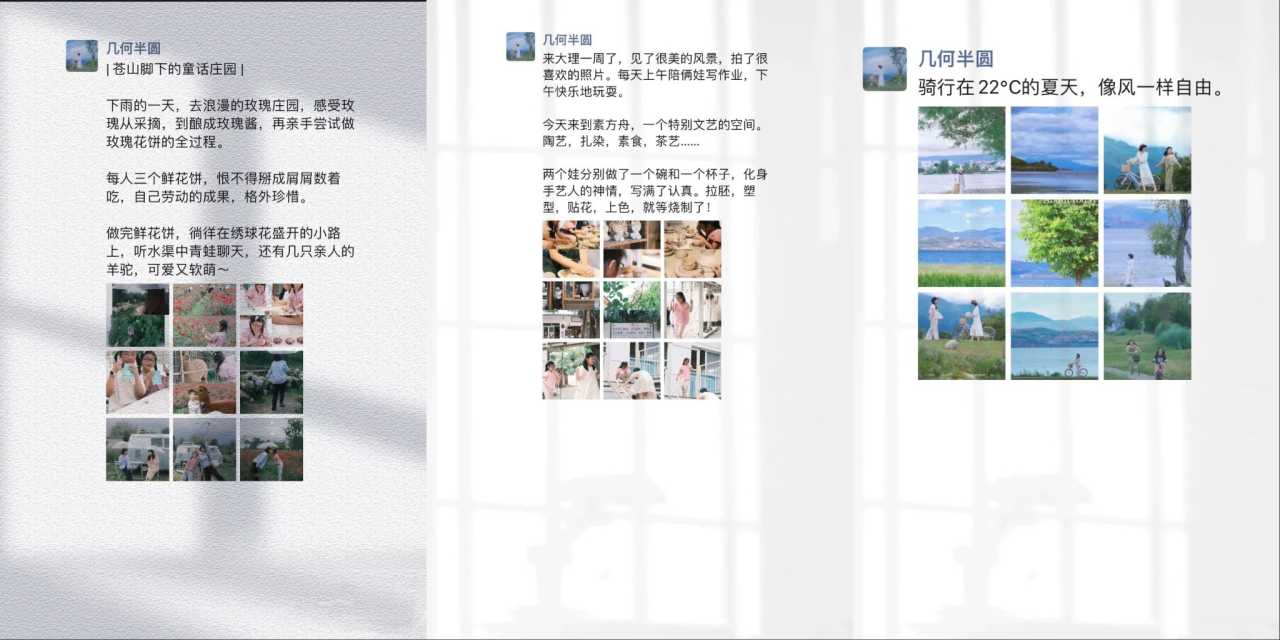
The weather wasn't great, so we decided to let the kids try making flower cakes—they absolutely loved eating them. Every time we bought a box from "Pan Xiang Ji" (潘祥记), they'd finish it in half an hour. Flower cakes had become their favorite food in Dali.
When we arrived, a light rain was falling. Flower farmers in raincoats and conical hats were rushing to harvest roses. The transparent umbrellas we'd borrowed from our guesthouse served both as rain protection and photo props. Daping said those 10-yuan umbrellas were worth their weight in gold.
A light blue minibus stood nearby, giving off a Chiang Mai vibe. We called that photo "Little Besties."
Dali's farms are being gradually demolished for "returning farmland to forest." Huaban Yisheng had already lost many of its buildings—only part remained.
The kids chose the 128-yuan package for making six flower cakes. Throughout the process, these two "star students" listened intently to the teacher and followed every instruction meticulously. Daping and I couldn't stop laughing—we could imagine them acting exactly the same way in school.
After 20 minutes of baking, the cakes came out. Since there were only three, Honey couldn't bear to eat them but was afraid they'd go cold and lose their flavor. Her conflicted face was almost in tears. In the end, she nibbled them bit by bit, with extreme care. I only got a tiny taste.
The farm also had alpacas you could walk for photos—150 yuan per hour. They kept making cooing sounds that made us laugh. When Honey locked eyes with an alpaca, she surrendered completely—those big, expressive eyes were too much. My little girl with small eyes was utterly charmed by this adorable creature.
10 | Bougainvillea and Metasequoia: Moments Frozen by the Lens
Bougainvillea is vibrant, bold, and dazzling. In Dali's old town, it grows freely—draped over tiled roofs, forming flower corridors, peeking out from courtyard walls. I captured a series of bougainvillea blooming by Erhai Lake. Blue sky, clear water, climbing vines, red flowers—everything came together perfectly.

There are many coffee shops along Erhai. You don't need to go to the trendy ones. Just pick any, order a "Rose Sea Salt Latte," and let your tongue be wrapped in rose fragrance while your eyes feast on the brilliant bougainvillea. Pure bliss.
While cycling by Erhai, we came across a metasequoia forest. Daping and I agreed instantly—we had to shoot a set of moody photos here. But our tired expressions and poses were met with her disdain. I had to open social media and learn new poses from influencers. The result was a series of awkward, laughable attempts that left us in stitches.
The fake flowers the girls had pulled off their bike handles became our most useful props. The photos weren't great, but the laughter made up for it. Our wild laughter in the empty forest attracted other tourists, so we graciously gave way, leaving the joy for everyone.
11 | A Small Bookstore: One Afternoon, Everyone Happy
Navigate to "Shangfang Jiewa Coffee" (上房揭瓦咖啡) or "Linggan Space" (灵敢空间), and you'll find it. This is a place where both adults and kids can spend an entire day.
The book selection is thoughtful, the categories are clear, and the space is bright and open. The outdoor area is for chatting and relaxing; indoors is for reading. The work area has automatic charging ports and hidden outlets. The reading area is sunken, perfect for immersive reading. There are big sofas where you can curl up and read all day.
You need to change into slippers to enter—the bookstore provides them along with disposable socks. The books aren't for sale. Just buy a drink, and you can read as long as you like.
That afternoon, Honey read Andersen's Fairy Tales, Fatty read The World of Animals, I read A Corner of Altay, and Daping scrolled through her phone. Everyone happy.
12 | Shuli Library: Meeting Jiama Woodblock Prints
Shuli Library (书理图书馆) is tucked away in a deep alley of the old town. You can navigate to "Wase Cai Xiang Yuan" (挖色菜香园) for lunch, then walk over. It's open from 10 AM to 8 PM, closed on Tuesdays—we learned that the hard way on our first visit.
The first impression upon entering is how laid-back it is. You can't even tell who works there until a young woman walks up and asks if you want to try an activity. By then, we'd already spent a while playing with the shop cats.
The books here were donated by hundreds of travelers. Donate five books, and you become a "co-builder." Your name and the book's cover are printed on a postcard and kept in an album.
Shuli also offers a hands-on experience in carving Jiama (甲马), a traditional woodblock print used for folk blessings and warding off evil, popular throughout Yunnan. Dali's Bai ethnic Jiama has its own unique style. Traditional themes include praying for safety, attracting wealth and fortune, seeking children or academic success, and driving away disasters. Each Jiama print represents a kind of faith and blessing.
The kids found wood carving too ambitious, so they chose rubber stamp carving instead. Both chose cat designs. They drew the pattern in pencil, transferred it onto the rubber, then carved with a knife. Finally, they applied ink and stamped it onto paper. Done.
Since it's a public-interest bookstore, there are no commercial products for sale. Soothing instrumental music played in the background. A couple of customers browsed the shelves. It's a place where you can truly read.
The two shop cats were full of spirit—sipping water cautiously, chasing each other, then curling up together. Whenever they caught us trying to photograph them, they'd dart away, only to reappear when we least expected.
13 | Mocui Tea House: A Hidden Tea-Picking Experience
Mocui Tea House (莫催茶室) is so well-hidden that even if you come specifically for it, you'll spend a while searching. Its name embodies Dali's slow philosophy—"Mocui" means "don't rush."
The tea house sits halfway up Cangshan Mountain. You follow a winding mountain path upward, flanked by lush tea gardens. The air is thick with the scent of grass and earth. When you finally reach the tea house, the view opens up—the entire Erhai Lake spreads before you, and the distant old town looks like an ink painting.

The girls changed into Bai ethnic tea-picking costumes, strapped on small bamboo baskets, and walked into the tea garden looking the part. The teacher taught them how to pick "one bud and one leaf"—pinch the tender bud between thumb and forefinger, lift gently, and it comes right off. Honey and Fatty learned quickly and soon had half a basketful.
After picking, they returned to the tea house to learn tea-making. Withering, rolling, drying—each step was full of ritual. Watching the leaves they'd picked tumble in the hot pan, releasing their fragrance, the kids were thrilled.
Finally, each brewed a cup of their own tea. It wasn't as good as a professional tea master's work, but the sense of accomplishment was something no famous tea could replace.
14 | Old Town Nights: Those Unexpected Little Joys
Over 15 days, we had many "unplanned" moments.
One evening, we wandered aimlessly through the old town. Passing a hand-drum shop, the owner was playing "Little Darling" (小宝贝) on the drums, the rhythm upbeat and infectious. Honey and Fatty couldn't help dancing along, and Daping and I joined in. None of us were graceful dancers, but our laughter echoed through the alley.
One afternoon, we found a small shop selling Dali's specialty—grilled milk fan (烤乳扇). Rich and milky, crispy on the outside, tender inside, dipped in rose sugar—sweet without being cloying. The kids ate three skewers in a row, their little mouths covered in sugar.
One morning, we woke to the sound of birds. Opening the window, Cangshan Mountain was shrouded in mist, the air fresh as if it had been washed clean. In that moment, we didn't want to do anything—just sit quietly and soak in the peace.
These unexpected little joys are the most precious part of any trip.
15 | Goodbye: What We Took Away
15 days passed quickly. Before leaving, we returned to the little courtyard of "Wait For Me" guesthouse. We sat under the osmanthus tree, drinking tea and talking about the past half-month.
Honey said, "Mom, I'll miss Qixi." Fatty asked, "Auntie, will we come again?" Daping replied, "Definitely. There's still so much of Dali we haven't seen."
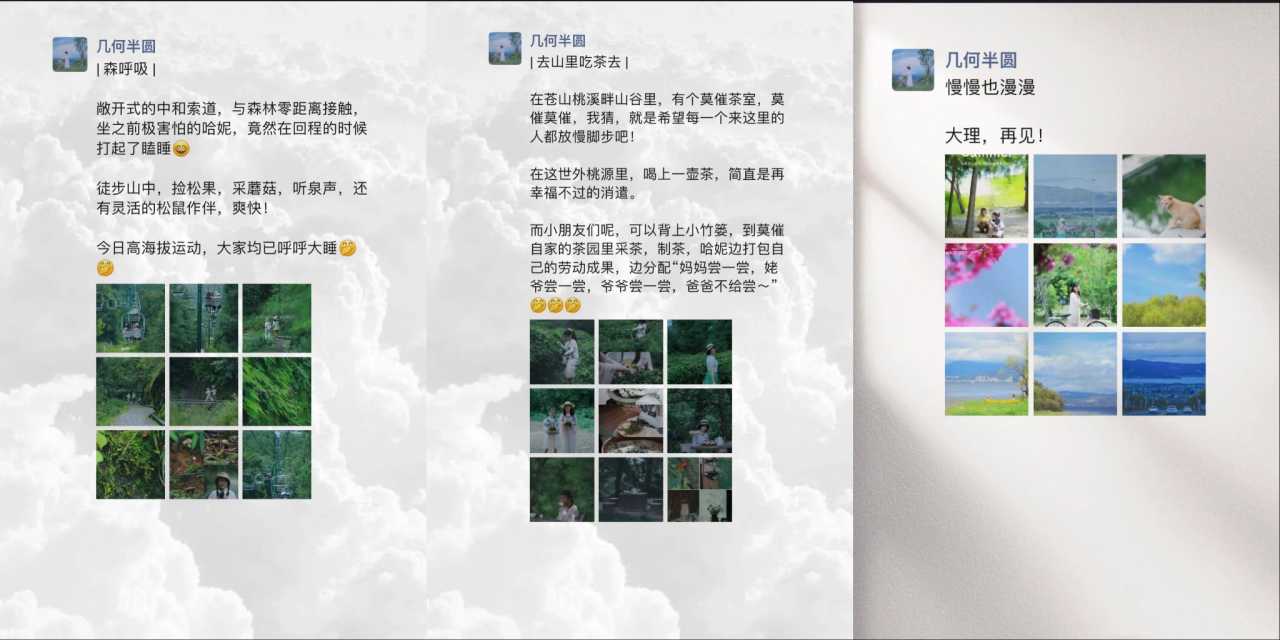
What we took away wasn't just photos and souvenirs. It was those shining moments—
At Yangjiadeng by Erhai Lake, the girls seeing water so clear for the first time. At Qingbi Stream, smashing open a watermelon, juice splashing everywhere. In Zhoucheng, Grandma Qiheng's smiling face and that bowl of cold rice noodles. At Deer Cliff, Qixi quietly lying at our feet. At Shuli Library, the girls holding a carving knife for the first time. At Mocui Tea House, them drinking tea they'd made themselves.
And all the laughter, the running, the moments when the wind blew through our hair.
Afterword: The Meaning of Travel
Someone asked me why I would spend 15 days in Dali doing these "small things."
I think the meaning of travel isn't about how many attractions you visit or how many photos you take. It's about those real, warm, unforgettable moments.
For the kids, doing homework in a different place, eating watermelon in a creek, making friends with a dog, creating something with their own hands—these experiences are more valuable than any cram school.
For Daping and me, watching our children grow up happy, growing old together with a best friend—that's the best life there is.
15 days in Dali. 15 small things. Each one was a form of love.
Next year, we'll be back.
You should also read:
Yunnan's Colorful Clouds: Touching Shangri-La — A Dialogue with the Sky
Yunnan's Colorful Clouds: Touching Shangri-La — A Dialogue with the Sky If you ask me where in China is closest to heaven, I would tell you without hesitation: Shangri-La. The name itself carries a mysterious magic, as if every syllable whispers tales of distant lands.
Continue reading...
Xishuangbanna Self-Drive Tour: Into the Tropical Wonderland at the Edge of the Sky (Complete Guide)
Xishuangbanna Self-Drive Tour: Into the Tropical Wonderland at the Edge of the Sky (Complete Guide) Introduction: A Dream Fulfilled Thirty Years Early Some journeys are destined to happen at a specific moment in time. For me, a self-drive trip to Xishuangbanna was originally the first…
Continue reading...
Meili Snow Mountain: A Soulful Journey of Dialogue with the Sacred Mountain
Meili Snow Mountain: A Soulful Journey of Dialogue with the Sacred Mountain Prologue: When Travel Becomes Faith Some journeys are forgotten as soon as they end. Others carve themselves into your bones. The trip to Meili Snow Mountain belongs to the latter. Waking up in…
Continue reading...