Meili Snow Mountain: A Soulful Journey of Dialogue with the Sacred Mountain
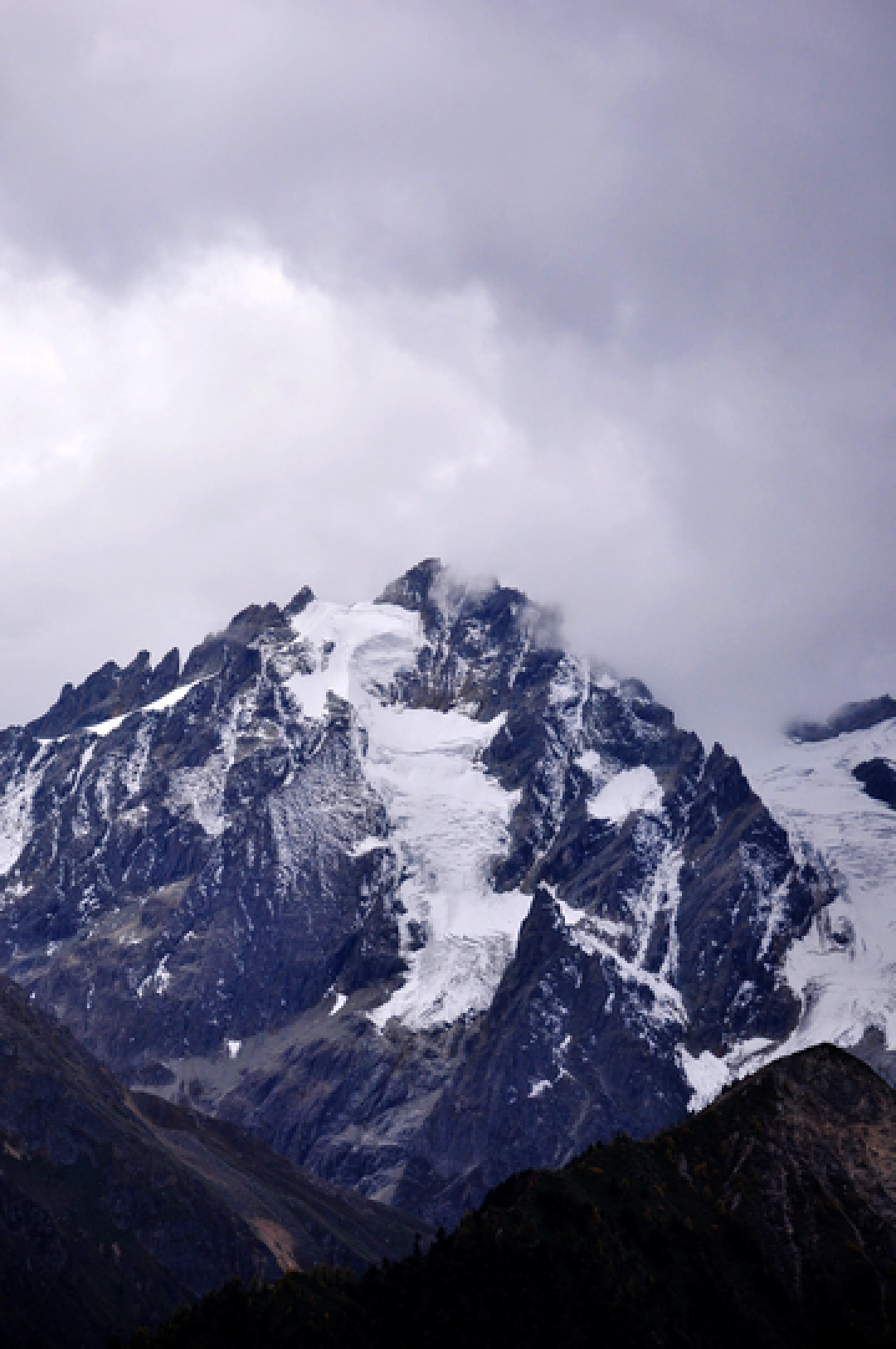
Meili Snow Mountain: A Soulful Journey of Dialogue with the Sacred Mountain
Prologue: When Travel Becomes Faith
Some journeys are forgotten as soon as they end. Others carve themselves into your bones. The trip to Meili Snow Mountain belongs to the latter.
Waking up in the morning light of Lugu Lake, I never imagined that the days ahead would so profoundly reshape how I see the world. A new team, a new guide, a new vehicle—everything was unknown, and it was precisely this uncertainty that infused the journey with magic.
At six-thirty in the morning, I was roused by a group of travelers heading to Shangri-La. I rolled out of bed and divided my luggage into two parts—gear to carry with me, clothes to store. The coming days promised to be even more rugged than Lugu Lake.
When I stepped out of the inn, the sky wasn't fully bright yet, but the blue sky and white clouds were already clearly visible. Dawn comes late here, and dusk lingers just as long. On the cobblestone street, children with backpacks chattered as they walked past, their crisp laughter spilling across the road. I stopped at a small roadside shop for a bowl of rice porridge, an egg, and a flatbread—simple but warming.
Our guide, Ade, was already waiting in the car. He was Naxi, easygoing and talkative, and told us to just call him Ade. The driver was of mixed Naxi and Tibetan heritage, quiet but skilled behind the wheel.
As we drove out of Lijiang, the green leaves outside the window sparkled in the morning light. Ade began introducing the local customs and landscapes along the way—beautiful legends and stories whose details I can no longer recall. What I do remember are the endless mountain ranges outside and the occasional clouds drifting by.
Chapter One: The Shock of Tiger Leaping Gorge—Nature's Raw Power
Xionggu Viewing Platform: First Glimpse of the Vastness
Our first stop was the Xionggu Viewing Platform. Standing there, the majesty and immensity of the mountains unfolded before me. Two clouds seemed to hover over the eaves of a small temple, exuding an almost spiritual energy. Walking around the temple, the full panorama of the mountains and the winding Jinsha River (Golden Sand River) came into view—the river like a silver ribbon disappearing into the horizon.
The elevation here was over 3,000 meters. From this point, it was all downhill until we reached the banks of the Jinsha River.
The First Bend of the Yangtze: Traces of History

At the First Bend of the Yangtze River, we unexpectedly saw an inscription by a former national leader. The photograph showed the bend in all its grandeur, but it had been taken from an airplane—standing on the ground, there was simply no angle to capture the full view. The only thing that left a deep impression on me was a white yak standing there, its fur pure white, its eyes vacant. Tourists could pay to ride it for photos. It had lost all its wildness, standing like a statue in place. I couldn't help wondering how many times it was ridden each day. That, I thought, was the truest portrait of tragedy.
Driving upstream along the Jinsha River, the water was murky and churning with mud—a stark contrast to the crystal-clear waters of Lugu Lake. Still, the green mountains on both banks stretched endlessly, offering a pleasant view.
Middle Tiger Leaping Gorge: Brushing Against Death
Crossing the Jinsha River brought us to Tiger Leaping Gorge town. One side of the river belonged to the Yunnan-Guizhou Plateau; the other was the Qinghai-Tibet Plateau—our destination.
After lunch at a riverside restaurant, we headed straight for the Middle Tiger Leaping section. Tiger Leaping Gorge lies at the border of Jade Dragon Snow Mountain and Haba Snow Mountain, about 105 kilometers from the county seat. We were going to the middle section—regular tour groups only reach the upper section. The middle and lower sections are inaccessible by car; you have to hike.
The road conditions were extremely treacherous. Hundred-meter cliffs dropped off right next to the wheels. The driver gave us a warning: "Nervous people sit on the left, brave ones on the right." Through the window, we could see the ancient Tea Horse Road carved into the cliff face on the opposite side—two thin lines. The lower one was ancient and abandoned; the upper one was newly cut. I couldn't help marveling at the pioneering spirit of our ancestors.
After half an hour, we reached the entrance to Middle Tiger Leaping Gorge. Along the way, we spotted a wrecked car that had plunged off the cliff, and a white compact car—rumored to belong to a couple from Shanghai who had hired a driver. The driver had bent down to pick up a CD while turning, and the car flew off the road. The driver survived; the couple did not. Ade recounted this matter-of-factly as our eyes all snapped toward our own driver, who was holding his phone with one hand. In unison, we shouted: "Master driver!"
The entrance to Middle Tiger Leaping was a path called "Teacher Zhang's Trail"—a local teacher surnamed Zhang had spent three years carving a route down to the canyon floor. Many sections were nearly vertical, wide enough for only one person. Even though we were descending, the terrain was exhausting.
After more than an hour, we reached the bottom of the canyon. A tremendous roar rose from below, amplified by the canyon walls until it was deafening. When the raging river finally appeared before us, we were utterly stunned.
The Jinsha River was squeezed between the two massive snow mountains, Jade Dragon and Haba. The water fought through the narrows, surging and churning. Giant boulders stood like solitary peaks in the middle of the torrent, defiant and majestic. Standing there, you felt an overwhelming sense of human insignificance in the face of nature. This, I thought, could only be the work of God.
After playing around for half an hour, we had to head back. Two options: retrace our steps and climb for another hour, or take the "Brave Man's Heavenly Ladder"—a ladder at a 90-degree angle to the ground that would cut the time in half but offered no turning back. Given that photos were forbidden on the ladder, I chose the original route. Going up was far more tiring than coming down. I drank all my water, then bought water and cucumbers from mountain villagers along the way, finishing those too. By the time I reached the top, my T-shirt was crusted with white salt stains.
At the summit, I treated myself to a tomato—five yuan for one.
Shangri-La: The Moon in the Heart
After hiking Tiger Leaping Gorge, we continued our journey. The terraced fields along the way, bathed in sunlight and shadow from the clouds, looked soft and idyllic. Clouds hung right overhead, their shadows drifting slowly across the farmland. This was paradise on earth.
The ultraviolet rays here were intense, the sun hot, but the altitude kept temperatures low. So wherever the sun touched, you felt warmth; in the shade, it was cold. My face baked under the scorching sun while a freezing mountain wind blew across it—only by experiencing it yourself could you understand this strange sensation.
After a full day of travel, we finally reached Shangri-La at sunset. As I wandered leisurely across the square of Moonlight Ancient Town, I felt neither wonder nor loneliness. I felt like a pigeon that had lived here for a long time.
Shangri-La is a transliteration of the Tibetan word meaning "the moon in the heart"—a place where one can live ideally and happily. Watching pigeons strut across the square, with occasional Tibetan villagers and monks passing silently by, this city in a valley plain, framed by blue sky and white clouds, radiated peace. Had they found the moon in their hearts?
That evening, Ade took us to the Golden Hall for a performance. At the entrance, Zhuo Ma (Tibetan women) and Zha Xi (Tibetan men) welcomed us, each receiving a white hada (ceremonial scarf) and a cup of highland barley wine. I downed mine on an empty stomach—though you could also dip your middle finger in the wine and flick it toward heaven and earth, as Ade had taught us.
The singing and dancing were wonderful, mostly showcasing Tibetan culture—the songs were broad and heartfelt, the dances wild and unrestrained. The host taught us some Tibetan phrases: "hello" and "cheers"—now I only remember "cheers." It seems alcohol is the most effective means of communication, transcending ethnicity and language.
When we came out of the Golden Hall, the bright moon hung in the sky. The moon over Moonlight Ancient Town shone especially brightly.
Where was the moon in my own heart?
Chapter Two: Songzanlin Monastery and Baima Snow Mountain—The Height of Faith
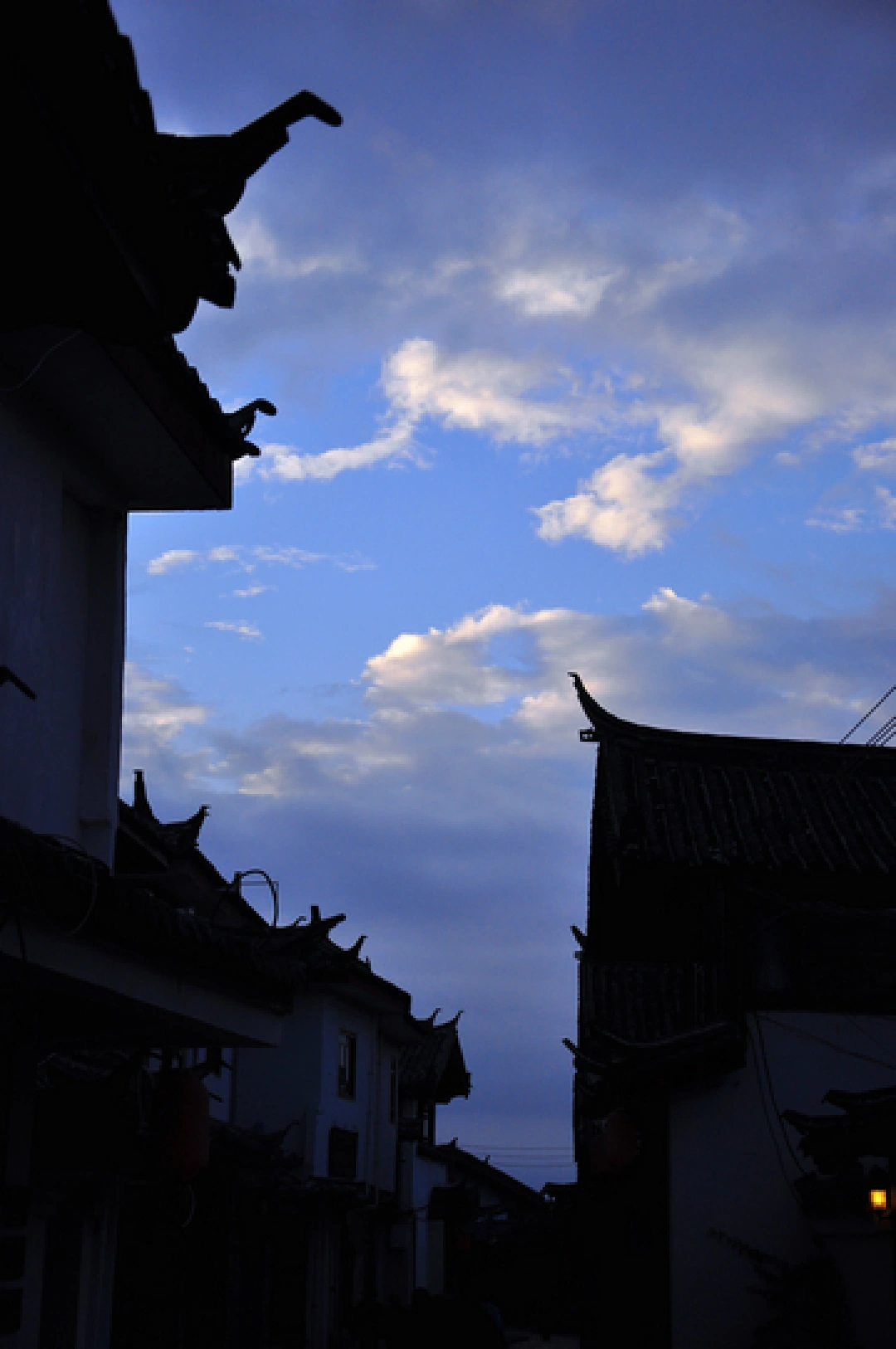
Songzanlin Monastery: Little Potala Palace
I woke up at seven. Clouds gathered in the eastern sky; the sun hadn't yet appeared. This region runs two hours behind inland China, so seven here felt like five back home. Our hotel was supposedly the best in town—at least breakfast was available from five: rice porridge, rice noodles, and eggs, steaming hot. On a freezing morning, that was energy and vitality.
We departed at eight. Altitude check: 3,330 meters.
Our first stop was Ganden Songzanlin Monastery, the largest Tibetan Buddhist monastery in Yunnan Province and a significant institution throughout the entire Tibetan region. The monastery's layout was modeled entirely after the Potala Palace, earning it the nickname "Little Potala Palace." It looks similar to the Potala from the outside but is said to be even larger in area. During the reign of Emperor Yongzheng, it was bestowed the name "Guihua Temple" (Temple of Conversion).
A small lake in front of the monastery hosted white geese playing in the water, with mist drifting across the surface. We had arrived too early—only a handful of us stood in the empty square and by the lakeshore. The air was filled with a sense of tranquility, but also a biting, dry cold. Even with gloves on, my hands trembled as I held my camera.
Someone was burning incense in a burner. The golden morning light stretched their shadow long, and smoke drifted away with the wind.
Here, everyone practices Buddhism. If someone in a family becomes a monk, it's an honor for the entire clan. The family builds a monk's quarters for them to support their practice.
A Tibetan guide led us through the monastery. I've forgotten most of what he said, except for the crows circling overhead. Sky burial is common here, and these crows are the ones that complete the process. Seeing the group absorbed in thought, the guide joked: "Want to try a sky burial? Pick one person, I'll do the burial, and you watch. The crows are hungry today." Everyone snapped out of it and politely declined—just visiting would be fine, no need for such an elaborate ceremony.
Standing at the highest point of Songzanlin Monastery, I looked out over the meadows and mountains, which faded into a wash of ink painting in the mist. White clouds dotted the sky; the blue was flawless.
Baima Snow Mountain Pass: 4,292 Meters of Emotion
Leaving Songzanlin Monastery, we faced an entire day on the road. We had to cross ninety-nine mountains, traverse the Baima Snow Mountain Pass, then cross another ninety-nine mountains to reach Deqin County before sunset.
Along the way, all we saw were endless mountains, merging with the blue sky at the horizon's edge. When we stopped to catch our breath, Tibetan houses appeared, with one or two goats eyeing us warily like aliens before hopping down to graze on the mountainside below the road.
We stopped for lunch in Benzilan, a small town at the foot of a mountain with relatively abundant produce. I bought a pile of tomatoes, apples, grapefruit, and bottled water to take with me.
We pressed on. On the shady side of the mountains, we could already see snow—leftover from some unknown time, as summer had just passed here.
Finally, we reached the Baima Snow Mountain Pass. On this lonely yet extraordinary afternoon, the sun was bright, the air cold, the sky a heartbreaking shade of blue, and white clouds bent down to kiss the snow on the mountain peaks.
The stone marker stood by the roadside—above it, the vast blue sky; below, the expansive red earth.
I stood by the road, watching the winding mountain path, receiving the greeting of snow mountains and blazing sun. If you listened carefully, there was wind in the mountains, a biting cold blowing down from the snow, rippling through the world before my eyes. It was a happiness so intense it bordered on sadness—everything, in the gentlest and quietest way, moved me.
We travel not just to see sights.
This was the highest point of our entire journey: 4,292 meters. A few extra jumps and you were out of breath.
After the Baima Snow Mountain Pass, we continued onward. Many mountains along the way were seasonal snow mountains, their peaks showing gray earth and rock. Snow that fell in autumn and winter wouldn't melt until the following summer, and some never melted at all.
First Sight of Meili: Two Months of Waiting
When we reached Deqin County, the sun was setting.
I saw the Meili Snow Mountain I had been longing for—joy mixed with a strange calm. It had come too quickly, suddenly appearing before me without warning.
The hotel owner told us that Meili Snow Mountain had only revealed itself that morning at 7:23, after hiding for more than two months. Travelers came and went—some stayed for two weeks and left in disappointment.
That legendary thing called fate had landed on us like a feather.
Opening the window, I faced the snow mountain directly. I stood quietly at the window, watching the sunset clouds shift in unpredictable patterns as everything slowly dimmed into twilight. The sun retreated behind the mountains. The clouds atop the peaks refused to disperse, and white clouds and white snow finally merged into one. The river of time seemed to stop here; the snow mountain ruled everything. You could just watch it silently, or chat, or read, or daydream—it was a backdrop that enveloped the people beneath this sky, radiating the light of a paradise, warm and translucent, eternal and unchanging.
As darkness fell, hunger set in. We found a Sichuan restaurant and ordered wild mountain mushroom stewed chicken, fragrant and delicious. The owner was generous—he sent over two bottles of beer and insisted on toasting every "Zha Xi" at our table, then brought out a plate of watermelon.
When we paid and were about to leave, the owner called out from behind the counter: "Tashi Delek!" (Tibetan blessing). We called back: "Tashi Delek!"
Outside, the sky was fully dark, but the massive white body of Meili Snow Mountain still glowed with silver light in the darkness.
Chapter Three: The Golden Mountain at Sunrise—The Most Beautiful Moment of a Lifetime
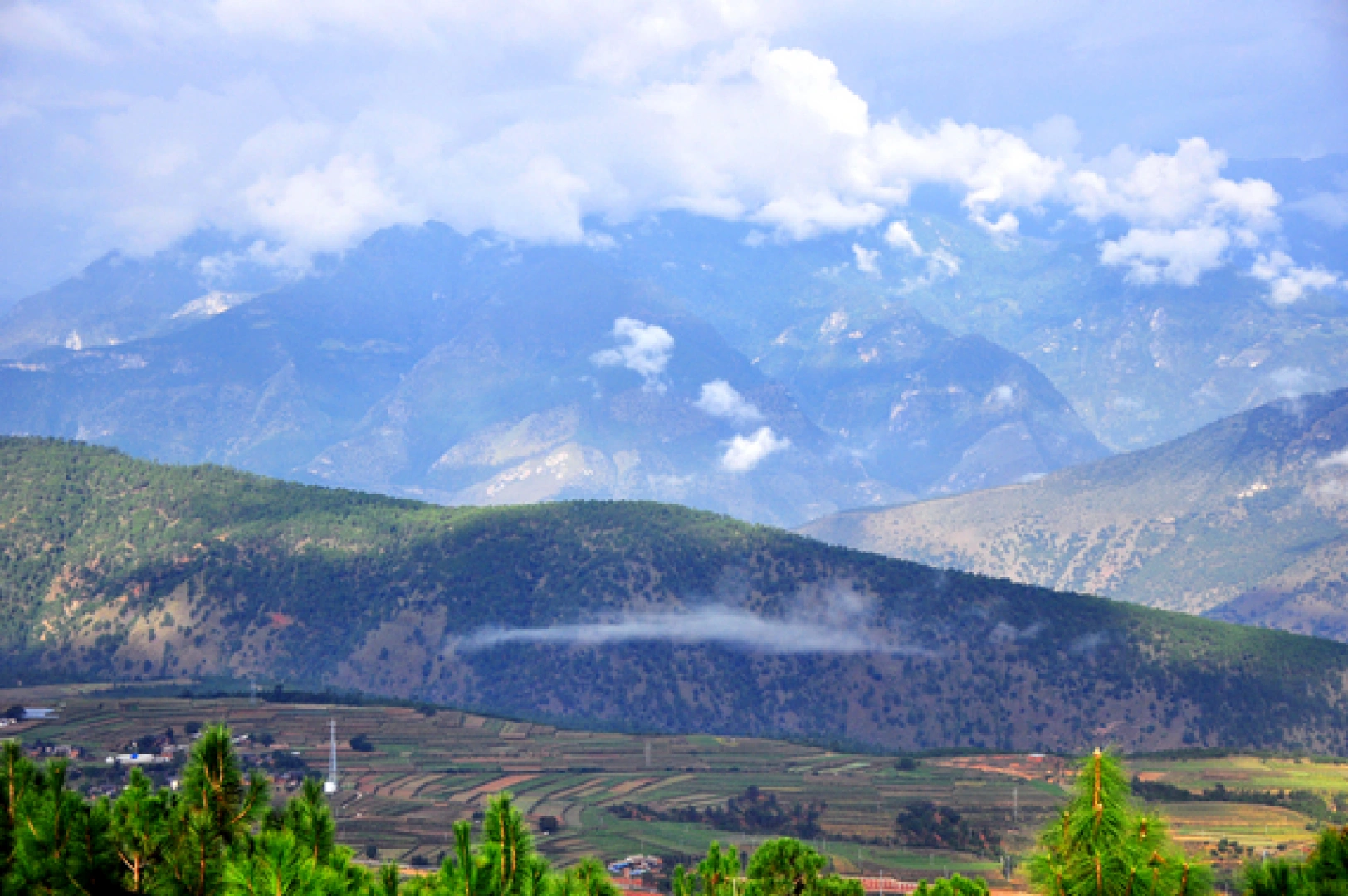
Waiting: Anticipation Before Dawn
To make sure I wouldn't miss the golden sunrise, I set my alarm for 6:30, but I woke up long before. Fatigue was no match for anticipation, so I got up and packed my gear. The snow mountain outside the window slowly emerged from the boundless black night.
When I rushed to the rooftop, my teammates were already there. At 7:03, I took the first photo of the day—out of focus, but I kept it anyway.
Do we have something new to look forward to every day? Maybe looking forward to leaving work early, to payday, to the weekend, to closing another deal. Most ordinary days pass without much expectation—things are already settled. But at this moment, I was actually looking forward to a ray of sunlight falling on us, illuminating the snow mountain facing us. It was a hope so simple it was almost silly. That kind of simplicity is hard to find in a forest of concrete.
The bright morning star sparkled above the snowy peak—a brilliant twinkle, the first time I had so strongly felt a star blinking. The air was dry, still, and cold. The sky was faintly lit; the world was a deep blue.
On the nearby rooftops, tripods and long lenses had been set up—serious equipment. My D90 kit lens struggled with distant scenes like the snow mountain. Clearly, I needed a telephoto lens. Ah, the sorrow of a DSLR owner without proper lenses.
Sunrise: Gold Ignites the Sacred Mountain
Before sunrise, I took a panoramic shot. This was the Thirteen Peaks of the Prince—Meili Snow Mountain. The second peak from the right was the main peak, Kawagebo, meaning "White Snow Mountain" in Tibetan, the highest peak in Yunnan. "Thirteen" is an auspicious number in Tibetan, probably meaning "many." The first peak on the right was Miancimu (Goddess Peak), Kawagebo's wife. The second from the left was Wuzhi Peak (Five Finger Peak), shaped like a palm. The other peaks, along with the legends Ade had told us, all melted away in the cold morning light.
A hint of red appeared at the tip of Kawagebo—the first ray of dawn touching the world.
The Goddess Peak was the second to be illuminated.
The golden light gradually spread, and the snowy peaks slowly brightened, as if they were burning. All the peaks before me were glowing, but the sun itself was still hidden. There was only the deep blue sky and the gold-shimmering snow peaks, with the blurred mountain bodies and sleeping villages below. The colors on the peaks were a fusion of gold and orange-red, set against the azure sky above. It felt like everything could shatter in the blink of an eye—so pure it was unreal.
The sun grew brighter, the gold faded, and the snowy peaks slowly returned to their pure white appearance. The white glacier cascading down from below Kawagebo was the Mingyong Glacier—our hiking destination for today.
Before setting off, my teammates gathered on the rooftop for a group photo. The Thirteen Peaks of the Prince gazed down at us from behind. We were just a fleeting moment among countless travelers, a speck of dust in this world. Without recognizing the vastness of time, you cannot see your true self.
Mingyong Glacier: A Dialogue with the Sacred Mountain
Kawagebo stands at 6,470 meters, the foremost of the eight sacred mountains in Tibetan regions. Every year, Tibetan pilgrims from Yunnan, Tibet, and Qinghai come to pay homage. The magnificent Mingyong Glacier descends from 5,500 meters down to the forest zone at 2,700 meters, stretching for over ten kilometers—one of the world's rare low-latitude modern glaciers. However, global warming and increasing tourism are accelerating its melting, at a rate of 50 meters per year. Tomorrow, you might not see what exists today. We often say "things change, people change"—it seems both things and people are in flux. What in this world can be certain? The answer lies in the heart, but the result is fragile.
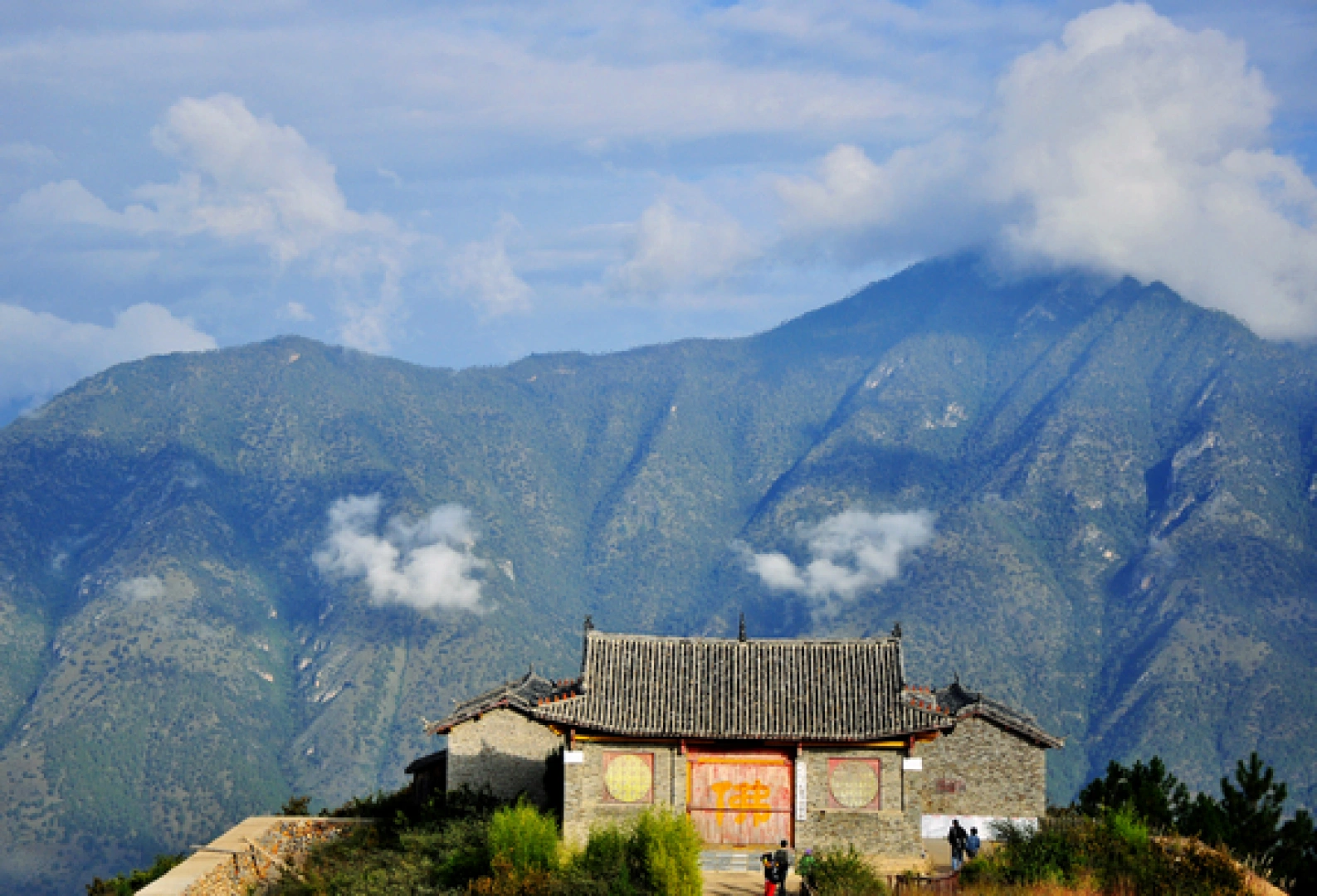
Through the car window, a small village in the valley basin below the cliff basked in the morning sun, peaceful and serene. On the hillside nearby, crisscrossing paths marked generations of footsteps—perhaps leading to fields, to relatives' homes, or to pilgrimage sites. We made countless playful guesses, but we didn't belong to this world. Only they knew the answers.
They must watch us the same way we watch the scenery—like drifting clouds, restless and busy. Many people feel they sow much but reap little; eat but are not satisfied; drink but are not quenched; wear clothes but are not warm; earn wages but put them in a bag full of holes. Greedy, never knowing where they're headed.
This village—they too were specks of dust beneath the snow mountain, but they had held onto their sacred mountain. I didn't know what I had held onto. Talking about the meaning of life can sometimes feel hollow to the point of absurdity. But never thinking about the essence of life is also a bit sad.
Hiking: Searching for Answers in the Dense Forest
At the foot of the snow mountain, we had two choices: hike or ride a horse. I chose to hike—riding a horse on these mountain trails would probably leave my butt feeling like it wasn't mine.
Along the way, people and horses shared the same path. The horses were terribly rude, relieving themselves wherever they pleased, the smell unbearable. I could only awkwardly chalk it up to "authentic country living."
Due to the unique nature of low-latitude glacier snow mountains, combined with the complex terrain and the plateau climate with no distinct seasons but clear wet and dry periods, Meili Snow Mountain is locally known as the "Medicine King Mountain"—home to most plant and animal species from tropical to cold zones. National Geographic magazine lists this area as one of the five remaining pure lands in the world.
On the steeper parts of the mountain, boardwalks had been built. Though the planks were a bit loose, they were still better than rock climbing.
At an opening in the dense forest, the snow mountain revealed a side profile. Though it seemed close, it was actually unreachable. In Lhasa, it's said that from the Potala Palace, you can see Kawagebo in the colorful clouds to the southeast—a testament to its towering height and distant radiance.
A variety of plants grew together in tangled clusters, red and green interwoven, strikingly vivid.
Halfway up the mountain, we came across a Tibetan family. Prayer flags strung across their wooden roof fluttered in the mountain breeze. Seeing that they had homemade wine, I asked for a cup—it was good, refreshing and thirst-quenching.
I sat by the window of that wooden house, drinking wine while gazing at the green mountains. The mountain breeze blew gently; the sun blazed. Moments like this—what more could you ask for?
As we approached the snow mountain, I could feel the glacier below moving.
On the path, I came face to face with a young calf. It stared directly at my red jacket. Though I was no pushover, bullying a local calf seemed wrong, so I took a detour—winning people over with virtue is important.
Along the way, there were many prayer flags and small stone piles. Were these considered mani piles? I wasn't sure if they were trail markers or held some other meaning.
The Glacier's End: Awe and Farewell
We had hiked as far as we could go—the glacier blocked the way, and beyond it lay even more primitive forest. Meili Snow Mountain is strictly off-limits for climbing. There have been several attempts throughout history, all ending in failure, so Meili remains a virgin peak, unconquered by humans.
The earliest attempt was in 1902, when a British expedition failed to summit Kawagebo. Then, in 1990, a Sino-Japanese joint expedition was hit by a blizzard and avalanche just tens of meters from the summit, killing all 17 members. A later Japanese expedition also ended in complete loss. American teams tried several times without success. All of this only added to Meili Snow Mountain's mystery, solemnity, and sense of inviolability.
Before leaving, I looked back one last time—still dazzlingly beautiful.
We found a restaurant at the foot of the mountain, where everyone ate ravenously. The road lay ahead; we had to keep moving. We needed to get from Deqin County to Benzilan before sunset, where we would spend the night.
Passing the Baima Snow Mountain Pass again, we stopped for photos. The sun was tilting westward, and the mountain ridges stretched out one after another, near to far, layered by the play of light and shadow—an indescribable beauty.
Epilogue: The Snow Mountain in the Heart
The journey ended, but the image of Meili Snow Mountain was forever etched into my heart.
Looking back on this trip, I suddenly understood: we travel not just to see sights. We are searching—searching for the self buried under daily routines, for the soul lost among steel and concrete.
Meili Snow Mountain didn't give me answers. But it showed me that some questions don't need answers.
Just like the Tibetan people who have lived for generations beneath the snow mountain—they don't ask "why," they only need to know "what is." The sacred mountain is there. Faith is in the heart. Life is underfoot.
We passing travelers, armed with cameras and guidebooks, try to capture eternity through our lenses. But true eternity never needs to be captured—it is there, in the moment you open the window, in the moment you look up and see the snowy peak, in the moment you feel the mountain wind on your face.
If you ask me what to prepare for a trip to Meili Snow Mountain, I would say: bring your awe, bring your reverence, bring your curiosity. As for the rest—camera, clothes, food—none of it matters.
Because when you stand before the snow mountain, you realize you need nothing—only to exist.
As that Mongolian song goes: "Gazing at eternal grandeur, the silent music of nature. I long for the freedom of solitude, yearn for the bliss of ultimate love..."
The snow mountain is a silent paradise.
And our hearts can become snow mountains too.
Practical Tips: - Best Season: October through May, when the weather is clear and the chance of seeing the golden sunrise is higher - Altitude Warning: Baima Snow Mountain Pass is at 4,292 meters; be mindful of altitude sickness - Hiking Gear: Trekking poles, windproof jacket, fleece, sunscreen, and sunglasses are essential - Accommodation: Hotels near Feilai Temple in Deqin County face Meili Snow Mountain directly and offer the best views of the golden sunrise - Transportation: Renting a car or joining a local small group tour is recommended. The scenery along the way is stunning, but the roads are treacherous—choose an experienced driver - Important Notes: Respect local religious beliefs. Remove shoes when entering temples; no photography or loud talking inside
You should also read:

Cloud Travelogue · Dali of Wind, Flowers, Snow, and Moon: A Three-Day, Two-Night Journey of a Free Spirit
Cloud Travelogue · Dali of Wind, Flowers, Snow, and Moon: A Three-Day, Two-Night Journey of a Free Spirit I am a cultured female foodie with a touch of rogue charm. I slung on my backpack, took my lover's hand, and set off on a spontaneous…
Continue reading...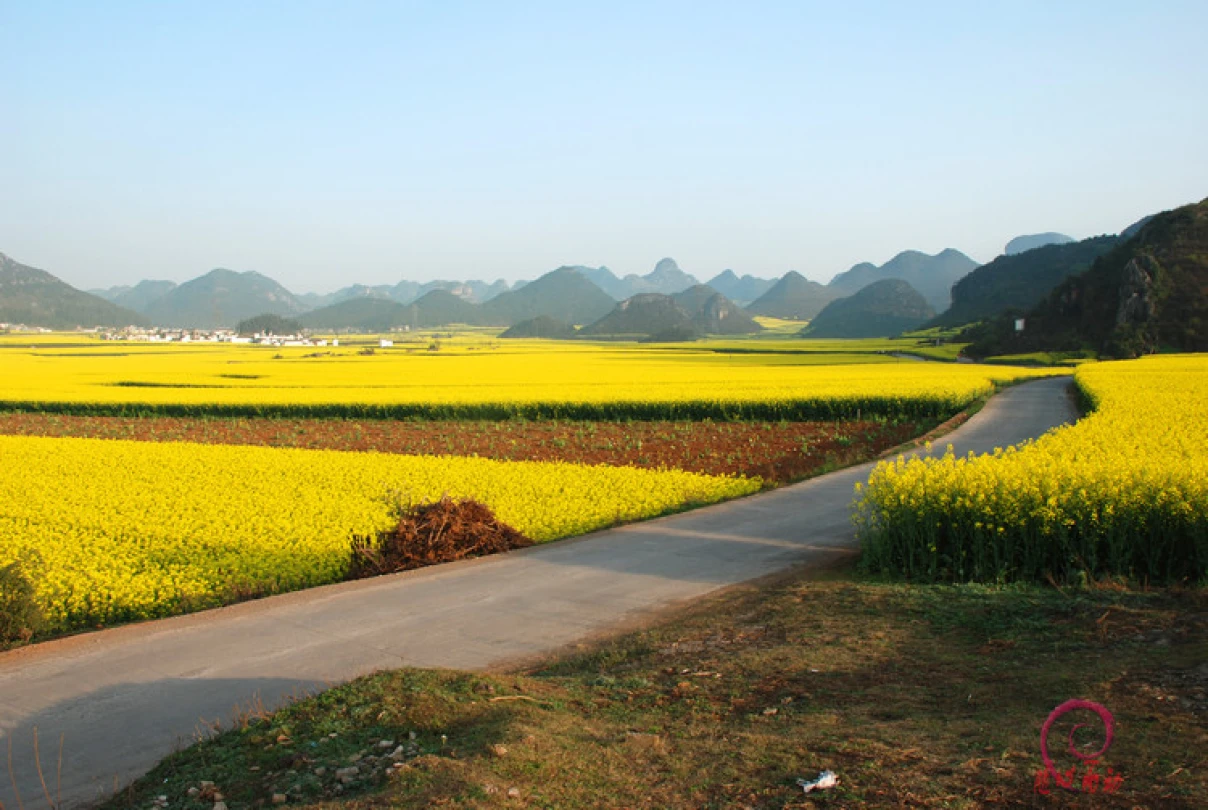
Golden Luoping: A Romantic Encounter with Sunshine and Seas of Flowers
Golden Luoping: A Romantic Encounter with Sunshine and Seas of Flowers Introduction: The Third Time's the Charm Some landscapes are destined to be seen at the right moment. For me, that was exactly the case with Luoping's rapeseed flowers. On February 22, 2011, the Luoping…
Continue reading...
The Meaning of Travel – A Tengchong Story: A Journey of the Heart and Personal Growth
The Meaning of Travel – A Tengchong Story: A Journey of the Heart and Personal Growth Setting Out, Only to Return a Better Self Some say travel is nothing more than leaving a place you're tired of, only to go to a place where others…
Continue reading...