2025 Parent-Child Off-Peak Travel: A Mom’s Guide to Conquering Xishuangbanna
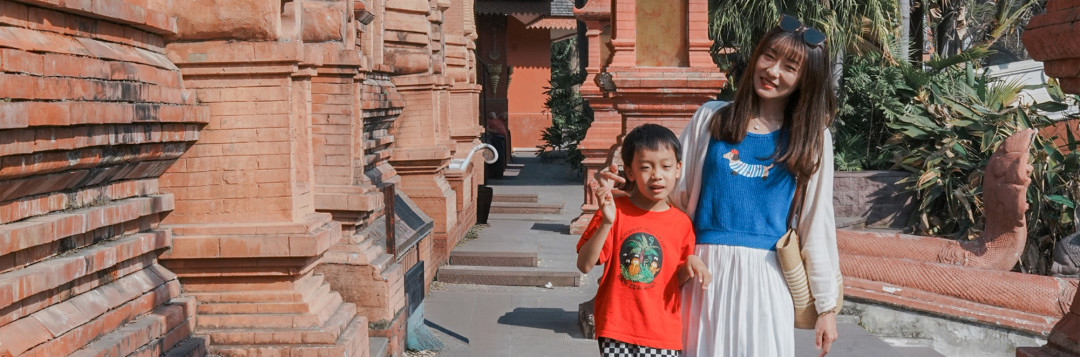
2025 Parent-Child Off-Peak Travel: A Mom’s Guide to Conquering Xishuangbanna
When back-to-school season meets off-peak travel, and a mom traveling with her child teams up with a friend doing the same, a highly cost-effective trip to Xishuangbanna is born. Within a week, I hastily booked all my “revenge travel” plans for the first half of the year—four flights totaling just over 7,000 RMB. When it comes to off-peak travel deals, you’d be a fool not to take advantage.
Why Choose Xishuangbanna?
In February, temperatures in Xishuangbanna hover below 30°C (86°F), with a slight chill in the mornings and evenings, making it incredibly comfortable. While coastal cities are still shivering in the winter wind, here, a hundred flowers are already in bloom. More importantly, post-holiday airfare drops dramatically. A round-trip direct flight from Ningbo to Xishuangbanna costs only around 1,000 RMB. At that price, who could resist?
So, I rallied a friend on social media—two moms, two kids—and kicked off our “Where’s Mom Going?” parent-child adventure.
Starry Night Market: Empty by Day, a Carnival by Night
Arriving in Gaozhuang, a Good Morning by the Lancang River
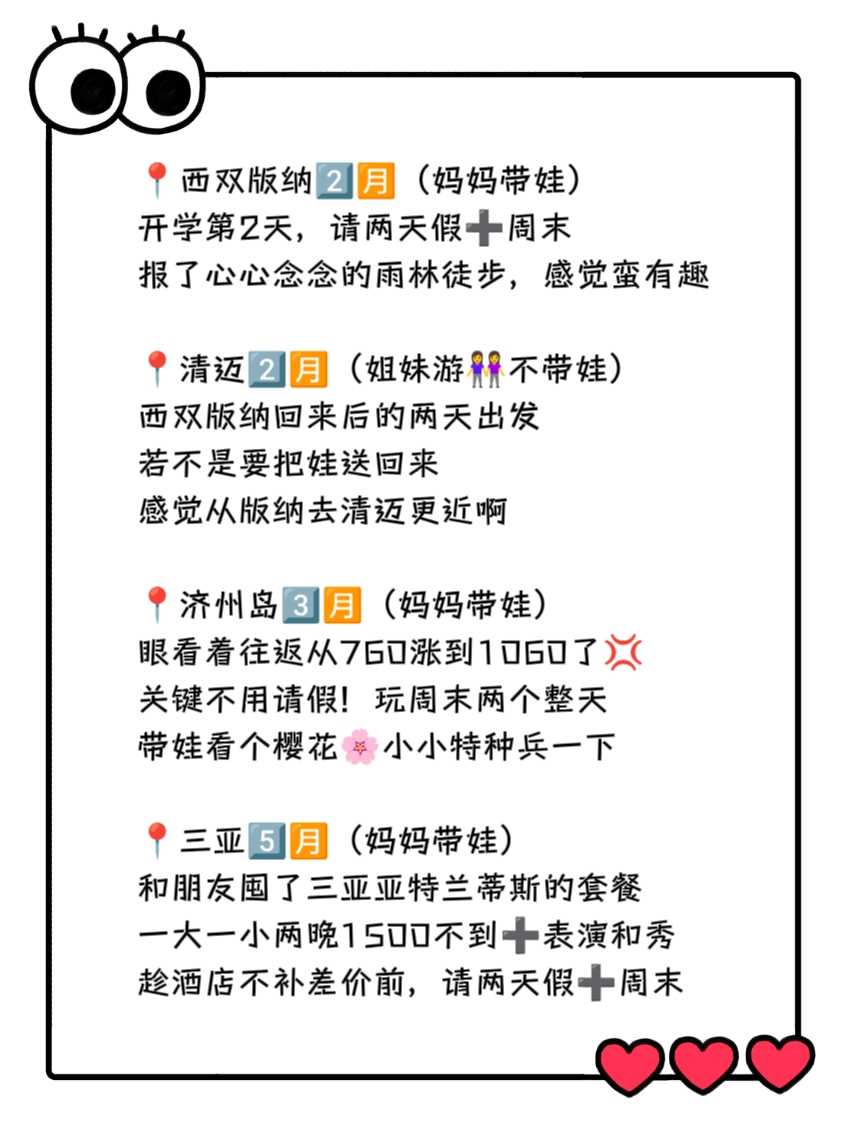
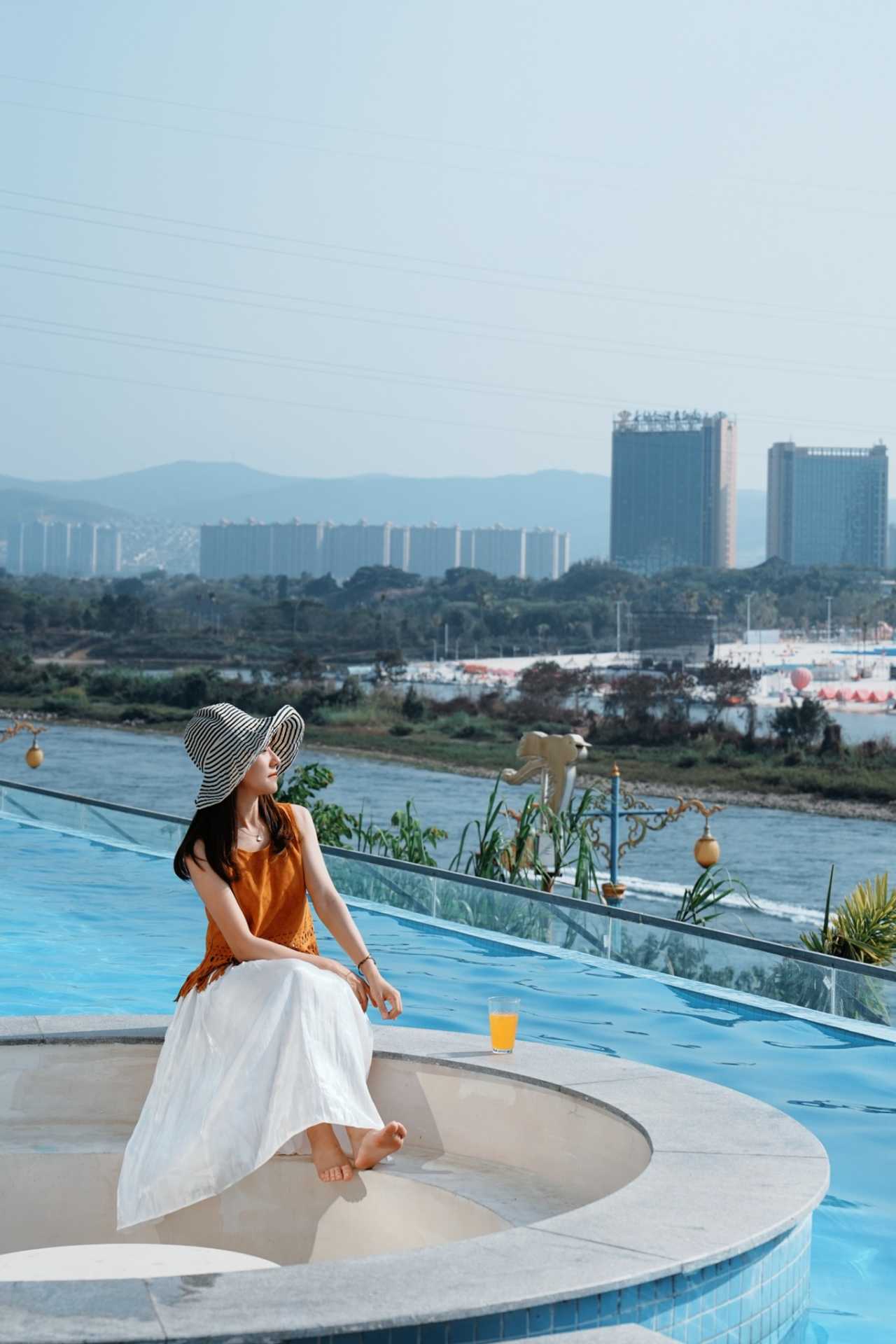
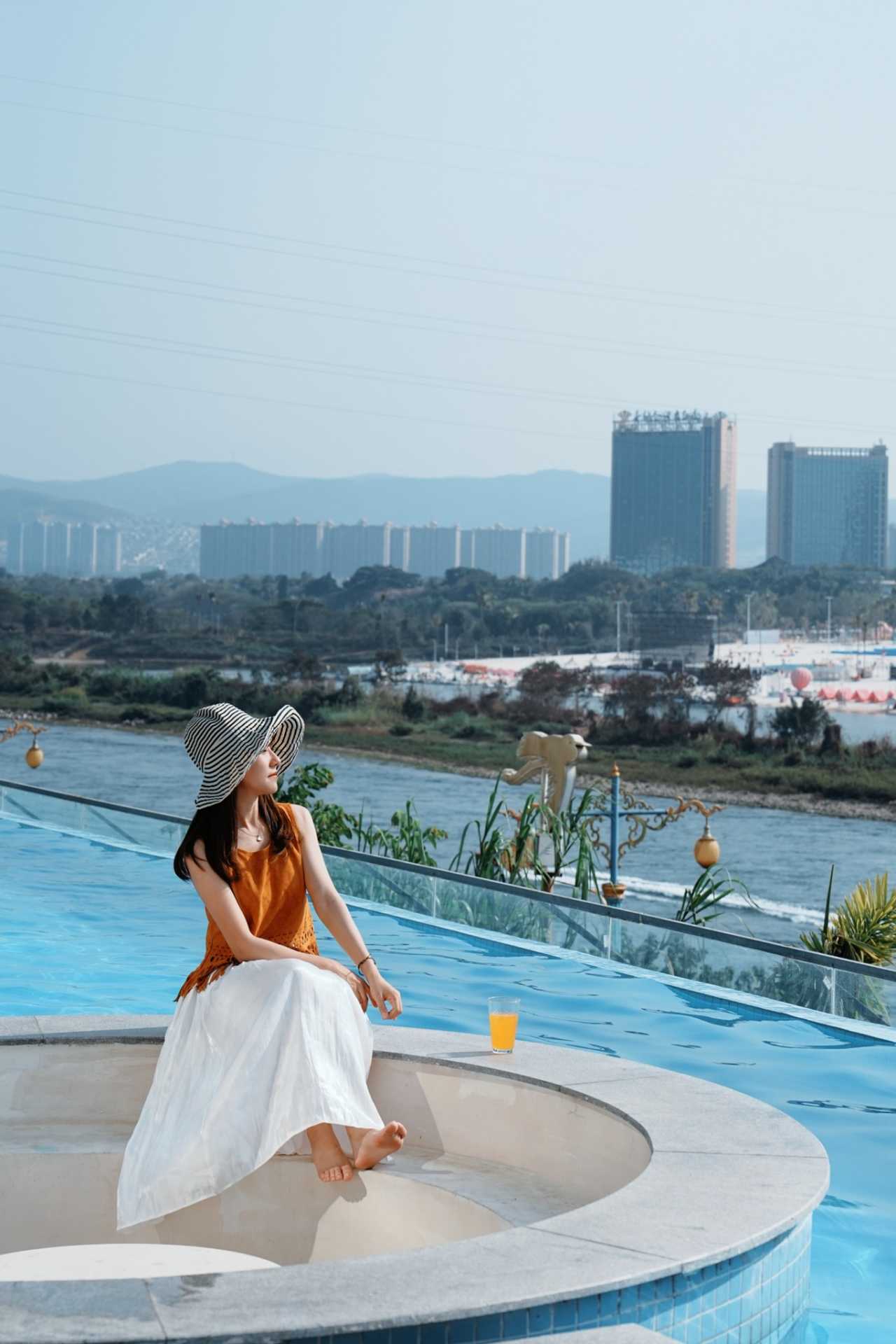
We landed in Xishuangbanna late at night. After a good night’s rest, the moment I pulled back the curtains, the Lancang River and Gaozhuang Xishuang Scenic Area lay before me. We stayed at the Jingyue Meiji Riverside Hotel in Gaozhuang. Its floor-to-ceiling windows offered an unobstructed view of the river. Eating rice noodles while overlooking the Lancang River during breakfast was so relaxing it made me lose track of time.
The hotel’s architecture and room names were playful—Pineapple, Durian, Elephant... the tropical vibe hit you instantly. All those exotic fruits I’d never seen before felt like mystery boxes, waiting to be opened.
The Starry Night Market, Empty by Day
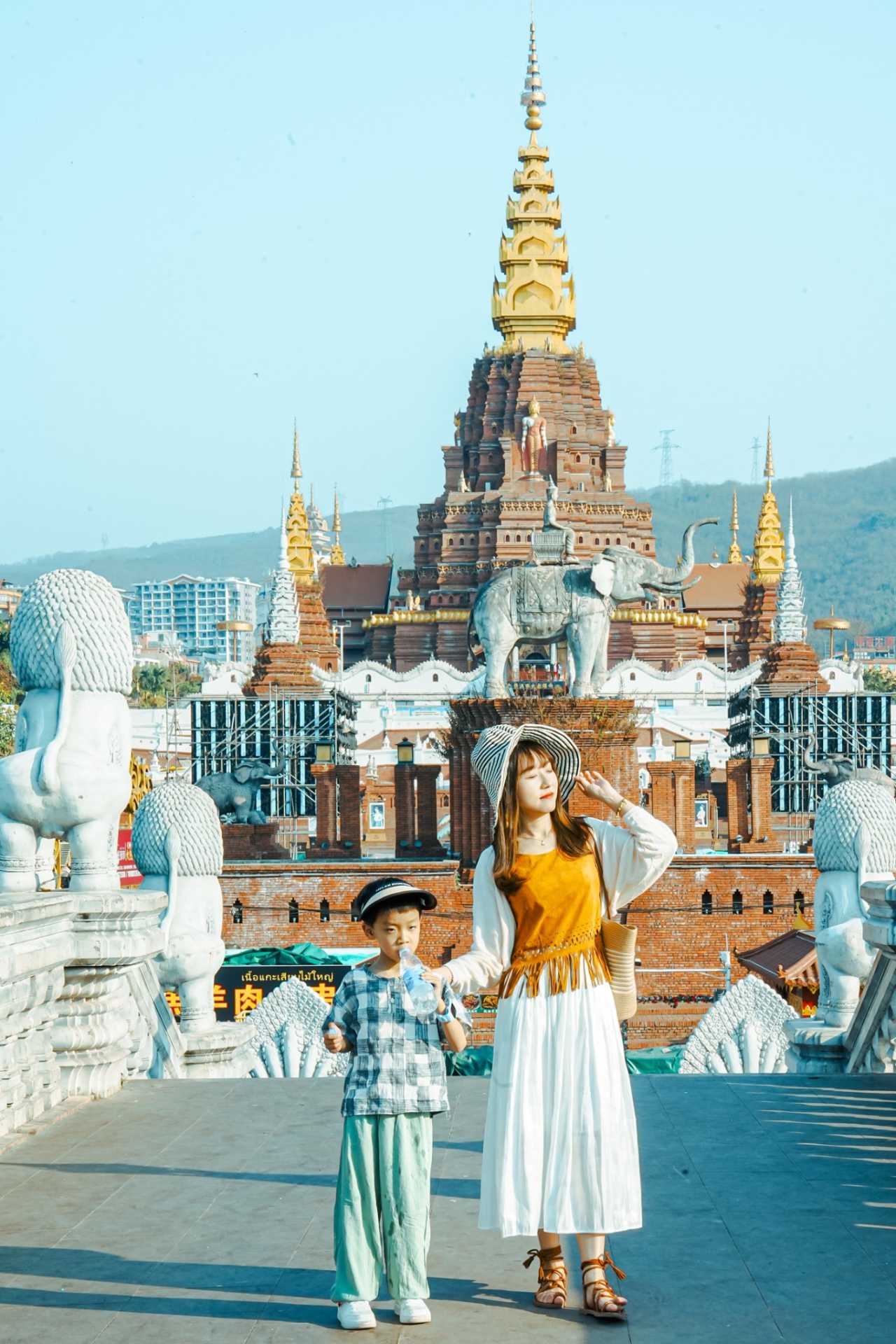
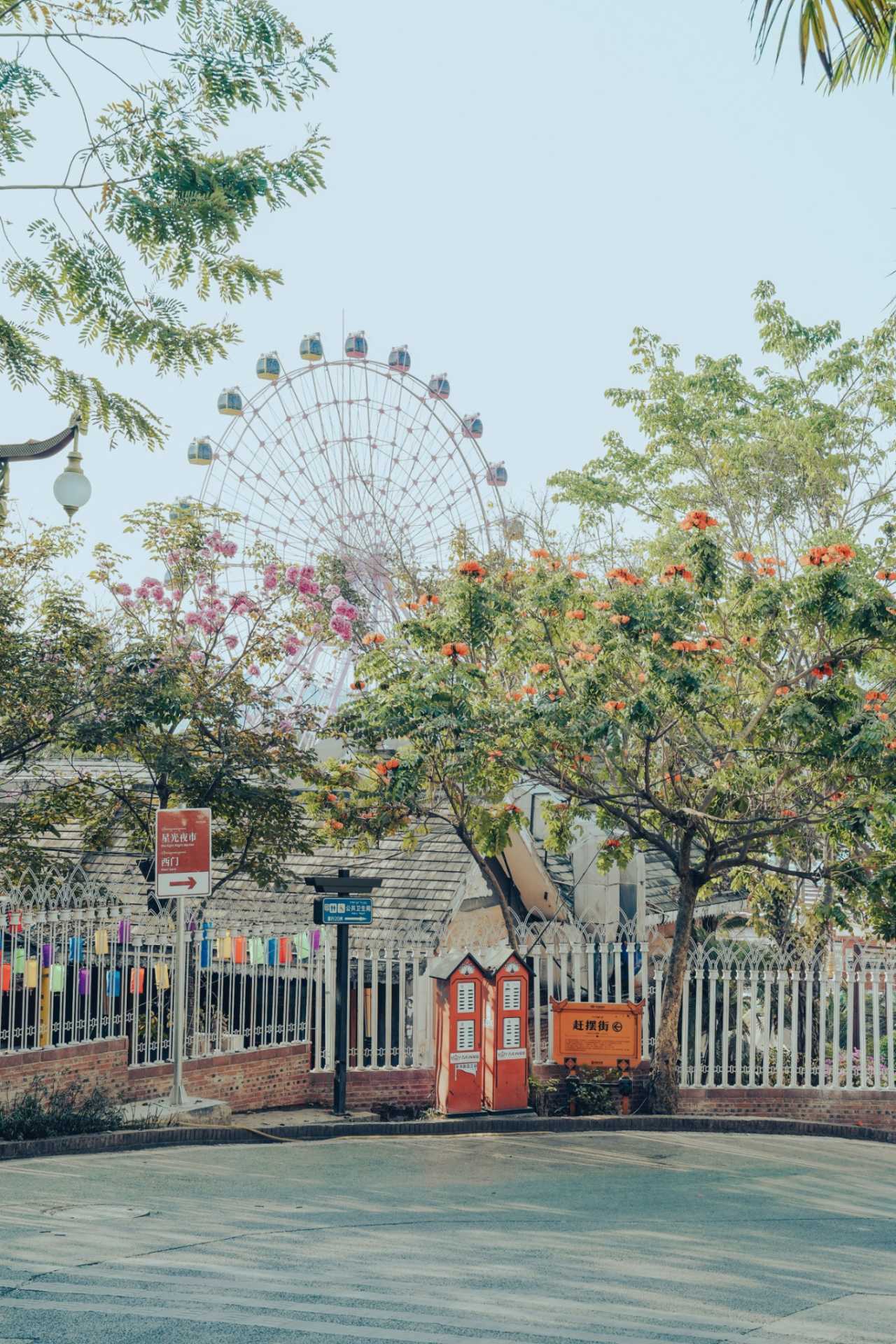
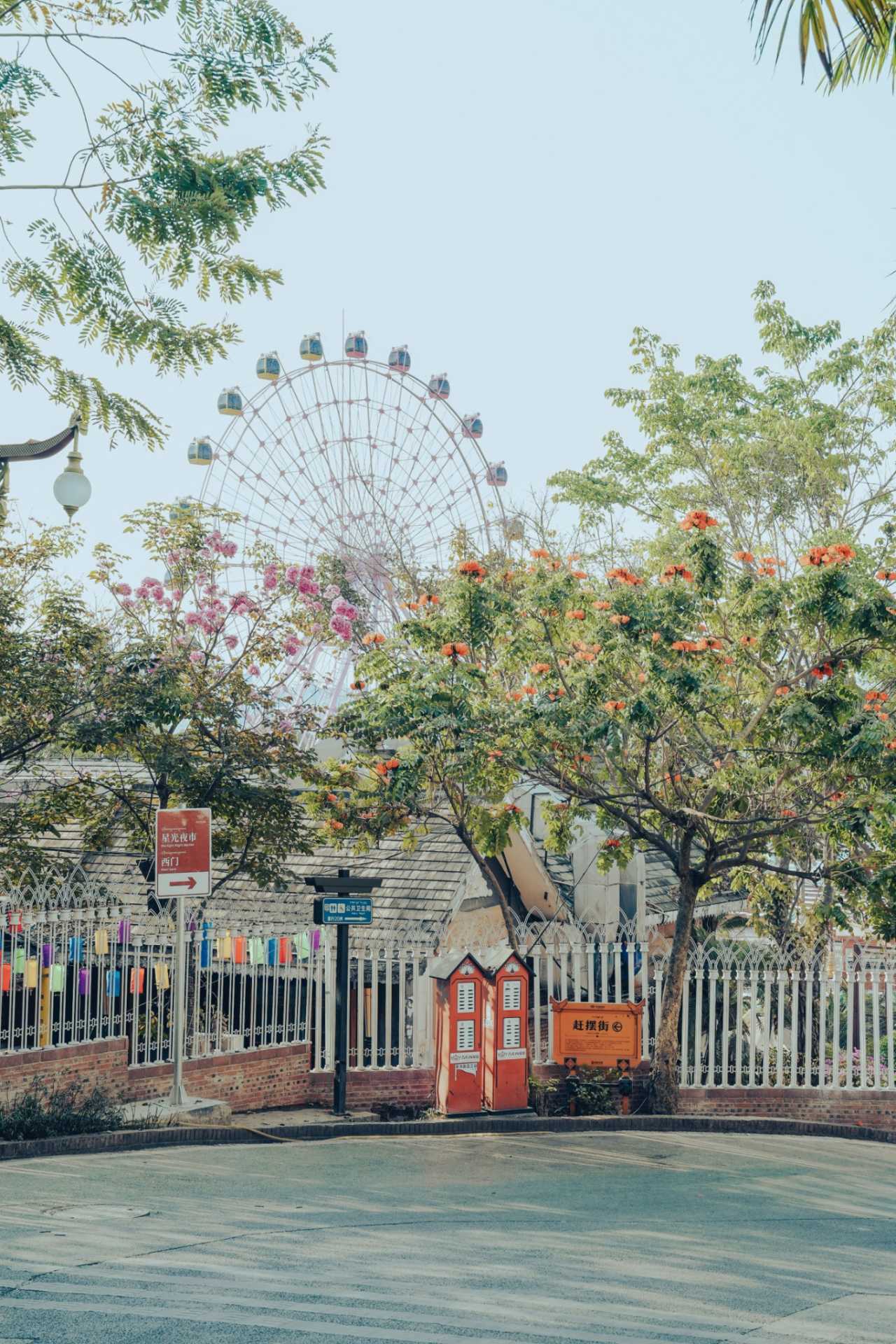
We walked to the Starry Night Market early in the morning. During the day, we practically had the place to ourselves. The empty streets felt like a fairy tale. The bridge directly facing the central axis of the Great Golden Pagoda offered the perfect photo spot.
Our two kids, born just four months apart, are both in first grade. Watching them run and play in the deserted market, sunlight warming their faces—in that moment, all the exhaustion felt worth it.
First Taste of the Trendy Restaurant “Chunwuli”
Before the trip, a friend strongly recommended “Chunwuli,” saying the trendy spots here rarely disappoint, but you need to line up in person by 10 a.m. By the time we strolled over, there were already seven or eight people ahead of us. When we got our number, the staff stamped a fluorescent mark on our hands, which they checked when our number was called—strict but fun.
Luckily, we got seated in the first wave. The handwritten menu had a lot of character, and none of the dishes let us down. If I had to rank them:
- Five-star recommendations: Oil-fried chicken feet, Jianshui tofu, mango sticky rice
- Four-star recommendations: Lemon chicken wings, boiled rice noodles, iced lychees
- Three-star recommendation: Braised pork belly
An Afternoon Surprise
We’d planned to visit Mantin Park in the afternoon, but the kids were dead set on swimming. That’s how it goes with kids—plans always change. The outdoor pool water didn’t warm up until around 3 or 4 p.m., but watching them laugh so joyfully in the water made it all worthwhile, even as I dozed off and edited photos on the side.
In the evening, we wandered and found the dessert shop my friend recommended. I loved the storefront. The Laotian coffee came in an oversized cup, tasting like a latte. The kids finished the small cookies in the “Paoluda” (a Burmese-style drink) and asked for another serving. The white lychees stuffed with pineapple strips were a stroke of creative genius.
We bought the kids two little elephant balloons. Leading them through the crowd, they were hard to miss and doubled as a way to prevent the kids from getting lost—two birds with one stone.
The Starry Night Market After Dark
In February, sunset in Xishuangbanna is around 7 p.m. As night fell, the Great Golden Pagoda lit up with twinkling stars, and the market came alive. I could only imagine that during holidays, the crowd here would be ten times larger.
Plenty of “princesses” were out and about, posing for photos in traditional Dai costumes. With the kids in tow, we skipped the costume change. During the “blue hour,” the market was bathed in a romantic pink-purple sky. We even saw fireworks late at night, but staying in Gaozhuang meant no peace and quiet until after midnight.
Funny side story: On the way back to the hotel, my friend suggested we sell the balloons back—bought for 20 RMB, sold to the balloon vendor for 10 RMB. The vendor agreed, but when I handed them over, I fumbled and let them fly away. There went my 10 RMB “fortune.”
Rainforest Trek: A Kid-Friendly Experience with Zero Complaints
Why Choose the Jinuo Mountain Rainforest Trek?
When searching for Xishuangbanna parent-child travel tips on social media, you’ll notice something: people might complain about Wild Elephant Valley, the rainforest elephant walks, or the expensive prices at the Starry Night Market, but the Jinuo Mountain rainforest trek gets almost zero negative reviews. That’s exactly why I was sold on it.
Pre-Trip Preparation
For the rainforest trek, you must wear rubber boots. Dress the kids in one-piece waterproof suits. The UV index in the rainforest isn’t high, and it’s not stuffy, but long sleeves and pants help keep mosquitoes away. We chose a service that included hotel pickup and drop-off—picked up from Hotel A in the morning and dropped off at Hotel B after the trek. Very convenient.
First Impressions of the Rainforest
The trek kicked off with a thrilling high-altitude swing, instantly hitting you with a stomach-dropping sensation. Facing the rainforest head-on was awe-inspiring, like something out of an American horror movie where you’re about to be swallowed by the jungle.
Tropical plants grow to enormous sizes—some trees were at least 20 meters (65 feet) tall. After plenty of encouragement, the kid managed to climb five rungs before giving up. My legs were still a bit shaky at the top. With the guide’s instructions, we came down frog-hopping—safe but exciting.
The water swing became the kid’s favorite. The feeling of skimming the water was both strange and fun.
Little Surprises in the Rainforest
Our guide, who we nicknamed “Kevin,” used three different colored rocks to grind mud and paint “rainforest makeup” on us. So cool!
Archery was the kid’s favorite activity. I’d taken him to an archery range before, and he hit the target three times this round—not bad at all. The Jinuo ethnic instruments were a bit out of tune, but the kids had a blast.
“Hey, what’s this bug? Does it look like a sunflower seed? That’s a ‘sunflower seed bug’,” the guide explained, sending the kids into giggles.
The kid’s waterproof suit might have been too small. We’d used it once last year and wanted to get our money’s worth, but it made it hard for him to climb or spread his legs. He often ended up as the guide’s “human accessory.” Luckily, our guide was a pro—one kid in each arm, navigating the mountains with ease.
Rainforest Lunch
The rainforest meal was tastier than I expected, especially the mushroom soup and grilled fish. I’d bought some rice balls from 7-Eleven as a backup, but we couldn’t even finish the meal provided. It was more than enough. Healthy, natural, and clean—a wild meal to remember.
Conquering the High-Altitude Swing
In the end, I couldn’t resist letting the kid try the high-altitude swing again. A friend his age started out refusing but eventually gave it a shot, slowly getting used to the feeling of free fall. Seeing his friend come down laughing, my kid wanted to try but was still scared. Finally, with the incentive of “one extra episode of cartoons,” he got on the “pirate ship.” He still cried two seconds after being pushed, but he’d already conquered his fear.
Water Bamboo Rafting
We spent a long time on the water bamboo rafts. The kids got along famously, but we sacrificed one smartwatch to the river.
Mantin Park and the General Buddhist Temple: A Thousand-Year-Old Dai Royal Garden
Mantin Park
With over 1,300 years of history, Mantin Park is the oldest park in Xishuangbanna. It was once the royal garden and summer palace of the Dai kings. It’s a great spot for photos in Dai costumes, but with the kids, we skipped the dress-up.
The royal garden has scheduled parades and performances at different times—check the schedule in advance. Tropical flowers and trees paired with white pavilions created an incredibly romantic scene. The white pagoda in the park is modeled after the famous Manfeilong White Pagoda, located on Manfeilong Mountain in Damenglongba, about 40 kilometers (25 miles) from Jinghong.
General Buddhist Temple
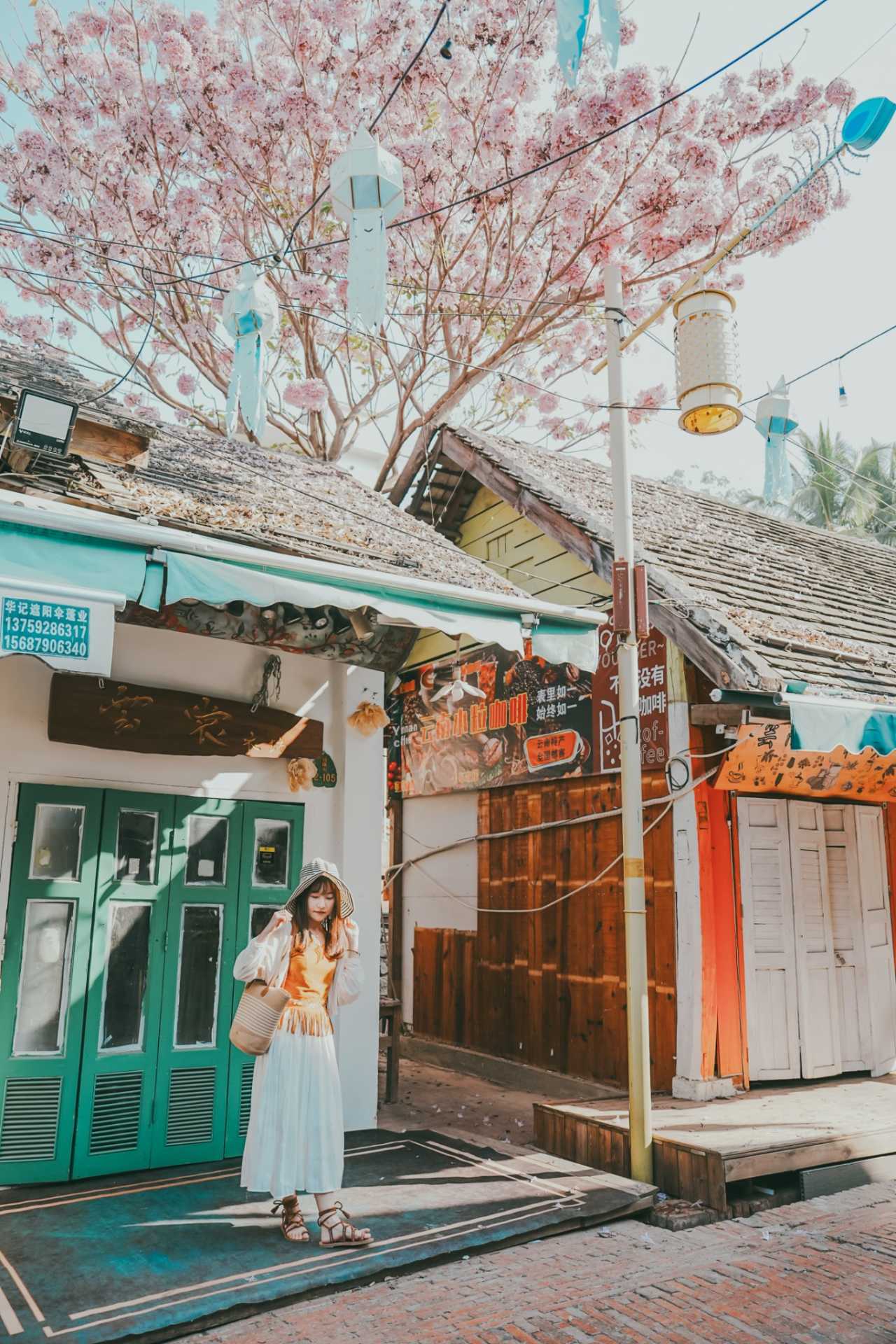
The General Buddhist Temple is connected to Mantin Park, but it closes at 6:30 p.m., so plan your time carefully. Unlike most temples in China, Dai Buddhist temples have stricter rules: you must remove your shoes before entering, cannot take photos inside the pagoda or temple halls, cannot wear hats or use umbrellas, and must avoid smoking, intimate behavior, and loud noises. Dress modestly.
The temple’s beams and pillars are intricately carved and gleam gold in the sunlight. The grounds also feature two unique Pattra leaf trees. Their leaves can be inscribed with iron styluses, preserving text for thousands of years. Ancient Indians carved Buddhist scriptures onto these leaves, creating the precious Pattra-leaf scriptures, often called the “panda of Buddhism.”
Manzhang Village: Handicraft Experiences in a Dai Village
In the afternoon, we hired a car to Manzhang Village, a Dai village about 30 kilometers (19 miles) from the hotel. A similar option is Manyuan Village, the filming location for the show “Back to Field,” which is more nature-focused. Manzhang Village offers many handicraft experiences, making it better for families with kids.
Street stalls sold snacks similar to grilled milk fan (a Yunnan specialty), and I tried a glass of cactus juice—the taste was indescribable.
The handicraft experiences were cheap: 15 RMB per person for Dai papermaking, 10 RMB per person for Dai pottery. However, the pottery couldn’t be fired and taken home—it was just a hands-on experience. If it’s sunny, start with papermaking, let it dry, and pick it up before you leave. It usually takes 2-3 hours to be half-dry. The shop owner will wrap it in old newspaper for easy carrying.
We dropped the kids off at the pottery workshop, and the moms held hands and went shopping—the safety level for domestic travel in China is still quite high.
For 30 RMB per person, the kids had a blast grinding soy milk. A handful of beans, a cup of water, and pure brute force—they quickly created their own “shoddy project.”
The village was full of roosters with beautiful feathers—Dai fighting cocks are one of the oldest and most traditional forms of entertainment for the Dai people. According to archaeological research, Xishuangbanna fighting cocks trace back to the Yellow Emperor’s battle against Chiyou in Zhuolu. They were brought to Yunnan by the Sanmiao tribe of the Dongyi people and, through long-term domestication and breeding by locals, gradually developed into what they are today.
We spent the afternoon in this incredibly chill village, surrounded by the breeze, the chirping of insects, and children’s laughter. It made us forget that our little ones were playing hooky from school.
A Half-Day Citywalk Before Leaving

Boruo Temple
Today was our departure day, with a 3 p.m. flight. We had the morning for a quick citywalk. Boruo Temple, just 3 kilometers (1.9 miles) from the hotel, was the perfect last stop before saying goodbye to Xishuangbanna.
Despite its name, Boruo Temple is more like a small shrine in a village. Its claim to fame is the white pagoda. Some elderly visitors were crouching over a puddle on the ground, taking photos. Turns out, those beautiful reflection shots you see online come from this very puddle. The effect was actually quite nice.
Like the General Buddhist Temple, it prohibits entry for women in revealing clothing. About half an hour was enough to explore.
Dai Water Town
We still had time, so we headed to another spot—Dai Water Town, a lesser-known attraction in the city center with a strong Southeast Asian vibe. Along the riverbanks, tall, lush flame trees, various palms, corypha palms, and fan palms lined the roads.
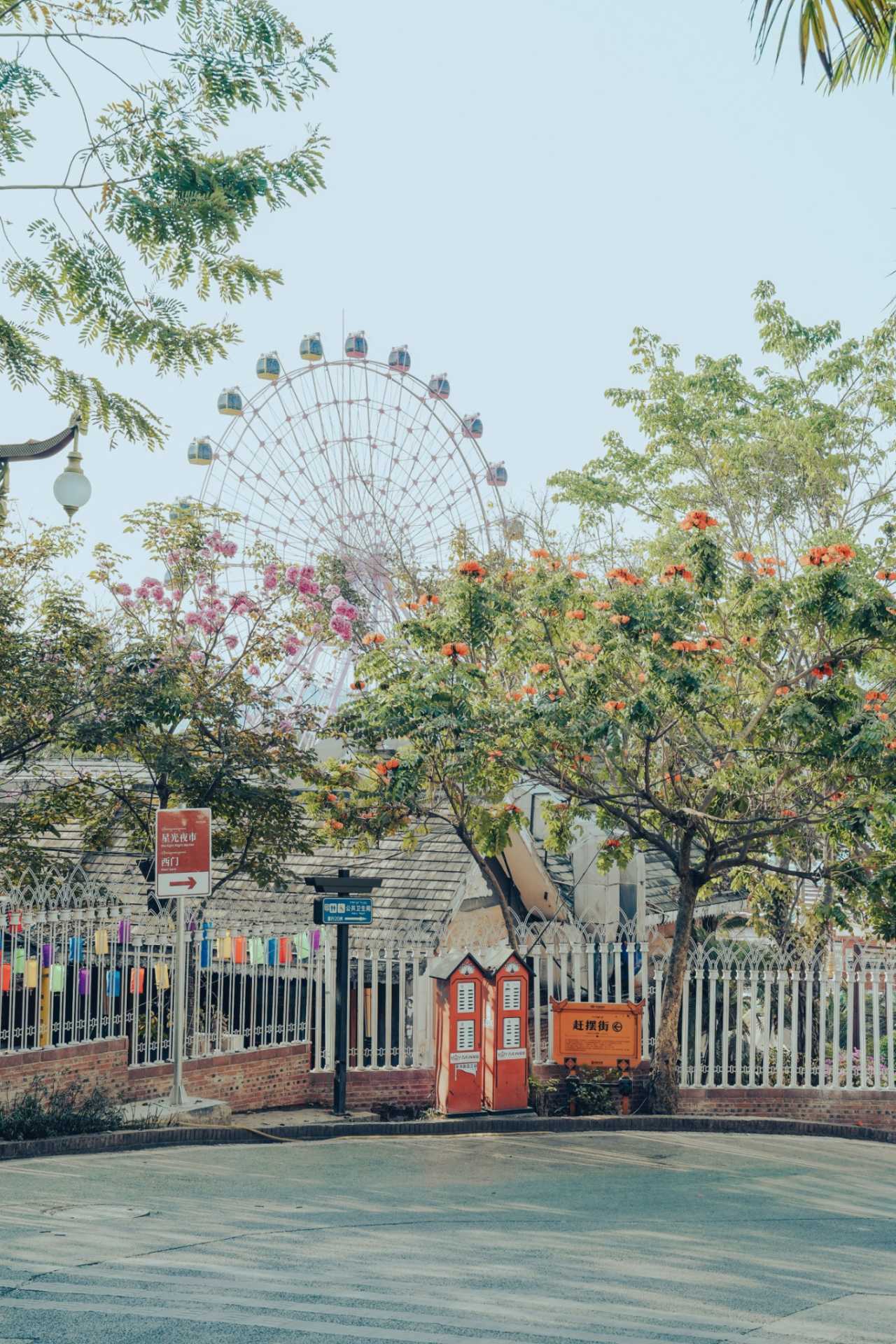
This hidden gem is free to enter. You can wear Dai costumes for photos and soak in the Dai atmosphere among the gardens and intricate architecture. The area has tea houses and a café. Spend 28 RMB and you can borrow Dai costumes for a photoshoot.
The café was run by folks from Northeast China, and the interior showed real thought and creativity. After finishing our iced drinks, it was time to head back, check out, and catch our flight.
Practical Tips and Cost Summary
Flights
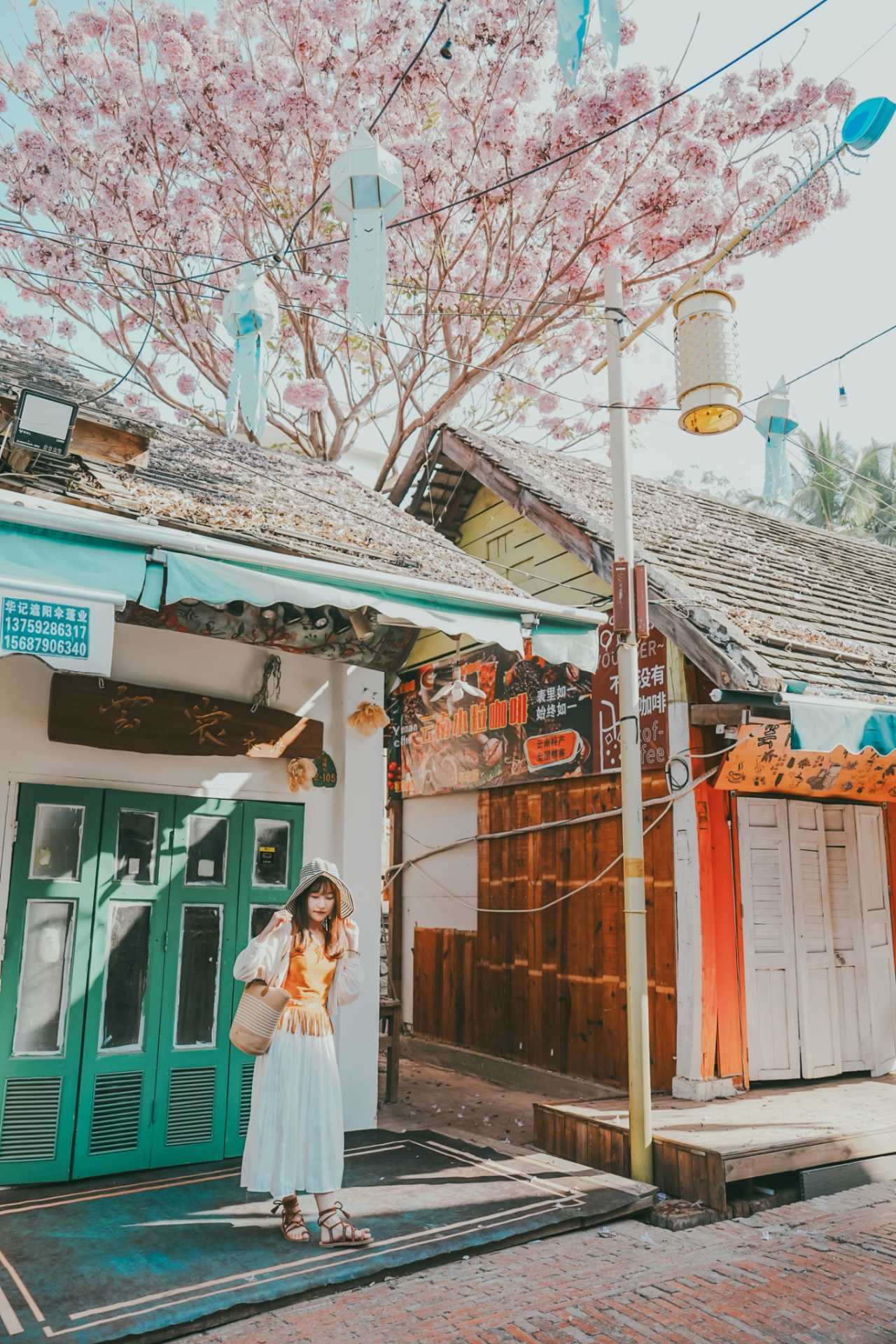
Post-holiday airfare was a steal. A round-trip direct flight from Ningbo to Xishuangbanna cost just under 1,000 RMB. I jumped on it immediately and rallied a friend on social media. In Ningbo, elementary school students started the second semester on February 13 this year. After school, we did a bit of homework and headed to the airport. Asking for time off before third grade is still within my comfort zone—this time, we needed two days off.
Accommodation
If you visit Xishuangbanna during holidays, don’t stay in Gaozhuang—traffic jams start around 10 a.m. and last until night. Even during our off-peak post-holiday trip (we didn’t realize that local elementary schools hadn’t started yet), we waited nearly 20 minutes for a taxi at the airport late at night.
For our four nights in Xishuangbanna, we booked two hotels, two nights each: - First two nights: Jingyue Meiji Riverside Hotel in Gaozhuang, lured by photos of its panoramic floor-to-ceiling windows - Last two nights: Wanda Yihua All-Suite Hotel, recommended by a friend for being affordable and comfortable, with peacock feeding and a water park as highlights
Itinerary
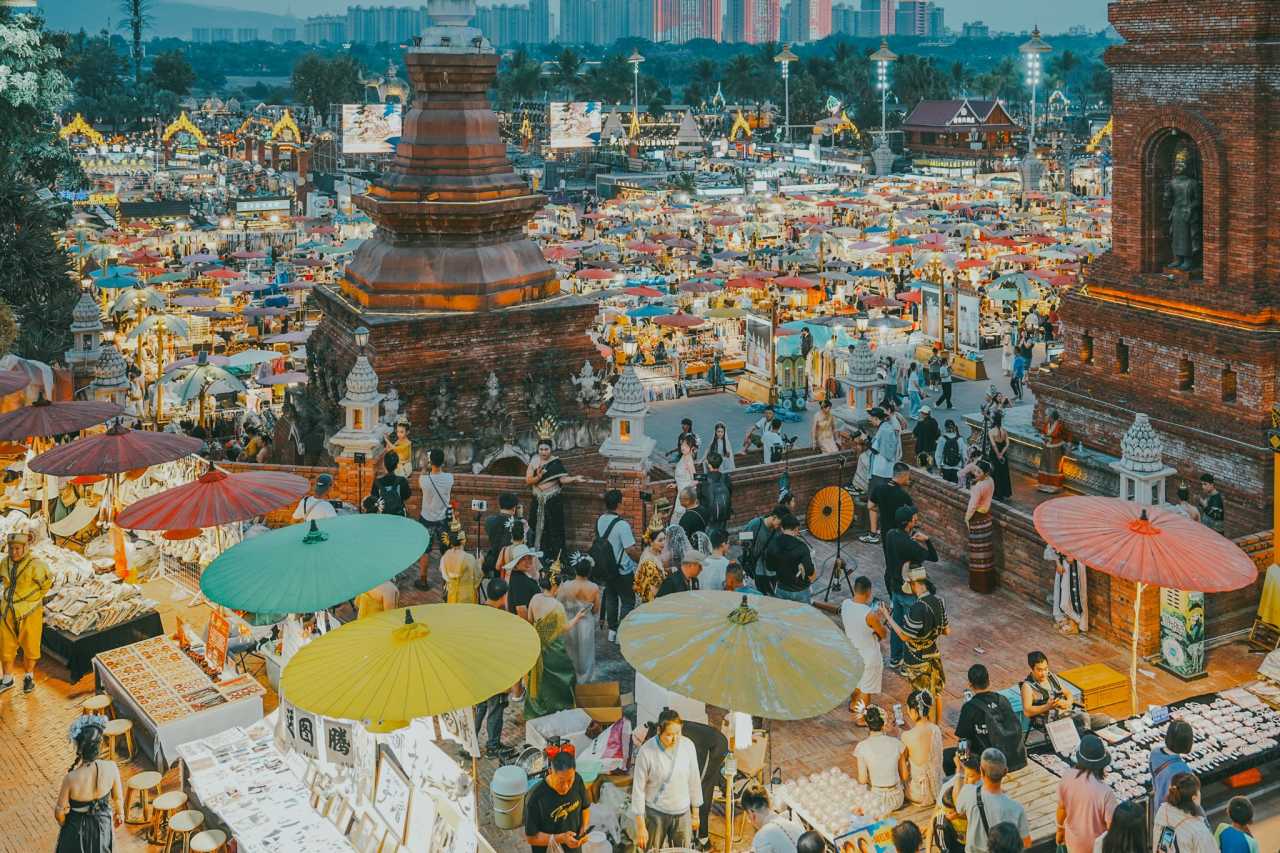
As a Type J person, I sketched out a rough plan before leaving, though we didn’t stick to it completely. For example, we didn’t make it to the Riverside Night Market. Also, if you visit White Sand Beach, go before 5 p.m.—tickets are only 20 RMB per person; after that, they cost over 100 RMB.
Rainforest Trek Tips
- Hotel pickup and drop-off available; can pick up from Hotel A and drop off at Hotel B
- Must wear rubber boots for traction; dress kids in one-piece waterproof suits
- The rainforest meal isn’t bad—the grilled fish and mushroom soup are good
- The high-altitude swing and one-legged swing both have strong free-fall sensations; kids should gauge their limits
- Sunscreen and mosquito repellent are a must. UV in the rainforest isn’t strong, and it’s not stuffy
Afterword: A Mom’s Travel Philosophy
The sweeter the off-peak travel, the harder the catch-up on homework afterward.
In recent trips, I’ve grown to love the mom-and-kid travel model—teaming up with a friend for a “Where’s Mom Going?” adventure. It’s free, in sync, efficient, and budget-friendly.
For a Type J person, the downside of revenge travel is “falling behind on homework.” In an age of short videos, bite-sized tips, and fragmented information, few people have the patience for long travel guides. But these travelogues on Mafengwo are my own long-form novels—each parent-child trip’s rambling vlog is a gift of memories for my child’s growth.
From dating, breakups, being single, marriage, childbirth, to traveling with kids—this space has recorded 15 years of a girl becoming a mother. An ESTJ Aquarius who loves life and refuses to waste energy on negativity: 2025, keep running toward what you love.
Next stop preview: Mom and Kid | Weekend Blitz: Cherry Blossom Parent-Child Trip to Jeju Island
Photos/Text by Elva Weixi
You should also read:
Xishuangbanna Self-Drive Tour: Into the Tropical Wonderland at the Edge of the Sky (Complete Guide)
Xishuangbanna Self-Drive Tour: Into the Tropical Wonderland at the Edge of the Sky (Complete Guide) Introduction: A Dream Fulfilled Thirty Years Early Some journeys are destined to happen at a specific moment in time. For me, a self-drive trip to Xishuangbanna was originally the first…
Continue reading...
Big Bear and Little Cat Explore China: [A Self-Guided Tour of the Shangri-La Region: That Sky, So Blue It Feels Unreal!]
Big Bear and Little Cat Explore China: [A Self-Guided Tour of the Shangri-La Region: That Sky, So Blue It Feels Unreal!] Prologue: Why Shangri-La? In September 2011, my friend and I followed the Yunnan-Tibet Highway into the Greater Shangri-La region. Six days of travel, without…
Continue reading...
A Journey Through Time: The Earthen Forest of Yuanmou — April 2011 Chuxiong & Yuanmou Self-Drive Guide
A Journey Through Time: The Earthen Forest of Yuanmou — April 2011 Chuxiong & Yuanmou Self-Drive Guide Some journeys are destined to take root in your memory. In April 2011, I set out from Shuhe in Yunnan, heading north toward the Chuxiong Yi Autonomous Prefecture,…
Continue reading...