Big Bear and Little Cat Explore China: [A Self-Guided Tour of the Shangri-La Region: That Sky, So Blue It Feels Unreal!]
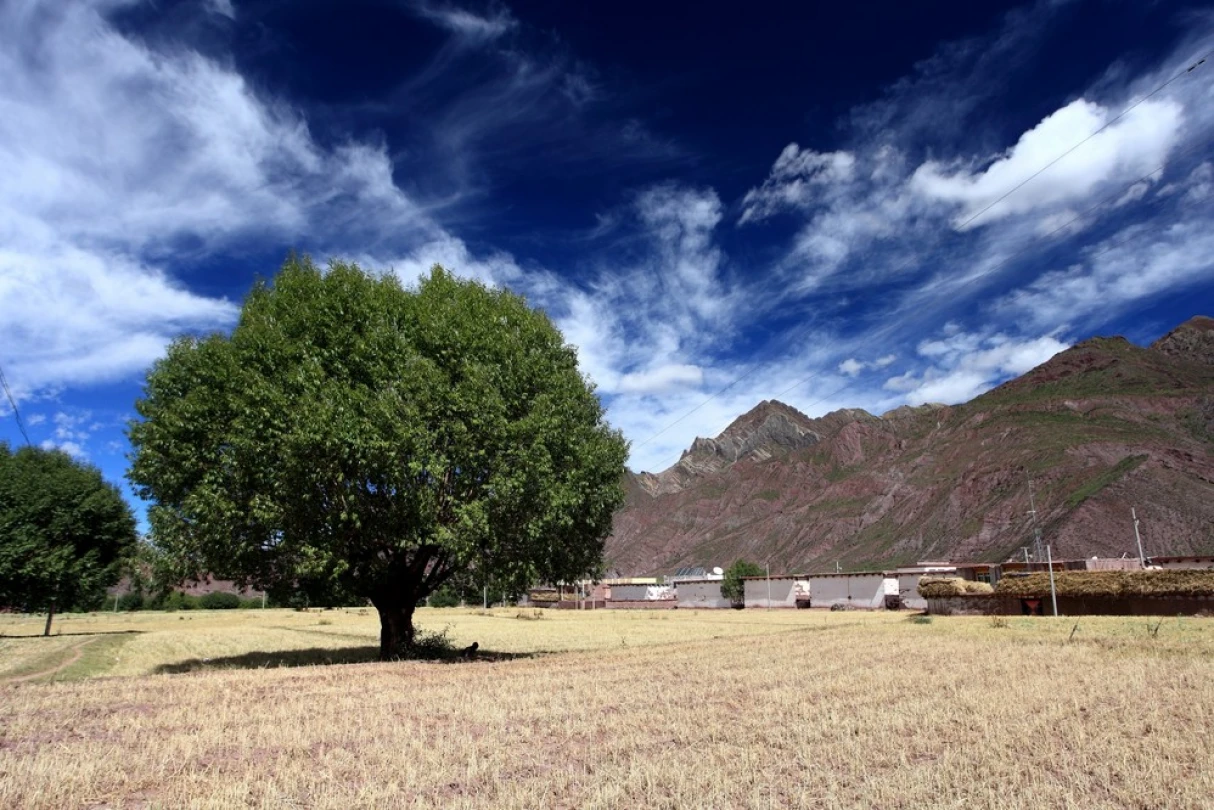
Big Bear and Little Cat Explore China: [A Self-Guided Tour of the Shangri-La Region: That Sky, So Blue It Feels Unreal!]
Prologue: Why Shangri-La?
In September 2011, my friend and I followed the Yunnan-Tibet Highway into the Greater Shangri-La region. Six days of travel, without the epic hardship of trekking into Tibet or the grueling ordeal of cycling in—we chose an off-road vehicle, comfortable enough to feel "like being in paradise."
But honestly, even from inside the car, the road was humbling. Every bump reminded you: this is one of the closest places to the sky.
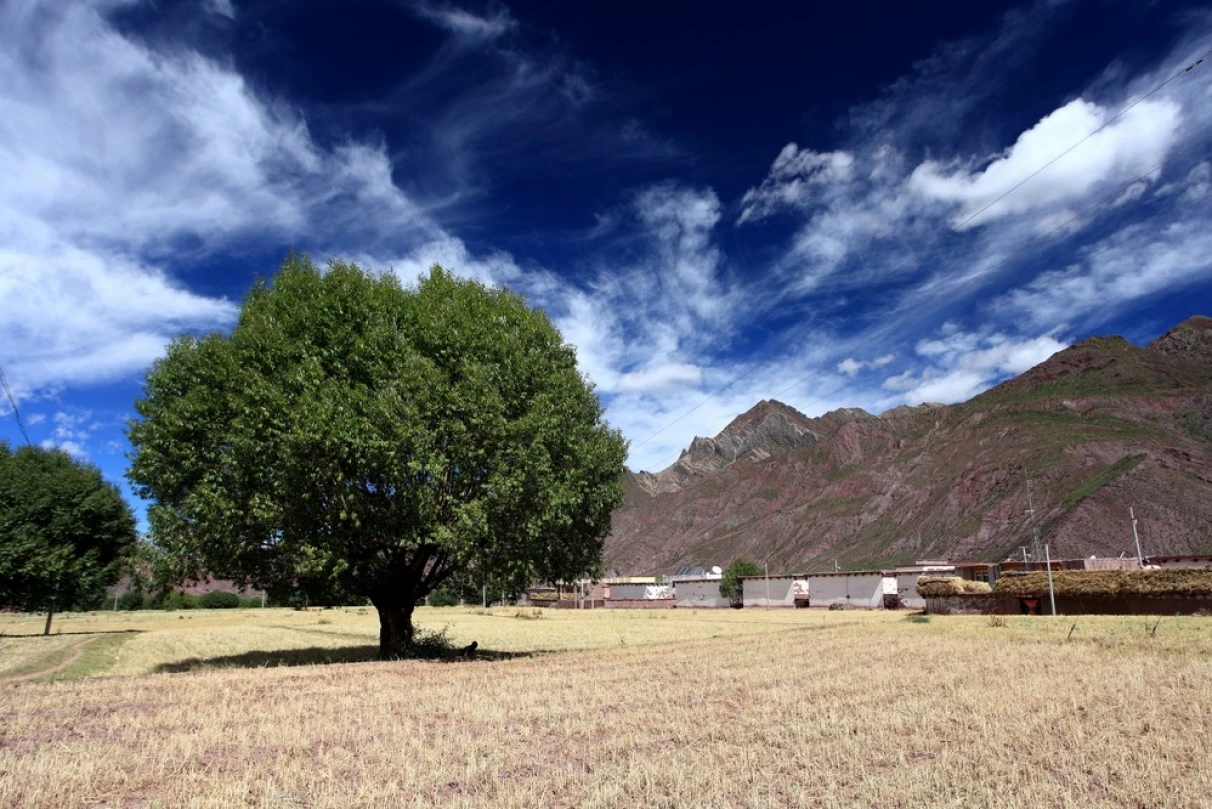
What struck me most, though, wasn't the altitude or the lack of oxygen—it was the sky. So blue it felt unreal, so blue it made you wonder if you were wearing a filter.
If you, too, long for that kind of blue, this self-guided travel guide might help you avoid some detours.
What You Need to Know Before You Go
Altitude Sickness? Don’t Panic, But Don’t Ignore It
I had been to Lhasa, Yangbajain, and Namtso Lake in 2004, so I was mentally prepared for altitude sickness. But along the Shangri-La route, the oxygen levels are relatively higher, and altitude sickness isn’t severe. Still, it’s wise to prepare some Rhodiola rosea in advance, avoid strenuous activity upon arrival, drink plenty of water, and go easy on the alcohol.
How to Fly? Don’t Get Confused by the Word "Diqing"
There are no direct flights from Beijing to Shangri-La. Both Air China and China Southern require a stopover. The reason is simple: Shangri-La Airport sits at an altitude of 3,280 meters (10,761 feet), a high-altitude airport that only certain aircraft can handle. The destination on your ticket will read "Diqing"—that's the Tibetan Autonomous Prefecture where Shangri-La is located. Remember: Diqing equals Shangri-La.
Airport to City Center: No Buses, But the Joy of Haggling
There’s no bus service or official taxi at the airport. You’ll need to negotiate directly with Tibetan drivers. Don’t worry—it’s a short 20-minute drive to the city center. We stayed at the "Moonlight City Hotel"—a poetic name, with an impressive lobby, but the real highlight was the moonlight at night.
First Stop: Shangri-La Old Town—Tibetan Charm Under the Moonlight

Wood Carvings and Prayer Flags
Shangri-La’s old town is within walking distance from the hotel. The architecture here is distinctive, with exquisite wood carvings on doors and windows. But like Lijiang, it’s also heavily commercialized—restaurants from different ethnic groups sit side by side, and backpacker hubs are everywhere.
The white stupas and five-colored prayer flags look especially solemn under the blue sky. The colors aren’t random: blue represents the sky, white represents auspicious clouds, red represents fire, green represents water, and yellow represents the earth. Arranged from heaven to earth, they symbolize the natural order.
The Origin of "Moonlight City"
During an evening stroll, I finally understood the name "Moonlight City." The moonlight on the plateau is completely different from that in the lowlands—crisp, cold, bright, almost within reach. Standing in the moonlight, you can’t help but think of the ancient poem: "People of today have never seen the moon of old, yet the moon of old once shone upon the ancients."
Second Stop: Potatso National Park—A Natural Oxygen Bar, But Don’t Expect "Breathtaking"
Tickets and Transportation
The ticket costs 190 RMB, which includes the eco-shuttle bus from the entrance to Shudu Lake and Bita Hai (Bita Lake). Private vehicles are not allowed inside, so don’t plan on driving in.
Worthwhile Walks
The man-made boardwalks inside the park are thoughtfully designed, keeping your feet dry even during the rainy season. But honestly, Potatso didn’t give me that "wow" feeling. Maybe my expectations were too high—some say Bita Hai and Shudu Lake are more beautiful than Lugu Lake, but personally, I found it more like a refined natural oxygen bar than a jaw-dropping wonder.
The Secret of the Tree Beard
There’s a pale green "beard" hanging from the trees in the park—it’s actually a parasitic organism. It has extremely high environmental requirements; once pollution reaches a certain level, it dies. So it’s a natural indicator of air quality.
Advice: Walk Instead of Taking the Boat
We took a boat across Bita Hai because of the rain, but if the weather is good, I strongly recommend walking the lakeside boardwalk—you miss all the hidden details along the shore from the boat.
Third Stop: Ganden Sumtseling Monastery—The "Regretful Beauty" of the Little Potala Palace
Tickets and Transportation
The ticket costs 85 RMB, including the eco-shuttle bus. The monastery is only 5 kilometers from the county town, very close.
Best Photo Spot: Off the Beaten Path
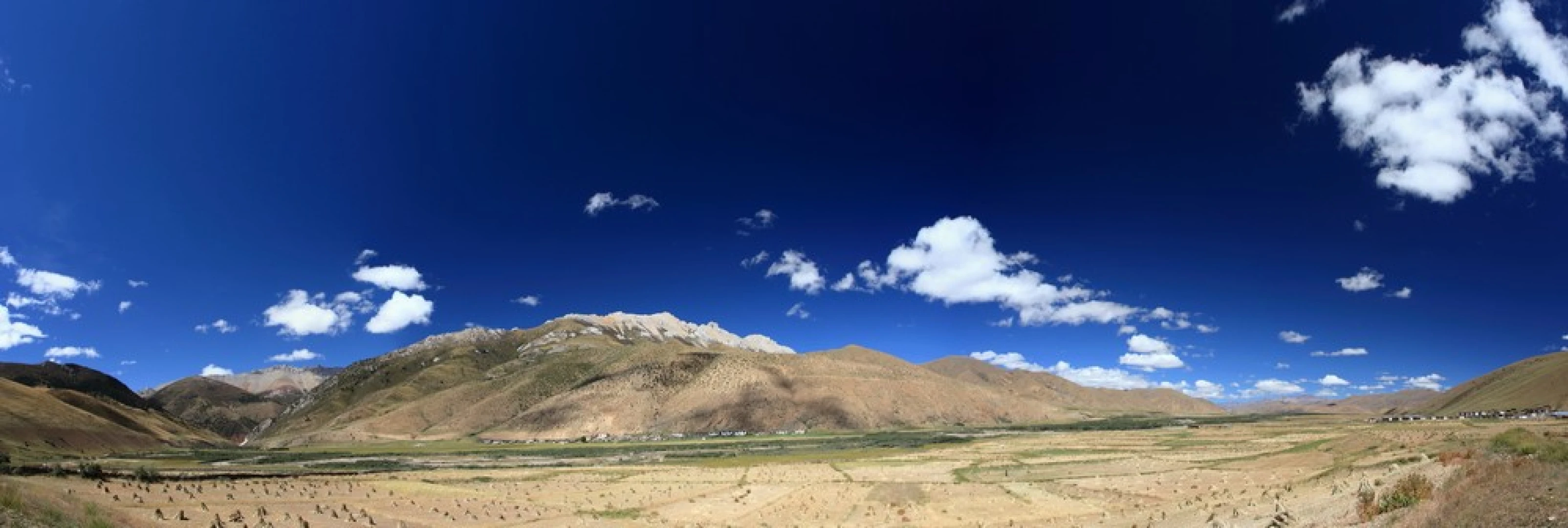
We didn’t take the usual route. Instead, we drove to the back mountain and hiked up a meadow. Wildflowers were blooming on the slopes, and in the distance, rain was falling over the county town—this kind of "sunshine in the east, rain in the west" spectacle is only possible on the plateau.
Harvested barley fields, wooden racks for drying fodder, a red-robed monk walking in the distance—every frame looked like a painting. At sunset, a beam of light hit the golden roof of Sumtseling Monastery, solemn and majestic.
Regret: We Didn’t Go Inside
It was getting late, so we couldn’t enter the monastery. Some say that compared to Tashilhunpo Monastery or Jokhang Temple in Tibet, or Kumbum Monastery in Qinghai, Sumtseling doesn’t offer much to see. But for me, standing at a distance and watching it bathed in golden sunset light was enough.
The Rules of Circumambulation
At dusk, many Tibetan locals walk around the wetland lake in front of the monastery. Remember: you must walk clockwise to receive blessings and good fortune.
Fourth Stop: Shangri-La to Dechen—179 Kilometers of Mountain Roads, Half a Day of Bumps
Road Conditions and Scenery
From Shangri-La county town, we took National Highway 214, heading northwest. The mountain road was carved along the hillside, every section soaked with the sweat of road builders. Peering into the deep valley, villages nestled in the mountain hollows—"deep in the mountains, there are homes," as the saying goes.
Dongzhulin Monastery: A Glimpse
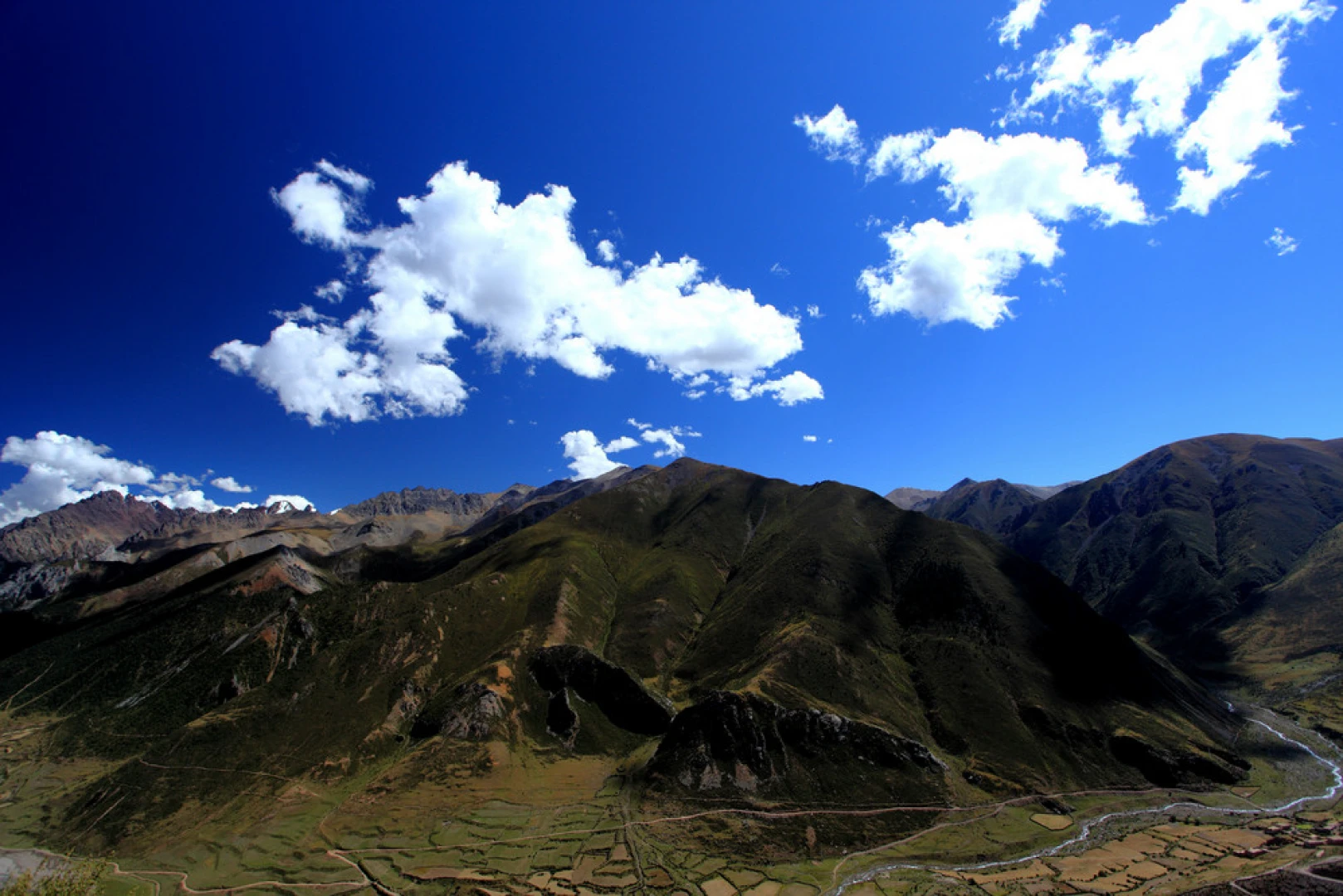
We passed Dongzhulin Monastery along the way, only catching a quick glance from the car. We didn’t get out, but that splash of Tibetan architectural color was enough to remember.
Traffic Jam? Perfect Time for a Break
We hit a small traffic jam, which gave us a chance to get out and rest. On the plateau, time isn’t meant to be rushed—it’s meant to be felt.
Fifth Stop: Dechen County Town—A "Well-Equipped" Town in a Mountain Hollow
The Layout of the Town
Dechen County Town sits in a narrow mountain hollow, stretching in a strip along the mountain. Honestly, I couldn’t help worrying: if a mudslide hit, there would be nowhere to escape. But the people who have lived here for generations don’t leave their homeland out of fear—because this is their home.
Meili Snow Mountain: The Unseen Golden Sunrise
Fifteen kilometers from Dechen, there’s a platform with 13 white stupas, open and impressive. Another 20 minutes ahead is the Meili Snow Mountain viewing platform. Unfortunately, the clouds were too thick—we never saw the mountain’s true face, let alone the "golden sunrise." A friend said some photography enthusiasts had waited here for a week without capturing it—we felt better, but the regret lingered. Big Bear will come again.
Sixth Stop: Entering Tibet—Yanjing’s Salt Pans and a Tibetan Catholic Church
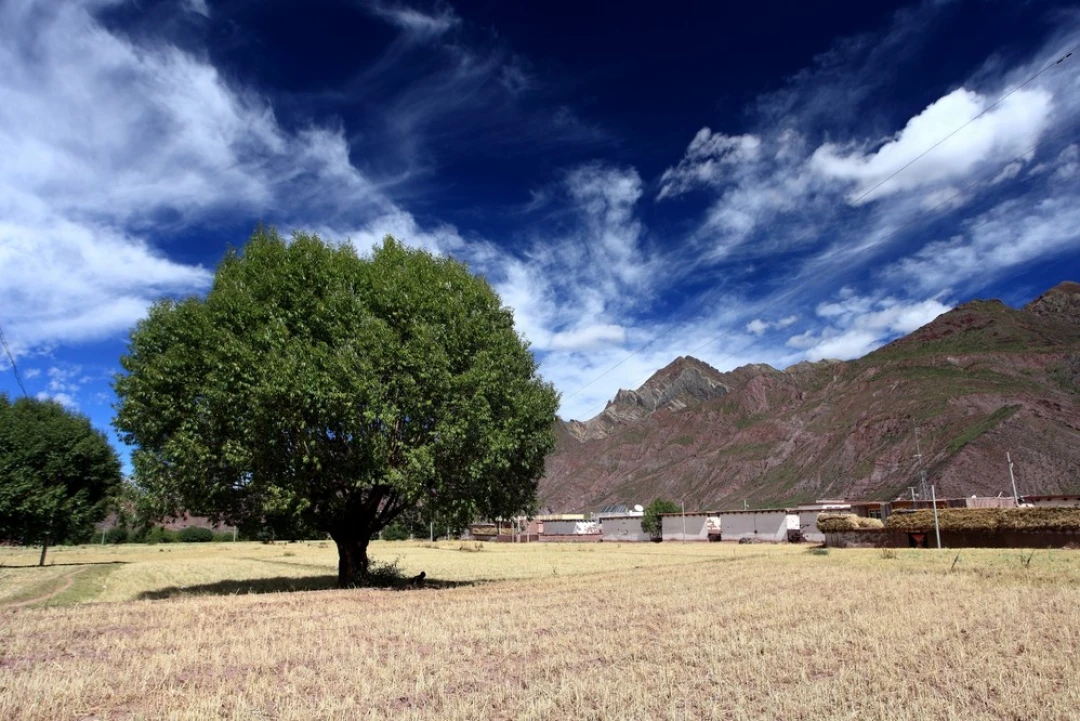
The Border Between Yunnan and Tibet
After two hours of driving, we finally reached the border between Yunnan and Tibet. The moment the blue boundary marker appeared, I felt a little thrill. In 2004, I was airlifted to Lhasa; this time, I was entering Tibet by land, for real.
Yanjing: A Gem on the Ancient Tea Horse Road
Yanjing, a Naxi ethnic autonomous township, is famous for its well salt. The salt pans are wooden and earthen platforms built along the Lancang River (Mekong River). Saltwater wells are dug near the riverbank, some nearly 10 meters deep. Workers carry wooden buckets to pour brine into the pans. After a day of sun and river breeze, white salt crystals form by the next day.
Unfortunately, we came at the wrong time—not during the salt-harvesting season. Only traces of white salt remained on the dried-up pans.
A Tibetan Catholic Church: A Unique Blend of East and West
Yanjing Catholic Church is the only Catholic church in Tibet. It was introduced to Yanjing in 1865 and has been here for a century and a half. Eighty percent of the villagers in Upper Yanjing Village follow Catholicism, attending weekly mass with Bibles translated into Tibetan.
The church’s architecture blends Tibetan, Han Chinese, and Western styles. Flanking the crucifix, a couplet reads: "God in heaven receives glory; good people on earth enjoy peace." The wall murals depict biblical stories with exquisite artistry.
Church staff invited us to taste their homemade wine—stored in plastic buckets, rustic, and absolutely delicious.
A Tibetan Family’s "Peaceful Home"
We were invited into a Tibetan home. The grandmother was 92 years old, with rosy skin and enviable health. On the wall hung portraits of four generations of leaders, each draped with a ceremonial white scarf (kata). In the yard, Tibetan fragrant pigs roamed, and a guard dog barked near the pigpen. Colorful window frames and vibrant architectural hues—these people paint their love for life onto their walls.
Seventh Stop: Yanjing to Mangkam—Blue Sky, Barley, and a Road-Building Girl
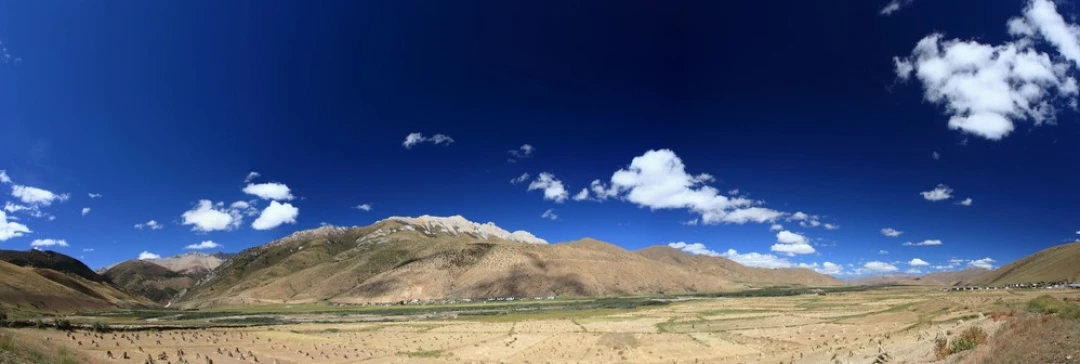
Mani Stones by the Road
Mani stone piles are spiritual cairns made of stones of various sizes, carved with the six-syllable mantra (Om Mani Padme Hum). Gazing from a Mani pile toward the homes deep in the mountains, you realize: on this land, faith and survival are one and the same.
Mangkam County Town: The First Stop on the Tea Horse Road
We arrived in Mangkam County Town at noon. Across from the county government building was a square, where the "Second Material Trade Fair of Chamdo Prefecture" was being held. Mangkam has been the first stop in Tibet on the ancient Tea Horse Road since time immemorial.
In a Tibetan silver jewelry shop, the owner’s computer wallpaper was the Maldives—and it looked exactly like the island I had visited. What a coincidence.
Up Close with the Barley Fields
Barley (qingke) is a type of hull-less barley that has been cultivated on the Tibetan Plateau for 3,500 years. Standing at the edge of a barley field, watching the golden ears sway under the blue sky, you feel this is the plateau’s gift.
The Tibetan Girl Building the Road
After leaving Mangkam, the road conditions worsened. We hit another traffic jam—road construction ahead, with one-way traffic only allowed after 9 p.m. each day. Luckily, the surroundings were beautiful, with mountains and water. During a break, a Tibetan road worker, a young woman, rested with a small bowl of hot soup, shared with deep care by her companion. As night fell, a handsome Tibetan road worker appeared faintly outside the window, his gaze calm, his face radiating love and hope for life.
Eighth Stop: Zogang to Bangda—A Sky So Blue It Feels Unreal
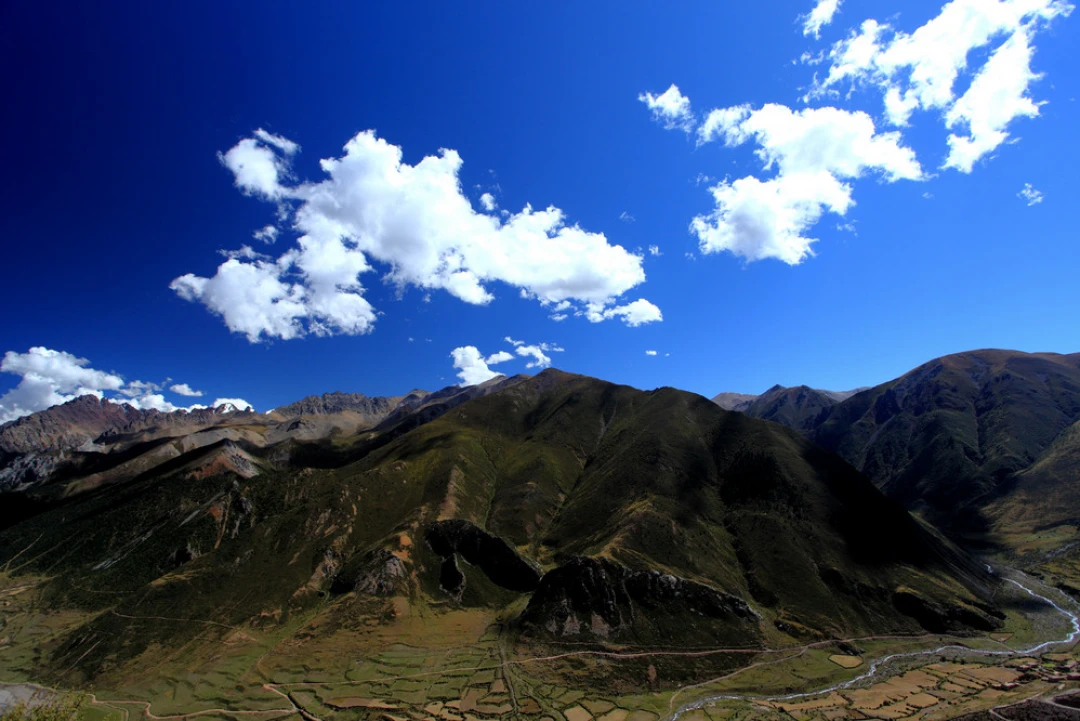
Zogang: A One-Street Town
We arrived in Zogang County Town very late. Taking a short walk in the morning, it was just like most Tibetan county towns—a single main street. Last night’s hailstorm had passed, and today was another bright, sunny day—the sky was so blue it felt unreal.
Scenery Along the Road
The road from Zogang to Chaya was excellent, all paved. Along the way, you’d occasionally spot cyclists heading into Tibet—Big Bear admires their courage and endurance.
White villages on the opposite hillside looked stunning against the blue sky. Don’t doubt it—the sky really is that blue! Cute Tibetan children and a woman carrying a baby on her back warmed the heart.
A "Little Incident" at Tiantuo Monastery
Passing through Tiantuo Town, it was market day because of a religious ceremony at Tiantuo Monastery. When we asked a police officer for directions, he said solemnly, "Don’t take photos when passing the monastery." Big Bear couldn’t resist snapping one from the car. Thinking about it later, the request seemed odd—it was so far away, what harm could a distant shot do? Probably they’re worried people will just take pictures without entering, costing the local area ticket revenue. Ah, it’s all about money.
Meiyu Grassland: As Beautiful as Its Name
An hour’s drive from Tiantuo Town, after crossing a bridge, a gravel road leads to Meiyu Grassland. Beneath green mountains, streams sparkled silver in the sunlight. In the distance, mountain peaks were barren, with jagged rocks like a Flaming Mountain.
Epilogue: That Blue Is Worth Seeing for Yourself
Six days of travel, 179 kilometers of mountain roads, half a day of bumps, countless traffic jams and waits—but all the inconveniences vanished the moment I saw that sky, so blue it felt unreal.
Shangri-La isn’t perfect. It has commercialization, regrets, and waits caused by road construction. But it also has the purest blue sky, the most devout faith, and the most genuine smiles.
If you ask me, is it worth going? My answer is: yes. Because that blue—you have to see it with your own eyes to know it’s not a filter, not an illusion. It’s real.
Finally, a few tips for those who want to go:
- Timing: September has the best weather, with fewer mudslides and landslides.
- Transportation: An off-road vehicle is your best bet, but don’t expect to drive into the scenic areas.
- Tickets: Check prices in advance—Potatso National Park costs 190 RMB, Ganden Sumtseling Monastery costs 85 RMB.
- Altitude Sickness: Don’t panic, but don’t ignore it. Drink plenty of water and avoid strenuous activity.
- Mindset: Don’t expect "breathtaking"—go to feel "real." Shangri-La’s beauty lies in the details.
That sky, so blue it feels unreal. But Shangri-La is real enough to make your heart skip a beat.
You should also read:
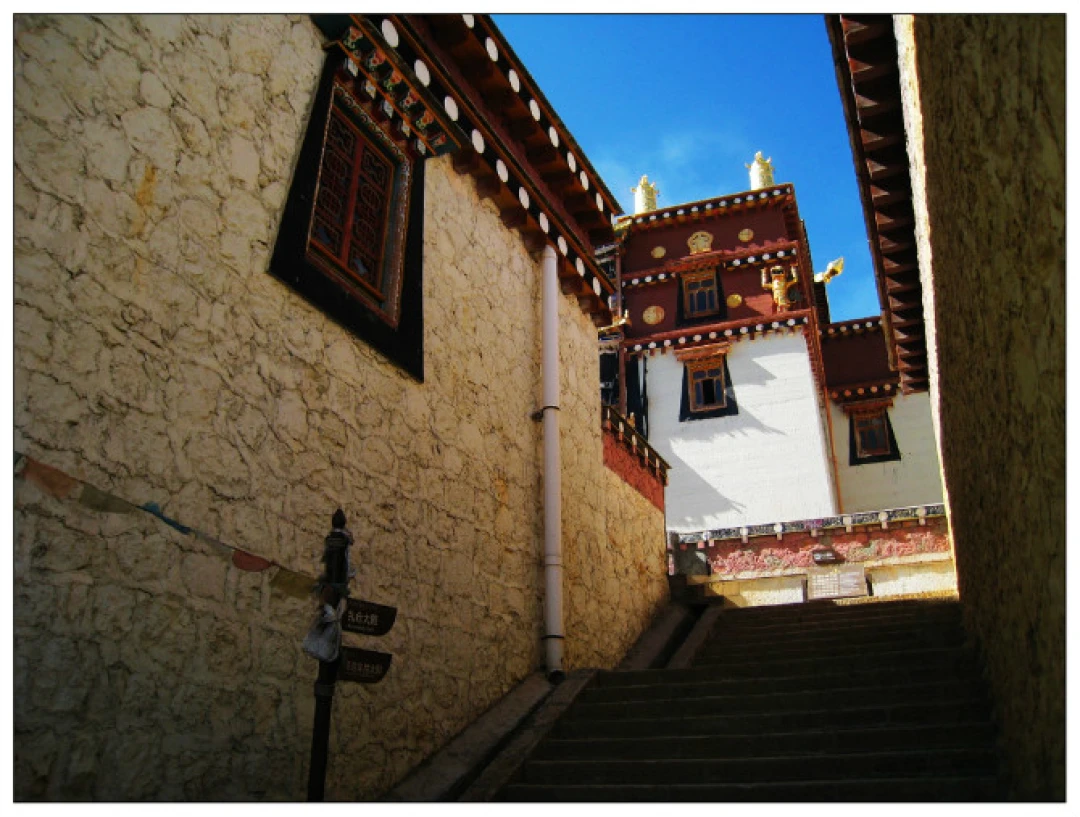
Yunnan's Colorful Clouds: Touching Shangri-La — A Dialogue with the Sky
Yunnan's Colorful Clouds: Touching Shangri-La — A Dialogue with the Sky If you ask me where in China is closest to heaven, I would tell you without hesitation: Shangri-La. The name itself carries a mysterious magic, as if every syllable whispers tales of distant lands.
Continue reading...
Xishuangbanna Self-Drive Tour: Into the Tropical Wonderland at the Edge of the Sky (Complete Guide)
Xishuangbanna Self-Drive Tour: Into the Tropical Wonderland at the Edge of the Sky (Complete Guide) Introduction: A Dream Fulfilled Thirty Years Early Some journeys are destined to happen at a specific moment in time. For me, a self-drive trip to Xishuangbanna was originally the first…
Continue reading...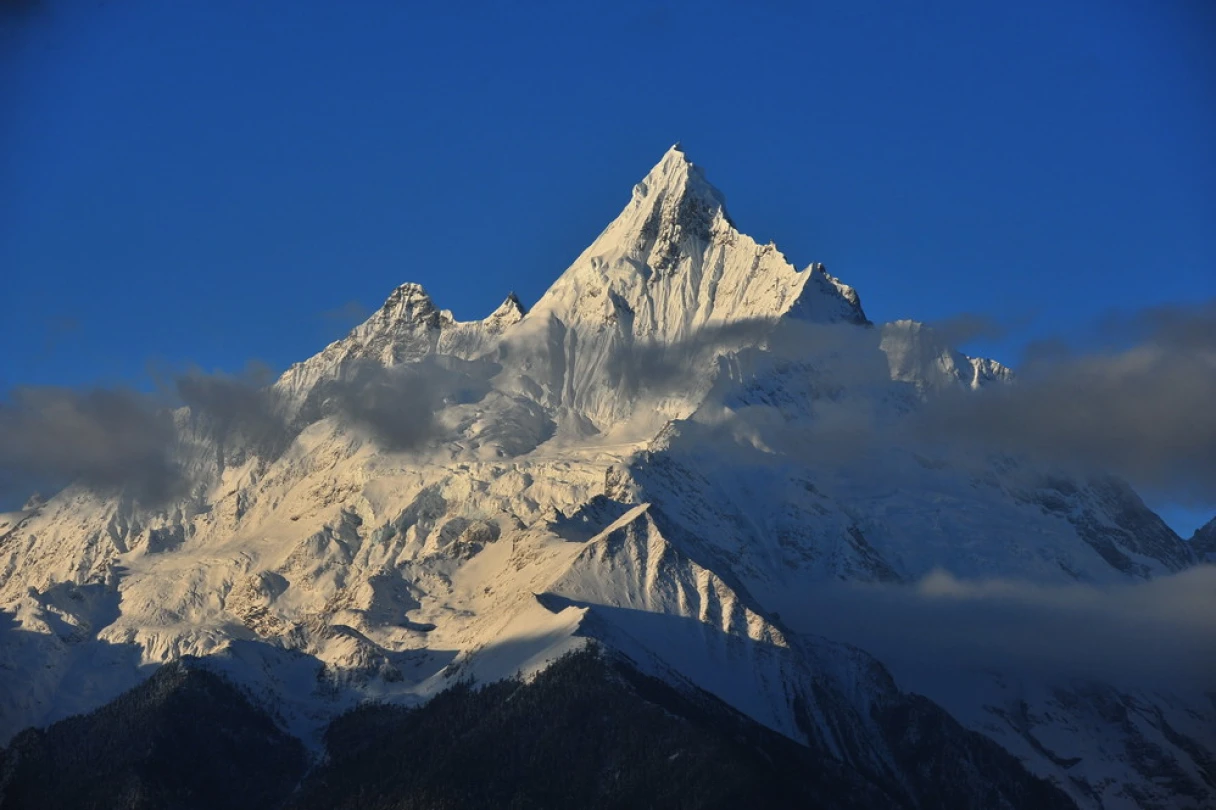
Entering Shangri-La, Meeting the Snow Mountain God—Meili
Entering Shangri-La, Meeting the Snow Mountain God—Meili Before setting foot on this land, I had pored over countless photos taken by seasoned travelers—those majestic snow-capped peaks, the azure skies, the prayer flags fluttering in the wind. They had already painted vivid images in my mind.
Continue reading...