2026: Back to Yunnan Again — My Seventh Trip with My Best Friend, Between Serene Jingmai and Bustling Banna
2026: Back to Yunnan Again — My Seventh Trip with My Best Friend, Between Serene Jingmai and Bustling Banna
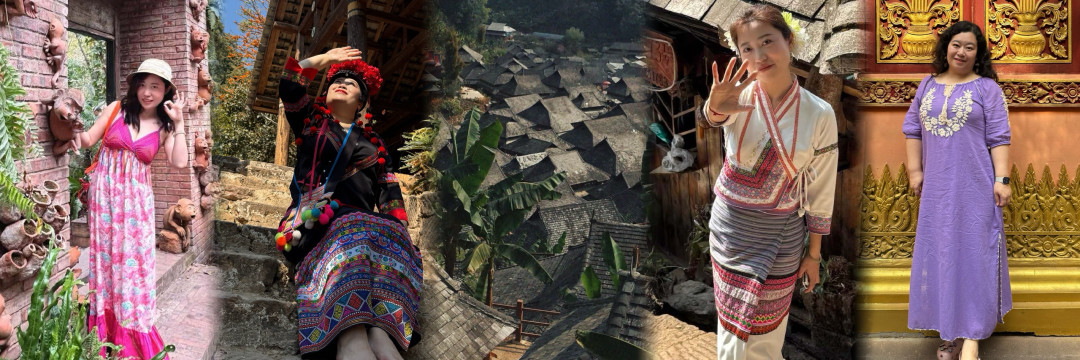
There’s a kind of travel called "going to Yunnan." This was my fourth time setting foot on this land, and every single time, it manages to surprise me anew. During the 2026 Spring Festival, my best friend of thirteen years and I set our sights on two completely different worlds — the ancient tea forests of Jingmai Mountain in Pu'er, and the tropical fireworks of Xishuangbanna. One is so quiet you can hear the tea leaves unfurling; the other is so lively it feels like the entire northeast of China has relocated to the banks of the Lancang River. This trip was a lot like our lives: sometimes you need to quietly sip a cup of tea, and other times you need to dive into the chaos for a barbecue.
The Beginning: A Movie, a Tea Mountain, and a Spontaneous Pact
When it comes to Jingmai Mountain, I have to thank the 2020 film Coffee or Tea? (original title: 一点就到家). In the movie, three young people grow coffee and run an e-commerce business deep in the mountains of Yunnan, and it planted a deep longing in me for those ancient tea forests, those towering trees, and the aroma of Yunnan coffee. As for Xishuangbanna, my initial impression was that it was a paradise for family trips, a microcosm of Southeast Asian vibes. How did it feel once I actually got there? Well, I'll save that for later.
About My Best Friend and Me: 13 Years of Chemistry, 50% of the Journey
My best friend and I go way back to 2013. We were hired at the same time, and from pre-job training onward, we ate and lived together. Over a decade later, no matter how life has changed, we've always been each other's rock. My mom even jokes, "She's your only friend." Every time I think of that, I can't help but smile.
When it comes to travel, we're a match made in heaven. We can sleep in until we naturally wake up, or get up at 4 a.m. to watch the sunrise. We can get lost in natural scenery, or spend half a day in a museum. We can walk quietly just the two of us, or gather a group of friends for some fun. Because of you, travel has endless possibilities.
Counting the places we've been together over the years: Jinan, Guangxi, Huashan, the Three Gorges, Taierzhuang, Sri Lanka, the Qinghai-Gansu Grand Loop, Xi'an, Changsha, Luoyang, Nanjing, Enshi, Harbin, Laojun Mountain, Chengdu, Jingdezhen, Kaifeng, Lishui, Quanzhou, Chongqing... Add this Yunnan trip, and it's over 20 journeys. And there's more to come.
Serene Jingmai Mountain: A Tea-Scented Secret Forgotten by Time
Why Jingmai Mountain?

As a "working stiff" who can only travel on holidays, figuring out how to avoid the crowds during peak season is a constant research project. Last time, the answer was Songyang Houshe Village in Lishui, Zhejiang. This time, I chose Jingmai Mountain in Lancang, Pu'er, Yunnan.
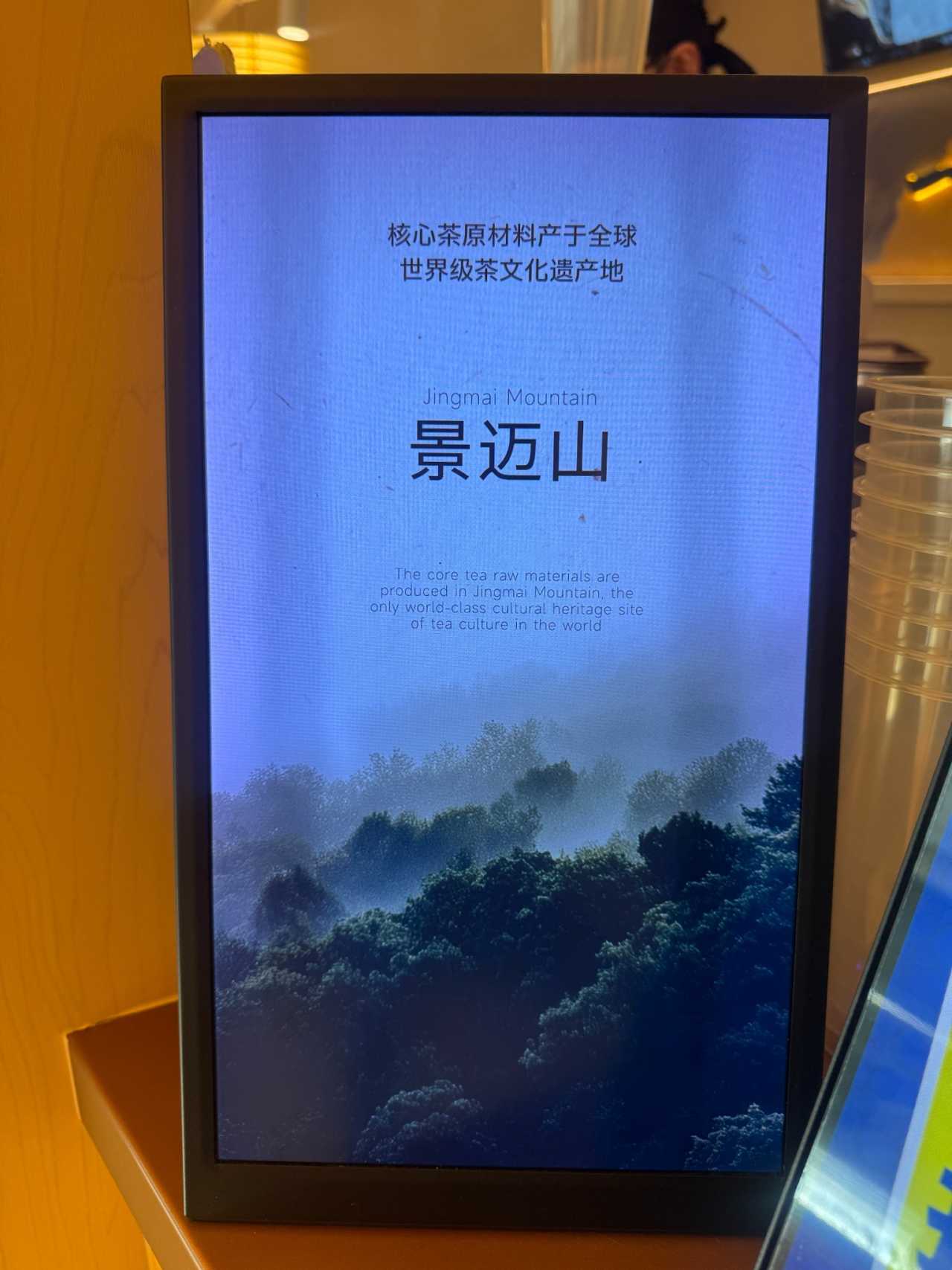
Jingmai Mountain sits near the Tropic of Cancer, where the Ailao Mountains, Wuliang Mountains, and Lancang River converge. Shielded by the Qinghai-Tibet Plateau and the Hengduan Mountains, the cold northern air currents can't reach here, allowing the tea plants of the Theaceae family to survive the Quaternary glaciation, making this a crucial origin of cultivated tea trees worldwide. Thousands of years ago, the ancestors of the Bulang and Dai peoples migrated here, discovered wild tea trees in the forest, and settled down, living for generations by growing tea under the forest canopy.
On September 17, 2023, the "Cultural Landscape of Old Tea Forests of the Jingmai Mountain in Pu'er" was inscribed on the World Heritage List, becoming the world's first tea-culture-themed World Heritage site. Many worried: Would World Heritage status mean commercialization? Would it lose its authenticity? But in 2026, Jingmai Mountain still maintains its original, hidden beauty. Coming here isn't just about drinking good tea; it's about slowing down — doing nothing is the real business of life.
How to Get to Jingmai Mountain?
Once you're in Yunnan, there are two main ways to reach Jingmai Mountain: self-driving (or renting a car) and public transport. Since it was just the two of us girls and some of the mountain roads aren't great, we chose public transport.
A special note: After passing Huimin Town and entering Jingmai Mountain, there's a stretch of bumpy stone road. Apparently, to protect the tea tree roots, they can't pave it with asphalt or cement. How bumpy? My best friend wrote a full-on rant in the car about it. But look at it this way: it forces you to slow down and enjoy the scenery along the way.
Public Transport Tips: - Follow the "Golden Peacock Ticketing" (金孔雀票务) mini-program on WeChat for various route options - We booked 20 days in advance for front-row seats on an 8- or 9-seat business van — pretty comfortable - Route: Pu'er High-Speed Rail Station → Jingmai Mountain, and Jingmai Mountain → Jinghong (Xishuangbanna) - Pickup point: About 100 meters from the exit of Pu'er High-Speed Rail Station - Drop-off points on Jingmai Mountain cover the entrances of all major villages - Drop-off point in Jinghong is at Xishuangbanna Bus Station, about 3-4 km from Gaozhuang
Where to Stay? — A Surprise in Wengji Ancient Village
Jingmai Mountain has 14 traditional villages, mainly divided into the Dai-dominated Jingmai Village and the Bulang-dominated Mangjing Village. Accommodation is concentrated in a few hamlets: Wengji, Nuogan, Mangjing, and Manghong. We chose Wengji Ancient Village and booked Wengji No. 69 Homestay in November 2025 for two consecutive nights. It turned out to be a very wise decision.
Holiday Booking Tips: 1. Book early — the earlier, the better the price. Choose options with free cancellation up to one day before, and if the price drops, cancel and rebook. 2. Compare with regular prices. I generally accept up to a 2x markup; anything 3-5x, I skip. 3. Compare across platforms: Qunar, eLong, Ctrip, Fliggy — whichever is cheapest.
Why Wengji No. 69: - Located in the center of the ancient village, convenient to everywhere - Only 3 rooms, clean and hygienic, with amenities comparable to chain hotels - Offers ethnic costume rentals, washed after each use — one of the few places in the village with this service - Breakfast rice noodles (米线) are amazing, free tea, and in the evening there's roasted milk and grilled tofu, perfect for chatting around the fire - The owner is an interesting soul who has ridden a motorcycle to Tibet and plays the guitar
Wengji Ancient Village: The Slow Life of the Bulang People
Wengji Ancient Village sits on Jingmai Mountain at an altitude of about 1,350 meters. The entire village has 80 households and 380 people, of whom 295 are Bulang. The village is built along the mountain slope, surrounded by ancient tea forests, with traditional stilted houses scattered in an orderly fashion. The roof decorations feature a pattern of one bud and two leaves — the totem of the Bulang people.
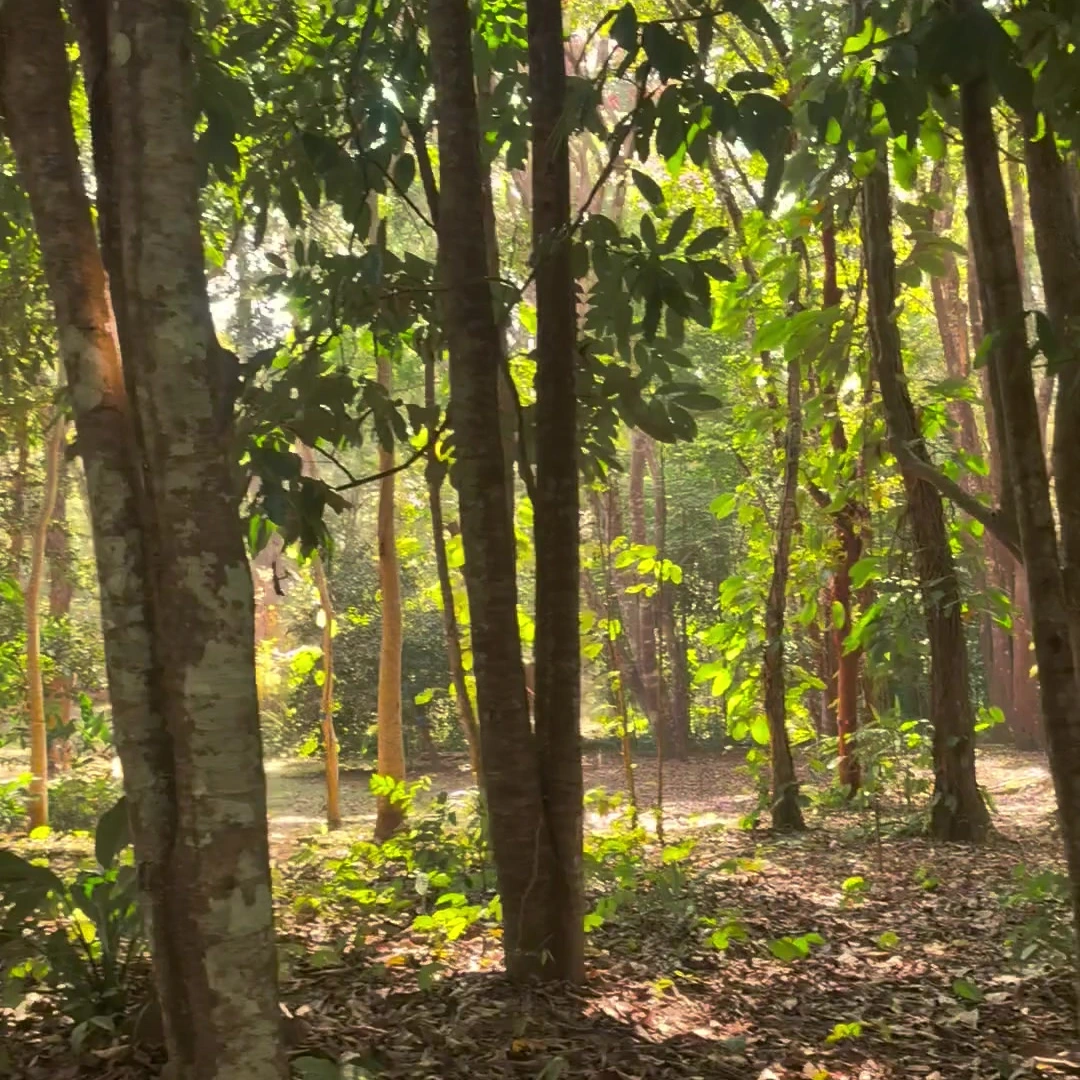
Here, we did three simple things:
① Chasing the Sunset: On Jingmai Mountain, watching the sunrise, the sea of clouds, and the sunset are the three great pleasures. We didn't feel like getting up early for the sunrise, and it wasn't the season for the sea of clouds, so we went for the painless sunset. Just find a high spot and enjoy the view.
② Temple Photoshoot: The Buddhist temple at the entrance of Wengji is where villagers hold Buddhist ceremonies, blending Bulang and Han Chinese Buddhist architectural styles. In the temple grounds, there's a 2,580-year-old cypress tree, said to be a transformed evil dragon, known as the "Ancient Cypress Listening to Sutras." I chose a Bulang costume, and my best friend picked a Dai one. We spent a beautiful afternoon taking photos.
③ Making Bean Pods and Tasting Coffee: On our last half-day, we just sat at the homestay entrance drinking coffee, playing with the local kids, and watching my best friend make handmade bean pod crafts — enjoying the pure bliss of doing nothing.
Nuogan Ancient Village: Dai Flavor at a Movie Location
Nuogan Ancient Village is a thousand-year-old Dai village at an altitude of about 1,450 meters. In the Dai language, "Nuogan" means "a place where gold falls into a pond" or "a place where deer drink water." The village has 100% preserved traditional stilted wooden buildings, with roof decorations featuring cow horns. Compared to Wengji, Nuogan is slightly more commercialized, with more trendy shops. We took a taxi round trip from Wengji (the homestay owner helped arrange a driver, 25 yuan per person one way, about 30 minutes), did a quick walk-through, and left.
Bustling Xishuangbanna: Starry Lights with a Strong Northeastern Flavor
Coming from Jingmai Mountain to Xishuangbanna, the contrast was jarring. One moment we were lost in the serene tranquility of the tea mountains, and the next we were dragging our suitcases on a three-kilometer hike through Gaozhuang — because of the traffic jam, because there were just too many people.
Gaozhuang Xishuangjing: Great Food, Beautiful Clothes
After dropping our bags, we consoled ourselves with a Dai-style barbecue. Based on Dianping reviews, we chose Xiaoyu Jinhuan Dai Barbecue (小玉金欢傣味烧烤). We ordered lemongrass grilled fish, grilled pork belly, oil-fried beef heart tube, and stir-fried rice noodles. After the bumpy ride, it tasted absolutely divine.

Full and happy, we wandered around Gaozhuang. The most famous spots here are the Great Golden Pagoda and the Starry Night Market. The night market is practically the birthplace of "travel photoshoots," with Dai-style assembly-line photography everywhere — bare shoulders, bare waists. After our ethnic costume experience on Jingmai Mountain, this assembly-line approach held zero appeal for us. Under my best friend's scornful gaze, I reluctantly took two "been here" photos. The flower float parades and other activities I'd researched? Abandoned due to the crowds.
But Gaozhuang has a hidden gem — Xiaxia's Summer Fantasy (夏夏的夏日狂想季) . The clothes here are abundant and gorgeous, especially the colorful camisoles. Across the entire Starry Night Market, this shop has the most and most unique clothing. They also have a Xiaohongshu (Little Red Book) store, but only a few items are available online. If you love pretty clothes, don't miss it. They close at 11 p.m.
Food Recommendation: Chun Mei (椿媚) Among Xishuangbanna's trendy restaurants, Chun Wuli (春武里), Chun Mei, and Wantai (婉泰) are the most famous. We chose Chun Mei at the Starry Night Market. We ordered Thai-style grilled skewers, Qingkang boat noodles, grilled shrimp balls, fried vegetables, and MaMaLao beef noodles. Everything was delicious — no misses at all. Note: You must take a number online in advance and only show up when your number is close. They stop taking numbers around 7 p.m.
Xishuangbanna Tropical Botanical Garden, Chinese Academy of Sciences: Green Overload, Great for Photos!
The Xishuangbanna Tropical Botanical Garden, Chinese Academy of Sciences, is located in Menglun Town, Mengla County. It's a national 5A scenic area, founded in 1959 by renowned botanist Cai Xitao. The garden covers about 1,125 hectares, houses over 14,000 species of living plants, and has 39 specialized plant zones.
Online recommendations say to tour the West Zone, take the park shuttle, and listen to the official guide. We took a different approach: no guide, no shuttle, just walking the West Zone. Recommended route: Enter and exit from the West Gate → Hundred Flowers Garden → Hot Air Balloon → Dipterocarpaceae Garden → Rare and Exotic Flowers Garden → Banyan Tree Garden → Palm Garden → Shade Plant Garden → Tree Garden. We walked and took photos. It reminded me a lot of the Royal Botanical Gardens in Sri Lanka, but with way more people — luckily, the park is big enough that you can always find a quiet corner.
Manting Park & General Buddhist Temple: More Photos in the Dai King's Royal Garden
Manting Park was once the royal garden of the Dai kings, with a history of over 1,300 years. "Manting" means "the village of flower planting." The Dai people also call it "Chunhuan," meaning "the village of the soul" — legend has it that a Dai princess was so captivated by the beauty here that she lost her soul.
It's still a huge photoshoot park, with cookie-cutter Dai girl assembly lines everywhere. But we wore the beautiful dresses we'd bought the day before at Xiaxia's Summer Fantasy. Sure, we were still taking photos, but with a different vibe.
The General Buddhist Temple is connected to Manting Park and is free to enter. Note: After visiting the temple, you need to show your ticket to return to Manting Park. Since the temple doesn't allow bare-shouldered camisoles, I did a quick walk-through on my own.
Can't Escape Yunnan? Then Go to the Provincial Museum
Yunnan during Spring Festival is incredibly popular. The return flight ticket was originally 2,000 yuan, and I just couldn't bring myself to pay that. Since we couldn't fly out right away, we decided to visit the Yunnan Provincial Museum instead.
To get out of Yunnan, we chose a "roundabout route" — take the high-speed train to Guiyang first, then fly from Guiyang back to Henan. After putting in a waitlist request for train tickets, we happily headed to the museum for some cultural immersion.
The new Yunnan Provincial Museum covers 150 acres (about 60,700 square meters) with a building area of 60,000 square meters. Its architecture is inspired by the traditional Yunnan民居 "one-seal" (一颗印) style, and its exterior shape comes from the weathered karst landscape. The museum houses 230,746 artifacts, including 14,122 precious items. From the Yuanmou Man, the Nanzhao Kingdom, to the Dali Kingdom, those familiar names flashed by like a movie.
Must-See Treasures: 1. Bronze Ox and Tiger Case (Warring States Period): A masterpiece of ancient Dian Kingdom bronze work. A large ox protects its calf while a tiger pounces on its tail, vividly showcasing the casting techniques of the Dian Kingdom. 2. Western Han Gilt Bronze Cowrie Container with Four Oxen and a Knight: An ancient Dian noble's "piggy bank." A gilded knight is surrounded by four bulls, symbolizing wealth and authority. 3. Gold Avalokitesvara (Guanyin) Standing Statue with Silver Backlight (Dali Kingdom): A treasure of Yunnan Buddhist art. The gold statue is paired with a silver backlight, with a unique design. 4. Silver-Gilt Garuda Standing Statue with Inlaid Pearls (Dali Kingdom): Unearthed in 1978 from the Qianxun Pagoda of the Chongsheng Temple. A gem among Yunnan Buddhist relics. 5. Song Dynasty Guo Xi's "Travelers Among Streams and Mountains" Scroll: A rare surviving work by the Northern Song landscape painting master. 6. Yuan Dynasty Huang Gongwang's "Visiting Dai Andao on the Shan Stream" Scroll: Together with Guo Xi's painting, these are the museum's calligraphy and painting treasures.
The Final Surprise: Guizhou-Style Red Sour Soup
Why fly out from Guiyang? Besides the fact that we couldn't escape Yunnan, the other reason was — Guizhou-style red sour soup! My last trip to Guizhou was in 2019, and I've been craving that red sour soup ever since. Guiyang Longdongbao Airport is very convenient, and we found a chain restaurant called Guichu Sour Soup Beef (贵厨酸汤牛肉). The two of us ate until we were stuffed, and it only cost 120 yuan.
In Conclusion: Running Away Is Nothing to Be Ashamed Of
This was the third consecutive year we traveled during Spring Festival. I used to think I should spend the New Year visiting relatives I only see once a year, but in recent years, I've learned not to force myself.
When I was a kid, I was asked about my grades. With the halo of a top university and graduate school, I was that annoying "other people's child." After starting work, the questions turned to promotions and income. People only see the glamorous side and think my complaints are just whining. Now, as an older, single, unmarried "young lady," the topic has shifted to marriage and children. Those "for your own good" questions with no sense of boundaries are utterly exhausting.
I'm incredibly grateful to my open-minded parents for supporting my Spring Festival travels. Running away is nothing to be ashamed of. Escape the low-pressure small talk, let travel heal you, and find different scenery and joy.
The beauty of Yunnan goes beyond its famous attractions. It's better to choose some counties, some villages, and explore slowly. I haven't been to the hot IPs like Lijiang, Lugu Lake, or Jade Dragon Snow Mountain yet, but I know there's always a next time for Yunnan.
Travel Tips Summary: - Stay at least one night on Jingmai Mountain to truly soak it in — don't just rush through - For public transport, try "Golden Peacock Ticketing" (金孔雀票务); 8-seat business vans are quite comfortable - Book holiday accommodation early, compare prices across platforms, and choose ones with free cancellation - Take a number online in advance for Xishuangbanna's trendy restaurants to avoid waiting in line - If return flights are expensive, consider a "roundabout route" via a nearby city
(This article is based on real travel experiences. Some data is sourced from public information.)
You should also read:

God’s Abandoned Palette: A Self-Drive Journey Through Yunnan’s Dongchuan Red Land
God’s Abandoned Palette: A Self-Drive Journey Through Yunnan’s Dongchuan Red Land Travel has never been about reaching some distant geographic coordinate. It’s about encountering, along the way, the version of yourself buried beneath the rubble of daily routine. During this May Day holiday, I finally…
Continue reading...
Two Girls' Graduation Trip: Dali and Shuanglang – A Poetic Farewell to Mountains and Sea
Two Girls' Graduation Trip: Dali and Shuanglang – A Poetic Farewell to Mountains and Sea Preface: Catching the Tail of Youth, Heading South During our senior year of college, my roommate and I – two girls studying in Beijing – decided to bid farewell to…
Continue reading...
Body in Hell, Heart in Heaven: A Pilgrimage Through Tiger Leaping Gorge — A Dialogue Between Heaven and Earth
Body in Hell, Heart in Heaven: A Pilgrimage Through Tiger Leaping Gorge — A Dialogue Between Heaven and Earth Introduction: When the Gorge Splits Open Beneath Your Feet Some say Tiger Leaping Gorge is the closest place on Earth to the border between "hell" and…
Continue reading...