60 Hours in Mangshi: An Extreme Love Affair with Food
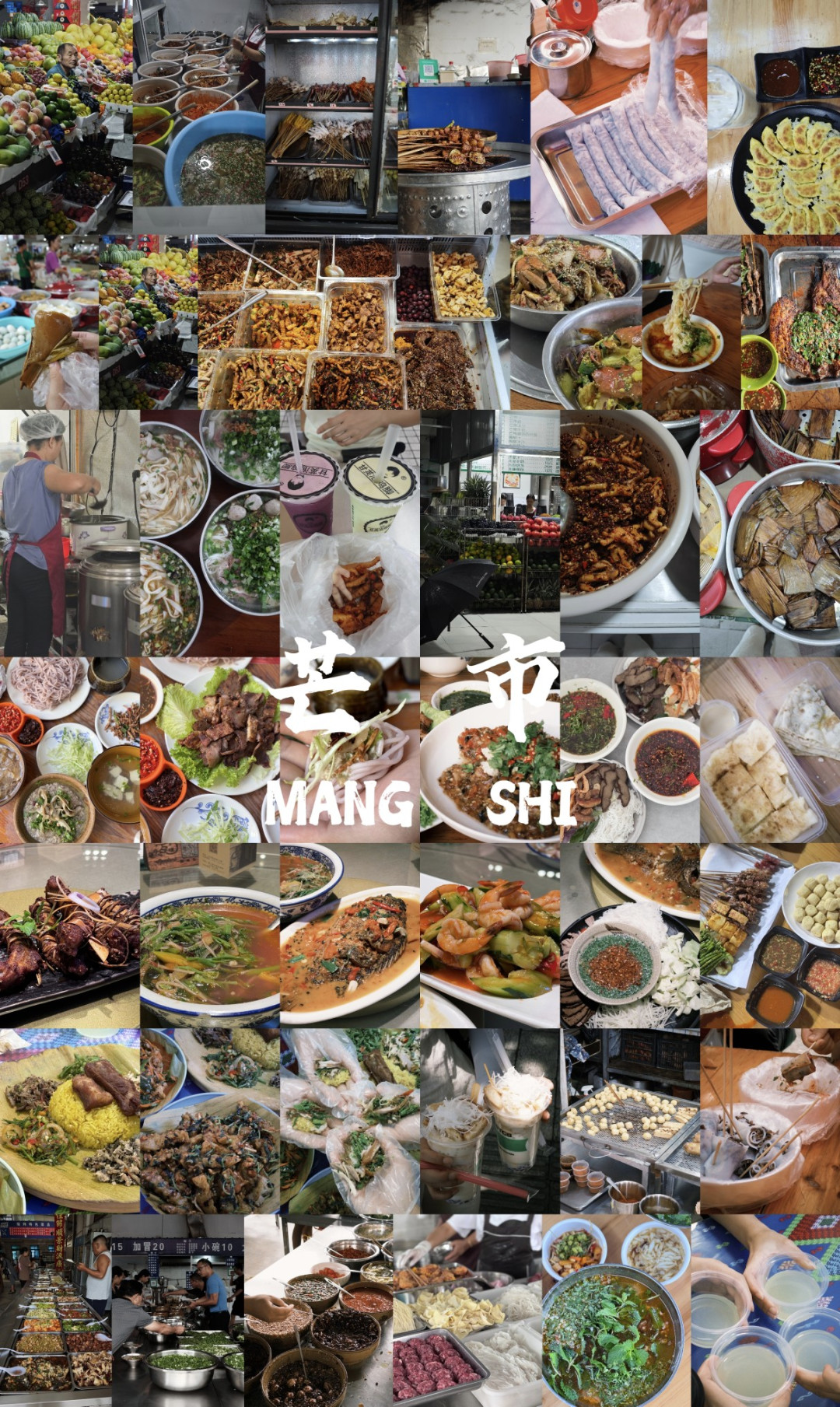
60 Hours in Mangshi: An Extreme Love Affair with Food
Some cities are meant to be seen with your eyes. Others are meant to be tasted with your tongue. Mangshi is unmistakably the latter.
When "military-style tourism" became a buzzword, I found myself growing increasingly disinterested in this superficial, check-the-box approach to travel. In the last two years, I've become obsessed with slipping into small towns and living like a local. Last year it was Rongjiang. This year, I started with Hohhot, and then came this border town tucked away in western Yunnan — Mangshi.
To be honest, Mangshi's "hype" has cooled down quite a bit this year. As long as you avoid major holidays, airfare is remarkably affordable. I originally planned to go during the Dragon Boat Festival, but my flight was mysteriously canceled, which prompted an angry phone call demanding an explanation. Fortunately, fate had other plans — after summer vacation, I unexpectedly got an extra day off for a heatwave, and finally managed to schedule my Mangshi trip.
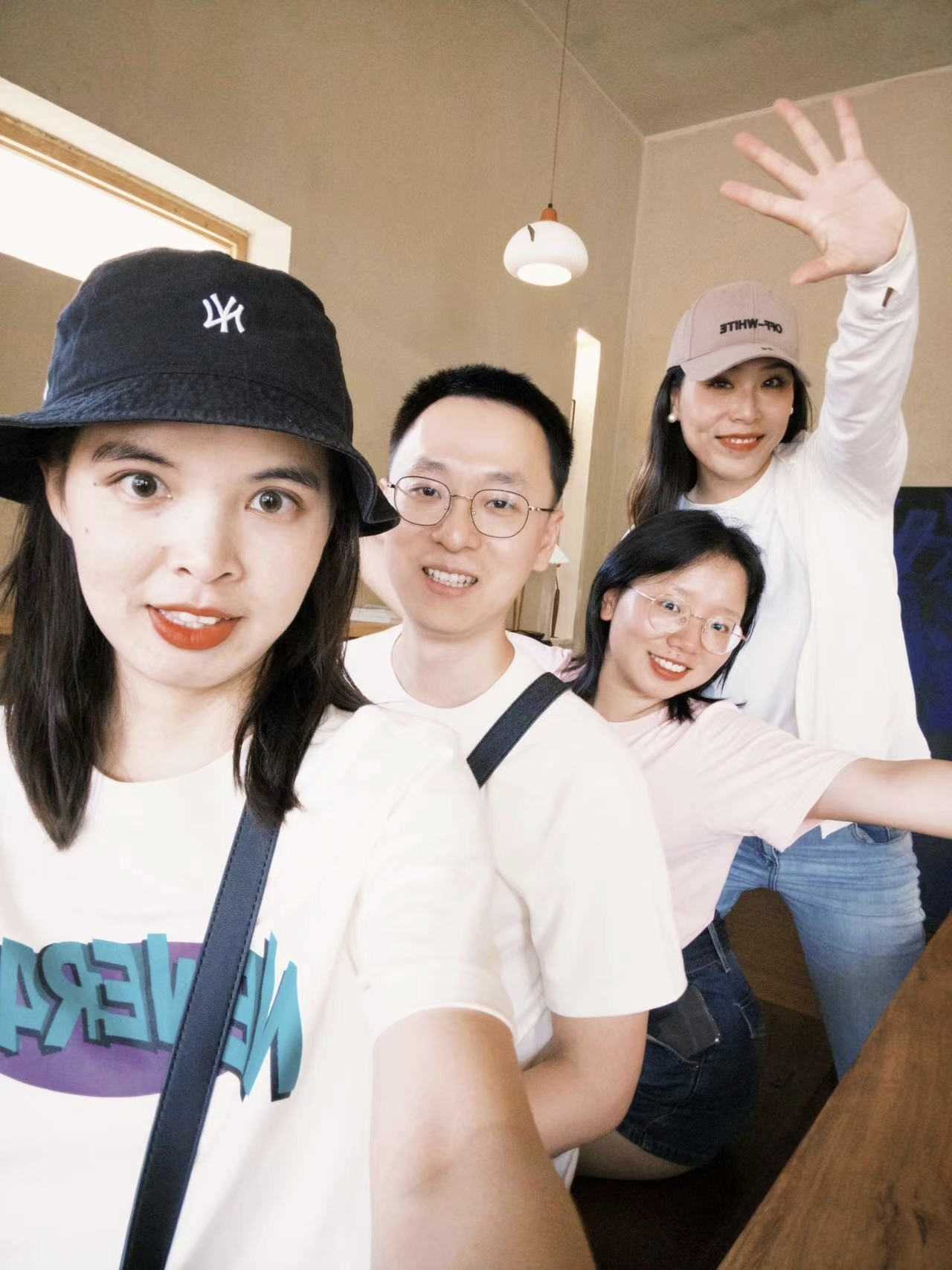
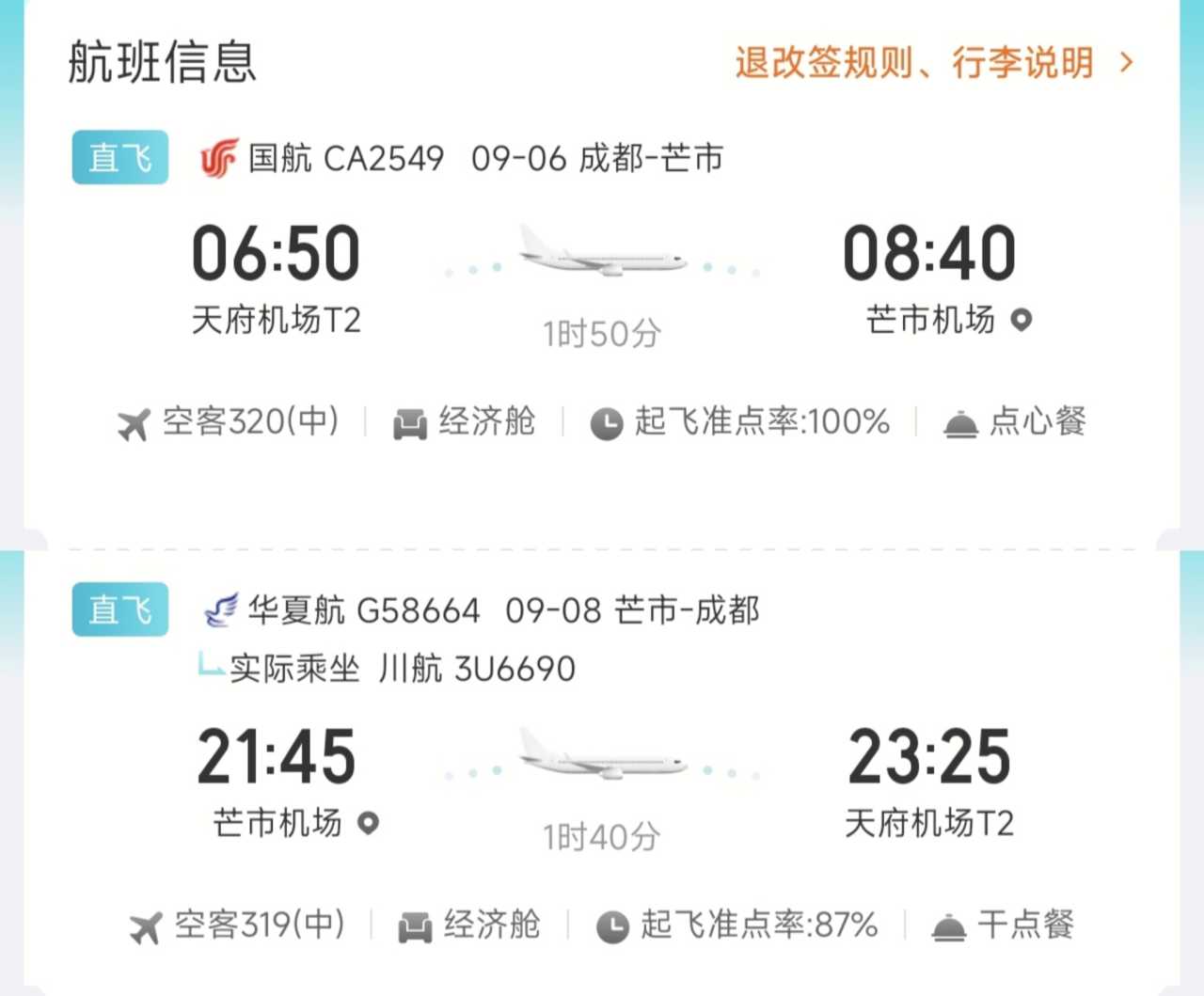
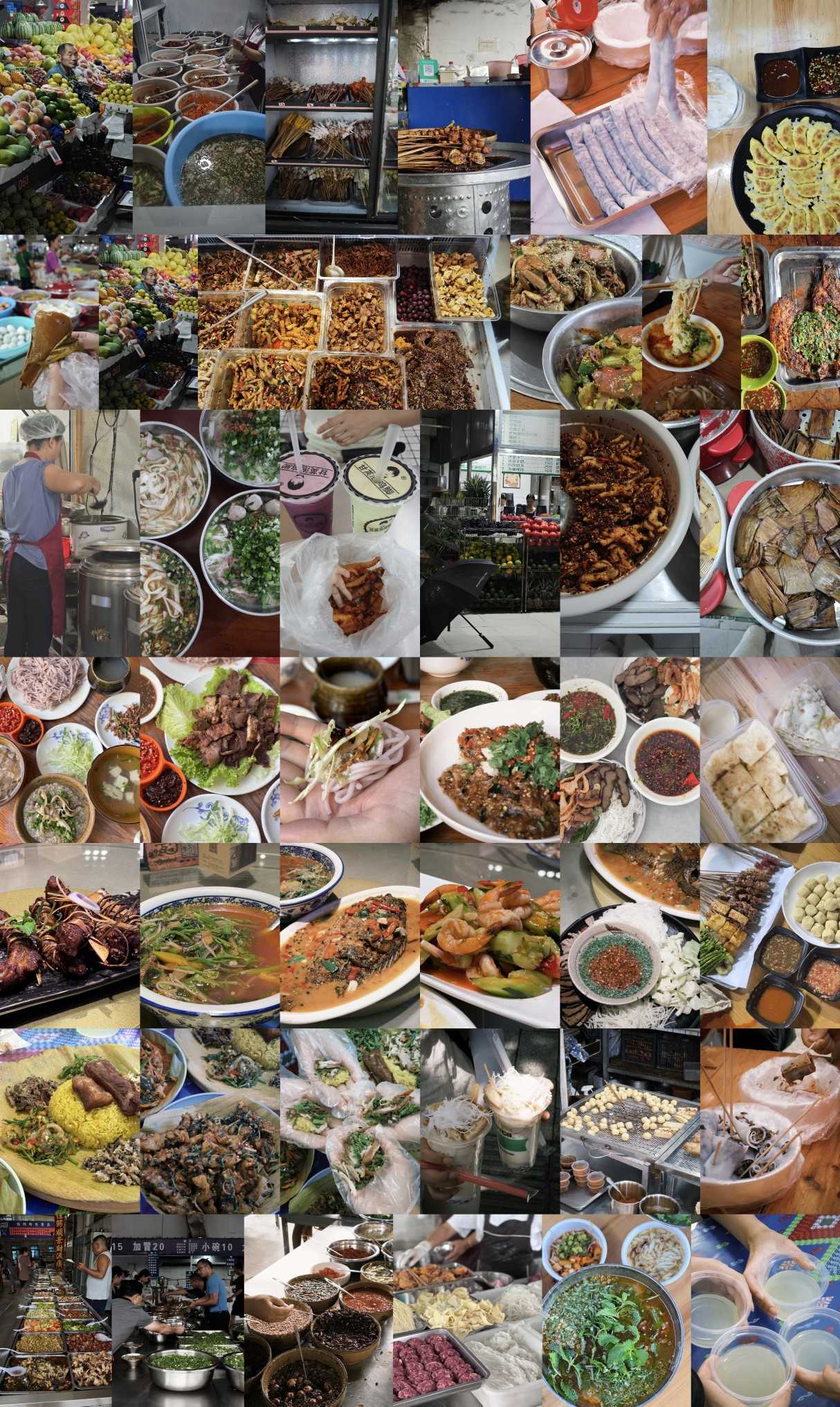
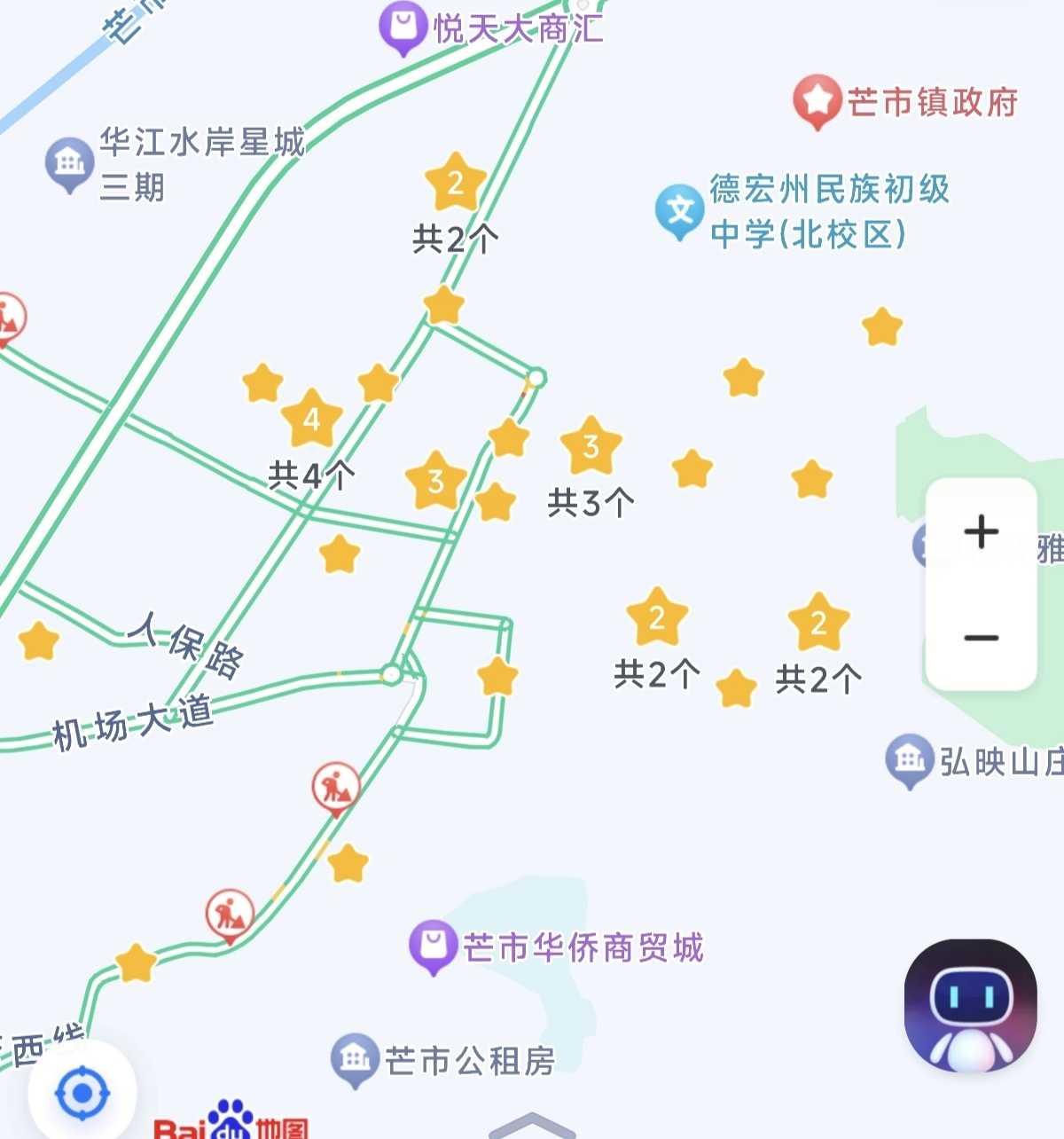
Even better, this trip happened to avoid the Mid-Autumn Festival holiday. My colleague Xiao Peng took Friday off, which gave us a full three days when combined with the weekend. Off-peak airfare was ridiculously cheap — just 600 RMB round trip. When you go to Mangshi, there's only one goal: to eat! One person's appetite is limited, so I had to recruit foodie teammates. Two days before departure, I frantically tried to find companions — and somehow managed to assemble four "bottomless pits." Thus, this elite little group was officially formed, with a mission: 60 hours, 30 food spots.
The team roster: Captain Xiao Shen (that's me), pack mule Peng Goushi, food excavator Xiao Weiwei No. 1, and phone photographer Xiao Xiongxiong. There was also a hidden boss, Xiao Weiwei No. 2 — though she only joined us for two meals, she was the true mastermind behind the scenes. As a local food connoisseur, she recommended at least 20 places in one go, and even snuck us into a Jingpo ethnic group's Manau Zongge dance gathering. The depth of experience was off the charts.
First Impressions of Mangshi: Not Busy, Really Not Busy
Mangshi is small — so small that it takes only 20 minutes from the airport to the city center. Yet Mangshi is also vast — so vast that even after three days of relentless eating, we still had a long list of places we never got to visit.
This city is the capital of the Dehong Dai and Jingpo Autonomous Prefecture, where multiple ethnic groups — Dai, Jingpo, Achang, De'ang, and others — coexist. In the Dai language, it's called "Meng Huan," meaning "City of Dawn" — legend says that when the Buddha arrived here, the sky had just turned light.
Mangshi's street layout is simple: four main north-south boulevards — Golden Pagoda Avenue, Unity Avenue, Mangshi Avenue, and Golden Peacock Avenue — connected by countless horizontal alleyways. The roadsides are lined with tall palm trees, mixed with mango, longan, and jackfruit trees. Apparently, the city government even picks the ripe fruit and distributes it to residents. How adorable is that?
Many people say Mangshi resembles Myanmar or Thailand, but I disagree. Mangshi is Mangshi. It doesn't need to exist because it looks like something else, and it certainly doesn't need fame by comparison.
Day 1: A Sacred Ritual Beginning with Sour Soup Beef
Yin Family Sour Soup Beef | Breakfast
Skip the airplane food — start with your first Mangshi breakfast. As soon as we landed, without even dropping off our luggage, we headed straight to Yin Family, located on the main road from the airport to the city center.
This breakfast spot was enthusiastically recommended by a local girl. Later, every taxi driver would passionately endorse it, insisting that locals never go to the other trendy spot — they only recognize Yin Family.
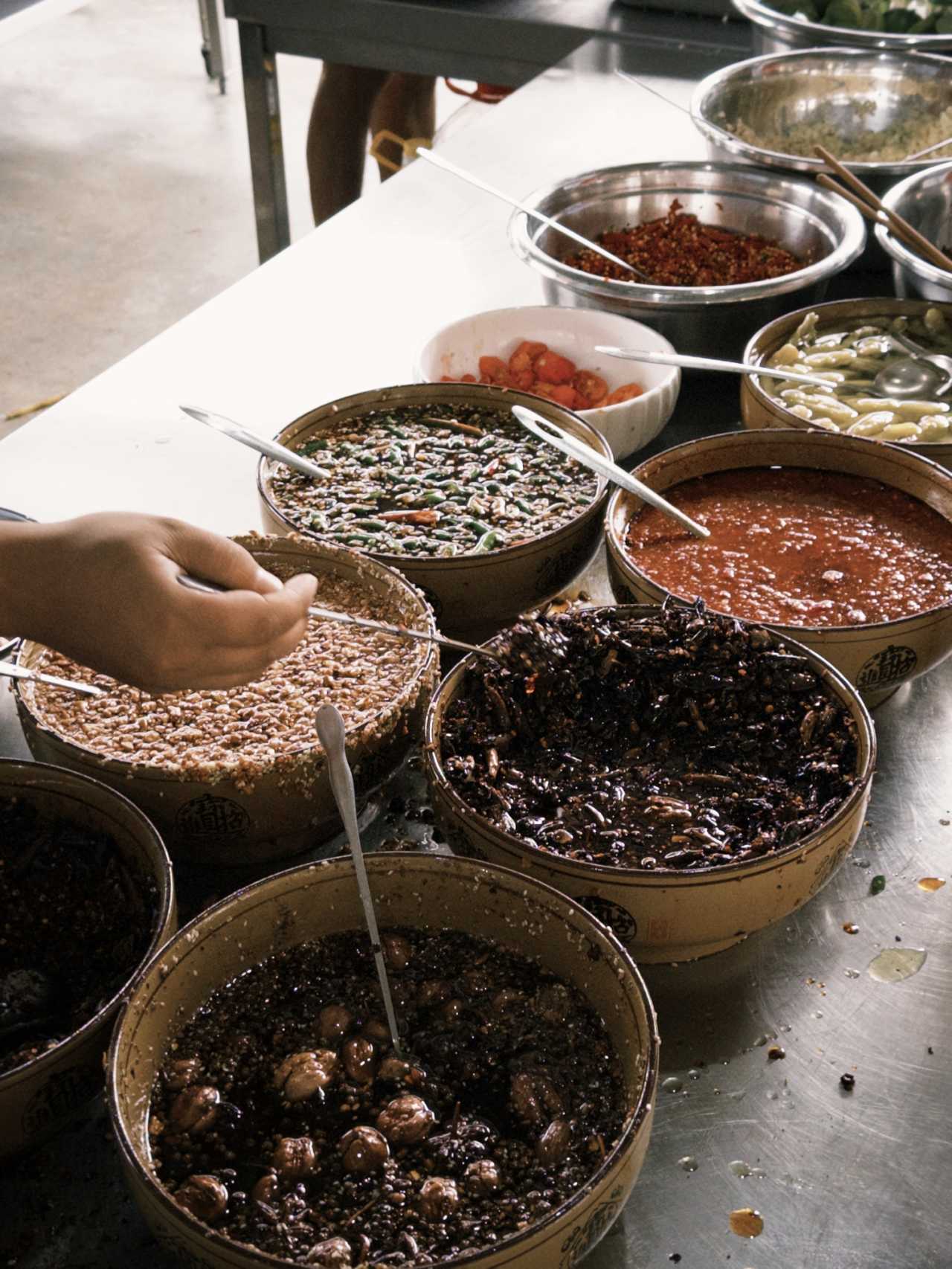
Walking through the door, we were stunned by the massive seasoning station — a full row of at least a dozen options. Garlic oil, Sichuan pepper oil, chili oil, chili vinegar, ground chili, pickled vegetables, Litsea cubeba... and those tiny little things called "shuanshuanla" (a variety of chili pepper), which I later learned is a Dehong specialty and one of the spiciest chilies in China.
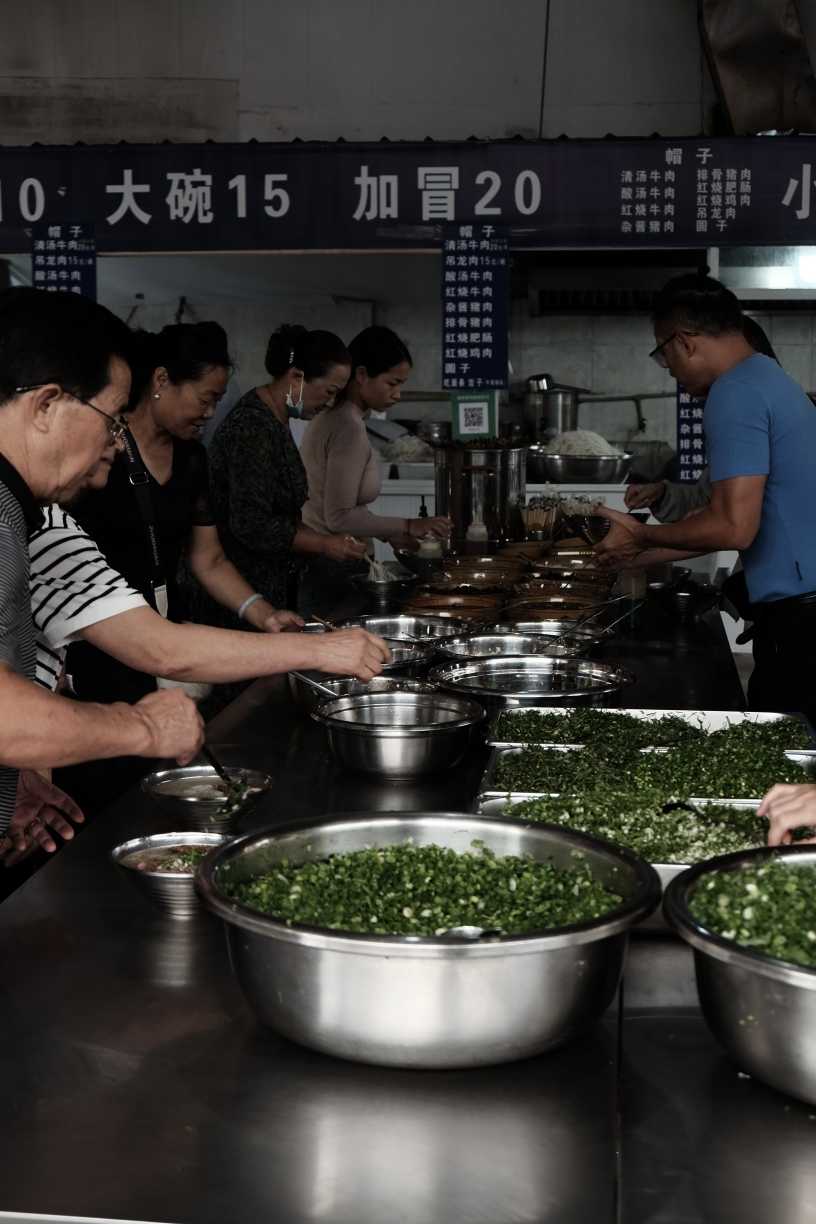
The toppings were even more extravagant: scallions, cilantro, celery, lemongrass, kaffir lime leaves, mint, and finger limes — all served in metal basins on the table.
The main ingredients completely confused us four out-of-towners. When we were ordering in line, there was no time to ask questions. Later, Xiao Weiwei No. 2 explained that rice noodles come in wide, thin, dried, and Tengchong varieties, and rice vermicelli has several types as well. Because we didn't know the ropes, we overstuffed ourselves on our first meal — all four of us ordered the deluxe version with added beef loin. In reality, even without the extra beef, the broth itself was packed with various meat toppings and was already incredibly delicious.
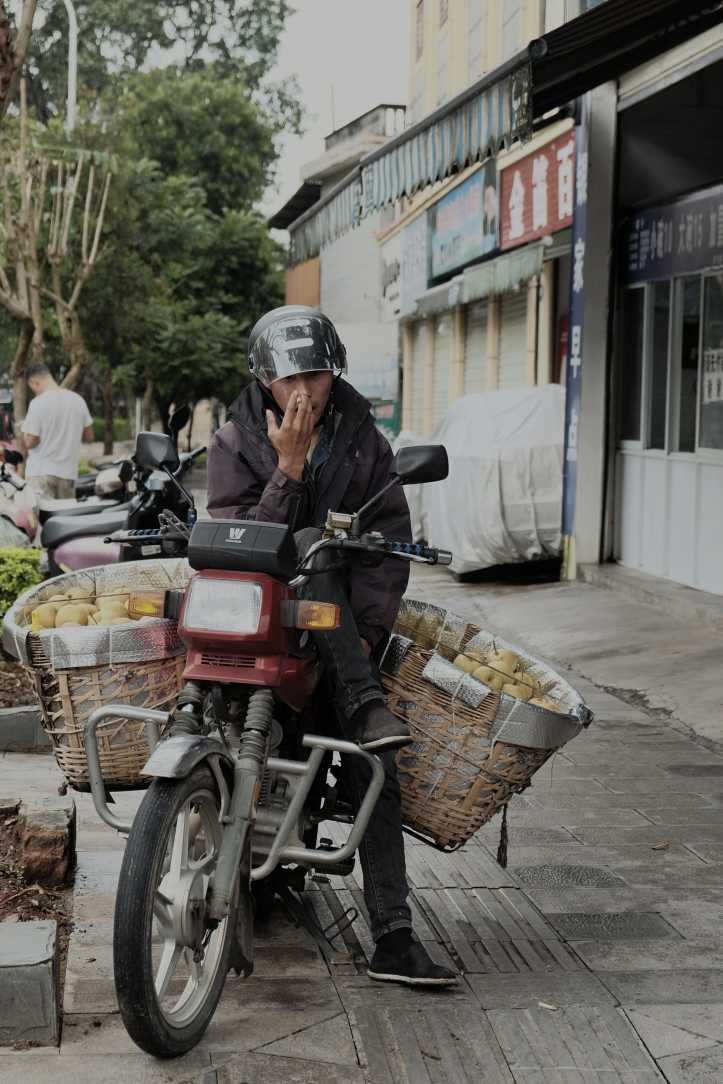
Beyond the seasonings, there were four or five types of pickled vegetables and a cup of refreshing "cool shrimp" (liang xia, a sweet dessert, not actual shrimp) to drink. After finishing, we saw a pear vendor leisurely smoking a cigarette, and suddenly I understood the Mangshi mindset — Mangshi isn't busy; life moves at a pace that makes you envious. Several locals told me, "We never save money. Whatever we earn, we spend on food." I absolutely love that attitude toward life.
Rating: ⭐⭐⭐⭐⭐ Highly Recommended
Keduomi Snack Shop | Jingpo Ethnic Cuisine
After dropping off our luggage and resting briefly, we headed straight for the Jingpo snack shop "Keduomi." The chef, an auntie wearing a distinctive little headscarf, immediately looked authentically ethnic.
Must-order: hand-grabbed rice. The first bite mixed all the ingredients together. I couldn't identify the type of spiciness, but it was tolerable, and my taste buds instantly came alive. Tasting each component individually, I noticed they all had a "hidden heat" — spicy without visible chilies, which was incredibly satisfying. The pickled vegetable mashed potato and passionfruit pounded chicken feet were also unique — sauce-based snacks with a sour-spicy profile that you probably can't find outside of Mangshi.
Our companion Xiao Xiongxiong loved it, but personally, I prefer lighter, cleaner flavors, so I wasn't particularly obsessed.
Being clueless out-of-towners, we recklessly ordered ke li lao juice (a bitter local drink). The server warned us, "This is a bit bitter — you might not like it." Driven by our commitment to deep immersion, we insisted on adding it to our order, and even asked for less sugar. While drinking it, we could only console ourselves: you reap what you sow, and bitter things are good for clearing internal heat.
Rating: ⭐⭐⭐ (In any other place, this would be four stars, but against Mangshi's backdrop of incredible food everywhere, it has to take a slight hit)
Mei Zi Coffee | A Hidden Gem in a Dilapidated Building

Mangshi's afternoon heat, while still warm, was much more bearable than Chengdu's 39°C (102°F). We made our way to Mei Zi Coffee — tucked away in a "dangerous building" on Unity Avenue. And I mean truly dangerous — the neighboring building had already been demolished, and I'm not sure this one will still be standing next time we visit.
Passing through the demolished walls and climbing a steel staircase, we found a completely different world upstairs. The cinnamon latte had an intense cinnamon flavor, while the sea salt caramel carried a subtle coconut fragrance. What surprised me most was the seawater ecological fish tank — I stared at it for a long time.
Rating: ⭐⭐⭐⭐
Tree-Wrapped Pagoda | The Power of Life
This pagoda sits in the city center, and we passed by it countless times. We made a special trip to see it on the first afternoon, and then again on the last afternoon — it's my favorite among Mangshi's named attractions.
Built during the Kangxi era of the Qing Dynasty, this is a small brick-and-stone pagoda belonging to the Theravada Buddhist tradition. It consists of one main pagoda and four smaller ones. Abandoned due to war, over a hundred years later, banyan tree roots had completely enveloped it, creating a unique spectacle. Standing beneath the tree, you can feel the power of life.
Meng Huan Old Lady | Sweet Enough to Make You Doubt Reality
At the entrance of the Baiste Food Court, the "paoluda" (a Burmese coconut drink) is the signature item. The three of us, curious as cats, crowded around to see what was actually in it, but after staring for ages, we still couldn't figure it out. We repeatedly emphasized "less sugar," but still ended up with two cups of "French-style desserts" that were off-the-charts sweet. We later learned that paoluda is inherently very sweet — you have to ask for less condensed milk.
Rating: Paoluda ⭐⭐
Hongli Comprehensive Market | The Scent of Everyday Life
How can you come to Yunnan and not visit a market? Mangshi is full of vegetable markets, and Hongli is one of the more famous ones. We went on the first afternoon, but by then there wasn't much left, so on the last morning, Xiao Peng and I made a special return trip to buy local specialties.
The market had all kinds of fruits, along with spices like lemongrass and Litsea cubeba everywhere. There were also glutinous rice cakes whose names I couldn't identify — incredibly chewy and springy. As we walked out, we spotted a corner full of everyday life charm, and several of us pulled out our phones and cameras.
Market Rice Rolls | An Old Lady's Ritual
On a street next to the market, there was a rice roll stall. But more than the rice rolls themselves, I fell in love with the old lady selling them — 70 years old, and smiling the whole time. Despite running just a tiny stall, she ceremoniously set up a table and stools for us. When she saw that the four of us couldn't even finish one rice roll because we were too full, she chatted with us.
The rice rolls were filled with wood ear mushrooms. The old lady said she had washed them many times to ensure they were perfectly clean. The dipping sauce was very Mangshi-style — a tomato-based sauce with a hint of spiciness and a touch of sweetness. Unfortunately, we were just too stuffed to finish, and I felt a bit guilty about it.
Rating: ⭐⭐⭐ (It's actually quite good — probably my fullness affected the rating)
Rong Rong Hair Wash | The Ultimate Summer Pleasure
After the market, it was only around 4 PM. We went back to the hotel to rest, then decided to experience one of Mangshi's signature activities — a hair wash salon! Is there anything more relaxing than lying in an air-conditioned room on a summer afternoon while someone massages your head? Mangshi's most famous one is Sun House, but we unanimously agreed that the closest one to our hotel was the best choice. The next afternoon, we chose Rong Rong again.
Rating: ⭐⭐⭐⭐⭐ Highly Recommended
Xiao Wazha | A Dai Ethnic Feast
Our local boss, Weiwei No. 2, brought us here. Just the name alone sounds authentically Dai. Every single dish was a classic.
Lemongrass Grilled Ribs: Before the dish even arrived at the table, the aroma of lemongrass had already hit our taste buds. We planned to wait until all the dishes were served to take a group photo before eating, but we couldn't resist. Exchanging glances, we silently agreed to dig in. The summer fragrance of lemongrass perfectly balanced the greasiness of the grilled ribs. One bite, and your mouth is filled with the Maillard reaction — the meaty aroma and fat, blended with the refreshing scent of lemongrass.
Mixed Vegetable Soup: A chaotic medley of vegetables cooked together — most of the greens I had never seen before. Melon tips, baby squash, amaranth, mixed with small cilantro, large cilantro, ginger, scallions, lemongrass, Vietnamese coriander, and bird's eye chilies. The highlight is the fresh, vibrant fragrance of the herbs — not dried spices, but fresh, bold flavors.
Passionfruit Braised Fish: I would crown this the number one tilapia dish! As someone from Panzhihua, I was forced to eat tilapia by my dad as a kid, and I practically blacklisted it. But this dish completely changed my mind — the fish is first fried in oil, then cooked with a special passionfruit sauce. The fishy taste is completely suppressed, and the sweet-sour fruit flavor is utterly addictive.
Dai-Style Shrimp Balls: Sour with a hint of sweetness. I loved the cucumber in it, while Xiao Xiongxiong preferred the shrimp balls themselves.
Lemon "Sapian" (a Dai cold noodle dish): As our first experience with sapian, the boss recommended starting with the more approachable lemon version. When we saw the "shuanshuanla" chili on the plate, our Sichuan DNA was activated. To prove that Sichuanese people aren't afraid of spice, Xiao Weiwei stabbed the chili with her chopsticks, wrapped a bite, and within ten seconds her eyes were red, her face was flushed, and she was begging for water — her throat was burning. Curiosity killed the cat. As for the sapian itself, at first we were afraid to dig deep into the bowl, thinking it was bland. But once we mixed it, we realized the flavor was hiding at the bottom. The lemon fragrance was perfect for summer.
Rating: ⭐⭐⭐⭐⭐ Highly Recommended
Manau Zongge | The Peak of Square Dancing
Too full to move, the girl took us to do some square dancing — Jingpo ethnic style! There was even a conductor directing everyone into intricate formations. In one hour, we somehow clocked 20,000 steps. Across the street was Mangshi Square, with the China-Myanmar Friendship Memorial accompanying a crescent moon — a uniquely charming scene.
Buerjia Grilled Meat | The Dipping Sauce Is the Soul
The girl took us to her private grilled meat spot. The meat itself wasn't particularly special — what made it special was the dipping sauce, especially the pickled vegetable paste dip.
Rating: ⭐⭐⭐
Day 2: From Hand-Eaten Rice Noodles to Live Crabs
Husa Achang Hand-Eaten Rice Noodles | Rice Noodles You Eat with Your Hands
In the morning, we wanted sapian, but when we arrived at the shop at 10 AM, the owner said they wouldn't start selling until 11. We decisively pivoted to hand-eaten rice noodles.
Rice noodles you eat with your hands! We ordered the pork version, and when it arrived, there were 5678 bowls and plates — quite a shock for a Sichuan girl. The noodles were made from red rice, soft and delicious. Various dipping sauces, a pile of toppings — you scoop it all up in your hand and eat it in one bite. I was afraid it might be too strange to stomach, but I was wrong — it was incredibly delicious! We also ordered their special grilled meat — pork belly with beef tongue was even better than the barbecue we had specifically gone out for the day before.
Rating: ⭐⭐⭐⭐⭐ Very unique, worth trying
Authentic Zhefang Sapian | First Taste of Bitter Sapian
I thought we wouldn't get to try sapian today, but the map showed another shop right next to the market. We ordered one bitter sapian and one spicy oil sapian. I preferred the spicy oil version — very aromatic. But the bitter sapian was a must-try — no weird taste, just the flavor of meat and seasonings with a slight bitterness. Watching the preparation process using the bitter intestines, my scalp tingled a bit.
Rating: ⭐⭐⭐⭐⭐ Very unique, worth trying
Ahe Coffee Bodhi Shop | Recommended by the Tourism Director
Tired from walking, we found Ahe Coffee, recommended by the local tourism director. Actually, the recommendation was for their countryside branch, where you can enjoy coffee overlooking wheat fields, but that was a bit far, so we chose the Bodhi shop. We came twice and ordered six different drinks. The most memorable ones were the jackfruit latte (with a jackfruit ice cream inside), the rice milk latte (good at first, but got a bit cloying halfway through), the wampee sparkling water (tropical fruit with soda, very summery), and the white peach coconut juice (with a salty sea breeze flavor).
The shop has many stamps, but they're not displayed — you have to ask the staff. We didn't know this the first day, so we had to go back again the next day.
Rating: ⭐⭐⭐⭐ (Could add another star for the owner's thoughtfulness)
Golden Pagoda and Silver Pagoda | Light and Shadow at Sunset
You should definitely visit the Golden Pagoda and Silver Pagoda later in the day. We went back in the afternoon to visit Rong Rong again and even took a nap, then set out around 5 PM.
The Golden Pagoda is said to be Asia's largest hollow golden pagoda, resplendent and magnificent. Inside, it's like a small Buddhist museum, filled with Buddha statues. There were even freshly fallen mangoes on the ground. We encountered a big white rabbit — huge and fat, completely unafraid of people.
The Silver Pagoda is purely a tourist photo spot. While waiting for sunset, there was an open area nearby overlooking a river valley. We caught the last rays of sunset and took 360-degree photos. My favorite was the one where the silver pagoda, enhanced by the light and shadow, took on a historical quality. Before leaving, we looked back at the Golden Pagoda from the classic vantage point — the setting sun's glow striking the golden pagoda, making it shine brilliantly.
Yimianzhiyuan | Burmese Snacks
We were too hungry to wait for the sunset, so we left. The girl recommended the cheese "swept flatbread" at Yimianzhiyuan. We planned to get it to go, but once we walked in, we couldn't leave. We ordered the swept flatbread and milk cake, then added Burmese oil noodles on top. They were so good that the next night, Xiao Peng and I went back for potstickers and paoluda (I'll probably never eat paoluda again — even with less condensed milk, it's still not good).
Rating: ⭐⭐⭐⭐
Mangshi Natural Live Crabs | The Clash of Spicy and Curry
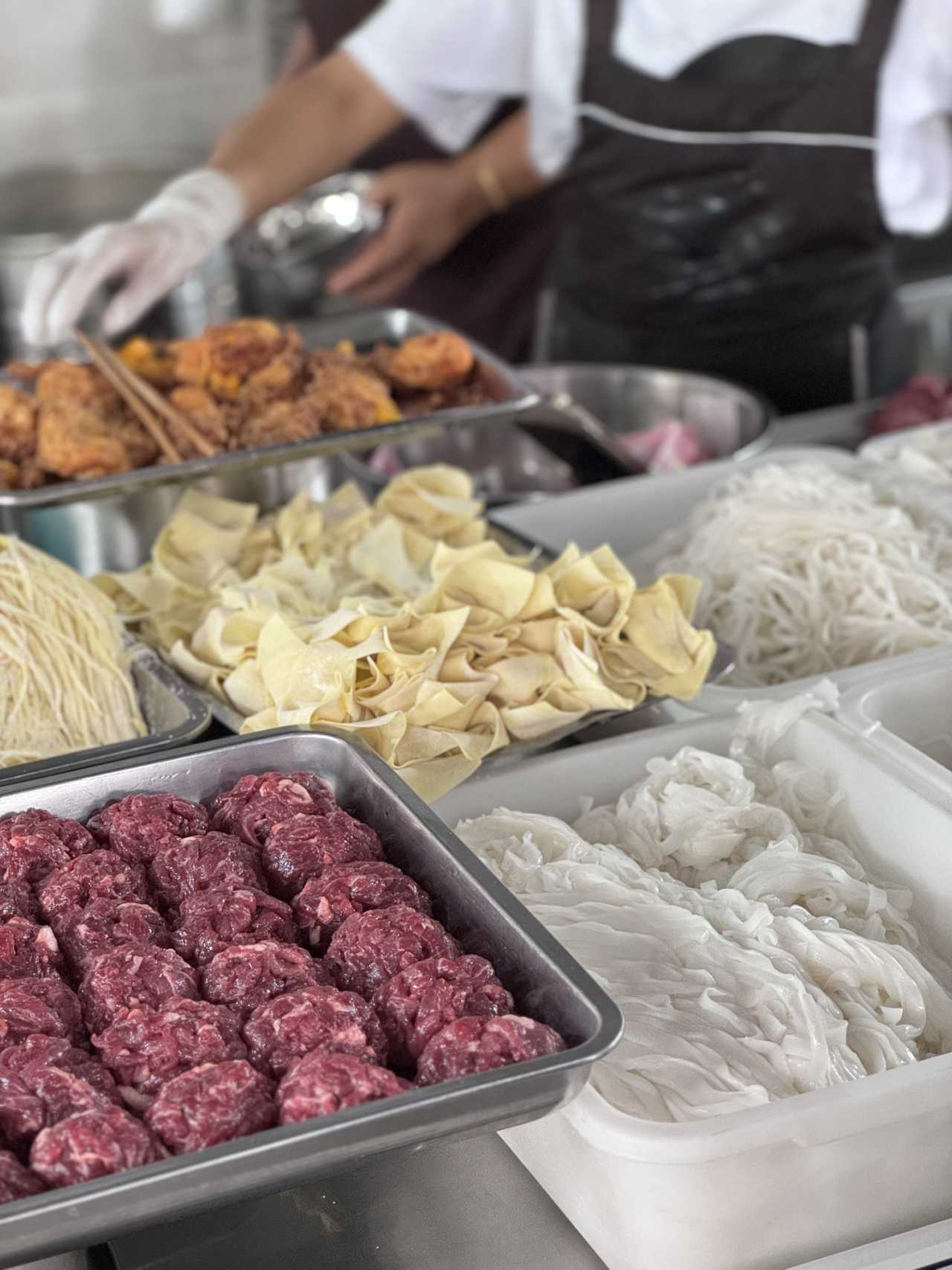
Despite the name "live crabs," you don't eat them alive — you pick them while they're still alive. The owner was very nice and said four pounds would be enough for four people, but we got greedy and ordered five pounds. The male crabs had sweet, tender meat, while the female crabs were all full of roe. We ordered two flavors — spicy and curry. The spicy version used a ton of spices I couldn't name, while the curry was surprisingly light and refreshing.
That said, locals don't seem to be particularly fond of this place — several ride-hailing drivers told us they don't eat here often.
Rating: ⭐⭐⭐⭐⭐ Thumbs up!
Day 3: The Final Sprint
Lin's Meatballs | Meatball Rice Noodles
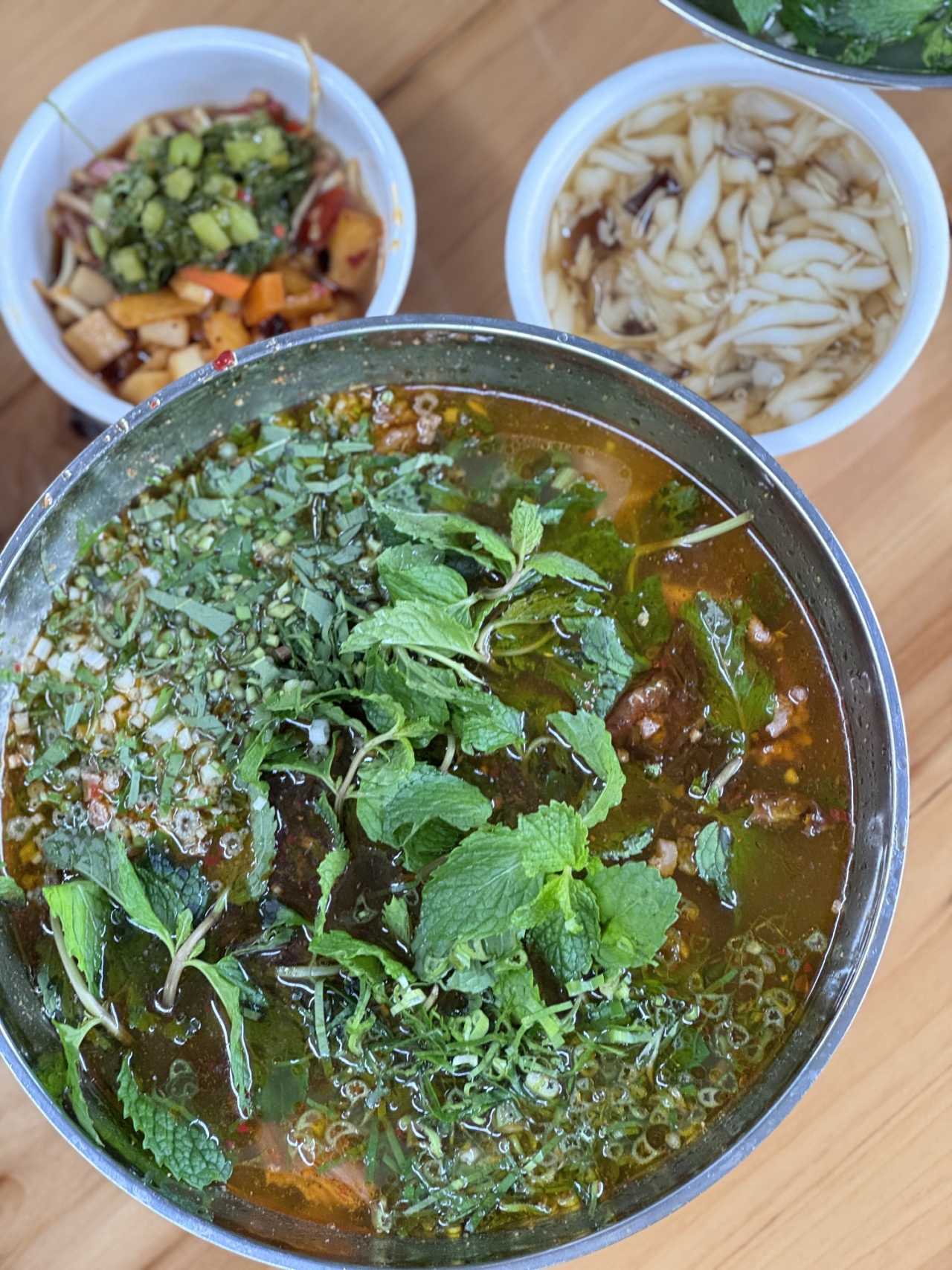
A great day starts with a good breakfast. This time, following the girl's advice, we chose wide rice noodles and thin rice noodles. The meatballs were springy and bouncy, a bit like Chaoshan beef balls. Mangshi's breakfast broths are all incredibly savory — delicious even without adding any seasonings. We finished with a cup of Burmese milk tea — very smooth and silky.
Rating: ⭐⭐⭐⭐ (The meatball rice noodles and milk tea are worth trying)
Ganying Pickled Chicken Feet | A Dozen Flavors
By the last day, only Xiao Peng and I were left. This shop is inside the Baiste Food Court. The first thing you see is a juice stand. We ordered a nut and avocado smoothie and a grape slushie — you absolutely must try avocado drinks in Mangshi; they're fragrant without being greasy. Further inside is the pickled chicken feet stall, with over a dozen flavors, and you can order one of each. We picked four flavors: passionfruit, lemon, ground chili, and Litsea cubeba. Every single one was sour and spicy, hitting your taste buds directly.
Final Thoughts: Mangshi Isn't Busy — I'll Be Back
60 hours, 30 restaurants, 80% completion rate. Mangshi is small — so small that it's only 20 minutes from the airport to the city center. Yet Mangshi is vast — so vast that even after three days of relentless eating, there were still many places we never got to visit.
But that's the charm of Mangshi. You don't need to make specific plans. If you see something you want to eat while walking, just sit down. When you're full, take a stroll to digest. When you're tired, sit down again. Within a few blocks, there are dozens of places to eat — you'll never worry about finding food.
If you're thinking of coming, here's my advice:
Time: Three days and two nights is just right. No need to rush — just eat slowly.
Transportation: Off-peak airfare is cheap. Round trip for 600 RMB isn't a fantasy.
Accommodation: Choose somewhere near Unity Avenue or Mangshi Avenue — convenient for everything.
Mindset: Don't think about checking boxes. Think about "experiencing." Mangshi isn't busy, and you don't need to be either.
Finally, remember what the locals say: "We never save money. Whatever we earn, we spend on food."
This is probably the truest form of life.
See you next time, Mangshi.
You should also read:

Beyond Romance, Just for the Journey – A Slow Encounter with Shuanglang
Beyond Romance, Just for the Journey – A Slow Encounter with Shuanglang Prologue: A Long-Planned "Accident" My obsession with Yunnan was like a seed, carried by the wind into my heart without me even noticing when it took root. And the name "Shuanglang" was like…
Continue reading...
Traveling with the Soul: Yunnan Under My Feet, My Heart in the Clouds
Traveling with the Soul: Yunnan Under My Feet, My Heart in the Clouds Prologue: A Spontaneous Escape Have you ever had that moment—sitting in a noisy city, staring at a screen full of dense text, suddenly yearning for a complete escape? As the K159 train…
Continue reading...
Dreaming of Nanzhao: A Gentle Encounter with Erhai Lake in Dali Shuanglang, July
Dreaming of Nanzhao: A Gentle Encounter with Erhai Lake in Dali Shuanglang, July Every summer, a voice whispers softly from the depths of my heart: it's time to go. No matter how tight the budget, no matter how precious the annual leave, the ritual of…
Continue reading...