Dreaming of Nanzhao: A Gentle Encounter with Erhai Lake in Dali Shuanglang, July

Dreaming of Nanzhao: A Gentle Encounter with Erhai Lake in Dali Shuanglang, July
Every summer, a voice whispers softly from the depths of my heart: it's time to go. No matter how tight the budget, no matter how precious the annual leave, the ritual of travel cannot be missed. This year, we chose Yunnan—not to chase the bustling energy of Lijiang, but for that celebrated "wind, flowers, snow, and moon," and for the little town nestled at the foot of Cangshan Mountain and the shores of Erhai Lake: Shuanglang.
The July sun was scorching and bright. Our story began at Kunming Changshui Airport, heading west toward that dreamlike blue.
Arriving in Kunming: Surprises and Warmth at the New Airport
At seven in the morning, our plane landed on time at Kunming Changshui International Airport. This new airport, opened only on June 28, is much farther from the city than the old Wujiaba Airport. The taxi ride to the Western Bus Station cost a full 100 yuan. Our driver, a warm-hearted local, chatted with us all the way about Kunming's customs and culture. What struck me most was his comment that every rooftop in Kunming is densely packed with solar panels—the city's use of sunlight borders on "greedy." Though we were just passing through, the driver's enthusiasm left us with a wonderful first impression of Kunming.
At 10:30 AM, the bus left Kunming, heading west. Outside the window, the highland's blue sky and white clouds spread out before us. After more than three hours, we finally arrived at the place praised by countless poets: Dali.
Dali Old Town: Quiet, Unlike a Tourist Area
At 3 PM, we got off at Xiaguan Bus Station and took a 2-yuan minibus for a bumpy half-hour ride to Honglong Well—this was Dali Old Town.
We checked into the "Fengyue Shanshui Inn," recommended by a colleague. The room had floor-to-ceiling windows, with a lush bamboo grove outside. The innkeeper was a warm middle-aged man, and his elderly mother especially liked me, complimenting my looks (secretly delighted). After dropping our luggage, we wandered aimlessly.

Dali Old Town is much smaller and quieter than Lijiang. In early July, there were almost no tour groups. Most shops along the street had their doors shut—later, we learned from the news that the town was protesting electric scooters entering the area, leading to a strike. The bar street wasn't as lively as Lijiang's; they played light rock, and people quietly drank, played cards, and chatted. We found a small shop called "Dreaming of Nanzhao," ordered two cups of yogurt and some snacks, and sat by the window scrolling through our phones, too comfortable to move.
In the old town, we tried "饵块 (erkuai, a chewy rice cake)" and "乳扇 (rushan, a dried milk fan)." The erkuai was soft and sticky; the rushan tasted a bit strange, but worth a try. For dinner, we went to "Cang'er Chun," ordering "炝螺肉 (spicy stir-fried snails)," "酸汤弓鱼 (sour soup with bow fish)," and "牛肝菌 (porcini mushrooms)." Every dish had Dali's signature sour and spicy flavor. Dongdong was sweating from the heat, but I found the taste just right.
At a colorful shop, I picked a fresh postcard, scribbled a message, and mailed it to myself. Back in Shenzhen, receiving that card with a Dali postmark filled my heart with memories of this ancient town.
Shuanglang: A Bumpy Ride for a Slice of Tranquility
At noon on July 1, we had a quick bowl of noodles and rushed to Shuanglang. From Dali Old Town to Shuanglang, the minibus fare was only a dozen yuan, but waiting times were unpredictable—averaging 40 minutes per bus, sometimes over an hour. Renting a car cost 160 yuan. That day, we got lucky. Just as we arrived at the Feng Hua Xue Yue Hotel, a kind driver returning from Dali to Shuanglang picked us up—40 yuan for a private ride straight to the Peninsula 63 Inn. The driver, Mr. Yang (phone: 13320556311), often shuttles guests to Peninsula 63. He was very nice, and I recommend him to anyone in need.

The lakeside road was under construction, and Shuanglang itself was a massive construction site—bumpy, dusty, and chaotic. But the moment we stepped into Peninsula 63, our spirits lifted. The tiny inn was warmly decorated, and the staff greeted us like old friends. I finally understood why so many people endure the trouble to come here—just to laze around in the inn. In July, the staff was already booking rooms for September—a testament to the inn's popularity.
We booked a second-floor sea-view room called "Inviting the Moon," costing 480 yuan. Opening the balcony door, Erhai Lake lay before us, shimmering and mesmerizingly blue. After unpacking, Dongdong and I went wild taking photos on the balcony. What else could be more enjoyable here than snapping pictures and lying around in a daze?
Jixiang Hong and Amigo: Shuanglang's Taste Memories
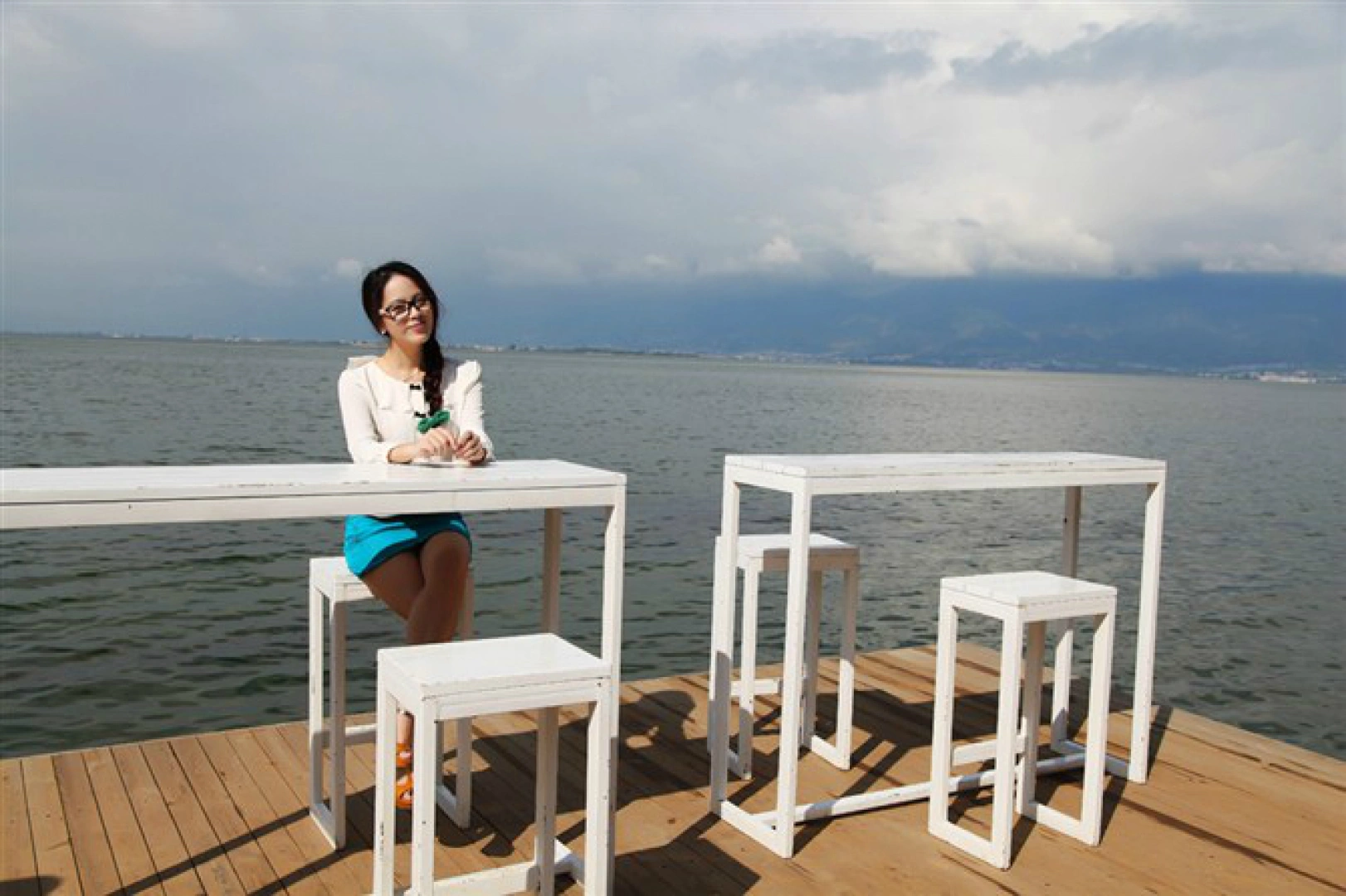
For dinner, we went to the popular "Jixiang Hong" (Auspicious Red). Travelers' reviews were mixed, but I found it decent. We ordered two meat dishes and one vegetable dish for 120 yuan. I recommend their "酸菜鱼 (sour cabbage fish)," "炒海菜 (stir-fried seaweed)," and "青梅柠檬汁 (green plum lemon juice)." The fish was tender, the broth sour and spicy; the seaweed was refreshing; and the plum lemon juice was sweet and tangy—perfect for summer.
Next to Jixiang Hong was the recommended French restaurant, Amigo. We stepped inside briefly. The place was tiny, with a sign at the door: lunch at 12 PM and dinner at 5:30 PM. I'd never seen such a strict restaurant—the owner was truly capricious. Later, on our third day in Shuanglang, we tried to go to Amigo, but the door was locked—apparently, they open irregularly. In the three days we were in Shuanglang, we only saw it open on the first evening. It never opened again before we left. How capricious can you get, boss?
Haidi Life and Yuji Island: Shuanglang's Photo Spots
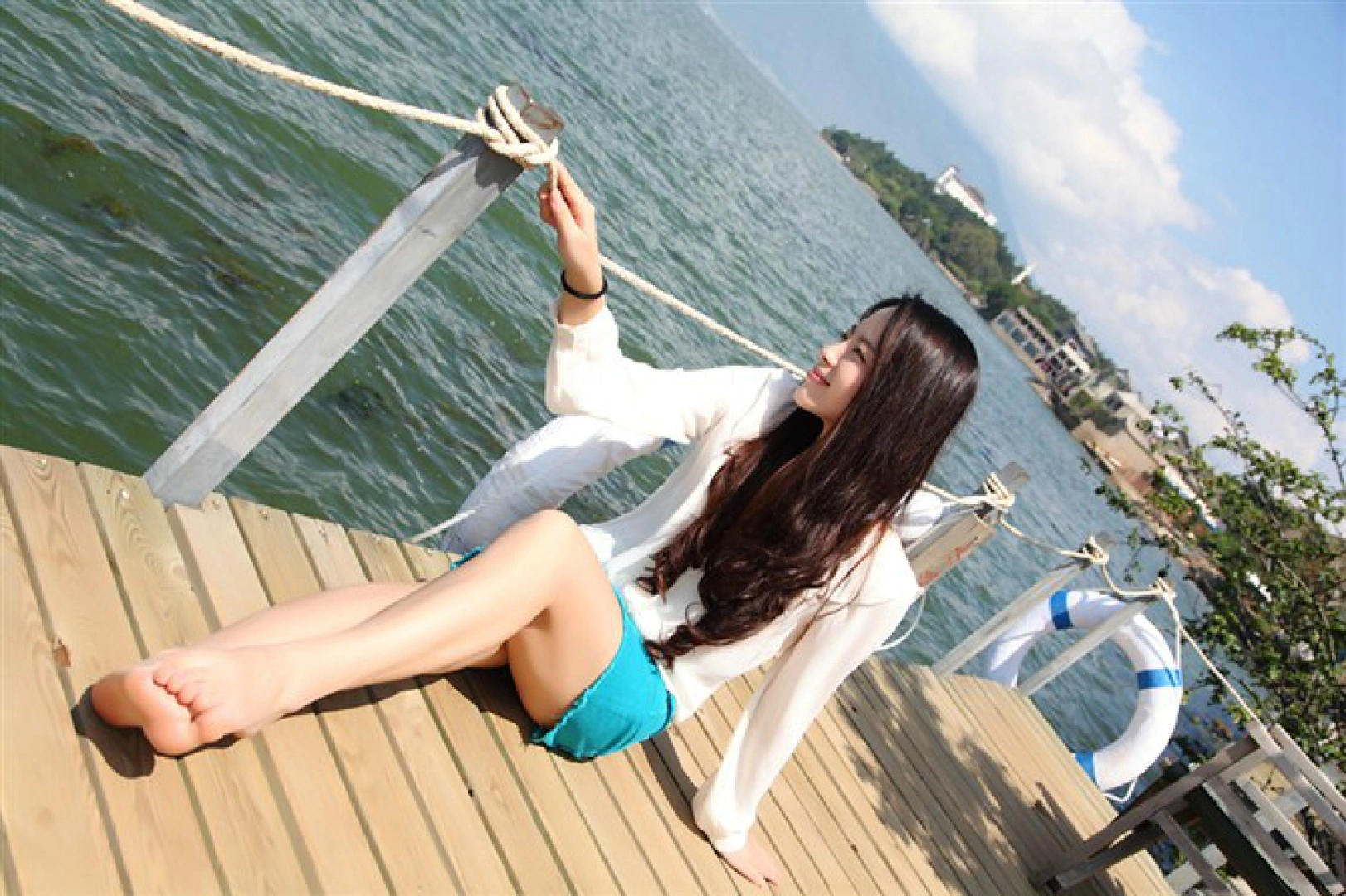
The next morning, the sun was perfect. After eating the complimentary breakfast at the inn—their flatbread was especially good—we went next door to "Haidi Life" (Underwater Life). This inn was larger than Peninsula 63, with four buildings and a spacious courtyard. Their sea-view platform is a must-photograph spot for everyone, and we joined the crowd, snapping plenty of photos.
Yuji Island had an entrance fee of 25 yuan per person, so 50 yuan for the two of us. We finished exploring in under half an hour. Honestly, the price felt a bit steep. Later, a driver who gave us a ride said he could take us in for free, or we could claim to be staying at a guesthouse inside to get in for free. Zhao Qing's "Qinglu" and Yang Liping's "Thousand Miles Alone" are located within Yuji Island Scenic Area. A standard room at Qinglu costs 1,200 yuan; Thousand Miles Alone is even pricier, but their sea views are unbeatable. Yang Liping's "Moon Palace" looked like an abandoned house. None of these places are open for visits; you can only enjoy the views along the path.
Mian Dessert and Yilvxiang: Shuanglang's Small Joys
For afternoon tea, we found "Mian Dessert," a very minimalist little shop. Word had it that their desserts were excellent. We ordered their signature "酸嬢嬢 (sour lady)" and mango sago. To be honest, the taste was just okay—I couldn't quite get used to the sour lady. In Shenzhen, any dessert shop would serve similar quality. But rarity makes it special—Shuanglang is so small that I suspect Mian is the only dessert shop here. As for the French restaurant, because it's rare, everyone thinks it's delicious. It's not about the taste; it's about the ambiance. So, there's no need to obsess over how good it really is.

That evening, we switched to another inn: "Qingtian Inn" (Sunny Sky Inn). It's near Yuji Island Scenic Area but hard to find, tucked away in a narrow alley—easy to miss if you're not paying attention. The inn's gate was always locked; each guest had a key, and only residents and afternoon tea customers could enter. The courtyard clearly showed the owner's effort. I'd read online that the owner was a bit cold, but when we checked in, the service was very warm, and the staff smiled and greeted us every time we passed. The courtyard also had two snow-white Samoyeds, so beautiful you'd want to hug them.
We stayed in Sea-View Room No. 4, costing 380 yuan. For dinner, we went to "Yilvxiang" (A Wisp of Fragrance), a Bai ethnic restaurant in town. We ordered a table of vegetable dishes and "饵丝 (ersi, rice noodles)." The owner was generous, serving huge portions for just 38 yuan, and the food was tasty.
Farewell to Shuanglang: Leaving with Memories and Photos
On the third day, after lunch at "Haiyun Renjia" (Sea Cloud Home)—seaweed, asparagus, and braised fish, each dish carrying the flavor of Erhai Lake—we called Mr. Yang again and shared a ride to Lijiang with two female graduation travelers for 450 yuan.
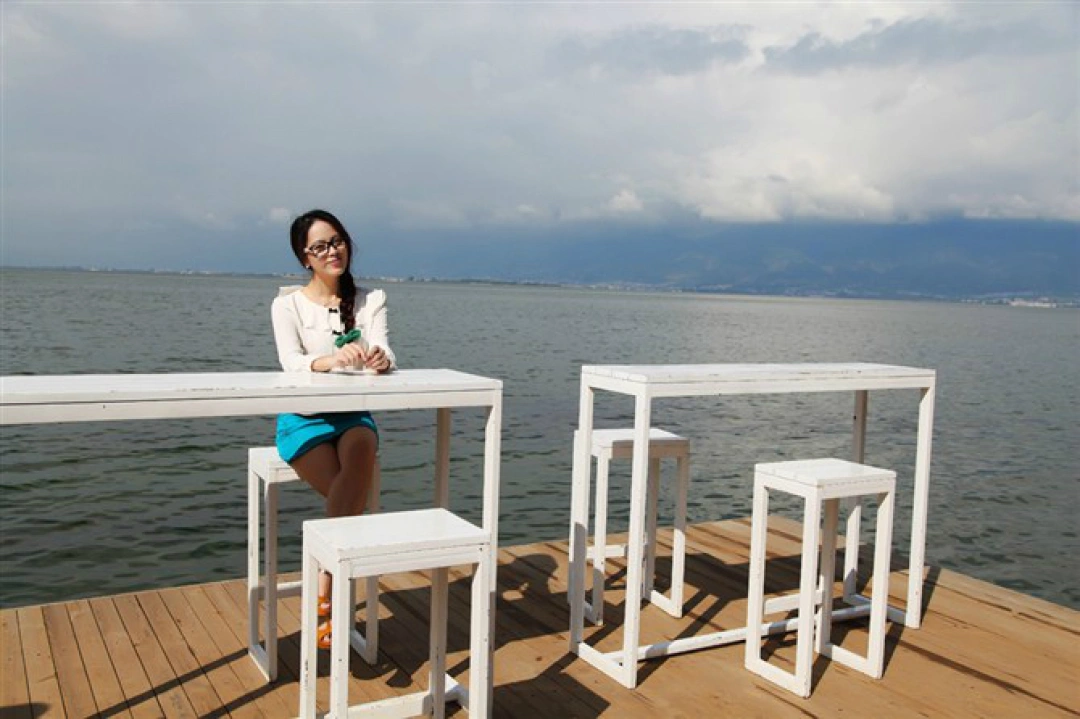
Sitting in the car, looking back at Shuanglang fading in the distance, my heart was full of reluctance. These three days felt like a slow-motion film: the sunlight on Peninsula 63's balcony, the sour cabbage fish at Jixiang Hong, the sea-view platform at Haidi Life, the Samoyeds at Qingtian Inn, and that postcard I mailed to myself...
Writing really isn't my forte. I've finally finished the Dali section. Just look at the photos, everyone—I'm exhausted!
Final Notes: Practical Tips for Shuanglang
If you're planning a trip to Shuanglang, here are some useful tips:
- Transportation: From Dali Old Town to Shuanglang, minibuses cost around a dozen yuan, but wait times are unpredictable; renting a car costs 160 yuan. Contact Mr. Yang (13320556311)—he's reliable and offers good prices.
- Accommodation: Peninsula 63 (0872-2461577, sea-view rooms 380-480 yuan) and Qingtian Inn (0872-2461670 / 13987274286, rooms 200-380 yuan) are both recommended. Book well in advance, especially during peak season.
- Food: Jixiang Hong's sour cabbage fish, stir-fried seaweed, and green plum lemon juice are great; Yilvxiang's Bai ethnic dishes offer excellent value; Mian Dessert is good for photo ops.
- Attractions: Yuji Island charges 25 yuan entrance fee, but locals can take you in for free; Haidi Life's sea-view platform is a must for photos.
- Tips: Shuanglang is under heavy construction, and the lakeside road is being repaired—expect a bumpy ride. Be mentally prepared.
Shuanglang isn't a place to "play"—it's a place to "stay." The best way to travel here is to laze around, take photos, eat and drink, and leave with a heart full of memories.
This travelogue was first published on Mafengwo. Copyright belongs to @Love恒小岳.
You should also read:
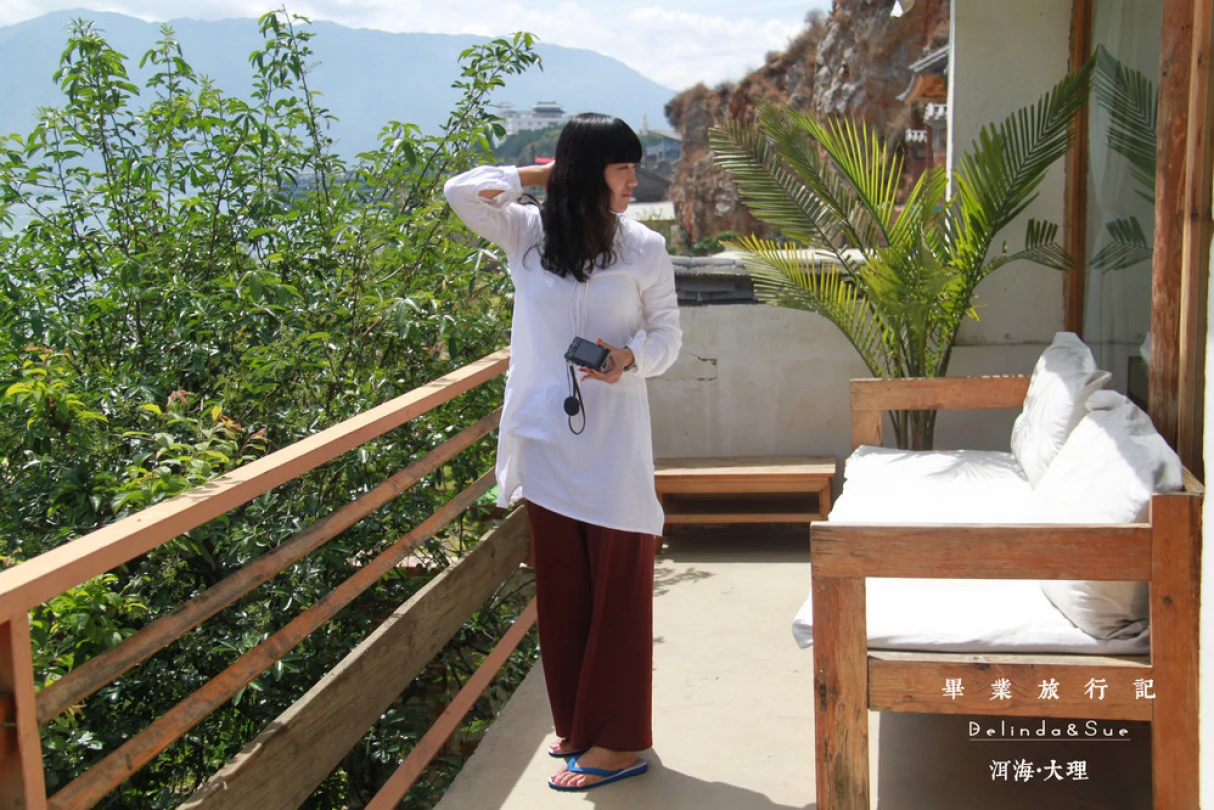
Two Girls' Graduation Trip: Dali and Shuanglang – A Poetic Farewell to Mountains and Sea
Two Girls' Graduation Trip: Dali and Shuanglang – A Poetic Farewell to Mountains and Sea Preface: Catching the Tail of Youth, Heading South During our senior year of college, my roommate and I – two girls studying in Beijing – decided to bid farewell to…
Continue reading...
Cloud Travelogue · Dali of Wind, Flowers, Snow, and Moon: A Three-Day, Two-Night Journey of a Free Spirit
Cloud Travelogue · Dali of Wind, Flowers, Snow, and Moon: A Three-Day, Two-Night Journey of a Free Spirit I am a cultured female foodie with a touch of rogue charm. I slung on my backpack, took my lover's hand, and set off on a spontaneous…
Continue reading...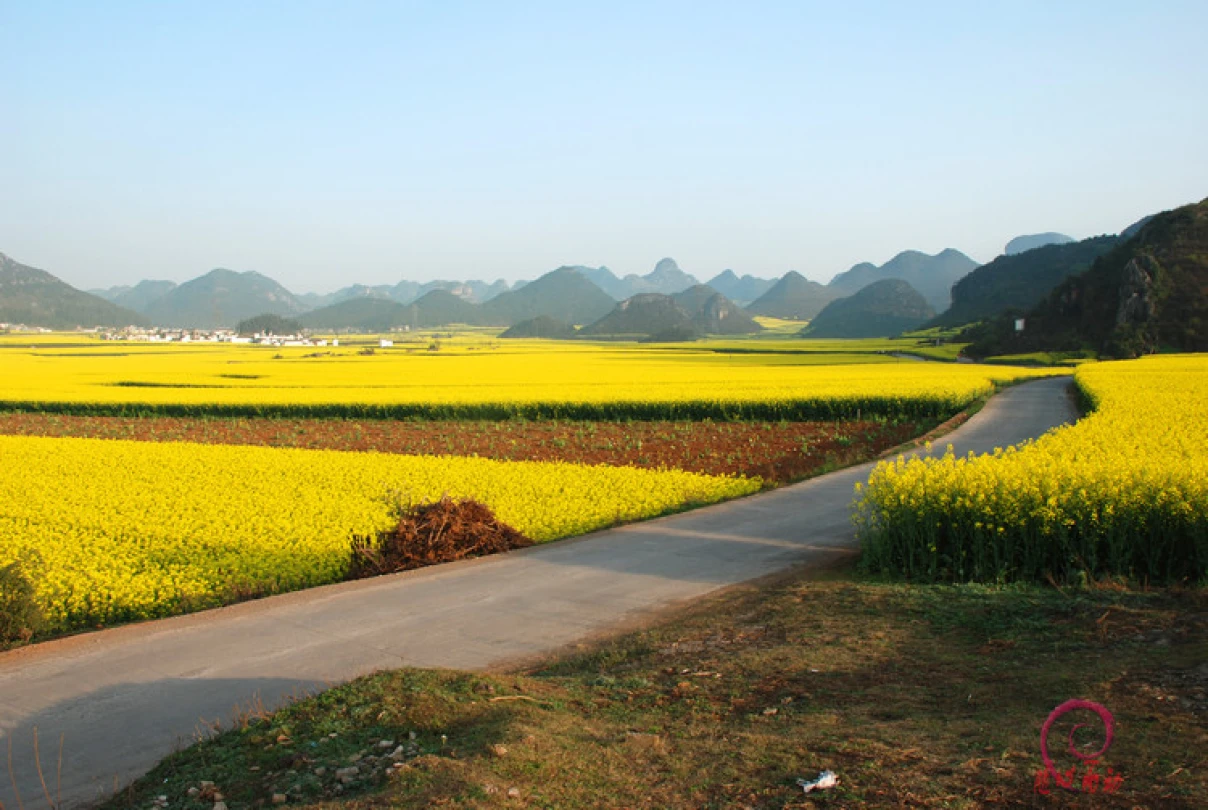
Golden Luoping: A Romantic Encounter with Sunshine and Seas of Flowers
Golden Luoping: A Romantic Encounter with Sunshine and Seas of Flowers Introduction: The Third Time's the Charm Some landscapes are destined to be seen at the right moment. For me, that was exactly the case with Luoping's rapeseed flowers. On February 22, 2011, the Luoping…
Continue reading...