A 10-Day Yunnan Journey: From Kunming to Lugu Lake — A Slow Travel Adventure with Friends
A 10-Day Yunnan Journey: From Kunming to Lugu Lake — A Slow Travel Adventure with Friends
After working for a full year, I finally gathered enough courage and annual leave. I rallied three close friends, packed our bags, and set off for Yunnan. The last time I set foot on this land was back in 2005, when I was still a student, curious about everything. A decade later, revisiting this place, I found that Yunnan still held onto the memories I had kept — blue skies, white clouds, a slow pace of life, and that indescribable, lazy atmosphere.
Day 1: Shenzhen & Beijing → Kunming → Dali
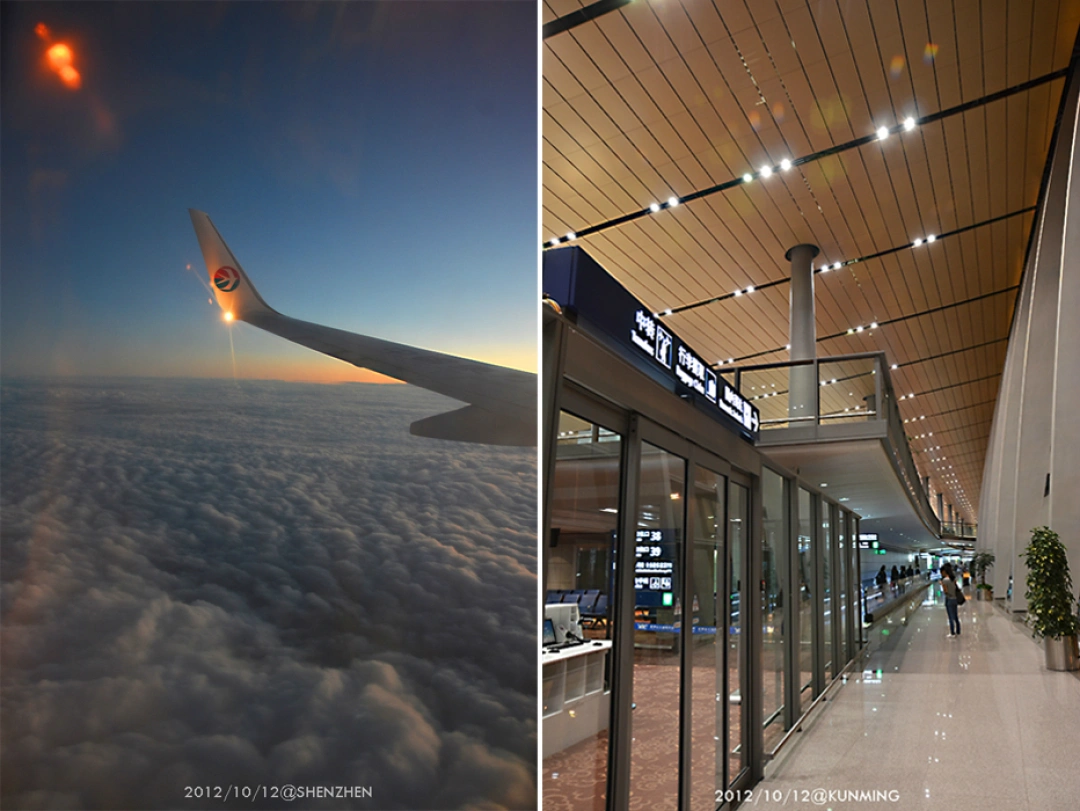
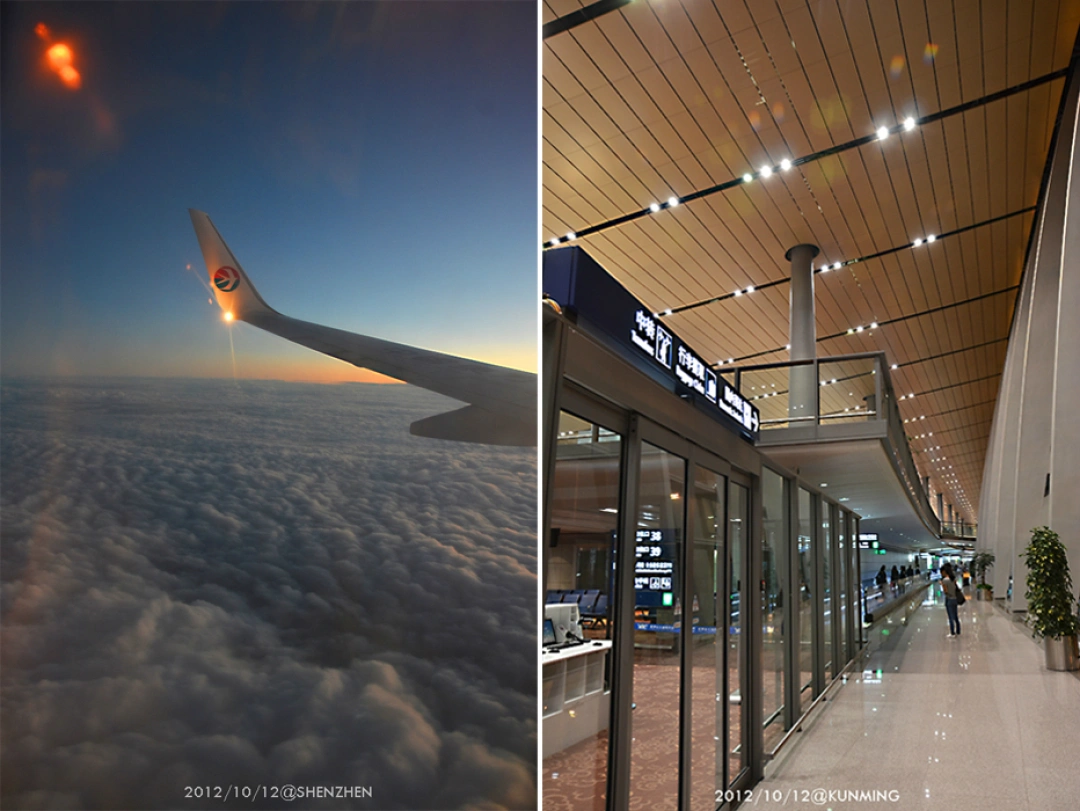
Three of us departed from Shenzhen, while another friend flew in from Beijing. We agreed to meet at Kunming Changshui International Airport at 8 PM. This new airport, which only opened at the end of June that year, is reportedly among the top five largest in the world — but it also left us feeling completely disoriented. Before leaving, we had read countless travel guides, all warning that a taxi from the airport to downtown would cost 150 yuan, urging us not to take one. But when we got there, we found the airport taxi service was actually quite regulated. For the four of us, including the fuel surcharge, it only cost 70 yuan, and we arrived at Kunming Railway Station in 35 minutes. If you're traveling in a group of two or three, taking a taxi is actually a cost-effective and hassle-free choice.
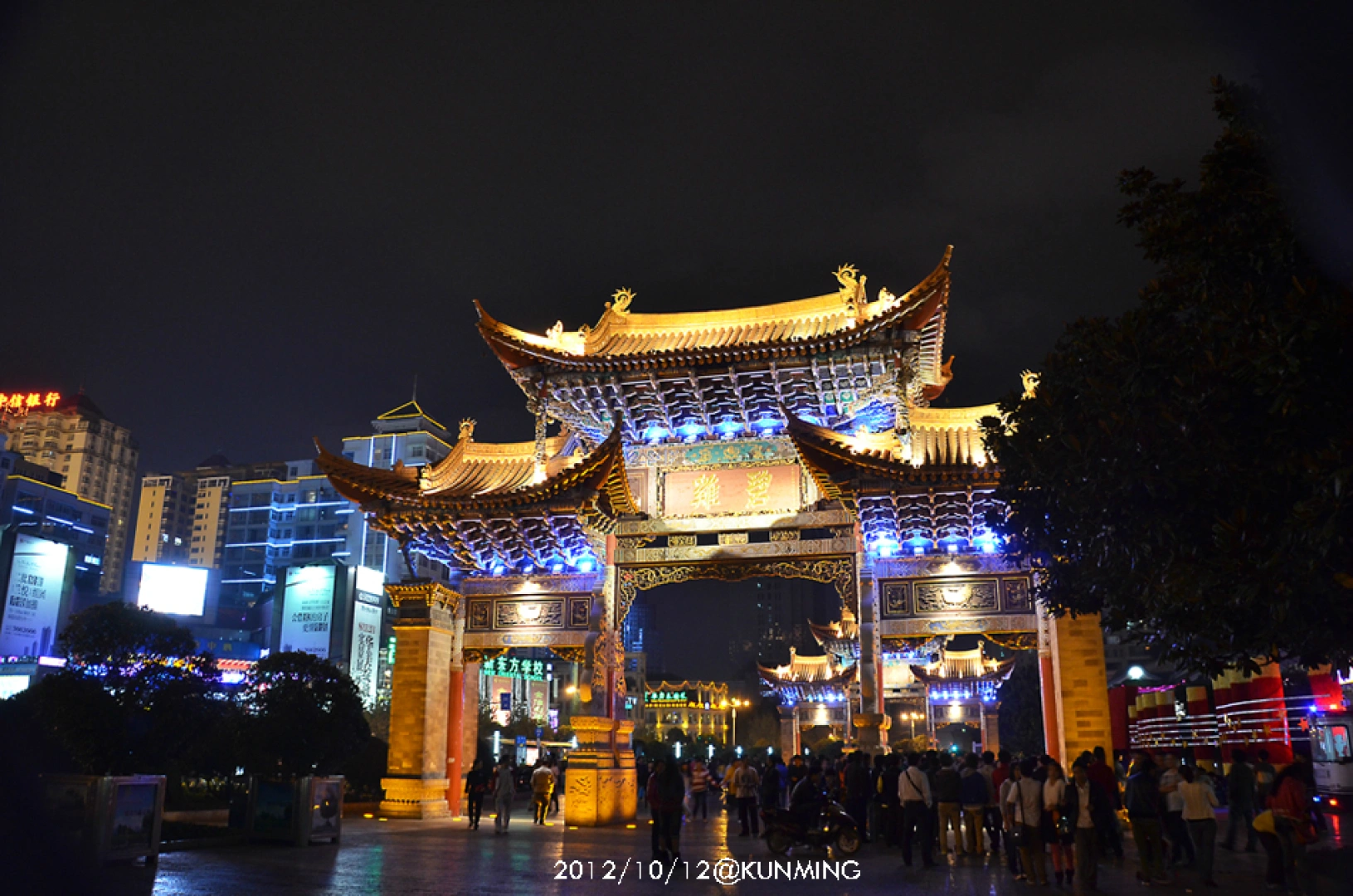
That evening, we needed to catch the 23:39 K9636 train to Dali, so we took a taxi directly from the airport to the station. Dining options near the station were limited. Several Sichuan restaurants had apparently been blacklisted for overcharging tourists, so we avoided them. The luggage storage counter closed at 10 PM, leaving us no choice but to drag our suitcases to the Golden Horse and Jade Rooster Archway (Jinma Biji Fang) for a quick look. It was a 10-minute cab ride, costing 13 yuan. Across the street was Sanshi Street, Kunming's main pedestrian thoroughfare. Even at 10 PM, it was still lively, but most snack stalls had already shut for the night.
Day 2: Dali → Xizhou
The train arrived 30 minutes late, pulling into Dali Station at 7:30 AM. As soon as we stepped off, a cold wind hit us. Dali Station is located in Xiaguan, about a 40-minute drive from our destination, Taoyuan Village in Xizhou. We had contacted the guesthouse owner in advance, and a driver was already waiting in the parking lot. Dali's streets were so clean they practically gleamed. There were hardly any tall buildings, and the wide-open views instantly lifted our spirits.
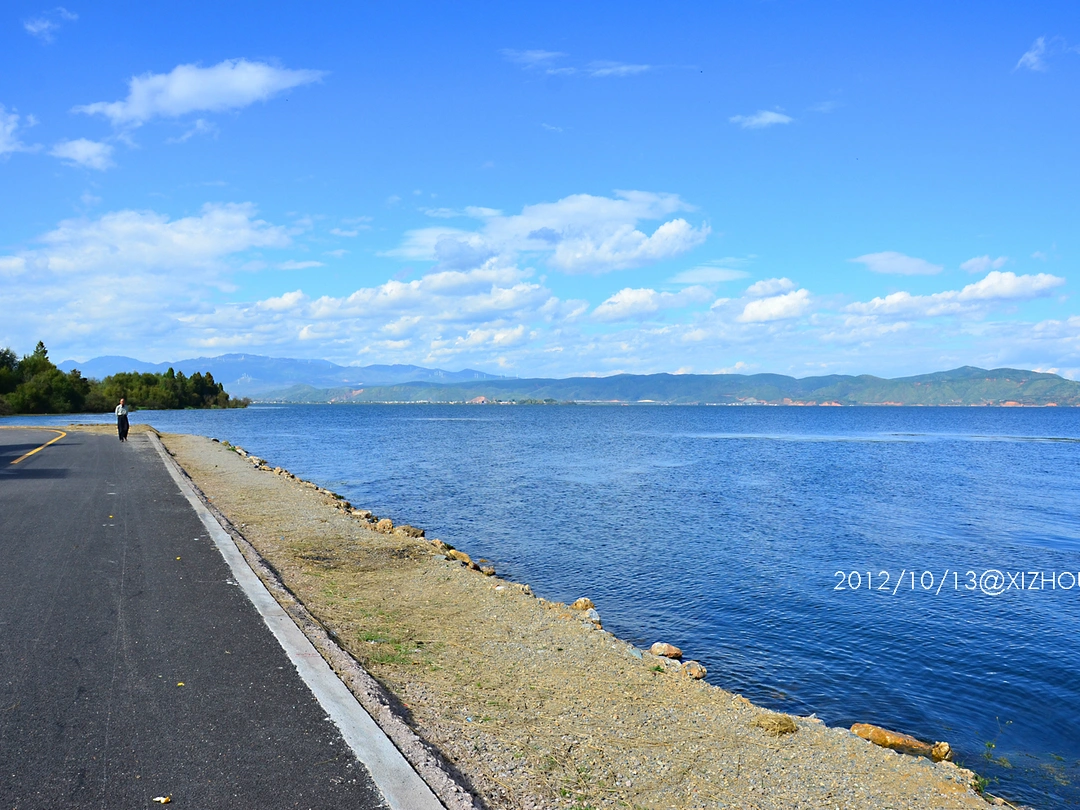
This time, we didn't choose the trendy guesthouses of Shuanglang, like "Peninsula No. 63" or "Sea Life." Instead, we found a place called "Listening to the Sea and Bathing in the Moon" (Ling Hai Mu Yue) on Weibo. Located in Taoyuan Village in Xizhou, it was right by the lake with stunning views. The four of us booked their signature sea-view room — the large balcony and floor-to-ceiling windows facing Erhai Lake won everyone over instantly. The only awkward part was the bathroom design: no door, just a shower curtain, and the toilet was very close to the bed. Handling bathroom business in a group was a bit embarrassing, but luckily there was a public restroom downstairs.

The guesthouse owner had two Golden Retrievers. They were quite smelly but incredibly friendly, jumping on anyone they saw. Xizhou is a Bai ethnic settlement, and the architecture retains a quaint style of "grey tiles, white walls, red pillars, and lattice windows." Bougainvillea (also known as "Le Du Juan") cascaded from the eaves, set against Dali's brilliant blue sky — it was as beautiful as a painting.
By the shores of Erhai Lake, cycling along the West Ring Road is a must-do. The ride from Taoyuan Village to the center of Xizhou Ancient Town is about 7 kilometers, taking about an hour. The route passes through many villages, with scenery everywhere you look. But a word of warning for the ladies: make sure to apply plenty of sunscreen! Even though we wrapped our heads in scarves and draped shawls over ourselves, by the next day our faces were red, peeling, and a few shades darker.
In the center of Xizhou Ancient Town, there's a shop called "Ancient Town Snacks" (Guzhen Xiaochi). Their fried rice noodles, braised pork rice cakes (pa rou er kuai), and cold chicken rice noodles were all delicious. Paired with a glass of lemon juice, it made for a perfect lunch. After 11 AM, the owner started selling homemade cold braised dishes — lotus root slices, potatoes, duck necks, and tofu skin. They tasted good, though a bit salty. Outside the Agricultural Bank of China to the left of the shop, there was a small stall selling Xizhou flatbread (Xizhou Baba). It was said to be the best in the area, available in both savory and sweet versions. Eaten hot, it was crispy and flavorful. Next to the ancient town center was a 30-year-old shop called "Cool Little House" (Qingliang Xiaowu), run by an elderly couple selling homemade popsicles. The most expensive one was only 2.5 yuan, with flavors like chocolate, peanut milk, and sticky rice. They were rich in milk flavor without being overly sweet.
On a detour, we stopped by Haishou (Turtle's Tongue), a spot famous for great photos. But now the water was covered in duckweed, and it was nowhere near as impressive as before. After cycling nearly 20 kilometers, we were exhausted. All we wanted to do was lie in bed, gaze at Erhai Lake, and listen to music.
Day 3: Xizhou → Shuanglang → Xizhou
I got up early hoping to watch the sunrise, but there was a small hill on the horizon. By the time the sun slowly rose, it was no longer the first light of dawn.
Today's goal was Shuanglang. From Taoyuan Village to Shuanglang is directly across Erhai Lake. There were four ways to get there: first, by ferry, but the schedule was restrictive — you could only stay for 2 hours before having to return; second, by flagging down a bus on Dali Road for 6 yuan per person, but that required walking 2 kilometers to the main road first, with no guarantee of when a bus would come; third, by the guesthouse's speedboat, which took 15 minutes but cost 160 yuan per person; fourth, by hiring a private car for 100 yuan one way. For the four of us, splitting the cost made it 50 yuan round trip — affordable and convenient. We booked it without hesitation.
Shuanglang — a name we had念叨 (talked about) the most — turned out to be the biggest disappointment of the trip. Construction sites were everywhere you stepped, and dust filled the air. The rush to build new hotels had really damaged the place. A visit to Shuanglang became a "guesthouse tour." The famous "Peninsula No. 63" and "Sea Life" from Weibo became our targets.
"Sea Life" is most famous for its lakeside platform, simply furnished with a long table and four chairs — it's become an iconic image. There was an open area in front for sunbathing, as well as spots for reading, drinking coffee, and eating desserts. The property was large, with four courtyards, one of which was still under construction. Only Courtyard No. 1 was open to visitors.
As for "Peninsula No. 63," my first impression was how small it was — a tiny courtyard, a tiny coffee shop. It looked so different from the photos that I didn't even bother taking out my camera. Maybe the interior design was excellent, but we didn't get a chance to see it.
We spent the entire afternoon at "Sea Life," listening to music and reading other people's messages — it was actually quite entertaining. Before leaving, we visited Yuji Island, where Yang Liping's Sun Palace and Moon Palace, as well as Zhao Qing's Qinglu, are located. The entrance fee was 10 yuan per person. To be honest, that 10 yuan felt a bit wasted. We could only walk a short loop along the walls. Unless you're a big fan of theirs, just admire them from a distance.
In the evening, we had a simple meal at a small restaurant at the village entrance. We ordered the local specialty, sour-spicy fish, cooked with papaya and tofu. The fish was tender and flavorful, with a great balance of sour and spicy. The braised beef with mint leaves reminded me of Thai cuisine. The seaweed soup was a local dish, but it had a strong fishy smell that might not suit everyone.
Day 4: Xizhou → Dali Ancient Town → Lijiang
Today, we planned to spend half a day in Dali Ancient Town before catching the 16:55 K9619 train to Lijiang. At noon, we hired a car from the guesthouse for 80 yuan to take the four of us to the entrance of Yangren Street (Foreigner Street) in the ancient town. Dali Ancient Town sits at the foot of Cangshan Mountain. Even though it's heavily commercialized, walking through it still gives you a sense of being in a place blessed with talent and natural beauty.
There's a restaurant in the ancient town called "Cang Er Chun" (Cangshan Erhai Spring). It's said to be delicious and affordable, with signature dishes like clay pot fish, braised chicken, and stir-fried snails. The shop was so small that we walked right past it without recognizing it. The braised chicken and stir-fried snails were both good — especially the snails, which were sour and spicy with mint leaves, really hitting the spot. But the clay pot fish was disappointing. It had a strong fishy smell, whether from the fish not being fresh that day or the cooking method, I couldn't tell.
With limited time in the afternoon, we just wandered around the ancient town for a bit, sat in a coffee shop, and then headed to the train station. The drive from the ancient town to the station took about 30 minutes, but traffic could be heavy, so it's best to leave early. A taxi cost around 30 yuan, though drivers usually asked for 40 — you could haggle.
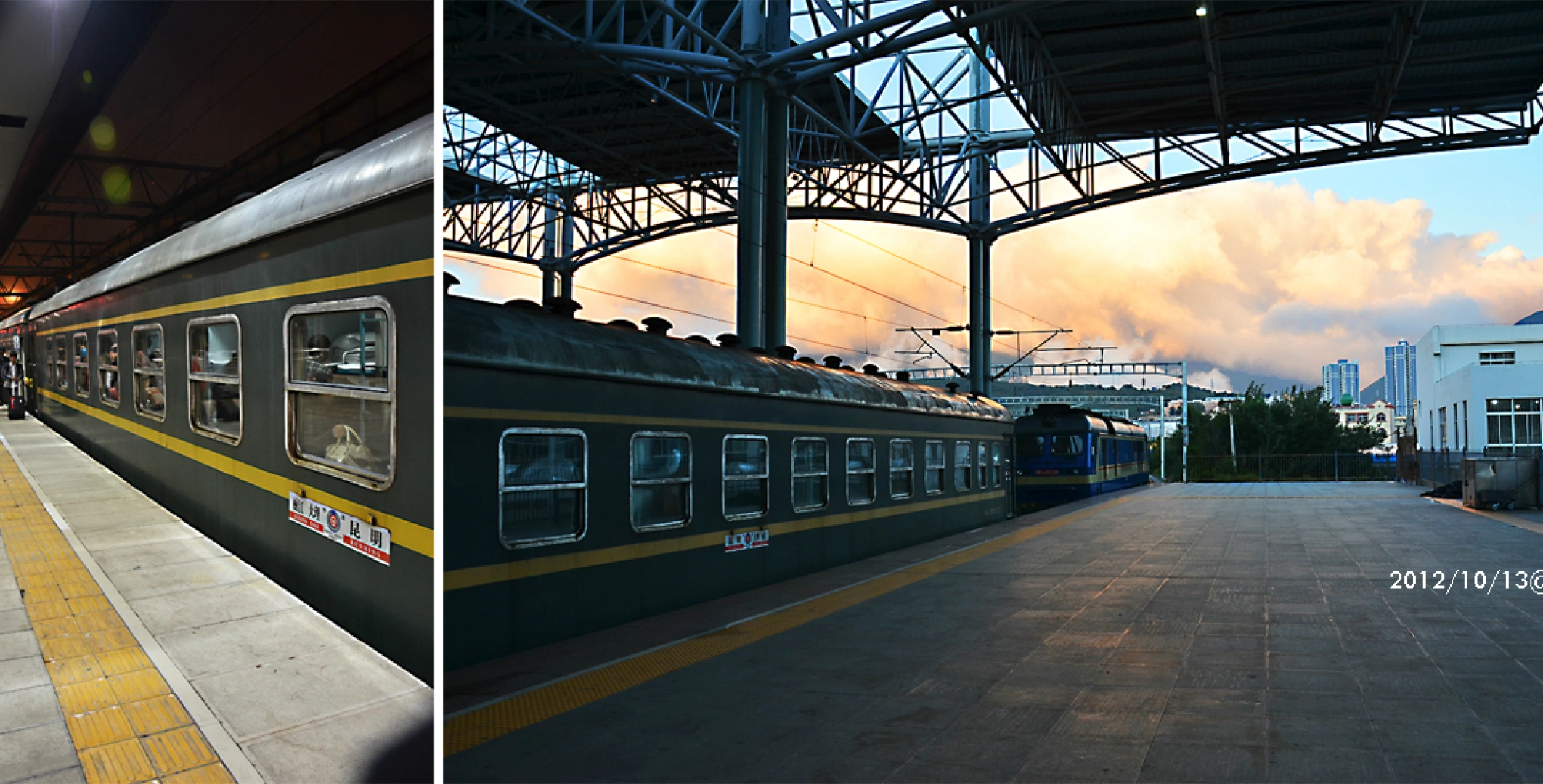
The train was delayed by 2 hours due to an earthquake, so we didn't board until nearly 7 PM. The K9619 was a hard-sleeper car converted to hard seats. Only the lower bunks could barely seat six people, leaving very few seats. Most passengers had standing tickets, and the carriage was chaotic. It was hard to find a place to stand, and you had to watch out for other people's feet dangling above your head. However, once on board, you could upgrade your ticket. The original standing ticket cost 35 yuan, and for an additional 30 yuan, you could move to the soft-sleeper car and ride comfortably to Lijiang — the journey was about 2 hours.
We arrived at our Lijiang guesthouse around 10 PM. We were staying at "Huayuan Cottage" (Hua Tian Yi). The courtyard was tiny, not what I had imagined, but the atmosphere was nice. The owner, nicknamed Yutou (Fish Head), liked playing the guitar and often sat on the sofa strumming. Since we were leaving early the next morning for Lugu Lake, we booked a four-bed dorm. The room was very small — just two bunk beds with no extra space. And the door opened directly into the shared dorm area, making every entrance and exit feel a bit awkward.
Day 5: Lijiang → Lugu Lake
The drive from Lijiang to Lugu Lake took nearly 6 hours. Round-trip tickets could be booked through the guesthouse owner or a street-side travel agency. The vehicles were mainly large buses and small minivans, all priced at 160 yuan. The guesthouse owner helped us book a minivan. The ride was bumpy the whole way, and I kept worrying the tires might fall off.
Leaving Lijiang, we first drove for an hour on a rough, potholed road — a real challenge for anyone prone to motion sickness. Then we reached the "Eighteen Bends of Lining" (Lining Shiba Wan), a must-pass route on the way to Lugu Lake. In just 20 kilometers, the elevation dropped by 1,000 meters, with the road hugging the Jinsha River Gorge. The viewing platform was built next to a utility pole. To get a photo of the eighteen bends without power lines in the way, you had to pay 5 yuan to stand at two better spots. Personally, I didn't think it was worth it — the mountain road didn't feel particularly thrilling to drive on.
Around noon, all the tour buses stopped at a farmhouse restaurant for a break. You could choose your own dishes: vegetable dishes were 12 yuan, meat dishes were 20 or 25 yuan. The food was mediocre — typical group tour lunch fare. If you weren't hungry, you could skip it.
We arrived at the Lugu Lake entrance around 2 PM. The entrance fee was 100 yuan, waived for military ID or tour guide certificates. After paying, we received two small CDs and a "Passport to the Kingdom of Women" — a nice touch. After the ticket booth, the van took us to the first viewing platform for a panoramic view of Lugu Lake. To be honest, it wasn't that impressive. It didn't live up to the dreamy, ethereal reputation.
Next, we went to the Luoshui Village pier to take a pig-trough boat (zhucao chuan). It cost 30 yuan per person for a 20-minute ride to Liwu Bi Island in the middle of the lake. The boatman offered a "mystery route" that crossed the border between Yunnan and Sichuan, where the water was especially clear and you could see many small fish — the shallowest part of the lake. It cost an additional 20 yuan per person. Don't fall for it! The so-called mystery route was just a half-loop around Liwu Bi Island, similar to the pier area — a total scam.
At the highest point of Liwu Bi Island, there was a Lamaist temple. The Mosuo people go there to chant scriptures every year on the fourth day of the sixth lunar month.
After all this, our minivan driver invited us to a Mosuo evening party for 100 yuan per person. I had read travel guides saying the bonfire party was more of a cultural show than anything authentic, so we decided not to go. The driver immediately dropped us off at the entrance to Lige Village. We had to drag our luggage nearly 40 minutes along a cobblestone path to reach our guesthouse for the night — "Lige彼岸" (The Other Shore in Lige).
For staying at Lugu Lake, accommodation is generally in Lige Village by the lake, which is less commercialized and has uniquely designed guesthouses. To get a truly lakeside room, you had to choose a guesthouse on Lige Peninsula itself, because the ones in the village are at least 50 meters from the water. "The Other Shore in Lige" was located at the deepest point of the peninsula, with wide, unobstructed views. But the building was quite old, and the decor wasn't up to date. We booked the Spring Room and Summer Room for 360 yuan per night. The Spring Room's bathroom faced the lake directly. In the morning, tourists often rowed by in pig-trough boats taking photos, making brushing your teeth and washing your face there quite awkward.
From Lige Peninsula to Lige Village was about a 10-minute walk. A small path wound along the lakeshore, with cosmos flowers (gesanghua) blooming everywhere.
The restaurants in Lugu Lake mainly served barbecue. Roast suckling pig and grilled lake fish were the two specialties, and they weren't cheap. Zhaxi's Place, run by the legendary "walking marriage prince" Zhaxi, was a barbecue joint that many visitors came specifically to find. According to online sources, Zhaxi was considered the most handsome man among the Mosuo. He was sent to become a lama as a child due to his family's poverty, then returned to secular life at 18 to work as a muleteer. Later, a Taiwanese boss spotted him and sent him to Australia for a year to study horseback riding. We ate there that evening. The waiter was very expressive and spoke quickly, occasionally breaking into song out of nowhere.
Day 6: Lugu Lake
In the early morning at Lugu Lake, everything was silent except for the occasional sound of boatmen singing drifting across the water.
Today, we planned to visit the viewing platform in Lige Village, where you could take the iconic photo of Lige Peninsula jutting into the lake. The path up to the viewing platform wasn't easy. One route started at the intersection where the peninsula meets the village, with a narrow dirt trail leading straight up the hillside. There were no steps, just dirt pits. On steep sections, you had to use your hands and feet. It took about 30 minutes to climb. The other route was at the back of the village, more hidden and hard to find without a local guide.
The viewing platform was right next to the main road and offered the best panoramic view of Lugu Lake.
Day 7: Lugu Lake → Lijiang
We returned from Lugu Lake to Lijiang around 5 PM. After resting briefly at the guesthouse, we headed to "Laodao Fang" (The Nagging Kitchen). This was a small restaurant that had become popular through word of mouth. The head chef, an older woman, loved chatting with customers, hence the name. Another popular figure there was the "Nagging Girl," who enjoyed teasing customers. If someone only ordered simple dishes like stir-fried greens or tomato and eggs, she would yell, "You really know how to order!" If she thought you'd ordered too much, she'd stop you: "No more ordering! That's enough! Enough!"
The small eatery was tucked away in a narrow alley. From 6 PM onward, a long line was guaranteed. The place was tiny — fewer than 10 tables — and always full. Except for the stir-fried dishes, everything was self-service: you got your own bowls and chopsticks, braved the steaming pots to grab your own steamed buns and rice, and vegetables were available for the taking but you had to wash them yourself. The braised chicken (huangmen ji) was the most memorable dish of the trip — incredibly fragrant and delicious. The preserved pork rib hot pot was a bit salty, but the cabbage cooked in it was especially tasty.
The Lijiang Ancient Town of today was no longer the gentle, graceful place I remembered. It had become a somewhat noisy, bustling market. But the cobblestone streets and the red lanterns under the eaves still managed to highlight the ancient town's charm. Even in the off-season, the streets were packed with tourists. Besides the traditional ethnic clothing shops, Dongba script items, and handicraft stores, "CD-browsing" shops had become a new cultural expression of the ancient town's appeal. These shops always had a few African drums out front. As long as no customers were listening to samples, they played the same female vocal song: "In this moment, I realize, you are right by my side..." The song was called "A Moment" (Yi Shunjian), the signature tune of Xiao Qian, a local singer-songwriter who performed in Lijiang. The lyrics were short, but the feeling lingered long after. However, once I left Lijiang, listening to it anywhere else just didn't have the same magic.
Every street and alley sold bottled mango juice in grenade-shaped containers. Opening the bottle was a skill: you had to pull the tab until it was parallel with the cap, then lift it up. "A'an Yogurt" (A'an Suan Nai) was located on the lower right side of a stone staircase at a street intersection. The shop was tiny — just two tables and five wooden benches — but it had a big reputation. The yogurt was a bit sour, and the red beans were especially sweet. Mixed together, they were just right. A foodie's life is like a train: carrying juice in one hand and yogurt in the other, stopping and going, eating and walking...
Day 8: Dayan (Lijiang Old Town) → Shuhe
Early in the morning, I grabbed my camera and wandered around the old town alone. The noise had faded. The men and women who had partied all night were still sleeping. The tour groups hadn't been let in yet. The morning Lijiang finally revealed its true face. The deep, narrow alleys were so quiet you couldn't see a single person. Antique-style signs glowed with orange light, and red lanterns swayed gently in the breeze. Water flowed slowly along the stone-paved streets past every house, though it was no longer as clear.
The main spots for taking panoramic photos of Lijiang Ancient Town were on the platforms of guesthouses on Lion Hill or at the Wanjing Tower behind the Mu Palace, but both charged fees. The only good free spot was the small platform outside Wenchang Temple halfway up Lion Hill, which offered a decent view.
Every day of this Yunnan trip was blessed with clear, cloudless skies. Walking along the crowded East Main Street, an inadvertent glance upward would reveal the distant Jade Dragon Snow Mountain set against the blue sky.
For lunch, we chose "88 Snack Shop" (88 Hao Xiaochi Dian), another famous restaurant in Lijiang Ancient Town. From the outside, it looked similar to "Laodao Fang" — simple and rustic. But inside, it was completely different: modern, with WiFi, Weibo, and QR codes everywhere. Their signature dish was chicken pea jelly (jidou liangfen), but we arrived too early and the kitchen wasn't ready yet. We ordered Naxi fried rice, Naxi grilled meat, stuffed tofu, and braised chicken with bean jelly. Except for the tofu, every dish was very spicy and very oily. The chili opened up the appetite, but the oil quickly killed it. In the end, we only finished the fried rice.
In the afternoon, we visited Shuhe Ancient Town. It wasn't as quiet and rustic as online reviews suggested. It took about 2-3 hours to walk through the entire town. Nothing left a deep impression, except for the restaurant "Rough Tea and Simple Rice" (Cu Cha Dan Fan) in the evening — recommended by fellow travelers online, but in reality, it was very average and not cheap. After eating, I felt like I had paid restaurant prices for canteen-quality food.
Back in Dayan that night, we went to the book-and-café "Huajiantang Duoduo's Bread Tree" (Hua Jian Tang Duo Duo De Mian Bao Shu). The owner seemed to love cats — the bookshelves were filled with cat-related books, and cat-shaped decorations were everywhere. We ordered small slices of cheesecake and tiramisu, plus a pot of fruit tea. When the bill came, it was 180 yuan after a discount — a reminder that Lijiang's commercialization was no less intense than in big cities.
Days 9-10: Lijiang → Kunming
For the train from Lijiang to Kunming, we took the K9616. This was a new train, double-decker, much cleaner and more organized than the one we had taken from Kunming to Dali!
We arrived in Kunming around 6 AM. The exit area was noisy and chaotic, with unlicensed taxi drivers and vendors trying to pull you into their shops. You had to be careful with your belongings here.
We took a taxi to the Golden Horse and Jade Rooster Archway and used a map app to find a branch of "Qiaoxiangyuan" (Bridge Fragrance Garden) for crossing-the-bridge rice noodles (guoqiao mixian). It was said to be Kunming's most famous spot for this dish, but after eating there, I found the taste very average. The broth had a lard flavor — I wondered if we had stumbled into a knock-off.
Our flight was at 2 PM. After breakfast, we had about three or four hours to kill in the city. We wanted to find a nice, stylish book-café or coffee shop. The four of us walked back and forth, dragging our luggage, but every place we found was either under renovation or had closed down. In the end, we had to settle for Starbucks to pass the time.
Final Thoughts
Time always flies when you're traveling. It doesn't matter how beautiful the scenery is, or how rich the itinerary is. Traveling with good friends, discovering the beauty of the journey together — that's the happiest part of any trip.
Practical Tips Summary: - A taxi from Kunming Airport to the city center costs about 70 yuan, much less than the 150 yuan mentioned in many guides. It's more affordable if traveling in a group. - The drive from Dali to Xizhou takes about 40 minutes by private car. Staying in Taoyuan Village is recommended over Shuanglang for better value. - When cycling around Erhai Lake, be sure to apply plenty of sunscreen — you can get sunburned and start peeling within a day. - Shuanglang currently has many construction sites. It's best to visit as a day trip, focusing on "Sea Life" for photos. - The drive from Lijiang to Lugu Lake takes 6 hours. Round-trip tickets cost 160 yuan. Those prone to motion sickness should bring medication. - For true lakeside accommodation at Lugu Lake, choose a guesthouse on Lige Peninsula. But be aware that the bathroom might face the lake directly. - At "Laodao Fang" in Lijiang Ancient Town, the braised chicken is a must-try. But be prepared to do everything yourself.
May your Yunnan journey also bring you encounters with beautiful people and wonderful moments.
You should also read:
Golden Luoping: A Romantic Encounter with Sunshine and Seas of Flowers
Golden Luoping: A Romantic Encounter with Sunshine and Seas of Flowers Introduction: The Third Time's the Charm Some landscapes are destined to be seen at the right moment. For me, that was exactly the case with Luoping's rapeseed flowers. On February 22, 2011, the Luoping…
Continue reading...
The Meaning of Travel – A Tengchong Story: A Journey of the Heart and Personal Growth
The Meaning of Travel – A Tengchong Story: A Journey of the Heart and Personal Growth Setting Out, Only to Return a Better Self Some say travel is nothing more than leaving a place you're tired of, only to go to a place where others…
Continue reading...
A Spiritual Journey to Lugu Lake in Lijiang: Experiencing the Legend of the Kingdom of Women! (Reproduction and Hotlinking Prohibited)
A Spiritual Journey to Lugu Lake in Lijiang: Experiencing the Legend of the Kingdom of Women! (Reproduction and Hotlinking Prohibited) Off-road自驾, food, hotel and民宿 reviews, Featured Traveler, Tank 300 owner, 200,000 km of self-driving experience. WeChat: y01294987 Ninglang Yi Autonomous County 2010.11.08 · 7 days…
Continue reading...