A Deep Cultural Journey Through Xishuangbanna: Exploring the Cultural Codes and Life Aesthetics of the Rainforest
A Deep Cultural Journey Through Xishuangbanna: Exploring the Cultural Codes and Life Aesthetics of the Rainforest
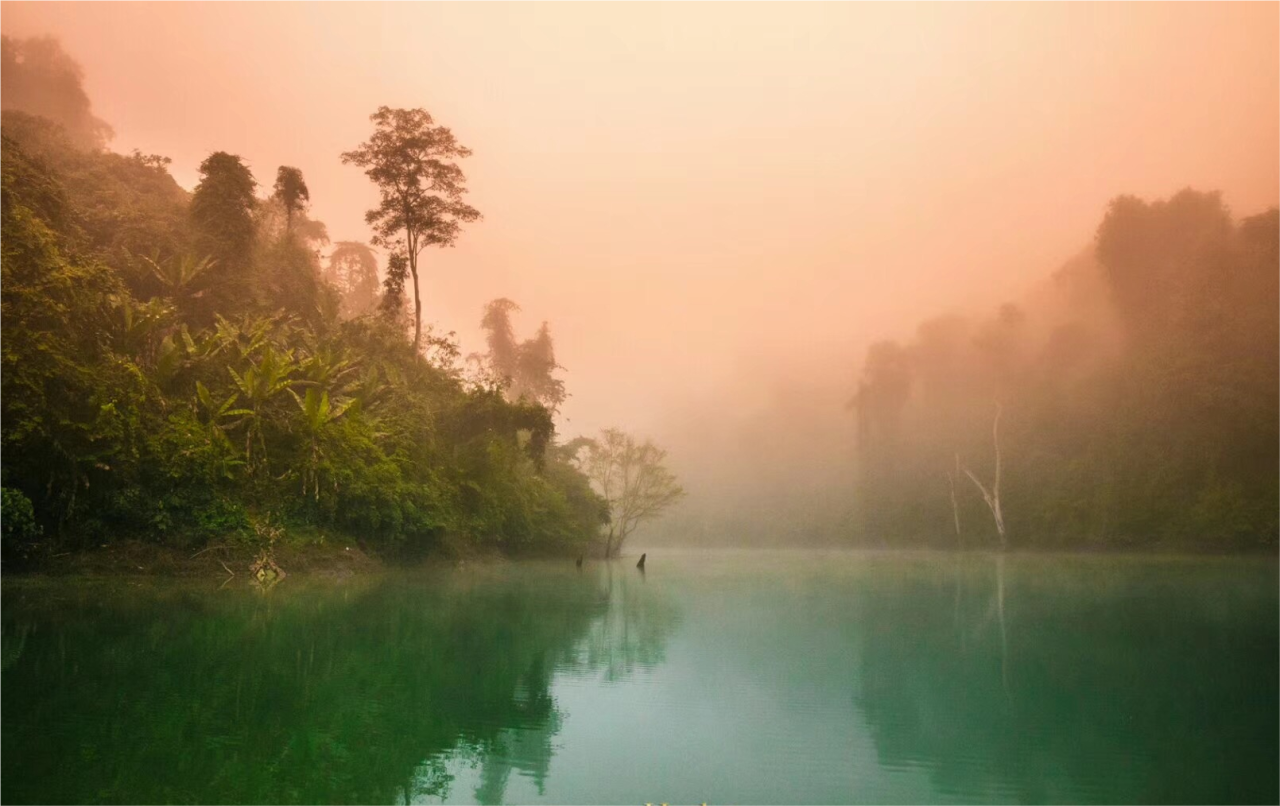
When the first rays of morning light pierce through the buttress roots of the towering wangtianshu (a rainforest giant) and cast golden columns through the mist, the dawn in Wild Elephant Valley feels enchanted. Standing in this hidden realm at 21° north latitude, you might feel disoriented—most places along this global latitude are deserts or oceans, yet here, across 19,096 square kilometers, China’s only tropical rainforest survives. With an average annual temperature of 21°C, year-round summer without winter, this land nurtures 966.3 kilometers of border and a unique landscape of “two mountains embracing one river.” The Lancang-Mekong River system nourishes this region, making it a cultural melting pot for 13 indigenous ethnic groups, with the civilization of the Dai Lue branch—known as “Mengle”—shining as its most brilliant jewel.
This is not a whirlwind tour. It is an exploration that delves deep into the fabric of culture. Let us step into Xishuangbanna’s lesser-known corners, touch the warmth of intangible cultural heritage, and experience the true essence of local life aesthetics.
Geography and History: The Rainforest Civilization Code at 21° North
The Civilizational Metaphor of Geographic Coordinates
The special position at 21° north gives Xishuangbanna a dual identity: it is both a borderland barrier of “southern Yunnan” and an open gateway at the “crossroads of Southeast Asian culture.” Sharing 966.3 kilometers of border with Laos and Myanmar, this region has not only fostered bustling border trade but also enabled a deep fusion of cultural elements such as Theravada Buddhism and stilted architecture. Walking along the ancient paths of Manting Park, you can feel this collision of civilizations—the ruins of Tang Dynasty pagodas intertwine with the incense smoke of the Zongfo Temple’s Wabajie, where the “lived faith” of Theravada Buddhism permeates every corner.
The Gift of the Rainforest and the Wisdom of Royal Power
In 1570, the chieftain Zhao Yingmeng divided his domain into 12 banna (meaning “a thousand fields”) as tax units, giving Xishuangbanna its name. This system remains clearly remembered in the oral histories of elderly Dai people today, echoing the administrative structure of “Mangnaidao” recorded in the Tang Dynasty text Man Shu, and eventually evolving into a community-based village lifestyle.
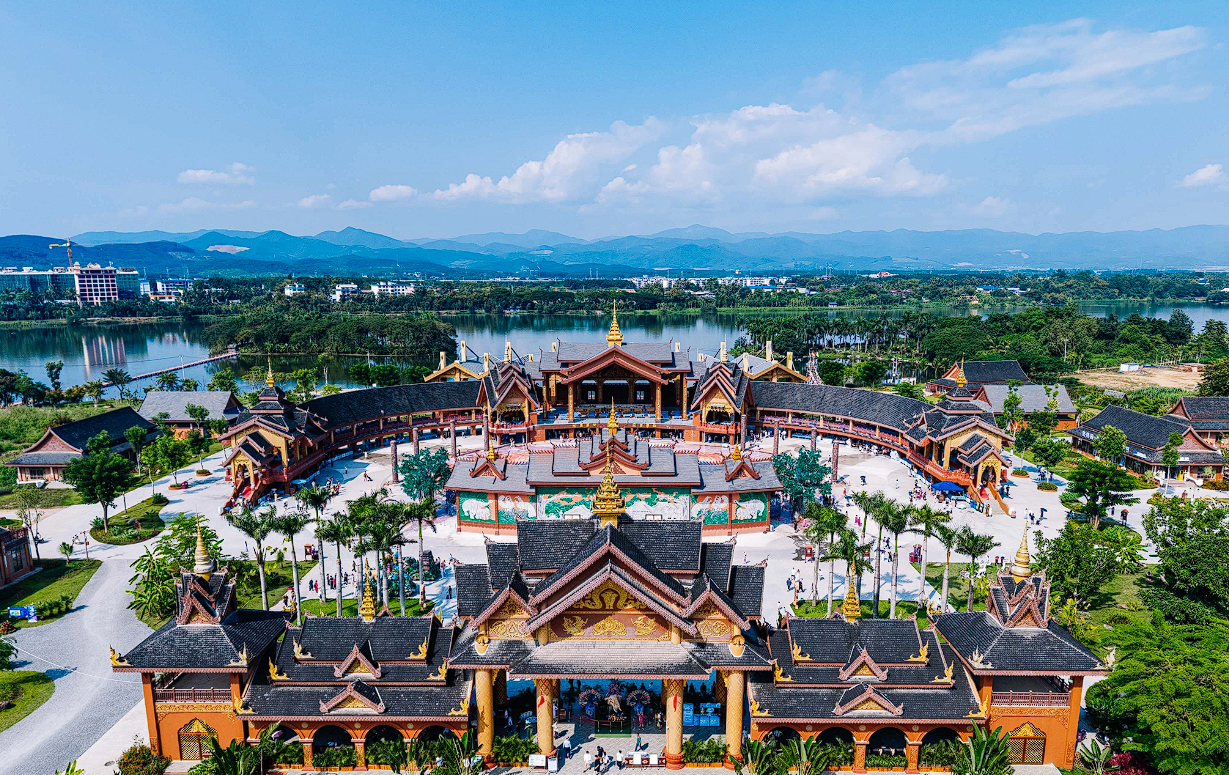
Manting Park, the royal garden of the Dai kings with over 1,300 years of history, has become a cultural vessel. Its Dai name, “Chunhuan,” means “Garden of the Soul,” hinting at a connection between nature and the spiritual world. Inside, the “Week Hall” of the Mengle Grand Buddha Temple enshrines eight Buddha statues, and devotees worship the corresponding deity based on their birth day—this concept of time even influenced the creation of the Dai calendar.
Palm-Leaf Sutras: A Museum of Living Texts
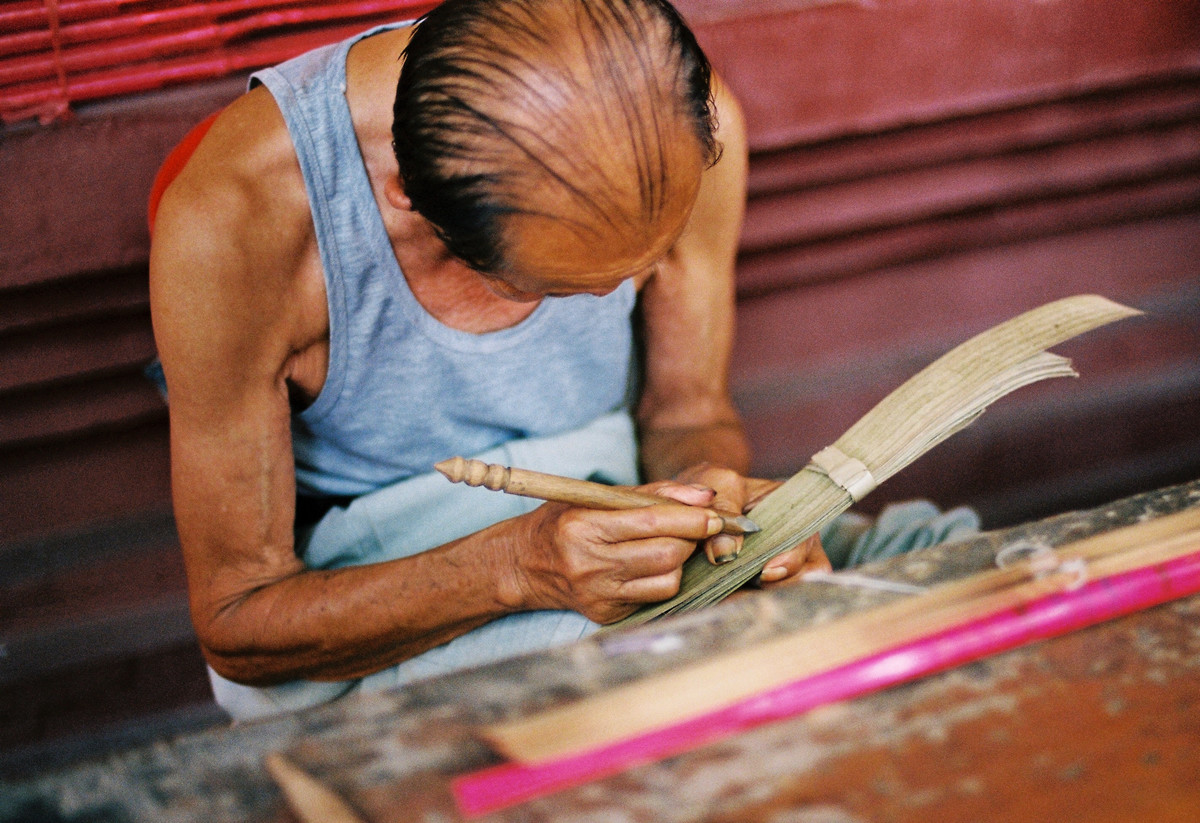
Palm-leaf sutras are another key to Xishuangbanna’s civilizational heritage. Treated with tamarind water, the leaves of the beiduoluo tree can last for centuries, inscribed with Buddhist scriptures, medical knowledge, and history in the Dai Lue script, making Xishuangbanna a “museum of living texts.” When papermaking is reenacted in the intangible heritage workshops of Manting Park, the Sanskrit incantations on those yellowed leaves and the low rumbles of elephant herds in the rainforest mist together tell the eternal secrets of the civilization at 21° north.
Winter Climate Advantage: The Golden Season for Escaping the Cold and Nurturing Health
Compared to the damp chill of Hainan in winter, Xishuangbanna from December to February offers a dry, comfortable climate of 15–22°C, with humidity stable in the 60–70% range and 85% sunny days creating a unique landscape of “warm sunshine in the mist.” The interplay of morning rainforest fog and midday sunlight offers a rich canvas for photography enthusiasts.
During this season, the elephant herd sighting rate in Wild Elephant Valley reaches as high as 70%, and visitors can observe the natural behavior of Asian elephants with the guidance of professional escorts. More notably, the prelude to the Dai New Year (Water Splashing Festival) begins in January, with villages gradually hosting intangible heritage experiences like making Dai paper and weaving Dai brocade, making winter the golden season for deep cultural exploration.
According to the 2024–2025 annual report of the Xishuangbanna Culture and Tourism Bureau, winter visitor satisfaction reached 94.7%, with “climate comfort” and “richness of cultural experience” rated as the top two indicators. The concentration of negative oxygen ions remains at 100,000 per cubic centimeter, further strengthening the region’s appeal as a “cold-escape health retreat.”
Exploring Hidden Gems: Cultural Homelands Beyond Gaozhuang
Manzhang Village: A 500-Year-Old “Dai Culture Museum”
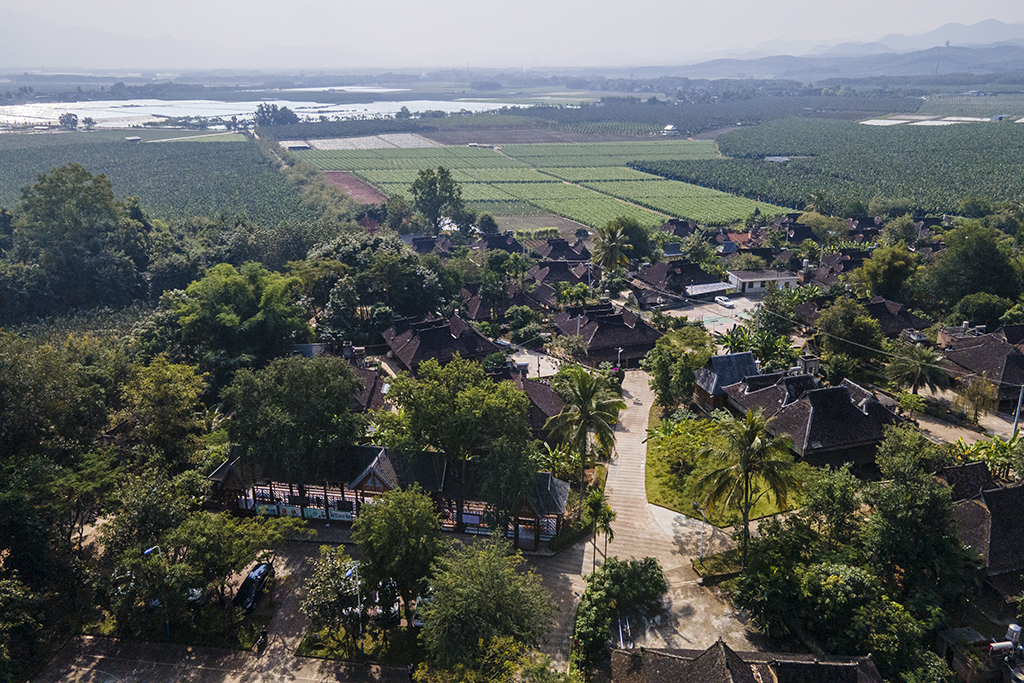
Wandering through the village with a local guide, I realized that only this approach can touch the cultural texture of Xishuangbanna, untouched by the filter of commercialization. The first stop was Manzhang Village, a 500-year-old “Dai Culture Museum” that preserves 18 national and provincial-level intangible heritage items.
In the home workshop of 72-year-old Dai pottery artisan Bo Wenbian, every step of the slow-wheel pottery process embodies the ancient Dai wisdom of “one part earth, two parts water, three parts fire.” Unlike the assembly-line experiences in scenic areas, the 10-yuan Dai pottery course here requires learners to go through the entire process of kneading clay, throwing, and shaping. The villagers’ homemade banana leaf-wrapped rice packets (5–15 yuan each) confirm the authenticity of “no commercialization” through taste—sticky rice mixed with grilled meat, carrying the slightly bitter aftertaste of banana leaves.
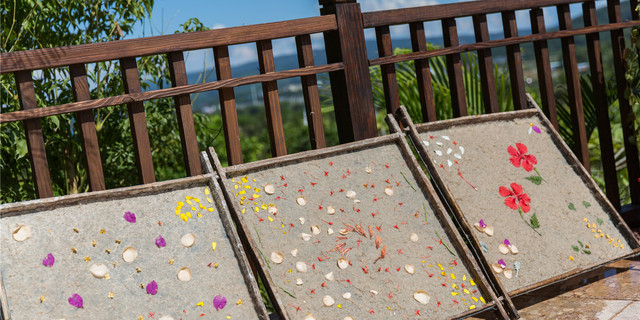
The scene of Dai papermaking under the bamboo stilt house is even more raw—the rhythm of beating mulberry bark mingles with the sound of flowing river water, and what settles on the paper-making screen is not just plant fibers but the Dai people’s philosophy of coexisting with nature.
Intangible Heritage Experience Comparison: - Manzhang Village: Family workshop-style teaching, emphasizing process integrity, finished products require 7 days of natural drying - Scenic Area Model: Mold-assisted production, 2-hour quick completion, uses chemical pigments
Manyuan Village: An Ecological View Under a Millennia-Old Sacred Tree
On the second day, I ventured deeper into Manyuan Village. At the entrance to the sacred mountain, a millennium-old sacred tree twisted its branches, and the Dai script on the stone tablet in front formed a curious dialogue with modern environmental slogans. The ancient taboo “No cutting trees on the sacred mountain” is actually a concrete expression of the Dai ecological worldview of “mountain forest—water source—village.” A local laomitiao (Dai for “old grandmother”) pointed to a strangler fig in the rainforest and explained, “All trees in the sacred mountain are relatives with souls.” You could see the almost reverent tenderness in her eyes as her wrinkled fingers traced the tree trunk.
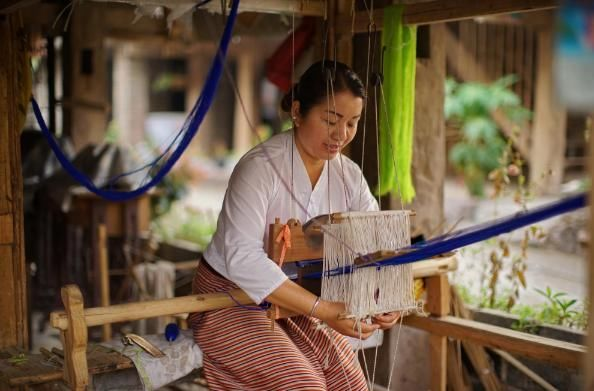
In the afternoon, while learning Dai brocade weaving in a villager’s bamboo house, the interweaving patterns of warp and weft threads felt like a metaphor for the Dai people’s way of handling the relationship between humans and nature.
Dai Ethnic Garden: The Cultural Disconnect of a Condensed Water Splashing Festival
The experience at the Dai Ethnic Garden presented a different cultural landscape. This park, composed of five original villages, stages water-splashing celebrations at 1:30 PM and 3:30 PM daily—standing in the crowd, I could smell the mix of mud and grass as the water splashed. The 45-yuan ticket included a water basin, allowing visitors to participate in this “condensed Water Splashing Festival.”
But as dusk fell, the zanha (Dai folk singer) performance area in the park’s intangible cultural heritage street echoed with melodious songs. An elderly artist, cradling a three-stringed lute, chanted the epic Zhao Shutun, creating a ritualistic contrast with the noisy daytime water-splashing scenes—in the real Dai New Year, water splashing is preceded by making offerings at ancient Buddhist temples, and the droplets carry the blessing of “washing away bad luck,” not mere entertainment.
Jinuo Mountain: A Living Sample of Cultural Adaptation
The hidden chapter of the Jinuo Mountain trip held deeper samples of cultural adaptation. In the Jinuo village, 81-year-old “last gun holder” Bulupiao displayed his rusted hunting rifle, a symbol of identity he received at his coming-of-age ceremony at age 15. At the foot of the mountain, his grandson was leading tourists in picking fresh Pu’er tea leaves, the tips releasing a crisp, clear fragrance as fingers brushed past.
The “Temaoke Festival” drum ceremony now blends with the tea mountain’s tea-offering ritual, and the “knife-cut cloth” making technique has been transformed into design elements for cultural creative products. This ethnic group, only officially recognized in 1979, uses the symbolic shift from “coming-of-age rifle to present-day tea garden” to demonstrate the proactive evolution of traditional culture in the face of modernization.
Food Culture: Rainforest Gifts and the Dai Flavor Philosophy
From Night Markets to Villages: The Two Poles of Taste
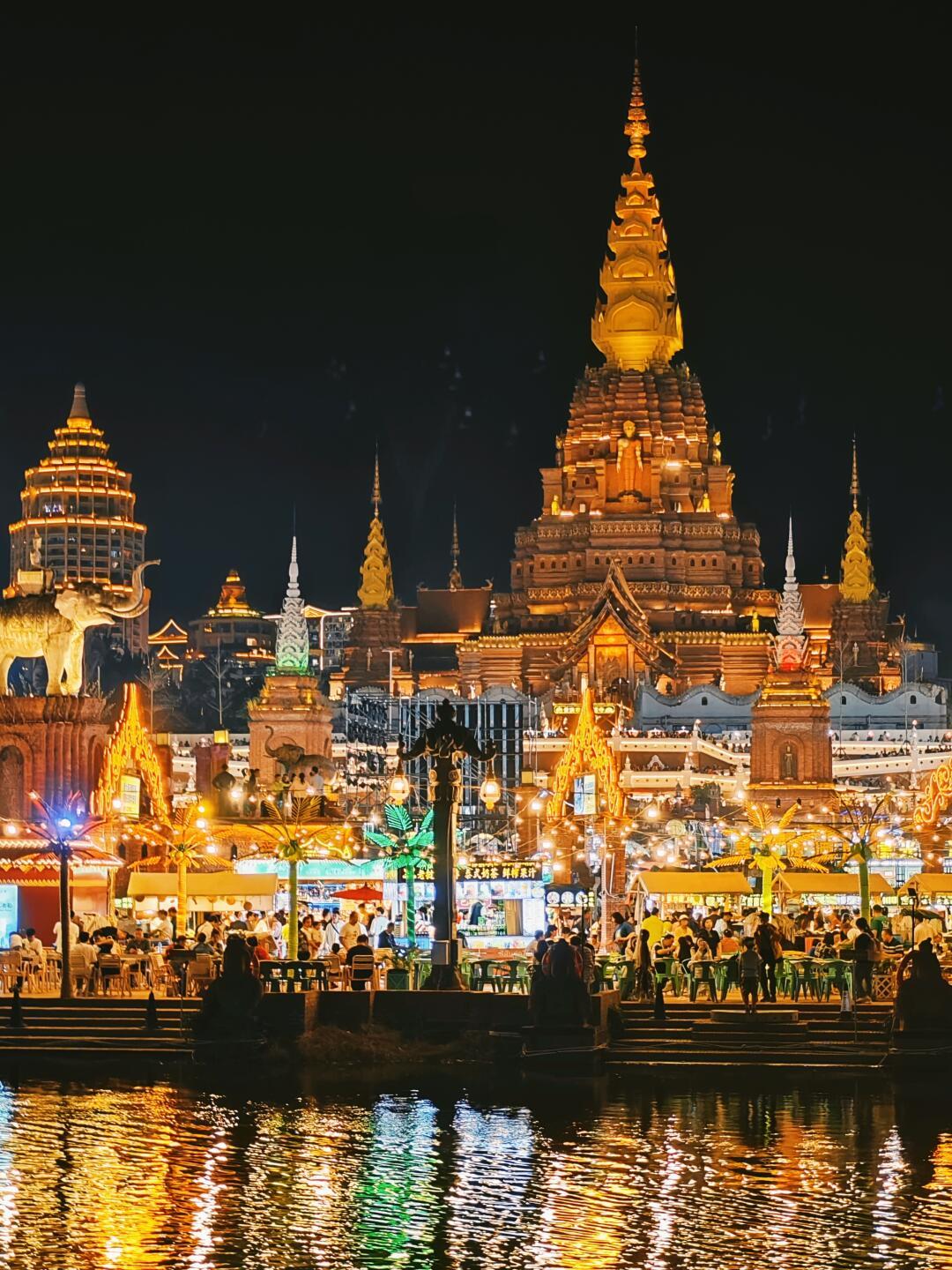
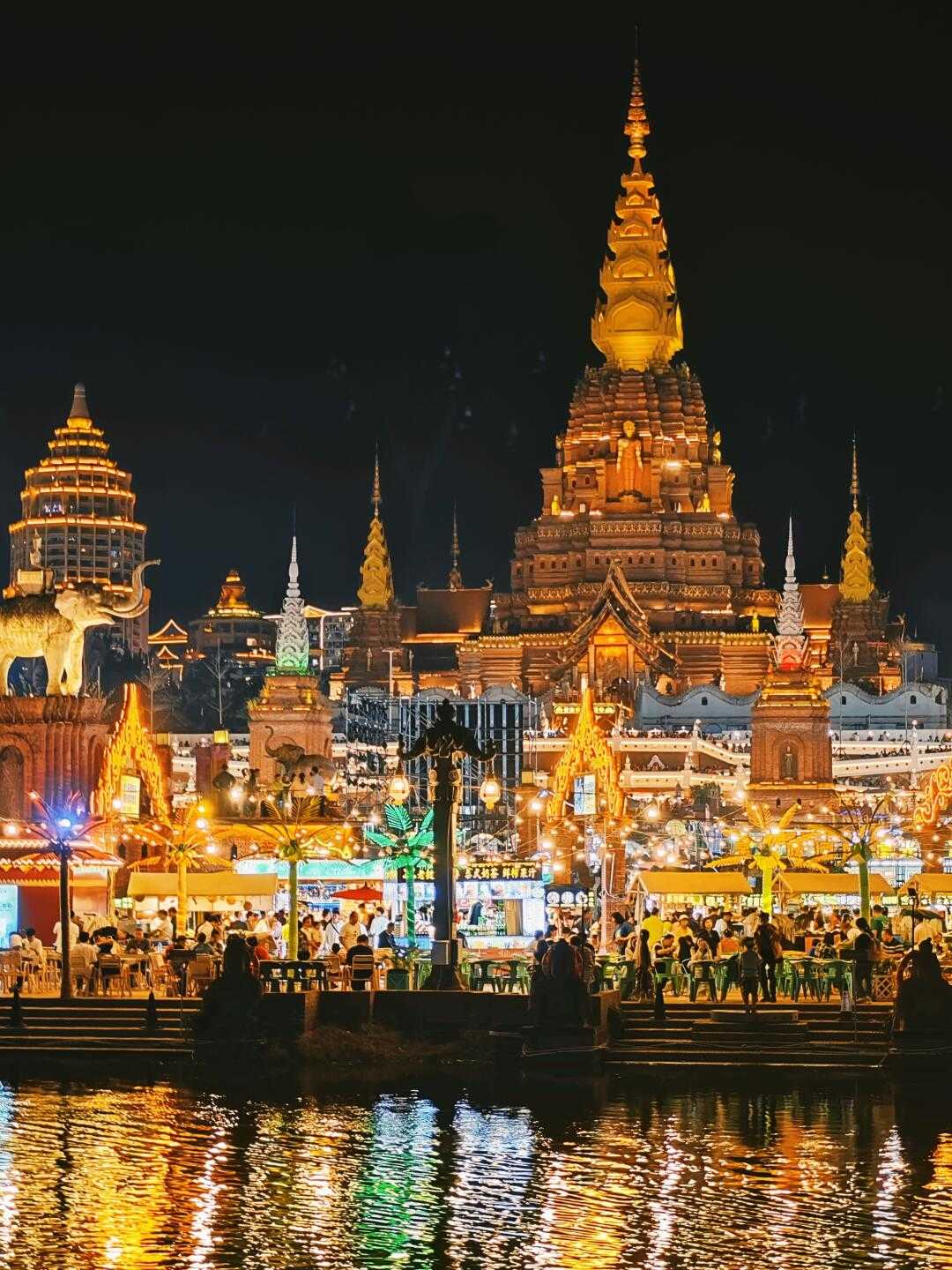
From the Thai-style tom yum soup at the Mekong River Star Night Market to the charcoal-grilled fish in the Dai kitchen of Manjingbao Village, Xishuangbanna’s taste map unfolds between commercialization and tradition. The 80% of night market stalls run by Thai vendors offer tom yum soup and green papaya salad, in stark contrast to the freshly pounded chicken feet in villagers’ homes—the former is standardized spicy-sour stimulation, while the latter hides the ever-changing variations of Dai “nam mi” dipping sauce.
This difference precisely confirms the Dai culinary wisdom of “living off the land.” When night market vendor Yan Wen gained fame with his grandfather’s recipe for pounded chicken feet, he still insisted on returning to his village weekly to learn about wild vegetables, ensuring that the rainforest’s gifts always remained the foundation of flavor—you can taste that unique, slightly bitter sweetness of the wild, something no greenhouse vegetable can match.
The Cultural Code of the Long Street Banquet
At the Dai New Year long street banquet in Manjingbao Village, the banana leaf-wrapped “Hao Luosuo” sweet dumplings carry multiple layers of cultural code: lemongrass not only gives fragrance but also repels insects; the fermentation technique of sour bamboo shoots is a food preservation wisdom for tropical climates; and the sweet-sour interplay of pineapple sticky rice symbolizes the joy of the festival—when you bite into the sticky rice, the pineapple’s fruity aroma suddenly bursts out.
This cultural logic of ingredient selection becomes even clearer in the sizzling sound of charcoal-grilled fish—fresh fish wrapped in lemongrass, grilled over charcoal, paired with moss sticky rice balls and a salad of ciwujia (a wild herb), forming a complete rainforest culinary philosophy.
Core Dai Flavor System: - Sour: Natural sourness from fermented bamboo shoots, e.g., sour bamboo shoot fish stew - Spicy: The stimulating kick of small chili peppers combined with pounding techniques, e.g., pounded chicken feet - Aromatic: The layered fragrance of lemongrass, kaffir lime leaves, and other aromatic plants - Fresh: The natural taste of rainforest wild vegetables and charcoal-grilled ingredients
Intangible Heritage and Contemporary Art: Creative Transformation of Traditional Symbols
From Monks’ Robes to Fashion: The Value Leap of Dai Brocade
Xishuangbanna’s intangible heritage transmission is undergoing a paradigm shift from cultural preservation to innovative transformation. Take Dai brocade weaving, for example. Traditionally used for making monks’ robes in Buddhist temples, the patterns of Dai brocade have been redesigned by fashion creators, not only shaping the collective identity of Dai women but also becoming a channel for ethnic minorities to reconstruct their ethnicity within the national discourse.
This transformative practice is vividly demonstrated in the workshop of Dai brocade artisan Yu Yinghan in Manzhang Village. Her cross-disciplinary collaboration with designers from the Yunnan Arts University has pushed ancient brocade patterns beyond the traditional boundaries of fabric, eventually landing on the Shanghai Fashion Week stage, completing a value leap from religious artifacts to fashion symbols.
New Palm-Leaf Poetry: Contemporary Expression of an Ancient Craft
As a living vessel of Dai civilization, palm-leaf sutras take on dual expressive dimensions in contemporary times. These ancient texts, made from beiduoluo leaves treated with tamarind water, can preserve centuries of Dai history and Buddhist wisdom—running your fingers over the leaves, you feel a warm, smooth texture, as if touching the traces of time.
Young artist Yan Guang’s “New Palm-Leaf Poetry” series breaks the monopoly of religious scripture, inscribing modern poetry on palm leaves, transforming this 2008 national intangible heritage craft into a medium connecting Dai cultural memory with contemporary emotions. Between the meditation hall of Manting Temple and Yan Guang’s studio, palm-leaf sutras have expanded from sacred texts to cultural expression platforms.
The Triple Tension of Intangible Heritage Innovation
In the wave of commercialization of intangible heritage experiences, the conflict between the authenticity of traditional crafts and their simplification is becoming increasingly prominent. Manzhang Village, as a living transmission base for 18 national and provincial intangible heritage items, reveals a typical problem in its slow-wheel pottery experience—to meet visitor demand, some workshops have replaced the traditional slow wheel with a fast wheel.
As a local intangible heritage bearer put it, “We teach culture, not craftsmanship.” This tension-filled statement reveals a deep contradiction in the experience economy: when Dai brocade, slow-wheel pottery, and other crafts are broken down into standardized experience flows, you can see techniques that require years of practice reduced to a few mechanical steps.
The practice of the Juyuan Intangible Heritage Cultural Exchange Center offers another possibility. Through the modern reinterpretation of the elements “gold, wood, earth, stone, and cloth,” it transforms intangible heritage crafts into “intangible heritage souvenirs,” exploring a balance between cultural meaning and market value.
Cross-cultural creation has become an important path for intangible heritage innovation. The “Rainforest Art Residency Program” at the Nanlianshan Owl Art Museum witnessed a collaboration between a French artist and Dai craftsmen on bamboo weaving installation art—standing under those light-and-shadow bamboo-woven domes, you could hear the pleasant sound of wind passing through the bamboo strips.
While breaking the practical function of traditional bamboo weaving, such creations also raise questions about cultural power relations: when Western contemporary art language meets Dai weaving techniques, how do you avoid falling into the trap of cultural appropriation? The giant mechanical elephant “Bali” at the Mengle Cultural Tourism Zone offers another technological interpretation, transforming the Dai “elephant culture” epic into an immersive technological experience through the live performance Heart of the Elephant.
These two paths together form the spectrum of intangible heritage innovation—on one end, the subjective persistence of local knowledge systems; on the other, creative breakthroughs in a global cultural context.
Local Life Aesthetics: Dai Wisdom from Architecture to Daily Life
Stilted Bamboo Houses: Survival Wisdom and Philosophical Reflection
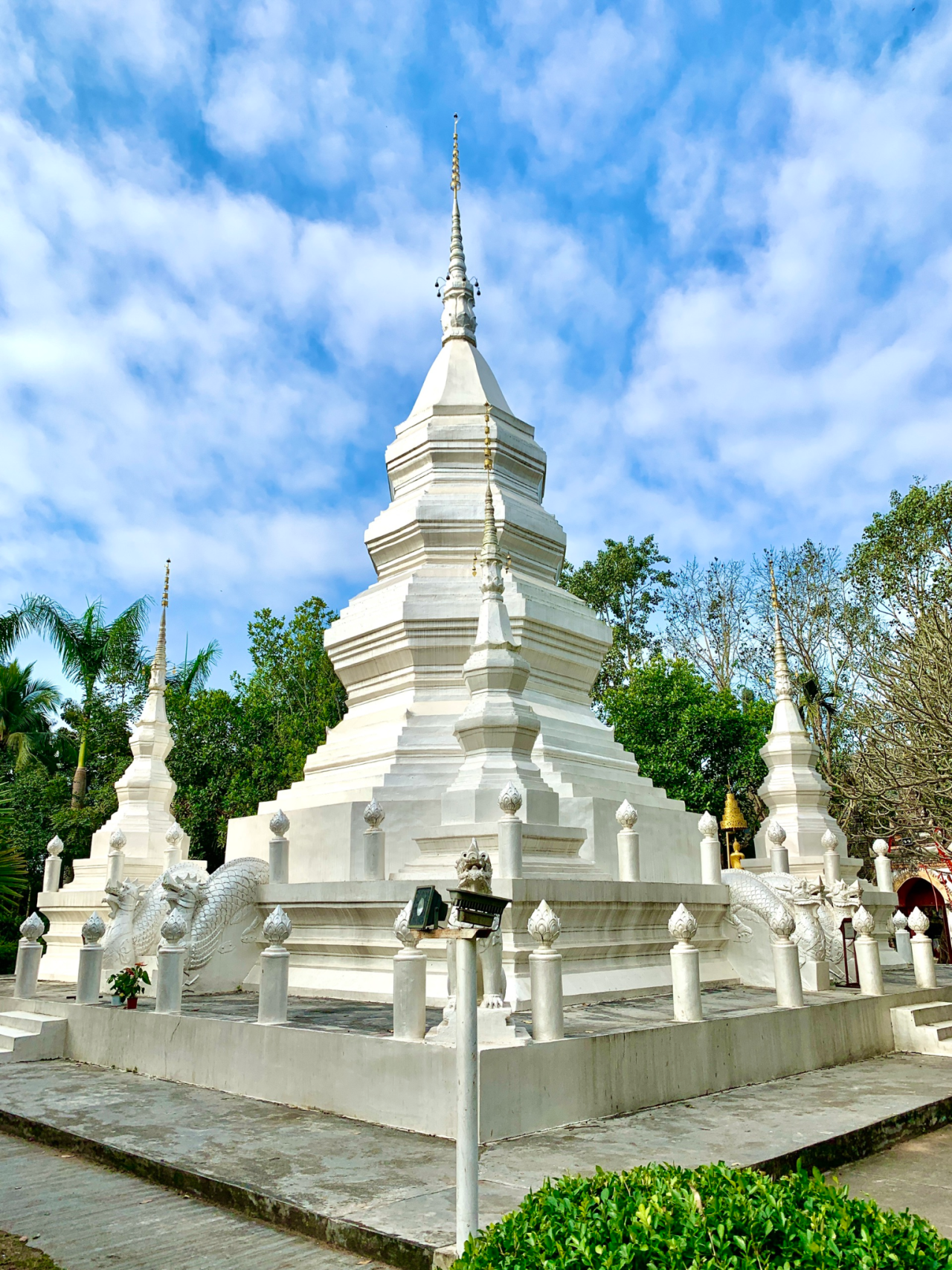
The life aesthetics of Xishuangbanna’s Dai people construct a unique cultural expression through architectural space, garden design, and ritual practice. The stilted bamboo houses preserved in ancient villages like Manyuan and Manzhang condense survival wisdom and philosophical thought into their form: the elevated design serves the practical functions of moisture-proofing and snake-insect prevention; the odd-numbered stairs (7 or 9 steps) carry auspicious meanings; and the natural degradability of bamboo reflects an ecological view of “taking from nature”—standing under a bamboo house and looking up, you can see the dappled light filtering through gaps in the bamboo slats, creating a particularly soothing scene.
This aesthetic continues in the ancient village of Manhenagu, where a 1,200-year-old settlement’s space of rustic bamboo houses and temples has become a frame for young visitors to capture Dai aesthetics.
Manting Park: The Culmination of Garden Aesthetics
Manting Park achieves a fusion of nature worship and royal symbolism through its “winding path to seclusion” layout. The red-walled, gold-roofed Dai king’s palace, octagonal covered bridges, and the plant spectrum of tropical orchid gardens and ironwood forests echo the Dai cosmology’s understanding of natural order—walking through, you can smell the air mixed with orchid and sandalwood incense, particularly calming.
When night falls, the Lancang-Mekong River Night song and dance performance transforms the geographical memory of “one river, six countries” into a dynamic aesthetic presentation.
Ritual and Daily Life: The Ultimate Aesthetic Penetration
The aesthetic penetration of ritual and daily life reaches its peak during the Dai festival cycle. During the Dai New Year “Sangkanbi,” women gather fragrant flowers to decorate Buddha niches for the alms-giving ceremony, men make bamboo rockets symbolizing the sending away of the old year’s misfortunes, and children learn New Year blessing songs in the Dai language, forming a complete cultural transmission chain—the entire village is filled with the aroma of lemongrass and sticky rice, with children’s laughter ringing in the air.
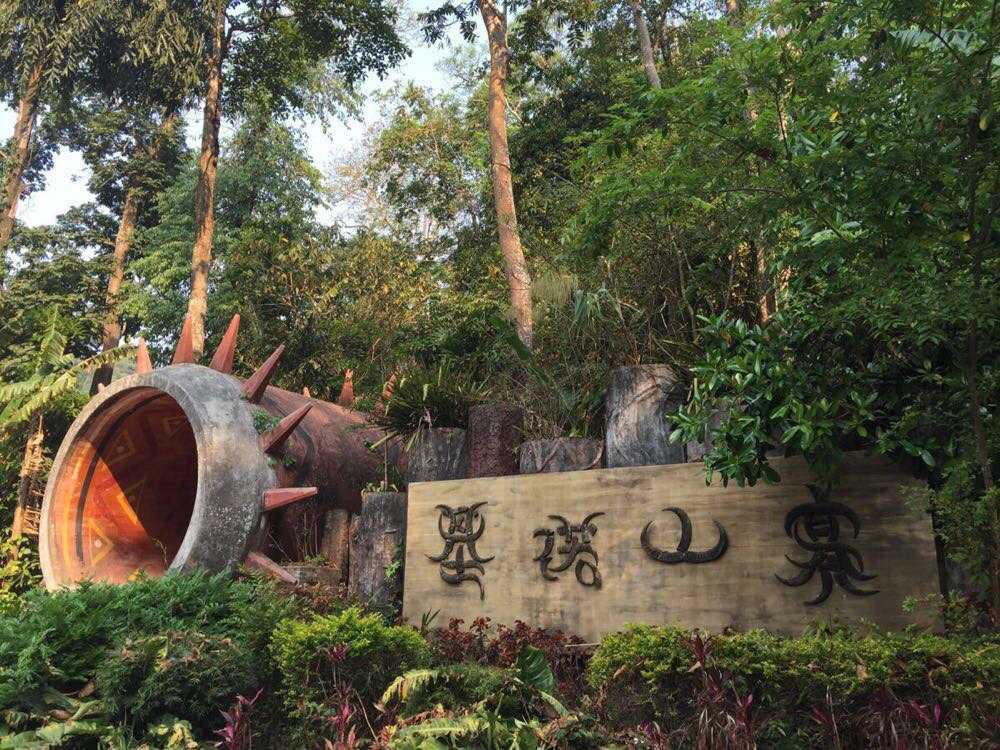
During the Water Lantern Festival, handmade lantern boats made of banana leaves, lemongrass, and beeswax candles drift on the water, forming a metaphor of a “microcosm” and resonating with the Buddhist philosophy of “letting go of attachments”—in the flickering candlelight, you can see the devout expression on every face.
This aesthetic tradition continues through modern adaptation spaces like Bodhi Pasha Mountain Courtyard, where calligraphy and tea rooms integrated into the stilted house structure give Dai life philosophy new life in a contemporary context.
The uniqueness of Dai aesthetics lies in the symbiosis of functionality and spirituality: the bamboo house is both a living space and a materialization of cosmology; the water lantern is both a prayer vessel and a philosophical expression; daily labor and religious rituals achieve unity in aesthetic practice. This phenomenon of “aesthetic diffusion” ensures that the life experience of the Dai people is always immersed in a poetic cultural field.
Accommodation: Experiencing Local Life
Yunlin Nashe: A Cost-Effective Choice

For families planning a winter trip, Yunlin Nashe, located in the heart of the Gaozhuang Xishuangjing area, offers a balance between private space needs and budget considerations with its independent villa design and high cost-effectiveness. A 5-minute walk to the Star Night Market and a 1-minute walk to the visitor service center and parking lot, the villas come with private elevators, completely solving the inconvenience of stairs for elderly family members and luggage carrying.
The hotel’s courtyard is thoughtfully decorated with tropical plants and elephant murals, and the iconic “Forbidden City Red Wall” background creates a perfect photo spot, where winter backlight conditions easily produce family portraits with a “Southeast Asian resort vibe.” The 80-thread-count cotton bedding paired with feather chandeliers creates a restful space that combines comfort with design.
Highlight: Three Instagram-worthy photo spots in the courtyard (Southeast Asian floral arch, Forbidden City Red Wall, mosaic pool and elephant mural). Family portraits taken on sunny winter days average over 500 likes on Xiaohongshu.
Shierlan Collection Hotel: A Palace of Intangible Heritage Art
Located on the banks of the Lancang River, the Shierlan Collection Hotel, with its fusion of “colonial-style architecture and Dai intangible heritage,” earned a nomination for Yunnan Province’s “Top 100 Boutique Hotels” in 2025. Its 25 rooms (45–110 sqm) include four 270° river-view suites, each equipped with Marshall sound systems and L’Occitane toiletries. A 42-meter infinity pool hovers over the river, offering panoramic views of the rainforest landscape and the Mekong River sunset.
The hotel lobby is themed around Dai pottery decoration, displaying large pottery installations made by intangible heritage bearers from Manzhang Village. Two free intangible heritage experiences are offered daily: a morning 9:00–10:00 Dai pottery workshop using local red clay, and an afternoon 15:00–16:00 Pu’er tea tasting session featuring ancient tree tea farmers from Nannuo Mountain teaching brewing techniques.
The most distinctive service is the “Dai costume photography” experience, offering hand-sewn traditional attire. The hotel’s in-house photographer guides guests to shoot under the bodhi tree in the courtyard, and after the session, the photos are presented framed with palm-leaf sutra mounting, completing a closed-loop cultural consumption experience of “experience—creation—collection.”
The Triple Role of Accommodation as a Cultural Medium: - Gateway to Local Life: Through morning market tours, farm-direct supplies, and other designs, building direct connections between visitors and the local community - Cultural Translator: Integrating intangible heritage elements like Dai brocade and pottery into spatial design, achieving contemporary expression of tradition - Community Economic Node: Prioritizing local ingredients and hiring indigenous housekeepers, forming a local circulation of tourism revenue
Conclusion: Xishuangbanna as a Method
On the night before departure, by the Lancang River, the warm glow of sky lanterns illuminated the silhouettes of people from different ethnic groups dancing together—a concrete representation of Xishuangbanna’s philosophy of diverse coexistence. The rainforest and villages achieve ecological balance here; the cultures of 13 indigenous ethnic groups converge like the Lancang River and its tributaries; Theravada Buddhist palm-leaf sutras and Jinuo carved-wood records coexist; intangible heritage crafts are reborn in the collision of handmade paper and modern design.
This wisdom of coexistence offers a solution to the dilemma of homogenized tourism. When the Water Splashing Festival, through its immersive experience of “wildness, beauty, dazzle, and cuteness,” allows Dai elders and young tourists to complete a cultural dialogue in the splashing water; when the grand ethnic folk culture parade fuses the multi-part singing of the Hani people and the beehive drum dance of the Bulang people into collective memory—you can feel that genuine joy is contagious.
Xishuangbanna proves: the true meaning of niche experiences lies not in isolation, but in building participatory connections that respect difference.
On the palm-leaf sutra I bought in Xishuangbanna, the Dai script blessing reads, “May you take root in the earth like a banyan tree, and embrace all rivers like the Lancang.” This is the ultimate revelation of this cultural journey: the true “elephant-inspired” life begins with the protection of cultural authenticity and ends with every traveler becoming a witness and transmitter of diverse coexistence.
Xishuangbanna’s survival philosophy reveals: cultural transmission is not about museum-like preservation, but about allowing tradition to grow naturally in a contemporary context. When intangible heritage crafts meet modern creativity, when local wisdom dialogues with outside perspectives, this land becomes a living textbook for understanding cultural diversity.
Travel Tips: - Best Time: December to February, dry climate, high elephant sighting rate - Must-Experience: Pottery-making in Manzhang Village, brocade weaving in Manyuan Village, tea-picking on Jinuo Mountain - Food Recommendations: Pounded chicken feet, charcoal-grilled fish, pineapple sticky rice - Accommodation Suggestions: Yunlin Nashe (family first choice), Shierlan Collection Hotel (in-depth cultural experience)
You should also read:

God’s Abandoned Palette: A Self-Drive Journey Through Yunnan’s Dongchuan Red Land
God’s Abandoned Palette: A Self-Drive Journey Through Yunnan’s Dongchuan Red Land Travel has never been about reaching some distant geographic coordinate. It’s about encountering, along the way, the version of yourself buried beneath the rubble of daily routine. During this May Day holiday, I finally…
Continue reading...
Body in Hell, Heart in Heaven: A Pilgrimage Through Tiger Leaping Gorge — A Dialogue Between Heaven and Earth
Body in Hell, Heart in Heaven: A Pilgrimage Through Tiger Leaping Gorge — A Dialogue Between Heaven and Earth Introduction: When the Gorge Splits Open Beneath Your Feet Some say Tiger Leaping Gorge is the closest place on Earth to the border between "hell" and…
Continue reading...
Cloud Travelogue · Dali of Wind, Flowers, Snow, and Moon: A Three-Day, Two-Night Journey of a Free Spirit
Cloud Travelogue · Dali of Wind, Flowers, Snow, and Moon: A Three-Day, Two-Night Journey of a Free Spirit I am a cultured female foodie with a touch of rogue charm. I slung on my backpack, took my lover's hand, and set off on a spontaneous…
Continue reading...