A Seven-Day Journey Through Southeast Yunnan: A Gentle Encounter with Mountains, Waters, and Ancient Towns
A Seven-Day Journey Through Southeast Yunnan: A Gentle Encounter with Mountains, Waters, and Ancient Towns
Before We Set Off
Every summer, our family vacation feels like a carefully orchestrated campaign. This year, we set our sights on Yunnan—not the crowded hotspots of Dali or Lijiang, but a lesser-known circuit through southeastern Yunnan. Starting from Kunming, our route would take us through Chengjiang, Jianshui, Mengzi, Puzhehei, and finally end in Mile. With nine people, seven days, a 19-seat Yutong bus, and an experienced local driver, our summer adventure began.
To be honest, checking the weather forecast before departure—rain predicted for nearly every day—made me a bit uneasy. But once we set foot on this land, I truly understood the local saying: "In Yunnan, the sun shines in the east while it rains in the west." The weather here is like a mischievous child—raining one moment, gifting you a brilliant blue sky the next.
Day 1: From Beijing to Fuxian Lake, a Date with Sunshine
En Route to Kunming
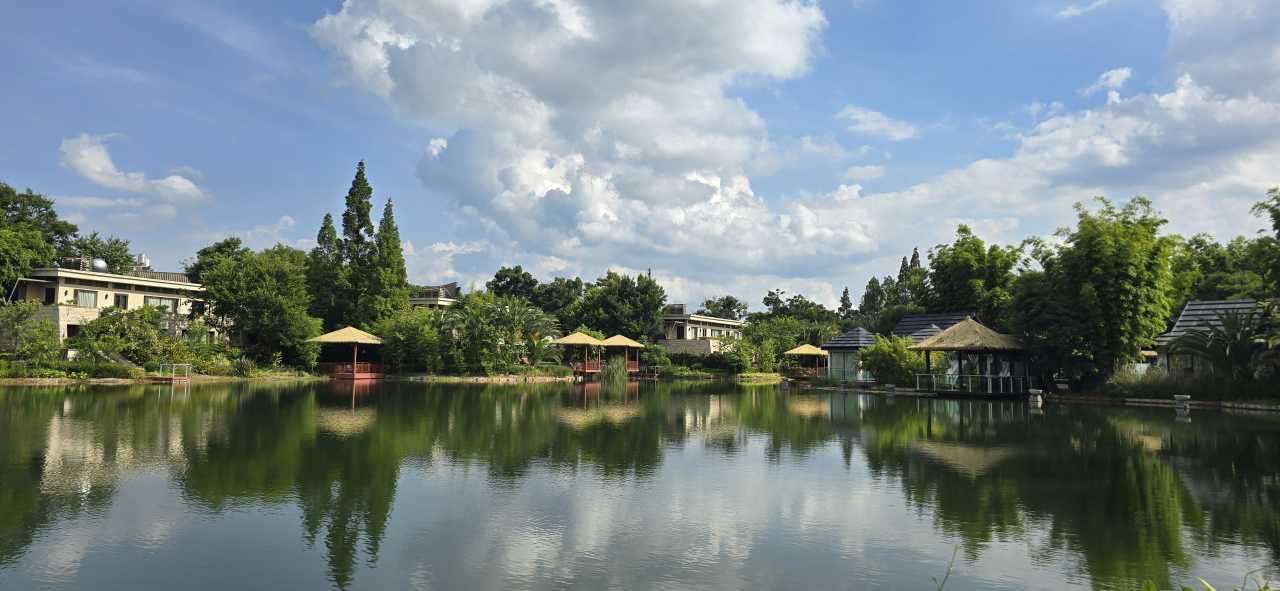
We caught the 10 a.m. Air China flight, grabbing a quick breakfast at the VIP lounge before boarding. Four hours of smooth flying on a large aircraft—so stable and fast that we landed a full hour early. Outside the window, clouds spread like cotton batting, mountains slowly shifting beneath us. Every time I gaze down at the earth from above, it feels like a form of soul-healing.
Driver Guo was already waiting at the airport, his clear directions making our rendezvous seamless. Without lingering in Kunming, we headed straight for our first stop—Fuxian Lake in Chengjiang.
Red Sand Beach: An Unexpected Surprise

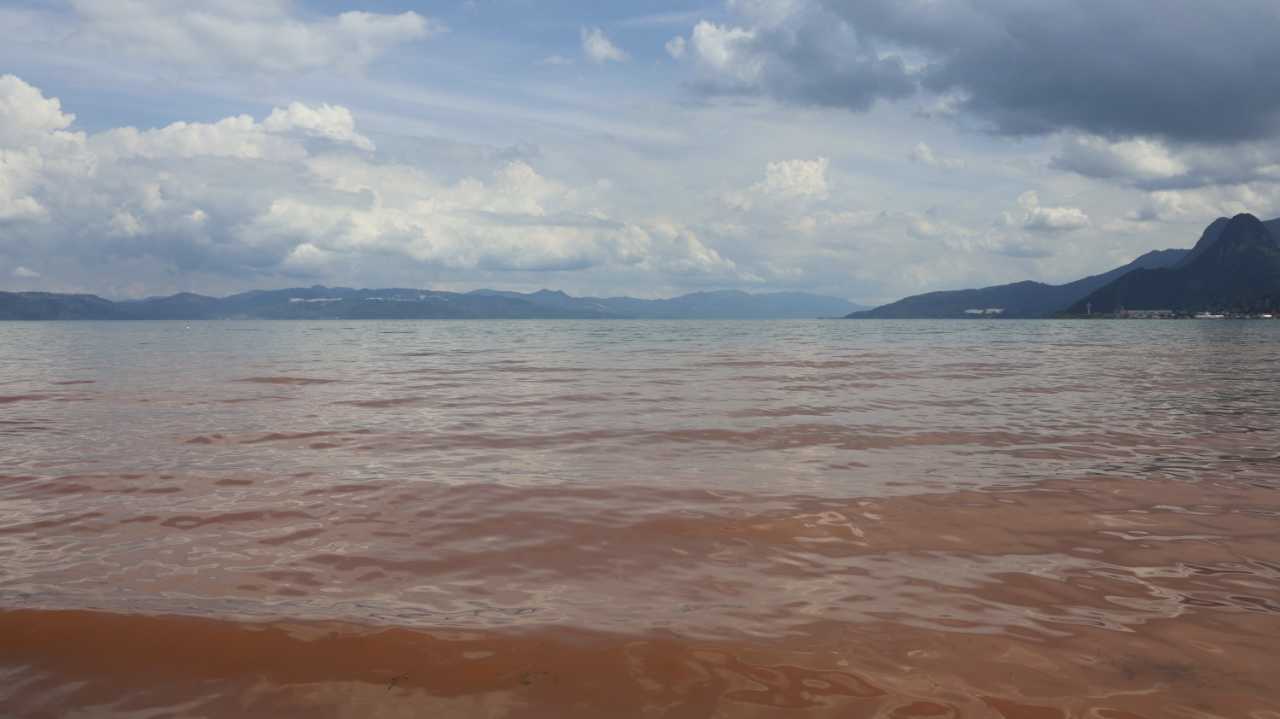
Fuxian Lake's Red Sand Beach is touted as a one-of-a-kind landscape in China. Online photos are breathtakingly beautiful—pinkish sand contrasting with azure waters, like a palette God overturned. But as we followed a rather unkempt path toward the beach, doubts crept in—only a few scattered vendors and crude signposts along the way. Was this really that Instagram-famous spot?
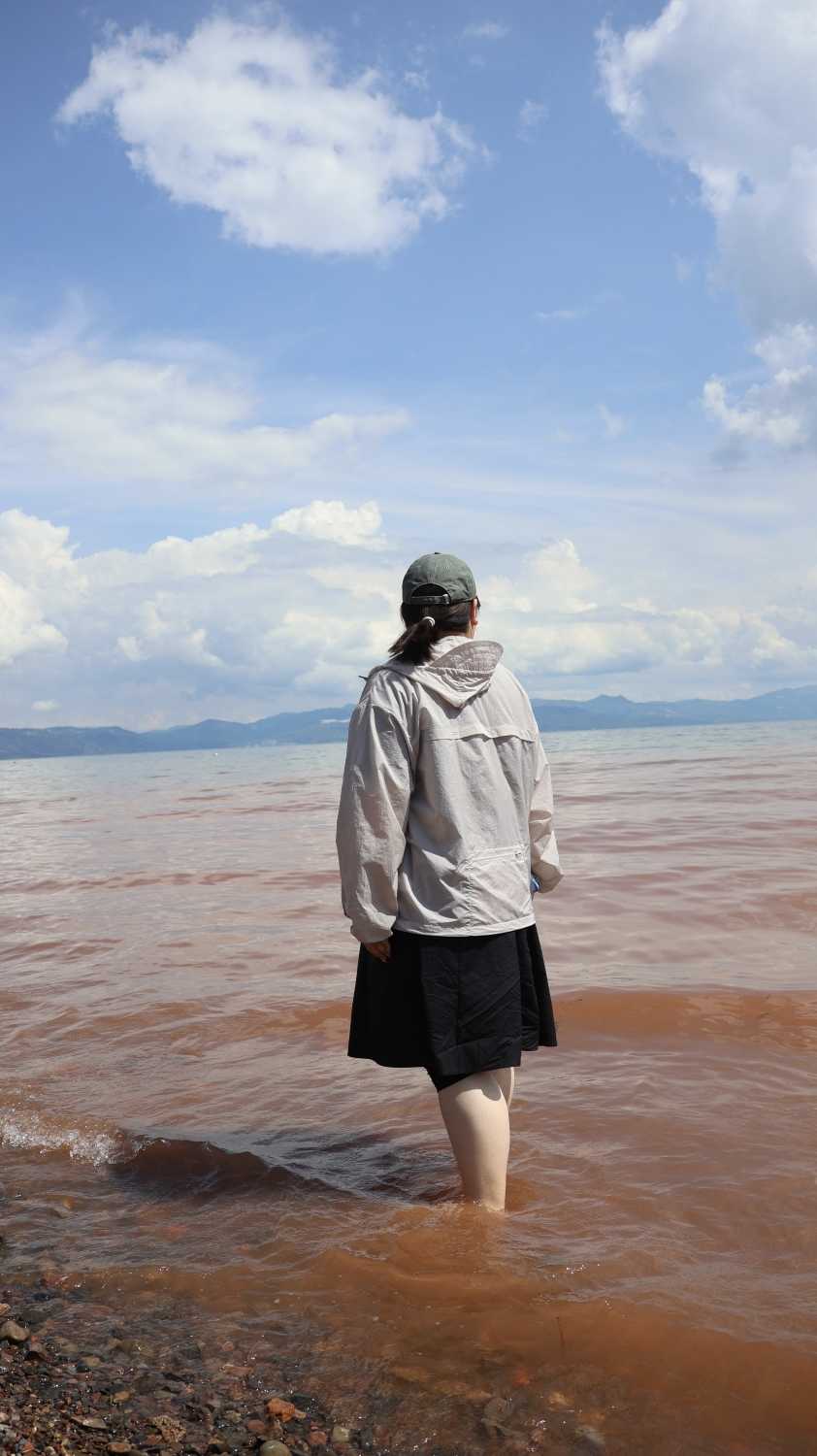
Up close, the Red Sand Beach wasn't large—maybe 200 to 300 meters. The sand wasn't fine but coarse, giving it a rugged beauty from a distance. That didn't dampen our enthusiasm for wading in the water. The lake was cool with a hint of warmth, and if you looked closely, the sand beneath your feet did have a faint reddish tint. The sun was perfect, the sky blue with white clouds—a brilliant start to our journey.
Moon Bay Wetland Park: Gentle Twilight
After checking into the Wanda Vista Hotel, we used the park pass provided by the hotel to enter Moon Bay Wetland Park before 6:30 p.m. This composite ecological wetland features a recreational beach, tennis courts, wetland waters, and sparse woodland. Upon entering, we first saw a mirror-like expanse of water where people kayaked, with paragliders circling in the distance.
Further in, we found a man-made beach with fine white sand. The kids couldn't resist digging immediately. The real lake stretched before us, dotted with white sails gleaming under the setting sun. Waves lapped the shore, churning up coarse sand and making the water a bit murky—but it had its own wild charm.
We'd hoped to watch the sunset, but Yunnan's sky seems to darken late; the sun was still high. We decided to grab dinner first.
Dinner and a "Thrilling" Interlude

Dinner was at "Yumi Xiang" (Fish and Rice Village) across from the hotel. Their signature mushroom fish hotpot was a feast—the broth, pure and umami-rich, paired with tender, silky fish, left us thoroughly satisfied.
Afterward, an unexpected incident made the night unforgettable. Seeing someone setting off firecrackers—a rare sight for those of us from Beijing's no-firework zone—we couldn't resist buying some and lighting them in the open space in front of the hotel. At first, everything went smoothly: firecrackers crackled, everyone gathered around taking photos and laughing. But then a firework rocket suddenly tipped over from the force, changing direction and shooting toward us like a missile. In the chaos, everyone scattered. I couldn't dodge in time, and a rocket struck my leg. Luckily, it only left a bruise—nothing serious. Looking back, I shudder to think: no one was hurt, no trees caught fire, no car was damaged—we were incredibly fortunate.
Day 2: From Crystal Waters to a Millennium-Old Town
Lu Chong Scenic Area: The Essence of Fuxian Lake
The next day, we focused on the Lu Chong Scenic Area. Fuxian Lake is known as "Ten Thousand Acres of Glass," its water so clear you can see the bottom—average visibility 8 meters, up to 12.5 meters, the highest among Yunnan's lakes. The Ming dynasty traveler Xu Xiake once marveled: "Yunnan's mountains are mostly soil, so many rivers become muddy, but Fuxian Lake is the clearest."
Lu Chong Village sits on the lake's western shore, historically boasting the honor of "one family producing two jinshi scholars and two hanlin academicians in a hundred steps." As soon as we drove up to the village entrance, someone boarded the bus to sell tickets—free for seniors, 15 yuan for adults. A bargain.
Past the commercial street, the view opened up. A vast expanse of sparkling water dotted with fishing boats, pedal boats, and sailboats. We couldn't wait to kick off our shoes and wade in. The water was cool, the sand a bit rough, but that didn't diminish the pleasure. Cafés dotted the lakeside, giant banyan trees providing shade, with lounge chairs and pour-over coffee creating the most romantic vacation vibe.
In the distance stood Bijiashan (Brush Holder Mountain). Every year on the 19th day of the second lunar month, the Guanyin Temple at its summit hosts a lively temple fair. To the north lies Boxi Bay (Wave-Resting Bay)—just the name suggests its calm, sheltered waters.
Lunch: Tasting Kanglang Fish
Lunch was at "Longmen Yufu" (Dragon Gate Fish House) in town. Their signature dish was kanglang fish (anti-wave fish), a rare native species unique to Fuxian Lake. Small and slender, about 3-4 inches long, arrow-shaped, and silvery white. Legend has it that during the Qing dynasty's Kangxi era, a Chengjiang jinshi named Zhao Shilin presented these tiny fish to the emperor, who praised them and bestowed the name "kanglang fish." Local fishermen developed a unique "cart-water fishing" method, leveraging the fish's instinct to swim against the current: they use a waterwheel to channel water into a ditch, and the fish automatically swim into specially designed traps.
Jianshui Ancient Town: A Living Museum
Leaving Fuxian Lake, we drove to Jianshui. A sudden downpour hit the road, and the sign for Mingxing Fish Cave flashed by—we decided to skip it, figuring it would be similar to Lu Chong.
By the time we reached Jianshui, dusk was falling. Our hotel, Lin'an Hotel, was perfectly located—just a short walk to the ancient town's core. After a brief rest, we strolled across the street. Straight ahead lay the Zhu Family Garden; to the left, Chaoyang Tower; to the right, the Confucian Temple and Lin'an Mansion—one street connecting the most important landmarks of old Jianshui.
Jianshui Ancient Town, weathered by a thousand years, preserves over fifty ancient buildings, earning it the titles "Museum of Ancient Architecture" and "Museum of Folk Dwellings." Walking on the bluestone paths, under shade-giving ancient trees, past street-side shops, you're immersed in a thick atmosphere of everyday life. This "old" town feels like a living specimen, its beauty hidden in the deep alleys—in wells, flowerbeds, ancient trees, and old homes.
Chaoyang Tower: Older Than Tiananmen
Before long, we reached Chaoyang Tower. Built in 1389 during the Ming dynasty, its architectural style is strikingly similar to Beijing's Tiananmen—yet it predates Tiananmen by 28 years. Climbing the tower requires a ticket, but it's well worth it. From the windows, you can gaze down at the human comedy on Lin'an Road, the tranquil town in the distance, the brilliant sunset clouds, the birds returning to their nests, and the bluestone pavement etched with time.
The second and third floors house a photo exhibition on Jianshui's history, featuring images taken over a hundred years ago by the then-French Consul General in Yunnan. The massive plaque hanging at the front reads "Xiong Zhen Dongnan" (Mighty Guardian of the Southeast), each character about two meters tall, written in a bold, vigorous style. It's one of Yunnan's "Four Great Inscriptions" from the Qing dynasty and the only one still surviving.
As darkness fell, more locals gathered in the square to cool off—some dancing, others singing, each enjoying themselves. The lights on Chaoyang Tower came on, magnificent and imposing.
Dinner: Cao Ya at Sizhitang
We chose Sizhitang for dinner, a restaurant featured on CCTV's "Three Meals and Four Seasons." The ambiance was antique and elegant, the dishes refined. I specially ordered cao ya (grass shoots)—an aquatic plant unique to Jianshui, shaped like tiny elephant tusks, also called "ivory vegetable." Extremely tender with a crisp, refreshing bite, it has a unique chewiness and a sweet, delicate flavor. Simply dropped into boiling soup, it becomes a rare delicacy.
Day 3: A Day Traveling Through Time in Jianshui
Hotel Breakfast: Sampling Jianshui's Specialties in One Meal
The hotel's breakfast was abundant, letting us sample many of Jianshui's signature snacks in one go. Cao ya rice noodles, papaya water, lion cake, thin soybean porridge, Jianshui tofu—each was memorable. The thin soybean porridge, especially, with its rich condiment bar for DIY seasoning, was a joy.
Zhu Family Garden: The Grand View Garden of Southern Yunnan
We arrived early at the Zhu Family Garden to avoid the crowds. This large residential complex, built in the late Qing dynasty, took two generations of the wealthy Zhu family—Zhu Chengzao and his son Zhu Chaoying—nearly 30 years to complete. With ancestral halls, living quarters, and gardens all resplendent, it's known as the "Grand View Garden of Southern Yunnan."
The garden was running a promotion: visitors could receive a silver note and a stamp-collecting booklet, then follow the map to check off various attractions. Passing through the "Follow Rules and Regulations" moon gate, we entered the inner courtyard. The Zhus named their four inner courtyards after the "Four Gentlemen" of flowers—plum, orchid, bamboo, and chrysanthemum—with vines and bamboo adding charm, and furnishings meticulously arranged.
Beyond the inner courtyard, a wall bore an inscription of the Zhu family precepts. The Zhus' ancestors came from Hunan to Jianshui, starting from scratch by trading tea and silk, eventually influencing the entire province's politics and economy. Their success wasn't just luck but the spirit and legacy of the family.
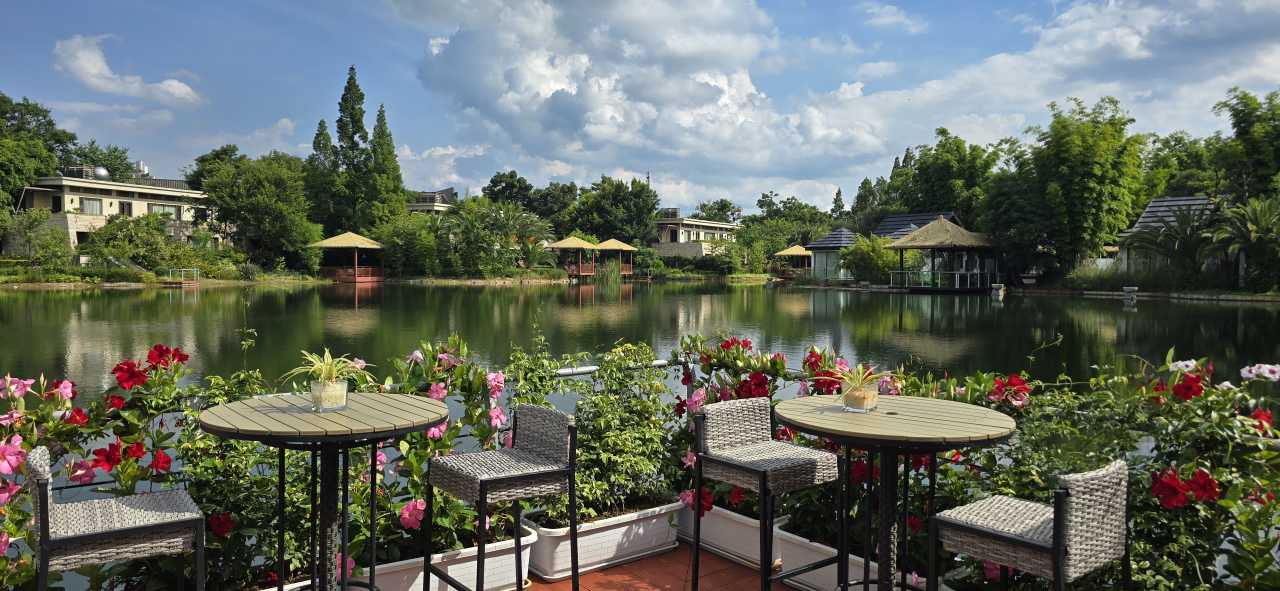
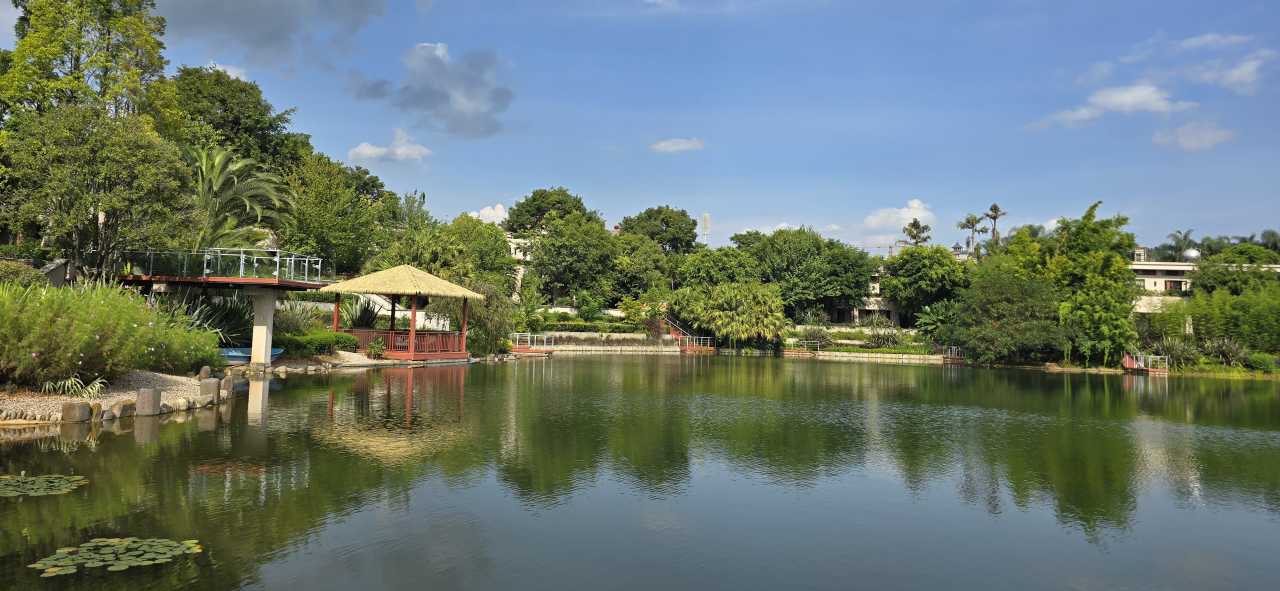
The back garden was a hidden paradise. Ponds, pavilions, waterside gazebos, and rockeries complemented each other. Black-billed crested ducks swam leisurely in the pond—a species I'd never seen in Beijing. A cloud drifted overhead, bringing a light drizzle. We rested in the covered corridor, watching raindrops hit the lotus leaves, listening to the patter—a poetic moment.
Examination Hall and Confucian Temple: Witnesses to a Literary Legacy
Leaving the Zhu Family Garden, we followed signs to the Xue Zheng Kao Peng (Imperial Examination Hall). This was the examination site for the civil service exams in southern Yunnan. The entire complex is symmetrical along a central corridor, forming six courtyards. Records show that during the Ming and Qing dynasties, Yunnan produced 953 civil jinshi scholars, of whom 214 hailed from Lin'an Prefecture—over one-fifth of the province's total. One can imagine the intellectual flourishing of Lin'an back then!
The Jianshui Confucian Temple, built in the Yuan dynasty, is over 700 years old and second in scale only to Qufu's Confucian Temple in Shandong. Entering the temple, a vast Pan Pond (a semicircular pool) stretches before you, covering over 40 mu (about 6.6 acres)—the largest of any Confucian temple in China. Lotus flowers bloomed in the pond, with walkways and red walls enclosing the scene, steeped in antiquity. Beyond the pond stands the "Zhu Si Yuan Yuan" archway, a wooden-and-stone structure with intricate carvings and grandeur.
By this point, the family was getting tired. Looking at the vast "Sea of Learning," we decided to leave some sights unseen—a reason to return next time.
In Conclusion: The Meaning of Travel
Our seven-day journey through southeastern Yunnan took us across Fuxian Lake's crystal waters, immersed us in Jianshui's thousand-year-old烟火 (everyday life), let us savor the umami of mushroom fish hotpot, and gave us the thrill of a firework scare. Every scene, every moment, became a treasured memory.
This trip taught me that the most beautiful sights often aren't at famous attractions but in unexpected corners. Like Jianshui Ancient Town—unpretentious, unassuming, yet rich with the deepest history and the most vibrant everyday life. And Fuxian Lake—though we didn't see those romantic "pink sand beach" photos from the internet, the crystal-clear water and refreshing coolness were more than enough to satisfy.
Perhaps the meaning of travel lies in these unexpected surprises and the shared moments with family. Whether laughter or thrills, they become our collective stories, shining brightly in the river of time.
Practical Tips: - Summer rental car prices fluctuate significantly; book early. A 19-seat Yutong bus costs around 2,000+ yuan per day - Pay attention to power banks with a 3C certification; airport security is strict—stick to reputable brands - Yunnan's weather is changeable; always carry rain gear, but don't let the forecast scare you - Museums are closed on Mondays; plan accordingly - Jianshui's core attractions are concentrated and walkable; staying near the old town is recommended
May your next journey bring you the same beauty and wonder.
You should also read:

Cloud Travelogue · Dali of Wind, Flowers, Snow, and Moon: A Three-Day, Two-Night Journey of a Free Spirit
Cloud Travelogue · Dali of Wind, Flowers, Snow, and Moon: A Three-Day, Two-Night Journey of a Free Spirit I am a cultured female foodie with a touch of rogue charm. I slung on my backpack, took my lover's hand, and set off on a spontaneous…
Continue reading...
Golden Luoping: A Romantic Encounter with Sunshine and Seas of Flowers
Golden Luoping: A Romantic Encounter with Sunshine and Seas of Flowers Introduction: The Third Time's the Charm Some landscapes are destined to be seen at the right moment. For me, that was exactly the case with Luoping's rapeseed flowers. On February 22, 2011, the Luoping…
Continue reading...
The Meaning of Travel – A Tengchong Story: A Journey of the Heart and Personal Growth
The Meaning of Travel – A Tengchong Story: A Journey of the Heart and Personal Growth Setting Out, Only to Return a Better Self Some say travel is nothing more than leaving a place you're tired of, only to go to a place where others…
Continue reading...