A Spontaneous Trip to Xishuangbanna: Bringing Mom and Daughter to the Tropical Sun
A Spontaneous Trip to Xishuangbanna: Bringing Mom and Daughter to the Tropical Sun
Some trips are planned for ages but never happen. Others come on a whim and end up becoming the most unforgettable memories.
In the winter of 2022, our family of three—me, my mother, and my daughter—had been stuck at home for over three months due to the pandemic. Online classes ran from late November straight into winter break, and with the long holiday stretching ahead, even my little girl started sighing by the window: "Mom, when can we go out and play?"
We originally thought about going to Xiamen to enjoy some slow living, but something felt missing. Then one day, I stumbled upon a travel post about Xishuangbanna. The screen was full of green, warm sunshine, and exotic vibes—it hit me instantly. An idea exploded in my mind: this is it!
Without much hesitation, I planned, booked flights, and reserved hotels—all in one go. Three women, a spontaneous trip, and it began.
Day 1: From Snow and Ice to Tropical Rainforest
Winter in Shenyang is bone-chillingly cold. We departed from Taoxian Airport, took a Sichuan Airlines flight with a stopover in Chengdu, and after nearly eight hours, finally arrived at Xishuangbanna Gasa Airport at 11 p.m.
The moment we stepped out of the plane, the warm, humid air hit us—it felt like jumping from winter straight into summer. My daughter excitedly took off her coat, and my mom smiled, saying, "This air is so comfortable."
The guesthouse arranged a free airport pickup, and we checked into the Fangye Duju Inn in Gaozhuang. We booked a balcony triple room for 247 yuan ($34) per night and stayed for three nights. The room wasn't huge, but the location was convenient, though it was a bit noisy at night. Still, for three people eager to explore Xishuangbanna, that didn't matter.
Day 2: Temples, Gardens, and the Bustling Night Market
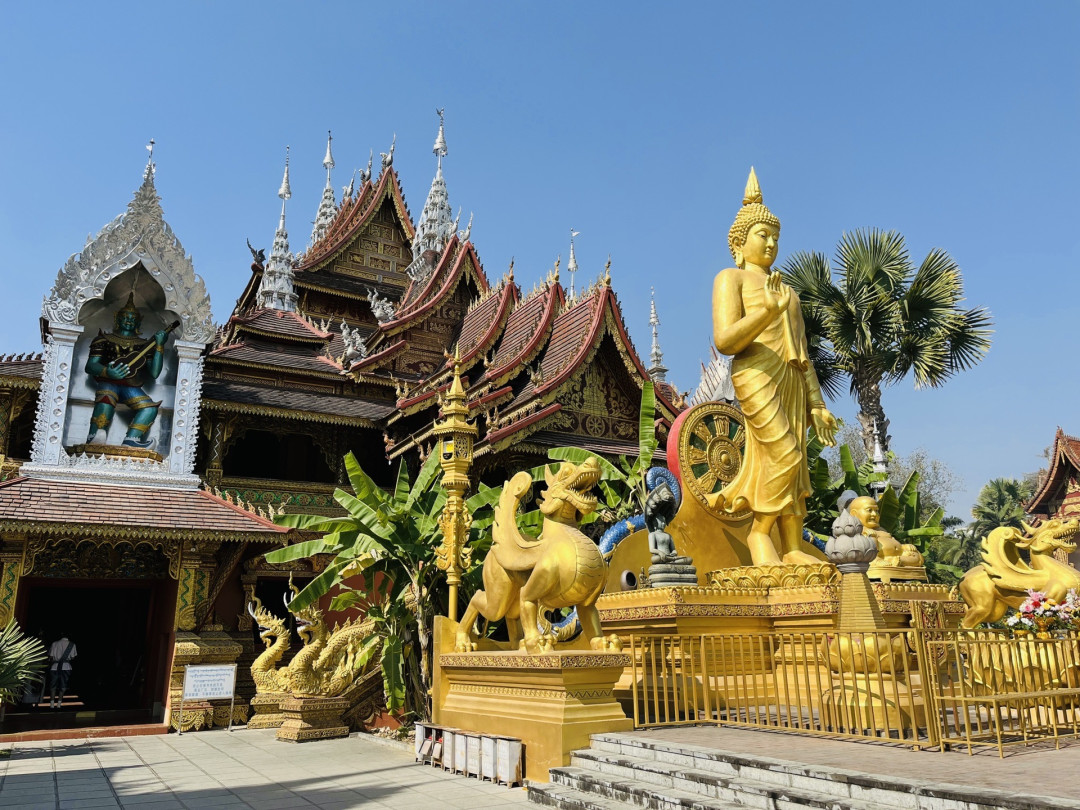
Zongfo Temple: The Serenity of an Ancient Monastery
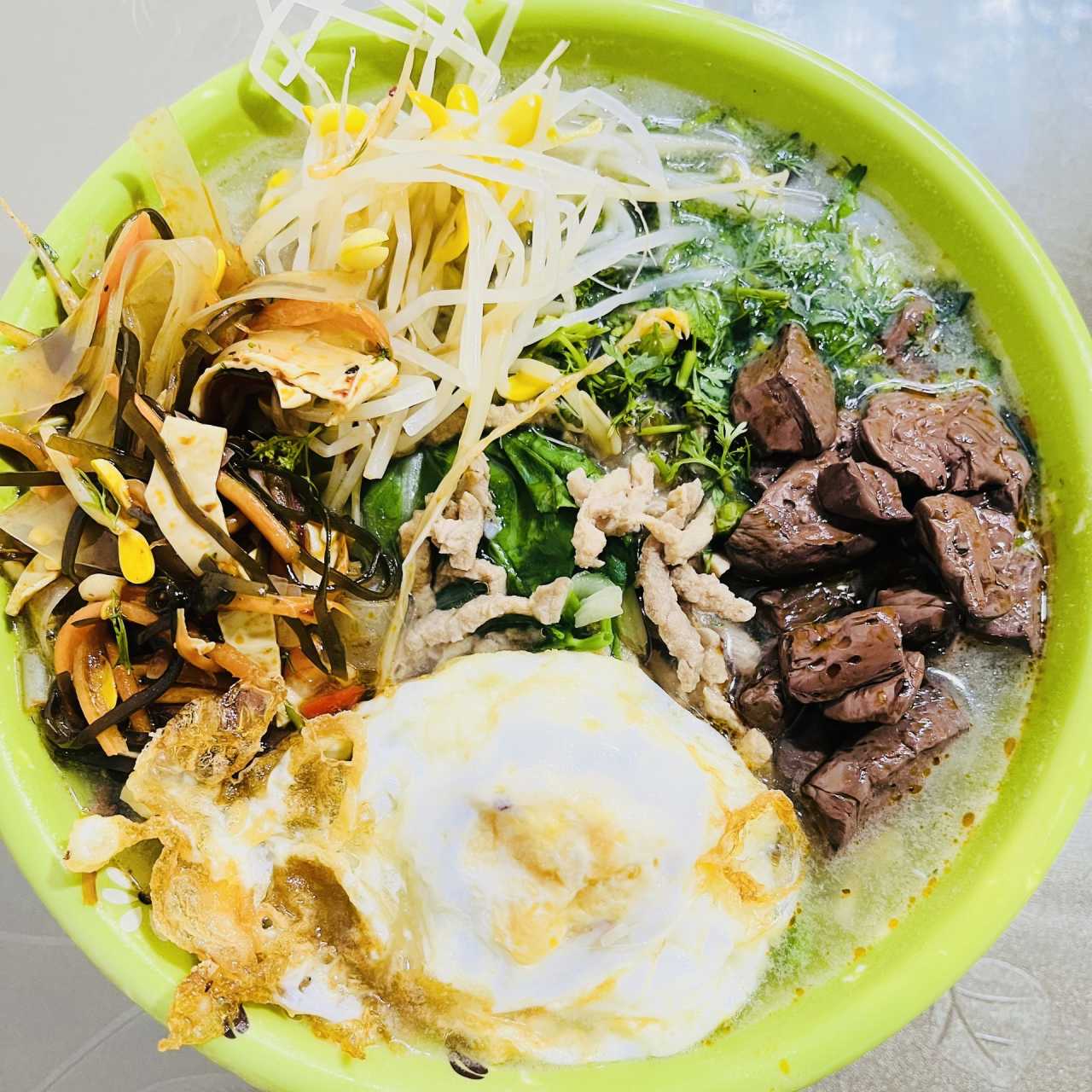
We woke up naturally and had a bowl of rice noodles at a breakfast shop behind the inn. There were plenty of side dishes, unlimited refills, and my daughter ate two bowls.
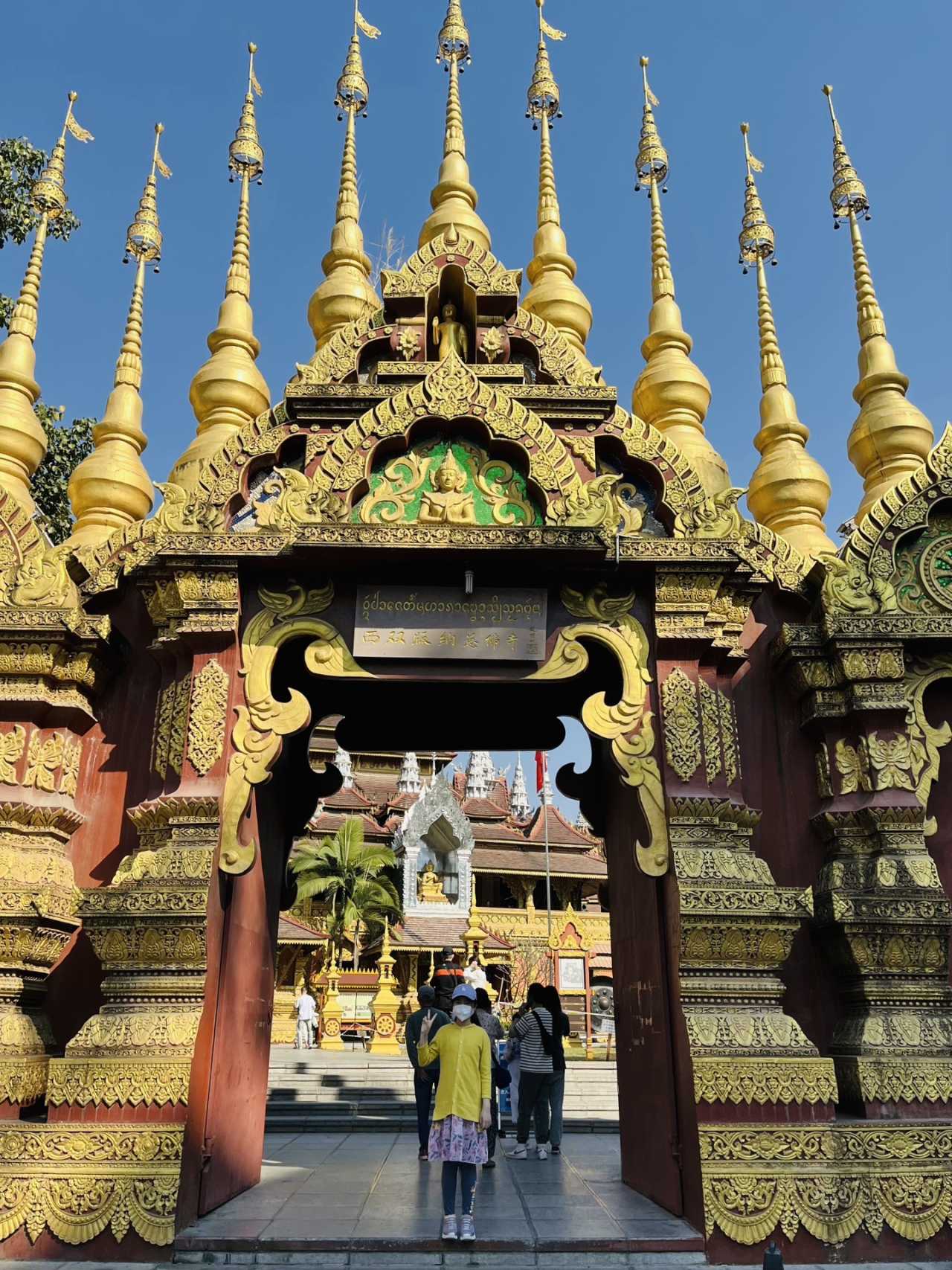
For 15 yuan ($2), we took a taxi to Zongfo Temple. This temple was built in the mid-7th century by two Southern Buddhist monks who came from Myanmar to spread Buddhism. It's one of the earliest Southern Buddhist temples in Xishuangbanna. In the Dai language, it's called "Wa Ba Ji," meaning "a beautiful and serene forest meditation ground like the Jetavana Grove."
The temple is free to enter, and its golden architecture shone brilliantly under the blue sky. My mom prayed devoutly with her hands together, while my daughter was captivated by the intricate carvings, asking endless questions.
Manting Park: The Garden of Souls
Zongfo Temple connects to Manting Park, and we walked directly from the temple into the park. Manting Park is the oldest park in Xishuangbanna. In Dai, it's called "Chun Huan," meaning "Garden of Souls." Legend has it that a Dai princess once visited and was so enchanted by the scenery that her soul stayed behind.
Admission was 40 yuan ($5.50), with half price for children and seniors. The park isn't large, so we chose to walk. Recommended route: Earth Goddess Statue → White Pagoda → Four-Faced Buddha → Octagonal Covered Bridge → Royal Elephant Cultural Park → Parrot Paradise → Royal Garden → Dai King's Palace → Premier Zhou Enlai Memorial Square.
The elephant show was a highlight, starting at 2:50 p.m. The elephants were smart and adorable. A nearby board explained the differences between Asian and African elephants, and my daughter was fascinated. The parrot show started at 3:40 p.m., but it was simple, with the seats far from the performance area and tourists walking around, so the experience was average. Feeding parrots and taking photos with peacocks cost 30 yuan ($4), which I felt wasn't great value.
Riverside Night Market: Local Flavor
After leaving Manting Park, we ate at Wantai Lao Coffee (the coconut ice cream and lime lychee drink are highly recommended) and then went to Dai·Ma Na Restaurant, ordering a 118 yuan ($16) double portion of hand-grabbed rice. The three of us ate to our hearts' content.
The map showed the Riverside Night Market was about 900 meters away, but we actually walked just over 500 meters. This market is a favorite among locals in Jinghong and is much cheaper than the Starry Night Market. Dai ethnic clothing cost 40 yuan ($5.50) a set (50 yuan at Starry Night), lemongrass grilled fish was 35 yuan ($5) (40 yuan at Starry Night), and lime-marinated chicken feet were 25 yuan ($3.50) (30 yuan at Starry Night). My daughter's favorite was grilled frogs at 15 yuan ($2) per serving—she had two.
Day 3: Wild Elephant Valley and Manzhang Village—A Kid's Paradise
This day was what my daughter had been most excited about. We initially thought about joining a small group tour of 6 people for Wild Elephant Valley and Manzhang Village: 223 yuan ($31) per adult, 56 yuan ($8) per child for the seat, and a half-price ticket for the valley at 30 yuan ($4), totaling 526 yuan ($73). But considering the time limits (only 2.5 hours at the valley and 3 hours at the village), we decided to charter a car instead. It cost 350 yuan ($48) including tolls, plus tickets and village experience fees, totaling 490 yuan ($68).
Wild Elephant Valley: Close Encounters with Asian Elephants
We left the inn at 9:20 a.m., and the drive took over an hour. Tickets for the valley were 60 yuan ($8), half price for children and seniors.
Wild Elephant Valley is the only place in China where you can get up close with wild Asian elephants. According to archaeological findings, Asian elephants once roamed widely across the Yangtze River basin, Guangdong, Guangxi, and Guizhou, even reaching the Yellow River. As the climate and environment changed, they were forced southward, and now Xishuangbanna is their only habitat in China.
Recommended route: Enter through the South Gate → Rainforest Theater (11:00 a.m. show) → Elephant School (11:40 a.m. show) → Elephant Feeding → Butterfly Garden → Elevated Observation Boardwalk (920 meters) → Asian Elephant Museum → North Gate Exit.
The elephant school performance was fantastic—the elephants painted, played soccer, and danced, and my daughter watched with wide eyes. For feeding, a small bamboo basket with 4 cucumbers cost 30 yuan ($4), but the elephants mostly ignored it. A large basket with carrots, bananas, apples, and cucumbers cost 80 yuan ($11), and the elephants loved the carrots. My daughter fed them happily.
The butterfly garden was small but full of butterflies that landed on visitors. The elevated boardwalk theoretically offers views of wild elephants, but we didn't see any. Instead, we spotted a slow loris, which was a nice surprise. The Asian Elephant Museum near the North Gate was small, but my daughter found it interesting. It displayed two Asian elephant skeletons, though a few bones were missing and replaced with replicas.
Manzhang Village: An Authentic Dai Village
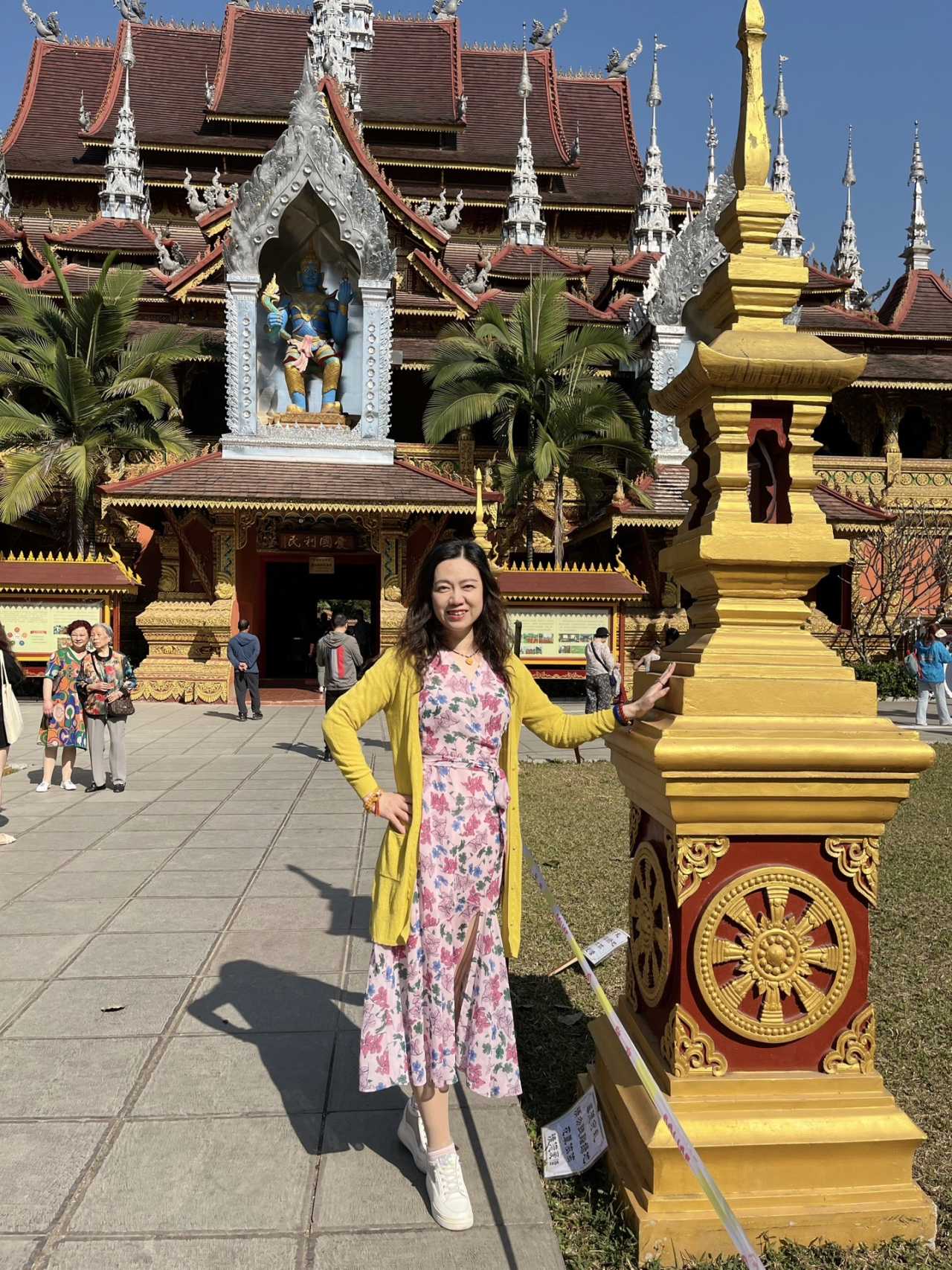
Manzhang Village, located in Mengyang Town, is a traditional Dai village. In Xishuangbanna, towns start with "Meng" and villages with "Man." The village is small, with every household living in traditional stilted houses. Locals wore Dai clothing and sold specialty foods, giving it a lively, authentic atmosphere.
There were many hands-on activities perfect for kids: - Dai brocade weaving: free to try - Dai papermaking: 10 yuan ($1.50) to place leaves and flowers on pulp; if you want to take the finished paper home, it needs to dry for 2 hours, but a small basket version can be taken immediately - Dai pottery: 10 yuan ($1.50); my daughter made a pot and an elephant-shaped goal; taking it home cost an extra 5 yuan ($0.70), but it cracks when dry, so it's best to bake it for a few hours first - Mango sticky rice: 22 yuan ($3) - Sugarcane: 20 yuan ($3) per stick - Bananas: 10 yuan ($1.50) per bunch - Coconut snacks: 100 yuan ($14) for 5 jars - Grilled flatbread: 5 yuan ($0.70) - Bamboo raft ride: 10 yuan ($1.50) and you can paddle yourself—unfortunately, we forgot to try it
Day 4: The Grand Buddha Temple and Gaozhuang Nights

Menghuo Grand Buddha Temple: Southeast Asia's Largest Monastery
After checking out, we moved to the Shanshuijian Inn, 200 meters away. We booked a balcony family duplex suite for 247 yuan ($34) per night—highly recommended! The room was spacious, had a bathtub, a pool, and was quiet. The only downside was no airport transfer.
We took a taxi for 30 yuan ($4) to the temple, and the driver helped us buy group discount tickets, which were cheaper than online. Regular tickets were 120 yuan ($17), with discounted tickets for children and seniors at 80 yuan ($11).
During the Ming Dynasty, this temple was the royal monastery of the Dai kingdom, originally named "Jingpiao Temple." It was built by a Dai king named Bolong to honor his wife who died of illness. Destroyed in war, it was rebuilt in 2005 and is now the largest monastery in Southeast Asia. The centerpiece is the Auspicious Great Buddha—a 49-meter-tall, 400-ton copper statue of Shakyamuni, the tallest Buddha in Southeast Asia.
Recommended route: Peacock Cultural Park (11:00 a.m. peacock release) → Peacock Feeding → Jingpiao Main Hall → Longevity Hall → Earth Goddess → Auspicious Great Buddha → Zhuangkai Golden Pagoda → Glass Observation Deck → Bathing and Water-Splashing Square.
The peacock release was worth seeing—hundreds of peacocks flew down from the mountaintop, a spectacular sight. Feeding peacocks cost 20 yuan ($3), and staff would take photos for 20 yuan ($3) per 8-inch laminated print. The glass observation deck cost 5 yuan ($0.70) for shoe covers and offered panoramic views of Jinghong—my daughter played there for half an hour. Water-splashing activities were held twice daily, costing 50 yuan ($7) to rent Dai clothing, a basin, and shoes. Kids loved it, though it wasn't as lively as the water festival in Dai Ethnic Park.
If you're physically up to it, skip the electric cart (40 yuan/$5.50 one way, 60 yuan/$8 round trip). Walking up the steps lets you appreciate different views and shows more respect for the Buddha.
On the way back, we tried Didi (a ride-hailing app) but waited nearly an hour without a match. We just hailed a taxi for 30 yuan ($4). Turns out taxis are much easier to catch than app-based rides.
Gaozhuang Scenic Area: The Prosperity of Nine Pagodas and Twelve Villages
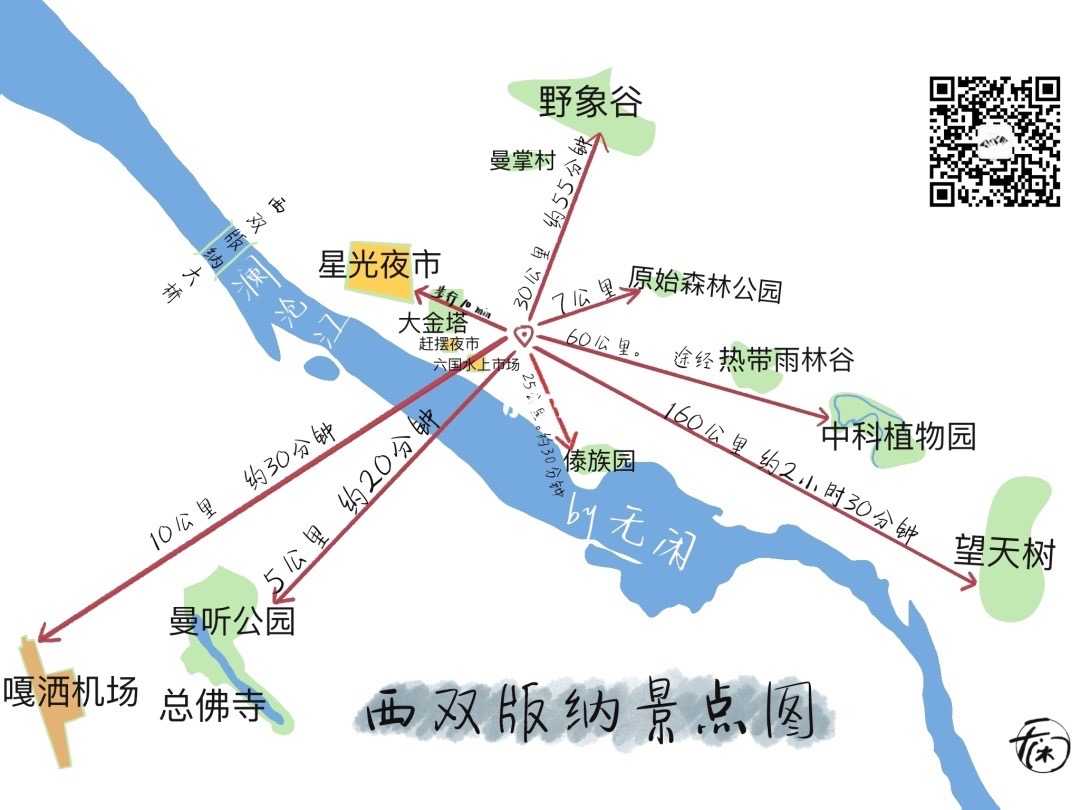
"Gaozhuang Xishuang Jing" means "Nine Pagodas and Twelve Villages" in Dai, recreating the ancient splendor of Jinghong. Key attractions include the Golden Pagoda Temple, Ganbai Street, and the Starry Night Market. Renting a Dai outfit and getting a photoshoot here is the best souvenir.
Gaozhuang also has a tropical fruit market, markets for specialty goods from various countries, and restaurants serving Dai and Southeast Asian cuisine. My daughter was drawn to a stall selling grilled pig tails for 40 yuan ($5.50) each—I loved them too—and we also had some Dai-style barbecue.
Day 5: Botanical Garden and Dai Ethnic Park—Nature Meets Culture
This day, we joined a one-day tour of the Chinese Academy of Sciences Tropical Botanical Garden (West Zone) and Dai Ethnic Park. It cost 188 yuan ($26) per adult (including tickets, round-trip transportation, a 20 yuan/$3 lunch, and a 50 yuan/$7 electric cart in the botanical garden), totaling 564 yuan ($78).
We departed from Gaozhuang North Gate at 7:30 a.m., and the drive took over an hour.
Chinese Academy of Sciences Tropical Botanical Garden: A Kingdom of Plants
This botanical garden is the only 5A-rated national scenic spot in Xishuangbanna, preserving about 250 hectares of primary tropical rainforest. It's the largest and most species-rich botanical garden in China. Divided into East and West Zones, the West Zone has more exotic plants for viewing, while the East Zone is more primitive and suitable for hiking.
Recommended route: West Zone Entrance → Shade Plant Garden → Aquatic Plant Garden → Palm Garden → Banyan Garden → Exotic Flower Garden → Hundred-Flower Garden → Hot Air Balloon Station → Tree Garden → Famous People and Trees Garden → National Trees and Flowers Garden → Hundred-Fruit Garden → Vine Garden.
With limited time on the one-day tour, the guide focused on key plants. For example, cycads bloom with round flowers for females and pointed ones for males. I recommend chartering a car or taking a tour bus for more flexibility, but you'll need a guide to explain things—otherwise, it's just a superficial visit.
In February, temperatures vary greatly between morning and evening, and the garden is cooler than the city. Riding the open electric cart makes it even colder, so wear a thick jacket in the morning and switch to short sleeves by noon. Also, don't touch the plants—some, like datura and the poison arrow tree, are dangerous.
July's highlight is the giant water lilies, with leaves 1 to 2 meters in diameter that can support adults under 60 kg (132 lbs). We couldn't see them in February, which was a bit disappointing.
Dai Ethnic Park: Water-Splashing Fun
Dai Ethnic Park consists of five best-preserved Dai villages: Manjiang, Manchunman, Manzha, Manga, and Manting. It features Manchunman Temple (over 1,400 years old) and Manting Temple, known as the "Golden Pagoda" and "White Pagoda" due to their different stupas.
One-day tour route: Border Pier speedboat ride (238 yuan/$33 per person, includes a free electric cart) → White Pagoda → Golden Pagoda → Water-Splashing Square.
At the water-splashing square, it cost 30 yuan ($4) to rent non-slip sandals and a basin, or you could bring your own. My daughter quickly found friends to form an alliance, making up for not splashing enough the day before. The intensity of the water fight was evident from the sore backs and legs the next day. Remember to bring a change of clothes and a towel.
We returned to Gaozhuang North Gate around 6:00 p.m. For dinner, we ordered the Manfeilong Roast Chicken 2-3 person set meal for 168 yuan ($23). It included grilled fish, grilled pork belly, grilled chicken, grilled ribs, plus lettuce, mint leaves, cucumbers, and other vegetables. Staples included rice noodles, sticky rice, sweet potatoes, corn, banana leaf cakes, and a large bottle of guava juice. The portions were huge—the three of us couldn't finish it.
Day 6: Goodbye to Xishuangbanna, Looking Forward to Reunion
On the last day, we took the 8:10 a.m. Sichuan Airlines flight back to Shenyang. The night before, we booked a taxi for 5:50 a.m., but the driver arrived at 5:57 a.m. The fare was 8 yuan ($1.10) before 6:00 a.m. and 10 yuan ($1.40) after, so we ended up paying extra for nothing.
Our 6-day trip to Xishuangbanna actually gave us exactly 4 full days of fun. In February, the northeast is still frozen and snowy, but we experienced summer's warmth in Xishuangbanna. My daughter said, "After playing in Xishuangbanna for a few days, I almost forgot that the northeast is still winter!"
Final Thoughts: The Meaning of Travel
This trip had its surprises and its regrets.
We experienced the Buddhist architecture of Zongfo Temple, the Dai clothing and snacks at the Riverside Night Market, the elephant school at Wild Elephant Valley, the traditional Dai customs at Manzhang Village, the peacock release and the Auspicious Great Buddha at Menghuo Grand Buddha Temple, the tropical plants at the CAS Botanical Garden, and the water-splashing fun at Dai Ethnic Park.
We missed out on the photoshoot at the Starry Night Market, the giant water lilies and fireflies at the botanical garden, and the bamboo raft ride at Manzhang Village.
But as I always say: a journey needs a few regrets to make you look forward to the next reunion.
Goodbye, Xishuangbanna. Looking forward to seeing you again.
Practical Tips Summary:
- Accommodation: There are many inns near Gaozhuang. Choose a quiet room; family suites with a pool offer great value.
- Transportation: Taxis are easier to catch than app-based rides. Chartering a car offers more flexibility.
- Tickets: Ask your driver to help buy group discount tickets—they're cheaper than online.
- Clothing: In February, temperatures vary greatly between morning and evening, so bring a jacket.
- Food: The Riverside Night Market is cheaper than the Starry Night Market. Dai-style barbecue, Lao coffee, and hand-grabbed rice are must-tries.
- Kid-Friendly Recommendations: Feeding elephants at Wild Elephant Valley, hands-on crafts at Manzhang Village, and water-splashing at Dai Ethnic Park.
You should also read:
Bring a Tripod, Travel Lijiang Alone: A Winter Sun Solo Journey
Bring a Tripod, Travel Lijiang Alone: A Winter Sun Solo Journey When winter in the north wraps itself in smog and biting winds, painting the sky in shades of gray, the dream of Lijiang I'd been harboring began to grow wild and unstoppable. Can a…
Continue reading...
Yunnan: A Spontaneous Journey Through Western Yunnan
Yunnan: A Spontaneous Journey Through Western Yunnan Some trips are meticulously planned—three pages of攻略 (travel guides), hotels booked well in advance, and even a checklist of what to eat each day. And then there are trips where you simply throw a bag over your shoulder,…
Continue reading...
Xishuangbanna Self-Drive Tour: Into the Tropical Wonderland at the Edge of the Sky (Complete Guide)
Xishuangbanna Self-Drive Tour: Into the Tropical Wonderland at the Edge of the Sky (Complete Guide) Introduction: A Dream Fulfilled Thirty Years Early Some journeys are destined to happen at a specific moment in time. For me, a self-drive trip to Xishuangbanna was originally the first…
Continue reading...