Yunnan: A Spontaneous Journey Through Western Yunnan
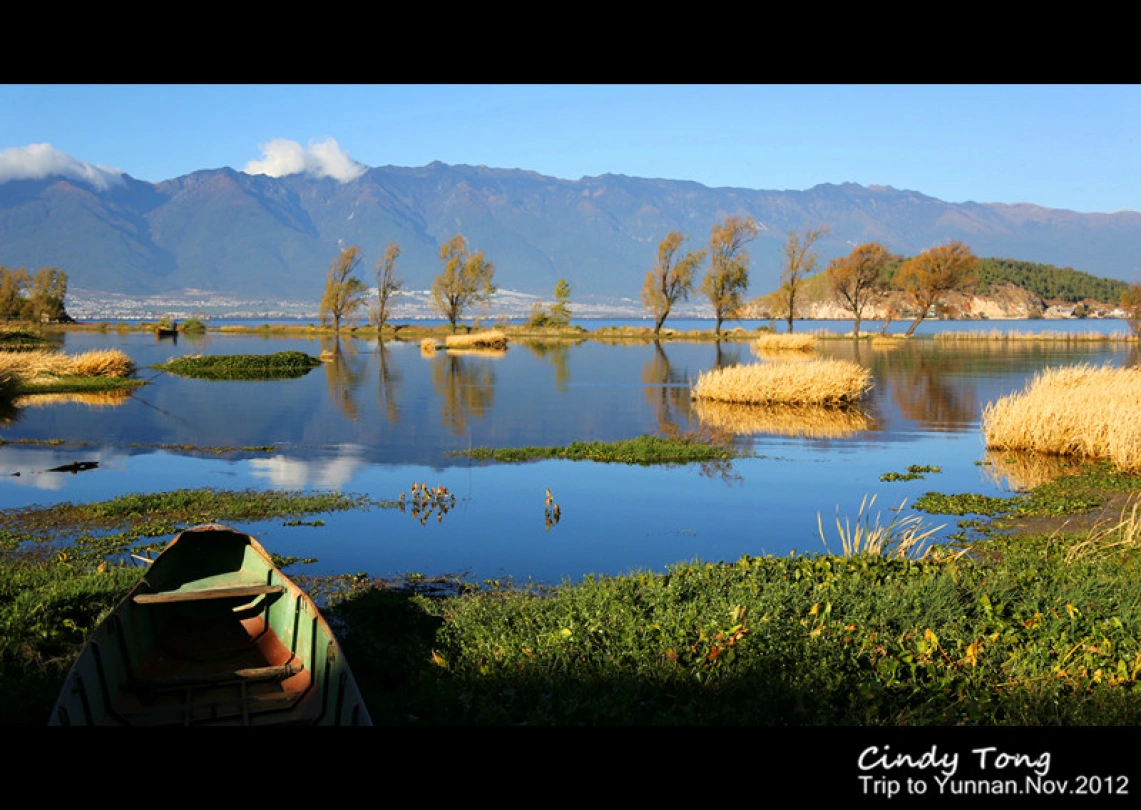
Yunnan: A Spontaneous Journey Through Western Yunnan
Some trips are meticulously planned—three pages of攻略 (travel guides), hotels booked well in advance, and even a checklist of what to eat each day. And then there are trips where you simply throw a bag over your shoulder, follow a friend without a clue, and let the unknown become the most enchanting part of the journey. This trip to Yunnan was decidedly the latter.
There was no detailed itinerary, no list of must-see attractions—just a heart yearning to escape the daily grind and a group of friends willing to "blindly wander" together. And the result? We reaped ten times more surprises than we ever expected.
Departure: From Shanghai to Tengchong, Heading South
Our route was simple: fly from Shanghai Pudong to Kunming Changshui, transfer to Tengchong Tuofeng, then hire a private car to Heshun Ancient Town. The whole trip lasted 8 days, passing through Heshun (4 days), Dali (1 day), Shuanglang (2 days), and Kunming (1 day). It sounds packed, but because we lingered in Heshun, the pace was wonderfully slow and comfortable.
Transportation Tips: From Tengchong Airport to Heshun, we arranged a local driver in advance for a private car at 200 yuan per day, including a free airport pickup. The entrance fee for Heshun Ancient Town is 80 yuan, but if you stay inside, you get a 20% discount (64 yuan). If you find a local driver from the town itself, they might even waive the entrance fee—though without a ticket, you can't enter the paid attractions. But honestly, those spots aren't nearly as interesting as the free places.
From Heshun to Dali, we first took a private car to Tengchong's long-distance bus station (25 yuan), then boarded a bus heading to Chuxiong and got off midway (128 yuan per person including insurance). From Dali to Shuanglang, we hired a private car for 150 yuan, stopping for an hour in Xizhou along the way. Finally, from Shuanglang back to Kunming, we took a private car to Dali's bus station (150 yuan), then a bus to Kunming's Western Bus Station (147 yuan per person). Kunming Changshui Airport is far from the city center; I recommend the airport shuttle from Zhongyu Hotel, 25 yuan per person, running every 20 minutes. Without traffic, it takes just over 30 minutes.
Heshun: When Slowing Down Is the Ultimate Luxury
First Glimpse of Heshun, Starting at Dawn

Heshun—this small town famous for its appearance in the TV drama Beijing Love Story—is the hometown of the character Shen Bing. But honestly, I hadn't watched the show. It wasn't until I saw signs everywhere proclaiming "Authentic Beijing Love Story Dragon Phoenix Bells" that I slowly pieced it together. No matter—Heshun's charm doesn't need a TV series to shine.
On the first day, we woke up earlier than the roosters—and were rewarded with a fiery sunrise. By the time we finished taking photos, the breakfast stalls were just lazily setting up. We, the "diligent ones," became the only witnesses to the town in the early morning.
Outside the town lies a vast wheat field, separated from the ancient town by a winding stream. The town faces the mountains and leans against the water—excellent feng shui. In the morning, the wheat field was shrouded in mist, with dark green mountains in the distance and the murmuring stream nearby. At that moment, you understand what "peaceful times" truly mean.
Everyday Life in the Ancient Town: More Moving Than Any Attraction
Heshun's library is famous, modeled after a university library and over a century old. But it's not just a tourist spot—it's a public facility used daily by the townspeople. Watching elderly folks sit inside reading newspapers and children hunched over their homework, you feel that this is a living, breathing ancient town.
Ancestral halls are another hallmark of Heshun. Whether they do business locally or make money elsewhere, Heshun natives always return to build ancestral halls. The Cun family's hall is the largest and most magnificent. Later, in Dali and Kunming, I saw Cun family silver jewelry everywhere—apparently, the jewelry business is thriving.
To the west of the town stands Wenchang Palace, a structure from the Ming and Qing dynasties, very ancient, and home to an elderly nun. When we arrived, the door was locked, and we had to knock for a long time before someone opened it. It happened to start raining, so we chatted with the old gatekeeper while watching the rain. After the rain, we saw a rainbow—the dark clouds dispersed, sunlight streamed through the gaps, and the sky was so clear and blue.
The Lovely People and Things
Heshun's post office is quite amusing—the staff have a second job: repairing electrical appliances. The post office isn't open every day, doesn't sell stamps, and the mailbox is only emptied every few days. If you want to send postcards, it's more reliable to go to the Tengchong post office.
Across from the post office, a small eatery owner made us "头脑" (literally "head and brain")—shredded pork in sauce, shredded egg, and slices of rice cake, all drenched in hot fermented rice wine. Legend has it that this dish is served to sons-in-law on the second day of the Lunar New Year, symbolizing that they'll have "a head and a brain" (i.e., be sharp and capable) for the year. It's 15 yuan per serving, sweet but not cloying—worth a try.
Accommodation Recommendations

Accommodation in Heshun varies widely in value. Our first night was at "Tea Horse Inn" (200 yuan per room). It had great online marketing, but the actual experience was mediocre—strong renovation smell, poor soundproofing, and unclean bathroom. We later switched to "Big Flower Cat" (120 yuan per room), a quaint little courtyard with a much better bathroom. I recommend "Four Seasons Heshun" (130-150 yuan per room)—great views, with a café and restaurant nearby, and the manager is a very kind woman.
Gudong Ginkgo Village: A Golden Fairy Tale
Early Birds Get the Gold

On the day we went to see the ginkgo trees, we set off at 6 a.m. The driver was puzzled but still picked us up on time. We drove in the dark, passing children wearing headlamps as they walked to school together—tough life.
We arrived too early; the sun hadn't come out, and the whole village looked gray. But once the sunlight emerged, every ginkgo leaf turned golden and translucent—and in that moment, everyone burst into excitement. The ginkgo trees in Gudong basically outshine any others. However, a colleague said the trees were even better years ago, before many of the huge ones were quietly sold off. I guess that's "living off the mountain, living off the water, and living off the trees."
A Surprise Farmhouse Meal
At noon, we had an absolutely satisfying farmhouse meal in Gudong. We had a 5-pound free-range chicken slaughtered and prepared two ways: braised and ginkgo chicken soup. The ginkgo chicken soup was incredibly delicious. The owner gave us two large bowls of it and eventually brought out the pressure cooker so we could drink more. The chicken was 30 yuan per pound, with no cooking fee—generous and affordable.
The Courage Test of Bee Pupae
In Gudong, we also tried bee pupae—each one contained a white grub, simply fried after being pulled out. Apparently, they're very nutritious. The actual bug looked even more disgusting than this, so I won't show a photo to upset you.
Shuanglang and Erhai Lake: Facing the Sea, Idling Is Serious Business

The Electric Scooter "Tragedy"
The round trip from Shuanglang to Wase is no more than 30 kilometers, so we planned to rent three electric scooters. We'd already paid the deposit the day before, agreeing that two guys would each carry a girl, and I'd ride one alone. But just before we left, I twisted the throttle, the scooter took off, and I was left running behind it, still on the ground... The landlady panicked, saying, "If you ride this out, you'll definitely fall into Erhai Lake." We ended up renting a private car instead for 200 yuan.
Despite stalling repeatedly, the joy of self-driving was that we took a detour to the mountain road behind Shuanglang and saw breathtaking views and some uniquely worded signs. If you have time, just sitting by Erhai Lake and daydreaming is a wonderful thing.
Shuanglang Accommodation and Food
Accommodation in Shuanglang is pricey. We stayed at "Yun Qi" (Cloud Seven): standard rooms were 300 yuan per room, stargazing rooms were 680 yuan, and sea-view suites started at over 1,000 yuan. The rooms were average, but they were right by the water, quiet at night, and you could indeed see a beautiful starry sky. The most expensive was Yang Liping's house on Yuji Island—reportedly 5,000 yuan per night, surrounded by high walls, and you can't enter without spending money.
Shuanglang has a few good dessert spots: the Swiss roll opposite Yun Qi was the best, and "Suan Niang Niang" (Sour Mama) on Yuji Island had delicious cream puffs and cheesecake. For main meals, I recommend Ji Xiang Hong (Auspicious Red)—a bit pricey but decent food. On the last night, we ate at a Hong Kong-style restaurant serving grilled meat—nothing special. We should have gone to the barbecue stall outside.
Dali and Kunming: A Brief Glance, Yet Stunning

Dali Old Town and Xizhou Market
We only spent a day in Dali Old Town and had a Chongqing hotpot—nothing special. But the Xizhou market left a deep impression: a huge vegetable market selling all kinds of foods I'd never seen before; hairy tofu; fruits pickled in sugar water; a vendor lovingly oiling a piece of 乳扇 (milk fan) with great care... Interesting people, interesting food—all on display.
乳扇 (milk fan) can be eaten raw, with a clean cheese flavor. It's absolutely delicious and definitely worth trying.
Kunming: I'll Come Back Just for the Food
Although this was my second time in Kunming, the first trip was basically a two-point journey, and I didn't go anywhere. This time, even though I only had one day, a friend showed me around Yunnan University, watched seagulls at Green Lake, and ate lots of great food—including the steam pot chicken featured on A Bite of China.

Yunnan University is perfect for dating. The buildings are European-style, with dim, warm light in the corridors that feels soft and intimate—it makes you want to fall in love. The seagulls at Green Lake are said to be from Siberia. One year, they flew south, encountered cold air, landed here, and discovered this paradise. During the day, they eat at Green Lake Park; at night, they sleep on Dianchi Lake. They prefer bread to bird feed—remember to bring bread next time.
The Military Academy (Jiangwu Tang) looks even more vibrant in the sunset—I recommend visiting in the late afternoon for photos.
Practical Tips: What You Need to Know About Yunnan
What to Wear
Yunnan has spring-like weather year-round, but the temperature difference between morning and evening is large. For sunrise, a fleece jacket under a shell jacket is essential—a thin down jacket isn't overkill either. When the sun is out, a sweater is enough. I recommend bringing layers that are easy to put on and take off. Wear comfortable shoes—there's a lot of walking in Heshun. Yunnan often has sun in the east and rain in the west, so rain gear is necessary.
Food Recommendations

- 饵块 (erkuai) and 饵丝 (ersi): Yunnan locals' favorite foods, eaten for all three meals. Usually starts at 8 yuan; stir-fried versions (also called "大救驾" or "the great rescue") are pricier.
- 土锅子 (clay pot): Similar to a copper hotpot, with various meats and ribs cooked over charcoal in a clay pot. A medium portion is 80 yuan, enough for 6 people.
- 黄焖鸡 (braised chicken): The local chicken has black skin, like a silkie chicken, and is very tasty. Around 50 yuan per serving.
- 乳扇 (milk fan): Can be eaten raw, grilled, or fried. It has a clean cheese flavor.
- 头脑 (tou nao, "head and brain"): A sweet dish made of glutinous rice slices, shredded egg, and meat, served with fermented rice wine. 15 yuan per serving.
Heshun's Hidden Countryside
Heshun is perfect for relaxation. I recommend the western countryside scenery—rarely visited, with wheat fields and a stream. After the rain, you can even see a rainbow. Compared to the busy eastern tourist areas, this is the soul of Heshun.
Epilogue: Yunnan, Until We Meet Again
The beauty of Yunnan lies in its clouds. The clouds here are ever-changing, painted in all colors by the sun—you can never get enough of them. The name "彩云之南" (South of the Colorful Clouds) is truly well-deserved.
This trip had no guidebook, no plan, yet it delivered the most authentic experiences. From the morning mist of Heshun to the golden glow of Gudong, from the shimmering waves of Erhai to the seagulls of Green Lake—every place made us reluctant to leave.
That's how travel is—sometimes, you prepare thoroughly and end up disappointed; other times, you just throw your bag over your shoulder and follow a friend, and you reap unexpected surprises.
Yunnan, I will come again. For the food, for the scenery, and even more for those unplanned moments of warmth.
Key Summary: Heshun Ancient Town, Gudong Ginkgo Village, Shuanglang Erhai Lake, Dali Old Town, Kunming Green Lake, private car guide, food recommendations, accommodation guide, clothing advice
You should also read:

Body in Hell, Heart in Heaven: A Pilgrimage Through Tiger Leaping Gorge — A Dialogue Between Heaven and Earth
Body in Hell, Heart in Heaven: A Pilgrimage Through Tiger Leaping Gorge — A Dialogue Between Heaven and Earth Introduction: When the Gorge Splits Open Beneath Your Feet Some say Tiger Leaping Gorge is the closest place on Earth to the border between "hell" and…
Continue reading...
Cloud Travelogue · Dali of Wind, Flowers, Snow, and Moon: A Three-Day, Two-Night Journey of a Free Spirit
Cloud Travelogue · Dali of Wind, Flowers, Snow, and Moon: A Three-Day, Two-Night Journey of a Free Spirit I am a cultured female foodie with a touch of rogue charm. I slung on my backpack, took my lover's hand, and set off on a spontaneous…
Continue reading...
The Meaning of Travel – A Tengchong Story: A Journey of the Heart and Personal Growth
The Meaning of Travel – A Tengchong Story: A Journey of the Heart and Personal Growth Setting Out, Only to Return a Better Self Some say travel is nothing more than leaving a place you're tired of, only to go to a place where others…
Continue reading...