A Summer Journey Through Southeast Yunnan: Finding Life's Poetry Amidst Lakes and Mountains
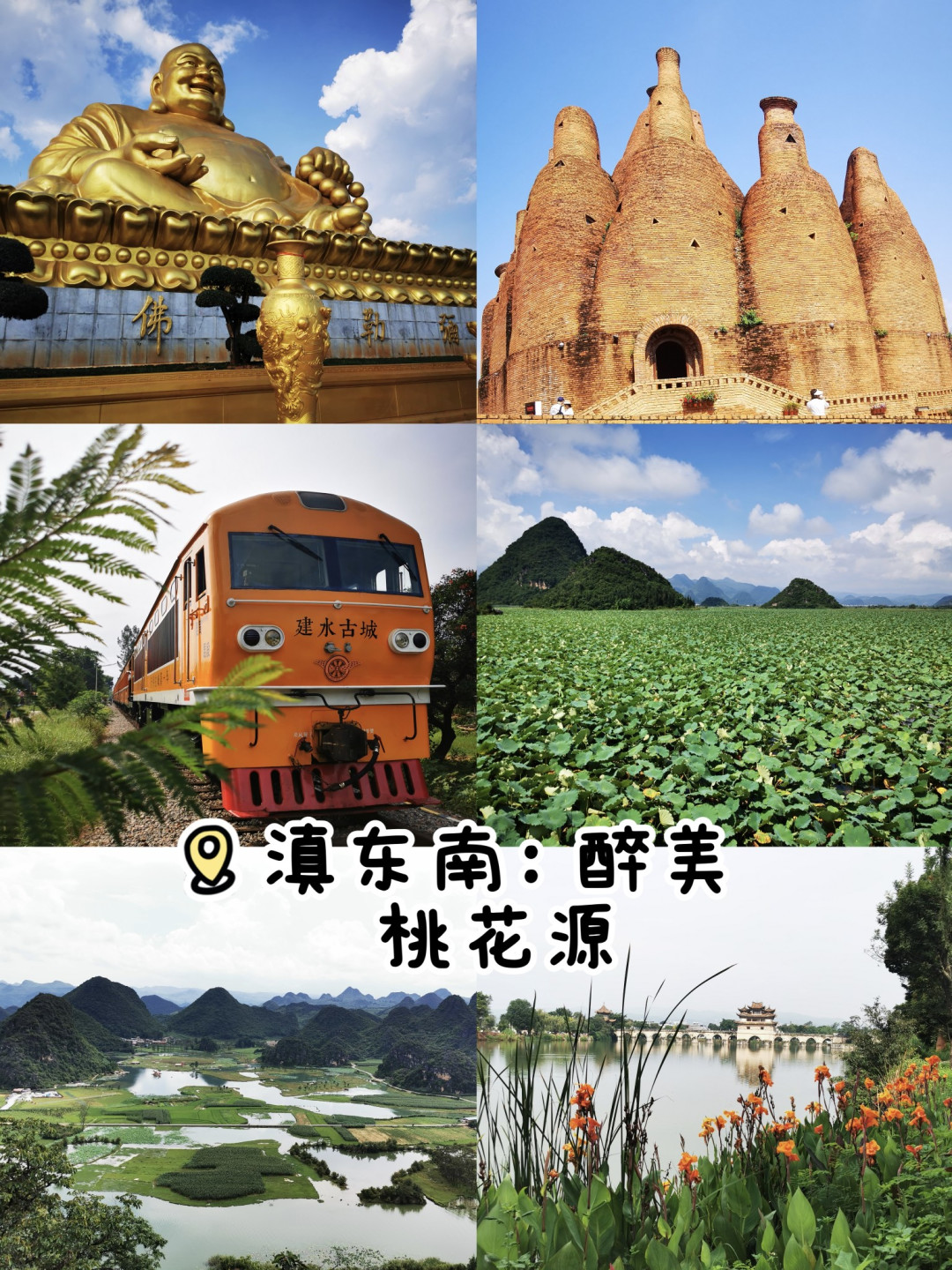
A Summer Journey Through Southeast Yunnan: Finding Life's Poetry Amidst Lakes and Mountains
Escaping the Grind: A Long-Planned Getaway from the 996 Life
The first half of 2025 felt like an endless nightmare of overtime. On my social feed, friends were smiling in spring flower fields and sweating beside dragon boats during the Dragon Boat Festival, while I could only stare at my computer screen, scrolling through their "poetry and远方" photos, silently swallowing bitter coffee. Work was like a tireless beast, devouring every holiday and every expectation.
But life has a way of surprising you with its own rhythm—what the ancient Chinese called "the reversal is the movement of the Dao." In July, the work pace finally loosened, and that restless spirit, suppressed for half a year, began to stir. Two plans swirled in my mind: trekking the Genie Southern Route in western Sichuan to finally see the fabled "Eye of Genie," or returning to Yunnan to extend last year's unfinished journey through southwestern Yunnan into the southeastern part of the province.
After weighing the options, our travel consultant's advice settled it: this season, Yunnan's weather was far more predictable, while western Sichuan's was too volatile—a gamble I wasn't willing to take. So, southeast Yunnan, here I came!
Getting Around: The Smart Way to Travel Free
Southeast Yunnan's attractions are scattered, and transportation is nowhere near as convenient as the classic Kunming-Dali-Lijiang route. Traveling with a child, hiring a private car or self-driving became the obvious choice. I carefully compared three options:
- Private tours from major travel agencies: Platforms like Tuniu offered "one family, one group" packages. Including flights, the cost for three people easily exceeded 20,000 RMB.
- Platform-based private car hire: A six-day private car package on Mafengwo cost about 5,000 RMB for the vehicle alone. Adding flights, hotels, tickets, and meals, the total came to around 18,000 RMB.
- Rental car self-drive: Choosing a mid-range car cost about 200 RMB per day (a budget car or EV would be cheaper). For an eight-day trip, the rental fee was only 1,600 RMB. Including all expenses, the total was 15,000–16,000 RMB.
The answer was clear. The biggest expense this season was still airfare—300–500 RMB more than last June—but given it was summer break and the hard-won leave I'd managed to secure, the premium was worth it.
The 9-Day, 8-Night Itinerary: Avoiding Crowds, Embracing the Uncrowded

After watching countless travel vlogs and consulting agency recommendations, I settled on this route. The Yuanyang Rice Terraces in summer are just a sea of green, nowhere near the colorful spectacle of autumn and winter, so I decisively dropped them and replaced them with the "Peach Blossom Spring" of Tao Yuanming's famous tale—Bamei.
Kunming to Fuxian Lake: A Delay and a Delight
The departure day had its hiccup. Our Capital Airlines flight was delayed due to a mechanical issue, pushed from morning to 6 PM. Watching other airlines' planes take off normally, I quickly rebooked on a 4 PM China Southern flight. That day, Beijing was under a red rainstorm warning, and my heart was in my throat. Luckily, we took off on time—cheers!
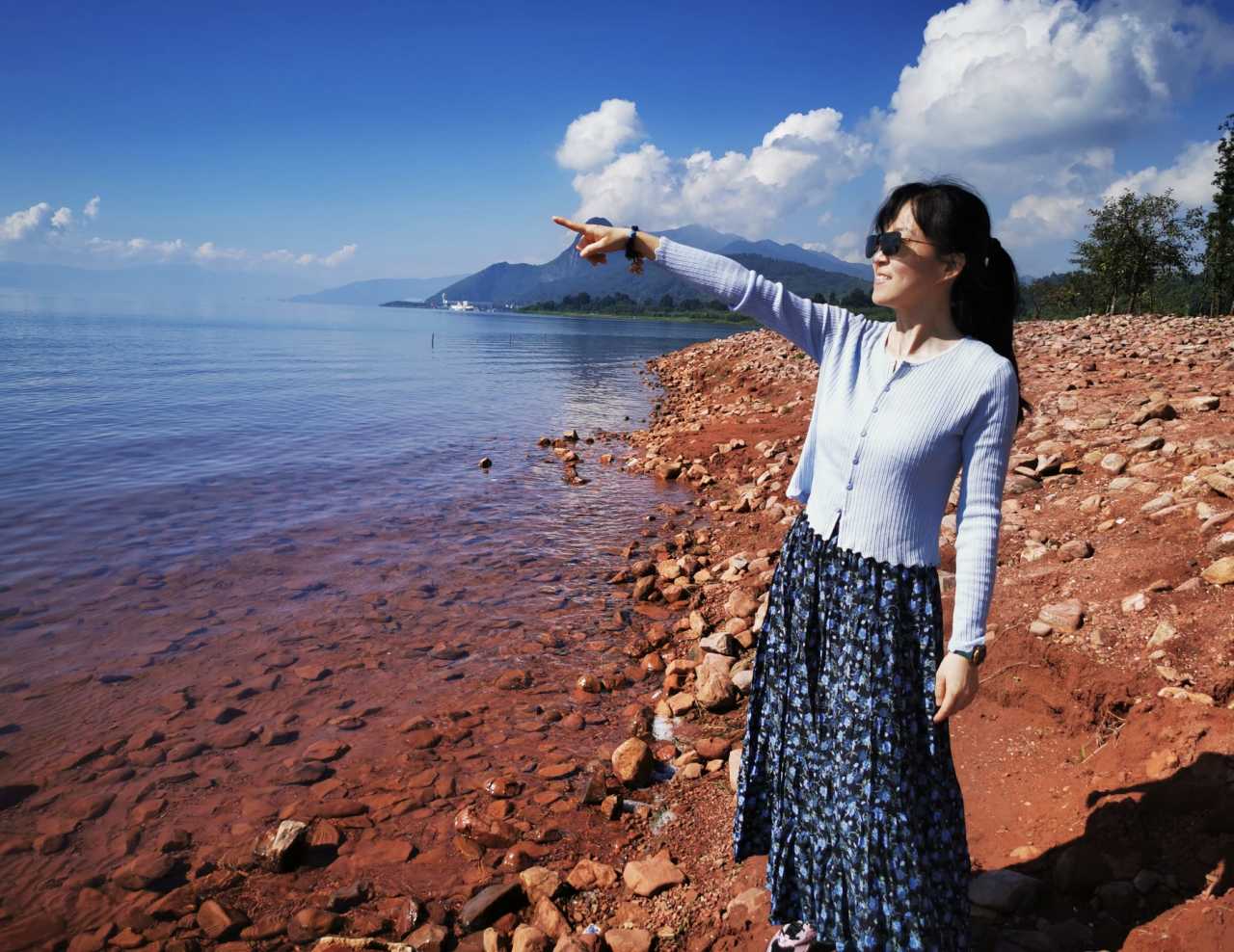
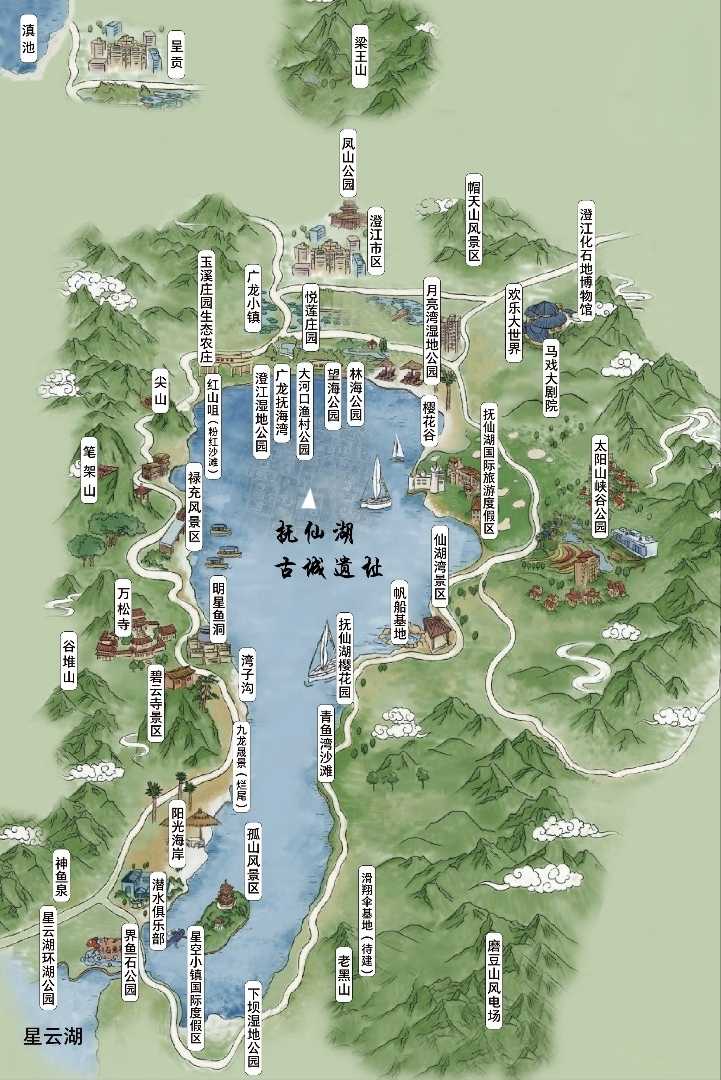
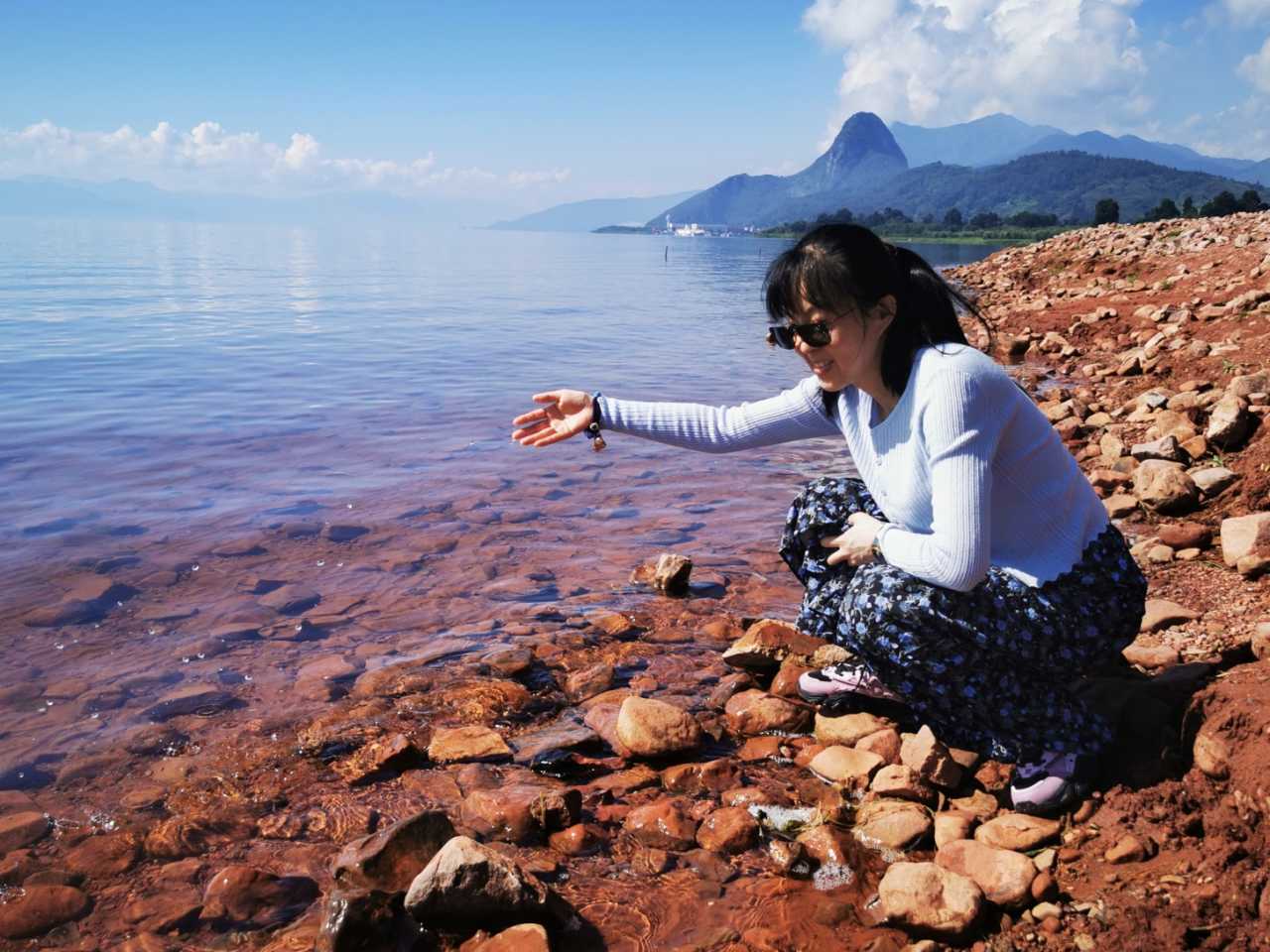
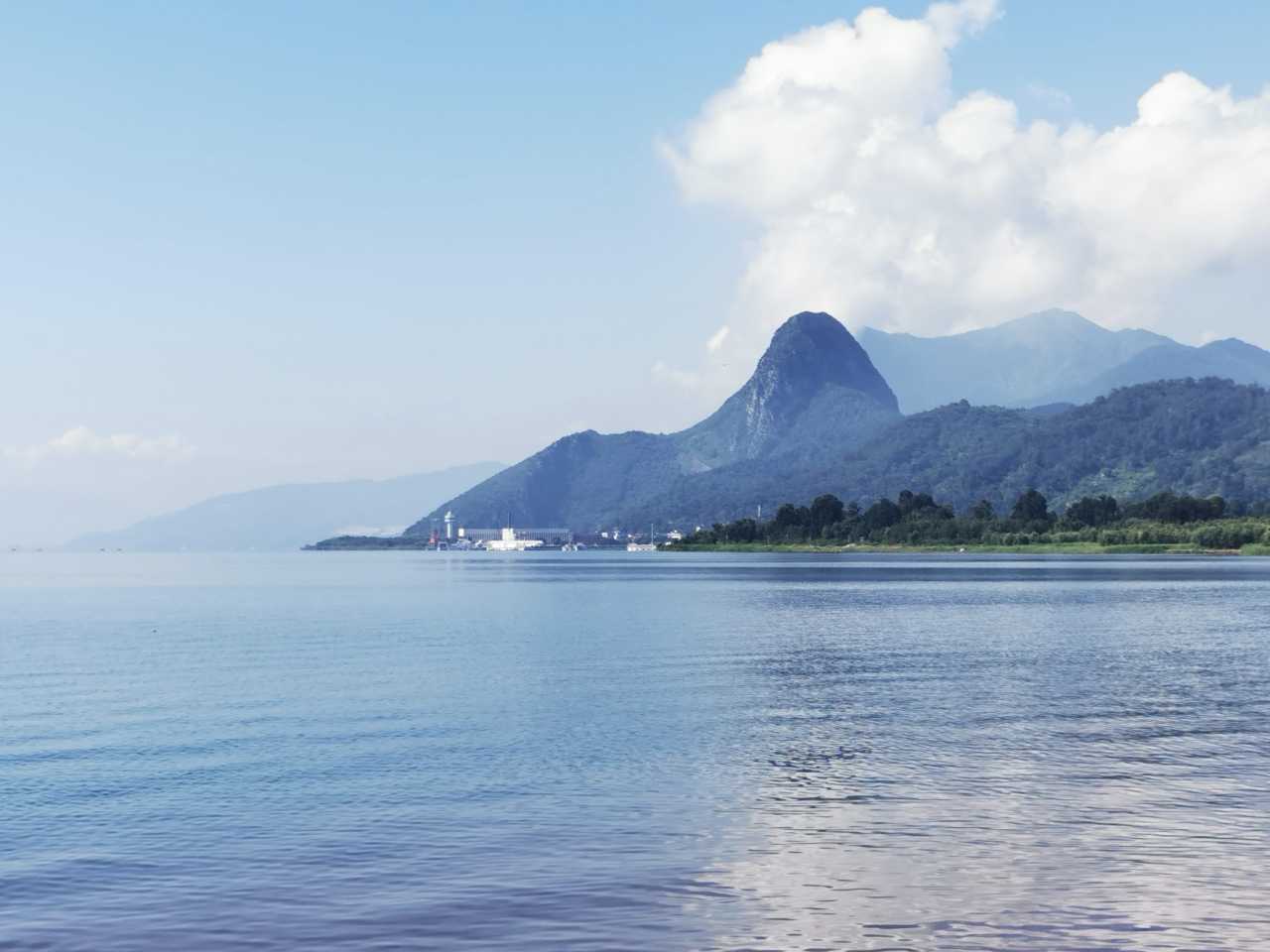
Landing in Kunming, we headed straight for Fuxian Lake the next day. Known as "Kunming's backyard," it's just an hour's drive from the city. At 96 kilometers around, it's comparable to Sayram Lake in Xinjiang. As China's largest deep-water freshwater lake, its storage capacity is staggering—equivalent to 12 Dianchi Lakes or 6 Erhai Lakes. The water is crystal clear, consistently meeting national Class I drinking water standards, with visibility often exceeding 7 meters. The ancients called it "ten thousand acres of glass," and it's no exaggeration.
Pink Sand Beach and Fuhaiwan Wetland
First stop in the morning: the Instagram-famous "Pink Sand Beach." Without a drone, the sand appeared a faint pink to the naked eye, somewhat reminiscent of Guilin's landscape—those elegant, towering karst hills, a far cry from the majestic snow-capped mountains.
Next, we visited "Fuhaiwan Wetland Park," where vast flower fields are free to enter. Walking along the rice paddy boardwalk, with colorful blooms on one side and the sparkling lake on the other, my mood instantly lifted. Locals told us Kunming had just endured a week of rain, and we arrived on the first clear day—incredibly lucky. Despite thorough sun protection, Yunnan's UV rays are relentless.
Dawan Village: Stone Pot Fish and "Little California"
Lunchtime took us to Dawan Village, where a whole street of restaurants offers lake-view dining with fresh fish. Along the way, we stumbled upon a serene stretch of lake, sailboats seemingly frozen against the blue sky and white clouds—a moment of pure tranquility. We also passed a roadside spot dubbed "Yunnan's Little California."
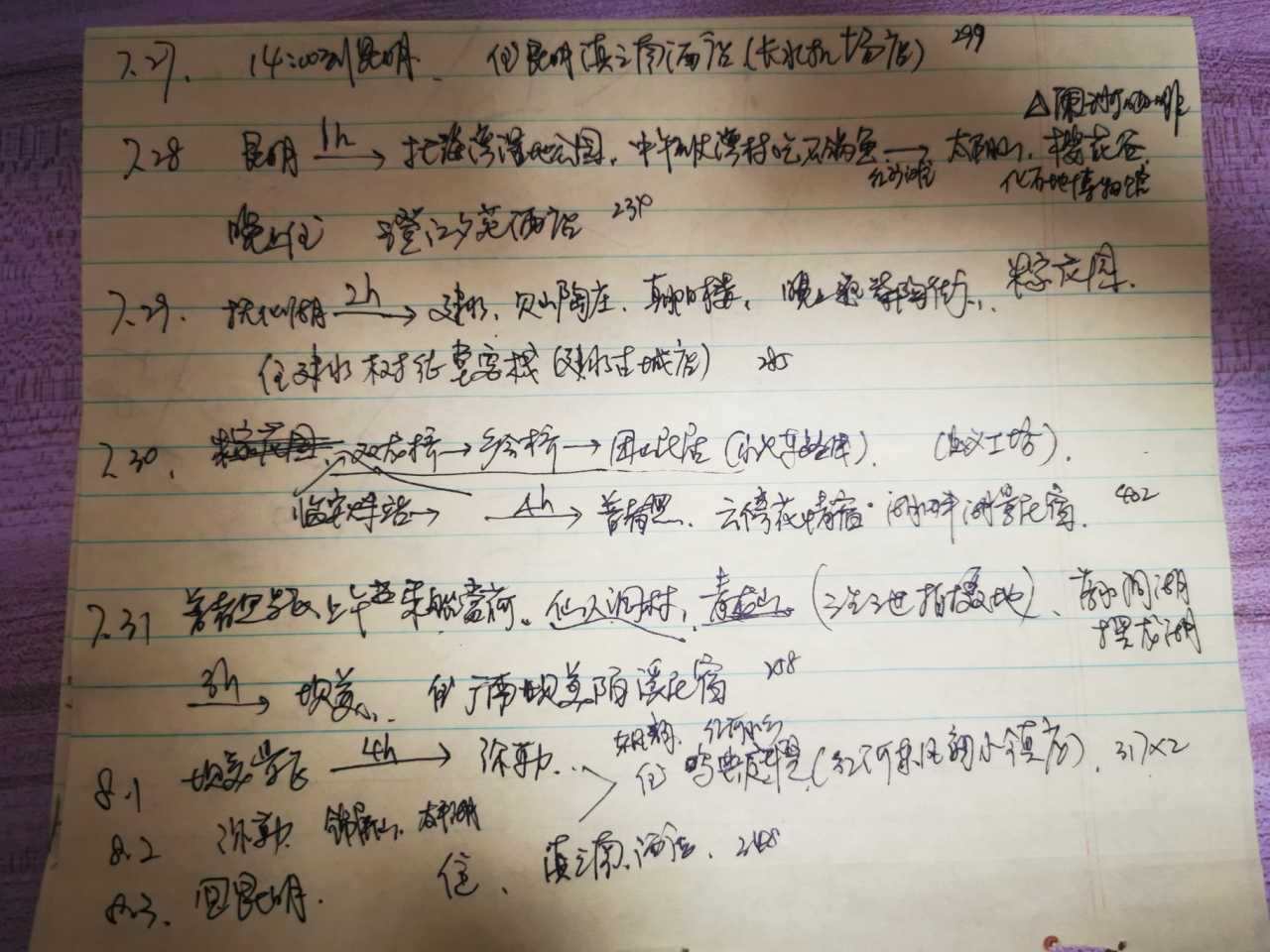
Stone pot fish is the local specialty, typically made with Chinese sturgeon or catfish. The meat is firm and tender, priced at 120 RMB per kilogram. Our family of three ordered the smallest catfish, which still weighed over three pounds, plus a serving of copper pot potato rice (a Yunnan home-style dish, quite tasty). The total came to 280 RMB.
Sun Mountain Town and Lanshan Coffee
In the afternoon, we visited "Sun Mountain Town," but I wouldn't recommend it. Despite being touted by influencers, it felt like a clean, upscale residential area—only a single Instagram-worthy boardwalk was worth seeing.
Then we headed to "Lanshan Coffee," a filming location for the reality show "Sisters Who Make Waves." You must make a purchase to enter, and prices aren't cheap: a glass of lime sparkle and a passionfruit juice cost over 70 RMB. The café connects to the Cherry Blossom Valley scenic area, and after purchasing, you can get a half-price ticket (5 RMB per person, children free). The venue uses Fuxian Lake to create a beach atmosphere, satisfying Yunnan locals' longing for the sea. With artificial sets and paid photo shoots, the ambiance is fully curated. Following the principle of "since we're already here," we just soaked in the vibe.
Cherry Blossom Valley and a Cautionary Note
By late afternoon, our child was getting tired, but we'd already bought tickets for Cherry Blossom Valley, so we took a quick look. The park offers helicopter rides over the lake (about 200+ RMB per person, minimum three people) and a "Yunnan version of Little Sanya" white sand beach. The shimmering lake surface reminded me of Sayram Lake in Xinjiang two years ago.
Accommodation warning: We booked "Chengjiang Xiyuan Hotel," which turned out to be a guesthouse. Despite decent online reviews, we discovered upon arrival that it only had squat toilets—no Western-style toilets! The standard room was tiny. Not recommended.
Dinner and Sunset Glow
For dinner, we found a sunken music square near our guesthouse. Our child wanted rice noodles (米线). First, we spotted a restaurant called "Baoyanxiang," where a bowl of rice noodles cost 48 RMB—too pricey. Walking to the music square, we found small shops selling a bowl for just over 10 RMB—now that's a normal price! Yunnan's summer temperature is incredibly comfortable—dry and cool in the evening, while Beijing was sweltering. After dinner, we caught a beautiful sunset, feeling completely content.
Fuxian Lake to Beishan Taoist Village: Underwater City and Purple Pottery Castle
The next morning, we left Fuxian Lake and headed for Jianshui. After driving over an hour, we were still circling the lake—a testament to its vastness.
What makes Fuxian Lake truly captivating isn't just its natural beauty, but the ancient legend sleeping beneath its waters—the underwater ruins of the ancient Dian Kingdom. In 2001, an underwater archaeological survey shocked the world: sonar detected a massive underwater architectural complex on the lake's northeastern shore, covering 2.4 square kilometers. The survey images revealed a five-tiered, pyramid-like structure 19 meters high, orderly arranged giant stone slabs, and a circular structure resembling an "arena." This underwater city is inextricably linked to the mysteriously vanished ancient Dian Kingdom. The local legend of "Yuyuan Ancient City sinking into the lake" found astonishing echoes in reality after the discovery of the underwater ruins.
From Fuxian Lake to Beishan Taoist Village in Jianshui is about 140 kilometers, a two-hour drive. Located on the outskirts of Jianshui, Beishan Taoist Village is a European-style castle-like complex built over ten years by Xiang Bingcheng, an inheritor of Honghe Prefecture's intangible cultural heritage, using discarded purple pottery and stones. Dubbed the "Purple Pottery Castle," the site covers over 80 mu (about 13 acres), with walls embedded with tens of thousands of pottery shards, pottery staircases, and viewing pavilions. From the top, you can see pastoral landscapes, with purple pottery and farmland creating a unique scene.
Adult tickets are 30 RMB, half price for children. Upon entering, it felt a bit like the Porcelain House in Tianjin, but much larger. There were plenty of visitors, many elderly women in bright clothes taking photos. We planned to spend two hours, but got addicted to photography and stayed an extra hour. The place is like a small garden—every step reveals a new view, and you'd find yourself at a familiar-looking photo spot.
Jianshui purple pottery is one of China's four famous pottery traditions (the others being Yixing's purple clay, Guangxi Qinzhou's red pottery, and Chongqing Rongchang's pottery). Its unique feature is the "yin ke yang tian" technique—patterns are deeply incised, then filled with colored clay, polished through thousands of strokes until they achieve a warm, jade-like luster. Every line and every hue is the craftsman's answer to the depths of the earth.
Around noon, with the sun blazing and fewer visitors, we seized the chance to continue shooting. The site features artificial sets with the symbolism of "sun and moon shining together." Coming down from the castle rooftop, we saw introductions to some craftsmen. "The dragon kiln tempers a thousand times against the mountain, falling ash freely transforms the cocoon into a butterfly"—this line from the bio of one artistic director captured the essence. These purple pottery artisans measure the boundaries of art with their lives, transforming ordinary clay into eternity.
Jianshui Ancient City: The Zhu Family Garden and Street Life
Accommodation recommendation: "Shudetang Inn" in Jianshui Ancient City, a Honghe Prefecture specialty guesthouse. The owner even upgraded us to a larger room, making us feel like we were staying in a wealthy landlord's mansion from old times. It's close to the Zhu Family Garden, Jianshui Confucian Temple, and Chaoyang Tower.
We had lunch at 3 PM, absolutely famished. We stumbled into "Qiyixuan" and later learned it had been featured on CCTV. The seasonal vegetable here is "grass shoots" (草芽), and I recommend the grass shoot stir-fry. Three dishes cost about 40 RMB per person—reasonable for a spot near the ancient city.
The Zhu Family Garden: The Grand View Garden of Southern Yunnan
There's plenty online about the Zhu Family Garden. After visiting a few such places, I've noticed a pattern: once-great families accumulate wealth, return home to build grand mansions, the founding patriarch performs patriotic deeds, then comes chaos, confiscation, decline, and finally preservation as a cultural heritage site. Southern Chinese courtyard architecture is intricate, with deep layouts and garden-like shifting views—flying eaves, carved brackets, green tiles, and white walls. These wealthy households all had family mottos, inscribed on plaques, couplets, or stone tablets. On this trip, the most common ones I saw were "endurance passes down the family" and "within the Hall of Endurance lies great harmony." Clearly, "forbearance" is a fine tradition of the Chinese people.
We were lucky to catch a performance, which depicted the Zhu family's dilemma during the tin mining era—whether to pursue technological self-reliance or lower prices—highlighting the principle of honest business. There was also a stage, and after the performance, a dance.
The garden offers a purple pottery wheel experience for 30 RMB per person. If you want your piece fired, inscribed with a name and date, and shipped home, it's an additional 120 RMB. Our child tried it, and on impulse, I agreed to the 120 RMB firing and shipping. Later, I realized it wasn't a good deal—such a simple little pottery bottle wouldn't cost 120 RMB in the market. I told the owner our child had changed their mind, expecting a refusal or a deduction. To my surprise, the owner refunded 90 RMB without a word. I suspect the owner found the firing and shipping hassle and didn't really want customers to choose that option.
Chaoyang Tower, Twin Dragon Bridge, Xianghui Bridge, and Tuanshan Folk Houses
Chaoyang Tower: The First Tower of Yunnan
We set out early to see Chaoyang Tower, built during the Ming Dynasty. In 1387, the Lin'an Guard was established, and two years later, the eastern gate tower, Chaoyang Tower, was built as the military defense core. It survived the wars at the end of the Ming Dynasty and multiple earthquakes, while the other three gate towers were destroyed. Chaoyang Tower has undergone seven renovations, the most recent in 2011. Known as "the majestic guard of southern Xinjiang for 800 li, the first tower of Yunnan," it's the largest and best-preserved ancient city gate tower in southern Yunnan. Looking at it, I thought it resembled Beijing's Arrow Tower—both sit beside bustling commercial streets, and walking here felt like being on Beijing's Wangfujing Street. Climbing the tower costs 15 RMB, but we did a quick circuit and left.
The Jianshui Train and Twin Dragon Bridge
Next, we followed the route of the Jianshui tourist train by car. Though many online recommend taking the train, I didn't think it was necessary. The train starts at Lin'an Station, originally built by the French in 1928 for the Gebi-Linshi narrow-gauge railway (0.6-meter gauge), converted to meter gauge in 1970, and transformed into a cultural tourism project in 2015. The full 13-kilometer journey takes about three hours one way, with hard seats costing 120 RMB in peak season—a bit steep.
When we reached Twin Dragon Bridge Station, luck struck again: the tourist train happened to be stopped there. I never expected to encounter the train while driving, so I took full advantage and snapped plenty of photos.
Jianshui's Twin Dragon Bridge was first built during the Qianlong reign of the Qing Dynasty, originally a three-arch stone bridge. During the Daoguang reign, it was expanded to 17 arches, hence also called the Seventeen-Arch Bridge. Beijing's Summer Palace also has a Seventeen-Arch Bridge from the Qing Dynasty—they are the only two surviving examples. Twin Dragon Bridge is a covered bridge structure, with a three-story pavilion in the middle (two remain) and pavilions on the sides, showcasing traditional southern Yunnan architectural techniques. Short on time, we only viewed it from a distance.
Xianghui Bridge and Tuanshan Folk Houses
Next was Xianghui Bridge, first built in 1814. Its name comes from its location at the intersection of the Lin'an Prefecture's provincial and metropolitan examinations. The main structure is a blue-stone arch, a three-arch covered stone bridge with a single-eave roll roof and multi-eave hard peak design—a rare example of integrated bridge-and-pavilion architecture in southern China. In 1932, together with the Geyuan-Bijie-Shilin Railway's Xianghui Bridge Station, it formed a three-dimensional transportation pattern: "horses and mules on the bridge, trains under the bridge."
Our last stop was Tuanshan Folk Houses. The drive was all pastoral scenery. The folk houses are predominantly Han Chinese brick-and-tile courtyards, blended with Yi ethnic flat-roofed structures, creating a unique Han-Yi hybrid style. The Zhang family moved to Tuanshan during the Ming Dynasty, accumulated wealth through tin mining, and built mansions, forming a settlement pattern of "one temple, three shrines, eight grand halls, and twelve large five-bay houses." About 80% of the village's residents are descendants of the Zhang family, still maintaining traditional lifestyles. It's been called "an example of untouched human heritage." The village has large banana groves—something you'd never see in Beijing. There were also family mottos here, like "don't speak of others' shortcomings, don't boast of your own strengths." It seems southern Chinese clans place great importance on passing down family teachings.
Puzhehei: Ten Thousand Mu of Lotus Ponds and Karst Wonderland
Puzhehei is an Yi language name meaning "a lake full of fish and shrimp." It boasts 40,000 mu (about 6,600 acres) of wild lotus flowers and 60,000 mu (about 9,900 acres) of highland karst wetlands—a classic karst landscape of mountains and water, with the entire scenic area covering over 380 square kilometers.
Accommodation warning: I booked "Yunbang Huaginsu Lakeside Lake View" on Ctrip—a long, awkward name. The "garden view comfortable room" I reserved turned out to be a non-lake-view room, costing 400 RMB per night—the most expensive of the entire trip, with only average facilities. That night, the owner had guests, and they were shouting in the courtyard until 11 PM. I had to call to get them to quiet down. The lake-view rooms and public areas have the same scenery, so there's no need to spend 800–1,000 RMB on a lake-view room. The guesthouse has a restaurant with decent food, around 50 RMB per person for a filling meal.
Willow Leaf Boats and Water Fun
The core activity at Puzhehei is taking a boat ride through the lotus ponds. There are three routes: the western route to Xihuang Wetland, the shortest, with pure natural scenery and the fewest people; the central route on a large electric boat, which is rather boring; and the eastern route on willow leaf boats, where you can have water fights—the most popular. We chose the eastern route. Adult tickets cost 218 RMB—not cheap.
Near the end of the boat ride, we caught a water interaction performance. The Yi people's water worship originates from ancient ancestors' dependence on and reverence for water, forming a cosmology of "water gives birth to all things." After our boat rowed into the interaction zone, the host started splashing water. Seeing we had no raincoats or water guns, they gave us a symbolic spray, but it still got us a little wet—that's what creates the atmosphere. We also witnessed two boats frantically dousing each other.
Swan Lake and Ten Thousand Mu of Lotus
After the boat ride, we went to Swan Lake. The first half had no major wonders—just more vast lotus ponds. Beijing's parks have lotus ponds too, but only here do you see tens of thousands of mu of lotus, and only here do the karst peaks blend with the lotus ponds. The lotus is a living fossil that has survived for 104.5 million years. Many species from its era have gone extinct. It was only discovered by humans around 9,000 years ago, along with the knowledge that lotus roots are edible. I never realized how ancient the lotus is—it took coming here to gain a new appreciation for it.
Epilogue: Finding Life's Rhythm Amidst Mountains and Waters
This nine-day journey through southeast Yunnan felt like a carefully orchestrated summer symphony. From the vast blue waves of Fuxian Lake to the purple pottery castle of Beishan Taoist Village, from the Zhu Family Garden in Jianshui Ancient City to the ten thousand mu of lotus ponds at Puzhehei—every scene was the perfect compensation for the first half of 2025's 996 grind.
This trip made me realize that "poetry and远方" doesn't have to mean distant snow-capped mountains or foreign lands. It can be a bowl of stone pot fish by Fuxian Lake, a touch of purple pottery in the hands of a Beishan craftsman, or a gentle breeze over Puzhehei's lotus ponds. No matter how busy life gets, you have to leave yourself some space—to feel the beauty of lakes and mountains, to touch the warmth of history, and to taste the flavors of everyday life.
A few practical tips: 1. Rental car self-drive is the most cost-effective way to explore southeast Yunnan—flexible, free, and full of surprises like stumbling upon the tourist train. 2. Be cautious with accommodation, read reviews carefully, especially about facilities and noise insulation. 3. Summer at Puzhehei has the lotus in full bloom, but don't forget sun protection and mosquito repellent. 4. Jianshui's steam pot chicken and grass shoots are must-try dishes—don't miss them. 5. Fuxian Lake's underwater ancient city is worth exploring—it adds a layer of historical depth to the lake's beauty.
I returned from southeast Yunnan with a camera full of memories and photos, ready to face work again. But this time, I carry a little more ease in my heart—because I know that as long as I'm willing, poetry and远方 are always waiting just around the next corner.
You should also read:

Body in Hell, Heart in Heaven: A Pilgrimage Through Tiger Leaping Gorge — A Dialogue Between Heaven and Earth
Body in Hell, Heart in Heaven: A Pilgrimage Through Tiger Leaping Gorge — A Dialogue Between Heaven and Earth Introduction: When the Gorge Splits Open Beneath Your Feet Some say Tiger Leaping Gorge is the closest place on Earth to the border between "hell" and…
Continue reading...
Cloud Travelogue · Dali of Wind, Flowers, Snow, and Moon: A Three-Day, Two-Night Journey of a Free Spirit
Cloud Travelogue · Dali of Wind, Flowers, Snow, and Moon: A Three-Day, Two-Night Journey of a Free Spirit I am a cultured female foodie with a touch of rogue charm. I slung on my backpack, took my lover's hand, and set off on a spontaneous…
Continue reading...
The Meaning of Travel – A Tengchong Story: A Journey of the Heart and Personal Growth
The Meaning of Travel – A Tengchong Story: A Journey of the Heart and Personal Growth Setting Out, Only to Return a Better Self Some say travel is nothing more than leaving a place you're tired of, only to go to a place where others…
Continue reading...