A Travel Ethnography of Xishuangbanna: Why We Love It So Much
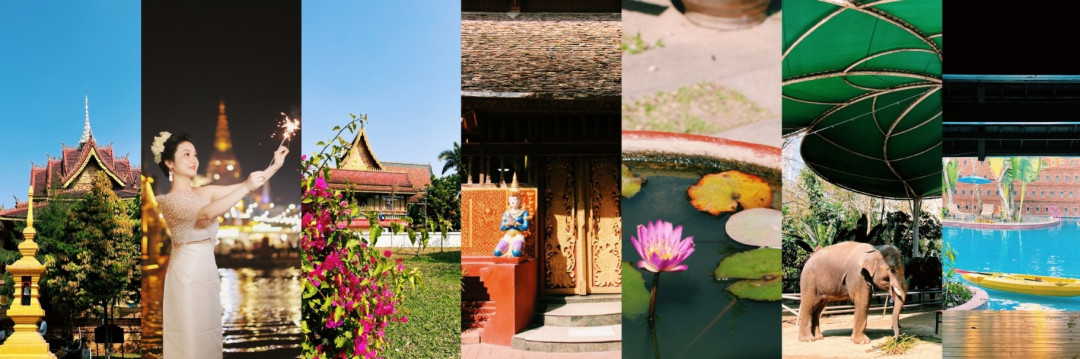
A Travel Ethnography of Xishuangbanna: Why We Love It So Much
When Travel Becomes Fieldwork
Have you ever had that moment—scrolling through travel photos from years ago on your phone, but completely unable to recall what happened? Those meticulously planned routes, the discounted hotel rooms you snagged, the frustration of traffic jams, the thrill of tasting authentic local food, and the freedom of riding an electric scooter through an unfamiliar city... These seemingly imperfect fragments are precisely what piece together the most vivid memories of our lives.
As a Master's graduate in ethnology, my longing for Xishuangbanna has long surpassed the typical tourist's curiosity. It's less a vacation and more a fieldwork expedition—the ethnic groups, the culture, the customs; every detail lies open like a book, waiting for me to turn its pages.
Su Shi once wrote: "Do not dwell on the past with old friends; instead, brew new tea over fresh fire, and enjoy poetry and wine while youth still allows." My feelings toward Xishuangbanna are exactly that.
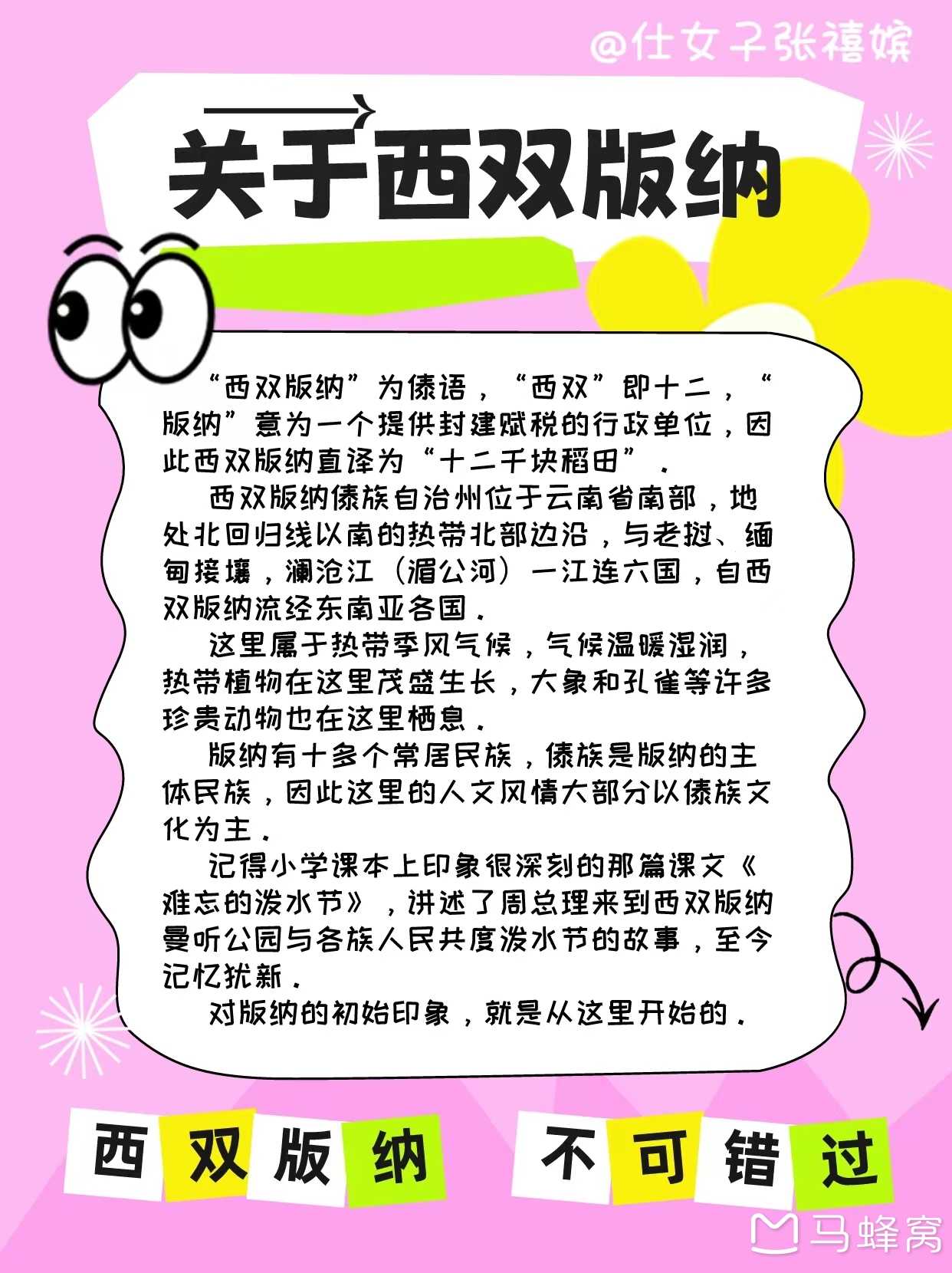
There's a popular saying in Banna: "We love Banna so much." Almost every visitor finds themselves repeating this phrase involuntarily. But why do we love it so? Upon reflection, there are countless reasons—the year-round balmy tropical climate, the lush broadleaf forests, the utterly adorable wildlife; the Buddhist Dai villages where every temple radiates peace and goodwill; the Dai and Thai peoples who have lived along the Lancang-Mekong River for generations, yet have forged a unique cultural identity of their own.
Some might say, "It's like a little Thailand." But Xishuangbanna, with its easygoing freedom, needs no comparison to anywhere else. It is forever warm, forever free—this is our very own Chinese Banna.
Preparations: Three Years of Waiting for This Moment
I admit, somewhat embarrassingly, that my yearning for Banna was planted three years ago. During that time, I drafted at least three itineraries, canceled two hotel bookings, and forfeited one flight ticket. Each attempt was搁浅 (shelved) for various reasons, and every time I started planning anew, I had to begin from scratch. This Spring Festival, I told myself: I cannot miss it again.
So, right after National Day last October, I started booking hotels. To my delight, I secured six nights for only about 2,000 RMB. As Spring Festival approached and I watched hotel prices skyrocket, I silently congratulated myself on my foresight.
Before making any travel plans, I make it a habit to understand my destination. What do I like? What kind of Banna do I want to see? With these questions in mind, I delved into the region's geography, culture, and history, then crafted an itinerary based on the cultural attractions I favored.
My must-visit list included: Manting Park, the General Buddhist Temple, Gaozhuang Xishuangjing, the Xishuangbanna Tropical Botanical Garden, the Primeval Forest Park, the Dai Ethnic Garden, and the Grand Buddha Temple. For night markets, I had to explore: the Starry Night Market, the Riverside Night Market, and the Six-Country Water Market. Beyond these, I scheduled some lesser-known villages and temples—Mandou Temple, Manjingbao Village, Boruo Temple, Manyin, and the Dai Water City. If time allowed, I also planned a trip to Pu'er City, just 40 minutes away by car.
As it turned out, this plan was nearly perfect. Despite a few hiccups along the way (like switching to electric scooter mode across Xishuangbanna), we completed every stop without missing a single one.
"Shared Beauty" with Banna—The Dream of a Dai Princess
I believe every girl who comes to Banna harbors a dream of being a Dai princess. As soon as I arrived, I couldn't wait to book three photo shoots—getting the pictures done first, while I still had energy and looked my best, was the smartest move. The downside, of course, was that I never bothered to put on makeup again for the rest of the trip, going bare-faced and barely using the cosmetics I'd brought.
I chose three locations for the shoots: Manyin (a Dai-style guesthouse), Manting Park, and the Six-Country Water Market at Gaozhuang Xishuangjing.
The moment I arrived at Gaozhuang, I was stunned—every other storefront was a costume rental shop, all offering full makeup and styling. Banna is essentially one giant photo backdrop; I've never seen a city quite like it. With such saturation, prices were generally low. The ubiquitous sight of Dai girls and electric scooters has become a unique part of the local scenery.
Manting Park: The Joy of Mother-Daughter Portraits

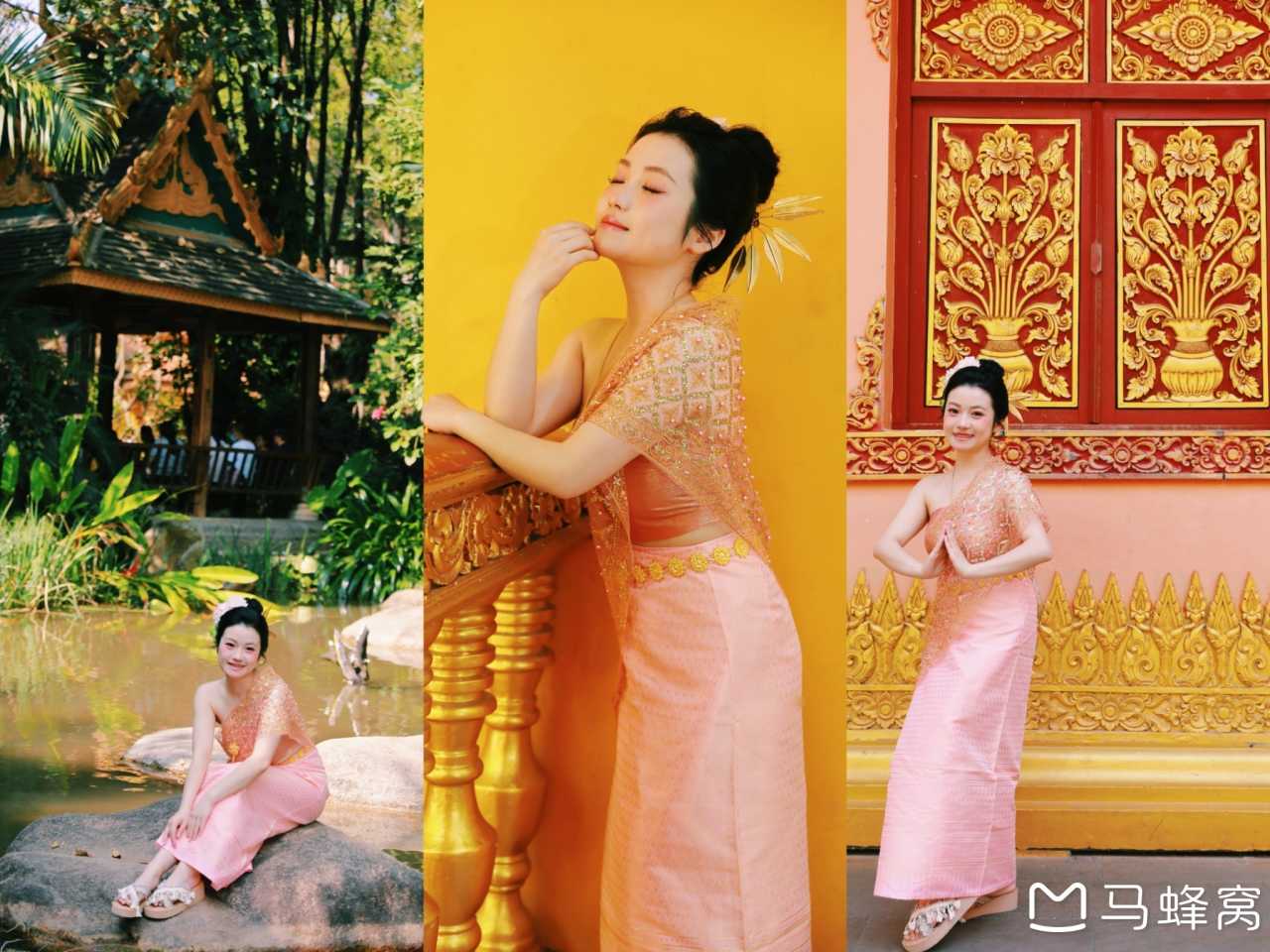
After getting our makeup done at the styling shop in the morning, I changed into a pink sleeveless Dai dress I'd bought at the Riverside Night Market, and picked out a long-sleeved version for my mother. We arranged to meet our photographer at Manting Park, but couldn't get a taxi. Spotting an electric scooter rental nearby, I grabbed one and sped off with my mom on the back. Riding an electric scooter in Dai costume—that was an experience unlike any other.
Once there, we had a delightful shoot. The photographer was great at guiding our poses, using the architecture and greenery as perfect backdrops. We spent a full two hours, and a set of bright, cheerful mother-daughter Dai portraits was born. One note: when walking from Manting Park into the General Buddhist Temple, you cannot wear sleeveless Dai dresses. It's best to bring a jacket to cover up, as a sign of respect.
Six-Country Water Market: Golden Pagoda by Night
We reused the makeup from the daytime shoot at Manting Park, just swapping into a white Dai dress. A boat ride for photos cost 20 RMB per person, and the best shots were taken facing the direction of the Jinghong Grand Golden Pagoda. The photographer knew all the popular spots by heart and worked at lightning speed. If you're shooting on your own, here's a foolproof tip: wherever you see clusters of photographers and models, go follow their lead.
Manyin: Elegance at Sunset
As the setting sun cast uneven light through the banana leaves onto my face, for a moment, I truly felt like a native Dai girl. Manyin charges a 198 RMB fee for photography. If you've hired a photographer, you'll need to cover this cost yourself, though some studios include it—be sure to ask beforehand.
Bonus Spot: Dai Water City
Want free beautiful photos? Head to the Dai Water City. Its red-brick architecture is strikingly similar to Manting Park, and there are coffee shops where you can enjoy a lazy afternoon. Stroll along the scenic bridge, where elephant statues spray water, pagodas peek through the treetops, the river is clear, and the trees are lush—every flower and leaf seems to carry the shadow of Buddhist culture.
The Light of Faith—A Pilgrimage to Theravada Buddhist Temples
To truly understand Banna, you cannot ignore its temples. Here, "every village has a temple, and every temple has a pagoda." Temples and pagodas are the heart of Dai community life. Currently, Xishuangbanna has over 500 temples and more than 200 pagodas, with over 90% of its cultural relics related to Theravada Buddhism.
Banna stands alongside Thailand's Chiang Mai, Myanmar's Kengtung, and Laos's Luang Prabang as one of the four major centers of Theravada Buddhism. Temples nestled in tropical landscapes, palm-leaf manuscripts inscribed with ancient sutras, monks in yellow robes, and tranquil Dai villages—here, religious faith is woven into daily life, setting it apart from other parts of China.
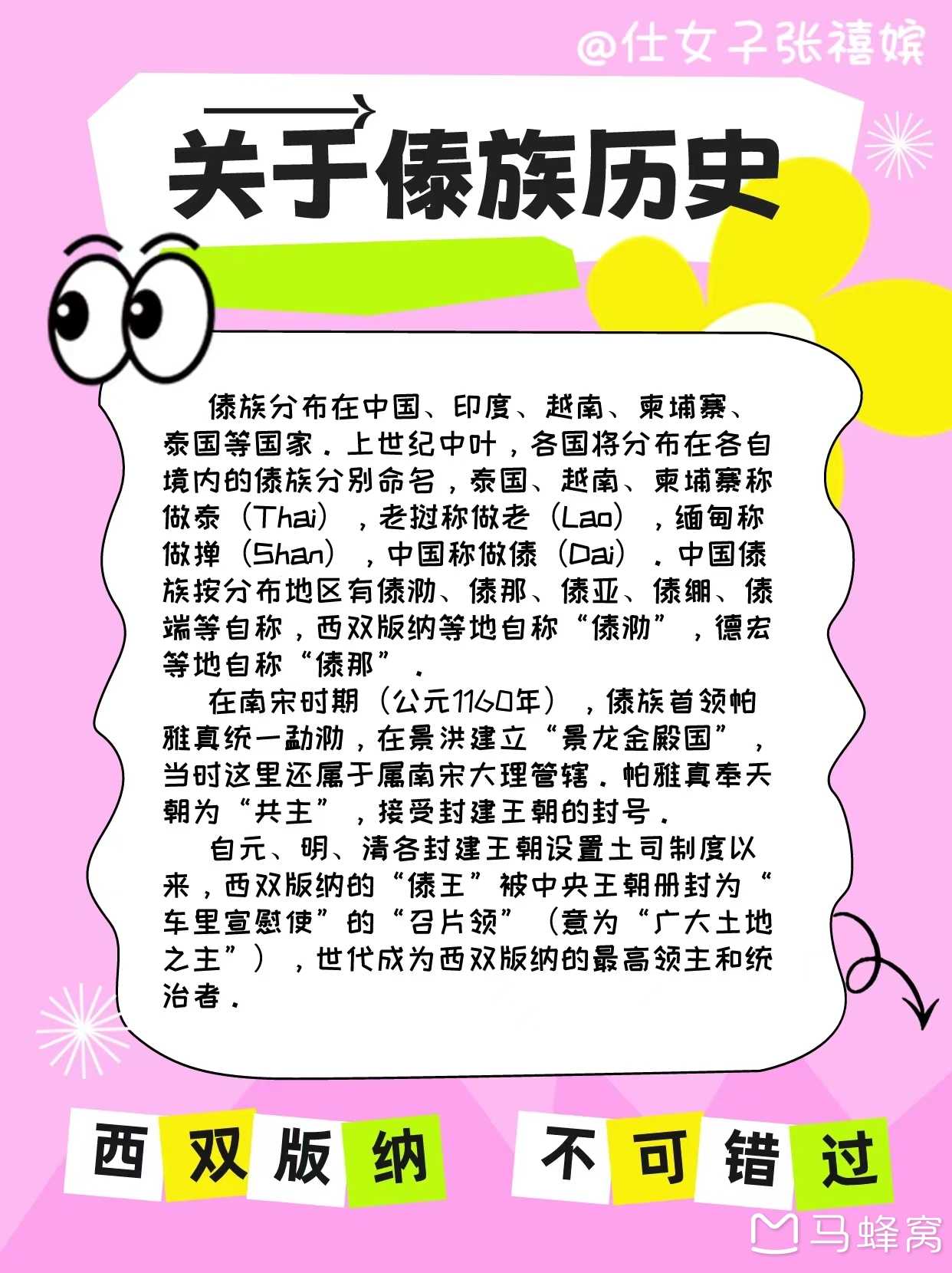
Theravada Buddhism entered Xishuangbanna around the 7th century CE, disappeared during wartime in the 11th century, and later returned via Chiang Mai through Kengtung. Over 1,300 years, it has continuously merged with local customs, forming a unique cultural sphere centered on the Dai people. Bathed in the light of their faith, the Dai move between worldly life and Buddhist practice, elegantly balancing the sacred and the secular. The calm, kind expressions on their faces reflect the purity and goodness at their core.
Mengle Grand Buddha Temple: The Highest Point Overlooking Jinghong

This is Banna's largest temple, built into a mountainside. The glass walkway at the summit offers a panoramic view of Jinghong city. The pagoda base is plum-blossom-shaped, surrounded by eight smaller pagodas, with a multi-layered gourd-shaped body, resplendent in gold. If you're staying in downtown Jinghong, a taxi ride costs just over 20 RMB, and the driver can help you get discounted tickets. The hike up takes about an hour; I recommend taking the electric cart up and walking down. Water-splashing performances are at 2:00 PM and 4:00 PM, and peacock releases at 9:30 AM, 11:00 AM, 1:00 PM, 3:00 PM, and 5:00 PM.
General Buddhist Temple: Extreme Opulence and Ancient Grandeur
The temple's pagoda-style spires feature intricate patterns, exquisitely carved, with gold mingling with dark tones and dark tones revealing gold. Visitors instinctively press their palms together in reverence. Inside stands a small white pagoda, the tomb of Dao Shixun, the last Dai king. Dao ascended the throne at 15, becoming the 41st Zhaopianling (supreme ruler). After Yunnan's peaceful liberation, he abandoned his prominent position to devote himself to academic research, translating many important documents and painstakingly compiling the Xishuangbanna Dai-Chinese Dictionary. He was not only the last Dai king but also a great ethnologist. When visiting, dress modestly—no sleeveless Dai dresses or very short shorts.
Jinghong Grand Golden Pagoda Temple: One River Connects Six Countries
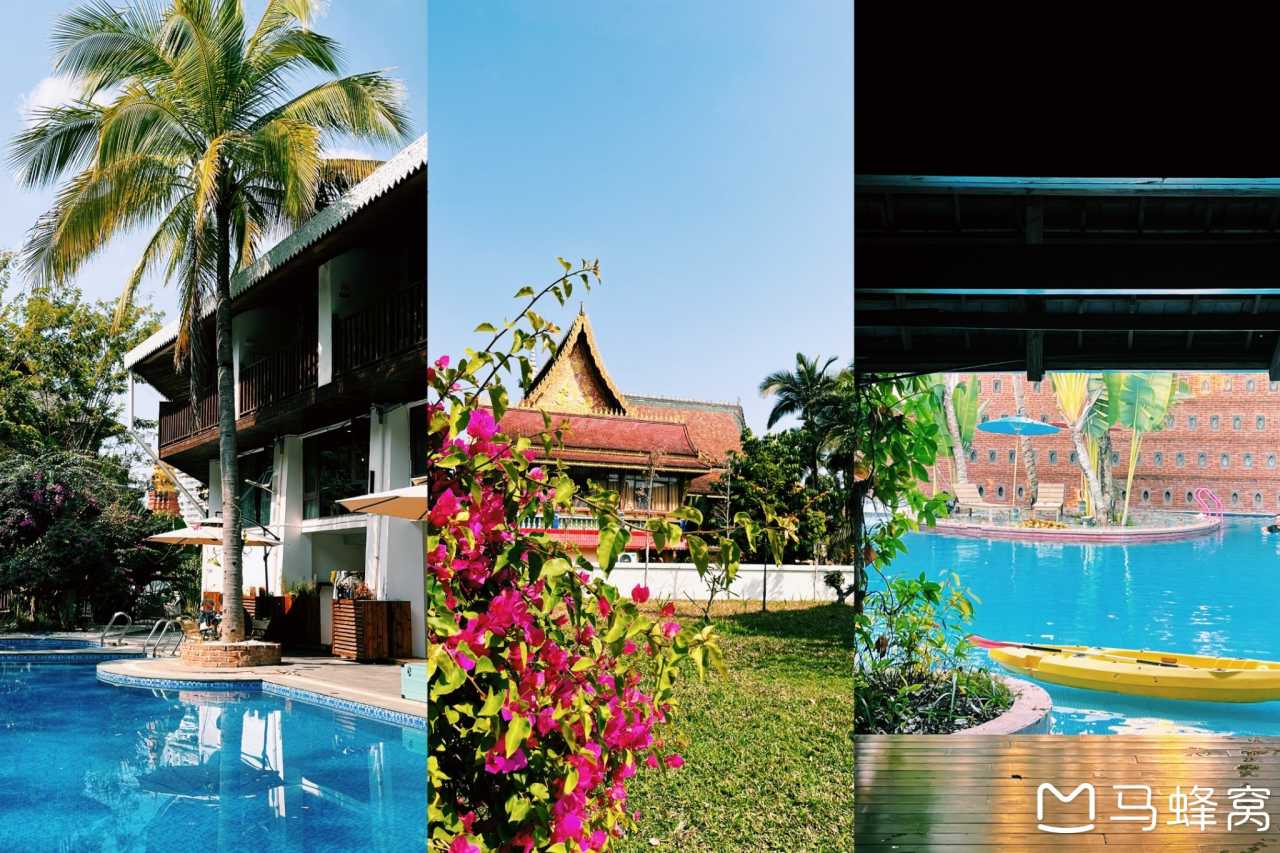
The Lancang River originates from the Tanggula Mountains in Qinghai, and after flowing through Xishuangbanna, it becomes the Mekong River, linking six countries. The Grand Golden Pagoda is magnificent, its brilliance echoing the lively烟火气 (earthly energy) of the Starry Night Market. There is no entrance fee; a donation of 30 RMB grants you entry for worship.
Boruo Temple: The Pure Silver Pagoda
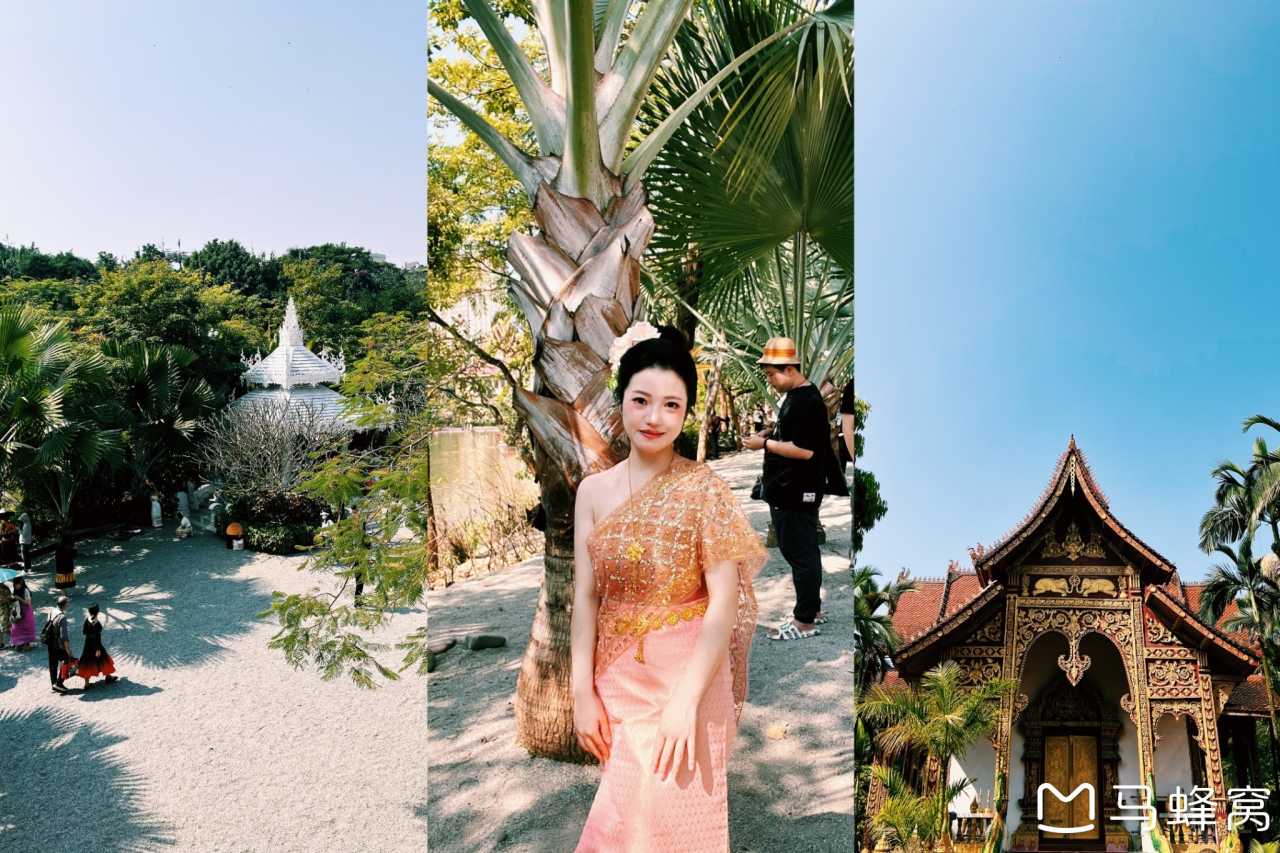
Unlike the many golden pagodas, Boruo Temple is entirely silver-white, looking from a distance like a lustrous pearl. It sits on a hill in Manzhen Village on the outskirts of Jinghong. The mountain road is narrow, so walking or riding an electric scooter is recommended. Outside the temple, many young people run mobile coffee carts—enjoying a cup here has a unique charm. The temple is free, but dress and behavior should be respectful.
Mandou Temple: Faith Amidst Everyday Life
The entrance features a dark red and gold pagoda gate, while the interior is a multi-eaved, gable-roofed hall. The prayer hall is on the second floor; shoes must be removed before entering. Our encounter with this temple felt fated—we happened to be eating nearby, felt like visiting, and a quick map search showed it was just 500 meters ahead. The area is filled with lively, earthy energy, with vendors selling Dai snacks and fruits. We also met a blind kitten; though it couldn't see, it responded when called. Coming out of there, my mother cried for a long time.
Manchunman Temple: A Renowned Sacred Site in Southeast Asia
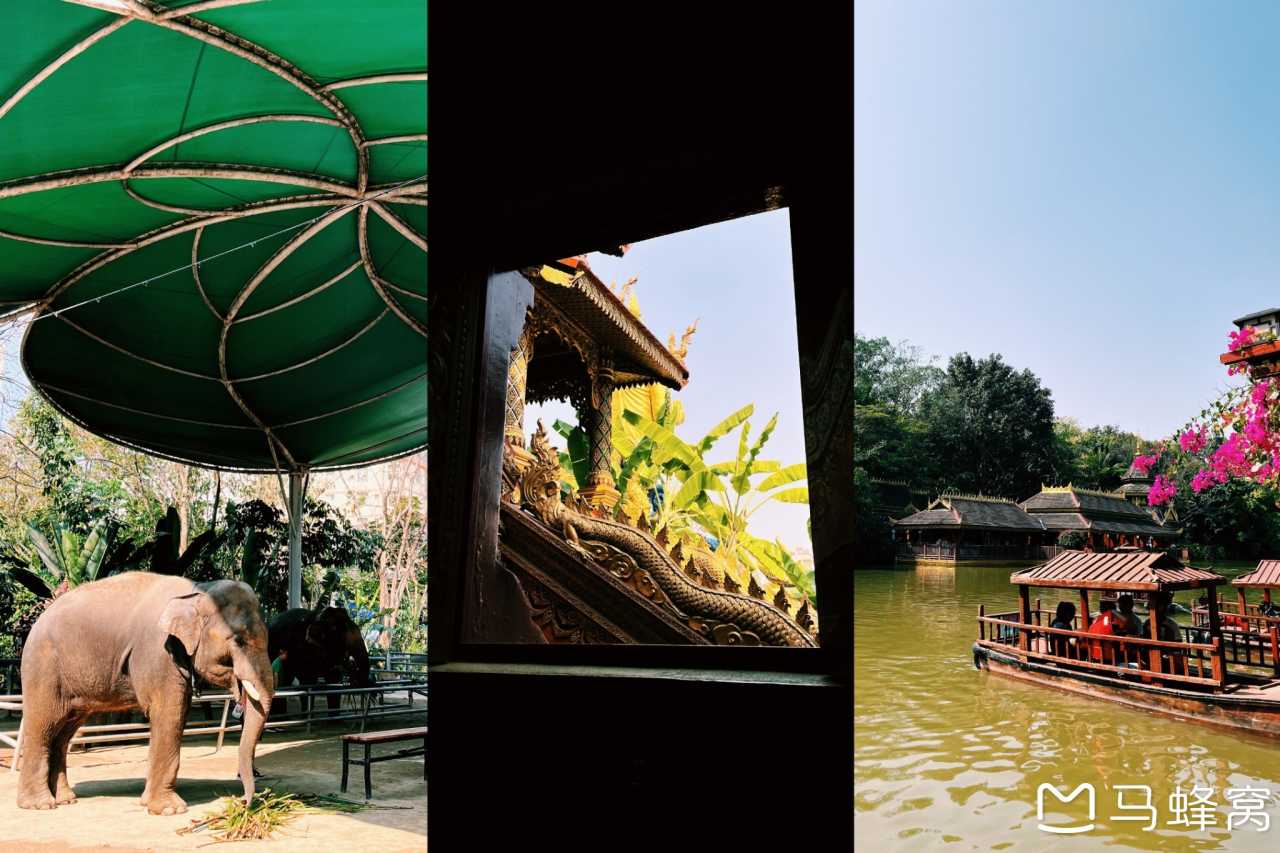
This temple is famous throughout Southeast Asia, with monks from Sri Lanka, Thailand, Myanmar, and Laos gathering here annually for worship and chanting. It houses a rare bamboo-woven Buddha statue, a masterpiece of craftsmanship. If your time at the Dai Ethnic Garden is limited, this temple is a must-see.
Manjingbao Temple: Faith in Its Raw Form
Rarely visited by tourists, the temple looks a bit weather-beaten, with fallen leaves that seem to have gone un-swept for a day or two. But approach it, and you can still hear the sound of chanting from within. For the Dai people, these temples are not scenic spots—they are a part of life itself.
Dai Life in the Field—Real Village Living
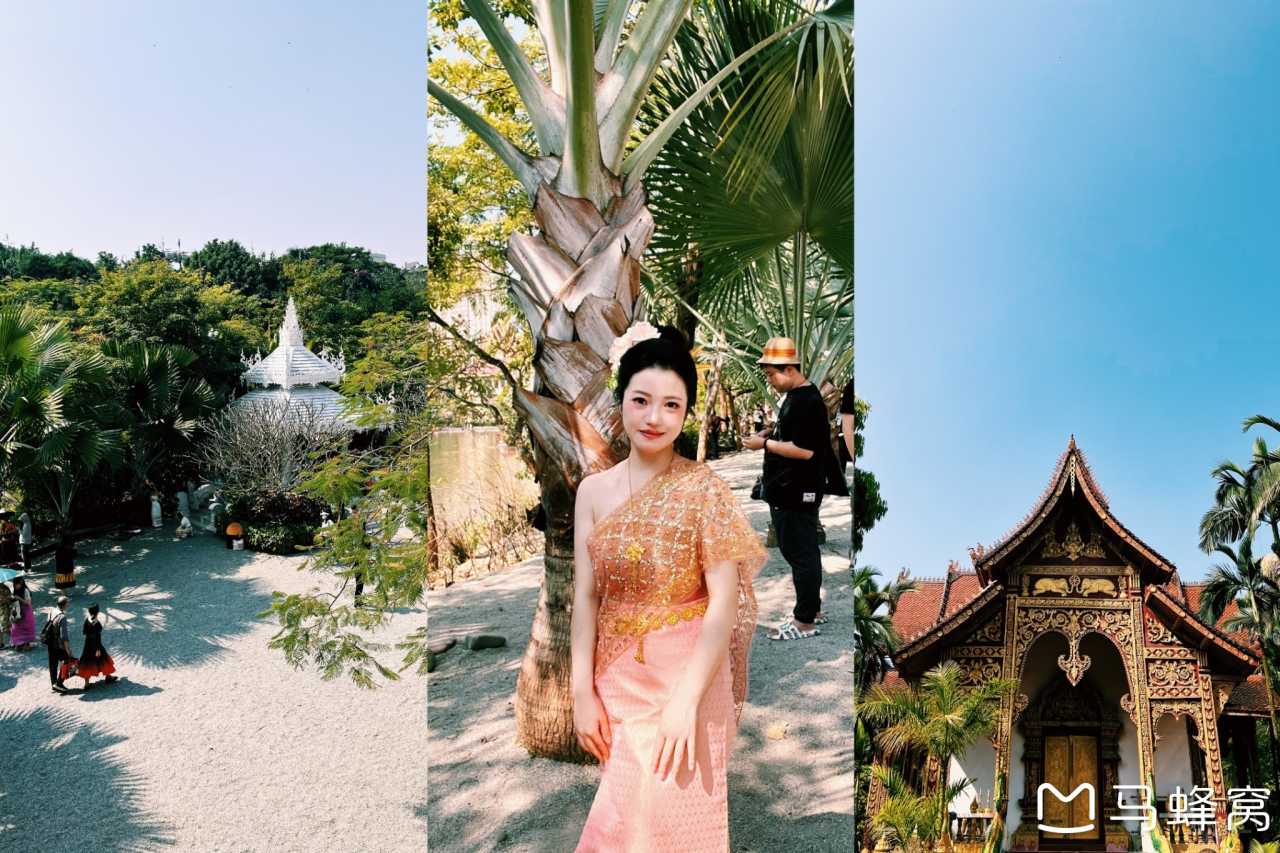
I only visited two Dai villages on this trip: Manchunman Village and Manjingbao Village.
The Dai Ethnic Garden and Manchunman Village
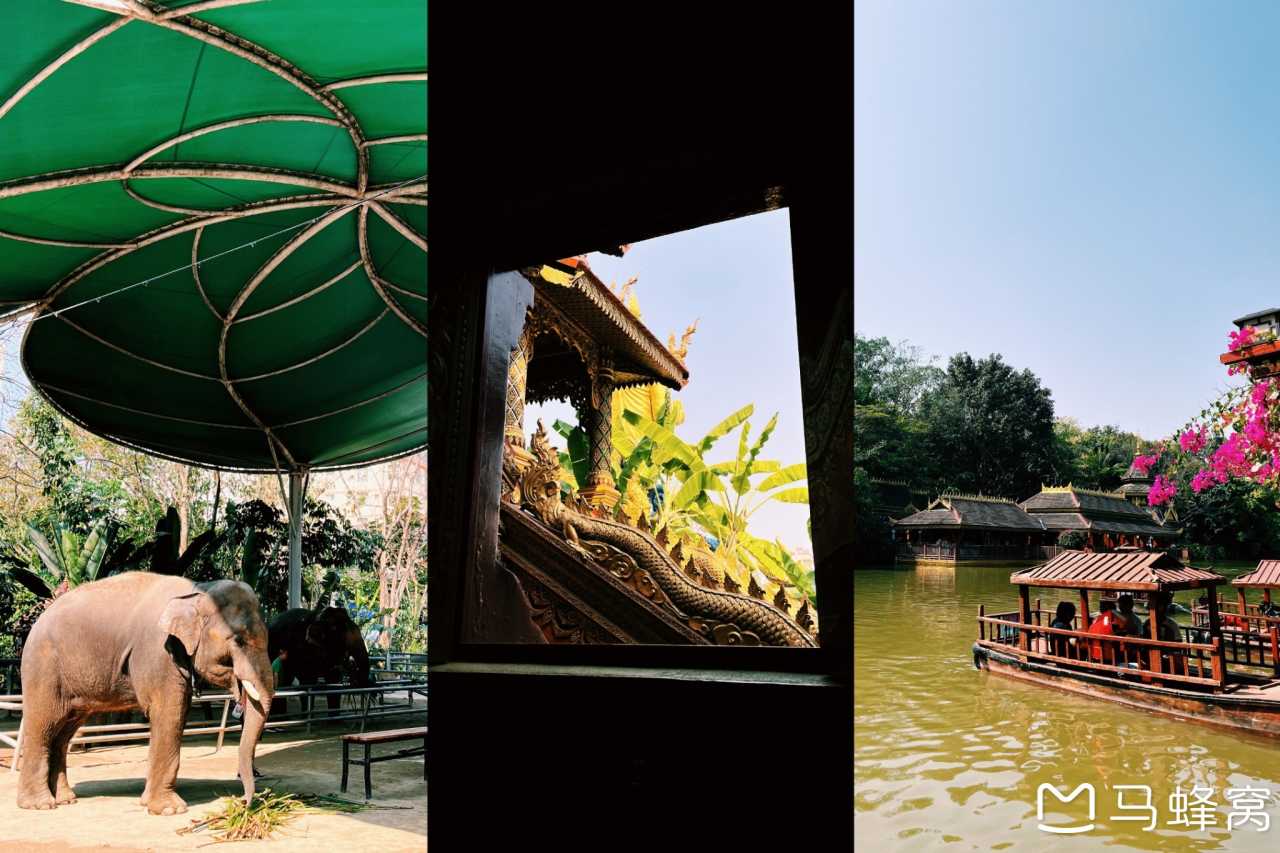
The Dai Ethnic Garden is made up of five villages—Manjiang, Manchunman, Manting, Manzha, and Manga. The houses are stilted bamboo structures, with bamboo fences separating households. This is not a simple tourist attraction but a collection of well-preserved Dai villages where over 300 families still live.
The biggest draw is the water-splashing performance. Even outside the Water Splashing Festival, visitors can experience the joy of splashing water every day. Typically, there are two shows a day, with three or more on holidays. Remember to bring an extra set of clothes; you can bring your own basin or buy one on-site.
Taking the electric cart from the Splashing Square to Manchunman, our guide was a Dai woman whose appearance and accent were wonderfully authentic. Besides the magnificent temple, the Ganbai Street is particularly striking. "Ganbai" in the Dai language means "market," but its scope extends far beyond trade—it encompasses rituals, gatherings, arts, and commerce all in one. Most Dai festivals are called "bai"—for example, the Water Splashing Festival is called "Bai Shuangnan," and attending these events is called "ganbai."
Manjingbao Village: Rustic Charm and Delicious Food
I rode my electric scooter from Boruo Temple to Manjingbao Village, where bougainvillea blooms in every corner. Lush banana trees, a few villagers on motorcycles, the free wind—it all inspires a sense of longing. What I loved most was its raw, unpolished feel—the villagers steadfastly speak Dai, and planting greenery is simply part of life.
According to a stone inscription, Manjingbao Village was once the location of the Dai king's granary. Could that be why the food here is so delicious? I wondered, asking a waitress, only to find that most people don't speak Mandarin, still using pure Dai. "Mao Duoli" means "handsome guy," and "Xiao Duoli" means "beautiful girl"—much like how we call out "brother, sister, come sit inside" to attract customers.
The Dai people are generally slim, with slender figures, and their diet is mainly grilled food and cold dishes. If I had to draw a comparison, Dai cuisine in Banna is something like a fusion of Yunnan food and Thai food.
Eating in Banna: Dai Flavors and Northeast Flavors
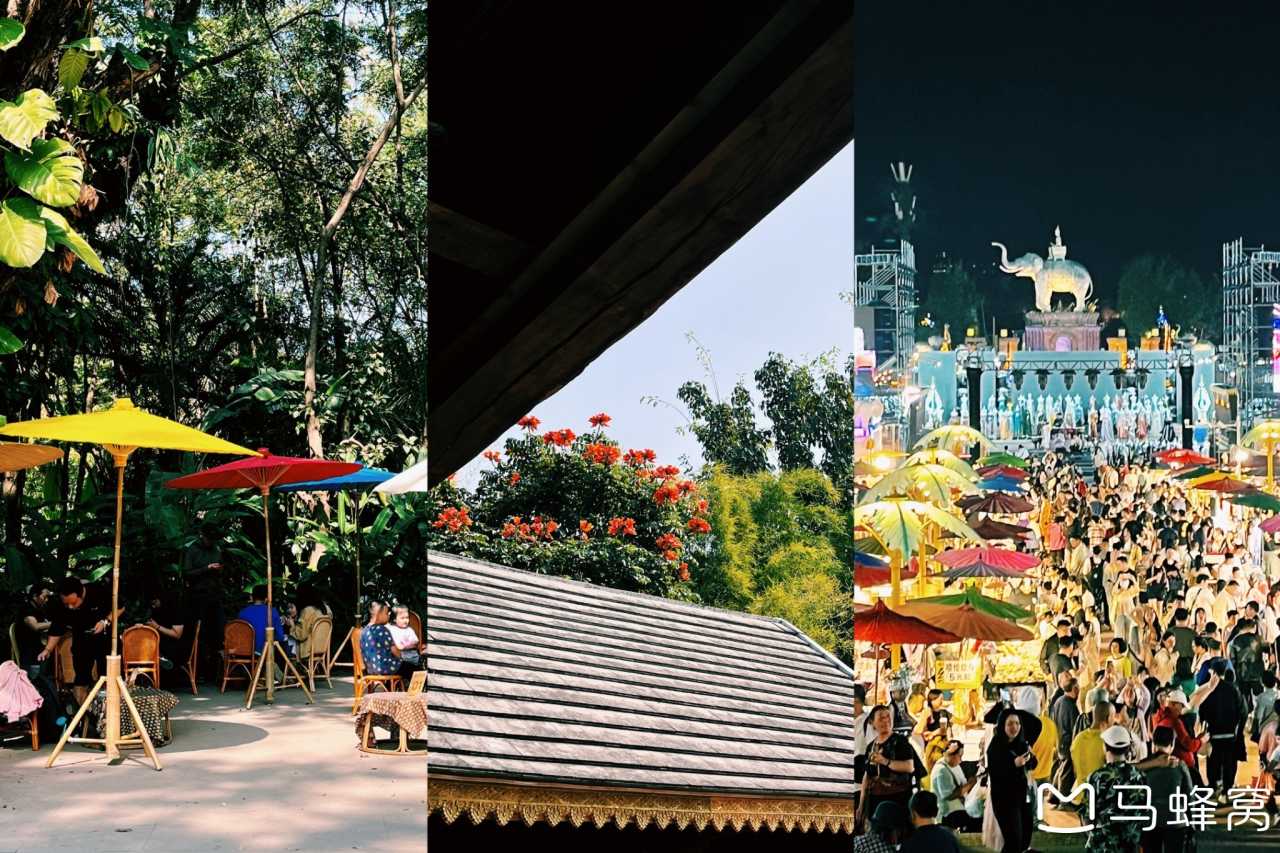
When it comes to food in Banna, I have to mention that it's not just about Dai flavors—there's a strong Northeast Chinese influence as well.
Since the beginning of the 21st century, folks from China's northeast have first flocked to Hainan Island, then moved into Xishuangbanna, settling, working, and living here, bringing the tastes of their homeland with them. It's a fascinating sociological phenomenon. The Banna we see today is shaped not only by the efforts of the Dai people but also by the contributions of the northeasterners. From female bus drivers to Dai costume shop owners, from breakfast stall operators to hotel managers, from tour guides to photographers, from street vendors to... it's fair to say that Banna's prosperity is the result of multicultural integration.
And it is this very fusion that allows Banna to retain its authentic Dai character while gaining an inclusive, down-to-earth vitality. It doesn't need to be a "little Thailand." It is simply itself—a forever warm, forever free Xishuangbanna.
In Closing: Why We Love It So Much
Six days came to an end, and I left with a heart full of memories and gains. Those awkward moments of riding an electric scooter in Dai costume, the reverence of pressing my palms together before a temple, the confusion of hearing Dai spoken in the villages, the satisfaction of tasting street food at the night market... These seemingly imperfect fragments are precisely what make up the most authentic Banna.
Why do we love it so much? Because here you find the most gentle climate, the most verdant greenery, the most peaceful faces, the most unique culture. Because here, temples are woven into daily life, villages hold centuries of history, and people build their home with faith and hard work.
Banna needs no comparison to anywhere else. It is forever warm, forever free, forever worthy of love.
Practical Tips: - Book hotels 3–6 months in advance to save significantly - Schedule photo shoots early in your trip for the best energy and results - Dress modestly when entering temples and respect local customs - Bring an extra set of clothes for water-splashing at the Dai Ethnic Garden - Electric scooters are the most convenient way to get around, but ride safely - Lesser-known villages and temples often offer the most authentic experiences—worth taking the time to explore
You should also read:
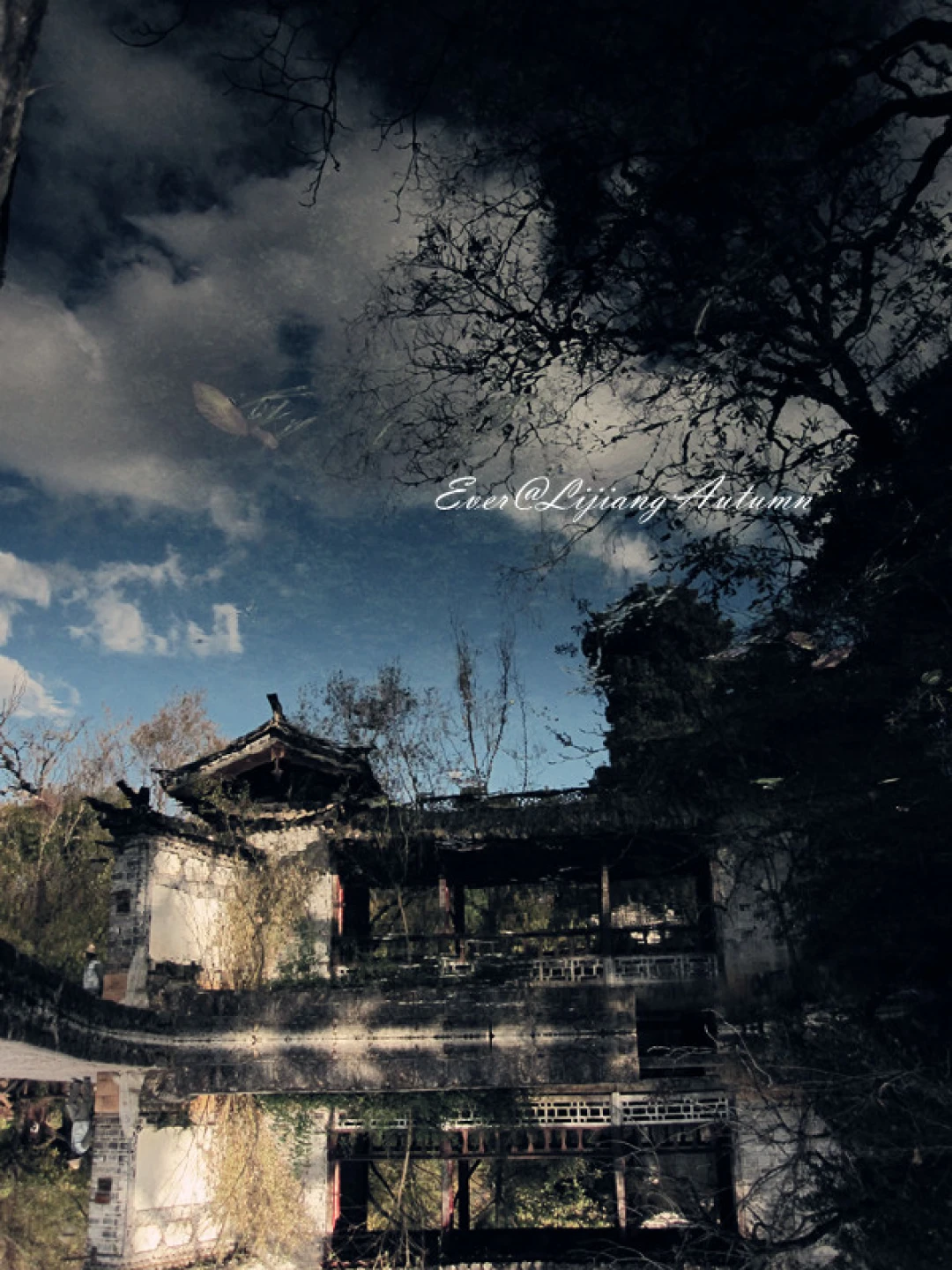
Idle Clouds in Autumn, a Moonlit City: A Slow Travelogue Through Lijiang and Shuhe
Idle Clouds in Autumn, a Moonlit City: A Slow Travelogue Through Lijiang and Shuhe When the autumn wind brushes across the ancient city's eaves, when sunlight spills onto the mottled cobblestone streets, when the melodies of folk songs mingle with the aroma of plum wine…
Continue reading...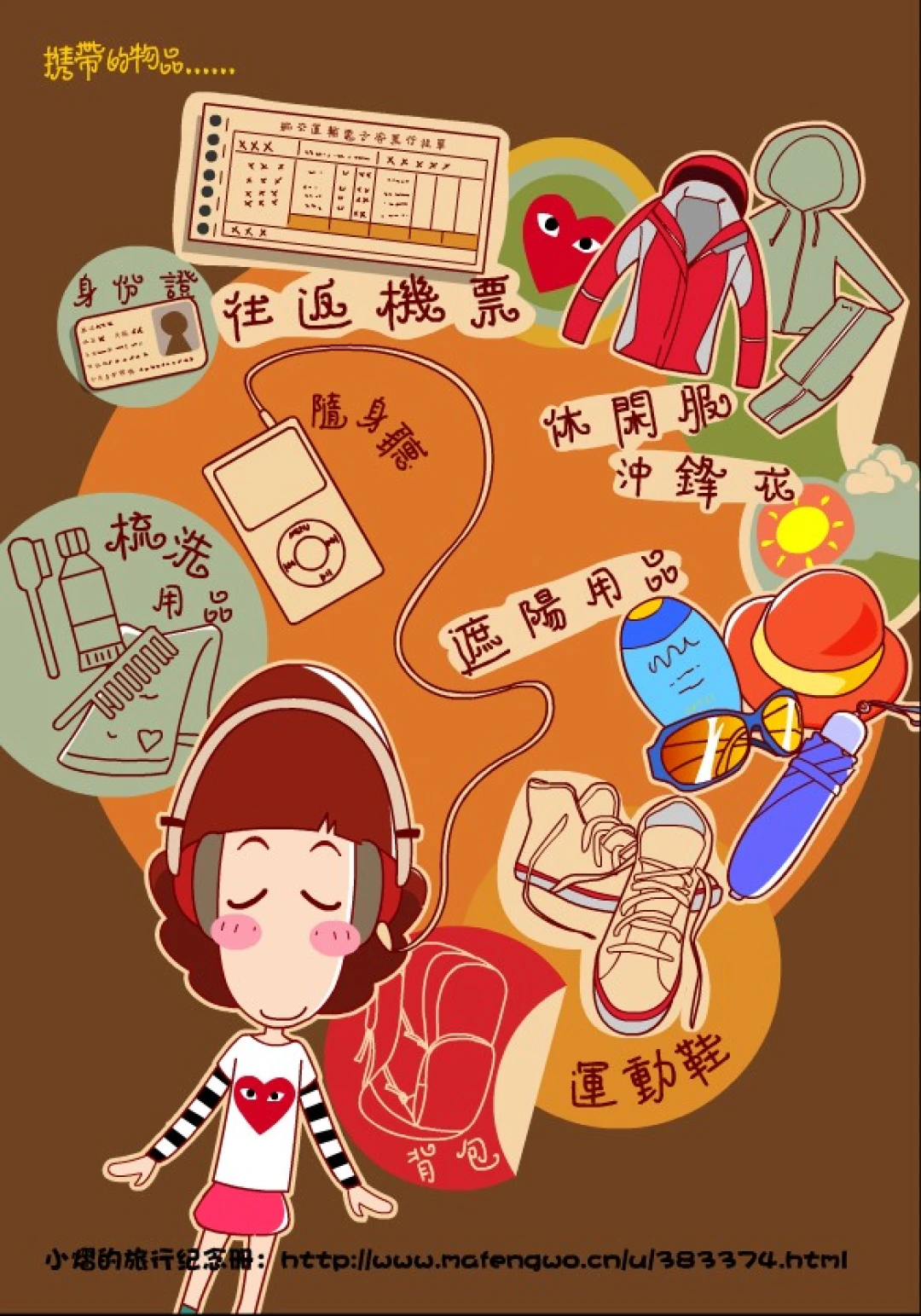
Dreamland – Lijiang: A Talking Comic Travel Guide
Dreamland – Lijiang: A Talking Comic Travel Guide Prologue: When Lijiang Takes Root in Your Heart Some places leave a mark on you forever. They're like an old song on repeat, suddenly playing in your mind on an ordinary afternoon. For me, Lijiang is that…
Continue reading...
Yunnan Travel Mastery: From Beginner to Pro-Level Player – A Complete Guide
Yunnan Travel Mastery: From Beginner to Pro-Level Player – A Complete Guide "Either travel or read, but your body and soul must be on the road." This quote has been repeated countless times, but very few people truly manage to be "on the road" and…
Continue reading...