A Winter Poem at 21° North: An Impromptu Adventure in Xishuangbanna
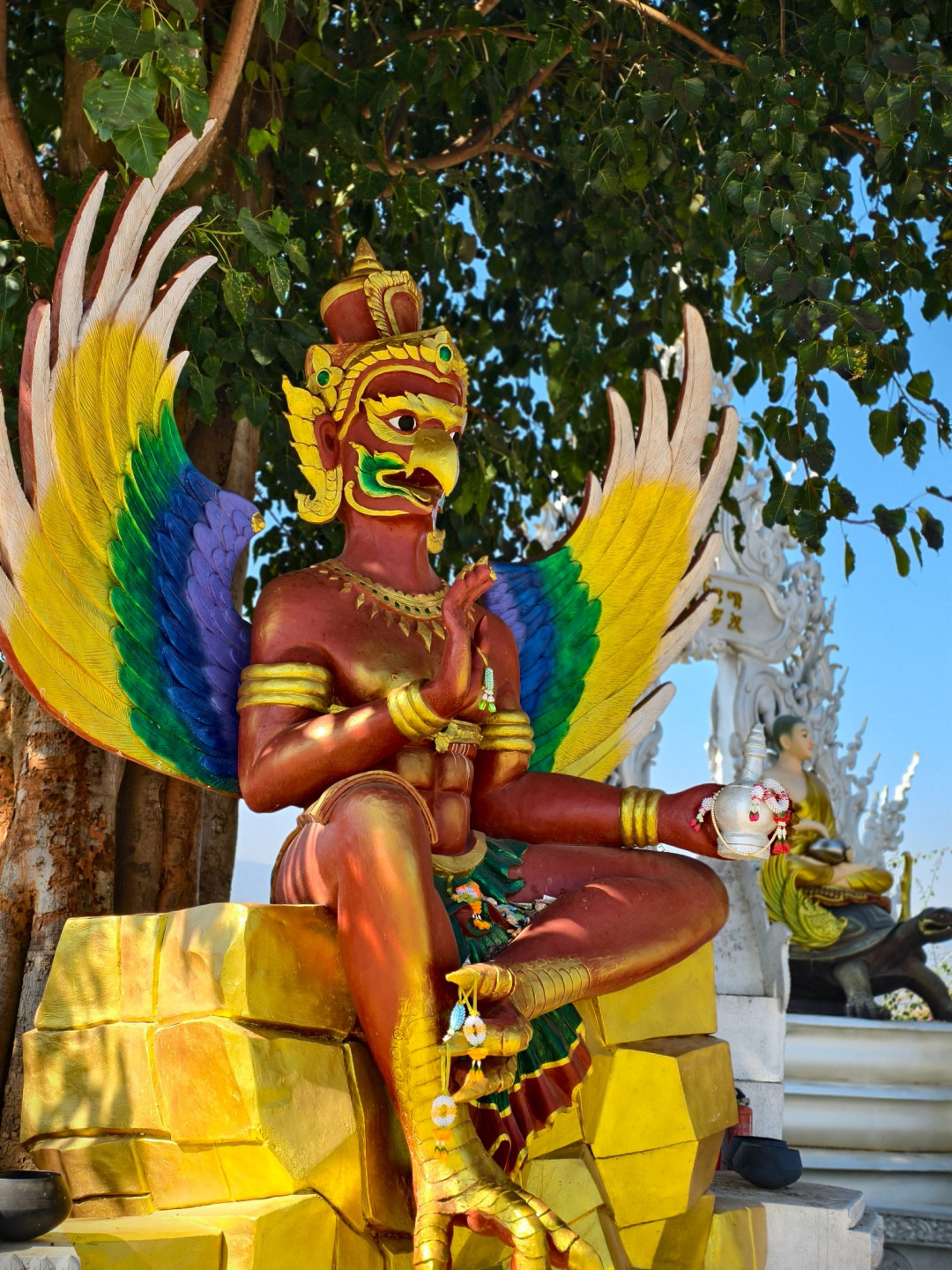
A Winter Poem at 21° North: An Impromptu Adventure in Xishuangbanna
Prologue: When Hainan's Prices Soared, Banna Became Our Winter Escape
At 21 degrees north latitude, the Lancang River meanders through, nurturing a mysterious and warm land—Xishuangbanna. I'd heard this name countless times but never felt drawn to it. In my imagination, it always seemed to pale in comparison to Hainan's azure seas and silver beaches. That changed during the 2024 Spring Festival, when Hainan's airfare skyrocketed like a rocket, shattering my modest winter escape plans.
My wife dreads the cold and was determined to find a warm place for the holidays. I spread out a map of China, my gaze shifting between the Beibu Gulf in Guangxi and southern Yunnan. In the end, Xishuangbanna won out with its "steady performance" of 28°C (82°F) daytime average—just thinking about that temperature made me feel at ease.
Then came the question: drive ourselves or join a tour? Just as I was wrestling with the decision, I stumbled upon info about a small-group tour—no more than eight people, with an itinerary and price that hit the sweet spot. It felt like someone had pressed a "fast-forward" button, and without hesitation, I locked in this trip to Banna.
The best thing about travel is this: you never know what surprises lie around the corner, beyond the plan.
I. The "Three Gates" Before Departure: A Battle of Airfare, Phones, and Luggage
1. Airfare: A Game of "Price War" with Fate

I'd assumed Spring Festival airfare would be like train tickets during the holiday rush—gone in a flash if you hesitated. Instead, the outbound ticket went on a "fire sale." Buying five days early saved me 400 yuan (about $55), and I was feeling pretty smug—until a message popped up: "Wait two more days and save another 100." In that moment, I could almost hear my heart shatter. So this is how the airline game works: buy early, get burned.
Human joys and sorrows may not align, but the speed of airfare drops definitely outpaces my wife's ability to empty her shopping cart. For the return ticket, I learned my lesson and booked immediately, giving the system no chance for another "ambush." After all, I had no desire to become a repeat of those stranded tourists in Hainan earlier in 2024.
2. The Phone: A Long-Planned Upgrade
My wife's grudge against Apple phones finally erupted under the righteous banner of "photography needs." Seizing this trip as an excuse, she insisted on getting a new phone. I scoured reviews online and eventually settled on the VIVO X200 PRO—its tagline claimed it could "photograph the moon and see Chang'e's eyelashes," which was over the top, but the actual performance didn't disappoint.
By the end of the trip, we had over 3,000 photos and 100-plus videos on the phone. The only side effect: I became a "walking tripod" and started questioning my existence—apparently, "taking beautiful photos" is the ultimate glue in a marriage.
3. The Suitcase: A Farce of Climate Prediction
The weather forecast said Banna hit 28°C (82°F) during the day, so I confidently packed shorts and flip-flops. Then I spotted "cooler in the mornings and evenings," and frantically threw in a down jacket. The suitcase looked like a mobile wardrobe, stuffed with a chaotic mix of "tropical vibes" and "Arctic expedition." Later, when we encountered a cold snap in Kunming and wore the down jacket to see snow, I realized this absurd packing strategy was surprisingly practical.
II. Itinerary Overview: A 6-Day, 5-Night Deep Dive into Banna
- DAY 1: Ningbo → Banna, check in at Gaozhuang Baoyu Light Luxury Resort Hotel
- DAY 2: Yuanjin·Five Trees and Six Flowers → Starry Night Market → Dajin Pagoda Temple → Jingzai Village Rooftop
- DAY 3: Manzhang Village → Wild Elephant Valley → Manting Park → General Buddha Temple → Starry Night Market
- DAY 4: Mengyuan Paradise Rainforest Hike → Wangtianshu (Sky-reaching Tree) → Manlongle Village
- DAY 5: Chinese Academy of Sciences Botanical Garden → Manyuan Village → Dai Ethnic Garden
- DAY 6: Dai-style Water City → Prajna Temple → Return to Kunming
III. Day 1: Arriving Late at Night, Exhausted Like on a Pilgrimage
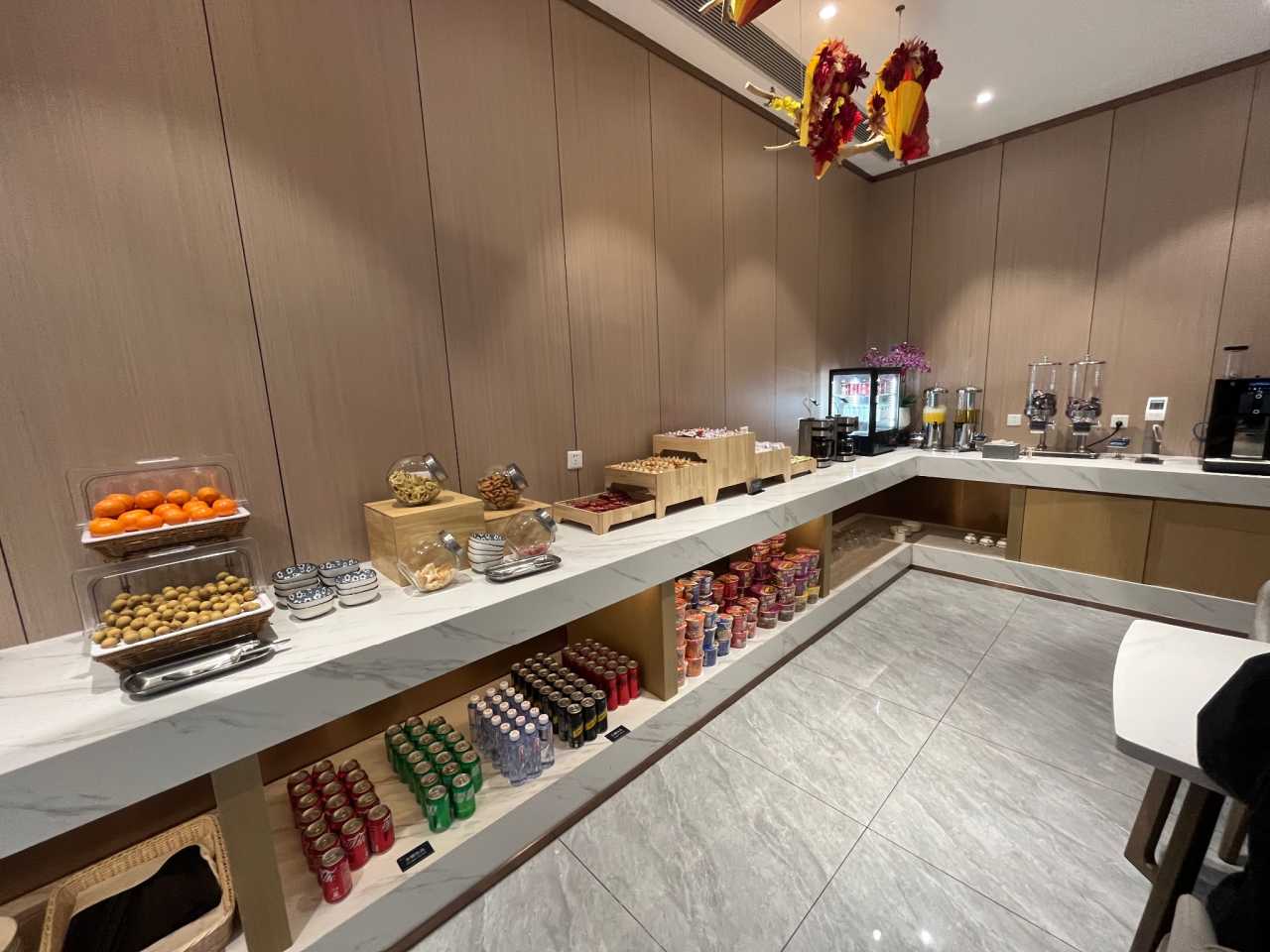
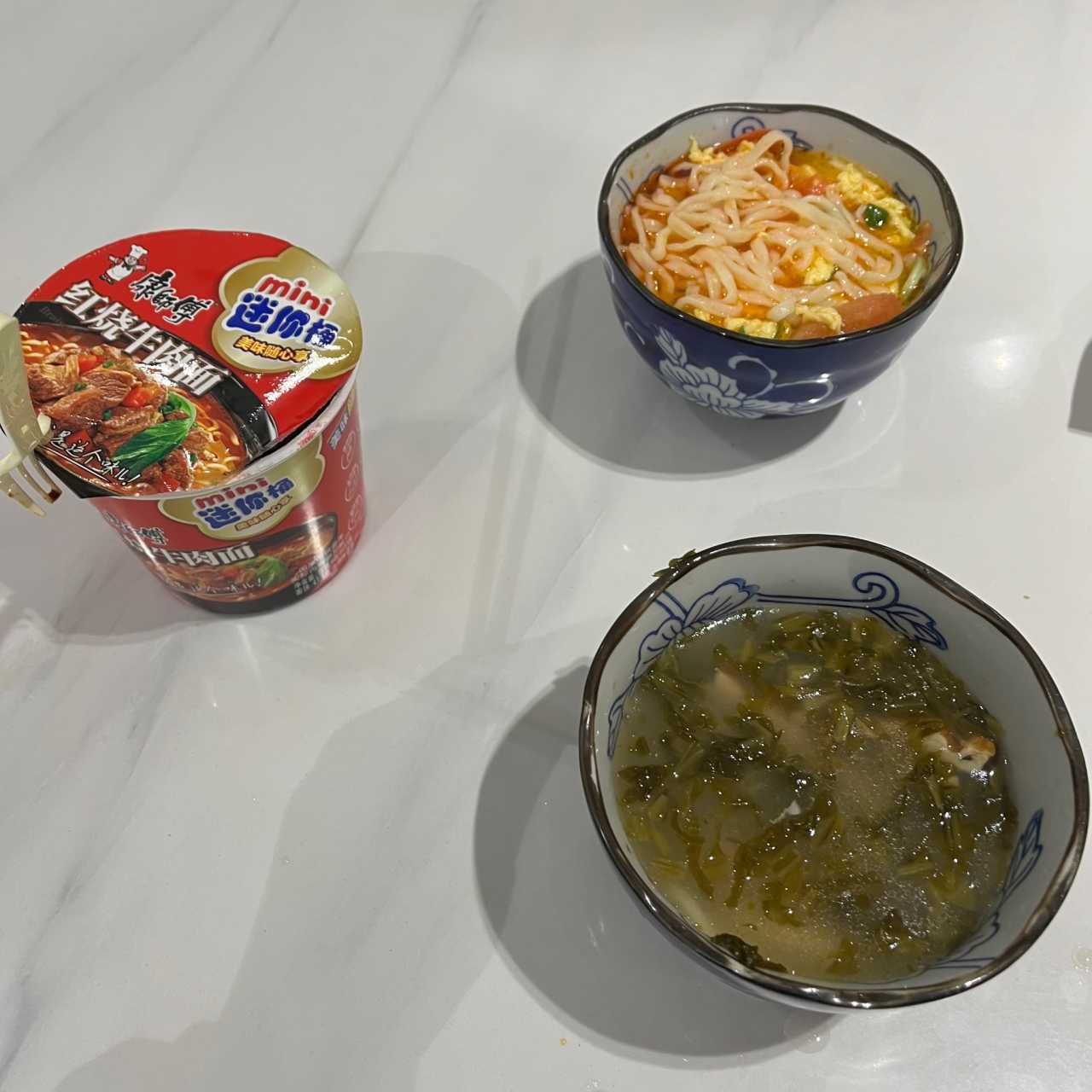
At 5:30 p.m., we arrived at Ningbo Airport and experienced the VIP lounge for the first time. It wasn't as luxurious as I'd imagined, but at least we could grab a bite. The tomato egg noodle soup and pickled mustard greens rice cake soup were modest in portion but decent in taste. As a true Ningbo native, I voted without hesitation for the pickled mustard greens rice cake soup.
During boarding, staff with loudspeakers directed passengers, creating a scene that felt a bit like "Spring Festival travel rush." On the flight, I chose a seat by the emergency exit, hoping for more legroom. But as we descended, my ears hurt for half an hour, and chewing gum didn't help—the pain didn't ease until the next day. I'm not sure if it was the seat's fault.
We landed in Banna at 11:10 p.m. The moment we stepped out of the cabin, a wave of heat hit us. We didn't even grab our luggage first; we rushed to the restroom to peel off our thermal pants and wool sweaters. After collecting our bags, the driver arranged by the tour company was already waiting. The group was supposed to have four people, but the other two dropped out last minute, leaving just me and my wife on a "private tour." Whether that was good or bad, I couldn't say.
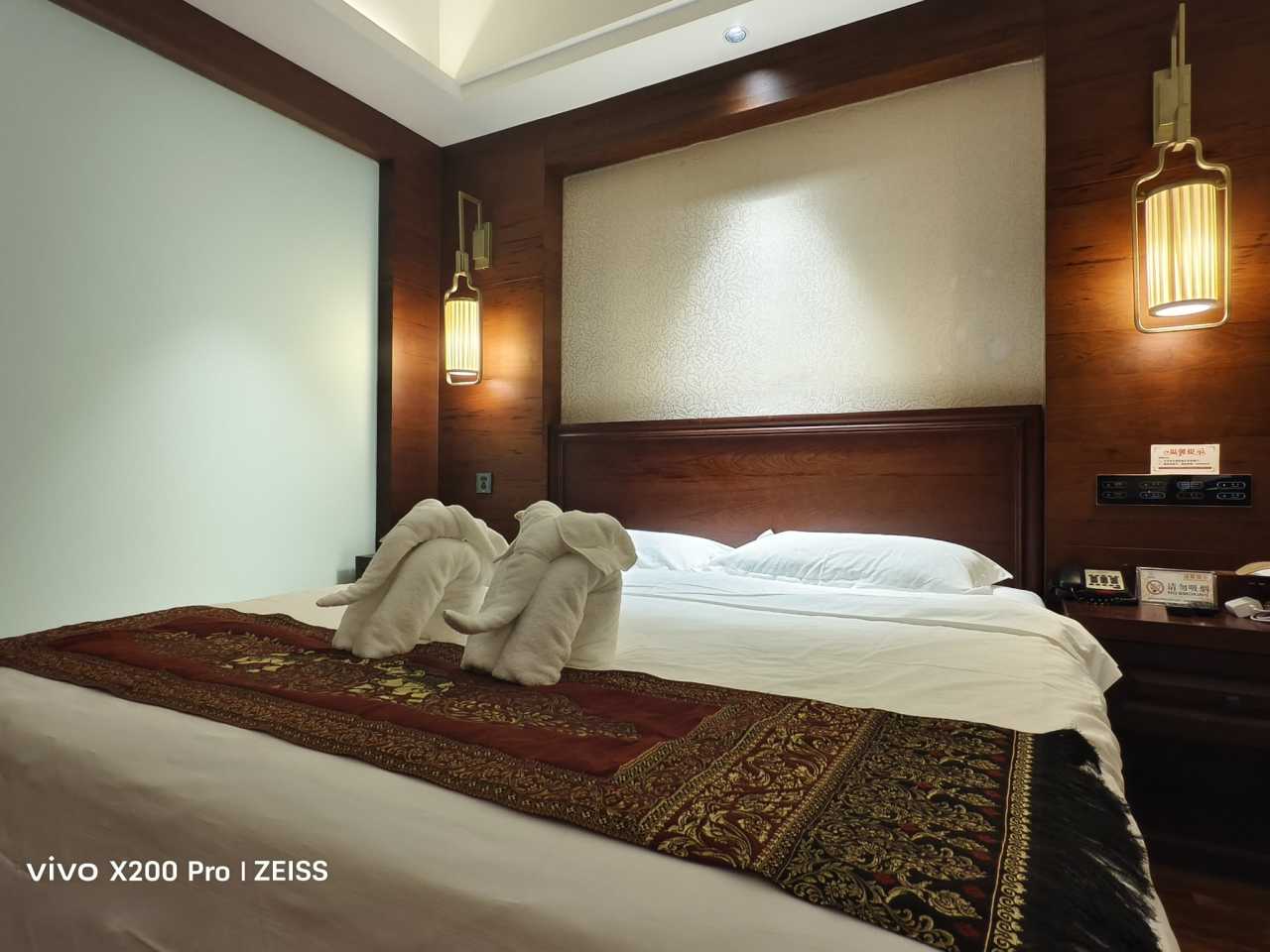
We reached the hotel after midnight. Between washing up and doing laundry, we didn't crash until 2 a.m. On the bed, a towel folded into the shape of an elephant instantly set the "Banna mood." That day, we were exhausted like pilgrims on a journey, but we'd made it.
IV. Day 2: The Inescapable Starry Night Market
Today was the group's assembly day, but we had free time to explore, using the Starry Night Market as our base.
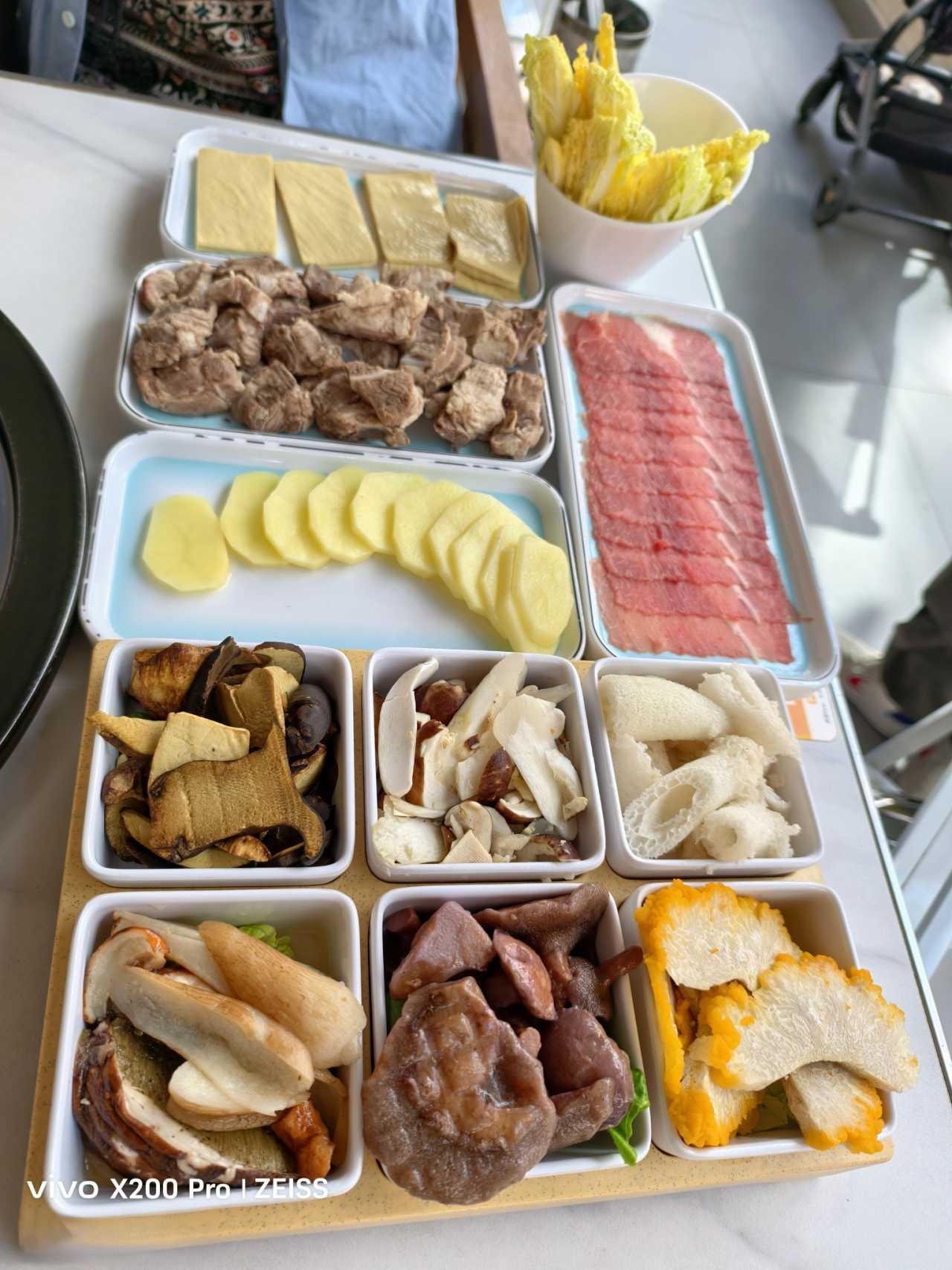
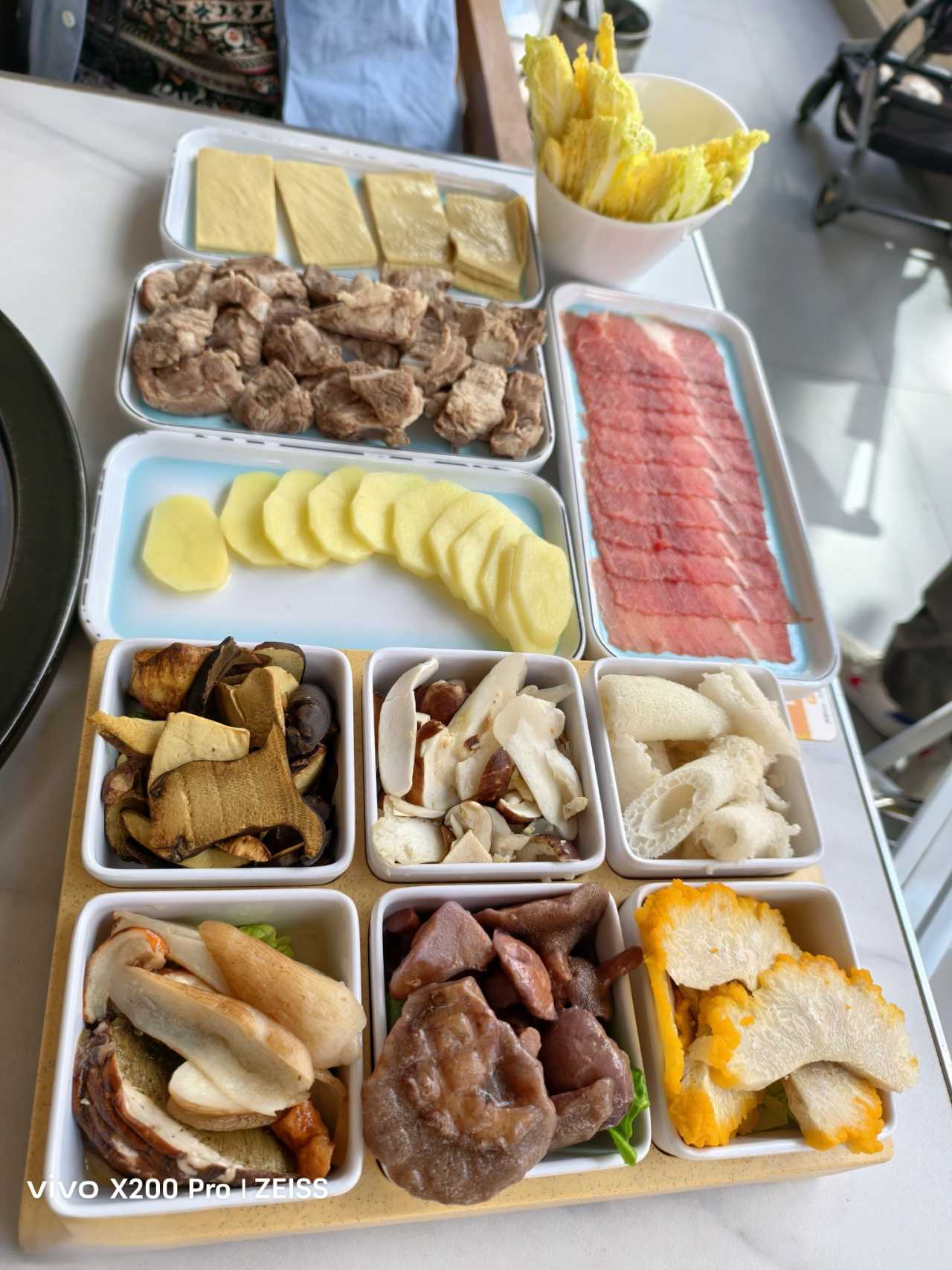
We wandered onto Wanxiang Avenue, surrounded by Southeast Asian vibes. How could you come to Yunnan without trying wild mushrooms? We chose "Mushroom Princess·Wild Mushroom Hotpot," recommended in many travelogues. After the mushrooms went into the pot, the server handed us a countdown timer—eat them undercooked, and you might end up in the hospital. When the timer went off, the ritual felt complete. I'd heard some restaurants go even stricter: they won't even give you chopsticks until the mushrooms are fully cooked.
After the hotpot, we headed straight to "Yuanjin·Five Trees and Six Flowers." This place isn't even a niche attraction—it's just a sales office. But its observation deck offers a commanding view of the Lancang River on both sides, with an unbeatable panorama. It's also an ideal spot in Banna to watch the sunset. We stayed from dusk until the lights came on, feeling the breeze and taking in the scenery—pure bliss.
The pavilion on the deck faces the most iconic buildings in Gaozhuang. Bring a telephoto lens on a clear day, and you'll snap some stunning shots.
Next, we strolled down Ganbai Street. One shop's courtyard was exquisitely decorated: a gazebo, trellises, sculptures, and a spiral staircase, all oozing a chic, artsy vibe. Inside, an astonishing array of ethnic costumes attracted a steady stream of customers.
Heading toward Dajin Pagoda Temple, we arrived at the Starry Night Market in daylight. Day and night are two completely different worlds, each with its own beauty. We paid 30 yuan ($4) to enter Dajin Pagoda Temple, said to be the only Buddhist temple in China with a blue color scheme. The murals on the walls were breathtakingly detailed—I thought they were printed, but they turned out to be hand-painted by artists specially brought in from Thailand.
From Dajin Pagoda Temple, you can overlook the Starry Night Market. Before dark, the crowd was thin. As twilight deepened, we climbed to the rooftop of Jingzai Village's East Tower. With a 360-degree unobstructed view, we could see Dajin Pagoda Temple, the Starry Night Market, the Lancang River, and the distant Dawn Bridge to the east. Using a telephoto lens to capture the market, it looked enormous, its lights shimmering like a galaxy. The VIVO X200 PRO lived up to its reputation as "born for concerts."
V. Day 3: From Manzhang to Wild Elephant Valley—A "Commando-Style" Marathon
Manzhang Village: A 500-Year-Old Hamlet Packed with Activities
Today's schedule was tight, so we set out early. Manzhang Village is only about 500 years old. The entrance was a bit messy, but once inside, every household had flowers. Still, the overall environment was just average.
The village offered plenty of hands-on activities: slow-wheel pottery making, flower fan crafting, Dai cuisine cooking, tie-dyeing, and freshly ground Yunnan small-grain coffee. Along the roadside, there were cockfighting shows, and at the far end, "Haha House" let you catch fish. If you brought kids, they could easily spend a whole day here.
Crossing a bamboo bridge, we reached "Haha House." Firecracker flowers bloomed vibrantly at the entrance of the Dai courtyard. Almost every house in the village grew flowers. We paid to watch a cockfight—a high-energy spectacle of pecking and flying feathers. Enough to get your adrenaline pumping.
Wild Elephant Valley: China's Last Asian Elephant Habitat
After a quick tour of Manzhang, we drove 22 kilometers (14 miles) to Wild Elephant Valley. This is China's first national park focused on animal protection and environmental conservation, and the only place in China where wild Asian elephants live.
We first caught a show at the Rainforest Mini Theater, then headed to the Elephant Education Zone. The elephants made their entrance in a unique way—each holding the tail of the one in front, lined up perfectly. When they sprayed water, the front-row audience instantly looked like they were on the sinking Titanic, scrambling to open umbrellas.
For lunch, we had "Rainforest Elephant Meal," served on banana leaves as tablecloths. The spread was generous. The idea was: "What elephants eat, we eat." Eating while watching elephants—a truly unique experience.
Since wild elephants are rarely spotted, we skipped the cable car to the farthest viewing platform and exited through the north gate. The schedule was tight, and we kept urging the driver to speed up, hoping to squeeze in more time at Manting Park.
Manting Park and General Buddha Temple: Royal Gardens and a Spiritual Center
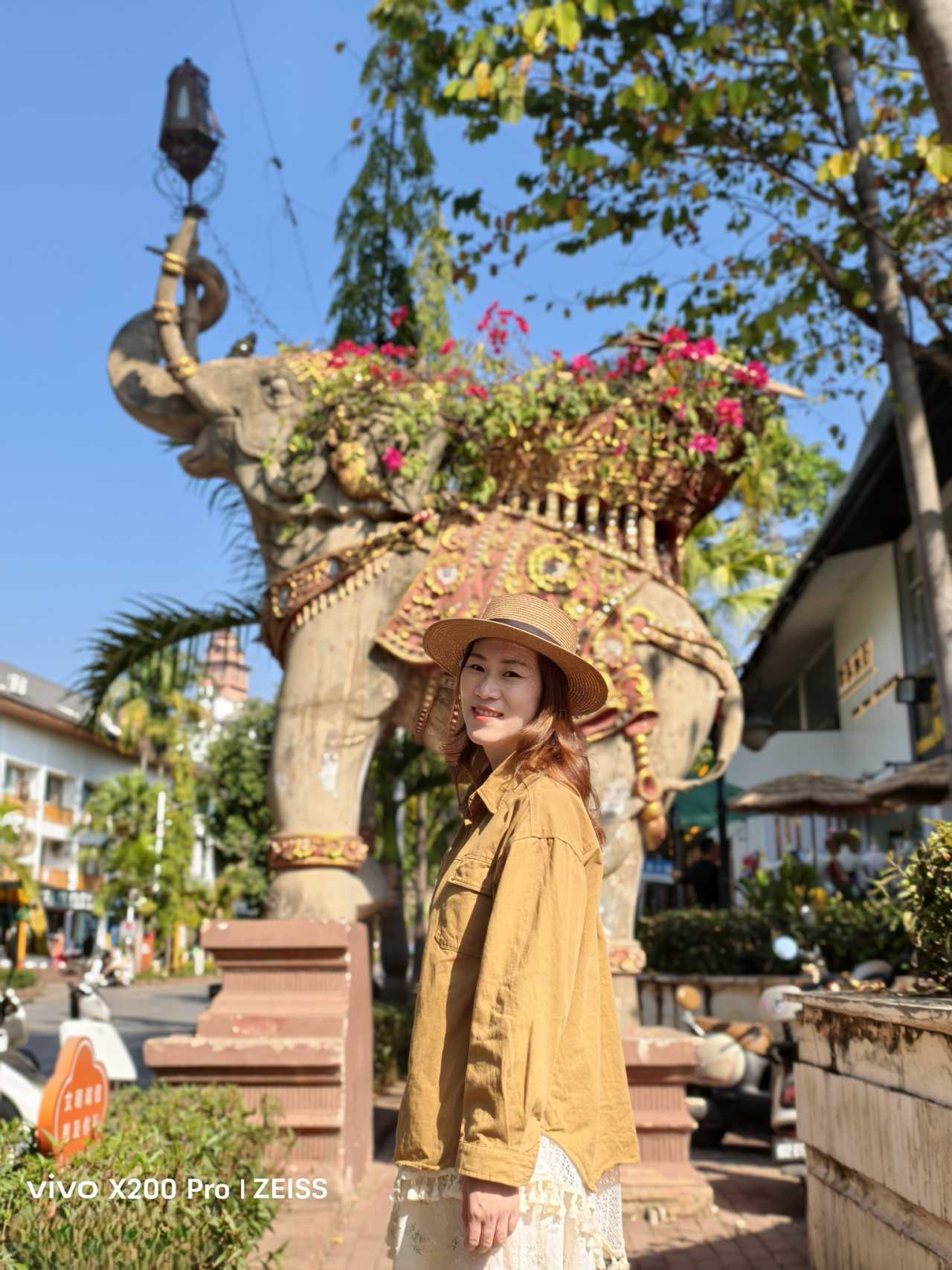
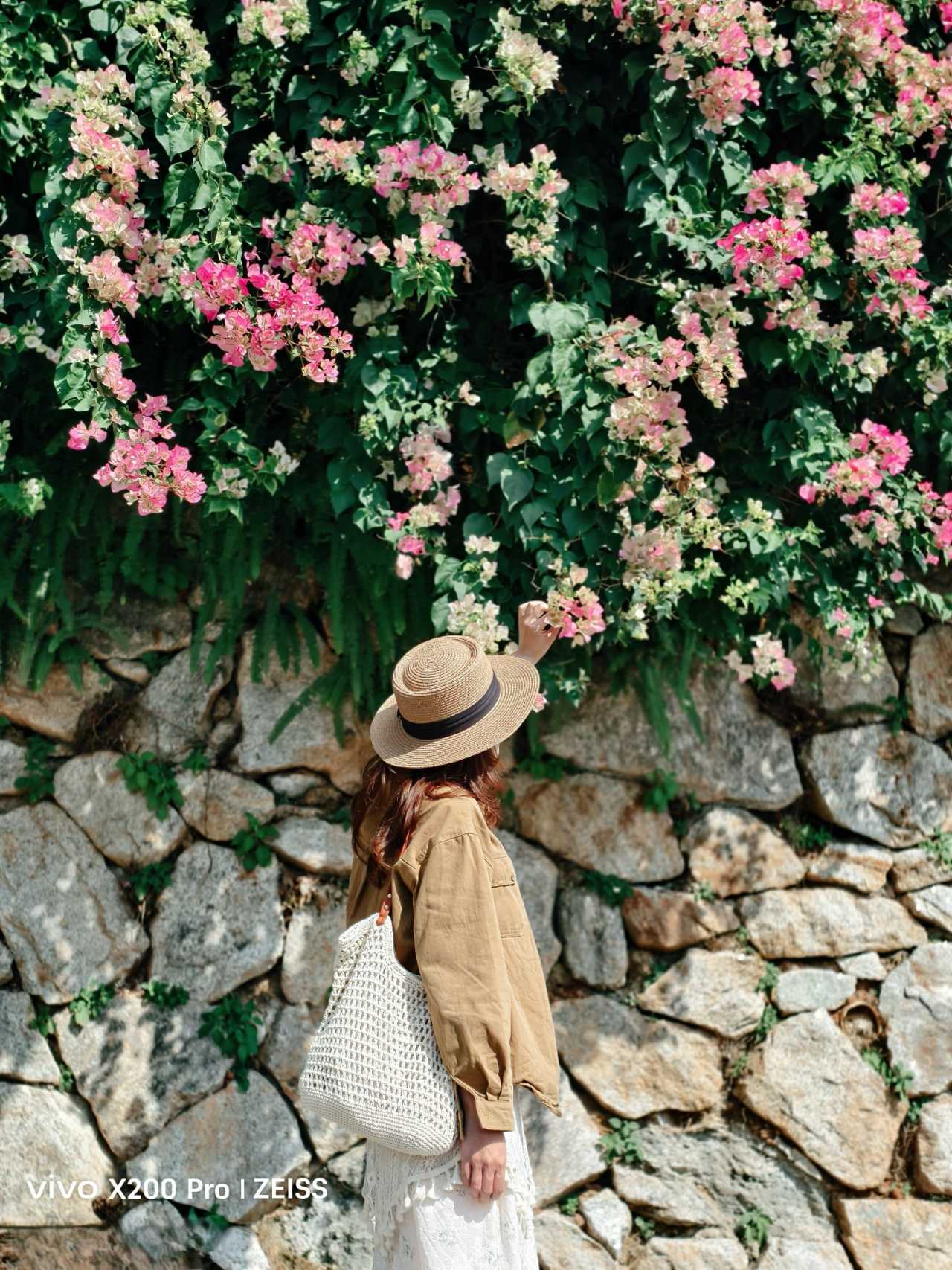
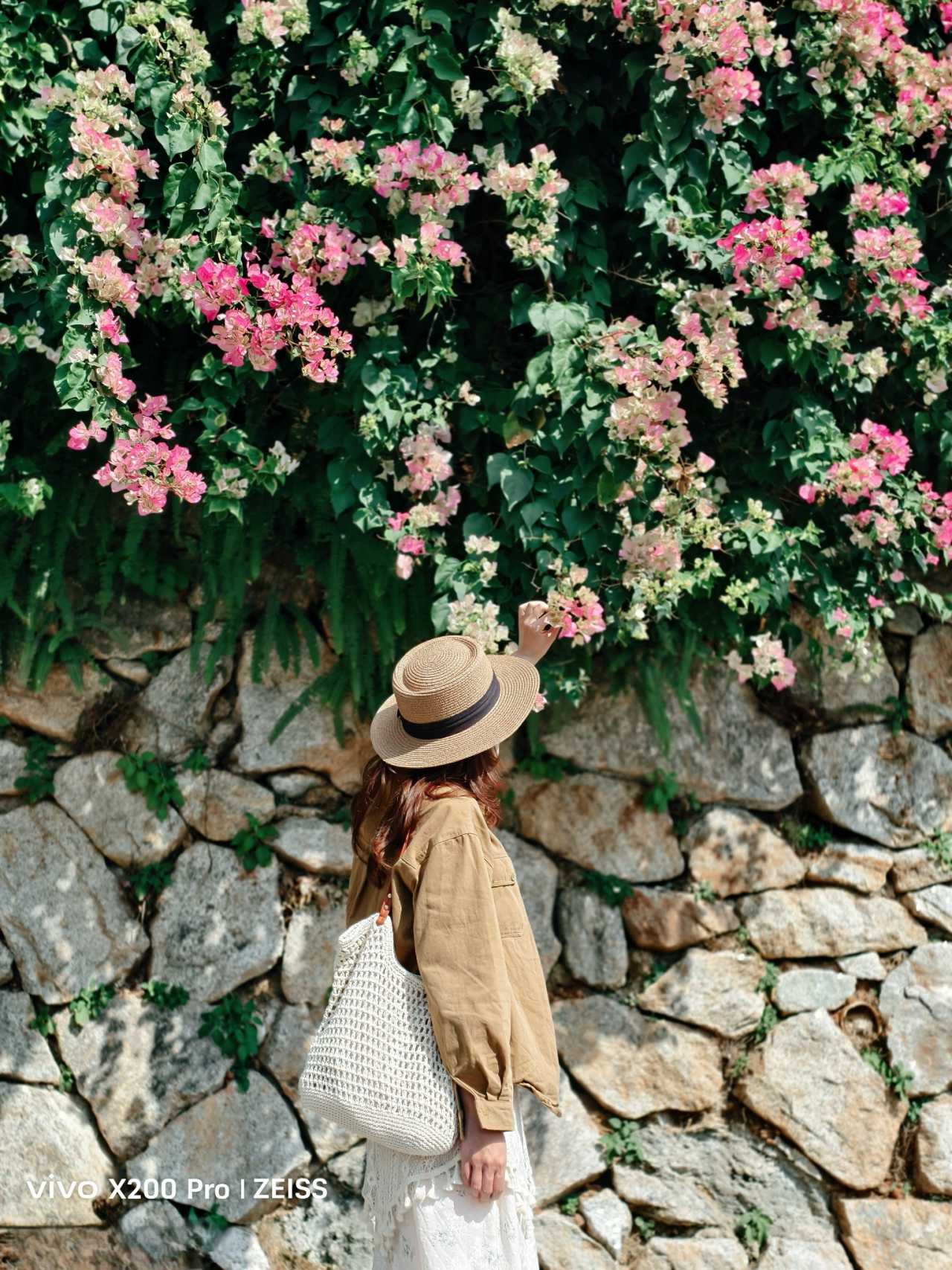
By the time we reached Manting Park in the afternoon, the Dai king's parade and other performances had already ended. No matter—we had plenty of fun taking our own photos. Bougainvillea bloomed brilliantly, and there were many tourists in costume for photo shoots, with popular spots requiring queues.
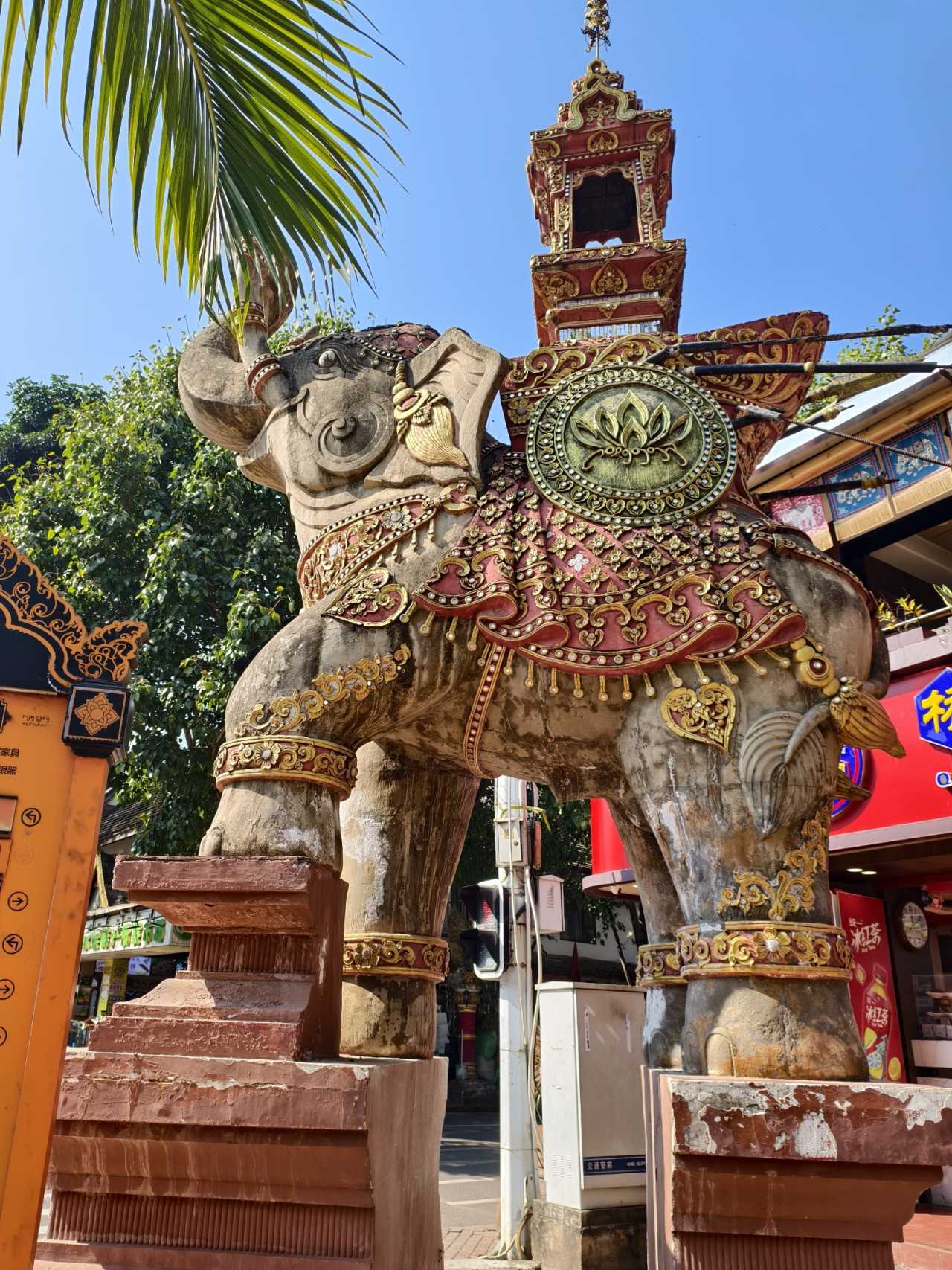
Manting Park and the General Buddha Temple are separated by a single wall, connected by a small gate. Manting Park charges an entrance fee; the General Buddha Temple is free. Visitors who buy a park ticket can re-enter the park after touring the temple.
The General Buddha Temple is the highest-ranking Buddhist temple in Xishuangbanna. From its founding, it served as the royal temple of the Dai kings. Legend says it was built by two Theravada Buddhist monks who came from Myanmar to spread the Dharma, with a history spanning over a thousand years. The double-dragon staircase is a standard feature of Dai temples, but the one at the General Buddha Temple is the most ornate, with intricate details that make it a must-photograph spot.
The temple's "Five Trees and Six Flowers" concept is also significant—it must include five types of trees, such as the Bodhi tree and the talipot palm, along with six types of flowers, like water lilies and frangipani. The General Buddha Temple is literally built within a garden.
The golden eaves grew more solemn in the twilight. We were nearly the last visitors to be politely "escorted" out by a sweeping monk. Gaozhuang's evening rush hour was more chaotic than I'd imagined. Electric scooters swarmed through the streets like schools of silver fish. The navigation map glowed red with traffic. Seeing our scheduled costume photo shoot approaching, we jumped out of the car and enjoyed a ride on the photographer's scooter.
The Photo Shoot: 299 Yuan for a "Western Region Princess"
When it comes to costume photo shoots, Gaozhuang is packed with shops of all sizes. My wife had booked one in advance on Douyin (TikTok China) for 299 yuan ($41) for two outfits. The final results were stunning—in a word, worth it.
The photo studio operated like a "princess assembly line": makeup artists wielded brushes like sacred tools, the hostess live-streamed sales pitches like Buddhist rap, and a retoucher was busy giving the 108th Dai girl a matching "smile lips." Beautiful women walked around everywhere, and I sat there munching on a bucket of fried chicken, lost in thought: the most beautiful sight in Gaozhuang was watching all these stunning women while waiting for my wife's makeup.
When my wife changed into her exotic costume, the makeup artist transformed her into a "Western Region princess" from Journey to the West using three pounds of fake eyelashes and half a jar of glitter. At night, scanning our tickets to enter the Starry Night Market, photographers were thicker than fireflies. Every few steps, you could collect a "Hani princess," a "Dai queen," or a "mermaid on the run." Along the river, tripods were set up almost every two meters, with long queues behind each one. What shocked me most were the "Dai queens" in their 60s—thick makeup, bare midriffs, striking all kinds of trendy poses. I realized then that I was the one acting old.
But I have to say, the Starry Night Market's lighting was dazzling, and the nightscape was beautiful—perfect for photos. My wife's photo shoot became the highlight of the trip.
VI. Day 4: Rainforest Hike, Wangtianshu, and Unexpected Surprises
Mengyuan Paradise: Tropical Rainforest at 21° North
Mengyuan Paradise is located in Mengla County, a well-preserved tropical rainforest zone at 21° north latitude. It boasts rich biodiversity, a complete forest ecosystem, and blends Theravada Buddhism, karst caves, and Dai and Yao ethnic cultures.
We were up early again, hoping to catch the 9 a.m. hike. But the adult group didn't form—everyone else had kids, and we didn't want to join their group. We ended up waiting over an hour before setting off.
During the hike, the guide introduced us to unique rainforest spiders, giant taro plants bigger than a person, trees embracing rocks, and the phenomenon of plant strangulation. Throughout our journey in Banna, we kept seeing various examples of strangulation. We picked up colorful stones from the stream, ground them, and smeared the pigment on our faces—a standard ritual for rainforest hiking.
"Trekking through mountains and rivers" was the perfect description. After the hike, we couldn't miss the rainforest feast.
Wangtianshu: China's Tallest Tree
After the rainforest meal, we headed straight for Wangtianshu (Sky-reaching Tree). This is the tallest tree in China, standing 88 meters (289 feet) high, and a signature species of tropical rainforests. Its discovery put China at the top of the world's tallest flowering plants and ended the international claim that "China has no tropical rainforests."
Entering the scenic area, the first thing we saw was a filming location for the drama Borderland Tales. When I saw the canopy walkway, my legs went weak—a suspension bridge hung between tree trunks, only about 30 centimeters (12 inches) wide, constantly swaying. It took about ten minutes to cross, and I had to force a smile for photos while terrified.
We walked under banana leaves and admired the unique phenomenon of giant buttress roots. By the time we finished the Wangtianshu area, it was evening, and we rushed toward Manlongle Village.
Manlongle Village: An Unexpected Gem
Manlongle Village wasn't mentioned in any travelogues I'd read. If not for the tour company's arrangement, we never would have come. But this village turned out to be the most authentic glimpse into local life on our entire trip—few tourists, relatively new buildings, strong Dai character, and not as run-down as Manzhang or Manyuan.
The village's farmland was planted with large fields of dragon fruit. I was surprised to learn that dragon fruit requires artificial lighting with bulbs. That evening, we had a Lao-style hotpot in Mengla County—charcoal-grilled meat in the center, with a hotpot ring around the outside. It was a first for me. We picked a highly rated spot on Dianping (China's Yelp), and when we paid, we found out that singer Hu Haiquan had been there just last week—great minds think alike, I guess.
The hotel we stayed at that night, Hejin Grand Hotel, turned out to have hosted many celebrities. Our driver even made a full-day video diary for us. That's service—ten out of ten.
VII. Day 5: Botanical Garden, Manyuan Village, and a Water-Splashing Frenzy
Chinese Academy of Sciences Botanical Garden: The Lone 5A Star
I hadn't wanted to come here originally—I thought, "It's just a botanical garden, maybe with bigger plants." But the moment I stepped inside, I was completely captivated by the bizarre and wonderful tropical flora. My eyes were glued to everything. Now I understand why it's the only 5A-rated scenic spot in Banna.
Without a guide, you'd miss out big time. A professional guide pours knowledge into your head, along with quirky stories about the plants. The park has its own guides, but you can also hire private ones outside. We got lucky and tagged along with a tour group's guide the whole time—private guides seemed better than the park staff, with louder voices and more detailed explanations.
We saw hanging gardens in the trees, giant Victoria water lilies, a single tree forming a forest, flame trees, and the botanical garden's signature hot air balloon. This is a place to take your time and soak it all in.
Manyuan Village: Famous for Back to Field
Manyuan Village, originally called Manba Mian, has a history of nearly 1,300 years. Although it's been named one of China's Top Ten Most Beautiful Villages, it gained fame mainly through Hunan TV's variety show Back to Field—one season was filmed here.
The village itself isn't much to explore, but it offers many interesting educational workshops: making Dai pottery, bamboo weaving, crafting flower fans, and hand-copying palm-leaf scriptures. If you bring kids, you could spend a whole day here.
Dai Ethnic Garden: Water-Splashing and "Dai-style Disco"
To catch the 3 p.m. water-splashing event, our driver raced against the clock. But the entrance to the Dai Ethnic Garden was jammed with traffic, so we got out early and walked ten minutes to get in.
The garden covers a large area and requires a shuttle. We naively assumed we could board the shuttle right after scanning our tickets, but we wasted an hour—we had to go back to the entrance to exchange tickets. The garden consists of several Dai villages, complete with commercial facilities, dotted with a few Buddhist temples, and centered around a water-splashing square.
The water-splashing event incorporated "Dai-style disco" elements. The host was full of energy, keeping the atmosphere lively. Before you knew it, you'd be swept into the crowd, singing and dancing along. After the singing and dancing, everyone gleefully splashed water. The park also set up games—when a surveillance camera locked onto someone, the crowd would drench them. Great fun.
The border pier speedboat ride was recommended by our driver, the same model used by actor Peng Yuyan in the film Operation Mekong. The captain's "dragon tail swing" maneuver was masterful, getting everyone's hearts racing, and the spray even created rainbows.
Manting Buddhist Temple was built in 538 AD, with a history of over 1,400 years. Compared to the glittering Man Chun Man Buddhist Temple, Manting Temple felt more ancient and serene. The white pagoda was the main attraction—one large central pagoda with four smaller ones at the corners, its pearly white finish giving it a captivating luster.
For dinner, we had Fuxian Lake steam pot fish, with some wild mushrooms added, and my wife finally got to try jian shou qing (a type of psychedelic mushroom that requires careful cooking). It was my first time seeing a pot heated directly by steam instead of fire or electricity. And a straw hat served as the lid—novel, to say the least.
VIII. Day 6: Farewell at Dai-style Water City and Prajna Temple
Dai-style Water City: A Hidden Urban Oasis
The Dai-style Water City is a water-themed complex blending natural scenery, ethnic culture, and leisure activities. Tucked away within the city, it's become a new favorite for photography enthusiasts. Its unique architecture is a vivid showcase of Xishuangbanna's culture.
Unfortunately, we came at the wrong time—the river was covered in green algae, seriously compromising photo quality. The tour company also provided costume-changing services here, along with a cup of Lao coffee.
Prajna Temple: Regret Beneath the White Pagoda
Our last stop was Prajna Temple. "Prajna" (pronounced "bo-re") is a Buddhist term meaning "transcendental wisdom." The temple sits on a hillside in Manzhen Village, Jinghong City, away from the bustle. It became famous online for mirror-reflection photos of people in front of the pagoda.
The temple was first built in 833 AD. Legend says it was established by an emissary of King Ashoka of the Maurya dynasty, who traveled through Thailand and Laos to reach Banna. Two strands of the Buddha's hair are said to be buried beneath the white pagoda. During the Ming dynasty, it was rebuilt, and four relics of the Buddha were enshrined at the pagoda's base. The current structure retains the original foundation and was rebuilt in 2014.
The temple is small, with just one main hall. The courtyard follows a typical Theravada layout blended with Dai traditions. The visual focal point is the towering white pagoda. At the four corners of the main pagoda, shrine pavilions house Buddhist guardian deities, surrounded by an outer ring of smaller pagodas. Incense smoke curled upward, making it feel like stepping into a celestial realm.
I had hoped to capture a reflection shot, but the ground was dirty and dry—no water to be found. A real disappointment.
Epilogue: Banna—A "Winter Fairy Tale" for the Whole Family
If you come to Xishuangbanna expecting stunning natural scenery, you might be a bit let down—there's really nothing exceptionally spectacular in that regard. In my personal opinion, Wangtianshu is the most impressive attraction here, but even its scenery is just so-so.
However, if you're traveling with family, Xishuangbanna is a paradise for kids and parents alike. Rainforest hikes, rainforest elephant trekking, intangible cultural heritage experiences, costume photo shoots at the Starry Night Market, educational activities at the botanical garden, water-splashing parties, speedboat rides at the border pier… the list of fun activities is endless.
Finally, let's wrap up with my wife's costume photos as a bonus. The Starry Night Market's beauty is worth a professional photo shoot for every woman.
The meaning of travel, perhaps, isn't about reaching your first-choice destination. Because the real surprises often hide around unplanned corners. At 21° north latitude, we turned a warm winter into poetry.
You should also read:
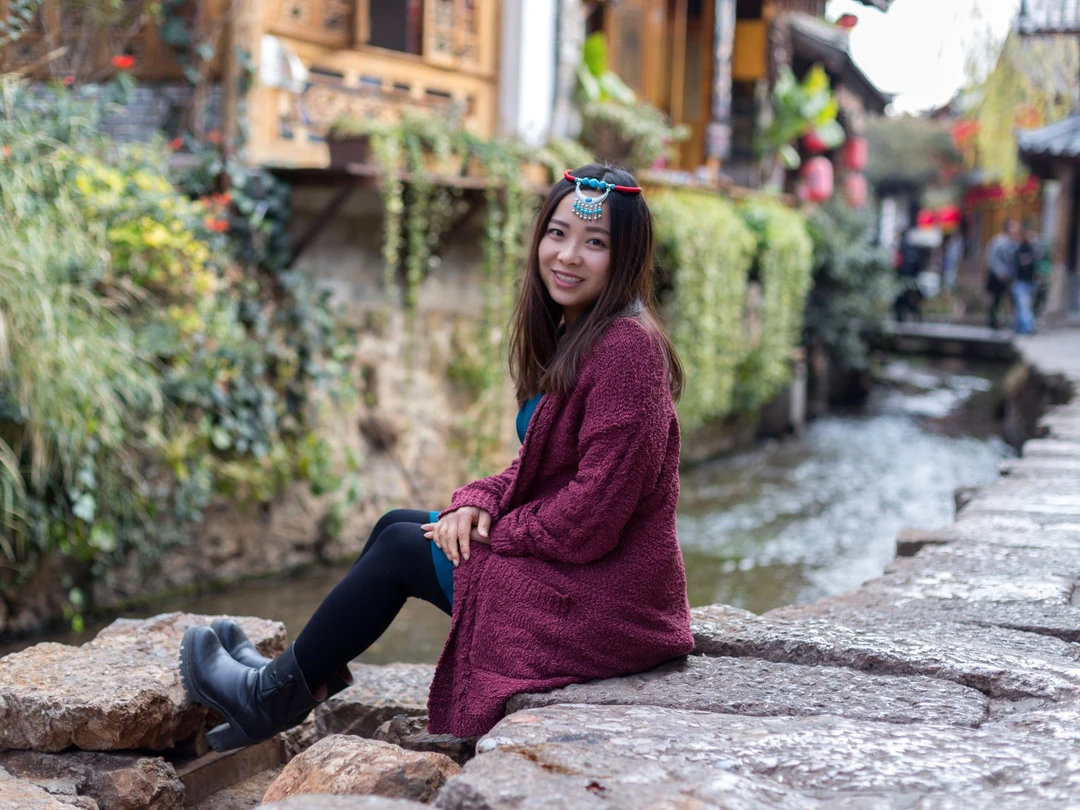
Chasing Spring in Winter: A Yunnan Journey (Dali, Erhai Lake, Shuanglang, Lijiang, Kunming)
Chasing Spring in Winter: A Yunnan Journey (Dali, Erhai Lake, Shuanglang, Lijiang, Kunming) Overlooking the entire city from Wuhua Tower under the night sky. Travel is a sickness. Once you catch it, you can never shake it off. It's also contagious—eventually, you might pass it…
Continue reading...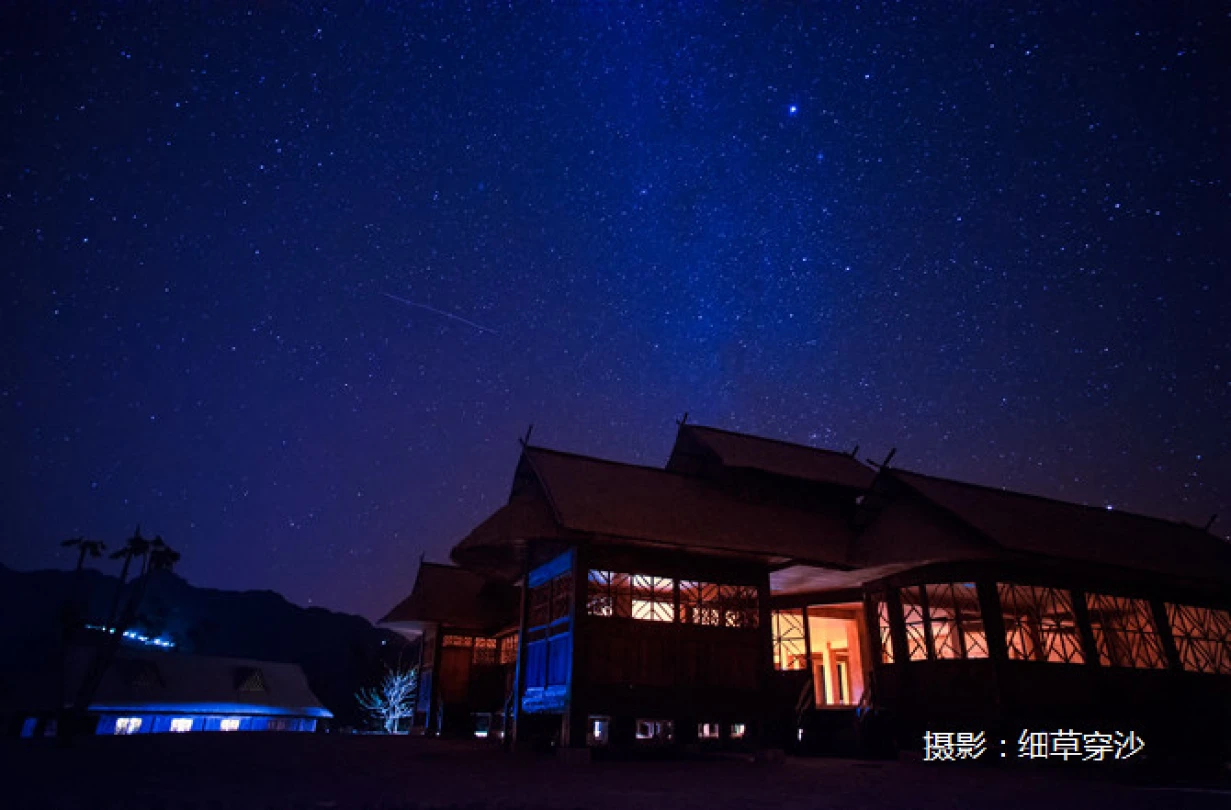
The Hidden Paradise Under the Stars: A Borderland Expedition Through Pu'er, Ximeng, and Xishuangbanna
The Hidden Paradise Under the Stars: A Borderland Expedition Through Pu'er, Ximeng, and Xishuangbanna Introduction: While Everyone Rushed to Lijiang, I Chose Another Path On China's tourism map, Lijiang and Dali have long become pilgrimage sites for "artsy youth"—swarming with tourists and heavy with commercialization.
Continue reading...
Hongmao's Journey of Wind, Flowers, Snow, and Moonlight: From Chengdu to Dali, a Gentle Winter Escape
Hongmao's Journey of Wind, Flowers, Snow, and Moonlight: From Chengdu to Dali, a Gentle Winter Escape I hope the sun is warm, even under the gray winter sky. I hope the flowers are fragrant, even when buried in dry, barren soil. I hope the world…
Continue reading...