Autumn in Wuyuan: A Belated Fall Encounter in Ancient Village Paintings
Autumn in Wuyuan: A Belated Fall Encounter in Ancient Village Paintings
Some landscapes, once they linger in your heart long enough, become an obsession.
On a lazy early autumn afternoon, sunlight spilled gently into the office as I chatted with a few colleagues about a long-cherished wish—to see a true autumn in Wuyuan. To my surprise, the idea caught fire instantly. Without hesitation, we formed a "Wuyuan Autumn Appreciation Squad."
With the year winding down, our annual leave was running low. Each of us scraped together a single day off, tacked on a weekend, and pieced together a tight three-day, two-night itinerary. Departing from Shanghai, the 500-kilometer journey felt neither too long nor too short. This was my second trip to Wuyuan, but my first time experiencing its autumn. This time, I set my sights on Stone City (Shicheng) and Huangling—two places that embody the soul of Wuyuan's fall colors.
Pre-Trip Preparation: A Practical Guide
Photography Gear

If you're a photography enthusiast, be sure to bring two essentials: a tripod and a telephoto lens. The tripod is for slow shutter shots of morning mist and nightscapes, while the telephoto lens helps you capture the intricate interplay of distant red leaves and ancient villages.
Best Timing
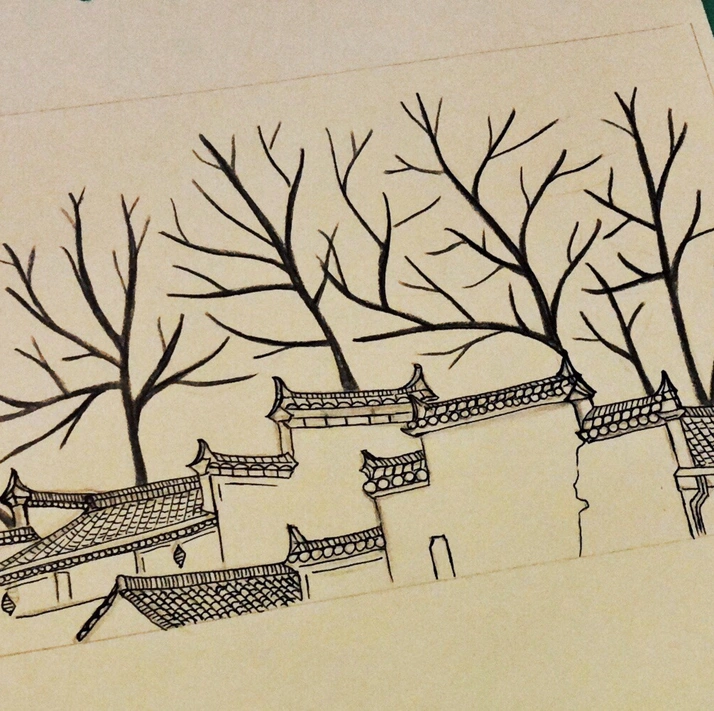
The peak season for Wuyuan's red leaves varies slightly each year due to weather changes, typically falling between mid-to-late November and early December. Before you go, keep a close eye on local forecasts, or better yet, ask your innkeeper for advice. Most importantly—pray for a bright, sunny day.
Itinerary: A Three-Day, Two-Night Highlight Route
Day 1: Shanghai → Wuyuan → Shangtan Village
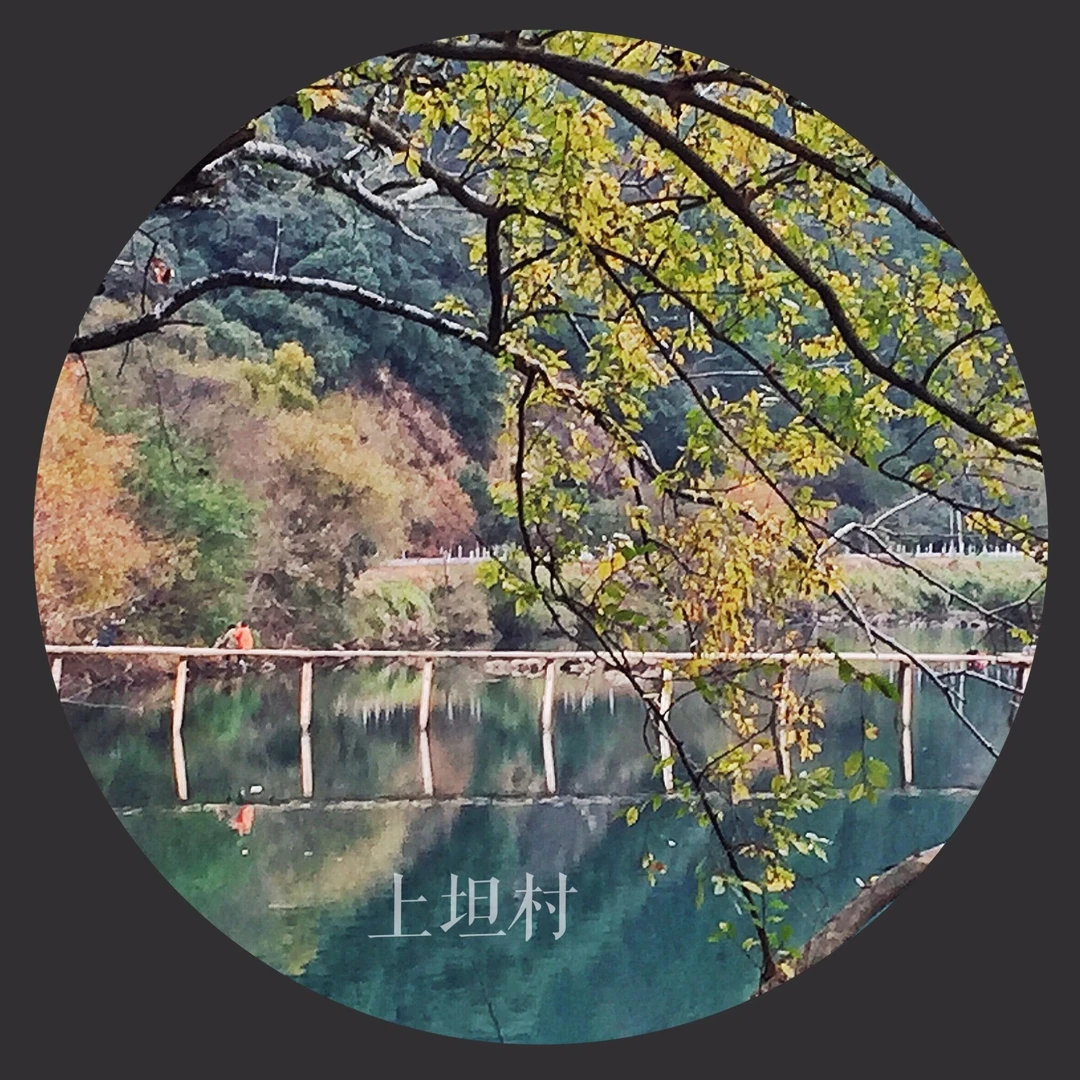
The first day was mostly spent on the road. Arriving in Wuyuan around 3 or 4 PM, we took the advice of a local driver and exited the highway at Wangkou, heading straight for Shangtan Village.
Day 2: Huangling → Stone City (Cheng Village)
We walked into the Huangling scenic area at dawn, then drove to Stone City in the afternoon, passing through Jujing Village along the way. In the evening, we climbed the back hill to capture the twilight mist.
Day 3: Stone City (Cheng Village) → Changxi Village → Shanghai
We got up early to photograph the morning mist, took a stroll through Cheng Village, then headed to Changxi Village before returning to Shanghai in the afternoon.
Accommodation Tips
Huangling: The only hotel within the scenic area, "Shaiqiu Meisu" (Sun-Drying Autumn Inn), is worth booking, but you'll need to reserve well in advance. If it's full, consider a guesthouse in Xiaoyong Village just outside the area. A standard room costs about 120 yuan per night, clean and spacious, with meals available.
Cheng Village: Try to avoid weekends. Arriving on a Sunday, we found most guesthouses empty. Standard rooms ranged from 150 to 180 yuan, with decent conditions. If everything is booked, you can stay in a nearby village and get up early the next morning to catch the sunrise.
Shangtan Village: A Tiny Gem of Charm
Shangtan Village served as a filming location for the movie I Am Not Madame Bovary. In the film, the protagonist Li Xuelian spends half her life on a fruitless petitioning journey, only to return to the village and open a "Xuelian Beef Bone Soup" shop. When someone brings up the past, she simply laughs it off—true letting go isn't about silence, but about feeling calm when memories arise.
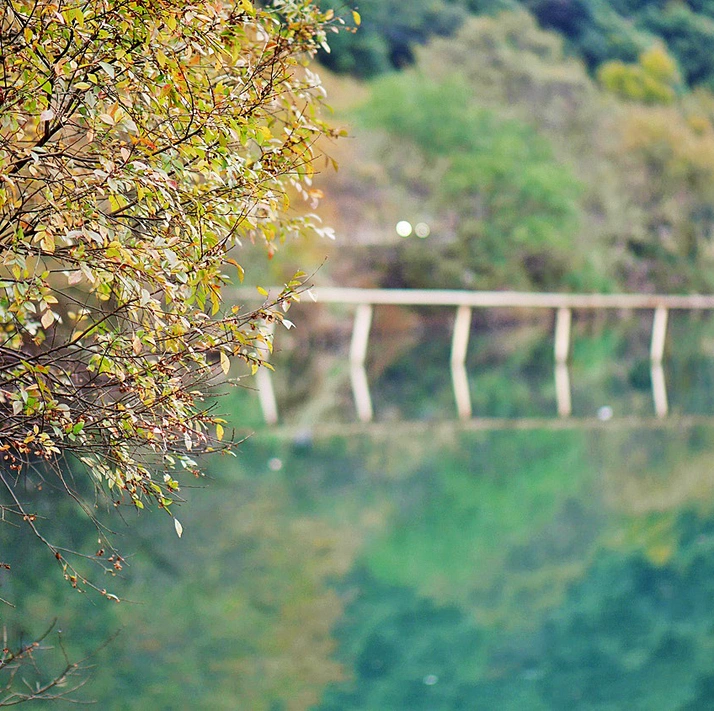
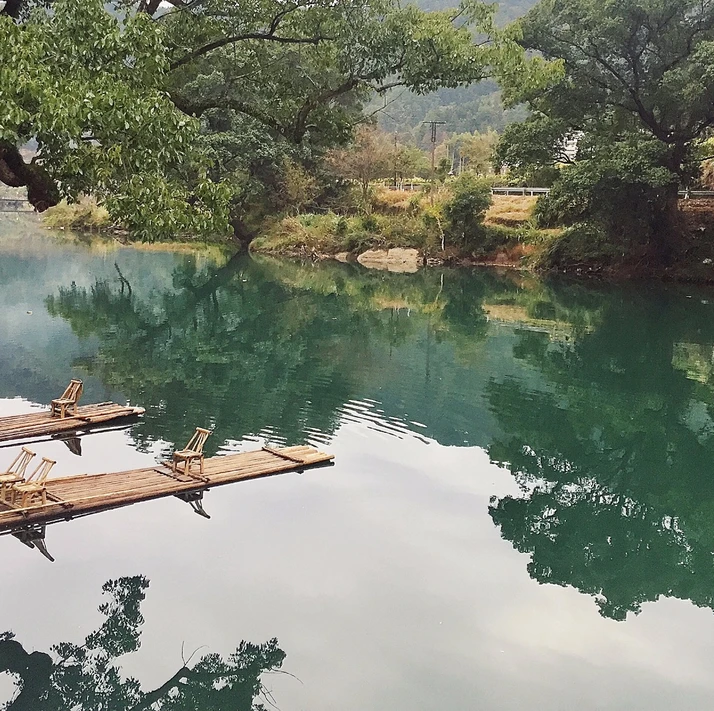
When we arrived, thick clouds hung low, and the light was muted, as if a storm was brewing. Yet I found that this gloomy color temperature actually highlighted the village's unique charm—green hills and clear waters.
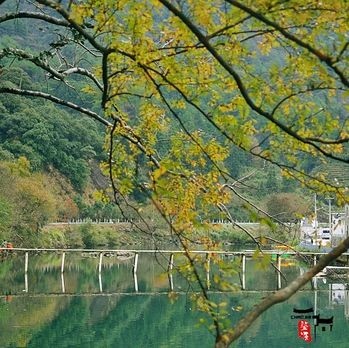
The camphor tree at the village entrance is Shangtan's signature landmark. Its gnarled branches stretch out vigorously, bending over the river. To the left, an ancient tree; to the right, an ancient river. The tiny village's modest beauty hides in these unassuming corners.
Following the steps down to the riverbank, we found bamboo rafts lined up. For 20 yuan, you could hop on a raft for photos. A thin mist drifted across the distant water, while the river below mirrored the sky and tree shadows. At that moment, I wished I could sail upstream, brew a pot of tea, and chat the hours away.
Shangtan Village currently charges no entrance fee, and there are guesthouses within the village. But if you want to experience true rustic tranquility, I recommend visiting in the late evening or early morning, after the crowds have thinned.
Huangling: A Display of Autumn's Splendor
Walking from Xiaoyong Village to Huangling, I turned back for a glance—and in that moment, Xiaoyong Village was a vision of curling kitchen smoke, interwoven red and green hues, and sunlight perfectly illuminating the mountain contours. It looked like a hidden paradise tucked deep in the valley.
Entering Huangling requires purchasing both an entrance ticket and a cable car ticket. The price isn't cheap, but what surprised me even more was the sea of people.
Before coming, I thought Huangling was all about the "sun-drying autumn" display. But once there, I discovered canyons, terraced fields, flower seas, and ancient villages. Perched on a cliffside, Huangling Village has "not an inch of flat ground." The clever ancients fixed wooden poles to their outer walls, placing bamboo baskets on them to dry crops. The hundred or so homes rise and fall with the cliffs, arranged in a pleasing disorder, accidentally creating the unique "sun-drying autumn home" landscape.
Red chili peppers, yellow imperial chrysanthemums, orange persimmons—these crops paint the mountain village with color. But honestly, with the area's commercialization, sun-drying autumn is no longer exclusive to fall. Some netizens joke that Huangling's display has devolved into "sun-drying all four seasons."
Taking photos in Huangling is a battle of "squeezing into gaps." Some shots I wanted were impossible due to the unending flow of people. Still, I recommend visiting when the autumn colors are at their peak—some things can be replicated, but the hues nature bestows on plants during specific seasons are irreplaceable.
If you get the chance, make sure to catch an early morning or late evening to experience Huangling at its most peaceful.
Jujing Village: The Roundest Village in China
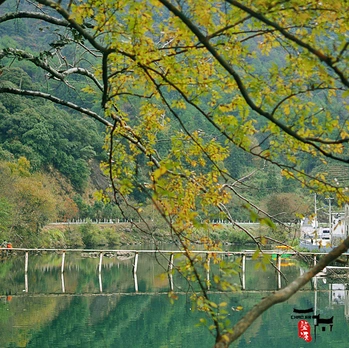
On the way from Huangling to Stone City, you'll pass through Jujing Village. Climbing the hill opposite the village offers a panoramic view. But locals have "claimed the territory," charging 20 yuan to access the viewing platform.
Jujing Village dates back to the Song Dynasty, with mountains in front and water behind. The river in front curves in a circle, almost encircling the village entirely. From above, the settlement looks as if it's cradled in a blue jade belt. It's said to be the roundest village in China.
Stone City: Autumn's Painting, Autumn's Dream
We arrived at Stone City around 4 PM. Entering the main road costs 60 yuan. The village is tiny, taking just ten minutes to walk through. We chose a guesthouse with good natural light.
In the evening, I climbed the back hill to photograph the sunset. The entire village was bathed in golden light, but the contrast was too strong, and the tree colors didn't come through. I silently hoped for a better sunrise the next day.
At 6 AM the following morning, a millennial colleague and I dragged ourselves out of bed, hoisted our tripods, and climbed the hill. The slope was already packed with photographers. We squeezed into a gap and waited.
Wuyuan's villages are predominantly built in Huizhou architectural style, and this is no accident. Located at the junction of Anhui, Jiangxi, and Zhejiang provinces, it's one of the birthplaces of ancient Huizhou culture. Historically, Wuyuan once belonged to Anhui before being transferred to Jiangxi. This history is why so many Huizhou-style buildings remain here.
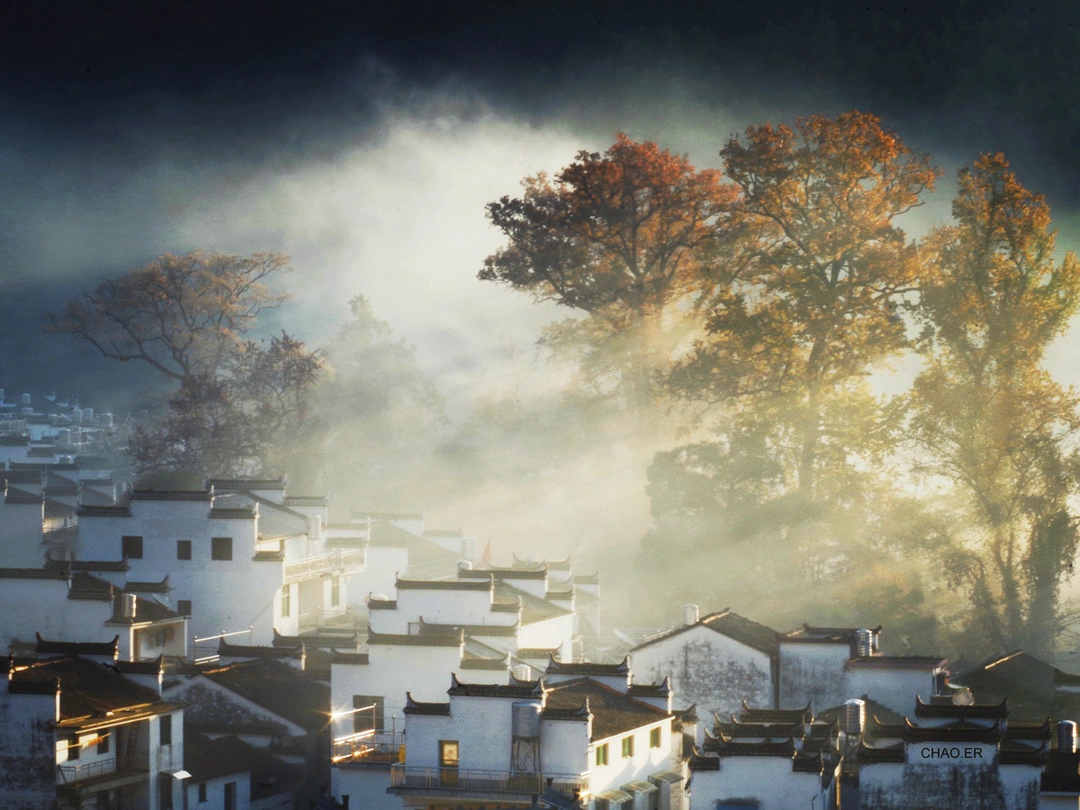
Around 7 AM, the sun rose higher, and light crept in from the village's right side. First, it illuminated the forest behind the village, then the red maples, and finally the scene where morning mist mingled with kitchen smoke—dreamlike and surreal.
Cheng Village itself is unremarkable, but the ancient red maples surrounding it are the crowning glory. Every late autumn and early winter dawn, as mist rises and sunlight pours down, the beauty before your eyes makes it hard to blink.
I pressed the shutter hundreds of times, only picking out a few shots. A master photographer nearby sighed, "The mist isn't as thick as last year." But for me, to have sunlight grace the scene and witness the long-missed morning mist—I had no complaints.
Changxi Village: A Quiet Autumn Hidden in the Mountains
Compared to Stone City, Changxi Village is far more low-key. Tucked deep in the mountains, with inconvenient access, it rarely sees tour groups. This gives it a rare tranquility.
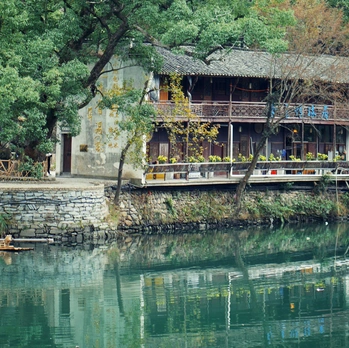
Over a hundred ancient red maples stand tall behind the village. In late autumn, Changxi Village boasts a morning mist scene rivaling Stone City's. On the day we visited, only a few cars were in the parking lot. No endless streams of people, no dazzling shops—just old houses, stone paths, towering horse-head walls, and antique objects faintly glimmering in the light and shadow.
Wandering through the alleys, we kept our voices low, afraid to disturb the elderly napping indoors. This village exists in an ancient, original form, listening to history's loud songs and quiet whispers.
Final Thoughts
Our three-day, two-night autumn trip to Wuyuan was rushed, but deeply memorable.
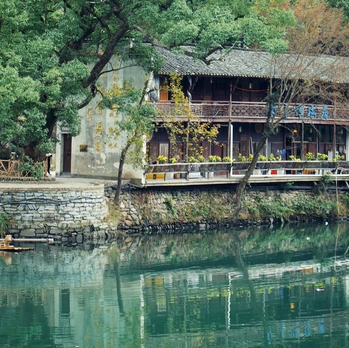
From Shangtan Village's modest charm to Huangling's grand autumn display; from Jujing Village's circular wonder to Stone City's dreamy morning mist; and finally to Changxi Village's serene ancient elegance—each village felt like a painting meticulously adorned by autumn.
If you too want to visit Wuyuan for the fall colors, remember three things: bring a tripod and a telephoto lens, choose your timing to avoid weekends, and pray for good weather.
Then, grab your camera and a heart full of anticipation, and go meet a belated autumn rendezvous.
Autumn's charm is a painting, and the painting is Wuyuan.
You should also read:
Beyond Romance, Just for the Journey – A Slow Encounter with Shuanglang
Beyond Romance, Just for the Journey – A Slow Encounter with Shuanglang Prologue: A Long-Planned "Accident" My obsession with Yunnan was like a seed, carried by the wind into my heart without me even noticing when it took root. And the name "Shuanglang" was like…
Continue reading...
Drunk on Autumn: An Unexpected Surprise in Shangri-La
Drunk on Autumn: An Unexpected Surprise in Shangri-La Preface: When Plans Go Awry Some journeys are destined to go off course before you can truly discover the scenery. As an ordinary office worker who loves photography and travel, I didn't have high expectations for this…
Continue reading...
Strolling Among the Clouds: Gathering Autumn's Light on the Western Sichuan Plateau
Strolling Among the Clouds: Gathering Autumn's Light on the Western Sichuan Plateau Prologue: A Sun Chaser's Journey Autumn sunlight is like a gentle painter, using golden brushstrokes to smear the last traces of warmth across the earth. It slips through the gaps between your fingers,…
Continue reading...