Autumn Reverie · Ten Days in Northern Yunnan: Wandering Through the Mountains and Waters of Northwest Yunnan in Early Autumn
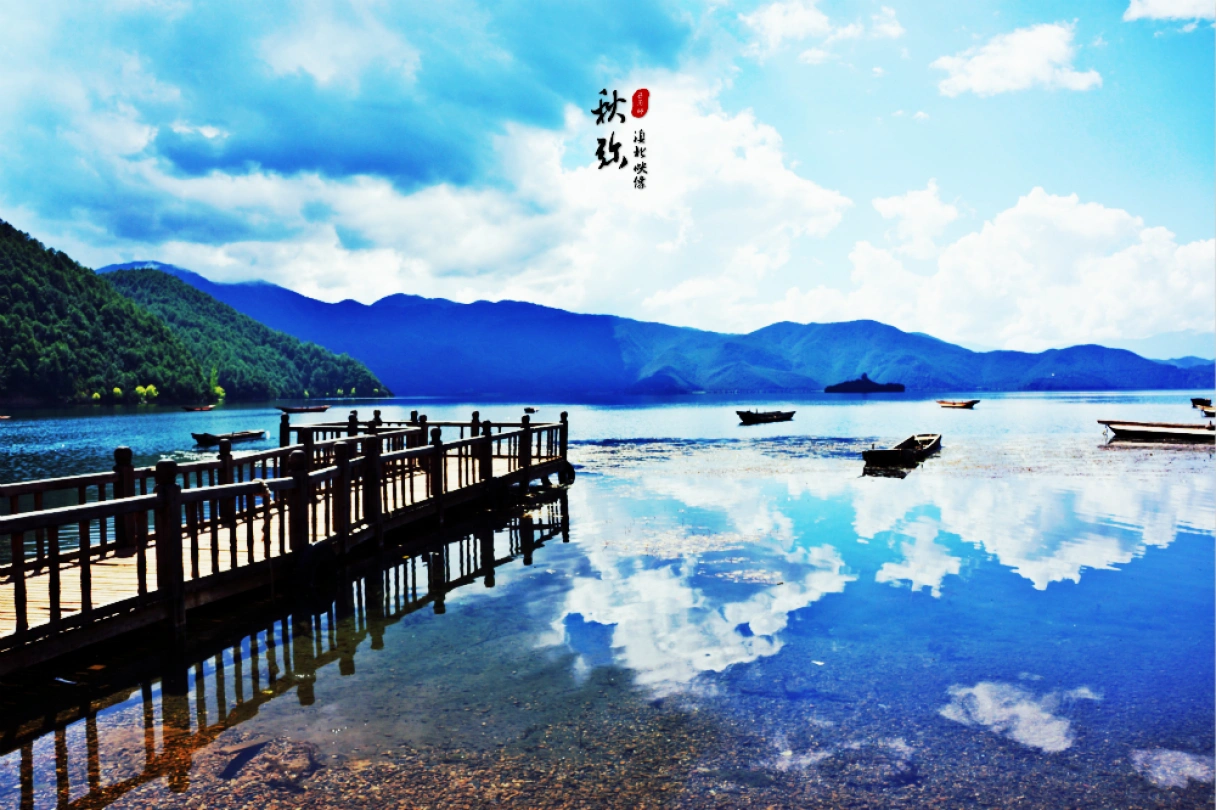
Autumn Reverie · Ten Days in Northern Yunnan: Wandering Through the Mountains and Waters of Northwest Yunnan in Early Autumn
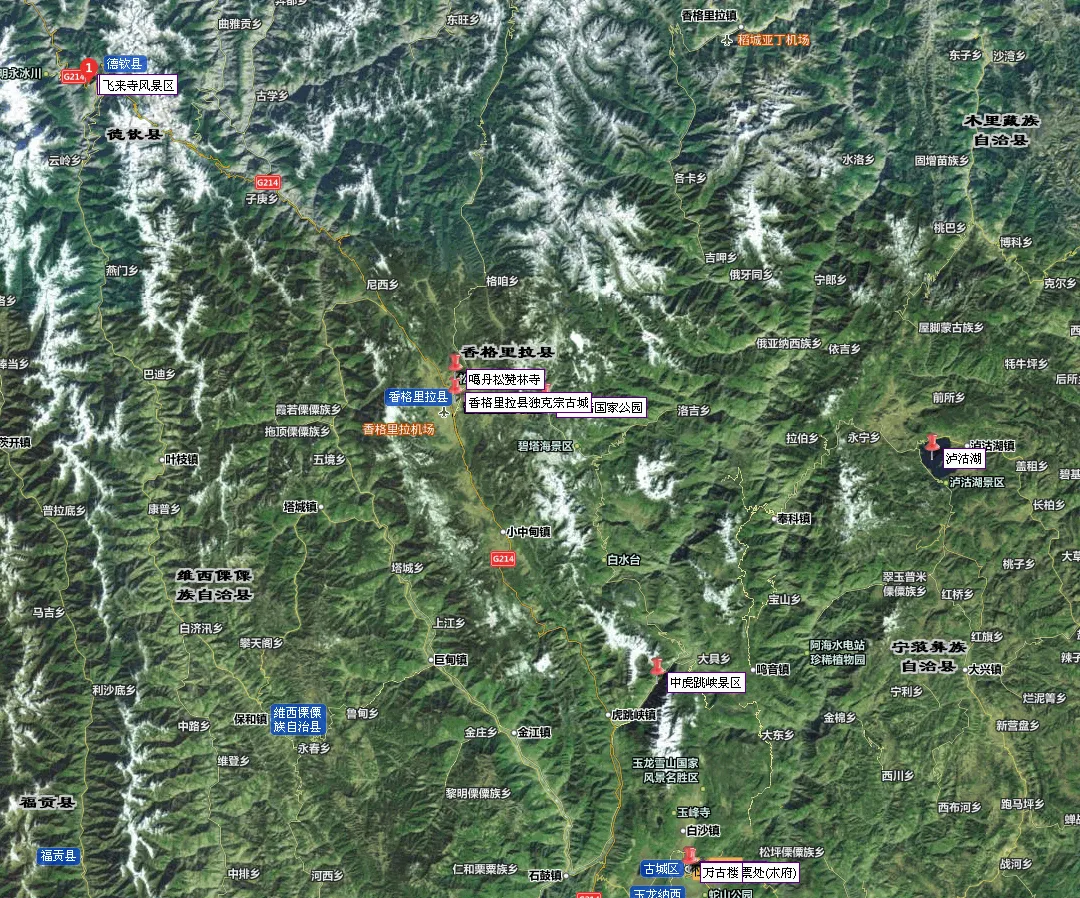
Some journeys are destined to become a beam of light in your life. In the early autumn of 2014, my friend and I embarked on a ten-day adventure through northwest Yunnan, starting from Lijiang, traversing the Middle Tiger Leaping Gorge, Lugu Lake, Shangri-La, Potatso National Park, and finally arriving at the foot of Meili Snow Mountain. Along the way, we experienced awe, emotion, reverence, and humility—and all those feelings eventually distilled into two words: "All is well."
Itinerary Overview: Ten Days in Northern Yunnan, a Dialogue with Nature
Travel Dates: September 12–21, 2014
Travel Companions: Traveling with a friend
Average Cost: Approximately 4,000 RMB per person
Daily Schedule

| Date | Itinerary |
|---|---|
| Day 1 | Guangzhou → Lijiang, Dayan Ancient Town, Lion Hill, Wangu Tower, Mu Palace, Xiangshan Market |
| Day 2 | Lijiang → Middle Tiger Leaping Gorge (hiking) |
| Day 3 | Lijiang → Lugu Lake |
| Day 4 | Lugu Lake circumnavigation (Luoshui → Lige Island → Nisai Village → Xiaoluoshui → Caohai → Walking Marriage Bridge) |
| Day 5 | Lugu Lake → Lijiang |
| Day 6 | Lijiang → Shangri-La, Songzanlin Monastery |
| Day 7 | Potatso National Park, Dukezong Old Town, Moonlight Square |
| Day 8 | Shangri-La → Deqin County → Feilai Temple, overlooking Meili Snow Mountain |
| Day 9 | Viewing "Sunrise Golden Peak," Feilai Temple → Deqin → Lijiang |
| Day 10 | Shopping and strolling in Lijiang, return to Guangzhou |
Day 1: First Sight of Lijiang, Time Slows Down in the Ancient Town
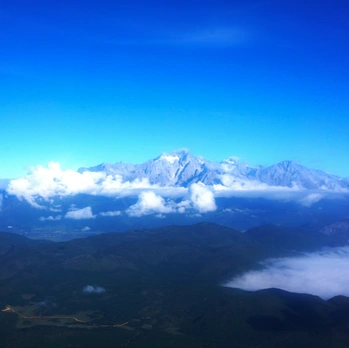
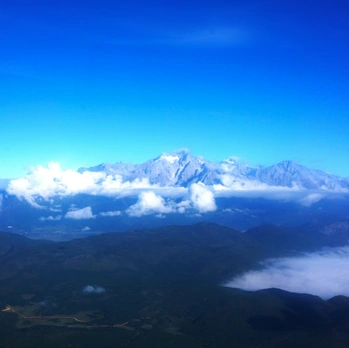
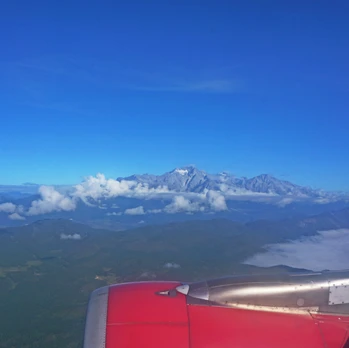
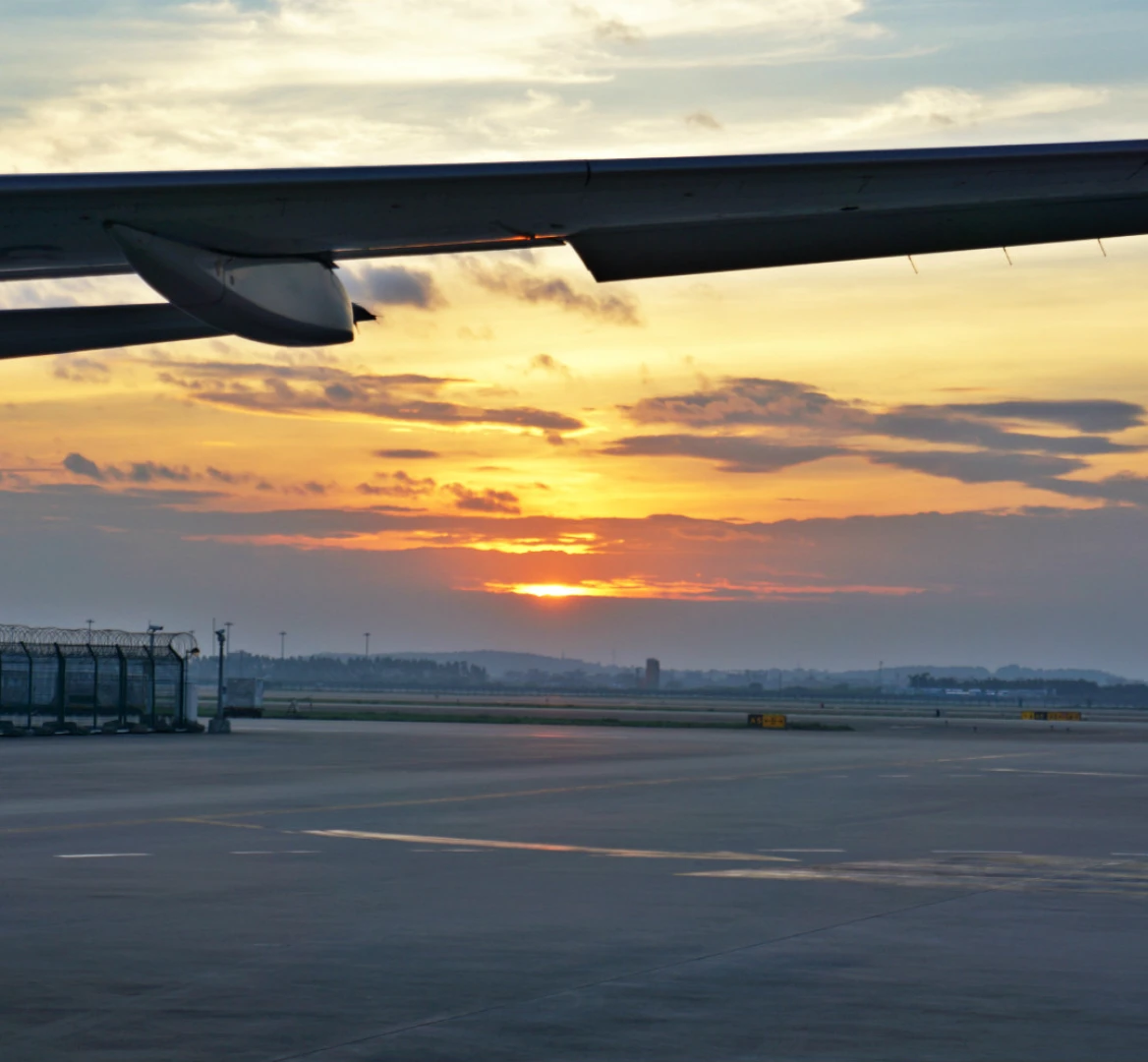
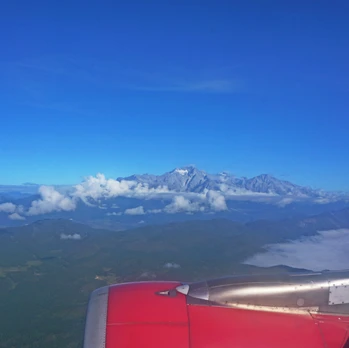
At 6:40 a.m., our flight took off from Guangzhou Baiyun Airport, carrying our longing for the colorful clouds of Yunnan. When the plane broke through the clouds and the silhouette of Jade Dragon Snow Mountain suddenly appeared outside the window, that thrill of seeing a snow mountain for the first time remains vivid in my memory.
Dayan Ancient Town: The Hearth of Life on Cobblestone Streets
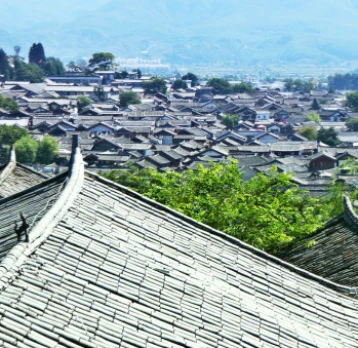
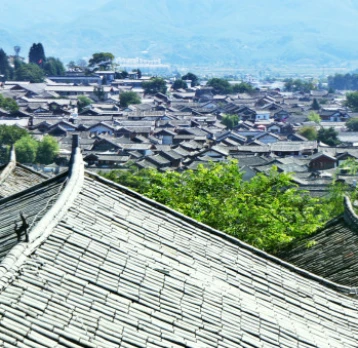
After arriving in Lijiang, we checked into a guesthouse inside the ancient town. Standing on the viewing platform and looking down, all we could see were layers of gray-blue tiled roofs, arranged in a charmingly haphazard way. That rustic, unpretentious atmosphere stood in stark contrast to the concrete jungles of the city.
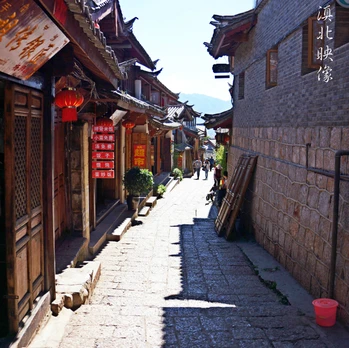
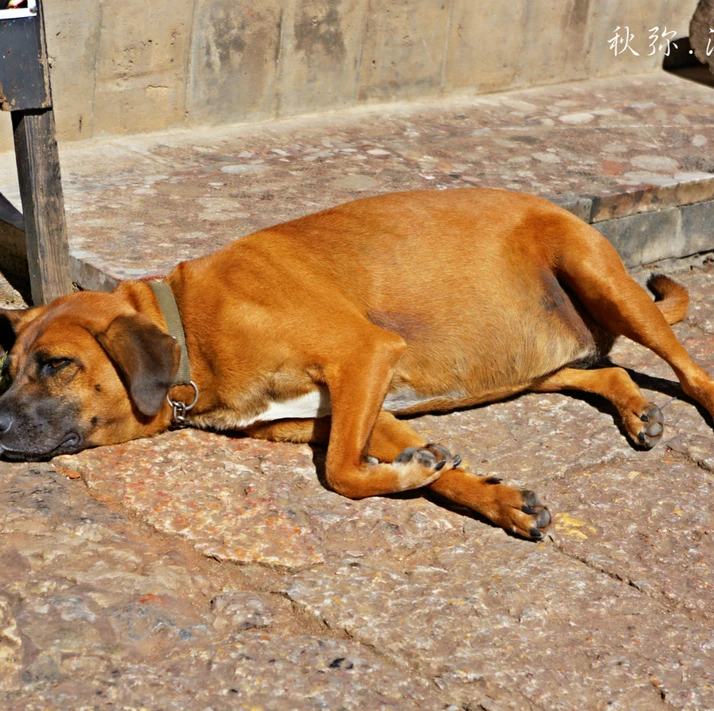
The wooden pavilions and cobblestone alleys whispered stories of the town's centuries of joys and sorrows. A lazy dog lay basking in the sunlight, eyes half-closed, soaking up the autumn warmth. I suddenly felt that sometimes, slowing down is the best way to travel.
Mu Palace: Five Hundred Years of Chieftain Rule
Descending from Lion Hill, we arrived at the back gate of Mu Palace. Built in 1382, this official residence once served as the administrative center of the Mu clan, the Naxi chieftains who ruled Lijiang for nearly five centuries. According to the Lijiang Prefecture Gazetteer, at its peak, Mu Palace covered over a hundred acres and contained nearly a hundred buildings, earning it the nickname "a replica of the Forbidden City." The hit 2013 TV series The Wind of Mu Palace was filmed here.
Stepping into the Assembly Hall, a solemn and majestic atmosphere commanded respect. Along the central axis, the Assembly Hall, Ten Thousand Volumes Tower, and Dharma Protection Hall stood in sequence, with pavilions and terraces scattered on either side. Sunlight streamed onto the blue glazed tiles, its refracted glow mingling with the lush greenery, leaving us utterly captivated.
Xiangshan Market: Lijiang on the Tip of Your Tongue
By mid-afternoon, ravenous, we headed to Xiangshan Market. After checking reviews on Dianping (China's Yelp equivalent), we found a well-rated restaurant serving cured pork rib hotpot. The flames licked the bottom of the pot as the cured ribs tumbled in the bubbling broth, growing more flavorful with each passing minute. The side dishes were uniquely local: Lijiang's specialty erkuai (rice cakes), the famously named "watery spirit" (a local aquatic vegetable), fresh fiddlehead ferns, and a special potato product unique to the region. The biggest surprise was the complimentary Lijiang flatbread (baba) that came with the hotpot—chewy and fragrant, each bite bursting with wheat flavor.
As night fell, we returned to the ancient town. The wishes and blessings hanging on wooden plaques glowed warmly in the lamplight. Standing on Lion Hill, looking down at the ancient town, the twinkling lights and the aroma of human life rising from the streets—everything felt just right.
Day 2: Middle Tiger Leaping Gorge, Walking Between Cliffs and Torrents
At six in the morning, we stepped out of the guesthouse and walked along the silent cobblestone streets. The empty roads were occasionally punctuated by roosters crowing and dogs barking. In the distance, wisps of cooking smoke rose into the sky—this, we realized, was the real Lijiang, the original Lijiang.
Tiger Leaping Gorge Hike: A Thrilling Journey on the Edge of a Cliff
We joined a local group tour for 180 RMB, including lunch. Our guide, Zhaxi, was a Tibetan from Shangri-La. Along the way, he shared stories about Naxi and Tibetan customs, and specifically warned us not to eat in the car because the vehicle had been blessed by a living Buddha.
The journey began at the First Bend of the Yangtze River. The river here is actually the Jinsha River, which flows north into Sichuan before merging with other rivers to form the Yangtze. The blue sky, milky white clouds, lush green hills, and yellow river water created a unique panorama. We opted for the rafting activity (160 RMB per person), sitting at the very front of the raft. The wind in our faces blew away all our fatigue.
The real challenge began at 1 p.m. The difference between the Middle and Upper Tiger Leaping Gorge is simple: the Upper section has concrete steps that make it easy to descend to the riverbed, while the Middle section is almost entirely undeveloped. The so-called "steps" were nothing more than stones piled up by local farmers. Following a narrow path carved into the mountain, we made our way deeper into the gorge.
The sound of rushing water grew louder, almost deafening. A massive boulder stood in the middle of the canyon, with roaring water crashing against it violently, sending up silver spray that glittered in the sunlight. Standing on a suspension bridge, looking down at the raging torrent below, I felt an overwhelming sense of human insignificance in the face of nature.
The most terrifying part was the "Heavenly Ladder"—a vertical iron ladder five stories high, with no safety measures whatsoever. I wore gloves for grip, not daring to look down or up, only straight ahead, climbing step by step. With each rung, my heartbeat quickened. When I finally made it to the top and looked back at the mountain path we had conquered, the sense of achievement was indescribable.
Black Goat Street: Comfort After the Hike
Back in Lijiang by 7 p.m., we headed straight to Black Goat Street on Jinkai Street, where fellow travelers had recommended the Puji Black Goat Restaurant. The goat meat hotpot was tender and flavorful, and paired with a glass of ice-cold beer, all our exhaustion melted away.
Day 3: Lugu Lake, Stunning Beauty After Ten Hours of Torture
At 8:10 a.m., we departed from Lijiang's High-Speed Bus Station for Lugu Lake. This leg of the journey was sheer agony—winding mountain roads, overloaded trucks, potholes caused by landslides... Ten grueling hours later, I truly understood what it meant to have "your body in hell, your eyes in heaven."
First Glimpse of Lugu Lake: An Oil Painting Come to Life
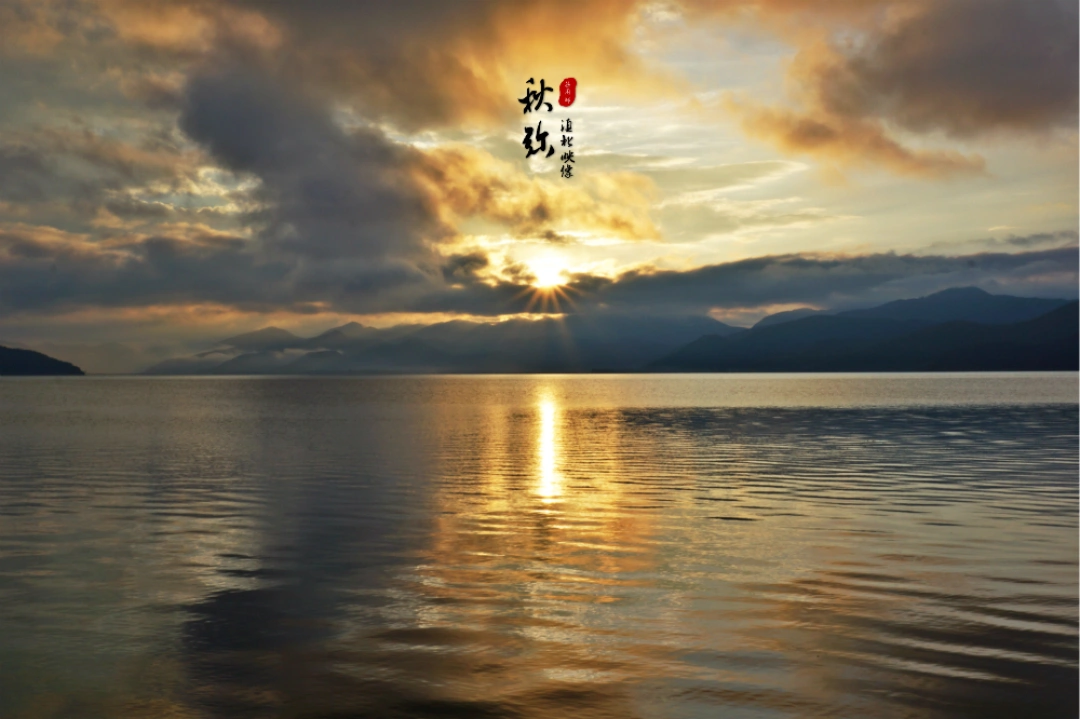
At 6:16 p.m., when we finally reached the entrance to Lugu Lake Scenic Area, the rain had stopped. Standing on the viewing platform, the first sight of Lugu Lake was simply breathtaking. Though it was past 6 p.m., the sunlight was still brilliant, streaming through thick clouds and casting a golden glow on the tranquil lake. It looked like an oil painting.
We checked into the Jing Shui Liu Shen Guesthouse in Luoshui Village. When I opened the door, the view outside instantly made me forget the ten-hour ordeal—pink cosmos flowers stood out vividly against green leaves, and beyond them, a sandy lakeshore led to water as smooth as a mirror, reflecting several towering trees.
Chan Zui Guan Restaurant: A Taste of Mosuo Cuisine
We had dinner at Chan Zui Guan, a bustling restaurant opposite the parking lot in Luoshui Village. We ordered stir-fried tree bark with eggs, grilled meat, Mosuo fried rice, and sour cabbage stir-fried with lotus root slices. The tree bark and egg dish was surprisingly delicious, and the Mosuo fried rice was so good and affordable that we ordered two portions and finished both.
Day 4: Circumnavigating Lugu Lake, Cosmos Flowers and Azure Waters

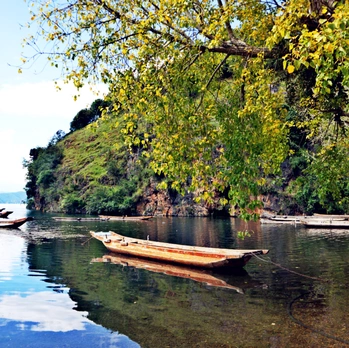
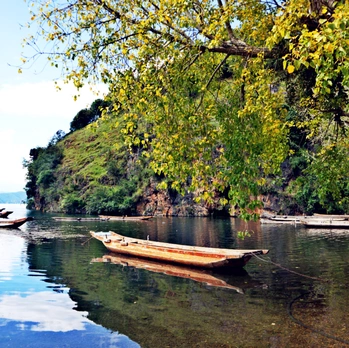
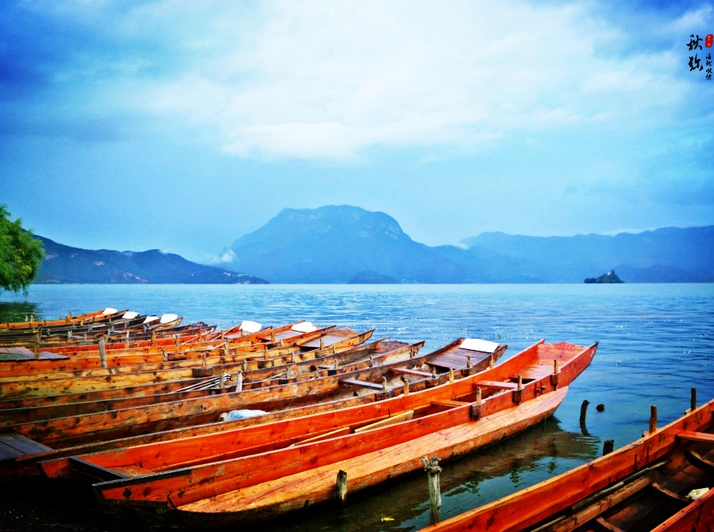
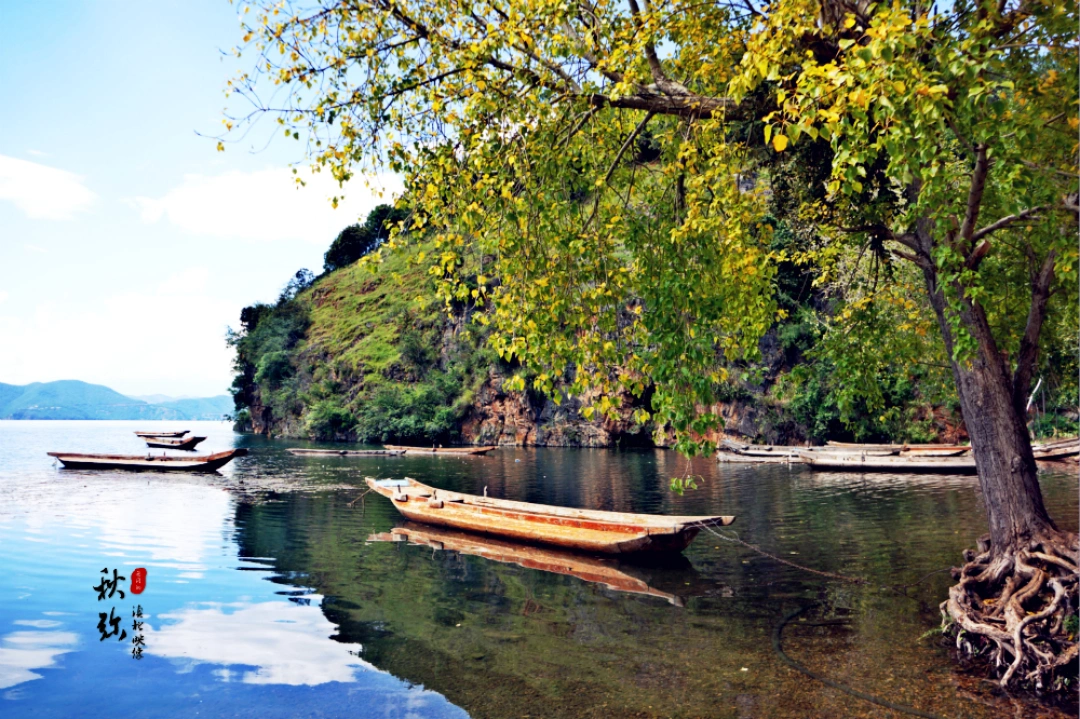
On the morning of the fourth day, I went alone to the lakeshore at 7 a.m. A cold wind blew, and the sun hid behind thick clouds. Only industrious fishermen were out on the lake, paddling their pig-trough boats. At this hour, Lugu Lake was truly peaceful.
The Circumnavigation: From Lige to Nisai
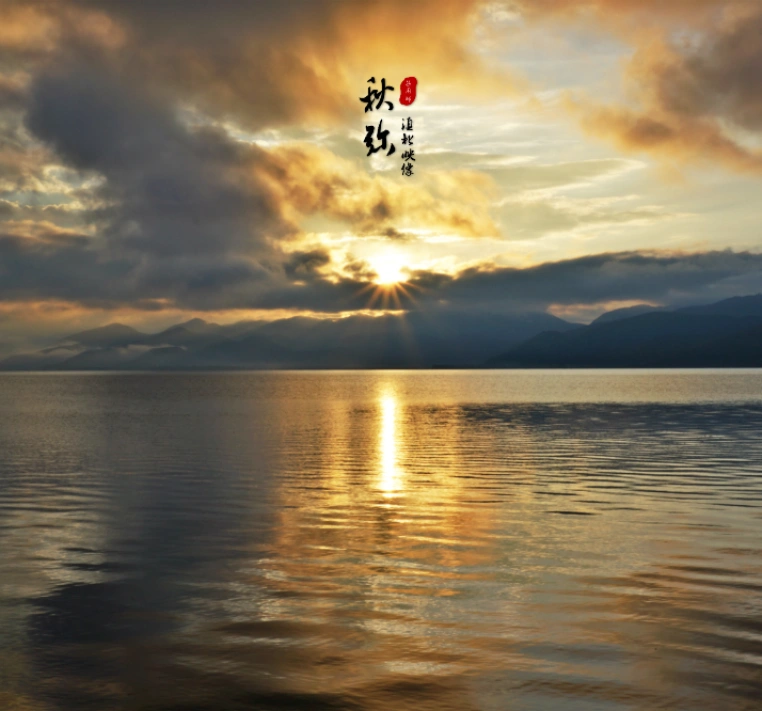
We rented a 4x4 to circle the lake, driven by a spirited young Mosuo man. Going clockwise, our first stop was Lige Island. The white pagoda and prayer flags on the viewing platform fluttered in the wind. When the sun finally peeked out, its rays streamed through gaps in the clouds onto the lake—at that moment, time seemed to stand still.
In Nisai Village, the cosmos flowers were in full bloom, an endless sea of pink and white swaying in the breeze among the green leaves. Cosmos flowers, wooden houses, small boats, distant white clouds, green mountains, blue water—to experience such beauty in this life made the journey worthwhile.
Xiaoluoshui and Into Sichuan
Xiaoluoshui Village is small, home to only a few dozen families. On the hillside stood a Gelugpa Buddhist temple, supported by the entire village. We followed a dirt path up to the temple and made wishes. Continuing on, we crossed into Sichuan Province. Here, the lake opened up even wider. A wooden boardwalk extended into the water, and white clouds reflected on the mirror-like surface, creating a scene of serene tranquility.
The Rest of the Journey: Shangri-La, Potatso, and Meili Snow Mountain
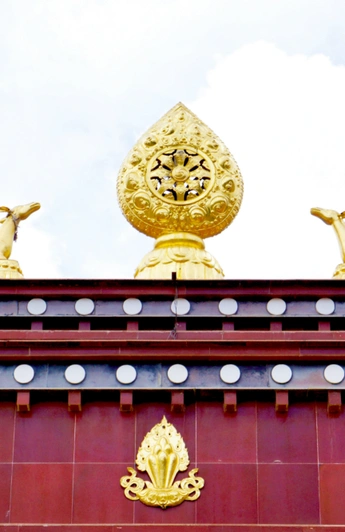
After returning from Lugu Lake to Lijiang, we pressed on toward Shangri-La. The golden rooftops of Songzanlin Monastery gleamed in the sunlight. The primeval forests of Potatso National Park filled us with a sense of peace. In Dukezong Old Town's Moonlight Square, the giant prayer wheel turned slowly in the hands of devotees.
But the most unforgettable moment was the "Sunrise Golden Peak" at Meili Snow Mountain. At 6 a.m., we stood on the viewing platform at Feilai Temple, watching as golden sunlight gradually spilled over the snowy peaks. The sacredness and majesty of that sight rendered all words inadequate.
Final Thoughts: What Ten Days Gave Us
Over ten days, we walked through the ancient alleys of Lijiang, crossed the sheer cliffs of Tiger Leaping Gorge, lost ourselves in the azure waters of Lugu Lake, and paid homage to the golden sunrise at Meili Snow Mountain. Along the way, there was emotion, awe, reverence, and humility.
But what I treasure most are the roads we walked together, the scenery we shared, and the storms we weathered side by side. As I wrote at the end of the journey: "Through it all, all is well."
Practical Tips: - The road from Lijiang to Lugu Lake is rough; allow a full day for the trip - For hiking the Middle Tiger Leaping Gorge, wear non-slip shoes and bring gloves - Renting an electric scooter (50–80 RMB per day) gives you more freedom for circling Lugu Lake - The best time to view "Sunrise Golden Peak" at Meili Snow Mountain is 6:00–7:00 a.m. - Most roadside restrooms in Yunnan charge a fee of 1 RMB per person
May every journey you take lead you to the most beautiful landscapes—and to the best version of yourself.
You should also read:

God’s Abandoned Palette: A Self-Drive Journey Through Yunnan’s Dongchuan Red Land
God’s Abandoned Palette: A Self-Drive Journey Through Yunnan’s Dongchuan Red Land Travel has never been about reaching some distant geographic coordinate. It’s about encountering, along the way, the version of yourself buried beneath the rubble of daily routine. During this May Day holiday, I finally…
Continue reading...
Two Girls' Graduation Trip: Dali and Shuanglang – A Poetic Farewell to Mountains and Sea
Two Girls' Graduation Trip: Dali and Shuanglang – A Poetic Farewell to Mountains and Sea Preface: Catching the Tail of Youth, Heading South During our senior year of college, my roommate and I – two girls studying in Beijing – decided to bid farewell to…
Continue reading...
Body in Hell, Heart in Heaven: A Pilgrimage Through Tiger Leaping Gorge — A Dialogue Between Heaven and Earth
Body in Hell, Heart in Heaven: A Pilgrimage Through Tiger Leaping Gorge — A Dialogue Between Heaven and Earth Introduction: When the Gorge Splits Open Beneath Your Feet Some say Tiger Leaping Gorge is the closest place on Earth to the border between "hell" and…
Continue reading...