Autumn Road Trip Through Western Yunnan: Tengchong, Mangshi, and Ruili – A Golden Journey Across the Borderlands
Autumn Road Trip Through Western Yunnan: Tengchong, Mangshi, and Ruili – A Golden Journey Across the Borderlands
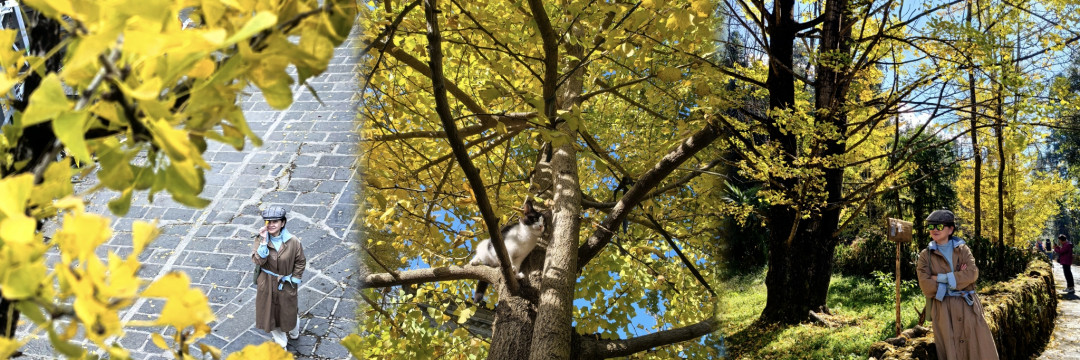
Someone once said that autumn in Tengchong is a golden dream – ginkgo leaves falling like poetry, and hot spring mist hiding immortals. When Mr. Zhang finally finished his work and asked me, "Where do you want to go?" the thought slipped out almost without thinking: "Tengchong." The flight tickets were booked without hesitation, the itinerary was meticulously planned, and hotels were compared back and forth. Later, we realized that Tengchong's attractions are scattered across the mountains and fields, and public transportation isn't convenient, so we decided to rent a car and drive ourselves. Since we were renting a car anyway, why not include the nearby cities of Mangshi and Ruili in our plans?
And so, a self-driving route starting from Tengchong, passing through Mangshi to Ruili, and then returning to Tengchong, was settled.
Pre-Trip Preparation: Practical Tips on Climate, Transportation, and Accommodation
Climate and What to Wear
Tengchong is located on the Yunnan Plateau at an altitude of about 1,500 meters (4,900 feet), with an Indian Ocean monsoon climate. The average annual temperature is around 15°C (59°F), and summer highs rarely exceed 30°C (86°F), making it incredibly comfortable. The rainy season runs from May to October each year. I visited at the tail end of the rainy season, when the weather was unpredictable – one moment it would be overcast with a light drizzle, and the next, the sun would break through, with a rainbow arching across the sky.
Strong ultraviolet rays are a constant here, so a hat, umbrella, and sunscreen are absolute essentials. Also, be sure to bring mosquito repellent and herbal balm – after returning from Ruili, I found a mysterious patch of red spots on my calves that itched terribly, likely a "gift" from the local insects.
Transportation and Car Rental
There are virtually no direct flights from Shanghai to Tengchong; most require a layover in Kunming or Chongqing. Round-trip tickets plus airport construction fees cost about 3,000 yuan (approximately $415) per person. This price is typical during the peak travel season – not cheap, but worth it for the autumn ginkgo leaves.
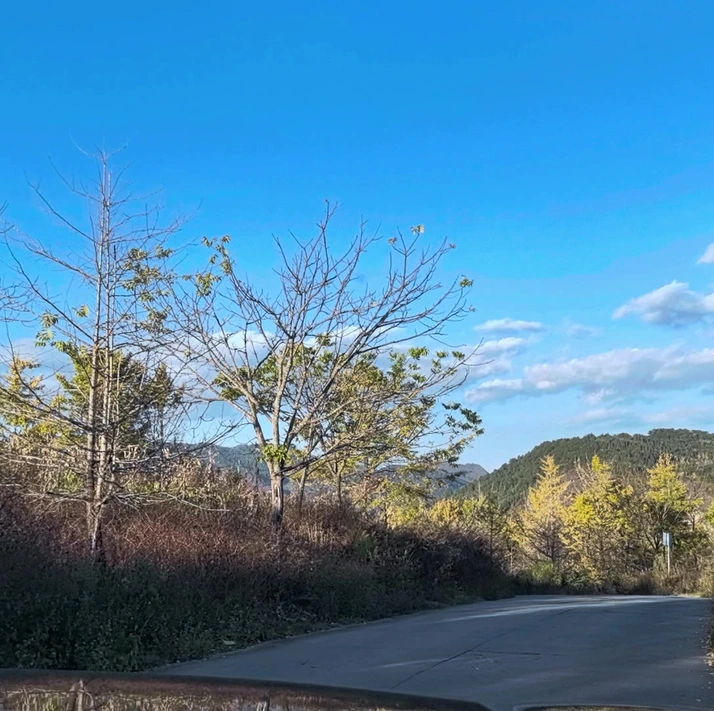
We booked a Haval SUV through a rental platform. The car was delivered to our accommodation, and we arranged to return it at Qiluo Ancient Town, where the owner then drove us to the airport. The six-day rental cost 720 yuan (about $100), and gas was around 500 yuan (about $70). We didn't take any highways, saving on tolls. The distances from Tengchong to Mangshi and from Mangshi to Ruili are each about 100 to 120 kilometers (60 to 75 miles). Without highways, the drive takes about three hours – an hour longer than the highway route – but the scenery along the way is spectacular, making the self-driving experience even more enjoyable.
Accommodation Recommendations
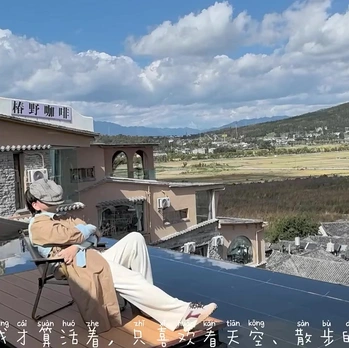
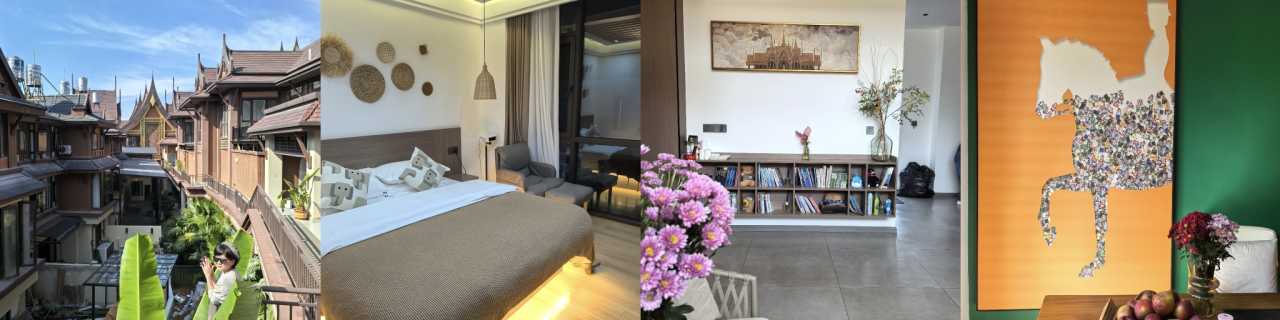
Tengchong: - Heshun Ancient Town Hot Spring Panorama Inn (890 yuan/night, about $123, includes breakfast): Located at a high point in the center of the ancient town, right next to the trendy "Chunye Coffee" café. The terrace offers a panoramic view of the town. However, the view of the sunset is partially blocked by the café. - Ginkgo Village Wangchuanju Inn (965 yuan/night, about $133, includes breakfast): Excellent location within the village, but the price is high, and the accommodation is only average. With only two peak months a year, prices naturally skyrocket. - Rehai Sulfur Hot Spring Private Bath Guesthouse (650 yuan/night, about $90, includes breakfast): Close to the airport and Qiluo Ancient Town, perfect for a sulfur hot spring soak before leaving. However, transportation is inconvenient – it's located within a residential complex and requires a shuttle transfer. Breakfast is also simple.
Mangshi: - Huazhu Scenic View Guesthouse (Dai Ethnic Ancient Town Branch) (260 yuan/night, about $36, no breakfast): Newly opened, clean and tidy, excellent value for money. Apples in the lobby and cold drinks in the fridge are complimentary, and the front desk staff are warm and attentive. Right across the street is the restaurant "Peacock Palace," and after dinner, you can stroll through the ancient town. - Ji Hotel (Mangshi Square Branch) (380 yuan/night, about $52, includes breakfast): A solid, standard choice, but I personally recommend staying in the Dai Ethnic Ancient Town – it's closer to attractions and has more dining options.
Ruili: - Ji Hotel (360 yuan/night, about $50, includes breakfast): Newly opened, about two kilometers (1.2 miles) from Jiegao Port, conveniently located between the General Buddhist Temple and the "One Village, Two Countries" attraction. Parking is easy, and it's right next to "Ruili Mengmao Feast."
Day 1: Arriving in Tengchong, First Encounter with Heshun
The plane descended through low clouds, and outside the window was the gentle, unique beauty of Yunnan – the "Land of Colorful Clouds." Someone once said, "The beauty of Tengchong lies in Heshun," so our first stop was this ancient town with over 600 years of history.
Heshun Ancient Town is located four kilometers (2.5 miles) southwest of downtown Tengchong. It was originally called "Heshun" (meaning "River Smooth") because a small river winds around the village. Later, local scholars, inspired by the phrase "harmonious people and peaceful land," renamed it "Heshun" (meaning "Peace and Harmony"). This was a vital stop on the ancient Southern Silk Road and a famous hometown of overseas Chinese and a key caravan town. National Geographic once listed it as one of the 50 places you must visit in your lifetime.

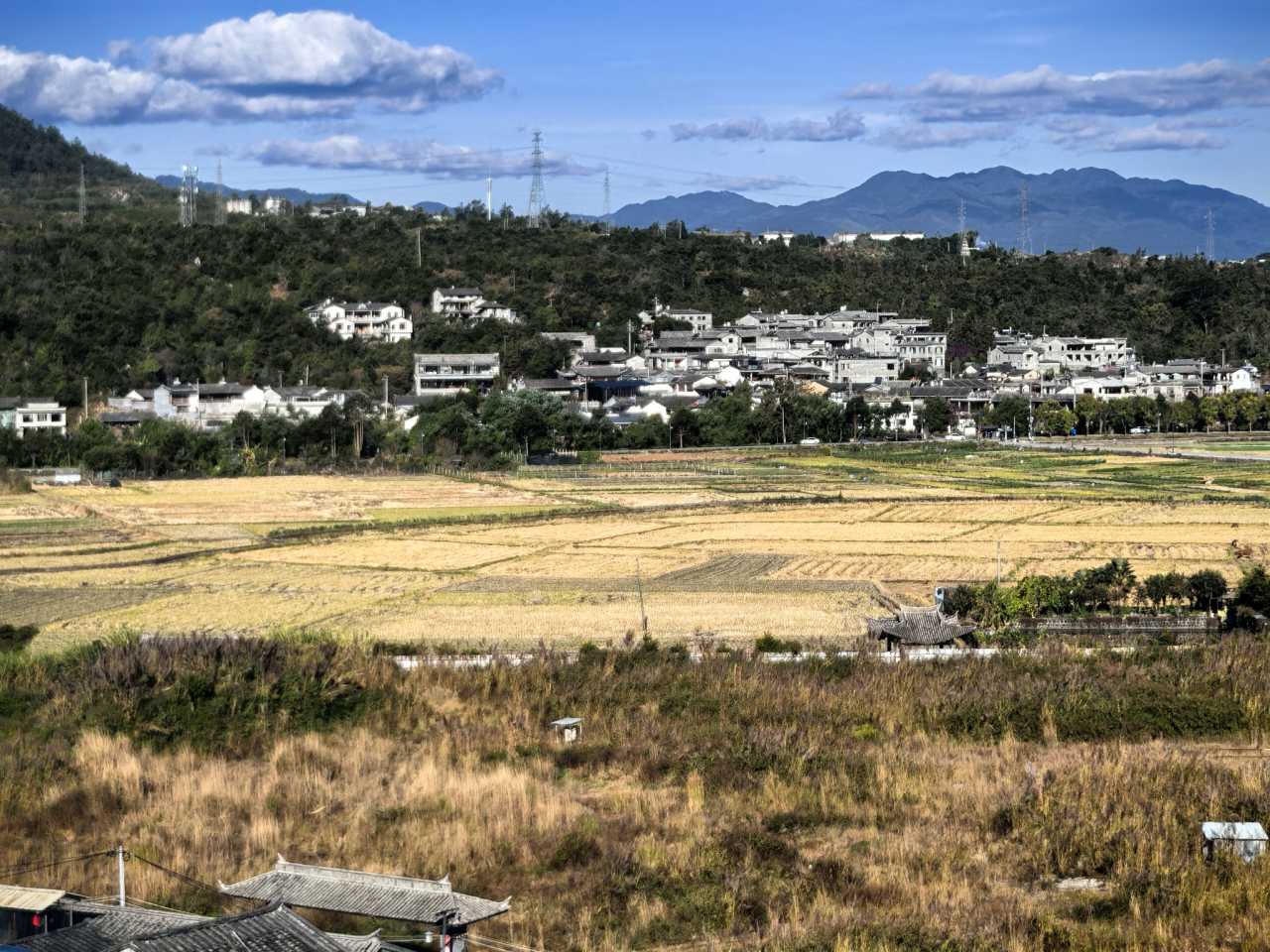
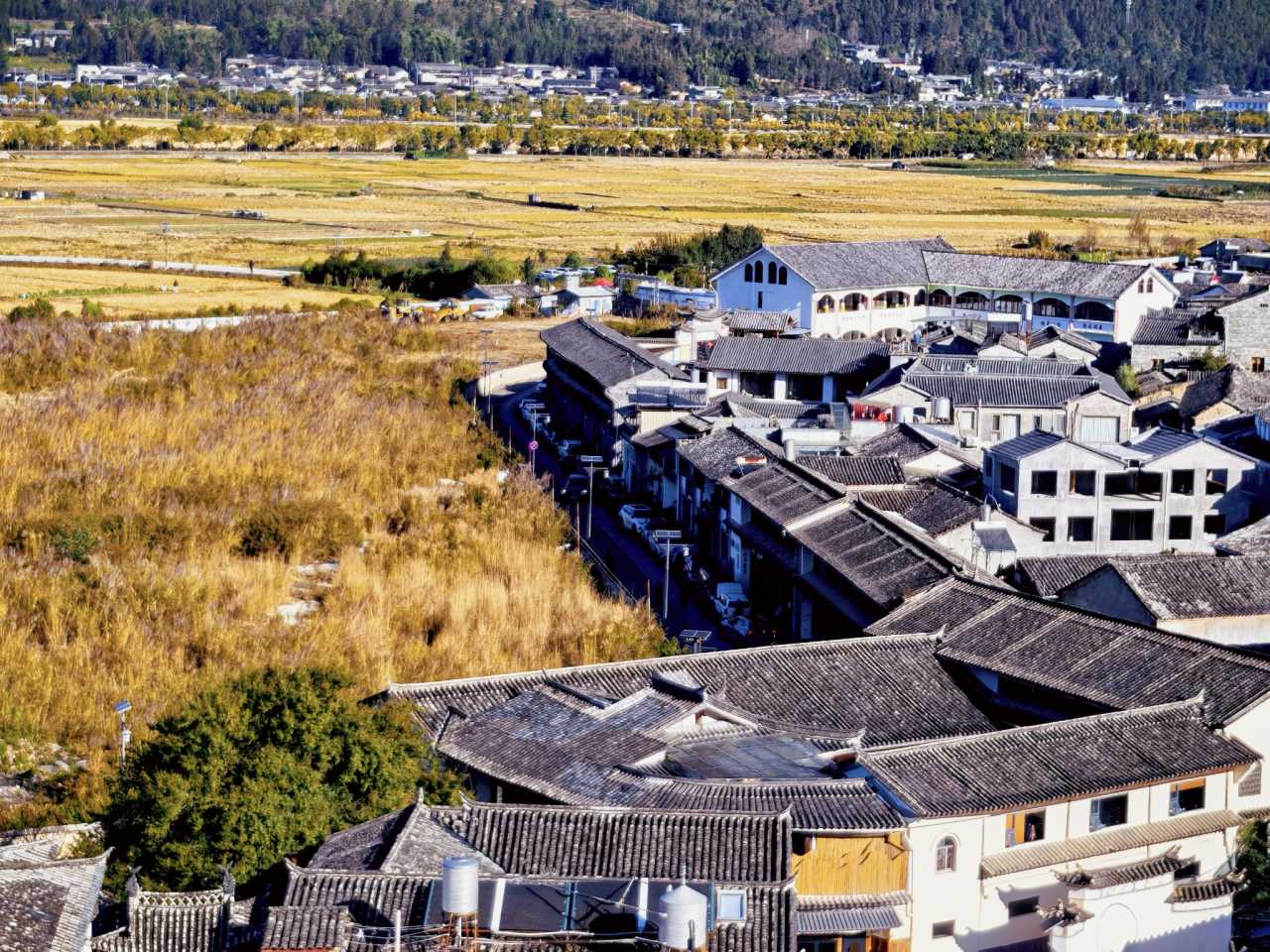
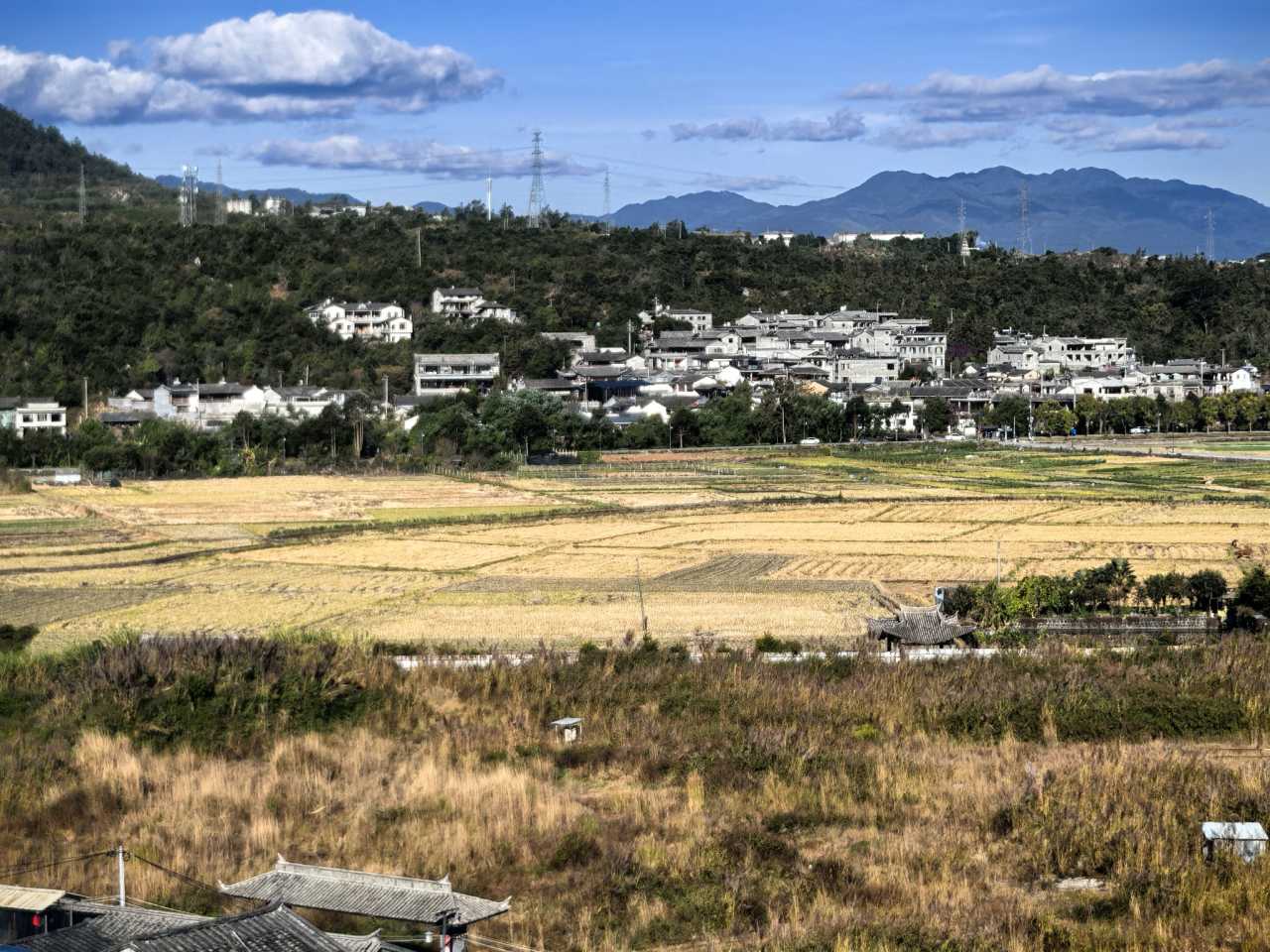
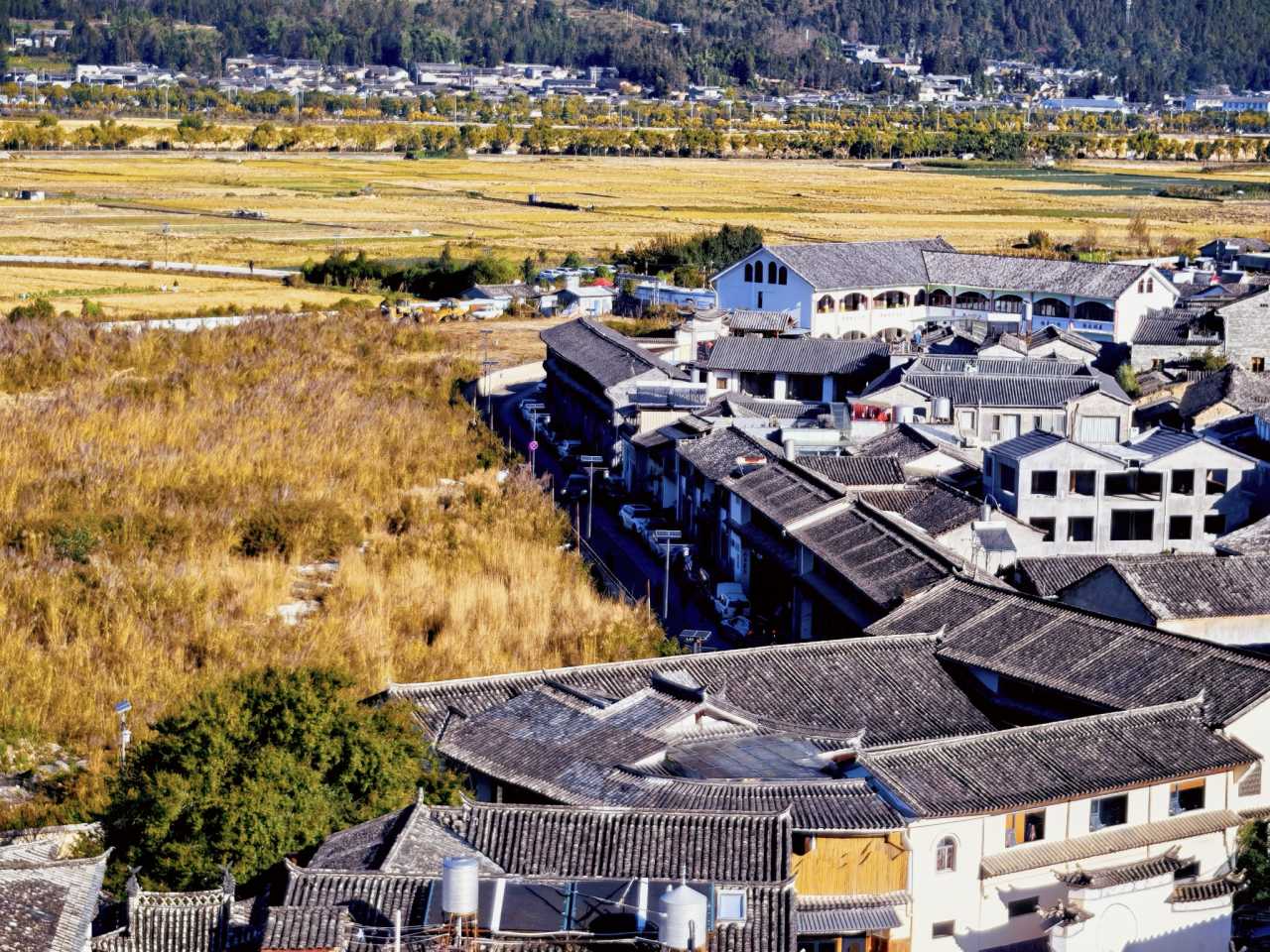
The town entrance fee is 55 yuan (about $7.60) and is valid for seven days. We stayed at a hot spring panorama inn on a high point, with a terrace offering a wide view of the entire ancient town and the surrounding countryside. Half the scene was ancient buildings with black tiles and white walls, and the other half was golden rice paddies. In the distance were misty blue mountains, and nearby, a clear, slow-flowing river. Li Genyuan, a founding father of the Republic of China, once marveled: "The distant mountains are vast and hazy, the near waters are gentle and long. Beneath the thousands of homes on the slopes, it far surpasses the beauty of Suzhou and Hangzhou."
After dropping our luggage, we headed straight to the neighboring "Chunye Coffee" – the best spot in town to watch the sunset. The café's terrace was packed with people, all waiting for the sun to go down. We thought the overcast sky would ruin the sunset, but the sun managed to break through the clouds. The evening glow painted half the sky red, and a rainbow appeared faintly over the ancient town. In that moment, the whole world felt soft and tender.
For dinner, we went to "Mom's Flavor" and ordered a set meal for two: copper-pot beef, "Dajiu Jia" (literally "Great Rescue"), and lemon fish. "Dajiu Jia" is actually stir-fried rice cakes – soft, chewy, and delicate. It's said to be one of Yunnan's top ten classic dishes. The lemon fish, made with tilapia, was sour and spicy, and the more we ate, the more addictive it became. After dinner, we wandered through the ancient town. At night, it was even livelier than during the day, with snack stalls, creative shops, and a bar street, all full of vibrant energy.
Day 2: Strolling Through Heshun, Embracing the Slow Life
In the early morning, a thin mist hung over the ancient town. The wooden doors of old houses creaked open, revealing the simple, everyday life within. Our first stop was the Thousand-Armed Guanyin Ancient Tree Cluster at the southwestern end of town – seven hundred-year-old camphor trees whose branches intertwined to resemble the Thousand-Armed Goddess of Mercy. Morning light filtered through the leaves, casting dappled shadows – a beauty that made it hard to leave.
Next, we visited Zhongtian Temple, built in the eighth year of the Ming Dynasty's Chongzhen era (1635). After many renovations, it still retains its exquisite architecture and carvings. A small tabby cat lazily lay on the steps, basking in the sun, completely indifferent to the passing visitors. The most amusing sight was the stone-carved "nine-tailed foxes" placed around the temple – their expressions were adorably silly.
In the afternoon, we wandered aimlessly along the winding alleys. We passed Wild Duck Lake, its waters emerald green with water birds playing; we passed the Centenarian Archway, its stone tablet inscribed with the words "Heavenly Mother Peak is High," a symbol of longevity; and we entered the Li Family Ancestral Hall, learning that it had produced Li Yuegai, secretary to Yunnan Governor Cai E, and the philosopher Ai Siqi.
In the evening, we went to "Shushu Bookstore" – a popular hangout for young people. Its vast bookshelf space and wide-view observation platform made us want to sit down and browse through a book. One line on the wall struck me: "If there is a heaven on earth, it must be the look of a library."
Dinner was at "Sanyanxiang Food Mansion," a century-old house. We deliberately chose a seat in the entrance hall, where the tables and chairs were said to be nearly a hundred years old. The 168 yuan (about $23) set meal for two included Jietou braised fish, secret-recipe double-pepper chicken, Tengchong "Dajiu Jia," and vegetables. Paired with a bottle of Myanmar beer, we ate to our hearts' content.
Day 3: Rehai, Tea Sea, and Ginkgo Village
Today, our self-driving adventure officially began. We checked out early in the morning, and the guesthouse owner dropped us off at the entrance to the ancient town, where we met the car rental driver. After taking the keys to our Haval SUV, we set off!
Our first stop was Rehai Big Boiling Pot. This is Tengchong's most famous geothermal attraction, filled with steaming hot springs and gushing boiling springs. The water temperature in the Big Boiling Pot reaches 96.6°C (206°F) – you can boil an egg in just a few minutes. The area also has various hot spring pools, with a strong smell of sulfur, which is said to be effective for skin conditions and arthritis.
Next, we went to Dadi Tea Sea. This is a tea plantation, lush and green, with the air filled with the fragrance of tea. We took a short walk along the tea garden paths, enjoying the gentle breeze. Unfortunately, time was limited, so we couldn't sit down for a cup of tea.
At noon, we passed by Heiyu River (Black Fish River), its water crystal clear, with lush trees lining both banks. It's said to have been a filming location for the Chinese TV series Beijing Love Story, but we didn't have time to explore it thoroughly.
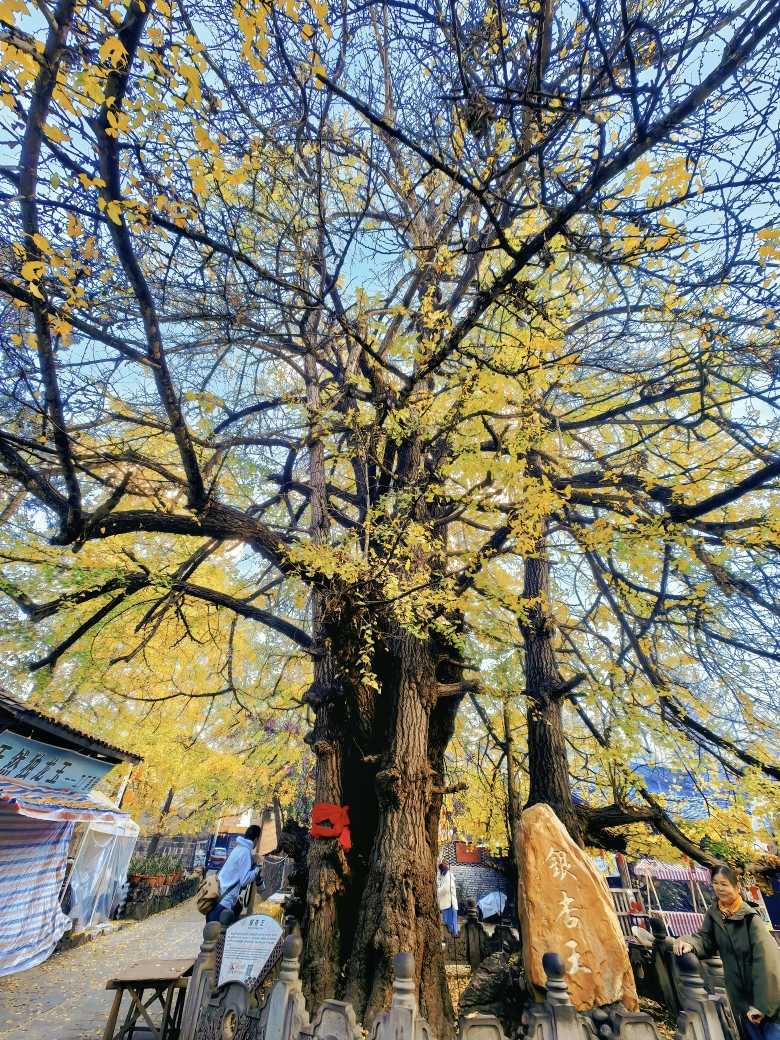
In the afternoon, we finally arrived at the highlight of the trip – Ginkgo Village. The village is small, but every household has ginkgo trees planted in front of their homes. The most famous is the 1,300-year-old "Ginkgo King," with a thick trunk and lush branches, its golden leaves shimmering in the sunlight. We stayed at Ginkgo Village Wangchuanju Inn, which had an excellent location – opening the window, we could see the trees full of gold.
For dinner, we went to the "Ginkgo King" farmhouse restaurant next to our inn and ordered specialties like white gourd (ginkgo nut) stewed chicken, stir-fried ginkgo leaves, and farmhouse cured pork. The white gourd chicken soup was delicious and savory, while the ginkgo leaves were slightly bitter with a sweet aftertaste – pure autumn flavors.
Day 4: Morning in Ginkgo Village, Leisurely Mangshi
In the early morning at Ginkgo Village, smoke from cooking fires rose in wisps, and sunlight filtered through the leaves, casting golden patches of light on the ground. We strolled along the village paths, occasionally passing villagers on motorcycles carrying freshly picked vegetables from the fields. Life here was simple and beautiful.
At noon, we set off for Mangshi, about 100 to 120 kilometers (60 to 75 miles) away. Without taking the highway, the journey offered endless scenic views. Mangshi is the capital of the Dehong Dai and Jingpo Autonomous Prefecture, with a strong Dai ethnic flavor. We stayed at the Huazhu Scenic View Guesthouse in the Dai Ethnic Ancient Town – a newly opened inn, clean and tidy, with excellent value for money.
Dinner was at "Peacock Palace" in the ancient town, where we ordered hand-grabbed rice. The rice was served with various Dai-style side dishes, and eating it with our hands gave it a unique flavor. After dinner, we wandered through the ancient town, which was bustling with lights and activity.
Day 5: Mangshi Isn't "Busy"
Someone once said, "Mangshi isn't busy," and the pace of life here is indeed enviably slow. In the morning, we visited the Golden Pagoda and the Silver Pagoda – the Golden Pagoda glittered with gold, while the Silver Pagoda was as white as jade, both stunning against the blue sky. At the Silver Pagoda, I secretly snapped a photo of a woman having her portrait taken. Her yellow dress complemented the white pagoda perfectly, creating a picture-like beauty.
Next, we went to the "Tree-Enveloped Pagoda" – a giant banyan tree that has completely engulfed a Buddhist pagoda, with the tree and pagoda fused into one, a true wonder. For lunch, we went to the Baiste Food Court and tried paoluda (a coconut milk drink with bread, jelly, and fruit), avocado juice, pickled chicken feet, and shuaibaba (a fried flatbread). Each dish was unforgettable.
In the afternoon, we spent time at Puti Temple and Ahe Coffee. The café's terrace offered a panoramic view of all of Mangshi. At sunset, the sky turned into a brilliant orange-red, a sight that was breathtakingly beautiful. Dinner was at the Xinwan Factory area, a paradise for street food. We had chicken oil rice, chicken rolls, and Ruili-style live crabs – everything was irresistibly delicious.
Day 6: Ruili – The Charm of a Border Town
From Mangshi, it was just over an hour's drive to Ruili. Ruili borders Myanmar and has a strong exotic atmosphere. We stayed at the Ji Hotel, newly opened, clean, and comfortable.
Our first stop was Jiegao Port, the largest land port on the China-Myanmar border. The streets were filled with Myanmar and Indian people, as well as various foreign goods. We browsed the duty-free shops and bought some Myanmar snacks and cosmetics.
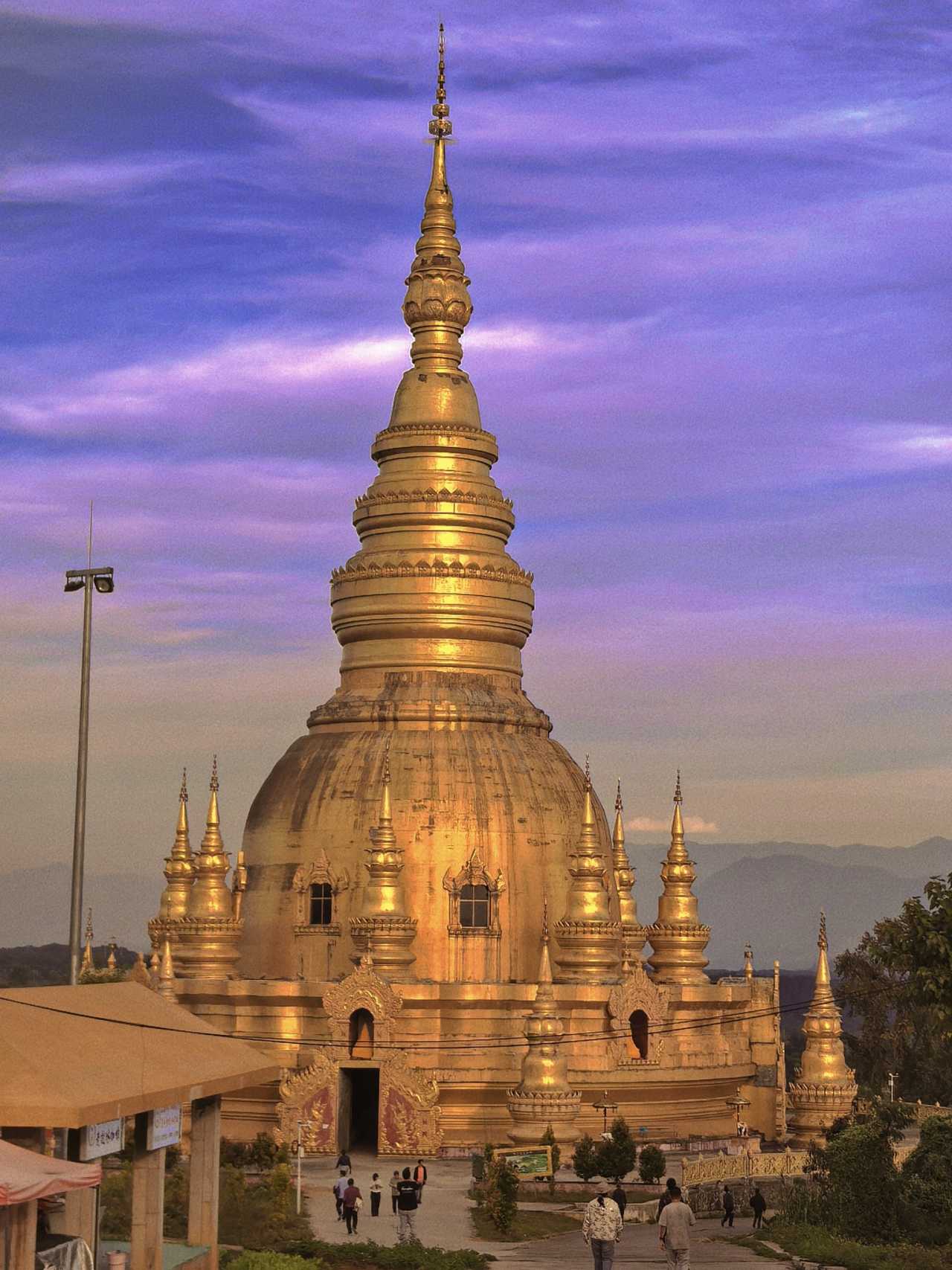
Next, we visited Jiele Golden Pagoda and the General Buddhist Temple. The golden pagoda of the General Temple shimmered in the setting sun, with the evening glow painting half the sky red – a beauty that took our breath away. Dinner was at "Ruili Mengmao Feast" next to the Ji Hotel. We ordered Dai-style grilled fish, lemon rice noodles, and pickled chicken feet – sour and spicy, and we ate with gusto.
Day 7: One Village, Two Countries – A Hot Spring Finale
In the morning, we visited "One Village, Two Countries" – a Dai ethnic village located on the China-Myanmar border. The national boundary line runs right through the middle of the village, with one side in China and the other in Myanmar. There's a swing in the village – when you swing on it, you can "go abroad," which was a lot of fun.
In the afternoon, we drove back to Tengchong and checked into the Rehai Sulfur Hot Spring Private Bath Guesthouse. Although the facilities were simple, the private hot spring pool in the room was incredibly satisfying. Soaking in the sulfur hot spring and sipping a cup of hot tea, all the fatigue from the journey melted away.
Day 8: Qiluo Ancient Town Morning Market – Farewell
On the last day, we checked out and drove to the morning market at Qiluo Ancient Town. This place felt more down-to-earth than Heshun Ancient Town. The market sold fresh vegetables and fruits, and steam rose from the food stalls. We bought some flower cakes and pine flower cakes to take back to Shanghai.
We returned the car, went to the airport, and flew back to Shanghai. Eight days of travel – not too long, not too short – but more than enough to remember the gentleness and beauty of this land.
Final Thoughts: A Few Things Worth Remembering
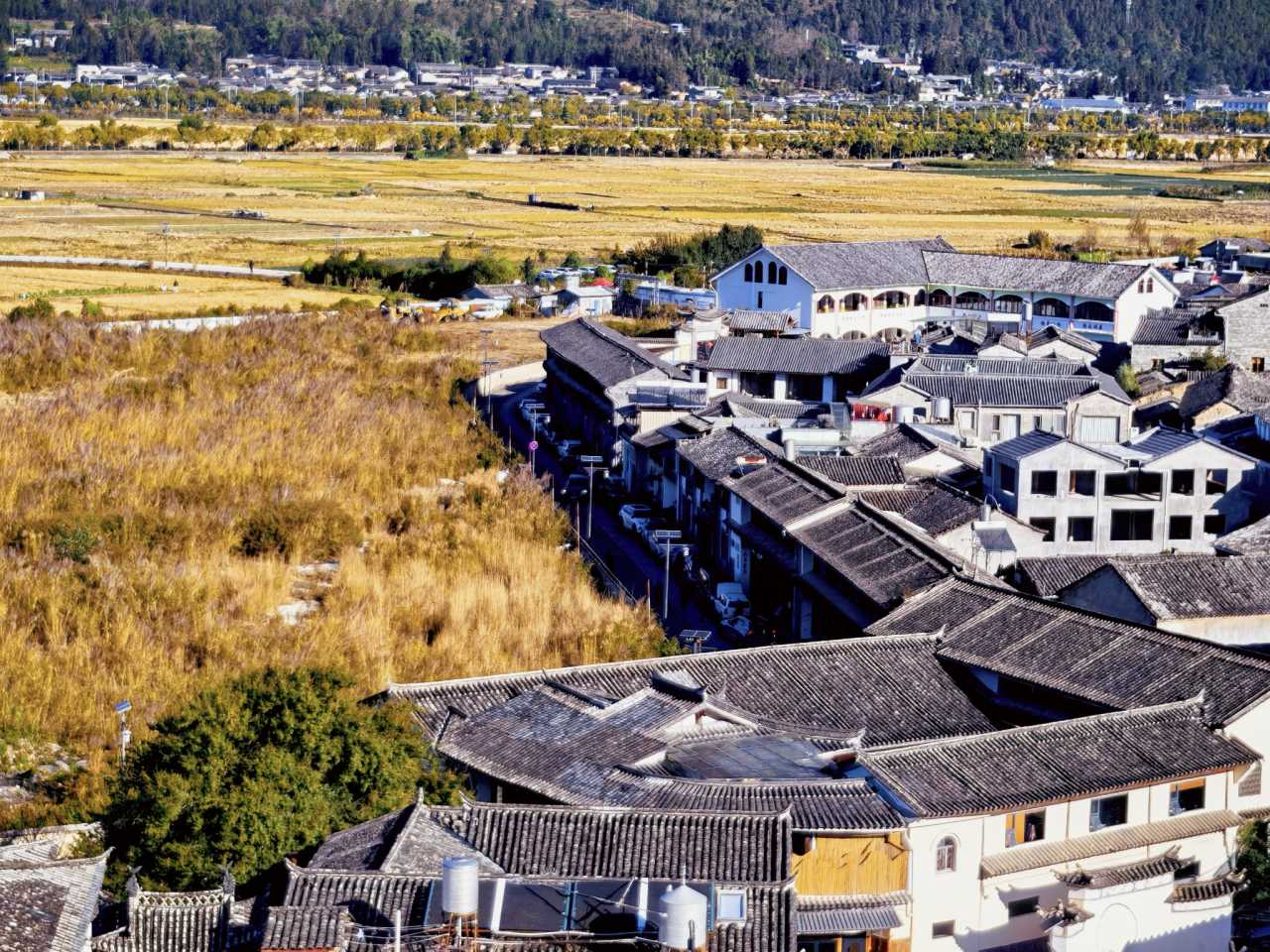

- Autumn is the most beautiful season in Tengchong – the golden ginkgo leaves in Ginkgo Village, the rice paddies in Heshun Ancient Town, and the hot springs at Rehai are all worth seeing.
- Self-driving is the best way to get around – even though avoiding highways takes more time, the scenery along the way is absolutely worth it.
- Choosing the right accommodation is important – stay at a high point in Heshun Ancient Town for the view, in the Dai Ethnic Ancient Town in Mangshi for convenience, and the Ji Hotel in Ruili is a safe bet.
- Don't miss the food – Tengchong's 稀豆粉 (thin bean jelly), 大救驾 (Dajiu Jia, stir-fried rice cakes), and 铜飘牛肉 (copper-pot beef); Mangshi's 泡鲁达 (paoluda, coconut milk drink) and 手抓饭 (hand-grabbed rice); and Ruili's 傣味烤鱼 (Dai-style grilled fish) – every dish is unforgettable.
- Sun protection and mosquito repellent are mandatory – Yunnan's UV rays and insects are no joke.
Finally, to sum up this journey in one sentence: The borderlands – a trip well worth taking.
You should also read:

Two Girls' Graduation Trip: Dali and Shuanglang – A Poetic Farewell to Mountains and Sea
Two Girls' Graduation Trip: Dali and Shuanglang – A Poetic Farewell to Mountains and Sea Preface: Catching the Tail of Youth, Heading South During our senior year of college, my roommate and I – two girls studying in Beijing – decided to bid farewell to…
Continue reading...
Body in Hell, Heart in Heaven: A Pilgrimage Through Tiger Leaping Gorge — A Dialogue Between Heaven and Earth
Body in Hell, Heart in Heaven: A Pilgrimage Through Tiger Leaping Gorge — A Dialogue Between Heaven and Earth Introduction: When the Gorge Splits Open Beneath Your Feet Some say Tiger Leaping Gorge is the closest place on Earth to the border between "hell" and…
Continue reading...
Cloud Travelogue · Dali of Wind, Flowers, Snow, and Moon: A Three-Day, Two-Night Journey of a Free Spirit
Cloud Travelogue · Dali of Wind, Flowers, Snow, and Moon: A Three-Day, Two-Night Journey of a Free Spirit I am a cultured female foodie with a touch of rogue charm. I slung on my backpack, took my lover's hand, and set off on a spontaneous…
Continue reading...