Before the Tongue: Discovering Nuodeng, the Ancient Salt Town Time Forgot
Before the Tongue: Discovering Nuodeng, the Ancient Salt Town Time Forgot
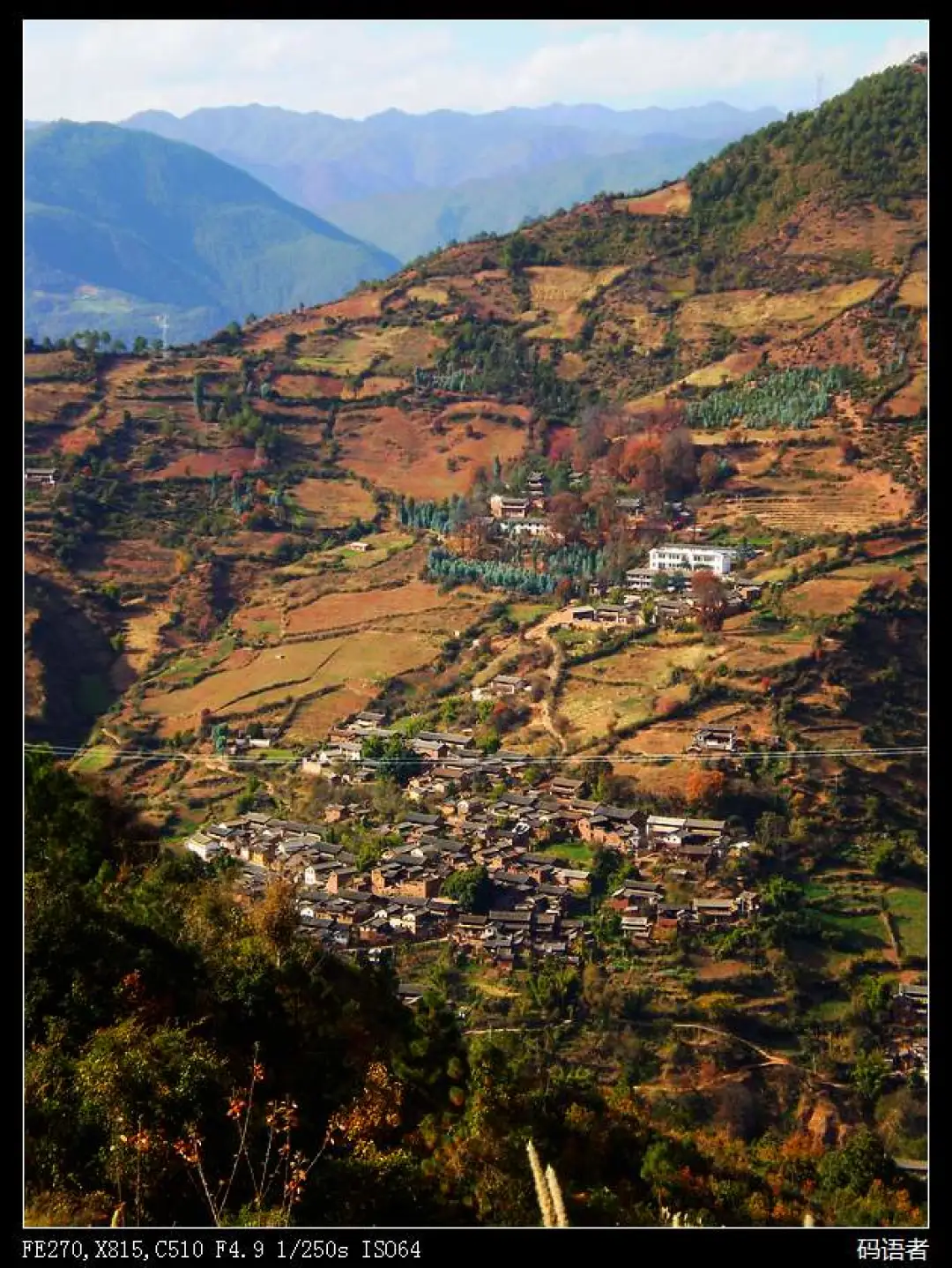
There’s a peculiar magic in places that have been left behind by history. They don’t try to impress you. They don’t have polished welcome centers or laminated maps. They just are—worn, quiet, and utterly themselves. Nuodeng, a thousand-year-old village tucked into the mountains of Yunnan, is exactly that kind of place. It doesn’t shout for your attention. It waits. And if you make the journey, it rewards you with something increasingly rare in our hyper-connected world: a glimpse of life as it used to be.
Getting There: The Road Less Traveled
Let’s be honest—Nuodeng isn’t easy to reach. That’s part of its charm. From Dali, you’ll catch a bus at the Xingsheng Road bus station. The ride to Yunlong County takes about three hours, winding through hills and valleys that make you forget you’re on public transport. Once you arrive in Yunlong, don’t expect a direct bus to the village. There isn’t one. Your only option is a motorized tricycle—a rattling, open-air contraption that will bounce you along for another 20 minutes before dropping you at the foot of the ancient settlement.
That final leg feels like crossing a threshold. The road narrows. The air changes. And suddenly, you’re there.
The Salt That Built—and Unbuilt—a Town

Nuodeng’s story is written in salt. For centuries, this was one of China’s most important salt-producing centers, a vital node on the Tea and Salt Road. Merchants, muleteers, and traders passed through, carrying salt to markets far beyond these hills. The village prospered. Grand houses rose. A sophisticated culture took root.
But salt, once a precious commodity, eventually became common. When industrial production made it cheap and abundant, Nuodeng’s reason for being evaporated. The traders stopped coming. The prosperity faded. And the village, once a bustling hub, settled into a quiet, forgotten existence.
It’s a bittersweet story—but for travelers, it’s a gift. Because Nuodeng was left largely untouched by the modernization that swept through other parts of China, its ancient architecture, traditions, and way of life remain remarkably intact.
The River That Draws a Mystery
Before you even reach the village, you’ll hear about the river. From a viewpoint above, the natural waterway forms a perfect S-curve—a yin-yang symbol carved by water and time. It’s called the Bagua formation, named after the eight trigrams of Taoist cosmology. And it’s genuinely breathtaking.
To see it, you’ll need to hire a tricycle from Yunlong to take you up to the viewing platform. The driver will likely quote you around 50 yuan for the round trip. At first, it might seem steep. But when you stand on that platform, watching the river trace its ancient pattern through the valley, you’ll understand. That drive is long. The road is steep. And the view is worth every yuan.
Walking Through Living History

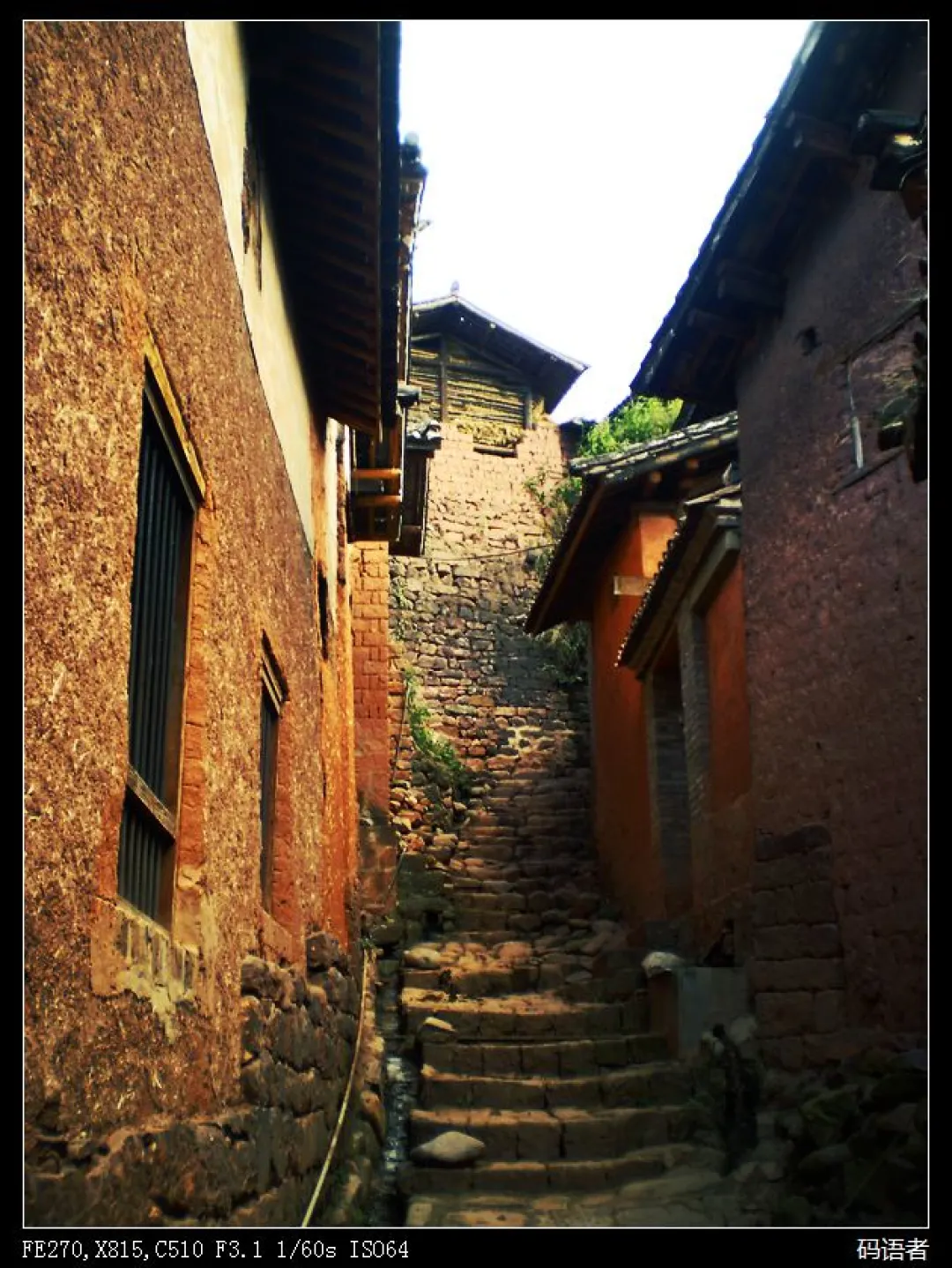
Nuodeng is a museum without walls. More than 90 buildings from the Ming and Qing dynasties still stand here, along with a handful of structures from the Yuan dynasty. These aren’t roped-off exhibits. They’re homes, temples, and community spaces, still used by the people who live here.
You can knock on any door and ask to look around. The residents are used to it—and more than welcoming. “Come in, come in,” they’ll say, gesturing toward courtyards filled with sunlight and drying corn. In one house, you’ll find a private museum of household antiques. In another, a family will show you a bamboo mat that’s been in use for over a century, held together by copper coins instead of nails.
The most famous landmark is the Tengjiao Temple, a fascinating hybrid space that once housed statues of Confucius, Guan Yu (the god of war), and the Jade Emperor—all under one roof. Upstairs, there’s an ancient library. Downstairs, the building was later used as a primary school classroom. Today, the school has moved to a new building, but the echoes of children’s voices still seem to hang in the air.
Where to Stay: Simple, but Genuine
Nuodeng isn’t set up for mass tourism. There are only three guesthouses in the village, and none of them are fancy. That’s not a complaint—it’s a feature.
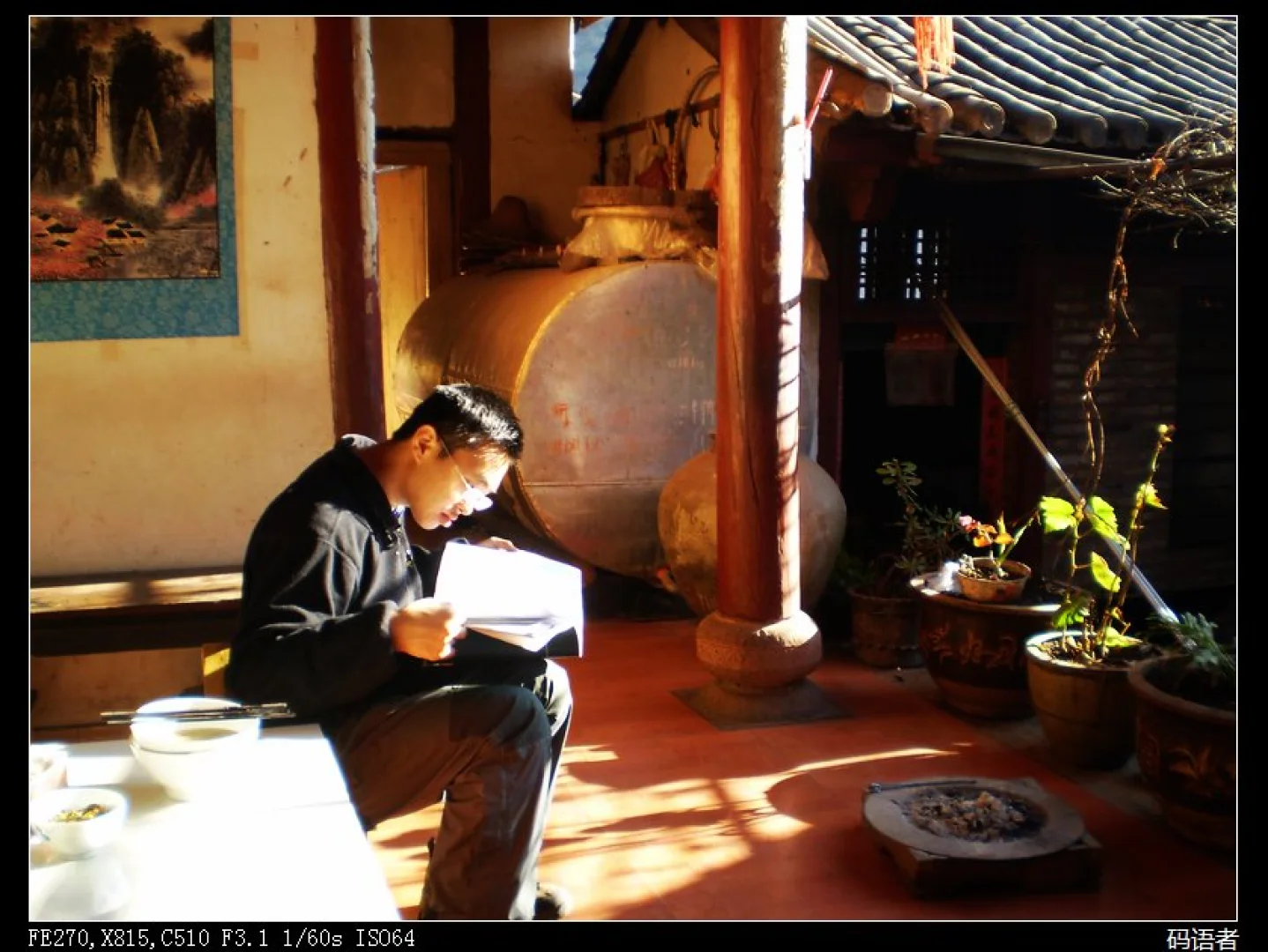
We chose the Ancient Well Inn (Gujing Kezhan), mostly because it was the first one we reached after hauling ourselves up the steep stone steps. The owner is a cultured man with a deep knowledge of the village’s history. His living room is covered in hand-drawn maps of Nuodeng, and he’ll happily point out every hidden corner worth exploring.
The accommodation is basic. Our room cost 20 yuan per person per night. The toilet, however, was an adventure. It shared space with the horse stable. At night, with no light, I heard rustling and assumed someone was there. I froze. Then a horse snorted. I laughed nervously and made my escape.
If you prefer modern plumbing, look for the guesthouse near the first “Big Green Tree”—a landmark everyone in the village knows. That one has a flush toilet and offers medicinal tea to guests.
Eating: The Legendary Ham
You can’t talk about Nuodeng without talking about the ham. Every family in the village makes it. Every meal features it. And once you’ve tasted it, you’ll never look at supermarket ham the same way again.
The process is simple, but time-consuming. The pigs are raised locally, fed on corn and kitchen scraps. The legs are salted and hung to air-dry for one to two years. Not months. Years. The result is a deep, savory, almost nutty flavor—nothing like the mass-produced, chemically treated ham you find in cities.
We asked our host to cook some for us. She sliced it thin, steamed it, and served it with rice and vegetables. It was extraordinary. At 40 yuan per jin (about half a kilogram), we bought two jin and ate it over two days. It reheated beautifully.
They also make a sausage called doufu chang (a blend of tofu and pig’s blood stuffed into casings). It sounds unusual, but it’s delicious. Try it.
The People: Warmth Without Expectation
Nuodeng’s greatest treasure isn’t its architecture or its ham. It’s the people.
During our two-day stay, we were the only tourists in the village. Yet no one tried to sell us anything. No one pressured us. When we stopped to admire a doorway, an elderly woman invited us inside to see her family’s collection of salt-weighing tools—tiny brass scales used centuries ago. When we wandered near a wedding celebration, we were pulled into the feast and offered bowls of local wine.
One afternoon, we walked to the nearby Fragrant Mountain (Xiangshan). It’s a bit of a hike, and the path leads past a few houses. Be warned: the dogs there take their guarding duties seriously. We ended up sprinting across a hillside, laughing and out of breath, while a pack of enthusiastic mutts chased us. It was terrifying and wonderful in equal measure.
Practical Tips for the Modern Traveler
- Costs at a glance: Dali to Yunlong bus: 40 yuan. Yunlong to Nuodeng tricycle: 20 yuan. Accommodation: 20 yuan per person. Ham: 40 yuan per jin (about half a kilogram). Viewpoint round trip: 50 yuan. No entrance fees anywhere.
- What to bring: A flashlight (for nighttime toilet visits), comfortable walking shoes, and an open mind.
- Best time to visit: Spring and autumn offer mild weather. Summer can be rainy. Winter is cold but quiet.
- Respect the rhythm: This is not a place for late nights or loud parties. The village sleeps early. So should you.
Final Thoughts: Go Now
Nuodeng is at a crossroads. It’s still authentic, still unspoiled, still welcoming. But that won’t last forever. As word spreads—and it will—the tricycle drivers will become more expensive, the guesthouses will add rooms, and the quiet will be replaced by the hum of tour groups.
For now, though, it remains a place where you can walk through a thousand years of history, eat ham that took two years to cure, and fall asleep to the sound of wind moving through ancient trees. It’s a place that asks nothing of you but your presence. And in return, it offers something priceless: a reminder that the best things in life are not made, marketed, or optimized—they’re simply lived.
You should also read:
Complete Guide to Fuxian Lake: A Yunnan Hidden Gem I've Visited Three Times – Ask Me Anything!
Complete Guide to Fuxian Lake: A Yunnan Hidden Gem I've Visited Three Times – Ask Me Anything! Why Fuxian Lake? If you ask me which place in China is worth visiting again and again, my answer isn't Lijiang or Dali – it's Fuxian Lake. In…
Continue reading...
The Call of the Snow Mountains: Discovering Another Self in Yunnan
The Call of the Snow Mountains: Discovering Another Self in Yunnan Prologue: Quitting My Job Wasn't an Escape—It Was a Search "You've lost your mind! You quit your job just to travel?" I've heard that line more times than I can count. Every time, I'd…
Continue reading...
Dali Shuanglang: Meeting Your Laziest Self in the Slow Time by Erhai Lake
Dali Shuanglang: Meeting Your Laziest Self in the Slow Time by Erhai Lake Prologue: A Name, A Journey Some places, just by hearing their name, make your heart yearn. Shuanglang is like that for me. I can't remember when I first heard the name "Shuanglang."…
Continue reading...