Beyond the Clouds: Heading West to Dali – A Self-Drive Journey Through Lijiang, Shuanglang, Xizhou, and Dali
Beyond the Clouds: Heading West to Dali – A Self-Drive Journey Through Lijiang, Shuanglang, Xizhou, and Dali
Foreword: Why Do We Always Want to Escape, and Yet Always Want to Go Back?
Have you ever had that moment? Sitting in your office, staring at the gray sky outside the window, when suddenly a memory flashes back—a sky so impossibly blue from some past trip—and your heart skips a beat. Travel is like an addiction. You know full well that when you return, a mountain of work and chores will be waiting. Yet every time you pack your bags, your heart still leaps with excitement.
During the 2015 Chinese New Year, my family of three did something "crazy": instead of eating the traditional reunion dinner at home, we got in the car and drove west—all the way to Yunnan. Starting from Chengdu, we passed through Xichang and Panzhihua, then on to Lijiang and Dali, before looping back through Chuxiong. The entire trip lasted nine days, covering over 2,000 kilometers of self-driving. It was my third time visiting Yunnan, but the first time I truly felt the charm of "wind, flowers, snow, and moonlight" — the poetic essence of the Dali region.
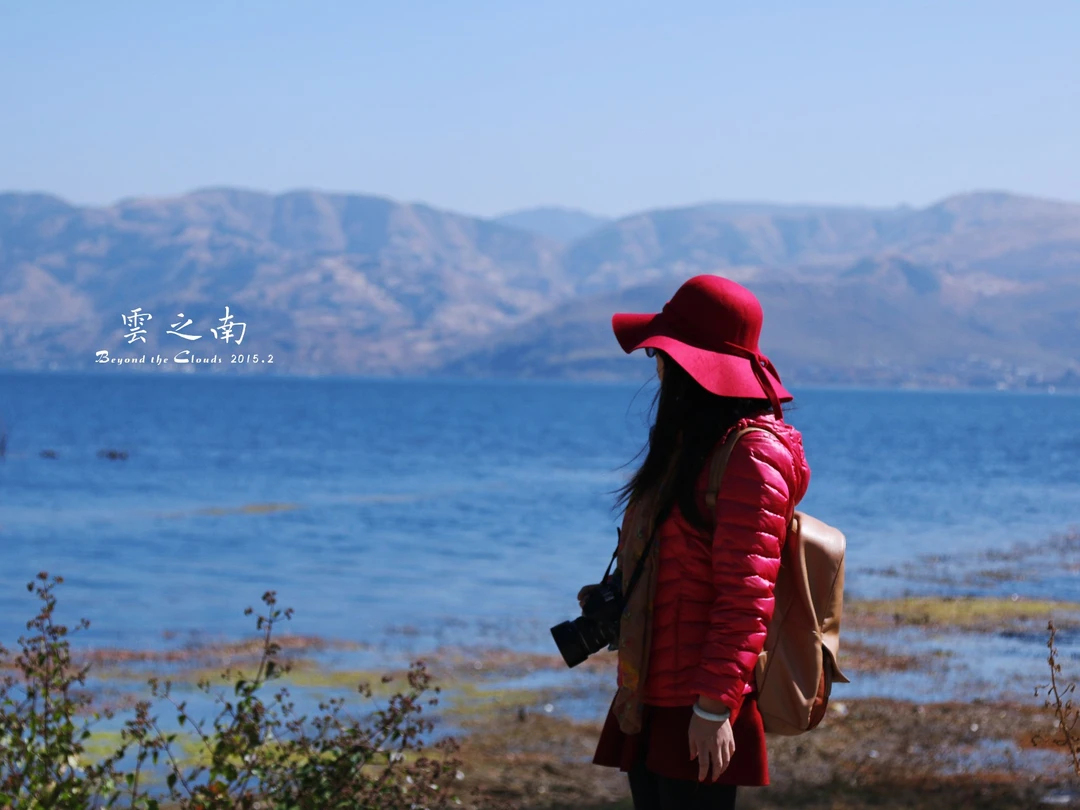
To be honest, I was hesitant before we set off. I had been to Yunnan three times before—once right after high school graduation with classmates to Lijiang, once in my sophomore year when our whole class went to Kunming, Dali, and Tengchong for a sketching trip, and once when I represented my university at an international exchange camp in Qujing for half a month. Each time, it was a rushed visit. I had never even properly seen what Erhai Lake looked like. But when my dad suggested a self-drive tour around the lake, I felt that familiar pull again. Maybe it's just like that song says: "Since you're not happy, and you don't like it here, why not head west to Dali?"
Preparation: 5 Things You Must Know Before You Go
1. Documents and Gear

Your ID card, student ID (if you have one), and driver's license—these three are essential. The UV rays in Yunnan are no joke. Even during Chinese New Year, the daytime sun is so intense it can leave you squinting. Sunglasses, a hat, and sunscreen are non-negotiable. I made a mistake this time: thinking Yunnan would be warm, I packed dresses and short sleeves. I ended up wrapped in a down jacket the whole trip, shivering from the cold.
2. Accommodation Booking: Book Shuanglang 1–2 Months in Advance
The guesthouses in Shuanglang are notoriously hard to book. If you're planning to stay in a lake-view room, I recommend booking at least one to two months in advance. The general environment in Shuanglang is actually pretty average—construction is everywhere, the roads are narrow, and traffic jams can drive you crazy. But the small, curated environments inside the guesthouses are genuinely exquisite, especially for watching the sunset over Erhai Lake. The location is unbeatable.
3. Xizhou: An Underrated Gem
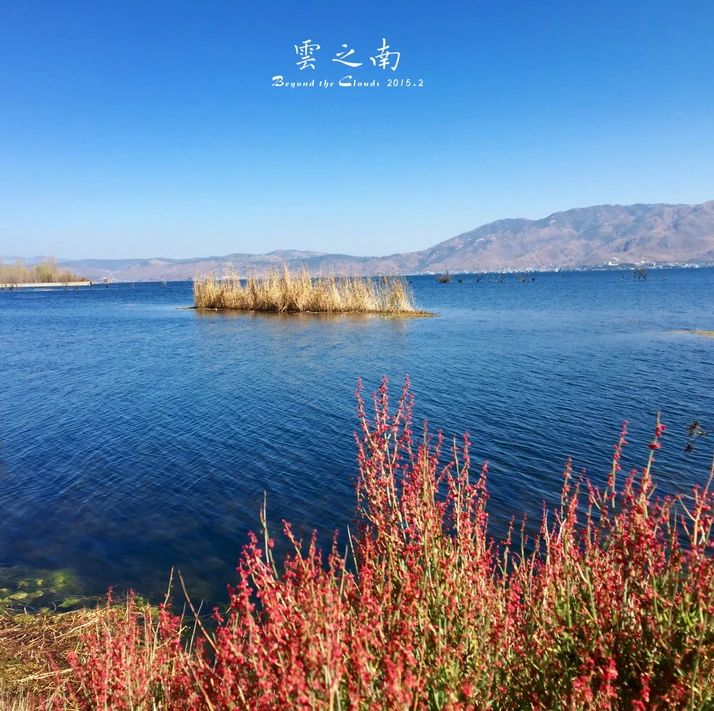
If you appreciate cultural charm, I strongly recommend Xizhou Ancient Town. It has far fewer tourists than Shuanglang, yet offers a purer Bai ethnic experience. Xizhou also has lake-view rooms, and you can watch the sunrise over Erhai here—Shuanglang for sunset, Xizhou for sunrise—a perfect combination.
4. The Lake Circuit Route: Clockwise Is the Way to Go
If you're driving around Erhai Lake, I suggest going clockwise. We ended up going counterclockwise due to our accommodation, and we spent the whole trip facing oncoming traffic. It was a much less enjoyable experience.
5. Itinerary (9 Days)
- February 16: Chengdu → Hanyuan (Ya'an–Xichang Expressway)
- February 17: Hanyuan → Panzhihua (Ya'an–Xichang Expressway)
- February 18: Panzhihua → Lijiang (Provincial Road)
- February 19: Lijiang → Jade Dragon Snow Mountain
- February 20: Lijiang → Shuanglang
- February 21: Shuanglang → Butterfly Spring → Xizhou → Dali Old Town → Haidong → Wase (Lake Circuit Self-Drive)
- February 22: Xizhou → Dali Old Town → Mouding County
- February 23: Mouding → Yuanmou → Xichang
- February 24: Xichang → Chengdu
Day 1: Departing Chengdu, Encountering the Spring of Jiuxiang
An Unexpected Surprise on the Ya'an–Xichang Expressway
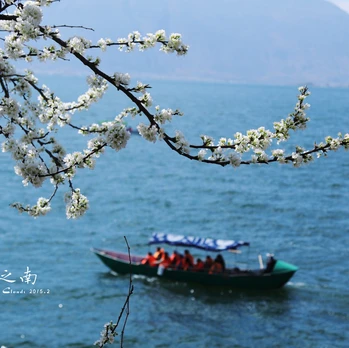
Setting out from Chengdu along the Ya'an–Xichang Expressway, the scenery outside the window gradually shifted from gray-white to tender green. By the villages along the road in Sichuan, vast fields of rapeseed flowers were already in bloom—it seemed spring had come early this year.
When we got near Hanyuan, we took a detour to Jiuxiang. This place left a deep impression on me: after passing through a series of mountain tunnels, the view suddenly opened up. A basin of lush green grass stretched before us, with thousands of homes scattered in an orderly, picturesque way. The ancient strategist Zhuge Liang once sighed: "If the whole world has a poor harvest, this place still reaps half; if the whole world is in chaos, this place remains worry-free." Standing there, you understand why he said that—it truly is a secluded, fertile land untouched by worldly troubles.
Terraced Fields and Withered Trees: The Prelude to Entering Yunnan
As we entered Yunnan, terraced fields began to appear along the way. Although there were no golden rapeseed flowers in winter, the graceful curves of the terraces already made us look forward to spring in Luoping. As we neared Lijiang, the trees lining the road were covered in withered leaves. Against the backdrop of a brilliant blue sky and white clouds, they had a kind of stark, desolate beauty. In the distance, the tip of Jade Dragon Snow Mountain peeked out from behind the ridge, as if greeting us.
Day 2: Lijiang – New Year's Eve in the Ancient Town
Lijiang at Dusk: Quiet Yet Lively
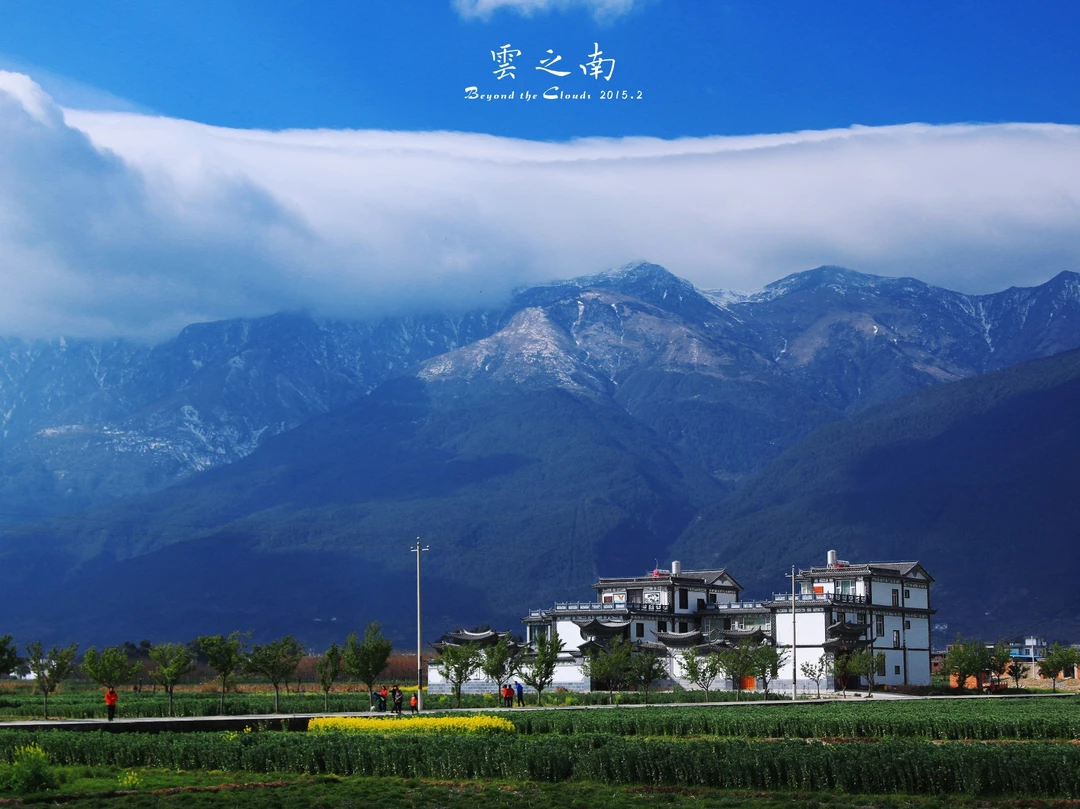
We arrived in Lijiang in the evening. We stayed at the Zhenmei Guesthouse on Lion Hill, which offered an excellent vantage point—overlooking the entire Lijiang Ancient Town. After dropping off our luggage, we couldn't wait to climb up to the viewing platform.
Under the twilight sky, the ancient town was both quiet and lively. My mom sat on the platform, flipping through photos on her camera, and I secretly snapped a picture of her back. In the distance, the lights of Lijiang's new town began to flicker on, and the sunset painted the sky in brilliant colors. It was New Year's Eve, and for the first time, our family was spending it away from home. I felt a little thrill.
Night Stroll Through the Ancient Town: Wishing Plaques and Floating Lanterns
After dinner, we went to the most famous spot in the ancient town—the Big Waterwheel. The area was packed with people; getting a photo with the waterwheel was nearly impossible. But if you avoided the crowds and ducked into the narrow alleys, you'd find another side of Lijiang—wishing plaques glittering in the night, someone releasing floating lanterns in a corner of Sifang Street (the Square Market), and the pictographic script on the walls telling ancient stories. The guesthouse owner even gave us a bottle of fruit wine to celebrate the New Year. It was probably the most unique New Year's Eve I've ever had.
Day 3: Jade Dragon Snow Mountain – The Sacred Mountain of the Naxi People
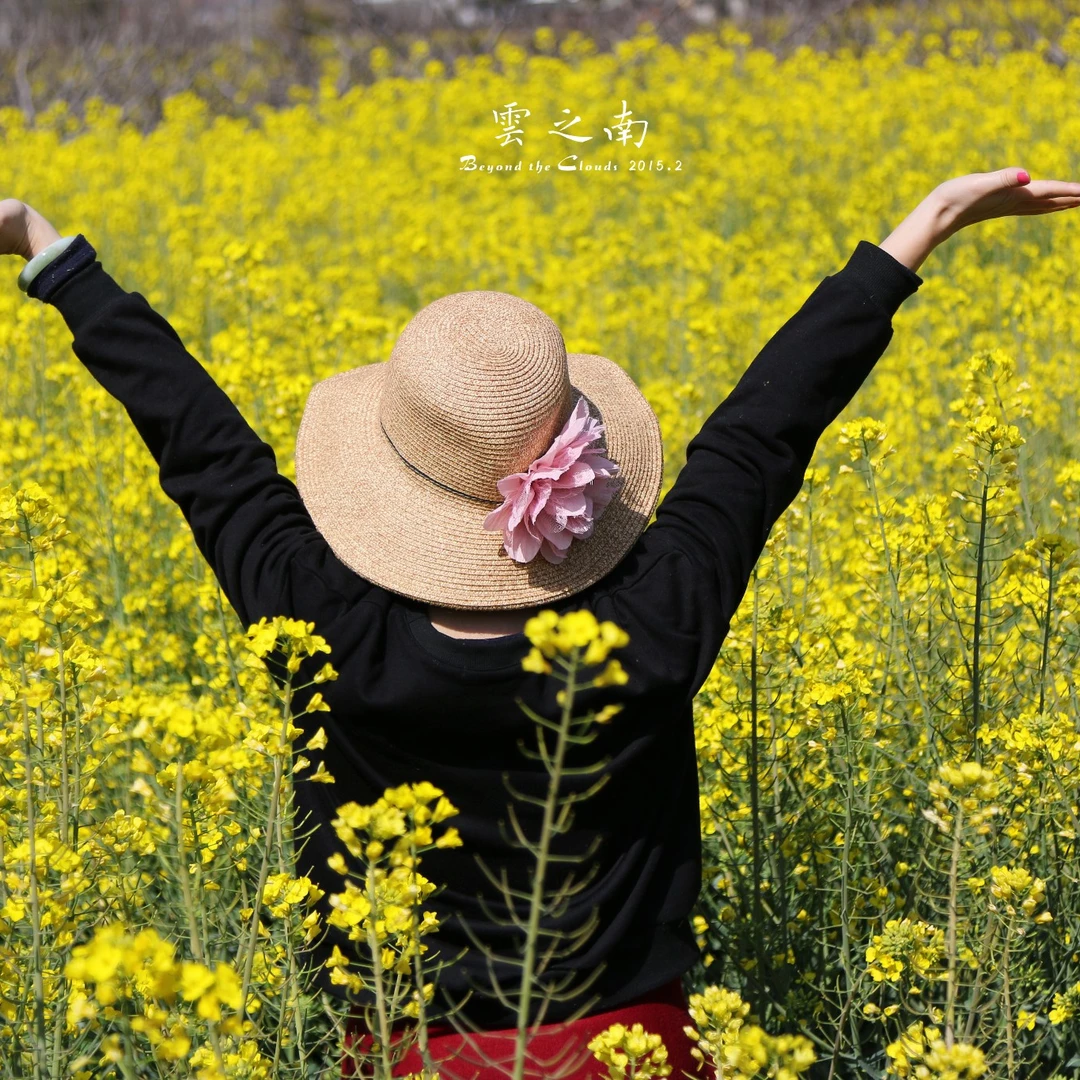
Lijiang in the Morning: From Heavy Makeup to Natural Beauty
On the first day of the Lunar New Year, the early morning sunlight bathed the ancient town. Standing on the guesthouse's viewing platform, leaning on the railing, the vast Sifang Street looked like an ink-wash painting in shades of blue and black. If Lijiang at night is a girl in heavy makeup, Lijiang in the morning is a fresh-faced forest nymph. I prefer this version of Lijiang—peaceful, serene, as if it had returned to its most original form.
Jade Dragon Snow Mountain: Silver Rock
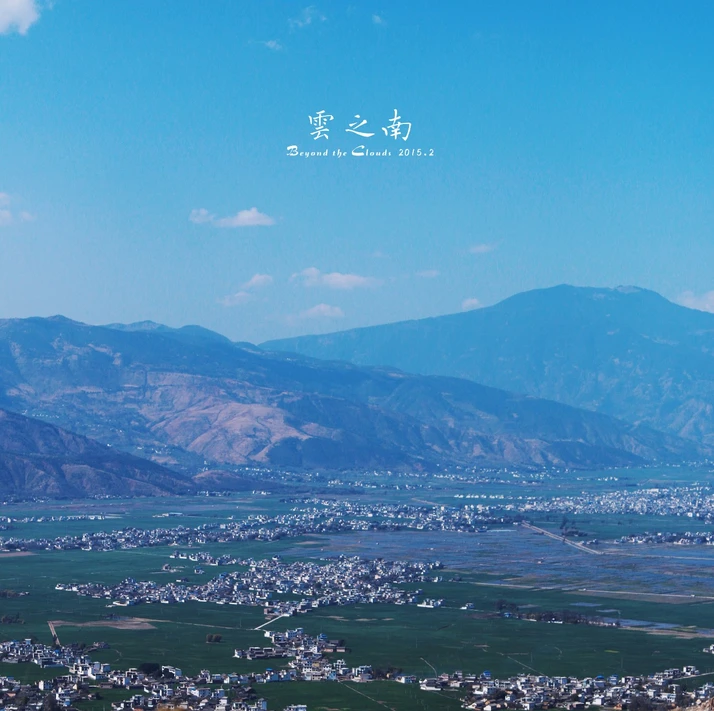
In the Naxi language, Jade Dragon Snow Mountain is called "Oulu," meaning "silver rock." Its thirteen peaks stretch endlessly, like a giant dragon soaring and dancing. From afar, you can see this sacred mountain of the Naxi people.
We visited Spruce Meadow and Blue Moon Valley. Because of the strong wind, the main cable car to the summit wasn't operating. My dad said he had come twice and still hadn't managed to ride the cable car—it really seems to be a matter of luck.
Blue Moon Valley: A Blue Moon at the Foot of the Snow Mountain
The water in Blue Moon Valley is blue. On a sunny day, it's a shade of blue that intoxicates the heart. The valley is crescent-shaped, and from a distance, it looks like a blue moon embedded at the foot of Jade Dragon Snow Mountain. The locals told us that washing your hands and face in the water can wash away bad luck, but the water contains copper ions, so it's not drinkable.
Spruce Meadow: A Place of Lovers' Suicide and Wishing for Blessings
Spruce Meadow, at an altitude of 3,240 meters, is a vast grassland hidden within a primeval spruce forest. In the Naxi language, it's called "Wulu Youcui Ge," meaning "the place of lovers' suicide in the Jade Dragon Mountain." According to legend, it's where young men and women from the mythical "Third Kingdom of the Jade Dragon" would end their lives together. Now, it has become a place for making wishes and praying for blessings. In winter, the meadow is withered and yellow, but in summer, it's covered in green grass and dotted with wildflowers—unbelievably beautiful. The ponies, raised on meltwater from the snow-capped peaks, run and play on the grass, occasionally sticking out their tongues at the camera. They're adorable.
Day 4: Shuanglang – A Mix of Disappointment and Surprise
First Impression of Shuanglang: Traffic That Makes You Question Your Life
Driving from Lijiang to Shuanglang, we got stuck in a dead stop as soon as we got off the expressway. The entire town of Shuanglang was noisy and chaotic, with garbage piled up on the roadside and construction sites everywhere. It was hard to connect the scene before me with those Instagram-worthy photos. My advice: visit Shuanglang in the off-season.
Boat Ride and Yuji Island: Getting Away from the Crowds
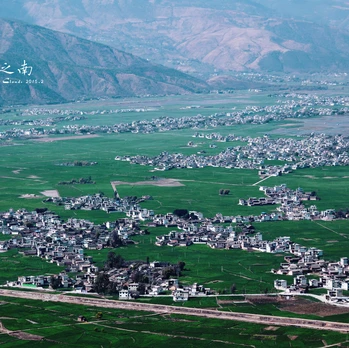
We opted for a boat ride, which circled Fengqing Island (Scenic Island) before letting us disembark for free. It felt so good to get away from the crowds. The architecture along the lakeshore was full of character. Yang Liping's Sun Palace and Moon Palace are located on Yuji Island. Although we couldn't go inside, just seeing them from a distance conveyed a sense of "detached, otherworldly" beauty.
Sunset in Shuanglang: The Most Beautiful Moment
We asked the locals where the best place to watch the sunset was, and they pointed to a viewing platform near the expressway entrance on the edge of town. We climbed up and sat on the cliff's edge, waiting for the sun to go down. As the sun gradually descended, it dipped below the Cangshan Mountains. The sky slowly darkened, and sunlight flooded the lake's surface. Fishing boats drifted lazily across the water. In that moment, I suddenly understood why so many people are willing to endure the noise and chaos of Shuanglang—for this one moment of pure tranquility.
Day 5: The Erhai Lake Circuit – The Right Way to Experience Wind, Flowers, Snow, and Moonlight
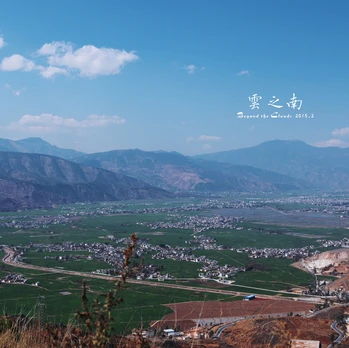
Butterfly Spring: My Parents' Youthful Memories
At 8 a.m., after watching the sunrise, we headed to Butterfly Spring. To be honest, I had read other people's travel guides saying it was just a big park and not really recommended. But my parents wanted to go—for them, the movie "Five Golden Flowers" is a memory of their youth. The water at Butterfly Spring seeps out from rock crevices and sand layers, crystal clear and bottomless, with a beautiful blue-green hue. Although it's hard to see the grand gatherings of butterflies nowadays, the flowers in the garden and the animals playing in the water still lifted our spirits.
Xizhou Ancient Town: The First Town of the Bai People
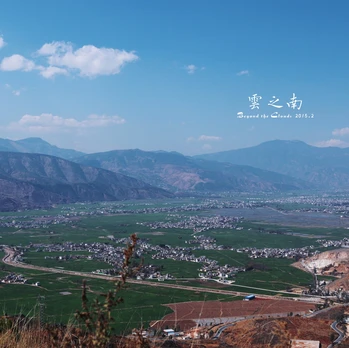
Xizhou was the biggest surprise of my trip. Located east of Erhai Lake and west of the Cangshan Mountains, it's known as the first town of the Bai people, with a history spanning over a thousand years. The ancient town preserves hundreds of traditional Bai residential buildings, from the Ming and Qing dynasties to the Republic of China era and the present day. The Yan Family Mansion, the Yang Pinxiang Residence, and the Hou Family Mansion are all worth visiting.
Xizhou's baked pastries (baba) are a must-try—fragrant, sweet, and crispy, with a rich, flaky texture. They come in sweet and savory varieties. We also took a horse-drawn carriage ride through the ancient town, weaving through the countryside paths, with Bai-style houses and blooming rapeseed flowers on both sides. Time seemed to slow down.
West Lakeside Road: Stop and Go
From Xizhou, we continued along the West Lakeside Road. This road is very narrow, and it often passes through villages. When traffic is heavy, it's easy to get stuck. My advice: when you encounter a village, detour onto the nearby provincial road. But the scenery along the way was breathtaking—fields of rapeseed flowers at the foot of the Cangshan Mountains, red flowers blooming by the lakeshore, and an adorable cow leisurely grazing.
Xiaoputuo Island: A Tiny Island
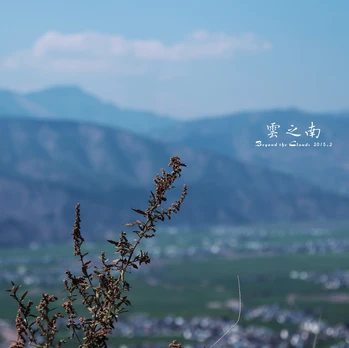
The East Lakeside Road was in much better condition than the west road—wider, with dedicated bike lanes. We drove along the edge of Erhai Lake and spotted Xiaoputuo Island—a tiny island with a Guanyin Pavilion built on it. According to legend, when Guanyin (the Goddess of Mercy) created the Dali basin, she dropped a giant seal that calmed the sea in this spot, and it became the island.
Final Thoughts: Next Time, More Wind, Flowers, Snow, and Moonlight
A nine-day trip—not too long, not too short. Starting from Chengdu, heading west through mountains, terraced fields, ancient towns, and lakes, and finally returning to where we began. This trip taught me one thing: Yunnan isn't a place for "checking off" sights; it's a place for "feeling." The wind, the sunlight, the smells, and the emotions that no photo can capture—that's the true meaning of travel.
If you ask me what's the most worthwhile thing to do in Dali, my answer is: drive around the lake. Pick a day with good weather, start from Shuanglang, and circle Erhai Lake clockwise. Whenever you find a spot you like, stop. Sit by the lake, feel the breeze, watch the clouds, and daydream. No need to rush, no need to check off attractions. Just slowly, slowly, let yourself melt into this world of wind, flowers, snow, and moonlight.
Someday, the memories will fade. But the little moments captured in words and photos will bring back the beauty of the journey. Just like now, as I write these words, I feel as if I'm back on that sunny afternoon, sitting by Erhai Lake, watching the shimmering water, with a sense of peace in my heart.
Next time I come to Dali, I'll continue the wind, flowers, snow, and moonlight.
— The End —
Quick Practical Tips
- Best Season: Spring and autumn (March–May, September–November). Avoid Chinese New Year and National Day holidays.
- Must-Pack Items: Sunglasses, hat, sunscreen, down jacket (large temperature difference between morning and evening).
- Accommodation Advice: Shuanglang for sunset, Xizhou for sunrise. Book Shuanglang 1–2 months in advance.
- Lake Circuit Route: Go clockwise for better road conditions and a better experience.
- Food Recommendations: Xizhou baked pastries (Xizhou baba, crispy and flaky, sweet or savory), Dali sour-spicy fish (Dali suan la yu), grilled milk fan (kao ru san, a local cheese snack).
- Transport Tips: The West Lakeside Road is narrow and prone to traffic jams in villages. Be flexible and switch to provincial roads when needed.
You should also read:

God’s Abandoned Palette: A Self-Drive Journey Through Yunnan’s Dongchuan Red Land
God’s Abandoned Palette: A Self-Drive Journey Through Yunnan’s Dongchuan Red Land Travel has never been about reaching some distant geographic coordinate. It’s about encountering, along the way, the version of yourself buried beneath the rubble of daily routine. During this May Day holiday, I finally…
Continue reading...
Two Girls' Graduation Trip: Dali and Shuanglang – A Poetic Farewell to Mountains and Sea
Two Girls' Graduation Trip: Dali and Shuanglang – A Poetic Farewell to Mountains and Sea Preface: Catching the Tail of Youth, Heading South During our senior year of college, my roommate and I – two girls studying in Beijing – decided to bid farewell to…
Continue reading...
Body in Hell, Heart in Heaven: A Pilgrimage Through Tiger Leaping Gorge — A Dialogue Between Heaven and Earth
Body in Hell, Heart in Heaven: A Pilgrimage Through Tiger Leaping Gorge — A Dialogue Between Heaven and Earth Introduction: When the Gorge Splits Open Beneath Your Feet Some say Tiger Leaping Gorge is the closest place on Earth to the border between "hell" and…
Continue reading...