Beyond the Horizon: Chasing Light and Faith Through the Mountains of Shangri-La
Beyond the Horizon: Chasing Light and Faith Through the Mountains of Shangri-La
There are places that exist not just on maps, but in the marrow of our dreams. Shangri-La is one of them. For decades, the very name has conjured images of mist-shrouded peaks, serene monasteries, and a way of life untouched by the frantic pace of the modern world. It’s the Eden we all secretly hope is real.
In late October 2017, I set out with a friend to find that Eden. Over eight days, we didn’t just see the postcard-perfect landscapes—snow-dusted mountains, hidden valleys, and crystalline lakes. We also encountered something far more elusive: a warmth in the people, a quiet contentment in their eyes, and a faith so tangible it seemed to shimmer in the air.
This is not a travelogue of checked boxes. It is a story of patience, of light that arrives only after long darkness, and of the realization that the real Shangri-La isn’t a place you find—it’s a place you carry with you.
The Moonlit City: First Impressions of Dukezong
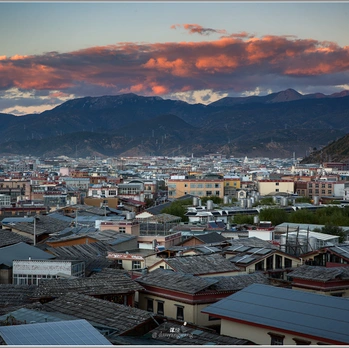
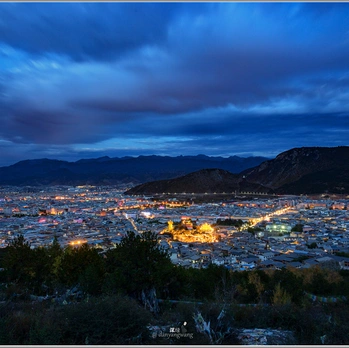
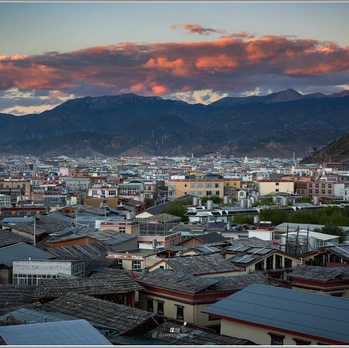
Our journey began in Dukezong Old Town, a name that translates to “moonlit city” in Tibetan. As we climbed the ancient stone paths of the Tea Horse Road, we made our way to the small, unassuming Baiji Temple perched atop the hill. It’s not a tourist hotspot, but from here, the entire old town sprawled beneath us like a living tapestry.

Below, at the foot of the hill, lies Turtle Mountain Park. There, the Great Buddha Temple and the world’s largest prayer wheel gleam under the night sky, their golden surfaces radiating an almost intimidating sanctity.
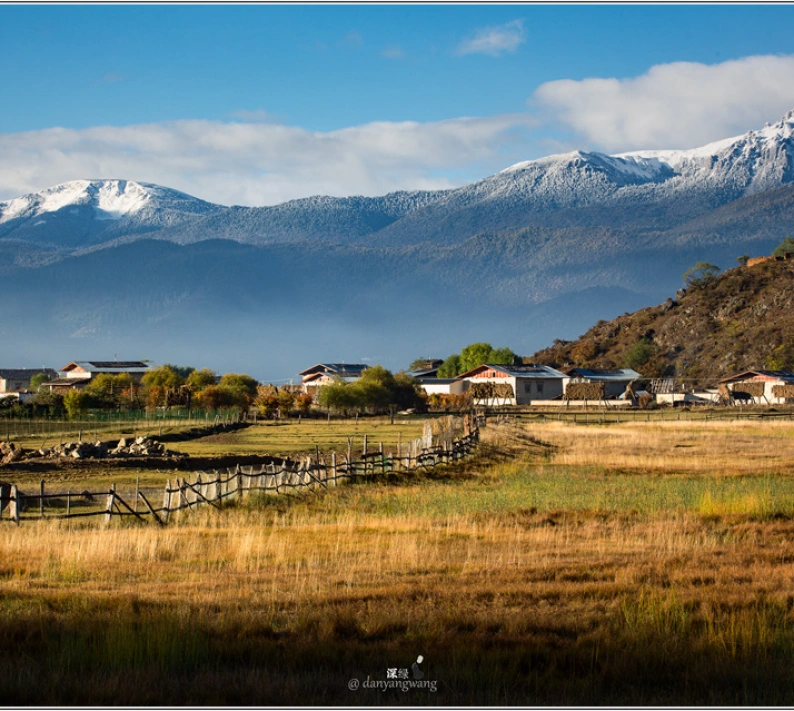
Dukezong is a town of two halves. In 2014, a devastating fire consumed two-thirds of its historic core. The rebuilt sections, while faithful to the architectural style, carry a different energy—a blend of commerce and artistry not unlike Lijiang or the Miao villages in Guizhou. But the soul of the town lives in the surviving third. I found myself drawn to the weathered wooden doors, the hand-carved beams, and the ancient stone foundations that no reconstruction can replicate. These are irreplaceable symbols of history, and I lingered there, camera in hand, trying to capture their quiet dignity.
As night fell, the square came alive. Locals and travelers alike gathered for the nightly dance—a simple, infectious Tibetan folk routine. I’ve seen plenty of square dancing across China, but this was different. The locals, draped in traditional chubas (Tibetan woolen robes), moved with a joy that was unforced. Their faces, weathered by the highland sun, glowed with genuine happiness. It was in that moment I truly felt I had arrived in Tibet.
We stayed at the Lotus Bieyuan Inn, a protected 200-year-old Tibetan residence. The owner, a Tibetan man named Zhaxi, spoke impeccable Mandarin and greeted us with a warmth that felt like family. He picked us up from the airport, briefed us on altitude precautions, and even upgraded our room for free. In a world of transactional hospitality, his kindness was a gift.
The Pilgrim’s Road: Journey to Meili Snow Mountain
The weather forecast promised one clear day followed by rain. We didn’t hesitate. The next morning, we set out for Feilai Temple (Feilai Si), the gateway to Meili Snow Mountain.
We hired a driver named Zhaxi Dingzhu, a cheerful Tibetan man with an easy smile. I had met him briefly at the airport, and his lack of pushiness had left a good impression. When we needed a car, he was the first person I called.
At 6 AM, the temperature hovered near freezing. We bundled up and hit the road. Our first stop was a hillside overlooking Sumtseling Monastery (Songzanlin), the perfect spot for a panoramic shot. But Zhaxi had another passenger to pick up—a young woman named Yang Yi from Guangzhou, who worked in sales and was making her third trip to Shangri-La. She was quiet, thoughtful, and seemed to carry her own reasons for returning.
The drive to Feilai Temple took us through the Jinsha River Valley, where the river carved a path between Yunnan and Sichuan. At the bottom of the U-shaped route lay Benzilan Town, where we stopped for lunch. Outside a small restaurant, a young butcher was preparing a goat—inflating it with air to make shaving easier, then torching the skin until golden. The aroma was intoxicating. We settled for a modest three-dish meal, our wallets sighing with relief.
As we climbed higher, the landscape shifted. Barren hills gave way to richer vegetation, splashed with autumn colors. And then, I saw it.
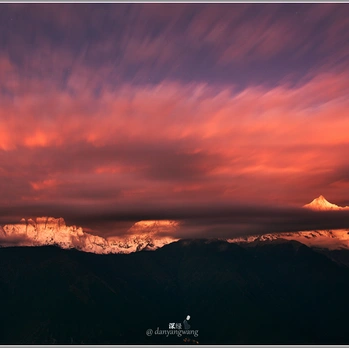
“Snow mountain,” I whispered, nudging my sleeping friend.
My heart raced. Baima Snow Mountain stood before us, stark and magnificent. I had dreamed of this moment countless times, and now it felt surreal. We pulled over, jumped out, and stood in awe. We laughed, we shouted, we let the cold air fill our lungs. It was as if we had left our souls behind on that mountain.
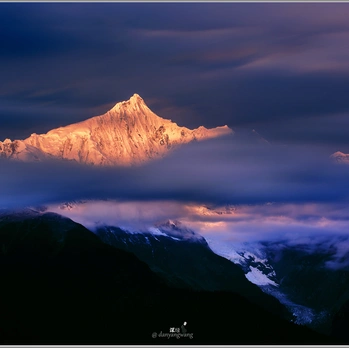
By late afternoon, we arrived at Feilai Temple. The sky was clear, and the thirteen peaks of Meili stretched across the horizon like a row of silent guardians. Strangely, I felt calm. Perhaps I had already given my “first kiss” to Baima. Or perhaps I had seen Kawa Karpo—the highest peak—so many times in my dreams that its reality felt like déjà vu.
We scouted for photo spots but settled on the hotel rooftop. As the sun sank, the wind picked up. I wrapped myself in a down jacket and a fur hat, watching the light fade. Then came the stars. One by one, they emerged until the entire sky was a canopy of diamonds. The Milky Way arched over the snow peaks, illuminating them with a silver glow. We stood there, silent, letting the universe wash over us.
That night, I dreamed of the golden sunrise I had so often imagined.
The Golden Moment: Witnessing the Sun’s Blessing
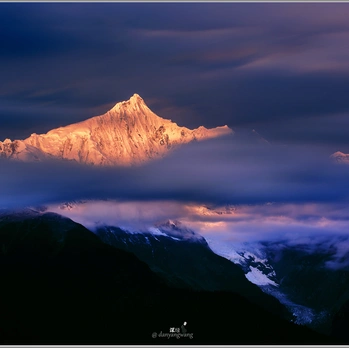
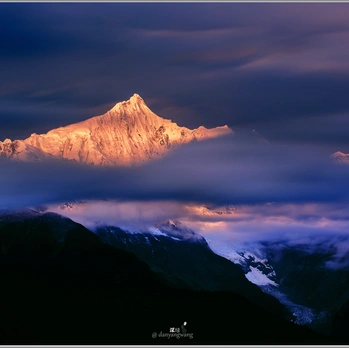
At 7:28 AM, the miracle began.
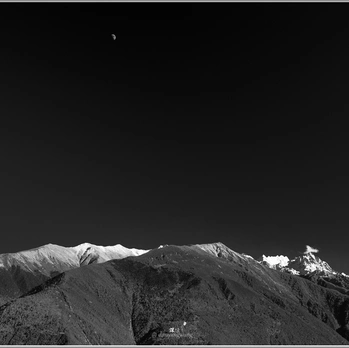
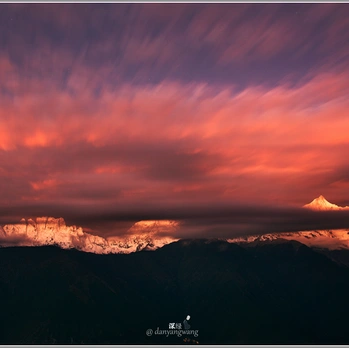
A patch of cloud above the mountain turned warm red. Then another. Then the tip of Kawa Karpo ignited like a blade of fire. A collective gasp rose from the few onlookers. Peak after peak caught the light, turning from silver to gold. The sight was breathtaking, humbling, and utterly divine.
Feilai Temple itself is modest—a small hall and a courtyard. Legend says it was built after the building materials mysteriously “flew” to the current site overnight, a sign from the gods. Whether you believe the story or not, the place carries an unmistakable peace.
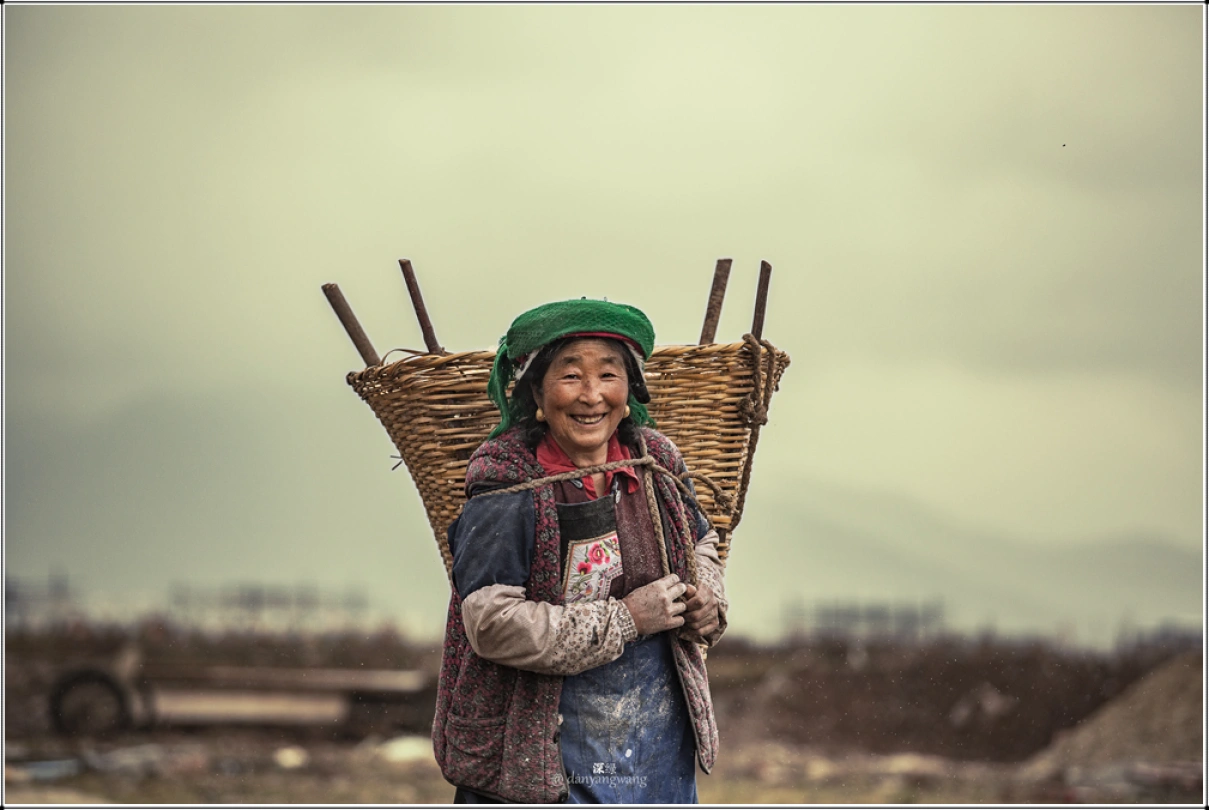
I met a Tibetan woman carrying a bundle of thorny branches. She explained they were for fencing, to keep wild boars and rabbits from the fields. She was shy about her appearance, but when I showed her the photo, she beamed. These small interactions—learning about someone’s life, sharing a laugh—made the journey meaningful.
On the drive back, Zhaxi played Tibetan songs by Genpa, a local singer. His voice was raw and full of longing. I later downloaded “Feng Ma” (Wind Horse) as the soundtrack for this trip. It still brings me back to those winding roads and open skies.
The Monastery of Light: Four Days of Waiting at Songzanlin
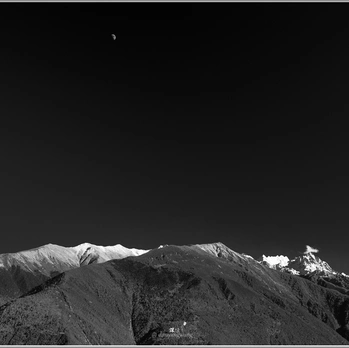
If Meili tested our patience for a single sunrise, Songzanlin Monastery tested it for four.
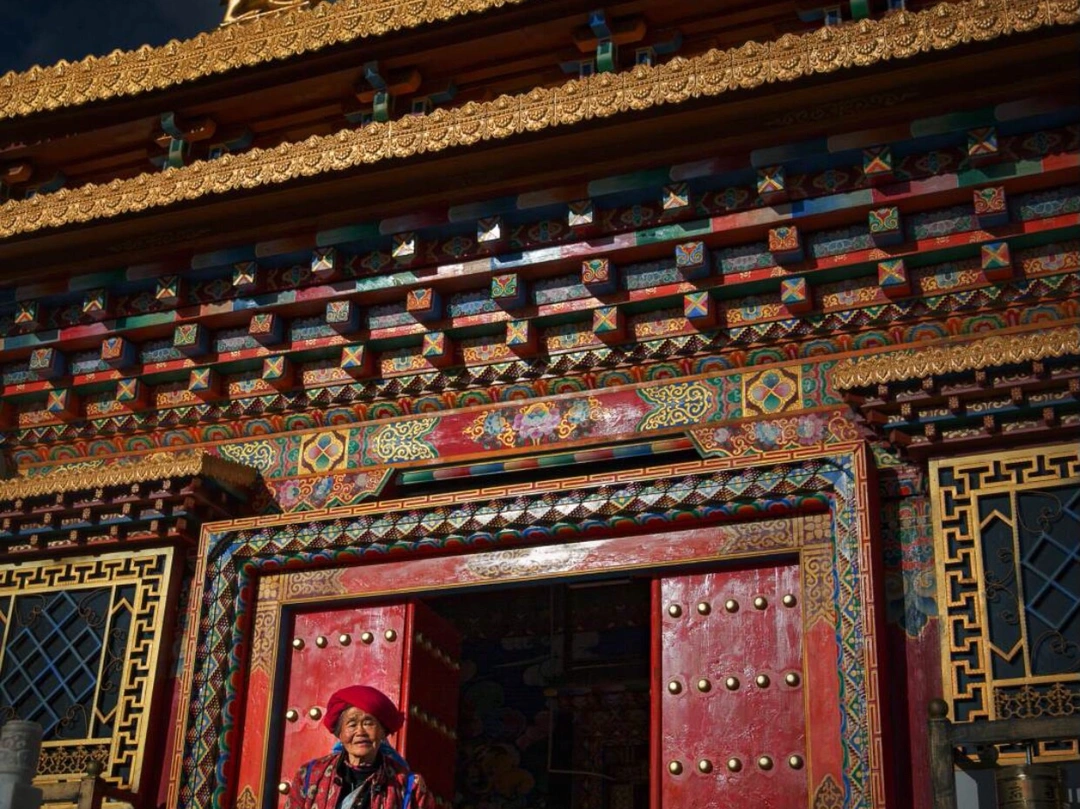
I had first seen this monastery in a winning photo from a Chinese architecture competition. It looked like a celestial palace—colorful temples clinging to a hillside, shrouded in mist and golden light. I knew I had to see it for myself.
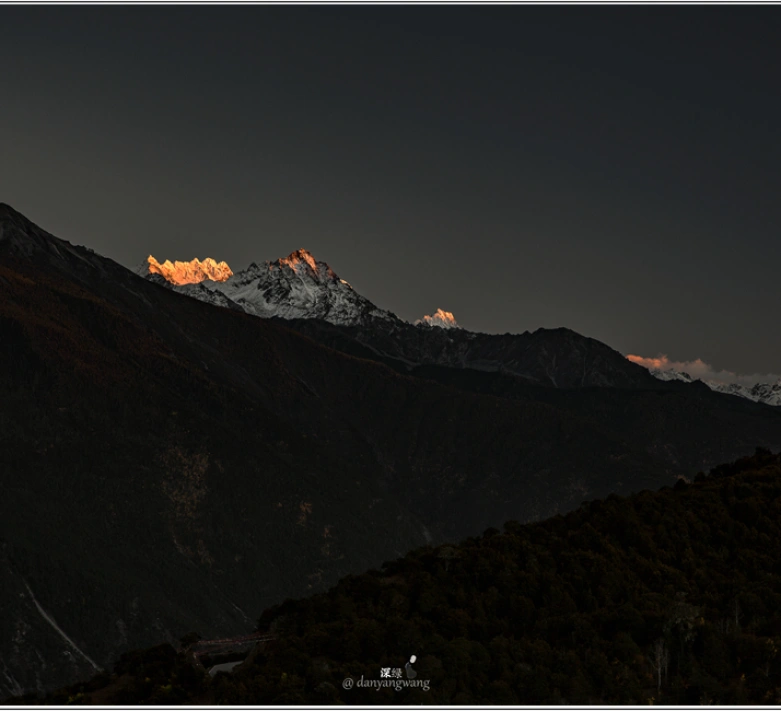
But the weather gods were fickle. Day one: overcast. Day two: clouds rolled in just before dawn. Day three: a bizarre phenomenon of rain on one side of the mountain and sun on the other. By the fourth day, we were running out of time. We woke at 5:30 AM, shivering in sub-zero temperatures, and drove to our spot.
And then, it happened. The clouds parted. The sun broke through. The golden light hit the monastery, and I felt a jolt of electricity. This was it. This was the image I had carried in my mind for years.
But it wasn’t just the architecture that moved me. It was the faith. Inside the main hall, monks chanted in low, resonant tones. The smell of butter lamps, the gleam of gold statues, the murmured prayers—all of it created an atmosphere so thick with devotion that I felt like an intruder. I watched a pilgrim prostrate herself on the cold stone floor, rising and falling in a rhythm as old as the hills themselves. She wore a leather apron stained black from years of such journeys. Her hands, calloused and cracked, were wrapped in wooden blocks. She smiled at me—a smile that held no pain, only peace.
I realized then that I had been chasing a photograph. But the monks and pilgrims were chasing something eternal.
The Hidden Kingdom: A Day in Shika Snow Mountain
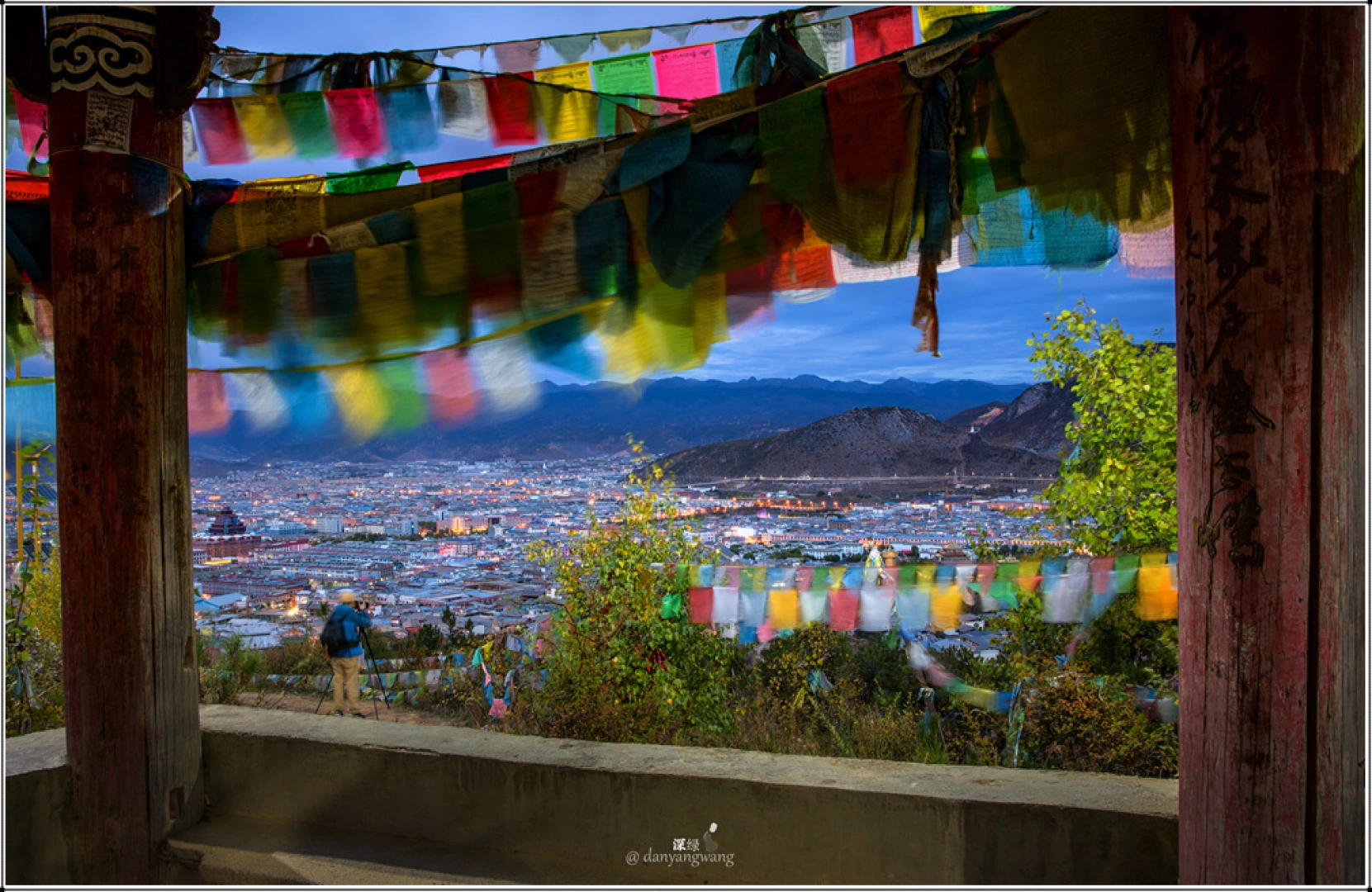
On our last full day, we ventured to Shika Snow Mountain (Shika Xueshan), a lesser-known gem often overshadowed by Meili. The cable car lifted us through layers of cloud until we emerged into a world of white. The silence was absolute. No wind, no birds, no human sound—just the crunch of snow underfoot.
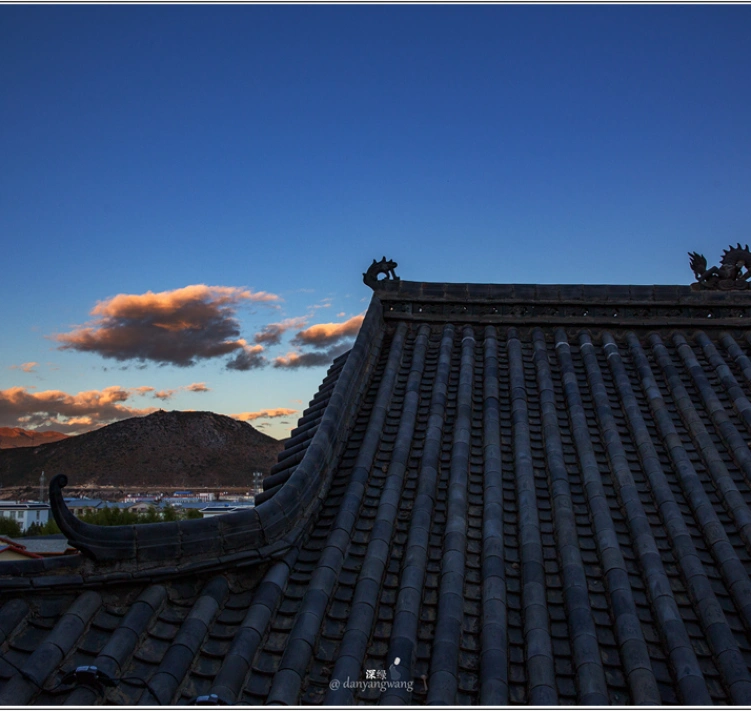
We hiked to a small lake, frozen solid, its surface reflecting the pale sky. A Tibetan family was having a picnic nearby, their laughter carrying across the ice. They offered us yak meat and tsampa (roasted barley flour), which we ate with our hands, feeling clumsy and grateful.
At the summit, a cluster of prayer flags snapped in the wind. I tied one of my own, making a wish I won’t repeat here. Some prayers are meant to stay between you and the mountain.
The Journey Home: Carrying Shangri-La Within
As our flight lifted off from Diqing Shangri-La Airport, I pressed my forehead to the window. The peaks of Meili appeared one last time, faint and blue in the distance. I knew I was leaving, but I also knew I was taking something with me.
Shangri-La, I learned, is not a place you conquer with a camera. It’s a place that conquers you. It’s the patience of waiting four days for a single sunrise. It’s the kindness of a driver who becomes a friend. It’s the smile of a pilgrim who has nothing but has everything.
I still listen to “Feng Ma” sometimes. It takes me back to those winding roads, that thin, cold air, and the feeling that I was standing on the edge of the world. But more than that, it reminds me that the real Shangri-La isn’t on any map. It’s the light you carry inside—the light you find when you stop searching and start seeing.
Practical Notes for Travelers
Best Time to Visit: Late October to early November offers clear skies and autumn colors. Avoid the rainy season (June–August).
Altitude: Shangri-La sits at 3,300 meters (10,800 feet). Spend your first day resting, drink plenty of water, and consider taking acetazolamide (Diamox) if you’re prone to altitude sickness.
Getting There: Fly into Diqing Shangri-La Airport from major Chinese cities like Kunming, Chengdu, or Chongqing. Buses and private drivers are available for onward travel.
Accommodation: The Lotus Bieyuan Inn in Dukezong is highly recommended for its historic charm and warm hospitality. For Feilai Temple, book a room with a south-facing window for mountain views.
Photography Tips: A telephoto lens (70–200mm) is essential for capturing the peaks. A tripod is a must for sunrise shots. Be prepared for cold—gloves and hand warmers are lifesavers.
Respect Local Customs: Always ask permission before photographing pilgrims or monks. Dress modestly when visiting monasteries. Remove shoes before entering temple halls.
What to Pack: Layers, layers, layers. A down jacket, thermal base layers, a windproof shell, and sturdy hiking boots. Sunscreen and sunglasses are critical—the UV at high altitude is fierce.
Language: Mandarin is widely spoken, but learning a few Tibetan phrases—like “Tashi Delek” (hello/good luck)—will earn you smiles.
Budget: Expect to spend around 500–800 RMB per day ($70–$110 USD) including accommodation, meals, transport, and entrance fees. Private drivers cost about 500–800 RMB per day.
Safety: Altitude sickness is the main risk. Symptoms include headache, nausea, and dizziness. If they worsen, descend immediately. Travel insurance with medical evacuation coverage is strongly advised.
You should also read:

God’s Abandoned Palette: A Self-Drive Journey Through Yunnan’s Dongchuan Red Land
God’s Abandoned Palette: A Self-Drive Journey Through Yunnan’s Dongchuan Red Land Travel has never been about reaching some distant geographic coordinate. It’s about encountering, along the way, the version of yourself buried beneath the rubble of daily routine. During this May Day holiday, I finally…
Continue reading...
Two Girls' Graduation Trip: Dali and Shuanglang – A Poetic Farewell to Mountains and Sea
Two Girls' Graduation Trip: Dali and Shuanglang – A Poetic Farewell to Mountains and Sea Preface: Catching the Tail of Youth, Heading South During our senior year of college, my roommate and I – two girls studying in Beijing – decided to bid farewell to…
Continue reading...
Body in Hell, Heart in Heaven: A Pilgrimage Through Tiger Leaping Gorge — A Dialogue Between Heaven and Earth
Body in Hell, Heart in Heaven: A Pilgrimage Through Tiger Leaping Gorge — A Dialogue Between Heaven and Earth Introduction: When the Gorge Splits Open Beneath Your Feet Some say Tiger Leaping Gorge is the closest place on Earth to the border between "hell" and…
Continue reading...