Catching the Last Rays of 2016: A Six-Day Azure Escape to Dali Ancient Town, Erhai Lake, and Shuanglang
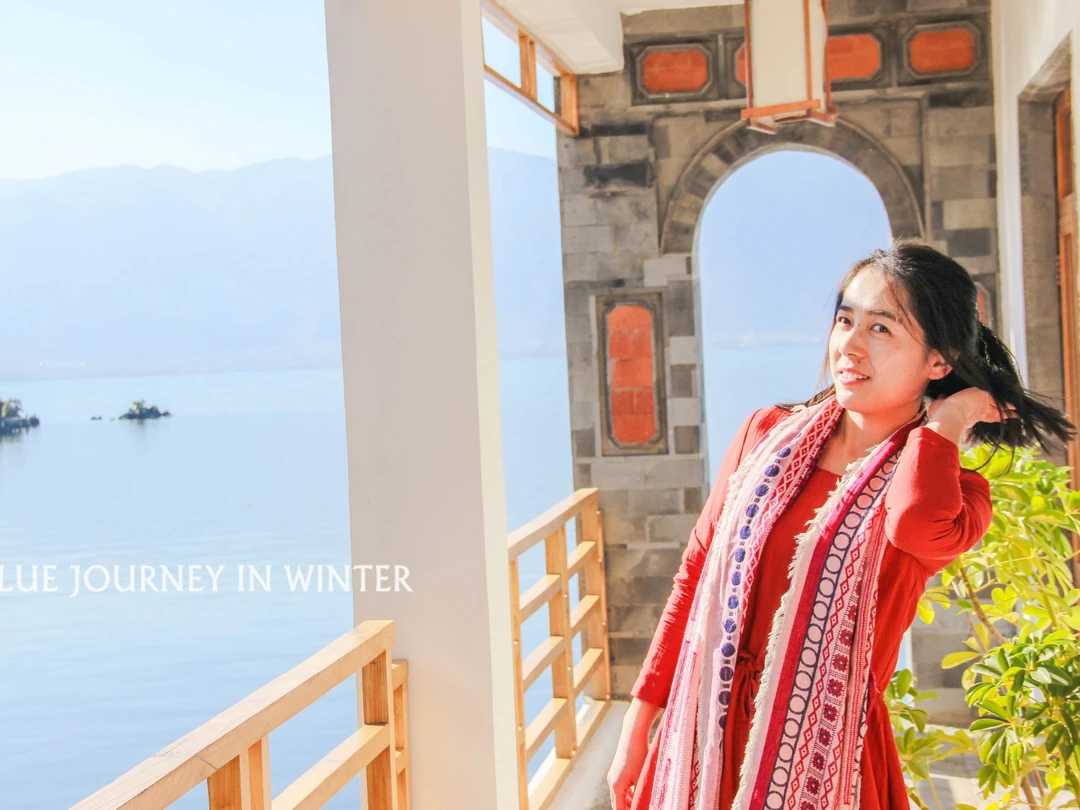
Catching the Last Rays of 2016: A Six-Day Azure Escape to Dali Ancient Town, Erhai Lake, and Shuanglang
There's something magical about chasing the final days of a year—especially when you trade the gray urban grind for the cerulean embrace of Yunnan's high plateau. In December 2016, my partner and I packed our bags, left behind the smog-choked streets of Shanghai, and set off for a six-day slow travel adventure through Dali Ancient Town, the shimmering shores of Erhai Lake, and the artistic enclave of Shuanglang. No rigid itineraries, no frantic checklists—just the promise of winter cherry blossoms, endless blue skies, and the quiet rhythm of lakeside life.
If you've ever dreamed of a trip where every turn feels like a postcard, this is your guide. Let me take you through our journey—warts, wonders, and all.
Why Dali? The Backstory of a Last-Minute Escape
2016 had been a relentless year. We spent the first half renovating our home, the second half moving in, and work devoured whatever free time remained. For months, I'd been fixated on a travel piece about Tengchong's golden ginkgo village, but November slipped away before I could act. Then came the saving grace: my partner, Shing, had a few vacation days expiring after New Year's. Rather than let them go to waste, we decided to squeeze in a year-end getaway.

Initially, we considered Chongqing—Shing's university stomping ground, a city of perpetual drizzle and fiery hotpot. But persistent smog alerts killed that idea. What we craved was simple: good weather, beautiful scenery, and a chance to decompress. Dali, with its reputation for year-round springlike conditions and crystalline lakes, won by default.
We booked flights, skimmed a few blog posts, and deliberately left accommodations open. It was low season, after all. What could go wrong?
Day 1: Escaping the Concrete Jungle
Our journey began at an ungodly hour—4:00 AM alarm, 4:30 departure. By 5:00, we were at Shanghai Hongqiao Airport, only to discover that Spring Airlines' waiting area was as bare-bones as their ticket prices. The plane itself was cramped, with seats less comfortable than a train's hard class and no recline. Five hours of airborne torture later, we touched down in Kunming under a stubbornly gray sky—no surprise, given the forecast.
We took an airport bus to the train station area, grabbed a hearty meal, and checked into a hotel. The original plan was to visit Dianchi Lake that afternoon and stay overnight, but the rain and exhaustion won. We napped instead, then caught a 10:00 PM sleeper train to Dali. The train was packed—apparently, everyone had the same idea.
Pro tip: If you're short on time, overnight trains are your best friend. You save a day of travel and wake up at your destination.
Day 2: Dali Ancient Town – A Tale of Missed Opportunities
We arrived at Dali Station before dawn. Outside, local touts offered rides to the ancient town for 10 yuan per person—a steal compared to the 15 yuan we'd read about. By 6:30 AM, we were dropped off in pitch darkness. With sunrise not until 8:00, public transport was nonexistent. A colleague's suggestion saved us: Didi Chuxing (a ride-hailing app similar to Uber).
We reached Caicun Village just as the sky began to lighten. Our host from Qiyue Inn met us at the entrance—the place was tucked away on a narrow lane, exactly as reviews warned. To our delight, we were the only guests. After some bargaining, we scored two nights for 300 yuan. We rushed to the rooftop terrace, which promised panoramic sunrise views.
What greeted us was pure poetry: a silent landscape, birds flitting past, and the sun cresting over Cangshan Mountain. The glass-walled lounge and tatami seating made us want to spend the entire day there.
We finally ventured out around 11:00 AM. The weather was flawless—not a single cloud, the sky a shade of blue so intense it felt artificial. Cangshan's peaks were dusted with snow, and the road from Caicun to the ancient town stretched wide and open, filling us with anticipation.
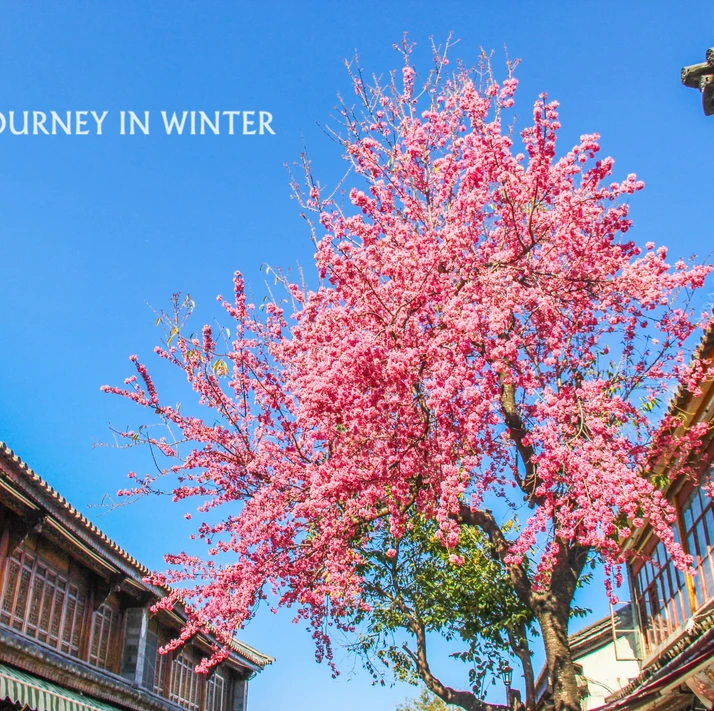
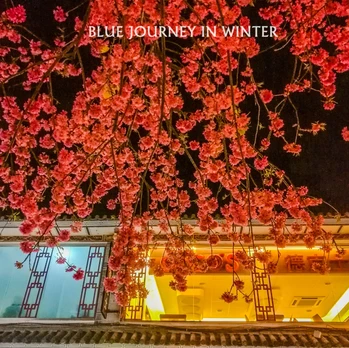
After a filling lunch at Ruzhuxiang (a local eatery), we entered Dali Ancient Town. The southern gate was thronged with tourists, but the main thoroughfare held a surprise: winter cherry blossoms in full bloom. Their pink was so vivid they looked fake. In Shanghai, cherry season is fleeting and pale; here, it felt like spring had hijacked December.

We climbed Wuhua Tower for a bird's-eye view. The town lay nestled at Cangshan's feet, serene and orderly. A side street with a gentle stream flowing alongside added to the charm.
By 2:30 PM, we'd seen enough of the town. Shing, inspired by a colleague's photos, wanted to visit Cangshan. We cabbed to the Ximatan Cable Car ticket office—only to learn that the last return cable car departed at 4:00 PM. With just over an hour, it wasn't worth it. We left, disappointed.
Essential tips for Cangshan: - Go in the morning. After descending, you can visit Tianlong Babu Film City (a theme park based on a popular wuxia novel) next door. - Buy tickets online in advance (245 yuan vs. 300 yuan at the counter), which includes both the cable car and the film city. - No uphill cable cars after 3:00 PM. The last downhill car leaves at 4:00 PM.
To salvage the afternoon, we explored the area around the cable car station. A grove of cherry trees and a road flanked by blossoms, with mountains and water at its end, partially made up for the missed hike. A bumpy tricycle ride back to town—over cobblestones that rattled our bones—was a memorable, if painful, experience.
That evening, we collapsed into bed at 8:00 PM. The rooftop would have been perfect for stargazing, but the cold drove us indoors. Day two ended with a mix of beauty and regret.
Day 3: Cycling the West Shore – Where the Magic Happened
Breakfast at the inn was simple but satisfying: a steamed bun, an egg, porridge, and an apple. The meat buns were especially good—flaky and layered.
For today's plan—cycling the West Shore of Erhai Lake, with stops at Xizhou (an ancient Bai town) and Haishie Park (a scenic peninsula)—we rented two electric scooters from a local grandpa. He started at 40 yuan each but accepted 35 after some haggling. We left our IDs as deposit (200 yuan per scooter). Many blog posts warned that a single scooter might not have enough battery for two people on this route, so we decided to play it safe.

We hit the road around 9:30 AM. The moment we reached the lakeside path, both of us gasped. The scenery was breathtaking: golden reeds against turquoise water, Cangshan towering in the distance. Even in winter, the sun was warm enough to ride without a jacket.
Our first stop was a crowded spot where seagulls flocked. Locals sold feed, and tourists jostled for photos. I snapped a few quick shots and moved on—it was too chaotic.
Further along, a street musician sang with a voice so magnetic that a crowd had gathered. It felt like the essence of travel: spontaneous, soulful, unhurried.
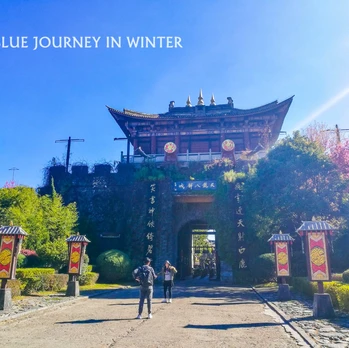
Then came the first detour. Construction blocked the lakeside path, forcing us onto Dali Line—the main road. To our surprise, the views from there were even more expansive. We zigzagged between the lake road and the main road for the rest of the day, each detour adding to the adventure.
Highlights included a "sky mirror" puddle, a pair of adorable alpacas posing for photos, and a tree I couldn't resist hugging (yes, I'm that person). We also passed a beautifully decorated Bai ethnic house—their architecture is incredibly ornate.
Lunch in Xizhou was quick; my partner had no interest in another ancient town. The road to Haishie Park was a dusty, bumpy nightmare—wear a mask if you cycle this route.
Haishie Park, named for its tongue-like shape jutting into the lake, was worth the grit. The water near the entrance was a layered blue, like jelly. Wild ducks swam lazily, and the signposts felt more like art than directions. We lingered until 4:00 PM, then raced back as the sun began to dip.
On the return, we cut back to Dali Line to avoid construction. The sunset was spectacular—rays of light piercing through clouds, painting the sky in shades of orange and pink. We made it back to Caicun just as darkness fell, exhausted but exhilarated.
Day 4: Shuanglang – The Artistic Soul of Erhai
We checked out of Qiyue Inn and caught a bus to Shuanglang. The ride took about an hour, winding along the eastern shore of Erhai Lake. The views were stunning: the lake on one side, terraced fields on the other.

Shuanglang is famous for its boutique hotels, art galleries, and laid-back vibe. We found a guesthouse with a rooftop terrace overlooking the lake—a bargain at 200 yuan per night during low season. The room was simple but clean, with floor-to-ceiling windows that framed the water perfectly.
The rest of the day was pure leisure. We wandered through the narrow alleys, stopping at a café for coffee and a bookstore for postcards. Dinner was at a small restaurant recommended by our host—steamed fish from the lake, local greens, and a bowl of rice. Simple, fresh, unforgettable.
Day 5: Sunrise, Seagulls, and Slow Goodbyes
I woke before dawn to catch the sunrise from the rooftop. The sky turned from deep blue to pale pink to gold, and the lake mirrored every change. Seagulls circled overhead, their calls echoing across the water.
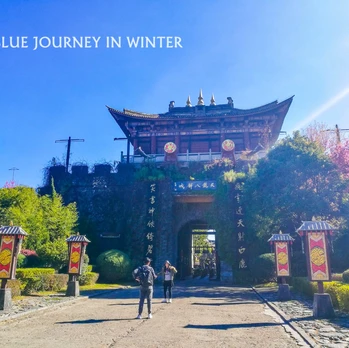
After breakfast, we rented a tandem bicycle and cycled south along the lake. The road was quieter here, with fewer tourists. We stopped at a small pier to feed the seagulls—they were bold, snatching bread from our hands.
By noon, the sun was high and hot. We returned to Shuanglang for a final lunch: 过桥米线 (crossing-the-bridge noodles), a Yunnan specialty served with a bowl of boiling broth and an array of raw ingredients to cook at the table. It was the perfect farewell meal.
Day 6: The Long Journey Home

Our flight was early, so we took a pre-dawn taxi to Dali Airport. The driver was a local Bai man who told us stories about the lake's changing seasons. As we drove, the sky lightened, and the mountains emerged from the mist.
The flight back to Shanghai was smooth, but the landing felt harsh—gray skies, cold air, the city's familiar hum. Yet the memories stayed: the blue of Erhai, the pink of cherry blossoms, the warmth of the winter sun. 2016 ended not with a whimper, but with a whisper of adventure.
Final Thoughts: Why You Should Go (and When)
Dali is beautiful year-round, but December has a special charm. The crowds are thin, the weather is crisp, and the cherry blossoms add an unexpected burst of color. If you're looking for a trip that combines natural beauty, cultural richness, and total relaxation, this is it.
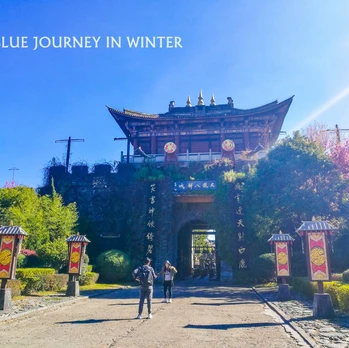
What I'd do differently: - Book Cangshan tickets online and go early. - Spend an extra day in Shuanglang—it deserves more time. - Pack a mask for dusty roads and warm layers for cold evenings.
What I'd keep the same: - Renting electric scooters for the Erhai loop. - Staying in a guesthouse with a rooftop view. - Leaving room for spontaneity.
Because sometimes, the best travel moments are the ones you never planned.
You should also read:

A Journey Through Shuanglang's Guesthouses: Finding Life as It Should Be on the Shores of Erhai Lake
A Journey Through Shuanglang's Guesthouses: Finding Life as It Should Be on the Shores of Erhai Lake Prologue: When Life Hits the Pause Button Have you ever had one of those moments? When the city's towering buildings press down on your chest, when you're swept…
Continue reading...
September: Finding Unexpected Warmth in Yunnan (Kunming, Dali, Shuanglang, Lijiang, Lugu Lake)
September: Finding Unexpected Warmth in Yunnan (Kunming, Dali, Shuanglang, Lijiang, Lugu Lake) Foreword: One Person's Journey, A Crowd's Story Before I set off, like every first-time solo traveler, I printed out a thick stack of travel guides and rehearsed countless possible scenarios in my head—getting…
Continue reading...
A 9-Day Yunnan Journey: From Lijiang to Dali to Tengchong – A Trip Toward Self-Reconciliation
A 9-Day Yunnan Journey: From Lijiang to Dali to Tengchong – A Trip Toward Self-Reconciliation Some say travel is simply going from a place you're tired of to a place other people are tired of. It stings to hear, but it's painfully true. Yet there's…
Continue reading...