Chasing Light and Shadow for Sixteen Days: A Journey Through Dongchuan, Nanjian, Dali, and Shaxi in Late 2015
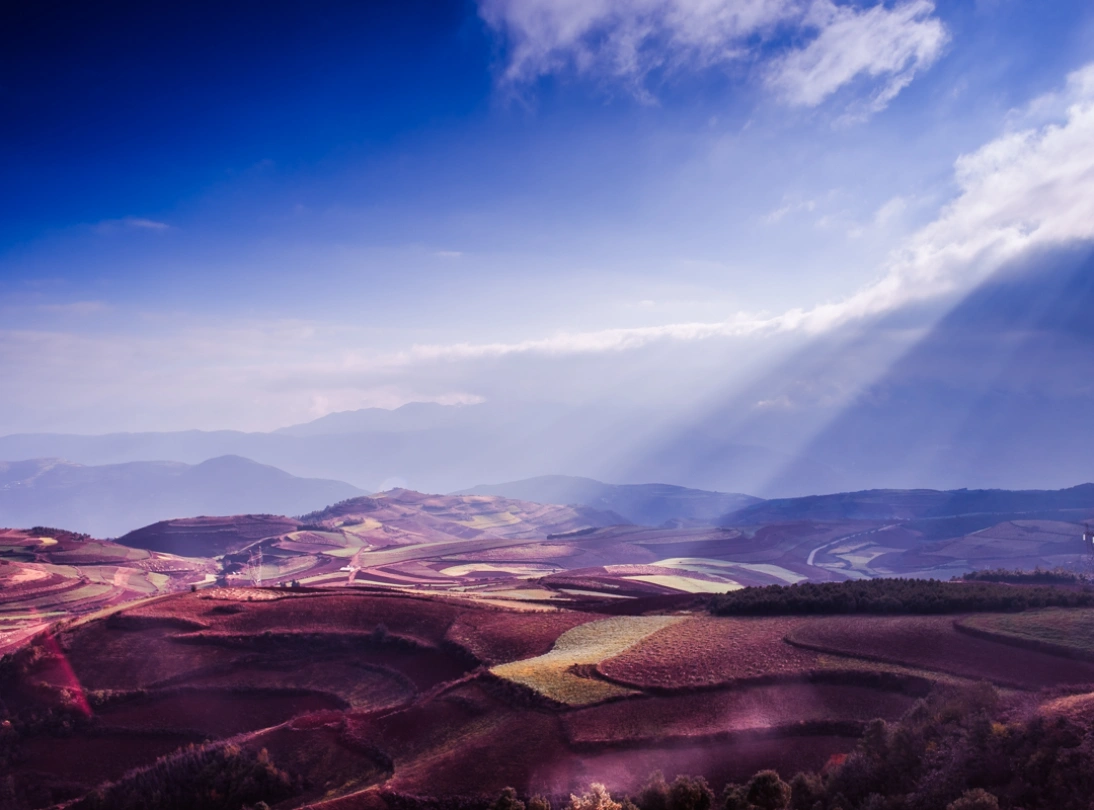
Chasing Light and Shadow for Sixteen Days: A Journey Through Dongchuan, Nanjian, Dali, and Shaxi in Late 2015
Preface: An Appointment with Light and Shadow
In late autumn of 2015, I set foot on the land of Yunnan once again. This was no spontaneous trip — it had been brewing for months, surviving project delays, itinerary overhauls, and even being "rejected" by a photography hotel. But as with all things worth waiting for, when I witnessed the sunset gild the Dongchuan Red Land with golden hues, caught the first hint of spring amidst winter in the cherry blossom valley of Nanjian, captured the morning light piercing through clouds before the Three Pagodas of Dali, and shared a cup of Pu'er tea with an 86-year-old veteran in Shaxi Ancient Town, I knew that every twist and turn had transformed into the most precious gifts of these sixteen days.

This was a journey in the name of photography, but more profoundly, a deep dialogue with light and shadow. I traveled with streamlined gear — a Canon 6D, three prime lenses, a tripod, and a heart willing to wait. From Dongchuan to Nanjian, from Dali to Shaxi, I learned to wait for the moment light breaks through clouds, to walk three kilometers of mountain road alone with only dogs barking in the distance, and to share simple yet warm meals with locals in farmhouse inns.
If you too love photography, or simply wish to slow down on your travels and feel the magic of light and shadow, this article might offer you some inspiration.
Dongchuan Red Land: God's Spilled Palette
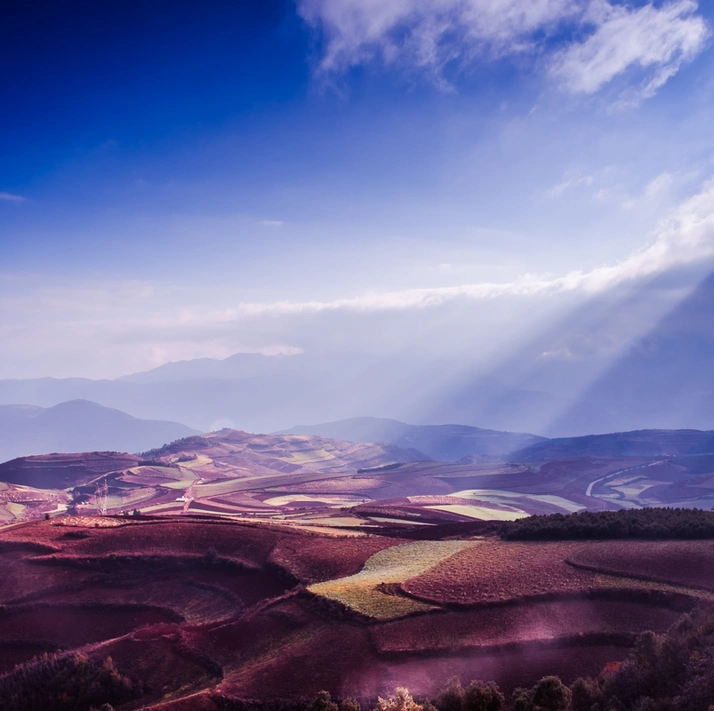
First Encounter with the Red Land: A Preview of Light and Shadow
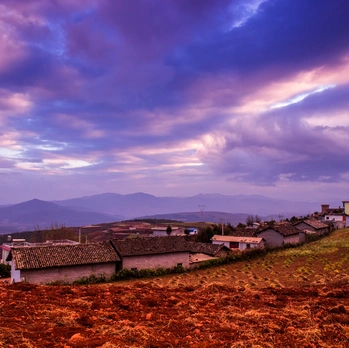
Boarding the 7:30 bus from Kunming's Northern Bus Station, after four hours of bumpy ride (the last thirty kilometers were under construction, making it especially rough), I finally arrived at the Dongchuan Red Land. I checked into the Mountain Red Photography Hotel. The owner, Zhang Chaorong, was an experienced guide. He told me, "The best seasons for the Red Land are November and April-May, and the three days after rain yield the best shots."
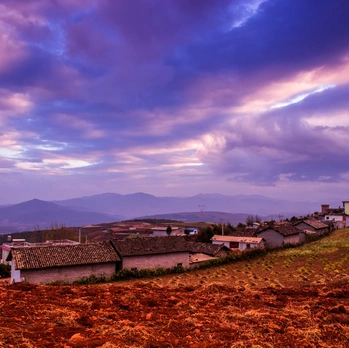
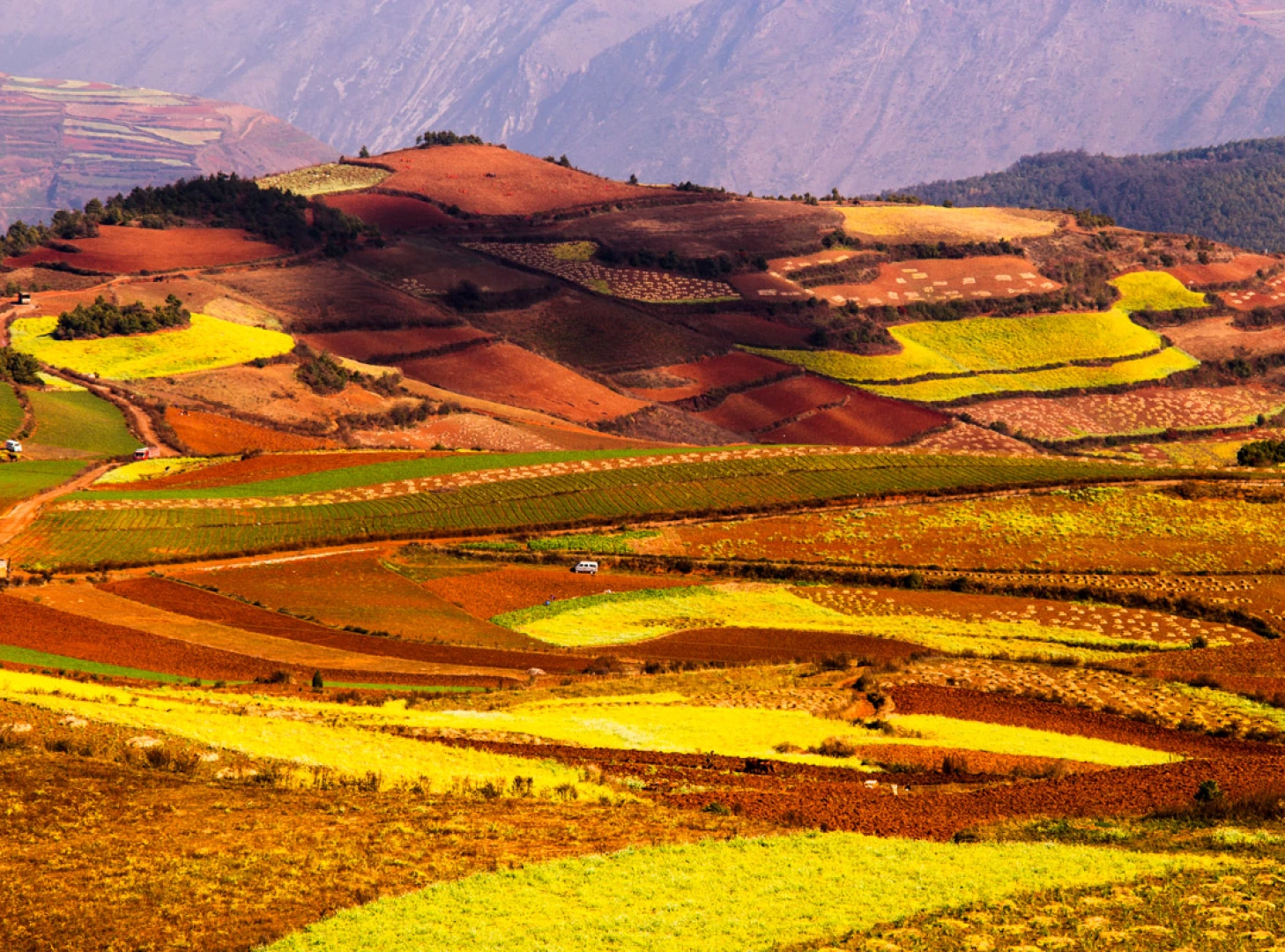
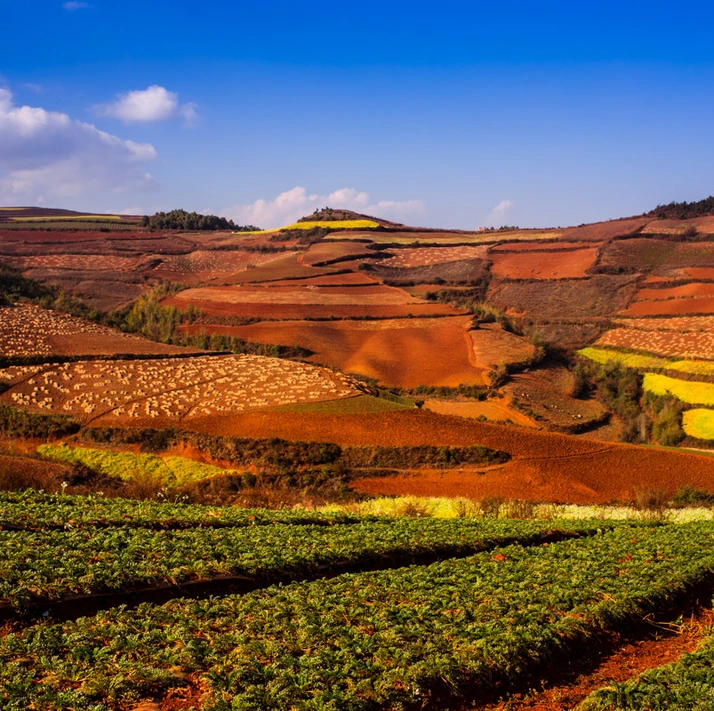
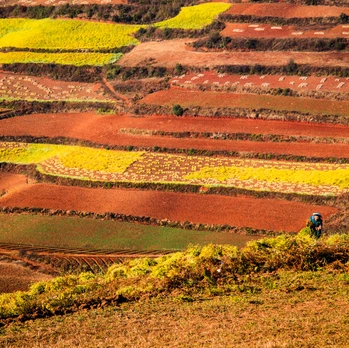
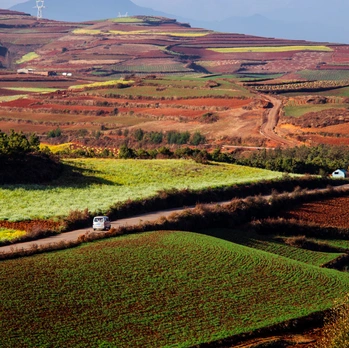
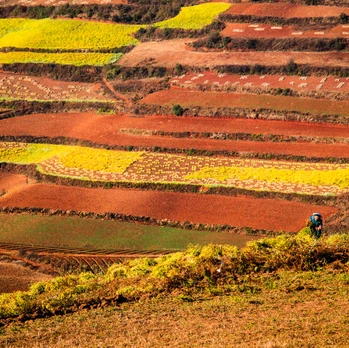
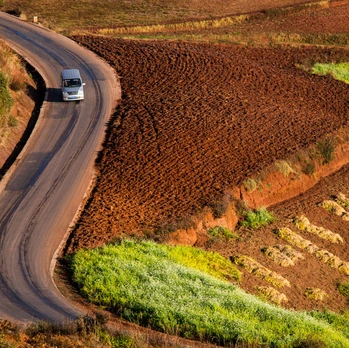
On the first evening, I rushed to Luosiwan (Snail Bay). As the sun set, golden light spilled over the red earth like God had overturned a palette. I set up my tripod and captured the moment with my 35mm prime lens — in that instant, I understood why photographers were willing to endure an eight-hour drive to get here.
Waiting for Light: A Game of Chess with the Clouds
The next morning, I headed to Damakan for sunrise, only to find thick overcast skies. The owner took one look at the weather and decisively suggested changing locations. So we drove to other spots and captured some unexpected shots — sunlight streaming through gaps in the clouds, illuminating the fields like stage spotlights.
After noon, the owner continued to drive me around. I had hoped to capture some street photography, but the commercialization of the Red Land left me somewhat disappointed. When a local farmer saw me photographing him plowing his field, he immediately scowled and said, "No pictures! But if you pay 50 yuan per click, I can pose however you like, including with the ox." I silently put my camera away — 50 yuan a shot was too extravagant for me.
In the afternoon, I arrived at Luoxiagou (Sunset Gorge), but the light was too harsh for good photos. By evening, I returned to Luosiwan to capture a few more shots of the red earth bathed in sunset.
The Surprise of Fox Den: After-Rain Glow
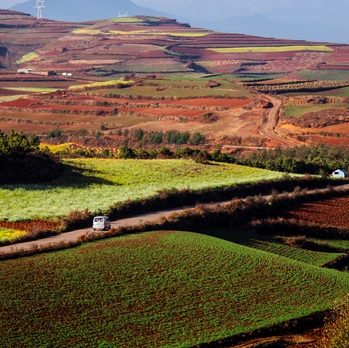
On the third morning, the clouds remained thick. The owner said sunrise at Luoxiagou was unlikely, so we tried our luck at Damakan and Jinyuan (Splendid Garden). In the afternoon, the owner took me to Fox Den (Huliwo). The sky alternated between overcast and clear, with sunlight flickering through the clouds, making the landscape brighten and darken in turn.
On the way back, the road was slightly damp — it had just rained in most parts of Dongchuan. After the rain, the sky cleared, and clouds glowed with twilight hues. I quickly pulled over and pressed the shutter. The owner remarked, "To see light like this is not bad at all."
Morning at Luoxiagou: Nineteen Years of Devotion
On the fourth morning, I arrived at Luoxiagou for sunrise. Four or five photographers had already claimed the best spots, so I set up my tripod nearby. An elderly gentleman leading a group recounted to his students how he had visited the Red Land at least once a year for nineteen years. When sunlight finally broke through, everyone cheered, but the old man said calmly, "What's there to photograph? I've seen much better here. This is merely average."
I marveled inwardly — only nineteen years of dedication could allow someone to judge light and shadow with such composure.
On the fifth morning, I bid farewell to the owner and boarded the 8:30 bus from Fazhe back to Kunming. Next stop: Wuliangshan Cherry Blossom Valley in Nanjian.
Nanjian Wuliangshan Cherry Blossom Valley: The Fairy's Wonderland
Mountain Road Thrills: Three Kilometers of Barking Dogs
Taking the 9:30 bus from Kunming's Western Bus Station, I arrived at Nanjian County at 3:35 PM. The last bus to Cherry Blossom Valley departed at 3:30 — I had missed it. Eventually, I hired a car for 200 yuan, a one-hour drive to the scenic area.
I checked into the Wuliangshan Protection Station for 150 yuan a night. The conditions were basic but clean, though there was no hot water. Luckily, an electric kettle and a foot basin allowed me to soak my feet each night to keep warm. The station's uncle and aunt warmly invited me to join them for dinner — simple food, but it warmed me from the inside out.
The next morning, I set out in pitch darkness at 6:30 AM. Three kilometers of winding mountain road, with only a headlamp lighting the way. Farm dogs along the route, their eyes glowing in the dark, let out low growls. As I approached, the barking erupted, chains rattling loudly. All I had to defend myself was a tripod. My heart raced with every step. Finally, at the entrance to Viewing Point No. 2, I met two photographers from Chengdu. We descended together, found our spots, set up our cameras, and waited for sunrise.
A Dialogue Between Cherry Blossoms and Tea Gardens
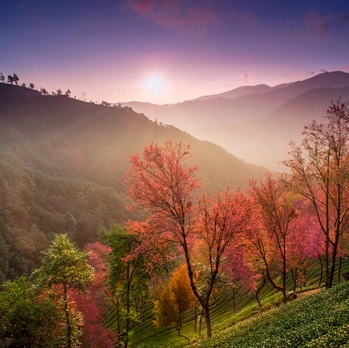
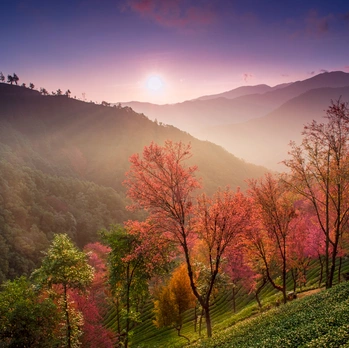
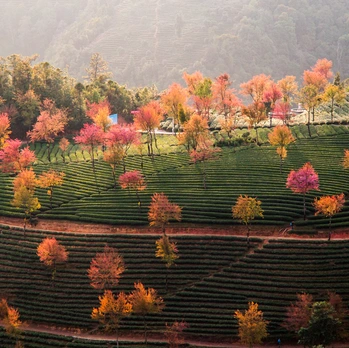
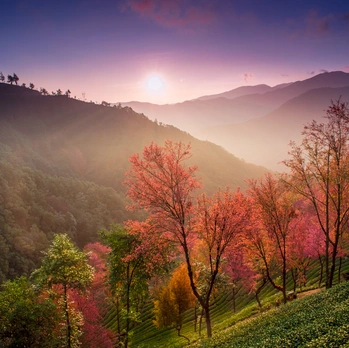
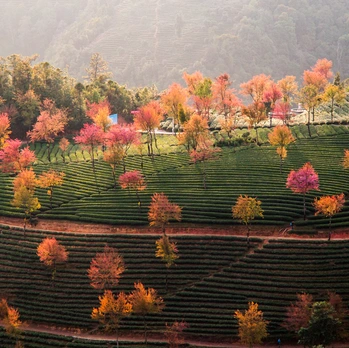
After shooting sunrise at Viewing Point No. 2, I wandered over to Viewing Point No. 1. The morning light was favorable, allowing me to capture panoramic views of the tea gardens and cherry blossoms. Sunlight bathed the cherry trees, their pink petals standing out vividly against the green tea fields. I slowly made my way down into the tea gardens, as more people gradually arrived.
By afternoon, the air was hazy, the light harsh, making backlit shots difficult. But I gritted my teeth and kept shooting until sunset. Occasionally, clouds drifted by, casting beautiful shadows, but lens flare was unavoidable. Only a few shots were barely passable.
That evening, I researched my Dali itinerary — having spent three days by Erhai Lake the previous year, I decided to base myself in Dali Ancient Town this time, focusing on the Three Pagodas Temple, circling Erhai Lake again, and choosing between Nuodeng and Shaxi.
Dali Ancient Town: Light and Shadow of the Ancient Nanzhao Kingdom
Morning at the Three Pagodas: Favorable Light and Tranquility
At 8:30 AM, I caught a minibus to the county seat, then transferred to a bus to Dali's Xiaguan district, checking into the Putilittle Inn in the ancient town. My first priority was a hot shower — after two days without bathing in Cherry Blossom Valley, I could smell myself.
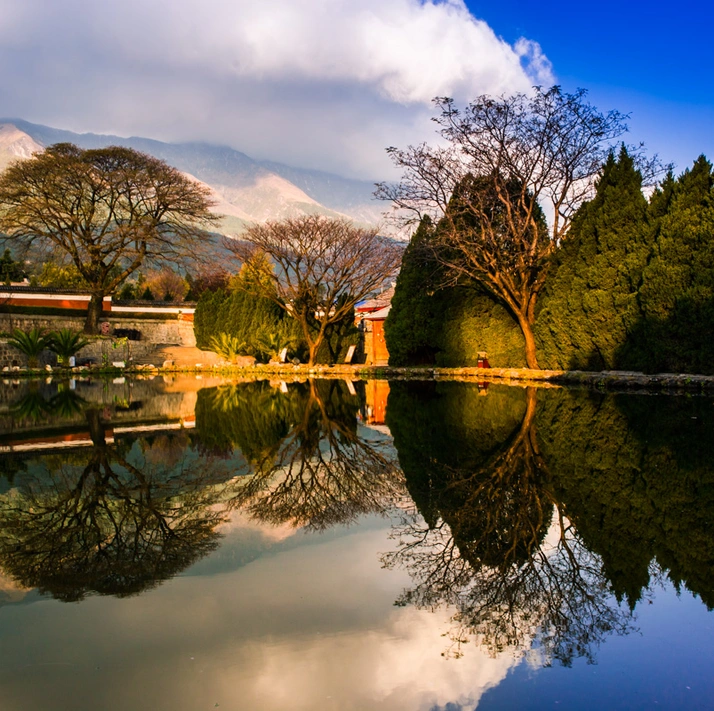
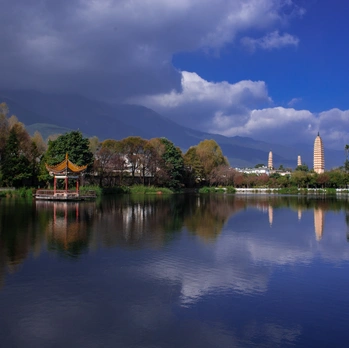
The next day, before dawn, I headed straight to the Three Pagodas of Chongsheng Temple. I had visited the previous year in the afternoon, and the backlit shots came out gray and dull, and I missed the Reflection Park. This time, I arrived at the gate by 7:30 AM, taking advantage of favorable light and few visitors to capture satisfying images. The ticket to the Three Pagodas Reflection Park was included with the Chongsheng Temple ticket, but since electronic tickets required entry within half an hour of registration, I had to visit the temple first and then backtrack to the Reflection Park.
A Surprise at Dali University: Ginkgo and Cherry Blossoms
After photographing the pagodas, I followed the innkeeper's advice and visited Dali University. The cherry blossoms had been in full bloom the previous week, but by my arrival, they were already fading. However, two ginkgo trees that hadn't yet shed all their leaves offered a pleasant surprise. Dali University sits against Cangshan Mountain and faces Erhai Lake. On the mountain, there are two "Lovers' Lakes" — one large, one small — which on summer nights would reflect the mountain and crescent moon beautifully.
Back in the ancient town, the ginkgo leaves on Yuer Road hadn't all fallen, while the cherry blossoms on Bo'ai Road were already withering. I had hoped to see both ginkgo yellowing and cherry blossoms blooming simultaneously, but I never found a spot where the two trees grew together. At the intersection of Bo'ai Road and Yuer Road, I managed to capture a blurry comparison shot.
Circling Erhai: From Xizhou to Shuanglang
On the third day, I arranged a private car to circle the lake. Before departing, I took a few shots of the sunrise over Cangshan from the inn's second-floor terrace — unfortunately, my Takumar lens had poor backlight resistance, and distant details lacked sharpness.
Our first stop was Xizhou. I hadn't entered the Yan Family Mansion the previous year, so this time I explored it thoroughly. After an hour and a half at the mansion, the driver, eager to finish on time, said we were running late, so we rushed through Haishuo Park.
We arrived at Shuanglang around 1:00 PM, agreeing to meet the driver at the entrance by 3:00 PM. Shuanglang was still a massive construction site, dust swirling everywhere. I took a few quick shots and left in haste. After leaving Shuanglang, the sky turned overcast, with Cangshan shrouded in clouds. By the time we reached Xiaoputuo Island, a light drizzle began to fall, cold and persistent with the wind off Erhai Lake. Only the red-billed gulls continued to soar through the chilly air.
Shaxi Ancient Town: Slow Time on the Ancient Tea Horse Road
Arrival in Shaxi: The Warmth of a Cup of Tea
At 6:40 AM, the driver arrived punctually. I rushed to the Northern Bus Station and bought a ticket for the 7:40 bus. Including the driver, there were only six people on board — the nearly empty bus departed on time. But the driver, unhappy with the low passenger count, left the Dali-Lijiang expressway after Eryuan County and took the old road, stopping constantly to pick up passengers. By the time we reached Jianchuan County, it was already 10:40 AM.
I jumped onto a minibus at the station. Since it was the off-season, I waited thirty minutes until seven people had gathered, and we finally headed for Shaxi. I arrived at the inn just before noon.
I checked into the Maynian Inn, which had the best hot water of the entire trip, complete with a bathroom heater. The owner was a soft-spoken woman. There was a bookshelf by the entrance, where guests could borrow books freely.
Morning Light in the Fields: An Unexpected Delight
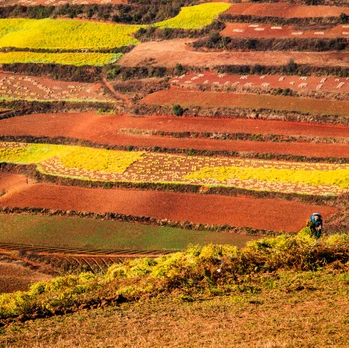
The next morning, following the owner's advice, I went to the riverbank to look for morning mist. But over three mornings, I never saw it — the clouds were too thick, and the fog had already dissipated.
Just as disappointment set in, sunlight suddenly broke through the clouds and bathed the fields in a golden glow. I quickly pressed the shutter — it lasted only minutes, but that magic of light and shadow made me forget all the weariness of waiting.
The Veteran's Story: Tea with a Half-Hometown Friend
After photographing the morning scene, I set out for the village across the fields. While wandering through the village asking for directions, an elderly gentleman called out to me: "Where are you from?" Upon learning I was from Shanghai, he warmly invited me to his home for tea.
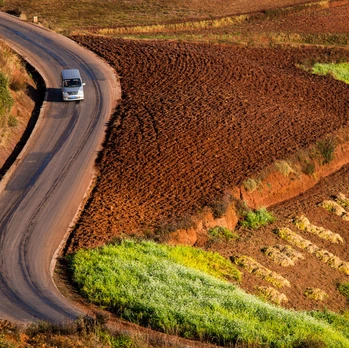
The gentleman, 86 years old, had joined the Nationalist Army at 13 or 14, fighting against the Japanese. Later, during the Huaihai Campaign, he was captured and joined the People's Liberation Army, becoming a soldier in the 27th Army of the East China Field Army. In 1949, he was stationed in Shanghai, then sent to Korea, where he earned a third-class merit. After returning to China, he remained stationed in Shanghai until his retirement in 1961 as a second lieutenant, finally returning to his hometown. He had four children, two of whom were born in Shanghai.
After tea, he showed me his third-class merit certificate and old photographs. He recalled with a sigh the many Shanghai-born comrades who had died in Korea. "It's rare to meet a visitor from Shanghai," he said. "You're like half a hometown friend." So he took me for a walk up the village hill. The village was built on a slope, all uphill paths, but the old man walked briskly, showing no signs of his 86 years. I marveled: his constitution was a gift from heaven.
Epilogue: Gains Beyond Light and Shadow
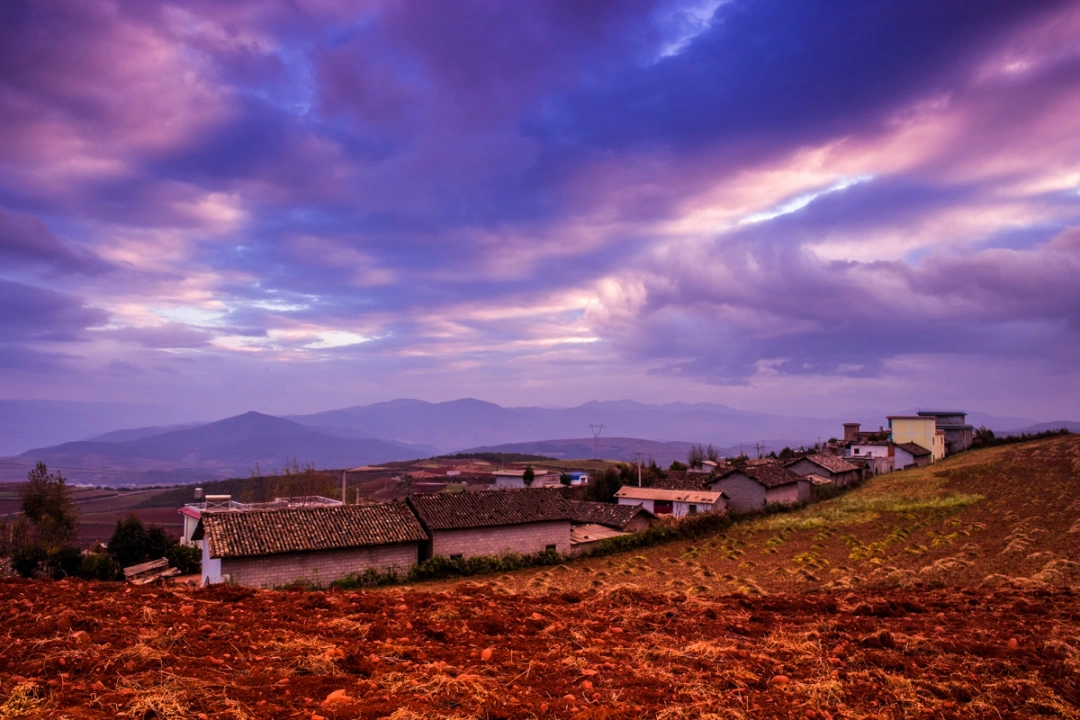
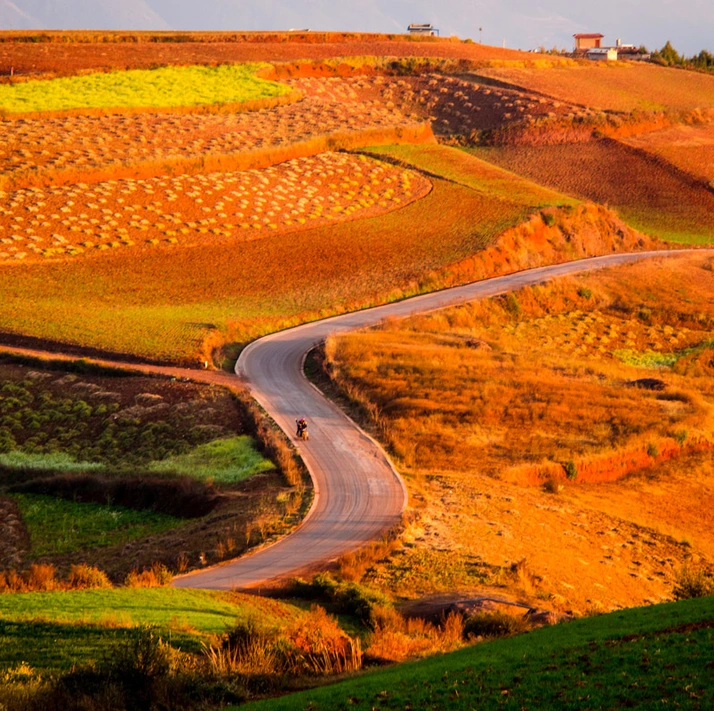
The sixteen-day journey of chasing light and shadow came to an end in Shaxi Ancient Town. From the chess game with clouds on the Dongchuan Red Land, to the anticipation of dawn in Nanjian's Cherry Blossom Valley, from the tranquil morning light before Dali's Three Pagodas, to the unexpected delight in Shaxi's fields — behind every frame of light and shadow lay waiting, perseverance, and the gift of serendipity.
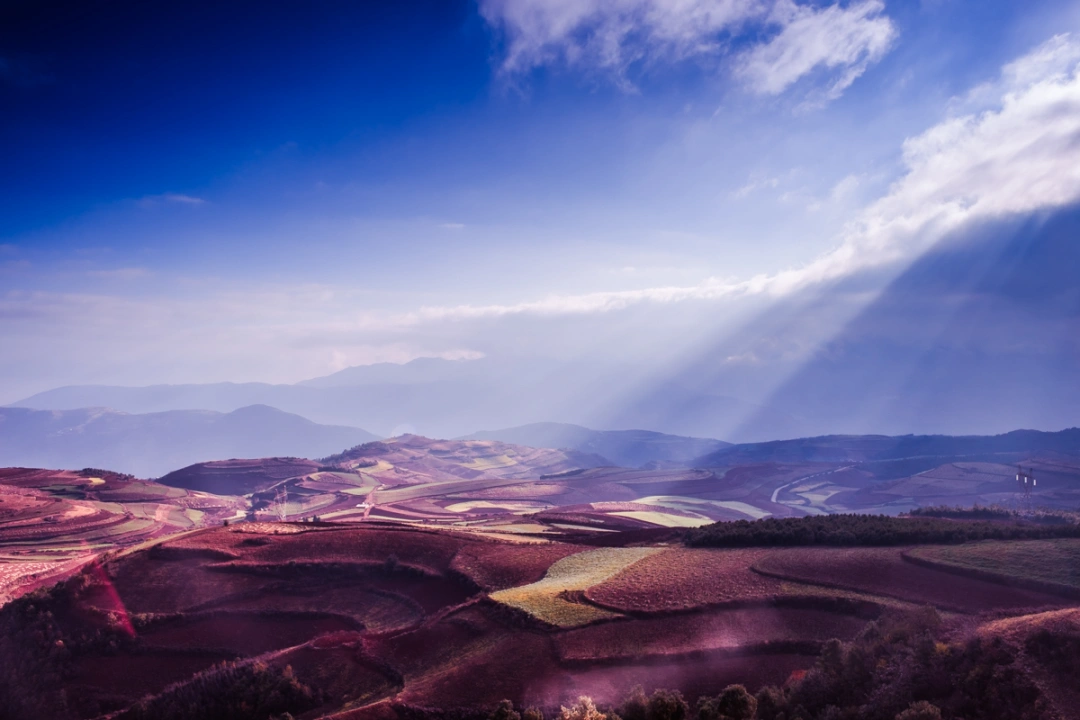
But more precious than the photographs were the stories beyond light and shadow: the Red Land owner's nineteen years of devotion, the warm hospitality of the uncle and aunt at the Cherry Blossom Valley Protection Station, the Pu'er tea and advice from the Dali innkeeper, and the half-century memories of the Shaxi veteran. Travel taught me not just how to capture light and shadow, but how to encounter strangers on the road, listen to their stories, and feel their lives.
If you too are planning such a journey of chasing light and shadow, my advice is this:
- Dongchuan Red Land: Stay at least two nights. Hiring a car costs 200 yuan per day. The three days after rain yield the best shots.
- Nanjian Cherry Blossom Valley: Best visited in early December. Bring a headlamp in case you need to walk at night. The protection station has no hot water.
- Dali Ancient Town: Arrive at the Three Pagodas by 7:30 AM for favorable light and fewer crowds. In December, you can see both ginkgo and cherry blossoms.
- Shaxi Ancient Town: Perfect for a few days of slow exploration. In winter, morning mist may appear over the river.
Finally, bring patience and curiosity. Because the best light and shadow often appear when you least expect them.
You should also read:

God’s Abandoned Palette: A Self-Drive Journey Through Yunnan’s Dongchuan Red Land
God’s Abandoned Palette: A Self-Drive Journey Through Yunnan’s Dongchuan Red Land Travel has never been about reaching some distant geographic coordinate. It’s about encountering, along the way, the version of yourself buried beneath the rubble of daily routine. During this May Day holiday, I finally…
Continue reading...
Body in Hell, Heart in Heaven: A Pilgrimage Through Tiger Leaping Gorge — A Dialogue Between Heaven and Earth
Body in Hell, Heart in Heaven: A Pilgrimage Through Tiger Leaping Gorge — A Dialogue Between Heaven and Earth Introduction: When the Gorge Splits Open Beneath Your Feet Some say Tiger Leaping Gorge is the closest place on Earth to the border between "hell" and…
Continue reading...
Cloud Travelogue · Dali of Wind, Flowers, Snow, and Moon: A Three-Day, Two-Night Journey of a Free Spirit
Cloud Travelogue · Dali of Wind, Flowers, Snow, and Moon: A Three-Day, Two-Night Journey of a Free Spirit I am a cultured female foodie with a touch of rogue charm. I slung on my backpack, took my lover's hand, and set off on a spontaneous…
Continue reading...