Clouds Over Yunnan: A 10-Day Motorcycle Journey Through Western Yunnan – One Man's Freedom and the Open Road
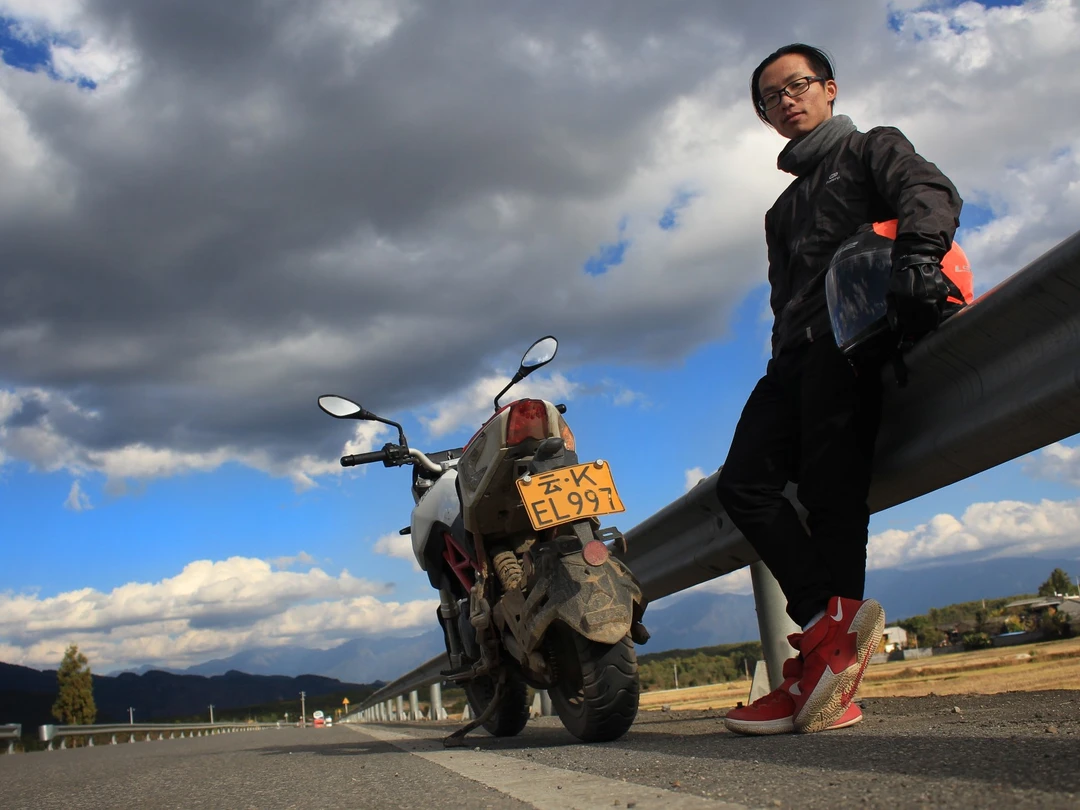
Clouds Over Yunnan: A 10-Day Motorcycle Journey Through Western Yunnan – One Man's Freedom and the Open Road
While the northern lands of China lie frozen and sealed by ice and snow, Yunnan remains vibrant and blooming as if in the height of summer. This land, seemingly favored by the gods, possesses a strange magic that compels you to swing a leg over a motorcycle and chase the wind. In November 2017, carrying a long-nurtured goal, I finally set off on this motorcycle tour of western Yunnan in the dying embers of the year. Starting from the warm sun of Xishuangbanna, I followed National Highway 214, traversing Lancang, Shuangjiang, Gengma, and Yongde, then followed the Nu River (Salween River) westward to arrive in Dehong Prefecture's Mangshi, Ruili, and Tengchong. Finally, I looped back via Baoshan, Lincang, and Pu'er. Ten days, 1,900 kilometers, a total cost of 1,081 RMB – this was not a luxury trip, but a feast for the soul.
Departure: From Xishuangbanna to Shuangjiang, A Song on Every Road
Day 1: Xishuangbanna → Shuangjiang (320 km)
At 9 AM, the sunlight in Jinghong already carried that gentle tropical warmth. Swinging onto the bike, the roar of the engine was my starting trumpet. The entire route was on national highways, and the road conditions were far better than I had imagined. Riding on the winding roads, flanked by连绵青山 (endless green mountains) and the occasional flash of a Dai bamboo house, the wind whistled past my ears, as if urging me to go faster, faster still.
At noon, I stopped at a roadside stall. A steaming bowl of 米线 (rice noodles) went down, and I felt completely revived. Whenever I encountered a breathtaking view along the way, I would pull over and use my camera to freeze those fleeting moments. Around 7 PM, I arrived at my first day's stop – Shuangjiang Lahu, Va, Blang and Dai Autonomous County. This small town, with a name so long it's hard to remember, had the most rustic and authentic atmosphere.
Day 2: Shuangjiang → Yongde (220 km)

From Shuangjiang to Yongde, there were two routes. One was a backtrack, taking National Highway 214 via Mengsheng Town. The roads were good, and although it was a bit longer, it was faster. The other was the old county road, the Shuang-Geng line, passing through the Sipai Township. The roads were narrow and winding, easy to get lost on, but the scenery was so beautiful it could make your heart sing.
I chose the latter. Even though a light rain started to fall, when I saw the mountain mist in the distance interwoven with the terraced fields at my feet, creating a watercolor painting, every bump and jolt was worth it. On the hillsides, villages stood quietly, like a paradise cut off from the world. Yongde county town is built on steep slopes. Walking there, you are either going up or down, with gradients so steep they make you question your life choices. When I set out in the early morning, I stumbled upon a rice noodle shop with a long queue. The taste lived up to its reputation.
Day 3: Yongde → Mangshi (180 km)
On this day, I rode along the Nu River, over mountains, through terraced fields, and across rivers, finally arriving in the "City of Dawn" – Mangshi. The Dahei Bridge spans the Nu River. Below, the river surged; on the bridge, the wind howled. At that moment, I felt like the protagonist in a movie.
Mangshi: The Slow Life in the City of Dawn
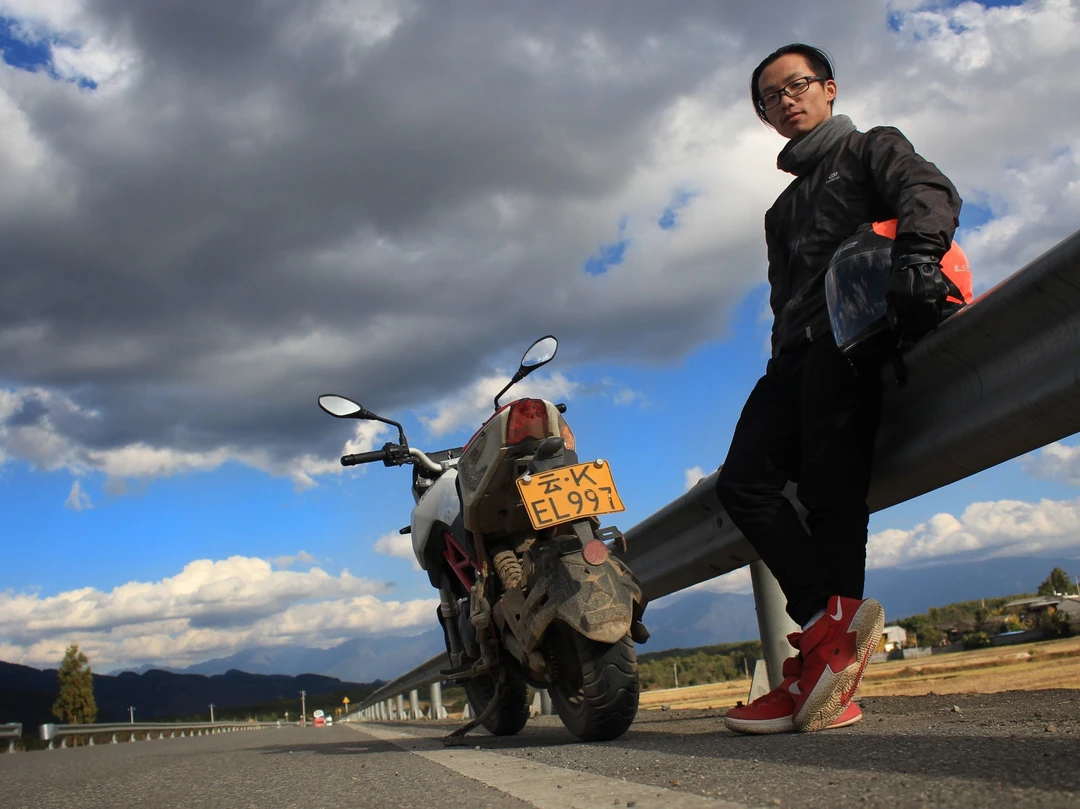
Mangshi, called "Meng Huan" in the Dai language, means "City of Dawn." Legend says that when the Buddha arrived here, it was just dawn, so he bestowed this name upon it. This is the seat of Dehong Prefecture, a place where the Dai, Han, Jingpo, De'ang, Achang, and Lisu ethnic groups live in harmony.
Due to time constraints, I only stayed in Mangshi for a day, treating it as a rest stop after consecutive days of riding. During the day, I rode my motorcycle around the city, watching elderly men play chess in the shade of trees in Mangshi Square, listening to old ladies selling incense chat beneath the Tree-Wrapped Pagoda, and then going to the "Meng Huan Old Lady" shop to order a glass of 帕露达 (a local sweet drink, typically made with milk, jelly, and syrup), soaking in the leisurely and lazy atmosphere of this small city.
The Tree-Wrapped Pagoda: A Wonder of Tower and Tree United
This Buddhist pagoda, with a history of over 200 years, was built on the site of the ancient Jielie village, hence its name "Guangmu Jielie" (Iron City Pagoda). Today, a towering bodhi tree has grown from the top of the pagoda. Its thick, powerful roots tightly grip the pagoda's body, creating the incredible sight of "the tree wrapping the pagoda, the pagoda wrapping the tree." Standing at its base and looking up, the lush foliage and the radiant pagoda seem to represent a perfect understanding between nature and human creation.
Meng Huan Golden Pagoda: Asia's Largest Hollow Buddha Pagoda
As night fell, I climbed to the top of Lei Ya Rang Mountain to visit the Dai sacred site – the Meng Huan Golden Pagoda. This, China's first golden Buddhist pagoda, shimmered brilliantly under the lights. Overlooking the night view of Mangshi, the entire city looked like a pearl scattered among the mountains. The Silver Pagoda next to it was under construction and not yet open, but I could already imagine its future splendor.
Meng Huan Old Lady: A Taste Memory at a Trendy Dessert Shop
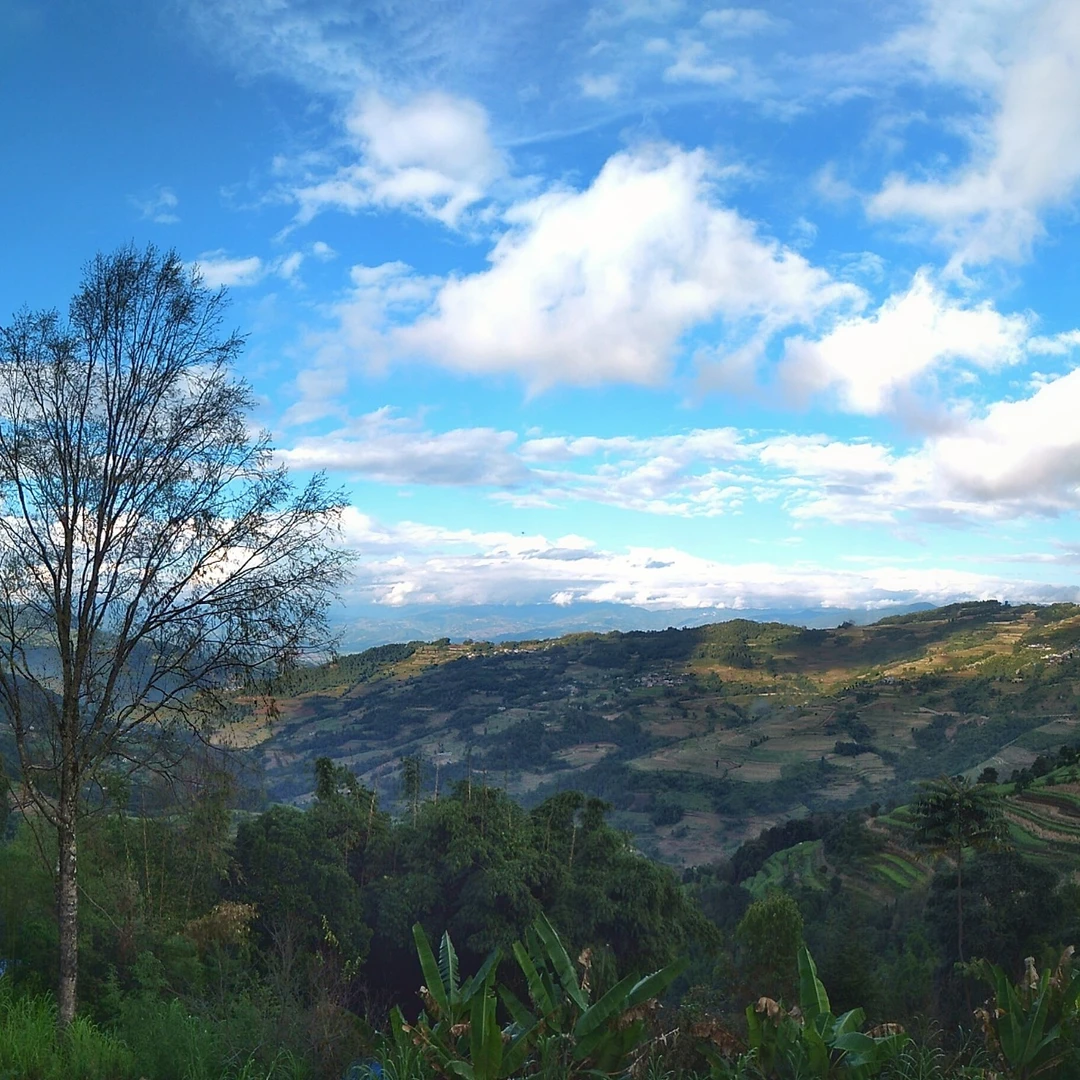
Located on Banse Road, "Meng Huan Old Lady" is a famous dessert shop in Mangshi. The 帕鲁达 (a local specialty drink with bread, coconut, and milk), avocado juice, and chicken wings are all worth trying. Sitting in the shop, watching the stream of customers and listening to the locals chatting and laughing, I felt as if I had become a part of this small city.
Ruili: Border Charm of the Oriental Jewel City
Day 5: Mangshi → Ruili (90 km)
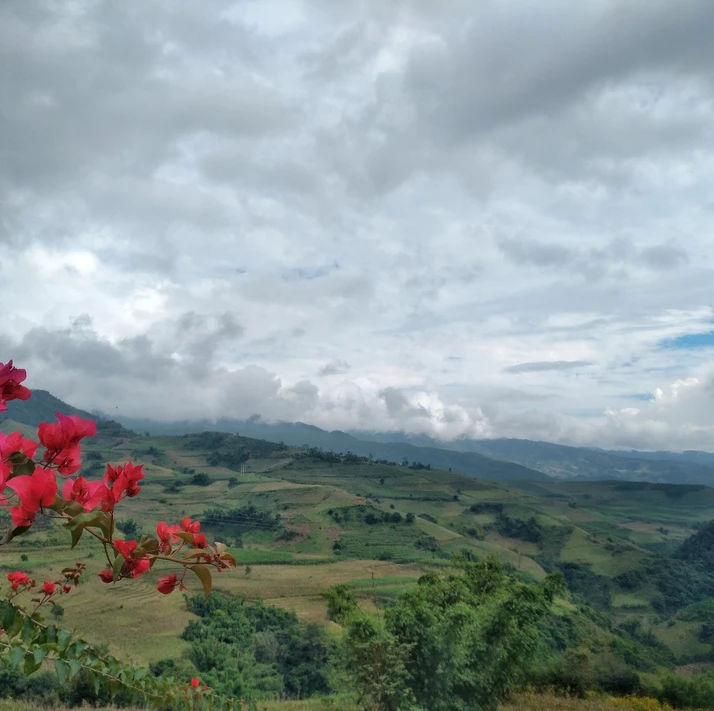
From Mangshi to Ruili is only 90 kilometers, but it felt like entering a completely new world. Ruili is China's largest inland port in the southwest, an important jade distribution center for Southeast Asia, and China's only border trade zone managed under the "inside the border, outside the customs" model.
Jiegao Port: An Enclave on the National Borderline
Jiegao is the only "enclave" belonging to China on the opposite bank of the Ruili River, and also the terminus of National Highway 320. The Jiegao Bridge is the longest bridge in Yunnan's highway history, and the national gate on the bridge stands in majestic solemnity. On the left side of the port, a wire fence separates China and Myanmar. Across the fence, Myanmar children often climb over the railing to beg for money from tourists. Standing here, you can truly feel the shock of "one wall apart, two different worlds."
One Village, Two Countries: A Dai Village on the Borderline
"One Village, Two Countries" is exactly what it sounds like – one village shared by two nations. The national border cuts the Dai village in two. The Chinese side is called Yinjing, and the Myanmar side is called Mangxiu. Within the scenic area, there is a well shared by two countries, a swing that swings across two countries, and the famous China-Myanmar Boundary Marker No. 71. Push the swing, and it feels like you can travel freely between the two nations.
Delong Jewel Night Market: The Wealthiest Night Market
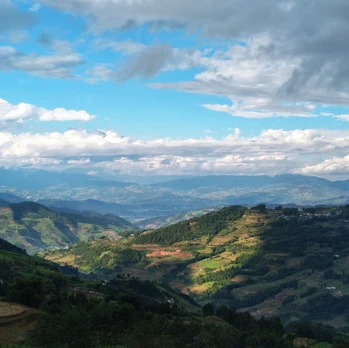
Delong International Jewelry City is Ruili's largest trading ground for rough jadeite. As night falls, vendors sit on the ground. A piece of plastic sheeting and a few chunks of rough jade become their stalls. Known as the "wealthiest night market," people from all over the world use stones and lights to build a wonderful midsummer night's dream. You won't find another jewelry trading night market like this anywhere in the world – its scale, its liveliness, and its unique charm are utterly captivating.
Tengchong: The Gentleness and Grandeur of a Frontier Land
Day 6: Ruili → Tengchong (190 km)
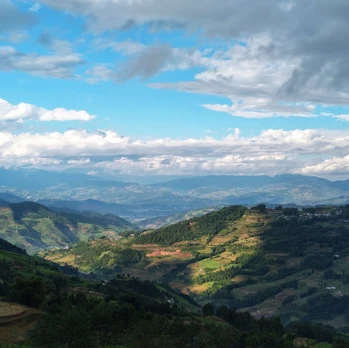
The 190-kilometer ride from Ruili to Tengchong took me an entire day. Tengchong, this city at the edge of the frontier, hides countless surprises.
Heshun Ancient Town: Surpassing the Beauty of Suzhou and Hangzhou
"Distant mountains are vast and grey, / Nearby waters flow in a leisurely way. / Under the ten thousand slopes, / It surpasses the beauty of small Suzhou and Hangzhou." – This is how Mr. Li Genyuan, a founding father of the Republic of China, praised Heshun. The ancient town was originally named "Yang Wendun," but later renamed "Heshun" (meaning "harmonious and smooth") because a small river winds around it. Entering Heshun is like walking into a cultural labyrinth. On an ancient volcanic plateau, thousands of characteristic local houses nestle against the mountains and by the water, row upon row.
The Heshun Library is one of the largest rural libraries in China. Founded in 1924 with funds raised by overseas Chinese, it houses over 10,000 volumes, with its collection of ancient texts being particularly precious. In the early morning, sunlight filtering through the clouds casts a celestial aura on the quiet, ancient alleys of Heshun. It was here that I met Brother Zhang. He shared his knowledge of five thousand years of Chinese history, imparting wisdom from his own life experiences. He said if I ever came to Xinjiang, he would personally teach me to ski.
The uniquely national laundry pavilions are the most unpretentious gift from the men of Heshun to their women. To protect their wives from the sun and wind while washing clothes, the men who traveled far from home built these pavilions. Today, even though almost every household has a washing machine, elderly people still prefer to come to the laundry pavilions to wash their clothes, searching for memories of the past.
Ginkgo Village: The Back Garden of Paradise
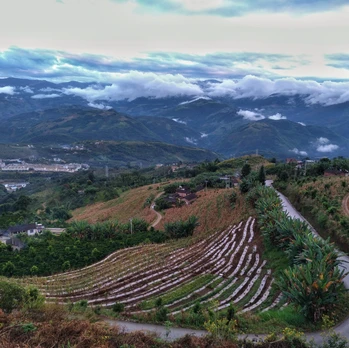
Day 7: Tengchong (Ginkgo Village)
Tengchong's Ginkgo Village is located 37 kilometers north of the city center, near the National Volcanic Geological Park. The entire village boasts over 10,000 acres of naturally connected ginkgo forest, with more than 30,000 trees. The oldest "Ginkgo King" is over 1,300 years old. The best viewing period is from mid-November to early December.
This is a fairy-tale world, a paradise; a golden dream in winter; the filming location for the movie "Wu Xia" (Swordsmen). The village is in the forest, and the forest is in the village, supporting each other. As Ginkgo Village became known to the outside world, it has been developed into a ticketed scenic area, with every family running a farm stay. Even if you're just taking photos, the hosts are incredibly welcoming.
Rehai (Hot Sea): The Steam of the Big Boiling Pot
Day 8: Tengchong (Rehai) → Baoshan (150 km)
"Looking into the gorge from afar, the steaming vapor rises from several points east and west, dense and vigorous, like thick smoke and rolling fog." – Ming Dynasty traveler Xu Xiake wrote these words after visiting this place. The Rehai Scenic Area is about 10 kilometers from the city center. It's recommended to walk the trails. Along the way, you'll see attractions like the Hot Dragon Embracing the Pearl, the Drumming Spring, the Pearl Spring, the Glasses Spring, the Pregnancy-Wishing Well, the Immortal's Bathing Pool, the Toad's Mouth, and the Big Boiling Pot. Each spring has its own name and story.
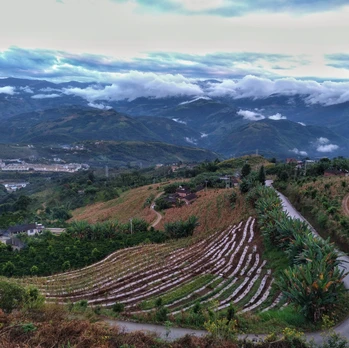
The Toad's Mouth Geyser, due to long-term boiling eruption, has formed a calcareous sinter body shaped like a toad's mouth. The boiling water shoots diagonally into the Bathing Pool River, with a range of 1.5 meters. It looks exactly like two lifelike toads leisurely puffing out clouds and mist, accompanied by a rumbling sound like a toad's throat. The most typical is the "Big Boiling Pot" (Da Gun Guo), which is over 3 meters in diameter and 1.5 meters deep. The water temperature reaches 97°C, boiling and churning day and night, steaming hot all year round.
Near the Confucian Temple in Tengchong county town, I found an old shop – Deng's Big Thin Slices (Deng Shi Da Bao Pian). The晶莹剔透 (crystal-clear, translucent) slices of pork head, eaten together with crispy fried dough, shredded lettuce, and seasonings, was incredibly refreshing.
The Return Journey: From Baoshan to Lincang, and Back to Xishuangbanna
Day 9: Baoshan → Lincang (255 km)
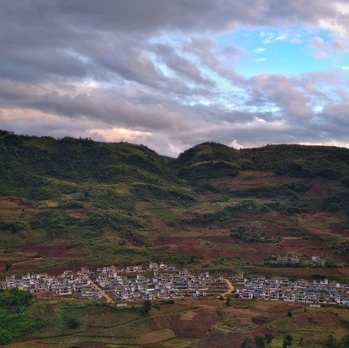
After Tengchong came the journey home. It was already evening when I arrived in Lincang. While wandering around town looking for food, I found an unremarkable shop packed with people, all happily eating from small bowls. Curiosity got the better of me, and I tried it. It turned out to be the best 米干 (rice noodle rolls) shop I had encountered on the entire trip. It's located on West Street, next to the "Bide Zai Time Fifth Road" shop. If you ever get the chance, you must try it.
Day 10: Lincang → Xishuangbanna (435 km)
From Lincang to Xishuangbanna, the route passes through Ning'er. In 2007, Pu'er Hani and Yi Autonomous County was renamed Ning'er Hani and Yi Autonomous County. So, the current Ning'er is the real "Pu'er," while the current city of Pu'er was formerly called Simao. The real Pu'er cake comes from Ning'er. The cake shop has three branches, all on the same street, not far from each other, with the factory located behind the shops.
Xishuangbanna: An Ideal and Magical Paradise
Xishuangbanna, called "Meng Ba La Na Xi" in ancient Dai language, means "an ideal and magical paradise." It is world-famous for its tropical rainforest natural landscapes and the customs of its ethnic minorities. The annual Water Splashing Festival is held from April 13th to 15th and is known as the "Oriental Carnival."
Playing in Banna
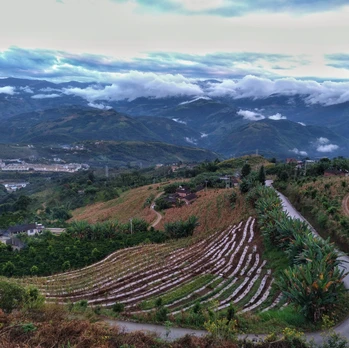
Jinghong city center is not big, and just relaxing there is the most comfortable way to enjoy it. The Gao Zhuang Mekong River Starry Night Market is a must-visit – when night falls and the lights come on, all kinds of small stalls open up beneath the Golden Pagoda. Countless little trinkets will definitely catch your eye.
The Primitive Forest Park has set up activities along the valley rainforest, including valley rainforest walks, peacock release shows, folk song and dance performances, and water-splashing revelry. Each activity has a schedule. If you're fit, you can walk the entire route, which takes about 3 hours. The Tropical Botanical Garden is worth a visit. The Wild Elephant Valley can be chosen depending on your time. In the evening, you can go to Gasa to soak in the natural hot springs. For families or couples on vacation, the Wanda Theme Park and Dai Show are also good choices.
Yiwu Ancient Tea Mountain is the largest and most productive of the six famous ancient tea mountains. "Every mountain has tea trees, every village grows tea," making it a paradise for tea lovers.
Eating in Banna
Banna's flavors are primarily sour, spicy, fragrant, and fresh. You absolutely must eat Dai cuisine when you're in Banna, otherwise, you've come for nothing.
Recommended Local Snacks: - 竹筒饭 (Bamboo Rice) : Sticky rice, purple rice, and peanuts are soaked and stuffed into Yunnan's special fragrant bamboo tubes, then slowly roasted over charcoal. The bamboo fragrance and the rice aroma blend perfectly. 5-10 RMB each. - 米干 (Rice Noodle Rolls) : A favorite breakfast item for locals. Thin and chewy, seasoned with local spices. 7-10 RMB per bowl. - 凉拌 (Cold Mixes/Salads) : Pounded chicken feet, pounded papaya, pounded cucumber, lemon jelly noodles, oyster sauce mangoes, mixed pineapple, etc. 10-20 RMB per serving. - 版纳小糥玉米 (Banna Small Glutinous Corn) : Small in size, very sweet and sticky. 2 RMB each.
Recommended Breakfast Rice Noodle Roll Shops: Zhang's Meng Yang Old Shop (braised noodles, original soup beef noodles), Quan Bo Yan Thin Rice Noodles (soup and chicken rice noodles), Old Pu'er Bean Soup Rice Noodles (the bean soup has a unique taste).
Recommended Main Meals: Hong Ya Xiang Dai Ethnic Food Garden (grilled fish with lemongrass and pineapple rice are must-orders), Cai Chun Qing (Southeast Asian flavors, their Tom Yum Goong soup is the closest to authentic Thai), Shi Bao Restaurant (vegetarian, 8 RMB on Meituan), Ye De Na (a local fast-food restaurant, their chicken oil rice is worth a try).
Final Thoughts: Living Life the Way You Want It
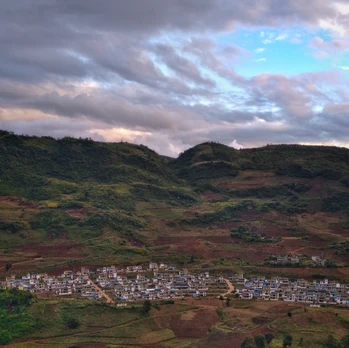
A year ago, on my graduation trip, my last stop was Xishuangbanna. I was drawn in by the warm climate and the pace of life here, and I stayed. At the youth hostel, I met like-minded friends. We set up stalls together at the night market, sold waterproof phone pouches and sky lanterns during the Water Splashing Festival, took photos of planes on the old airport road, rode shared bikes to Gasa for hot springs, sped 26 kilometers on the highway together, and joined the same company to work together, right up until now.
I think this city attracts me for more than just its climate. I love the blue skies and white clouds. I love the simple and fulfilling life. I love the small, tangible happiness I feel every day. I love the feeling of having a goal and a visible future. I love living life the way I want it to be.
Itinerary at a Glance
| Day | Route | Distance |
|---|---|---|
| Day 1 | Xishuangbanna → Shuangjiang | 320 km |
| Day 2 | Shuangjiang → Yongde | 220 km |
| Day 3 | Yongde → Mangshi | 180 km |
| Day 4 | Mangshi (Rest Day) | — |
| Day 5 | Mangshi → Ruili | 90 km |
| Day 6 | Ruili → Tengchong | 190 km |
| Day 7 | Tengchong (Ginkgo Village) | — |
| Day 8 | Tengchong (Rehai) → Baoshan | 150 km |
| Day 9 | Baoshan → Lincang | 255 km |
| Day 10 | Lincang → Xishuangbanna | 435 km |
Total Distance: ~1,900 km | Total Cost: 1,081 RMB | Duration: 10 Days
Practical Tips
- Best Season: Mid-November to early December. The ginkgo trees are golden, and the weather is pleasant.
- Transportation: Motorcycle riding offers flexibility and freedom, but safety is paramount. Make sure to have rain gear.
- Accommodation: All county towns along the route have budget-friendly lodging. It's advisable to book in advance.
- Food: Try the local snacks, especially the rice noodle rolls, Dai cuisine, and cold mixes.
- Important Notes: Carry your ID card in the border regions. Respect local ethnic customs.
If you also have a restless heart, why not swing a leg over a motorcycle and go for a ride in the wind of Yunnan? Make the most of your youth, make some trouble – because the best times are always on the road.
You should also read:

Body in Hell, Heart in Heaven: A Pilgrimage Through Tiger Leaping Gorge — A Dialogue Between Heaven and Earth
Body in Hell, Heart in Heaven: A Pilgrimage Through Tiger Leaping Gorge — A Dialogue Between Heaven and Earth Introduction: When the Gorge Splits Open Beneath Your Feet Some say Tiger Leaping Gorge is the closest place on Earth to the border between "hell" and…
Continue reading...
Cloud Travelogue · Dali of Wind, Flowers, Snow, and Moon: A Three-Day, Two-Night Journey of a Free Spirit
Cloud Travelogue · Dali of Wind, Flowers, Snow, and Moon: A Three-Day, Two-Night Journey of a Free Spirit I am a cultured female foodie with a touch of rogue charm. I slung on my backpack, took my lover's hand, and set off on a spontaneous…
Continue reading...
The Meaning of Travel – A Tengchong Story: A Journey of the Heart and Personal Growth
The Meaning of Travel – A Tengchong Story: A Journey of the Heart and Personal Growth Setting Out, Only to Return a Better Self Some say travel is nothing more than leaving a place you're tired of, only to go to a place where others…
Continue reading...