Cookie in Yunnan | Xishuangbanna, Tengchong, and Mangshi: A Three-City, Three-Season Journey Through Spring, Summer, and Autumn
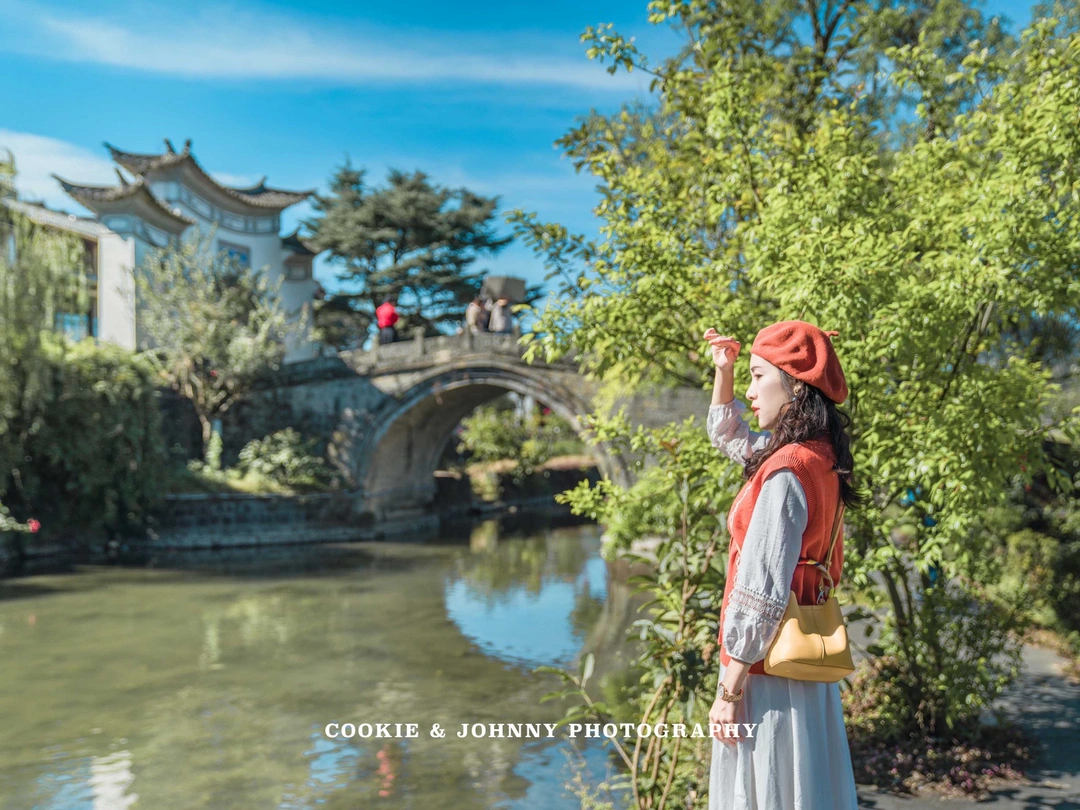
Cookie in Yunnan | Xishuangbanna, Tengchong, and Mangshi: A Three-City, Three-Season Journey Through Spring, Summer, and Autumn
At the tail end of 2020, a traveler from Guangdong finally fulfilled a long-cherished dream — to experience autumn, truly and fully, in a foreign land. This travelogue, penned in the spring, looks back on a journey that spanned summer and fall.
Starting from Xishuangbanna, the southernmost tip of Yunnan, passing through Tengchong, and ending in Mangshi in western Dehong, nine days felt like folding spring, summer, and autumn into a single trip. I set out chasing the golden ginkgo leaves, but unexpectedly found lush tropical rainforests, the leisurely charm of ancient towns, and the serene stillness of a border city. It was a journey that was fulfilling, unhurried, and breathtakingly colorful.
Part One | Xishuangbanna: Living Summer in the Tropics
It had been so long since I last left the country that my longing for Southeast Asia was almost overwhelming. That place I once considered my "weekend backyard" because of its geographical proximity — grand temples, authentic street food, neon-lit night markets, blissful massages — I missed every bit of it.

Unable to travel abroad, I began rediscovering the beauty of my own country. Xishuangbanna, which I once dismissed as a "boring city" with nothing but giant trees, wild elephants, and monkeys, has now exploded in popularity under the nickname "Little Thailand." It shares borders with Laos and Myanmar, sits close to Thailand and Vietnam, and the Lancang River flows through five countries before reaching the Pacific. Cultures converge and ferment here. If you miss the vibrancy of Southeast Asia or crave the brightness of summer, Xishuangbanna is an unbeatable choice.
Dressing Up at the Great Golden Pagoda: Being a Dai Girl for a Day
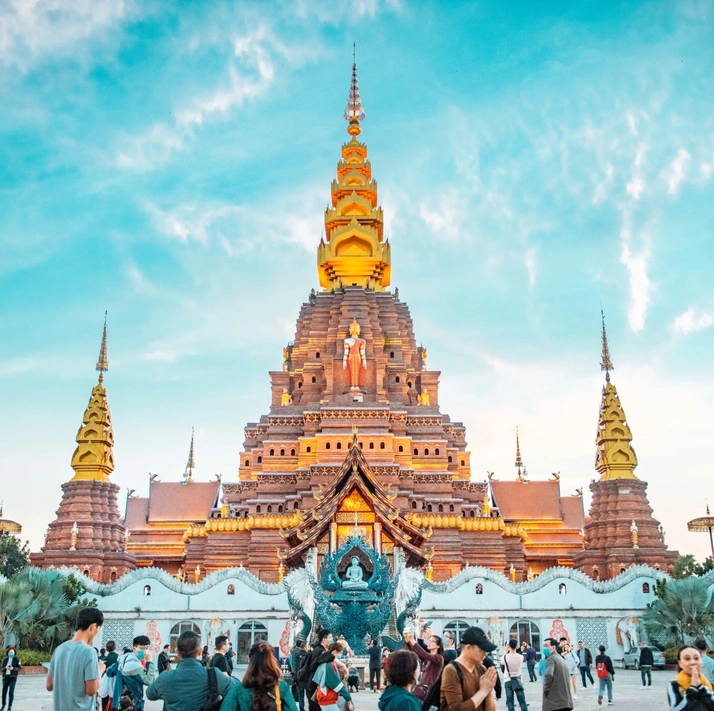
For most visitors, Gaozhuang is the undisputed center of Xishuangbanna, and the Great Golden Pagoda is its most iconic landmark. Our journey began here.
Gaozhuang sits on the northern bank of the Mekong River (called the Lancang River within China). At first, I thought "Gaozhuang Xishuang Scenic Spot" was just a literal name for "the scenic area of Gaozhuang in Xishuangbanna." Only later did I learn it's a translation of the Dai language phrase "Nine Pagodas and Twelve Villages." I never counted them all, but the panoramic view of Gaozhuang is indeed grand and prosperous. Interestingly, this entire area is actually a real estate development — but thanks to it, we get a glimpse of what ancient Jinghong might have looked like in its heyday.
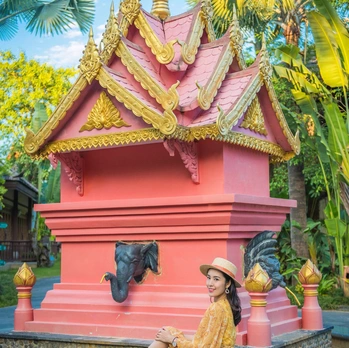
The architecture here is highly unified in style yet varied in form. Thai and Dai influences blend with modern touches. Even the street lamps feature Buddhist motifs, and elephant and peacock decorations are everywhere, instantly pulling you into a tropical atmosphere.
In the afternoon, we headed to the Great Golden Pagoda. When entering from the front, you need to dress appropriately: no bare shoulders or backs, no skirts or shorts above the knee, and no photography is allowed. On our first day, we didn't pay attention and entered from the back wearing Thai costumes — only to be chased away by security... Our mistake.
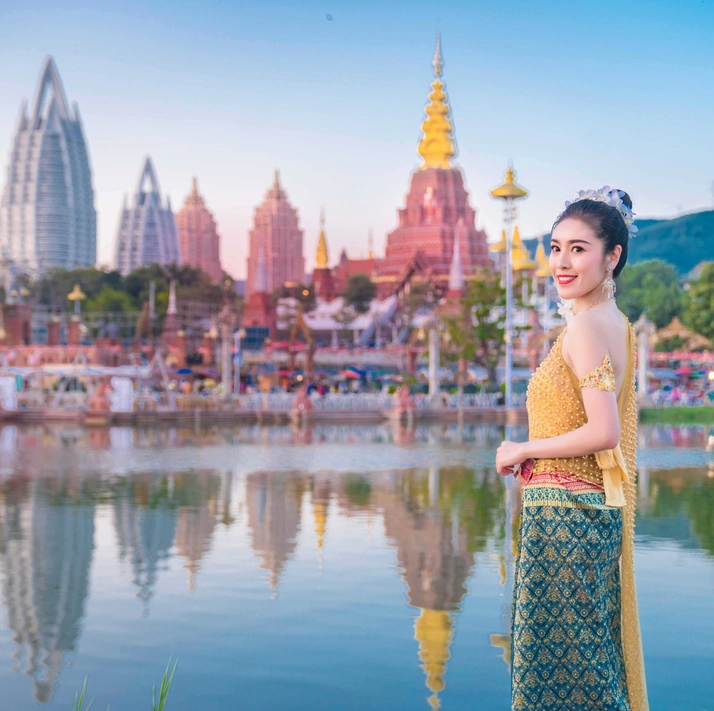
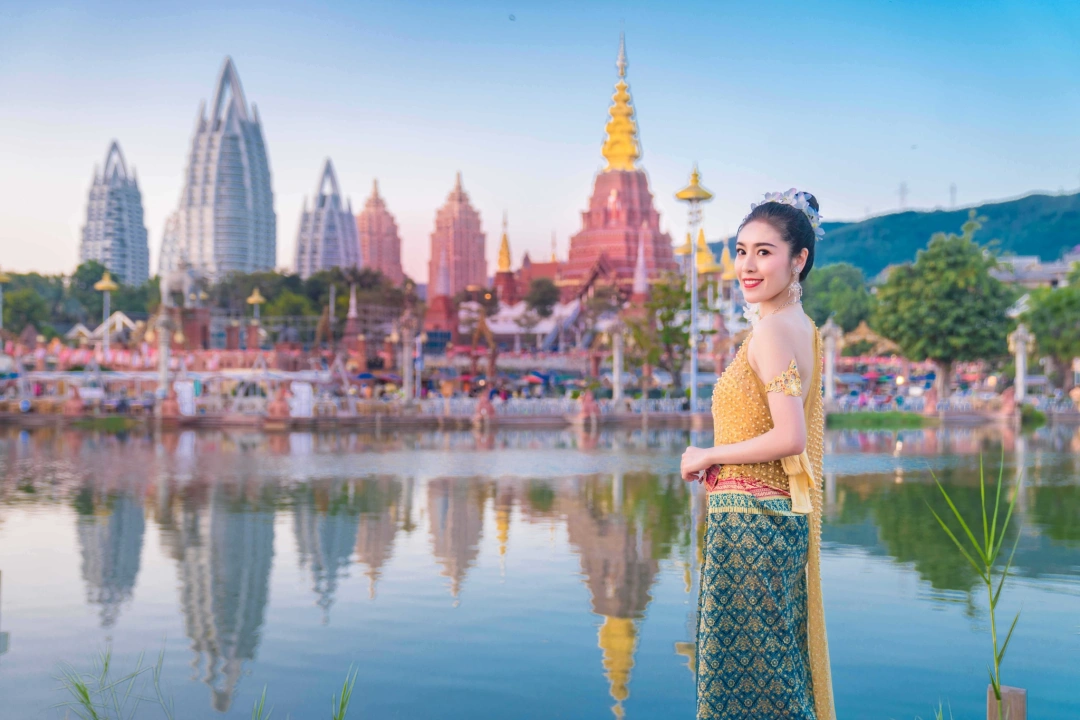
Having visited Xishuangbanna three years later and seen the Great Golden Pagoda at different times of day, I still love it most in the golden glow of dusk. Walk around to the back of the temple, and you'll find the main hub for travel photography — the front and back can be confusing here.
Getting a set of ethnic costume photos has become a must-do in Xishuangbanna. The shops offer two styles: Dai and Thai. The cuts and wearing methods are similar, but the Thai version has a longer hem (even at my height of 168 cm, it almost touched my feet) and is more glittering gold. If you can't decide, shorter girls might prefer the Dai style.
Photography Tips: The shop handles makeup, hair, costume, and accessories. The standard price is 199 RMB, including 25 raw images and 10 retouched photos — great value. I was generally satisfied with the makeup and hair design, and I also shared my preferences, like the type of hair ornament I wanted.
Photographers usually handle multiple clients at once. We went in the afternoon when staff was plentiful — two of us shared one photographer. I heard that after dusk, photographers are in high demand and you have to queue, with a very fast assembly-line pace. The advantage of afternoon shooting is having plenty of photographers, but the sunlight is harsh, and with such light ethnic clothing, you can get two shades darker in no time. Night shooting offers beautiful lighting and the chance to capture the Starry Night Market in the background, but the downside is the crowds — you'll need plenty of patience.
The final look was revealed! The makeup is generally heavy, but it looks lighter in photos than in person. With the already vibrant colors of the costume, I didn't follow the stylist's suggestion of gold jewelry and chose silver instead to balance things out — otherwise, I felt like I was about to get married.
During the shoot, the photographer will guide you through various poses, most of which are quite sultry. For someone like me — a "stiff, straight-laced guy" — it was incredibly awkward. I told him I didn't want seductive poses, but... I still ended up with out-of-focus shots, photos that cut off my feet, and stiff, unnatural poses. Heaven knows how awkward I felt striking those poses. What might look good on a graceful girl only made me look rigid. Later, while selecting photos, I was so frustrated I could stamp my feet — all I wanted were some standard, decent tourist photos.
So, in the gaps when the photographer was changing lenses or checking the light, my companion Yiyun and I frantically took pictures of each other. In the end, we both preferred the photos we took of each other. The owner agreed to let us reshoot the next day with a different photographer, which is how we ended up with two different outfits. My advice: ask to see your photos during the shoot and request adjustments if you're not satisfied. Don't waste half a day like we did.
Fortunately, we did get a few shots we were happy with. The shoot lasted about an hour, and then we could continue wearing the ethnic costumes to take photos with each other. We still preferred the ones we took ourselves. Also, the top of this costume tends to slip down, so girls should be careful to avoid wardrobe malfunctions.
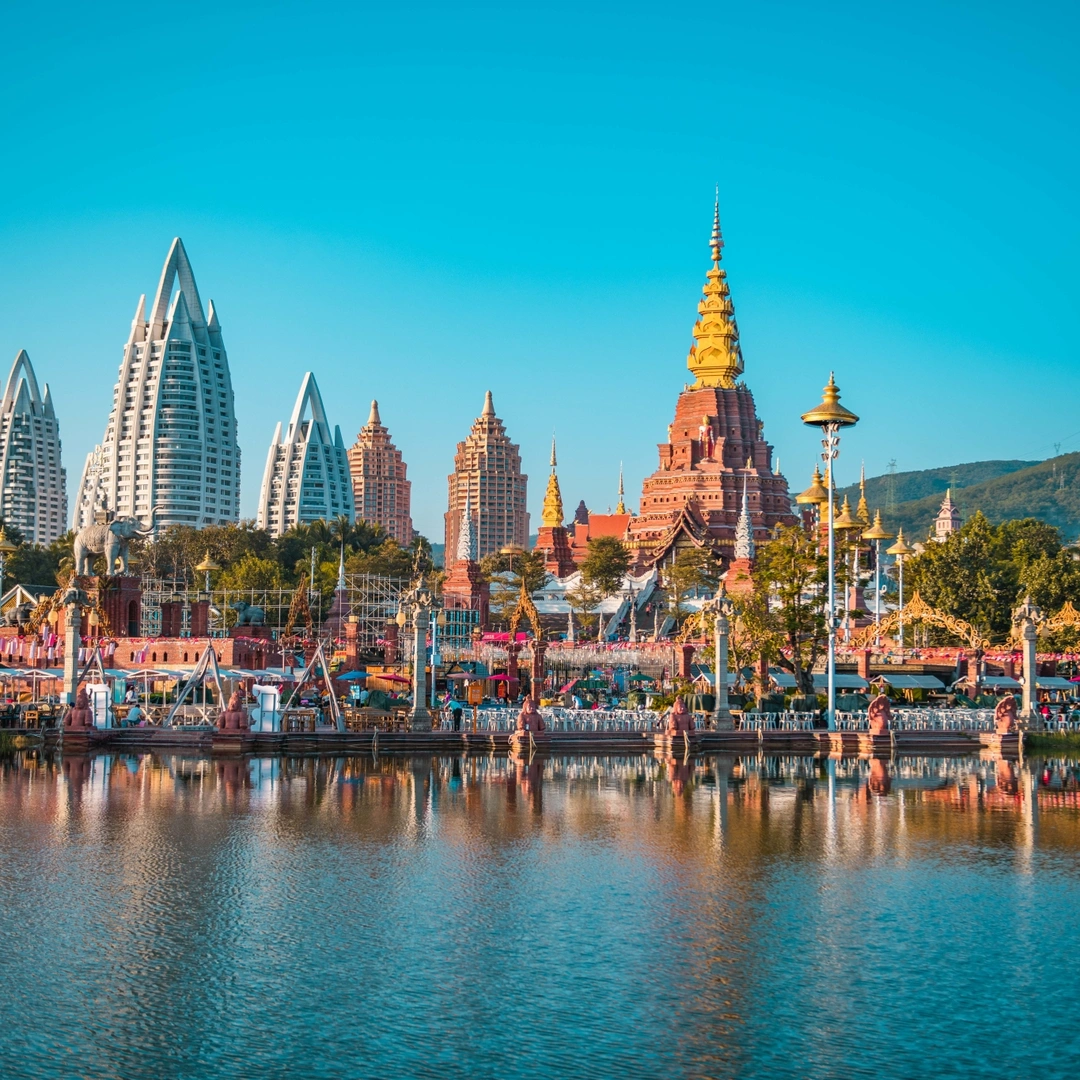
Many visitors stop at the Starry Night Market and the Great Golden Pagoda, but the scenery across the river, past the market, is even more pleasant. Not only can you see the full view of the Great Golden Pagoda and the buildings behind it, but you can also capture clear reflections, making the composition richer. Modern, avant-garde buildings stand alongside traditional temples on the banks of the Lancang River, and somehow, it all looks harmonious.
Near the Great Golden Pagoda, there's a café called Wantai that we visited based on its high local ratings. The milk tea comes in a bag and is incredibly delicious — 15 RMB per bag. I ordered the green milk tea, and Yiyun had coffee; we were both very satisfied. My personal favorite was the coconut ice — a light, shaved coconut ice cream with plenty of icy crystals. It wasn't super rich, but it was refreshing and perfect for the scorching heat. The bread pieces inside were especially crispy, and the bamboo basket and frangipani garnish lifted my spirits. However, the shop only sells drinks and this one dessert — no other options.
We took so many photos of each other that we barely had any shots together, so we had to resort to selfies. The long and short streets of Gaozhuang are shaded by green canopies, likely thanks to the local climate and soil. There's a saying: in Xishuangbanna, you can stick a hoe handle in the ground and it will grow. Under the green shade, lanterns and decorations are hung everywhere, adding color to the streets both day and night.
I thought the local cuisine, being so close to Southeast Asia, would lean more towards Thai food, but it's actually more Dai-style. The menu is filled with dishes called "包烧 XXX" (wrapped and grilled XXX), which immediately reminded me of Huang Lei's "wrapped and grilled chicken tendons" from the show Back to Field. While I wasn't blown away, the food was decent and met the baseline — at least I can say I tried the local specialties.
Starry Night Market: A Night to Remember
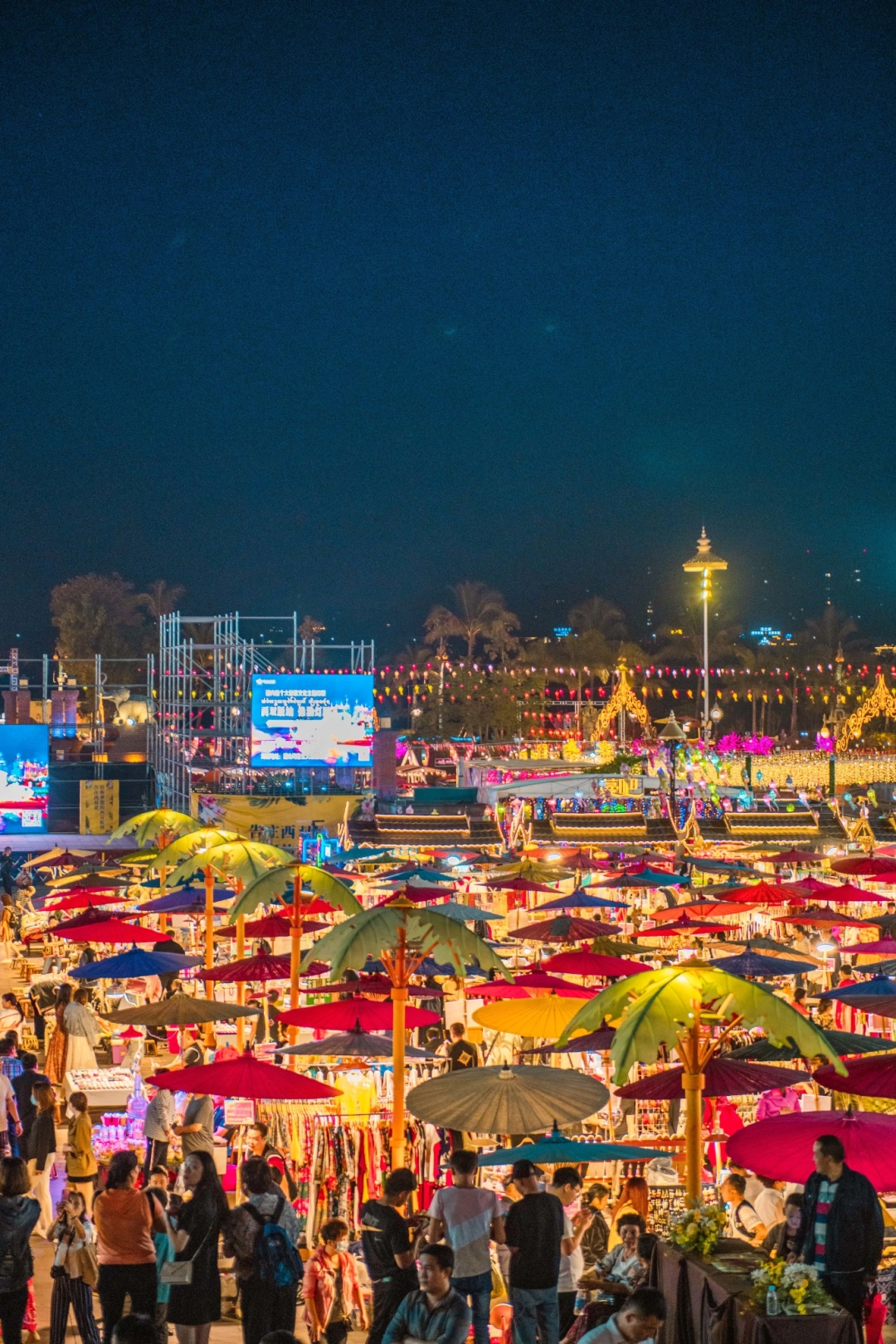
The Starry Night Market is located behind the Great Golden Pagoda, like a smaller version of a Thai night market. When the lights come on, it's a riot of color and a sea of people. The market is compact and easy to browse. From a higher vantage point, the sea of colorful lights really does resemble Bangkok's Ratchada Train Night Market. At the far end of the market stands a large elephant statue, adding to the Thai-Dai atmosphere.
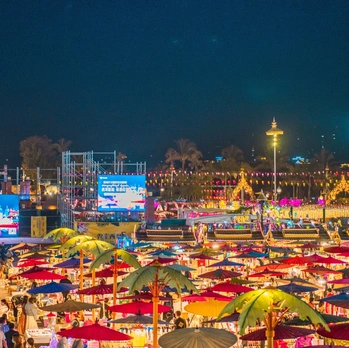
The stalls sell food and small souvenirs: colorful dresses, wood carvings, bamboo-woven bags, handmade soaps — all moderately priced, so even students can shop without breaking the bank. My beloved coffee milk tea — I had to drink as many bags as possible while in Xishuangbanna. Normally, drinking milk tea in the afternoon keeps me awake at night, but here, I was downing two bags a day and sleeping soundly.
Most of the barbecue stalls are by the river, with a wide variety of food and a pleasant setting. Some ingredients included plants or small fruits I'd never seen before — quite adorable. We ordered a barbecue for two. It wasn't cheap, and the taste wasn't great either — after all the spices, there was very little actual "main ingredient" left. What really annoyed me was that singers or tourists were belting out songs through loudspeakers all evening. When the singing was particularly off-key, it really ruined the mood, wasting my lovely riverside spot. I listened to music throughout the meal, and almost every song requested was a Cantonese pop song, pronounced with surprising accuracy. It made me wonder if 80% of the tourists in Xishuangbanna are from Guangdong.
Even without a proper meal, you can easily fill up by snacking your way through the market. The tropical fruits are especially sweet and juicy. The traditional sugar figurines have evolved from the classic twelve zodiac animals to various cartoon characters — keeping up with the times.
The dish I loved most was the mushroom and chicken hotpot. We ate at a place called Junxiangyuan (菌乡缘), which had good reviews online. A variety of mushrooms were cooked together in the pot, and the broth was incredibly flavorful. The service was also excellent — the owner gave us extra seasoning packets and even some liquor, though I barely drink and Yiyun was driving. Just looking at the photos makes my mouth water. I later recommended this place to my family, who also visited Xishuangbanna. They said another restaurant called "Zhenjunyuan" (真菌园) was even better, so you might want to check reviews and locations before deciding.
Near the Great Golden Pagoda, the restaurant Kutai (酷泰) offers great value for money and has long queues every day. You need to arrive by 11:30 AM for the lunch service. The shop is small, with a food-stall vibe, and they have limited ingredients — once it's gone, it's gone, so get there early! Dishes start at 15 RMB, and while the portions aren't large and the food isn't mind-blowing, the quality is well worth the price.
Besides the Starry Night Market, there are many other night markets on the streets around Gaozhuang, with slightly lower prices. If you want to shop, you can take a night shot from the higher ground of the Great Golden Pagoda and then move to the neighboring markets. Every stall is still shaded by colorful umbrellas, and strings of multicolored lights are hung across the streets, making the night vibrant and lively.
There are countless guesthouses and hotels near Gaozhuang, and they are truly great value for money — comfortable and satisfying. When choosing a room, we liked so many options that it felt like we could just pick any one with good ratings.
Manting Park: A Stroll Through the Dai King's Royal Garden
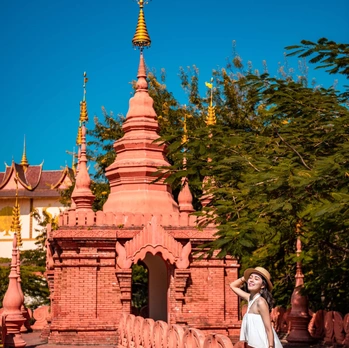
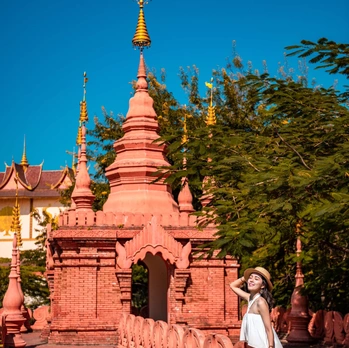
Manting Park was once the royal garden of the Dai kings. Covering over 400 mu (about 66 acres) and with a history of more than 1,300 years, it is the oldest park in the area. Located about 2 kilometers from the city center, it contains over 500 well-preserved ancient ironwood trees and other vegetation. The park also has hills and waterways, dotted with buildings in a strong Thai-Dai style. Walking through it, you might feel a momentary illusion of being in Bangkok. But with such a huge garden, I wonder if the busy Dai king ever had the leisure to fully enjoy it. The Dai people also call the park "Chunhuan," meaning "Garden of the Soul" — legend has it that when the Dai princess visited, her soul was captivated by the beauty and couldn't bear to leave.
Practical Tips: Admission is 54 RMB. Opening hours are 08:00–17:30. I recommend spending about half a day here. The electric cart costs 20 RMB for a one-way trip and 40 RMB for a round trip. The park has plenty of tree shade, so it's cool even under the scorching sun.
The first large building you see upon entering is a pink temple, which now serves as a café. A large platform on the second floor is a popular spot for wedding photos. For a clear shot like this, you have to squeeze in between wedding photography sessions. Across the river from the platform, there's a small, unknown temple that is also quite exquisite.
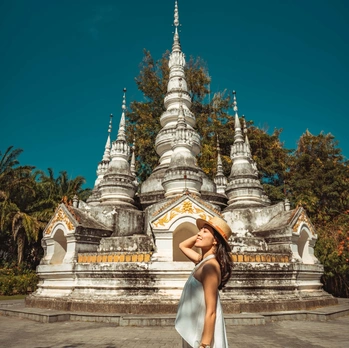
Most visitors to the park are independent travelers; guided tour groups are rare. We finally encountered one and eavesdropped for a bit — mostly stories about religious legends. If you want a guided experience, you can book a tour package that includes commentary. Halfway through, we saw a giant tree that seemed particularly popular for young couples making wishes. The White Pagoda is another attraction — a name that's both literal and self-explanatory.
General Buddhist Temple: A Place for Prayer and Appreciation
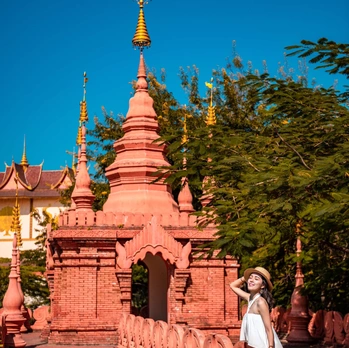
The General Buddhist Temple is connected to Manting Park and is included in the same ticket. The temples here are more concentrated and grander. It is the center of Buddhist worship in Xishuangbanna and the highest-ranking temple complex. This pink wall looks especially fresh in photos. Upon entering, you first see several small, independent temples with intricately carved beams and pillars. The details are exquisite, with gold and bright red everywhere — an aura of "overwhelming wealth."
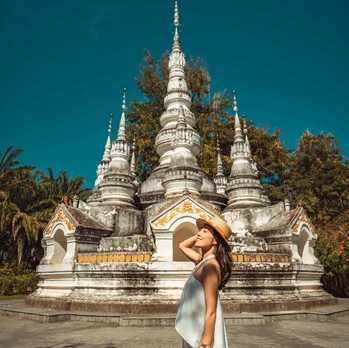
In front of the main temple stands a majestic golden Buddha statue. Incense burners and candle holders are provided, making it convenient for devotees to offer incense. The Bodhi leaf tree in the courtyard was planted in 1993 by the Supreme Patriarch of Thailand, symbolizing the enduring friendship and Buddhist exchange between China and Thailand. There is also a Bodhi tree planted by Princess Sirindhorn of Thailand in 1995, though I didn't notice it — a shame.
The staircases on both sides of the temple leading to the second floor are adorned with golden dragons, making for great photos from any angle. In short, don't think that just because you're not a Buddhist, the temple will be boring. Appreciating the architecture and the cultural atmosphere with an aesthetic eye can be just as rewarding.
InterContinental Hotel: A Hotel You Can't Put Your Camera Down
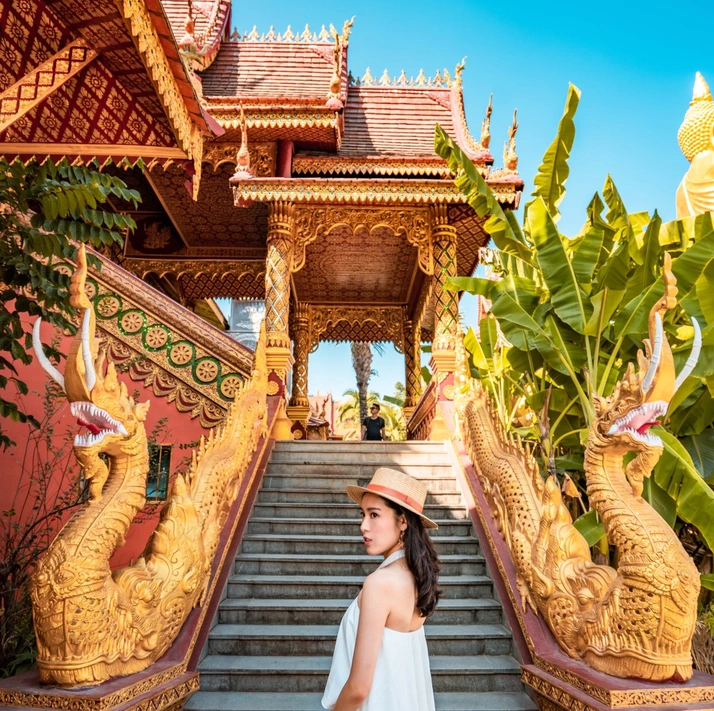
I'm writing about the InterContinental Hotel separately simply because it's so photogenic. The entire hotel design combines the style of a Dai royal palace with a tropical rainforest landscape. Many corners are perfect for photos. The hotel's biggest advantage is its beauty — no doubt about that. However, it's quite far from Gaozhuang, about a 30-minute drive. Compared to the generally low prices in Xishuangbanna, the InterContinental's room rates are in a league of their own, and staying here makes it inconvenient to get late-night snacks or visit the night market. But as two aesthetics-driven travelers, we were won over by the design and reluctantly booked a room. Overall, if you have a higher budget and a leisurely travel pace, staying at the InterContinental will be a delight. If you're more concerned about value for money or have limited time, choosing a guesthouse or hotel in Gaozhuang is more practical.
On a relaxing afternoon, we booked the hotel's afternoon tea. The taste was average — we were really just paying for the "leisurely ambiance." The elephant-shaped chocolates were a nice local touch. The evening water lantern release activity gave us a taste of local culture, even if only approximately. Under different lighting, the scenery was either rich and vibrant or elegantly charming.
The hotel has both a Chinese restaurant and a Thai restaurant. The Thai restaurant has an excellent reputation, with a per-person cost of over 200 RMB. In the end, we couldn't bring ourselves to splurge. We only ate at the hotel once when we were short on time, and the Chinese restaurant's food was decent. Behind the hotel's villa area, there's a large wheat field. It was still green when we were there, and we arrived just before sunset. Otherwise, it would have been a perfect spot for some Japanese-style清新 (refreshing) photos.
Xishuangbanna Tropical Botanical Garden: Diving into the Rainforest
After exploring the city center for a few days, I recommend heading to the outskirts on the third day. Wild Elephant Valley, Wangtianshu (Sky Tree), and the Xishuangbanna Tropical Botanical Garden are all quite far from the city. After weighing our options, we decided the Botanical Garden was the most interesting. The entire park feels like a tropical rainforest, making it a great place for both learning and photography. Along the way, we saw several study groups — a few adults leading a group of children, explaining and observing plants in a vivid and engaging way. We couldn't help but exclaim: "So this is how the wealthy take their nature classes!"
Practical Tips: The garden is divided into East and West sections and is very large — you can easily spend a whole day here. If you're not up for a lot of walking, you can take an electric cart (40 RMB) at the entrance, hopping on and off at various stops. During the pandemic, tickets were half price, with the East and West gardens each costing 50 RMB. The East Garden is larger and better suited for those who love hiking through primeval forests, taking about 5 hours. The West Garden takes about 4 hours. Since we had an evening flight to catch, we only explored part of the West Garden. Overall, the West Garden has more exotic flowers and plants and more photogenic spots.
In my opinion, the Water Lily Area and the Hundred Flowers Garden are the best for photos. With limited time, we headed straight to the Water Lily Area first. What we saw upon getting off the cart is shown in the picture above. Although Xishuangbanna has a pleasant climate year-round, it was already late autumn, so the water lilies were far from their prime summer beauty. Their numbers had dwindled, their size had shrunk significantly, and they looked quite withered. The giant lily pads that can support the weight of an adult, as seen in online photos, were nowhere to be found.
To walk on the wooden boardwalk for photos, you need to pay an additional 10 RMB on top of the admission fee. I couldn't help but admire the business acumen — this is the best spot for aerial shots with a drone. After carrying my little drone around for a week, it finally had its moment to shine. Since we paid to be on the boardwalk, we had to be assertive about taking photos!
Our next stop was the Hundred Flowers Garden. With limited time, we had to make choices. As you walk along the path in the Hundred Flowers Garden, you're sure to spot a bright yellow hot air balloon rising into the sky. We inquired about the price: 278 RMB per person for a ride, or 666 RMB for a family. However, the balloon only stays in the air for about 10 minutes and basically goes straight up and down — not great value for money. Even if you don't take a ride, the big yellow balloon makes a striking and cute backdrop for photos amidst the flowers and trees.
While my companion was in the restroom, I quickly dashed into the Garden of Exotic Flowers and Plants. It contains interesting plants like mimosa and dancing grass. Mimosa is common, but I couldn't resist reaching out to touch it. It didn't react at all... Hmph! Shameless! Then I went to the dancing grass. The guide said it sways its branches when it hears music. I clapped my hands and even sang a little song to it... Still no reaction... I felt completely fooled. Luckily, it was the off-season and there were few tourists around, otherwise, my behavior would have been utterly ridiculous.
Well, it seems this garden and I weren't meant to be. But at least we experienced the two best sections. Satisfied, we left for our next destination: Tengchong!
Part Two | Tengchong: Chasing Autumn in Tengchong
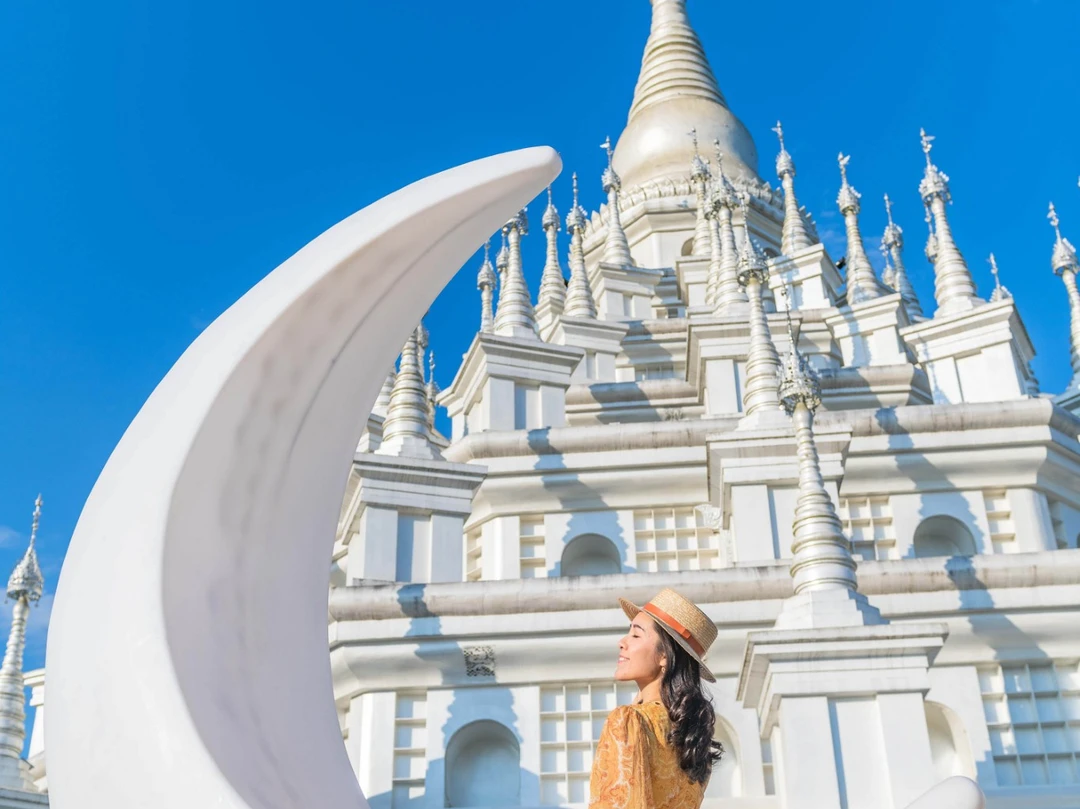
Tengchong is famous for its volcanoes and hot springs, but come autumn, the golden ginkgo leaves of the Ginkgo Village capture everyone's attention. This was incredibly appealing to me, a Guangdong native who has almost never experienced autumn. This ten-day trip was essentially expanded just to see the yellow leaves of Ginkgo Village.
Tengchong's ginkgo season runs from mid-November to early December. To be safe, we chose the period from late November to early December. From the moment we booked our tickets, we were constantly checking local updates. As our departure date approached, the ginkgo leaves still showed no signs of turning yellow — we had arrived too early. So, we scheduled the ginkgo viewing for the very end of our trip, hoping a few more days would bring out a bit more yellow.
My impression of Tengchong is best summed up by the phrase: "The weather is clear and mild, the scenery is leisurely and beautiful."
Heshun Ancient Town: Leisurely Time in a Commercialized Town
Heshun Ancient Town wasn't originally called that. It was named "Heshun" (河顺) because a small river flows around the town, meaning "smooth river." Later, the name was refined to "Heshun" (和顺), meaning "harmonious and smooth," reflecting the hope for harmony among the people and smooth governance. The town has a population of over 6,000, but more than 12,000 people of Heshun origin live overseas, making it a famous侨乡 (hometown of overseas Chinese) in Yunnan.
Many travelers today complain about the "commercialization" of tourist attractions, and Heshun is no exception. However, they forget that this was an important town on the Ancient Tea Horse Road, and its commercialization began over 400 years ago. Despite centuries of commercial activity, the town remains quiet and leisurely, which makes it more likable than popular ancient cities like Lijiang or Dali.
As you first enter Heshun, you'll see four large characters, "和顺和谐" (Heshun Harmony), inscribed by former Premier Zhu Rongji, blending well with the ancient town's style. For over 600 years, Central Plains culture, Western culture, Nanzhao culture, and borderland culture have converged and collided here, creating a unique侨乡 (overseas Chinese hometown) culture and horse caravan culture. The main cultural attractions include the former residence of Ai Siqi, the Heshun Library, the Museum of the Burma Road and WWII, and the Chinese-Western eclectic ancient residences like Wanlouzi and the Liu Family Courtyard. The admission ticket is 55 RMB per person (includes Heshun Library, Yuanlong Pavilion, Ai Siqi's Former Residence, Wenchang Palace, Wanlouzi Folk House Museum, Museum of the Burma Road and WWII, and Heshun Alley).
Walking from the city streets into the ancient town, you pass a long, straight road flanked by green mountains and clear waters. You'll pass by lotus ponds, which in late November are already withered. The town has six washing pavilions, where village women still do their laundry — a unique sight in China. At the end of the road, you pass through a memorial archway and arrive at the small river that encircles the village. Just as we were about to cross the bridge into the ancient town, we noticed a group of photographers with their telephoto lenses set up by the river, probably shooting a time-lapse of the flowing water. Following their line of sight, we saw a picturesque scene: a small bridge, flowing water, lush greenery, a blue sky, grey tiles, and white walls — a tranquil and beautiful image. We stepped into the frame, becoming part of the painting.
Two stone arch bridges at the village entrance, built during the Daoguang reign of the Qing Dynasty, have a poetic name: Twin Rainbow Bridges. Compared to the instant digital images we capture today, I find myself missing the days of my childhood, when I would go sketching in the park with my art teacher. Seeing someone painting by the river brought back many memories — of being a child, anxious and crying because I couldn't finish my painting before sunset; of the mischievous classmate next to me who dropped his spicy snack on my sketchboard, smudging my drawing, making me stomp my feet in anger; and of finishing a piece, showing it to the teacher, and watching him effortlessly add a few strokes that instantly elevated my work to a whole new level.
As a child, I was obedient and cautious. In outdoor classes, I would just set up my easel and outline the scene. The scenery before me was merely a tool for completing my assignment; I never truly appreciated it. I didn't even dare to sneak away to play on the swings when we were sketching at the children's park... Fortunately, as an adult, I've had many opportunities to immerse myself in nature, collecting countless beautiful and magnificent landscapes. It's just a shame that I've forgotten everything I learned back then and can no longer recreate those scenes with paint and brush.
Heshun has a long tradition of venerating culture and education. During the Ming and Qing dynasties, the town produced over 400 successful candidates in the imperial examinations. I feel that the Wenchang Palace (Temple of the God of Literature) here must be particularly efficacious. Unfortunately, perhaps due to the pandemic, it was closed. Even though I'm past the age of taking exams, I still wanted to soak up some of that scholarly aura.
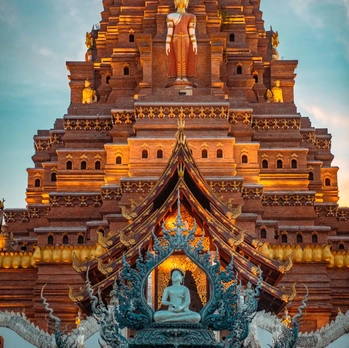
Other main cultural attractions in the town include the former residence of Ai Siqi, the Heshun Library, and the Museum of the Burma Road and WWII. The Heshun Library is one of the largest rural libraries in China, funded by overseas Chinese, and is nearly a century old. This quaint and distinctive library is located along the river, making it very easy to find. It houses tens of thousands of books, including many ancient texts. We didn't go inside due to time constraints.
However, the painter we met earlier said that the most worthwhile thing to see in Heshun is the ancient courtyard houses, which blend Chinese and Western styles and are both historically and aesthetically valuable. But he said it's only interesting if a local takes you to see their own home. We wandered through the winding alleys of the ancient town, our feet on the smooth stone slabs, with rows of simple, ancient dwellings on either side. As we walked and looked, it was easy to lose track of time.
Thanks to the prosperity of the Silk Road, many who left this town were fortunate enough to return home in glory and wealth, and they began building ancestral halls and grand mansions. Unfortunately, we didn't find any opportunity to ask a local to show us around, so we just kept walking on our own. We passed by many ancestral halls and residences, and I really felt that hiring a guide to explain things would have added so much more depth.
The Cun Family Ancestral Hall is a landmark of Heshun. First built during the Jiajing reign of the Ming Dynasty and expanded in the 10th year of the Jiaqing reign of the Qing Dynasty, it is the oldest of the town's eight major ancestral halls. Its three Roman-style arched gates are particularly impressive, and the Chinese-Western融合 (fusion) style is unforgettable.
Part Three | Mangshi: Quiet Moments in a Border Town
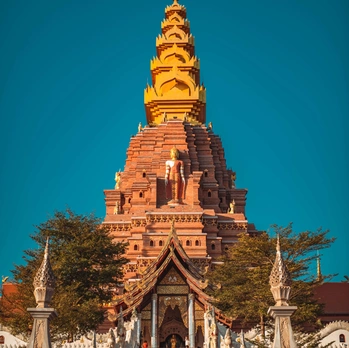
Setting out from Tengchong, we headed west and arrived at Mangshi, the capital of the Dehong Dai and Jingpo Autonomous Prefecture. This small border town, adjacent to Myanmar, lacks the hustle and bustle of Xishuangbanna and the crowds of Tengchong. Instead, it possesses a unique sense of tranquility and ease.
Mangshi's streets are clean and tidy, lined with palm trees and bougainvillea, exuding a tropical vibe. The architecture here blends Dai, Jingpo, and Burmese styles, with vibrant colors and unique shapes. Walking down the street, you might feel as if you've stepped into a foreign country.
Menghuan Grand Golden Pagoda: The Light of Faith on the Border
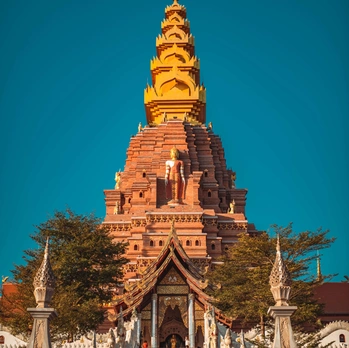
The Menghuan Grand Golden Pagoda is Mangshi's most famous landmark and the largest hollow pagoda in Asia. Perched atop Lei Yarang Mountain, it is resplendent and magnificent. From the top, you can overlook the entire city of Mangshi and gaze at the mountains of Myanmar in the distance.
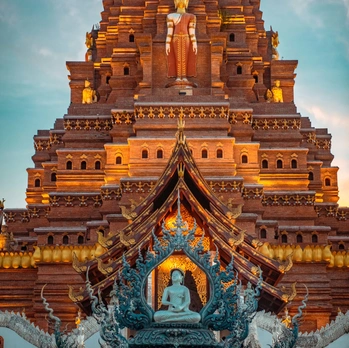
The exact date of the pagoda's original construction is unknown, but legend says that before his death, Sakyamuni was reincarnated as a golden rooster (A Luan) and lived here. Later, Buddhist devotees built this golden pagoda to commemorate the Buddha's footsteps. The current pagoda was rebuilt in 2007. It stands 76 meters tall with a base diameter of 50 meters, its body covered in gold leaf, gleaming brilliantly in the sunlight.
Before entering the pagoda, you must remove your shoes as a sign of respect. Inside, a giant statue of Sakyamuni Buddha is enshrined, and the walls are adorned with exquisite murals depicting Buddhist stories. There is also a large bronze bell that visitors can ring for blessings. The bell's deep, resonant tone echoes through the valley, bringing a sense of peace to the heart.
Practical Tips: Admission is 40 RMB. Opening hours are 08:00–21:00. I recommend visiting in the late afternoon, so you can enjoy the sunset and then see the pagoda lit up in all its dazzling glory at night.
Tree-Wrapped Pagoda: A Wonder of Nature and Faith
In the urban area of Mangshi, there is a奇特 (unique) sight — the Tree-Wrapped Pagoda. A giant Bodhi tree has grown from the crevices of a pagoda, its roots tightly enveloping the structure, creating the remarkable phenomenon of "tree wrapping pagoda, pagoda wrapping tree."
This pagoda was built during the Qing Dynasty, over 200 years ago. Legend has it that a bird carried a Bodhi tree seed and dropped it into a crack at the top of the pagoda. The seed sprouted, grew, and gradually enveloped the pagoda. Today, the tree stands about 30 meters tall, with a canopy covering hundreds of square meters. The pagoda is completely encased in the tree's roots, as if nature and faith have become one.
Standing beneath the tree, looking up, sunlight filters through the leaves, casting dappled shadows, evoking a sense of mystery and solemn power.
Mangshi Cuisine: Flavors of the Border
Mangshi's cuisine blends Dai, Jingpo, and Burmese flavors — sour, spicy, fresh, and aromatic, leaving a lasting impression.
Recommended Dishes: - Sapie (撒撇): A traditional Dai dish made from cow's bile, chili, and spices, served with rice noodles and beef. It has a unique, sour, and spicy flavor. - Paoluda (泡鲁达): A dessert introduced from Myanmar, made with condensed milk, coconut shreds, sago, and dried bread. It's cold, refreshing, and sweet without being cloying. - Huoshao Ganba (火烧干巴): A traditional Jingpo dish of grilled, seasoned dried beef. It's spicy, chewy, and a great accompaniment to alcohol. - Sour Bamboo Shoot Fish (酸笋鱼): A classic Dai home-style dish of fish stewed with sour bamboo shoots. It's sour, spicy, and delicious, perfect for stimulating the appetite.
In the streets and alleys of Mangshi, food stalls and night markets are everywhere. At night, the city is brightly lit and filled with enticing aromas, making it impossible to resist stopping for a bite.
Epilogue: Three Cities, Three Seasons, a Dream I Never Want to Wake From
A nine-day journey, from the height of summer in Xishuangbanna...
You should also read:

God’s Abandoned Palette: A Self-Drive Journey Through Yunnan’s Dongchuan Red Land
God’s Abandoned Palette: A Self-Drive Journey Through Yunnan’s Dongchuan Red Land Travel has never been about reaching some distant geographic coordinate. It’s about encountering, along the way, the version of yourself buried beneath the rubble of daily routine. During this May Day holiday, I finally…
Continue reading...
Body in Hell, Heart in Heaven: A Pilgrimage Through Tiger Leaping Gorge — A Dialogue Between Heaven and Earth
Body in Hell, Heart in Heaven: A Pilgrimage Through Tiger Leaping Gorge — A Dialogue Between Heaven and Earth Introduction: When the Gorge Splits Open Beneath Your Feet Some say Tiger Leaping Gorge is the closest place on Earth to the border between "hell" and…
Continue reading...
Cloud Travelogue · Dali of Wind, Flowers, Snow, and Moon: A Three-Day, Two-Night Journey of a Free Spirit
Cloud Travelogue · Dali of Wind, Flowers, Snow, and Moon: A Three-Day, Two-Night Journey of a Free Spirit I am a cultured female foodie with a touch of rogue charm. I slung on my backpack, took my lover's hand, and set off on a spontaneous…
Continue reading...