Cycling Through Southern Yunnan | Welcoming the New Year with a Bike Ride Under Xishuangbanna's Warm Sun
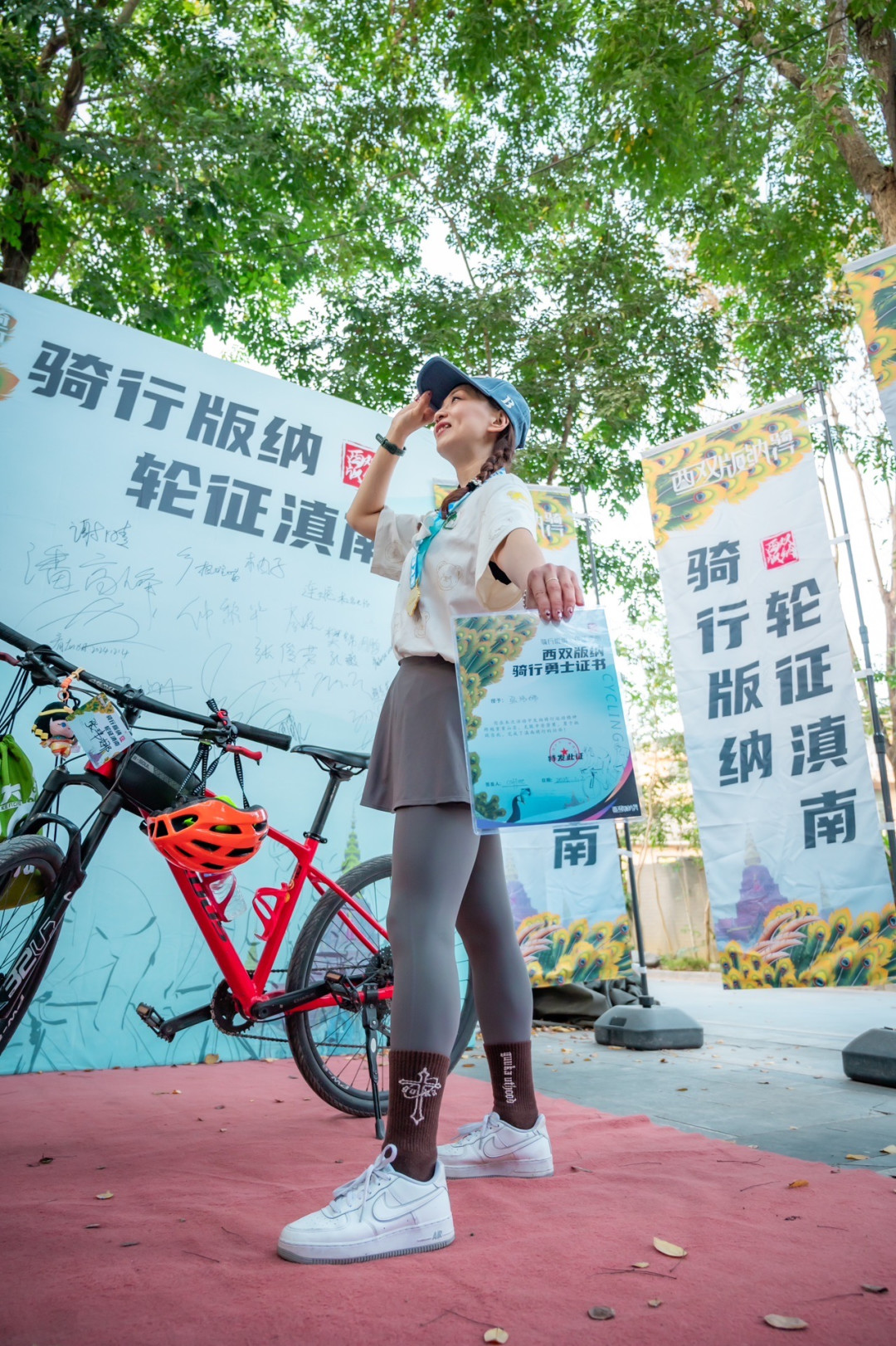
Cycling Through Southern Yunnan | Welcoming the New Year with a Bike Ride Under Xishuangbanna's Warm Sun
While the northern lands lie frozen under snow and ice, while the biting wind sneaks into your collar with dry air, my longing for the south grows like wild vines. Xishuangbanna — a name deeply tied in my mind to tropical rainforests, peacocks fanning their tails, and water-splashing festivals — finally became my destination for escaping the cold this winter.
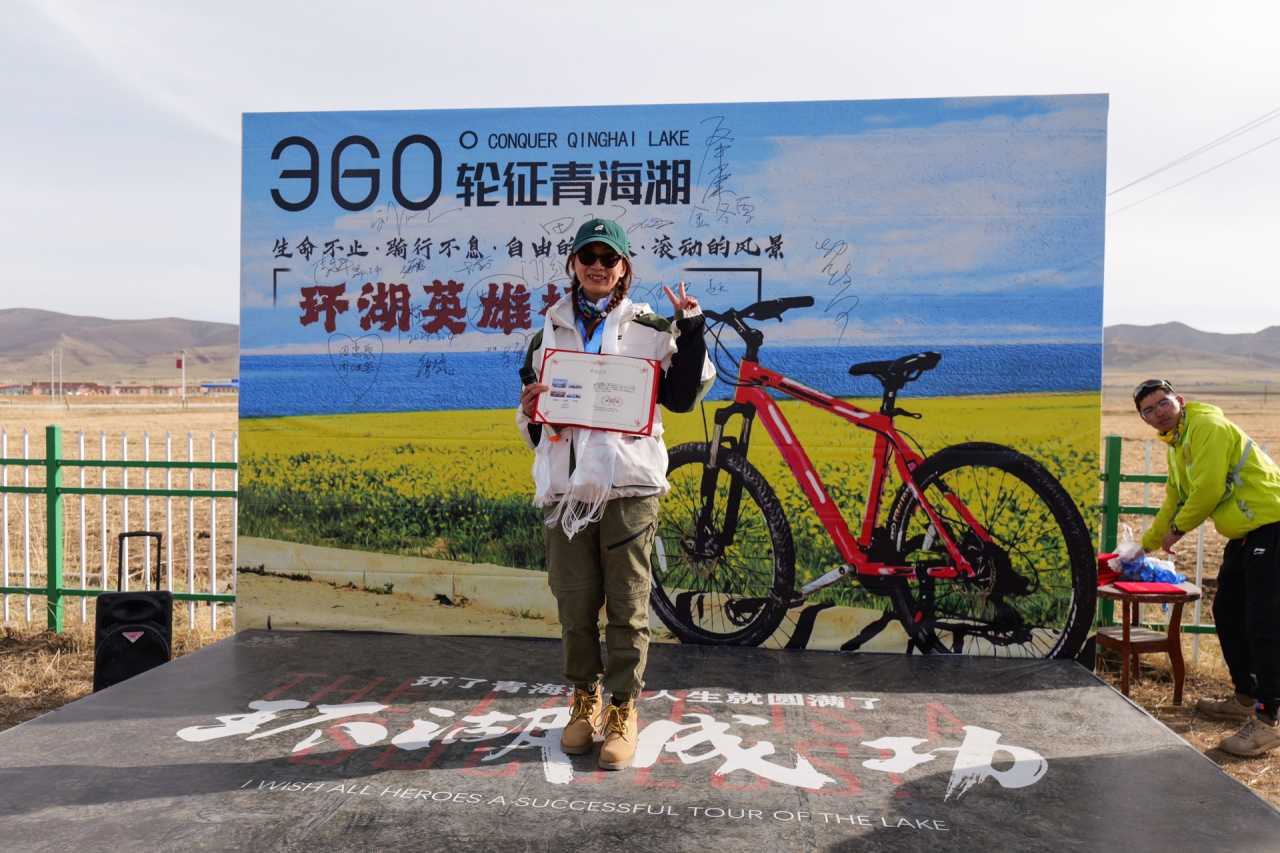
In 2024, I went from being a complete novice who knew nothing about cycling to completing challenging loops around Hainan Island and Qinghai Lake, gradually falling in love with this way of measuring the earth with my own two feet. And this time, I decided to welcome the new year with even more ceremony — cycling through Xishuangbanna's tropical wonderland. Though I've returned home now, my heart remains in that sun-drenched land. Let these words take me back to those warm days.
Pre-Departure Preparation: The Wisdom in Your Pack
Essential Items Checklist
Electronics: Power banks, chargers, charging cables, earphones, camera gear — none of these modern "life-support devices" can be left behind.
Daily Necessities: Sunscreen is your first line of defense in the tropics. Also pack skincare products, tissues, towels, and toiletries.
Special Gear: - Mosquito repellent or cooling spray (the "hospitality" of tropical insects is far more intense than you imagine) - Sports sunglasses (clip-on lenses available for those who wear glasses) - Umbrella, sun hat (a baseball cap is recommended — it blocks the sun and stays on in the wind)
Gear Provided by the Club
Brand-name mountain bikes, small backpacks, helmets, gloves, neck gaiters, raincoats, leg straps, and reflective safety vests — these professional items let even beginners ride with confidence.
Shared First-Aid Supplies
First-aid kits, iodine, alcohol, Yunnan Baiyao (a traditional Chinese trauma medicine), insect bite ointment — the guides thought of everything more thoroughly than we did ourselves.
Getting There: How to Reach This Tropical Paradise
By Air: Fly directly to Xishuangbanna Gasa Airport, just 10 km from the city center. A taxi costs about 20 yuan and takes roughly 30 minutes.
By High-Speed Rail: Take a bullet train from Kunming to Xishuangbanna — about a 3-hour ride. The high-speed rail station is about 9 km from downtown, also about 30 minutes away. (Note: It takes another hour to get from Kunming Airport to the train station.)
Attractions Worth Visiting
Free Attractions: Nannuo Mountain, Jinghong Grand Golden Pagoda, Starry Night Market, and the Ethnic Museum — these places offer rich experiences without costing a cent.
Paid Attractions: - Manting Park: 40 yuan/person (closes at 5:00 PM) - Tropical Flower Garden: 38 yuan/person - Chinese Academy of Sciences Botanical Garden: 80 yuan/person - Mengle Grand Buddhist Temple: 120 yuan/person - Dai Ethnic Village: 120 yuan/person
What to Wear: The Art of Handling Temperature Swings
Daytime in Xishuangbanna is summer wear territory — shorts and t-shirts, breathable long sleeves and pants, quick-dry gear, cycling jerseys, sun-protective clothing. Go as light and cool as you like. But mornings and evenings bring a noticeable temperature drop, so a light jacket is essential.
For footwear, bring at least two pairs: comfortable athletic shoes for daily riding, and stiff-soled shoes for rainforest hiking. Comfort is the number one rule — don't make your feet suffer.
Medication Preparation: Better Safe Than Sorry
Xishuangbanna has a hot, humid climate and plenty of insects. Common medications like heatstroke prevention, insect repellent, digestive aids, and cooling balm are best prepared in advance. When I asked at the hotel front desk about mosquito repellent, the receptionist smiled and said, "There aren't many mosquitoes this season — just use some cooling spray." As always, the locals know best.
The Cycling Route: A 180-Kilometer Tropical Crossing
The Xishuangbanna loop is the most representative cycling route here, totaling about 180 kilometers with roughly 2,000 meters of cumulative elevation gain. The difficulty increases gradually — challenging enough to be meaningful, but not so hard as to be discouraging. The route crosses four small basins, winding through village roads, tropical rainforests, and mountain passes.
Route Overview: - Day 1: Arrival — Xishuangbanna — Gaozhuang Xishuangjing — Starry Night Market - Day 2: Jinghong — Lancang River Ride — General Buddhist Temple — Dai Ethnic Village Water Splashing — Menghan - Day 3: Menghan — Manyuan Dai Village — Mushroom House — Botanical Garden — Menglun - Day 4: Menglun — Yulin Mountain Pass — Tea Making & Tasting — Local Cuisine — Jinuo - Day 5: Jinuo Mountain — Tropical Rainforest Hike — Road Cycling — Ethnic Museum — Jinghong
Day One: Assembly and Preparation
After flying from Tianjin to Kunming, then transferring to the high-speed rail to Xishuangbanna — a full 24 hours of travel — I finally set foot on this tropical rainforest-like land.
After checking into the Taohuayuan Villa Hotel, the first thing I did was ask about mosquito repellent. The hotel's broadleaf plants were astonishingly tall, and everywhere I looked was intense green. The midday sun was somewhat fierce, yet it felt incredibly warm.
At 4:00 PM, we gathered in the hotel lobby for the orientation meeting. The guide explained the route, road conditions, and local customs in detail. That's when I learned that the Lancang River flows through six countries, stretching over 2,000 kilometers. Originating from the Tanggula Mountains in Qinghai, it passes through Tibet and Yunnan, and after leaving China is called the Mekong River, flowing through Myanmar, Laos, Thailand, Cambodia, and finally emptying into the South China Sea near Ho Chi Minh City, Vietnam — the largest international river in Southeast Asia.
During the self-introduction session, I learned our group had 8 members, but only 5 showed up for the briefing. To my delight, I saw a familiar bike — the red "Leopard" (瑞豹小红) that had accompanied me on my Hainan and Qinghai Lake rides, the first mountain bike I ever rode. Seeing it again felt like reuniting with an old friend.
After the meeting, we did a 5-kilometer test ride from the hotel to the Peacock Tower viewing platform, overlooking the Lancang River. The Peacock Tower at sunset was breathtakingly beautiful, and the temperature was just perfect. We had dinner by the river — there are many Thai restaurants here, and the riverside tables offer spectacular views. Tom Yum Goong soup, green papaya salad, and curry beef brisket — each dish was a masterpiece of Thai cuisine.
Strolling along the river, we reached the entrance of the Starry Night Market. The market was lively and bustling, with ethnic dance performances on a central stage, food stalls, handicrafts, accessories, and traditional clothing. Most eye-catching were the people holding tablets, recruiting customers for photos — "199 yuan for one set, get one free." I decided not to try that, though.
The Grand Golden Pagoda shone brilliantly in the night, but I couldn't linger too long at the market. Tomorrow the cycling begins — time to head back to the hotel and rest up for the next four days.
Day Two: Incense at the General Buddhist Temple and the Thrill of Water Splashing
December 30, 2024. Clear skies, temperature 13°C to 28°C. We set out from the Jinghong hotel, heading for Menghan Town — about 40 kilometers of cycling.
Warm-up at 8:20 AM, departure at 8:30 sharp. We rode to the General Buddhist Temple in the morning, then followed National Highway 213 for 30 kilometers to Menghan Town for lunch and hotel check-in. In the afternoon, we cycled to the Dai Ethnic Village to experience the Water Splashing Festival.
The General Buddhist Temple: 1,400 Years of Faith
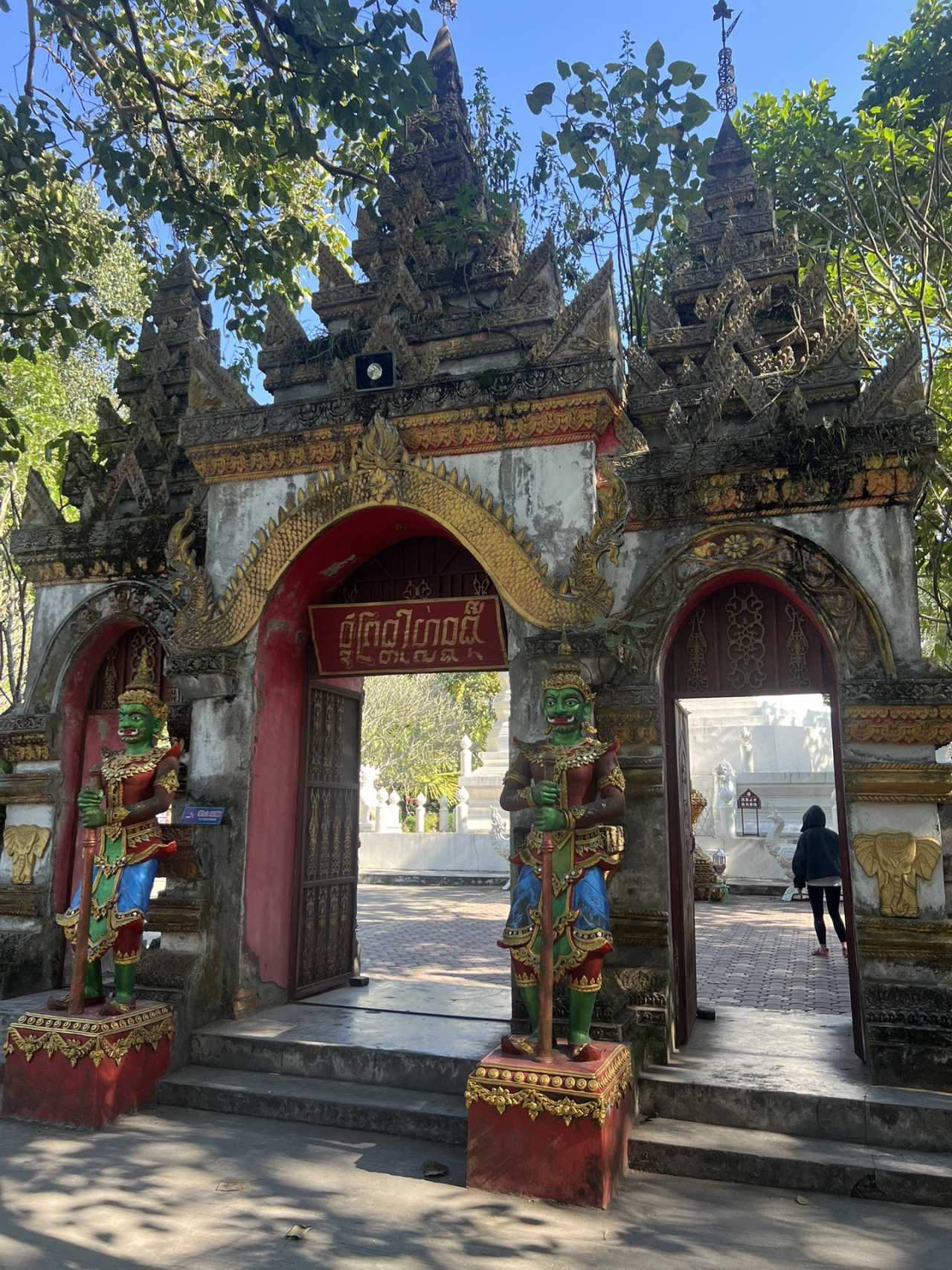
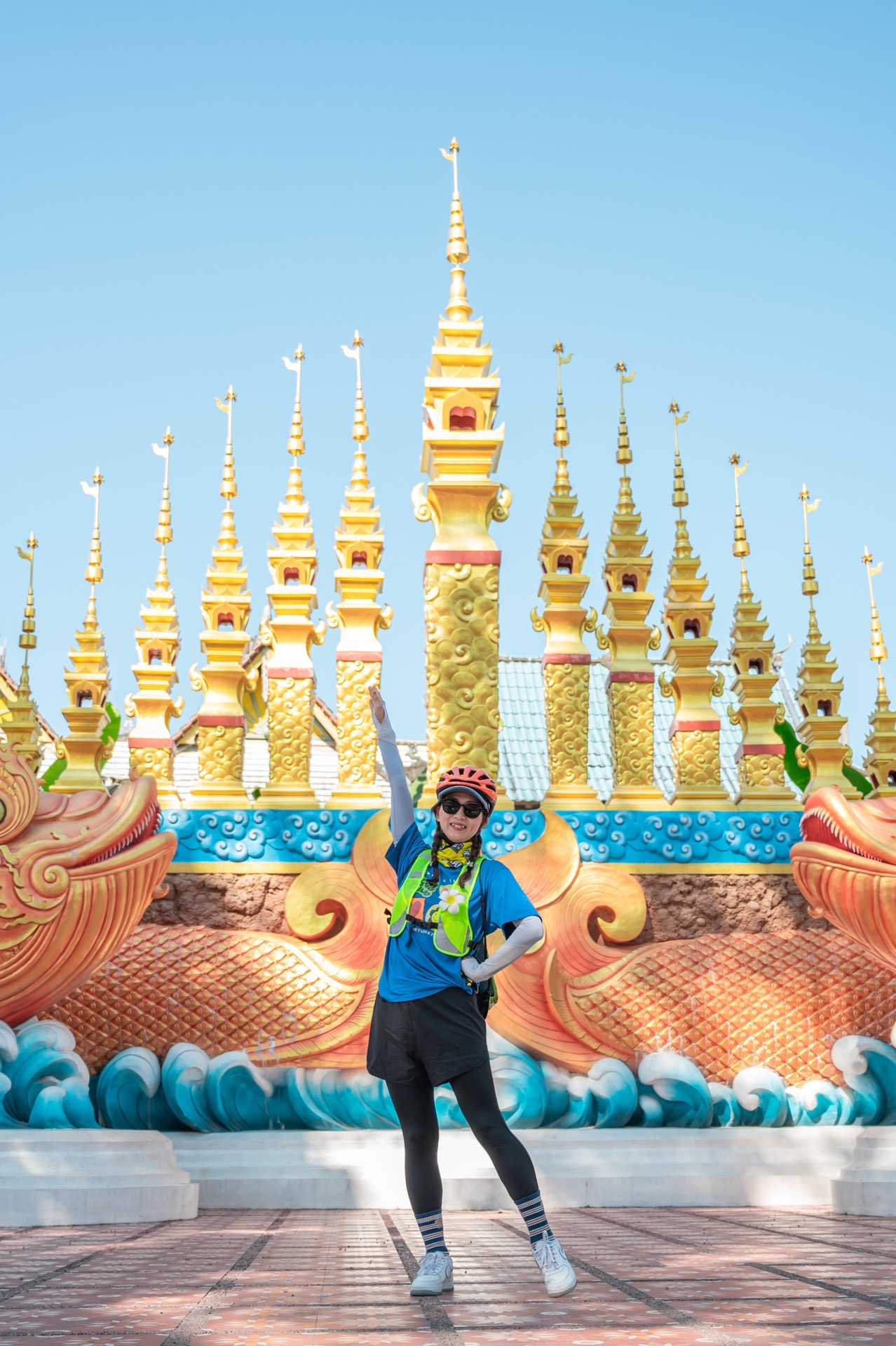
The Xishuangbanna General Buddhist Temple is one of the oldest Buddhist temples in Yunnan, first built in 615 AD — over 1,400 years of history. It was the first temple constructed after Theravada Buddhism arrived in Xishuangbanna, holding the highest rank and governing 593 temples of various sizes. It serves as a pilgrimage center for Buddhist devotees.
The temple architecture blends Dai, Central Plains, and Southeast Asian styles — triple-tiered roofs, brick-and-timber main halls, uniquely designed bell and drum towers. It's the pinnacle of Dai architectural art. Every photo taken here could be a masterpiece.
Manting Park is right next to the temple, but since we needed to keep cycling, I didn't have time to visit. However, after the ride ended, I booked a "Dai Princess" photoshoot at Manting Park — I'll make up for it then.
Little Joys Along the Ride
During the ride, we stopped for fruit. Over the next few days, I truly achieved fruit freedom — mangoes, bananas, star fruit, jujubes... every single one was sweet enough to make you question reality.
We arrived at the hotel around noon, freshened up, and went for lunch. Small wontons with Dai-style cold salad — the shrimp wontons with vinegar and chili oil were tangy and spicy, very appetizing. The Dai cold salad was a first for me — somewhat similar to northern Chinese cold dishes, but with different ingredients. Worth trying.
Dai Ethnic Village: The Water-Splashing Carnival
The afternoon sun was fierce, but cycling along the shaded paths was wonderful. About five kilometers later, we reached the Dai Ethnic Village, covering 336 hectares and consisting of five best-preserved natural Dai villages. Cycling inside the village was fantastic — the area is huge, and without bikes you'd need an electric cart, or spend far too long walking.
At the peacock garden, winter isn't the mating season, so seeing a peacock fan its tail was unlikely. But the solemnity of the Manting Buddhist Stupa still inspired awe.
During the afternoon break, I had freshly squeezed sugarcane juice — so sweet it made me squint. I also ate the sweetest star fruit I've ever had (the green ones are the sweet ones), and a rice cake bigger than my face that was crispy and fragrant.
Then came the moment I'd been most looking forward to — the water splashing. After a simple opening ceremony, the music started. Nobody knew each other, but everyone had the same move — "splash!" The guide thoughtfully provided basins. I was soaked through, but absolutely ecstatic. Amid the flying water, there was nothing but joy. A full 40 minutes of water splashing — exhausting enough to make my waist, arms, and even ribs ache. Sitting by the water to rest, watching the blue sky and white clouds, was its own kind of pleasure.
For dinner, a roadside table was just as enjoyable. Pig trotter rice, duck neck, plus another serving of the cold salad from lunch — a hearty feast.
Day Three: Nostalgia at the Mushroom House and Wonder at the Botanical Garden
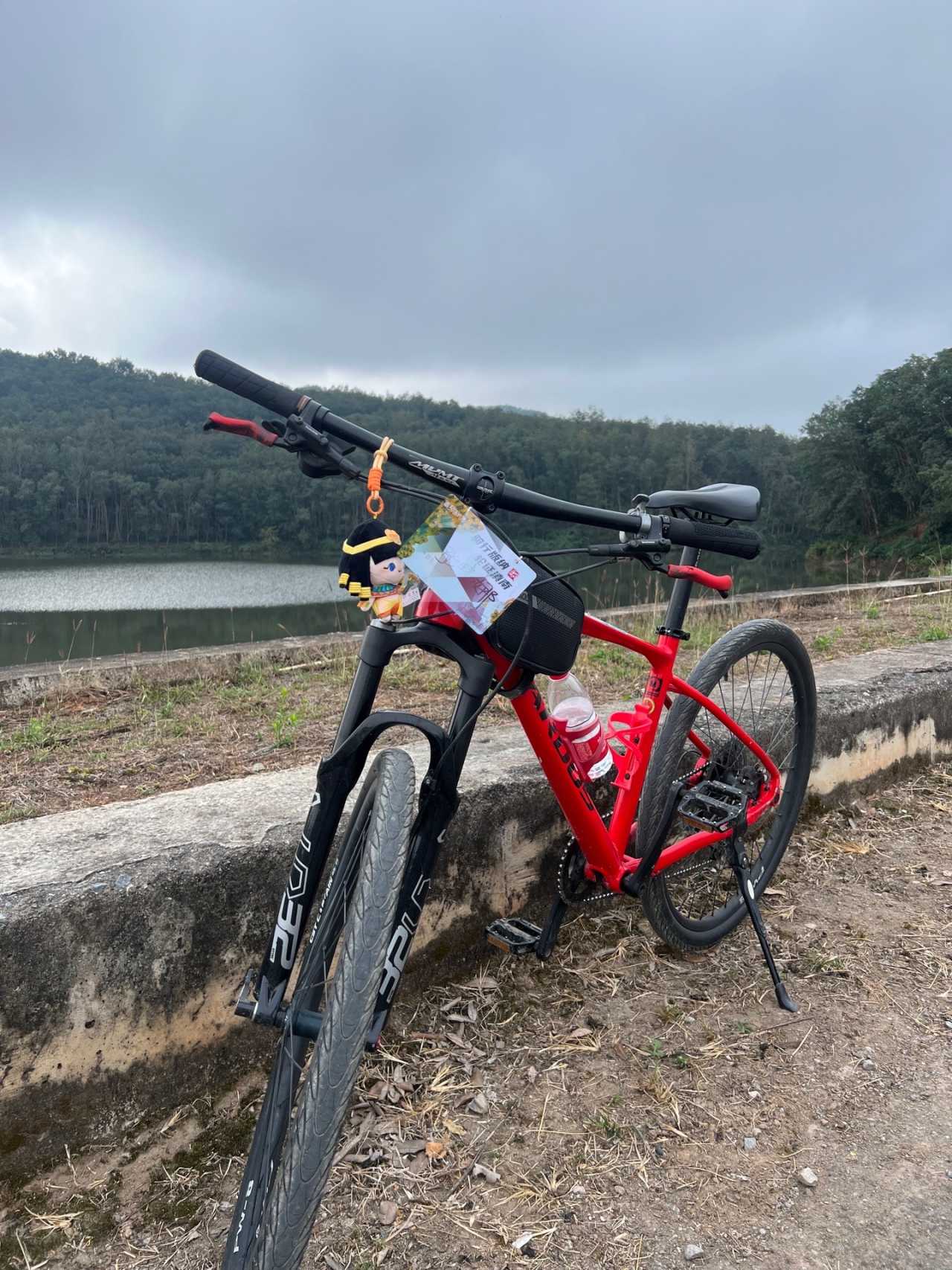
December 31, 2024. Cloudy, temperature 15°C to 27°C. We departed from Menghan, heading for Menglun — about 48 kilometers of cycling, with 388 meters of ascent and 396 meters of descent.
Getting on the bike on the second day — my legs were sore, my butt was sore. That delightful ache came partly from cycling, partly from the water splashing festival.
Manyuan Village: The Life We Long For
In the morning, we passed through Dai villages, cycling 18 kilometers to Manyuan Village to visit the "Mushroom House" — the filming location for Season 3 of the popular Chinese show Back to Field (向往的生活).
At a local Dai farmhouse, we could pick mangoes — by climbing trees! Climbing a ladder up a tree is a small taste of what outdoor enthusiasts do regularly. That thing shaped like a winter melon? Also a mango — shows how little I know. Bananas don't require tree climbing, thankfully. The big green jujubes (also called apple jujubes) were indeed as big as apples, very juicy, and incredibly sweet.
I noticed a peculiar weather pattern in Xishuangbanna: every morning it's overcast, sometimes with a light drizzle, then around noon it clears up, the sun becomes harsh, and UV rays are intense. Today was no different.
The Nanbowa Ancient Well has over 600 years of history, its water clear and cold. Above the well, a stupa-shaped wellhead and well chamber were built, complementing the temple on the hilltop. The Manyuan Buddhist Temple is grand in scale, beautifully decorated, with red roof tiles and golden spires that catch the eye. The temple grounds also include a medicinal garden with various rare Dai herbal plants.
The Mushroom House became famous thanks to Back to Field; tickets cost 20 yuan. I didn't go inside but took some photos from outside — the courtyard seemed smaller than I'd imagined. Not far from the Mushroom House stands a thousand-year-old banyan tree, with tangled roots and lush branches — a forest unto itself. There were also golden leaves where you could write wishes.
I spent most of the morning exploring Manyuan Village and still felt reluctant to leave. There's no admission fee, no excessive commercialization, no crowds or noise of popular attractions — it offers visitors a uniquely immersive experience. Here, time seems to slow down, and life feels peaceful.
Tea Break and Lunch
My favorite part — tea break! Seeing the huge table of fruits, my happiness was obvious. For lunch, I had a local specialty — stir-fried pumpkin flowers, which you can't get elsewhere. I also drank pure sea buckthorn juice, ice-cold and refreshing.
The Chinese Academy of Sciences Botanical Garden: A Kingdom of Plants
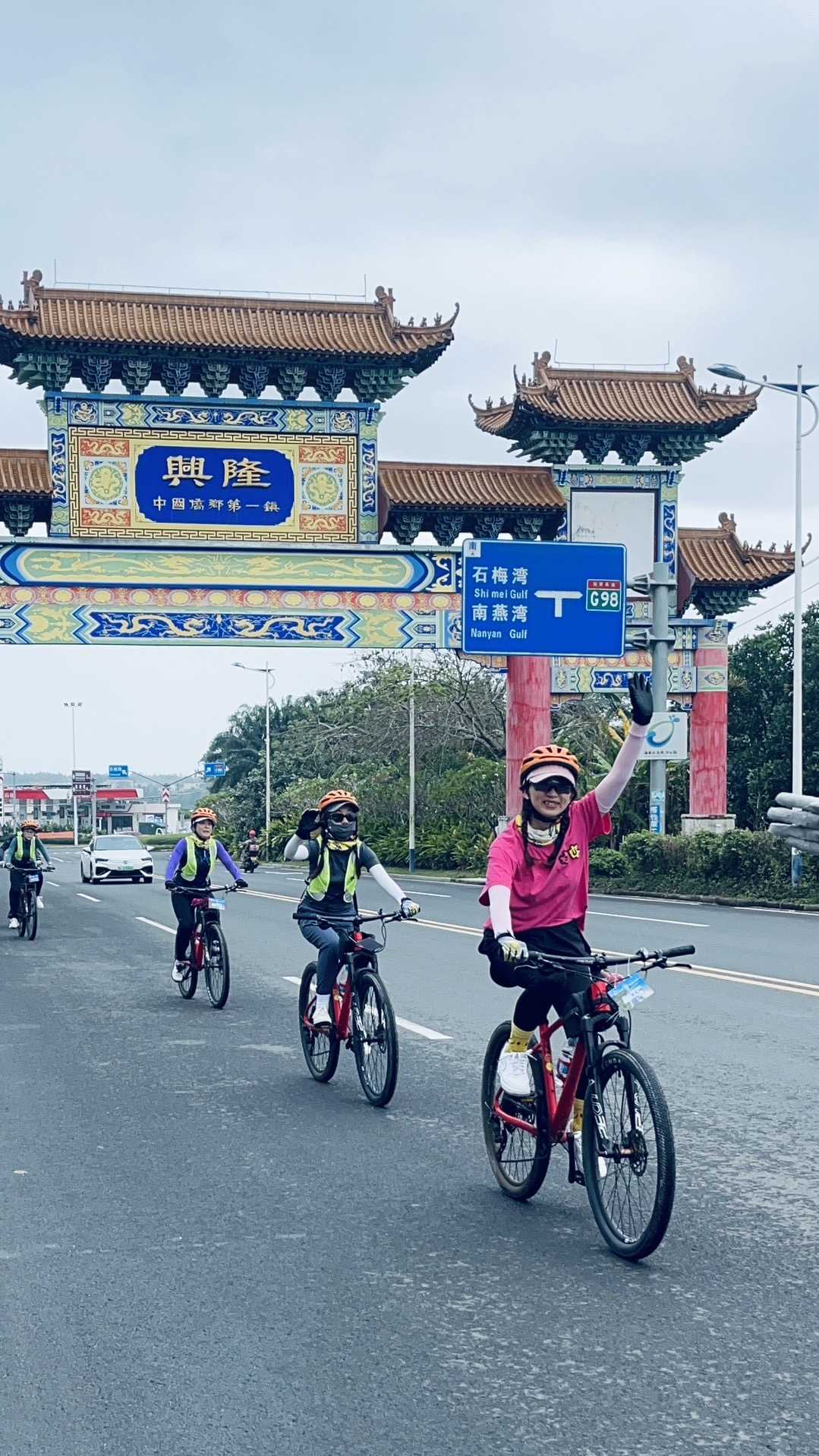
In the afternoon, we cycled 29 kilometers along National Highway 219 to the CAS Botanical Garden. Founded in 1959 by Chinese botanist Cai Xitao, the garden covers about 1,125 hectares, houses over 13,000 species of living plants, has 38 specialized plant zones, and preserves about 250 square kilometers of primary tropical rainforest. It's China's largest botanical garden with the richest species collection and most specialized zones, and it has the highest number of plant species preserved outdoors and displayed to the public in the world.
The garden is enormous. We entered from the west gate and walked over 5 kilometers, visiting the Banyan Garden, Vine Garden, Shade Plant Garden, Aquatic Plant Garden, Palm Garden, Southern Medicine Garden, Rare Flowers Garden, Hundred Flowers Garden, Wild Orchid Garden, and Fruit Tree Garden. Bougainvillea, red sage, lotus ponds,无忧花 (asoka tree flowers), 火焰花 (fire flowers) — we walked and looked, and there were countless plants whose names I didn't know. I also witnessed the "strangulation" phenomenon of banyan trees, marveling at nature's survival of the fittest.
Today was the last day of 2024. After the tour, I started thinking about how to ring in the new year.
New Year's Eve: Food and Fireworks
Dinner by camping lantern light — the atmosphere was perfect. More Thai cuisine: pineapple fried rice, lemongrass grilled fish, mango beef cubes, green papaya salad. Ringing in the new year with great food — abundant and full of anticipation. At night, brilliant fireworks lit up the sky, a ceremony rich with meaning.
Day Four: The First Day of the New Year, Breaking My Personal Climbing Record
January 1, 2025. Clear skies, temperature 12°C to 24°C. We departed from Menglun, heading for Jinuo Township — about 41 kilometers, with 950 meters of ascent and 624 meters of descent.
We set off under the first light of the new year. The first day of 2025 was also the most challenging day of this ride.
The Mountain Pass: A Test of Body and Mind
Before the serious climbing began, we had a "bowl-smashing" ceremony for encouragement — Red Bull standing in for alcohol. The entire route was mountain passes and rolling hills. The slopes weren't particularly steep, but the endless, seemingly infinite climbs tested not just physical strength but mental endurance. The first day of the new year, facing so many tests — I just kept my head down and pedaled, looking only at the road, emptying my mind of everything else. Climb a section, rest for about 5 minutes to recover, and even strike a pose in the middle of the road.
After climbing all morning, I was starving and really looking forward to lunch. A farmhouse meal in the tea garden — not bad at all. And I ate roasted sweet potatoes, which I hadn't had in ages.
Tea-Making Experience: Crafting Your Own Pu'er Tea Cake
After lunch came the afternoon tea-making experience. Since it was winter, the tea gardens weren't open, so I missed out on tea-picking — perhaps what people call "the beauty of regret."
Making a tea cake involves many steps and much care: selecting tea → weighing → steaming → pressing → packaging. Making a Pu'er tea cake with my own hands for the first time was quite interesting.
Tea-Making Tips: 1. Don't put any scented skincare products on your hands while making tea — tea absorbs odors easily 2. Always wear gloves 3. Old-growth tree tea typically doesn't have one bud and two leaves; full-bud tea usually comes from young terrace tea plants 4. Pressing the cake requires force — you can work together with a partner 5. Sun-drying the finished tea cake prevents mold and extends its shelf life
Holding the tea cake I made myself, I felt a great sense of achievement. The first day of the new year was also a day of收获 (gains).
The Long Descent: The Best Reward for Persistence
The afternoon ride was much easier. The final 15 kilometers were a long downhill, coasting all the way to the finish — the best reward for sticking with it.
Climbing Tips: 1. Control your speed, watch for traffic, keep at least 2 meters between bikes, and 20 meters on descents 2. Find joy in the ride and keep a happy mindset 3. Ride in a single-file line; when stopping for photos, park your bike on the right side of the road 4. Maintain a steady cadence (around 90 rpm), keep your breathing from getting too rapid, adjust speed according to the slope, and change gears frequently 5. On descents, don't go too fast — especially on curves, slow down in advance to avoid skidding
After such a tough day, I bought myself a small bouquet of flowers — encouragement and affirmation.
Baduo Village on Jinuo Mountain: The First Night of the New Year
We arrived at Baduo Village on Jinuo Mountain for check-in. Tomorrow's rainforest hike would start from here too. There was a small uphill to reach the guesthouse — after climbing all day, this last slope was the steepest. I chose to walk my bike, decisively giving up on the challenge.
The setting sun felt warm on my back. I gave myself a mental thumbs-up for today's perseverance. Dinner was a special meal — a "包烧宴" (wrapped and grilled feast) — celebrating our collective climbing success.
The guesthouse balcony had a great view, with endless rolling mountains in the distance. I caught a random photo of the sunset — stunningly beautiful.
包烧宴 (Wrapped and Grilled Feast): In the culinary world along the Lancang River, there's a saying that everything can be wrapped and everything can be grilled. "包烧" — the wrapping depends on the ingredients, the grilling depends on the temperature. Fresh leaves just picked from banana and pipa trees make the best wrapping material, washed clean, drained, and set aside. Grilled beef, grilled pork brain, grilled cicadas, grilled bee pupae, grilled wood ear mushrooms — these are common wrapped-and-grilled dishes.
I never imagined I'd start the year 2025 by climbing slopes like this. Lying in bed, savoring the memory of my legs' soreness from the day, I couldn't help but reflect: the beginning of the new year, starting with climbing. The persistence of going uphill, the exhilaration of flying downhill. All the winding roads I traveled today — may they be smooth paths ahead.
My New Year's wish: May 2025 bring happiness, bring joy, and may I keep moving forward.
Day Five: Rainforest Hike and Closing Ceremony

January 2, 2025. Clear skies, temperature 14°C to 27°C. We departed from Jinuo Township, heading back to Jinghong — about 45 kilometers, with 300 meters of ascent and 700 meters of descent.
Rainforest Hike: A Wild and Wonderful Nature Experience
We set off at 8:00 AM, first reaching the rainforest hiking point. The trail offered varied terrain: dirt paths, stream crossings, gravel sections, gentle ascents and descents. About 5 kilometers total, with just over 100 meters of cumulative elevation gain — suitable for anyone, with or without outdoor experience.
Recommended Gear: Hiking boots (stiff-soled), trekking poles, casual wear, windbreaker, quick-dry clothing, gloves, sun hat, bring your own water and energy snacks.
Notes: - This is not a ticketed route — no supply stations, no restrooms - Protect yourself from sun and insect bites - Stream crossings are slippery — watch your step - Lots of activities: rope swings, climbing, tree swings, archery — full of wild fun
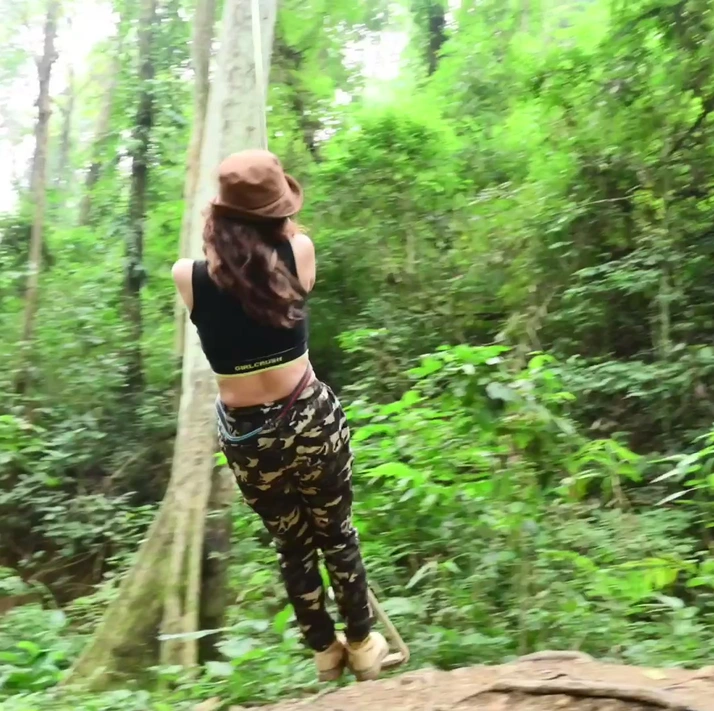
Painting our faces with stone and mud — instantly turning into primitive humans. This is the best makeup in the rainforest. The stream sections aren't deep, so your shoes won't get wet. There are over 100 rainforest hiking routes; the one we chose goes downhill first then uphill, with minimal climbing. The water crossings are all shallow — no need for rubber boots, just outdoor hiking shoes.
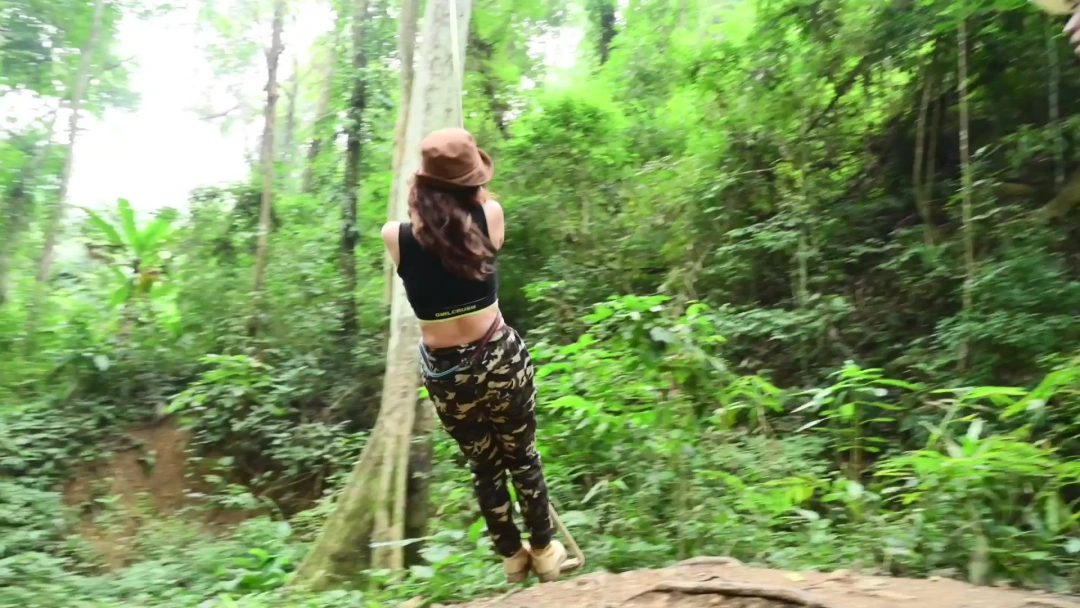
Along the way, we tried rope swings, foot-pedaled tree swings, and archery — pure wilderness fun. We saw the largest strangler fig, with a trunk cavity big enough for a person to crawl inside. The joy of rope swinging — who understands? I got the photos of a lifetime on Jinuo Mountain. Even the makeup application was captured on camera. The single-log bridge was my biggest weakness.
After more than two hours of hiking, I still wanted more.
The Final Ride and Closing Ceremony
After the hike, we returned to the hotel to pack up and change clothes. In the morning, we cycled 13 kilometers to Caiyanghe for lunch — the last group meal together. It felt like the five days had flown by.
After lunch, we rode another 27 kilometers to the Xishuangbanna Ethnic Museum. After the visit, we returned to the Taohuayuan Villa Hotel for the closing ceremony.
Seeing fruit always makes me break into a smile — which earned me the title of "happiest team member" from the guide. Soon we were back in Gaozhuang's urban area. After several days on village paths and mountain roads, suddenly returning to the city's traffic lights and bustling streets felt a bit strange.
Xishuangbanna Ethnic Museum: Echoes of History
The museum has two floors, comprising a lobby, five permanent exhibition halls, and two temporary halls. The five permanent exhibitions include one hall each for history and contemporary topics, three halls for ethnic culture, and one hall for natural history. The collection totals 2,400 items, divided into ancient artifacts, folk culture items, and artifacts from the sent-down youth (知青) era.
I missed the guided tour time, so I did a quick walk-through, gaining a superficial understanding of Xishuangbanna's history, culture, and ethnic development. At this free museum, I ended up buying a coffee to support local industry.
Just 5 kilometers left to return to our starting point. It felt like the Xishuangbanna ride was ending too quickly — as if yesterday's climbs didn't matter anymore. What remained was mostly reluctance to say goodbye.
The Grand Award Ceremony
In the guide's summary, our group of 8 had no one fall behind and no one crashed — the safest group they'd had. Everyone worked hard and rode with heart.
When the medal was hung around my neck, I was genuinely moved. Although I'd had similar moments after Hainan and Qinghai Lake, this medal felt the heaviest — it marked my new personal climbing record and symbolized scaling new heights in the new year. It felt profoundly meaningful.
My acceptance speech: Over these few days together, my teammates and I went from strangers to friends, working side by side to complete the 180-kilometer Xishuangbanna challenge. We shed sweat and gained joy. I wish everyone the best in the days ahead — may you see the scenery you long to see, and meet the people you long to meet.
And with that, my Xishuangbanna ride was successfully completed. I've returned home, but my heart remains there. The comfortable winter temperatures, clear skies, abundant fruit feasts, and countless delicious foods of Xishuangbanna will all be reasons for me to come back.
Post-Ride Relaxation: From Warrior to Wanderer
The five-day ride was over, but my body hadn't yet unwound from the athletic mode. Stripping off all my cycling gear, I transformed from a warrior back into an ordinary person.
I'd pre-booked a guesthouse near Gaozhuang Night Market, and as soon as the group disbanded, I immediately started my vacation of eating and exploring. The guesthouse balcony offered a view of the Peacock Tower — wide and open. After a quick wash and change of clothes, I met up with a few nearby teammates for a hotpot celebration. After eating, we visited the Starry Night Market for a second time.
My Last Day in Xishuangbanna: Becoming a Dai Princess
Wherever I go, I can't resist experiencing local customs and traditional ethnic clothing. The night market was full of photography recommendations, tempting me but also making me worry about falling for a bad deal. After reading several guides, I settled on a studio and booked a shoot at 11:00 AM. I arrived at 10:30 to choose my outfit.
Makeup and styling took an hour, then I took a taxi to Manting Park for the shoot. Filming started at 12:30 PM; the park admission was on me. The park is huge, and there were tons of people taking portrait photos — it felt like every other person was a princess or a queen.
Recommended Photo Spots: The Grand Golden Gate, the lakeside, the hand-washing pool, and the White Stupa. The overall results were satisfying, serving as the perfect ending to this cycling journey.
Conclusion: Cycling Xishuangbanna — A Dialogue Between Body and Soul
180 kilometers of cycling, 2,000 meters of elevation gain, five days of time — all slipping away beneath the turning wheels. From initial nervousness, through mid-ride gritted-teeth persistence, to final reluctant farewells, this journey taught me so much.
Winter in Xishuangbanna has none of the north's biting cold — only warm sunshine and green as far as the eye can see. Here, I witnessed the majesty of the Lancang River, felt the solemnity of the General Buddhist Temple, experienced the wild joy of the Water Splashing Festival, and savored the untamed fun of the rainforest hike. More importantly, I met a group of like-minded companions — climbing together, sweating together, laughing together.
If you too long to find warmth in winter, if you want to welcome the new year in a different way, then come cycle through Xishuangbanna. What you'll gain here isn't just scenery — it's a love for life and anticipation for the future.
Cycling Xishuangbanna is not just a journey; it's a conversation with yourself. The persistence of going uphill, the exhilaration of flying downhill — these are the truest reflections of life itself.
I've returned home, but my heart remains there. I think that's what travel is all about.
You should also read:

Into the Hidden Valley: A Solo Journey Through the Mysterious Dulong River
Into the Hidden Valley: A Solo Journey Through the Mysterious Dulong River Deep in the northwestern corner of Yunnan Province, tucked away from the modern world, lies a place that feels like a secret whispered among mountains. The Dulong River Valley is not just a…
Continue reading...
God’s Abandoned Palette: A Self-Drive Journey Through Yunnan’s Dongchuan Red Land
God’s Abandoned Palette: A Self-Drive Journey Through Yunnan’s Dongchuan Red Land Travel has never been about reaching some distant geographic coordinate. It’s about encountering, along the way, the version of yourself buried beneath the rubble of daily routine. During this May Day holiday, I finally…
Continue reading...
Body in Hell, Heart in Heaven: A Pilgrimage Through Tiger Leaping Gorge — A Dialogue Between Heaven and Earth
Body in Hell, Heart in Heaven: A Pilgrimage Through Tiger Leaping Gorge — A Dialogue Between Heaven and Earth Introduction: When the Gorge Splits Open Beneath Your Feet Some say Tiger Leaping Gorge is the closest place on Earth to the border between "hell" and…
Continue reading...