Days in Shuanglang: An Encounter with Erhai Lake, Cangshan Mountain, and Slow Time
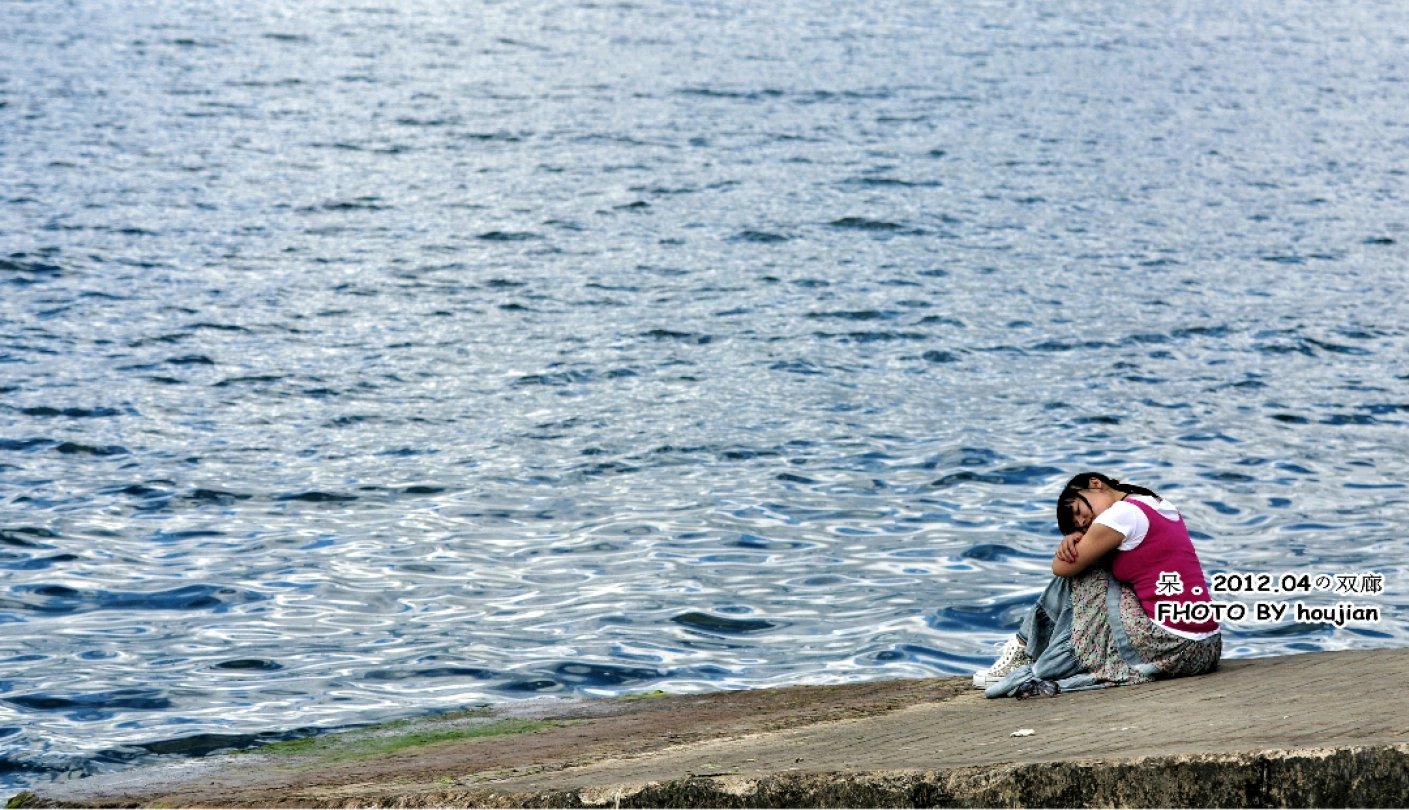
Days in Shuanglang: An Encounter with Erhai Lake, Cangshan Mountain, and Slow Time
In the northeastern corner of Dali, Yunnan, on the shores of Erhai Lake, lies a small fishing village called Shuanglang. It has no grand reputation, no star-rated hotels, no exquisite restaurants. At night, there is only darkness and silence. Yet strangely, everyone who has been here finds themselves missing it after they leave. This magic does not come from prosperity, but from a bone-deep sense of laziness and peace.
Origin: A Story of Courage and Belonging
I once read a true story online. A young man working for a foreign company in Guangzhou visited Shuanglang for the first time and became completely captivated. Soon after, he returned to this land, and eventually quit his job to open a guesthouse in Shuanglang, determined to spend the rest of his life with Erhai Lake and Cangshan Mountain. For many, such a decision would require immense courage, but when I actually stood on the soil of Shuanglang, I fully believed in this story. This young man was lucky—he found the life he truly wanted while still young. In contrast, I, a middle-aged person wandering in an awkward stage of life, couldn't help but feel envious.
In its early days, Shuanglang had only a handful of guesthouses, each with its own style, yet all exuding the same atmosphere: quiet, lazy. Here, you would unconsciously zone out, feel artistic, even a bit silly, but everything felt so natural, so fitting. Later, the famous painter Zhao Qing and dancer Yang Liping came to settle here one after another, building their own art residences, and Shuanglang's fame began to spread. A flood of tourists poured in, and some, unable to resist the beauty here, simply left their hometowns to run guesthouses, making a living and settling down, living quite contentedly.
Living in the Scenery: Rooms with a View of Erhai Lake
Almost every guesthouse is built in a spot "facing Cangshan Mountain, listening to Erhai Lake." You don't even need to step out of your room to lie in bed and enjoy the sparkling waves of Erhai Lake. It is this natural environment that fills every room with vitality and tranquility.
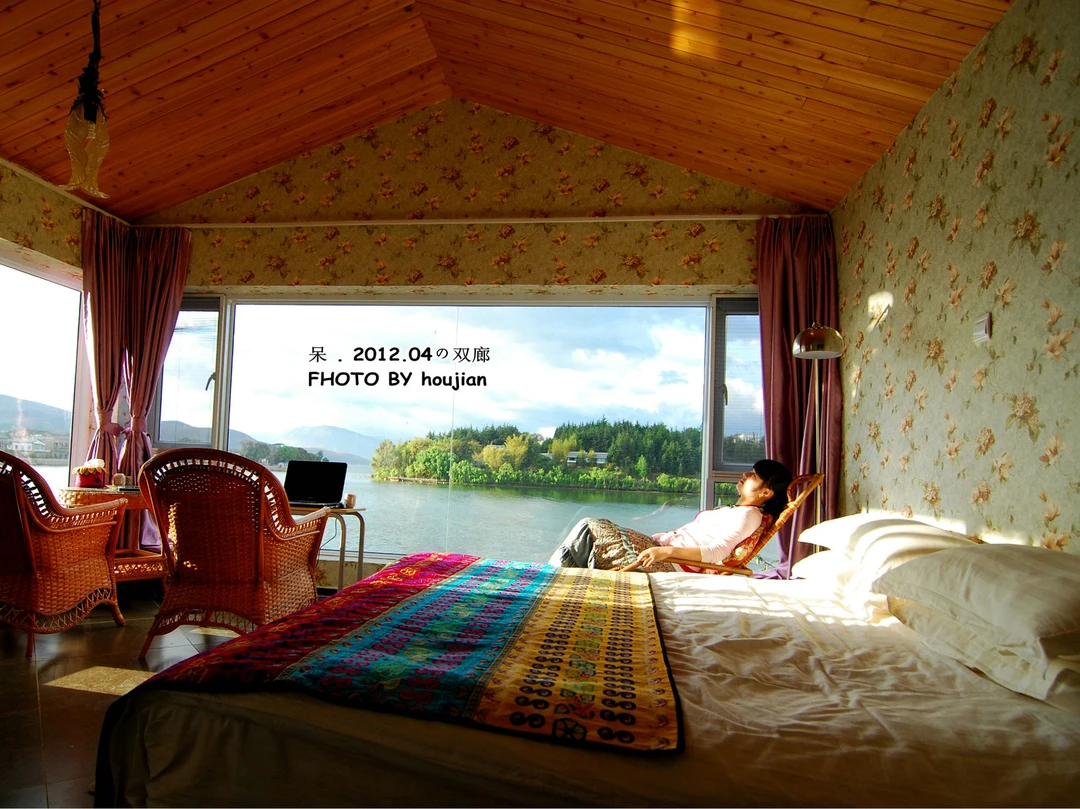
Before departure, I spent a month doing research, checking countless guesthouses, and finally chose "Shuangshui Langqiao Guesthouse," booking the only honeymoon suite. The price was 380 yuan per day, and I stayed for three days. It turned out to be the perfect choice. The room had an excellent view, with Erhai Lake right at my feet. In the dead of night, falling asleep to the sound of water lapping against the shore—that feeling was more effective than any sleeping pill.
The guesthouse's open-air balcony was a great place to drink tea and daydream. There was also a terrace downstairs, equally relaxing. Waking up in the early morning, opening the window, Erhai Lake shimmered in the morning light, and in the distance, Cangshan Mountain stood like a dark ink painting. Such a scene inevitably brought to mind the poet Haizi's famous line: "Facing the sea, with spring blossoms."
Slow Living: Daydreaming Is a Serious Business

Shuanglang is lazy. This laziness is as blue and soothing as the waters of Erhai Lake. Sitting on the guesthouse's open-air balcony, or in front of the huge floor-to-ceiling glass windows in the room, from sunrise to sunset, every moment offers a different view. The sunlight warms your skin, the sea breeze gently caresses your face, and the water hums a soft melody. At such a time, lighting a cigarette, brewing a cup of tea, opening a book, or putting on headphones to listen to Xu Wei's "Warmth"—"I sit in my room, flipping through your photos, and it reminds me of Dali..."—you suddenly realize that the perfect life you've been chasing in your daily rush is exactly this state of being.
In Shuanglang, you need to learn to enjoy life slowly, to spend your days in a daze. That's why I named this piece "Days in Shuanglang."
Places Worth Visiting
The Observation Deck Next to Bandao 63 Guesthouse
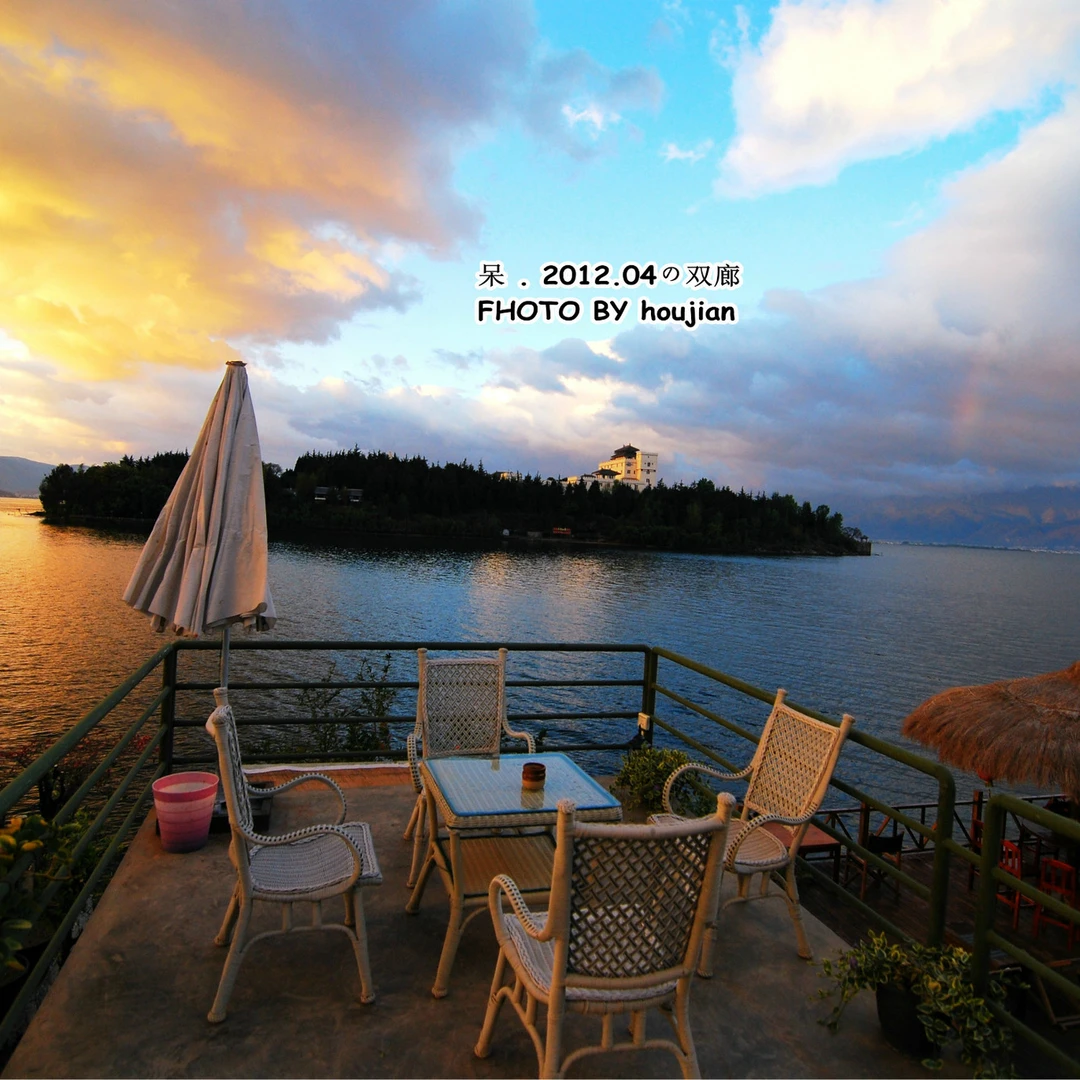
There are some white tables and chairs here where you can order drinks and fruit, chatting, gazing at the sea, and daydreaming. Of course, it's also an excellent spot for taking photos. When you come to Shuanglang, make sure to check in here.
Hai Street: Shuanglang's Only Main Street
Though called the main street, it's really just a short alley. But if you take the time to appreciate and explore, you can still capture many beautiful moments. Local villagers wash their clothes directly in Erhai Lake. The sunlight is abundant, and the clothes dry quickly, smelling of sunshine. This primitive way of life evokes a long-lost sense of familiarity.
Yang Liping's Sun Palace
As the most expensive guesthouse in Shuanglang, a night at Sun Palace costs over 4,000 yuan. Although I couldn't afford to stay, sneaking a photo as a souvenir of "having been here" was still possible.
The Hilltop at Dawn
On the first day I arrived in Shuanglang, I went to the hilltop at dawn to capture a panoramic view. Across Erhai Lake lay a quiet village, shrouded in morning mist, like a fairyland. At dusk, as the sun set, the "Jesus light" (Tyndall effect) was incredibly beautiful—a common sight in Shuanglang.
Tips: How to Live Like a Local
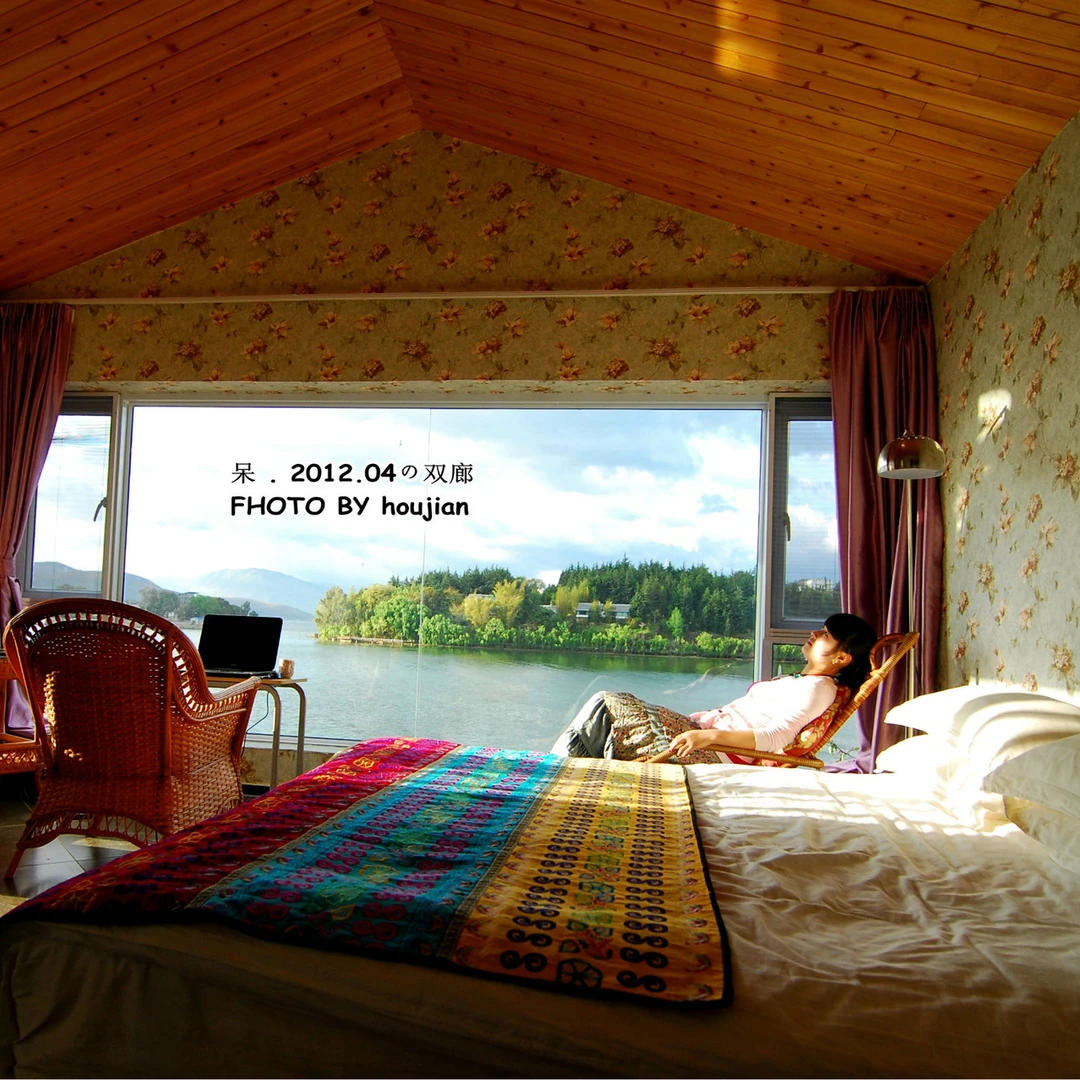
At Shuangshui Langqiao Guesthouse, you can order breakfast yourself at a fair price. If you're interested, you can also buy groceries and cook your own meals—the guesthouse provides the kitchen for free. Coffee costs 20 yuan per cup, also very reasonable.
Before departure, I had planned to take a photo of my bare feet. I specially asked my wife to decorate my toenails before the trip. "Nurture your feet for a thousand days, use them for one"—they finally came in handy.
Epilogue: Back in the City, But My Heart Stays in Shuanglang
Now, I'm back in the city of steel and concrete. Every day I wake up, open my eyes, and wish I could see that beautiful blue sky and gentle sea again, along with that room with a view.
Shuanglang taught me one thing: Life doesn't always have to be rushed. Sometimes, daydreaming, drinking tea, and watching the sea are the best days. If you're also tired of the hustle and bustle of the city, why not go to Shuanglang and stay for a few days? You don't need to plan too much; just bring a heart willing to slow down, and that's enough.
Finally, to sum it up in one sentence: Shuanglang is not a scenic spot, but a way of life. It won't give you a stunning visual impact, but after you leave, you won't be able to stop thinking about it.
Note: This article is original content, compiled based on personal travel experiences. The guesthouse prices and service information mentioned are subject to actual conditions.
You should also read:
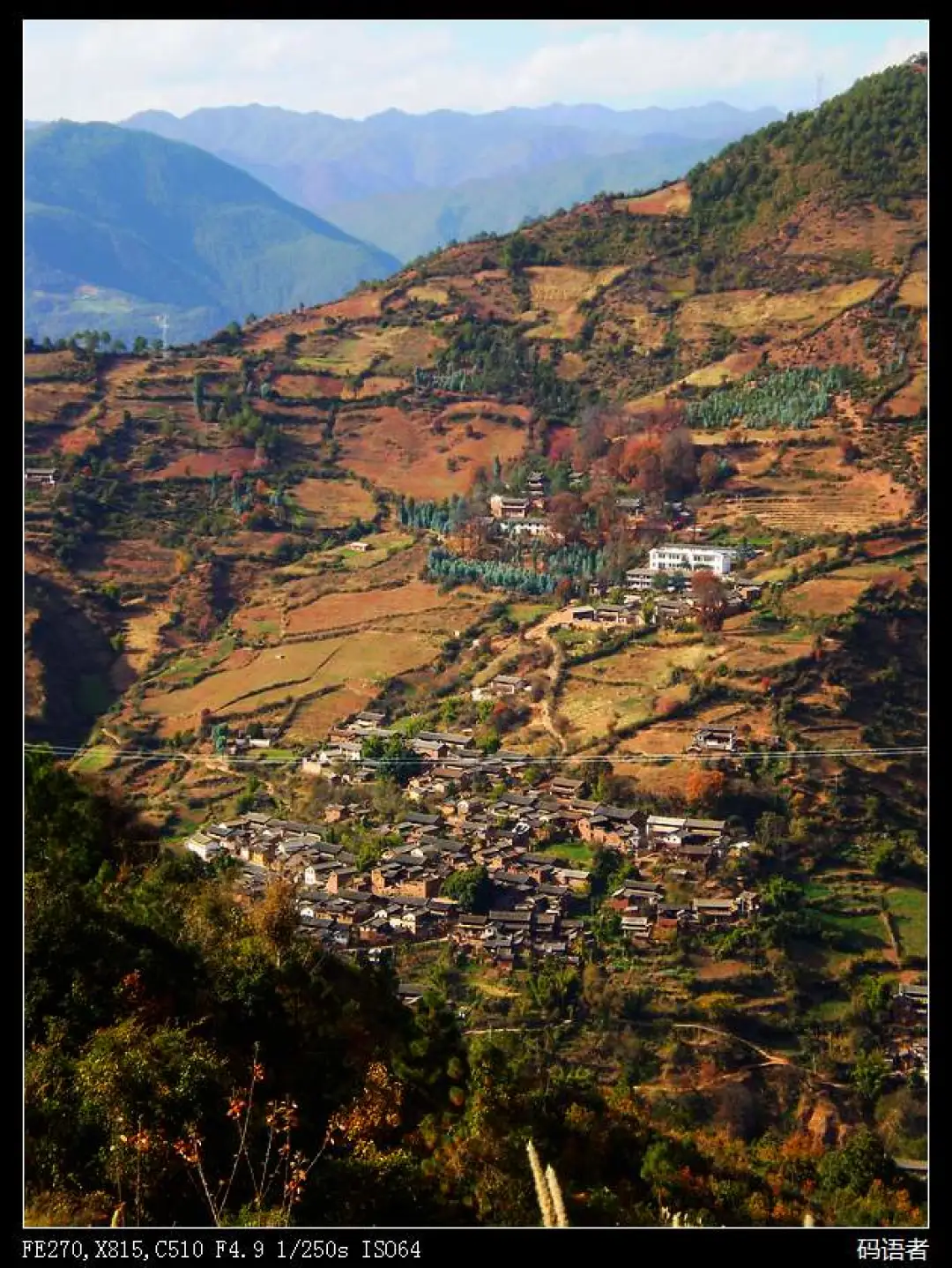
Before the Tongue: Discovering Nuodeng, the Ancient Salt Town Time Forgot
Before the Tongue: Discovering Nuodeng, the Ancient Salt Town Time Forgot There’s a peculiar magic in places that have been left behind by history. They don’t try to impress you. They don’t have polished welcome centers or laminated maps. They just are—worn, quiet, and utterly…
Continue reading...
Meili Snow Mountain: A Soulful Journey of Dialogue with the Sacred Mountain
Meili Snow Mountain: A Soulful Journey of Dialogue with the Sacred Mountain Prologue: When Travel Becomes Faith Some journeys are forgotten as soon as they end. Others carve themselves into your bones. The trip to Meili Snow Mountain belongs to the latter. Waking up in…
Continue reading...
A Journey Through Shuanglang's Guesthouses: Finding Life as It Should Be on the Shores of Erhai Lake
A Journey Through Shuanglang's Guesthouses: Finding Life as It Should Be on the Shores of Erhai Lake Prologue: When Life Hits the Pause Button Have you ever had one of those moments? When the city's towering buildings press down on your chest, when you're swept…
Continue reading...