Early Spring: We Laid Low in Dali and Made Our Home in Lijiang
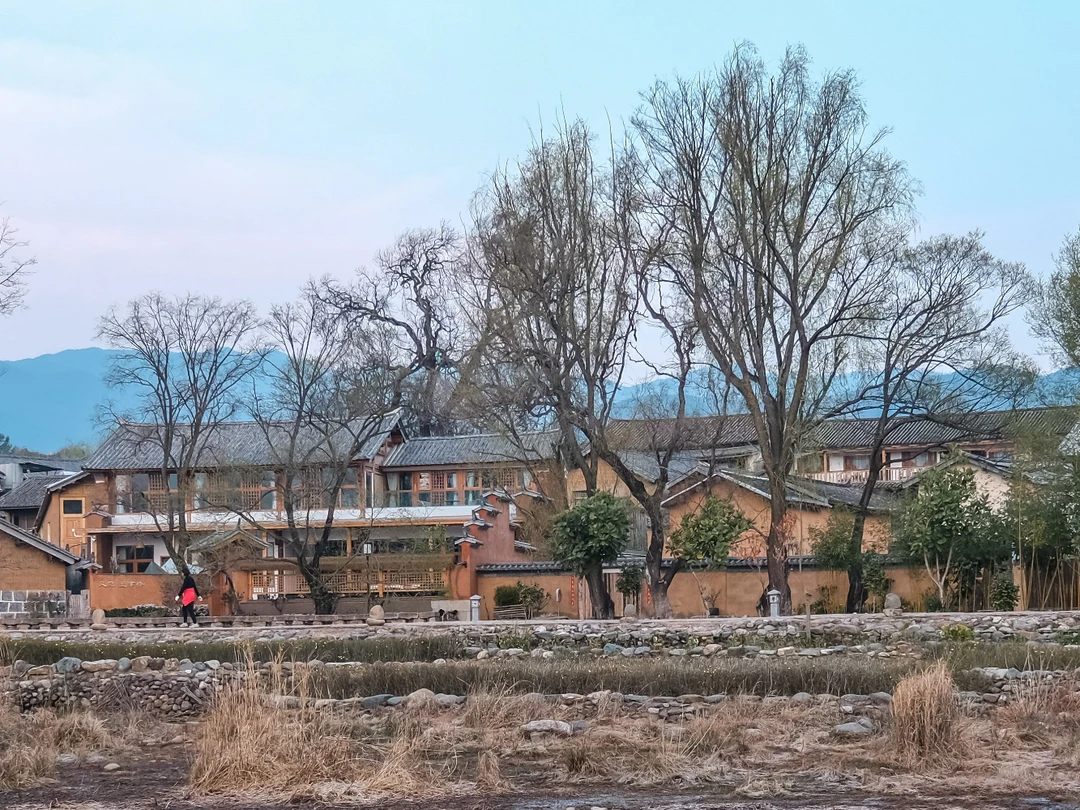
Early Spring: We Laid Low in Dali and Made Our Home in Lijiang
March in Yunnan—the wind carries the scent of grass and damp earth. While northern cities were still shivering in the lingering chill of spring, here a warm, inviting landscape had already quietly unfolded. My best friend and I—two women constantly chased by time in the city—decided to do something "rebellious" this spring: turn travel into living, and living into lying low.
This wasn't a checklist-style trip. It was a long-planned escape. My friend had last been to Yunnan in 2010, back when A Meter of Sunshine was all the rage. The camel bell she brought home still hangs on my bookshelf. Thirteen years later, we set foot on this land again—not to chase viral Instagram spots, but to find, between Cangshan Mountain and Erhai Lake, the version of ourselves that life had worn smooth.
Dali: Utopia Isn't Somewhere Else—It's in Your Mood
Morning: Waking Up Slowly with a City
In Yunnan, I learned how to properly start a day.
At six in the morning, the sky was just beginning to lighten. The restaurant across the street had just switched on its lamps, casting warm light over the cobblestones like spilled honey. After washing up, I could hear the chatter of Bai women downstairs—flashlights in hand, baskets on their backs, heading out together for the morning market. Their voices faded, and the street fell quiet again.
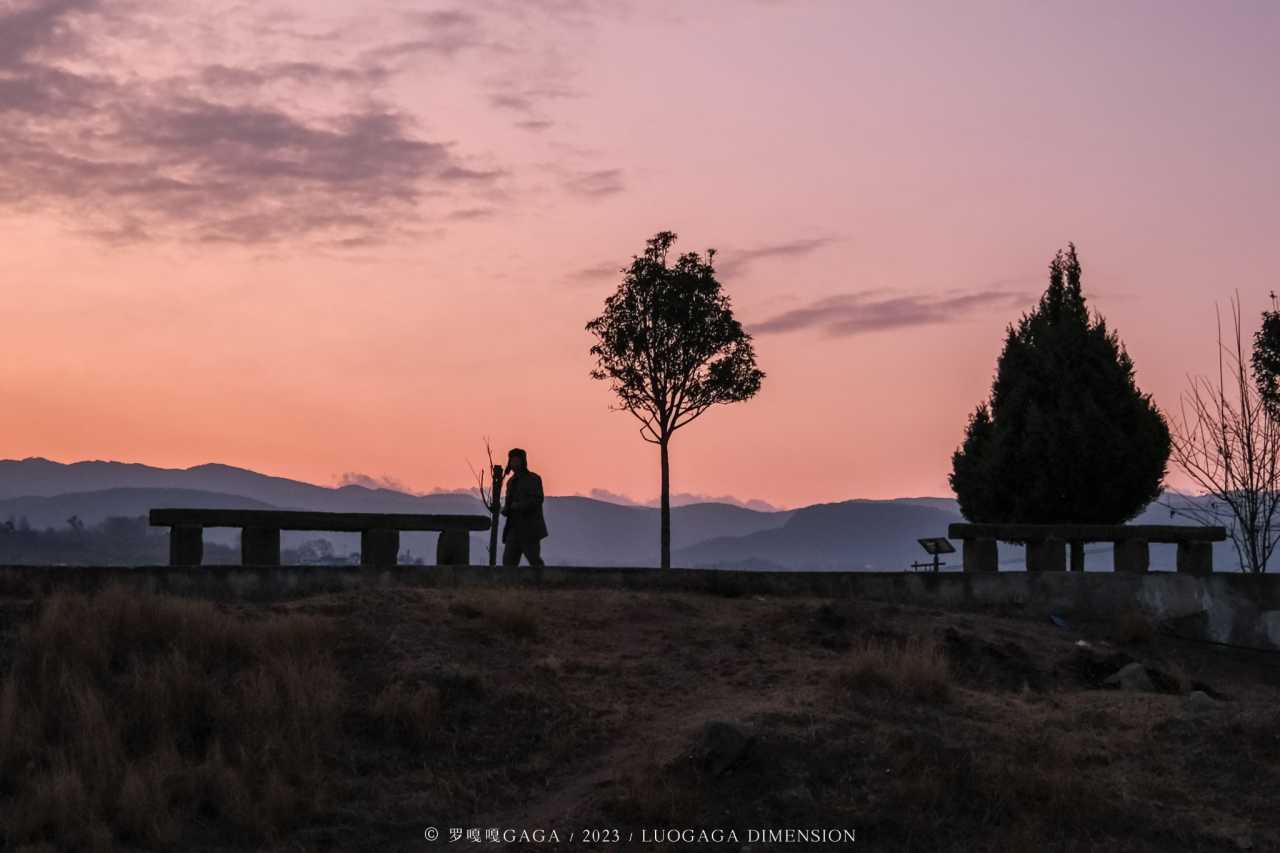
I stepped onto the uneven stone path, carefully making my way to the village entrance. The first light of dawn outlined the distant mountains. I found a patch of ground, crouched down, and waited for the sunrise. People, cars, and horses passed by—the bells around the horses' necks ringing crisp and clear. In the quiet morning, the sound echoed through the hills like an ancient dawn song.
In that moment, I understood why so many people fall in love with Yunnan's mornings. It's not because the scenery is breathtaking. It's because you don't have to rush. With the steam rising from bowls of 米线 (rice noodles) and 饵丝 (sliced rice cakes), a new day unfolds slowly, unhurriedly.
Cherry Blossoms at Dali University: A Pink Surprise
Late February is cherry blossom season in Dali. Our first stop after arriving was Dali University.
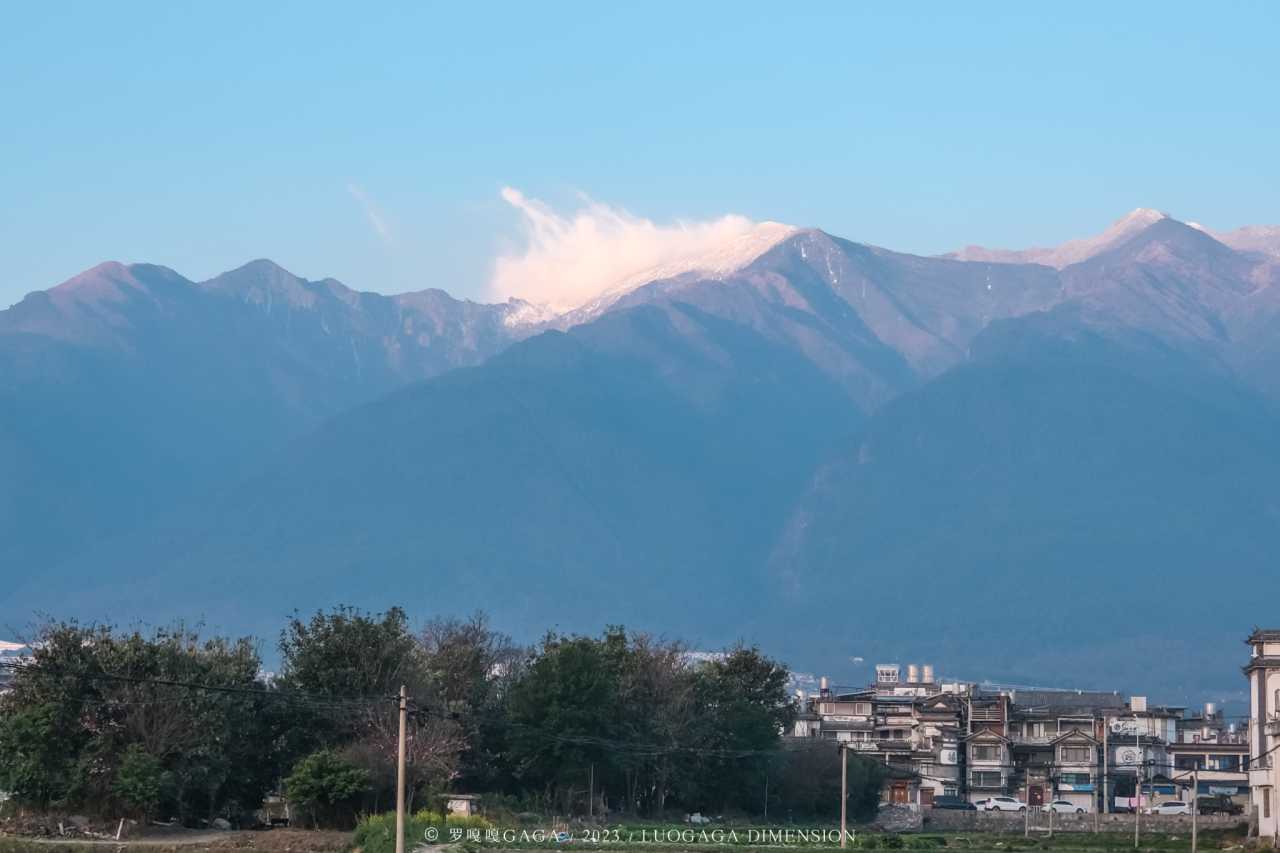
The campus sits at the foot of Cangshan Mountain. From the old town, the road climbs uphill all the way. Just before the north gate, I turned around—Erhai Lake and the white-walled Bai houses spread out below. Unfortunately, the school hadn't opened for visitor reservations, and we were turned away at the gate. But the cherry trees refused to be ignored. Their branches reached over the fence, blooming profusely along the road outside.
The pink petals glowed in the sunlight, like a girl's flushed cheeks. By the time we finished admiring the blossoms, the sun was setting. We had our first meal right by the school gate: Vietnamese rice noodles. The "train station" rice noodle soup that costs a fortune in Chongqing was surprisingly affordable here—maybe because it was near a school, or maybe because Yunnan borders Vietnam.
Xizhou: Wheat Fields, Coffee, and a Long Bike Ride
Xizhou Ancient Town sits in its own quiet corner, a half-hour taxi ride from the old town. This was my second visit. Last time, the fields were full of rapeseed flowers. This time, I finally got to see the wheat fields I'd been dreaming of.
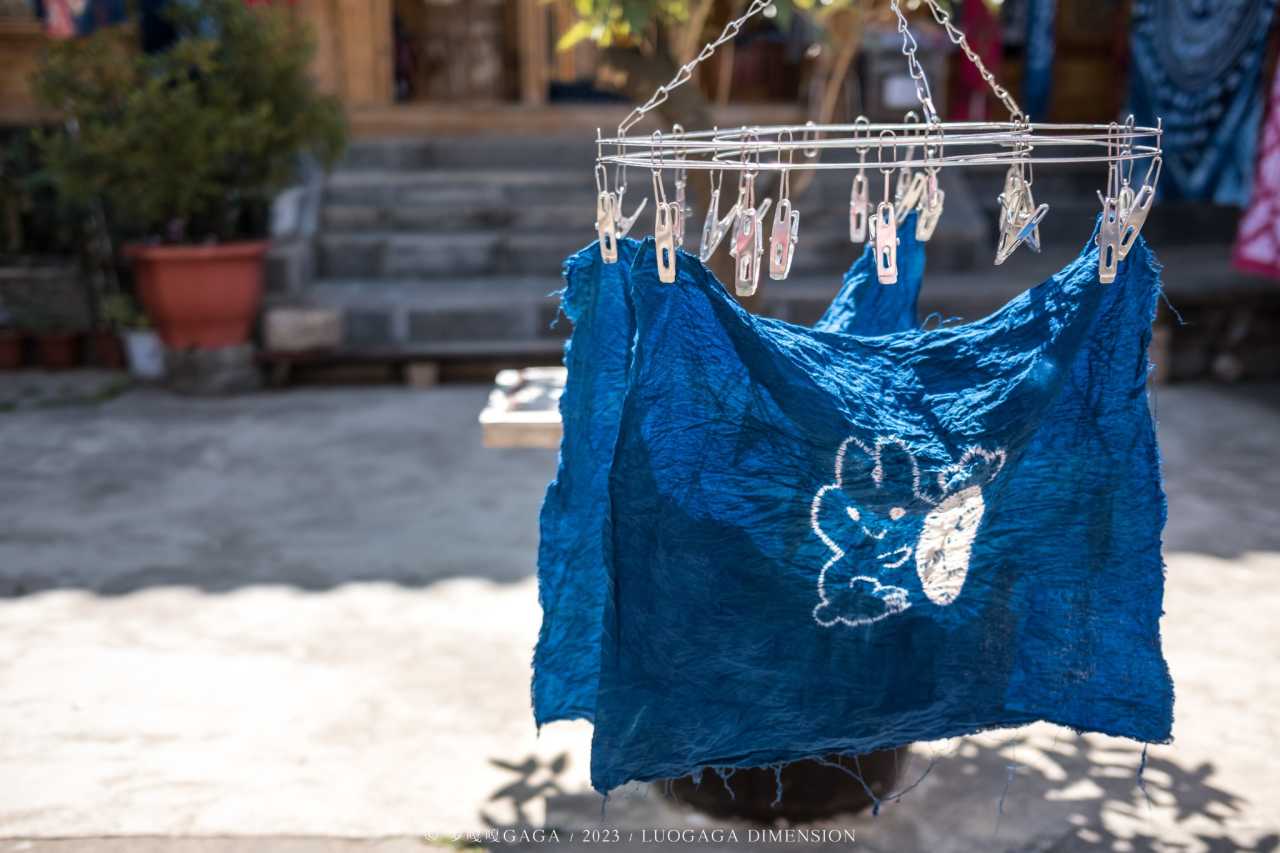
The Bai houses, with their white walls and blue patterns, look as elegant as patterns on tie-dyed fabric. Compared to the bustling old town, Xizhou is far more comfortable, with a stronger cultural atmosphere. The famous corner tower, once a hot photo spot, now sees tourists just passing through. Inside, they sell creative souvenirs.
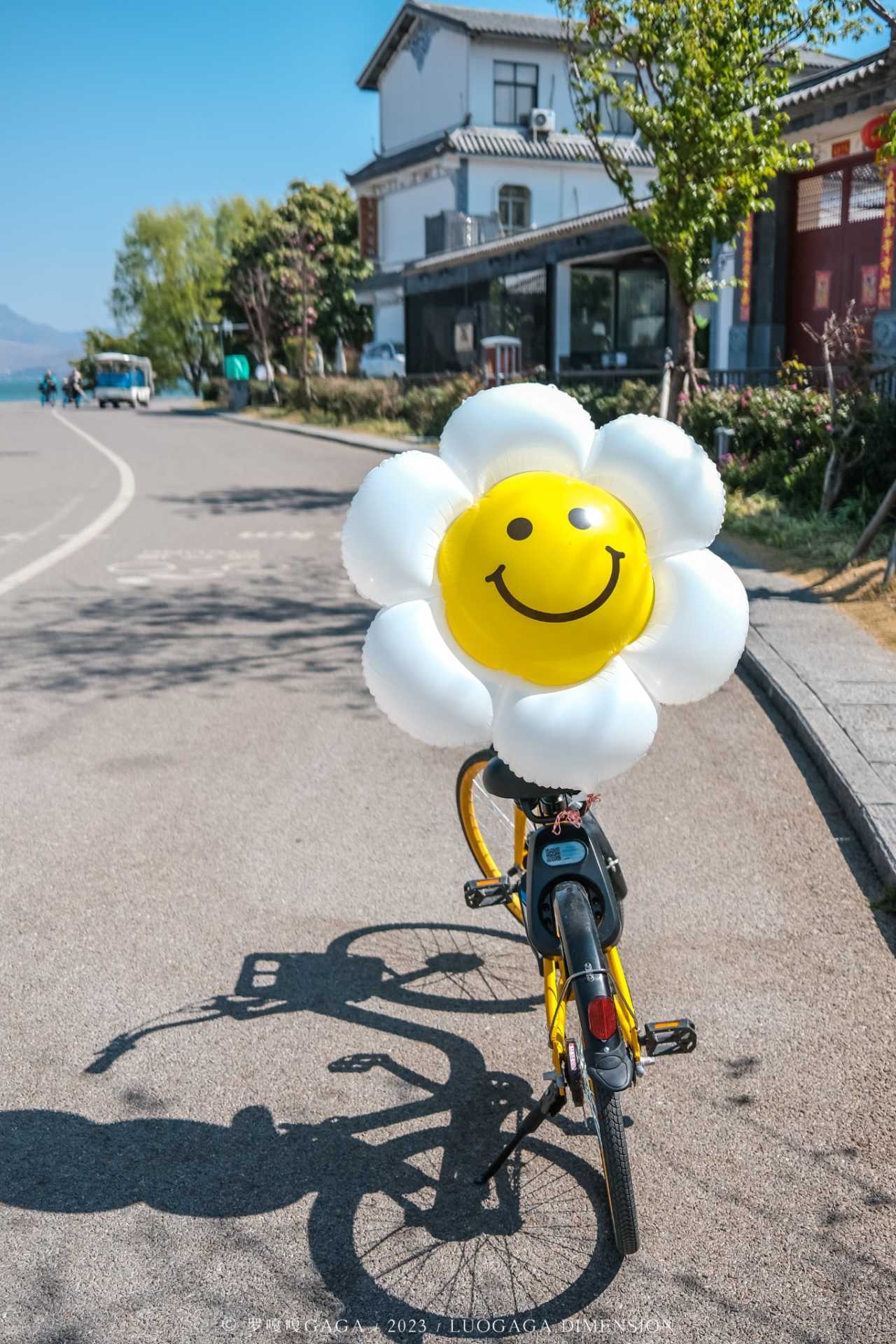
Past the old town, the wheat fields opened up before us. In the distance stood the yellow walls of Xilin Courtyard. The wheat had been planted not long ago and was still short—no dramatic wind-swept waves of grain. But the field edges were packed with tourists taking photos. Vendors sold sunflower-shaped balloons, and delicate flower crowns went for five yuan each.
We sat down at a café next to the wheat field and ordered iced Americanos. The sun warmed our legs. We watched the crowd and the bicycles passing by. We sat there for over an hour. That feeling of doing nothing—it was wonderful.
Cycling Erhai Lake: 26 Kilometers of Freedom and Exhaustion
The afternoon's main event was the west-side eco-bike path. From Haitang Park to Longkan Pier, it's 26 kilometers—bikes and e-bikes only. The city provides public bikes and e-scooters that you can rent and return anywhere. Very convenient.
The stretch from Haitang Park to Panxi was, in my opinion, the most beautiful. Along the way, it's just different combinations of lawns, Bai houses, trees, and benches. The scenery repeats, but it never gets boring. When we passed the "Corridor Bridge," I chose to go under it instead of climbing on top for a photo—too dangerous. Safety first.
The best thing about biking over driving? You can stop anywhere. See a nice spot? Lock your bike, leave it by the road, and go explore. The famous "Lonely Tree" hadn't sprouted new leaves yet. I found a familiar angle and took a photo.
Panxi's "S-Curve" is famous and packed. People feeding seagulls, taking artistic photos, singing—it was a sea of humanity. Riding through, I had to get off and walk. And I couldn't help wondering: with all these people, why was someone still learning to ride a bike here?
After Panxi, the novelty wore off. My friend, out of shape from years of little exercise, was struggling. This dreamy bike ride turned into a nearly four-hour, on-and-off private spinning class. We finally stopped at Caicun. It was dark, and we were completely wiped.
The worst part? I'd been recording the ride on my fitness tracker—or so I thought. Turns out, I never started it.
Sunset at Xingsheng Bridge and a Rainbow at Yunxiang Mountain
"Can't make it to Europe? Come to Xingsheng Bridge!" That's the tagline that draws hordes of travel photographers to this Bai-style bridge. Made of marble, with typical Bai columns, it somehow looks like a bridge in London—or maybe along the Seine.

If the sunset cooperates and the clouds aren't too thick, Xingsheng Bridge is just perfect. The warm light reflects on the water, and the black-headed gulls that haven't flown home yet drift lazily. There's scenery under the bridge too—the complex structure of the arches creates a sense of depth.
Another great sunset spot is Yunxiang Mountain—the name of a housing development under construction. On the hillside, there's a go-kart track and a building with huge glass windows that shelters you from the wind. The coffee is overpriced and terrible, but the shelter is worth it.
Just before sunset, it started to rain. Erhai Lake disappeared into the fog. But the rain clouds soon blew away, the sun returned, and two rainbows appeared across the mountains. I saw double rainbows in Qujing last year too. Are rainbows just common in Yunnan?
Eating in Dali: A Culinary Tour
In the old town, we used to shop and climb towers. This time, we silently agreed to skip all that. Every trip into town had one clear purpose: food.
We started our days with 耙肉饵丝 (braised pork rice cakes), 酸菜米线 (pickled vegetable rice noodles), and 过桥米线 (crossing-the-bridge noodles). All kinds of sweet, cheap fruit—half of which I rarely eat, half of which I'd never seen before. We tried 乳扇 (dried milk sheets). We had to eat 洋芋 (Yunnan potatoes)—the ones grown in the region's red soil have an incredible texture.
Every proper meal, we ordered local specialties: mint beef, soft dairy products, some kind of wild mushroom, and 海花 (sea flower, also known as "water spinach"). For drinks, we had small servings of local liquor and 泡鲁达 (a sweet coconut drink). The milk tea cups that say "Dali" are pretty, but the yogurt from the convenience store tasted better than it looked.
Shaxi: Stepping into a Movie
A Place Time Forgot
Shaxi sits in Jianchuan County, between Dali and Lijiang. It's a two-hour bus ride from Dali. The first thing I saw when I got off was a shop selling handmade bamboo baskets—I was hooked instantly. Yep, this felt like a real old town.
The afternoon sun hit the walls of the Ouyang Courtyard. That natural sense of story plays out every day on Shaxi's streets. The Ouyang family was one of the town's great households. This courtyard was built by their ancestors in the late Qing Dynasty and early Republic era, about a hundred years ago. It follows the traditional Bai layout of three rooms and one screen wall. From a second-floor window, you can see a pomegranate tree, with one fruit still hanging from a branch.
We kept walking down Sideng Street and passed Mint Coffee—the filming location for the "Windy Café" in the hit show Meet Yourself. Maybe because too many people showed up for photos, the owner had closed and put up a big sign: "Please order if you enter."
The ancient stage at the square is Shaxi's landmark, paired with an old tree in the center. It has real texture. During the day, the stage is never empty. Only late at night can you see it quiet.
The Poetry of Yujin Bridge
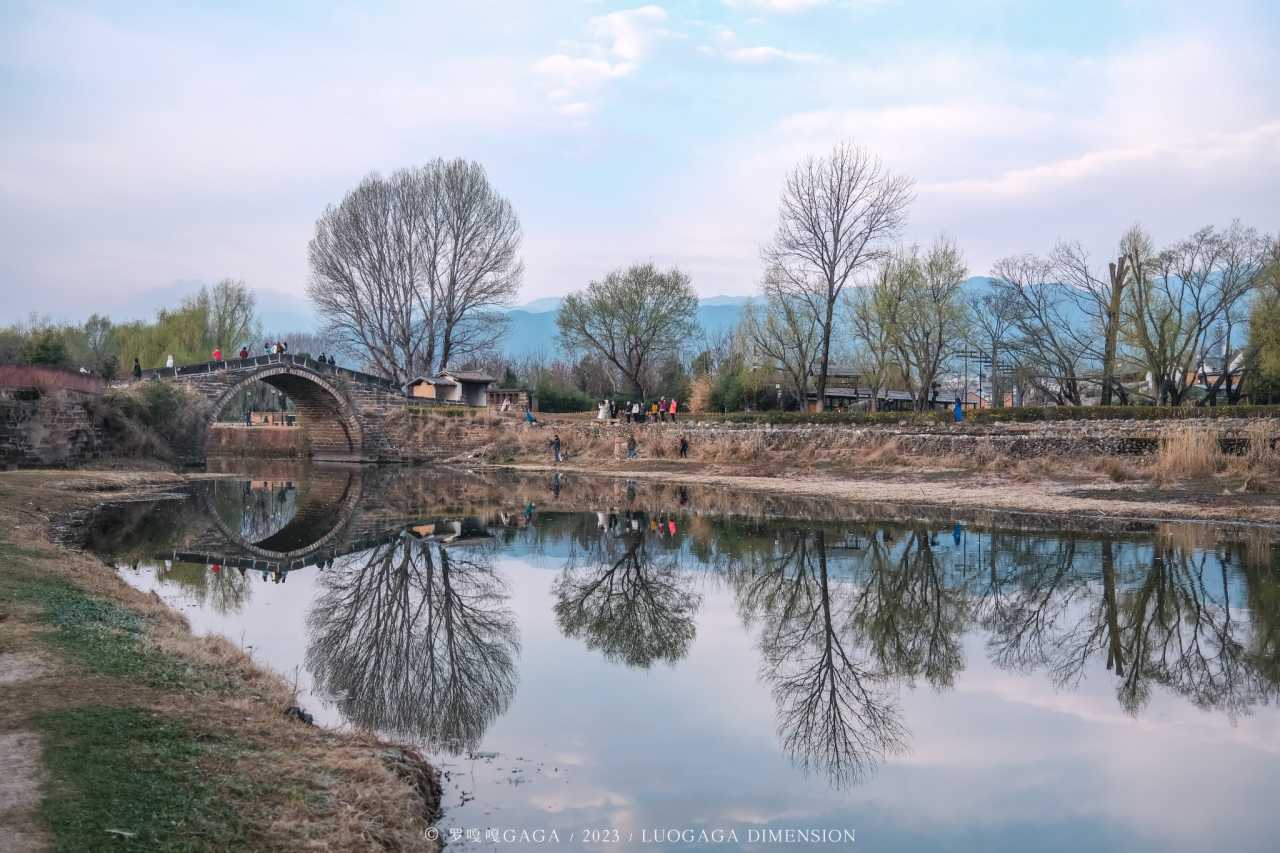
Half of Shaxi's atmosphere belongs to Yujin Bridge.
The afternoon light was perfect. The clouds were just right. Yujin Bridge looked like an oil painting. Emerging from the winding streets of the old town, the view opened up. You could hear someone singing and playing guitar by the river. Someone was sketching. On a small island in the river, a horse grazed peacefully. The pastoral scenery was breathtaking.
At sunset, I found a shallow spot by the river. The bridge and the old tree at its head reflected in the water—a quiet, ancient beauty. In the early morning, the first light illuminated the mountain silhouettes. The leafless tree mirrored in the calm water—another stunning landscape painting.
Pioneer Bookstore and Half-Mountain Coffee
Shaxi isn't just about the old town. Outside, in Beilong Village, there's the Pioneer Shaxi Bai Ethnic Bookstore—the fifth rural branch of Nanjing's famous Pioneer Bookstore. An old granary has been transformed into a "book barn," drawing waves of young visitors. The creative products inside incorporate local Jianchuan elements.
In Hualong Village, Half-Mountain Coffee is run by locals. Through the window, you can see the entire Shaxi valley, with farmland in between. The rural scenery is mesmerizing. On our way back from the café, we took a path through the fields. We met a black sheep. It was walking fast, and I thought it might charge at us. Turned out it couldn't care less.
Shaxi's Morning: The Most Authentic
On the day we left Shaxi, I got up early. I wanted to photograph Yujin Bridge without the crowds. But before sunrise, it was too dark. By the time there was enough light, the tourists were already out. I gave up and walked back to the shallow spot where I'd taken the reflection photo the day before, waiting for the sunrise.
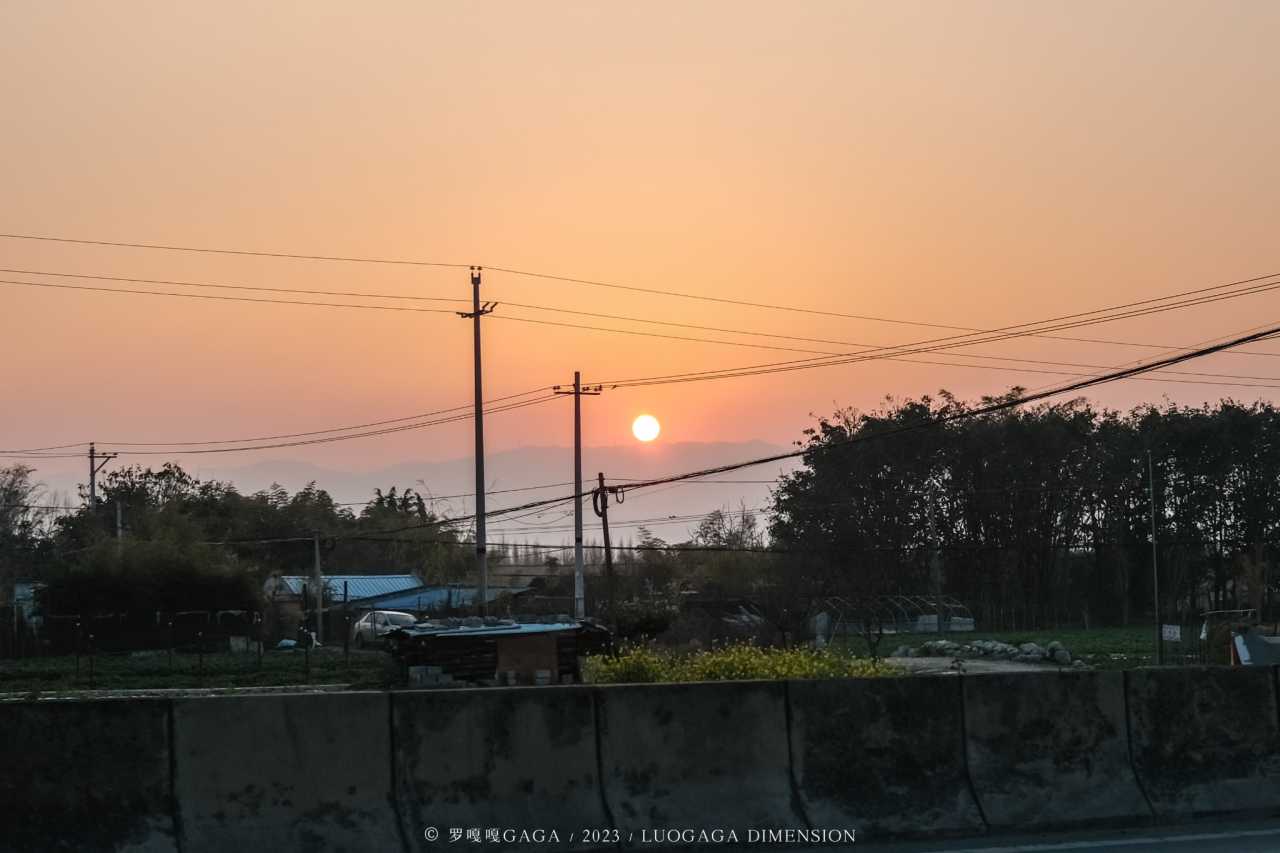
The sky slowly brightened. The morning light was soft, and Shaxi's colors were healing. Suddenly, I heard someone singing loudly. They had a good voice. After each song, the crowd cheered and applauded. I walked closer. The singer was dressed like Charlie Chaplin—I later learned he's a Shaxi legend, a Yi farmer named Yang Lusen.
Before leaving, I had my favorite 饵丝 (sliced rice cakes) and fried dough sticks. Shaxi—what a comfortable, wonderful place.
Baisha: A Cozy Town Under the Snow Mountain
Lijiang, Twenty Years Ago
Leaving Dali and Shaxi, we headed north. Next stop: Lijiang.
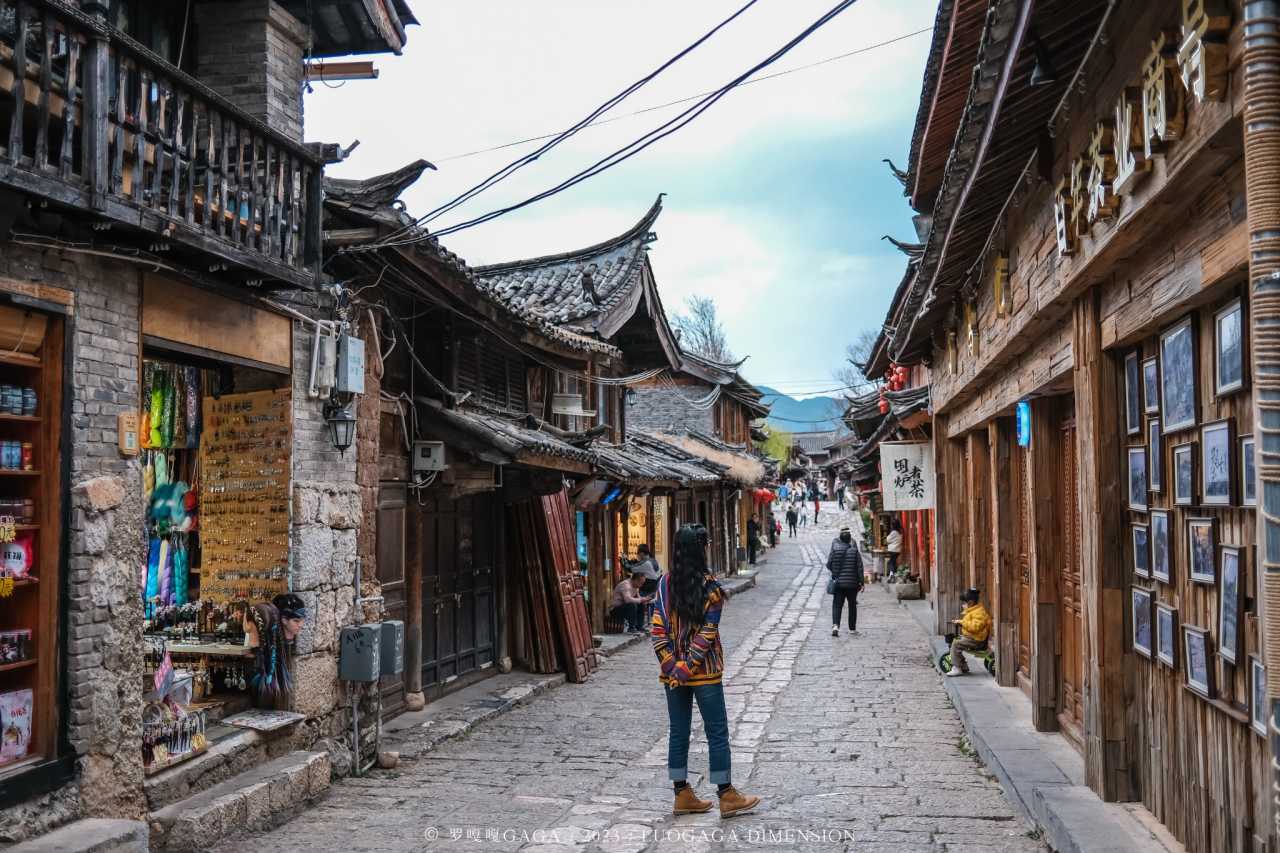
My friend said she didn't like Lijiang Old Town. She'd been drawn there by A Meter of Sunshine, only to find it overly commercialized and packed with tourists. She was disappointed. I teased her: "In the days before social media, if even you knew about it, everyone else did too."
I wasn't a fan of Lijiang Old Town either. This time, Dayan and Shuhe were just side dishes. Our main destination was Baisha Ancient Town.
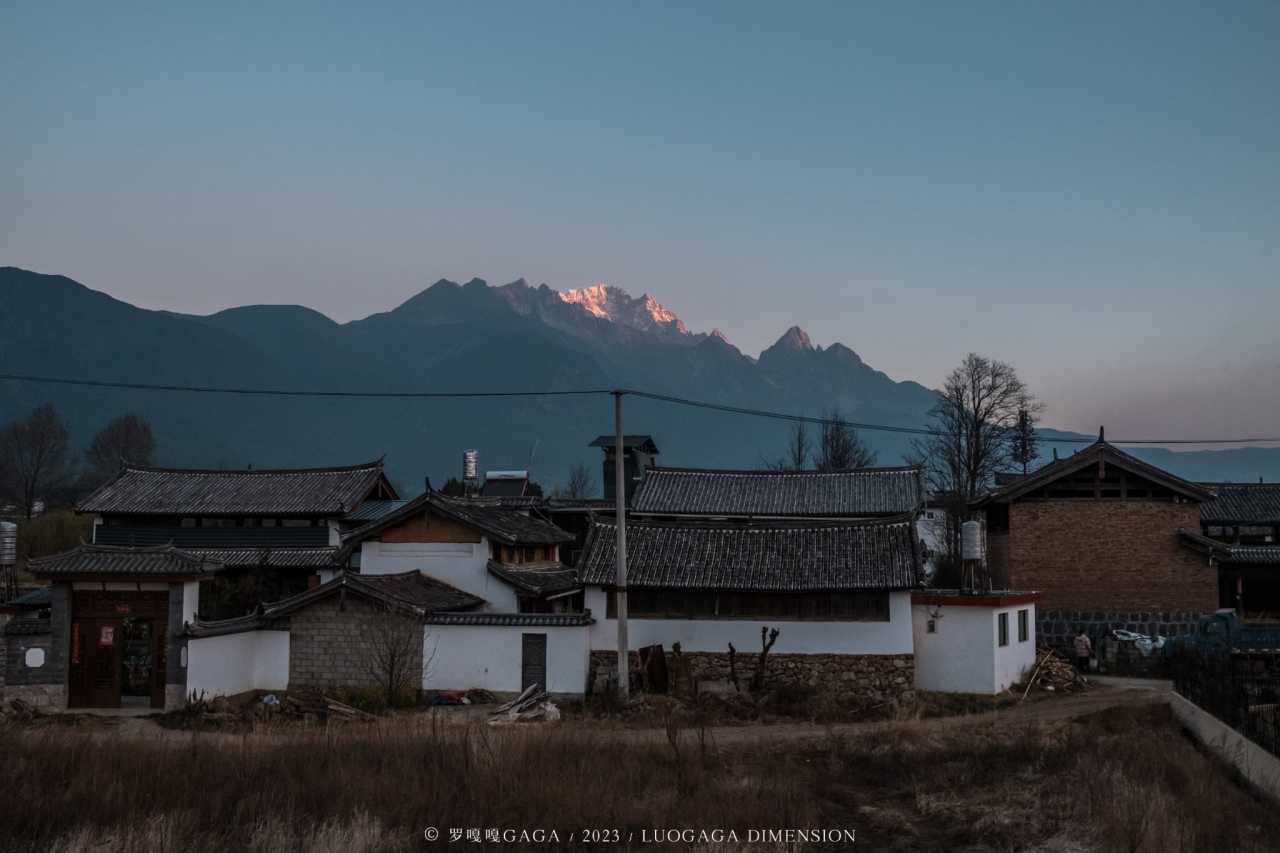
Lijiang has three main old towns: Dayan, Shuhe, and Baisha. Baisha, the closest to Jade Dragon Snow Mountain, is the smallest and least famous—but culturally, it's the most important. Baisha is the ancient Naxi kingdom, one of the birthplaces of Naxi culture. The town is surrounded by original Naxi villages, where local families have lived for generations. There's little outside influence. The vibe is special.
Shuhe is often called "Lijiang Old Town ten years ago." Baisha can take you back twenty years. That might be a slight exaggeration, but you get the idea—it's less commercialized, still relatively simple and authentic.
Baisha: Not Much to "Do," and That's the Point
Baisha is tiny—just one horizontal street and one vertical. Even though its snowy mountain photos have recently attracted visitors, it's only busy in the afternoon. Mornings and evenings are quiet. Most tourists don't stay overnight; they come from Dayan or Shuhe for a few hours and leave.
So if you don't need fancy shops and restaurants, I highly recommend staying here for two days. The experience is completely different.
Baisha is so close to Jade Dragon Snow Mountain that you can see it just by looking up while walking through town. The surrounding Naxi villages are full of local courtyards and farmland. Some courtyards are for rent—40,000 to 50,000 yuan a year, which is supposedly reasonable. You could rent one for your whole family or turn it into a studio.
I heard that the artists and free spirits who used to settle in Dayan and Shuhe have all moved to Baisha. Soon enough, Baisha will develop too.
Life Under the Snow Mountain
Wandering through the nearby villages was delightful. Occasionally, villagers walked by, chatting and laughing in Naxi—a language I couldn't understand. Near sunset, I saw an elderly couple walking slowly toward us, carrying farm tools. Heading home after a day's work.
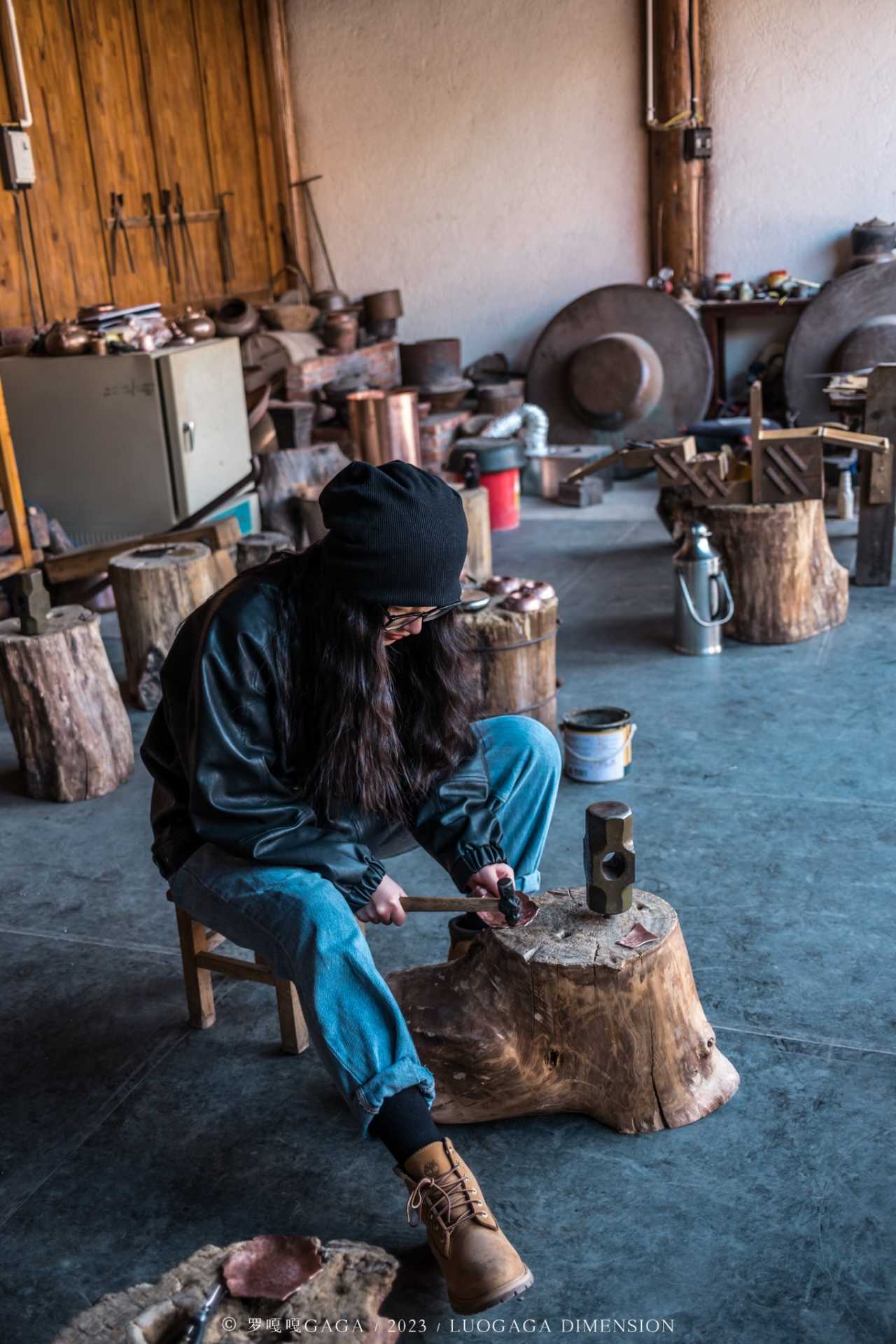
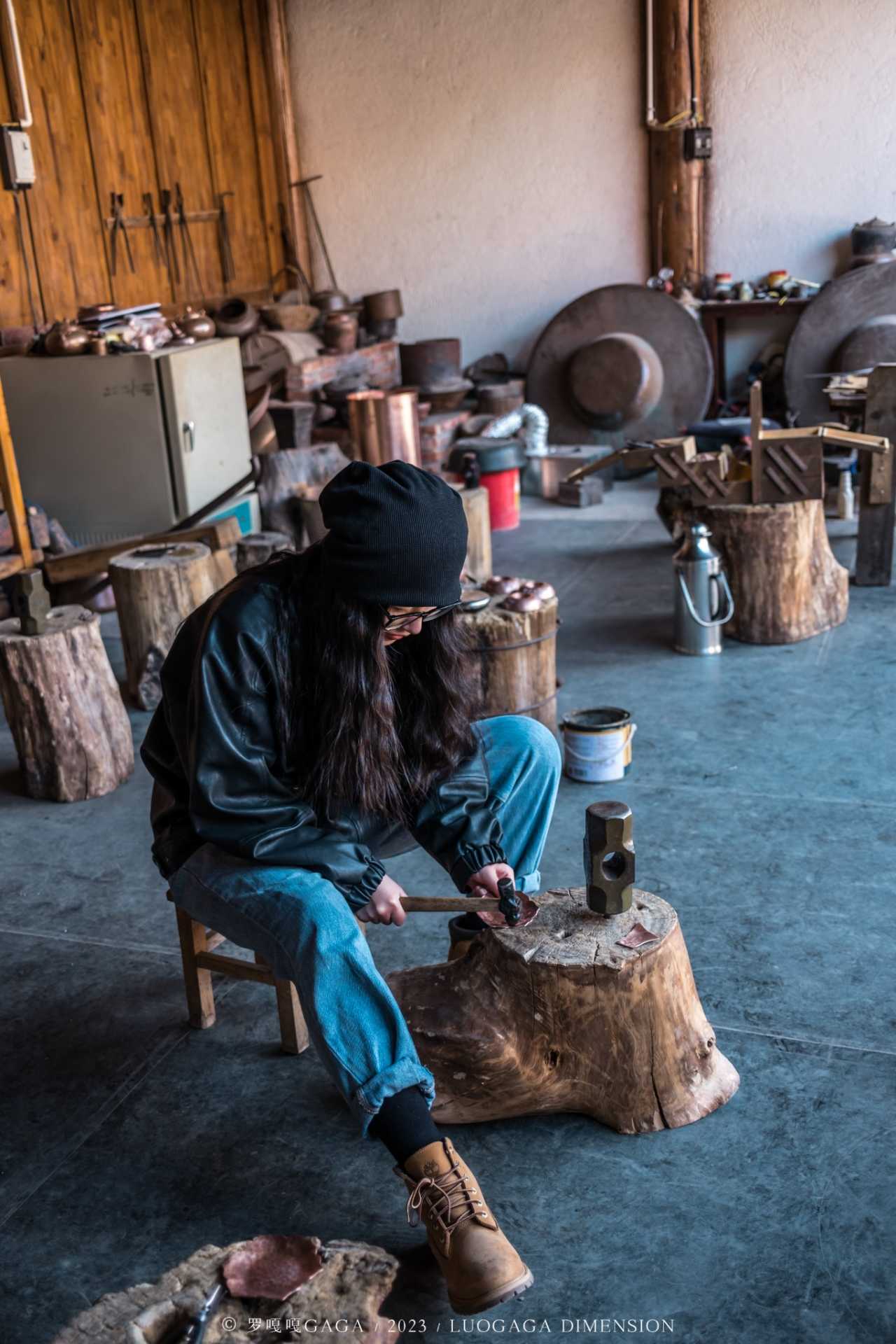
On Baisha's streets, there are shops selling handmade silverware, with the rhythmic clang of hammering filling the air. There are stalls selling traditional Naxi snacks, steam rising into the air. And there are cafés and bookstores, perfect for zoning out.
We spent an afternoon in a café, looking out at the snow mountain. Sunlight streamed through the glass, warm and cozy. My friend said, "This is the Lijiang I imagined—not crowded streets and loud bars, but a place where you can quietly watch the snow mountain, soak up the sun, and just be."
Final Thoughts: The Meaning of Travel Is Finding Yourself
On this Yunnan trip, I didn't even bring my usual Sony camera. I just took a small Fujifilm. I was truly relaxed.
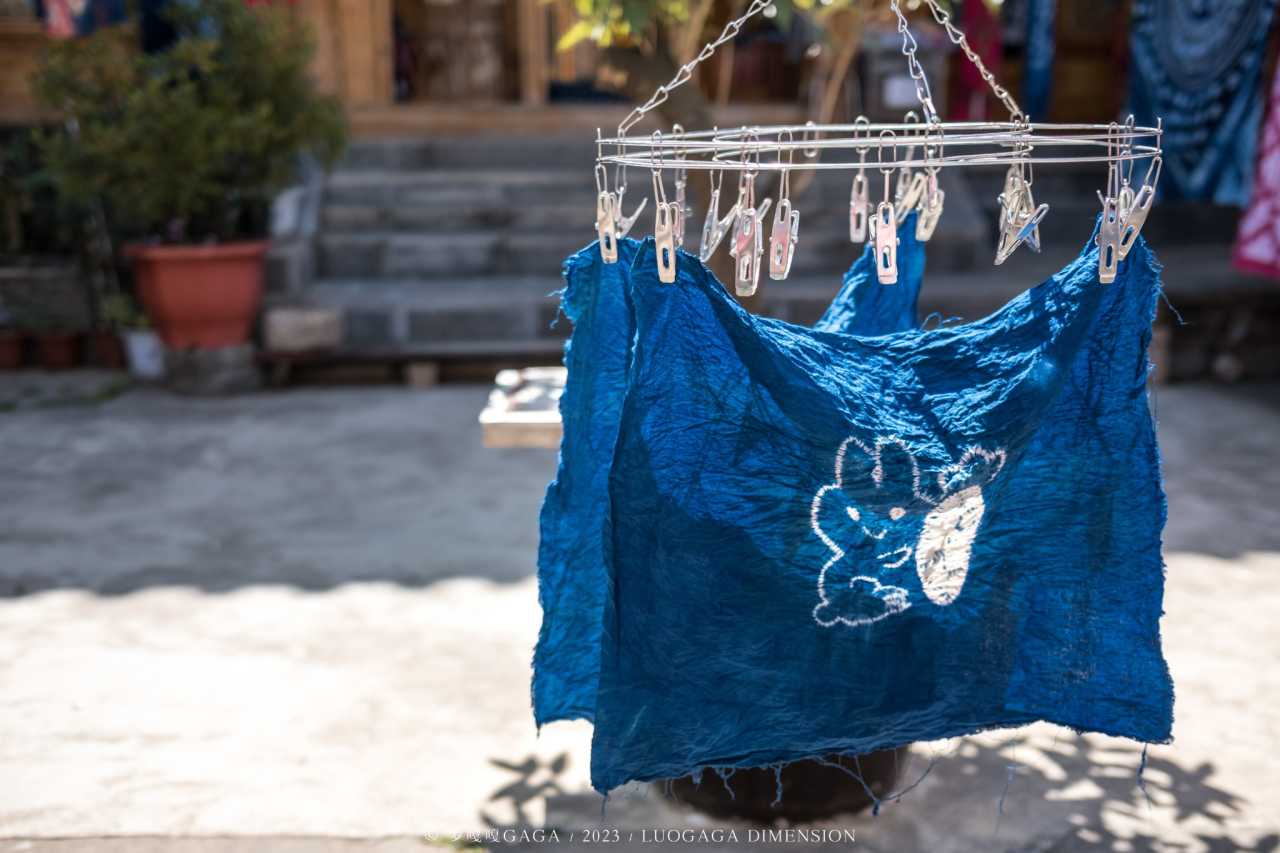
Looking back over those eight days, we didn't visit many attractions. We didn't take many photos. But we collected plenty of "moments"—that afternoon cycling along Erhai Lake, the wind in our faces, the sun fierce, the feeling perfect. That time spent zoning out in a tie-dye courtyard, waiting for our freshly dyed fabric to dry, the noise of the outside world irrelevant. Walking through farmland, passing an old man smoking his pipe, we followed the path between the fields—just like when we were kids, going on sketching trips in the mountains.
The truth is, utopia isn't a place. It's a state of mind. Dali, Shaxi, Baisha—they're just destinations that happen to carry that feeling.
What matters isn't where you go. It's that you go. What matters isn't the scenery. It's the mood you bring to it.
If you're looking for a place to lay low, come to Yunnan. Have a coffee at the foot of Cangshan Mountain. Ride a bike along Erhai Lake. Listen to the horse bells in Shaxi's morning. Watch the snow mountain in Baisha's afternoon.
You'll discover that life can be this slow. This beautiful.
You should also read:
Dreamland – Lijiang: A Talking Comic Travel Guide
Dreamland – Lijiang: A Talking Comic Travel Guide Prologue: When Lijiang Takes Root in Your Heart Some places leave a mark on you forever. They're like an old song on repeat, suddenly playing in your mind on an ordinary afternoon. For me, Lijiang is that…
Continue reading...
Escaping Nanning, Falling Under Lijiang's Spell: Our Four-Person, Ten-Day Yunnan Dream
Escaping Nanning, Falling Under Lijiang's Spell: Our Four-Person, Ten-Day Yunnan Dream Before We Set Off: No Pain, No Obsession Have you ever had that impulse—suddenly tired of the office fluorescent lights, the crush of the subway, the endless parade of identical takeout boxes, and just…
Continue reading...
Two Girls' Graduation Trip: Dali and Shuanglang – A Poetic Farewell to Mountains and Sea
Two Girls' Graduation Trip: Dali and Shuanglang – A Poetic Farewell to Mountains and Sea Preface: Catching the Tail of Youth, Heading South During our senior year of college, my roommate and I – two girls studying in Beijing – decided to bid farewell to…
Continue reading...