Eight Thousand Miles of Clouds and Moon: A Spring Floral Journey Through Sichuan, Guizhou, and Yunnan
Eight Thousand Miles of Clouds and Moon: A Spring Floral Journey Through Sichuan, Guizhou, and Yunnan
Prologue: Spring on Wheels
The spring of 2015 arrived unusually early. While the north was still shivering in biting winds, waiting for snow and ice to melt, Yunnan's rapeseed flowers had already blanketed the mountains and fields. That year, we chose a special way to return home for the Chinese New Year—a road trip. Setting out from Chengdu, we traversed the towering peaks of Guizhou, then looped back into Yunnan's gentle embrace, covering over 4,000 kilometers in total. Eight thousand miles of clouds and moon—that's exactly what this journey felt like.

My hometown is Lincang, a "city of constant temperature" straddling the Tropic of Cancer. Here, the subtropical climate meets the Hengduan Mountains, creating a miracle of eternal spring. Warm, abundant sunshine, pure, humid air, and hillsides awash with rapeseed flowers in bloom—this is the truest缩影 (microcosm) of magnificent Yunnan.
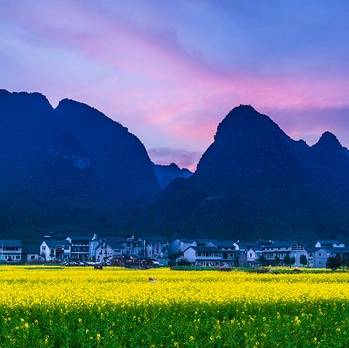
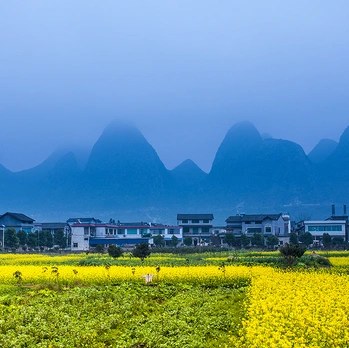
For this trip, we deliberately detoured through Wanfenglin and Puzhehei. Both are classic karst limestone landscapes, yet each has its own character: Wanfenglin is grand and imposing, like thousands of troops arrayed for battle; Puzhehei, on the other hand, is a delicate tapestry of mountains and water, rising to fame after being featured on the reality show Where Are We Going, Dad? Since they were on the way, why not explore them?
Itinerary Overview: Tracks on Wheels
Outbound Journey: - D1: Chengdu → Tongzi (550 km) - D2: Tongzi → Qinglong → The Twenty-Four Turns → Wanfenglin (550 km) - D3: Wanfenglin → Wanfeng Lake → Luoping → Gaoliang (220 km) - D4: Gaoliang → Puzhehei Village (90 km) - D5: Puzhehei Village → Kunming (350 km) - D6: Kunming → Dali Old Town → Shuanglang (380 km) - D7: Shuanglang → Lincang (350 km)
In Lincang: Linxiang → Lingshan Temple → Qishan → Nanmei → Boshang (approx. 80 km)
Return Journey: - D1: Lincang → Kunming (530 km) - D2: Kunming → Miyi → Xichang (500 km) - D3: Xichang → Chengdu (450 km)
Total Distance: 4,000+ km
Road conditions were generally good and suitable for self-driving. One gripe, though: on the Yaxi Expressway, the stretch from Xichang to Chengdu is lined with speed cameras as dense as a swarm of ants, with limits dropping from 90 to 80 to 70 km/h, forcing constant hard braking. For a toll road of this caliber, such restrictions are baffling.
Photography Gear: Canon 5D Mark II, 17-40L and XXB IS dual lenses, Benro tripod. Unfortunately, I forgot to pack a shutter release cable and ND filter, so my plans for shooting star trails were scuttled. My phone was a Redmi Note, used for food shots and behind-the-scenes photos, complete with a fisheye lens attachment.
Day 1: Departure in the Fog
The plan was to drive straight from Chengdu to Zunyi, but thick morning fog threw everything into chaos. A chain-reaction crash involving over fifty cars on the Chengzi-Luzhou Expressway led to a complete closure of all outbound highways. We turned back into the city, grabbed lunch, and didn't hit the road again until after 1 PM. Taking a detour via Longquan onto the Chengdu-Chongqing Expressway, we made it to Tongzi just before dark.
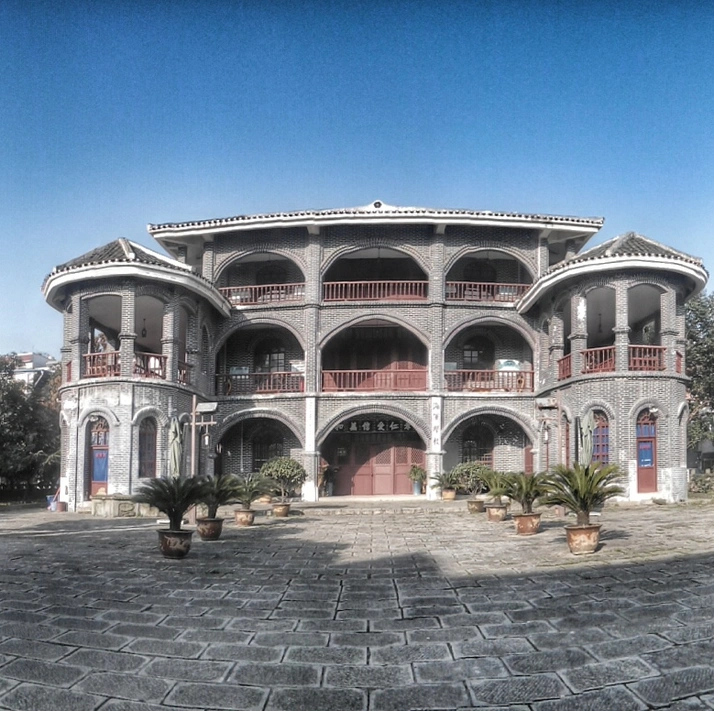
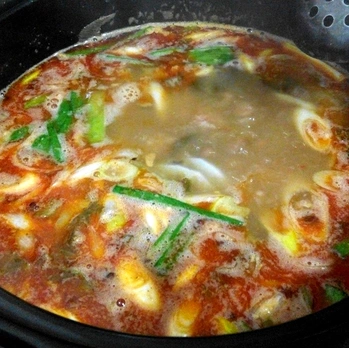
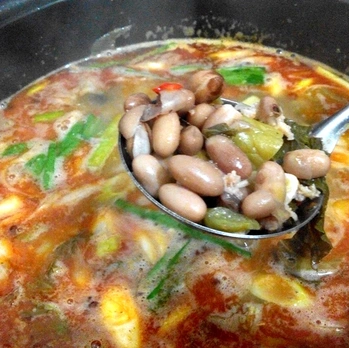
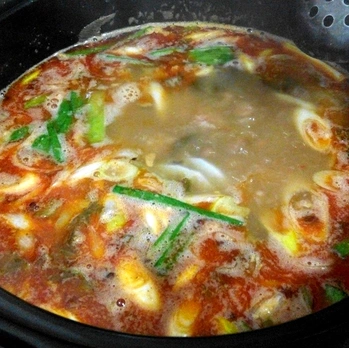
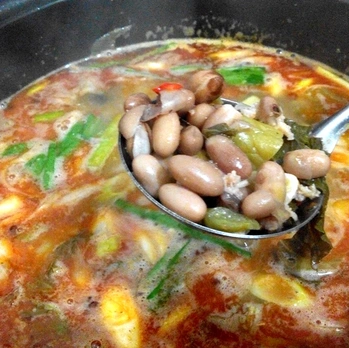
Tongzi turned out to be a pleasant surprise. Using a review app, we found a food street and ordered a pot of 豆米火锅 (kidney bean hotpot)—rich in flavor and generous in portions. We spent the night at a hotel inside the Haixiao Courtyard compound. It wasn't until morning that I realized this was a heritage site, its architecture strikingly similar to the Zunyi Conference Hall.
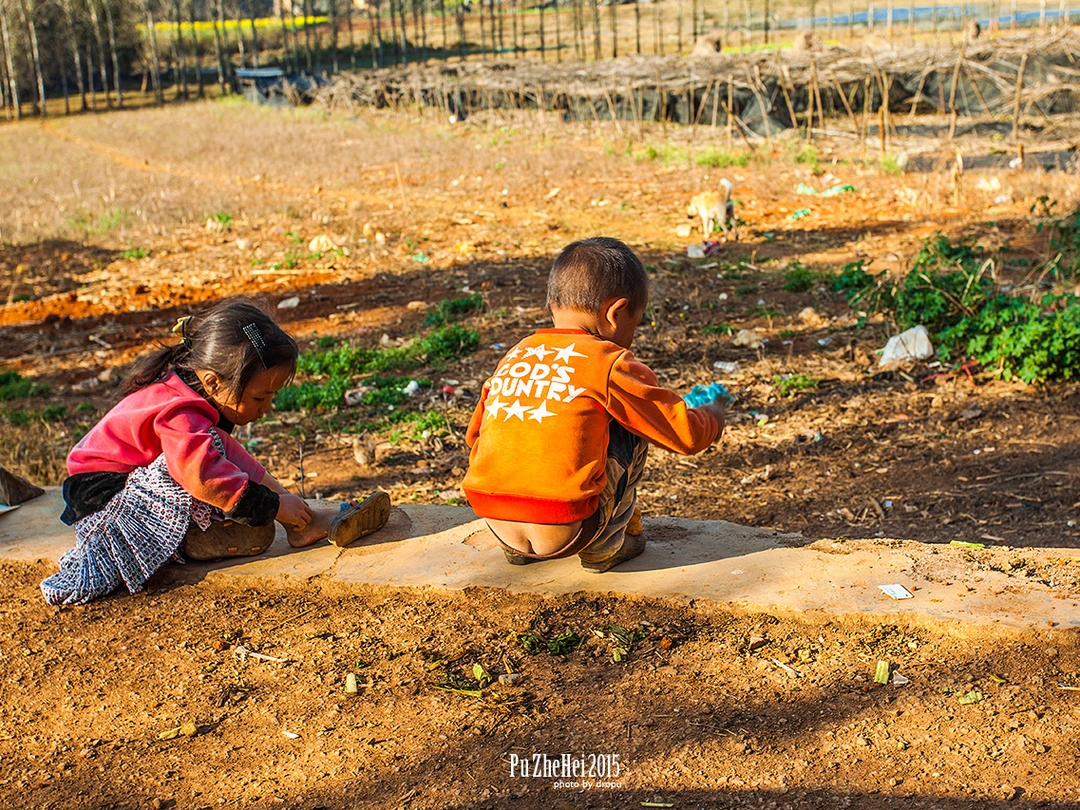
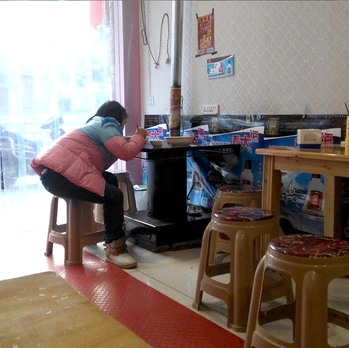
At dawn, we stopped at a roadside小店 (small eatery) for a bowl of rice noodles—locals call them 卷粉 (rolled rice noodles). A little girl nearby was eating her noodles in such an amusing way that we couldn't help but smile.
Day 2: The Winding Twenty-Four Turns
We reached Qinglong around noon. Unable to find the legendary ancient town, we settled for a clay pot restaurant nearby, ordering a serving of 五花肉石锅 (pork belly stone pot) and a 茄子石锅 (eggplant stone pot). After a hearty meal, we continued on, passing the famous "Twenty-Four Turns" (二十四道拐).
This road was a lifeline during the War of Resistance against Japan and is now a historic landmark. We stopped by the roadside for a side-angle shot, but couldn't capture the full panorama, so we decided to drive it ourselves. Every turn was marked with U.S. military signage or propaganda posters, along with bunkers and other wartime structures—history etched clearly into the landscape.
By the time we reached Wanfenglin in the evening, darkness had already fallen. The inn we stayed at was a bit dusty, and dinner was too dim to even make out the dishes. There were no stars that night, and I lamented a missed opportunity: I'd brought two tripods but forgot both the shutter release cable and the ND filter. My star-trail photography plans were completely dashed.
Day 3: Wanfeng Lake Under Overcast Skies
At dawn in Wanfenglin, a thin mist clung to the mountaintops, and the sun stubbornly refused to show itself. We visited Wanfo Temple (Ten Thousand Buddhas Temple), a modern structure with little character. I snapped a few perfunctory shots and we moved on.
The weather remained gloomy as we drove to Wanfeng Lake. The lake was shrouded in clouds and fog, visibility so poor that we had no desire to take a boat ride. A nagging worry crept in: had I used up all my good luck last year?
We pressed on. Around 5 PM, in a small town just outside Wulong, we stumbled upon a market day. The only bridge was completely clogged with market-goers. We parked nearby and found a 酸菜鱼店 (sour cabbage fish restaurant). The fish was caught and cooked on the spot—it didn't look fancy, but it was tender and delicious. Two pounds of fish later, all our frustrations had melted away into pure satisfaction.
After the meal, it was fully dark. The market crowd gradually dispersed, and we hit the road again. Darkness, rain, mountain roads—this stretch was nothing short of thrilling and nerve-wracking.
We ended up staying overnight in the small town of Gaoliang, halfway along the route. The town was quiet and fresh, and we slept soundly.
Day 4: Puzhehei's Tranquility and Surprises
We woke early and arrived smoothly at Puzhehei. It was before the Spring Festival, so tourists were scarce—truly the off-season. Naturally, there were no lotus flowers—actually, there weren't any at all.
We found a hotel in the Puzhehei Resort that allowed dogs. Three-star rated, this was the best accommodation our dog, Mili, had ever stayed in. We gave her a thorough bath, then drove around exploring.
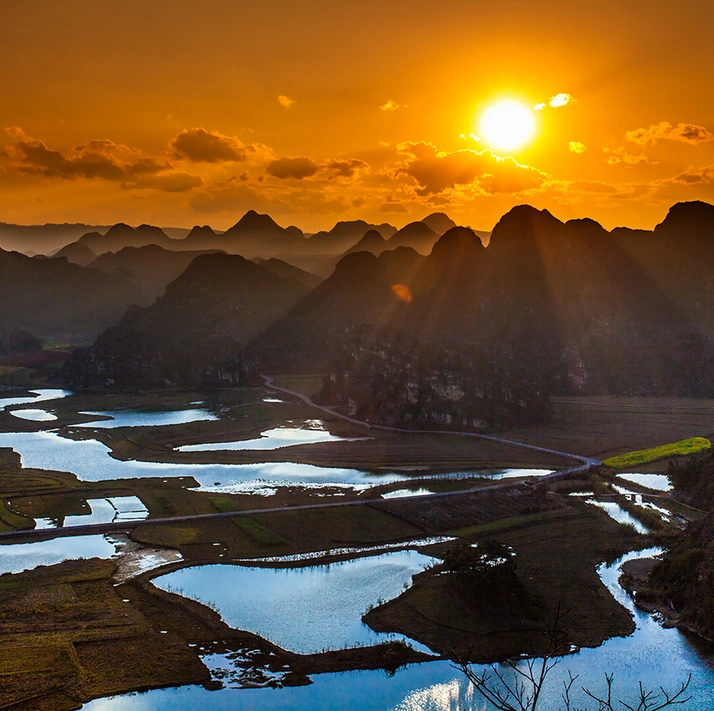
The weather improved, and Yunnan's signature blue skies and white clouds returned. In the afternoon, I climbed Qinglong Mountain (Green Dragon Mountain) alone to catch the sunset, while Mili and my wife stayed in the car—a decision that proved wise. Though not very tall, Qinglong Mountain was still a bit of a climb. The summit offered a panoramic view: sunset on one side, sunrise point on the other. But I didn't have the energy to climb it again the next morning, so I snapped a few quick shots and headed down.
For dinner, we followed a review recommendation to the second restaurant from the village entrance for 牛肉火锅 (beef hotpot). A pound of beef with three vegetable sides left us completely stuffed. Beef washed down with cola—an unbeatable combination.
Strawberry Picking Fun
Just outside Puzhehei Village, there's a fork: right leads to Qinglong Mountain, left to a Buyi ethnic village. With time to spare, we turned left and stumbled upon a strawberry-picking farm. At 30 yuan per pound, we didn't hesitate to head into the fields.
The sweetest and tastiest strawberries were the small ones, uniformly red all over. After picking, we continued driving and came across a rice paddy with stunning light and shadow. We stopped to take photos.
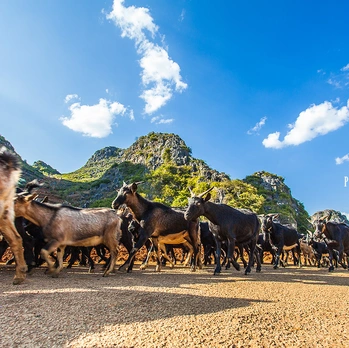
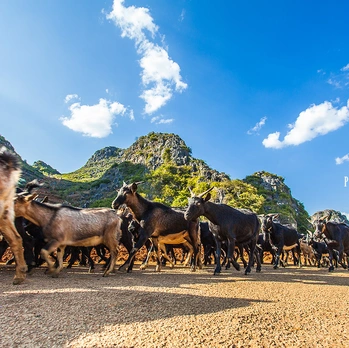
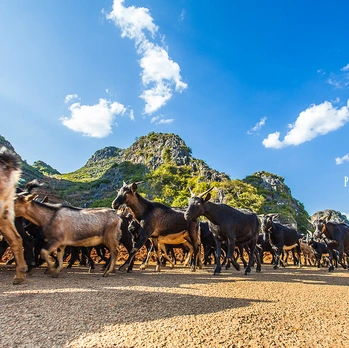
Suddenly, a herd of sheep came thundering toward us. I opened the trunk and shouted, "Quick, get in my car!" The sheep, of course, ignored me completely and vanished in an instant. Further ahead, we encountered cows—turns out they were being moved for manure spreading. I even photographed that. Yes, I surprised myself.
Sunset on Qinglong Mountain
I climbed Qinglong Mountain again in the evening. I thought it would be a quick ascent, but it turned out to be exhausting. To the east, a cluster of dome-shaped hills stood before me—at sunrise, they must be breathtakingly beautiful.
On the western viewing platform, even in the off-season, there were twenty or thirty people. During peak season, it could easily become a stampede hazard. Today's sunset wasn't particularly spectacular, so I packed up before the sun fully set. And wouldn't you know it—once I got down, the view from below was even more beautiful.
Star-Gazing Fun
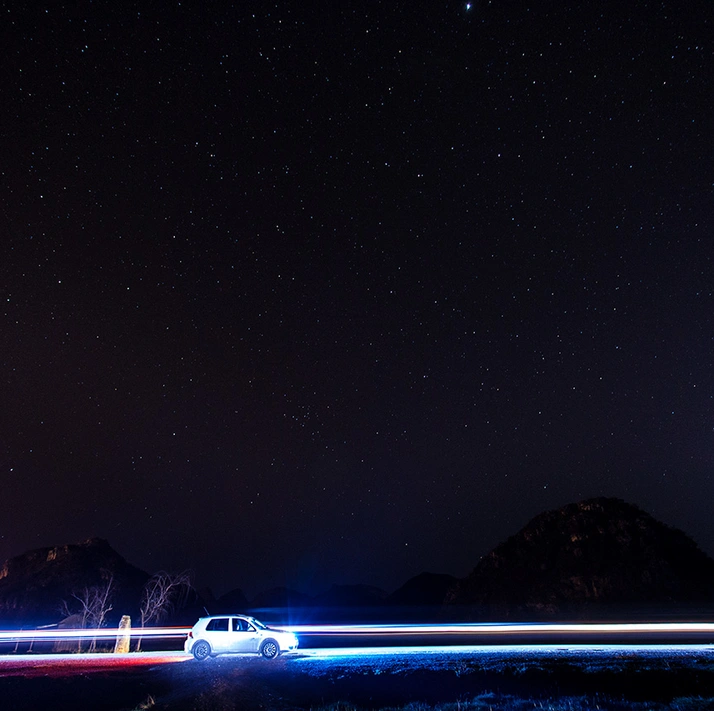
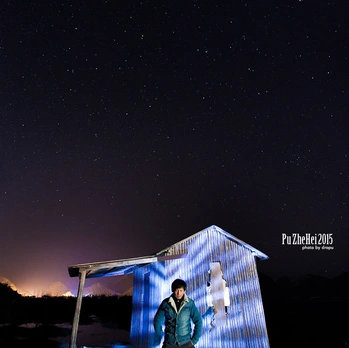
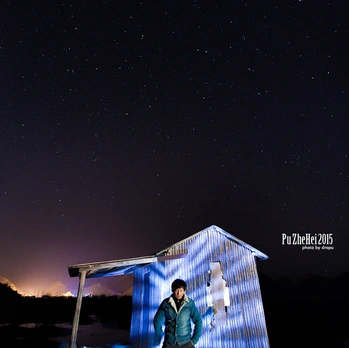
That evening, my wife asked if I wanted to photograph the stars. I said I didn't have the shutter release cable. She said, "Don't regret it—you don't get here often." I hesitated, then decided to give it a try anyway.
We drove to a pitch-black area near the scenic area entrance and started messing around. The technique: hold your breath, stand perfectly still, and secretly use your right hand to shine a flashlight behind you in random patterns. If no passing car headlights hit your face, you get a silhouette effect; if you encounter a driver with their high beams on, you get a completely different look.
After posting the photos on social media, we returned to the hotel. The next day, we headed straight for Kunming.
Day 5: Dali's Blue and Shuanglang's Crowds
After a restful night in Kunming, we continued to Dali Old Town. We hit an accident on the road and sat in traffic for half an hour.
This was my fourth visit to Dali. The sky was still that brilliant blue, the clouds still beautiful, but the commercialization was increasingly thick. The magnolias between Cangshan Mountain and Erhai Lake were in full bloom. We grabbed some cold noodles and 火烧乳扇 (grilled milk fan) in the old town, then headed to Shuanglang.
When we arrived at Shuanglang, I was speechless—it was packed with people. It wasn't even Chinese New Year yet, and the place was already overflowing. We struggled to inch forward, losing all desire to take photos.
Day 6: Back to Lincang, Back to the Beginning
We drove straight back to Lincang in one go. There's no place like home—the air was as pure as ever.
We climbed the Qishan observation tower for a bird's-eye view of the entire city. The changes over the years were staggering—the city had expanded many times over. On the road to Boshang Reservoir, the rapeseed flower fields on both sides drew countless tourists stopping to take pictures.
After all this travel, I realized: home is still the best. It may not have the most stunning scenery or the finest cuisine, but it holds the earliest dreams, the purest friendships and family bonds, and too many memories to ever forget.
Epilogue: The Next Cycle
Spring 2015 had arrived. The New Year was over, and we returned to where we started, ready to begin another cycle of twenty-four months.
Eight thousand miles of clouds and moon—not too long, not too short. This journey had its surprises, its regrets, its laughter, and its exhaustion. But it's precisely these bits and pieces that make up the truest memories of a trip.
Practical Tips: 1. The Yaxi Expressway has dense speed camera coverage—watch for changing speed limits 2. Puzhehei is uncrowded in the off-season, but the lotus season (June–August) is the best time to visit 3. For self-driving trips, remember to bring all your photography gear, especially a shutter release cable and ND filter 4. Both Wanfenglin and Puzhehei are pet-friendly, but confirm hotel policies in advance 5. Guizhou's mountain roads are prone to rain and fog—drive with extra caution at night
This travelogue is original content by the author. Reproduction without permission is prohibited.
You should also read:

God’s Abandoned Palette: A Self-Drive Journey Through Yunnan’s Dongchuan Red Land
God’s Abandoned Palette: A Self-Drive Journey Through Yunnan’s Dongchuan Red Land Travel has never been about reaching some distant geographic coordinate. It’s about encountering, along the way, the version of yourself buried beneath the rubble of daily routine. During this May Day holiday, I finally…
Continue reading...
Body in Hell, Heart in Heaven: A Pilgrimage Through Tiger Leaping Gorge — A Dialogue Between Heaven and Earth
Body in Hell, Heart in Heaven: A Pilgrimage Through Tiger Leaping Gorge — A Dialogue Between Heaven and Earth Introduction: When the Gorge Splits Open Beneath Your Feet Some say Tiger Leaping Gorge is the closest place on Earth to the border between "hell" and…
Continue reading...
Cloud Travelogue · Dali of Wind, Flowers, Snow, and Moon: A Three-Day, Two-Night Journey of a Free Spirit
Cloud Travelogue · Dali of Wind, Flowers, Snow, and Moon: A Three-Day, Two-Night Journey of a Free Spirit I am a cultured female foodie with a touch of rogue charm. I slung on my backpack, took my lover's hand, and set off on a spontaneous…
Continue reading...