Eight Thousand Miles of Clouds and Moon, Part Three: Turning Northwestward, Finding Comfort in Jianshui and Kunming
Eight Thousand Miles of Clouds and Moon, Part Three: Turning Northwestward, Finding Comfort in Jianshui and Kunming
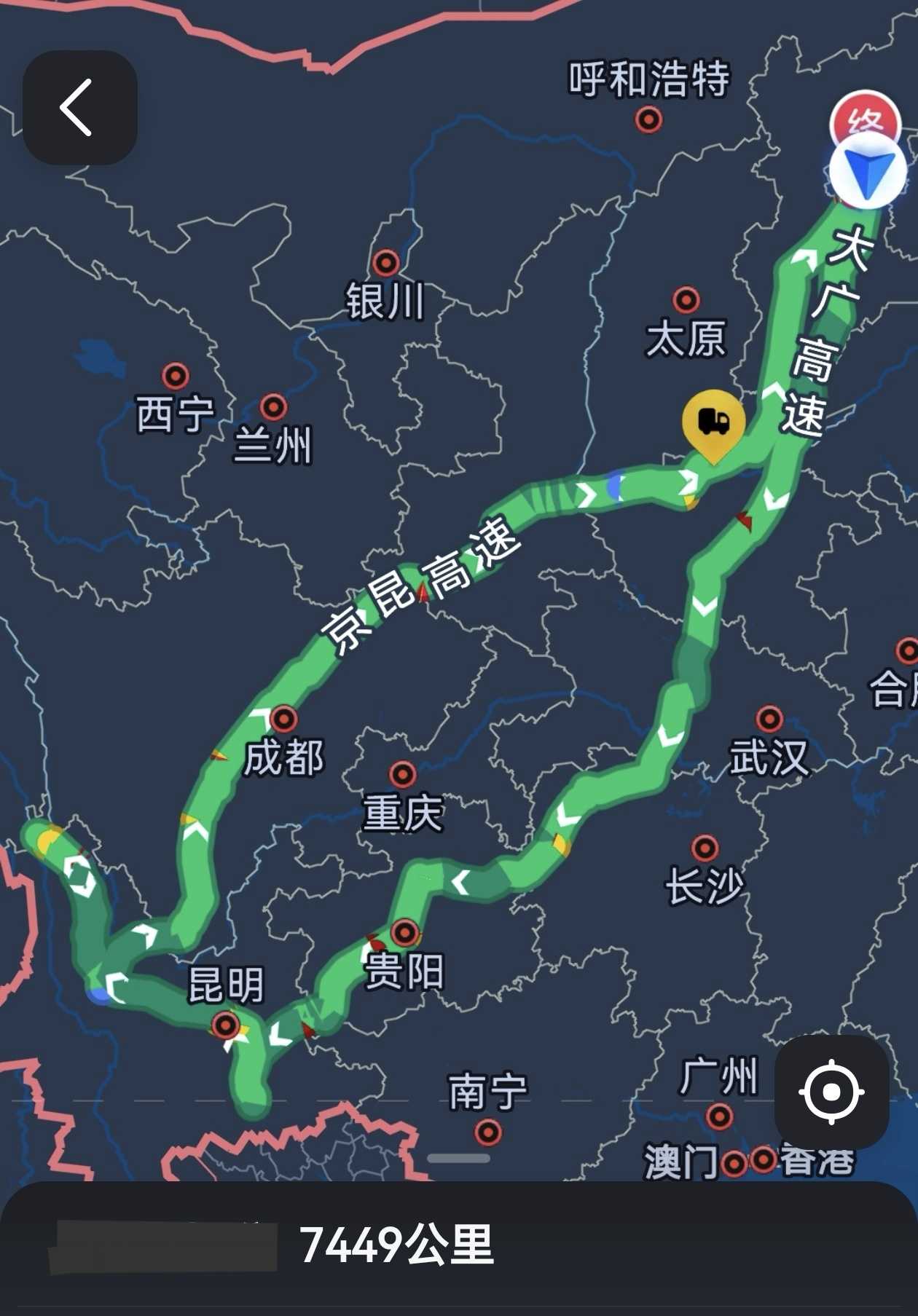
As winter break arrived and the chill of the north still lingered, I couldn't wait to board a southbound train, heading for that land kissed by sunlight. This journey began at Beijing West Station, reaching Zhengzhou East Station in just 2 hours and 18 minutes—a speed that left me in awe. From there, we switched to a NIO electric car and drove southwest, embarking on a 25-day, 5,000-mile (8,000-kilometer) grand adventure.
From Hebei, Henan, Hubei, and Hunan, to Guizhou, Yunnan, Tibet, Sichuan, and Shaanxi, then back to Henan before catching a high-speed train to Beijing—this route took us along treacherous zigzag roads carved into cliffsides, where we witnessed the unparalleled sight of golden sunlight illuminating snow-capped peaks. We navigated the rock-strewn National Highway 214, marveling at the shimmering salt fields of Yanjing. By day, we strolled through Zhangjiajie; by night, we lingered in Fenghuang Ancient Town. We explored museums to trace history and touched the past amid ancient ruins. On the first day of the Lunar New Year, we turned northwest, refusing to turn back until we saw the golden mountains—this was a journey brimming with adventure and surprises.
This installment picks up from the previous two stops (Hubei-Hunan and Guizhou-Yunnan), starting from the southwesternmost point of this trip—Mengzi City—then turning northwest into Honghe Prefecture's Jianshui County, and finally returning to Kunming. Let us step into this chapter titled "Turning Northwestward, Finding Comfort in Jianshui and Kunming."
Stop 11: Jianshui—A Beloved Small Town, Visited Time and Again
I've lost count of how many times I've been to Yunnan, but this marks my third dedicated visit to Jianshui County in Honghe Prefecture (passing through doesn't count). This small town never fails to captivate me, and each visit reveals new delights. Though we stayed less than 48 hours this time, we left with full hearts, deeply moved by Jianshui's culture and beauty.
We again chose the Xihan Hotel, located just outside Jianshui's ancient town, which had served us well before. After settling in, we walked to the North Gate of the old city, soaking in the everyday atmosphere of Jianshui beyond its historic walls. Old bridges, bustling farmers' markets, and rows of shops all reflected the authentic, ordinary rhythm of life in this small town.
Jianshui Ancient Town: A Millennium of Culture, Scenery at Every Step
Jianshui Ancient Town boasts over 1,000 surface-level cultural relics, including 7 national-level protected sites, 147 at the provincial, prefectural, and county levels, and 358 heritage points. The number of above-ground relics ranks highest among Yunnan's five nationally renowned historical and cultural cities. Within the ancient town are three 4A-rated tourist attractions: the Confucian Temple, the Zhu Family Garden, and the Imperial Examination Hall. Even after three visits, I still haven't explored the entire town.
Entering through the North Gate, known as Yongzhen Gate, we passed a recently rebuilt gate tower—the original was destroyed during the Qing Dynasty's wars. The tower bears the inscription "Observation Tower" and is open to the public free of charge. Climbing to the top, we gazed out over Jianshui and couldn't help but marvel: "How can this look like a county-level city? It's truly vast!"
Following the bluestone path south, we passed Confucius Square and arrived at Lin'an Road, the main east-west thoroughfare of the ancient town. Major attractions like the Confucian Temple, Lin'an Government Office, and the Imperial Examination Hall line this road. Bathed in the glow of the setting sun, we strolled along the smooth bluestone slabs, enjoying the rare tranquility of pre-Spring Festival days with fewer tourists.
Near the Hanlin Memorial Arch, vendors sold fresh fruit. Blueberries were 30 yuan per jin (about $2 per pound), and locally grown strawberries and blueberries were freshly available—high quality at reasonable prices. I bought over a jin of blueberries and headed straight to Xiangmanlou Restaurant. Last year's dining experience there had been excellent, so we had to return tonight.
By early evening, there were fewer diners at Xiangmanlou than last time, and we could choose any seat by the upstairs window. We ordered a vegetable we'd never tried before—炮仗花 (firecracker vine flower)—which had fine fibers and a light, delicate flavor. Of course, Jianshui grilled tofu was a must-order. I've tried it at many places and recommend two above all: the grilled tofu at Xiangmanlou and the Jianshui-style grilled tofu at Fuzhaolou in Kunming. When made by renowned chefs at established restaurants, the tofu is crispy on the outside, tender inside, with a meat-like texture and a lingering savory finish. The dipping sauces are the perfect finishing touch. Other small stalls and eateries produce inconsistent results that can't compare.
Sitting at a table by the street, we snacked on the crisp, sweet blueberries; ate fresh peas as a hearty main course; savored the flavorful Jianshui tofu; and cleansed our palates with the firecracker vine flower. After eating our fill and enjoying the street views, we packed up the leftovers and headed back.
Chaoyang Tower: Six Centuries of Wind and Rain, Standing Tall

The East Gate of Jianshui Ancient Town, Chaoyang Tower, was completed in the 22nd year of the Hongwu reign of the Ming Dynasty (1389 AD). It is the iconic landmark of Jianshui, a key town in southern Yunnan. Despite enduring multiple wars and earthquakes over nearly 600 years, it still stands majestically. Chaoyang Tower was built earlier than Beijing's Tiananmen Gate, and due to its similar appearance, it is often called "Little Tiananmen." The tower is open to paying visitors. The second floor serves as a large observation deck, while the second to fourth floors are entirely wooden structures housing an exhibition on Jianshui's history, using artifacts and old photographs to help visitors understand the town's past.
From the second-floor observation platform, we looked down to see the people of Jianshui dancing and singing joyfully. The dance steps were full of ethnic minority characteristics—though we could follow the rhythm, we never quite figured out the pattern.
Zitao Town: The Perfect Fusion of Intangible Heritage and Art
The art of Jianshui purple pottery (zitao) firing has been inscribed on the second batch of China's National Intangible Cultural Heritage list, and Jianshui has been awarded the title "Capital of Chinese Purple Pottery." The core area of Zitao Town, Longyao Eco-City, is developed to 4A-level scenic spot standards, integrating production, living, and ecology in a "three-in-one" model. It consists of seven functional zones: the Purple Pottery Museum, Baigongfang Commercial Street, a star-rated hotel, a purple pottery mud乐园 (clay乐园), a purple pottery community, a Five-Colored Soil Geological Park, and an ecological park.
Zitaoli: Deep Integration of Intangible Heritage and Tourism
Baigongfang Commercial Street in Zitaoli is one of the projects that brings purple pottery products into close contact with visitors. In the uniquely styled shops, you can find your favorite purple pottery items, chat with staff to learn about the craft, or even participate in hands-on making experiences. The Spring Festival atmosphere was already in full swing, quietly awaiting the arrival of the crowds—but for now, we had the place to ourselves. With no one to disturb us, we could take photos from the best angles as we pleased.
Walking through streets adorned with flowers and greenery, we passed the Purple Pottery Museum Plaza, where a massive bougainvillea bonsai caught my eye—wow! Each pot ranged from tens of thousands to over a hundred thousand yuan (roughly $1,400 to $14,000).
Purple Pottery Museum: The Inheritance and Innovation of a Millennia-Old Craft
The Jianshui Purple Pottery Museum covers an exhibition area of 3,800 square meters, featuring a reception hall, exhibition center, intangible heritage exhibition hall, and a VR technology experience center. It serves not only as a window to showcase purple pottery culture but also as a comprehensive venue for collecting and appreciating purple pottery works, researching and inheriting the craft, hosting international exhibitions, offering hands-on experiences, and selling cultural and creative products.
📍 Address: Wulong Lake Ecological Park, Zitao Town, Jianshui County
🎫 Admission: Free
🕗 Opening Hours: Tuesday to Sunday, 9:00 AM–5:30 PM (last entry at 4:30 PM); closed on Mondays
📢 Scheduled Free Guided Tours: 10:00 AM and 3:00 PM
The museum displays simulated pottery-making processes, explanations of clay composition, high-temperature firing techniques, and works by contemporary master potters, giving visitors a deeper understanding of Jianshui purple pottery.
Wulong Lake: A Geological Wonder in the City
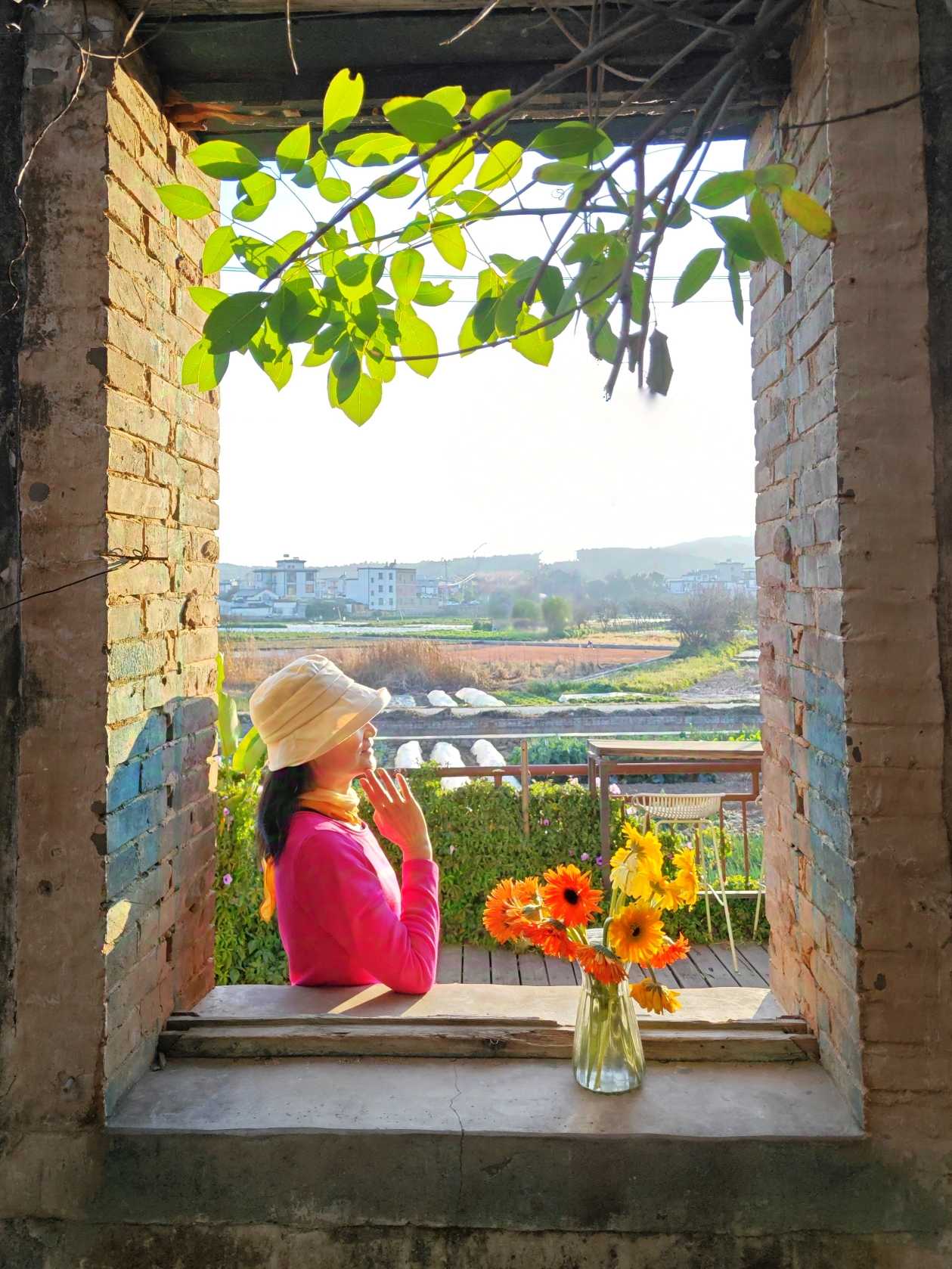
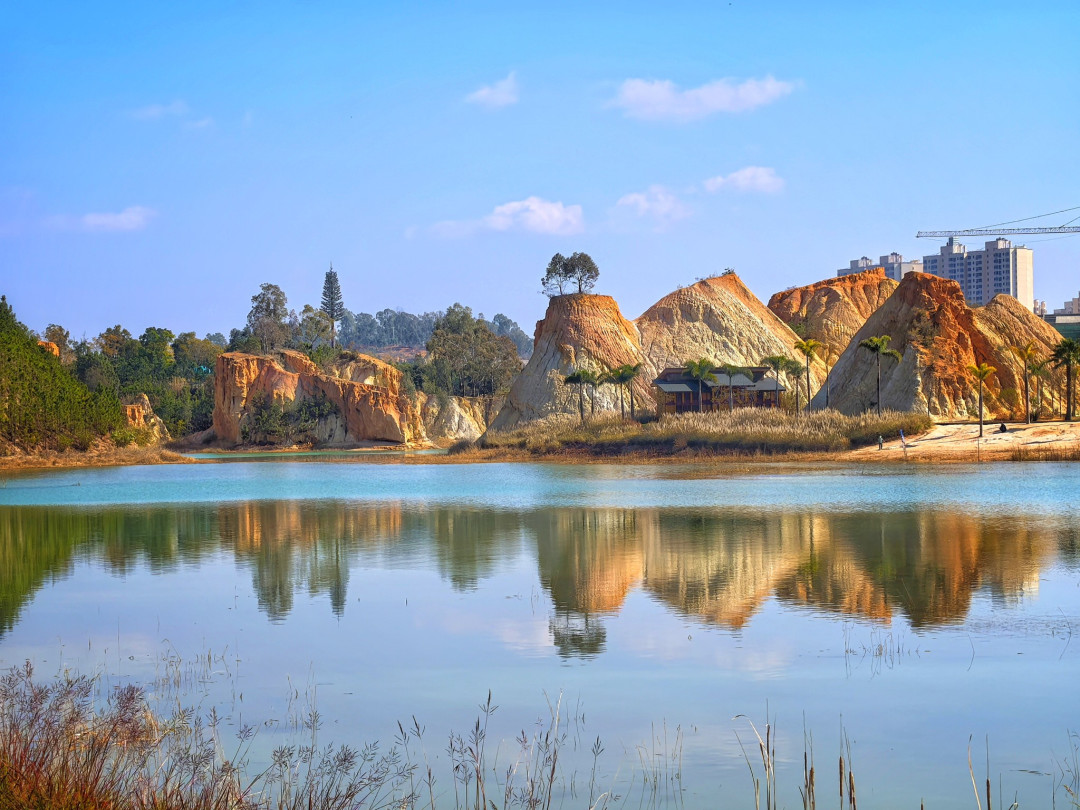
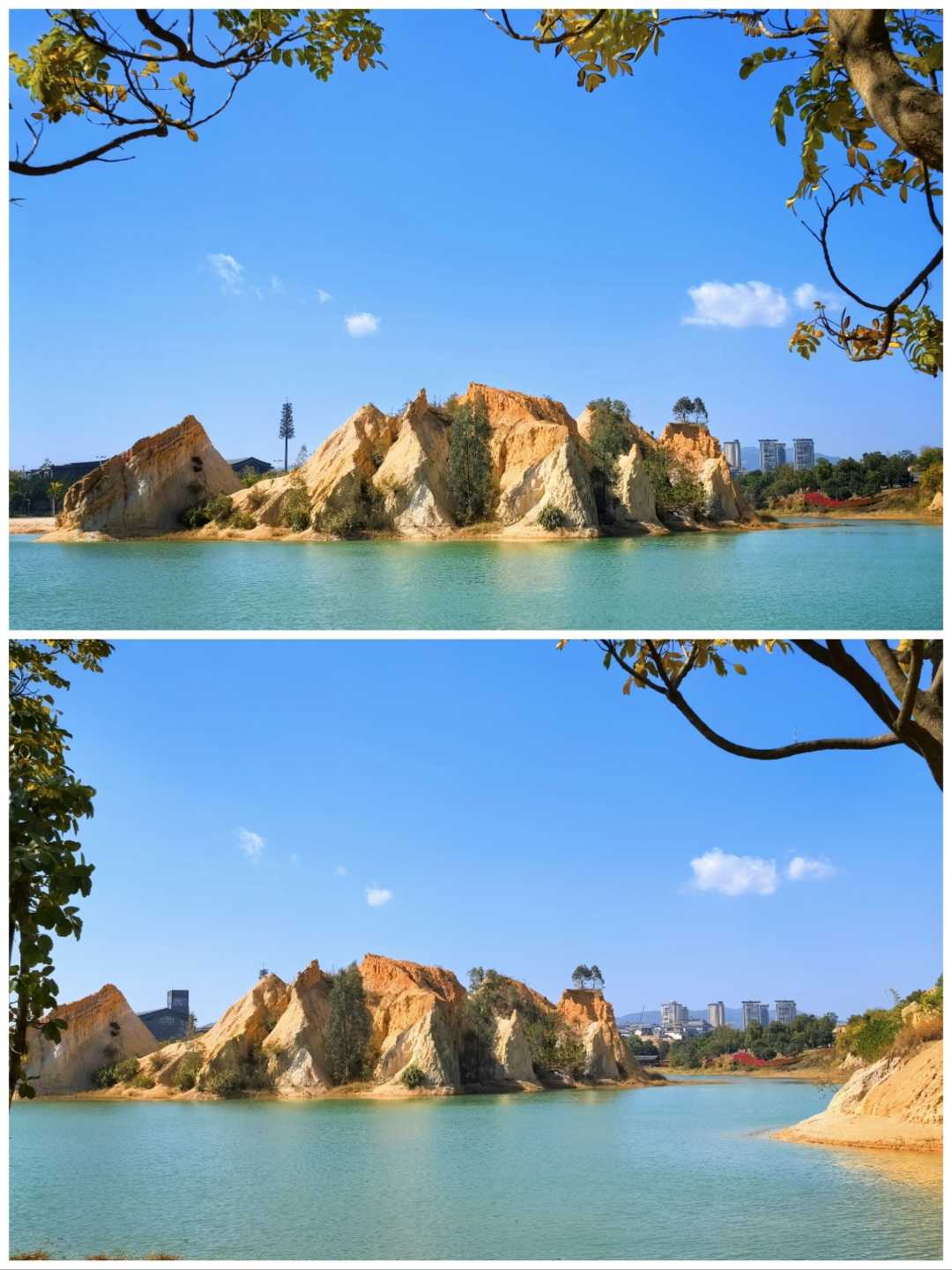
In the middle of one of Wulong Lake's basins lies a "soil forest" composed of five-colored earth, known as the Five-Colored Soil Geological Park, also called "Buddha Reflecting Lotus Island." Surrounded by blue lake water, the five-colored soil forms canyon-like hills resembling lotus petals. In addition to native plants, the area has been deliberately planted with cacti, palm trees, and flowering shrubs, giving the entire landscape a feel reminiscent of the American West and California. Though not large, it's an excellent spot for photography, especially at sunset when the scenery is breathtaking.
From the Wulong Lake observation platform, you can look down at the five-colored soil forest reflected in the blue-green lake—red and green interwoven, warm and cool tones complementing each other. It is truly a unique geological landform. Wulong Lake City Park features not only a driving road but also pedestrian walkways and cycling paths, with gentle slopes, abundant greenery, blooming flowers, and well-placed pavilions—a design full of thoughtful touches.
Jianshui Train: A Meter-Gauge Journey Through Time
The Jianshui Train is one of the town's tourism icons. A cream-colored train links pastoral scenery with rich history and culture. This line was developed from the Lin'an Station of the former Ge-Bi-Shi Railway, spanning 13 kilometers with stops at Shuanglong Bridge Station, Xianghui Bridge Station, and Tuanshan Station. Riding the meter-gauge train at a leisurely 25 km/h (15.5 mph), you can enjoy Jianshui's rural landscapes and historical sites, feeling time slow down.
🚂 Two Daily Departures:
Morning: Departs at 9:00 AM, arrives at 1:40 PM
Afternoon: Departs at 2:30 PM, arrives at 6:30 PM
🎫 Fares (Off-Peak): Soft seat 120 yuan/person, Hard seat 100 yuan/person
Peak Season (January, February, July, August, weekends, and public holidays): Soft seat 150 yuan/person, Hard seat 120 yuan/person
Free or half-price tickets available for eligible groups
I hadn't made a point to ride the train on my previous two visits to Jianshui, but this time I had to see it. Instead of boarding, we drove our car along the route near the tracks, perfectly timed to meet the train for photos, with plenty of time left to explore the stations along the way.
Tuanshan Station: A Glimpse of Southern Yunnan Folk Architecture
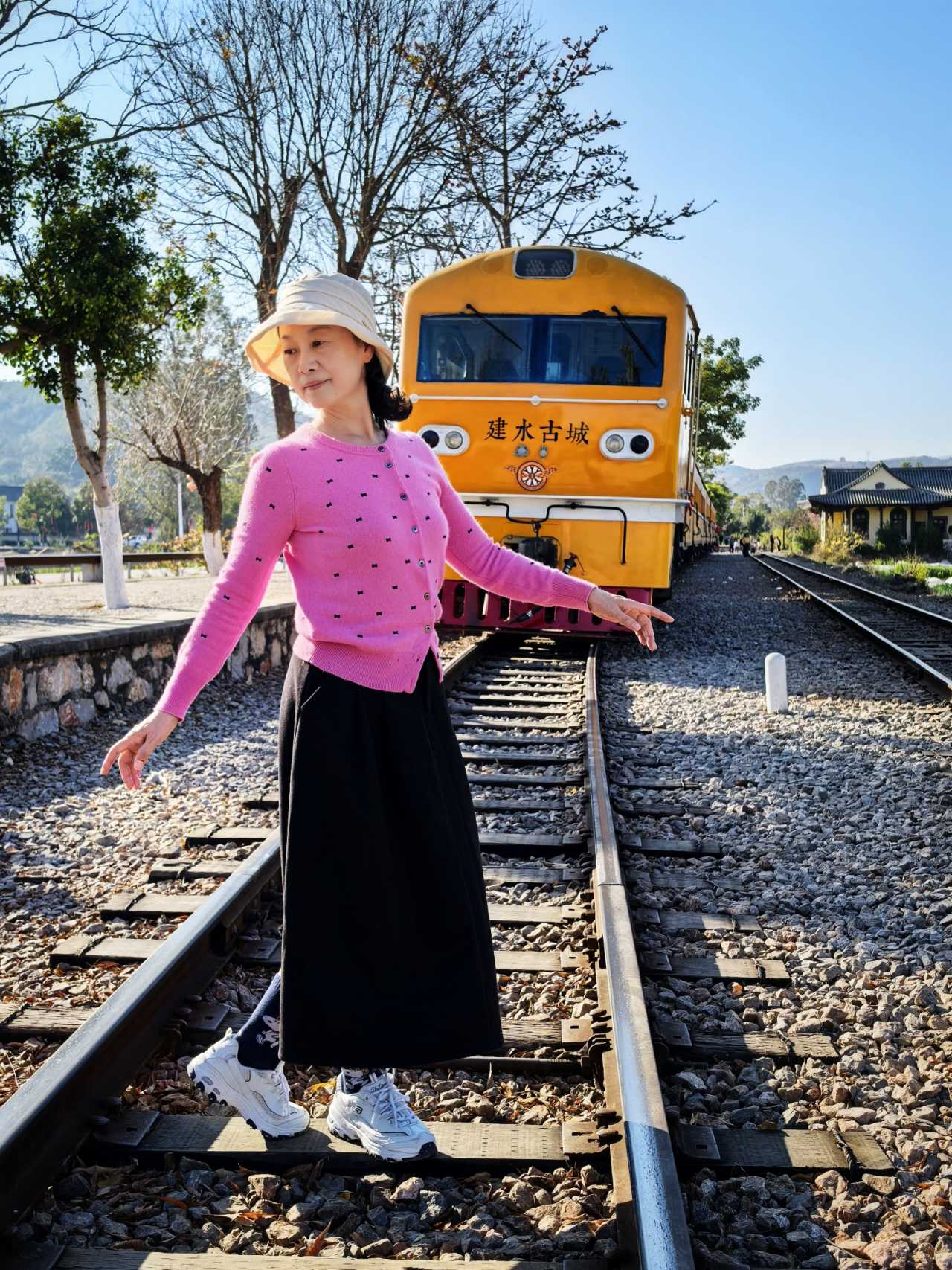
Driving from Jianshui to Tuanshan Station takes about 30 minutes via National Highway 323 or 20 minutes via country roads. When we arrived, the train was parked beside the station. Tuanshan Station's architecture features the distinctive style of southern Yunnan folk houses: high eaves, yellow walls, and black tiles, with a rustic charm. The train is parked offset from the station building to allow visitors easy photo opportunities.
We took commemorative photos at Tuanshan Station, posing with the train. We had plenty of time—the train stops here for 1 hour and 50 minutes, allowing most passengers to visit the nearby Tuanshan Village and its traditional residences.
Xianghui Bridge Station: Golden Memories at Sunset
Xianghui Bridge was built in the 19th year of the Jiaqing reign of the Qing Dynasty (1814 AD), named after the imperial examinations (xiangshi and huishi). Xianghui Bridge Station was constructed near the bridge, giving it an air of weathered age. As the sun set, the southern side of the station was bathed in golden light, making it an ideal time for portrait photography. The tea room, bar, and outer corridor inside the station building hide many great photo spots, while the fertile fields to the south provide a stunning backdrop.
Shuanglong Bridge: The Miracle of Golden Light Piercing the Arches
To catch the sunset at Shuanglong Bridge, we took shortcuts—country roads and village paths—to reach the bridge in time. Just then, the golden light was piercing through the arches. Around the spring and autumn equinoxes, the light would pass through even more arches. We hurried across the bridge, circled the water to find the best angle, and just as the sun was about to dip below the bridge, we captured the image of Shuanglong Bridge bathed in golden sunset light.
Tuanshan Folk Residences: A Hidden Treasure of Ancient Village
Tuanshan Folk Residences are located 13 kilometers west of Jianshui Ancient Town. Historically a Yi ethnic settlement, the name "Tuanshan" comes from the Yi language "Tusher," meaning "a place where gold and silver are buried." The village is built on a slope, backed by green hills and facing the fertile Xizhuang Bazi plain, the Lujiang River, and the Ge-Bi-Shi Railway.
Tuanshan Folk Residences are a 4A-rated scenic area, a "Traditional Chinese Village," and a "National Characteristic Landscape Village." Among them, 12 residences, including the Zhang Family Garden and the Zhang Clan Ancestral Hall, are listed as National Key Cultural Relics Protection Units.
🎫 Admission: Adult ticket 38 yuan/person, Half-price ticket 18 yuan/person
🚌 Bus Route 19 from Jianshui Railway Station goes directly to the village
I toured clockwise and found that most residences are well-preserved, with some still inhabited by original residents. Entering each courtyard, I could quietly admire the plants, flowers, and trees; the whitewashed walls and black tiles; the gate towers and courtyards; the upturned eaves and carved windows and doors. Most are combinations unique to southern Yunnan: "three rooms with a screen wall," "four courtyards with five patios," and "galleries with winding corners."
The General's Mansion was built in the 31st year of the Guangxu reign of the Qing Dynasty (1905 AD). The owner, Zhang He, was rewarded for suppressing bandits during the "Xinhai Lin'an" uprising and was appointed by Cai E as a battalion commander and inspector of the National Revolutionary Army, receiving a plaque inscribed "General's Mansion." The interior is exquisitely decorated, with calligraphy and paintings mostly by Jianshui's famous artist Qiu Tingdong.
The Battalion Commander's Mansion was built in the 2nd year of the Xuantong reign of the Qing Dynasty (1910 AD). Originally built by villager Zhang Fulai, it was later sold to brothers Zhang Guozhu and Zhang Guofang, who held important positions in the revolutionary army. The interior decorations feature motifs such as "Seal the Marquis and Hang the Official Seal" and "Three Consecutive Promotions," reflecting the owners' status and identity.
Most amusingly, a small front courtyard housed two blue peacocks. Green peacocks are a Class 1 protected species and cannot be kept, while blue and white peacocks are not protected.
The Sima Mansion was built in the 33rd year of the Guangxu reign of the Qing Dynasty (1907 AD). It is the only traditional residence in Tuanshan that does not belong to the Zhang family. It was named after an ancestor who held the title of scholar (ru shi) and the official rank of Sima (Minister of War). The wood carvings inside are finely detailed, showcasing skilled craftsmanship.
The Scholar's Mansion was built in the late Guangxu period. The owners, Zhang Guijin and Zhang Guiming, passed the prefectural examinations in Lin'an, earning the titles of gongsheng and xiangsheng (types of scholars), and were called "Big Scholar" and "Second Scholar" by the villagers. Later, the brothers abandoned scholarship for business, engaging in mining and establishing the "Tianjichang" trading company, which proved highly profitable.
The Imperial Grace Mansion was built in the late Guangxu period. Because the mother of the builder, Zhang Shuyuan, "raised her orphaned children to stand on their own, with descendants flourishing and five generations under one roof," the imperial court granted her the title of Anren (a noblewoman) and bestowed a plaque reading "Imperial Grace Commended." The courtyard is spacious and open, with beautifully decorated halls and deeply symbolic wood and stone carvings.
The Zhang Family Garden was built in the 31st year of the Guangxu reign (1905 AD), covering an area of 3,495 square meters (37,620 sq ft) with a building area of 2,955 square meters (31,810 sq ft). It consists of a village gate, a first courtyard, three inner courtyards, a garden ancestral hall, and a watchtower, totaling 21 patios and 119 rooms. It is the second-largest folk residence after the Zhu Family Garden in the county town. The stilt house on the left side of the garden was once the meeting place of the "Nine-Person Group," a united front organization led by the Jianshui County Committee of the Communist Party.
Alleyway Eats: An Unexpected Delight
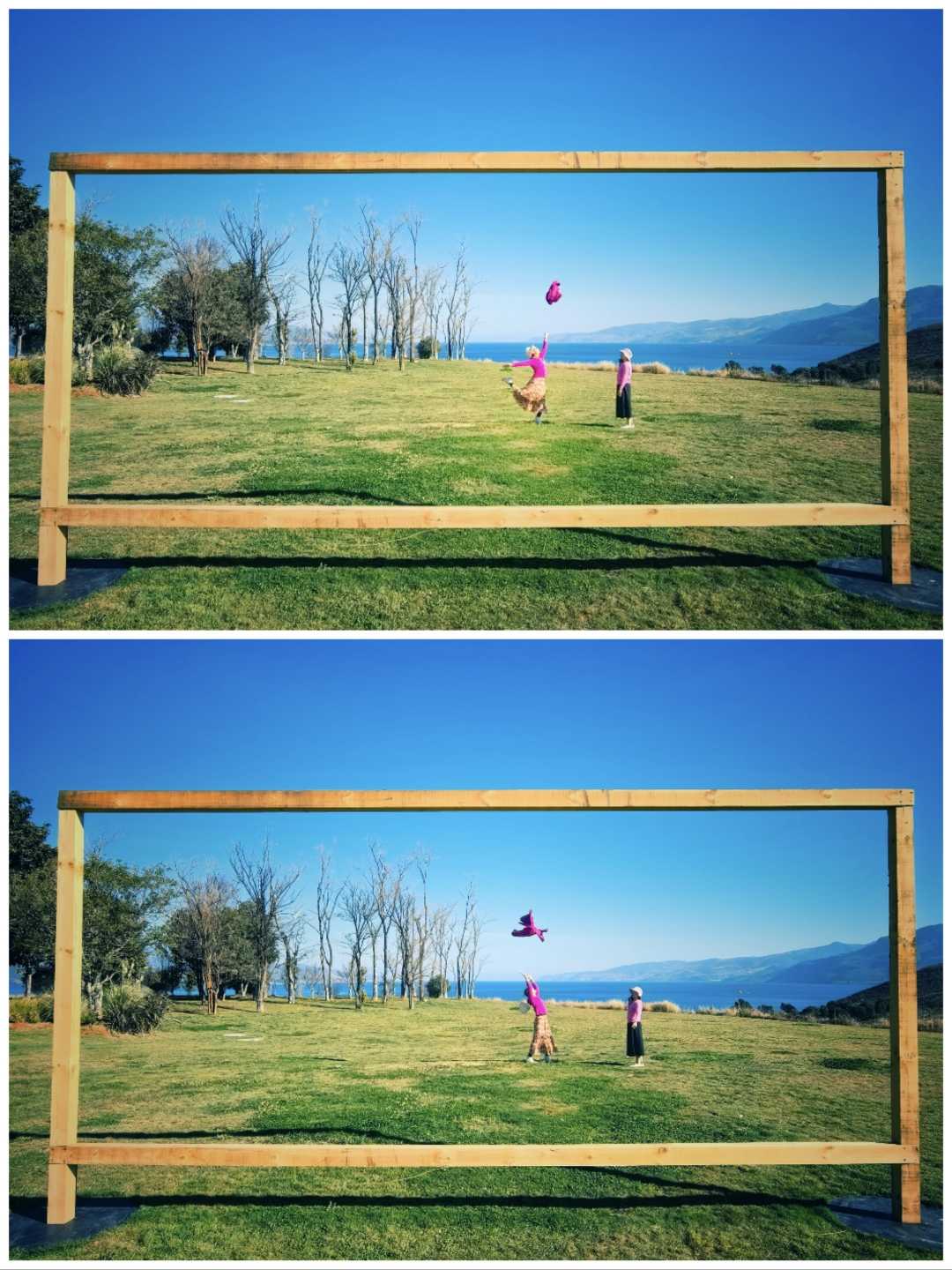
On our previous stay at the Xihan Hotel, we ate at the restaurant across the street and found it unremarkable. This time, food connoisseur Teacher Zhao discovered a restaurant in a nearby alley that served excellent dishes. The most surprising was the stir-fried eel shreds—a large plate packed with eel, incredibly flavorful. The grilled beef slices were also delicious. The total bill came to just 110 yuan (about $15). We immediately decided to return for lunch the next day. But no sooner had we stepped out of the restaurant after our meal than we heard a loud "bang"—the electrical box on the wall outside had smoked and the entire building lost power. At least we were lucky enough to finish eating before the blackout.
Stop 12: Fuxian Lake—Azure Waters, a Pristine Town
Our favorite small restaurant didn't open in the morning, so we set off early for Starry Sky Town on Fuxian Lake. From the Xihan Hotel in Jianshui, it took less than an hour and a half to reach the southern tip of Fuxian Lake.
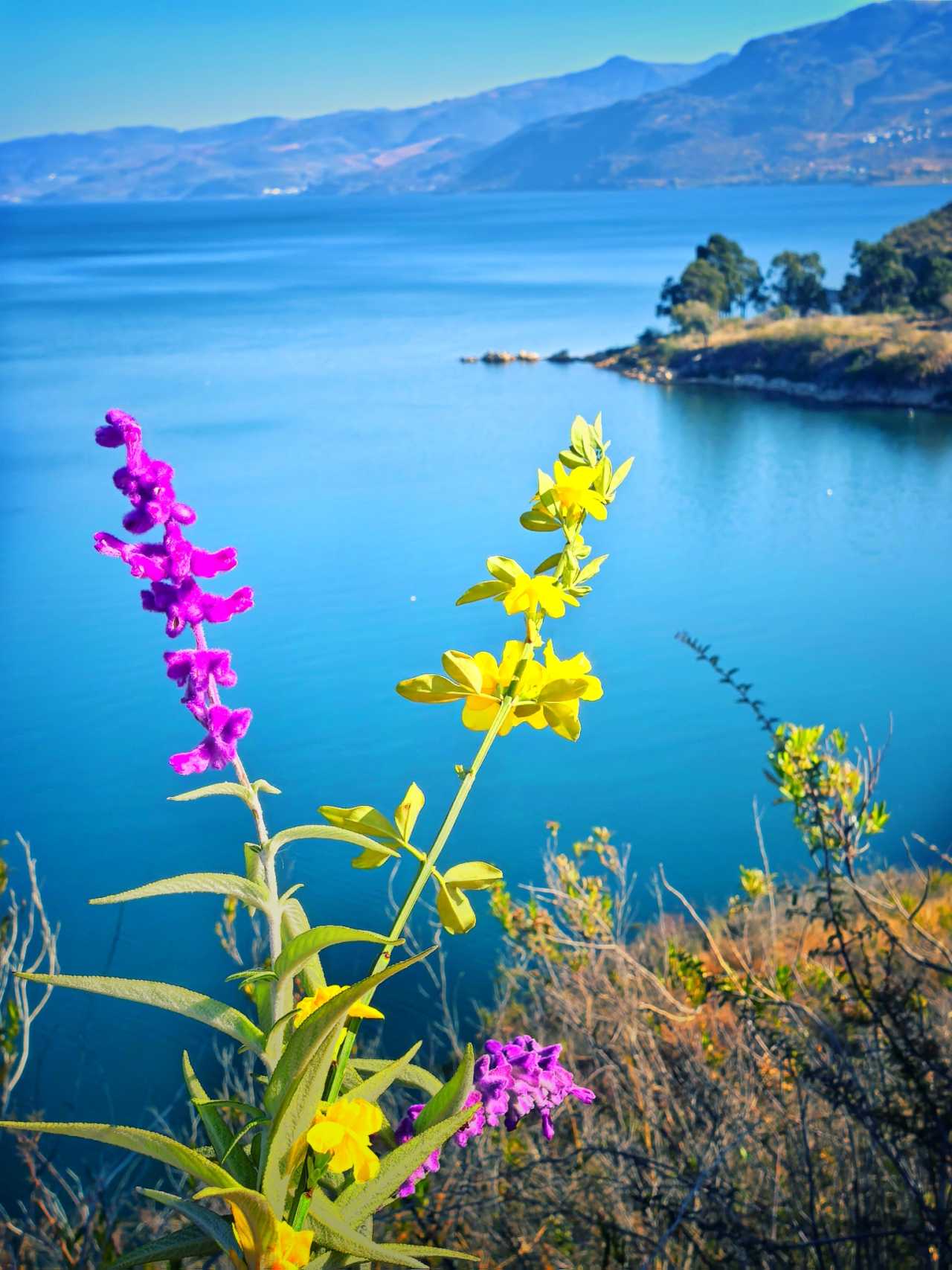
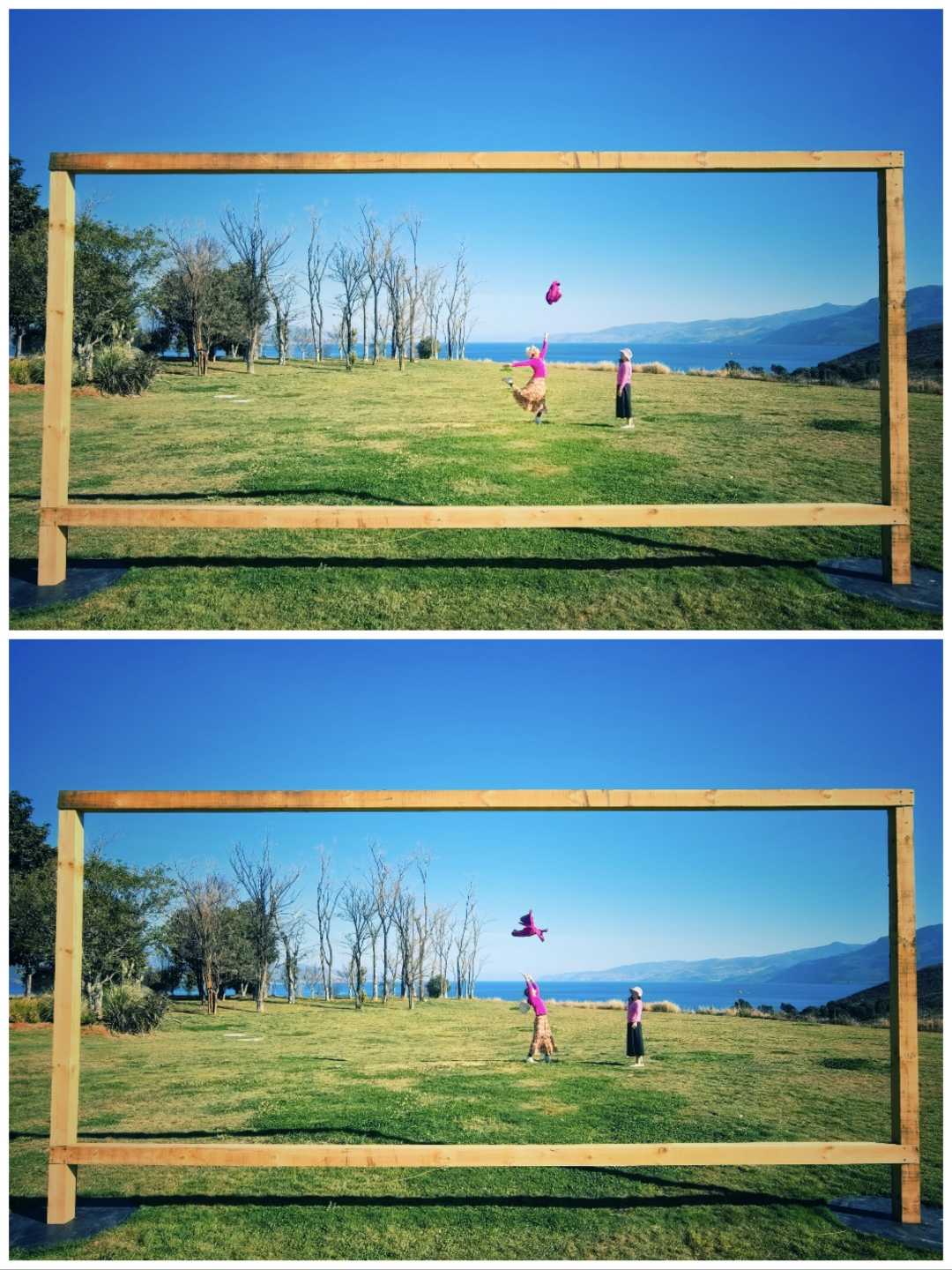
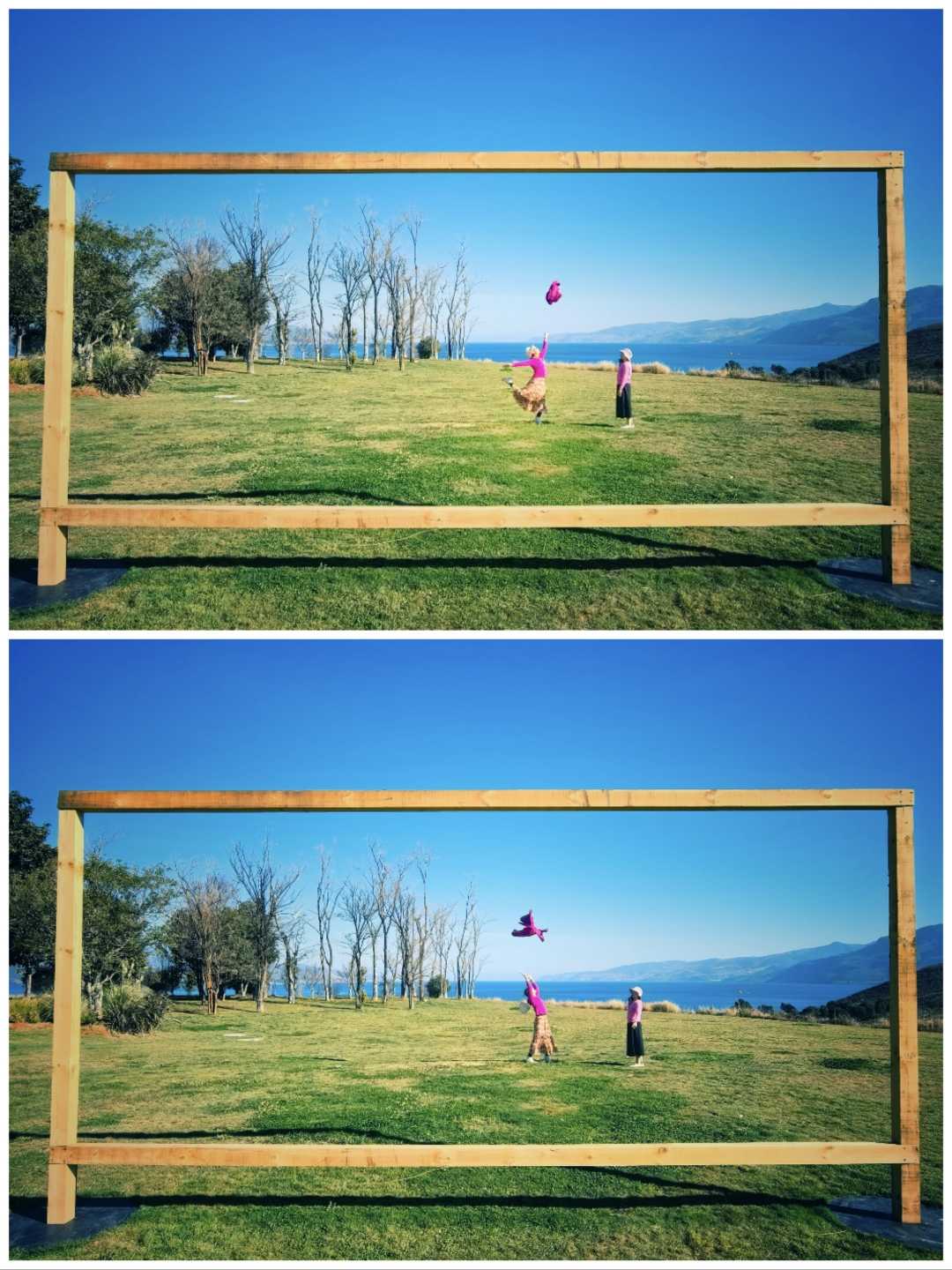
Starry Sky Town is a resort community where security guards usually let vehicles pass without stopping. Entering the community, we drove north along the main road, turned right, and soon spotted a small path on the left winding down to a large lawn by the lake. This is the exclusive Fuxian Lake shoreline of Starry Sky Town. The lawn sits on a high bank, at least 20 to 30 meters above the water, offering a commanding view of the deep blue lake.
Flowers and plants lined the edge of the lawn. Though it was winter and the grass had turned yellow, bougainvillea and some unknown blooms still flourished, creating a delightful contrast with the azure lake water. Red and yellow leaves also complemented the blue. Gazing at the water, we spotted a small boat fishing and netting, adding a lively touch to the scene.
Conclusion: Five Thousand Miles, a Journey Full of Rewards
From the ancient charm of Jianshui to the pristine beauty of Fuxian Lake, this "turning northwestward" leg of the journey once again reminded me of Yunnan's allure. Jianshui, this beloved small town, reveals something new with every visit—whether it's the historical depth of its ancient city, the artistic appeal of its purple pottery, or the romantic nostalgia of its little train, all leave you longing to stay. And the azure waters of Fuxian Lake provided the perfect conclusion to this chapter.
Eight thousand miles of clouds and moon, each stop brimming with joy. Along this journey, we not only saw stunning scenery but also felt the warmth of life. Whether the perilous zigzag roads on cliffsides, the majestic sight of golden mountains at sunrise, the lively烟火气 (bustling everyday life) of ancient towns, or the tranquility of small villages—all have become indelible memories.
If you too yearn for such a journey, consider spending two days in Jianshui. Ride the little train through time, savor local delicacies in the ancient town, and experience the charm of intangible heritage in Zitao Town. Trust me—this small town will not disappoint.
Practical Tips: - Best time to visit Jianshui: Spring and autumn, avoiding summer heat and Spring Festival crowds - Recommended Jianshui grilled tofu: Xiangmanlou (inside the ancient town), Fuzhaolou (in Kunming) - The Purple Pottery Museum is free but closed on Mondays—plan accordingly - During peak season, book train tickets in advance; the afternoon departure offers sunset views - Allow about 2 hours to explore Tuanshan Folk Residences; combine with the train itinerary for efficiency
You should also read:
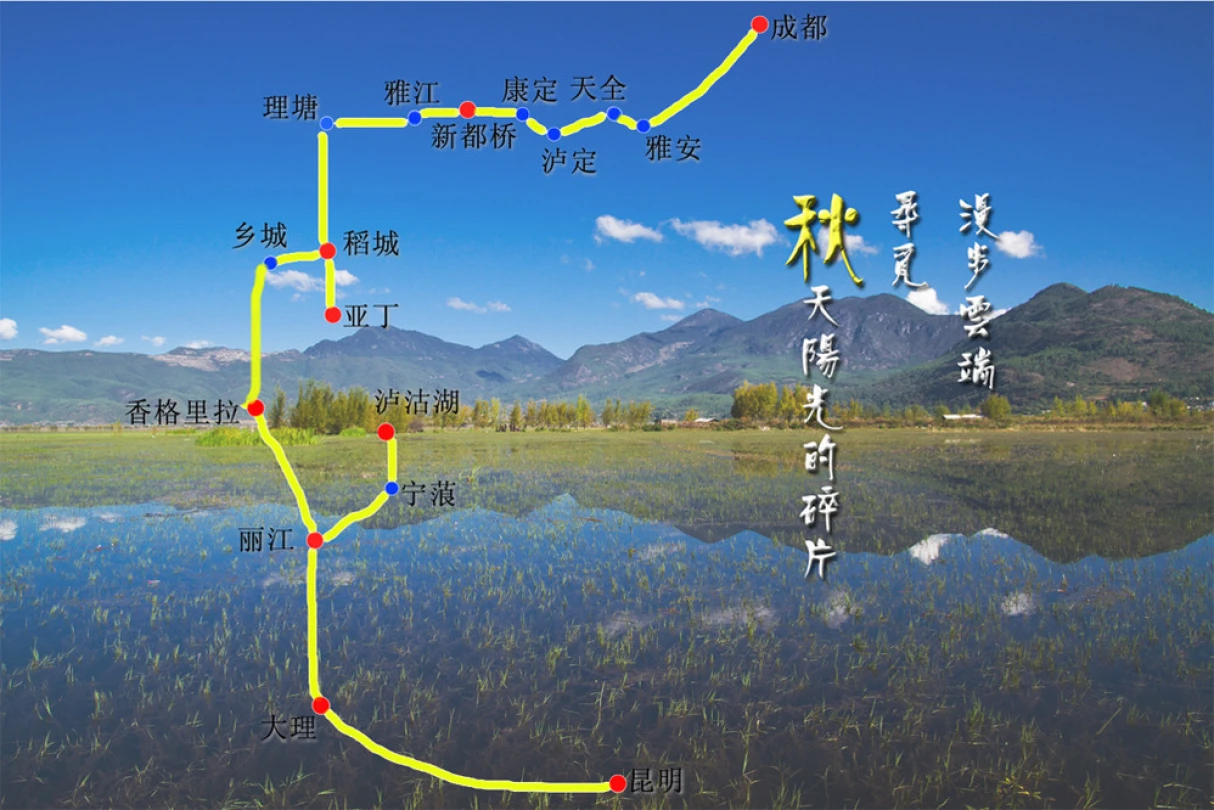
Strolling Among the Clouds: Gathering Autumn's Light on the Western Sichuan Plateau
Strolling Among the Clouds: Gathering Autumn's Light on the Western Sichuan Plateau Prologue: A Sun Chaser's Journey Autumn sunlight is like a gentle painter, using golden brushstrokes to smear the last traces of warmth across the earth. It slips through the gaps between your fingers,…
Continue reading...
Idle Clouds in Autumn, a Moonlit City: A Slow Travelogue Through Lijiang and Shuhe
Idle Clouds in Autumn, a Moonlit City: A Slow Travelogue Through Lijiang and Shuhe When the autumn wind brushes across the ancient city's eaves, when sunlight spills onto the mottled cobblestone streets, when the melodies of folk songs mingle with the aroma of plum wine…
Continue reading...
A Journey Through Shuanglang's Guesthouses: Finding Life as It Should Be on the Shores of Erhai Lake
A Journey Through Shuanglang's Guesthouses: Finding Life as It Should Be on the Shores of Erhai Lake Prologue: When Life Hits the Pause Button Have you ever had one of those moments? When the city's towering buildings press down on your chest, when you're swept…
Continue reading...