❤First Honeycomb Feature❤【Dali Dream Talk】Beyond the Mountains and the Sea, Encountering a City of Sunlight
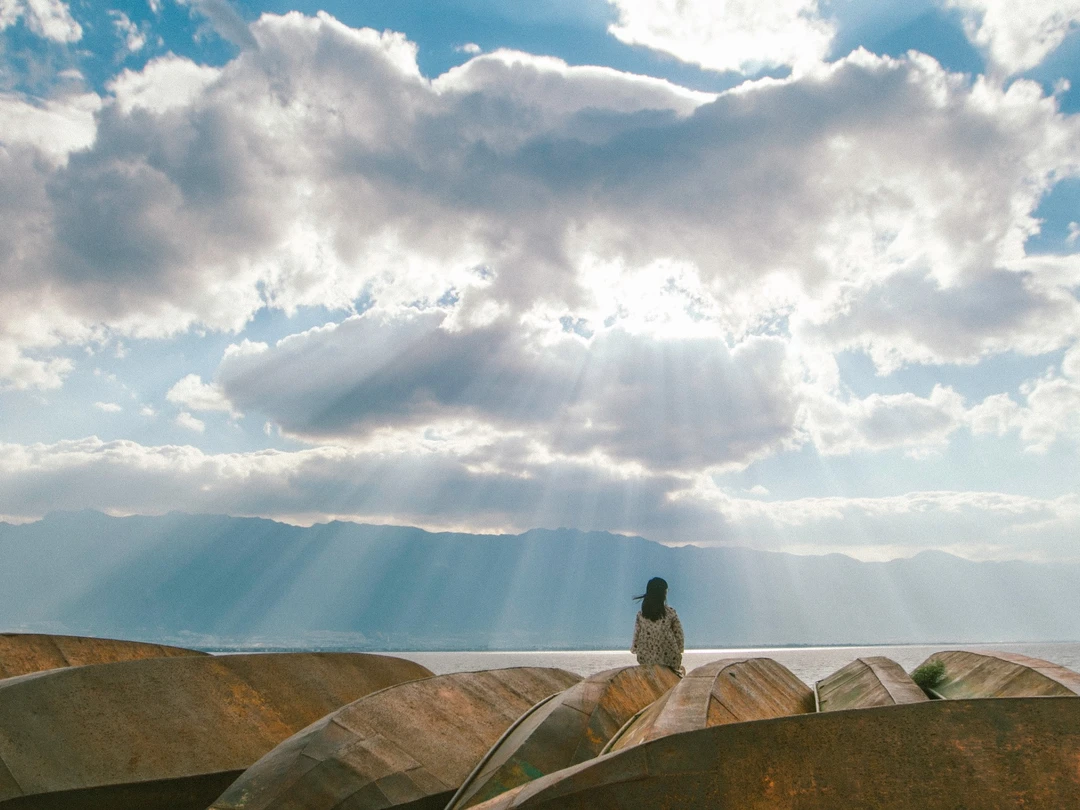
❤First Honeycomb Feature❤【Dali Dream Talk】Beyond the Mountains and the Sea, Encountering a City of Sunlight
Life is a journey of ups and downs—sometimes soaring high, sometimes winding low. And I am always searching for those places where I can forget about time. This time, I found Dali—a city of sunlight, blessed by the sun.
Destination: Dali
Travel Dates: April 27, 2017 · 5 days
Travel Companions: My friend and I
Xiaohongshu: Taomu Zhizhi
Why Dali?
As a child, I once passed through Yunnan on a rushed tour. The fragrance of flowers filling Kunming, the eternal snow on Jade Dragon Snow Mountain, the long bumpy rides on the tour bus—these fragments of memory pieced together a blurry picture. As for Dali, only four words remained: "Cangshan Mountain, Erhai Lake"—like an unfinished poem.
Upper Pass flowers, Lower Pass wind, Cangshan snow, Erhai moon—these legendary sights were just stories other people told.
Until one late night, the word "Erhai" suddenly popped into my head. Strangely enough, this trip changed from Singapore to Malaysia, from colleagues to classmates—destinations and companions shifting back and forth—until finally, we settled on Dali. From decision to departure, it took only nine days—the fastest "just-go" trip of my life.
My poor physical condition made me abandon my usual strict itinerary planning. Trying "going with the flow" for the first time felt both novel and nerve-wracking. Even more dramatic: after booking the flights, I discovered that Erhai Lake's tourism industry was undergoing a massive crackdown. Almost all lakeside guesthouses and restaurants were closed, and the West Ring Road was under renovation. The weather forecast also told me: Dali would have rainy days throughout our stay.
Sleeping in a lake-view room? Cancelled. Riding an electric scooter around the lake? Also cancelled.
I asked my companion Xiao Wu anxiously, "Still going?"
He said calmly, "Let's go. We'll deal with whatever comes."
Our Little Goals
Before leaving, I made a wish list:
- Drink a bottle of Feng Hua Xue Yue beer ✅
- Ride an electric scooter around Erhai Lake ❌
- Climb Cangshan to see azaleas ❌
- Photograph the stars ✅
- Capture Tyndall light ✅
- Watch a sunset by Erhai Lake ❌ (too tired, fell asleep)
- Take good photos ✅
- Walk the water path at Haishè Park ❌
Goal completion rate: 50%. But the scenery and stories we gained far exceeded expectations.
Cast and Crew
This time, Old Zhang was still Old Zhang, but my companion had changed from a cute girl to handsome Xiao Wu.
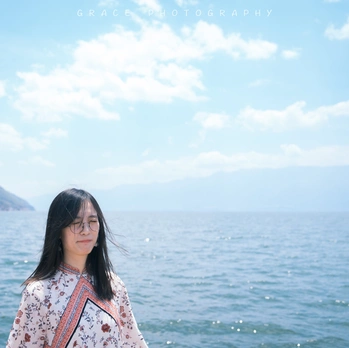
Before leaving, my mother told me, "Take more photos with people in them. Don't just shoot scenery." I nodded solemnly. The result? The strong wind by Erhai Lake blew me from "artsy young woman" into "queen of funny faces"—even I laughed at those photos.
D1 Chasing Clouds and Sun, Encountering a City of Sunlight
As the plane landed, Tyndall light suddenly appeared outside the window—sunlight piercing through the clouds, casting rays of brilliance in all directions. At that moment, I felt like an angel about to descend to earth in a blaze of light.
At seven in the evening, the sun was still hanging in the Dali sky. Time here seemed to move slower than elsewhere.
We stayed in a small courtyard in the old town, where we could look up and see the sky. When it finally got dark, our stomachs were growling. I dragged Xiao Wu out to find food, and we chose a restaurant called "Revival Courtyard" (Fuxing Xiaoyuan).

As soon as the dishes arrived, Xiao Wu couldn't wait to pick up his chopsticks. After my desperate pleas, he reluctantly gave me ten seconds to take photos.
- Silverfish Omelette (Yinyu Jiandan): Golden and crispy, fragrant and delicious
- Braised Erhai Fish (Hongshao Erhai Yu): Absolutely fantastic—we craved it for days afterward
- Black Truffle Stewed Free-Range Chicken (Heisonglu Dun Tuji): Rich and hearty, warming both stomach and soul
After dinner, we strolled through the old town at night. Xiao Wu has a special fondness for tea, so we wandered into a tea shop. The owner brewed the locals' favorite Yunnan red tea (Dianhong)—softer than pu'er, with a subtle floral fragrance.
We passed by the bar street, where the singers were all quite talented. We wanted to go up to Wuhua Tower to see the night view, but we arrived too late—the stairs were already locked. So we just wandered through the old town, experiencing the blend of night-time tranquility and bustle.
D2 Sometimes Windy, Sometimes Rainy
Waking up, I brewed some of the Yunnan red tea we'd bought the night before. Sir, your desired level of sophistication has been achieved.
Looking up at the sky from the same spot as yesterday, it was clear and blue. By the time we went out, the sun was already high. The May Day holiday hadn't officially started yet, so the old town still had its last moments of peace.
We passed by a middle school just as classes ended for lunch, and a flood of students poured out. Seeing those youthful faces, I couldn't help but sigh: youth is truly wonderful.
We passed a place called "Piao Sign" (Piao Zi Hao), which looked as simple as a farmhouse on the outside—who would have guessed it was actually a bar?
Lunch: Tingyuan Private Kitchen (Ting Yuan Si Chu)
Xiao Wu, with his keen sense for good food, found this private kitchen hidden in an alley. The beautiful owner told us we'd have to wait for a table—and suddenly, her beauty lost its appeal.
We waited for a long time before our turn came. Just as we picked up our chopsticks, the owner came back and asked if we'd mind sharing a table with a regular customer. The woman we shared with had retired and often came from Guangzhou to stay in Dali for a few months, occasionally setting up a stall on Renmin Road to sell her paper-cut art. From her speech and demeanor, you could tell she was someone with stories to tell.
The old town is full of travelers like her.
After eating, my smile returned. In the afternoon, a strong wind suddenly picked up, and the sun was swallowed by dark clouds. We climbed Wuhua Tower, and Xiao Wu took photos of me—well, they were blurry.
"Why is it blurry again?"
"I did it on purpose. Dreamy beauty."
"Oh."
I took a short video to pass the time, but the wind made my hands shake badly. The bars were still sleeping, waiting for night to wake them. We wandered through narrow alleys and courtyards in the drizzling rain, finally ending up in a museum.
In the evening, we climbed the old town gate, looking out at Erhai Lake and Cangshan Mountain. The air quality was excellent, and visibility was great. At night, we climbed Wuhua Tower again and could see the city walls in the distance.
Dinner: Dongjia Xiaochu (Dong Family Kitchen)
Xiao Wu said he wanted to try Yunnan's famous wild mushroom hotpot. The restaurant we'd originally chosen was packed, so we went to a neighboring place called Dongjia Xiaochu, which had a shorter wait.
Rose wine (Meigui Niang) arrived at the table—very low in alcohol. If I had to make a list of must-eat foods in Yunnan, wild mushroom hotpot would definitely be in the top three. Chicken-fungus mushrooms (Jizong), bamboo fungus (Zhusun), matsutake (Songrong), and "see-hand-green" mushrooms (Jianshouqing)—these Yunnan-specific fungi tumbled in the pot with an irresistible aroma.
The staff boiled the mushrooms for us and placed a timer on the table, set for 15 minutes. Before the timer went off, we couldn't eat anything—most wild mushrooms have varying levels of toxicity and need to be cooked thoroughly until the toxins are completely gone.
After tasting Yunnan's wild mushrooms, I felt that the enoki and lion's mane mushrooms I'd eaten before were completely unremarkable.
D3 Good Morning, Old Town; Good Night, Xizhou
Every day, the first thing I thought when I opened my eyes was, "What are we eating today?" Don't all travelers wish they could eat ten meals a day?
Breakfast: Lanzhou Congee Shop (Lan Zhou Xiaoguan)
This place was right across from our hotel. Though small, it had a lot of character. Most shops in the old town open late, so when we arrived at ten, the owner had just returned from his Buddhist prayers. The staff said they only had rose congee (Meigui Zhou) available—Yunnan people have truly maximized the uses of roses.
It was sweet and smooth, soft and pink, full of girlish charm.
Morning: Three Pagodas of Chongsheng Temple (Chongsheng Si San Ta)
We were heading to Xizhou in the afternoon, so the morning was for the Three Pagodas of Chongsheng Temple park. Just as I was debating whether to walk or bike, Xiao Wu had already called a ride-sharing car.
Chongsheng Temple is Dali's Buddhist holy site, famous for its three pagodas, first built during the Nanzhao Kingdom's Fengyou era. Whenever I think of the Nanzhao Kingdom, I think of Prince Duan Yu—the theme music from "The Demi-Gods and Semi-Devils" (Tian Long Ba Bu) automatically starts playing in my head.
Looking up close at those ancient, weathered brick pagodas filled me with awe. Foodie Xiao Wu was drawn to a fruit stand outside the park and bought a bag of egg fruits (Jidan Guo) to try.
From Chongsheng Temple, we went to the nearby Three Pagodas Reflection Park. It was much quieter here—we were the only visitors. The wind kept blowing, turning the reflections into ripples.
Lunch: Eryue Xiaochu (Erhai Moon Kitchen)
We had wild mushrooms again for lunch. Today we ordered "see-hand-green" mushrooms (Jianshouqing), which needed to boil for 20 minutes before eating. A hungry and melancholy Old Zhang could only wait in silence.
Afternoon: Xizhou Ancient Town
In the evening, we called a ride to take us to Xizhou. Before leaving the old town, I looked up and saw a beam of light about to break through the clouds—I calculated with my fingers and felt something big was about to happen.
Sure enough, on the way to Xizhou, the road outside the ancient town was torn up and full of potholes. We bumped along the whole way, and the navigation stopped working. The ride-sharing driver's car got scraped and banged up—he probably earned less than the repair costs.
The guesthouse we stayed at was called "Jǐ Yǐ Sì" (己已巳)—a magical name. Come on, say it with me: Jǐ (己), Yǐ (已), Sì (巳). To make Xiao Wu feel better, I gave it a nickname: "Kong Yiji" (孔乙己)—after the famous Chinese literary character.
Jǐ Yǐ Sì is an old mansion built in 1949, originally owned by one of the four great merchant families of Xizhou. The current owner is an artist who graduated from the Sichuan Fine Arts Institute. When history meets art, sparks naturally fly.
The rooms were converted from the old house—the facilities were just okay, but the style and design were fantastic. The UV rays in Dali are strong, and the climate is dry, so people with dry skin should be careful to moisturize.
Good night, Xizhou.
D4 Lucky to Have Met You
After breakfast, we followed the hand-drawn map from the guesthouse to find the way to Haishe Park. The guesthouse was only two or three kilometers from the park, but the nearest road had been cut off by construction, so we had to go to the old town to take a sightseeing shuttle.
Leaving Jǐ Yǐ Sì, we passed by Xilin Yuan (Xilin Courtyard) and saw a vast expanse of rice fields. That orange building was the famous Xilin Yuan.
Xizhou Ancient Town was much quieter than Dali Old Town, with less commercialization and better-preserved architecture. Everywhere you looked, you could see the distinctive Bai ethnic tie-dye fabrics (Zharan).
We walked for a long time without finding the sightseeing bus. Suddenly, a woman on a motorcycle asked if we were going to Haishe Park. Feeling saved from a dead end, we jumped on without a second thought.
Haishe Ecological Park (Haishe Shengtai Gongyuan)
We bumped all the way to the park entrance. Blue sky, white clouds, green mountains, clear water. I had a strong premonition—the scenery inside wouldn't disappoint.
Before even entering, I was drawn to a small forest. I grabbed Xiao Wu and rushed in, only to hear a voice from behind: "One yuan per person to go in and take photos!"
We looked at each other for three seconds—one yuan? Fine!
After paying, we happily charged into the little forest to take photos. The water was as smooth as a mirror, utterly silent—I felt like I could only hear my own heartbeat.
Haishe is a long sandy spit surrounded by water on three sides. According to local historical records: "Qingsha Islet, three li long, narrowing from wide to narrow as it extends into Erhai Lake, shaped like a tongue—hence the name Haishe (Tongue of the Sea)."
The dead branches and water plants along the shore are the most distinctive elements of Erhai Lake's ecosystem. When lifeless, withered tree stumps meet flowing lake water, the static scene suddenly comes alive. There's a strange vitality here: the mountains and water have a Zen-like quality, and the dead wood seems to have been given a soul.
"The stronger the wind, the more my heart drifts..."
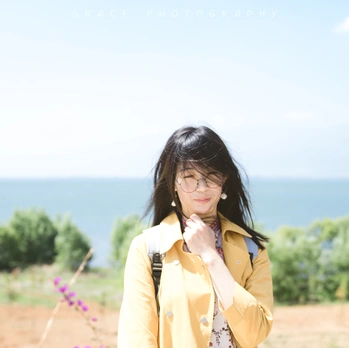
Blow, blow, let my proud indulgence fly.
Blow, blow, I'm barefoot and unafraid—sorry, forgot to take off my shoes.
Xiao Wu asked, "Why are you always holding your hat?"
"Because if I let go, it'll blow away!"
"Why are your eyes always closed?"
"Because the wind is strong and the sun is blinding!"
"Not because your eyes are small?" (Innocently showing off his European-style double eyelids)
"You're eating box scraps for dinner tonight."
Devastated, Old Zhang wandered alone by Erhai Lake. Sitting by the water, letting the wind blow, playing in the waves—this beauty needs to be savored slowly. It was absolutely worth it.
Lunch: Yunwei Yao · Bai Family Hundred Flavors (Yunwei Yao · Bai Jia Bai Wei)

Starving, we returned to the old town's Sifang Street to find food. We ordered spicy sour fish (Suan La Yu) and raw pork skin (Sheng Pi)—the owner strongly recommended it as a Bai ethnic specialty, but we really couldn't get used to it.
Evening: Xilin Yuan (Xilin Courtyard)
We strolled back to the guesthouse from the old town, passing by Xilin Yuan, so we went in to visit. Xilin Yuan was originally the residence of Mr. Yang Pinxiang, a prominent figure in modern Xizhou's merchant community. Known as the Yang Family Courtyard (Yang Jia Yuan), it's a classic masterpiece of traditional Bai residential architecture.
Today, Xilin Yuan was founded by the American couple Brian and Jeanee Linden, who transformed it into a five-star international cultural exchange center. It has three connected courtyards, a delicate open-air garden, and classical art pieces scattered throughout the property.
There was a tiny café in the guesthouse called "亼亽?" (Jí Jí?—I'm pretty sure my Chinese teacher never taught me these characters).
During the day, you could lie at the door, soaking up the sun and petting cats. At night, you could go up to the rooftop to count stars. All the other shortcomings in facilities could be forgiven.
Xiao Wu said this series of photos was his favorite—that I looked like a fairy. I felt like his words were a bit evasive.
The Car Rental Fiasco
We changed clothes and went out to rent a car. The car rental story was another heartbreak. Because of our spontaneous approach, we hadn't booked in advance. After successfully ordering a car online, the客服 called to say there would be no car available the next day—heaven and hell were just one phone call apart.

We went to find a rental shop in the old town. Xiao Wu wanted to rent a gasoline SUV, but the owner said Xizhou only had electric scooters—gasoline cars had to be rented in Dali Old Town. After thinking it over, we decided to try an electric scooter first.
While it was still light, we took the scooter out for a spin. But after driving for a while, Xiao Wu wasn't happy—he thought the scooter was unsafe and too slow at only 40 km/h. We shivered at 30 km/h on a dark roadside, with trucks roaring past us constantly.
We drove the scooter back near the owner's place and managed to return it after some negotiation. We had some roadside rice noodles (Mixian) to calm our nerves—they tasted better than the ones in the old town.
Night Sky Photography
Photographing the stars was one of our little goals. Without a tripod, we had to find something stable. I carried everything I could move from the room up to the rooftop.
Note! This is really not dandruff on black paper—this is the Big Dipper that I managed to capture with great difficulty.
The brightest star in the night sky, can you hear the loneliness and sighs in the heart of the one looking up?
Xiao Wu accidentally walked into the frame during a long exposure. I thought the photo would be ruined. But the result? He looked like a terracotta warrior descending from the sky—it actually created a strangely interesting effect.
P.S. The temperature difference between day and night in Dali is huge. Make sure to wear extra layers when you're outside at night. I was so cold I wrapped myself in the blanket from my room.
D5 Erhai Lake: A City Bathed in Sunlight

Our failed car rental the day before meant we had to ask the guesthouse staff to help us find a driver. 400 yuan per day, and we could go wherever we wanted.
Our final route around Erhai Lake: Starting from Xizhou, going clockwise, completing the loop in one day.
First Stop: Zhoucheng (Zhoucheng Village)
Zhoucheng is the largest Bai ethnic village in Dali, known as the "Hometown of Tie-Dye." There's a free tie-dye museum here where you can observe the craft up close.
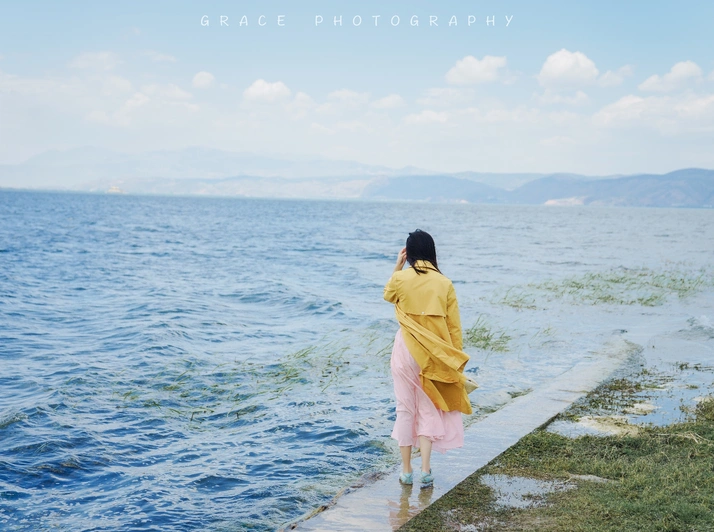
Hidden deep in the narrow alleys, these ethnic treasures feature intricate patterns, like drawings made with a spirograph toy as a child. The ceilings decorated with tie-dye fabric had a unique charm.
The first step in tie-dye is pleating and tying the fabric (Dazhe Zhahua), which prevents the tied parts from absorbing the dye. Walking through the streets, most elderly people wore traditional Bai clothing—out of respect, we didn't take photos of their faces.
The whole village was much quieter than the old town and Xizhou, with mostly older people on the streets. Only they were willing to stay in this weathered, ancient village, guarding their proud tie-dye tradition as they grew old.
Before leaving, I bought a few tie-dye scarves as souvenirs.
Heading North
We followed Erhai Lake all the way north to the most remote "wilderness." Driver Uncle Dong suddenly pulled over—just as I was about to imagine a one-act play called "Clever Girl Fights Off a Predator," he happily pointed out the window: "Wow! There's a beautiful wetland park, and no one's there!"
It wasn't really a park—just a single boardwalk—but the view was wide open, and everything you saw was the color of spring. Uncle Dong said the roads around the lake were under construction, so he took us speeding onto the expressway.
We passed a rest area that Uncle Dong praised as "the most beautiful expressway rest stop in Yunnan." He stopped again and urged us to go take photos. He was probably the most enthusiastic, well-traveled, and artistically-minded driver uncle I've ever met.
My advice for girls going to Dali: don't leave your hair down. You'll end up looking like Mei Chaofeng (a character with wild, windswept hair from a martial arts novel). I also don't recommend girls under 100 jin (50 kg) going to Dali—you might get blown away by the strong wind. Keep an eye on your belongings, especially your money—it might just blow out of your hands and into someone else's pocket.
The town in the distance, shaped like a peninsula, was Shuanglang. Seeing it this way, Erhai Lake really did feel like a "sea."
Xiaoputuo Island (Xiao Putuo) & Wase Dock (Wase Matou)
After getting off the expressway, we first arrived at Xiaoputuo. There were no seagulls this season, so it felt quiet and empty. A small boat wasn't rowed but pulled by a rope.
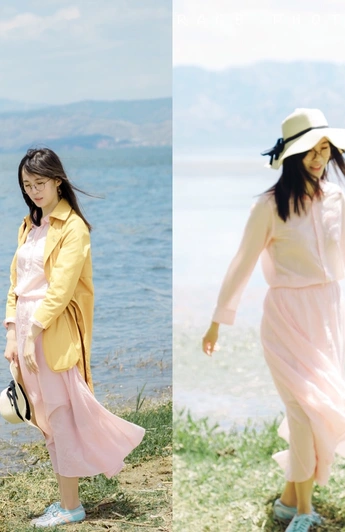
Without any warning, Wase's unique panoramic dock appeared before us. The waters near Wase Dock are about three meters deep year-round, and when the water level is high, the entire dock extension is submerged—perfect for shooting artsy photos: a red dress, flowing hair, barefoot in the water, a seemingly casual glance back.
Reality: the water level at the dock was very low, and I didn't have a red dress.
But that didn't matter—the scenery was beautiful enough on its own.
Epilogue: Beyond the Mountains, Beyond the Sea
My five-day trip to Dali felt like a dream. I didn't ride an electric scooter around the lake. I didn't climb Cangshan to see the azaleas. I didn't watch a sunset by Erhai Lake. But those unfulfilled wishes became reasons to come back again.
Xu Wei sang in "Warmth" (Wennuan):
The sun is always so brilliant
The sky is so azure
The eternally green Cangshan
I love the blue of Erhai Lake
Dali is exactly that kind of place: it makes you forget time, forget your worries, and just sit quietly by the water, feeling the wind, watching the clouds, and soaking in the city of sunlight.
If you want to go to Dali, here's my advice:
- About Accommodation: The lakeside guesthouses are under renovation. Confirm in advance whether they're open.
- About Transportation: The West Ring Road is under construction. Hiring a car or renting one is a better choice.
- About Weather: Big temperature difference between day and night—bring a jacket. Strong UV rays—use sunscreen.
- About Food: Wild mushroom hotpot, braised Erhai fish, and rose wine are all worth trying.
- About Mindset: Go with the flow. Enjoy the surprises and unexpected moments along the way.
Life is a cycle of rise and fall, sometimes high, sometimes low—but never losing its momentum. And Dali is that place where, in the midst of all the ups and downs, you can find peace.
Beyond the mountains, beyond the sea, there is a city of sunlight. It's there, waiting for you to find it.
You should also read:
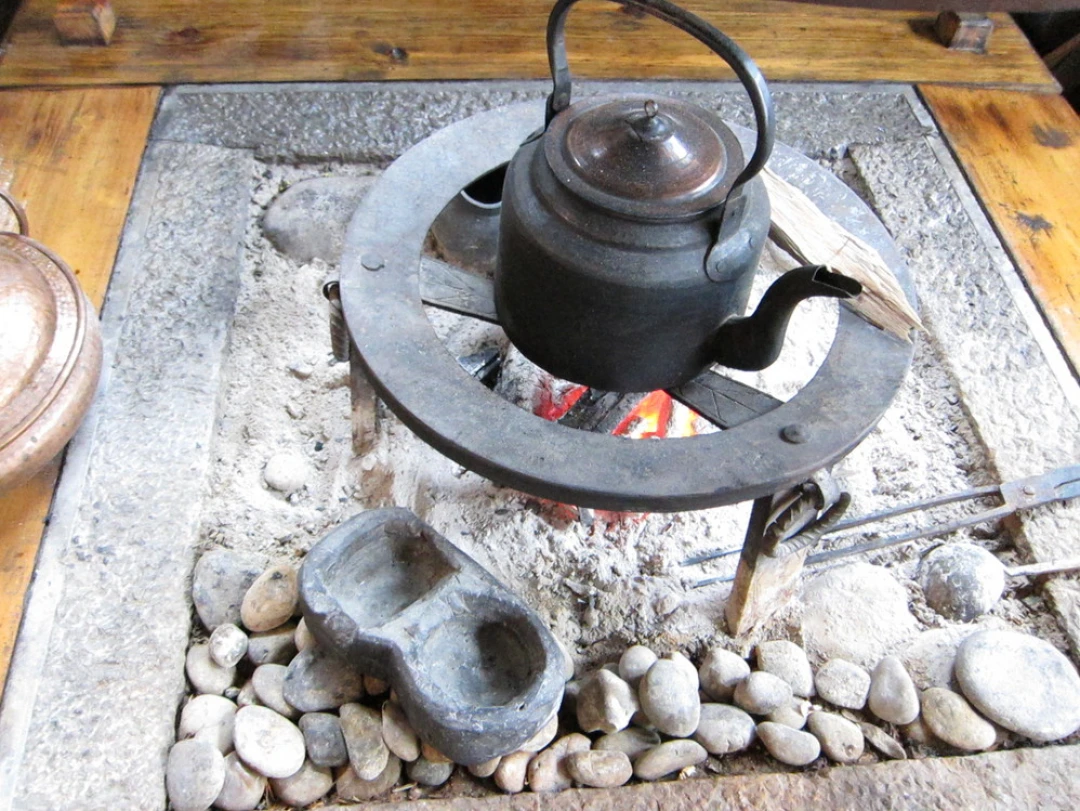
Dreaming of Lijiang, Dreaming of Shangri-La: A Journey That Lets Your Soul Breathe Deeply
Dreaming of Lijiang, Dreaming of Shangri-La: A Journey That Lets Your Soul Breathe Deeply Life is like a long trek. We're always rushing through the concrete jungle, searching for a glimmer of light in the monotony of our days. Then one autumn, I heard the…
Continue reading...
Dreamland – Lijiang: A Talking Comic Travel Guide
Dreamland – Lijiang: A Talking Comic Travel Guide Prologue: When Lijiang Takes Root in Your Heart Some places leave a mark on you forever. They're like an old song on repeat, suddenly playing in your mind on an ordinary afternoon. For me, Lijiang is that…
Continue reading...
Escaping Nanning, Falling Under Lijiang's Spell: Our Four-Person, Ten-Day Yunnan Dream
Escaping Nanning, Falling Under Lijiang's Spell: Our Four-Person, Ten-Day Yunnan Dream Before We Set Off: No Pain, No Obsession Have you ever had that impulse—suddenly tired of the office fluorescent lights, the crush of the subway, the endless parade of identical takeout boxes, and just…
Continue reading...