First Sight of Meili: An Autumn-Winter Journey Through the Shangri-La Three Parallel Rivers Loop
First Sight of Meili: An Autumn-Winter Journey Through the Shangri-La Three Parallel Rivers Loop
As the plane touched down at Shangri-La Airport, I took a deep breath of the crisp, high-altitude air, feeling as though the land itself was gently lifting me up. There were no direct flights—I had to transfer in Kunming, stay overnight, and cross more than half of China to finally reach this legendary pure land. But it was precisely this long journey that made every step closer feel like a pilgrimage.
Shangri-La—a name imbued with dreamlike colors by countless people: the place closest to heaven, the Eden of dreams, a utopia. When I finally stood there, gazing at the sky so blue it seemed almost unreal, feeling the sunlight pour down without reservation, my heart truly became incredibly still.
First Glimpse of Dukezong: A Millennium-Old City Under Moonlight
After dropping off my luggage, I couldn't wait to head to Dukezong Ancient Town. The advantage of the off-season was obvious—few tourists, as if the entire ancient town had opened its arms just for me. Strolling along the flagstone streets, breathing air tinged with Tibetan incense, hearing the melodious folk songs of Tibetan villagers drifting in the distance—that strange, wonderful feeling of being in a foreign land truly enveloped me from all sides.
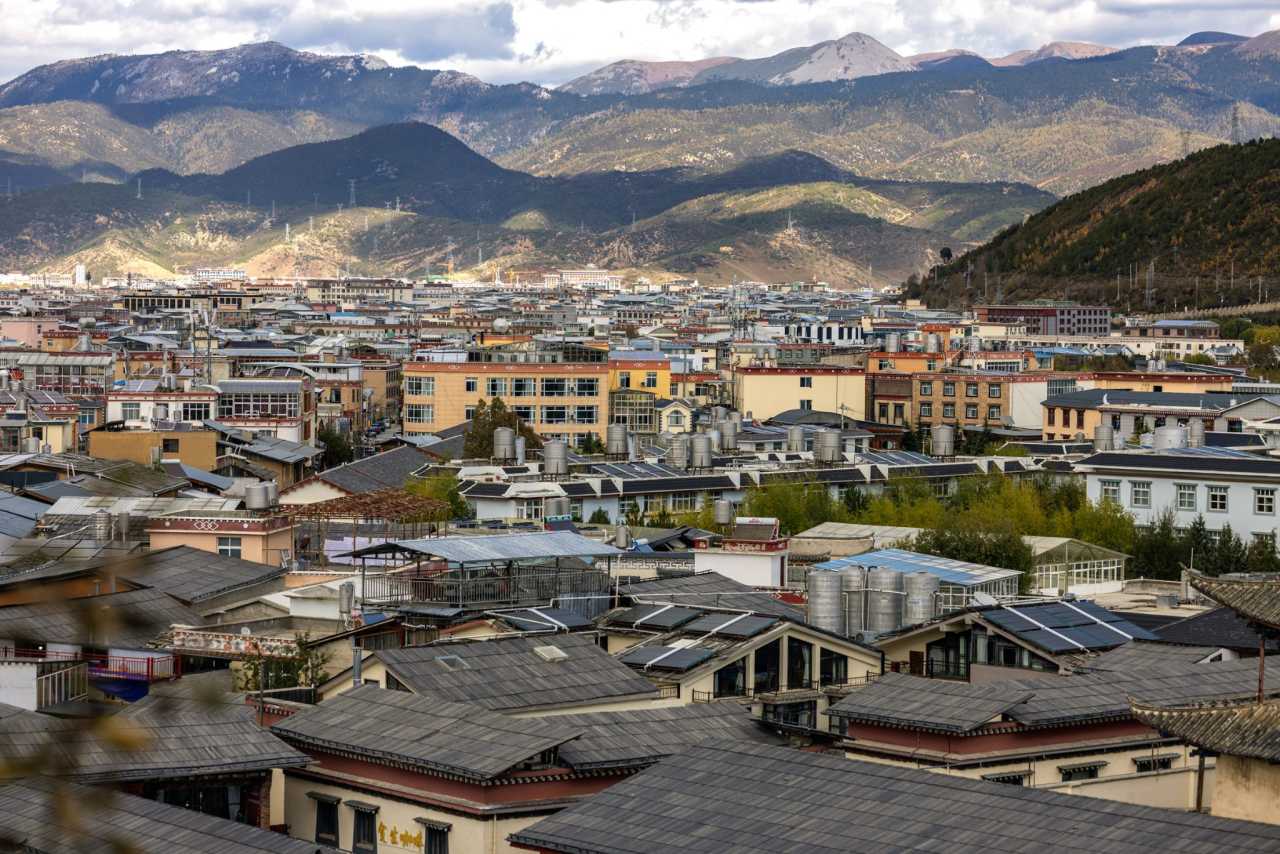
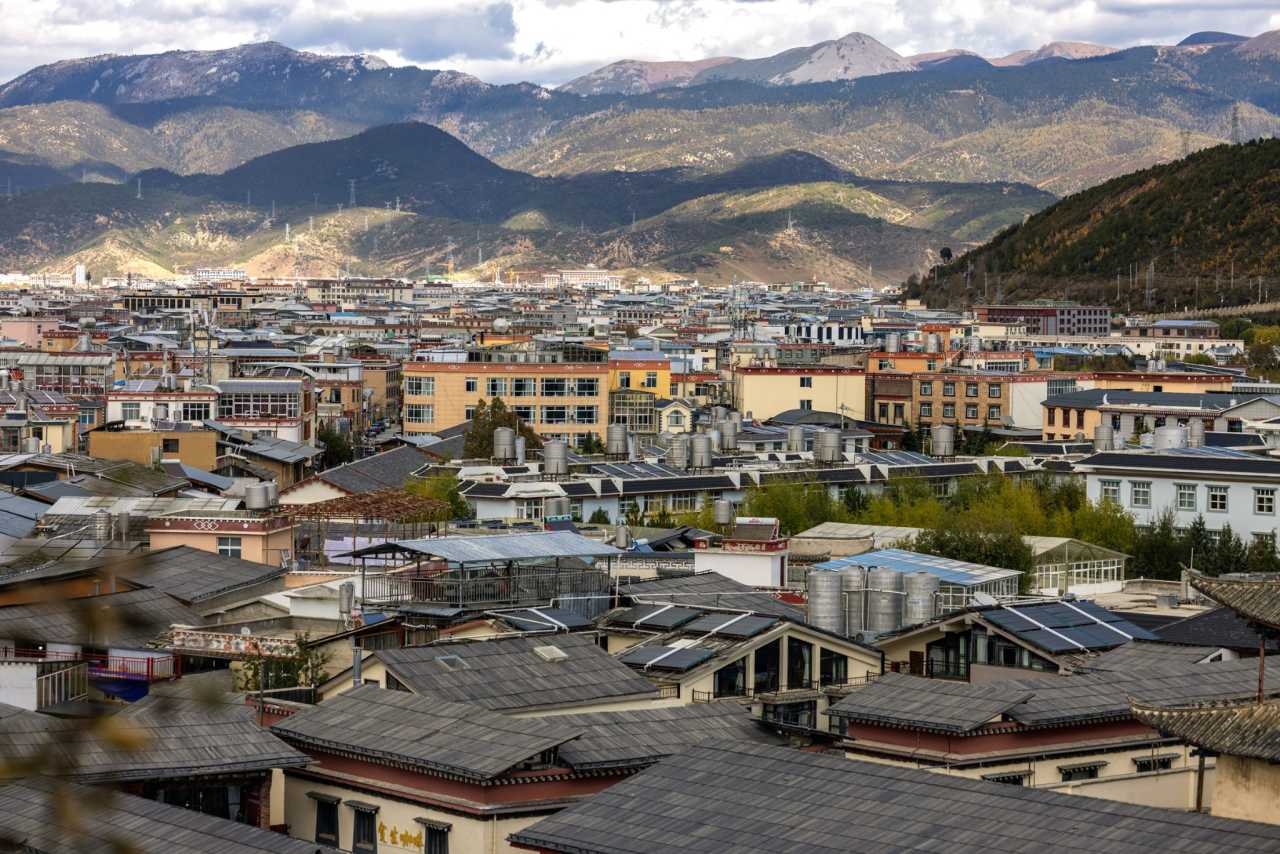
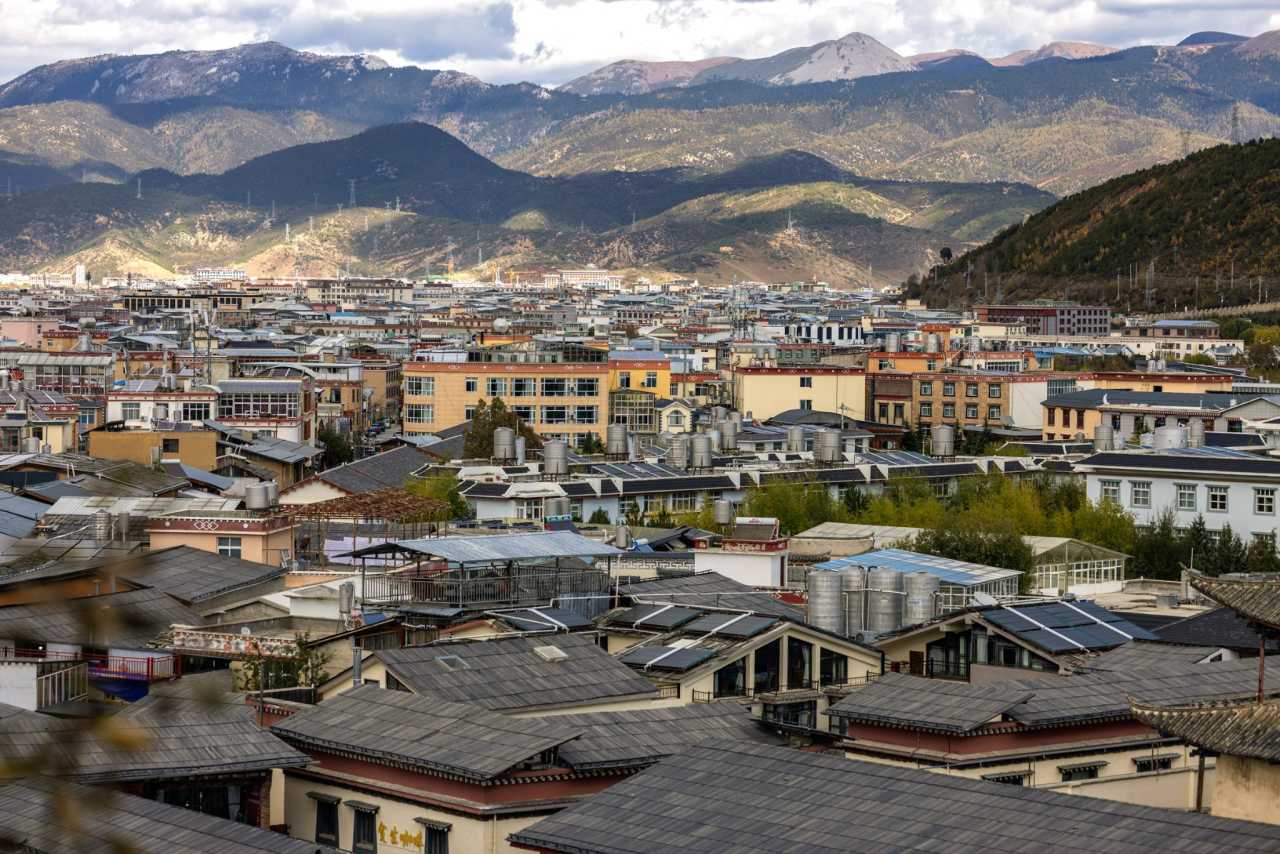
The steps leading up to Turtle Mountain Park left me, a lowlander, gasping for breath, but every step was worth it. From the observation deck, the entire ancient town lay spread out before me—layer upon layer of gray rooftops stretching into the distance, while the mountains beyond were already painted with the colors of deep autumn.
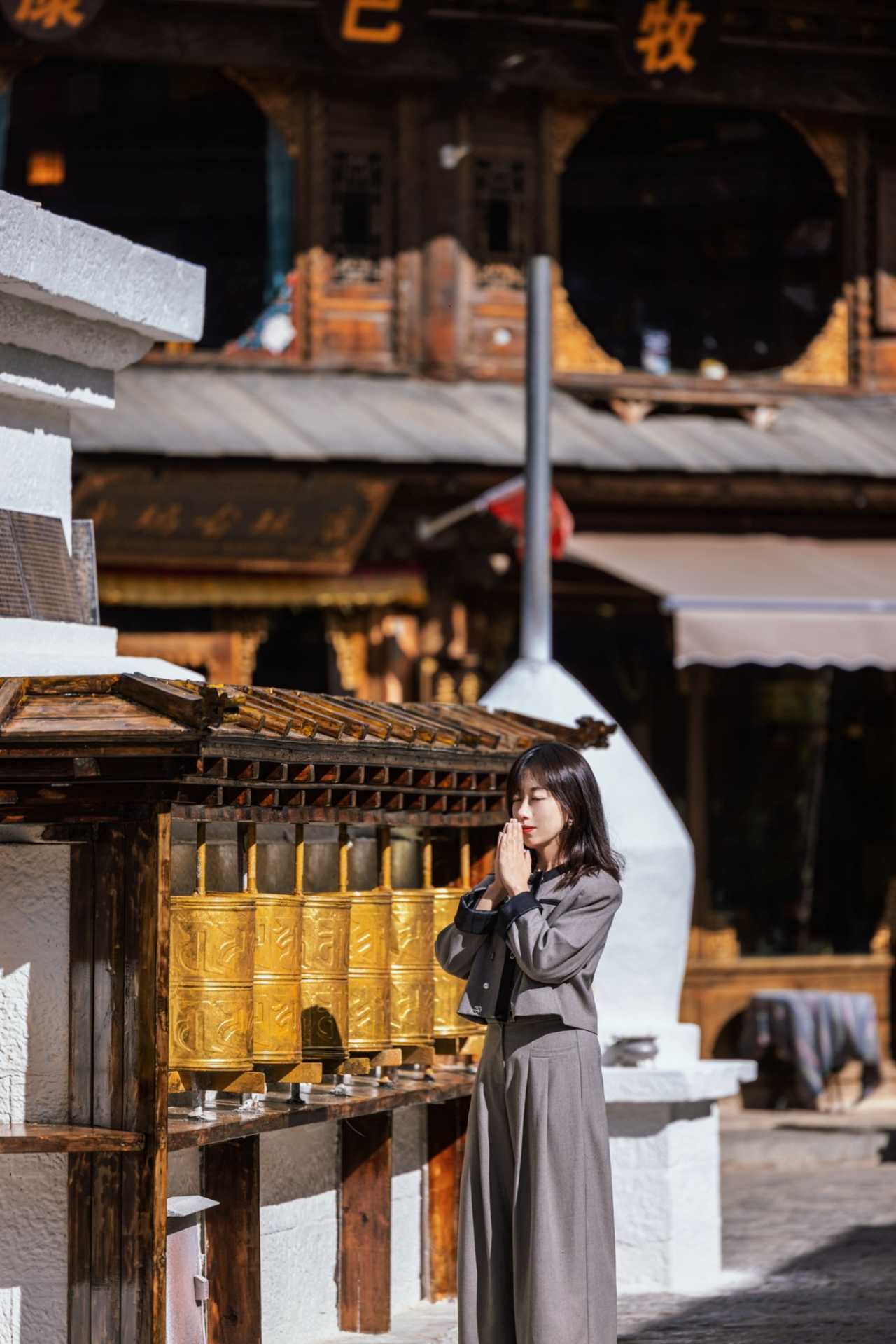
But the most awe-inspiring sight was the giant prayer wheel, a Guinness World Record holder. Standing 21.45 meters tall and made of gilded pure copper, its body is engraved with the Four Great Bodhisattvas, mountains and rivers, and the Eight Auspicious Symbols of Tibetan Buddhism. Inside, it holds approximately 1.24 million mantras and 16 tons of Buddhist treasures. It is said that each clockwise rotation is equivalent to silently reciting the Buddha's name 1.24 million times. I joined the locals, using all my strength to turn this colossal wheel three full rotations, silently praying: may calamities be dispelled, may blessings and good fortune come.
Travel Tips: - Address: Kangzhu Avenue, Shangri-La City, Diqing Prefecture - Transportation: Take Bus No. 14 or 3 to Jiantang Health Center Station, then walk about 400 meters - Admission: Free - Recommended Time: 1-2 hours
The Three Parallel Rivers Loop: A Symphony of Nature's Grandeur
The highlight of this trip was driving the Shangri-La Three Parallel Rivers Loop—from Shangri-La to Weixi, then to Deqin. This route connects three great rivers—the Jinsha, Lancang (Mekong), and Nu (Salween)—a natural wonder inscribed on the UNESCO World Heritage List in 2003.
Over 40 million years ago, the collision of the Indian subcontinent plate with the Eurasian plate created this extraordinary spectacle of rivers "flowing parallel without converging." Along the way, the ruggedness of dry-hot river valleys, the elegance of the Lancang River's banks, and the vibrant life of Baima Snow Mountain alternated before my eyes. The winding mountain roads and majestic river bends made this journey one of profound awe and emotion.
Napahai: A Mirror to the Sky
Passing by Napahai in late autumn, the water was as smooth as a mirror, reflecting the blue sky and white clouds as if it were another version of heaven. The mist-shrouded Songzanlin Monastery appeared and disappeared like a divine vision. Standing by the lake, watching the distant mountains fade into ink-wash hues and water birds skim across the surface, time itself seemed to stand still.
Weixi Tacheng: A Hidden Paradise
At noon on the first day, we arrived at Tacheng Town in Weixi County. Nestled in the valley of the Lappu River, a tributary of the Jinsha River, the fertile farmland was dotted with houses of various ethnic groups—Tibetan, Naxi, Lisu, Han, Yi, Bai, Pumi, and Hui. Eight ethnicities coexisted harmoniously, thriving together on this peaceful land.
We checked into the "Weixi Tianyu Tacheng Boutique Inn," a guesthouse located in the heart of the Three Parallel Rivers area, facing rice paddies and backed by the sacred Naxi mountain. Walking slowly up the village path, we passed through groves of walnut and chestnut trees interspersed with green barley fields. Simple villages were nestled within the forest, with wisps of cooking smoke rising into the air as the Lappu River meandered away.
Experiencing Naxi Folk Culture
In a small Naxi courtyard in Tacheng Town, the sun was shining brightly and flowers were in full bloom. A warm-hearted Naxi grandmother helped me into traditional attire—a sheepskin vest embroidered with patterns of conch shells, water waves, lanterns, bees, and butterflies, symbolizing the Naxi people's virtue of "working from dawn till dusk."
I watched a Naxi uncle hand-roll incense, made ciba (pounded glutinous rice cakes) with the grandmother, and for lunch enjoyed homemade bacon, blood sausage, chicken soup, and wild mushrooms prepared by the locals. The warm sun bathed us in comfort as we raised a toast of high-proof barley liquor to this magical land.
Experience Location: Next to the basketball court in Qibie Village, Tacheng Town, Weixi County (He Xuezhi Folk Culture Experience Center)
Meili Snow Mountain: Waiting for a Sacred Gift
By the time we reached the Wunongding Observation Deck, it was already evening, and Meili Snow Mountain was shrouded in clouds. They say that in a year of 365 days, only 40 offer a clear view of Meili's true face—so even this veiled sight filled me with contentment. The last rays of sunset pierced through the clouds, casting golden light across the land, while colorful prayer flags fluttered in the wind. In that moment, the light seemed to belong to another world.
I bought a hot coffee from a mobile coffee truck, settled into a camping chair, and gazed at the distant mountains and villages while listening to the howling wind. This, right here, was the ultimate pleasure.
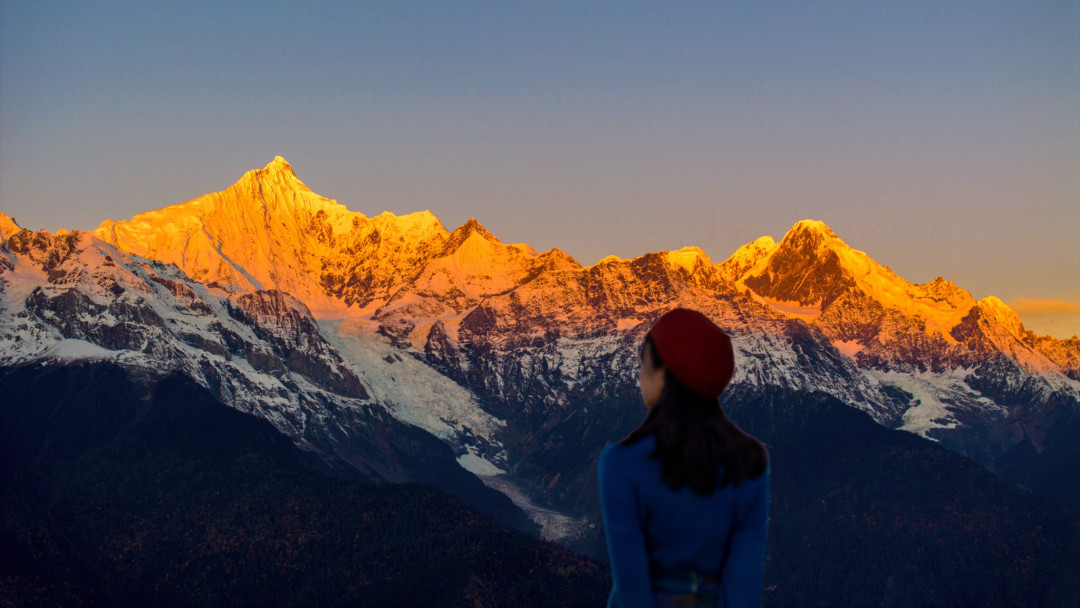
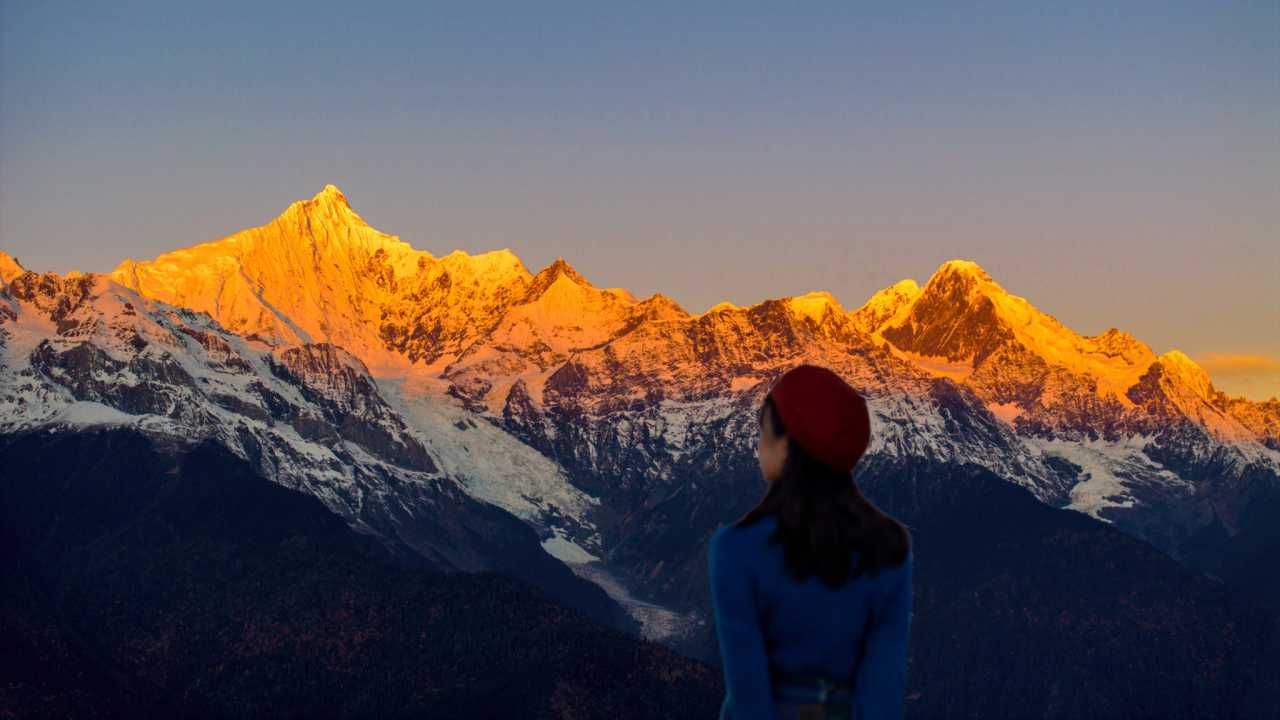
At 6 a.m. the next morning, the rooftop of the hotel was already packed with people. When the first rays of sunlight touched the summit of Kawagebo Peak, everyone held their breath. The sky was a deep, profound blue, the air crystal clear, and the mountain seemed to radiate light—the "Golden Sun Illuminating the Snow Mountain" appeared before us, without warning.
Kawagebo Peak, the main summit of Meili Snow Mountain, stands at 6,740 meters (22,112 feet)—the highest peak in Yunnan and the only high peak in China that is banned from climbing due to cultural protection. The 1991 disaster involving a Sino-Japanese joint expedition remains an unsolved mystery in mountaineering history. Local Tibetans believe that Kawagebo is a guardian deity who forbids anyone from setting foot on its summit.
Standing on the observation deck, I recalled the words of Japanese mountaineer Kobayashi Naoto in his book Meili Snow Mountain: "What Kawagebo embraces is a complete world. When the monsoon hits the peak, it brings heavy snowfall, nurturing glaciers and forests. All living things here exist under Kawagebo's protection."
Viewing Guide: - Address: National Highway 214, Deqin County, Diqing Prefecture. Navigate to "Wunongding" - Transportation: Self-driving is recommended; free parking at the observation deck - Two Main Viewing Spots: Wunongding (Thirteen White Stupa Welcome Platform) and Feilai Temple
Baima Snow Mountain: An Autumn Fairy Tale

Leaving Meili Snow Mountain behind, we entered another autumn wonderland—Baima Snow Mountain. Located in the middle section of the Hengduan Mountains, it serves as the watershed between the Lancang and Jinsha Rivers.
In late autumn, the high-altitude coniferous forests of the primeval woodland had turned a brilliant gold. Countless fallen pine needles piled up like a thick carpet beneath our feet. Tall, straight pines stood densely on the cliffs, their shimmering gold surging like waves. Set against the pure blue sky of the plateau, the penetrating sunlight, and the dazzling white snow, the colors burst forth in layers—this was autumn in its truest form.
Best Autumn Viewing Period: Mid-October to early December Route: Depart from Deqin, take National Highway 214, then turn onto Provincial Road 236 Altitude: Baima Snow Mountain Pass is 4,294 meters (14,088 feet) Tip: The scenery is so beautiful it's easy to get overexcited. Our lesson learned: after jumping out of the car to take photos and running around, we all ended up gasping for oxygen—so keep your movements small at high altitudes!
Balagezong: A Legend of Dreams and Perseverance
"We've arrived! We've finally arrived at Balagezong!"
After driving for nearly an hour along sheer cliff faces, we finally reached this isolated paradise. Balagezong is a magical place—beyond its stunning natural landscapes, it holds a deeply moving story.
Sina Dingzhu: Building a Sky Road in Ten Years
On the bus, our guide played an interview from the Chinese TV show The Reader, introducing us to Sina Dingzhu—the legendary figure who changed the 1,300-year fate of Bala Village.
Once, Bala Village was almost completely cut off from the outside world. The only route out was a 30-kilometer (18.6-mile) horse-and-footpath, and reaching Shangri-La county town took over four days on foot. When young Sina Dingzhu was working as a blacksmith's apprentice, a spark flew into his eye. Due to the lack of transportation, treatment was delayed, and he lost sight in that eye. This experience made him determined to build a road.
At 13, he left his hometown to seek his fortune in Guangzhou. The opportunity of China's reform and opening-up allowed him to quickly accumulate wealth, making him a local multimillionaire. In 2004, he resolutely invested his entire savings to build a road for his village—turning his millions into hundreds of millions in debt. Over ten years, he carved a 6.5-meter-wide, 35-kilometer-long asphalt road into the sheer cliffs.
In 2013, a series of earthquakes devastated the road and caused heavy losses to the scenic area. But Sina Dingzhu never gave up. His persistence, toughness, and实干 (practical spirit) eventually turned Balagezong into a national park. The villagers' annual income rose from 1,000 yuan to 100,000 yuan—life truly improved!
Watching that documentary moved everyone to tears. Hats off to an extraordinary man. In that moment, I felt that no matter how much the entrance fee cost, it was worth every penny.
Must-Visit Spots
The Millennium Bodhi Tree Growing on a cliff face in the scenic area, this thousand-year-old bodhi tree spreads its branches like a phoenix's tail, covering nearly 400 square meters of rock. Even more miraculous is a "hand" that has grown from the trunk, reaching into a rock crevice. The branch is like an arm, and the twigs like fingers—all five "fingers" perfectly formed, their lengths naturally determined. This "Bodhi Buddha Hand" is revered as a divine hand that soothes pain and suffering.
Shambhala Stupa A mountain peak that looks exactly like a round Buddhist stupa, standing at 4,250 meters (13,944 feet). This naturally formed pyramid-shaped peak, cloaked in snow, rises majestically. Nearby are a "Lama in Sitting Posture" peak and a "Sutra Book" peak. These three peaks are known as the Three Jewels of Buddha, Dharma, and Sangha—a unique and sacred natural stupa found nowhere else in the world.
Echo Wall A glass platform with a 700-meter (2,297-foot) drop, offering a thrilling view of the cliff face below. There's also a nerve-wracking open-grid walkway. When it's not crowded, you can lie down and take photos with the snowy mountains and rivers—an incredibly immersive experience.
Shangri-La Grand Canyon Gliding by kayak on the clear, emerald-green water, with sheer cliffs on either side, I could only think: "On both banks, the monkeys' cries never cease; my light boat has passed ten thousand mountains."
Staying at the Mirage Hotel
That night, we checked into the Balagezong Snow Mountain Cliff Mirage Hotel—a high-end Buddhist-themed hotel created by Sina Dingzhu, perched halfway up the mountain. The rooms were spacious, the staff welcomed us with hada (ceremonial scarves), and we could step out the door to wander through the village. Mountain spring water flowed through the village, and the night was profoundly quiet.
After dinner, the staff gathered around a bonfire to sing and dance. The young men's voices echoed through the night sky. On the way back to our room, the stars filled the sky, so close they seemed within reach.
Hotel Package: Includes double entry tickets to the scenic area, the kilometer-high glass walkway, either the高空滑索 (zip-line) or canyon rafting, and a prayer ceremony at the Tibetan Buddhist incense-burning platform with prayer flags. Price: Approximately 500 yuan per person during the off-season.
Practical Travel Guide
Itinerary
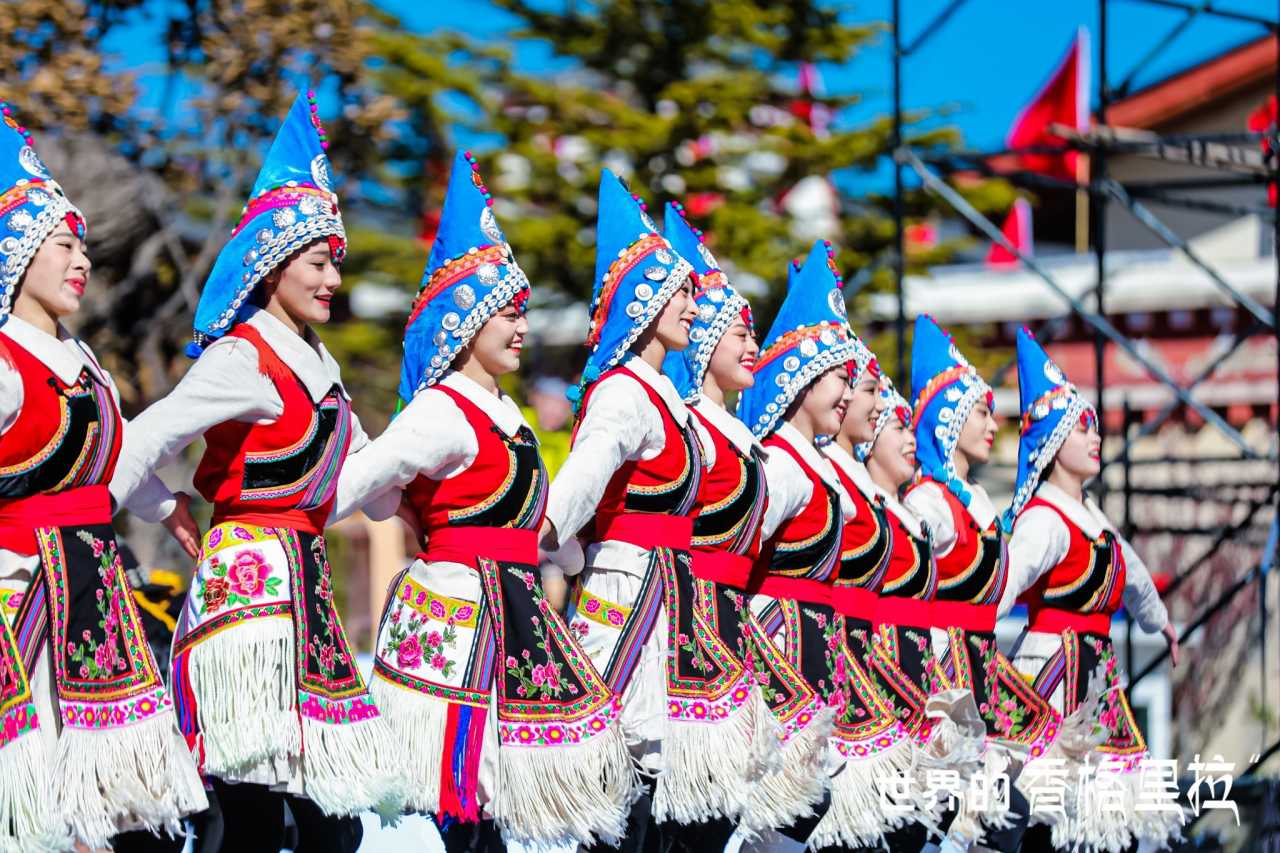
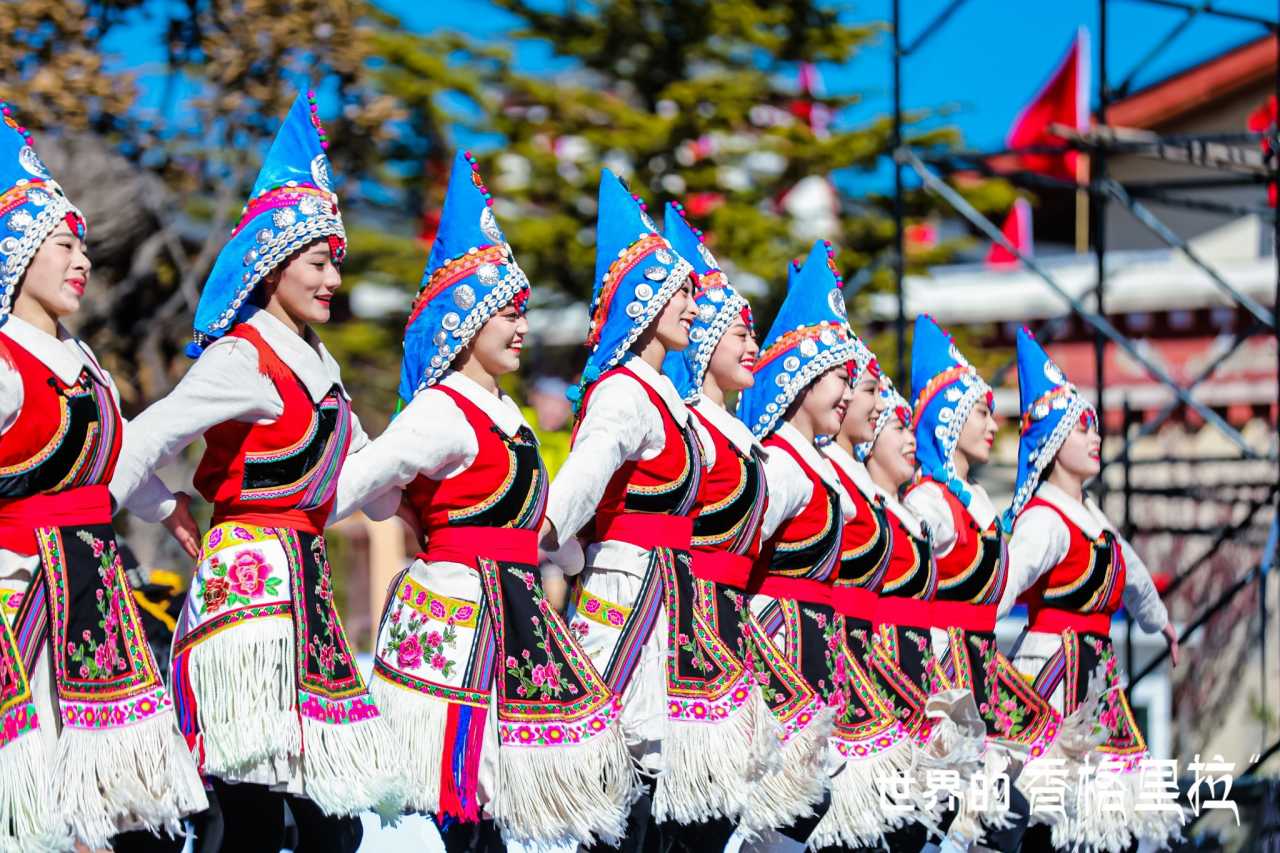
Day 1 Arrive in Shangri-La → Check into Hilton → Visit Dukezong Ancient Town → Watch Dream: The Shangri-La of the World at the Grand Theater
Day 2 Shangri-La → Weixi (440 km, 7 hours driving) Pass through Napahai and Songzanlin Monastery, arrive in Tacheng to experience Naxi folk culture, then head to Deqin in the evening and check in at Feilai Temple
Day 3 Deqin → Balagezong (140 km, 3 hours driving) Wake up early to photograph the "Golden Sun Illuminating the Snow Mountain" at Meili, enjoy the scenery of Baima Snow Mountain and the Jinsha River Big Bend along the way, check into Balagezong
Important Notes
- Large Temperature Differences: In high-altitude areas, the temperature difference between day and night is significant. Check the weather forecast before your trip and bring warm clothing.
Acclimatize to the Plateau: Give yourself enough time to adapt after arrival and avoid strenuous exercise. I took "Gaoyuan An" (a high-altitude remedy) for three days before the trip and had no altitude sickness at all.
Stay Hydrated: The high-altitude climate is very dry, and you can easily become dehydrated. Drink plenty of water and consume foods with moderate sodium to help balance electrolytes.
Sun Protection: Wear a hat and use sunscreen with SPF 30 or higher.
Epilogue: All Encounters Are Reunions with Ourselves
In three days, I traveled from Shangri-La to Weixi, then to Deqin, completing the Three Parallel Rivers Loop. Along the way, I saw the dry-hot river valleys, the majestic glaciers, the vibrant forests, the Tibetan people living under the open sky, and the leisurely mules and yaks appearing here and there. Meili Kawagebo stood silently, watching over it all.
The world is vast—mountains, rivers, lakes, and seas. All encounters in this life are ultimately reunions with ourselves.
As the year drew to a close, I witnessed the "Golden Sun Illuminating the Snow Mountain" at Meili. May luck descend. May health and peace be with us. And may each of us live this life in our own way.
You should also read:

Body in Hell, Heart in Heaven: A Pilgrimage Through Tiger Leaping Gorge — A Dialogue Between Heaven and Earth
Body in Hell, Heart in Heaven: A Pilgrimage Through Tiger Leaping Gorge — A Dialogue Between Heaven and Earth Introduction: When the Gorge Splits Open Beneath Your Feet Some say Tiger Leaping Gorge is the closest place on Earth to the border between "hell" and…
Continue reading...
Cloud Travelogue · Dali of Wind, Flowers, Snow, and Moon: A Three-Day, Two-Night Journey of a Free Spirit
Cloud Travelogue · Dali of Wind, Flowers, Snow, and Moon: A Three-Day, Two-Night Journey of a Free Spirit I am a cultured female foodie with a touch of rogue charm. I slung on my backpack, took my lover's hand, and set off on a spontaneous…
Continue reading...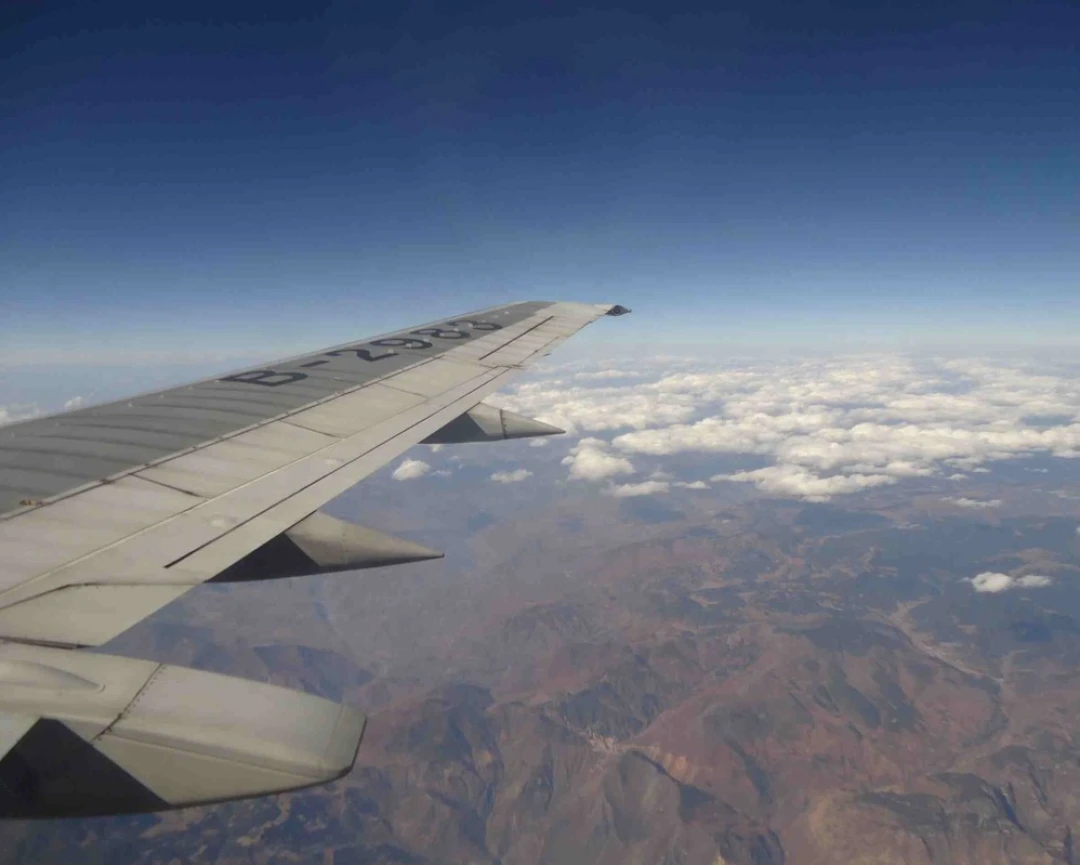
The Meaning of Travel – A Tengchong Story: A Journey of the Heart and Personal Growth
The Meaning of Travel – A Tengchong Story: A Journey of the Heart and Personal Growth Setting Out, Only to Return a Better Self Some say travel is nothing more than leaving a place you're tired of, only to go to a place where others…
Continue reading...