Five Days in Xishuangbanna: Through the Rainforest, Under the Starry Night Market — A Survival Guide for Peak Season
Five Days in Xishuangbanna: Through the Rainforest, Under the Starry Night Market — A Survival Guide for Peak Season
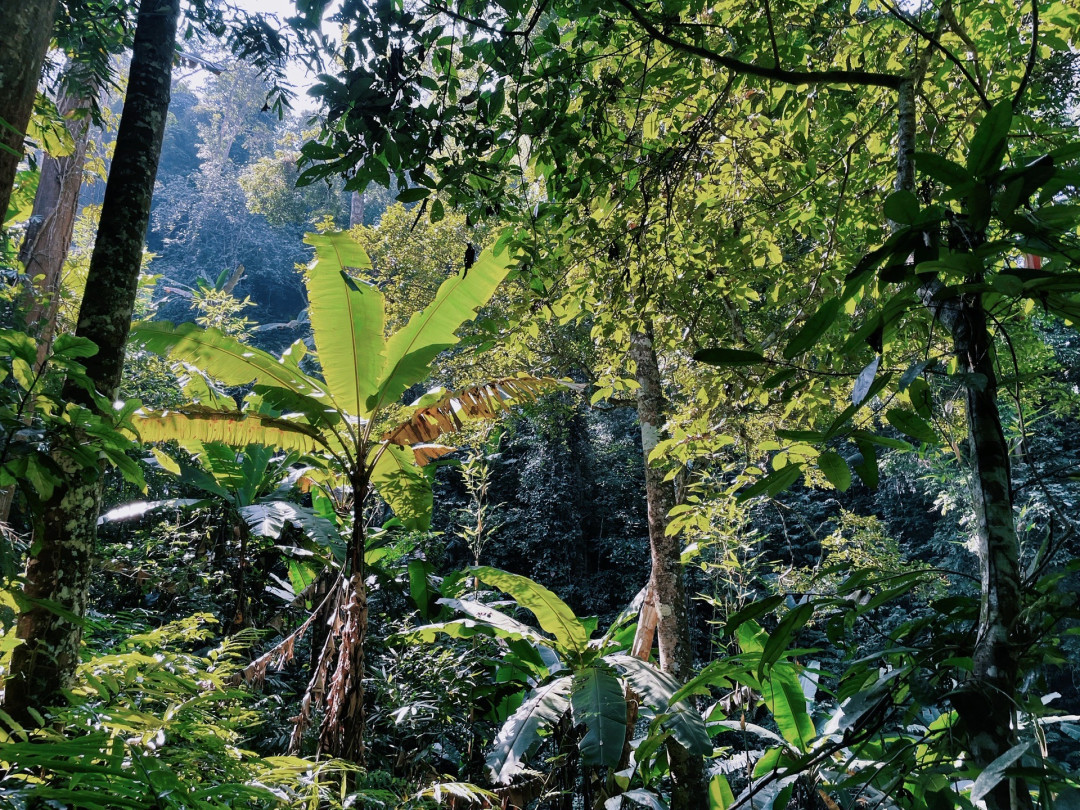
While the north shivers in biting cold, Xishuangbanna is already lush with greenery, warm breezes brushing your face. This southernmost corner of China is home to dreamlike tropical rainforests, exotic Dai culture, and the irresistible烟火气 (lively street-food energy) of its night markets. If you happen to visit during a peak season like Chinese New Year, don't let the crowds scare you. Here's my five-day guide to dodging the masses and hitting the highlights — so you can soak up the best of Banna in the shortest time.
Before You Go: Transport & Costs at a Glance
How to Get Around
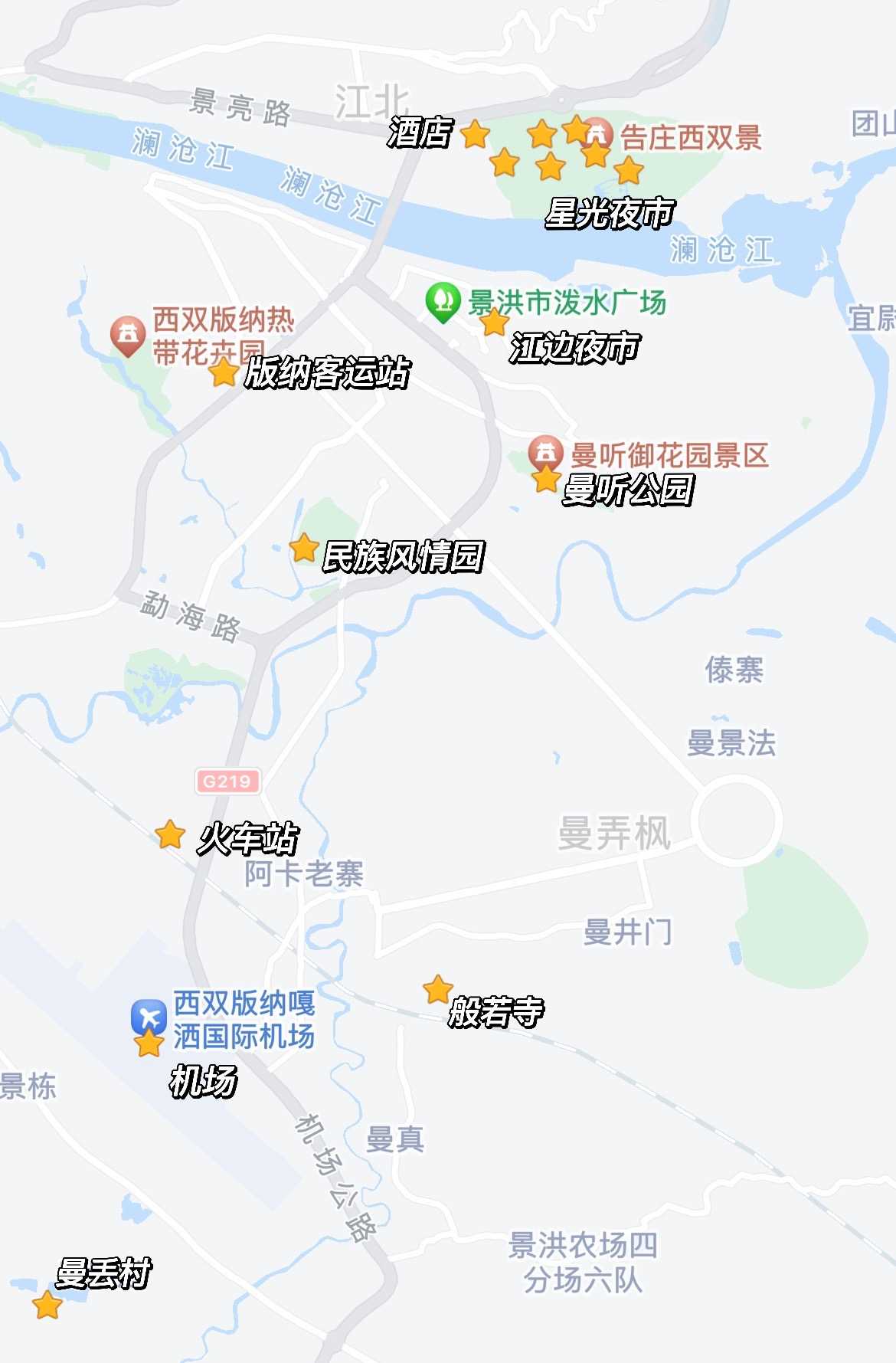
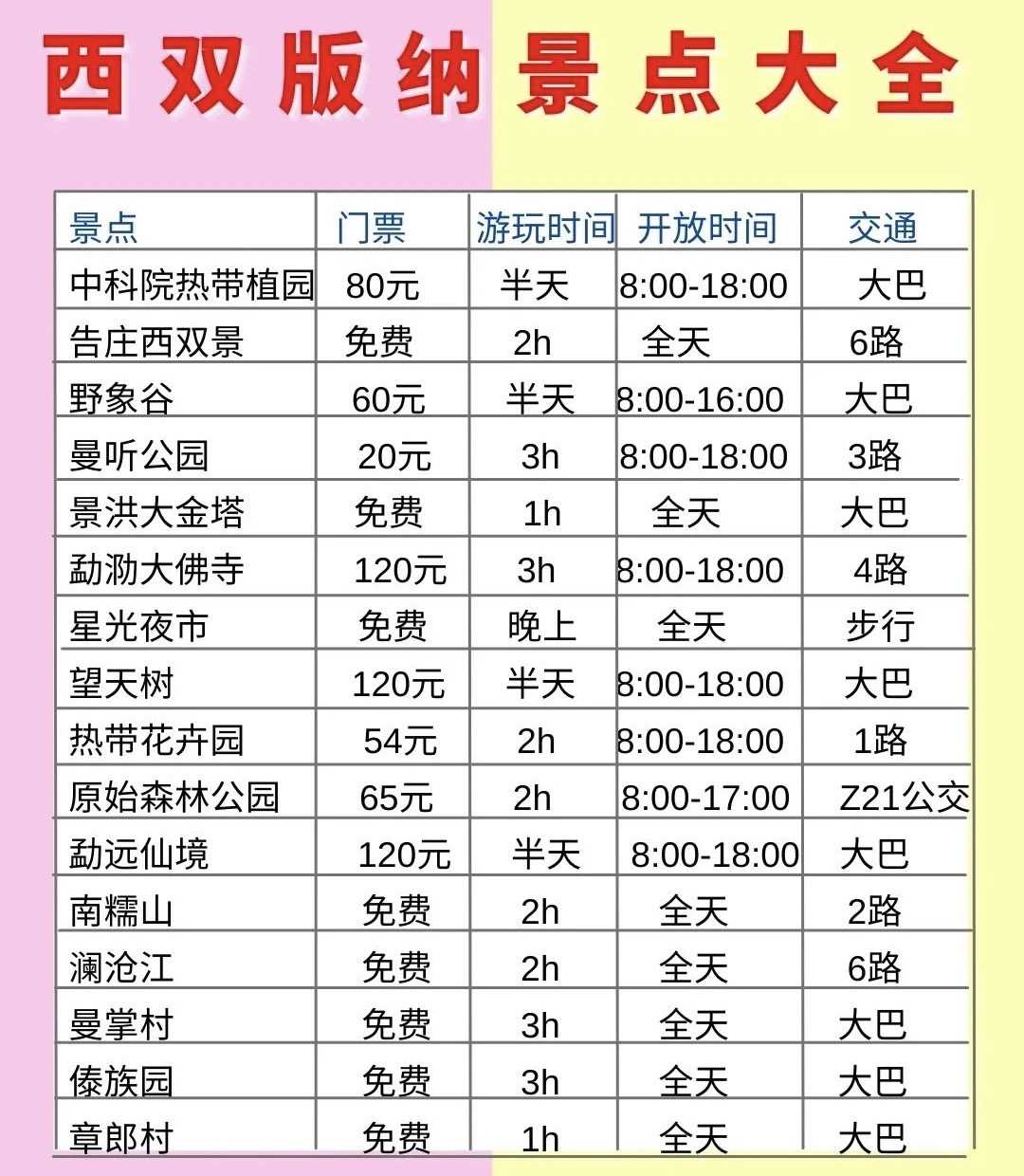
Xishuangbanna's attractions are scattered, and transport options vary — but during peak season, plan ahead:
- Taxis: Best during the day, but always book at least 15 minutes in advance. In peak season, wait times can make you question your life choices.
- E-scooters: If you're staying in Gaozhuang (告庄), renting an e-scooter is the smartest move. We stayed on the outskirts and relied on Qingju (青桔) shared e-scooters — the joy of cruising around on those things was real.
- Buses: For longer distances, the Banna Bus Station has direct coaches. If you're in a group, consider chartering a car.
- Trains: Surprise! You can take the train to Wangtianshu (望天树) scenic area — one stop, faster than a bus, but the schedule is tight.
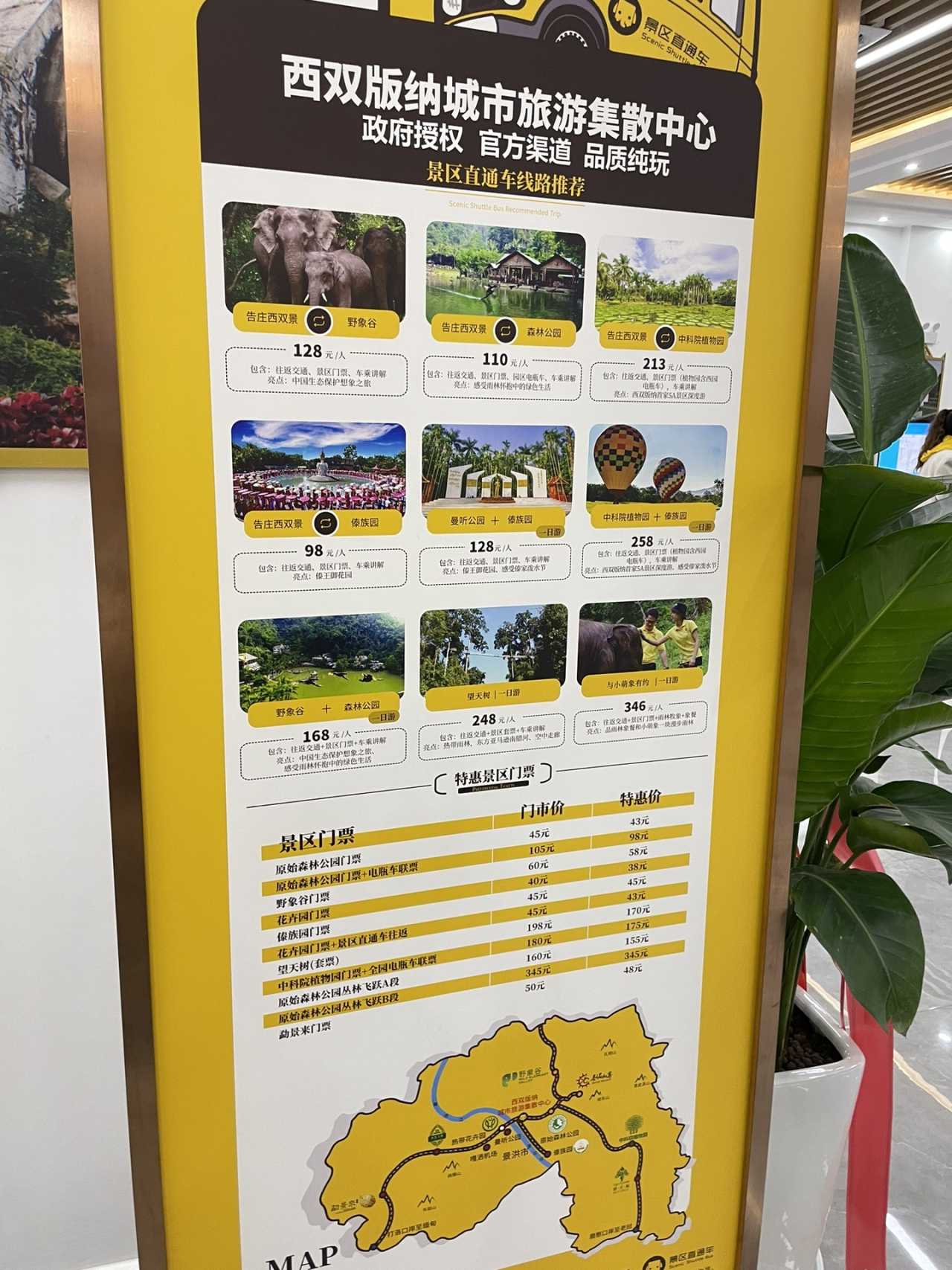
- Scenic Area Shuttles: The main terminal is at the Gaozhuang gate. Most packages include round-trip transport and tickets — hassle-free.
Cost Breakdown
For this five-day trip, two people spent a total of 15,600 RMB. Excluding flights and accommodation, it came to about 2,800 RMB per person. Peak-season flights and hotels are inflated, so this is just a reference — traveling off-season is much cheaper.
Day 1: Departure at Dawn & a Baptism by Crowd at the Starry Night Market
From Below Zero to Above: A 2,000-Kilometer Journey
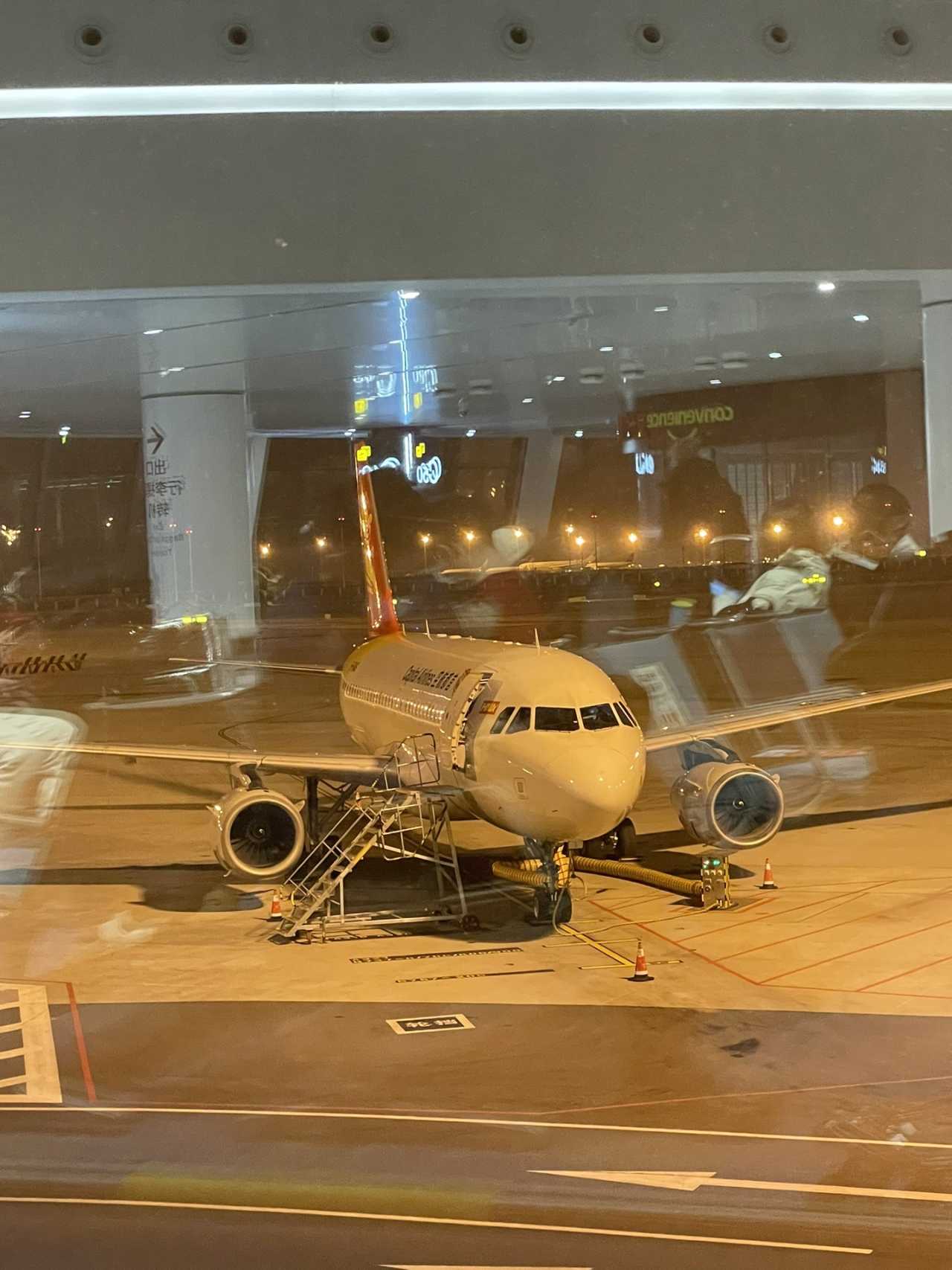
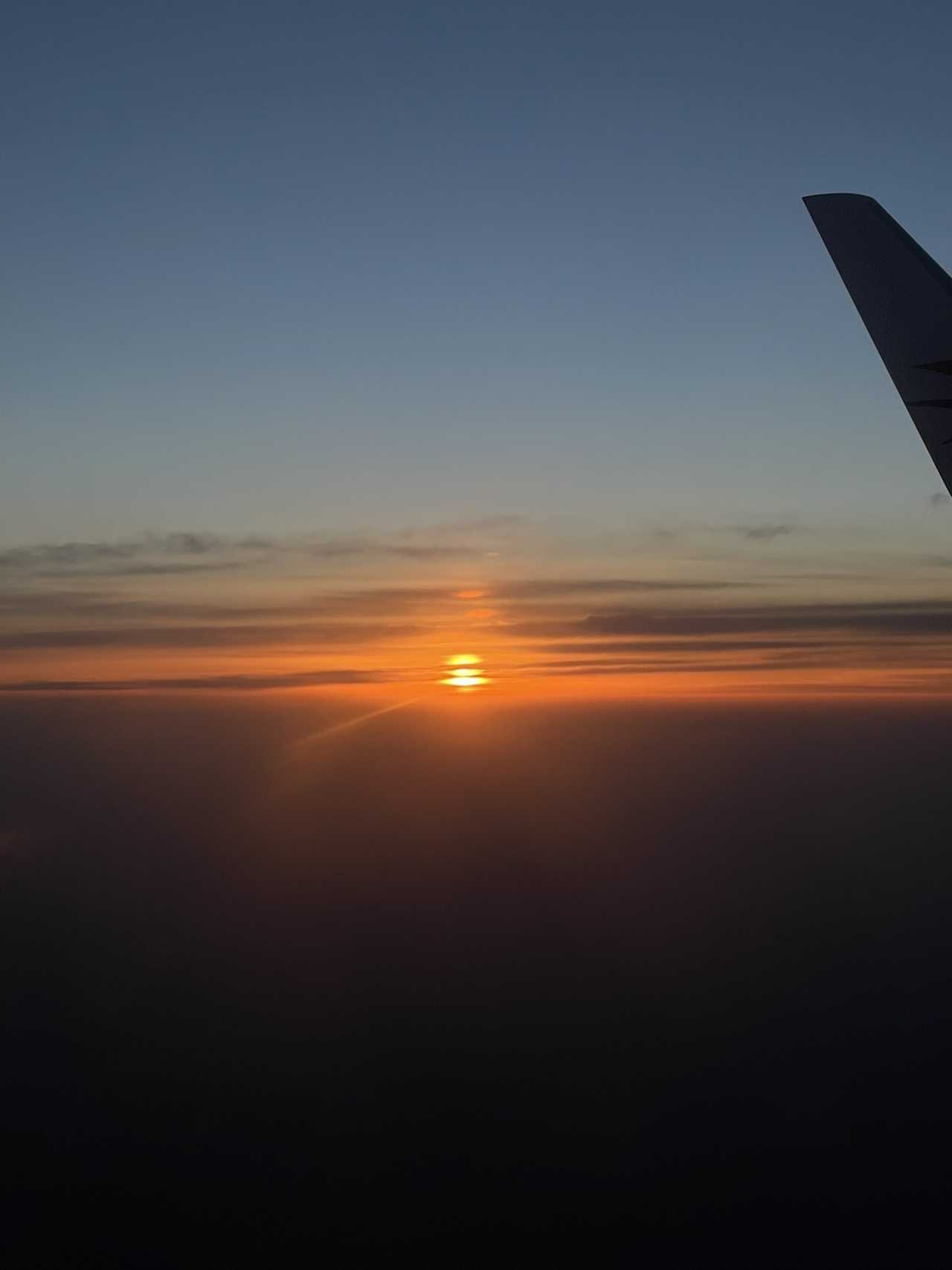
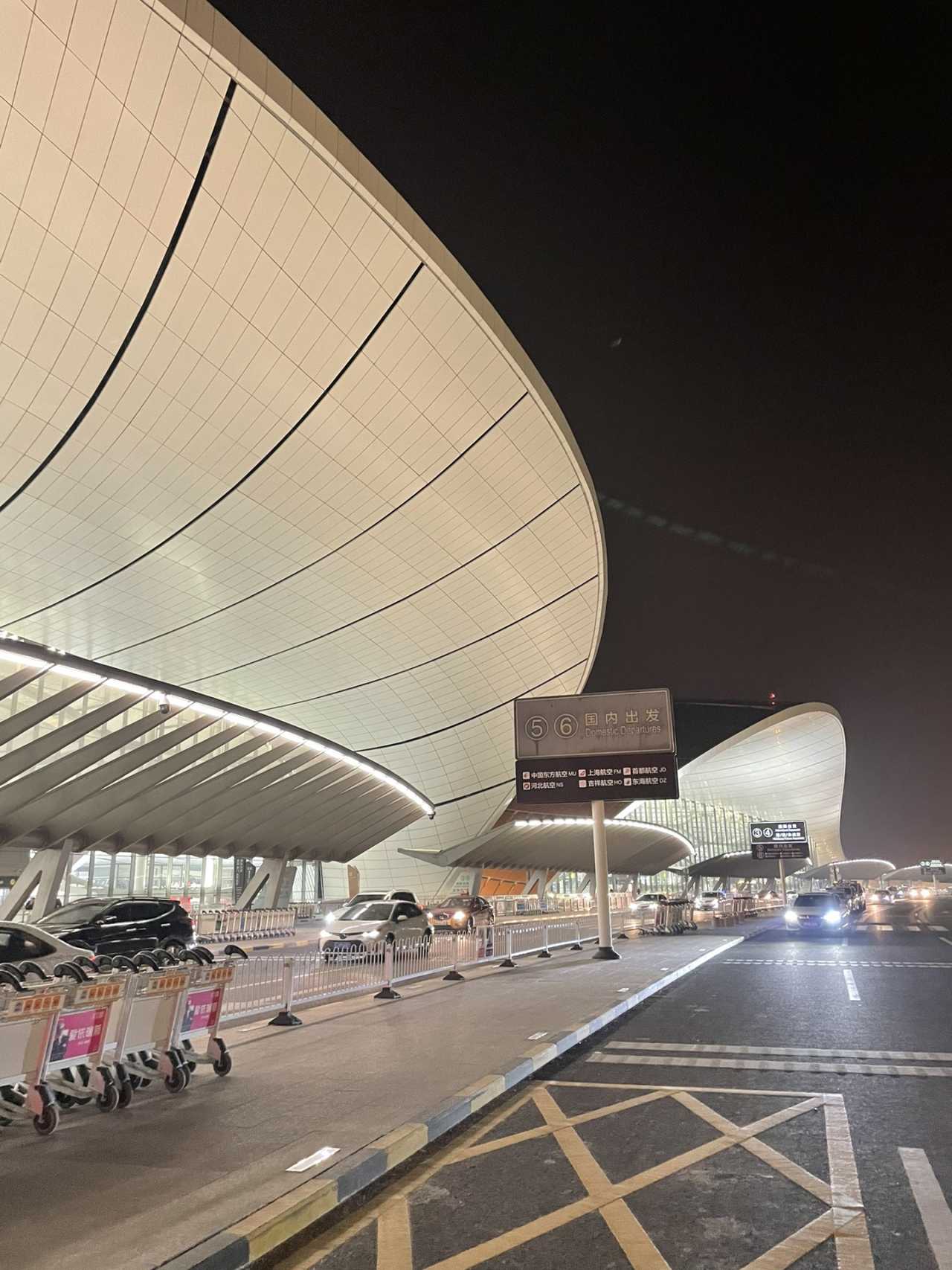
At 4 a.m. on Chinese New Year's Day, we left Beijing Daxing Airport. After landing in Kunming, we transferred to a high-speed train heading further south. At Kunming Railway Station, we grabbed a bowl of Qiaoxiangyuan (桥香园)的小锅米线 (small-pot rice noodles). Honestly, it was a bit salty, but at least it warmed us up. Four hours later, as the train pulled into Xishuangbanna, the scenery outside shifted from gray-white to emerald green. The excitement hit me the moment I shed my down jacket — I felt free!
We stayed near Manting Park (曼听公园), hoping to avoid Gaozhuang's crowds. But that choice backfired — getting back and forth to Gaozhuang became a new headache. If you're traveling off-season, I'd still recommend staying in Gaozhuang. The time you save on transport is enough to squeeze in two more attractions.
The Starry Night Market: Surprises & Pitfalls in a Sea of People
At 8 p.m., we changed clothes and set out. Hailing a taxi? Forget it. We ended up squeezing onto a single shared e-scooter, wobbling all the way to the Gaozhuang gate. Friendly reminder: safety first — don't follow our example.
I'd heard a lot about the Starry Night Market (星光夜市), but seeing it in person was still a shock — not because it was beautiful, but because of the crowds! People everywhere, no gaps between the food stalls. We finally found a restaurant called Pu Zuo (菩左), serving Dai-style Thai food. We ordered舂鸡脚 (pounded chicken feet with chili and lime),老挝冰咖啡 (Laos iced coffee), and咖喱蟹 (curry crab). The chicken feet were tangy and spicy — a great start. But the Laos iced coffee was as bland as water — a high-probability dud.
After eating, we went to buy Dai ethnic clothing. The legendary "35 RMB for a three-piece set" turned into 90 RMB when the vendor opened his mouth. Remember: haggle down to half the asking price. Don't be soft. I bought a three-piece set for myself and a "Li Xian-style floral shirt" for my husband. The shirt bled color badly — not great value.
Day one ended in the sea of humanity. Riding the e-scooter back to the hotel, wind in our faces, turned out to be the happiest moment of the day.
Day 2: A Miao Girl Photoshoot & a Dai Woman's Night

Gaozhuang in the Morning: Slow Down, This Is Banna
I'd booked a photoshoot a week in advance, scheduled for 11 a.m. First, we headed to Gaozhuang for breakfast. Confidently wearing shorts, I was shivering from the temperature difference between day and night. Found a rice noodle shop, ate a bowl, then realized I'd forgotten to add the condiments — had to go back for a refill.
We still had time, so we wandered around Gaozhuang. Compared to last night's chaos, the morning was eerily quiet — like a different world. We stumbled into a little café called A Bai Coffee (阿白咖啡馆). It had just opened, the machine still warming up. A gentle dog was lounging inside. We ordered a mint latte and a pour-over, sat in the small courtyard, sunlight pouring over us — so comfortable we didn't want to leave.
First-Time Miao Girl: The Value of One-on-One Service
I did my homework on photoshoot studios. Don't just pick a random 199 RMB deal on the street — those have one photographer herding dozens of girls through the night market for assembly-line photos. The experience is terrible. I went for a pricier one-on-one service. It hurt the wallet, but saved time and was much more enjoyable.
I chose Miao ethnic clothing — all sparkly and shiny. The headdress was heavy but beautiful. The shoot was at Manhena Ancient Village (曼贺纳古村), a quiet, rustic spot with few tourists, close to the city. Highly recommend it. Walking through the village in that outfit, heads turned everywhere. The photographer guided us to fixed spots for the best angles. After the shoot, we went back to select photos. The final results would take 15 business days.
Peacock Feast & a Dai Girl's Night at the Starry Market
The shoot wrapped up at 4:30 p.m. — too late for Manting Park. We went straight to dinner in Gaozhuang. We chose the "Peacock Feast" at Mengya Xiang (萌牙象). The portions were small, the food was cold — basically a regular grilled meat platter with a peacock head on top, for an extra 100 RMB. Worth trying once, but that's it.
That evening, we put on the Dai clothing we'd bought the day before and headed back to the Starry Night Market. Still packed — not a single empty spot for photos, all occupied by photographers with their fill lights. Luckily, during Chinese New Year, the Great Golden Pagoda (大金塔) had fireworks — stunning! We wandered around, managed a few shots, and bought two more outfits. We're not great hagglers, so we just paid up and moved on.
Finally, we circled to the Six Kingdoms Water Market (六国水上市场). It was too dark, so we found a shop with its own fill light and took a few photos. At 10 p.m., we hopped back on the e-scooter and rode to the hotel. First time riding an e-scooter at speed — I felt like a total boss.
Day 3: Jinuo Mountain Rainforest Hike — The Best Day of the Trip
Rainforest Crossing: 4 Kilometers That Felt Like 8
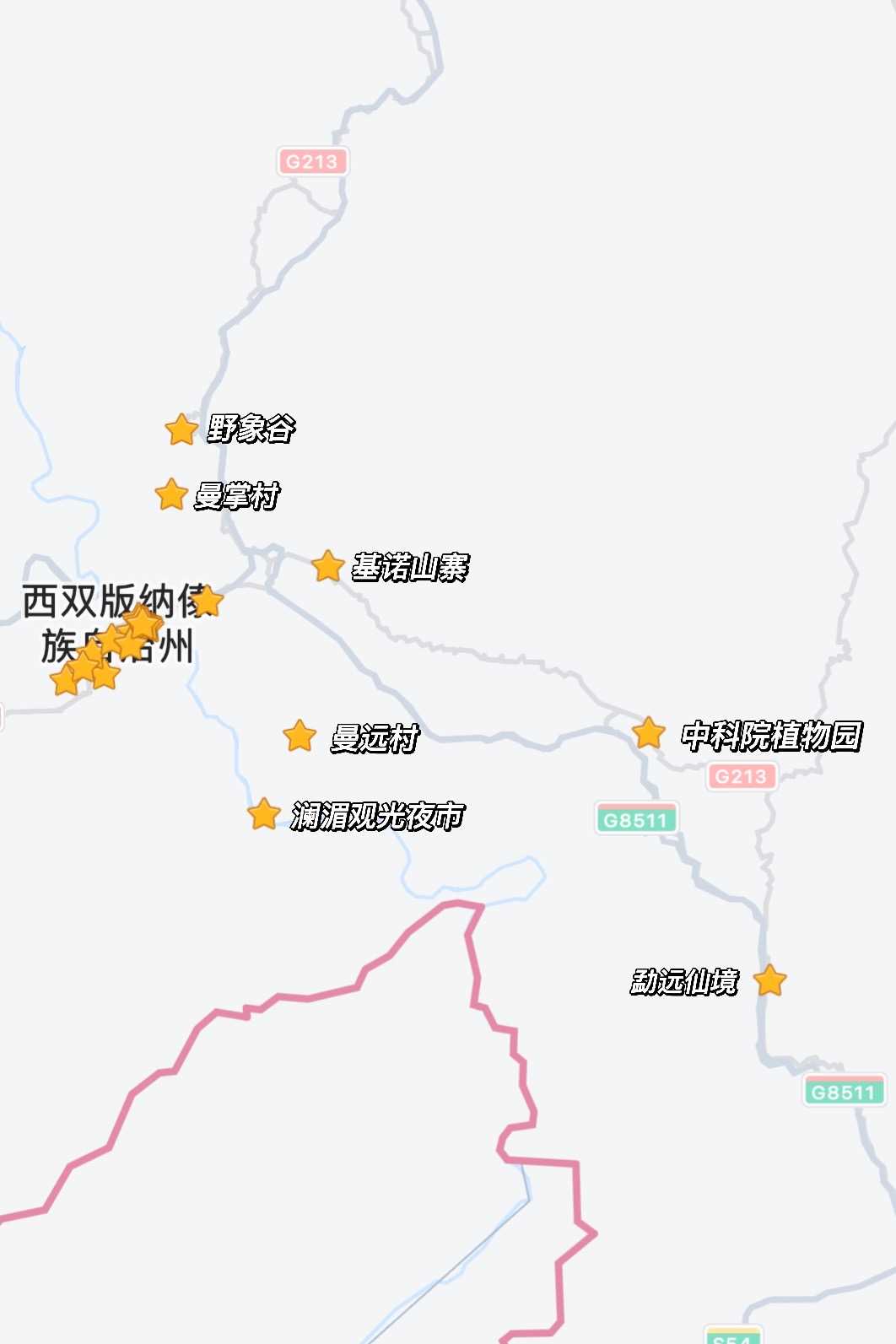
Xishuangbanna has two rainforests for hiking: Jinuo Mountain (基诺山) and Mengyuan Wonderland (勐远仙境). Mengyuan is farther, and we couldn't book it during the holiday, so we chose Jinuo. Best decision ever! The 4-kilometer route felt like 8 — just the right challenge for me.
At 8 a.m., we had proper rice noodles at a shop downstairs from the hotel. I even dared to try折耳根 (fish mint root) — it tasted like, well, plant root. Acceptable. We booked a group tour on Fliggy (飞猪) — 12 people, two guides. Half an hour into the drive, we stopped to buy rain boots — an absolute necessity. Two-thirds of the trail involves wading through water.
Magic in the Rainforest
The guide led us the whole way. He chopped down a banana tree to show us how to drink water in the wild. The water squeezed from the cut trunk is drinkable, and the core of the tree tastes like cucumber — stringy, too. Wild bananas are inedible, full of black seeds.
We climbed, we waded. The trail was narrow, but the scenery lifted our spirits. On steep sections, the guide whittled bamboo walking sticks for everyone. He also made leaf hats and painted our faces with natural pigments ground from stones. The deepest water came up to just below our knees — the rain boots were lifesavers. Pro tip: don't step on mossy rocks. You will fall.
After three hours of hiking, we reached the lunch spot. Banana leaves served as tablecloths, bamboo as chairs. Grilled meat was placed on banana leaves, and each person got a leaf as a plate. Later, a mushroom soup arrived — we expected bamboo bowls, but got paper cups instead. We were so hungry we wolfed everything down.
The package included a strangler fig descent, but the queue was an hour long, so we skipped it. Still, we crawled inside the strangler fig from below — impressive enough. The guide said the swing ahead was more fun. We queued for half an hour, took one swing, and nearly lost my hat. So exhilarating! I didn't have the nerve to go again.
Half an hour later, we were out of the forest. No signal the whole time — then suddenly 5G returned. It felt like being reborn.
Thai Massage: So Sore It Made Me Yelp
Back in Gaozhuang, we had dinner at Dai Manor (傣庄园). We ordered臭菜炒蛋 (stinky herb scrambled eggs) — smelled awful in the rainforest, but didn't taste bad, similar to toon shoots. The柠檬牛撒撇 (lemon beef salad with rice noodles) was delicious. And there was something called "毫啰嗦" (hao luo suo) — basically sweet rice cake.
That night, I'd booked a Thai massage. After a day in ill-fitting rain boots, my feet needed serious relief. Foot soak + foot massage + full-body massage + scraping therapy — my joints cracked and popped everywhere. After the scraping, I remembered I was supposed to wear a backless dress tomorrow. Oh well — comfort first.
Day 4: Train to Wangtianshu, BBQ & Coffee — A Perfect Finale
Missed the Trendy Sticky Rice, Found 2-RMB Magic Coffee
Today was the farthest destination — Wangtianshu Scenic Area, near the border. We chose transport option three: the train. Cheaper and faster than a bus. Departure at 11:36 a.m. With the morning free, we planned to try the trendy breakfast spot Mamalao (mamalao老挝烤肉糯米饭).
Left at 9 a.m. The driver said the queue was long but worth it. When we arrived, we saw the line — it was insane! We stuck it out for an hour, only made it halfway. To catch the train, we had to give up. Luckily, their rice noodles don't require queuing — just scan a QR code to order. We got Laos rice noodles and rice sheets (米干). Their Laos iced coffee and sticky rice tea were only 2 RMB each — and incredibly good! That lifted our spirits, and we happily headed to the station.
Wangtianshu: The Tallest Trees in the World — the Skywalk Was Worth the Wait
From Banna to Mengla (勐腊), the train took half an hour, one stop. Between the station and the scenic area, there's a free shuttle. Return shuttles run at 16:20 and 18:20. We had less than three hours for the actual visit — enough time, but we spent over an hour queuing for the skywalk. By the time we ran down the mountain, we missed the shuttle by two minutes. Had to take a taxi to the station — 50 RMB.
The scenic area ticket was 170 RMB. After exchanging it, we took a boat — the river leads to Laos. Inside, we saw all kinds of exotic plants. We bought grilled corn (chewing it made my temples ache) and bamboo rice (tasteless). Finally, we reached the foot of the Wangtianshu trees — they're so tall! The princes of the tropical rainforest!
The skywalk queue was an hour, but every second was worth it. The bridge is divided into several sections. At the midpoint, a drone takes photos — 90 RMB each. After seeing the result, I paid up. The perspective was too cool. Walking on the bridge felt safe — just don't look down. Keep your eyes forward.
We came down from the bridge at nearly 4 p.m. and ran downhill for 20 minutes to reach the exit. Missed the free bus, paid 50 for a taxi, and the driver made me add an extra 20 — peak season = getting ripped off.
Real Dai-Style BBQ & a Night at the Fruit Market
After a long day, we needed a good dinner. Near our hotel was Jinghong Yujin Dai-Style BBQ (景洪玉金傣味烧烤), tucked away in an alley. It turned out to be the best meal of the trip. Two of us ordered a lot — 200 RMB total. We ate until our stomachs bulged and still had leftovers.
At 9 p.m., we rode the e-scooter to the Mange Fruit Wholesale Market (曼阁水果批发市场). Durian isn't in season this time of year, so prices are high — the cheapest was 55 RMB per jin (500g). I splurged on a whole one. The vendor said if I came back in summer, it'd be 15 RMB per jin. I told him I'd be back! We also bought young coconut, snake fruit, and sea cucumber fruit — all cheaper than in Gaozhuang.
After that, we went to the Riverside Night Market (江边夜市). Finally found my long-craved巴拉达 (balada) — pineapple flavor. A small flatbread fried, filled with egg jam, drizzled with condensed milk — sweet, fragrant, crispy. That night was pure food heaven.
Day 5: Manting Park & Boruo Temple — The Last Day in Banna
Finally Ate the Trendy Sticky Rice
Determined not to miss the sticky rice again, we got up early. The place opens at 8 a.m. We arrived at 7:45 — already a queue! Waited half an hour, which was quick. We wanted everything, so we ordered a whole table — 60 RMB total. The 2-RMB iced coffee was way better than the night market's, and the sticky rice tea was excellent too.
Manting Park: The Dai King's Royal Garden
After eating, we took a taxi to Manting Park. Ticket: 40 RMB. The park isn't big — two hours is enough. In winter, there aren't many flowers, so it felt a bit sparse. But it's still very photogenic — every corner is a picture. While taking photos under a gauze canopy, someone suddenly cleared the area — the "Dai King" and "Dai Queen" had arrived.
A little incident happened: I left my bag on the ground for two minutes, and it vanished. All my documents and phone were inside. Panic set in. Luckily, a kind person had hung it on a nearby railing. False alarm. Lesson learned: never let your bag leave your hands.
The Pearl-Like Boruo Temple
Exiting Manting Park, you're right at the General Buddha Temple (总佛寺) — all gold and glitter, ten minutes to see. Before heading back to the hotel to pack, we made a quick stop at Boruo Temple (般若寺). Small, free, and under the noon sun, the white pagoda reflected so brightly it hurt to look at it. But the whole structure was breathtakingly beautiful — a perfect end to the Banna trip.
Final Thoughts: Five Days in Banna, Still Wanting More
Five days covered culture, nature, food, and a photoshoot — none of it missed. If I had more time, I'd stay another three days. And if the crowds were half as big, the experience would be twice as good.
A few practical tips for you:
- Book everything in advance during peak season — hotels and photoshoots especially. Last-minute scrambling is a nightmare.
- Haggling is a required skill — cutting the price in half isn't a joke. Don't be soft.
- Wear rain boots for rainforest hikes — two-thirds of the trail involves wading through water.
- Big temperature difference between day and night — short sleeves during the day, a jacket at night. Don't shiver like I did.
- Never let your bag leave your hands — especially in crowded places.
Banna's beauty lies in its diversity — the wildness of the tropical rainforest, the delicacy of Dai culture, the chaos of the night markets, and that 2-RMB iced coffee. This is a place you'll miss after you leave, like that Wangtianshu tree, taking root in your heart.
Next time, when durian is 15 RMB per jin, I'll definitely come back.
You should also read:

God’s Abandoned Palette: A Self-Drive Journey Through Yunnan’s Dongchuan Red Land
God’s Abandoned Palette: A Self-Drive Journey Through Yunnan’s Dongchuan Red Land Travel has never been about reaching some distant geographic coordinate. It’s about encountering, along the way, the version of yourself buried beneath the rubble of daily routine. During this May Day holiday, I finally…
Continue reading...
Body in Hell, Heart in Heaven: A Pilgrimage Through Tiger Leaping Gorge — A Dialogue Between Heaven and Earth
Body in Hell, Heart in Heaven: A Pilgrimage Through Tiger Leaping Gorge — A Dialogue Between Heaven and Earth Introduction: When the Gorge Splits Open Beneath Your Feet Some say Tiger Leaping Gorge is the closest place on Earth to the border between "hell" and…
Continue reading...
Cloud Travelogue · Dali of Wind, Flowers, Snow, and Moon: A Three-Day, Two-Night Journey of a Free Spirit
Cloud Travelogue · Dali of Wind, Flowers, Snow, and Moon: A Three-Day, Two-Night Journey of a Free Spirit I am a cultured female foodie with a touch of rogue charm. I slung on my backpack, took my lover's hand, and set off on a spontaneous…
Continue reading...