Frank Passes Through the Land of Women: A Solo New Year's Journey to Lugu Lake
Frank Passes Through the Land of Women: A Solo New Year's Journey to Lugu Lake
Some trips begin with a postcard and end with an unexpected solo departure.
In the fall of 2015, I was bumping along mountain roads in Ganzi Prefecture, western Sichuan. I wrote many postcards back then, and one of them—featuring a photo of the Xijiang Qianhu Miao Village—was filled with promises to a friend: we would spend New Year's together at Lugu Lake. Unfortunately, things didn't turn out as planned. I still wasn't an internet celebrity, and my friend still hadn't found a boyfriend. As the agreed date drew closer, her mother's objections forced her to step off the bus in tears on the day of departure.
So, carrying the hopes of two people, I set off for Lugu Lake alone.
Pre-Trip Prep: A Practical Overview
Destination

Ninglang Yi Autonomous County (Lugu Lake sits on the border between Yanyuan County in Liangshan Prefecture, Sichuan, and Ninglang County in Lijiang, Yunnan)
Travel Dates
December 31, 2015 – January 3, 2016 (3 days)
Cost Per Person
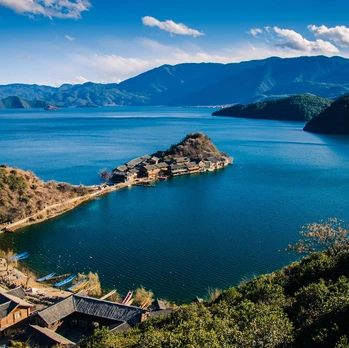
Approximately 500–600 RMB (including transportation, accommodation, meals, and lake circuit fees)
Traveler
Solo
What You Need to Know Before You Go
Getting There
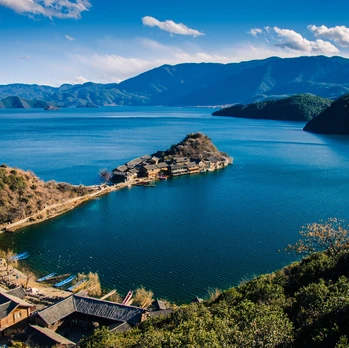
Most people depart from Lijiang or drive themselves to Lugu Lake. I chose to start from Xichang, and it turned out to be a convenient route.
From Xichang to Lugu Lake: - Bus departs daily at 7:50 AM, ticket price 99 RMB, arriving around 3:00 PM - Book via Sichuan Bus Ticket website or major travel apps - Boarding location: Xichang Bus Terminal (don't go to Xichang West Station—they're far apart) - Return tickets: buy from the driver before getting off, or purchase at Lugu Lake Town; return buses leave at 8:00 AM
Where to Stay
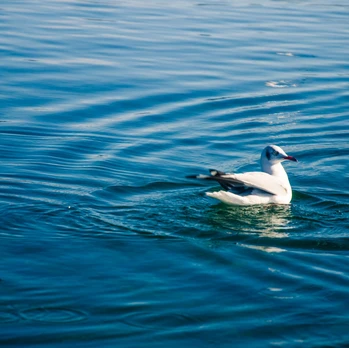
April to October is peak season, so book ahead. Winter (around New Year's) is off-peak, with rooms more available. Decent hotels cost between 100 and 200 RMB per night. I booked a nice-looking place online for 300 RMB, but the air conditioning broke down for all three days of New Year's—and in Lugu Lake, having AC is already considered a luxury.
Packing Essentials
- Warm gear: Down jacket, gloves, hat—temperature swings are brutal, and you'll freeze at night
- Snacks: Shops inside Lugu Lake are expensive and the food is terrible. If you're a foodie, this might not be your place
- Sun protection: Sunscreen! Sunscreen! Sunscreen! I can't say it enough
About Photography
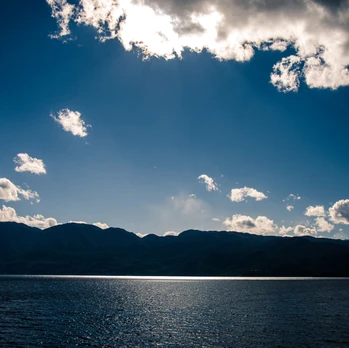
Equipment: Nikon D7000 + 18-105mm lens (my trusty old setup)
Tip: Shoot in RAW format and adjust white balance, exposure, contrast, and clarity in Lightroom later. My rule is to recreate what my eyes actually saw—trust me, the real scenery is always more beautiful than any photo.
December 31: Departure, Traveling with My Shadow
On the day I left Xichang, the sky finally cleared. But my friend's mother launched a barrage of phone calls, dragging her back.
"Let's break up." "T T"
"Well, I'm going anyway. Whose fault is this? Why didn't you tell your mom earlier?"
"T T, I feel so bad."
"Don't worry. I've been to much farther places alone, and this is still in China. I'll be fine."
Before the bus even left the Xichang toll station, my friend handed me a bag of snacks and got off with tears in her eyes. She was a mess of emotions; I just felt bad for her wasted ticket.
After she left, I slept on and off. As we neared Lugu Lake, the driver announced in a Sichuan-accented Mandarin mixed with local dialect: "Anyone for Lige? Get off here and take a small car—20 RMB per person!"
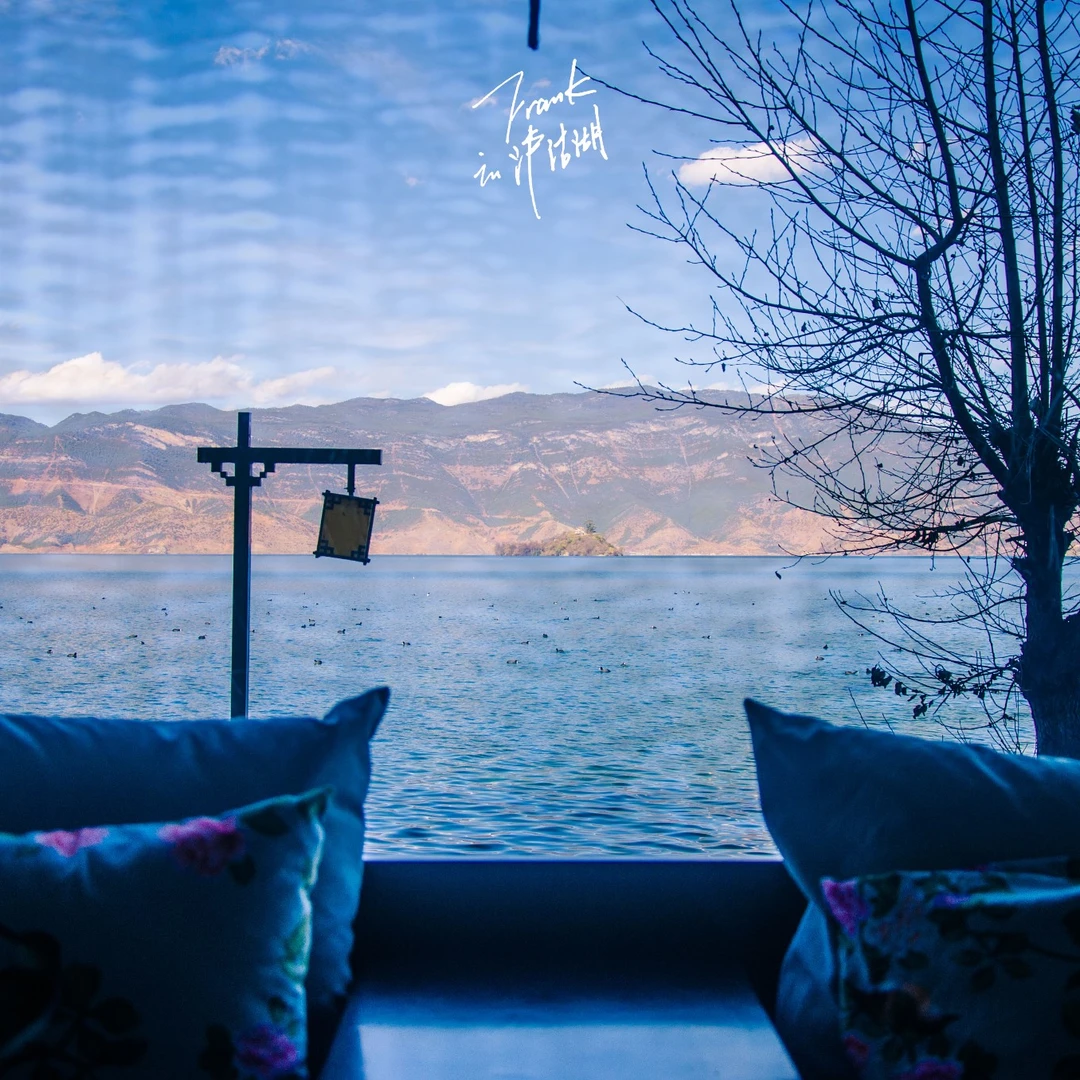
I checked the map. My hotel was in Daluoshui, which seemed close to Lige. So I got off, bought my return ticket, and began my solo journey.
Six of us got off—a middle-aged couple from Chengdu with their out-of-town friend, and two girls from Chongqing. They were all staying in Lige; I was the only one heading to Daluoshui. We agreed to share a car for the lake circuit the next day, 120 RMB per person.
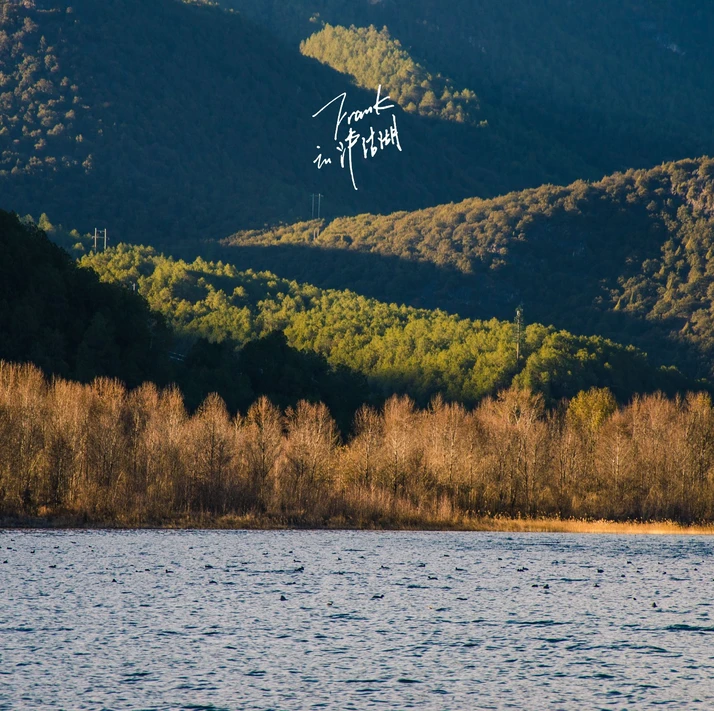
My hotel faced Goddess Mountain. After a quick wash, I looked out the window at the perfect afternoon light. The evening glow was soft, not harsh.
Walking along the lakeside path in Luoshui Village, I saw few people, mostly tourists. There were artsy girls taking photos of each other, couples feeding red-billed gulls, and a guy trying to photograph his girlfriend but never getting the shot right. Their conversation froze me in my tracks:
"Did you get it?" "No." "But I'm scared." "Then forget it." "But we still haven't got the photo."
The lovey-dovey display was too much. I fled to do something productive—eat and take photos. Thanks to that girl's failed photo attempt, I managed to capture a few shots of gulls in flight.
As dusk fell, I wandered through lakeside shops, choked down a terrible bowl of zhajiang noodles (noodles with fried sauce), and snapped a photo.
I had arrived at Lugu Lake—just me and my shadow.
New Year's Eve: No Fireworks, But a Sky Full of Stars
This was my second New Year's Eve in Yunnan. In 2013, I sat by Erhai Lake in Shuanglang with three friends. In 2016, I sat alone by Lugu Lake.
Erhai was warm and lively, with fireworks lighting up the night. Lugu Lake was freezing cold—I layered up like an onion and still felt like a frozen dog. There were no fireworks, only the quiet sound of water. But when I looked up, the Milky Way stretched across the sky.
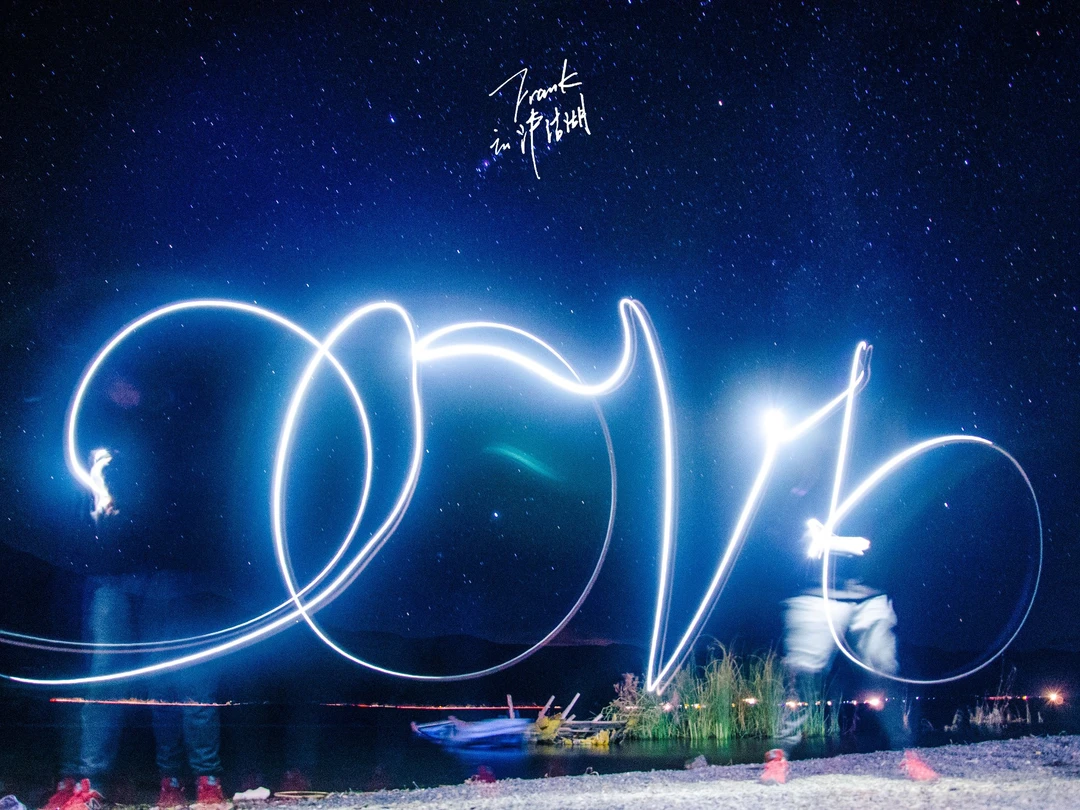
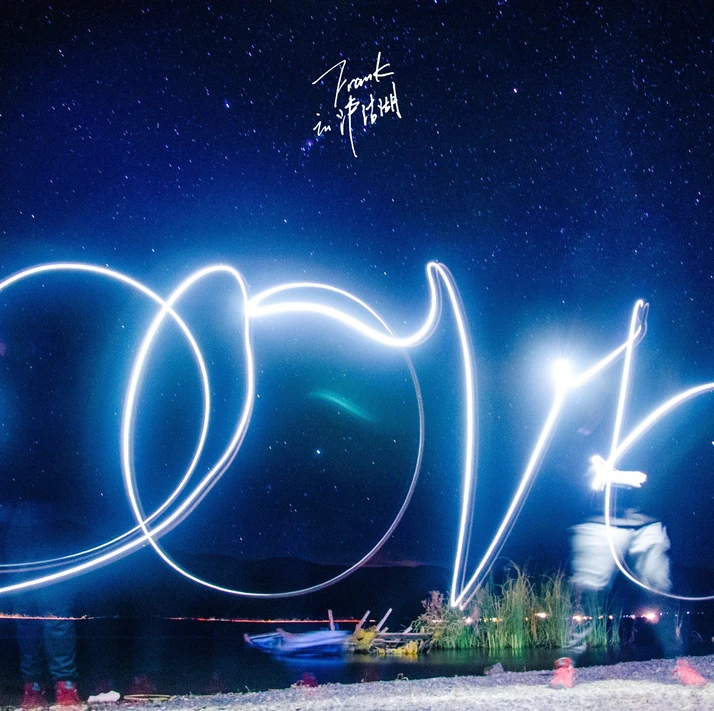
The following star photos came from two freezing nights of trial and error on December 31 and January 1. It was my first time shooting stars, so go easy on me.
I stepped into a bar where sad songs drifted out. I chatted with the owner.
"You're not local, are you?" "I'm from Chongqing, studying in Chengdu for grad school." "So why run a business here?" "I love this place. I come several times a year. When I'm busy, I hire someone to watch the shop. When I'm free, I come myself."
"I had the worst zhajiang noodles today." "Haha, yeah, the food here is awful. Find a Sichuan restaurant—some are run by Sichuanese, and those might be decent." "Is your place any good?" "Hahaha, no, ours is terrible too. I eat out all the time."
"It's amazing that you can see the Milky Way from here." "Yeah, sometimes friends come over and we sit upstairs to watch the stars. Sometimes they bring cameras to take photos. If you want to shoot the Milky Way, try the lakefront square—the view is better."
We watched the New Year's Eve countdown together, and the night felt a little less cold.
On my way back, I made a phone call.
"Happy New Year." "Happy New Year to you too." "I can see the stars and the Milky Way right above me." "Really? That's wonderful."
No fireworks, but I had a sky full of stars. I traced a giant "2016" under the stars, hoping for all the changes the year would bring.
January 1: The Lake Circuit, the First Day of 2016
Even though it was a holiday, even though I'd slept late, even though it was freezing, I woke up before my alarm. I arranged to meet the driver at 8:30 AM at the drop-off point in Daluoshui, but the Chengdu lady kept stopping to take photos, leaving me standing in the cold for a full hour.
While waiting, I ran into a group of schoolkids carrying bags. One little girl with messy hair and a dusty face refused to leave me alone.
"Brother, buy a bag of apples." "Brother, buy a bag of apples. We're poor students from here. These apples are from our own trees—they're really sweet."
Since she called me "brother," I asked, "How much?" "10 RMB a bag."
Five apples for 10 RMB—that's 2 RMB per apple! Fine, fine, I paid quickly to get rid of her. Her face lit up like she'd won the lottery, the dirt practically shaking off with joy—either because she'd made money or because she'd found such an easy mark.
I washed the apples, thinking someone in the car might want one. I bit into one myself. It was actually sweet. Later, I carried the bag onto the bus and got laughed at. I thought, "I'm probably an idiot." But then I noticed they'd bought some too.
Our route: Daluoshui → Sichuan-Yunnan border → Caohai (Grass Sea) → Wangfei Island (Princess Island) → Zouhun Bridge (Walking Marriage Bridge) → Lugu Lake Town (Zuosuo) → Qingren Beach (Lovers' Beach) → Luyuan Cliff → Zumuwu (Grandmother's House) → Qingren Tree (Lovers' Tree) → Lige, then back to Daluoshui.
This lake circuit map took me an entire afternoon to make—finding maps, matching landmarks, recalling the route, rearranging, drawing lines. I still couldn't locate two spots.
I'm blind now. Time for eye drops.
Caohai (Grass Sea)
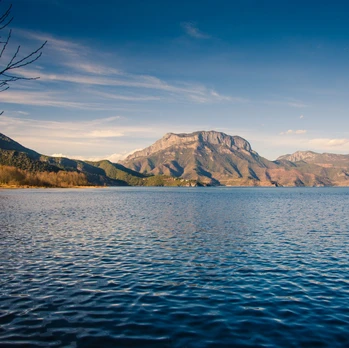
I don't remember which dock we boarded from, but we sailed into the yellowed reeds of the Grass Sea. In spring and summer, it's a sea of green. But I loved the yellow. Not that I dislike the vibrant green of new life—it's just that in this bitter winter, sunlight pierced the clouds and turned the withered grass into a golden field, like a harvest of wheat, looking desolate yet weighty against the deep blue lake.
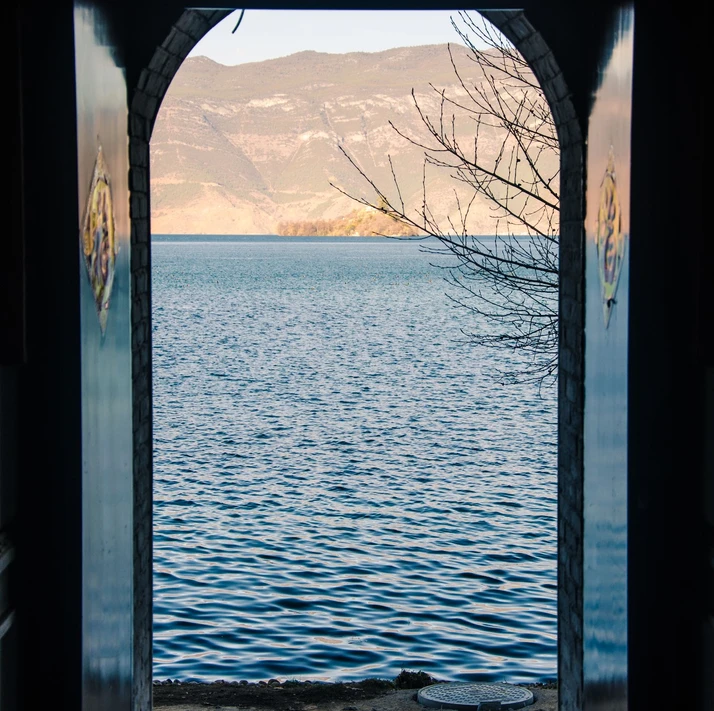
Two Mosuo women rowed us through the Grass Sea and into the Bright Sea. Their dark skin and strong arms showed the strength and charm of women in this matriarchal society.
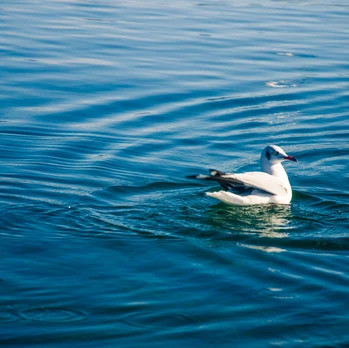
Red-billed gulls circled overhead, diving for food tourists tossed. Ducks paddled in groups, occasionally lifting off and skimming the water. Domestic ducks by the shore swam in pairs, chattering to each other.
Above the water was grass; below, the roots.
Bright Sea
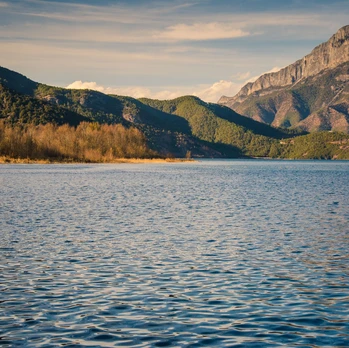
Beyond the Grass Sea lay the Bright Sea, rich in fish and aquatic plants. Through the clear blue water, you could see underwater weeds and kelp.
With a casual wave, flocks of gulls swooped in, chirping and playing—a cheerful winter animal kingdom.
Wangfei Island (Princess Island)
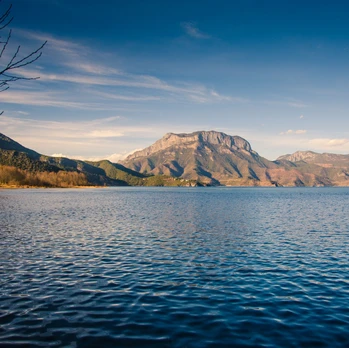
Bo'ao Island, also called Princess Island. As our boat drew near, we could stop for a rest and admire the quiet Bright Sea around it. The sky was so clear it stung, and the moon still hung overhead.
From the island, you could see the lake, but it lacked the joy of being on the water. We didn't stay long. Back in the boat, we let the sun burn and the water's reflection dazzle us—because floating on the lake, smelling its freshness, hearing its gentle murmur, felt like breaking the silence would be a crime.
The boat cut through the water: splash, splash. The oars dipped and rose: drip, drop.
Zouhun Bridge (Walking Marriage Bridge)
By 11 AM, we reached the Walking Marriage Bridge. I'd only eaten one apple all morning, and I was starving. The entrance was lined with barbecue stalls—buckwheat cakes, potatoes, pork belly, sausages, cured meat, fish, and shrimp sizzling over charcoal.
Buckwheat cakes: 5 RMB. Meat skewers: 5–10 RMB. Homemade sausages and cured meat: 10 RMB. Potatoes: 5 RMB. Dragonflies: 5 RMB. Fish and shrimp: 5–10 RMB. Duck eggs: 10 RMB.
Soon my companions got hungry too and joined me. The buckwheat cakes were a hit. The potatoes, sausages, pork belly, and cured meat were all hits. Only the fish, shrimp, and duck eggs flopped. I even tried a dragonfly skewer for 5 RMB—it tasted like eating a lump of oil.
The next day, I cycled back to the bridge and ate at the same stall again.
The Walking Marriage Bridge spans the Grass Sea. At noon, the crowd was light, and the sun was perfect. The bridge should take just minutes to cross, but the Chengdu lady wanted photos—every pose, every angle, waiting for the crowd to thin out before shooting. A short stretch took over an hour.
Lugu Lake Town
Past the bridge, there were shops and bars, some selling goods, others "hiring a landlady."
I wandered into Lugu Lake Town. The buildings and storefronts felt stuck in the 1970s and 80s, stripped of the bright colors of city life.
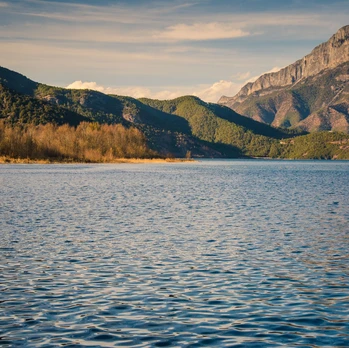
I'd once seen a WeChat post about a volunteer-run school here called Dazu Primary School. Back then, the village school in Mukua was crumbling, with no teachers, leaving many children with no place to learn. Volunteers came, rebuilt the school with the villagers, and taught the kids for free.
I once thought about teaching there myself but never followed through. For anyone considering it, here's my advice:
- If you have less than six months, volunteer as an assistant, not a teacher—no teacher quits mid-semester.
- If you only have winter or summer break, volunteer elsewhere—schools need breaks too.
- If you just want a short teaching stint while sightseeing in a scenic remote area, showing off or feeling superior—don't go. It's not for you.
This sounds harsh, but charity is a commitment, not a game. People need coal in winter, not a single match.
Qingren Beach (Lovers' Beach)
It wasn't Phuket, but the water was as blue as the sea and as green as emerald. The shore was yellow sand, and the waves created distinct layers—yellow, dark green, deep blue.
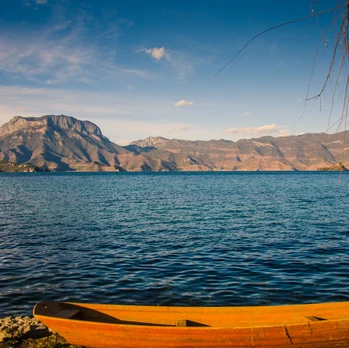
At Lovers' Beach, I saw a couple in ethnic costumes filming a video. They ran along the shore, laughing in the sun, then stopped to shout at the lake.
The driver dropped us off and told us to walk. We followed the lakeside path as sunlight hit the water and clouds gathered. Only a single gap in the sky let the sun through, like a hole left by the goddess Nüwa when she patched the heavens. Everything around darkened, leaving just a strip of light on the lake, turning into a silver thread.
The photo-obsessed lady and the two Chongqing girls were exhausted by the sun and the long road, complaining nonstop. Eventually, they called the driver to pick them up.
Luyuan Cliff
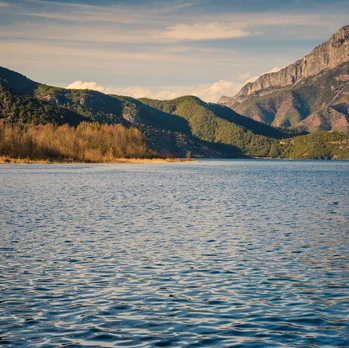
At Luyuan Cliff, flocks of goats grazed on the precipice. Sunlight glinted off their wool against the blue lake, creating a picture-perfect scene. Little lambs stuck close to the adults—an adorable sight I couldn't stop photographing.
Grandmother's House
We arrived at the Daughter's Country Inn in Xiaoluoshui. Two Mosuo women and a young man greeted us at the door, clapping and singing. Their voices weren't polished, but they felt warm. The women kept their heads down, shyly smiling, while the man sang loudly, setting the mood.
After the welcome, we entered the Grandmother's House. This is one of the few remaining matriarchal societies in the world, where women hold the highest status. Inside, men and women sat on opposite sides. One of the Chongqing girls was appointed "Grandmother" for the day—a running joke that kept us laughing. The man patiently explained Mosuo culture and offered each of us a toast.
Qingren Tree (Lovers' Tree)
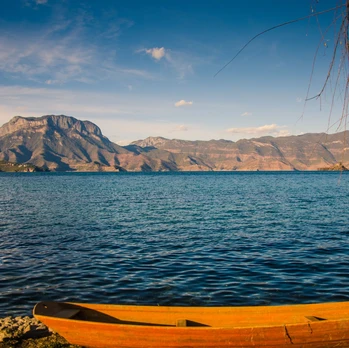
"Driver, where's the Lovers' Tree?" "Right at Lovers' Beach. Didn't you see it?" "No, where? I only saw two dead trees—nothing like the photos I've seen." "Those are the Lovers' Tree."
In this battle of words with the driver, I had no choice but to stay silent.
Later I learned that any two trees growing together are called Lovers' Trees. Seriously, Lugu Lake is full of them.
Lige
The final stop—Lige viewpoint.
All day, I'd believed the driver when he said it was off-season. The crowds were thin. But here, it was packed. Cars filled every space.
Lige Peninsula is Lugu Lake's iconic viewpoint, surrounded by mountains, with the lake forming a heart shape. But because of the mountains, the view felt confined.
After seeing the panorama, my companions left. The driver handed me off to another car heading back to Daluoshui.
Just like that, he left me by the roadside, and I got into a stranger's car.
The wind was strong that afternoon. The car parked, waiting for more passengers, and shook so hard it felt like it might flip.
Ever seen a car rock? Yeah, it was like that.
The Final Ride and Goodbye
The next day, I rented a bicycle and set off to circle the lake on my own. The rental was 40 RMB per day; an e-bike was 80 RMB. Since I planned to cover a long distance and worried about battery life, I chose the bike.
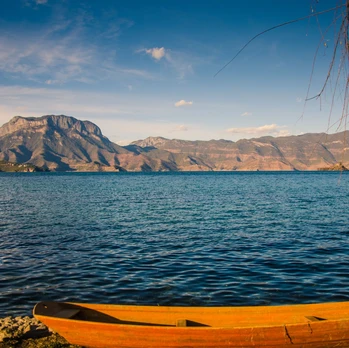
I cycled back to the Walking Marriage Bridge and ate at the same stall again. The uphill road was under construction, so I took another path, which was so steep I could only describe it as "climbing." But when I reached the top and captured the panoramic view from a different angle, I felt completely satisfied.
On my last day at Lugu Lake, I rode my bike, felt the wind, and gazed at the blue water. I thought of the postcard promise I'd made before leaving. Even though I ended up coming alone, the stars, the lake, the sunlight, and the warmth of the people here made it worth carrying the hopes of two.
Final Thoughts: A Few Lessons from the Road
Traveling alone isn't scary. What's scary is giving up on the world you want to see just because you have no company. Solo travel has its freedom; traveling with others has its warmth.
Lugu Lake's beauty lies in its rawness and purity. It hasn't been overrun by commercialization—just the blue of the lake, the brilliance of the stars, and the unique charm of Mosuo culture.
Plan ahead, but leave room for surprises. I booked a 300 RMB hotel with broken AC. I had a detailed itinerary, but my friend bailed halfway. Yet these surprises made the trip unforgettable.
Respect local culture. The Mosuo are China's last matriarchal society. Their way of life and values deserve respect and understanding, not voyeuristic "tourism."
Winter is a great time to visit Lugu Lake. Fewer crowds, stunning scenery, affordable prices—as long as you pack enough warm clothes.
Finally, I'll end with the words I wrote under the stars:
No fireworks, but I had a sky full of stars.
May your 2016 be as brilliant and vast as that starry sky.
You should also read:

Body in Hell, Heart in Heaven: A Pilgrimage Through Tiger Leaping Gorge — A Dialogue Between Heaven and Earth
Body in Hell, Heart in Heaven: A Pilgrimage Through Tiger Leaping Gorge — A Dialogue Between Heaven and Earth Introduction: When the Gorge Splits Open Beneath Your Feet Some say Tiger Leaping Gorge is the closest place on Earth to the border between "hell" and…
Continue reading...
Cloud Travelogue · Dali of Wind, Flowers, Snow, and Moon: A Three-Day, Two-Night Journey of a Free Spirit
Cloud Travelogue · Dali of Wind, Flowers, Snow, and Moon: A Three-Day, Two-Night Journey of a Free Spirit I am a cultured female foodie with a touch of rogue charm. I slung on my backpack, took my lover's hand, and set off on a spontaneous…
Continue reading...
The Meaning of Travel – A Tengchong Story: A Journey of the Heart and Personal Growth
The Meaning of Travel – A Tengchong Story: A Journey of the Heart and Personal Growth Setting Out, Only to Return a Better Self Some say travel is nothing more than leaving a place you're tired of, only to go to a place where others…
Continue reading...