From Dali to Lijiang: An Idealistic Escape from the Chaos
From Dali to Lijiang: An Idealistic Escape from the Chaos
Sometimes, a journey begins with just one photograph.
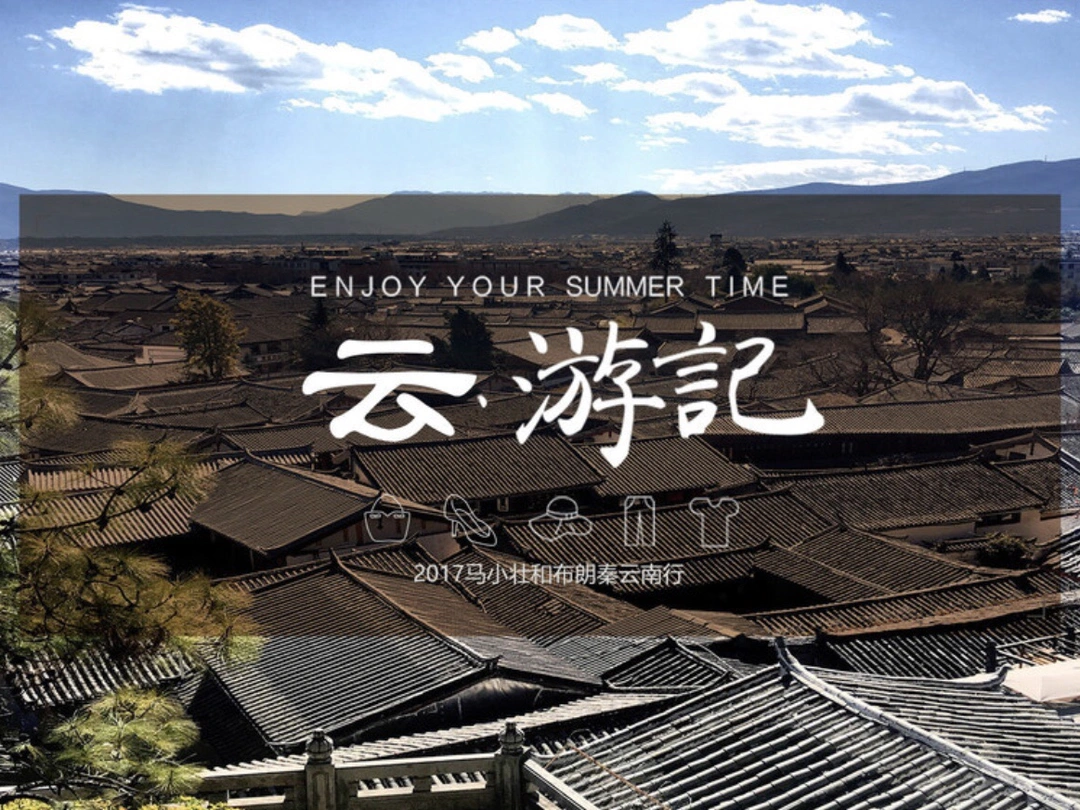
That photo came from a college friend's social media feed—Shuanglang in Dali. The blue of Erhai Lake and the white buildings intertwined in peaceful silence, as if time had pressed pause. It was so aesthetically pleasing that it made my heart skip a beat. As someone with an artistic streak buried deep in my bones, how could I remain indifferent to such an image?
In my imagination, Dali had always been the sacred retreat where heroes and heroines of martial arts novels would retire from the world. It was the hometown of Duan Yu, that scholarly, slightly naive young master from The Demi-Gods and Semi-Devils. This piece isn't really a travelogue, let alone a guidebook. It's more like casual chatter—a chat about Yunnan as I saw it.
Kunming: Food and Surprises at the First Stop
We bought our plane tickets in the morning and flew to Yunnan that afternoon. Xiong and I had Kunming as our first stop.
It was already ten at night when we arrived, but the southern night was far livelier than the north. We found a hotel near the train station—to be honest, the reason we chose it was simple: while taking the airport shuttle, I noticed there was a food street nearby.
If you want to eat authentic local food, you really have to go there and taste it yourself.
Compared to northern cuisine, Kunming's street food has a much more complex flavor profile. Northern food is straightforward and bold, while here, the flavors unfold in layers, hitting your palate with rhythm and structure. Even a roadside stall can give you the ceremonial feeling of a grand meal.
Stir-fried potatoes are everywhere, but the texture was a bit odd. The sauce-fried pork, however, was a revelation. I had my first bowl of authentic Yunnan rice noodles at a small stall. As a girl from the north, after that first bite, I couldn't help but wonder: what on earth have I been eating all these years back in Shenyang under the name "rice noodles"? From texture to flavor, there was no resemblance whatsoever. Calling them long-lost sisters would be a stretch no one could believe.
After Xiong and I had eaten our way through an entire street, stuffed and satisfied, we helped each other stagger back to the hotel.
While scrolling through social media, I saw Lijiang trending—a girl from the northeast had been assaulted there. As a northeastern tourist myself, my heart sank. The comments section was flooded with jokes like "Go to Lijiang, Yunnan, for a death-defying trip." What was Yunnan really like? I won't leave you in suspense. Maybe some people had bad experiences here, but during my days there, nothing unpleasant happened. Especially in Dali—it was so beautiful I couldn't bear to leave. Reading ten thousand posts online is not as good as traveling ten thousand miles. Don't always be a listener. One day, step out and become the protagonist of your own story.
Kunming's Trees and the Spring Festival Rush
We originally wanted to take the train from Kunming to Dali, but it was the Spring Festival travel season, tickets were hard to come by, so we settled for a bus instead. With time to spare, Xiong and I decided to walk to the train station and take in Kunming's scenery along the way.
What's the biggest difference between Kunming and Shenyang? The trees. Here, the trees are petite, like oversized bonsai, much more refined than the ones up north. Without heavy industry and central heating, the air quality is excellent. Though it was winter in the south, the temperature felt like spring in the north. In weather like this, holding hands with someone you love and strolling through an unfamiliar city—it's sweet.
Of course, when in Yunnan, you have to eat a proper bowl of cross-bridge rice noodles. We found a famous restaurant online and each ordered a set meal. The result? We ate too much greasy food on an empty stomach and ended up throwing up... My advice to future travelers: don't be greedy and order a rice noodle set meal in the morning. Just get the basic bowl for a few yuan.
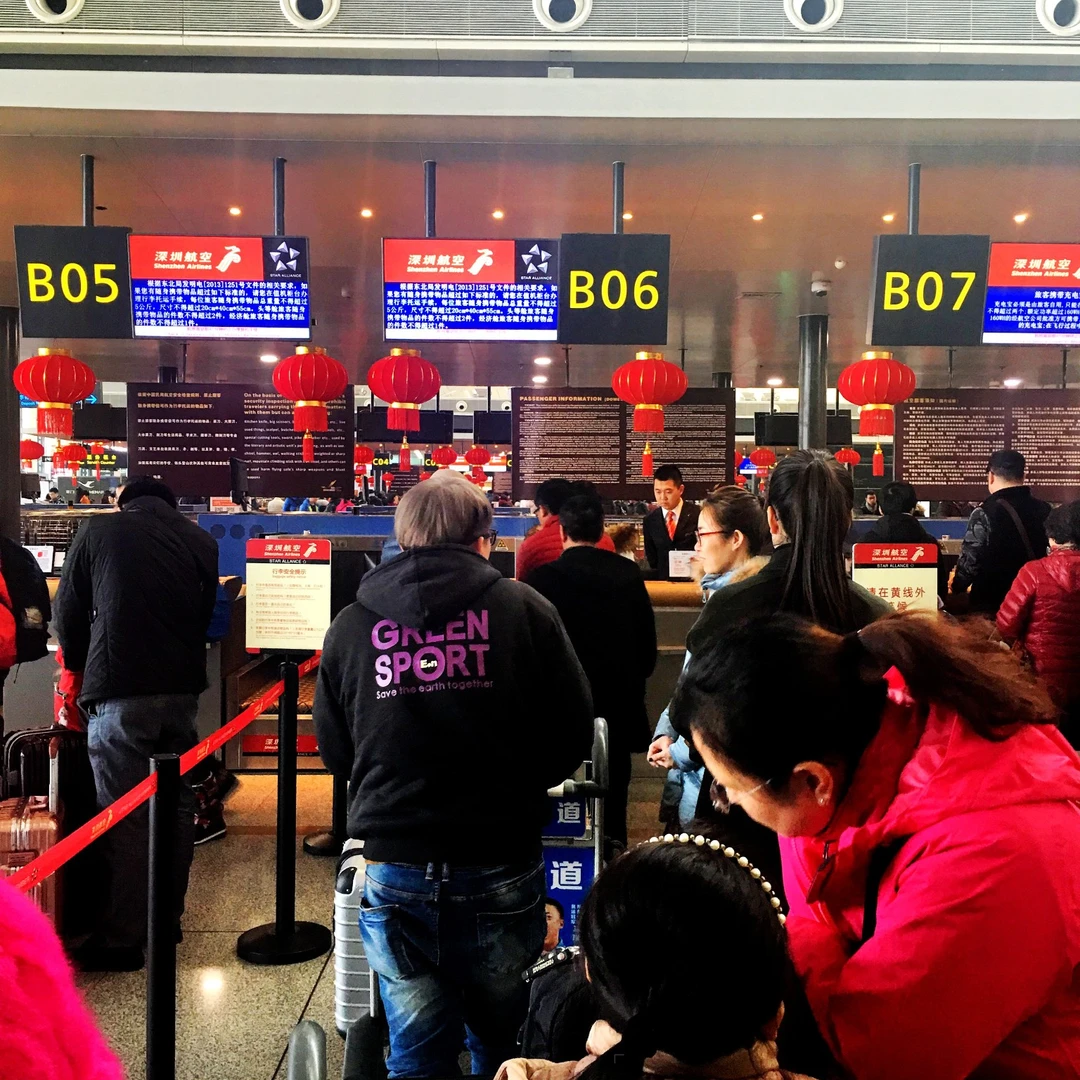
At Kunming Railway Station, I witnessed the Spring Festival rush for the first time. Armed police officers, crowds of people—the atmosphere was strangely tense. To get to Dali faster, we bought overpriced bus tickets from a scalper. The bus was quite an experience—first, you had to take a little three-wheeled cart to a designated meeting point. At first, I thought we'd been scammed, but when I saw the double-decker luxury bus, I relaxed. On Xiong's suggestion, we sat in the front row on the second floor. The view was fantastic.
Because of the Spring Festival travel rush, the highway was congested, and time stretched on endlessly. Fortunately, the scenery along the way kept us company, and the couple sitting next to us were great conversationalists. Since this was a tourist area, the rest stops were close together. At one larger service area, Xiong couldn't resist buying more snacks—and it turned out you can't have both beautiful scenery and good food.
Dali: A Utopia of Wind, Flowers, Snow, and Moon
We arrived in Dali around four or five in the afternoon, but it gets dark late in the south, so it looked like two or three in the afternoon up north. We shared a taxi with the couple we'd met on the bus to Dali's Old Town. The driver, a young guy, was very enthusiastic, recommending restaurants and planning routes.
Dali has its Old Town, Cangshan Mountain, and Erhai Lake, but the city center is also full of high-rises, looking thoroughly modern. For a moment, I thought I'd arrived at a fake Dali. But as the taxi drove into the ancient district, I knew—this was the Dali I'd dreamed of.
The guesthouse was easy to find, and the owner was as warm and welcoming as the reviews said. The room was clean, comparable to a chain hotel. We dropped off our luggage and headed straight for the Old Town.
In the Old Town, the bars on Foreigner Street don't open until evening. Since it was our first time, we had a clear goal—Foreigner Street.

"Looking forward to your smile, my little treasure; looking forward to your courage, my little treasure..." If you've never been to Dali or Lijiang, this is just an ordinary internet song. But if you've been here, it becomes etched in your heart, just like Dali itself. In the Old Towns of both Dali and Lijiang, you're guaranteed to hear this song. Pretty girls playing hand drums hum along while tapping out rhythms. You can film them with your phone, and they'll give you a smile. Even if you don't buy anything, they'll let you record to your heart's content. They're enjoying what they're doing, and that kind of charm is something we, who struggle in the concrete jungle, don't have.
Flower-pastry cakes, handmade silver crafts, street food, ethnic clothing, hair braiders, shops with quirky names—none of this sounds particularly novel. But when a group of idealistic people combines with the laid-back local Bai ethnic community, the dynamic changes. There isn't too much commercialism here. Even on the bar-lined alleys of Foreigner Street, everyone is running their own dream, sacred and inviolable.
Every shop in the Old Town has a uniquely creative name—it's like a gathering of top copywriters. Xiong and I found a shop selling original accessories. The owner was working at a transparent window in the front, completely absorbed in his craft. With his look, he had a bit of a Han Han vibe, and he didn't even notice us. His world seemed to contain nothing but the unfinished piece in his hands. No salespeople swarming you—I absolutely loved this experience.
The thing that left the deepest impression during our first night stroll through the Old Town was a shop selling Yunnan-style brown sugar. Xiong found it tucked away in a corner after a few twists and turns. The storefront was small, and we were greeted by a kind elderly man. He enthusiastically introduced their products and mentioned that they'd hosted a crew from China Central Television that day. I was interested in the brown sugar, and when I learned they could ship to other provinces, I asked for a business card.
The fruit stalls in Dali were beautifully arranged. Each stall had a small quantity of each fruit, but a wide variety. Every type had cut-up samples for tasting. Unlike northern fruits, Yunnan's fruits aren't as juicy, but they have unique flavors. Green dates and wax apples became my favorites.
The real owner of that brown sugar shop was a young man born in the 1990s. Not only did he run a small sugar factory, but he also frequently volunteered in the Daliang Mountains. He loved Dali's laid-back lifestyle but also had the means to live well; he was wealthy without being self-indulgent, with a spirit of wanting to help the world. Every shop owner in Dali has a story. A young guy running a tie-dye shop might have once been a business legend from some city who retired from the rat race. I used to think Dali was special because of Duan Yu, but it turns out Dali's "Duan Yu" is far more than just one.
"The flowers of Shangguan, the wind of Xiaguan; the wind of Xiaguan blows the flowers of Shangguan. The snow of Cangshan, the moon of Erhai; the moon of Erhai shines on the snow of Cangshan." Dali's "wind, flowers, snow, and moon" are its most famous sights. Having come because of their renown, how could we miss them?
Circumnavigating Erhai Lake: Chasing Freedom on an E-Scooter
Dali gets light late—it's only faintly bright by seven or eight in the morning. Xiong and I adapted easily, sleeping in until we naturally woke up. In the morning, Xiong found a rental shop online called A-Jin Scooter Rentals. I highly recommend this place: for circling Erhai Lake, I wouldn't suggest renting a car. Dali's air is fresh, and the wind is warm. Renting a small electric scooter and riding along the lake, feeling the breeze, and being able to duck into unknown little villages—it's the perfect choice.
The battery life of electric scooters can be an issue. Many cheap ones run out of power after about 50 kilometers. But A-Jin's scooters cost a bit more to rent. That day, we traveled 150 kilometers, going all the way around Erhai Lake without any problems.
When Master A-Jin heard that neither of us had ever ridden an electric scooter, he was a bit worried. But after Xiong took a test ride, he felt confident enough to rent it to us and even thoughtfully planned a route.
I got on the scooter, wrapped my arms around Xiong's increasingly slender waist, and the moment we started moving, I felt an unprecedented joy. Like a kid on a spring outing, my heart was blooming with happiness. Blue sky, white clouds, green mountains, clear waters, little villages with gray brick houses, and the person you love—how could my spirits not soar?
We arrived just before Chinese New Year's Eve, so there weren't many people, and the roads were quiet. Since Xiong was a novice, he drove slowly. But because of that slowness, we had time to take everything in.
Our first stop was Xizhou, famous for its Xizhou flatbread. The Bai people were shopping for New Year's supplies at the market, and it was bustling. Compared to supermarket shopping in the city, this felt much more like the real spirit of the New Year—simple, pure, and rustic.
Of course, we didn't just stick to the main road. Whenever we found a nice little spot to rest, we'd stop to take photos and grab a bite. The people of Dali eat relatively small portions. The fried little fish and shrimp were truly tiny—far from satisfying for a big eater like me. The sugarcane juice was excellent—after all, it's local sugarcane, incredibly sweet with a natural, pure sweetness—definitely not the kind you'd get at a mall in Shenyang.
We passed many small villages along the way. Xiong wanted to go into one, but I was worried about the battery and insisted on heading straight for Shuanglang. As it turned out, you should always listen to Xiong when traveling—we missed a dragon dance performance.
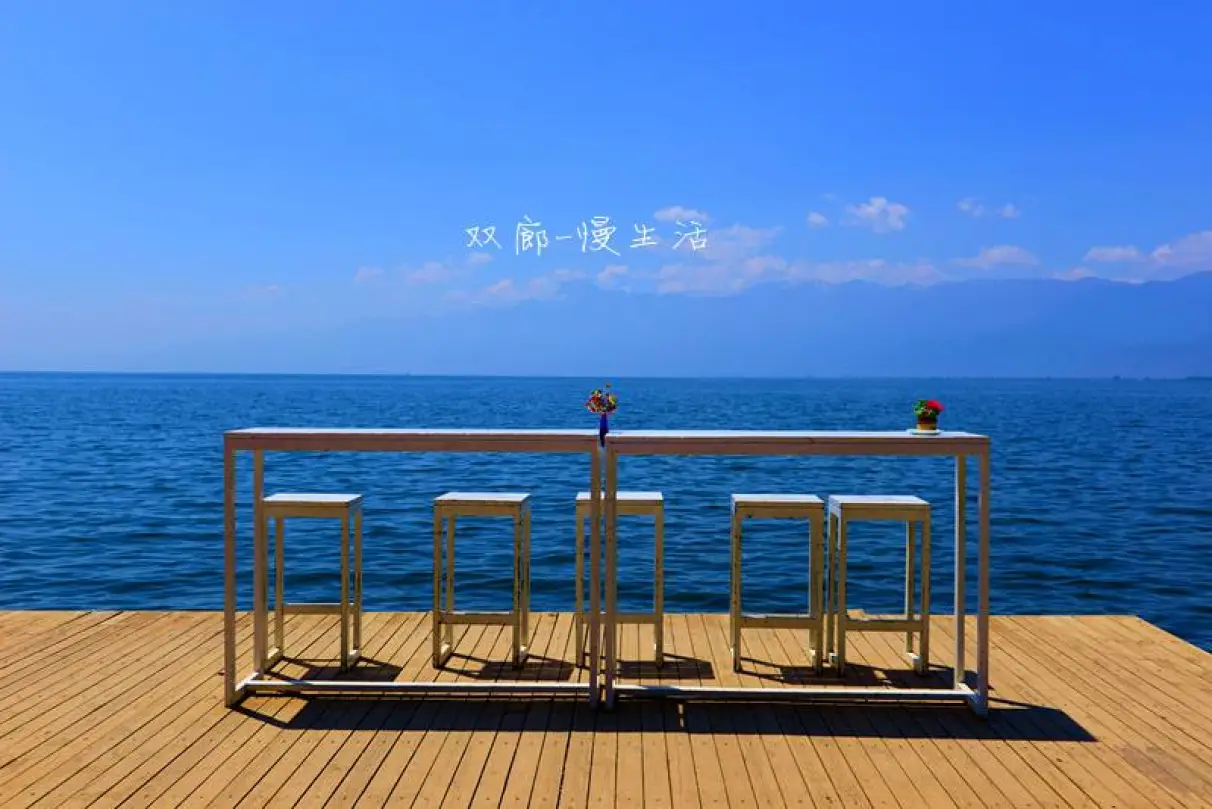
We arrived in Shuanglang right at lunchtime. I ate two bowls of rice noodles, and the cold-tossed version was especially delicious. Shuanglang was under road construction, so the surface was rough. Walking along Erhai Lake on narrow roads reminded me of Malé, the capital of the Maldives. Xiong and I were so captivated by the scenery that we overshot our destination and had to double back to find the "White Stool"—a famous photo spot. Unfortunately, the light was too harsh that day, so the photos didn't turn out great. Honestly, I didn't care much about the photos. As long as I had a memento to look back on when I started to forget, to remind me that I was once here, that was enough.
Leaving Shuanglang, we decided not to go back the same way but to continue forward and circle the entire lake. The other side of Erhai Lake was a completely different landscape—strong winds, steep roads, and lots of large trucks. Along the way, there were many lakeside guesthouses, modern in design and not much different from seaside vacation villas abroad. If they'd been built in a traditional Chinese style, I might have regretted not booking a room for the night.
On this side of the lake, there were a few scattered small attractions, some seagulls, and a place called Xiaoputuo. All beautiful, but because we were worried about getting lost in the dark, we didn't linger.
Just as it was getting dark, we made it back to the rental shop. Master A-Jin was waiting anxiously for our return. After we returned the scooter, he rode his little bike home for the day. Xiong and I, meanwhile, launched another night raid on the Old Town, heading straight for Renmin Road—a street made up of artistic youth, who call it their paradise.
Renmin Road: A Paradise of Art and Ideals
There were stalls selling handmade jewelry, trinkets, and little knick-knacks at reasonable prices. After all the physical activity during the day, Xiong and I needed to fill our stomachs first. We found two small restaurants recommended online: Zaohuitou for cold-tossed chicken rice noodles, and a place for braised chicken. Both were delicious.
While Xiong was eating the braised chicken, I took my camera and wandered outside to take some random shots. I happened upon a homeless man with six dogs. Many people in Dali keep dogs—big ones—and that suited me perfectly. The homeless man was tattered in his clothes but had a certain "Brother Sharp" vibe about him. Dali is a place where even a wanderer has the spirit of someone who wouldn't bow for five bushels of rice. I love animals, and I admire people who love them. Acting faster than I could think, I went back to the restaurant where Xiong was eating, asked for a skewer of chicken wings, and brought it to the homeless man. "This is for you," I said. I'm always afraid that kindness might come across as charity and make the recipient uncomfortable, but in Dali, there are no inferior souls.

The way street vendors operate on Renmin Road is unique. Those artistic shop owners might have gone home for the New Year, but they didn't want to miss the chance to share their work with others. You'll see many stalls with a piece of cardboard listing the prices and a note telling you to drop the money in yourself. Some even cooler owners don't list prices at all—you just pay what you think it's worth. This was the least commercialized street I'd ever seen, yet it was the one that most made me want to buy something.
There was another shop on Renmin Road run by a chubby young guy. We'd actually gone there specifically for the owner, but he happened to be out somewhere playing. All we could do was read his story on a poster in his shop. It said he loved traveling and his biggest dream was to travel the world. He came to Dali, liked it, and decided to stay. He planned to use this place as a base and continue traveling to fulfill his dream.
In many people's eyes, this might seem like a willful soul—not following others' expectations to get a stable, respectable job, settle down, have kids, and complete the "perfect life" as defined by others. But it's precisely this imperfection in others' eyes that allows him to achieve his own grand ideal. Some people are born to be different. Every choice is neither right nor wrong. Knowing what suits you, doing good deeds without asking about the future—in my view, this is a kind of broad-mindedness, a kind of great wisdom.
Dali was a place I couldn't capture fast enough with my camera. The moment you press the shutter, you might miss a story. But those of us holding cameras still keep pressing that button, even though I don't belong here.
The next day was New Year's Eve, and the Old Town was alive with activity at night. A young guy selling sticky slime toys excitedly told the vendor next to him that he'd sell the last few and then head back to his youth hostel to celebrate the New Year. Tomorrow, the hostel owner would cook a big feast, and everyone would celebrate together. From a commercial perspective, his sticky slime toys were available everywhere—completely uncompetitive. Selling something like that in such an artistic place seemed like a complete mismatch with his target audience. But if you're worried for him, you'd be wrong—"You are not the fish; how do you know the fish's joy?" If his goal isn't to make money, how can we judge him by worldly standards? At the very least, I envied him—and his life.
Leaving Dali: Reluctance and Anticipation
Dali's Old Town isn't actually very big, but because we loved it, Xiong and I visited it almost every day. When we came here again in the early morning, even though we'd gotten used to the good weather, we had to admit that this day's weather was exceptionally beautiful.
We visited the Confucian Temple and the Grand Marshal's Mansion. I don't usually enjoy places like this—without proper explanations, skimming the surface and taking a few photos feels pointless. But a small incident during the trip, combined with one sentence from Xiong, convinced me to go.
The incident was this: to pass the time, Xiong and I always bring a book on our trips. This time, I'd chosen Those Ming Dynasty Things. I happened to be reading the part about Yuan Chonghuan defending Ningyuan. Ningyuan Ancient City is in Xingcheng, a place Xiong and I had visited before. Back then, I was busy taking photos with my camera, my mind on the mantis shrimp at the seafood market, and I couldn't understand why Xiong was so captivated by the ancient city. Now, reading this history in the book, I finally felt like I understood what Xiong had been feeling. Because of this small incident, I realized that sometimes curiosity and a thirst for knowledge are built on a foundation of existing understanding. I didn't want to miss out on Yunnan, which I'd traveled thousands of miles to see, because of my own ignorance. So I decided to go in, even if I wasn't interested at the moment. Of course, that one sentence from Xiong probably played a bigger role: "In the novel, this is Duan Yu's home."

I walked around a few times with the mindset of a fangirl. It was during the Alipay "Collect the Five Blessings" campaign, and I was missing the "Dedication" blessing. And right there, on this green "blessing" character, I scanned and got it—this character really was blessed.
When we came out of the courtyard, a large tour group had gathered at the entrance. Standing on the high steps, looking out at the sea of people in the square, I felt a fleeting sense of being an emperor receiving homage from all nations. I imagined Duan Yu must have felt the same way.
As we packed our bags to leave Dali, I felt so reluctant. Even though I knew our next stop was the famous Lijiang, my heart held less anticipation and more longing. The guesthouse owner was incredibly kind and offered to take us to the station, but Xiong and I declined and decided to walk instead—yes, we just wanted to see a little more of Dali.
On the way to the train station, we bought some more fruit. Xiong bought a stalk of sugarcane, and the owner, a true Dali local, was—as we'd say in the northeast—"crazy hospitable." We walked along, carrying a bag of fruit and eating as we went. The sugarcane was sweet, but also extremely hard. Xiong couldn't stand the look on my face—wanting to eat it but unable to bite through—so he chewed off the tough outer parts and gave me the tender center. We never show off our relationship, but when we do, it's with this kind of sweet, slightly gross gesture.
At Dali Railway Station, we met a young couple from Changsha. The four of us hit it off and added each other on social media. Every trip, I meet like-minded travel companions, adding a little color to the journey.
Lijiang: Warmth on New Year's Eve
The train from Dali to Lijiang is a scenic railway. Even a casual glance out the window brings beautiful views into sight.
The train was delayed, and by the time we arrived in Lijiang, we'd missed the check-in time for our reservation. Suddenly, we had nowhere to stay. Instead of panicking, we calmly took a look around Lijiang Railway Station. As a popular tourist destination, the station was impressively grand.
We shared a taxi to Dayan Ancient City with a woman from Shijiazhuang. Still shaken by the Lijiang assault incident, Xiong and I found a guesthouse on the street opposite the ancient city, rather than inside it. The young owner was surprised when he learned our age—well, Xiong was right, people who travel often look younger.
The reason we booked this place was actually because of a big golden retriever named Yuanbao. And this little guy seemed to like me—though it might have been because he was in heat and was enthusiastic about any female. Anyway, because of Yuanbao, Xiong and I settled on this hotel.
Although I was spiritually satisfied, as someone who can't live without meat, I hadn't eaten particularly well during our days in Dali. Erhai Lake was polluted, so we didn't eat fish, surviving on chicken rice noodles instead. I'd planned to make up for it in our last stop, Chengdu, but Lijiang's cured pork ribs changed those plans.
Lijiang's cured pork ribs are delicious. The restaurant we went to had a rather unique decor—the entire place was filled with hanging cured ribs, which was a bit creepy.
Because it was New Year's Eve, there were very few people in the ancient city. Under the dim lights, it felt a bit desolate. Xiong and I decided to buy some good food and watch the Spring Festival Gala at the hotel to ring in the new year.
I have a friend who works abroad year-round. Every New Year, he posts a photo of the Spring Festival Gala on social media to show his support. This year, for the first time, I wasn't at home for the New Year, and I finally understood that feeling—no matter where you are, if the Spring Festival Gala is on, it feels like the New Year. It's like an unspoken understanding that we're all watching the same show, even if we're far apart.
The next day, Xiong and I went to a convenience store to buy water. Xiong sweetly said "Happy New Year," and the owner was so delighted that she grabbed a handful of candy and insisted we take it. This guy never ceases to amaze me.
Compared to Dali, Lijiang is indeed more commercialized. But as a UNESCO World Heritage site, Lijiang's ancient city looks more like what we imagine an ancient city to be—there's a sense of time travel.
Our destination was Sifang Street, and then the iconic Big Waterwheel of Dayan Ancient City. At the Big Waterwheel, we happened to run into a reporter from Lijiang TV. And just like that, Xiong and I delivered New Year's greetings from the people of Northeast China to the people of Lijiang. Who would have thought that in distant Lijiang, we'd make our television debut?
Final Thoughts
From Dali to Lijiang, from Shuanglang to Renmin Road, from Erhai Lake to Dayan Ancient City—what did I see along this journey?
I saw a paradise for idealists. Those small shop owners, the street vendors, the wanderers, the dog lovers—they might not seem "successful" in others' eyes, but they've lived their lives the way they wanted. Every shop owner in Dali has a story; every alley in Lijiang hides a dream.
I also saw the meaning of travel. It's not about checking in at spots or taking photos. It's about encountering—encountering different people, encountering different ways of life, encountering that true self buried beneath the trivialities of daily life.
Reading ten thousand posts online is not as good as traveling ten thousand miles. Don't always be a listener. Step out and become the protagonist of your own story.
Even after I return to the concrete jungle, Dali's wind, flowers, snow, and moon, Lijiang's cured pork ribs, the honor-system payment stalls on Renmin Road, the electric scooter ride around Erhai Lake—these will all become a beam of light in my memory. Whenever I think of them, I remember that life has another possibility.
Perhaps the meaning of travel isn't about escape, but about finding the place you're willing to stay.
And Dali is that place.
You should also read:
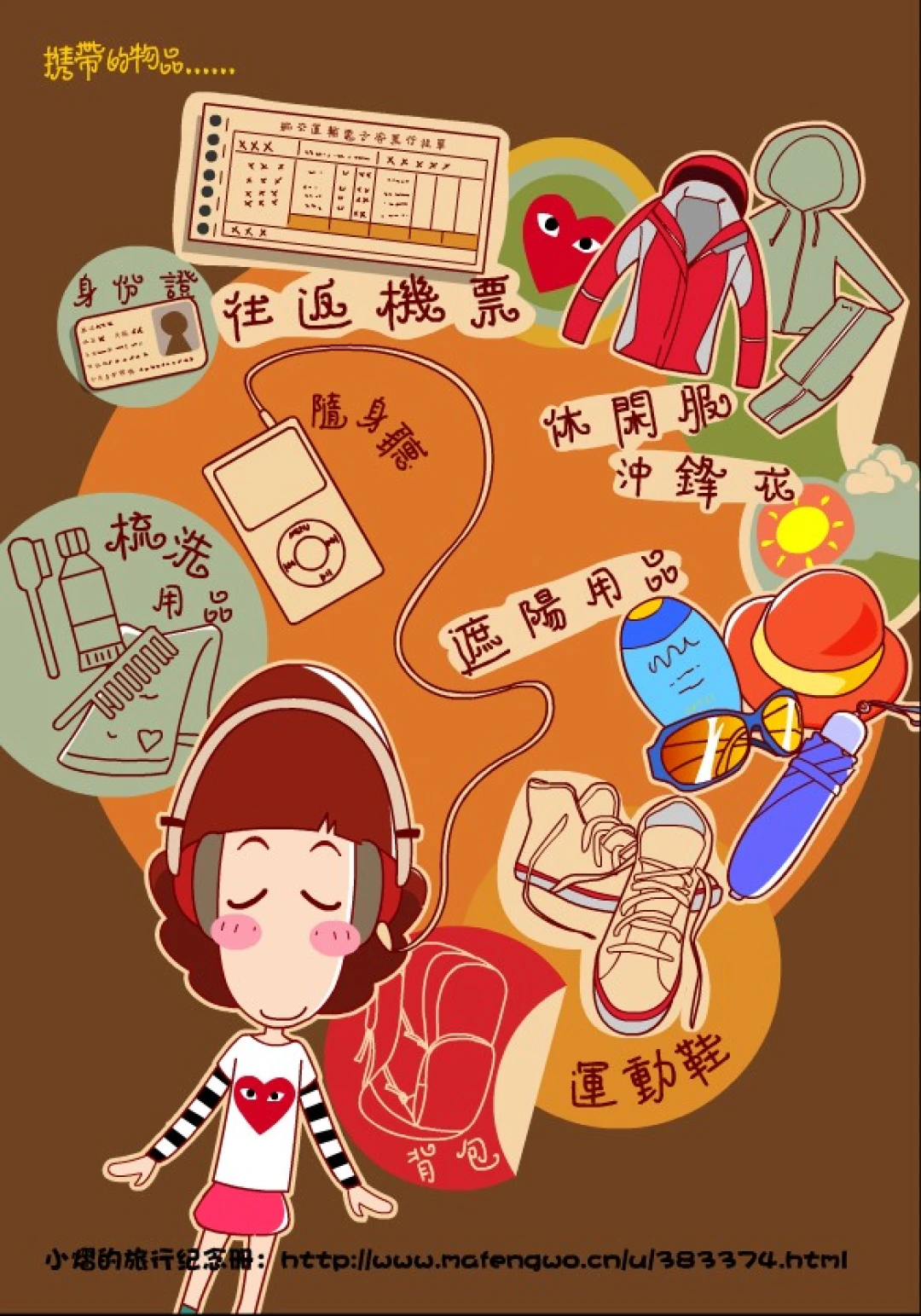
Dreamland – Lijiang: A Talking Comic Travel Guide
Dreamland – Lijiang: A Talking Comic Travel Guide Prologue: When Lijiang Takes Root in Your Heart Some places leave a mark on you forever. They're like an old song on repeat, suddenly playing in your mind on an ordinary afternoon. For me, Lijiang is that…
Continue reading...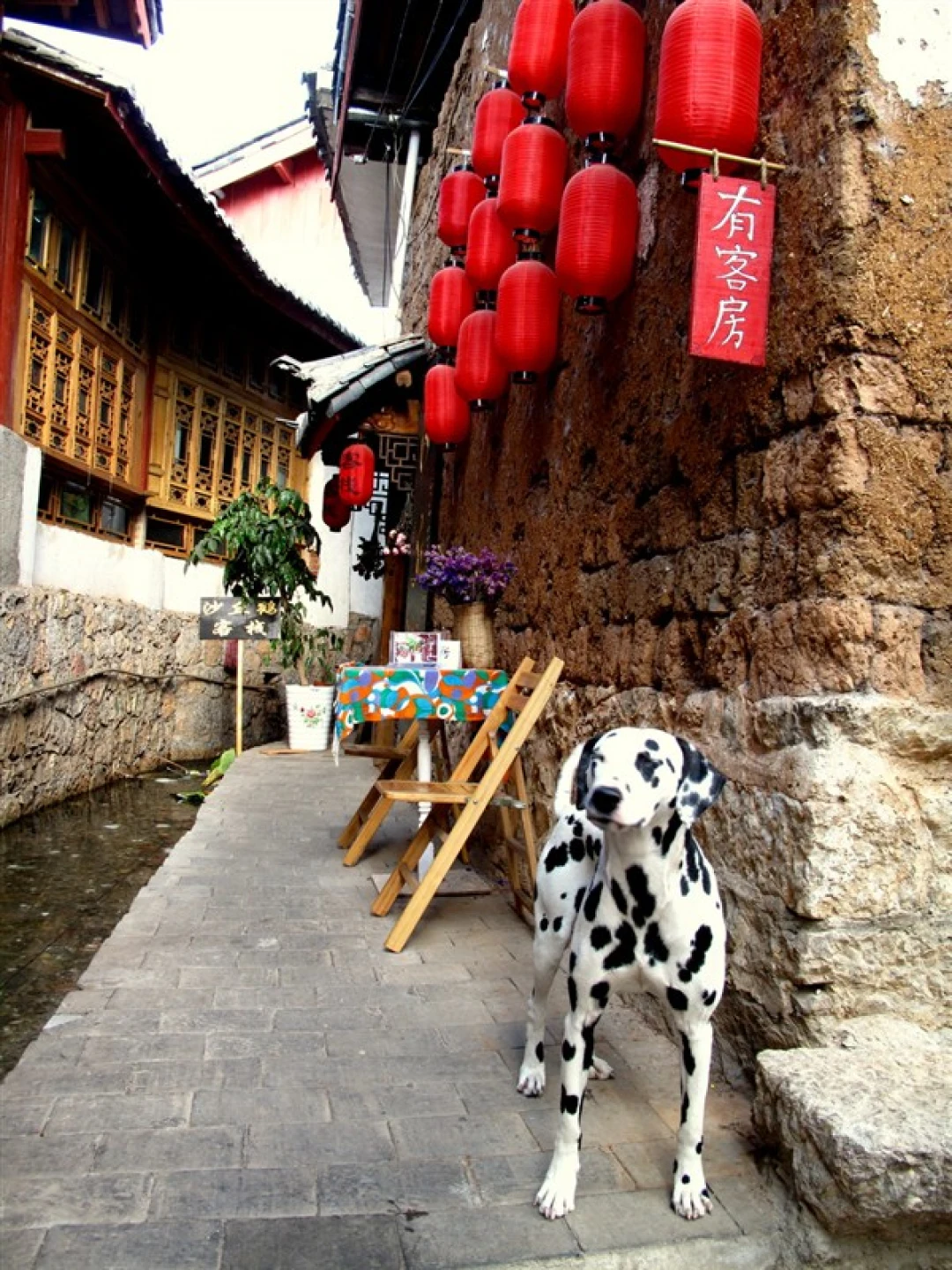
Yunnan Travel Mastery: From Beginner to Pro-Level Player – A Complete Guide
Yunnan Travel Mastery: From Beginner to Pro-Level Player – A Complete Guide "Either travel or read, but your body and soul must be on the road." This quote has been repeated countless times, but very few people truly manage to be "on the road" and…
Continue reading...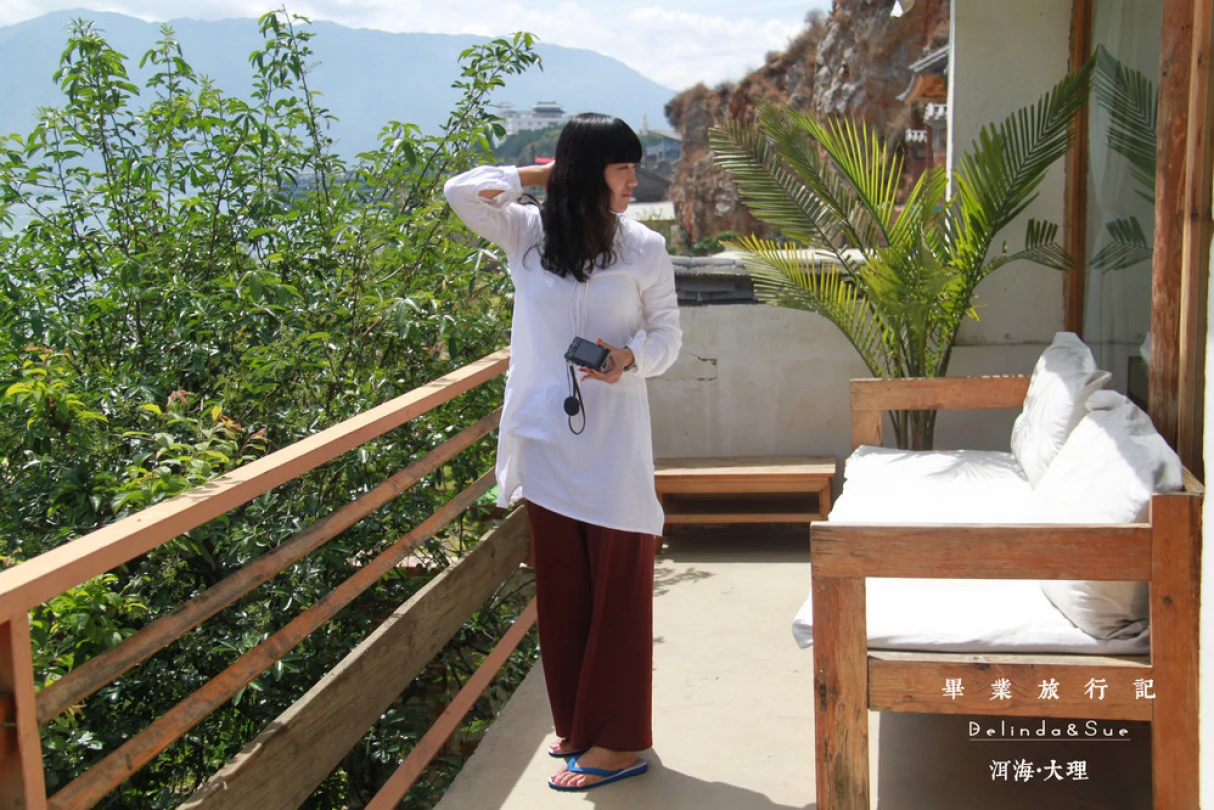
Two Girls' Graduation Trip: Dali and Shuanglang – A Poetic Farewell to Mountains and Sea
Two Girls' Graduation Trip: Dali and Shuanglang – A Poetic Farewell to Mountains and Sea Preface: Catching the Tail of Youth, Heading South During our senior year of college, my roommate and I – two girls studying in Beijing – decided to bid farewell to…
Continue reading...