From Shangri-La to Lugu Lake: A Soulful Pilgrimage Through Snowy Mountains and Lakes
From Shangri-La to Lugu Lake: A Soulful Pilgrimage Through Snowy Mountains and Lakes
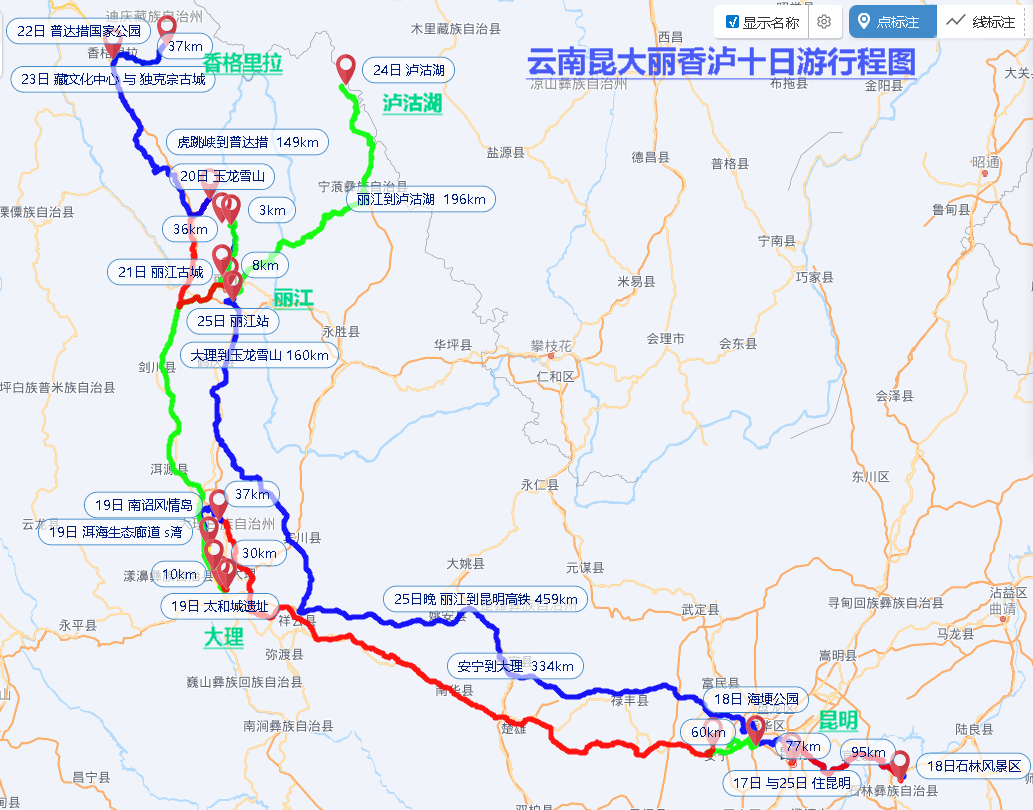
In the height of summer 2024, I embarked on the final leg of a ten-day guided tour of Yunnan with my family. From the highland sanctity of Shangri-La to the tranquil waterside village of Lugu Lake, this journey offered the thunderous might of Tiger Leaping Gorge, the serene expanse of Potatso National Park, the ancient Buddhist chants of Dukezong Old Town, and the Mosuo culture of Lugu Lake. This was more than just a trip—it felt like a profound dialogue with nature and the soul.
Setting Off: From Lijiang to Shangri-La, the Call of the Highlands
At 6 a.m., Lijiang was still asleep as we packed our bags, switched to a new bus, and met our new guide—a Tibetan man named "Yalasuo." He draped white ceremonial scarves (khatas) around our necks and offered Tibetan blessings for a smooth journey. Besides our group of five, the rest of the tour members were new faces. But that's the beauty of travel: chance encounters with strangers can spark unexpected connections.
The distance from Lijiang to Tiger Leaping Gorge is only about 50 to 55 miles (80–90 kilometers), but the narrow roads and heavy traffic meant we spent nearly an hour queuing at the entrance. It wasn't until after 11 a.m. that we squeezed into a parking lot carved into the mountainside. At this altitude, the air was thin, but anticipation shone on everyone's faces.
Tiger Leaping Gorge: A Torrent Between Two Peaks
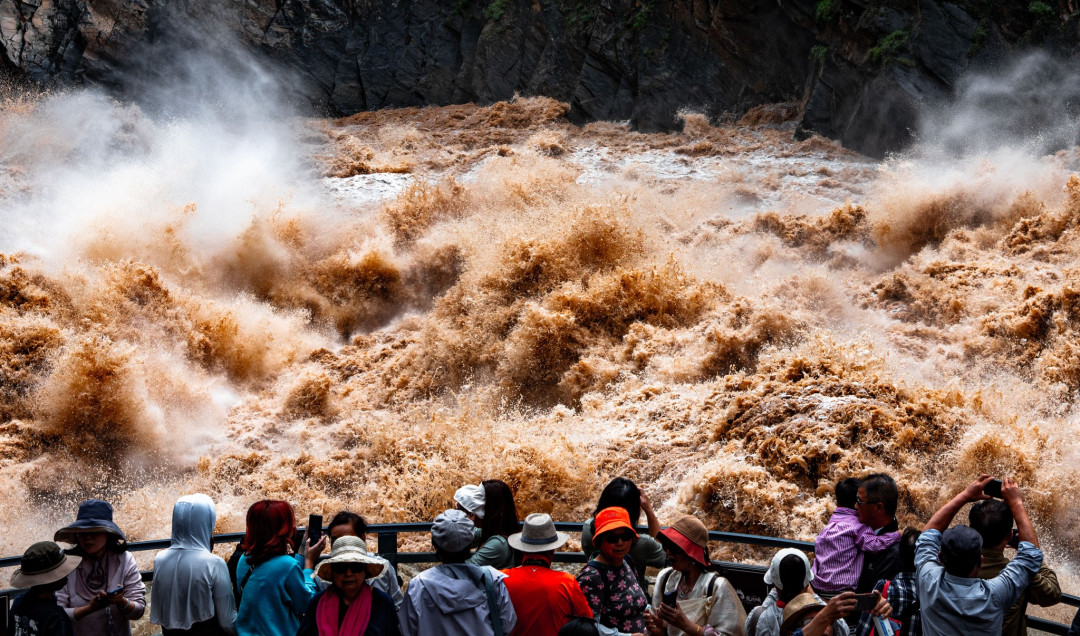
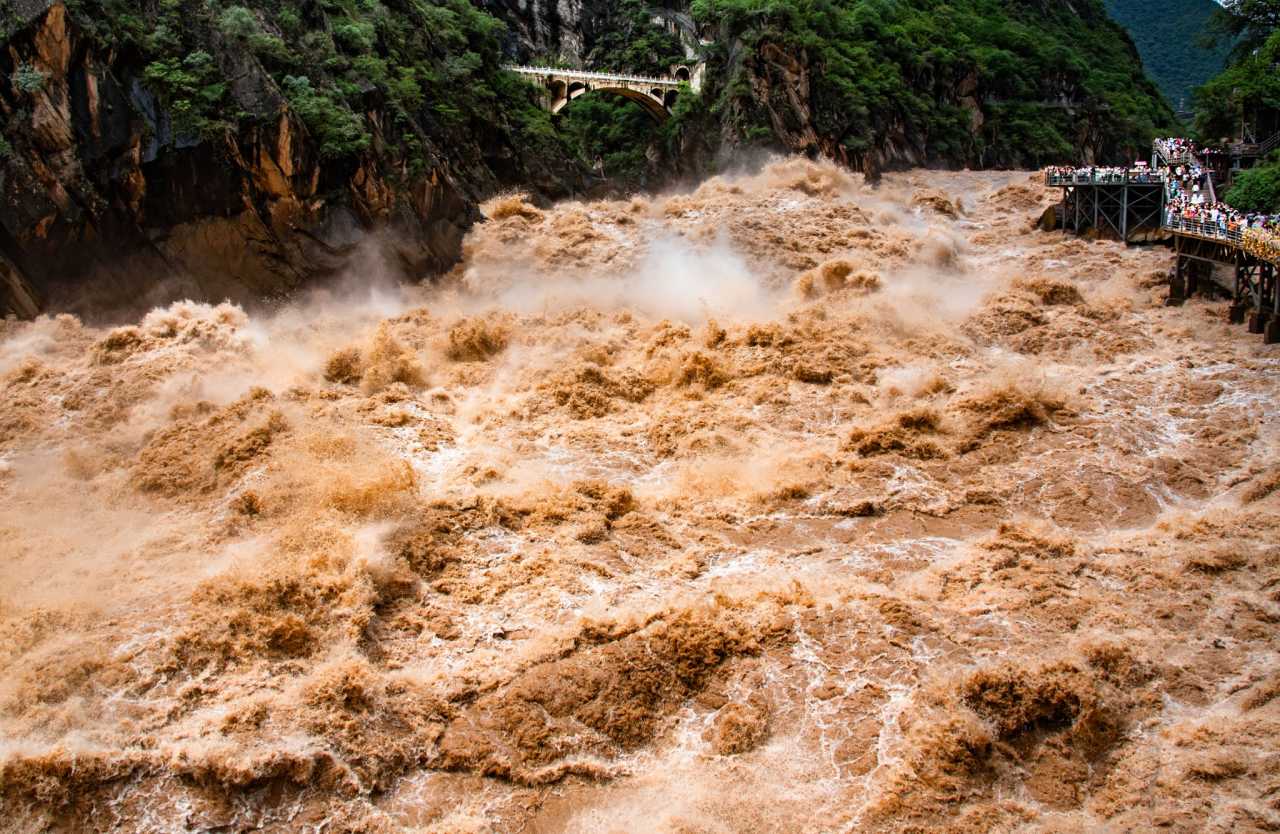
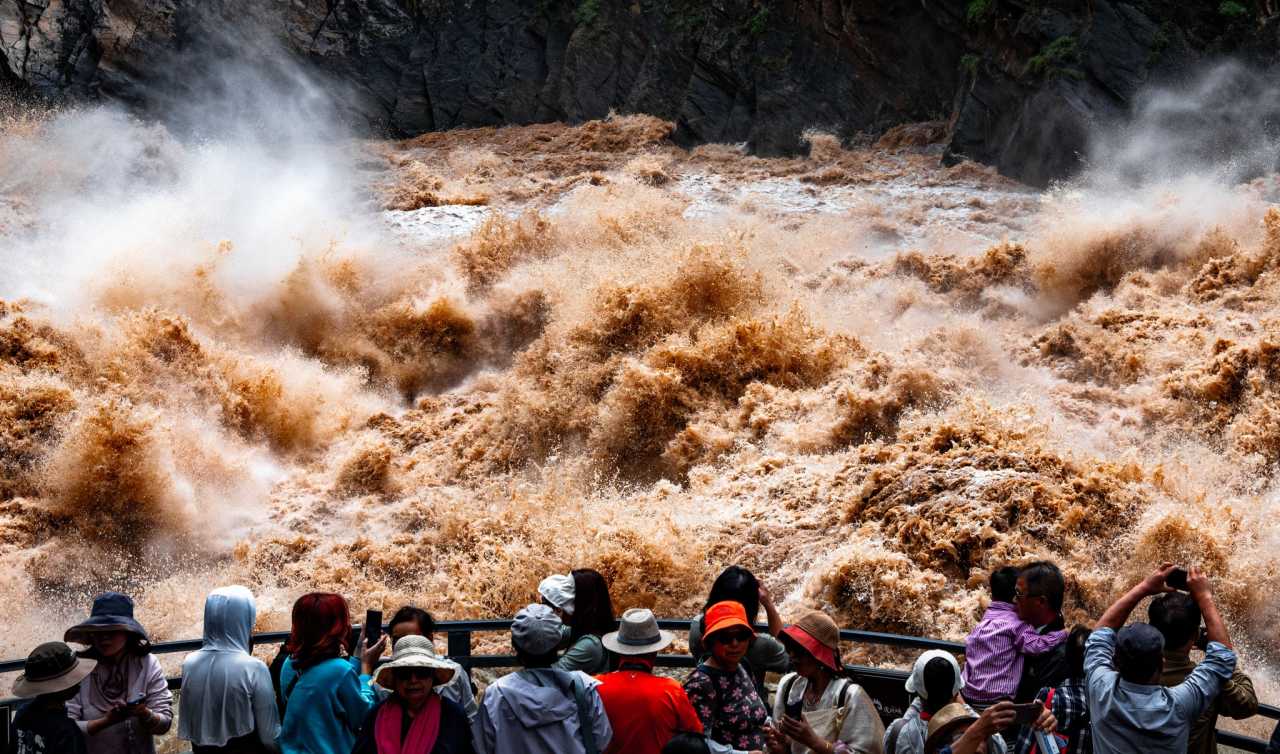
The name "Tiger Leaping Gorge" carries a raw, untamed energy. Nestled between Jade Dragon Snow Mountain (Yulong Xueshan) and Haba Snow Mountain, it is the world's fourth-deepest and China's second-deepest canyon—and the first great canyon along the Yangtze River (Jinsha River). Stretching over 12 miles (20 kilometers) in length, with an entrance elevation of 5,900 feet (1,800 meters) and a vertical drop of 12,800 feet (3,900 meters), legend has it that a tiger once leaped across the river using a massive rock at its center, giving the gorge its name.

The entrance fee was 45 RMB, with an additional 70 RMB for the escalator round trip. With only one hour allocated by the guide, we chose to take the escalator down to the riverbed. The escalator had four sections and moved quickly, but the views along the way were not to be missed. Standing on the platform's edge, we looked down at the Jinsha River, suddenly constricted between sheer cliffs, roaring through the narrow channel and crashing against hidden boulders, sending up towering waves. The sound was deafening, like thunder, as if the very earth trembled.
A wooden walkway stretched along the riverbank, packed with tourists leaning against the railing, clicking their cameras nonstop. I stood on the farthest observation deck, arms outstretched, trying to embrace the magnificent landscape. But faced with nature's ferocity and abandon, a profound sense of human smallness set in. The railings were covered with prayer plaques, densely packed, carrying countless wishes. I thought: perhaps only here can people truly feel the fragility and preciousness of life.
As we left, I glimpsed through the bus window a narrow road carved into the cliff face on the opposite mountainside—the famous Ancient Tea Horse Road (Chama Gudao). The guide explained that in old times, poor families in Dali and Lijiang would send their sons to join caravans, traveling on foot along this treacherous route. The gorge's steep slopes and narrow paths meant the caravan leader had to ring a bell as they walked, to avoid meeting an oncoming caravan at the narrowest points. Though the trade was profitable, bandits, natural disasters, and disease were common, and countless people never made it back... Listening to these stories, I felt a new respect for that winding ancient road.
Potatso National Park: Endless Green, Crystal Waters
Leaving Tiger Leaping Gorge, the bus continued toward Shangri-La. By midday, we stopped for a simple lunch at a roadside restaurant. The river below the road was no longer the Jinsha but its upstream tributary, the Chongjiang River. Though smaller, it was still muddy and swift.
Around 2 p.m., we passed the "Xiaozhongdian Pasturelands." At an elevation of 10,500 feet (3,200 meters), this open, flat area is a major grazing region for herders. In May and June, rhododendrons bloom in vast, breathtaking seas of color. But our schedule was too tight, so we could only steal a glance through the window.
By 3 p.m., we finally arrived at Potatso National Park. The all-inclusive ticket was 258 RMB—138 RMB for entry and 120 RMB for the shuttle. The park map showed three areas: Bita Lake, Militang Subalpine Meadow, and Shudu Lake. However, only Shudu Lake was open to visitors. Paying full price for just one-third of the park felt like poor value for money.
The shuttle ride from the entrance to Shudu Lake took nearly 40 minutes. Outside the window, pine forests, meadows, streams, wildflowers, yaks, and horses drifted by in a blur. I felt a strong sense of being immersed in an ancient, pristine natural environment—exactly what city dwellers, exhausted from long hours at work, long for. Since we had it, I decided to cherish it, even if only briefly.
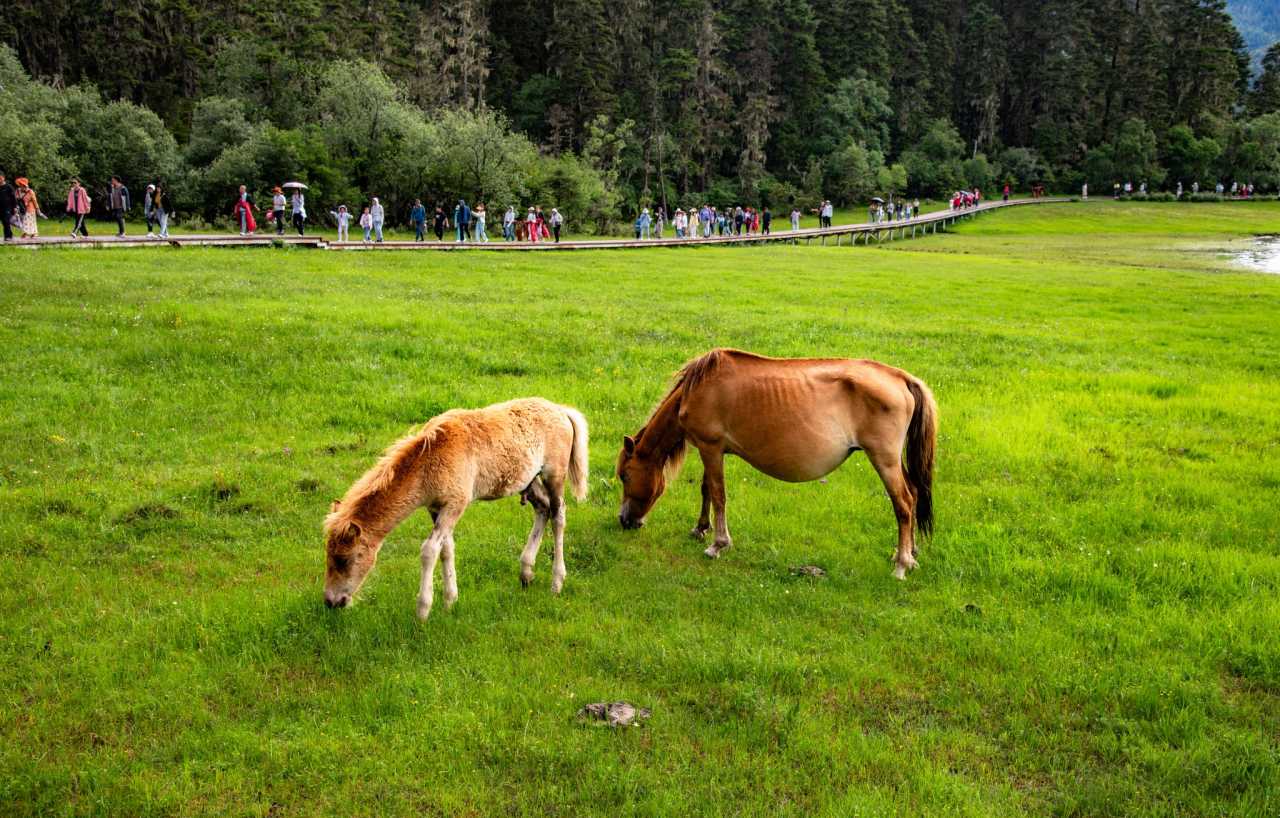
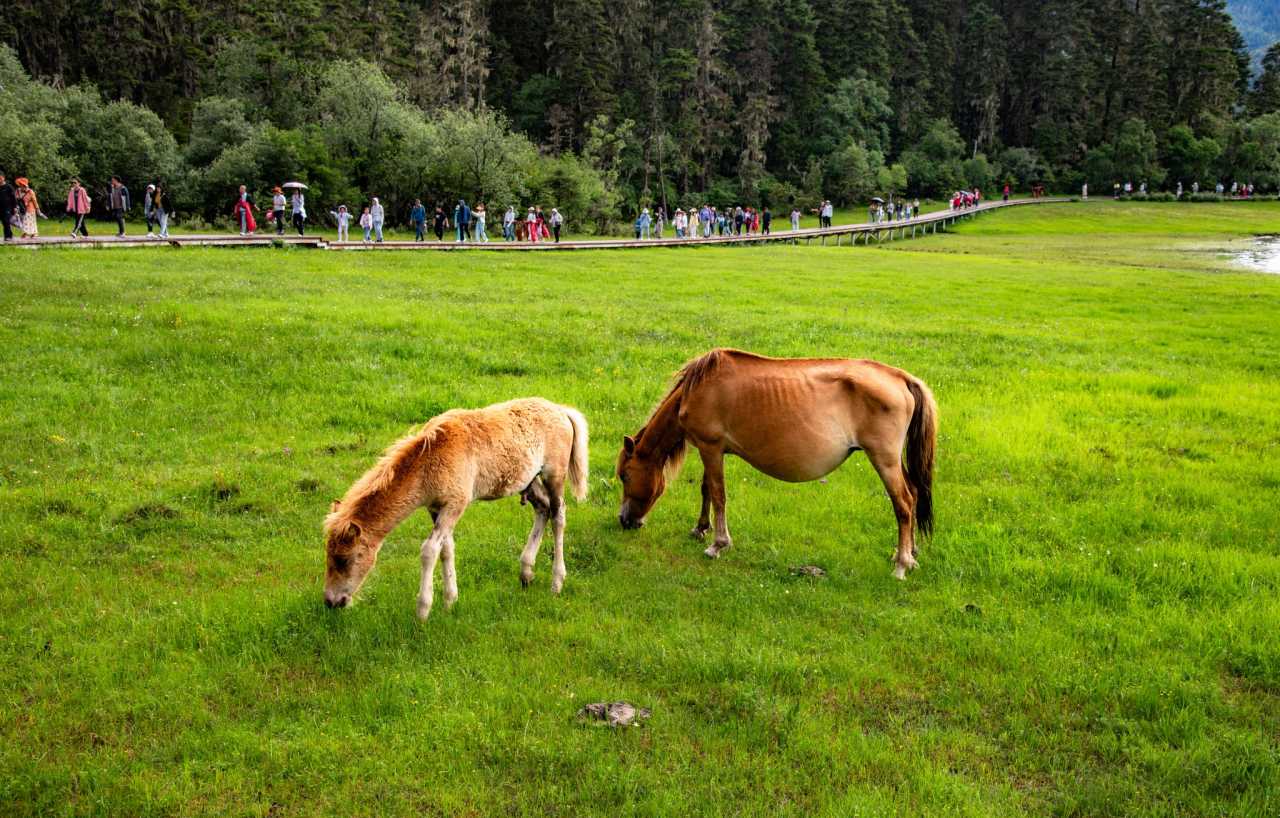
After getting off, our local guide led the group, stopping every few steps to explain things at length. But this wasn't a temple or historical site; I could recognize the mountains and water on my own. So I quietly led my wife and daughter away from the group and walked deeper into the park. On either side of the boardwalk, ancient trees towered in lush green on one side, while emerald meadows stretched like carpets on the other. A mother horse grazed with her shaggy foal, completely indifferent to the daily stream of visitors.
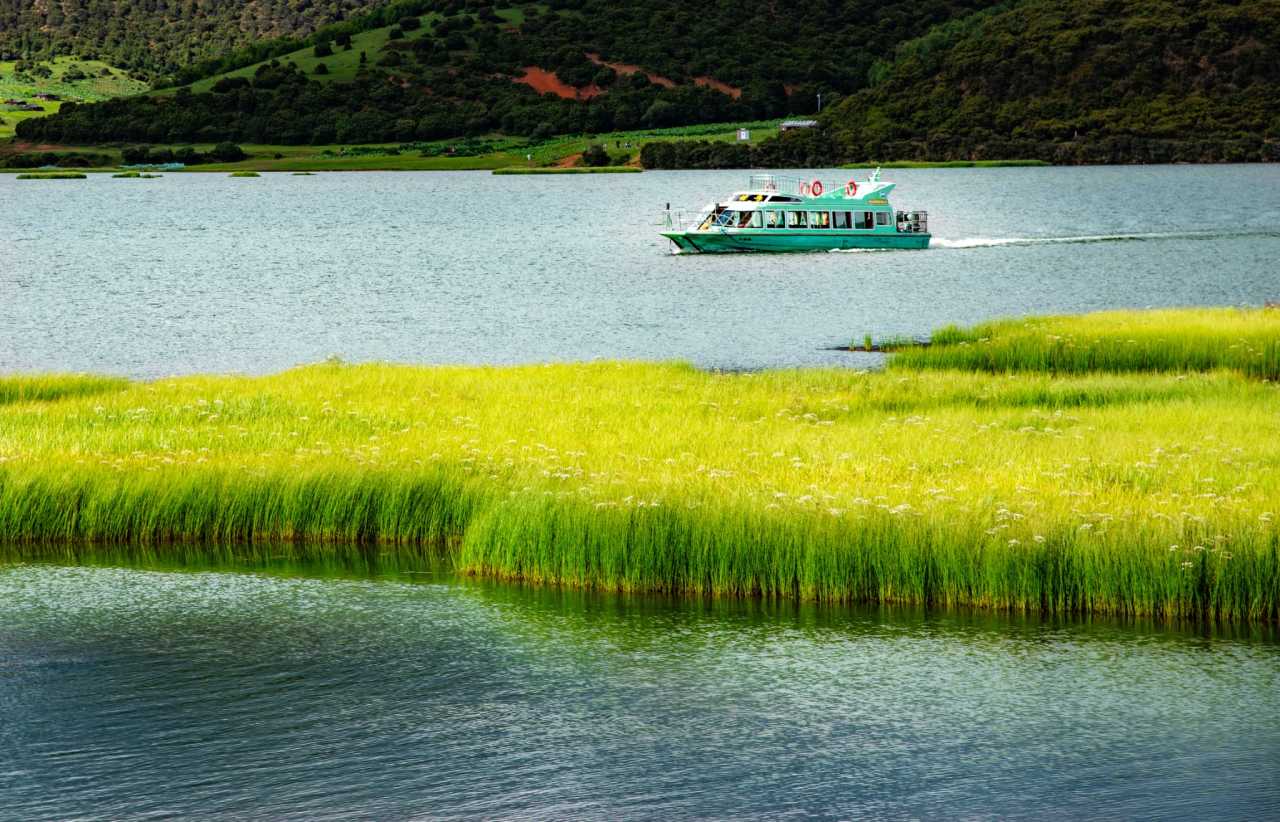
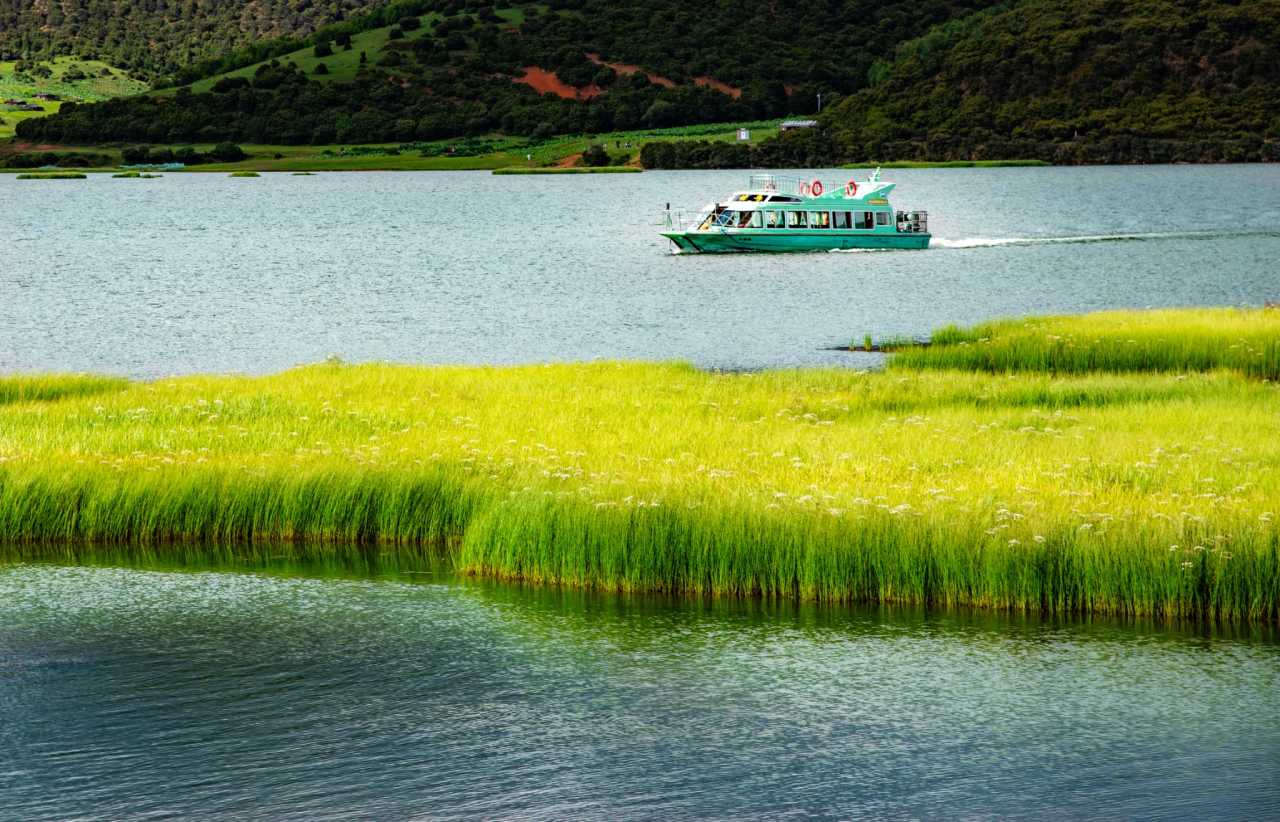
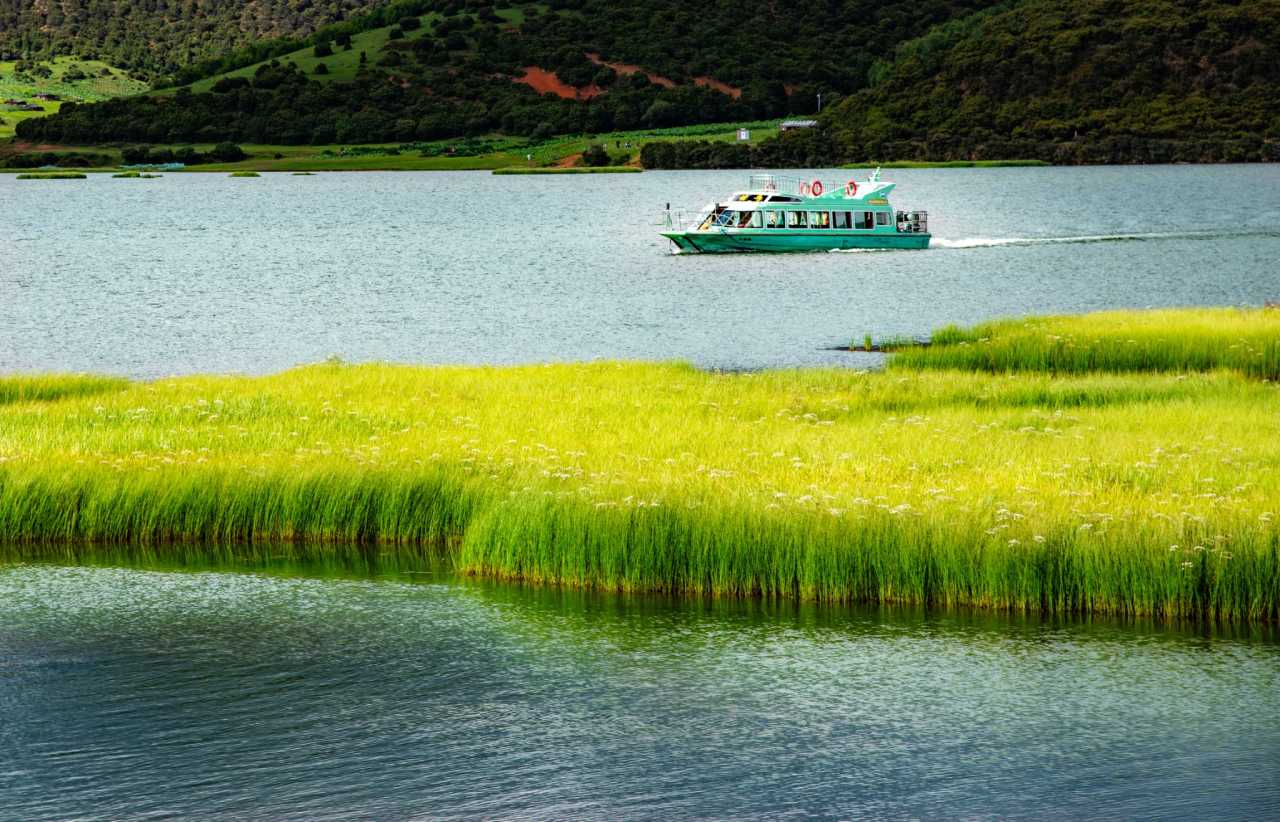
A sightseeing boat returned across the lake, bringing the scene to life. Beautiful women in colorful clothing smiled like celestial visitors on the shore. When we grew tired, we rested on a lakeside platform. In the distance, a few tents and a handful of anglers made me feel like we were mere tourists, while they were the true connoisseurs of Potatso.
After nearly an hour of walking, we finally reached Pier No. 3. We rested on wooden benches, then queued for the shuttle back. For the hefty ticket price, we had earned the right to exhaust our legs on the boardwalk—worth it!
Dukezong Old Town: Buddhist Chants and Incense Smoke
On July 23, we set off at 7 a.m. The morning itinerary included visits to a Tibetan Cultural Center and a Tibetan Medicine Center—a cleverly disguised loophole in the tour's "zero shopping" promise. As long as there was no coercion, I could be understanding.
The so-called Tibetan Cultural Center was seven or eight stories tall, complete with an elevator. A young man took over our group in the lobby and led us straight to the top floor. In the center of the hall sat a massive mandala, said to be larger than the one in the Potala Palace. But upon closer inspection, the ornaments embedded in it looked more like imitation crafts than real jewels and jade. After viewing Buddha statues and thangka paintings, we were naturally funneled into a hall for shopping. To be honest, Tibetan Buddhism is sacred and pure. Around the Jokhang Temple and the Potala Palace, those who measure their pilgrimage route with their bodies and disregard money out of faith are true devotees—they command my deepest respect. This place felt more like a showroom built solely to sell tourist products. Exploiting people's religious sentiments is inappropriate. If you want to make money, at least be authentic and honest.
The tedious morning finally ended. After lunch, Yalasuo led us to the day's real attraction: Dukezong Old Town.
Dukezong is located in the southeastern corner of Shangri-La County. During the Tang Dynasty (around 676–679 AD), the Tubo Kingdom built a fortress on the top of Turtle Mountain (Guishan), naming it "Dukezong," which means "castle built on stone" and "moonlit city." It is said to have been constructed according to the ideal Buddhist kingdom of Shambhala.
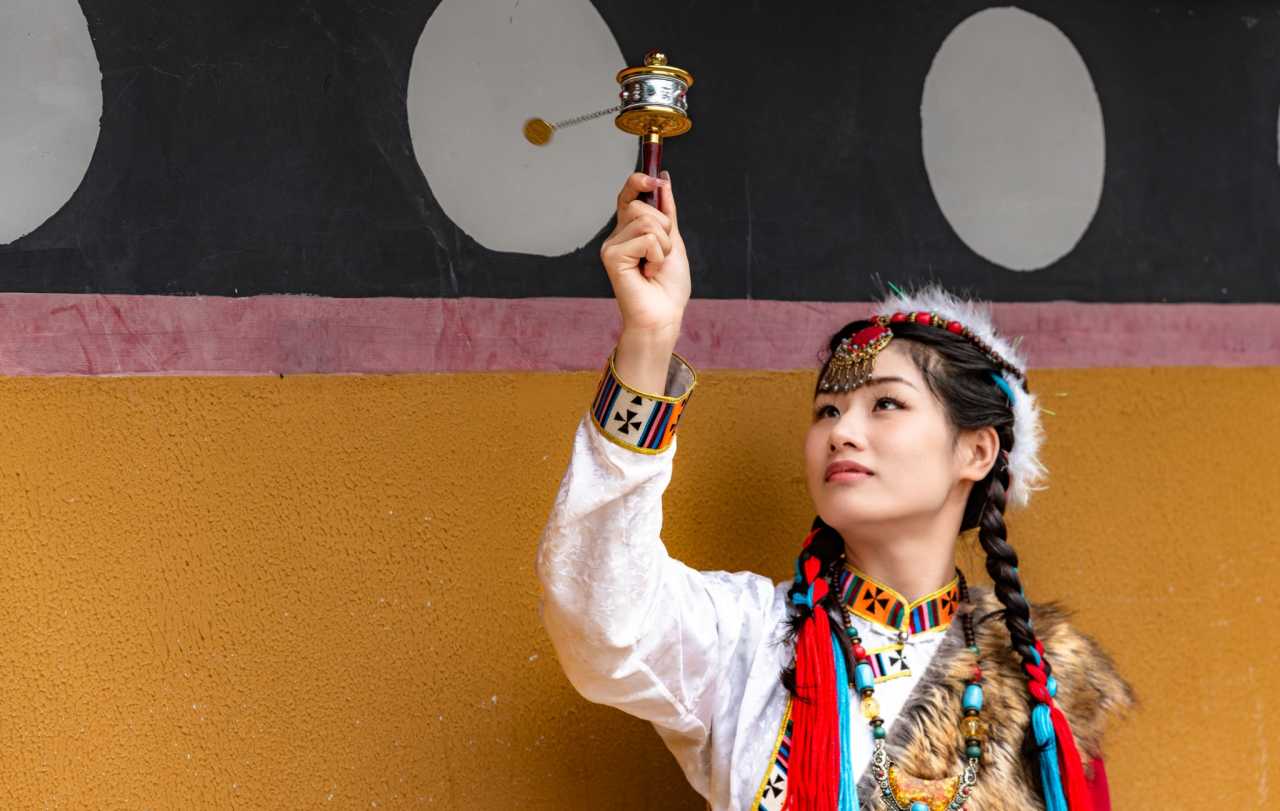
The heart of the old town is Turtle Mountain Park. At the summit, three magnificent golden structures stand from left to right: the Vajra Mandala Hall, the Great Buddha Temple, and the Prayer Wheel Pavilion. What draws the most attention is the world's largest prayer wheel! Standing five stories tall, made of copper plated with gold, it contains 1.24 million sutras and mantras, along with various Buddhist treasures totaling 16 tons. Turning it clockwise once is equivalent to reciting the Buddha's name 1.24 million times; turning it three times brings blessings and averts disaster. This prayer wheel is listed in the Guinness World Records.
From the high platform, we looked down at the old town. The entire neighborhood consisted of uniform Tibetan-style buildings, appearing neat and orderly. We joined a dozen others to push the massive prayer wheel. It turned slowly, emitting a low, resonant hum. Standing atop Turtle Mountain, it spins endlessly, bringing boundless blessings to the locals and visitors alike.
At 2 p.m., we returned to Lijiang, concluding our two-day Shangri-La excursion. Reflecting on this part of the trip, I felt that tourism infrastructure and services in the Diqing region lagged slightly behind others. The only truly memorable experience was Tiger Leaping Gorge; the rest was fairly ordinary.
Lugu Lake: Scenic Mountains and Mosuo Romance
On July 24, just after 8 a.m., our Mosuo guide, a young woman named Zhuzhu, arrived with the bus. By 9 a.m., the new group was assembled, and we set off for Lugu Lake.
The distance from Lijiang to Lugu Lake is only about 80 miles (130 kilometers), but the road winds through the high mountain gorge landscape formed by the Mianmian Mountains and the Jinsha River. With steep peaks, deep valleys, and dramatic elevation changes, even under normal conditions the drive takes over four hours. The bus would spiral up to the mountaintops, then zigzag back down into deep valleys. Below, the muddy Jinsha River surged forward. Cliffs above, a great river below. Traveling this road was both a visual feast and a test of nerve.
July is the rainy season, with at least one shower—big or small—each day. We were lucky: the rain stopped when we arrived. Lugu Lake lies between Ninglang County in Yunnan and Yanyuan County in Sichuan, straddling the border between the two provinces. Covering an area of about 19 square miles (50 square kilometers) at an elevation of 8,825 feet (2,690 meters), it has an average depth of 148 feet (45 meters) and a maximum depth of 305 feet (93 meters), with water transparency reaching 36 feet (11 meters). The lake is crystal clear and azure, making it the highest-altitude lake in Yunnan and one of China's deepest freshwater lakes.
At noon, we took a "pig-trough boat" (a traditional dugout canoe) to visit an island. The water was so clear you could see the bottom, with aquatic plants swaying gently. In the afternoon, we visited Lover's Beach, where a lone boat floated in the misty, cloud-shrouded scenery. That evening, we watched a bonfire party and stayed in a Mosuo village. The Mosuo's "walking marriage" custom is both mysterious and romantic: every household is headed by a woman, and family members are all related through the maternal line. Each ritual and custom tells a beautiful, moving story—a melodious pastoral song.
On July 25, we visited the "Walking Marriage Bridge" and toured a Mosuo home. At noon, we returned to Lijiang, then took an 8 p.m. bullet train back to Kunming. On July 26, we were taken to the airport at 5:30 a.m., caught the 8:15 a.m. flight to Beijing, landed at Daxing Airport at noon, and returned home safely, ending our ten-day journey.
Conclusion: Far Horizons Heal the Soul
This ten-day guided tour of Yunnan—from Kunming to Lijiang, from Shangri-La to Lugu Lake—showed me the grandeur of deep gorges and high mountains, and the tranquility of highland lakes. Tiger Leaping Gorge's thunderous power, Potatso's boundless green, Dukezong's ancient chants, and Lugu Lake's Mosuo culture each left a unique imprint.
Travel is not just about seeing sights—it's a cleansing of the soul. Before nature's fierce and unrestrained power, we feel our own smallness and helplessness. By the quiet, clear lakes, we experience life's peace and beauty. The ancient legends, unique customs, and devout beliefs all remind us: life is not just about the mundane struggles of the present—there is also poetry and the distant horizon.
A narrow well limits vision; the open world expands the soul. Far horizons heal the spirit. This journey was worth every step.
You should also read:

Body in Hell, Heart in Heaven: A Pilgrimage Through Tiger Leaping Gorge — A Dialogue Between Heaven and Earth
Body in Hell, Heart in Heaven: A Pilgrimage Through Tiger Leaping Gorge — A Dialogue Between Heaven and Earth Introduction: When the Gorge Splits Open Beneath Your Feet Some say Tiger Leaping Gorge is the closest place on Earth to the border between "hell" and…
Continue reading...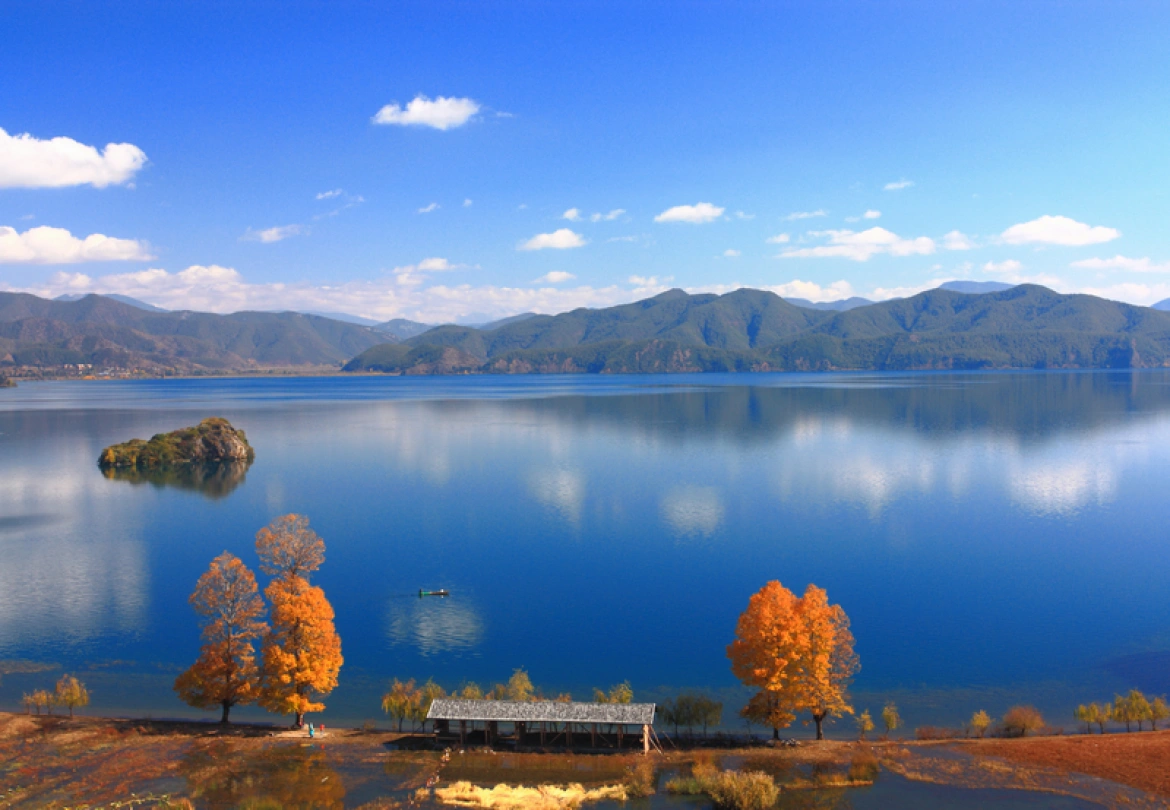
A Spiritual Journey to Lugu Lake in Lijiang: Experiencing the Legend of the Kingdom of Women! (Reproduction and Hotlinking Prohibited)
A Spiritual Journey to Lugu Lake in Lijiang: Experiencing the Legend of the Kingdom of Women! (Reproduction and Hotlinking Prohibited) Off-road自驾, food, hotel and民宿 reviews, Featured Traveler, Tank 300 owner, 200,000 km of self-driving experience. WeChat: y01294987 Ninglang Yi Autonomous County 2010.11.08 · 7 days…
Continue reading...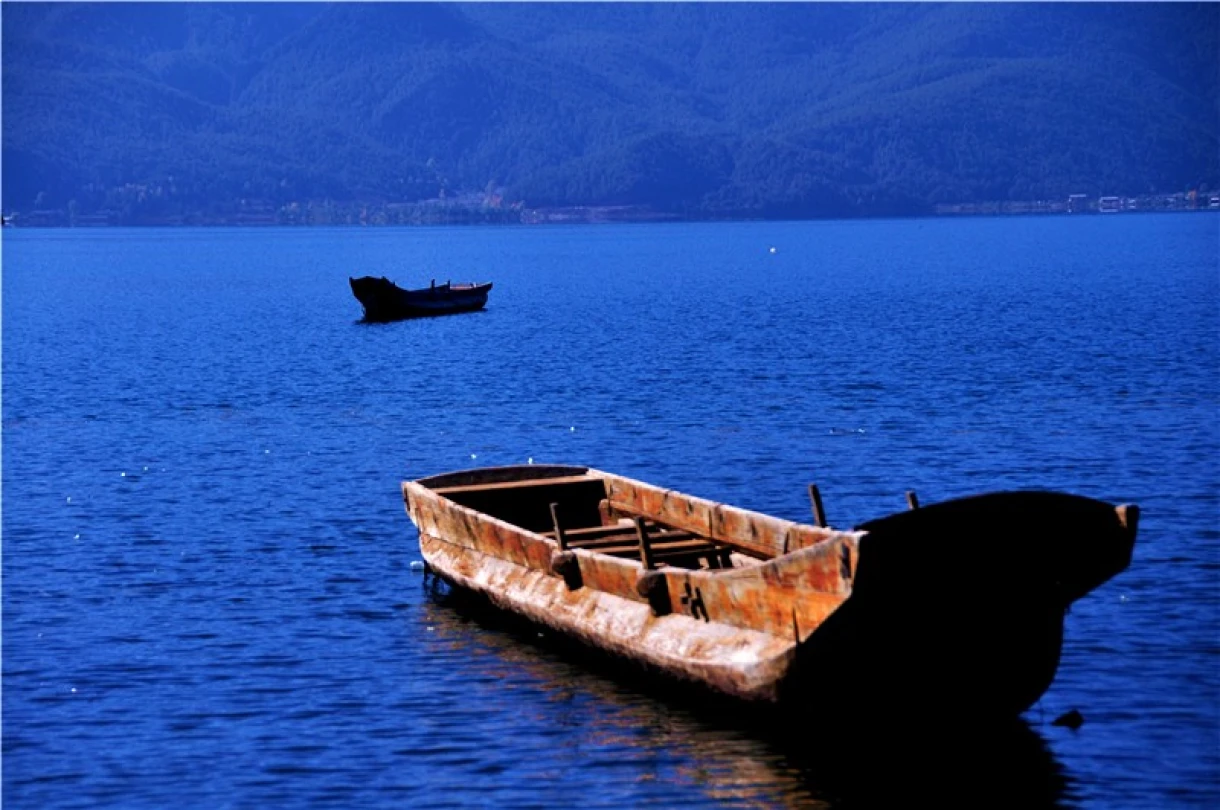
Hiking Around Lugu Lake: Measuring This Mysterious Highland Pearl on Foot
Hiking Around Lugu Lake: Measuring This Mysterious Highland Pearl on Foot Introduction: A Date with the Lake At the border between Yunnan and Sichuan provinces lies a highland lake embraced by mountains, embedded like a sapphire in the folds of the Hengduan mountain range. Here,…
Continue reading...