From Tengchong to Erhai Lake: Rediscovering Life's Most Authentic Beauty in Everyday Moments
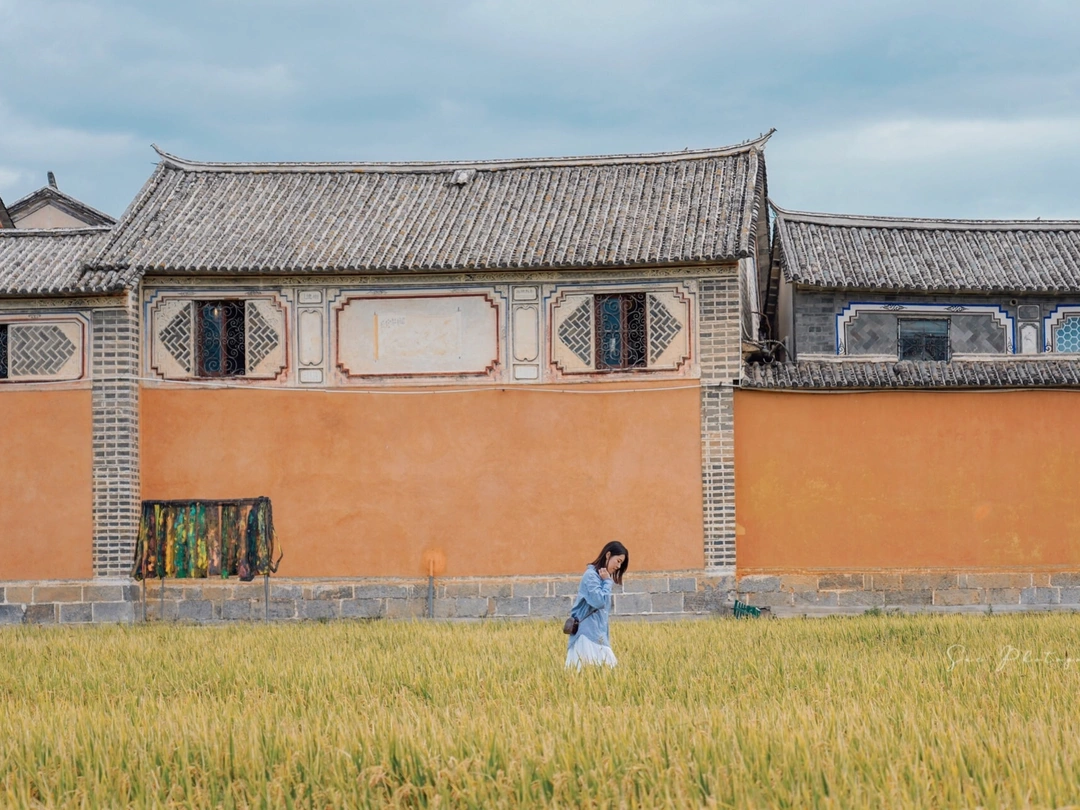
From Tengchong to Erhai Lake: Rediscovering Life's Most Authentic Beauty in Everyday Moments
This year has been a bit bumpy, but also a little willful. Looking back, those once-stubborn obsessions have quietly loosened their grip, as if even the courage to make decisions has grown—whether it's pressing the pause button or continuing to run. Since traveling far isn't an option for now, why not find a sparsely populated place to quietly daydream for a few days?
That's how a small city hidden in the southwestern border caught my eye—Tengchong, Yunnan. There are no noisy influencer photo spots here, only anonymous days that feel like a warm cup of tea—sipped slowly, savored gently. Starting from Tengchong, I revisited Dali and Kunming along the way. There were surprises and a few pitfalls, but everything went smoothly. Suddenly, I understood: what we chase in our travels is never the spectacular scenery, but those ordinary and real slices of life—the small joys amid busyness, the touch of emotion when you look up. That, perhaps, is life's most generous gift.
Heshun Ancient Town: Slow Time in a Fragrance of Scholarship
"Distant mountains stretch hazy and vast, nearby rivers flow gently and slow; beneath the slopes of ten thousand homes, it surpasses even Suzhou and Hangzhou." The Heshun described by Mr. Li Genyuan remains the same today.
When people mention Tengchong, the first things that come to mind are the volcanoes and hot springs. But what truly deserves a three-day stay is Heshun Ancient Town. At the entrance, a sign reads: "There is a flavor called Heshun. Gentle as jade, virtuous as water. Amid these ancient buildings embraced by volcanoes and hot springs, echoes the bells of merchant caravans, wafts the fragrance of scholarly households, spreads the philosophy of the masses, and lingers the passionate songs of heroes!" Reading it stirs your heart.
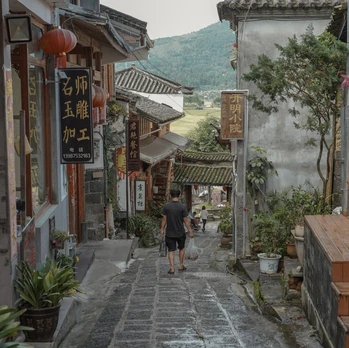
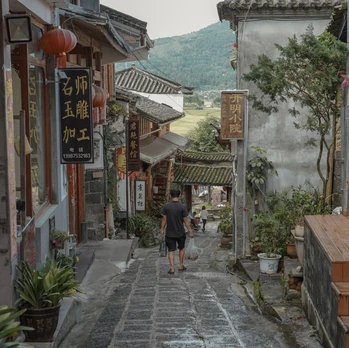
"The Beijing Love Story" TV series put Heshun on the map, but its inconvenient transportation has kept it as tranquil as a maiden in her boudoir. Flagstone paths wind up the hillside, green-tiled roofs scatter in pleasing disarray. Choose a courtyard guesthouse and stay for three days to truly understand the beauty of this mountain town.
Most of the town's time belongs to nature—quiet and ordinary. Locals gather in courtyards to chat, enjoy the view, and catch up on gossip—life as simple as an ink wash painting. Heshun currently has about 6,000 residents, but over 10,000 Heshun natives live overseas, giving it the name "Hometown of Overseas Chinese." Hui-style architecture, memorial archways, ancestral halls, and cultural heritage are everywhere—these are the town's most precious foundations.
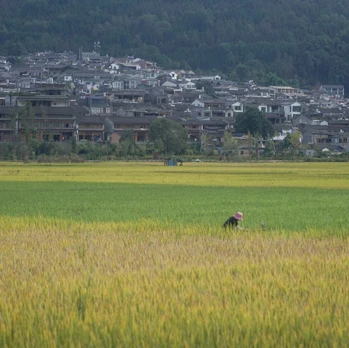
Beside the ancient town lies a vast expanse of rice paddies, nourishing generations. Walk to the other end of the fields, and the entire hillside town unfolds before you—scattered yet rising upward. In the early morning, three-wheeled carts loaded with groceries rumble past; breakfast shops crackle with charcoal fires boiling steaming rice noodles; afternoon sunlight is lazy, perfect for hiding away for a nap; at放学 time, children burst out of school with joy... These everyday scenes are ordinary yet moving.
Although many new guesthouses and shops have been built in the town, its cultural heritage remains well preserved. Historical buildings are scattered throughout, with small bridges, flowing water, rice paddies, and lotus flowers creating a living landscape painting. Many locals still live in the ancient town. Newcomers and the older generation of Heshun residents blend together, creating a rich scholarly atmosphere. Later, when I arrived at Dali Old Town, I marveled at its mature entertainment scene, but I missed Heshun's simple, beautiful days even more.
An old man fishing by the lotus pond, residents strolling along the river, women washing clothes by the laundry pavilion, farmers working in the fields—these are nothing but unadorned life, yet they stir a longing in the heart.
The rice paddies nestled against the ancient town turn golden during harvest season, with stalks growing as tall as a person. We city folks lingered here for a long time, reluctant to leave.
The guesthouse we stayed at was called "Cloud Cottage Courtyard," a peaceful haven tucked away down a winding path. In the morning, birds on the roof chattered to wake you, and a wiggly little corgi came to greet you. Over 400 years ago, villagers here began "going to the barbarian lands." Heshun is only 70 kilometers from Myanmar, and most residents were jade traders. Many became wealthy and returned to build homes and ancestral halls—the town has eight ancestral halls, each with its own style.
Walking along the river, you'll find several laundry pavilions. In the old days, most men traveled afar for work, while women stayed home washing clothes, cooking, and caring for the family. To protect them from wind and sun while washing by the river, people pooled resources to build these pavilions. Over time, pavilions of various sizes appeared along the riverbank.
To fully experience Heshun, you need at least three days—not rushing through every sight, but leisurely treading every stone path. Morning kitchen smoke, afternoon stillness, twilight hues, starry nights... After you leave, you'll miss this simple life even more.
Heshun Ancient Town Practical Tips
- Admission: Originally 55 yuan, currently half-price at 27.5 yuan, includes historical buildings within the town. Keep your ticket stub or bring your ID for verification—valid for three days of free entry and exit.
- Accommodation: Many guesthouse options at various price points. If you have time, stay at two different places for different experiences. Guesthouses usually offer pickup service (from the airport or city center).
- Car Hire: Drivers partnered with guesthouses often ask if you need a car for sightseeing—market rate around 300 yuan/day. Good value if visiting 2-3 spots without your own car.
- Nightlife: The town is extremely quiet at night. Few bars, and they may not open daily. Restaurants generally close by 8-9 PM, leaving only one or two barbecue stalls. Streetlights are sparse, so don't wander too far.
- Attire: All stone paths—wear sneakers. If you have heavy luggage, don't book a guesthouse too deep in the town, or you'll face a serious leg workout.
- Hot Springs: Recommend the Bolian Hot Spring Hotel next to the town—best environment. Tengchong hot springs rarely have private baths; you'll need to wear a swimsuit in public pools. The water is odorless. For sulfur-scented springs, head to the Rehai Scenic Area.
Beihai Wetland: A Fresh Landscape Between Mountains and Water
Beihai Wetland is a volcanic barrier lake ecosystem. Water plants intertwine densely underwater, cycling through death and rebirth in the moist soil, eventually forming floating meadows. This ten-thousand-year-old volcanic barrier lake wetland has become Tengchong's classic postcard image.
The scenic area is surrounded by mountains, the lake water as still as a mirror, with water plants growing freely. It's not large—about two hours to walk through. Rich in animal and plant species, wildflowers bloom in spring and summer, while migratory birds winter here in autumn and winter. Walking along the boardwalk or taking a boat to the end and walking back are both good options.

Tickets purchased through our driver cost 80 yuan, including boat ride and grass raft experience—cheaper than buying directly. For city dwellers, this green landscape is exactly what we yearn for.
The wetland is long and narrow, about 3 kilometers round trip; the boat saves some energy. Along the way, you'll see various birds you can't name—like egrets, stretching their long necks in solitary beauty. "Lush water plants" is the most fitting description. The boat cuts through the calm lake surface, revealing clearly visible swaying water plants beneath. Flocks of wild ducks swim past the reeds—a beautiful picture.
Those two enchanting blue birds are purple swamphens, rare water birds in China. When the boat reaches the last dock, the thatched cottages beneath the lush mountains create an illusion of Swiss lake-and-mountain scenery—a tranquility that intoxicates.
The grass raft experience area lets you try floating on water. A thick meadow replaces a bamboo raft, holding three or four people. Use a bamboo pole to push forward, gliding across the lake like a floating carpet.
Beihai Wetland Practical Tips
- Opening Hours: 8:30 AM – 7:00 PM
- Seasonal Highlights: Spring has purple iris orchids; summer is light and romantic; autumn brings lotus fragrance and fish and shrimp playing; winter sees flocks of wild ducks and migratory birds.
- Activities: Boat rides, bamboo rafts, grass rafts, traditional fish catching
- Visit Duration: 2–3 hours
- Ticket Prices: Entrance only 55 yuan; Entrance + Boat 80 yuan; Entrance + Bamboo Raft 100 yuan; Entrance + Grass Raft 120 yuan
Rehai: A Sulfur-Scented Geothermal Wonder
About half an hour's drive from Beihai Wetland brings you to Rehai. Drivers usually suggest visiting both together.
Rehai isn't a sea—it's a geothermal hot spring area. The moment you step out of the car, a strong sulfur smell hits you. Passing through the shops at the entrance, you'll encounter aunties chasing you to buy eggs—tied with straw into strings, 10 yuan per string. It feels like you'd miss out on the ritual if you didn't buy a string to cook at the "Big Boiling Pot." So began my "Long March" with a string of eggs.
A year-round warm stream runs through the entire valley, forming springs and pools of various sizes. From the ticket office, take a shuttle bus deep into the valley. White steam rises from the mountains, creating an almost mystical atmosphere. As you approach the steaming areas, the air temperature rises, and sweat beads form on your forehead. The sulfur smell is salty, exposed rocks are covered with white calcium deposits, and small holes in the ground release steam columns. A bit timid, I didn't linger long after seeing the "Explosion Zone" sign.
Amazingly, this valley contains both bubbling hot springs and cool, flowing streams and waterfalls—completely independent of each other. Truly a wonder of nature.
Passing through the Immortal Pavilion, continue climbing upward. Past several hot spring pools and up dozens of steps, you reach Rehai's iconic attraction—the "Big Boiling Pot." Three vents at the bottom spray 96°C (205°F) water, like a giant pot of boiling water. The ground is also hot—trying to sit down for a rest was quickly abandoned due to the temperature.
Signs throughout the area warn: "No cooking eggs in the springs." After the "Long March," my string of eggs finally found its destination at the egg-cooking experience area next to the Big Boiling Pot. "Cooking" here actually means steaming with high-temperature steam. Throw the egg string into the basket for about 10 minutes, and the eggs are fully cooked—my dream of soft-boiled温泉蛋 (hot spring eggs) was shattered.
As one of China's three major geothermal areas, Rehai is Tengchong's most concentrated geothermal zone. This spectacular wonder is worth visiting, but whether to soak in the hot springs here depends on personal preference.
Rehai Scenic Area Practical Tips
- Admission: Originally 60 yuan, half-price this year. If you're low on energy, buy the ticket + electric cart combo—it's at least 1.5 km from the ticket office to the main attractions.
- Walking: From Lion Head Waterfall to the Big Boiling Pot is about 1.5 km, taking about half an hour with climbing.
- Itinerary: Can be visited together with the volcano area, or combined with Beihai Wetland in one day—plenty of time. In the evening, head to the city center for a meal at Chao Wei Copper Pot Beef.
- Soaking: There's a foot bath experience near the Big Boiling Pot. For full hot spring soaking, buy a combo ticket from your guesthouse (includes entrance, hot spring, and electric cart). Remember to bring your own swimsuit (the ones sold on-site... well, you know).
Food Memories Full of Heart
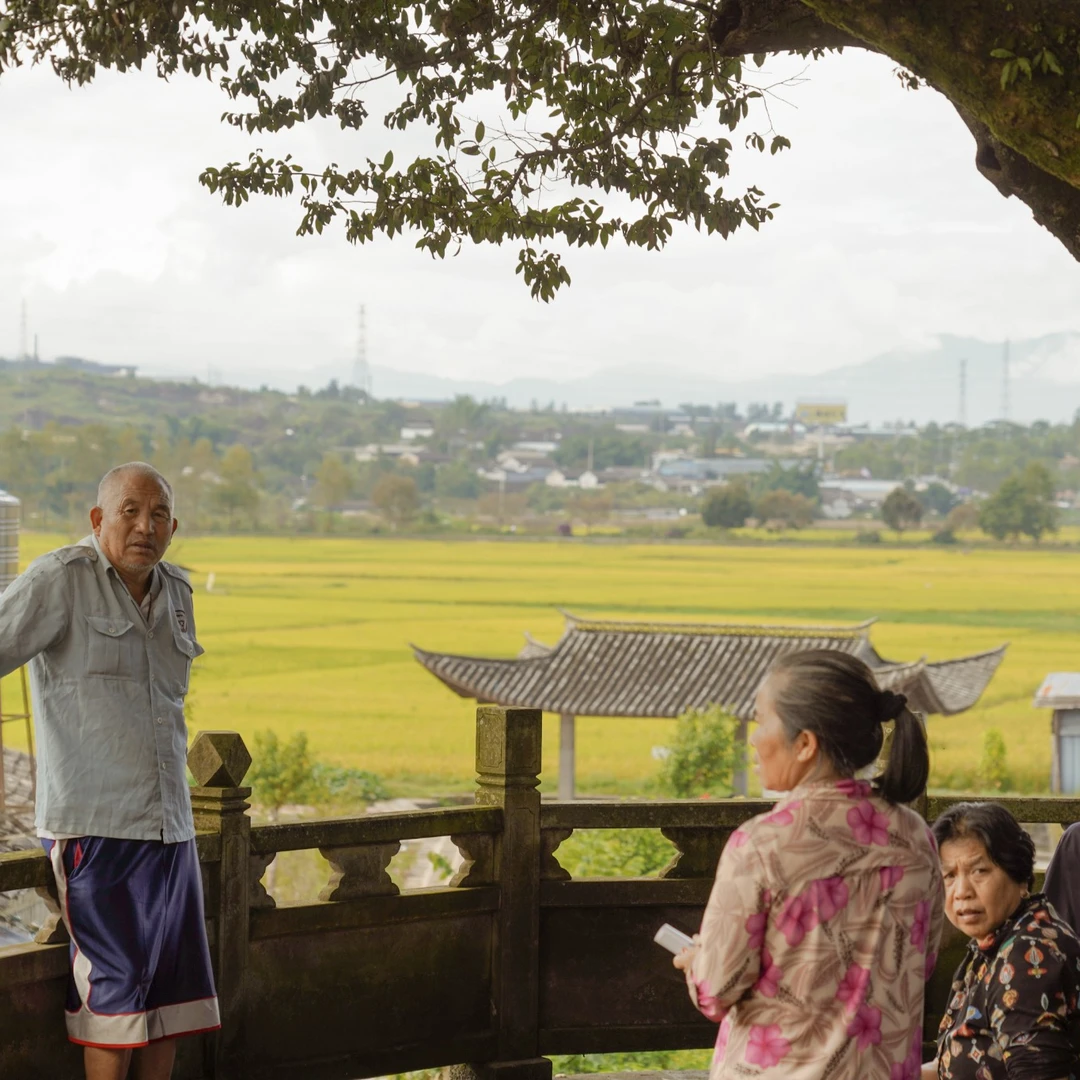
Aunt Cun's Thin Bean Porridge
Locals typically start their day with a bowl of steaming稀豆粉 (thin bean porridge). "Made fresh daily, eaten the same day"—it's gone after noon, and Aunt Cun is no exception. We arrived in the afternoon, so we ordered a portion of大薄片豆粉 (thin-sliced pork with bean jelly) as a snack. Aunt Cun warmly invited us to come back the next morning for the porridge.
The大薄片 (thin-sliced pork) is cut paper-thin, light and springy, seasoned with chili powder. Paired with jelly-like bean curd, you slurp it down—irresistibly addictive.
Niu Niu Jia Copper Pot Beef
In Heshun Ancient Town, the guesthouse lady recommended a beef hotpot restaurant. A large copper pot held rich, thick beef bone broth, packed with tripe, beef, and beef skin. I don't remember how many pounds we ordered, only that the pot seemed to endlessly produce more beef. The meat isn't as melt-in-your-mouth as Chaoshan beef hotpot—it has some chew, but is incredibly flavorful.
We discovered an addictive way to eat it: mint with beef. The refreshing mint, dipped in the broth for a second, paired with the beef—the combination of fresh and rich flavors was so good we couldn't stop.
Lin Li Family Restaurant
An unremarkable family restaurant with an open living room and two-story building. The family sets up tables in their own courtyard—it's the local canteen. A handwritten menu on a blackboard, a cooler filled with a dozen types of mushrooms I couldn't name. The朴实 (down-to-earth) owner was busy in the kitchen, calling her husband to take orders. Two of us ordered four dishes and left completely satisfied.
I've forgotten which seasonal mushrooms we had, but they were tender and fragrant, stir-fried on high heat to release their aroma. There was also清炒腾冲小角瓜 (stir-fried Tengchong small angled gourd)—a vegetable unique to Tengchong, shaped like a chili pepper but not spicy, with a refreshing taste.
In almost every Tengchong restaurant, you'll find "大救驾" (The Great Rescue). It's actually炒饵块 (stir-fried rice cakes). Legend has it that a Ming Dynasty emperor, fleeing to Tengchong, ate this dish and was so moved he named it "The Great Rescue." Made with tomatoes, eggs, pickled vegetables, and cured pork, it combines sour, sweet, salty, and spicy flavors—quite novel, but the rice cakes are very filling, almost a meal by themselves.
Chao Wei Copper Pot Beef Restaurant
After that first copper pot beef meal in the ancient town, I couldn't stop thinking about it. A friend recommended an even more authentic local spot. Sure enough, Chao Wei's beef broth was richer, and the beef more substantial. If I had to choose just one, I'd unconditionally recommend Chao Wei!
Every table gets a large platter of condiments. Chili oil and beef broth bubble away on the charcoal stove. On a cool day, eating big mouthfuls of meat—pure bliss.
Heshun Ancient Town Barbecue Stalls
When night falls, the barbecue stalls set up in the ancient town gather people from all over. What you're eating isn't amazing cuisine—it's the camaraderie of friends gathering. The guesthouse lady told us: for barbecue, you must eat the marinated kind—that's the true Yunnan style. Marinated chicken wings, chicken feet, grilled fish, and包浆豆腐 (stuffed tofu skin) are must-orders. The stuffed tofu skin has an enticing fresh flavor, but the spiciness is a real challenge for someone from Guangdong—still, between "hissing" and gulping beer, we finished it all.
Sister Hua's Private Kitchen
Sister Hua's Private Kitchen requires advance reservation and is a网红 (internet-famous) spot in Tengchong Ancient Town. It's charged per person—158 yuan per head—with dishes based on seasonal ingredients, about ten courses. The dishes are exquisite and delicious, the ambiance wonderful. Sister Hua's place has many homemade wines; you can sample them, and many people buy bottles to take home.
Sister Hua is a true Heshun native. The restaurant is in her nearly 300-year-old ancestral home, a classic courtyard house. Wine jars line both sides of the entrance. The stone slabs and wooden furniture in the old house are full of history. During the meal, private dishes arrive one by one—from pre-meal fruits and snacks, through meat and fish, to post-meal desserts. Each dish is cleared before the next arrives. This attention to detail and thoughtfulness lingers in memory.
Thatched Cottage in the Mountain Tea Plantation
Tengchong hides a verdant tea plantation deep in the mountains. Due to inconvenient transportation, most visitors are self-driving travelers, making for an excellent experience. The owner has built a thatched cottage and campsite in the plantation—enjoying local cuisine and a cup of hot tea amid the tranquil sea of tea leaves is supremely comfortable.
From the small village road, you enter the tea plantation. The rolling hills are already a feast for the eyes. At the end of the road, you see the thatched wooden cottage—for a moment, it feels like rural Japan. Above the cottage, hidden in the forest, is a glass restaurant.
The tea plantation restaurant costs 200 yuan for two people, 68 yuan per person for three or more—better value with more people. No need to order; dishes are based on seasonal ingredients, about eight or nine courses. The驼峰牛肉锅 (hump beef hotpot) was incredibly delicious—rich beef flavor, generous portions, thoroughly satisfying. The broth was thick, the beef tender and flavorful.
After the meal, you can enjoy freshly brewed tea for free in the tasting area. If you want to experience烤茶 (roasted tea)—including starting a fire, grinding, and brewing—there's an additional charge. If time allows, try this ancient tea-making method. Outside the cottage, vast tea plantations stretch into the distance—luminous green on sunny days, atmospheric in the rain. Walking along the plantation paths is lovely, and the photos are especially beautiful.
Tengchong Dadi Tea Garden Camping Base
- Transportation: Self-drive, hired car, or taxi
- Hours: 9:30 AM – 9:00 PM (dining anytime; recommend calling ahead to reserve)
An Zhi Ruo Su: Living Inside a Painting
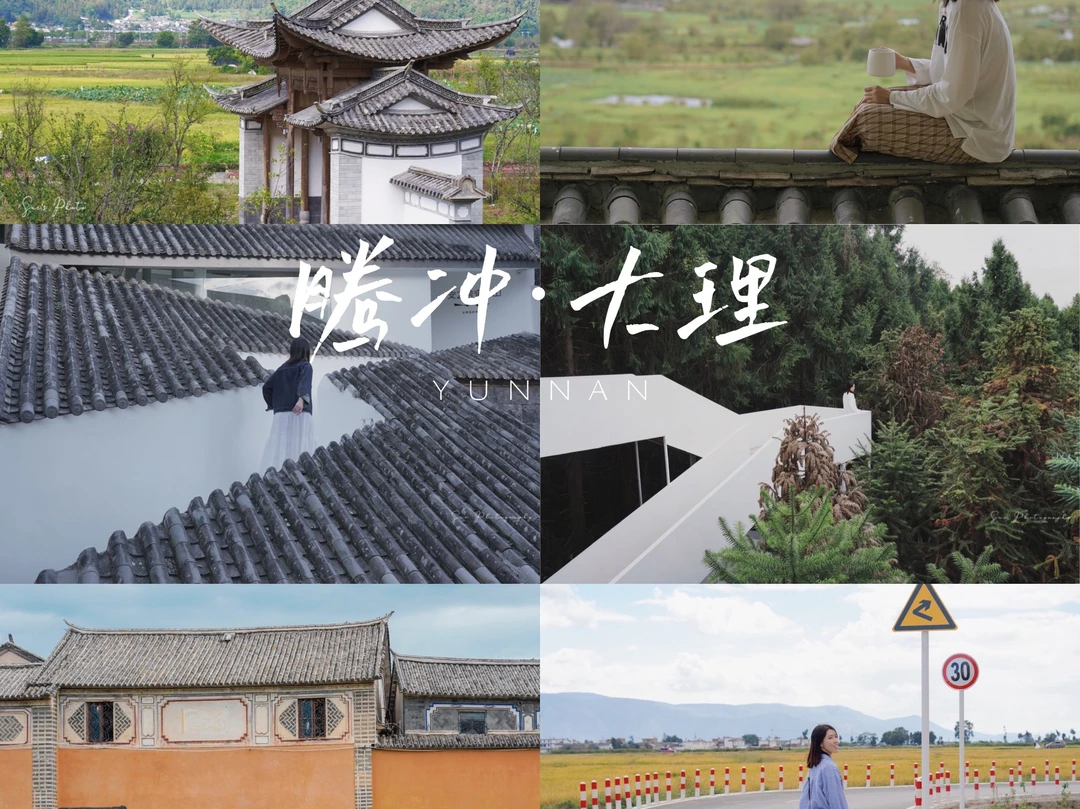
In Tengchong, we stayed at a boutique guesthouse I'd had my eye on for a long time—"An Zhi Ruo Su · Mountain." It's located on an old street where Heshun Ancient Town extends to the foot of the mountain, with an attitude of non-competition—exactly the kind of life one dreams of.
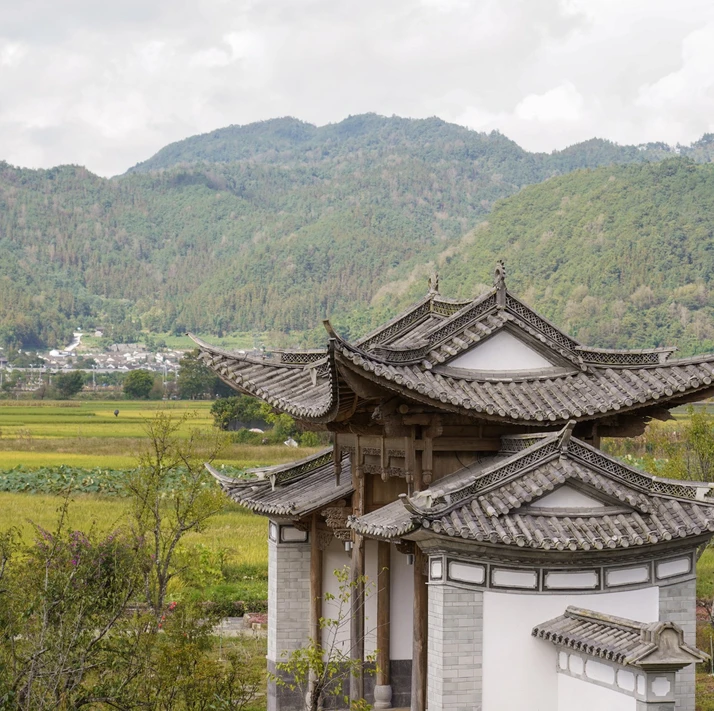
This guesthouse was designed by a Harvard architect. On the traditional tiled roof, a bright white "Z"-shaped entrance cuts through, with a sloping path extending upward to a green landscape surrounded by forest. The whole structure resembles a white hill growing upward—full of design flair and incredibly pleasing to the eye.
Each room has a poetic name and unique design, but all feature floor-to-ceiling windows overlooking the nearby fields and ancient town. The rooms are equipped with smart appliances and thoughtful details. The guesthouse assigns a personal butler who can pick you up and drop you off. Afternoon tea can be enjoyed in the beautifully designed common areas or on the rooftop with a view. In the evening, they delivered two bowls of peach gum and snow fungus dessert; breakfast can also be brought to your room.
The light and shadow in the morning and afternoon are intoxicating—the staggered design gives sunlight space to play, creating beautiful patterns. Watching the sunset sink from the sky to the mountain base is simply enchanting. This is truly a place for daydreaming and whiling away time.
The hotel lobby also serves as a café—non-guests can enjoy afternoon tea and admire the masterful design. Tree-trunk-like pillars support the space at different angles, sunlight filtering through the gaps. The pure white scene is incredibly gentle. Climb the white staircase to the third floor, sit on the roof tiles, and gaze at the distant fields and mountain town—this is the most peaceful moment.
Photo Spots
- The "roof" path extending from the entrance (backlit in the morning, best for afternoon shots)
- The outdoor white staircase to the third floor (very forest-like)
- The third-floor common area (you can sit on the roof—"climb up and lift the tiles")
- The corridor on the room floors in the morning, with dappled light and shadow
Guesthouse Booking Guide
- Name: An Zhi Ruo Su · Mountain Panorama Hot Spring Hotel
- Address: No. 41, Shuidui Shang'er She, Heshun Town
- Transportation: About half an hour from the airport; the butler can pick you up from the airport or city center. About a 20-minute walk to the ancient town center.
Baoshan Xinzha Village Coffee Estate: Coffee Passion in Brick and Tile
On the way from Tengchong to Dali, we stopped overnight in Baoshan for a somewhat "childish" obsession—to visit a coffee estate. Childish because it wasn't coffee season. But with the "since we're here anyway" mindset, I still wanted to see it, even though transportation was inconvenient and we had to spend a fortune on a taxi back to the city that night.
Baoshan is an incredibly niche city, with the coffee industry supporting over half its economy. Lujiangba's Xinzha Village, over an hour from the city center, is known as "China's First Coffee Village" due to its vast coffee plantations. The village has several coffee estates and experience centers, mountains covered with coffee trees, and processing stations in the hills—for coffee lovers, exploring the source is the most exciting thing.
The most unmissable is the Xinzha Coffee Estate. A Beijing architect used 760,000 bricks to create a space blending mountains, water, art, and humanity—calling it a coffee museum wouldn't be an exaggeration. This estate was even selected as one of ArchDaily's "China Building of the Year 2020" top ten works.
A note: Xinzha Coffee Estate is not in Xinzha Village, but in Bawan. Other scattered coffee estates are mostly in Xinzha Village. Bawan and Xinzha Village are on different hills, about half an hour apart by car. If you have enough time and a car, you can cover both hills in one day. Unfortunately, we arrived in the afternoon, so we could only visit the estate before heading back down the mountain—leaving one regret.
The estate's site was once an abandoned courtyard, formerly a township government office. Under the architect's bold vision, it transformed into a retro yet stylish coffee space. The estate consists of three parts: a cinema built in the 1980s, a two-story red brick café, and a three-story main building primarily for storage and processing.
In the dappled afternoon light, we wandered through the estate. High arched corridors, open views, and staggered design spaces—photo opportunities everywhere. The estate also houses a small coffee museum, displaying hundreds of coffee-related artifacts from Lujiangba—from coffee varieties to processing tools. From watching and learning to hands-on experience, you can understand how a coffee bean transforms into a fragrant cup, tracing Lujiangba's decades of folk coffee history.
Visiting the estate for the architecture and a cup of coffee—despite the long journey—seems worth it. A 250-year-old banyan tree is the estate's "treasure." Retro rectangular windows adorn the gray brick wall of the former cinema. From afternoon to evening, as the light fades, the building's nostalgic atmosphere deepens.
Tips for Visiting Xinzha Coffee Estate
- Self-Drive: You absolutely must drive yourself! Public transportation is extremely inconvenient (don't ask how I know).
- Time: The estate isn't large—about an hour to tour and photograph. The surrounding area is all old villages with nothing else to do. To visit more estates, start early, see Xinzha Coffee Estate, then drive to Xinzha Village (about half an hour). Recommended estates: Brian Coffee Experience Center, Qiteng Cultural Coffee Experience Hall, Bidun Coffee Estate.
- Road Conditions: The mountain road has many curves—recommend an experienced driver.
- Accommodation: If time allows, visit Xinzha Village in the morning, Xinzha Coffee Estate in the afternoon, and stay overnight at the estate's guesthouse for a better experience.
Dali: A Return with Mixed Feelings
My first visit to Dali was as a student. Compared to bustling Lijiang Old Town, Dali Old Town felt like a breath of fresh air—wide stone-paved streets, lazy afternoons, a slow-paced lifestyle... I've always held that fondness for it.
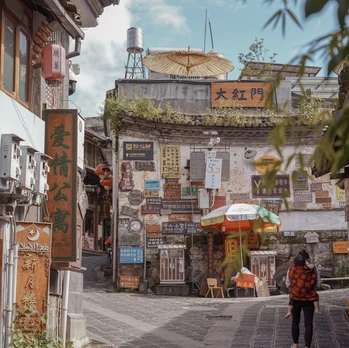
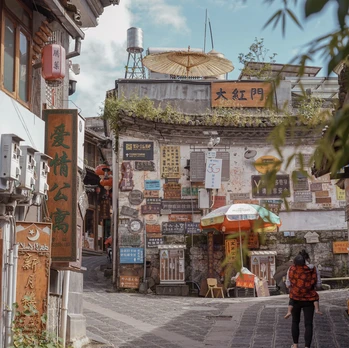
Coming back seven or eight years later, it seems almost unrecognizable. Restaurants and shops have become dense, cars and scooters fill the roads, markets and art spaces are everywhere. Perhaps it was the holiday crowds, but the old town was packed shoulder to shoulder. The nighttime noise and brightly lit signs somewhat dampened my enthusiasm.
Dali Old Town has ultimately followed the tide of commercialization. Life in the old town is now no different from the city—milk tea shops, a bar street with queues and ticket numbers, small shops doing brisk business. Merchants have made money, tourists have had fun, but those leisurely, carefree, priceless days have gradually faded.
I'm not saying commercialization is bad—after all, we're just temporary visitors, not long-term residents of Dali. For locals, improved living standards and economic development are genuinely good things. But when we seek ordinary and authentic beauty amid繁华尽处 (the end of prosperity), there's inevitably a touch of melancholy in our hearts.
Final Thoughts: The Ordinary and Real in Travel
From Tengchong to Dali, what moved me most on this journey wasn't any stunning attraction, but those ordinary daily moments: the morning kitchen smoke in Heshun Ancient Town, the golden wind through the rice paddies, the figures washing clothes by the laundry pavilion, the laughter from all corners of the country at the barbecue stalls... They're like scattered pearls, strung together to form the most precious memories of the journey.
We may not always get what we want. But that's life, isn't it? Travel is, after all, just another part of life. To have small joys amid busyness, to see moving scenery when you look up—that's already incredibly fortunate.
If you also want to find a quiet place to daydream, consider Tengchong. There's Heshun Ancient Town steeped in scholarly fragrance, the lush green Beihai Wetland, the steaming Rehai geothermal wonder, and the tea plantations and coffee estates hidden in the mountains. There, you can slow down and experience the ordinary, authentic face of life.
Life is worth it. Happy travels.
You should also read:
A Journey Through Shuanglang's Guesthouses: Finding Life as It Should Be on the Shores of Erhai Lake
A Journey Through Shuanglang's Guesthouses: Finding Life as It Should Be on the Shores of Erhai Lake Prologue: When Life Hits the Pause Button Have you ever had one of those moments? When the city's towering buildings press down on your chest, when you're swept…
Continue reading...
A 9-Day Yunnan Journey: From Lijiang to Dali to Tengchong – A Trip Toward Self-Reconciliation
A 9-Day Yunnan Journey: From Lijiang to Dali to Tengchong – A Trip Toward Self-Reconciliation Some say travel is simply going from a place you're tired of to a place other people are tired of. It stings to hear, but it's painfully true. Yet there's…
Continue reading...
Yunnan Travel Mastery: From Beginner to Pro-Level Player – A Complete Guide
Yunnan Travel Mastery: From Beginner to Pro-Level Player – A Complete Guide "Either travel or read, but your body and soul must be on the road." This quote has been repeated countless times, but very few people truly manage to be "on the road" and…
Continue reading...