Go to the Nujiang River: One Person’s Paradise — Finding the Soul’s Home in Bingzhongluo, Laomudeng, and Zhiziluo
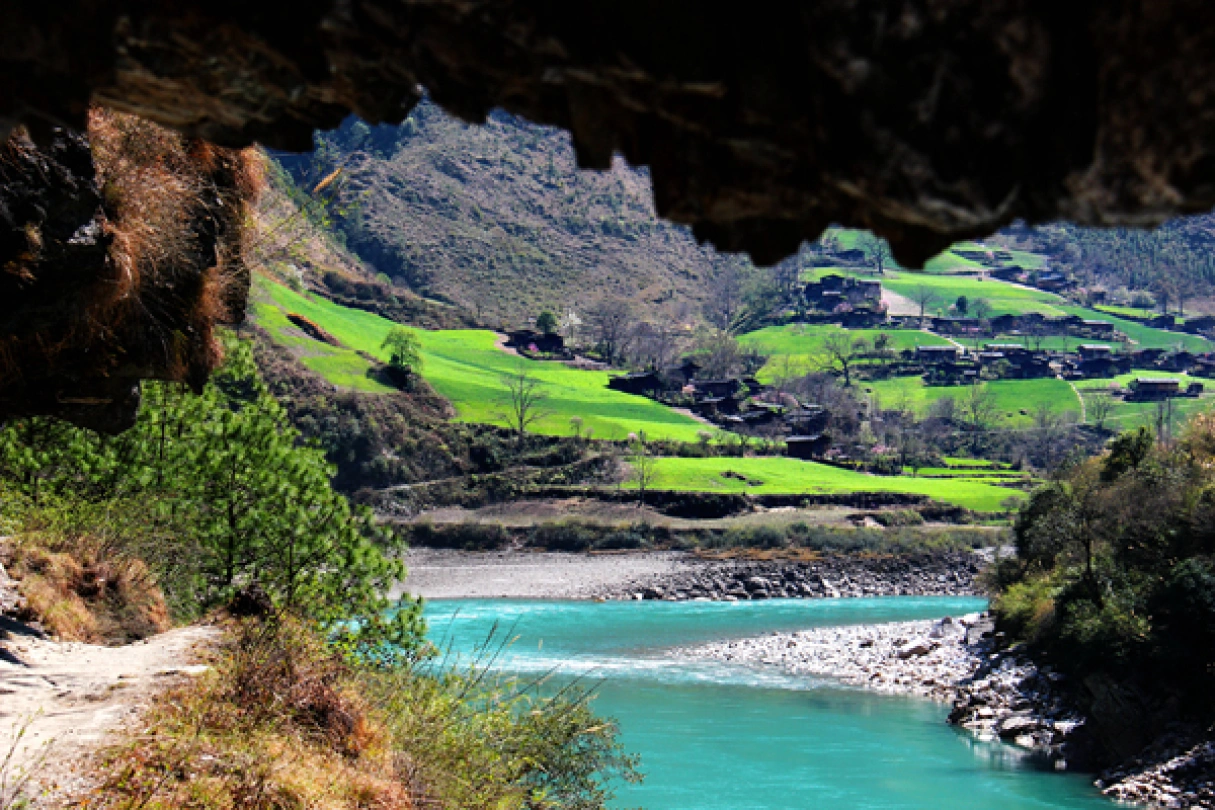
Go to the Nujiang River: One Person’s Paradise — Finding the Soul’s Home in Bingzhongluo, Laomudeng, and Zhiziluo
The wind from afar is always farther than the distance itself. When life becomes cluttered with trivialities, when longing surges like a tide, perhaps a spontaneous journey is the best remedy. In March 2014, I set out alone on a trip to the Nujiang River in Yunnan. Over eleven days, I traveled north along the Nujiang Grand Canyon, exploring that mysterious realm known as “where gods and humans dwell together.” This was no simple trip — it was a pilgrimage of the soul.
The Beginning: Walking Alone
After a trip to Yunnan the previous year, my wife and I soon got married and welcomed our daughter. Watching a small life grow day by day is a wonder and a joy that words cannot describe. At the beginning of the month, my wife took our child to visit her parents and wouldn’t return until month’s end. I was left alone, missing my daughter more with each passing day.
Why not get out and travel? With my wife and child away and a project wrapped up, the timing was perfect. But where to go? After weighing various factors, I decided on the Nujiang River in Yunnan — following the Grand Canyon northward to explore that pure, mysterious land.
The Nujiang is a tear from heaven, fallen to earth.
Itinerary Overview: A Ten-Day Map of the Soul
This journey spanned ten days. I measured with my feet the “land where gods and humans dwell together” of Bingzhongluo, the “abandoned city” of Zhiziluo, and the mist-shrouded village of Laomudeng. Finally, I rested in Dali. I had originally planned to visit the Dulong River, but heavy snow blocked the mountain passes, so that trip had to wait.
- Day 0 (March 13): Beijing → Kunming, stayed at Home Inn
- Day 1 (March 14): Kunming → Liuku, stayed at Yuanjiang Hotel
- Day 2 (March 15): Liuku → Bingzhongluo, stayed at Gudaofang Inn
- Day 3 (March 16): Hiked from Bingzhongluo to Qiunatong, stayed at Abai Inn
- Day 4 (March 17): Hitchhiked from Qiunatong back to Bingzhongluo, hiked to Peach Blossom Island, stayed at Gudaofang Inn
- Day 5 (March 18): Hiked from Bingzhongluo to Wuli Village and Puhua Temple, stayed at Gudaofang Inn
- Day 6 (March 19): Bingzhongluo → Pihe, hitchhiked to Laomudeng Village, hiked to the tea plantation and Zhiziluo, stayed at 150 Inn
- Day 7 (March 20): Pihe → Liuku → Dali, stayed at Youran Xiaoyuan Inn
- Day 8 (March 21): Cycled around Erhai Lake and visited Chongsheng Temple in Dali, stayed at Youran Xiaoyuan Inn
- Day 9 (March 22): Dali → Kunming, rested during the day, took the night train
- Day 10 (March 23): Kunming → Beijing
About Costs: Neither extravagant nor stingy, I spent a total of 3,500 yuan. Transportation took the biggest share (2,400 yuan), accommodation cost 400 yuan, entrance fees were only 50 yuan (I used a student ID to get into Bingzhongluo), and other expenses totaled 650 yuan.
Chapter 1: Liuku — Gateway to the Nujiang
Departing from Kunming

To reach the Nujiang, you generally go first to Liuku, the prefectural capital. There’s no train, so you have to take a bus from Kunming’s Western Coach Station — either an overnight sleeper or a daytime express, about eight hours. The route passes through Dali, Yongping, and Baoshan, and the roads are in good condition. There’s a stop for meals along the way, but it’s best to bring your own snacks.
Perhaps because of the season, the scenery along the road wasn’t particularly exciting. I dozed on and off. Only when we crossed the Lancang River Bridge and saw the waters of the Lancang did my spirits lift, and a sense of anticipation grew.
Impressions of Liuku
I arrived at Liuku’s new bus station around 6 p.m. I first bought a ticket for the next day’s 8:20 a.m. bus to Bingzhongluo — there’s only one departure each day. If you can’t get a ticket, you can go to Gongshan first and then transfer to Bingzhongluo.
Liuku’s name supposedly comes from six treasuries. It’s the capital of the Nujiang Prefecture and the seat of Lushui County. The city is small, home mainly to the Lisu, Nu, Dulong, and Bai ethnic groups. The Nujiang River flows through it, dividing Liuku in two — the east bank is the old town, the west bank the new district.
The new bus station is in the new district, with no nearby accommodation. Most hotels are clustered in the old town. If you’re energetic or traveling light, you can walk uphill to catch a bus. For convenience, a taxi costs 15 yuan, a motorbike rickshaw 10 yuan.
In the evening, I strolled across Xiangyang Bridge. At the bridgehead, local residents had gathered for spontaneous folk singing and dancing, and there were plenty of vendors — selling snacks, cassette tapes, CDs… lively and down-to-earth.
Chapter 2: Bingzhongluo — A Mysterious Land Where Gods and Humans Dwell
Entering the Nujiang Grand Canyon
As the bus left Liuku in the morning, we entered the Nujiang Grand Canyon — the deepest, most mysterious, most beautiful, and most pristine canyon in the world. The road ran parallel to the Nujiang River, with the Gaoligong Mountains on the west bank and the Biluo Snow Mountains on the east. We traveled through the canyon, heading north.
Four hours later, we reached Fugong County town, where we stopped for a 30-minute lunch break. The oranges here were very sweet and delicious, 4 yuan per jin (about half a kilogram). I bought some and took a moment to look at the elderly vendors — one Nu elder woman, her face deeply lined, yet radiating serenity.
Continuing north, we soon saw the “Stone Moon.” The local Lisu people call it “Yahaba.” Seen from below, it looks like a bright moon hanging high among the peaks of the forest, merging with the sky, surrounded by a host of mountains. Legend has it that the god Niuwa molded the youth Qisha from clay. Qisha fell in love with the Dragon Girl of the Nujiang. When they fled, a great mountain blocked their path. Qisha used a bow and arrow gifted by the god to shoot through the peak, escaping pursuit. That’s how the great hole of the Stone Moon came to be. The couple then multiplied and became the ancestors of humanity.
First Sight of Bingzhongluo
As we neared Gongshan, snow-capped mountains gradually appeared against the blue sky and white clouds. From Gongshan to Bingzhongluo is another 40-plus kilometers. The closer we got to Bingzhongluo, the greener the Nujiang River became. In this season, the Nujiang was as gentle as a flowing emerald, winding through the canyon.
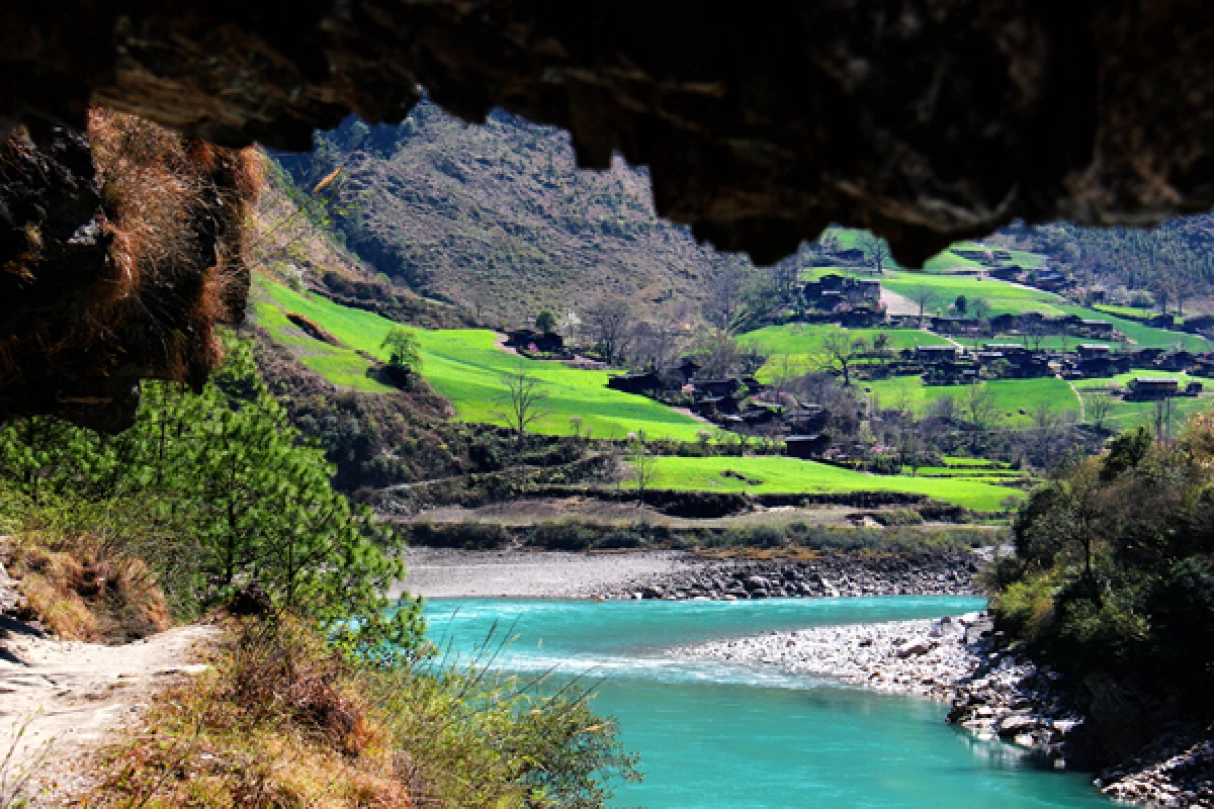
Entering Bingzhongluo Township requires a ticket — 100 yuan at full price. Seniors, teachers, and students can get half price with the appropriate ID. There’s a possible way to avoid buying a ticket: first, don’t dress like a tourist; second, no matter what you’re asked, don’t speak. If you’re wearing a windbreaker and carrying a hiking backpack, you definitely won’t get away with it.
Past the ticket booth, we soon reached the First Bend of the Nujiang. The driver stopped to let passengers take photos. At the center of the bend is a small village called Kantong, with a few households on flat terrain, surrounded on three sides by water, with green trees lining the river. For a panoramic view, you can climb to Gongdang Sacred Mountain.
Not far from the First Bend is Peach Blossom Island. They say that in spring, the island is covered in blooming peach blossoms, a sea of pink. But I didn’t see any. There’s also a story that before liberation, leprosy patients were confined here, so the island is also called “Leprosy Island.” The only suspension bridge connects the island to the outside world.
Night in Bingzhongluo
Around 6 p.m., I arrived at Bingzhongluo town and checked into Gudaofang Inn. After a short rest, I went out for a stroll.
Walking down the road, the Bingzhongluo flatland spread out on a gentle slope. Rapeseed flowers, rice paddies, walnut trees, scattered houses, snow-capped sacred mountains all around, dense forests on the mountainsides — it was like a fairyland where gods and humans dwell together.
Bingzhongluo town is very small, with only one street of modest length. It’s home to Nu, Tibetan, and Lisu people, as well as some Han and Bai from elsewhere. The latter two groups run most of the businesses here, big and small.
Bingzhongluo is the starting point of the “Bingchacha Route,” the eighth road into Tibet, and has only become widely known in recent years. It lies at the core of the Three Parallel Rivers area — the Nujiang, Lancang, and Jinsha rivers. “Bingzhong” means “Tibetan village” in Tibetan, while “luo” means “place” in Lisu. When Tibetan Buddhism flourished here, believers revered Bingzhongluo as “Jia Gelila” (meaning “Flying Sacred Land”), and the ten sacred mountains around it protect the flatland. For this reason, some scholars believe that “Shangri-La” might be a misnomer, and that Bingzhongluo is the true final Shangri-La.
The Gudaofang Inn where I stayed was run by a young couple. They had come here a few years ago and decided to stay and live like a pair of fairy lovers. The inn was very clean, and the common area on the first floor was tastefully decorated.
Chapter 3: Hiking to Qiunatong — A Paradise Lost on the Ancient Tea Horse Road
Regret in the Morning Mist
I woke up a little after 7 a.m. and looked out the window. A thick fog had settled in. I felt a surge of excitement — fog is a rare blessing for photography enthusiasts. I quickly grabbed my backpack and jogged toward Peach Blossom Island.
But the fog here was too thick; I couldn’t see anything. I waited until 9 a.m., but the fog still refused to lift, revealing only faint glimpses of snowy peaks. I had to give up. Today I still needed to hike from Bingzhongluo to Qiunatong, so I couldn’t wait any longer. I took a few photos and left with regret.
The Hiking Route
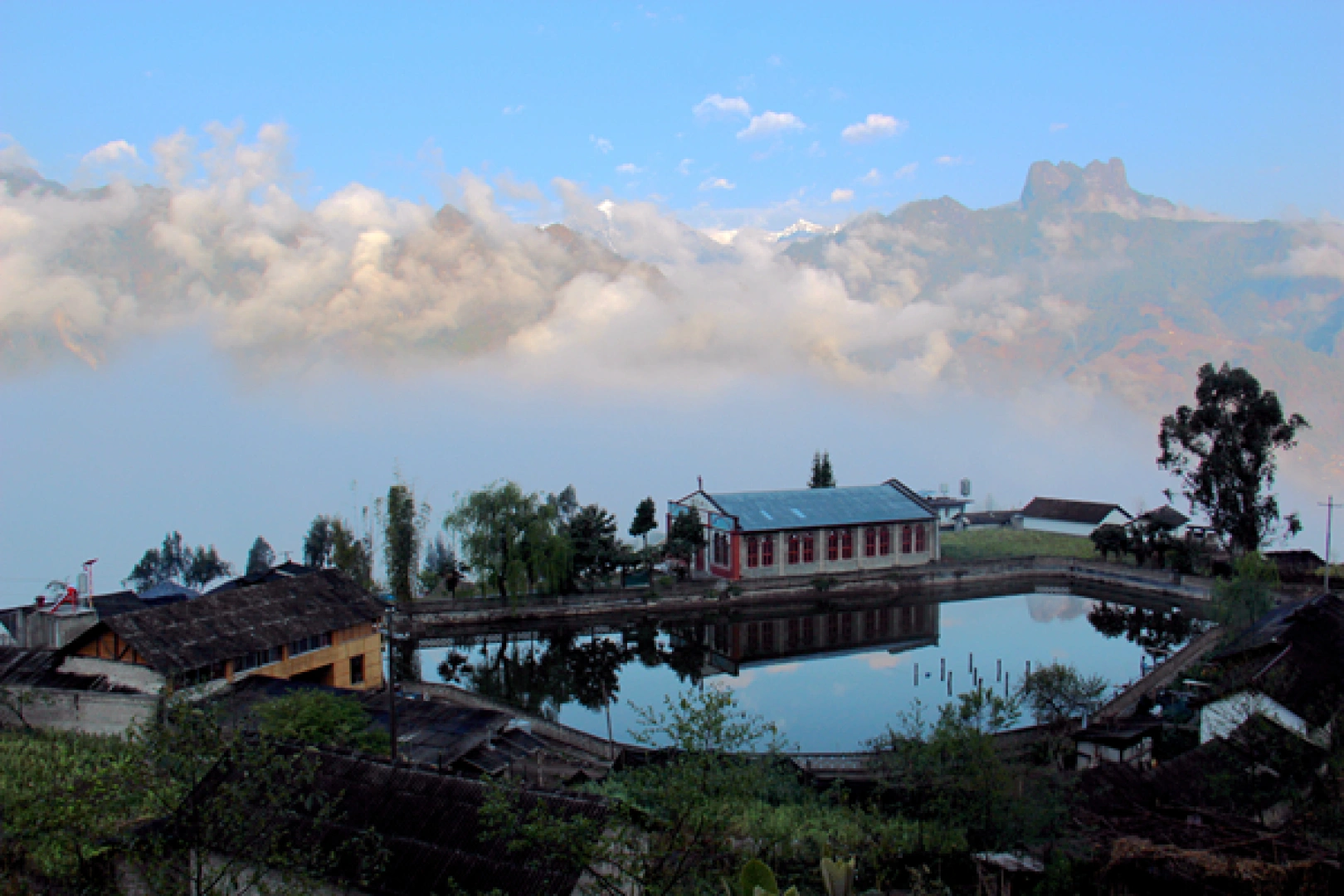
The hiking route from Bingzhongluo to Qiunatong: Bingzhongluo → Zhongding Village → Shimen Pass → Sijitong → Wuli Village → Qiunatong. The total distance is 18 kilometers. Starting from Zhongding Village, the Nujiang River accompanies you the whole way. The scenery is pristine, and the local people are simple and warm. If you stop to take photos, it takes about five hours. The route is mostly on paved roads and is considered relatively easy.
The usual approach is to take a bus there and hike back. This has two advantages: first, the return from Qiunatong to Bingzhongluo is downhill, making it easier; second, accommodation in Qiunatong is limited — no WiFi, and cell phone reception is poor.
A minibus from Bingzhongluo to Qiunatong costs 15 yuan per person, but it only leaves when full. A private car for the day costs 300 yuan. During my visit, there were very few tourists, and it was hard to find people to share a car with, so I chose to hike there. I started out full of confidence, thinking I could make a round trip in a day, but in the end, I stayed overnight in Qiunatong.
Zhongding Church
Following the road beside the post office, I began my hike. After the sun peeked out, the thick fog gradually dispersed, and distant villages became faintly visible.
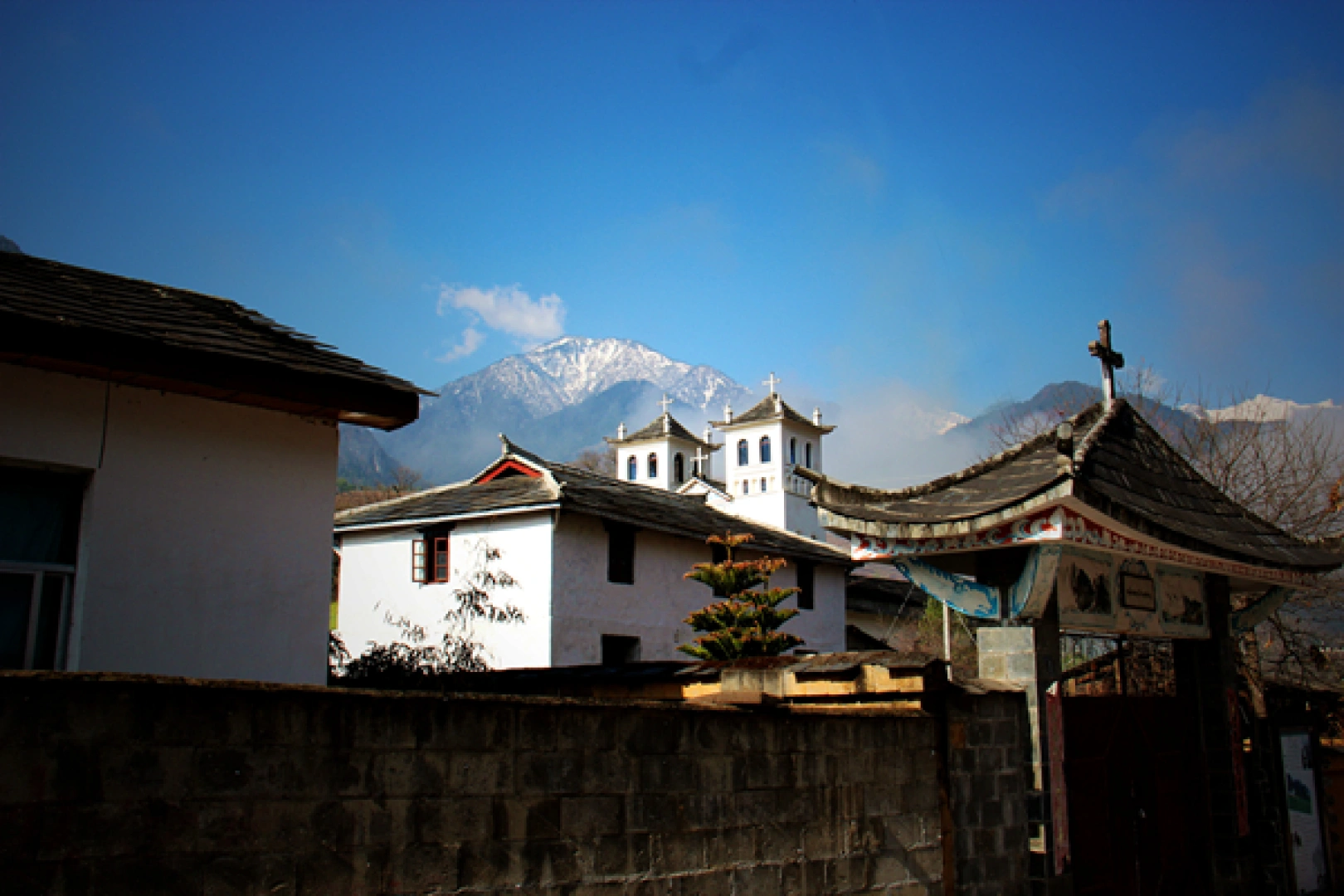
It’s 5 kilometers from Bingzhongluo to Zhongding Village. At the village entrance, a prominent signpost came into view. Zhongding Church is an architectural blend of Chinese and Western styles, standing out vividly against the backdrop of snowy mountains. The church is usually locked, open to visitors only on Sundays. If you time it right, you can sit quietly inside and listen to the congregation sing hymns.
French missionary Annet Genestier arrived in Bingzhongluo in 1897 to spread Catholicism, and he oversaw the construction of the Zhongding Catholic Church. The church was completed in 1935, after ten years of building. It’s said that Genestier went to Hong Kong to photograph church designs, then hired carpenters, stonemasons, painters, and carvers from Jianchuan to build the church in a French style. Two years after its completion, Genestier passed away, and his tomb was built beside the church. The church was destroyed during the Cultural Revolution and rebuilt on its original site in 1996, but on a much smaller scale than before.
The religious culture here is relatively open and tolerant. Besides Catholicism, there are Christianity, Tibetan Buddhism, and indigenous religions, all coexisting in relative harmony.
Childlike Joy by the River
The sun was fully out, but the fog hadn’t completely cleared. Rapeseed flowers and highland barley glowed even brighter in the sunlight. When I reached a house in Jiasheng Village by the road, I noticed a path leading down to the river. Like a child, I ran down with glee.
Facing this expanse of emerald, crystal-clear water, I felt like jumping in for a swim. Sunlight poured onto the river’s surface, reflecting off the green trees along the bank — a scene like an oil painting. By the river, villagers had built stone enclosures, and someone had stacked wooden blocks into a Mani pile. People with faith are truly blessed.
The stones here, worn smooth by years of river water, had beautiful shapes and textures. Before long, my pockets were full of various small stones. I had so much fun here that I lost track of time. I realized I wouldn’t have enough time for a round trip on foot, and there might not be a ride back. So I decided to stay in Qiunatong for the night. I called Gudaofang Inn and canceled my room.
Shimen Pass and Sijitong
I continued on. On the slope across the river, a single house stood, evoking a reclusive lifestyle from ancient times. Living here as a hermit would be a great joy in life. Kapok flowers bloomed along the Nujiang, their red blossoms reflected in the green water.
In the distance, Shimen Pass came into view. The Nujiang narrowed here. Shimen Pass is a strategic mountain fortress on the Yunnan-Tibet post road, where one man could hold off ten thousand. As the Nujiang flows through, the Biluo Snow Mountains on the east and the Gaoligong Mountains on the west suddenly close in, creating two sheer cliffs like giant stone gates. The river roars through, rushing down in a torrent. On the western cliff face, there’s a huge handprint-like mark, which locals call “Nilai Pai,” meaning “ghost’s hand.”
Not far past Shimen Pass is Sijitong. There are many villages with the word “tong” in their names here — Sijitong, Qiunatong, Zhanatong… You might wonder what “tong” means. In the Nu language, “tong” means peace or safety. Sijitong means “peace in all seasons.”
Beside a slate-roofed house, a peach tree was in full bloom. Turning my head, I saw a woman sitting in front of her wooden house, reading a book. A ray of sunlight fell on her, serene and warm. I walked over and greeted her. She told me she was beautiful, and she smiled shyly. She spoke Chinese fluently, was Nu, and had a four-year-old child. I asked if I could take a few more photos. She nodded and went back to her book. When I left, I told her I would bring her the photos next time I came.
Wuli Village — A Valley Like a Dream
From Sijitong, I continued along the road. After about ten minutes, I rounded a bend, and the scene before me was like a dream. This beautiful valley was Wuli Village.
Wuli Village is a small settlement on the Ancient Tea Horse Road, also known as Wuli (Five Li) Village, renamed for the beauty of its mist. It sits at the foot of the Biluo Snow Mountains, facing the Gaoligong Mountains across the river. More than fifty Nu families live here. The best times for photos are early morning and late afternoon, but I arrived at noon, when the direct sunlight didn’t do justice to Wuli’s beauty.
Across the river, an ancient road could be seen extending along the mountainside. This is the Tea Horse Road featured in Tian Zhuangzhuang’s documentary “Delamu.” This road was carved by sheer effort from nearly vertical cliffs, creating a path barely wide enough for two people to pass. Imagining the caravans traveling this rugged, perilous route, with its steep cliffs, conjures up a grand and stirring picture.
After crossing Chaohong Bridge to the right, a 1.5-kilometer walk along the Tea Horse Road leads to Wuli Village. Next to the new bridge is the abandoned old wooden plank bridge. Many suspension bridges have been built along the Nujiang in recent years, greatly improving local transportation. However, the ancient zip-line, used by the Nujiang people for millennia, is now rarely seen. Sometimes, civilization and tradition truly conflict.
On one side was the mountain wall, on the other a cliff, and below the cliff, the Nujiang River rushed by several meters down. Walking along felt like squeezing through a giant rock crevice. This Tea Horse Road is the only way in and out of Wuli Village.
Through the rock crevices, I glimpsed this hidden paradise. Blooming rapeseed flowers slanted across the slopes, their yellow and green patches dazzling. Cattle and local herders passed by leisurely.
The Tranquility of Wuli Village
Peach blossoms were in full bloom at the village entrance. Inside the village, it was utterly peaceful, broken only by the barking of dogs at strangers. Anyone who’s been here will tell you — every household keeps dogs. They don’t just keep them for guarding or as pets; they treat them with gratitude, as benefactors and friends.
Every ethnic group here has a myth about dogs. In Nu legend, when the earth yielded no harvest, a dog cried to the heavens, moving the gods to send down rice to save the people. In Lisu legend, almost all grain was lost in a flood, and their dog secretly ran to the gods’ fields, rolled around to cover itself in seeds, and returned to save humanity. In Tibetan legend, the gods took back all grain to punish human arrogance, and the dog prayed: “All beings are wrong, but I am innocent; I beg the gods to show mercy and let me live.” The gods found the dog’s words reasonable and granted a small amount of barley for the dog, which it shared with humans, helping them survive the famine.
The village’s water-powered mill used the flow of water to grind grain. The stream from the Biluo Snow Mountains was crystal clear. The barley planted in the village was lush and green. The houses here are all wooden structures with stone slab roofs, using local materials — the wood is pine from the Biluo Snow Mountains.
The wooden houses, built one after another on the slope, nestled against the mountain and beside the water, simple and natural. I chatted with a young man. He said the village had more than fifty households, all Nu. He was in middle school and had to walk to Zhongding Village to attend classes. I asked if he wanted to go to university. He said yes, but he wasn’t sure if he could make it, then smiled shyly.
Across from the village were the Gaoligong Mountains. Unknown wildflowers bloomed along the roadside. The village even had a basketball court and a ping-pong table. This village was like an untouched paradise, fallen to earth but unstained, far from all noise and bustle.
Qiunatong — A Home on the Alpine Meadow
From Wuli Village, I retraced my steps to Chaohong Bridge and continued toward Nidadang Village. The scorching sun beat down on me directly. There wasn’t a single tourist on the road, only the occasional roar of a local motorcycle passing by.
After about two kilometers, I reached Nidadang Village. Nidadang is the administrative seat of the Qiunatong area. Qiunatong Village itself is still about three kilometers away. There are many shops run by locals selling Nujiang stones, with varying prices.
Past the village, I walked on, with thousand-meter cliffs rising by the river. After about ten minutes, I crossed a stone bridge, and the road split in two — the left fork led to the Najiakuo Gorge and Tibet on a dirt road, while the right fork, uphill, led to Qiunatong. There was no clear signpost. I made a mistake, following the left road for quite a distance until a local villager told me I was wrong, adding several extra kilometers to my hike.
It was already past 5 p.m. As I climbed the winding mountain road, I saw a car stop ahead. The road was under construction and impassable. Several people got out of the car, and one woman greeted me. Looking closer, I recognized her — she was from Chongqing and had been staying at the same inn. She had hitched a ride from Bingzhongluo. We decided to walk together.
On the road, you always meet people with stories. On this trip to Bingzhongluo, I met Sister Tang from Chongqing, Brother Hahaxiong and his wife from Wuxi, the “Beggar Couple” from Hebei who had quit their jobs to run an inn in Tengchong, Afei who had studied in Yunnan and then researched ethnic groups across the province, and three girls from Shanghai. Being able to share a stretch of the road with them and hear their stories was truly a pleasure.
My legs felt like lead, growing heavier by the minute. Then a minivan appeared. I waved it down. The driver was a local villager. We asked how he had gotten through the construction zone. He said that stretch was no problem for him. He charged us 15 yuan for the ride up.
This was a small village of several dozen households scattered across an alpine meadow, surrounded by mountains on all sides. Sunlight fell on wooden houses, walnut trees, and farmland — warm and peaceful. In the fields, Nu villagers were busy working.
The Nu people love to drink. They brew their own liquor, around 40% alcohol by volume. Both men and women can hold their drink — they drink until drunk, and when drunk, they sing. As we passed, they waved warmly and filled our cups with liquor. We drank, and they refilled. After two cups, we thanked them and moved on.
We met some village children and gave them candy and sausages from our packs. Their childhood, compared to city kids’, might be happier and simpler.
Slate-roofed houses under walnut trees, a little girl playing by the water mill, a Nu woman carrying soil in a basket… A father worked with clay, his daughter gave him water, and a grandfather looked at his granddaughter with affection. Wild pigs foraged in the harvested fields. Chickens and dogs could be heard, and paths crisscrossed the land. Intoxicating peach blossoms bloomed in the spring breeze.
As dusk fell, I stayed at Abai Inn. The rooms were all wood, very clean. The bathroom was shared. Unfortunately, there was no WiFi, and cell reception was weak. After a full day of hiking, I was exhausted. After a simple dinner cooked by the innkeeper, I went to bed early.
Chapter 4: Peach Blossom Island — The Gentleness of the Second Bend of the Nujiang
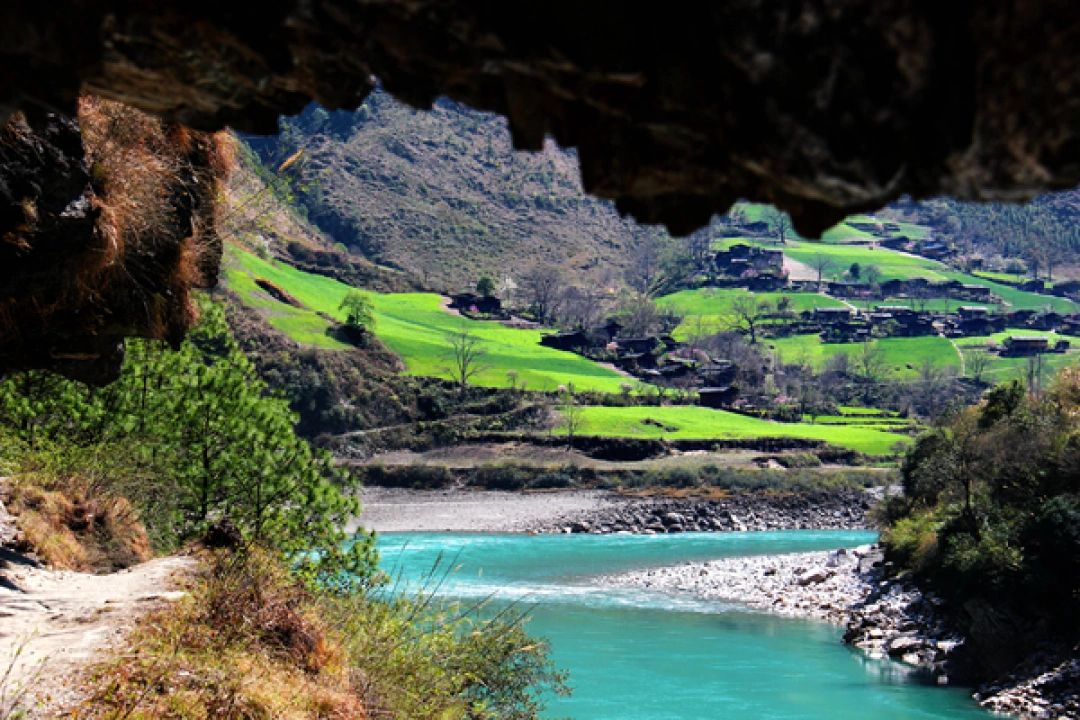
Morning in Qiunatong
I got up in the morning, checked out, and contacted the driver who had given us a ride the day before. We agreed to meet at 10 a.m. to take his car back to Bingzhongluo.
Qiunatong in the early morning light had a different charm. We took photos while waiting for the car. In the distance were snow-capped mountains; closer, the Nu homes. Smoke rose from chimneys, and the green barley was full of life. Two dogs and a hen leading her chicks strolled leisurely along the road. The greenery was lush and vibrant. One dog led us for quite a distance. It was a moving pastoral scene.
The Legend of Peach Blossom Island
Back at Gudaofang Inn in Bingzhongluo, I rested briefly before setting out to hike to Peach Blossom Island.
Peach Blossom Island — just the name evokes a place of longing. Locally called Zhanatong Village, it’s shaped like a peninsula by the Nujiang River and is also known as the “Second Bend of the Nujiang.” It’s said that the island is covered in peach blossoms, and in March and April, it turns pink, like the Peach Blossom Spring in Tao Yuanming’s classic tale. But in reality, there weren’t that many peach trees.
Following local directions, I walked downhill along an irrigation channel. Passing a house, I saw a Nu woman weaving a Nu blanket. A field of golden rapeseed flowers was in full bloom. The downhill walk was easy, and soon I reached the suspension bridge to Peach Blossom Island.
A Nu man was fishing by the river. On the island, it was hot, so we found a shady spot to rest. A little girl approached us. We gave her a lollipop from our pack, and she wasn’t shy at all. Her mother was very friendly; the man fishing by the river was her husband. We asked about a little girl named Sina Yingzong, and her mother said she was playing on the basketball court.
We went to find Sina Yingzong and saw her playing with friends from a distance.
Chapter 5: Zhiziluo and Laomudeng — Abandoned City and Faith
Zhiziluo: An “Abandoned City” Forgotten by Time
Returning from Bingzhongluo, I hitched a ride to Pihe and then hiked to Zhiziluo.
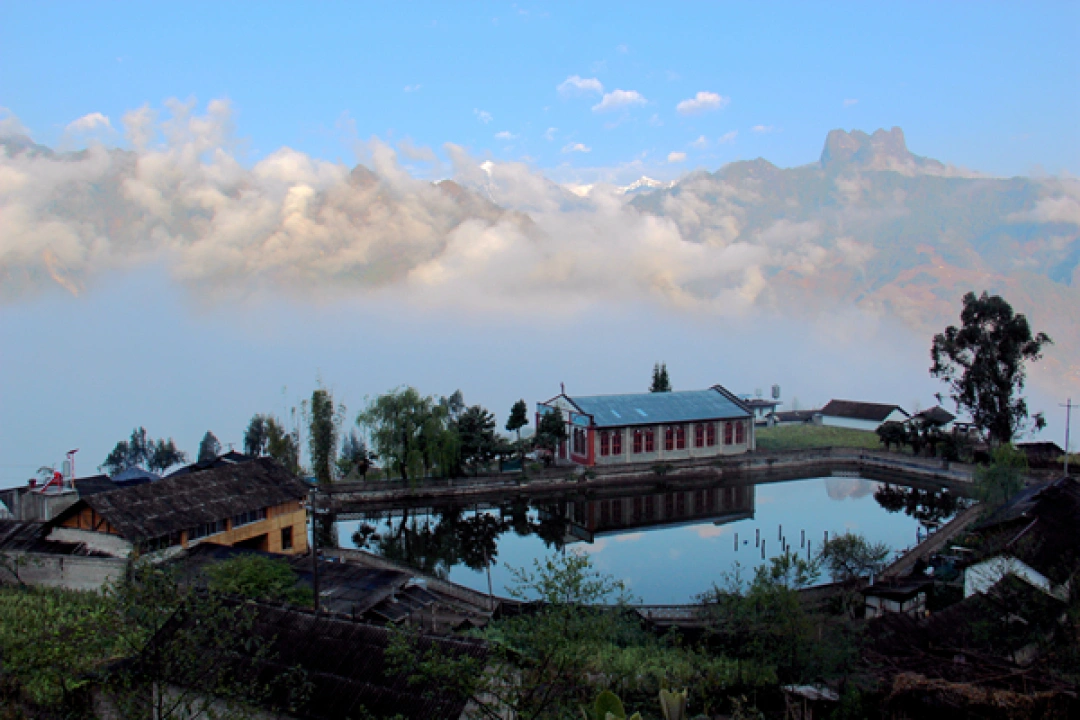
Zhiziluo means “good place” in Lisu. It was once the capital of the Nujiang Prefecture. In 1974, geological experts predicted a landslide here, so the prefectural seat was moved to Liuku. The landslide never happened, but Zhiziluo was abandoned, becoming a “ghost town.”
Walking through Zhiziluo’s streets felt like stepping back into the 1970s and 80s. Faded walls, peeling slogans, empty office buildings… Time had frozen here. The Octagonal Tower, the old cinema, the former post office — these buildings still looked as they did decades ago. There was no noise of crowds, only the wind and the occasional bird song.
Now, only a few residents remain, mostly elderly. They guard this empty city and the memories of the past. Standing on a high point, I could see the Nujiang River winding through the canyon, with snowy mountains faintly visible in the distance. Zhiziluo was like an old man forgotten by time, quietly telling its story.
Laomudeng: A Misty Land of Faith
The hike from Zhiziluo to Laomudeng Village took about an hour. Laomudeng means “a place people like to come” in the Nu language. Its most famous landmark is the Laomudeng Christian Church.
Built in the 1930s, the Laomudeng Church is a legacy of French missionaries. It sits on the mountainside, with the Biluo Snow Mountains at its back and the Gaoligong Mountains before it. The red-and-white building stands out against the green trees. Every Sunday, local believers come here for worship. The choir’s hymns echo through the valley, pure and moving.
I stayed at Laomudeng 150 Inn, run by a friendly local couple. In the evening, we sat in the courtyard chatting as the stars appeared one by one. The church bell sounded in the distance, distant and peaceful.
The next morning, I hiked to the tea plantation. This area, part of the Gaoligong Mountains, is high in elevation and often shrouded in mist. In the tea fields, women sang folk songs as they picked leaves, their voices drifting through the valley. From the high point of the plantation, I could see the entire majestic Nujiang Grand Canyon.
Chapter 6: Dali — Resting on the Way Home
Cycling Around Erhai Lake
From Pihe to Liuku, then to Xiaguan, and finally to Dali. I checked into Youran Xiaoyuan Inn, planning to rest for two days.
Dali has a slow rhythm. I rented a bicycle and cycled along Erhai Lake. Sunlight sparkled on the water’s surface. In the distance, the Cangshan Mountains stood majestic; closer, the fields were lush and green. In the small villages along the way, the white walls and grey tiles of Bai-style houses shone brightly in the sun.
When I got tired, I stopped at a roadside stall for a yogurt drink and a bowl of cold noodles. The wind off Erhai Lake
You should also read:
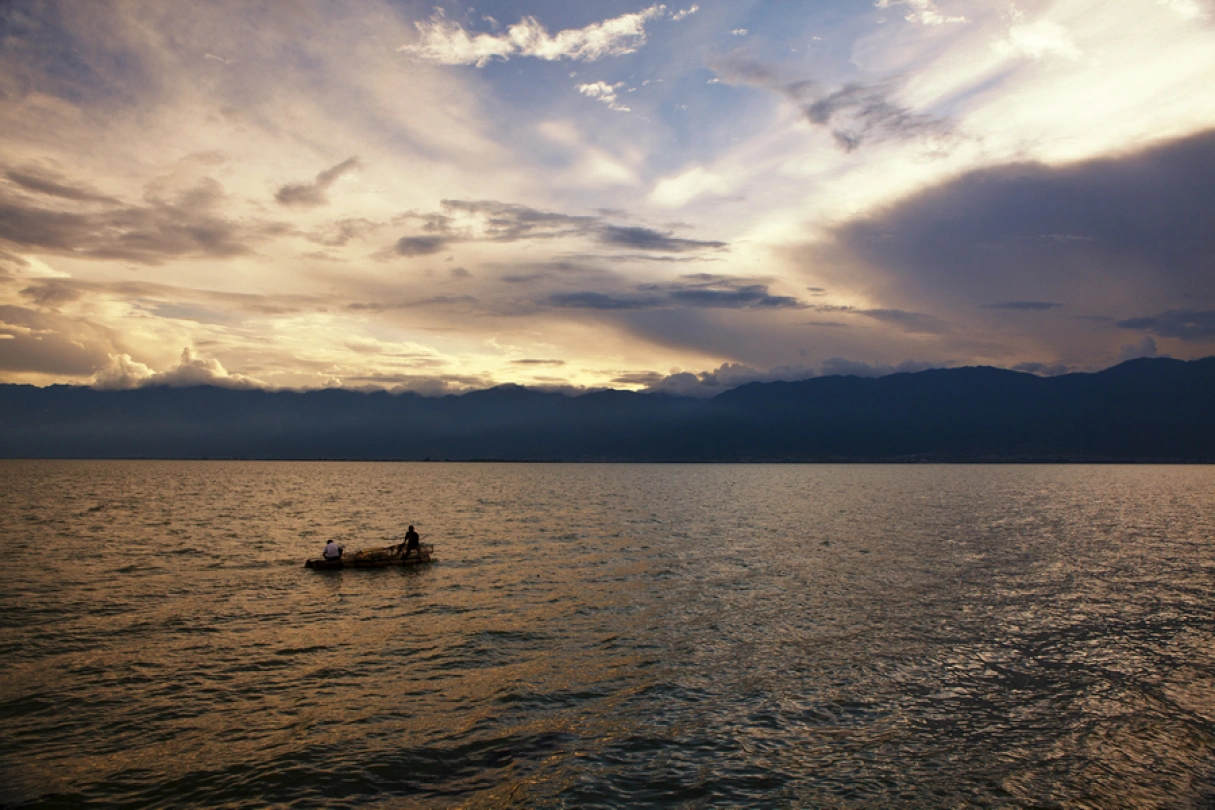
A Journey Through Shuanglang's Guesthouses: Finding Life as It Should Be on the Shores of Erhai Lake
A Journey Through Shuanglang's Guesthouses: Finding Life as It Should Be on the Shores of Erhai Lake Prologue: When Life Hits the Pause Button Have you ever had one of those moments? When the city's towering buildings press down on your chest, when you're swept…
Continue reading...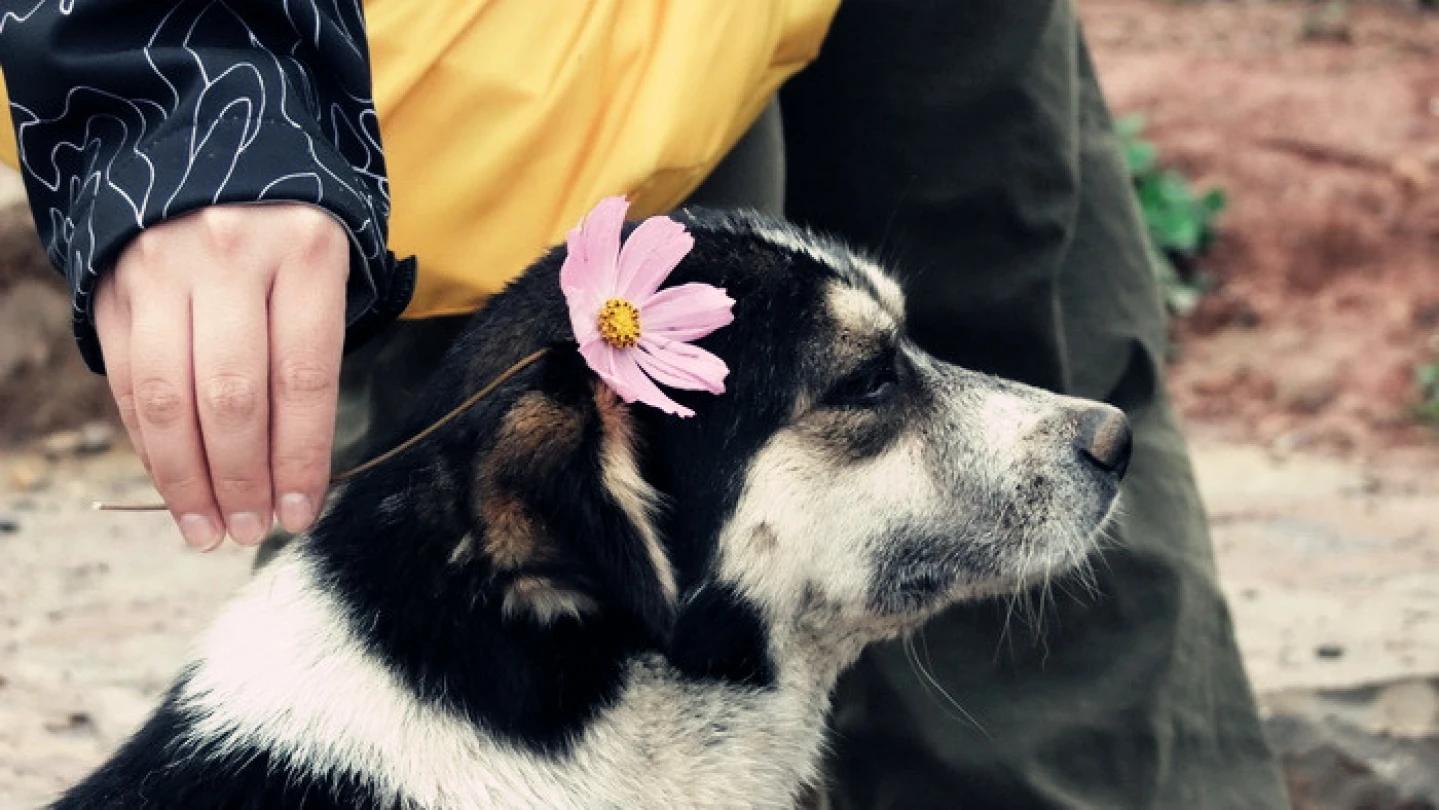
September: Finding Unexpected Warmth in Yunnan (Kunming, Dali, Shuanglang, Lijiang, Lugu Lake)
September: Finding Unexpected Warmth in Yunnan (Kunming, Dali, Shuanglang, Lijiang, Lugu Lake) Foreword: One Person's Journey, A Crowd's Story Before I set off, like every first-time solo traveler, I printed out a thick stack of travel guides and rehearsed countless possible scenarios in my head—getting…
Continue reading...
Yunnan! Paradise on Earth – The Yubeng Chapter: A Soul-Cleansing Journey into Seclusion
Yunnan! Paradise on Earth – The Yubeng Chapter: A Soul-Cleansing Journey into Seclusion Prologue: Why Yubeng? If you ask me which place in Yunnan is most worth hiking to, I would answer without hesitation: Yubeng. This is not an answer I give lightly. As a…
Continue reading...