Yunnan! Paradise on Earth – The Yubeng Chapter: A Soul-Cleansing Journey into Seclusion
Yunnan! Paradise on Earth – The Yubeng Chapter: A Soul-Cleansing Journey into Seclusion
Prologue: Why Yubeng?
If you ask me which place in Yunnan is most worth hiking to, I would answer without hesitation: Yubeng.
This is not an answer I give lightly. As a "newbie hiker" in the trekking community, I'm well aware of my limited experience. But it's precisely this freshness that made my experience in Yubeng so genuine and profound. Two months ago, when I first saw photos of Yubeng online, I was stunned by its pristine isolation—snow-capped peaks, forests, meadows, prayer flags, and a Tibetan village hidden deep in the mountains, as if it had stepped straight out of a myth.
However, Yunnan's rainy season kept delaying my plans. Mudslides, landslides, blocked mountain roads… these words alone were enough to strike fear into anyone's heart. But in the end, my longing for that "last pure land of Shangri-La" overcame my fear. I told myself: getting close to nature means taking some risks. So I set out on this journey of "hell for the body, heaven for the eyes."
Now, I want to share this experience with you—a story of three days without a shower, two bowls of instant noodles, countless heart-stopping moments, yet an unforgettable tale that will last a lifetime.
Day One: From Lijiang to Feilaisi, Scenery and Song All the Way
The First Bend of the Yangtze River and the Pastoral Poetry of the Jinsha River
We set off from Lijiang early in the morning. Outside the car window, the First Bend of the Yangtze River appeared and disappeared in the morning mist, while the pastoral landscape along the Jinsha River unfolded like a moving painting. Our guide, Xiao Tang, a witty Tibetan man, drove while explaining the local customs and culture, occasionally throwing in some authentic Tibetan phrases that had the whole car roaring with laughter.
We passed through the Baima Snow Mountain Pass—at an altitude of 4,292 meters, it's a必经之路 (necessary passage) for entering Tibet. Standing at the pass, the distant snow-capped mountains shimmered silver under the sun. The wind was strong, but everyone wore excited smiles. Xiao Tang said this was the most "relaxed" group he had ever led, because everyone was just too happy.
Feilaisi: Waiting for the "Golden Sun over the Snow Mountain"

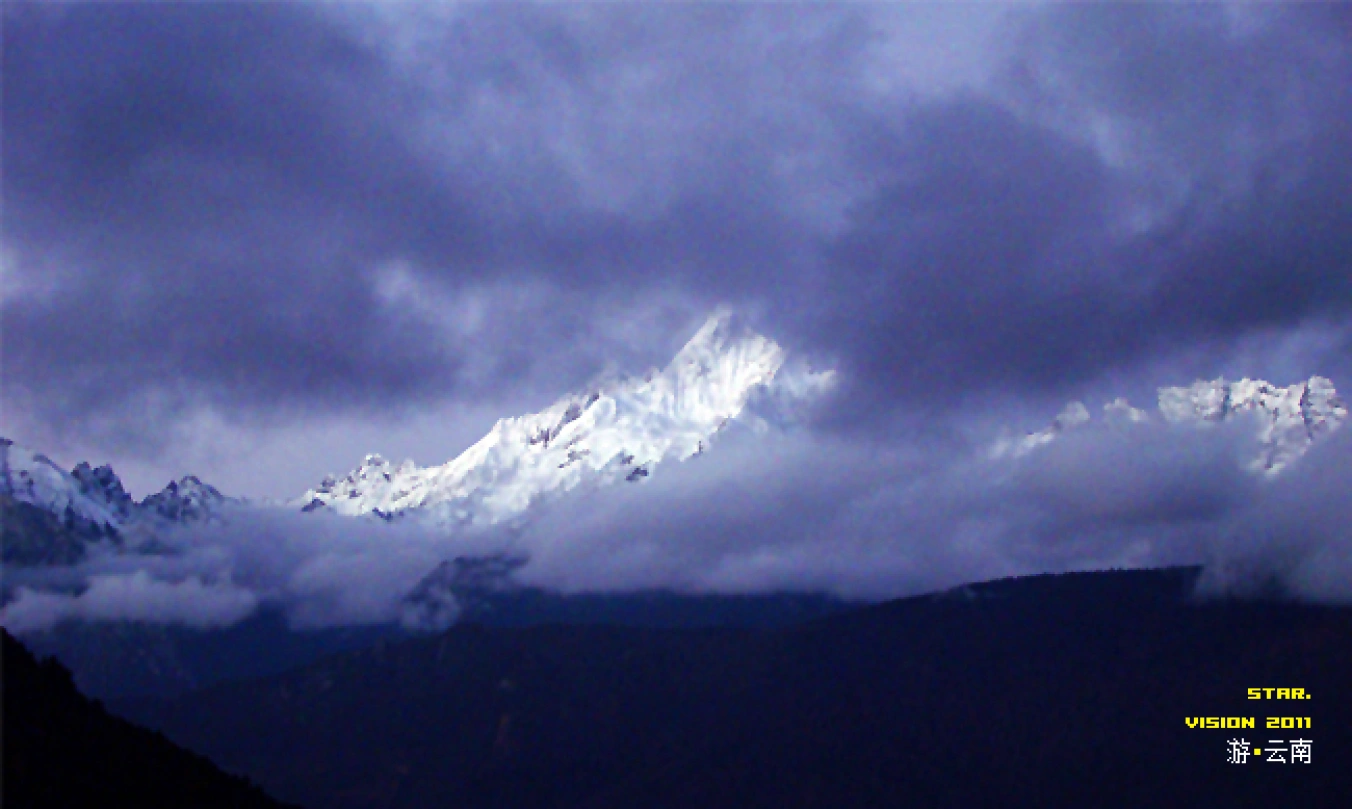
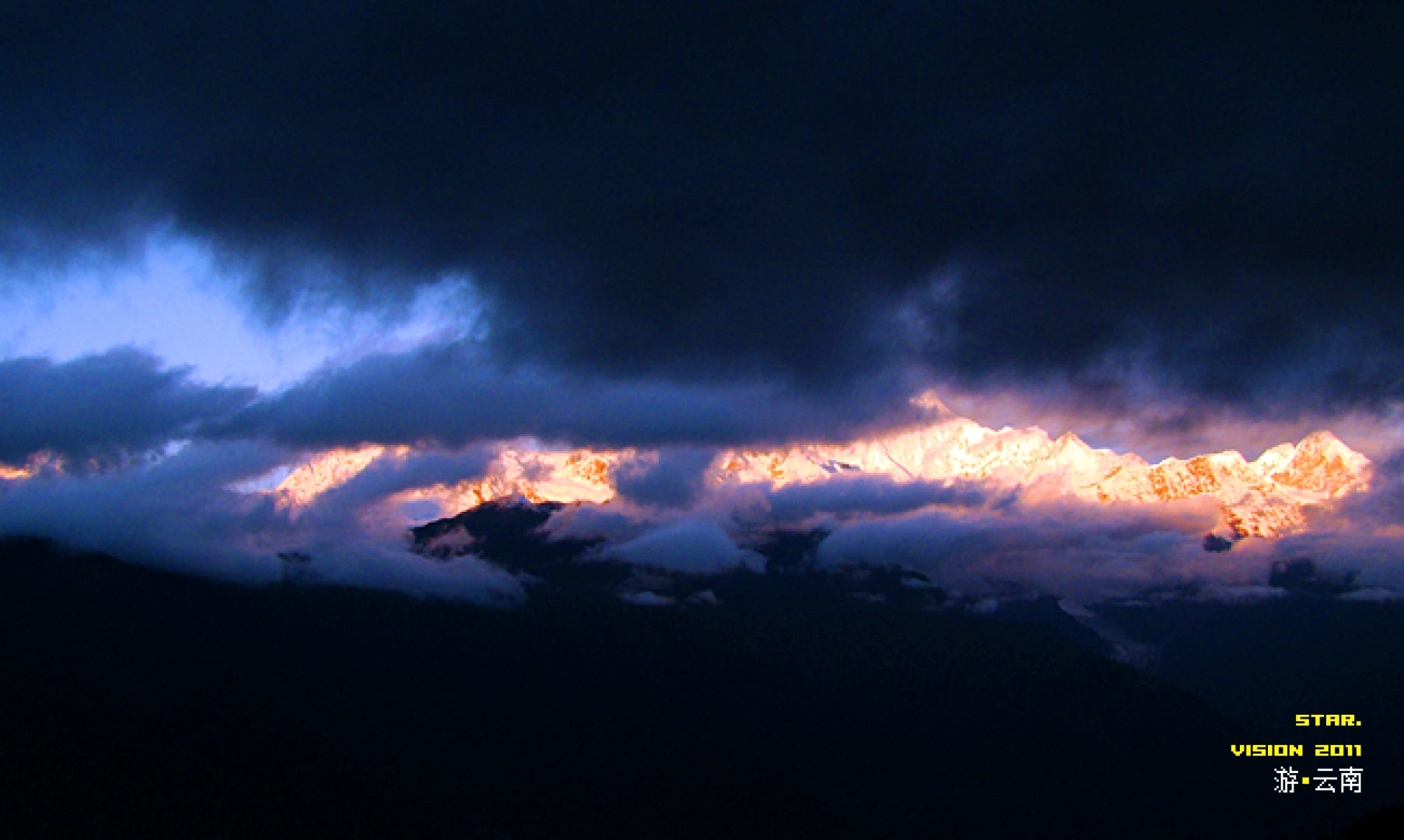
By evening, we arrived at Feilaisi (Flying Temple). There's an observation deck here, the best spot to view the main peak of the Meili Snow Mountain range—Kawagebo Peak. It is said that the early morning "日照金山 (sunshine illuminating the golden mountain)" is a rare spectacle, requiring clear skies, no clouds, and sunlight that happens to break through the clouds to strike the summit. The entire process lasts about half an hour, with gold gradually spreading from the peak until the entire snow mountain turns into a mountain of gold.
That night, I tossed and turned in bed, my mind filled with the thought, "Will I see it tomorrow?" At six in the morning, I woke up groggily and pulled back the curtain—outside, clouds and mist swirled, and dark clouds filled the sky. But just as I was about to give up, a miracle happened: sunlight pierced through a gap in the clouds, illuminating Kawagebo Peak, and golden light spread little by little. I held my breath, watching the magnificent sight, with only one thought in my mind: This trip was worth it.
Day Two: Hiking to Yubeng, Starting with a "Dog-Beating Stick"
Xidang Village: A Newbie's First Challenge
From Feilaisi to Xidang Village, and then on foot to Upper Yubeng, the entire journey took about five hours. As a "newbie hiker," I carried a 70-liter backpack stuffed with essentials, but I had no professional hiking gear. Xiao Tang saw me staggering along, picked up a tree branch from the roadside, and handed it to me: "Here, use this as a walking stick." This "打狗棒 (dog-beating stick)" became my most reliable companion on the trail, reducing the friction on my feet and helping me walk much more steadily on the steep mountain paths.
The mountain road was flanked by dense forests, and occasionally we could hear the jingling of mule bells. The local Tibetan people have relied on mules and horses to transport goods for generations. If we encountered a mule train, everyone had to press against the inner side of the mountain path to let them pass; otherwise, it could be dangerous. As I walked, I counted the garbage bins along the way—"trophies" left by hikers, each number representing a certain distance.
Upper Yubeng: First Glimpse of Paradise
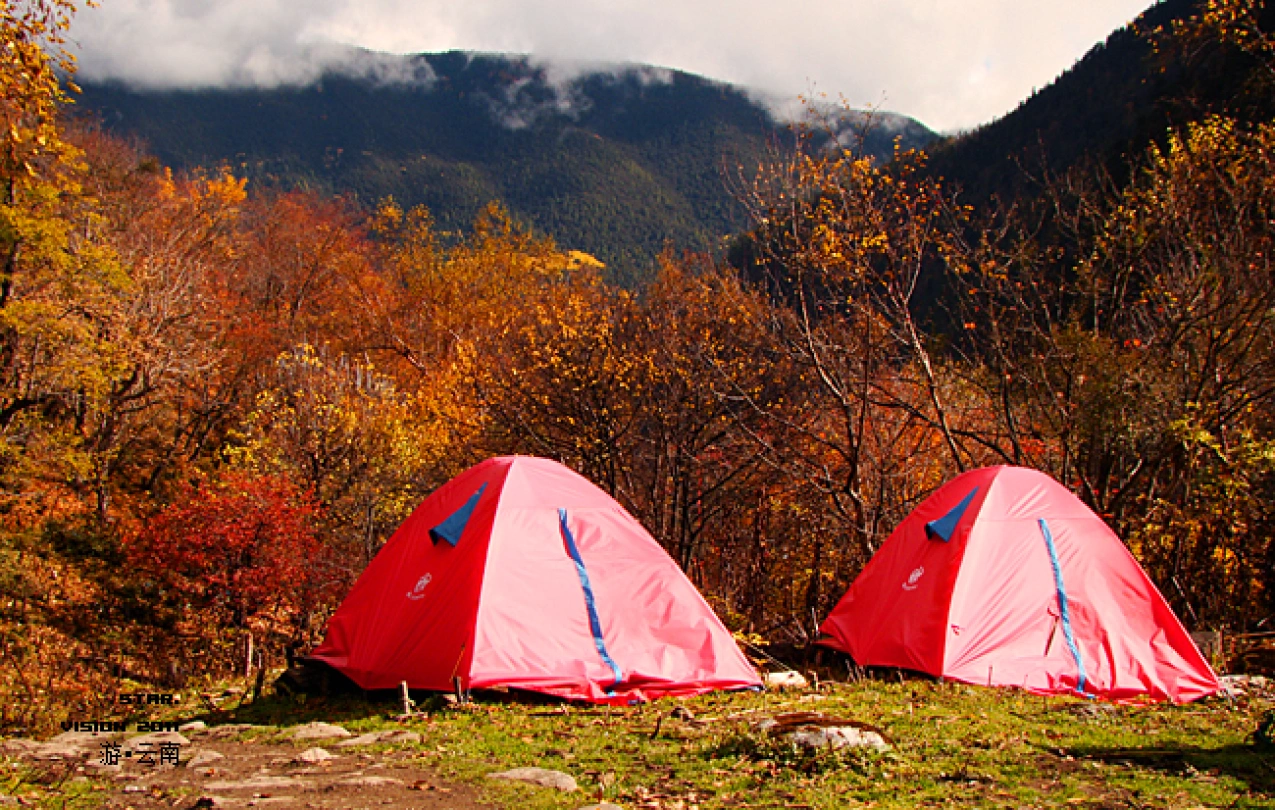
After five hours, I finally reached Upper Yubeng. Standing at the village entrance, the sight before me made me forget all my fatigue: snow-capped mountains surrounded us, green grass spread like a carpet, and dozens of households were scattered across the valley, like a serene oil painting. There are no roads here, no cars—only mules and horses, as if time had turned back several hundred years.
That night, we stayed in a Tibetan home. No soft beds or plush pillows, just simple bunks and slightly damp quilts; no city lights, only intermittent power from a generator; no hot showers, only washing our faces and brushing our teeth in the dark with cold water. But strangely, all of this brought a kind of joy in returning to simplicity. Everyone gathered around the fireplace, warming ourselves, singing, and chatting. Though our bodies were exhausted, our hearts were filled with warmth.
Day Three: Ice Lake – Where Thrills and Beauty Coexist
Primeval Forest: Heaven for the Eyes
Early in the morning, we set out for Ice Lake. Along the way, the scenery of the primeval forest was a feast for the eyes: muddy trails, steep slopes, lush green meadows, colorful plants, babbling streams… In the distance, white mist swirled among the high mountains, and occasionally we could hear the sound of snow collapsing from the peaks. At that moment, I truly understood the meaning of "hell for the body, heaven for the eyes."
A Moment of Terror: Almost Lost My Life
However, not everything about this day was beautiful. My camera battery turned out to be a dud—it died halfway through, so I had to run back to the Tibetan home to get a spare. In my haste, I stepped on and broke the stairs of the house, ending up hanging in mid-air, nearly falling. After finally catching up with the group, I slipped on the way back, flew off the trail about a meter, and ended up dangling from a tree branch on the mountainside. My teammates screamed in fright, but luckily someone grabbed me just in time; otherwise, the consequences would have been unthinkable.
The Base Camp: The Ultimate Instant Noodles
Despite everything, we made it to the base camp. The small hut there couldn't accommodate everyone, but we squeezed together, eating instant noodles cooked with melted snow from the mountains. It felt like the most delicious food in the world. In the distance, the snowy peaks appeared and disappeared in the clouds and mist. At our feet, the meadow was piled with small stones left as prayer offerings. Everything was so peaceful and sacred.
Day Four: The Divine Waterfall – A Spiritual Cleansing
Setting Out Before Dawn: A Pilgrimage Under the Stars
On the fourth morning, I dragged my exhausted body out of bed. The physical toll of the previous two days had left me completely drained, and with a slight cold, I hadn't even chatted much with my teammates the night before. But for the Divine Waterfall, I gritted my teeth and pushed on. Just after five in the morning, the stars had not yet faded. We walked single file, holding flashlights to light each other's way. Along the trail, faint lights flickered in caves, and from time to time, the sound of lamas blowing horns echoed. Xiao Tang said those were lamas in meditation, and even locals rarely entered those caves. Listening to that mysterious sound, I thought to myself: if I were walking this path alone, I would be trembling with fear.
The Divine Waterfall: Receiving the Blessing of Holy Water
As we walked, the sky gradually brightened. The path to the Divine Waterfall was much flatter than the one to Ice Lake, but along the way, prayer flags fluttered in the wind, as if guiding us to a sacred place. Finally, we saw the Divine Waterfall—a small curtain of water cascading down a steep cliff face. Sunlight filtered through the mist, refracting into a rainbow. I stood beneath the waterfall, walked around it three times, received the blessing of the holy water, and prayed with devotion.
At that moment, all fatigue vanished. I felt completely cut off from the world, as if I had seen through the illusions of mortal life, and I only wanted to sit in quiet meditation in this pure land.
Epilogue: What Yubeng Taught Me
Three days and two nights: no shower, no meat, sleeping on a damp quilt, washing my face and brushing my teeth with cold water, and experiencing two terrifying slips… But all of this, the moment I left Yubeng, turned into precious memories.
I finally understood why Yubeng is called "the last pure land of Shangri-La." It's not because of how beautiful the scenery is, but because it forces you to return to the most primitive state: no cell phone signal, no television, no hot showers—only snow-capped mountains, forests, prayer flags, and the starry sky. Here, you can hear your own inner voice and feel the purity of life.
If you also want to go to Yubeng, here are a few tips:
- Get proper gear: Hiking boots should have anti-slip soles. Bring a walking stick. Keep your backpack lightweight.
- Keep a calm mindset: Conditions are tough here, but it's precisely this hardship that makes the beauty so precious.
- Safety first: Don't get carried away like I did. Be careful and cautious when walking on mountain trails.
- Respect the local culture: The Tibetan people are very friendly, but you should also respect their customs and beliefs.
Finally, I want to end this travelogue with a Tibetan blessing: 扎西德勒 (Tashi Delek – may good fortune and blessings be with you)! May everyone who sets foot in Yubeng find their own inner pure land.
Originally written by Sunshine Ligu. Please contact the author for reproduction.
You should also read:

Cloud Travelogue · Dali of Wind, Flowers, Snow, and Moon: A Three-Day, Two-Night Journey of a Free Spirit
Cloud Travelogue · Dali of Wind, Flowers, Snow, and Moon: A Three-Day, Two-Night Journey of a Free Spirit I am a cultured female foodie with a touch of rogue charm. I slung on my backpack, took my lover's hand, and set off on a spontaneous…
Continue reading...
The Meaning of Travel – A Tengchong Story: A Journey of the Heart and Personal Growth
The Meaning of Travel – A Tengchong Story: A Journey of the Heart and Personal Growth Setting Out, Only to Return a Better Self Some say travel is nothing more than leaving a place you're tired of, only to go to a place where others…
Continue reading...
Xishuangbanna: Encountering an Ideal and Magical Paradise in the Green Wonderland at 21° North Latitude
Xishuangbanna: Encountering an Ideal and Magical Paradise in the Green Wonderland at 21° North Latitude If you ask me which place in China most resembles Southeast Asia, I would answer without hesitation: Xishuangbanna. This is not Thailand, yet it possesses an even richer Buddhist ambiance…
Continue reading...