Go Where the Wind Blows: A Leisurely Escape to Lijiang and Kunming
Go Where the Wind Blows: A Leisurely Escape to Lijiang and Kunming
A Belated Honeymoon, an Unexpected Getaway
When the TV drama Meet Yourself (去有风的地方) became a massive hit, I was curled up on my sofa, staring at the screen—the azure skies, the white clouds, the Cangshan Mountains and Erhai Lake of Dali—and silently made a wish: One day, I too will slow down like this.
Little did I know, that wish would come true right after the National Day holiday. We had just tied the knot during those turbulent times—busy, full of small hiccups, not perfect but overflowing with emotion. Our honeymoon had been locked in for Yunnan a whole year earlier—no, to be precise, I had made a quiet vow one afternoon many years ago: Yunnan must be visited with the one you love most.
The wind began to stir. Where the heart moves, let it follow fate.
We originally planned at least two weeks, but circumstances forced compromises. Just being able to go through all the trouble to get away and catch my breath was enough for me. The whole trip was tense—ready to "abort mission" at any moment—but it remains an unforgettable honeymoon. Coming home safe and sound was the greatest blessing of all.
My "Luxury" Plan vs. the Real "Shrunk" Itinerary
Let me start with my ideal blueprint:
- Fly to Kunming first — As everyone knows, Kunming is Yunnan's transit hub. Direct flights to Lijiang, Shangri-La, Xishuangbanna, and Dali from other cities are scarce, so going through Kunming is the safest bet.
- Lijiang: Must-climb Jade Dragon Snow Mountain, must-wander the ancient town, must-see the Lijiang Eternal Love show, must-visit Shuhe Old Town and the Mu Mansion, plus Lashi Lake and Lugu Lake.
- Dali: Cangshan and Erhai go without saying; cycling to the most photogenic corner is the trendy thing to do.
- Xishuangbanna: It was on fire this summer—everyone who couldn't go to Thailand flocked there instead. But given what followed, let's save it for next year.
- Shangri-La: I really wanted to hike Tiger Leaping Gorge and see Meili Snow Mountain, but I never got the chance.
Now, the real version:
- Oct 11: Taiyuan → Changsha (layover) → Lijiang (originally planned two days in Changsha, but something came up there right before departure, so we had to cancel)
- Oct 12: Mu Mansion → Lijiang Eternal Love → Lijiang Old Town
- Oct 13: Jade Dragon Snow Mountain → Lijiang Old Town
- Oct 14: Lijiang → Kunming
- Oct 15: Yunnan Ethnic Village → Dianchi Lake → Nanqiang Night Market
- Oct 16: Kunming → Taiyuan
Just by looking at the comparison, it's a shrunken, knockoff version. But we didn't miss a single classic spot or highlight. You might love the bustling, lively Lijiang—but I prefer the quiet, serene old town where clouds drift lazily by.
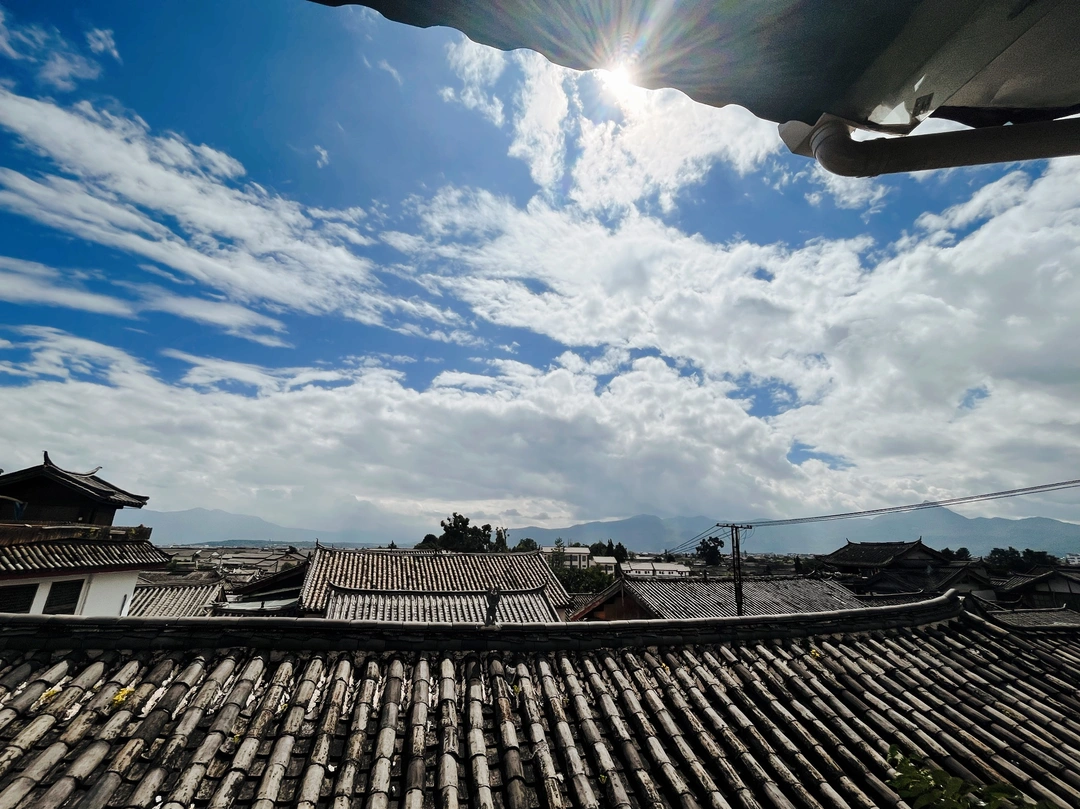
In Lijiang, you can sleep in until you naturally wake up. Push open the door to greet the sun, sit on the second-floor terrace, brew a cup of Pu'er tea (aged Chinese black tea), and read a leisurely book under the blue sky. Around lunchtime, grab a basket and head to Zhongyi Market to buy produce and fruit—cook whatever you feel like. At night, duck into a cozy local eatery and try the regional specialty, "water spinach" (a local aquatic vegetable)—it's surprisingly delightful.
Cost Breakdown: A Trip That Wasn't Cheap but Was Worth It
Here's a chronological rundown of expenses (for two people):
- Home to Taiyuan Wushu Airport: 80 yuan/person
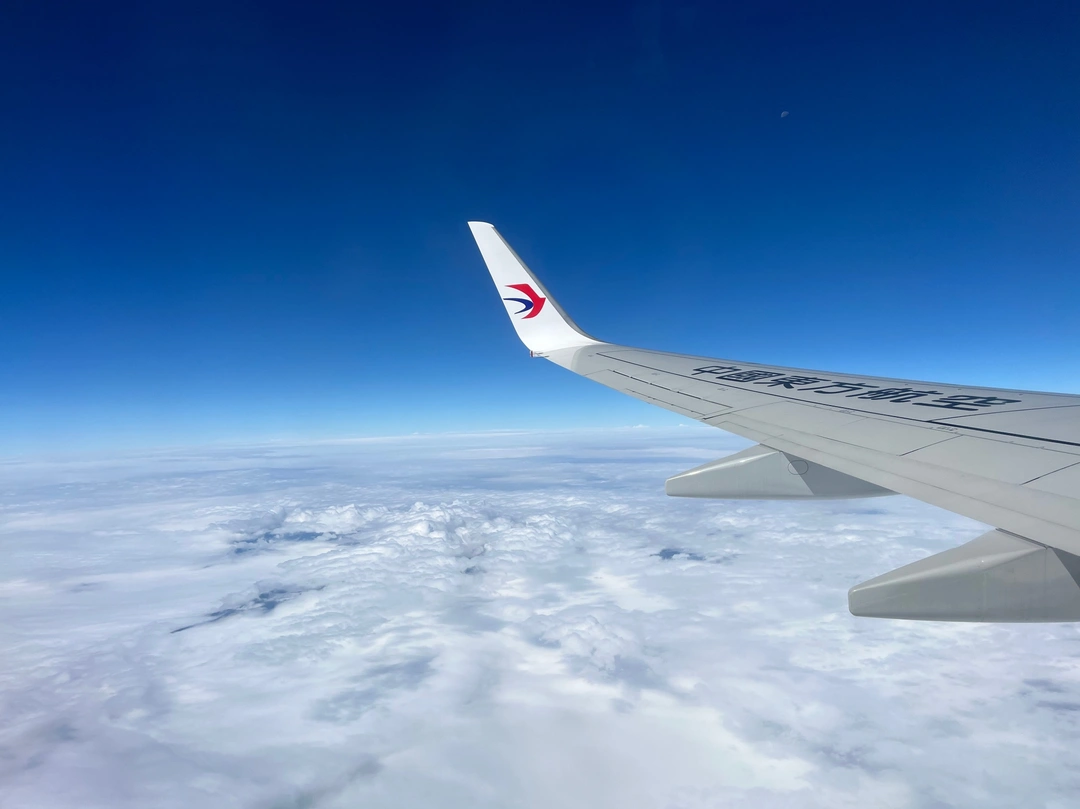
- Taiyuan → Changsha (layover) → Lijiang: 457.5 yuan/person + 370 yuan/person, luggage check-in 180 yuan, total 1,835 yuan
- Changsha airport snacks: "Youlan Latte" 17 yuan, "Fulan Tea" 38 yuan (not as good as I expected—just mildly fragrant without being cloying)
- Mu Mansion tickets: 34 yuan/person + 20 yuan for photos, total 88 yuan
- Lijiang Eternal Love: 260 yuan/person, total 520 yuan
- Jade Dragon Snow Mountain: 280 yuan/person, total 560 yuan; Blue Moon Valley electric cart 100 yuan
- Inside the old town: Starbucks 34 yuan, "Zha Zha Rice Noodles" 66 yuan, soy milk 3 yuan, other miscellaneous 143.24 yuan
- Dayan Old Town → Lijiang Station taxi: 37 yuan
- Lijiang → Kunming bullet train: 220 yuan/person, total 220 yuan
- Kunming: Braised rice 28.18 yuan, "Paoluda" (coconut milk drink with bread and sago) 12.9 yuan, stuffed tofu 10 yuan, grapes 20.36 yuan, milk tea 15+16+10 yuan, Dai-style hand-grabbed rice 109 yuan, Nanqiang Night Market snacks 20 yuan, Pop Mart 207 yuan, Uniqlo 258 yuan, Zara 259 yuan
- Yunnan Ethnic Village tickets: 90 yuan (cheaper if bought on Meituan before 11 a.m.)
- Transport: Taxi 17.55 yuan, shared bike 5 yuan, subway 8 yuan, taxi 18 yuan, toll 9.5 yuan, hotel to airport 61.22 yuan
- Kunming → Taiyuan flights: 1,336 yuan for two
- Taiyuan bullet train home: 80 yuan for two
- Other: 10.88 yuan
Grand Total: 7,658.23 yuan
Not cheap—transportation took the biggest bite. Some expenses could have been trimmed, but hey, it's a honeymoon. Happiness comes first.
First Impressions of Lijiang: A Gentle Land of Eternal Spring
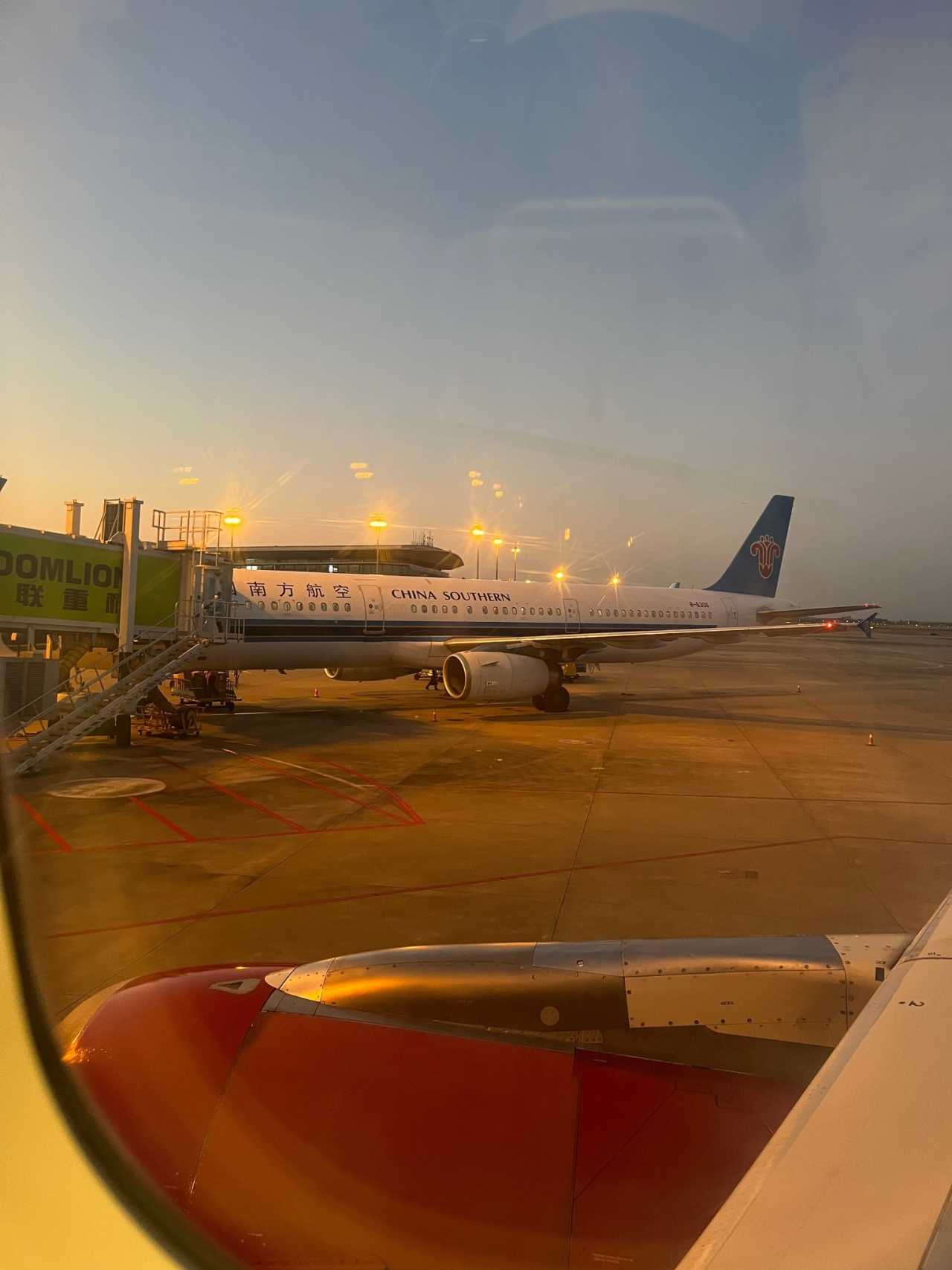
We arrived at Lijiang Sanyi Airport around 9 p.m. The airport is tiny, with a small parking lot. I had arranged for the innkeeper to pick us up—it took half an hour to reach the old town. The road was desolate until we got close to the old town, where things got lively. If you're taking a taxi, it's best to book in advance.
During those special times, Lijiang was forced into a low season, so accommodation was cheap. We stayed at [Lijiang Xishan Tea House] for three nights at 600 yuan, including airport transfers. Now, prices have probably doubled.
The inn was inside the old town, about four or five minutes from the entrance and one minute from the main road—very convenient. I chose it after stumbling upon the owner, Dajing, on Douyin (Chinese TikTok). It turned out to be the right call—we got along wonderfully with Sister Dajing and Manager Zhang. I recently saw their updates—it seems the inn has been sold, and they've moved to Dali to open a tea house.
We arrived around 10 p.m., and Manager Zhang, worried we might be hungry, roasted some Yunnan ham mooncakes for us. It was my first time trying them—fragrant and piping hot. He warmly advised us to rest first and not rush to Jade Dragon Snow Mountain.
Old Town at Dusk, Lanterns Aglow
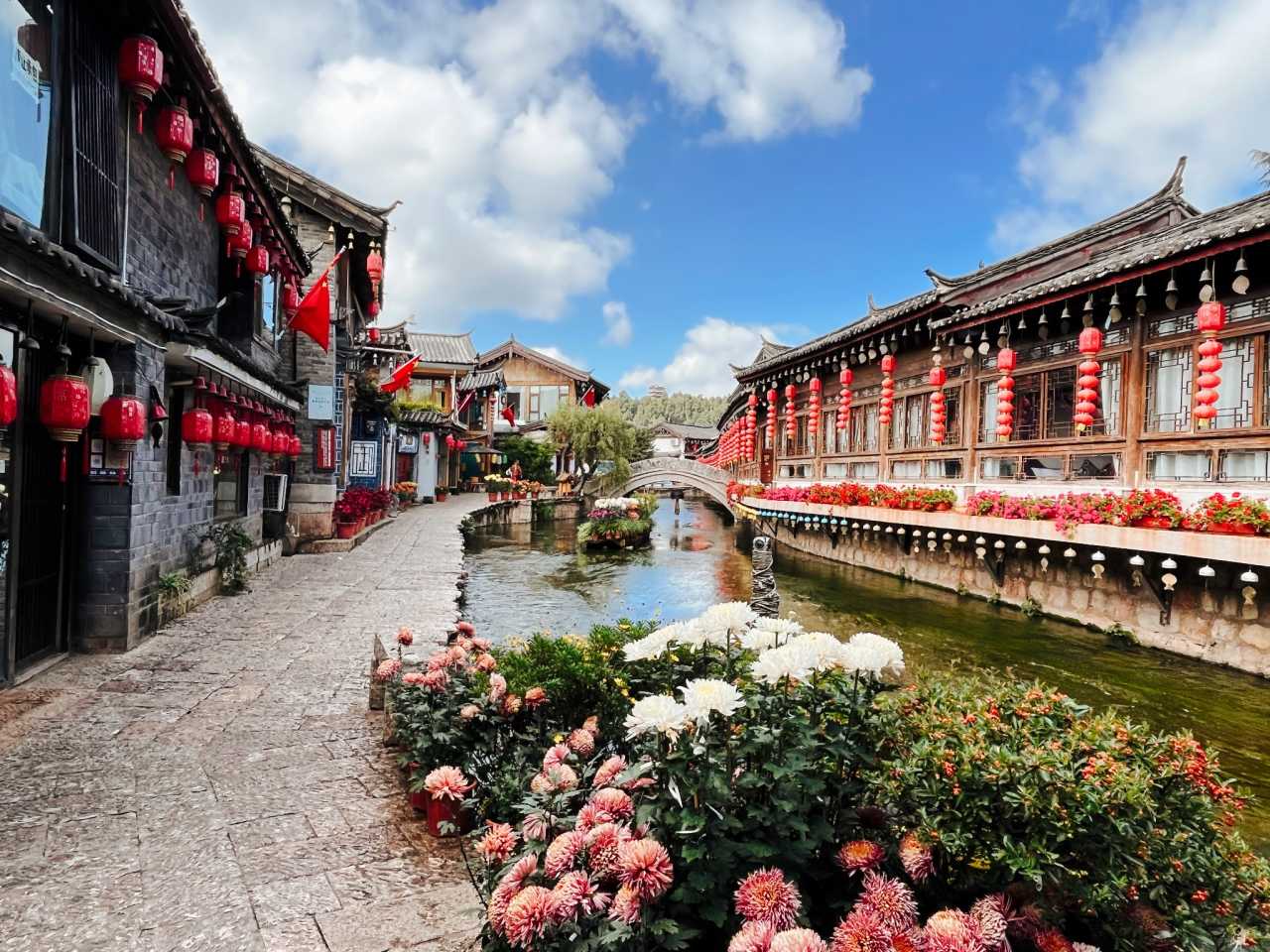
We slept in until 10 a.m. and entered Lijiang Old Town for the first time. We wandered toward the Mu Mansion, passing by [Da Bing's Little House], the Big Waterwheel, and the Big Stone Bridge. I heard Da Bing's Little House changed hands long ago—it's a tiny shop, and I wasn't particularly interested in going inside.
Leaving around 9 a.m., the old town was empty—nothing like a popular tourist spot. The usually crowded photo spots were all ours. My husband loved the cobblestone streets so much he wanted to pry a couple loose and take them home—but the stones were slippery, and I twisted my ankle. Be careful out there. The morning temperature was just right—not too sunny, and a light jacket was perfect. The bougainvillea was blooming beautifully.
Mu Mansion: A Century-Old Chieftain's Residence
Tickets were 34 yuan, and it takes about an hour to tour—you'll need to climb a small hill. Free guided tours are available, though the guide had a thick Naxi accent. Still, it was much better than just skimming the surface. You get a thorough understanding of the Mu family's history as local chieftains.
I had watched the TV drama The Wind of Mu Mansion (木府风云) as a kid, and stepping through the gate felt like walking into the show. On a clear day, you can even catch a glimpse of the snow-capped mountain. The wooden archway bears the inscription "天雨流芳" (tiān yǔ liú fāng), which is a homophone in the Naxi language for "Go read, go study." Be sure to climb the small hill in the back courtyard—the view is stunning and makes for perfect photos.
Lijiang Eternal Love: A Must-Se Show
After lunch, we took the dedicated bus for half an hour to reach the venue. The area features Tea Horse Ancient Street, Horse Caravan Square, Lisu Village, Dai Village, and more—enough to spend half a day exploring. Various small performances start from 2 p.m., packed one after another, so you won't get bored.
There were trendy flash mobs, the "Mu Mansion Recruiting a Son-in-Law" skit, puppet shows, drum performances… We didn't follow all of them. Instead, we found a quiet spot to enjoy the afternoon. It was hot at noon—wearing just a hoodie made me break a sweat, and the sun was intense.
The large-scale outdoor performance Song of Lijiang Love was absolutely breathtaking. Sitting in the viewing area, watching the blue sky and white clouds drift by, surrounded by the buzz of the crowd—at that moment, I felt: Life is beautiful. It's good to be alive. Because of the pandemic, I had hardly seen any shows in the past two or three years. Seeing this performance go on without a hitch filled me with emotion. Thankfully, everything is better now.
The indoor show Lijiang Eternal Love runs about an hour, produced by the Songcheng Group. It's immersive, recreating a thousand years of Lijiang's history and legends. The performers forming "wings" made the show even more dynamic—my favorite photo from the trip. The story of the Tea Horse Road was so vivid it was moving. Some acts had no safety gear, and I barely dared to breathe. I recommend splurging on VIP tickets at 260 yuan/person—the seats are great, and you get a close-up view.
The Old Town at Night
Wandering the old town in the evening had a unique charm. There were so few people that a slight chill set in. I'm used to crowds at scenic spots, so this time it felt strange—I almost thought that beautiful views aren't as nice without people to share them, and that food isn't as tasty without competition. Look at me, so ungrateful.
We found Umbrella Street by chance as we walked. We also ran into some young women having professional photos taken—they looked lovely. I should have taken advantage of the empty streets to get some photos myself. Missed opportunity.
For dinner, we chose [Zha Zha Rice Noodles]. It's on the pricier side, but acceptable for a trendy spot. They gave us branded green masks with their logo—very "zha" (a playful term meaning "lame" or "cheesy"). The lighting inside was good for photos. I ordered the "Scholar's Crossing-the-Bridge Rice Noodles" (zhuàngyuán guòqiáo mǐxiàn), purely for the name. The broth was indeed good, but nothing else blew me away. The portion was generous—I left half for my husband to finish. Total: 70 yuan.
Mountains and Mortal Life: Jade Dragon Snow Mountain
We booked a small 7-person group tour a day in advance. Comparing Mafengwo and Meituan, Meituan was slightly cheaper. For two people, including transport and lunch, it was 560 yuan—covering the scenic area ticket, Blue Moon Valley ticket, the big cable car, a winter coat rental, and one oxygen canister per person.
About Altitude Sickness: Stock Up on Oxygen
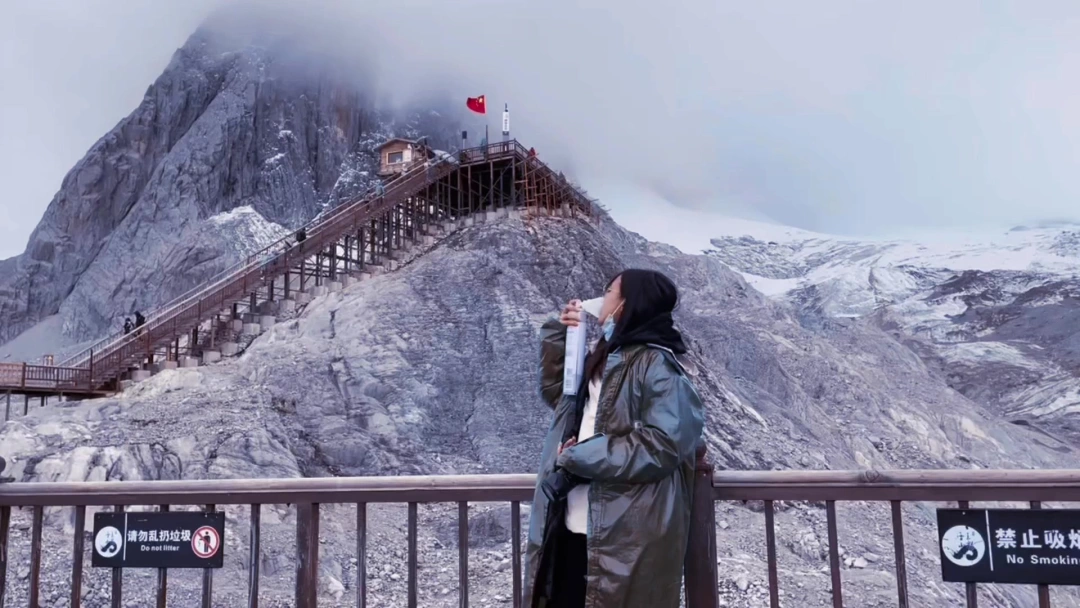
I really did get altitude sickness. Coming down from the big cable car, every step uphill required oxygen—otherwise, my head felt foggy and I couldn't catch my breath. I used two canisters, and even finished my husband's. He was in better shape, taking occasional puffs. I recommend buying oxygen canisters in the old town beforehand—they're much cheaper than on the mountain, typically 30–50 yuan for a standard one. The winter coat is necessary—it's cold up there, and windy too.
Blue Moon Valley: A Sapphire Scattered on Earth
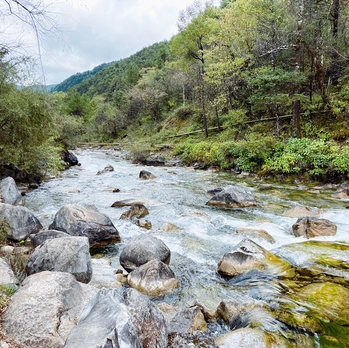
We arrived at Blue Moon Valley at 10:30 a.m. The lake water was crystal clear—Tiffany blue, shimmering in the light. The sightseeing electric cart cost 50 yuan/person, which isn't cheap and feels semi-compulsory. Most people end up walking the entire way anyway, maybe needing the cart only for the return trip. The upside is it saves time.
Reaching 4,680 Meters: A Pilgrimage Against Your Own Body
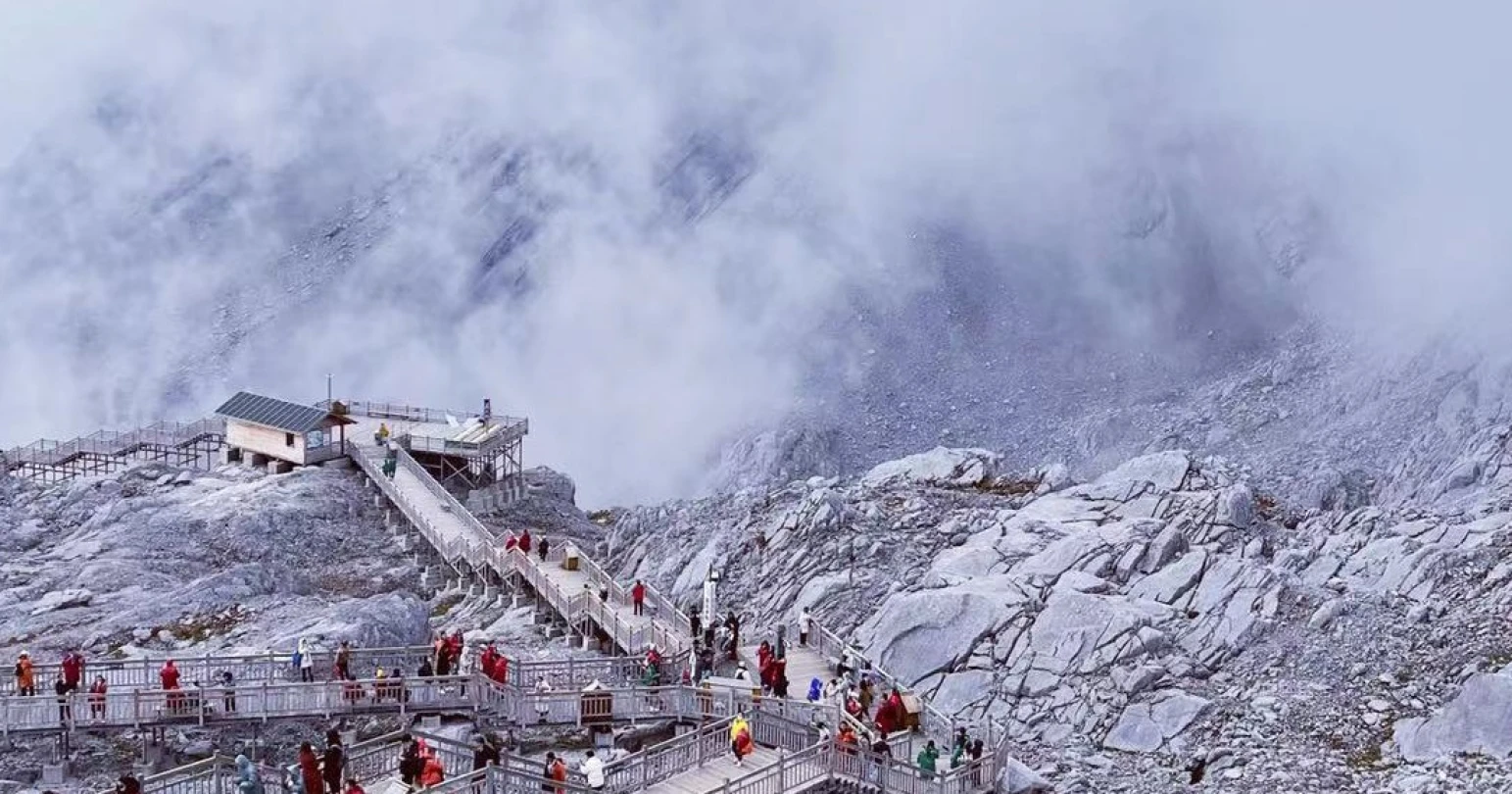
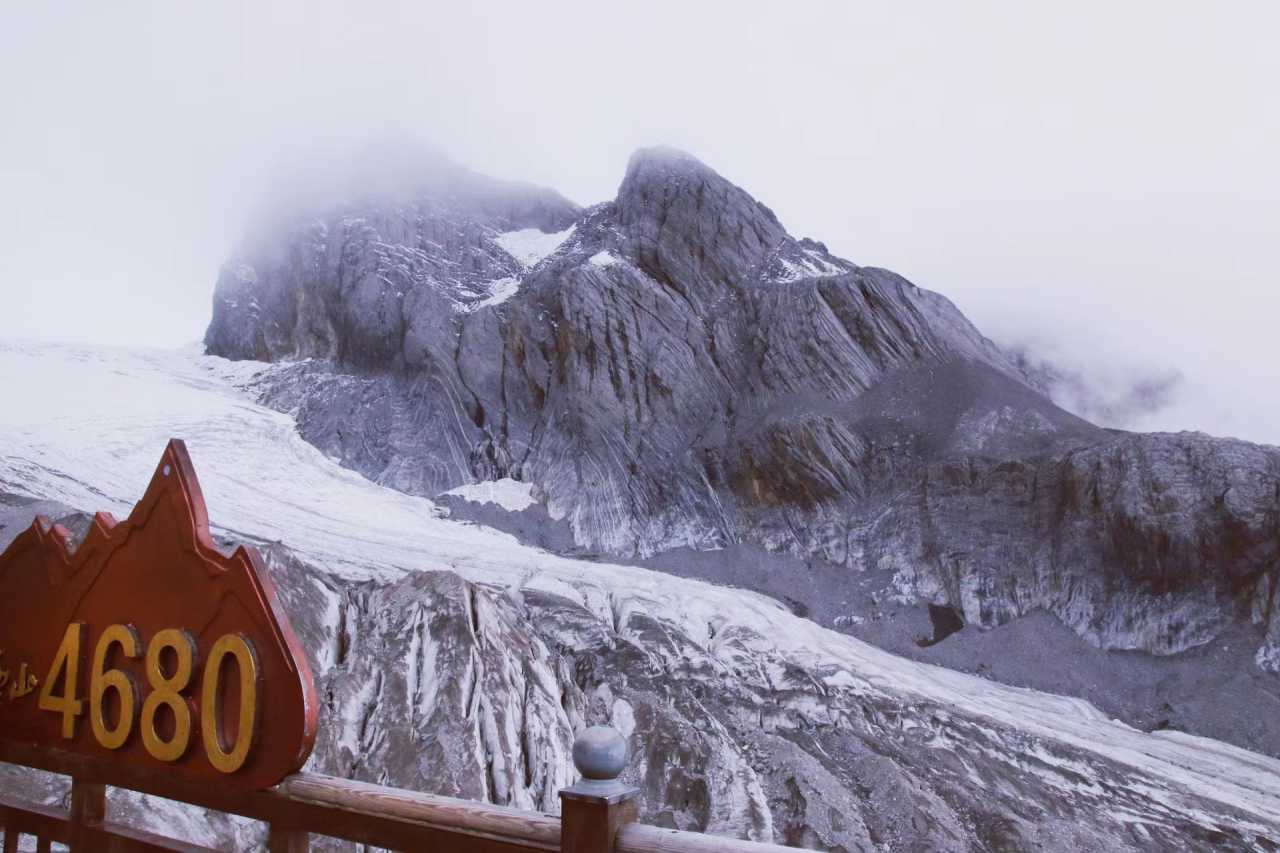
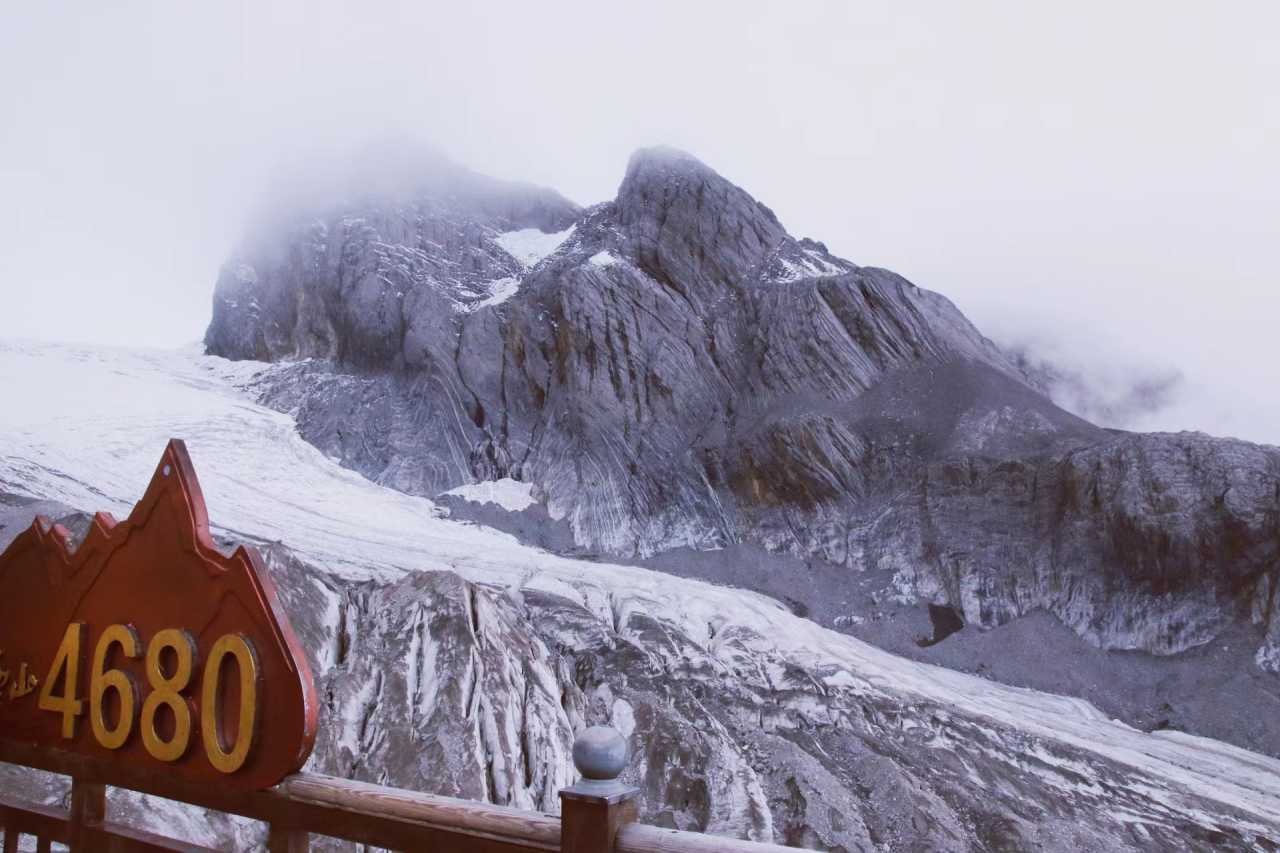
After lunch, we took the big cable car—about ten minutes, but it was so foggy we couldn't see anything. The weather was terrible; conditions at the top and bottom were completely different. Getting off the cable car, I hadn't taken ten steps before altitude sickness hit. What should have been a 10-minute climb to the summit took a full hour.
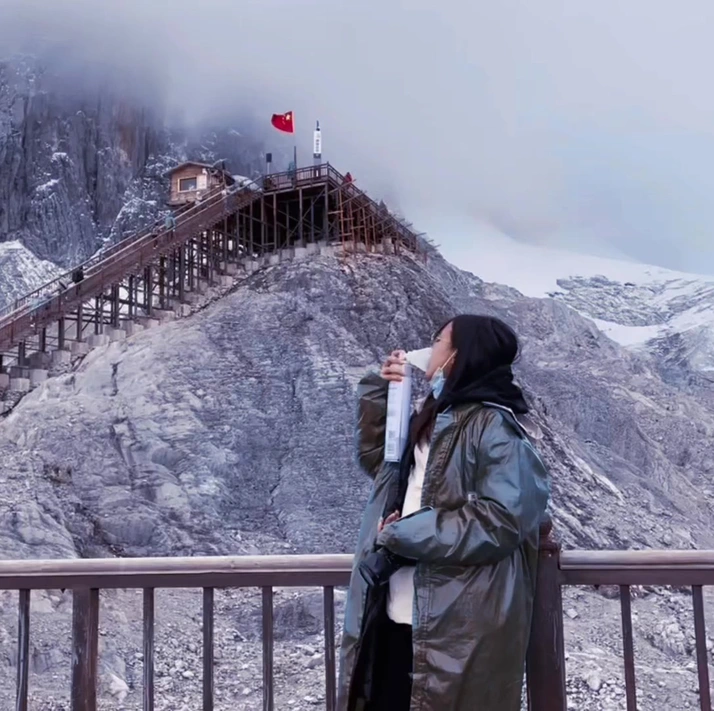
In October, the snow on the mountain is mostly gone—it looked like a coal heap from afar. Still, we were lucky: the day after we climbed, Jade Dragon Snow Mountain was closed. When climbing, go slowly, keep a steady pace—don't speed up and slow down erratically. Wearing a mask made the climb harder due to oxygen deprivation—it was really unpleasant. We saw plenty of other young people struggling with altitude sickness; it wasn't just me.
While queuing for a photo at the 4,680-meter marker, we met a romantic couple. Everyone who climbs this mountain is fighting against their own body, and they all deserve praise. Courage knows no age; passion takes many forms. To be free and brave in your twenties, to embrace the world you can reach and walk the land you can tread—that's truly wonderful.
Accidents and Choices: Stealing a Few Moments of Leisure
After coming down from the mountain and returning to the old town, we learned that Baisha Old Town had been locked down—a "pickled goat" (a local euphemism for a COVID case) had been found. We agonized over whether to leave that night or stay. Dali and Shangri-La had explicitly refused to accept tourists from Lijiang, so we could only head to Kunming. That same night, we also heard that Lijiang Eternal Love and Jade Dragon Snow Mountain would stop accepting visitors after that day.

We had just made it in time. A stroke of luck amidst misfortune.
We were exhausted from the mountain and rested at the inn for a while. That same day, the scenery at the top and bottom was completely different. And so, we stole a few moments of leisure, just staring into space at the inn. The view was wonderful, letting us forget our worries. We went back and forth between leaving and staying, weighing our options—reluctant to leave such beauty behind, unwilling to flee so far from home empty-handed, but also afraid of causing trouble.
Every decision required weighing pros and cons, always hoping for the best of both worlds. Keeping safe while staying happy—that's really hard. All we could do was pray. In the end, we were lucky.
After resting, we set out again for a night stroll through the old town. Some shops, deep in the danger zone, stubbornly kept their doors open. Everyone was just trying to make a living—nobody has it easy. For dinner, we went to [Tian Tian Xian], recommended by Manager Zhang. We ordered Naxi-style grilled fish and "water spinach" (the local aquatic vegetable)… The food was excellent. Sitting by the window on the second floor, looking down at the street scene, I felt that this moment of peace was especially precious.
In Closing: Go Where the Wind Blows, Be a Leisurely Soul
This Yunnan trip was only 4 days and 5 nights, full of unexpected twists and anxiety—but it's precisely these "imperfections" that made it unique. We missed Xishuangbanna, Shangri-La, and the cycling trip in Dali, but we gained the quiet mornings of Lijiang, the historical depth of the Mu Mansion, the awe of Eternal Love, the challenge of Jade Dragon Snow Mountain, and the warmth of the old town at night.
Three practical tips for anyone planning a trip to Yunnan:
- Plan ahead, but leave room for flexibility — Plans change, especially in uncertain times. Be mentally prepared and enjoy the surprises that come your way.
- Buy oxygen canisters in advance — Don't wait until you're on the mountain, where they're expensive and you're stuck.
- Slow down — Yunnan's charm isn't in ticking off sights; it's in the leisure. Sleep in, wander aimlessly—you might discover more than you planned.
Yunnan—you have to visit it with the one you love most. The wind is stirring. Where the heart moves, let it follow fate. Go where the wind blows, and be a leisurely soul—wholeheartedly.
You should also read:
Dreamland – Lijiang: A Talking Comic Travel Guide
Dreamland – Lijiang: A Talking Comic Travel Guide Prologue: When Lijiang Takes Root in Your Heart Some places leave a mark on you forever. They're like an old song on repeat, suddenly playing in your mind on an ordinary afternoon. For me, Lijiang is that…
Continue reading...
Escaping Nanning, Falling Under Lijiang's Spell: Our Four-Person, Ten-Day Yunnan Dream
Escaping Nanning, Falling Under Lijiang's Spell: Our Four-Person, Ten-Day Yunnan Dream Before We Set Off: No Pain, No Obsession Have you ever had that impulse—suddenly tired of the office fluorescent lights, the crush of the subway, the endless parade of identical takeout boxes, and just…
Continue reading...
Tengchong·Heshun: Finding Life as It Should Be in a Border Town Where Time Stands Still
Tengchong·Heshun: Finding Life as It Should Be in a Border Town Where Time Stands Still The long journey of over twenty days was over. On my first day back at the office, I was still in a daze. My fingers couldn't find the keys on…
Continue reading...