Gone with the Wind, Roaming Free Under Heaven and Earth | First Exploration of Mangshi and Tengchong in Yunnan
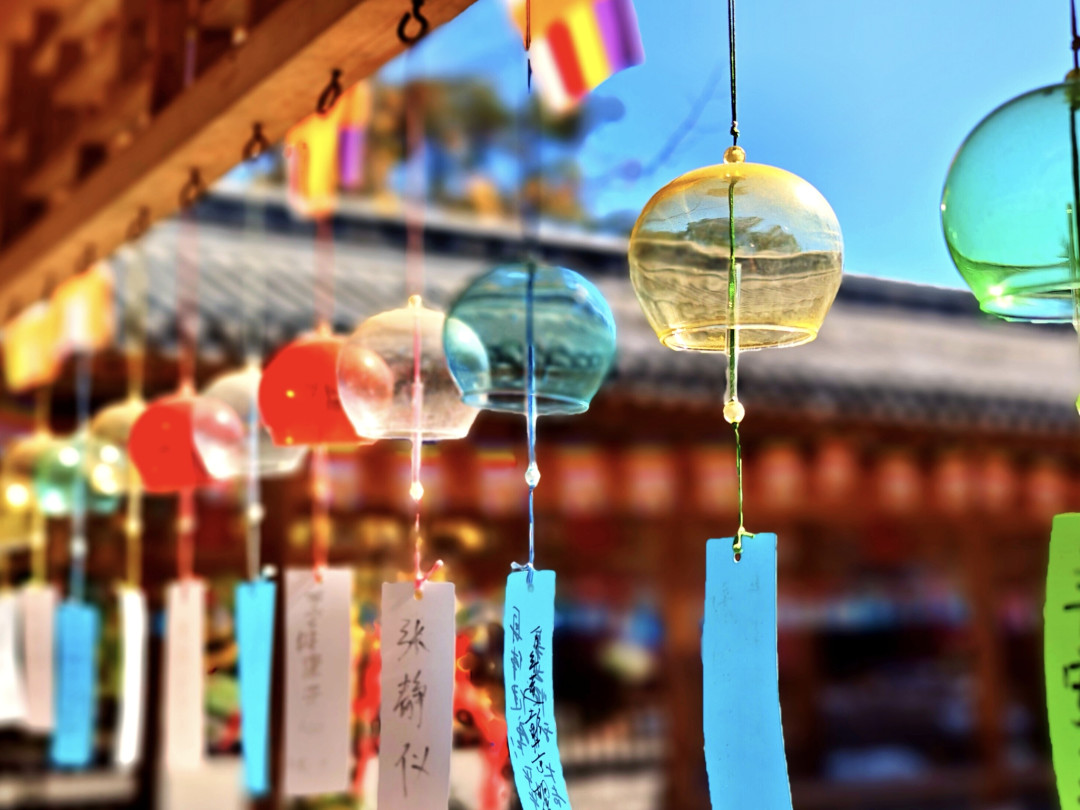
Gone with the Wind, Roaming Free Under Heaven and Earth | First Exploration of Mangshi and Tengchong in Yunnan
Origins: A Yunnan Complex from Screen to Distance
Everyone has a Yunnan in their heart. For me, this dream began in the 1990s in a living room flickering with a black-and-white television. Duan Yu, played by Felix Wong, dressed in flowing white robes, gliding with his "Lingbo Weibu" (Lightness Skill) through the landscapes of the Dali Kingdom; Wei Xiaobao, played by Jordan Chan, stirring up the entire martial arts world of Yunnan with his laughter, anger, and mischief. The world created by Jin Yong (Louis Cha) always carried a touch of otherworldly romance, and Yunnan was that land steeped in both martial arts lore and history.
It wasn't until the deep autumn of 2025 that I finally set foot on this land I had yearned for for thirty years. Yunnan, known as the "Land South of the Colorful Clouds," boasts breathtaking natural diversity—the humidity of tropical rainforests, the clarity of plateau lakes, the desolation of volcanic rock and soil, and the vastness of snow-capped mountains and grasslands. Not to mention its spring-like climate all year round, making it one of the best destinations in China for long-stay travel.
But this time, my wife and I deliberately avoided the crowded classic routes of Kunming, Lijiang, and Dali, choosing instead the quieter, less-traveled Tengchong and Mangshi. We've reached an age where we appreciate tranquility, and we believe that true scenery is often found where few people tread.
Pre-Trip Preparations: The Obsession of a Former Soldier
As a former soldier, I've always harbored a deep-seated obsession—to go to western Yunnan and pay homage to the Chinese Expeditionary Force soldiers who fought bloody battles in the Songshan Campaign. "Every inch of mountain and river cost an inch of blood; every handful of hot earth holds a handful of souls." This is not just a slogan; it's a grit etched into the bones.
This was my wife's second visit to Yunnan. Last year, she went to Lijiang and Dali with her childhood friend, but I was a first-timer. Our分工 (division of labor) was clear: I was in charge of route planning, car rental, and hotel bookings; she was in charge of—eating. "Food is the heaven of the people," and eating is the root of happiness. Her expertise in this area made me willingly hand over the decision-making power.
For this trip, we chose a combination of "high-speed rail + self-driving." We took the high-speed train from Chongqing to Baoshan, rented a car there, and followed a clockwise loop: Baoshan → Mangshi → Lianghe County → Tengchong → Baoshan. The reason for starting in Baoshan was that the Songshan Anti-Japanese War Memorial Site is located within Baoshan's jurisdiction, making it most convenient to drive there.
As for why we didn't fly directly? To be honest, I checked the flight information. The planes flying to Tengchong are Boeing 737s, with flights only every two days. The shadow of the 2022 China Eastern Airlines crash still lingers. I'd rather spend more time on the road than gamble with my life. Flights to Mangshi are slightly better; starting October 26, Sichuan Airlines added a daily flight using the reliable Airbus A320, which I feel comfortable taking.
G320 National Highway: Scenery and Vigilance on the Border
Departing from Baoshan, I chose to take the entire G320 National Highway. Although it takes an hour and a half longer than the expressway, the scenery along the national road is something the highway can never offer. This border route in the southwestern frontier winds through the mountains, with surprises hidden around every bend.
What left a deep impression on me were the border checkpoints. Police officers stopped us, asking about our purpose of visit, vehicle ownership, and relationship between us. They opened the trunk for inspection and asked for our ID cards. The entire process was serious and methodical. It was the first time in my life I had experienced such a check. The strictness in the border region far exceeded my imagination, but it also brought a sense of reassurance—after all, it is these invisible lines of defense that safeguard our peace.
Songshan Anti-Japanese War Memorial Site: A Monument Forged in Blood and Fire
Songshan is located in Lameng Town, Longling County, Baoshan City. In 1944, the Chinese Expeditionary Force fought a brutal 95-day battle here against the Japanese, annihilating the defending enemy at the cost of over 7,700 casualties. This battle broke the Japanese defensive system in western Yunnan, laid the foundation for the recapture of Tengchong and Longling, and created the conditions for the reopening of the Burma Road.
The most awe-inspiring part of the site is the cluster of 402 sculptures of the Chinese Expeditionary Force soldiers. What moved me the most was the "Child Soldier Square"—those children, whose height didn't even reach the length of their rifles, the oldest being 15 and the youngest only 9. Among the over 7,700 fallen Expeditionary Force soldiers, child soldiers accounted for about one-seventh. They should have been reading in school or acting spoiled in their parents' arms, but instead, they shouldered guns heavier than their own bodies and marched to the battlefield.
Today, our country is prosperous and our military is well-staffed. Even if a large-scale war were to break out again, we have active-duty troops, retired and transferred soldiers, and able-bodied young adults. There would be no need to send minors under 18 to the battlefield. This is what the strength of a nation truly means.
Due to limited physical stamina, we didn't climb to the summit. But standing on the observation deck, looking at the Huitong Bridge in the distance and the hilltops once occupied by the Japanese, the weight of history pressed down on us. If your physical condition allows, I strongly recommend climbing to the top. The preserved battle sites there tell the story of that brutal and tragic time.
Bangmiao Lake: An Unexpected Exploration

I discovered Bangmiao Lake by chance on Baidu Maps. It was marked as an "Internet-famous check-in spot," with a mirror-like lake surface, scattered islets, and surrounding mountains, earning it the nickname "Qiandao Lake of Western Yunnan." I drove there full of anticipation, but it turned into an "expedition."
The small road indicated by the navigation simply didn't exist. The main road was fenced off, everywhere was covered in dust, and construction trucks were coming and going. I drove a long way on an unfinished gravel road, getting farther and farther from the lake area. Eventually, I parked by a gravel roadside closer to the water and took the only photo of the lake.
To be honest, I was disappointed. But on second thought, isn't this the charm of travel? Those "Internet-famous check-in spots" marked on maps aren't always paradises. And the true scenery often requires a drone's aerial view to be fully appreciated. If you also want to visit Bangmiao Lake, I suggest bringing a drone; otherwise, you might end up like me, sighing at the lake from afar.
Mangshi: City of Dawn, a Slow Life Unhurried
Mangshi, the capital of Dehong Prefecture, is the only city in China named with a single character. "Mang" means "City of Dawn." Here, you won't find the crowds of Xishuangbanna, only a rich Dai ethnic atmosphere and the smoke of daily life. Tall palm trees line the streets in neat rows, their swaying fronds seeming to whisper the stories of this small town.
Mengbanaxi Rare Botanical Garden: Peacocks and Petrified Wood
The garden is small but rich in content. There's a memorial pavilion for Premier Zhou Enlai, a petrified wood exhibition hall, raw jadeite stones, and rare trees. The biggest draw, however, is the free-roaming peacocks. In Dai culture, the peacock is a symbol of good fortune and beauty, earning Mangshi the title "Home of the Peacocks." These peacocks are very alert; viewing them from about 3 meters away is most suitable. The texture of petrified wood needs to be felt by hand; photos cannot convey its essence.
Dai King's Palace and Golden Pagoda: Unexpected Surprises and Regrets
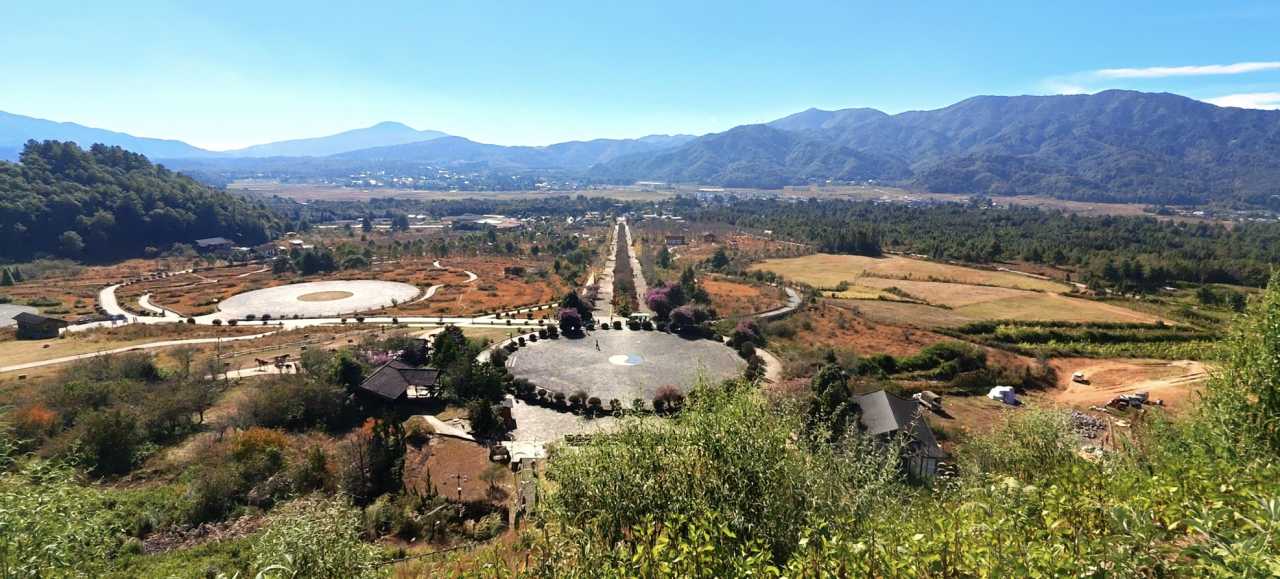
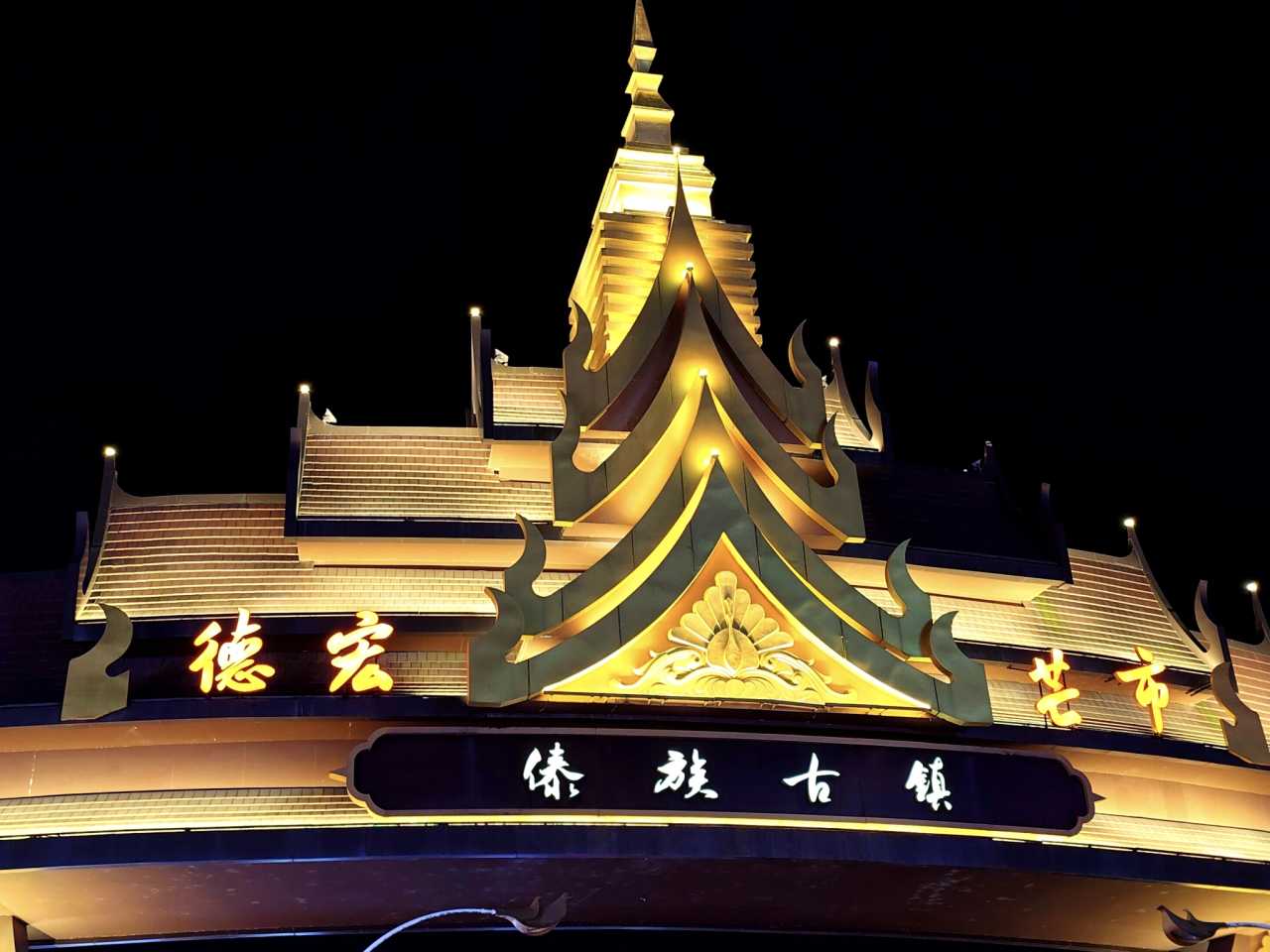
I stumbled upon the "Colorful Dehong Dai King's Palace" on the map, expecting a magnificent palace. It turned out to be a very small Dai-style miniature park. A café and hotel were open, but everything else was closed. I'm not sure if it's due to poor management or other reasons. In short, don't set your expectations too high.
The Little Golden Pagoda of Mangshi is located in the central roundabout of an intersection. The main pagoda is surrounded by 56 smaller pagodas, representing China's 56 ethnic groups. However, since there are no crosswalks, I don't recommend risking crossing to the center. Just take close-up shots from the roadside.
Menghuan Grand Golden Pagoda and Silver Pagoda: The Soul of Mangshi
The Menghuan Grand Golden Pagoda is Asia's largest hollow Buddhist pagoda and the iconic landmark of Mangshi. Even without buying a ticket to enter, just viewing it from the outside, its resplendent golden facade shimmering in the sunlight, is awe-inspiring enough. I'm not sure if the outer layer is gold-plated or covered in gold leaf, but its solemnity and sanctity inspire reverence.
The Silver Pagoda is right across from the Golden Pagoda. Its pure white, carved Dai silver, set against the blue sky, looks pure and ethereal. I entered for free using my "Veterans' Concession Card." Silver pieces hang from the eaves of each tier, tinkling in the wind and glinting softly in the sun, as if you could hear the chanting of a thousand years ago. The mirror-effect photo spot turned out to be a glass platform. With the right angle and distance, you can perfectly capture a reflection effect. It's very crowded on weekends, and you have to queue for photos.
Shangjingkan Village's "Single Tree Forming a Forest": Wild and Awe-Inspiring
This is my most recommended wild attraction. It's free, uncrowded, and stunning. A single高山榕 (mountain banyan tree) over 460 years old stands 55 meters tall. Its trunk is as thick as a mountain, and its aerial roots cascade down like waterfalls, blocking out the sky and sun. Standing under the tree, a person instantly feels minuscule. Every photo looks epic. I recommend driving or hiring a car to get there. It's far better than those scenic spots packed with tour groups.
Tengchong: The Border City, Land of Heroes
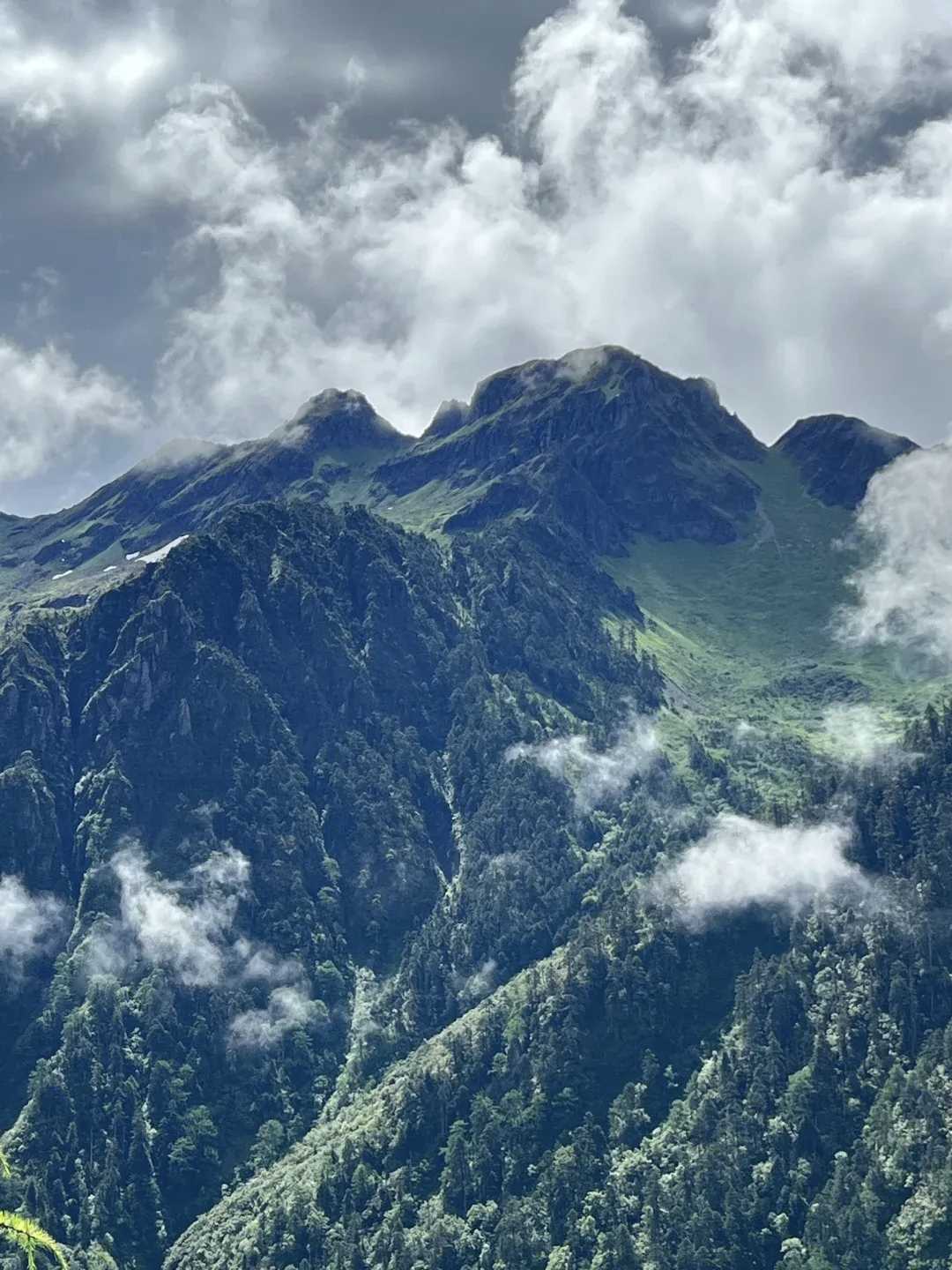
Tengchong is hailed as "the most suitable place for human habitation in China," with a forest coverage rate of 77.23% and extremely high levels of negative oxygen ions. This is a place where volcanic and geothermal activity coexist, where the Chinese Expeditionary Force fought bloody battles, and which is also known as "China's Number One Jade City."
Lianghe County's Nandian Xuanfusi Office: A Living Fossil of the Tusi System
The Nandian Xuanfusi Office is a well-preserved minority chieftain's (Tusi) yamen (government office) in western Yunnan. The architecture is palatial, with intricately carved beams and massive pillars. The Nandian Xuanfusi was established during the Ming Dynasty. The Xuanfushi (Pacification Commissioner) was like a local "earth emperor," typically a seventh-rank official but could be elevated to fourth-rank under special circumstances. The Qilin (mythical creature) screen behind the main hall was the emblem of a fourth-rank official.
Jade and Amber: Tengchong's Legend
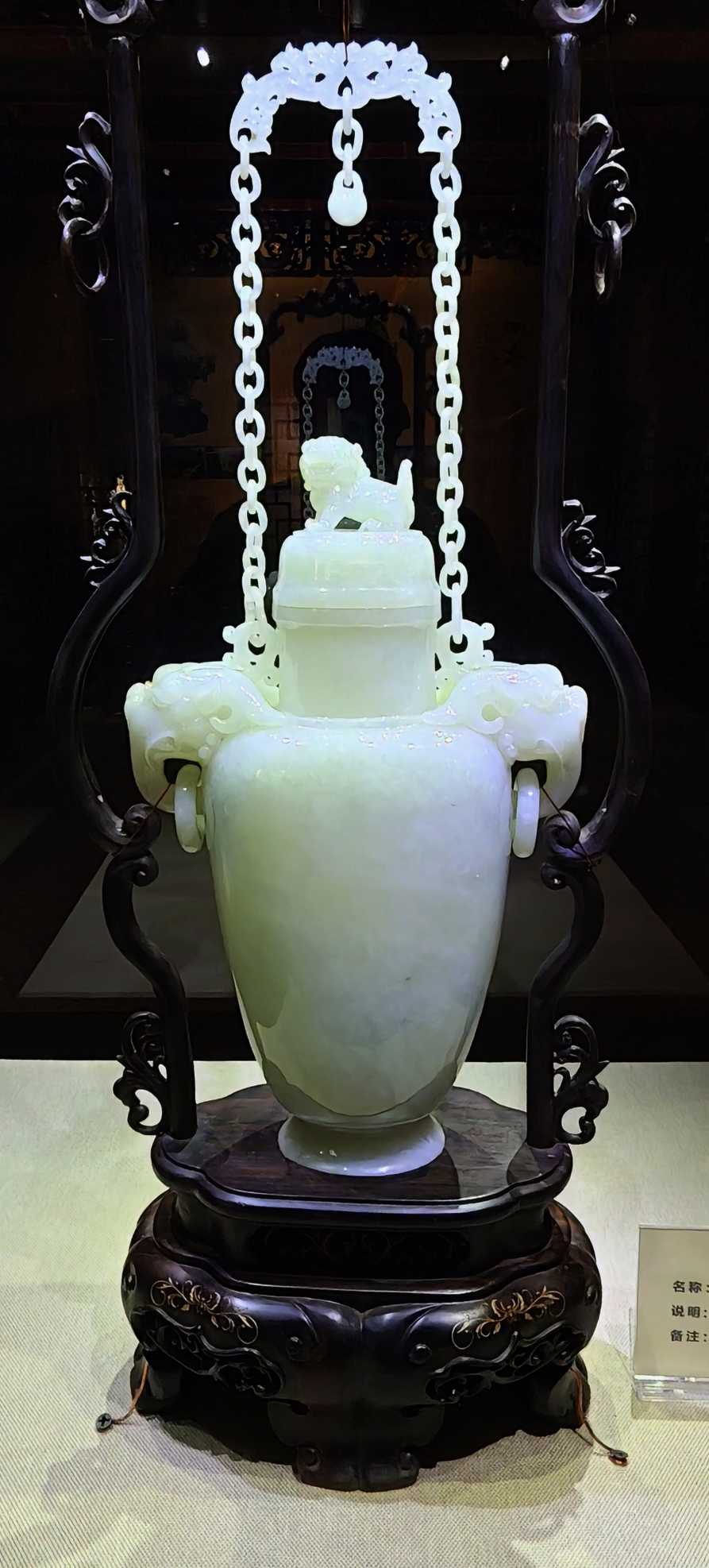
The people of Tengchong discovered jadeite and pioneered its processing and trade. Over 600 years of jadeite history brought commercial prosperity to Tengchong and created the legend of "amber archways and jade bridges." The Jade Museum and Amber Museum are the best places to learn about this history. Each exquisite jadeite and amber piece embodies the craftsmanship and wisdom of the artisans.
The Western Yunnan Anti-Japanese War Memorial Hall and the National Cemetery of the Fallen: Never Forget National Humiliation
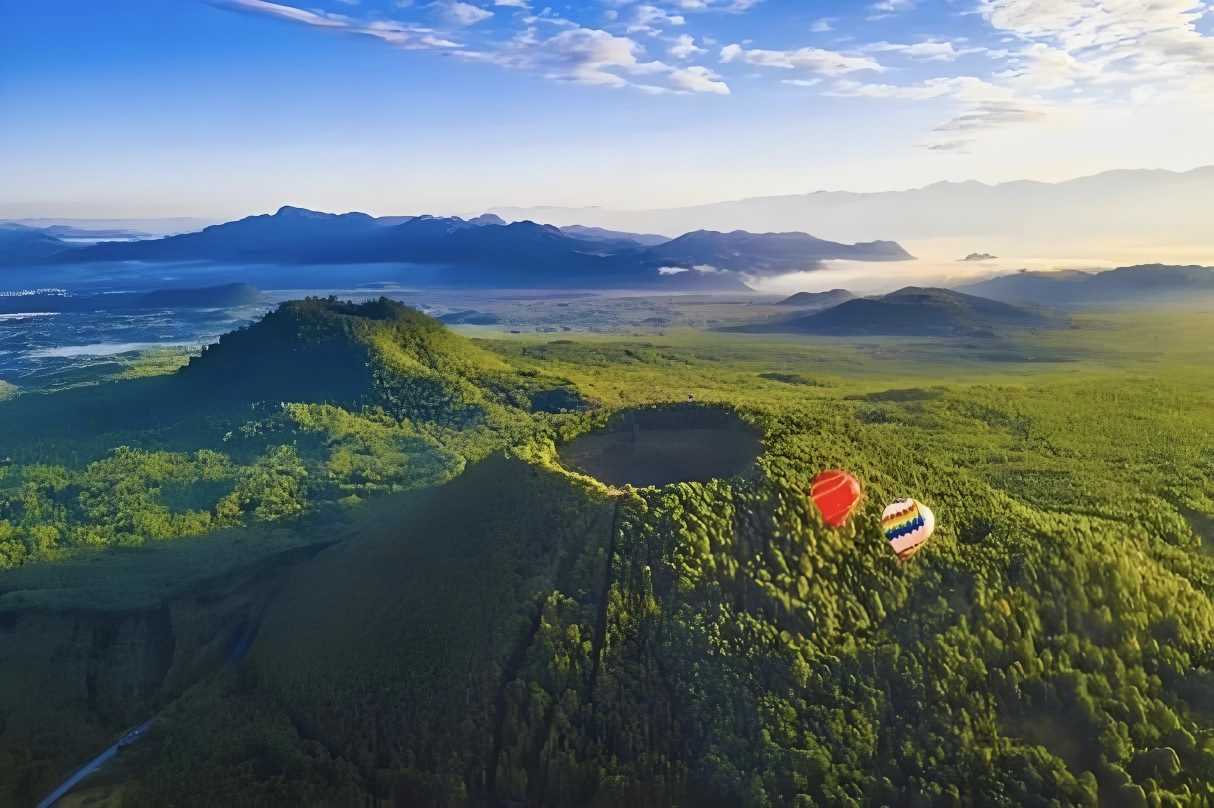
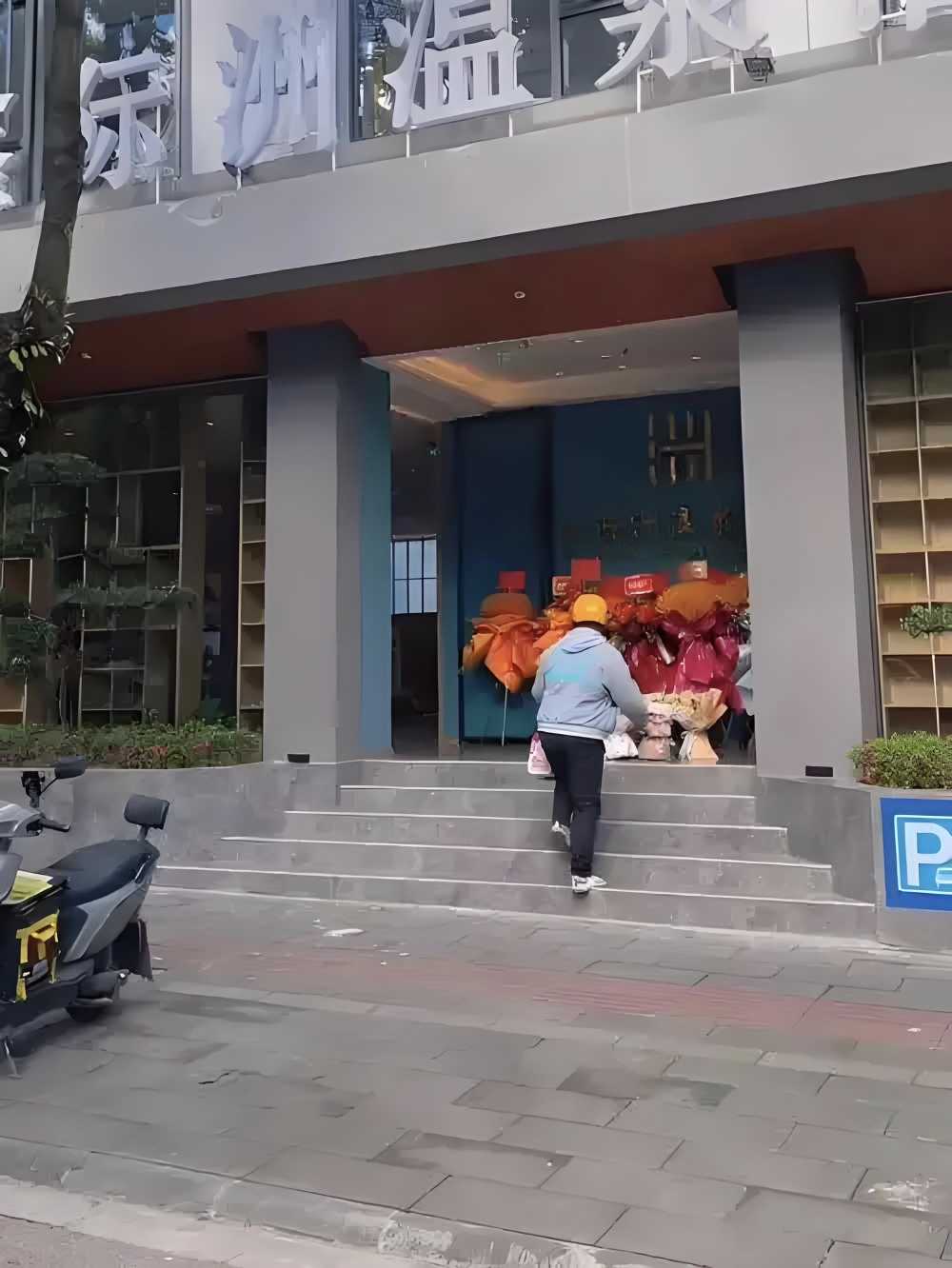
As a former soldier, the Western Yunnan Anti-Japanese War Memorial Hall and the National Cemetery of the Fallen were among the most important destinations of my trip. In November 2024, news broke online about a Japanese national being denied accommodation at a hotel in Tengchong. People from all over the country sent flower baskets to the hotel, expressing strong support for its firm stance. "Never forget national humiliation; our generation must strive for self-strengthening." This is not an empty phrase; it is a memory etched into the bones of every Chinese person.
Final Thoughts: The Meaning of Travel
Over eight days of self-driving, from Baoshan to Mangshi, from Lianghe to Tengchong, we traversed the winding G320 National Highway, felt the solemnity of border checkpoints, stood in silence before the Songshan site, felt disappointment at Bangmiao Lake, were awed beneath the Menghuan Golden Pagoda, and marveled under the single tree forest in Shangjingkan Village.
Travel is never just about seeing the scenery. It is a dialogue with history, a reconciliation with oneself, and a re-examination of life. The tears shed before the child soldier sculptures, the evening breezes by the Peacock Lake, the Peacock Feast (孔雀宴, a traditional Dai banquet) enjoyed in the ancient Dai town—all have become the most precious parts of my memory.
If you also want to visit Mangshi and Tengchong, my advice is: fly to Mangshi, rent a car and drive yourself, and explore in a clockwise direction. Avoid the popular attractions. Go to those wild spots you discover by chance on the map, to places with no travel guides, to experience the real Yunnan.
Because the true journey is never about arriving, but about setting out.
Gone with the wind, roaming free under heaven and earth.
You should also read:

Cloud Travelogue · Dali of Wind, Flowers, Snow, and Moon: A Three-Day, Two-Night Journey of a Free Spirit
Cloud Travelogue · Dali of Wind, Flowers, Snow, and Moon: A Three-Day, Two-Night Journey of a Free Spirit I am a cultured female foodie with a touch of rogue charm. I slung on my backpack, took my lover's hand, and set off on a spontaneous…
Continue reading...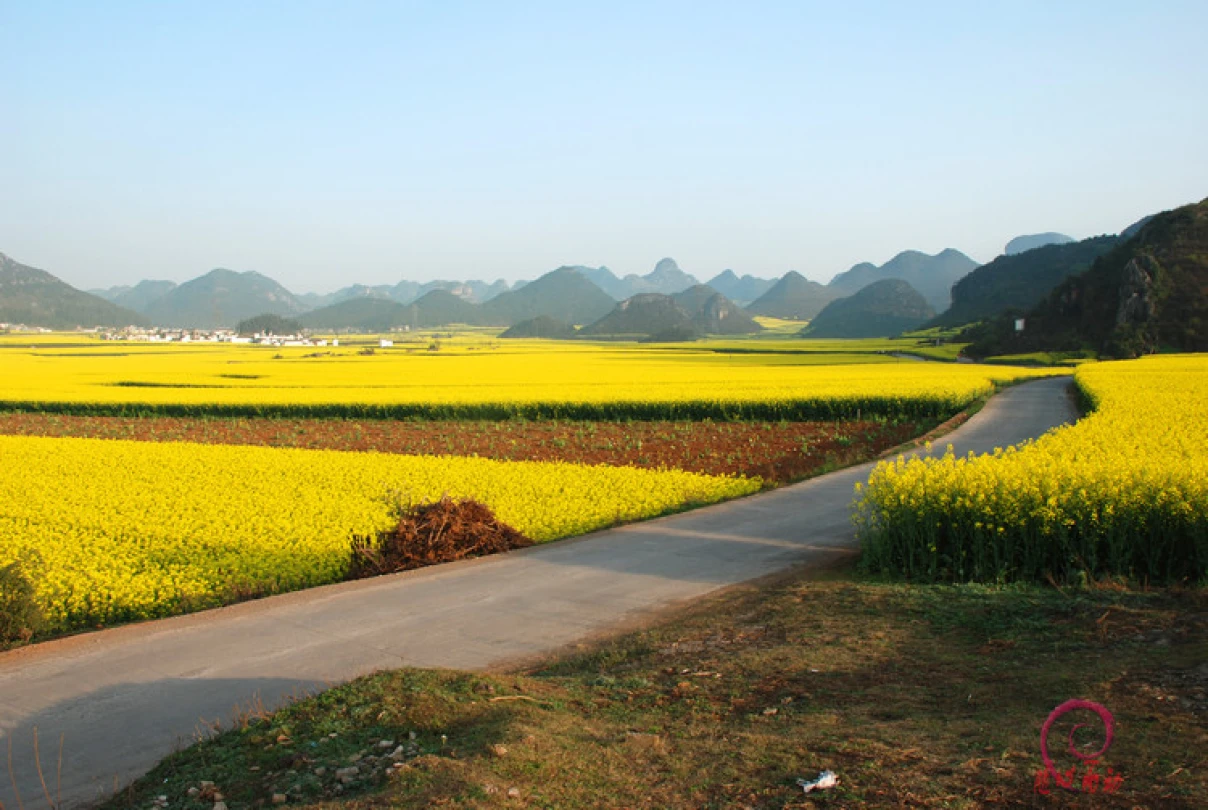
Golden Luoping: A Romantic Encounter with Sunshine and Seas of Flowers
Golden Luoping: A Romantic Encounter with Sunshine and Seas of Flowers Introduction: The Third Time's the Charm Some landscapes are destined to be seen at the right moment. For me, that was exactly the case with Luoping's rapeseed flowers. On February 22, 2011, the Luoping…
Continue reading...
The Meaning of Travel – A Tengchong Story: A Journey of the Heart and Personal Growth
The Meaning of Travel – A Tengchong Story: A Journey of the Heart and Personal Growth Setting Out, Only to Return a Better Self Some say travel is nothing more than leaving a place you're tired of, only to go to a place where others…
Continue reading...