Hidden Gems of Southern Yunnan: A Five-Day Journey Through Borderlands, Waterfalls, and Faith
Hidden Gems of Southern Yunnan: A Five-Day Journey Through Borderlands, Waterfalls, and Faith
For anyone stuck in the concrete jungle of city life, the May Day holiday offers a rare chance to catch your breath. After a long trip during Chinese New Year, I wanted something close, easy, and truly unique. Scanning the map of Yunnan, my eyes settled on three counties in Honghe Prefecture—Jinping, Hekou, and Pingbian. Nestled quietly along the China-Vietnam border in southern Yunnan, they lie like forgotten gems, hiding pastoral landscapes, terraced rice fields, waterfalls, and exotic border culture, waiting only for curious travelers to lift their veil.
Honghe Hani and Yi Autonomous Prefecture is a piece of jade carefully carved by nature. The Tropic of Cancer passes gently through it, and the secrets of the Hani rice terraces are buried deep in the folds of the Ailao Mountains. The Red River and Nanxi River meet in a valley just 76 meters above sea level—the lowest point in all of Yunnan. From the French-style railway station in Kaiyuan to the exotic border vibe of Hekou, from the primeval forests of Jinping to Asia's largest mosque in Gejiu, the experiences here are more varied than a Sichuan opera face change. In the morning, you can watch waterfalls in the primeval forests of Wutai Mountain at over 3,000 meters elevation. By afternoon, you're sipping Vietnamese drip coffee beside a border bridge. And at night, you can witness a devout prayer service at Asia's largest mosque. This is the real hidden Yunnan—five days and four nights, escaping the noise, rejecting the grind, heading south from Kunming to begin an extraordinary journey into the unknown.
Trip Overview: 1,100 Kilometers of Border Exploration
This is a self-driving trip covering approximately 1,100 kilometers. The route:
- Day 1: Kunming → Shadian (Grand Mosque) → Jinping Ma'andi Township
- Day 2: Ma'andi Township (Ladeng Waterfall, Biaoshuiyan Village) → Hekou (Riverside Park)
- Day 3: Hekou City Walk (Port Garden, Exotic Street, Old Railway Station, Scenic Coffee Shop) → Pingbian (Bonfire Party)
- Day 4: Pingbian (Drip Water Miao Village, Drip Layer Waterfall) → Jianshui (Swallow Cave)
- Day 5: Kaiyuan (Impression of Kaiyuan, Happy Prairie, Phoenix Tower, Nanzheng Street) → Kunming
An Unexpected Surprise: The Light of Faith at Shadian Grand Mosque

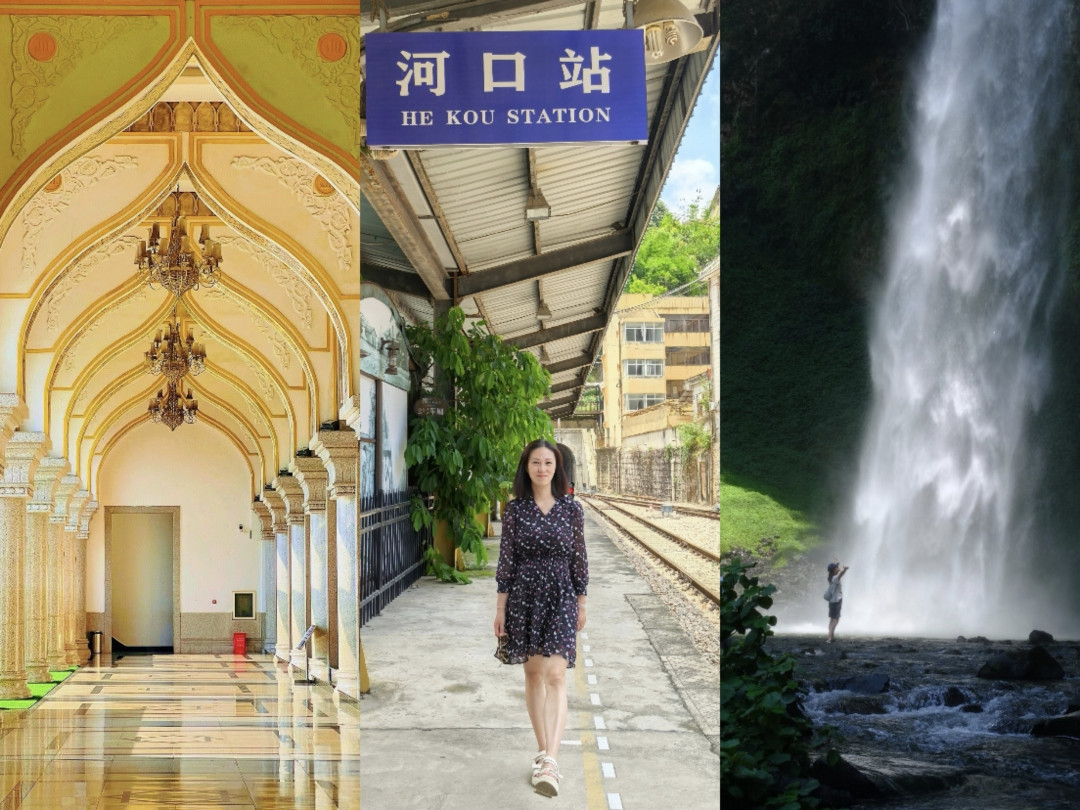
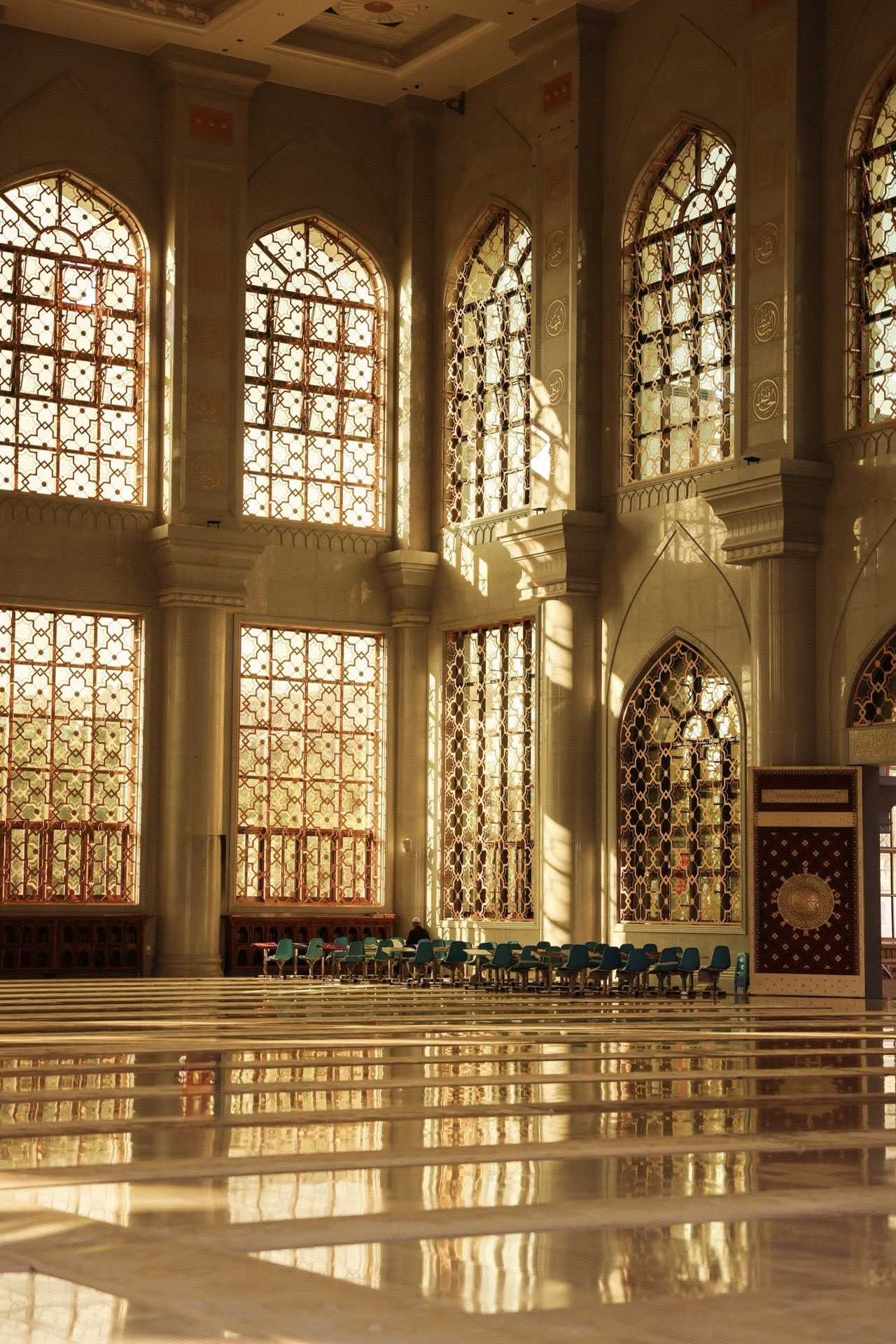
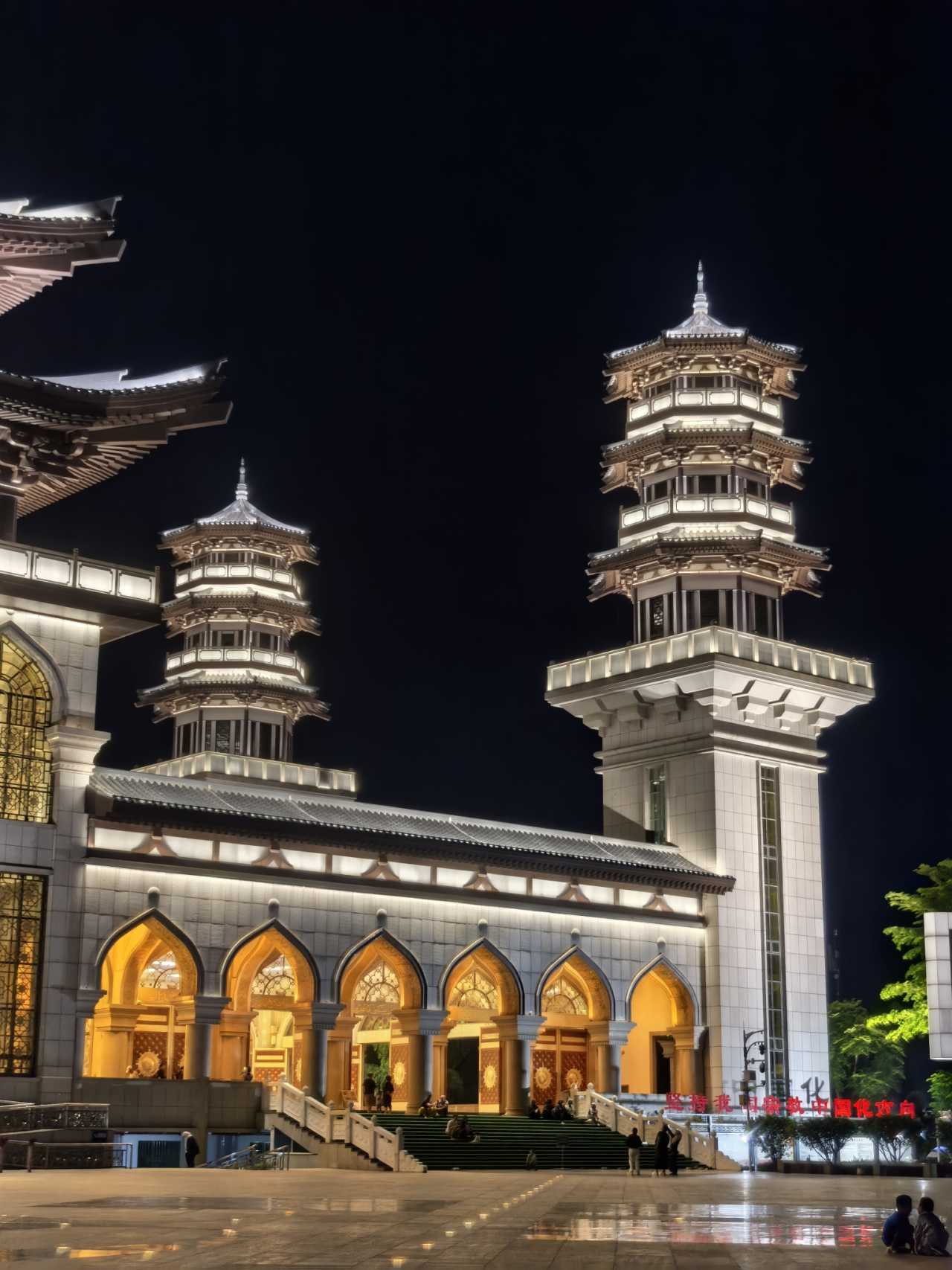
Our first stop was Shadian Town in Gejiu City, specifically to experience the grandeur of what's known as "Asia's Largest Mosque." The Shadian Grand Mosque was first built in 1684, giving it a long and storied history. Upon first sight, the architecture is elegant, imposing, and magnificent—it feels like you've been instantly transported to the Arab world. Beyond the majestic main building, its plaza is incredibly spacious, solemn, and filled with ethnic character. It's astonishing that a small town of just ten thousand people could possess such a grand and beautiful structure capable of容纳 tens of thousands of worshippers. It is said to be the largest mosque in Southwest China and even the entire country. Visitors are allowed to observe the prayer process.
The Beauty of Architecture and Light
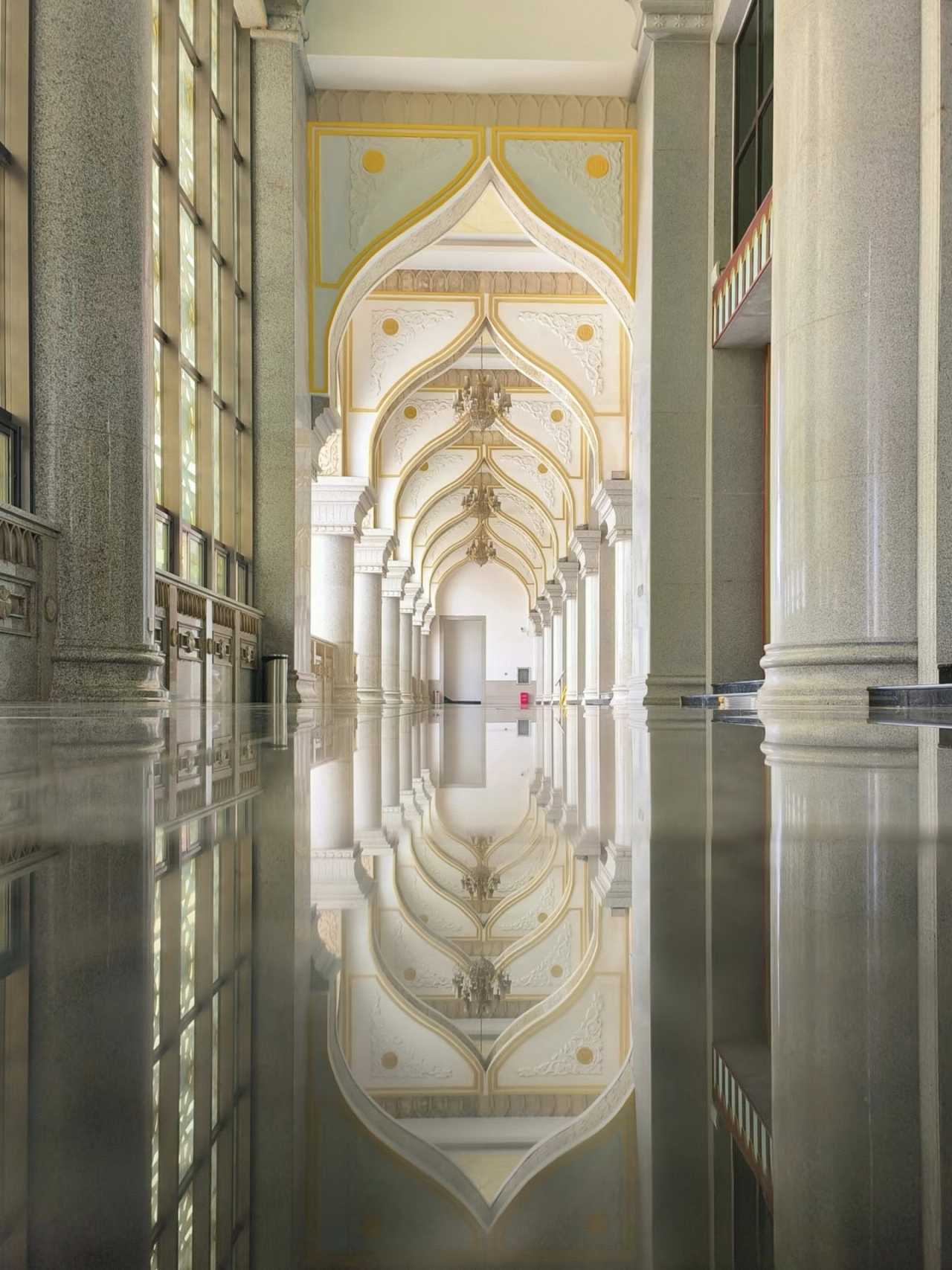
The main prayer hall is designed with a generous and elegant shape, using a color palette of earth yellow, golden yellow, creamy white, and sky blue. Looking up, the dome soars high. The design partially inherits traditional Chinese architectural styles, arranged symmetrically along a central axis, comprising the main hall, minarets, and a scripture teaching hall.
The afternoon light was perfect. Sunlight refracted into star-like rays, casting dappled shadows inside the building. The corridors and main hall glowed with a warm, pleasing yellow hue—absolutely stunning. The Chinese-style minarets are uniquely distinctive. As dusk fell, the empty hall was bathed in golden sunset light. Accompanied by the sound of the call to prayer, the entire mosque was enveloped in a sacred radiance.
Prayer Rituals and Taboos
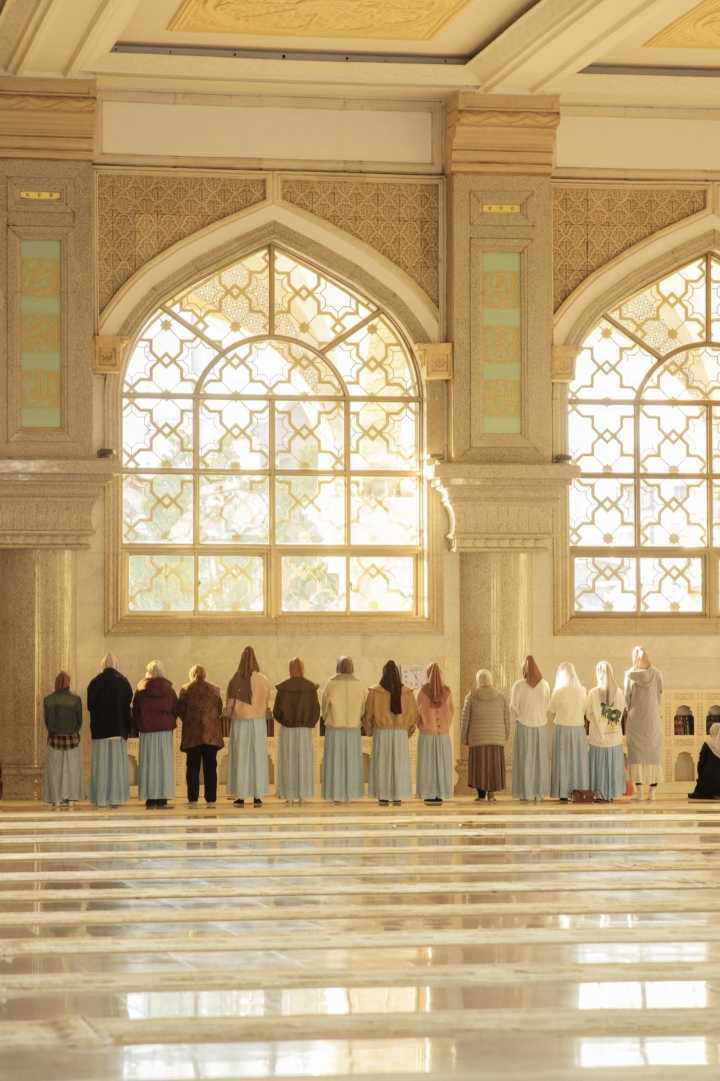
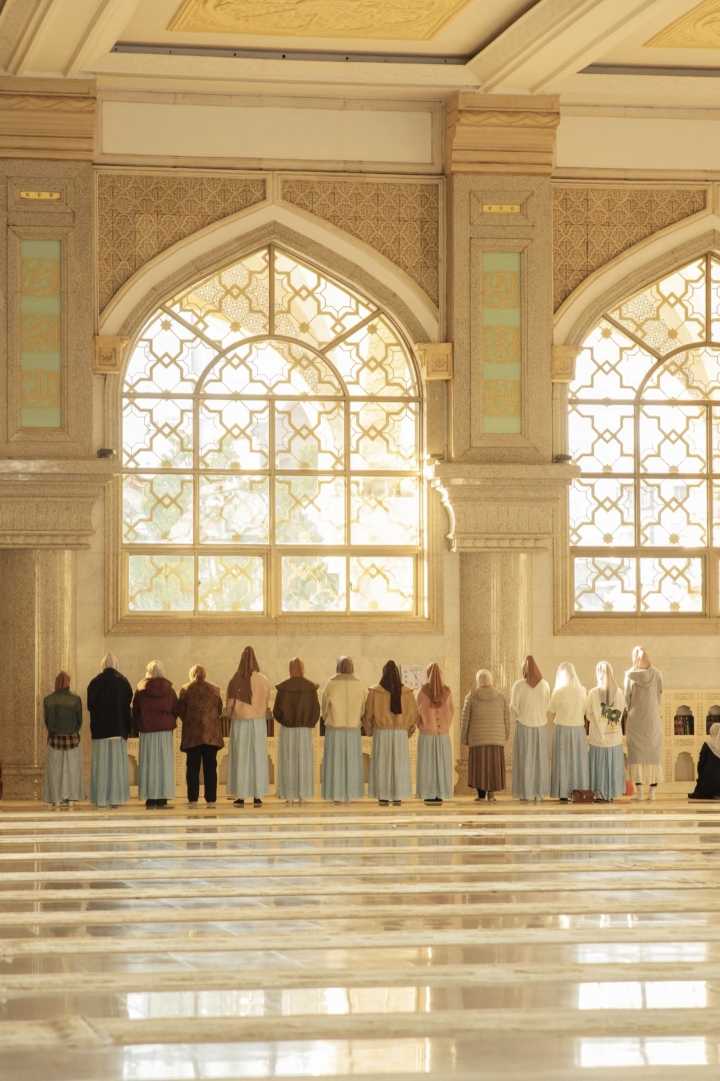
The Grand Mosque covers a total area of 21,000 square meters, with a prayer hall of 17,700 square meters, capable of accommodating tens of thousands of people for simultaneous prayer. Devout Muslims perform five daily prayers: Fajr (dawn to just before sunrise), Dhuhr (just after noon), Asr (afternoon until sunset), Maghrib (sunset until darkness), and Isha (darkness until dawn). This is a religious ritual for believers to give thanks, praise, make requests, and report to Allah, seeking blessings, avoiding calamities, and maintaining spiritual purity.
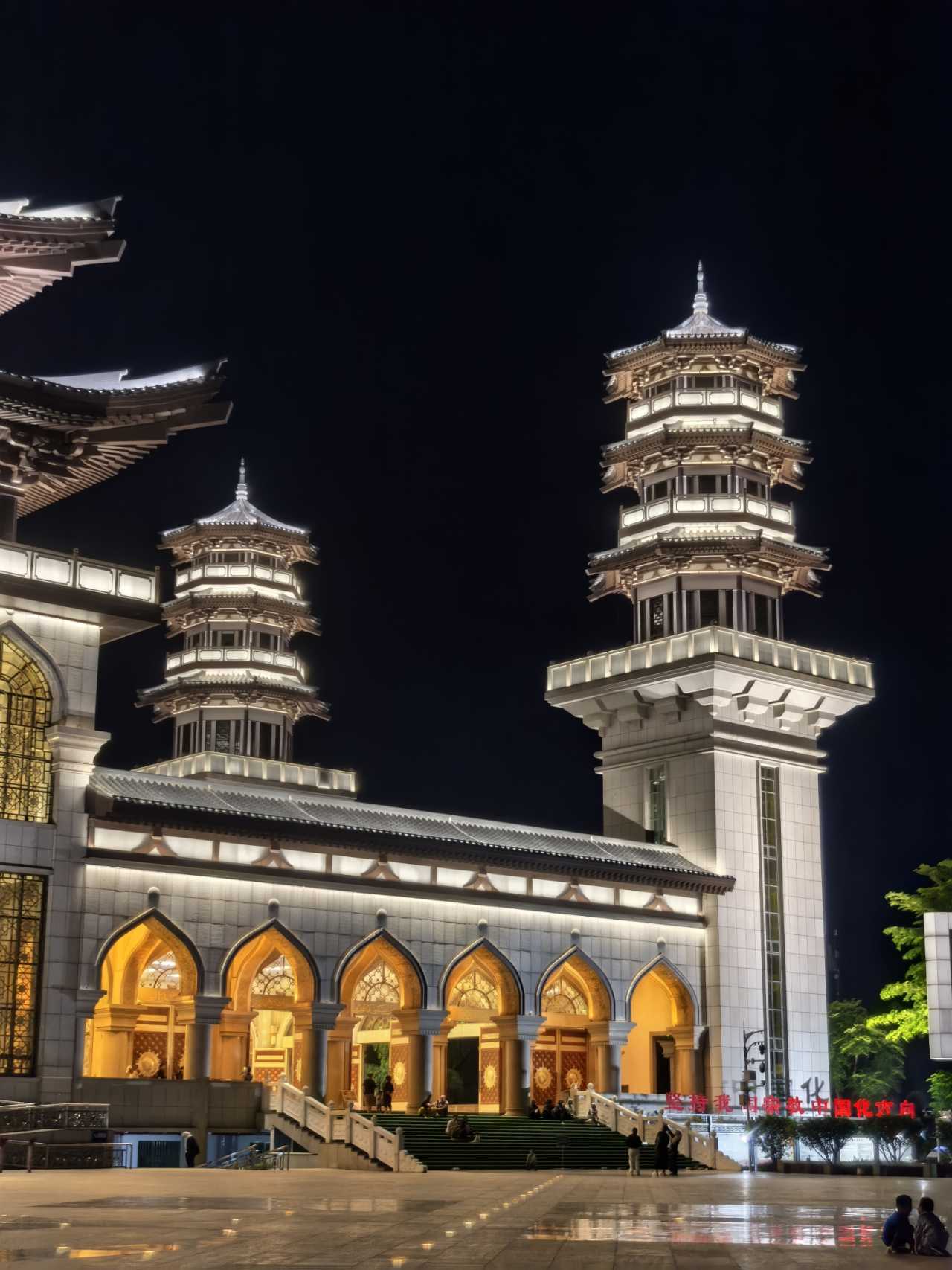
Important Notes: The main hall and side halls are sacred places of worship. Non-Muslims are not permitted to enter, and women are especially prohibited from going inside. You may leave your shoes on the steps and take photos barefoot around the exterior of the building. Men and women pray separately. The left hall is for women, while the large central hall is for men. The space is enormous, easily accommodating over a thousand people.
As night fell, the building looked particularly beautiful under a blue-purple sky. At 8 PM, the entire mosque was lit up. The golden, magnificent structure against the indigo sky felt reminiscent of the Blue Mosque in Turkey. The golden dome framed against the deep blue sky, the walls and doorways engraved with verses from the Quran, elegant chrysanthemum decorations on the roof, luxurious yet tasteful interior decor, and exquisite Arabic calligraphy covering the walls—it was so beautiful it left you speechless.
The Land of Butterflies: Forests and Waterfalls of Jinping
Our second stop was Jinping Miao, Yao, and Dai Autonomous County. Located south of the Tropic of Cancer, Jinping enjoys warm winters and cool summers, a mild climate, and abundant rainfall. Its natural scenery and cultural sites are rich with local character. The Butterfly Valley of Honghe Prefecture is located within Ma'andi Township, Jinping County. The valley boasts an incredibly rich variety of butterflies. According to reports, there are over 400 species, ranking first in the world, and it hosts 11 of China's 12 butterfly families. Every summer, hundreds of millions of white-sleeved arrow-ring butterflies (Stichophthalma howqua) undergo their life cycle here—from egg to larva, pupa, and finally emerging as adults. Countless butterflies dance through the mountain forests, a perfect display of nature's wonder. The most numerous species is the arrow-ring butterfly, which resembles a yellow leaf. From late May to early June each year, a spectacular "mass emergence" occurs, with hundreds of millions of butterflies emerging simultaneously. Other species include the golden kite swallowtail (Troides aeacus), the purple-spotted ring butterfly, the golden-spotted beak butterfly (Teinopalpus aureus), and the blue swallowtail.
The Butterfly Manor (Dieyuan Shanzhuang) is the best accommodation in the township and also serves as the Guangdong Entomological Society's observation station in Jinping. The manor has an indoor butterfly breeding area that also functions as a butterfly science education base, open for free visits. The butterfly larvae are green and fuzzy, incredibly cute.
Ladeng Waterfall: Adventure in the Primeval Forest
The butterfly mass emergence in Ma'andi Township usually occurs from late May to early June, mainly concentrated in Maguaithang Village and Pujiazhai. When we visited, the emergence was still over 20 days away, so we only saw a few scattered butterflies. We decisively skipped Maguaithang Village and headed straight for Ladeng Waterfall and Biaoshuiyan Village. The primeval forest and waterfall clusters here are well worth seeing.
The Ladeng Waterfall Cluster is located upstream of the Ladeng River and its tributary, the Shidong River, in Maguaithang Village Committee, Ma'andi Township. It features a rare cluster of six tiered waterfalls. Among them, one is on the upper Shidong River, and five are on the upper Ladeng River. The fifth waterfall on the Ladeng River is at an altitude of 2,621 meters. Each waterfall is 60 to over 100 meters high and over 10 meters wide. The local villagers collectively call them Ladeng Waterfalls. These waterfalls cascade down the cliff faces like silver chains, with mist swirling at their bases and abundant natural oxygen. On clear days, you can even see beautiful rainbows.
Hiking Advice: The scenic area is currently semi-closed. As you walk along the rugged forest boardwalk, you must watch your step. The banks of the Ladeng River are densely forested, and the ground is covered with moss. The wide riverbed is scattered with rocks of all sizes. The water flows down, playing different musical movements depending on the shape, size, and height of the rocks. Where it plunges from a height, it's like a fearless warrior; where it flows gently over flat ground, it's as gentle as a tender maiden.
The Ladeng River waterfall cluster consists of five tiered waterfalls. The total walking distance from bottom to top is 6.5 kilometers. Following the primeval forest boardwalk for two kilometers, the first waterfall appears. The water volume isn't large, gushing out from a ravine several dozen meters high, hanging like a silver chain on the cliff. Continuing another 300 meters or so, the second waterfall is even more spectacular. It is said that the most magnificent third waterfall has its boardwalk severely damaged. For safety reasons, we gave up on it.
Biaoshuiyan Village: A Paradise Hidden in Green Mountains
Leaving Ladeng Waterfall, we traveled south along the township road for 8 kilometers to reach Biaoshuiyan Village. The gate was unattended, and entry was free. The road and terraced fields lie right in front of the gate. Layers of terraced paddies were already planted with green rice seedlings, full of vitality. A sign at the entrance explains that Biaoshuiyan Folk Culture Village is the core area of the "China · Honghe Butterfly Valley" scenic area and also the core part of the Ma'andi sector of the World Agricultural Heritage site—the Honghe Hani Rice Terraces System. The village is backed by Wutai Mountain, the second-highest peak in southern Yunnan, creating a magnificent landscape integrating five elements: forest, waterfall, village, terraced fields, and water system. There's a beautiful rose wall at the entrance, perfect for photos.
Biaoshuiyan Village is nestled deep in the mountains and forests, a Hani ethnic settlement. Surrounded by green hills and shrouded in mist, it feels like a fairyland. The trees are tall and straight, lush with greenery. The characteristic Hani "mushroom houses" are quite beautiful. All the village houses and guesthouses are traditional Hani mushroom houses, making it a distinctive tourist village where homestays and the scenic area harmoniously blend.
Waterfall and Hiking: The Biaoshuiyan Waterfall clings to the rock face like a white jade ribbon, complementing the mountain forest. As water mist rises, a fine rain envelops the entire rock face. You can't see the source from below, only the faint, hazy outlines of one or two small trees on the cliff. Hiking about 2 kilometers along the river channel, breathing in the fresh air, is incredibly pleasant. The river water is the color of pu'er tea. Locals explained that because the mountains are covered with ancient forests, the water carries the color of fallen leaves, combined with the color of the river stones, creating these tea-colored pools.
Circling behind the village, we discovered a beautiful expanse of terraced fields, also the core area of the World Heritage Honghe Hani Terraces—Ma'andi sector. Under the clouds and mist, the vast terraces look like stairways to heaven from the mortal world. In spring and summer, the fields are filled with water, like strings of silver chains hanging on the mountainside, making up for missing out on Yuanyang. The sea of clouds and terraced fields resemble a mirror of the sky, beautiful to the point of being unreal.
Walking the Border: From Jinping to Hekou
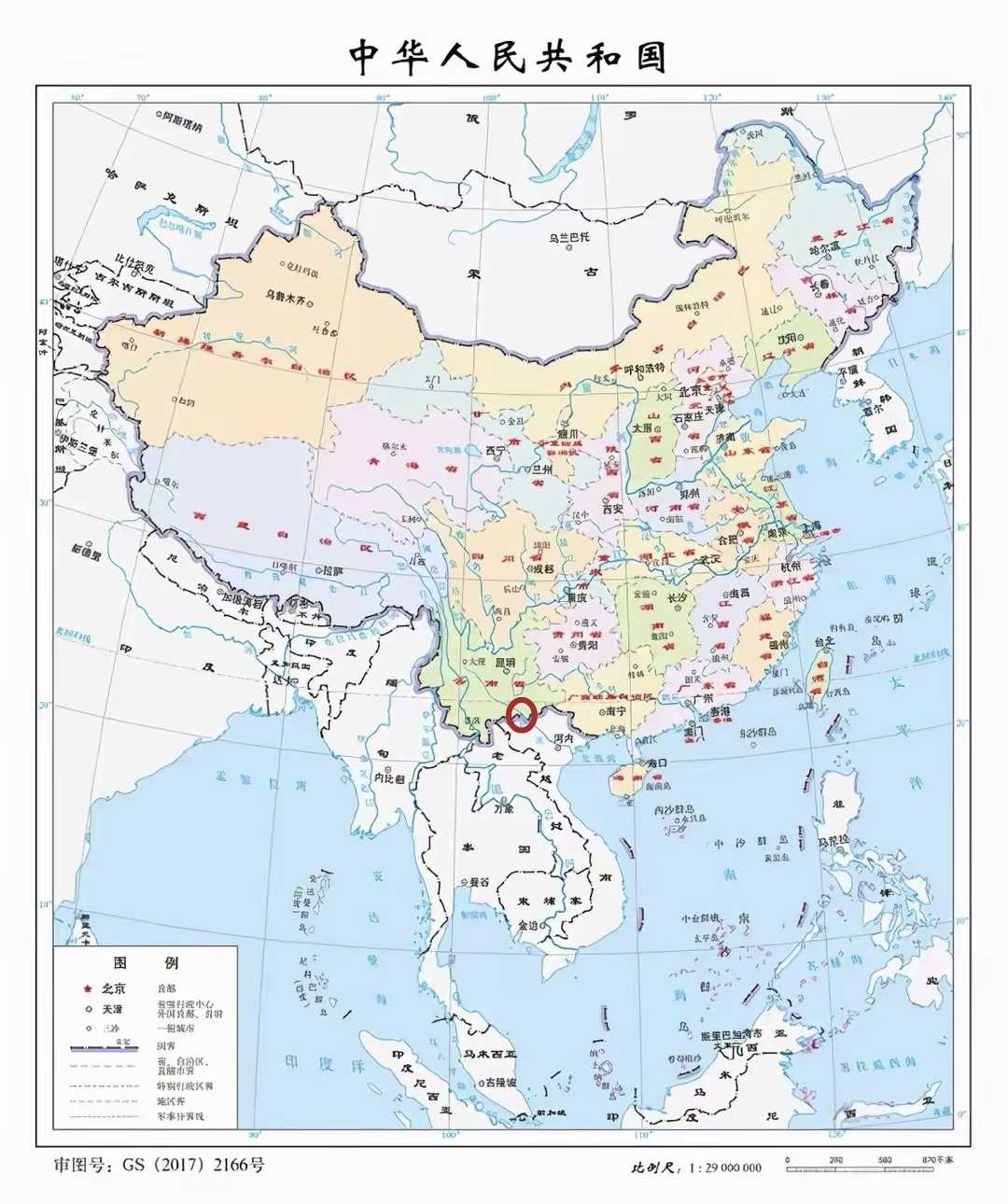
Leaving Biaoshuiyan Village, we drove south along National Highway 326 towards Hekou. This 80-kilometer stretch of highway happens to be the border line between China and Vietnam. The right side of the road is lined with barbed wire fences to prevent Vietnamese villagers from crossing illegally. Every few kilometers, there's a border guard post. On the hilltops across the road, you can vaguely see Vietnamese guard posts and flags. The feeling of driving along the border is indescribable—both tense and novel.
A Hekou Morning: Baguettes and Vietnamese Noodles
On our first day in Hekou, we found the internet-famous "Yinghong Restaurant" based on recommendations from Little Red Book (Xiaohongshu), and it did not disappoint. The small eatery is run by a pair of Vietnamese sisters, offering the most authentic Vietnamese flavors. The steamed rice rolls (bánh cuốn) were wonderfully chewy, with smooth and fragrant rice paper, and even the dipping sauce catered to different tastes. Besides the rice rolls, they had many other Vietnamese specialties. The bánh mì (Vietnamese baguette sandwich) was generous and delicious. There was also black bean ice and coconut shred rolls. The black bean ice was similar to red bean syrup with added toasted coconut flakes and shreds. The coconut shred rolls used coconut to balance the sweetness of the malt sugar, creating a layered and naturally aromatic dessert.
Must-Order Recommendations: Vietnamese steamed rice rolls (bánh cuốn), Vietnamese beef noodle soup (phở bò), bánh mì (Vietnamese baguette sandwich), coconut shred rolls (highly recommended).
Hekou: A Border Town Where Time and Exotic Charm Intertwine
Hekou is a small border town facing Vietnam across the river. It is the last stop on the Chinese section of the Yunnan-Vietnam Railway and the lowest point in Southwest China—just 76.4 meters above sea level. The climate here is hot, and the Southeast Asian atmosphere is strong. Strolling along the China-Vietnam Exotic Street, the lively blocks are filled with the cultural characteristics of both countries. Time flows, but the buildings don't age. Hekou is home to well-preserved Italian and French-style buildings, including the Hekou Uprising Memorial Hall (former Hekou Customs House), the old Post Office building, and the Hekou Museum (former Duixun Administrative Office). Each building holds a piece of history, filled with nostalgic charm.
City Walk Recommendations: - Exotic Street (Yiyu Fengqing Jie) : A street carrying the history of a century of port opening and trade. Just a few hundred meters long, it concentrates French-style heritage buildings like the old Customs House and Post Office. It integrates food, sightseeing, and entertainment, making it great for photos. - Hekou Old Post Office Building: Its bright yellow exterior walls paired with tall palm trees create a strong exotic vibe. - Hekou Uprising Memorial Hall: Another French-style building with bright yellow walls, located next to the popular restaurant "Red River 1897." - Hekou Duixun Administrative Office: A two-story, brick-and-concrete Western-style building with pink exterior walls full of French romance. It features a front veranda, red tile roofing, and arched wooden doors with louvered windows.
The streets and alleys are filled with the aroma of Southeast Asian spices. The architectural styles along the street are unique, blending Chinese simplicity, French romance, and Vietnamese agility. Colorful small villas and arcade buildings are arranged in a pleasing disorder. You often see Vietnamese people pushing luggage. The border trade market is Hekou's most popular wholesale market for Vietnamese goods, offering Vietnamese coffee, dried fruits and vegetables, green bean cakes, slippers, cigarettes, seasonings, and other specialty small commodities at affordable prices.
Special Experience: Vietnamese-style hair washing and massage. It's purely legitimate, but the wash is genuinely comfortable, and the massage skill is decent. A full set of hair wash and massage costs only 40 RMB—great value!
Witnessing a Century of Change: Hekou Station
The old Hekou Railway Station is a light-yellow French-style building. Construction began in 1908. During the Republic of China period, it was largely dismantled due to wartime needs and was only fully rebuilt in 1957. In the hearts of old Hekou residents, the old station is not just a city landmark but also carries the memories of several generations. It's a platform with a hundred years of history, a meter-gauge railway with a century of vicissitudes.
Photo Tips: There's a small path on the right side of the station. Walk around to the back of the building to see the platform. Trains still run occasionally, mostly freight trains. I managed to photograph a train around 11:40 AM. It was a green Dongfanghong locomotive, very retro. A railway police officer said that Vietnamese freight trains enter China and pass through Hekou Station, three times a day. Passenger service on the Kunming-Hekou line stopped in 2003, but this narrow-gauge section from Hekou Station to Shanyao Station still handles freight.
Across the Gate Lies Vietnam: Border Marker No. 102
The China Hekou Port clearance building is solemn and magnificent. Beside it is Border Marker No. 102, located on the China-Vietnam bridge over the Nanxi River. Across the bridge is the Vietnamese border gate. This bridge is for pedestrian traffic only, facilitating trade and people-to-people exchange between the two countries. This spot is where the Nanxi River and the Red River converge. Looking across the river, you can clearly see Vietnamese buildings and people and vehicles coming and going.
A Cup of Coffee, Dripping Time
At the entrance of Exotic Street, there's a trendy coffee shop. It's a two-story French-style villa located closest to the China-Vietnam railway bridge. Due to its unique location, it has recently become very popular, and getting a seat can be tough. It's famous for its large viewing balcony, from which you can watch the China-Vietnam freight trains crossing the bridge back and forth every day.
The China-Vietnam Railway Bridge was first built in 1903, over a hundred years ago. Designed and constructed by the French, it is the terminal point of the Chinese section of the Yunnan-Vietnam Railway. Located on the south side of Hekou county town, it spans the Nanxi River and is 76 meters long. The middle of the bridge marks the China-Vietnam border—the northern section is under Chinese jurisdiction, the southern section under Vietnamese jurisdiction. One of the "Eighteen Oddities of Yunnan" says, "The train doesn't connect domestically, but connects internationally," referring to this very railway.
Coffee Recommendations: Both the drip coffee and the Vietnamese-style cloud coffee are excellent—rich and mellow. With added condensed milk, they lean towards the sweet side, suitable for those who like sweet coffee. The drip coffee, at 20 RMB per serving, tastes great, and the key is you can watch the trains—excellent value. Sitting on the balcony, you truly experience what it means for "two peoples to drink from the same river." By the banks of the Red River, as the sun sets, the century-old China-Vietnam Railway Bridge stands quietly over the endless Nanxi River. The golden sunset glow reflects on the border gate across the river, falls on the faces of border residents walking home, shines on the front of speeding international trains, and ripples across the shimmering surface of the Red River—all of this is the unique charm of this beautiful century-old border town.
Drip Water Miao Village: The Poetic Dwelling of Pingbian
Our fourth stop was Pingbian Miao Autonomous County. As our vehicle entered the county, we saw from afar a magnificent Miao-style gate shaped like ox horns and a lusheng (a Miao reed pipe instrument) spanning the wide road. On both sides were bright and tidy Miao-style buildings. These colorful buildings, set against the surrounding lush,连绵 mountains, looked quite distinctive. This is Drip Water Miao Village (Dishui Miaocheng).
Entering the Miao village, we were greeted by a picturesque scene: beautiful mountains and clear waters, lush green trees, elegant houses, small bridges, and flowing streams. Sloped roofs, small grey tiles, stilted buildings (吊脚楼), wooden lattice windows, and beige walls—every detail reveals Miao architectural characteristics. Motifs like butterflies, lusheng, and ox horns vividly appear in every corner. A bright Shepherd's River (Muyang He) flows through the entire town, its blue-green waves reflecting the blue sky and white clouds.
Night in the Miao Village: The night scenery is dazzling. The river water ripples in the wind. The Miao town is surrounded by mountains, with ancient Miao villages arranged in a pleasing disorder. As the lights come on, the winding paths are gradually illuminated by colorful lights. The distant mountains, the river at our feet, the greenery, the bridges, the Miao architecture, and the tourists together paint a beautiful picture.
Coming here, you absolutely cannot miss the "Miao Disco Bonfire Party." It's more than just a mountain and starry-sky carnival; it's a blessing for a bountiful harvest, a feast where passion and tradition intertwine. It was the May Day holiday, and the entire scenic area was brightly lit. The Miao Square hosted a grand bonfire song and dance to welcome guests from all directions. Handsome men and beautiful women in ethnic costumes sang and danced. "Yi Ci Rong" in the Miao language means "good," implying everything is good! The bonfire symbolizes the fire driving away evil spirits, bringing peace to a hundred families, breaking through the darkness, and igniting the Miao village!
The Balinese Twin: Drip Layer Waterfall
When talking about Yunnan's waterfalls, most people first think of the Jiulong Waterfall in Luoping. But few know that hidden in the small southern Yunnan town of Pingbian is a twin brother of a famous Balinese waterfall—Drip Layer Waterfall (Dishuiceng Pubu). This is Yunnan's most spectacular wild waterfall,小众 and absolutely stunning.
How to Get There: From Drip Water Miao Village, don't get on the expressway. Drive 6 kilometers along National Highway 326 and navigate to "Drip Layer Waterfall Parking Lot." Find the small path next to the public restroom and begin a "Journey to the West" mode—descend steep slopes, crawl through bamboo groves, and climb steps. It takes 10-20 minutes total. I recommend picking up a tree branch to use as a hiking pole.
Walking through the bamboo grove, following the sound of the waterfall gradually downward, we finally caught a glimpse of its true face. The waterfall cascades down from the dense forest with overwhelming force, plunging into a naturally formed basin-like deep pool, like a piece of white silk dancing among the green mountains and trees. Sunlight shone on the waterfall, and the airborne water droplets danced in the wind. My wife couldn't help exclaiming that it was exactly like the famous Leke Leke Waterfall in Bali, only more spectacular!
Photo Tips: Stand beside the waterfall, look up at its grandeur, and feel the freshness of the water droplets on your face. All photos were taken with a phone. Against the backdrop of the large water volume, it's best to compose the shot from a closer distance for a more atmospheric feel. Open the phone's 3.5x zoom, or even more. Portrait mode can also zoom in to get closer. Same for video. It seems that brighter clothing colors work best for waterfall photos—orange, yellow, black, etc., are all great choices.
Kaiyuan: A City Built by the Railway
The fifth stop on our trip was Kaiyuan, a city that owes its existence to the railway. With the construction of the Yunnan-Vietnam Railway, Kaiyuan entered its railway era as early as 1909. The city flourished because of the railway and still retains many traces of its railway culture.
Impressions of Kaiyuan: Happy Prairie (Xingfu Da Caoyuan) is an urban green space perfect for cleansing your lungs. Phoenix Tower (Fenghuang Lou) looks remarkably like Big Ben, and the blooming phoenix flowers complement the English manor-style vibe beautifully. The Meter-Gauge Railway Post Office is full of retro charm. Nanzheng Street showcases the blend of Kaiyuan's history and modernity.
Conclusion: The Hidden Gems of Southern Yunnan Are Worth Exploring Slowly
This five-day, four-night journey through southern Yunnan took us from the light of faith at Shadian Grand Mosque to the natural wonders of Jinping Butterfly Valley; from the primeval forest adventure at Ladeng Waterfall to the paradise of Biaoshuiyan Village; from the exotic charm of Hekou to the poetic Miao village of Pingbian; from the grandeur of Drip Layer Waterfall to the railway memories of Kaiyuan—every stop was filled with surprise and emotion.
Practical Tips: - Best Time to Travel: Late May to early June, when you can catch the butterfly mass emergence and enjoy comfortable weather. - Transportation: Self-driving is the most convenient way. The total route is about 1,100 kilometers, and the road conditions are good. - Important Notes: Carry your ID card in the border areas. Respect local ethnic and religious customs. When visiting the mosque, remove your shoes; non-Muslims are not allowed inside the main prayer hall. Be careful when hiking to waterfalls and wear non-slip shoes. - Food Recommendations: Vietnamese steamed rice rolls (bánh cuốn), bánh mì (Vietnamese baguette sandwich), Vietnamese drip coffee, Vietnamese beef noodle soup (phở bò), coconut shred rolls, and more.
Southern Yunnan hides so many secret little towns. They aren't as famous as Dali or Lijiang, but they possess their own unique charm. If you also want to escape the noise and reject the grind, consider this borderland秘境 journey to experience the most genuine and moving side of Yunnan.
You should also read:

Into the Hidden Valley: A Solo Journey Through the Mysterious Dulong River
Into the Hidden Valley: A Solo Journey Through the Mysterious Dulong River Deep in the northwestern corner of Yunnan Province, tucked away from the modern world, lies a place that feels like a secret whispered among mountains. The Dulong River Valley is not just a…
Continue reading...
God’s Abandoned Palette: A Self-Drive Journey Through Yunnan’s Dongchuan Red Land
God’s Abandoned Palette: A Self-Drive Journey Through Yunnan’s Dongchuan Red Land Travel has never been about reaching some distant geographic coordinate. It’s about encountering, along the way, the version of yourself buried beneath the rubble of daily routine. During this May Day holiday, I finally…
Continue reading...
Body in Hell, Heart in Heaven: A Pilgrimage Through Tiger Leaping Gorge — A Dialogue Between Heaven and Earth
Body in Hell, Heart in Heaven: A Pilgrimage Through Tiger Leaping Gorge — A Dialogue Between Heaven and Earth Introduction: When the Gorge Splits Open Beneath Your Feet Some say Tiger Leaping Gorge is the closest place on Earth to the border between "hell" and…
Continue reading...