[Hiking Diary] From Longing to Reverence | Encountering Paradise on Earth in Yumucun
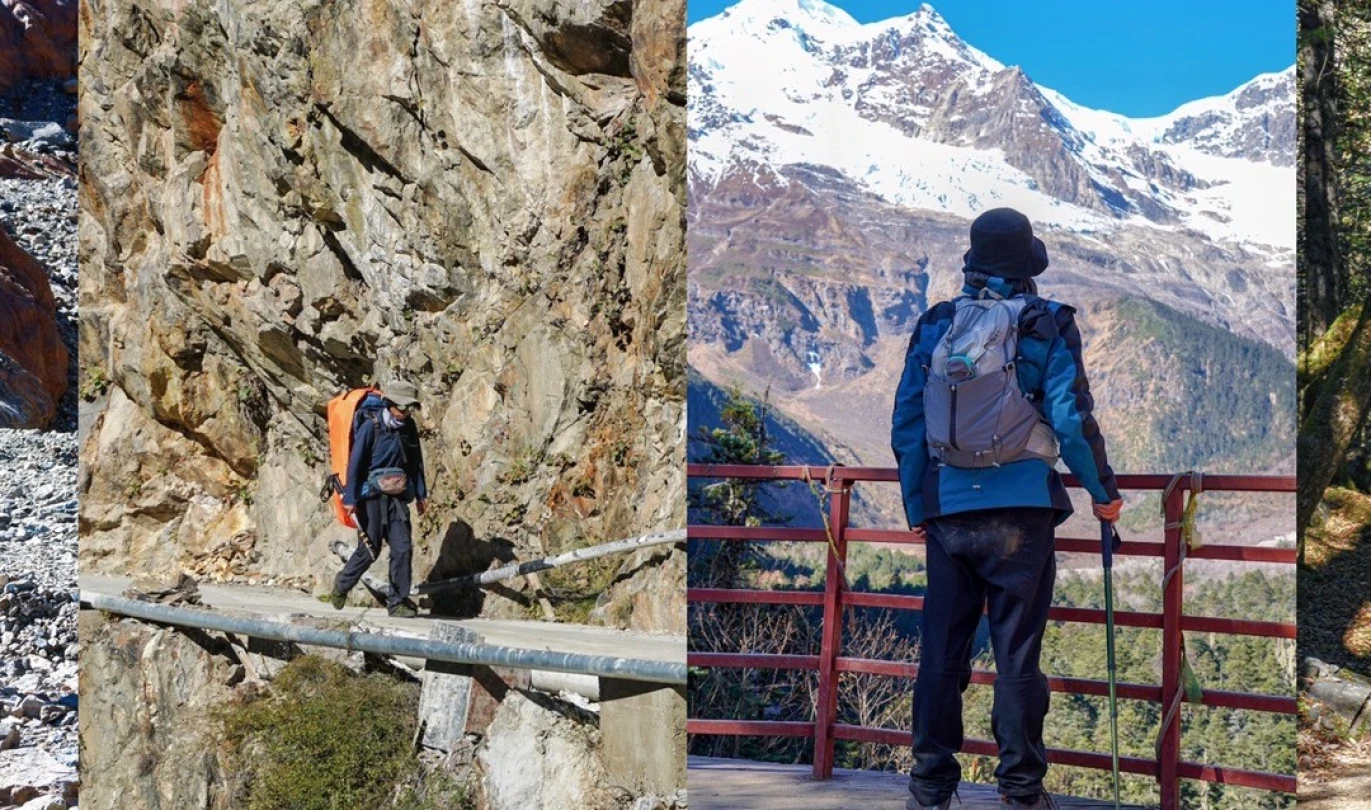
[Hiking Diary] From Longing to Reverence | Encountering Paradise on Earth in Yumucun
Some places stir your heart just by their name. Some journeys make your blood race just by imagining them. Yumucun (Upper and Lower Yumucun villages) is exactly such a place.
Three years ago, I first saw the name "Yumucun" on a hiking forum. Back then, it was just an unfamiliar place name, hidden in the folds of southwestern China, nestled in the embrace of Meili Snow Mountain. But as I read about it again and again in other travelers' accounts—"Paradise is on the left, Yumucun on the right," "If you can't go to heaven, go to Yumucun"—the name took root in my heart like a seed quietly planted.
In March 2021, I finally turned "longing" into "having walked there." Alone, with one backpack, a journey of five days and four nights. From Shangri-La to Feila Temple (Feila Si), from Xidang Village to Yumucun, from the Divine Waterfall to the Ice Lake—I measured this land blessed by the gods with my own two feet.
This is no ordinary travelogue. It is a conversation with myself, a record where fear and courage intertwine, a pilgrimage that began with longing and ended with reverence.
Prologue: From Longing to Reverence
I always hear people talk about Yumucun on the hiking trail.
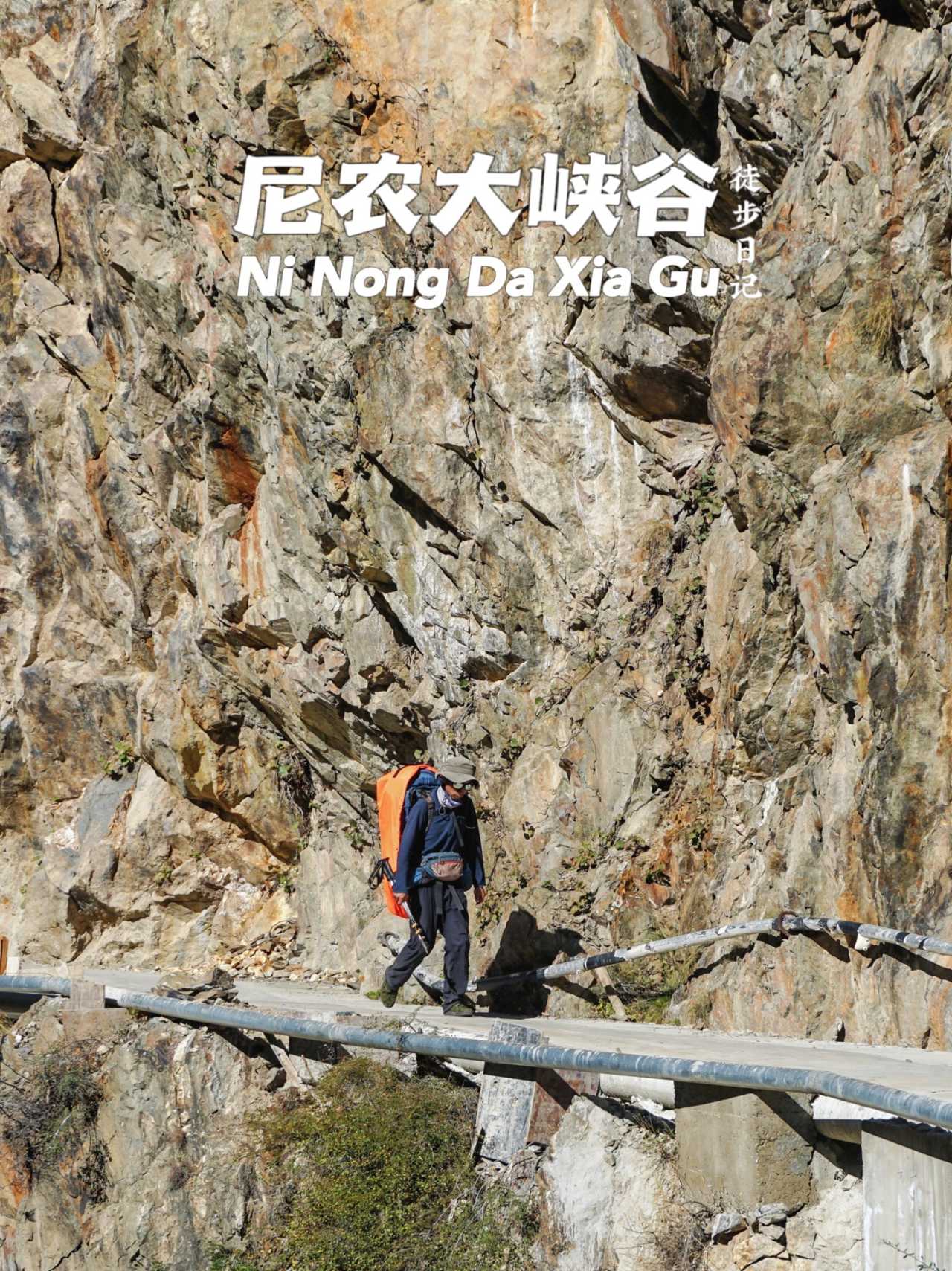
Some call it a "Shangri-La," others say it's a "paradise on earth," still others describe it as a "hiker's heaven." Everyone's Yumucun is a little different, but one thing they all share—those who have been there want to go back.
"Paradise is on the left, Yumucun on the right." This phrase was like an incantation, stirring up all my curiosity. What secrets does Yumucun hold? Why does it make so many people travel over mountains and through forests, just to reach its embrace?
This time, I finally turned the place I longed for into a place I had walked through.
Chapter One: Shock, Starting at 30,000 Feet
The flight from Lhasa to Shangri-La gave me a scare before it even took off.
After boarding, I noticed all the window shades were closed. This was completely opposite to normal flight rules—usually during takeoff and landing, flight attendants ask you to open the shades. It wasn't until the announcement came that I understood: while on the ground, opening the shades and taking photos were prohibited.
The plane taxied for a long time before taking off. Just when I thought this would be an ordinary high-altitude flight, turbulence hit.
First came slight shaking, like riding on a bumpy dirt road. Then it grew increasingly violent, and people in the cabin began to gasp. Suddenly, the plane dropped sharply—that feeling of weightlessness made my heart leap into my throat. Screams erupted around me. Everyone gripped their armrests, faces pale as sheets.
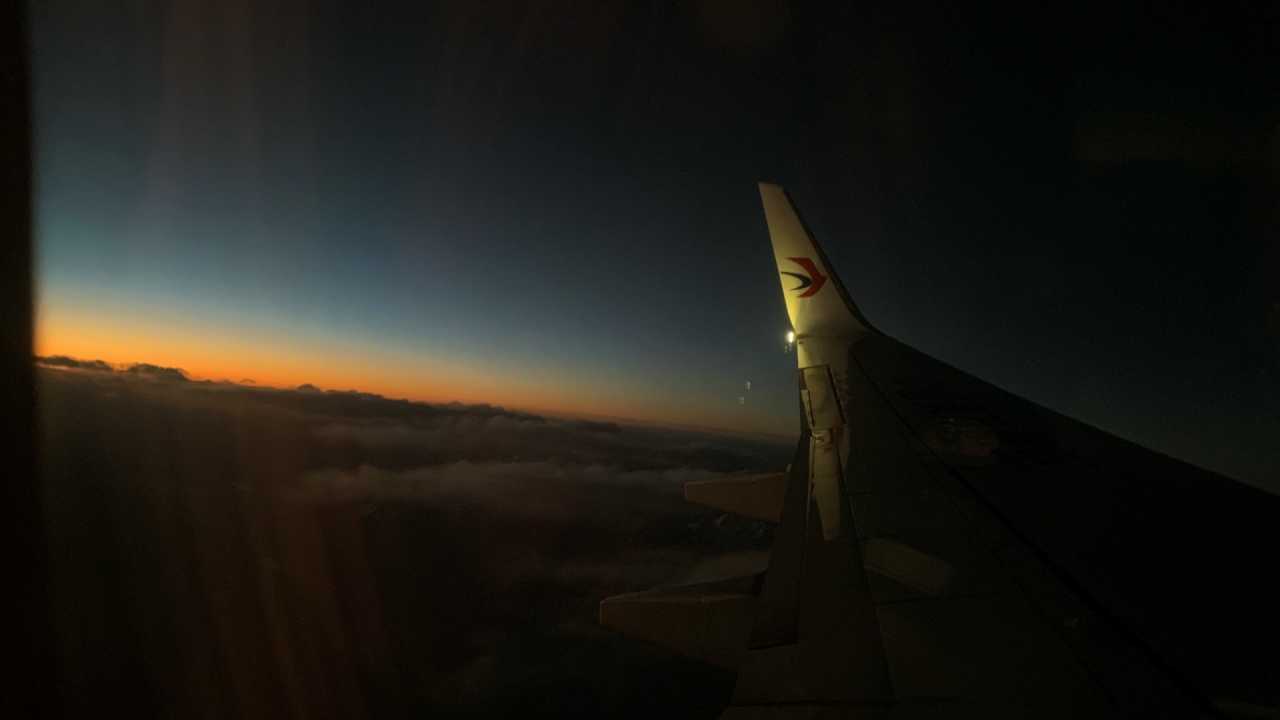
In that moment, I truly thought I was done for.
Fortunately, the plane eventually stabilized. I pulled out my phone to record this terrifying experience—it was the first time I felt death's approach on an airplane.
When we landed at Shangri-La Airport, my legs were still weak. After exiting the airport, I found it hard to get a taxi. Seeing that my hotel was only two kilometers away, I decided to walk and soak in the night atmosphere of Shangri-La.
This was my second visit to Shangri-La. The first time was too rushed—I hadn't had a chance to really experience anything. When booking my hotel this time, I discovered the guesthouse I'd stayed at before had closed—the pandemic's impact on tourism was far more severe than I'd imagined.
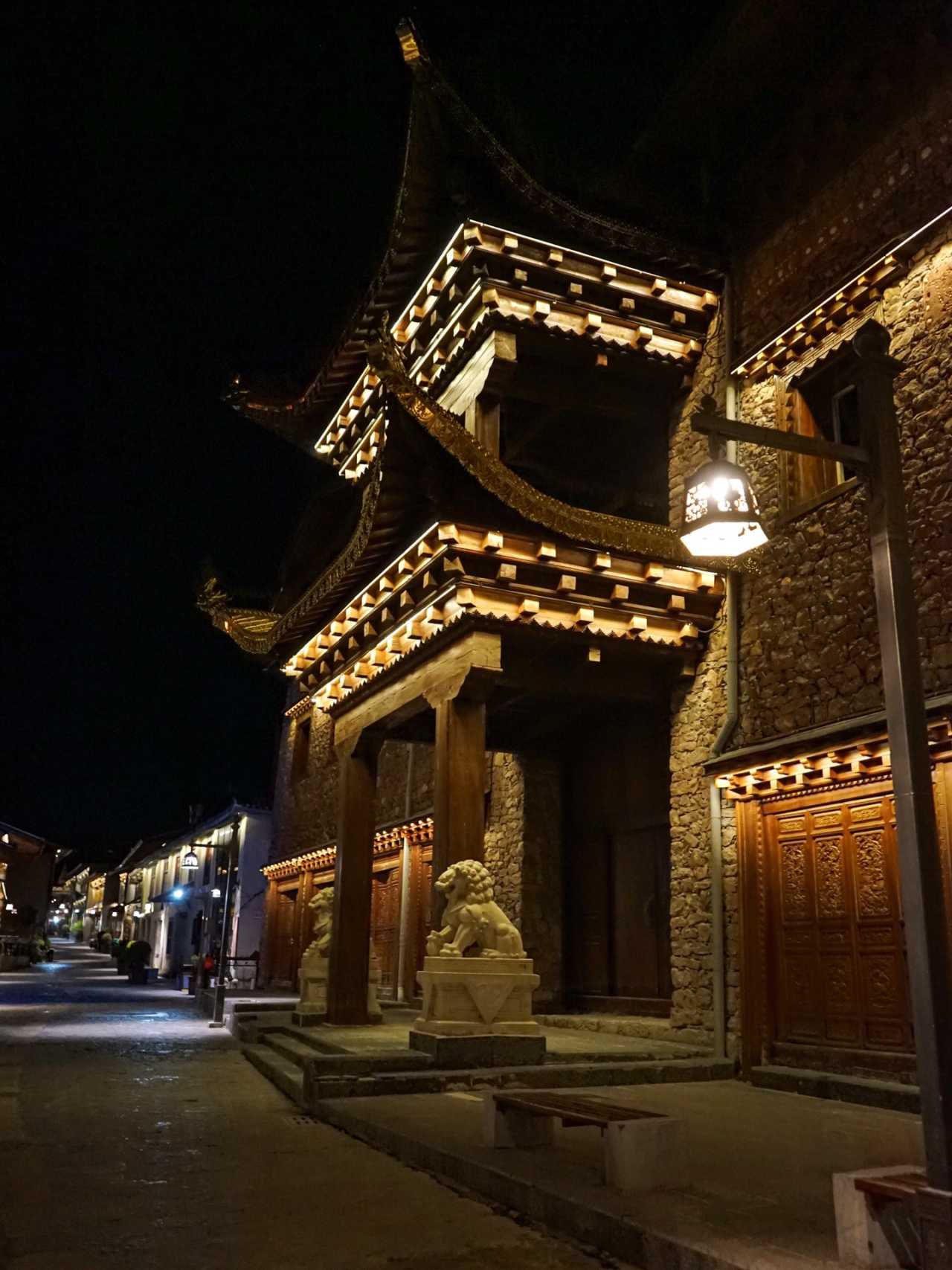
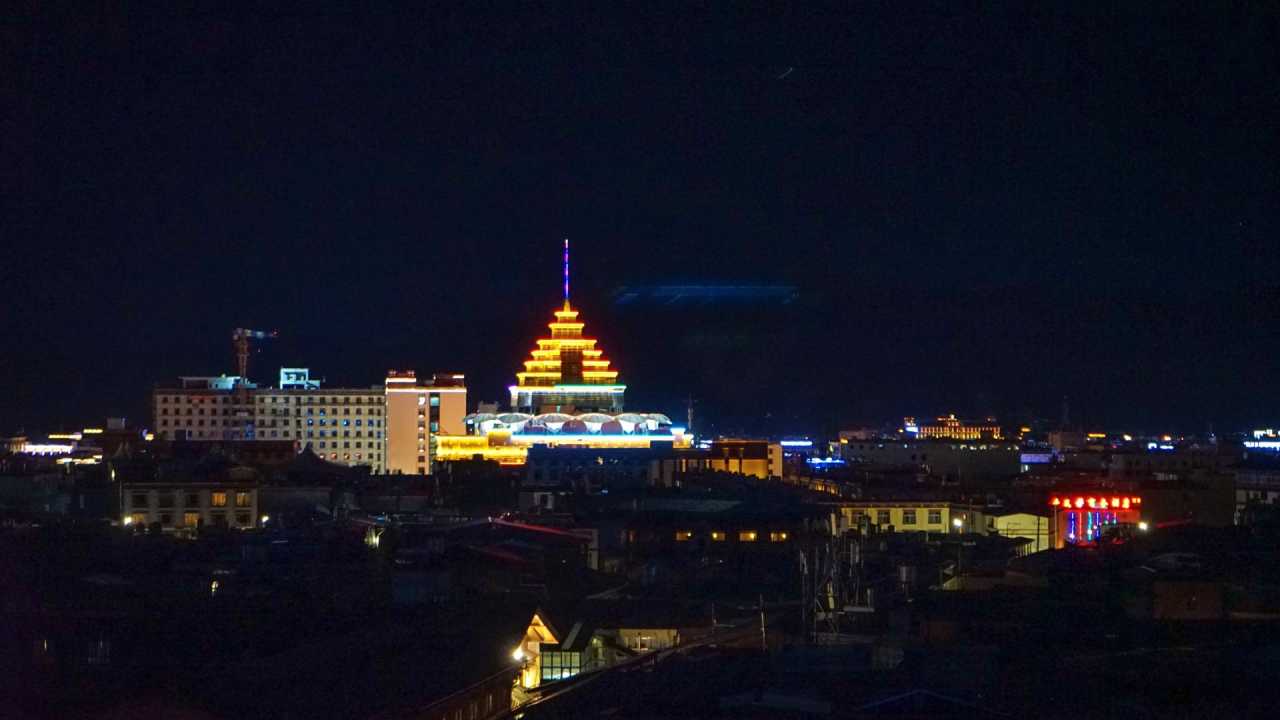
On my way to the guesthouse, I met a few people who had just returned from Yumucun. They warmly invited me to explore the old town together that evening. After dropping off my luggage, we went to Guishan Park, admired the old town's night scenery, and together turned the world's largest prayer wheel. Exhausted from the journey, we didn't stay out long before heading back to rest.
Chapter Two: Dukezong, the Moonlit Shangri-La
"Dukezong"—in Tibetan, this name means "City of Moonlight." It was built according to the ideal of Shangri-La described in Buddhist scriptures, like a long ballad sung down through more than a thousand years.
In the early morning, I left my luggage at the guesthouse and decided to travel light, first exploring this old town I hadn't seen in a year. The current Dukezong is a reconstruction—the great fire of 2014 nearly destroyed the entire ancient town.
The town's layout resembles an eight-petal lotus, with Moonlight Square at its center. Traditional Tibetan wooden houses surround it in ring after ring. The old town was exceptionally quiet in the early morning, a thin mist veiling it in mystery.
I walked alone on the ancient bluestone paths, feeling the deep hoofprints left by time beneath my feet. Closing my eyes, I could almost see the caravans of old arriving here—the horses' hooves relaxed on the stone streets, the people at ease. They could stay in warm Tibetan wooden houses, stable their horses in cattle sheds, and drink a bowl of fragrant, steaming butter tea.
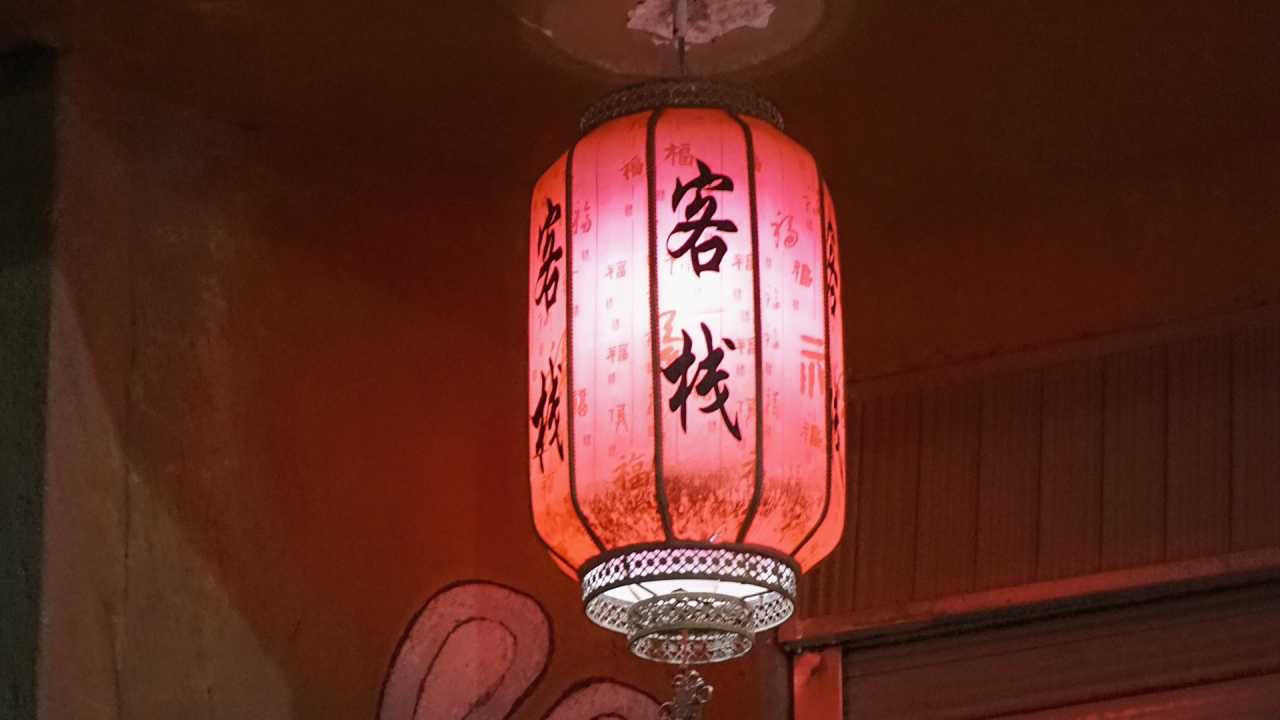
At the end of Dukezong lies Moonlight Square, where many pigeons gather, flanked by museums on both sides. Since I was up too early, the museums hadn't opened yet.
The small hill east of the square is the famous Guishan Park. Built during the Kangxi reign of the Qing dynasty, it climbs along the hillside, with the Chaoyang Tower at its summit. At an altitude of over 3,000 meters in Shangri-La, climbing the steep stone steps is no easy task.
After reaching the park, the first thing you see is a Han Chinese temple. Circling clockwise from the temple brings you to the Great Buddha Temple and that enormous prayer wheel—five stories high, made of gilded pure copper. The upper part of the cylinder is engraved with the Four Great Bodhisattvas: Manjushri, Samantabhadra, Avalokiteshvara, and Kshitigarbha. The lower part bears the Eight Auspicious Symbols of Buddhism. Inside the cylinder are 1.24 million mantras and sacred texts, with a total weight of 16 tons.
Turning such a massive prayer wheel requires many people to work together. Each clockwise rotation is equivalent to silently reciting the Buddha's name 1.24 million times. Three full rotations bring blessings, disaster relief, and good fortune.
Standing at the summit overlooking the entire Dukezong old town, the morning light spilled over the Tibetan rooftops like a layer of gold.
Chapter Three: Feila Temple, a Duet of Place and Temple Name
I took a bus from Shangri-La to Feila Temple (Feila Si). When I boarded, I noticed quite a few people were heading there too. While waiting, I met some young men carrying heavy backpacks. When I asked, they said they were hiking the Meili C-line. At that time, I hadn't yet experienced heavy-load hiking, and I was full of admiration. I chatted enthusiastically with them along the way, but they seemed rather aloof and didn't respond much.
The road to Feila Temple was all winding mountain paths. The higher we climbed, the quieter the bus became—some people were carsick, others had fallen asleep.
We passed by the Jinsha River, where the water was a jewel-like green, like a jade belt embedded in the earth. If I'd been driving myself, I would definitely have stopped to play by the river. The higher we went, the more barren the mountains became. We passed many small villages, all silent as if forgotten by time.
After more than three hours, we finally arrived at Deqin County town. Just as I was about to get off, the driver said he'd take us directly to Feila Temple—which put smiles on all our faces.
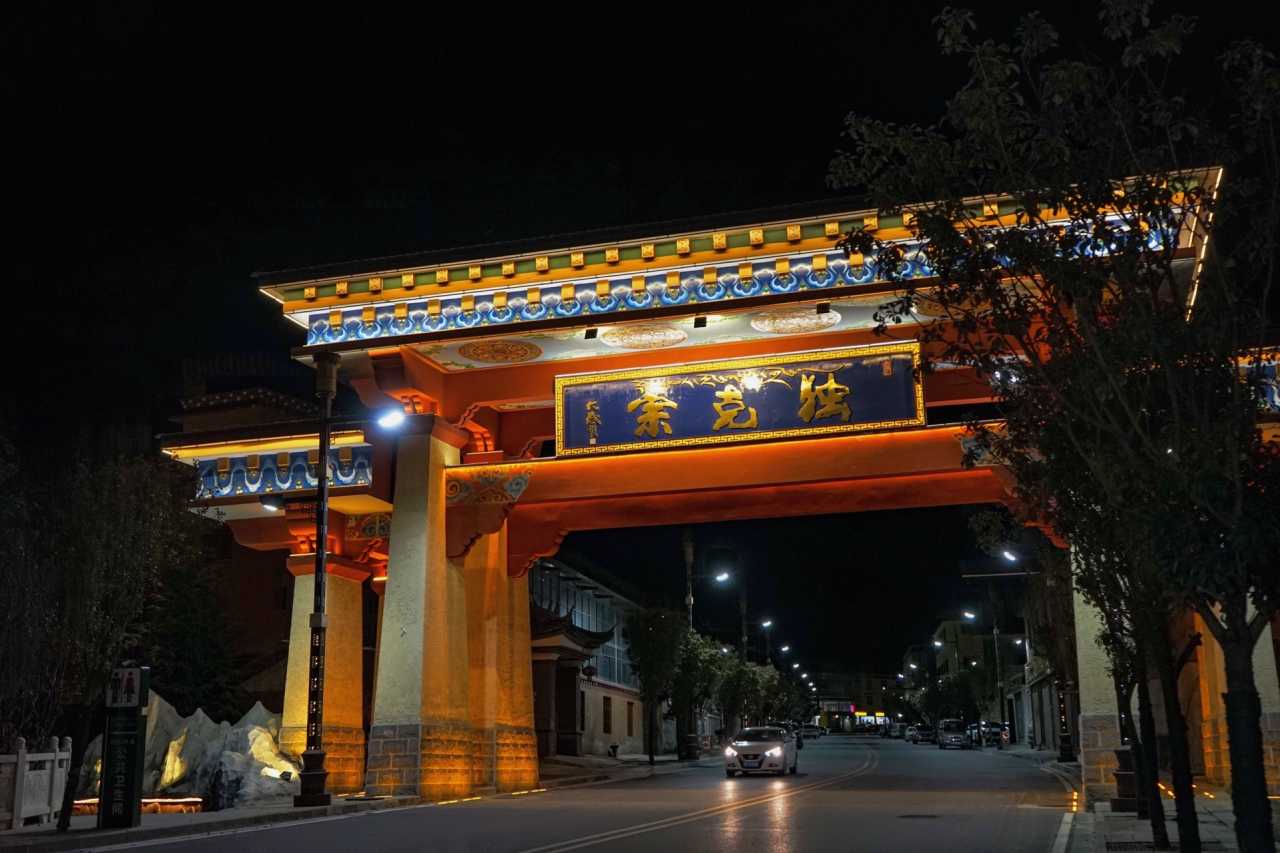
When we reached Feila Temple, it was still early. After settling into my accommodation, I checked what there was to see nearby. That's when I learned that Feila Temple isn't just a place name—it's also the name of an actual temple. Finding it was close to where I was staying, I decided to explore.
The temple gate sits right by the roadside. Walking about twenty meters down from the gate brings you to Feila Temple itself. The path down is lined with prayer wheels, and you can see the temple's golden roof glittering in the sunlight.
Feila Temple sits at 3,439 meters above sea level. Its Tibetan name, "Juewu Nanka Zhaxi," means "Auspiciousness of the Sky." Built in the 42nd year of the Wanli reign of the Ming dynasty (1614), the current structure was renovated during the Republican era. It's a typical Tibetan earth-wood building. To be honest, it's quite a small temple—usually home to just one lama, one cat, and one rooster.
On the temple grounds stand a memorial to the "Chinese and Japanese Meili Snow Mountain Mountaineering Heroes" and a stupa. The monument commemorates the 17 climbers who died on January 4, 1991, during an expedition on Meili Snow Mountain. The stupa was built to commemorate the 10th Panchen Lama's visit to Deqin.
The viewing platform outside the temple is covered with prayer flags, offering a panoramic view of Deqin County. It was also here that I met "Political Commissar" (Zhengwei), whom I would later hike with to Ice Lake, along with a few young women who wanted to team up with me for Yumucun—though I turned them down. Awkwardly, I ran into them again on the trail to Ice Lake, and they asked why I hadn't teamed up with them but had teamed up with others instead.
A path below the temple leads downward to an unknown destination. I didn't feel like climbing, so I didn't go down. But the pasture beside the temple was full of cattle and sheep grazing freely.
Chapter Four: Golden Sunlight on the Snowy Peaks, Twenty Minutes of Eternity
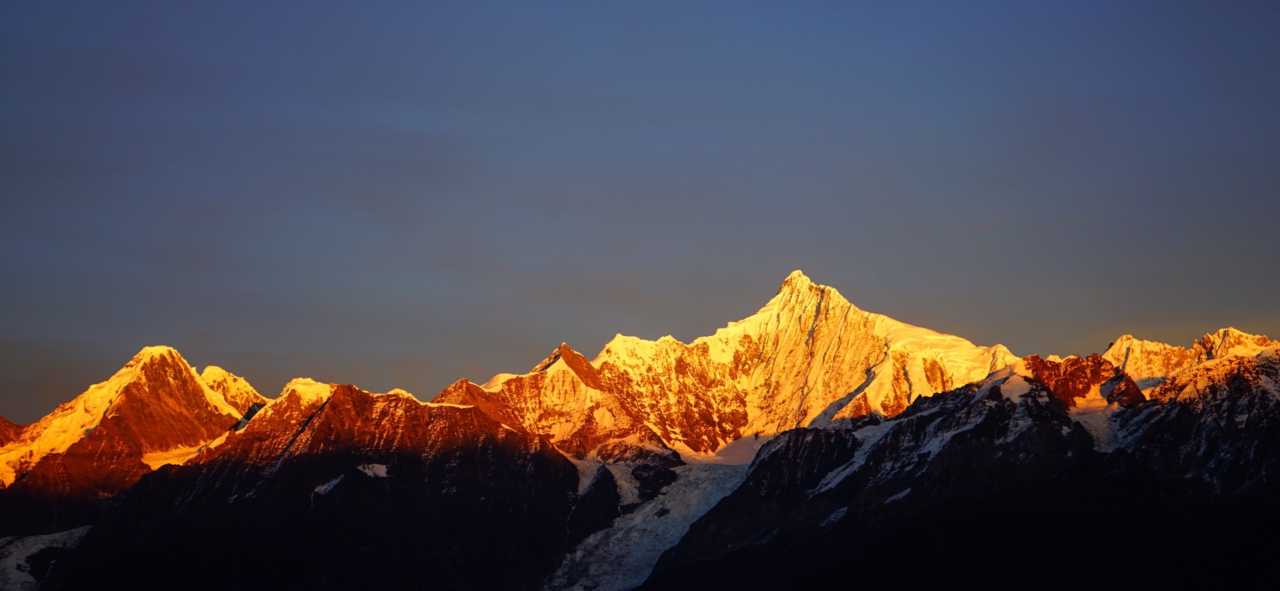
Meili Snow Mountain, also known as Prince Snow Mountain, is one of the eight sacred mountains in Tibetan regions. Its most famous sight, "Golden Sunlight on the Snowy Peaks" (Rizhao Jinshan), is a spectacle many dream of but few are lucky enough to witness. The main peak, Kawagebo, stands at approximately 6,740 meters—still an unconquered "virgin peak" and the only high peak banned from climbing due to cultural preservation.
I got up just after six in the morning to wait for sunrise. When I first came out, the mountain was white against a pale blue sky. As time passed, the sky gradually shifted from blue to pink, dreamlike and unreal.
Let me introduce the Thirteen Peaks of Meili Snow Mountain:
Kawagebo: The main peak at 6,740 meters, the highest in Yunnan Province, still unconquered and the only high peak banned from climbing due to cultural preservation.

Jiwaran (Five Crown Peak): Five peaks joined together, with a unique mountain shape.
Miancimu Peak: In Tibetan, "Goddess of the Great Sea," also known as "Goddess Peak"—the most graceful of the Thirteen Peaks.
General Peak: With rounded, full lines, it looks sturdy and solid.
Lion's Seat Snow Mountain: At 6,509 meters, the second highest in the Meili group, resembling a sitting lion from afar.
Mangkuang Laka Peak: Located west of Nairidingka, composed of two steep and beautiful snow peaks with a sizable glacier below.
Rare beauty is often fleeting. The golden sunlight on the snowy peaks lasted barely twenty minutes. But those twenty minutes were enough to remember for a lifetime.
Chapter Five: Entering Yumucun, the Grueling Ten Kilometers
After watching the golden sunlight, there were many vehicles heading to Yumucun by the roadside. I chose a shuttle bus, and that decision added many stories to my solo Yumucun journey.
From Feila Temple to Xidang Village, it's nearly forty kilometers. The first half traveled along the Yunnan-Tibet Highway, with views of Meili Snow Mountain through the window. After turning left onto the Meili Snow Mountain scenic area road, the winding mountain path descended all the way to the Lancang River. At the bridgehead, I bought a ticket—55 yuan per person. Crossing the bridge, the right fork led to Mingyong Glacier, the left to Xidang Village.
After arriving at the scenic area entrance and having my ticket checked, I could enter. Many people on the bus decided to hike into Yumucun, while others chose to ride in—200 yuan per person. Those taking the ride exchanged contact information and agreed to meet tomorrow for Ice Lake. I gladly agreed.
Those of us hiking set off together on the trail into Yumucun. I thought I finally had companions, but their pace was too slow. I planned to also visit the Divine Waterfall after entering Yumucun, so time was tight. In the end, I set out alone again on the mountain trail.
There was a lot of trash along the way—some people really have no sense of decency. During a rest stop, I chatted with the owner, asking how much farther it was. I mentioned I wanted to reach Yumucun and still hike the Divine Waterfall trail that same day. The owner scoffed and said, "You're only here now, and you're talking about the Divine Waterfall?" I felt mocked. I ate a Snickers bar and set off with renewed determination—I was going to prove him wrong.
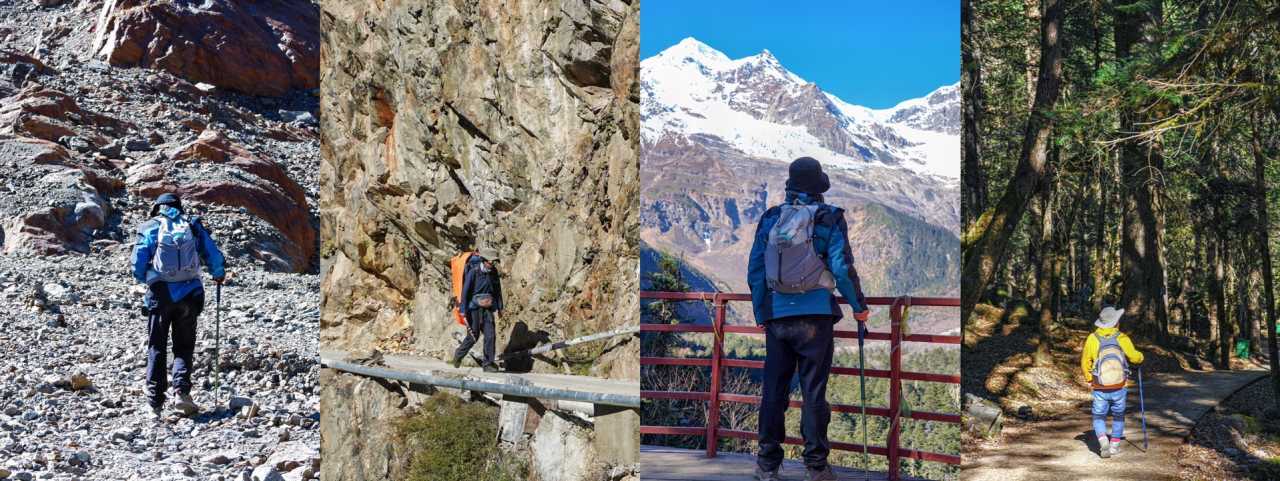
This forest was incredibly healing. Here you could find all the colors of autumn—golden, orange-red, deep brown, layered one upon another. The uphill sections were all narrow paths, and hiking alone made me a bit nervous about getting lost. Fortunately, there were many markers left by previous travelers.
Walking on the gravel path was exhausting—it was hard to get any traction. Nanzong Yakou Pass, at 3,700 meters, is the必经之路 (only route) to Yumucun and also a large rest area. The mules from Xidang stop their service here because the descent belongs to Yumucun Village. Reaching Nanzong Yakou means the uphill is finished—from here on, it's all downhill.
Nanzong Yakou is also an excellent spot to view Goddess Peak and Five Buddhas Peak. Beside the small shop at the pass, there's a wooden viewing platform where you can gaze at these two sacred peaks.
The elevation climbs from 2,645 meters at Xidang Hot Springs to 3,729 meters at Nanzheng Yakou, then drops to 3,228 meters at Yumucun Village. Both the ascent and descent were steep. The main problem was that I hadn't brought trekking poles—the downhill was truly brutal. I could see the snowy mountains the whole way, and I also ate dust kicked up by passing off-road vehicles. I finally understood why the ride cost 200 yuan—it was worth it.
There were many shortcuts that could save time, but they were all relatively difficult. On the hike from Xidang to Yumucun, I took the wrong path twice. Realizing my mistake and having to backtrack was incredibly frustrating. I didn't see any other hikers the whole way—it seemed this route wasn't popular.
After some time, I finally caught sight of Yumucun Village. The village is divided into upper and lower sections: Upper Yumucun leads to the Sino-Japanese joint base camp for climbing Kawagebo, while Lower Yumucun leads to the Divine Waterfall. What was slightly discouraging was that Upper and Lower Yumucun looked close but were actually far apart—all connected by rural paths that required navigating on your own. The long descent had given me blisters, making my hiking journey even more challenging.
Chapter Six: The Divine Waterfall Trail, Falling in Love with This Forest
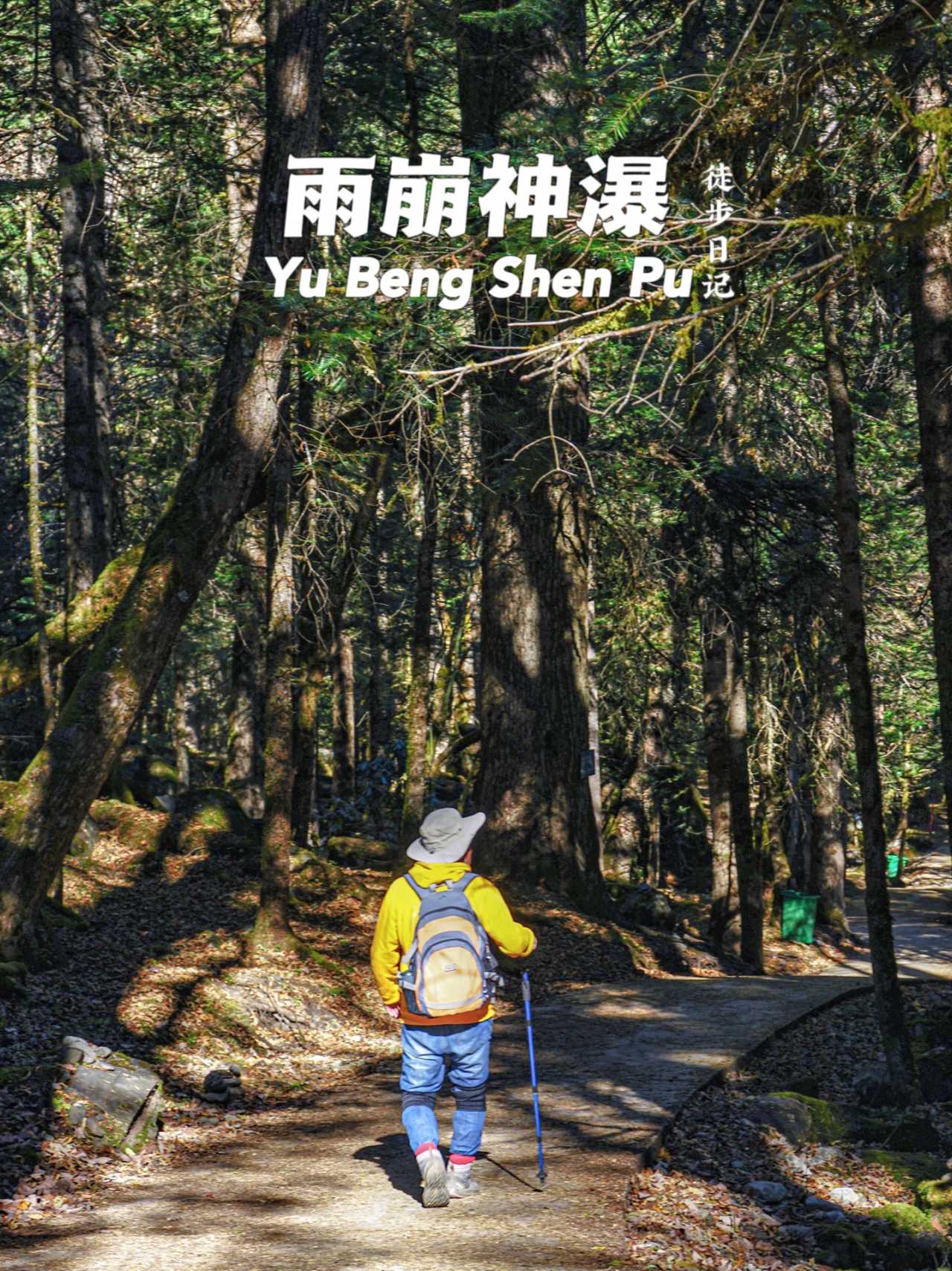
After arriving at Lower Yumucun, I first went to the guesthouse to drop off my things, ate a self-heating rice meal, and asked the owner about the Divine Waterfall trail. The road from Xidang had really taught me a lesson—I had several blisters on my feet.
After eating and drinking my fill, I grabbed my camera and set off. The owner suggested I go tomorrow instead, since it was already three in the afternoon when I departed. He took down my phone number and said he'd call if I wasn't back by six.
The Yumucun Divine Waterfall is formed by melting snow from Meili Snow Mountain. Tibetans consider bathing beneath the waterfall a form of spiritual purification. Visitors can follow Tibetan tradition by walking clockwise around the waterfall three times for blessings. The waterfall's appearance changes with the seasons—usually just thousands of thread-like water strands cascading down like a khata scarf, more spectacular during the rainy season when melting spring and summer snow increases the flow.
At the entrance, there were many mules and horses on the meadow. In early winter, the meadow was all yellow, which, combined with the nearby temple, created an especially ethereal atmosphere.
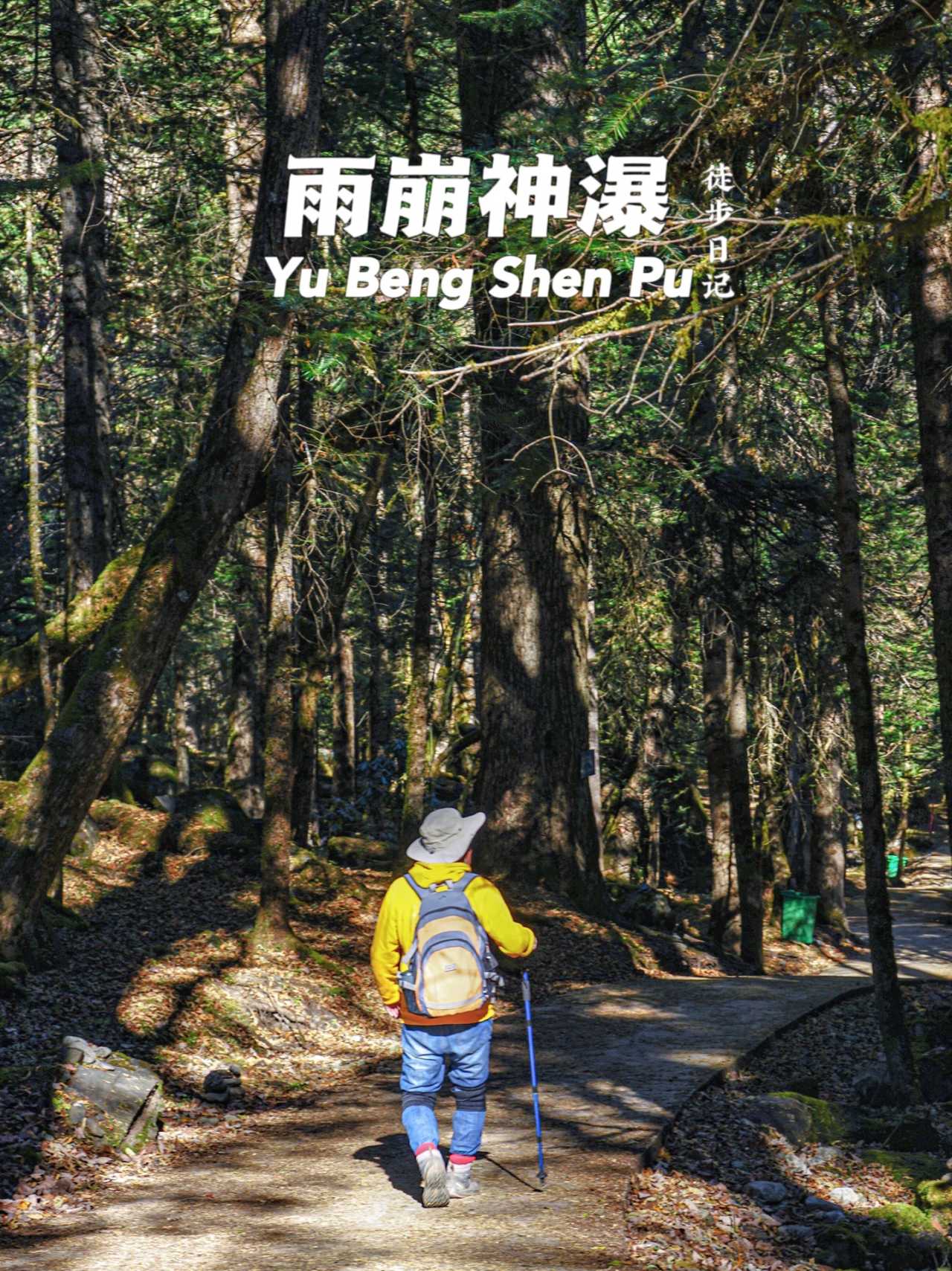
Following the concrete path, the first half was shaded by green trees as I walked through primeval forest. Occasionally I met other hikers, and we encouraged each other—it was heartwarming. Going up at this hour, I had almost no fellow travelers heading the same direction—only people returning.
Along the path to the Divine Waterfall were countless stone piles forming Mani mounds, built by Tibetan pilgrims on their mountain circumambulation. Passing travelers can add to them as a form of merit-making.
The vegetation was lush, covered in green moss everywhere. Many trees were draped in soft, damp moss. In the forest, towering trees stood silently under the azure sky, spreading their branches to welcome the sunlight. Sunbeams filtered through the layered foliage like threads of golden sand, dappling the grass.
I also saw cute little squirrels along the way, very friendly and unafraid, coming right up to beg for food.
From the supply station onward, it was all uphill—what hikers call "Despair Slope." During the last fifth of the journey, I ran into "Political Commissar," whom I'd met at Feila Temple, as well as Ouyang and Xiao Liu, who had ridden the shuttle with me to Yumucun.
The sun was already setting, and the temperature was dropping sharply. I hurried to reach the endpoint—the path to the final destination was hung with so many prayer flags they almost blocked the way.
From a distance, I thought it was gravel, but looking closer, I realized it was a glacier covered with a layer of dust. Hiking up alone was a bit frightening—there was nobody else up there.
When I reached the end, it wasn't the spectacular waterfall I'd imagined—just a trickle of water. Legend has it that the Yumucun Waterfall is holy water that Kawagebo, the revered deity, brought from heaven. It can divine one's fate, eliminate disasters, and bestow blessings. Tibetan Buddhist pilgrims making their kora (circumambulation) around Meili Snow Mountain must bathe in the Yumucun sacred waterfall.
Due to time constraints, I didn't linger long—I was probably the last person up there. The descent was much faster, and I caught up with many people I'd met on the way up. One hiker even stopped me and asked if I was an athlete—which was a bit embarrassing. I just said I had better-than-average stamina.
I made it back to Lower Yumucun before six and got praised by the owner again. After descending, I met up with the people I'd encountered that morning. They suggested having dinner together. I was staying in Lower Yumucun, while they were in Upper Yumucun. Given the day's intensity, I declined the dinner invitation but agreed to go to Ice Lake together tomorrow.
Chapter Seven: The Ice Lake Trail, We Are a Team
I woke up the next day feeling much better. After arranging a meeting time with my companions, I set off from Lower Yumucun. They were all staying in Upper Yumucun, while I had to hike up from the lower village. What looked like a simple stretch was all uphill, leaving me breathless—I'd recommend anyone heading to Ice Lake to stay in Upper Yumucun.
Let me introduce our team members: Jiamei, Political Commissar, me, and Xiao Liu. We had all come to Yumucun alone, but by some stroke of luck, we formed a team to conquer the Ice Lake hiking trail together.
Yumucun Ice Lake is a deep green alpine lake formed by melted snow from the Meili Snow Mountain glaciers. It's the main water source for Yumucun Village. Considered the "Sacred Lake" of Meili Snow Mountain, its waters are exceptionally cold and appear deep green, like jade. The glacier extends to the lake's edge, and in winter, it becomes a frozen world.
After gathering in Upper Yumucun, we set off. Since three of my teammates had no outdoor hiking experience, I took on the role of team leader. I took backpacks from my companions and brought up the rear of the group.
The initial flat sections were fine—we chatted and laughed the whole way. But it didn't last long. Soon we were climbing, and Xiao Liu was struggling almost immediately, panting heavily after just a few steps. During this climb, Jiamei's camera also had a minor issue, so the two of us stayed behind for a while before catching up with the main group.
Meiduo Dingding was a rare flat spot surrounded by dense forest, with towering fir trees standing straight on the slope. Fallen giant trees lay scattered on the ground, already colonized by moss and fungi. Up close, they looked like miniature forests, giving a sense of stepping into a magical land.
Xiaonong Yakou Pass, at 3,623 meters. From the start to the pass, we'd covered about 4.3 kilometers. It's said that Xiaonong Yakou is Kawagebo's military training ground—Kawagebo commands millions of divine soldiers and heavenly generals, and "Xiaonong" means "ten million."
After crossing Xiaonong Yakou, there was a viewing platform with an expansive vista of snowy mountains and valleys. We rested here and had a great time—posing for photos in every possible way.
Next came the descent, extremely steep and treacherous, with rocks jutting out everywhere, uneven and rough. Leaning on our trekking poles, we carefully moved downward step by step. After reaching the valley floor, the path to Xiaonong Base Camp was relatively flat and easier to walk.
From Xiaonong Base Camp to Ice Lake was just over a kilometer, following a path beside a stream. The first half was relatively gentle, while the last section of climbing was more tiring. After this long ascent, we finally saw Ice Lake—a sudden sense of openness and wonder.
The lake water was a jade-like green, like an emerald set at the foot of the snowy mountains. Not far away was a uniquely shaped white ice cap, striking and mysterious. Legend says Ice Lake is the soul lake of Kawagebo, the revered deity of Meili, formed by glacial erosion creating a cirque landscape and moraine blocking a glacial valley.
We decided to go down and get close to the lake. The water reflected the glacier, the endless white snow peaks, and the blue sky with white clouds—all blending together in a mesmerizing scene.
By the lakeside, we were all overjoyed. Jiamei had astonishing balance—she struck various poses by the lake while I watched nervously. There was also an older woman by the lake, taking those classic tourist photos with her scarf.
We decided to circumambulate the lake. During the circuit, we couldn't shout to avoid triggering an avalanche. The water coming down from the mountain was really strong, and we searched for a long time to find a path across. Midway, we met a young man on a company team-building trip. He was fit and walked fast. After completing one circuit with us, he climbed up a small hill, only to be called back down by his company leader for a lakeside photo—his face was green, because going up and down was truly exhausting.
On the return journey, we focused on making good time. Coming down from Ice Lake, we met the people who had started hiking into Yumucun with me—they were only just beginning their ascent. I shared some food with them and reminded them to be careful.
On the way back, Political Commissar and Jiamei were in the first group, running ahead at lightning speed. I stayed behind with Xiao Liu, constantly encouraging her, sometimes pulling her along with my trekking pole. The downhill sections were incredibly slippery. Watching my companions keep slipping made me nervous, so I taught them how to use their trekking poles properly.
At the viewing platform, we encountered the squirrels again. People must feed them regularly here—they came right up to us, completely unafraid.
We completed the Ice Lake journey in ten hours. Back in Upper Yumucun, we found a café, ordered drinks, and rested properly. In the evening, we had dinner together and discussed our upcoming plans. I decided to leave Yumucun through Nong Canyon the next day and return to Lijiang. Xiao Liu would also take a ride out and head back to Lijiang. Political Commissar decided to come with me to Lower Yumucun, while Jiamei wanted to visit the Divine Lake.
After eating and drinking our fill, Political Commissar and I walked down to Lower Yumucun. He took me to a friend's place, where another drinking session was starting. Since I had to travel the next day, I didn't join in. The night in Yumucun was exceptionally quiet, with scattered lights dotting the mountainside and the white snowy peaks visible in the darkness.
Chapter Eight: Lower Yumucun, Golden Sunlight and a Sky Full of Stars
Some places don't require complicated photography techniques—just point and shoot, and you get a masterpiece. Yumucun is one such place.
Early winter in Yumucun was still cold, but many people were already waiting for the golden sunrise on the snowy peaks. Feila Temple offers a distant perspective, but here at the foot of the mountain, the view was more magnificent and awe-inspiring. The only regret was not being able to see the complete Thirteen Peaks of Meili.
From this angle, only Goddess Peak and Five Buddhas Peak were visible. The best part was a pond that captured the reflection of the snowy peaks.
I'd seen the golden sunrise on snowy peaks many times, but each viewing was healing. They say seeing it brings good luck for a whole year—having seen it so many times, I must be lucky for many years to come!
When I returned to Lower Yumucun in the evening, I found the sky filled with stars. I thought about taking out my camera to photograph them. Without a stabilizer, it was incredibly difficult—most of the shots came out blurry.
Chapter Nine: Leaving Yumucun, Farewell from Nong Grand Canyon
On my third day in Yumucun, I decided to leave through Nong Grand Canyon.
I had come from Tibet to Yunnan and arranged to climb Haba Snow Mountain with my friend Xue. Xue had suggested I visit Yumucun first, so time was tight. I planned to leave on the third day and head to Lijiang to meet up with him.
I wasn't in a hurry to leave in the morning. After the sun rose, I had a bowl of fried rice at the guesthouse, then shouldered my backpack and set off.
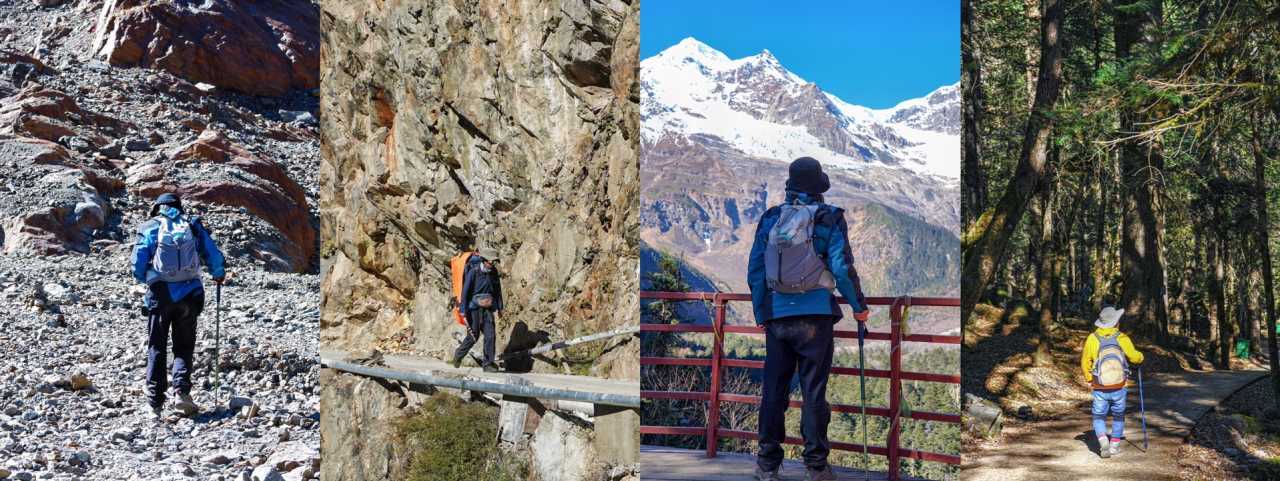
Nong Grand Canyon is located within the Yumucun Scenic Area in Yunling Township, Deqin County, Diqing Tibetan Autonomous Prefecture, Yunnan Province. Many people choose to ride back to Xidang, but many also choose to hike out through the canyon—I chose the latter.
The canyon trail was easier than I expected, but the scenery was more breathtaking than I'd imagined. On one side, steep cliffs; on the other, a bottomless gorge with roaring river below. Walking such a path made one feel small, yet the heart felt expansive.
After several hours of hiking, I finally emerged from Yumucun. Looking back, the snowy mountains were still there, shrouded in clouds and mist, like a palace floating in the sky.
I came, I left. But Yumucun will always be there.
Epilogue: From Longing to Reverence
My five-day Yumucun journey was over. From the terrifying moment on the plane to Shangri-La, to the moonlit ancient town of Dukezong; from the golden sunrise at Feila Temple to the grueling ten kilometers from Xidang Village; from the forest paradise of the Divine Waterfall to the jade dreamscape of Ice Lake—every step was a scene; every step was a practice.
Some say Yumucun is the last paradise on earth. I think it's more like a mirror—whatever mood you bring, that's the scenery you'll see. Bring longing, and it will surprise you. Bring reverence, and it will awe you.
This journey taught me: true travel isn't about checking in or taking photos. It's about placing yourself within the scenery and letting the scenery enter your heart.
From longing to reverence.
These eight words are my best confession to Yumucun.
Practical Tips:
- Best Season: October to May—stable weather, high probability of seeing golden sunlight on snowy peaks
- Transportation: Fly to Shangri-La first, then take a bus to Feila Temple/Deqin County, then transfer to Xidang Village
- Entering Yumucun: Hike 10 km (about 4-6 hours) or take an off-road vehicle (200 yuan/person)
- Accommodation: Stay in Upper Yumucun (convenient for Ice Lake) or Lower Yumucun (convenient for Divine Waterfall)
- Gear: Trekking poles, hiking boots, waterproof jacket, quick-dry clothing, thermal layer, sunscreen, sunglasses
- Hiking Routes: Divine Waterfall Trail (half day), Ice Lake Trail (full day)
You should also read:
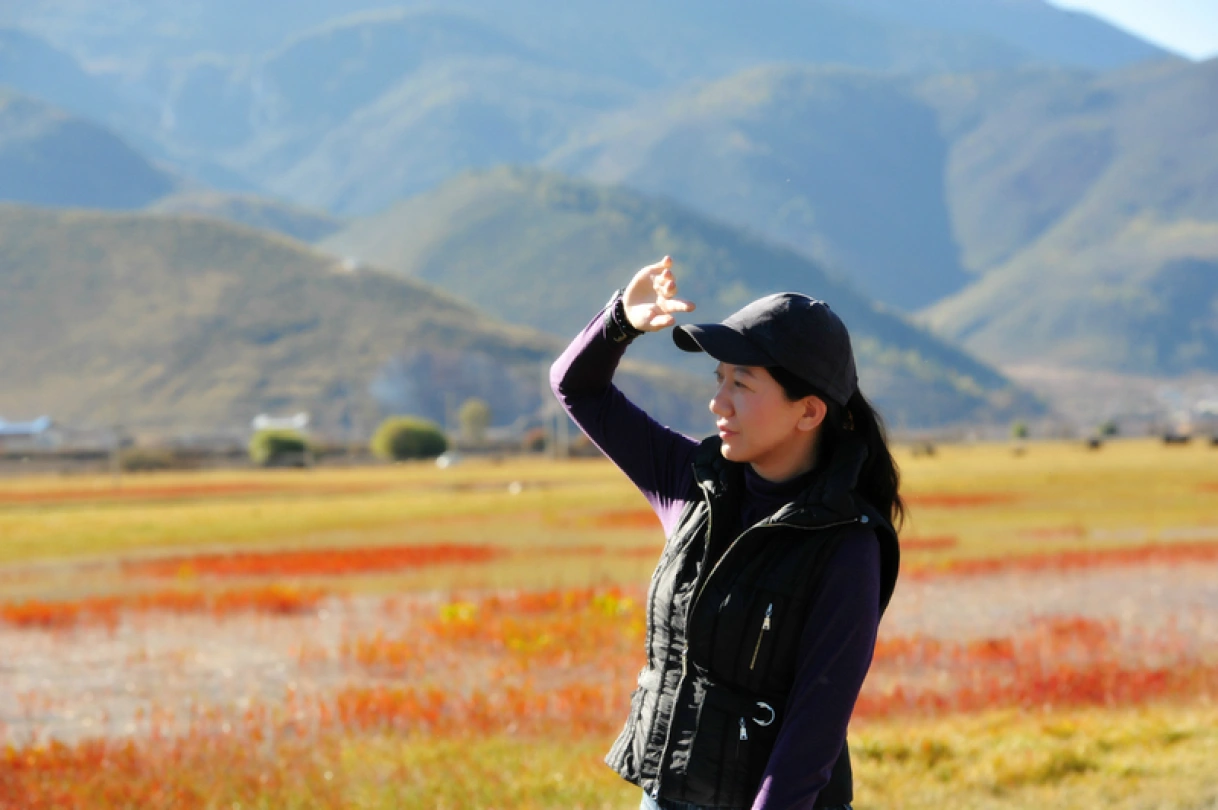
From Hell to Heaven: Our Pilgrimage Trek to Yùbēng
From Hell to Heaven: Our Pilgrimage Trek to Yùbēng “If you can’t go to heaven, go to Yùbēng.” That simple phrase took root in my heart three years ago. This deep autumn, my husband and I finally set foot on the road to that legendary…
Continue reading...
Glorious Youth: Four Madmen Cycling from Guangzhou to Lijiang in the Fall of 2012
Glorious Youth: Four Madmen Cycling from Guangzhou to Lijiang in the Fall of 2012 18 Days, 1,700 Kilometers, Four Bicycles – A Wild Last Hurrah of Youth Some roads are meant to be measured by the soles of your feet. Some landscapes only reveal their…
Continue reading...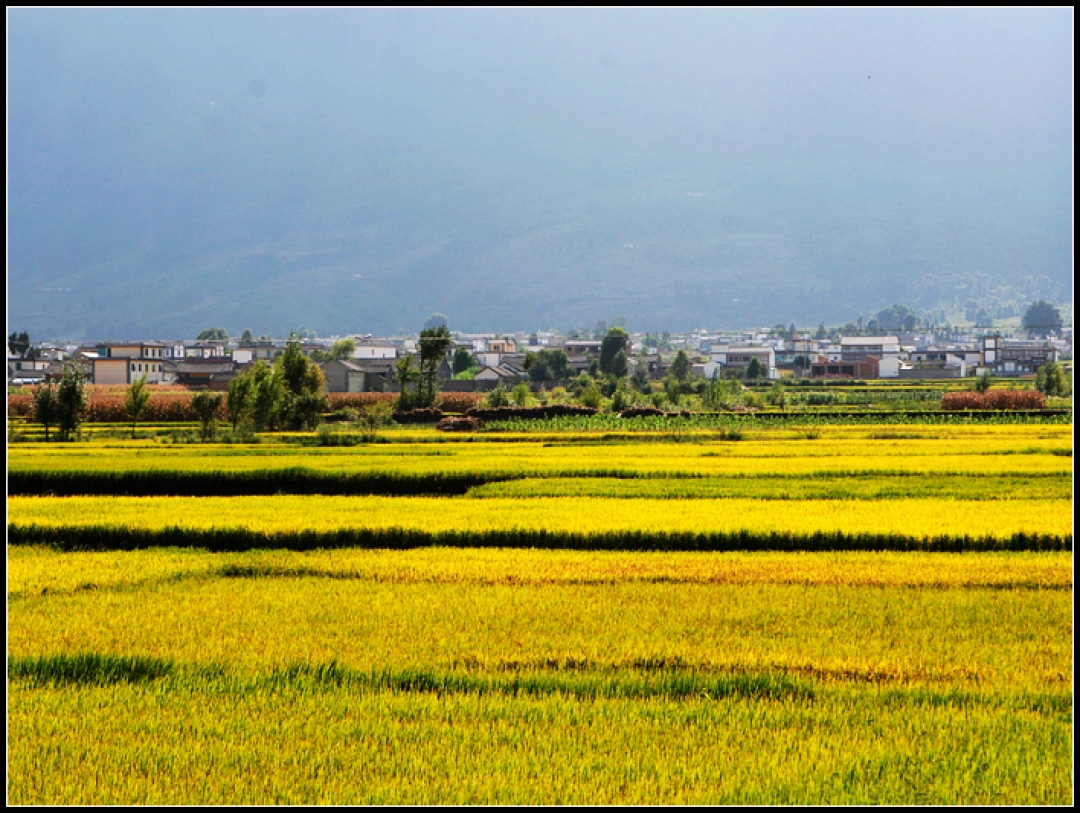
A 9-Day Yunnan Journey: From Lijiang to Dali to Tengchong – A Trip Toward Self-Reconciliation
A 9-Day Yunnan Journey: From Lijiang to Dali to Tengchong – A Trip Toward Self-Reconciliation Some say travel is simply going from a place you're tired of to a place other people are tired of. It stings to hear, but it's painfully true. Yet there's…
Continue reading...